Patients › Hand
उंगली के जोड़ (पोर) को बदलने का ऑपरेशन (एमसीपीजे)
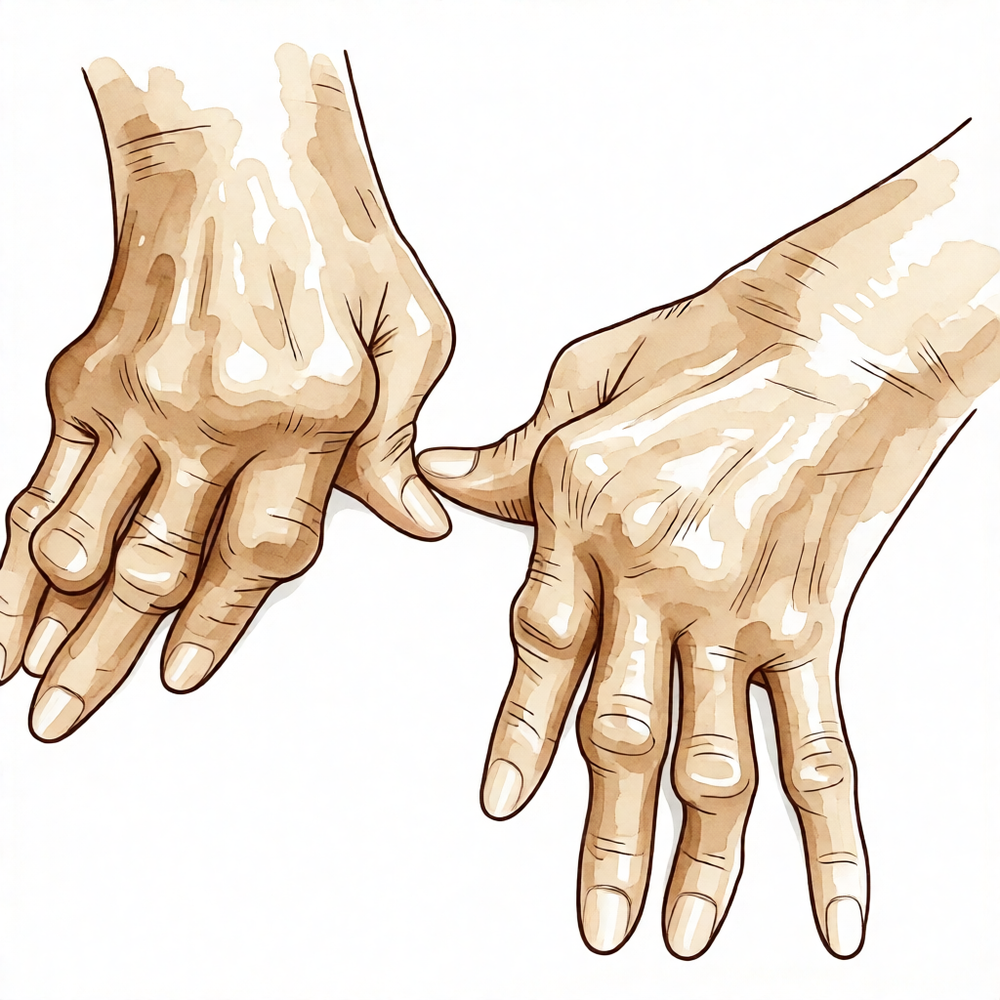
यह ऑपरेशन क्यों सुझाया गया है
डॉ. कीरन हिरपरा, माटर प्राइवेट हॉस्पिटल, रॉकहैम्पटन में ऊपरी अंग (कंधे से हाथ तक) के सर्जन, आपकी समस्या के लिए सबसे कम चीर-फाड़ वाले उपयुक्त विकल्पों से शुरुआत करते हैं। मरीज़ों को आमतौर पर उनके जीपी (आपके फैमिली डॉक्टर) हमारे क्लिनिक में रेफ़र करते हैं; अगर किसी फिजियोथेरेपिस्ट ने आपको हमसे मिलने की सलाह दी है, तब भी मेडिकेयर रिबेट पाने के योग्य होने के लिए आपको अपने जीपी से रेफ़रल लेना होगा। आपके अपॉइंटमेंट में हम आपकी पूरी जानकारी (हिस्ट्री) लेते हैं, आपके हाथ की जांच करते हैं, और ज़रूरत हो तो स्कैन या एक्स-रे करवाते हैं। इससे हमें पता चलता है कि जोड़ में क्या हो रहा है।
इस ऑपरेशन में उंगली के जोड़ (पोर), यानी वह जोड़ जहां आपकी उंगली या अंगूठा हाथ से मिलता है, को एक कृत्रिम इम्प्लांट से बदला जाता है। यह आमतौर पर तब सुझाया जाता है जब गठिया (आर्थराइटिस) की वजह से जोड़ की सतह बुरी तरह घिस गई हो और दूसरे इलाज से पर्याप्त आराम न मिला हो। लंबे समय से चली आ रही घिसाव वाली समस्याओं में हम आमतौर पर पहले बिना ऑपरेशन का इलाज आज़माते हैं: गतिविधियों में बदलाव, फिजियोथेरेपी या हैंड थेरेपी, और स्प्लिंट। सर्जरी पर तब विचार किया जाता है जब इन क़दमों से पर्याप्त मदद न मिली हो। इसका उद्देश्य दर्द से राहत, बेहतर काम-काज, और आसपास के जोड़ों की सुरक्षा है। कुछ लोगों में यह ऐसे जोड़ की स्थिरता भी लौटाता है जो ढीला हो गया है या टेढ़ा हो गया है।
ऑपरेशन से पहले
सर्जरी से पहले के सप्ताहों में हम आपके हाथ की नई तस्वीरों, जैसे एक्स-रे, एमआरआई या अल्ट्रासाउंड, से योजना की पुष्टि करते हैं। इनसे हमें घिसा हुआ जोड़ दिखता है और सही इम्प्लांट चुनने में मदद मिलती है। आपको उपवास के बारे में साफ़ निर्देश मिलेंगे: ऑपरेशन से सात घंटे पहले तक कुछ न खाएं और न पिएं। हम इससे कम समय के बजाय सात घंटे इसलिए कहते हैं ताकि अगर ऑपरेशन थिएटर की सूची समय से पहले चल रही हो, तो आपकी सर्जरी पहले की जा सके। सर्जरी से पहले कुछ दवाएं रोकनी पड़ती हैं, और आपके सर्जन बताएंगे कि कौन-सी और कब। अगर आपको दूसरी बीमारियां हैं, तो आपके खून की जांच या एनेस्थेटिस्ट (बेहोशी के डॉक्टर) से मुलाक़ात की ज़रूरत पड़ सकती है। ऑपरेशन के दिन अपनी मौजूदा दवाओं की सूची साथ लाएं, घर वापस ले जाने के लिए किसी का इंतज़ाम करें, और ढीली बांहों वाले आरामदायक कपड़े पहनें।
ऑपरेशन के दिन
आप अस्पताल की सर्जिकल भर्ती इकाई में पहुंचते हैं, जहां आपकी भर्ती की जाती है और आपको ऑपरेशन थिएटर के लिए तैयार किया जाता है। आप एनेस्थेटिस्ट से मिलते हैं, यानी वह डॉक्टर जो सर्जरी के दौरान आपके एनेस्थीसिया और दर्द नियंत्रण की देखभाल करते हैं। यह ऑपरेशन जनरल एनेस्थीसिया (जिसमें आप पूरी तरह बेहोश रहते हैं) में किया जाता है। ऑपरेशन के बाद के दर्द से राहत के लिए कभी-कभी साथ में नर्व ब्लॉक (हाथ या बांह को सुन्न करने का इंजेक्शन) भी दिया जाता है; एनेस्थेटिस्ट उसी दिन आपसे इस बारे में बात करेंगे। फिर आपको ऑपरेशन थिएटर में ले जाया जाता है, जहां ऑपरेशन किया जाता है।
ऑपरेशन पूरा होने पर आप रिकवरी एरिया में जागते हैं। जब तक एनेस्थीसिया का असर ख़त्म होता है, नर्सें आप पर नज़र रखती हैं। हालत स्थिर होने पर, प्रक्रिया और आपके ठीक होने की प्रगति के हिसाब से, आप या तो वार्ड में जाते हैं या उसी दिन घर चले जाते हैं।
ऑपरेशन में क्या किया जाता है
घिसी हुई जोड़ की सतहों तक पहुंचने के लिए आपके सर्जन आपके उंगली के जोड़ (पोर) के पिछले हिस्से पर एक छोटा चीरा लगाते हैं। ख़राब हो चुके हड्डी के सिरों को हटाया जाता है और इम्प्लांट के लिए जगह बनाने के लिए उन्हें आकार दिया जाता है। सबसे आम इम्प्लांट एक लचीला स्पेसर (दो हड्डियों के बीच जगह बनाए रखने वाला हिस्सा) है जो दोनों हड्डियों के बीच बैठता है, जिससे दर्द कम होता है और जोड़ फिर से मुड़ पाता है। इसका उद्देश्य दर्द से राहत, बेहतर हरकत, और आसपास के जोड़ों की सुरक्षा है।
अलग-अलग जोड़ों और अलग-अलग समस्याओं के लिए अलग-अलग इम्प्लांट सही रहते हैं। कुछ लोगों में नरम सिलिकॉन स्पेसर इस्तेमाल किया जाता है। दूसरों में, ख़ासकर जहां आसपास के लिगामेंट (स्नायुबंधन) मज़बूत हों और पड़ोसी उंगलियां सहारा देती हों, प्राकृतिक जोड़ की सतह जैसे आकार वाला ज़्यादा सख़्त इम्प्लांट चुना जाता है। आपके सर्जन वह इम्प्लांट चुनते हैं जो आपके जोड़ और आपकी समस्या के लिए सही हो।
इम्प्लांट लग जाने के बाद, आपके सर्जन जांचते हैं कि उंगली सीध में है और आसानी से हिलती है, और जोड़ के आसपास के नरम ऊतकों को संतुलित करते हैं ताकि वह स्थिर रहे। चीरे को टांकों से बंद किया जाता है और ड्रेसिंग (घाव की पट्टी) से ढका जाता है। ड्रेसिंग लगभग 10 दिन तक लगी रहती है, जिसके बारे में 'ऑपरेशन के बाद' वाले हिस्से में बताया गया है।
अंगूठे के कुछ जोड़ों में, इम्प्लांट के बजाय हड्डियों को आपस में जोड़ना (फ्यूज़न) एक विकल्प है। इससे दर्द वाला जोड़ हट जाता है, लेकिन इसका मतलब है कि अंगूठे का वह हिस्सा अब मुड़ता नहीं है। सहमति फ़ॉर्म पर हस्ताक्षर करने से पहले आपके सर्जन आपसे बात करेंगे कि आपके जोड़ के लिए कौन-सा विकल्प सही है।
ऑपरेशन के बाद
आप रिकवरी वार्ड में जागेंगे, जहां एनेस्थीसिया का असर ख़त्म होने तक नर्सें आप पर बारीकी से नज़र रखती हैं। आपके हाथ पर मोटी, भारी ड्रेसिंग होगी, और आपको आराम में रखने के लिए हम दर्द की दवा देंगे। घर पहुंचने के बाद पहले 24 घंटे तक किसी को आपके साथ रहना चाहिए। आप सामान्य रूप से चल-फिर सकते हैं, लेकिन आराम से रहें और बैठते समय अपने हाथ को तकिये पर ऊंचा रखकर आराम दें। आपकी टीम बताएगी कि आप उसी दिन घर जाएंगे या एक रात अस्पताल में रुकेंगे। हम ड्रेसिंग को लगभग 10 दिन तक लगी रहने देते हैं; कृपया तब तक इसे न हटाएं, जब तक हम आपसे ऐसा करने को न कहें। जब हम आपको देखते हैं, तब हम इसे बदलते या हटाते हैं।
ठीक होने की प्रक्रिया
शुरू के कुछ दिनों तक आपके हाथ में दर्द और सूजन रहेगी, और उंगली का जोड़ (पोर) जकड़ा हुआ और छूने पर दुखता हुआ लग सकता है। हाथ को तकिये पर ऊंचा रखकर आराम देने से सूजन कम होती है, और हम जो दर्द की दवा देते हैं, वह आपको आराम में रखती है। जोड़ के ठीक होने के साथ-साथ तकलीफ़ धीरे-धीरे कम होती जाती है।
शुरू में आपके हाथ पर मोटी, भारी ड्रेसिंग होगी, जो लगभग 10 दिन तक लगी रहती है। जब हम आपको देखते हैं, तब हम इसे बदलते या हटाते हैं और भरती हुई त्वचा की जांच करते हैं। इस सर्जरी के बाद रिहैबिलिटेशन, एक्सटेंड रिहैबिलिटेशन में रूबी डूलन के साथ हैंड थेरेपी के रूप में होता है। वे आपकी एक्सरसाइज़ में आपका मार्गदर्शन करेंगी और ज़रूरत हो तो स्प्लिंट बनाएंगी। ये एक्सरसाइज़ नए जोड़ की सुरक्षा करती हैं, जबकि आपकी उंगली या अंगूठे की हरकत लौटती है, और आपको दिखाया जाएगा कि रोज़ के कामों के लिए हाथ पर ज़ोर डाले बिना उसका इस्तेमाल कैसे करें।
जैसे-जैसे सूजन कम होती है, मोड़ना और सीधा करना आमतौर पर आसान लगने लगता है। जब आप बिना दर्द के पकड़ सकें और चुटकी से चीज़ें पकड़ सकें, तो आप पाएंगे कि कपड़े पहनना, खाना और लिखना जैसी रोज़ की गतिविधियां ज़्यादा सहज होने लगती हैं। बहुत से लोग पाते हैं कि सबसे बड़ा फ़ायदा सर्जरी से पहले वाले दर्द से राहत है, साथ ही रोज़ के कामों में हाथ का बेहतर इस्तेमाल।
जब तक आपका हाथ स्प्लिंट में है, या जब तक आप तेज़ दर्द की दवा ले रहे हैं, तब तक गाड़ी न चलाएं, और आपको स्टीयरिंग व्हील दोनों हाथों से पकड़ने और इमरजेंसी में अचानक ब्रेक लगाने की स्थिति में प्रतिक्रिया देने लायक होना चाहिए। ऊपरी अंग की सर्जरी के बाद गाड़ी चलाने पर हमारी अलग गाइड बताती है कि गाड़ी चलाना कब दोबारा सुरक्षित है।
ठीक होने का समय हर व्यक्ति में अलग होता है, और आपकी समय-सीमा अलग हो सकती है। हर फॉलो-अप जांच में हम आपके हैंड थेरेपिस्ट के साथ मिलकर आपका मार्गदर्शन करेंगे।
क्या समस्याएं हो सकती हैं
ज़्यादातर मरीज़ अच्छी तरह ठीक हो जाते हैं, लेकिन कभी-कभी समस्याएं हो सकती हैं। किसी भी समस्या को जल्दी पकड़ने के लिए आपके सर्जन और टीम आप पर बारीकी से नज़र रखते हैं।
इस तरह के जोड़ बदलने के ऑपरेशन के बाद संक्रमण (इन्फेक्शन) असामान्य है। अपने घाव के आसपास की त्वचा पर नज़र रखें। अगर आपको घाव से बाहर की ओर फैलती लाली, गर्माहट, रिसाव, या अंदर तक टीस मारता दर्द दिखे जो साधारण दर्द निवारक दवाओं से कम न हो, तो बिना देर किए क्लिनिक से संपर्क करें। अगर आपको बुखार जैसा लगे या तबीयत ख़राब लगे, तो इमरजेंसी विभाग जाएं।
नया जोड़ कभी-कभी अपनी जगह से निकल सकता है। इसे डिसलोकेशन (जोड़ का अपनी जगह से खिसक जाना) कहते हैं। आपको जोड़ में अचानक खिसकने जैसा महसूस हो सकता है, और उंगली या अंगूठा अजीब कोण पर टिका हो सकता है और सामान्य रूप से हिलने से इनकार कर सकता है। ऐसा हो तो तुरंत क्लिनिक को फ़ोन करें।
समय के साथ इम्प्लांट खुद घिस सकता है, ढीला हो सकता है, उसमें दरार आ सकती है या वह मुड़ सकता है। इसके संकेतों में शांत हो चुके दर्द का लौट आना, नई कट-कट की आवाज़ या रगड़ महसूस होना, या उंगली का सीध से बाहर खिसकना शामिल है। अपनी अगली फॉलो-अप जांच में इन बदलावों के बारे में बताएं, या अगर ये अचानक हों तो पहले ही फ़ोन करें।
ऑपरेशन के दौरान इम्प्लांट के आसपास की हड्डियां भी टूट सकती हैं। ऑपरेशन थिएटर छोड़ने से पहले आपके सर्जन इसकी जांच करते हैं, और यह आमतौर पर स्प्लिंट में थोड़े कम समय की सुरक्षा के साथ जुड़ जाता है।
अगर कोई समस्या होती है, तो उसे ठीक करने के लिए कभी-कभी दोबारा सर्जरी की ज़रूरत पड़ती है। इसका मतलब इम्प्लांट को फिर से बदलना हो सकता है, या, अगर बदलना सही न हो, तो उस जोड़ की हड्डियों को आपस में जोड़ना, ताकि वे जुड़कर एक ठोस टुकड़ा बन जाएं। यह दूसरा विकल्प दर्द को दूर करता है, लेकिन जोड़ का मुड़ना बंद कर देता है। अगर कभी ऐसी नौबत आई, तो आपके सर्जन बताएंगे कि आपकी स्थिति के लिए क्या सही है।
कुछ लोगों को सर्जरी के बाद उंगली या अंगूठे में लगातार जकड़न या कमज़ोरी महसूस होती है। हैंड थेरेपी इसमें मदद करती है, इसलिए इंतज़ार करने के बजाय अपनी फॉलो-अप जांच के अपॉइंटमेंट में इसके बारे में बताएं।
अगर आप ख़ास आंकड़े जानना चाहते हैं, तो इस पेज पर जटिलताओं (कॉम्प्लिकेशन) की तालिका में आम दरें दी गई हैं।
हमें कब फ़ोन करें
ज़्यादातर समस्याएं पहले कुछ सप्ताहों में सामने आती हैं, इसलिए यह जानना फ़ायदेमंद है कि किन बातों पर नज़र रखनी है। अगर आपको घाव से फैलती लाली, रिसाव, बुखार, या लगातार बढ़ता दर्द दिखे, तो हमें फ़ोन करें। अगर आपको बुखार जैसा लगे और तबीयत ख़राब लगे, या अगर आपकी पिंडली में सूजन आ जाए और छूने पर दर्द हो, तो इमरजेंसी जाएं। अचानक सांस फूलने पर भी इमरजेंसी देखभाल की ज़रूरत है। अगर आपकी उंगली या अंगूठा अचानक अपनी जगह से खिसक जाए, अजीब कोण पर टिका हो, या आप उसे हिला न पा रहे हों, तो तुरंत हमें फ़ोन करें। जो सुन्नपन या झुनझुनी ठीक न हो, उसकी भी बिना देर किए जांच ज़रूरी है। शक हो, तो हमें फ़ोन करें।
विस्तार से
Advanced reading: the deeper science (optional)
यह हिस्सा आपके अपने इलाज से जुड़े फ़ैसलों के लिए ज़रूरी जानकारी से आगे जाता है। उंगली के जोड़ (पोर) को बदलने के ऑपरेशन के बारे में यह अतिरिक्त जानकारी एक दिलचस्प बात की वजह से पढ़ने लायक है: आज सबसे ज़्यादा इस्तेमाल होने वाला इम्प्लांट मूल रूप से वही डिज़ाइन है जो 1960 के दशक में लाया गया था, और यह उसकी जगह लेने के लिए लाए गए हर मटीरियल से ज़्यादा टिका है। ऐसा क्यों है, यह समझने से पता चलता है कि यह ऑपरेशन असल में किसलिए है।
सिलिकॉन की जगह कोई नहीं ले पाया
रूमेटॉइड आर्थराइटिस में मेटाकार्पोफ़ैलेंजियल (एमसीपी) जोड़ बदलने के ऑपरेशन की 2026 की एक समीक्षा का निष्कर्ष है कि यह ऑपरेशन रूमेटॉइड वाले हाथ के इलाज में अब भी केंद्रीय भूमिका निभाता है, और इम्प्लांट तकनीक में प्रगति के बावजूद, लचीले सिलिकॉन से जोड़ बदलने का ऑपरेशन काम-काज और दिखावट में भरोसेमंद सुधार देता है, सही तरीके से चुने गए मरीज़ों में [1]।
मटीरियल साइंस के साठ सालों ने धातु-प्लास्टिक और पायरोकार्बन के विकल्प तैयार किए हैं, फिर भी सिलिकॉन स्पेसर ही तुलना का मानक बना हुआ है। जोड़ बदलने के ऑपरेशनों में यह असामान्य है, जहां उसी अवधि में कूल्हे और घुटने के इम्प्लांट लगातार बदलते और बेहतर होते रहे हैं।
कारण यह है कि यह इम्प्लांट वह काम नहीं करता जो इसका नाम बताता है। यह किसी जोड़ की सतह को नई परत देकर उसे घूमने वाली सतह के रूप में वापस नहीं बनाता। यह एक लचीला स्पेसर है जो दो हड्डियों के बीच जगह बनाए रखता है और अंदरूनी स्प्लिंट की तरह काम करता है, जबकि इसके चारों ओर निशान वाला ऊतक (स्कार टिश्यू) बनकर एक नया कैप्सूल तैयार करता है। नतीजा उपकरण से नहीं, बल्कि शरीर के भरने की प्रक्रिया से मिलता है, और इसीलिए बेहतर घूमने वाली सतह कभी बेहतर नतीजे में नहीं बदली।
नतीजों का ईमानदार सार
उंगली और अंगूठे के जोड़ों में इम्प्लांट से जोड़ बदलने के ऑपरेशन की एक समीक्षा इसे अच्छी तरह कहती है: इम्प्लांट वाला जोड़ बदलने का ऑपरेशन भरोसेमंद तरीके से दर्द से राहत और ज़्यादा संतुष्टि देता है, लेकिन ऐतिहासिक रूप से इसमें जटिलताओं की दर ज़्यादा रही है, और भले ही धातु-प्लास्टिक और पायरोकार्बन मटीरियल विकसित हुए हैं, इम्प्लांट कितने समय तक टिकता है और दोबारा ऑपरेशन की दर, ये अब भी चिंता का विषय हैं [2]।
दोनों बातें मायने रखती हैं। लोग इन ऑपरेशनों से भरोसेमंद रूप से ख़ुश रहते हैं — दर्द चला जाता है, दिखावट सुधरती है, रोज़ के कामों में हाथ बेहतर काम करता है — और इम्प्लांट की एक सीमित उम्र होती है, जिसमें दोबारा ऑपरेशन की असली दर होती है। संतुष्टि और टिकाऊपन अलग-अलग सवाल हैं, और यह ऑपरेशन पहले सवाल पर कहीं बेहतर प्रदर्शन करता है।
ऑस्टियोआर्थराइटिस में प्रमाण कम हैं
ज़्यादातर शोध रूमेटॉइड आर्थराइटिस से जुड़ा है, क्योंकि उसी में ठीक किया जाने वाला टेढ़ापन सबसे ज़्यादा नाटकीय होता है। ऑस्टियोआर्थराइटिस के लिए तस्वीर कमज़ोर है: उपलब्ध प्रमाण पुराने रिकॉर्ड देखकर किए गए (रेट्रोस्पेक्टिव) अध्ययनों से आते हैं, जिनमें मरीज़ों की संख्या कम है और फॉलो-अप अपेक्षाकृत कम समय का है [3]।
ध्यान देने की बात है कि जहां लेखक ऑस्टियोआर्थराइटिस में सिलिकॉन के बजाय पायरोकार्बन को प्राथमिकता देते हैं, वहां इसका आधार बेहतर स्थिरता और सीध की संभावना है, और आंकड़ों को शुरुआती बताया गया है [3]। यह एक उचित राय है, लेकिन इसे यह पहचानकर देखना चाहिए कि यह साबित हो चुकी श्रेष्ठता पर नहीं, बल्कि काम करने के तरीके (मैकेनिज़्म) के आधार पर किया गया तर्क है।
टिकाऊपन एक बड़ा सवाल बनता जा रहा है
लगभग दो दशक पहले उठाई गई एक चिंता सुलझने के बजाय बढ़ी है: जैसे-जैसे औसत उम्र बढ़ रही है, और जैसे-जैसे ये ऑपरेशन कम उम्र के, ज़्यादा सक्रिय मरीज़ों में किए जा रहे हैं जो इन पर लंबे समय तक भार डालेंगे, इम्प्लांट का टिकाऊपन उतना ही ज़्यादा मायने रखता है [4]। जिस इम्प्लांट का दस साल का प्रदर्शन स्वीकार्य हो, वह 75 साल की उम्र में एक बात है और 55 साल की उम्र में बिल्कुल दूसरी।
व्यावहारिक रूप से, यह इस बारे में साफ़ होने का एक कारण है कि आप ऑपरेशन से क्या हासिल करना चाहते हैं। दर्द से राहत, टेढ़ेपन के सुधार और ऐसे हाथ में बेहतर काम-काज के लिए जिस पर यांत्रिक ज़ोर मामूली पड़ता है, यह लंबे रिकॉर्ड वाला और अच्छी तरह समर्थित ऑपरेशन है। दशकों तक भारी इस्तेमाल के लिए एक टिकाऊ पुनर्निर्माण के रूप में, यह वैसा नहीं है।
संदर्भ
[1] Herren DB. Balancing metacarpophalangeal joint arthroplasty in rheumatoid arthritis. J Hand Surg Eur Vol. 2026;51(6):778-84. https://doi.org/10.1177/17531934261430139
[2] Srnec JJ, Wagner ER, Rizzo M. Implant arthroplasty for proximal interphalangeal, metacarpophalangeal, and trapeziometacarpal joint degeneration. J Hand Surg Am. 2017;42(10):817-25. https://doi.org/10.1016/j.jhsa.2017.07.030
[3] Martin AS, Awan HM. Metacarpophalangeal arthroplasty for osteoarthritis. J Hand Surg Am. 2015;40(9):1871-2. https://doi.org/10.1016/j.jhsa.2015.05.019
[4] Goldfarb CA, Dovan TT. Rheumatoid arthritis: silicone metacarpophalangeal joint arthroplasty indications, technique, and outcomes. Hand Clin. 2006;22(2):177-82. https://doi.org/10.1016/j.hcl.2006.02.001
Evidence & references
This is the clinical evidence summary written for health professionals. It is technical, and it lists the research this page was built from. You do not need to read it to understand your treatment or to make a decision about it.
Overview
- MCP joint arthroplasty was performed safely in the setting of acute complex open MCP joint trauma [1].
- Revision MCP arthroplasty is a challenging procedure with one in five patients requiring a revision procedure at 5 years [2].
- Revision MCP arthroplasty has a relatively high rate of postoperative dislocations [2].
- Dorsal capsule interposition arthroplasty provides a viable surgical option for isolated degenerative or traumatic arthritis of the MCPJ at an average follow-up of 2 years [3].
- Treatment of MCP joint arthroplasty dislocation with revision to silicone implant appears to hold the most promise in achieving a stable MCP joint after an acute prosthetic dislocation [4].
- MCP joint arthroplasty is an effective treatment option from a patient-centered perspective, improving appearance, pain, and function [5].
- Silastic interposition arthroplasty of the MCPJ is reliable in terms of pain relief and correction of deformity [6].
- Patient satisfaction with Silastic interposition arthroplasty of the MCPJ is high despite only modest improvements in the objective assessment of hand function [6].
- The nonconstrained implant design for the MCP joint can have good outcomes and excellent arc of motion in OA patients [8].
- Periprosthetic joint infection is uncommon after MCP or PIP arthroplasties [9].
- Patient expectations of MCP joint arthroplasty were uniformly high, with functional improvement being the greatest motivation for surgery [11].
- Joint goal-setting is essential for understanding patients' unique reasons for undergoing MCP arthroplasty and facilitating realistic expectations [14].
- Implant arthroplasty of the PIP, MCP, and TMC joints predictably produces pain relief and high satisfaction [24].
- Implant arthroplasty of the PIP, MCP, and TMC joints has historically suffered from high rates of complications [24].
- The evidence regarding MCP arthroplasty for OA consists of retrospective cohorts with small sample sizes and relatively short evaluations [26].
Anatomy & Pathophysiology
Joint Mechanics and Kinematics
- The metacarpophalangeal joint allows hyperextension up to approximately 20° [17].
- Radial and ulnar deviation at the metacarpophalangeal joint decreases with flexion due to the associated tightening of the collateral ligaments [17].
- Volar and proximal translation of the proximal phalanx is observed on 4-dimensional computed tomography following silicone implant arthroplasty [48].
Bony and Ligamentous Anatomy
- The metacarpophalangeal articulations serve as the keystones of the longitudinal arches of the hand [39].
- The thick anterior glenoid capsules, known as volar plates, prevent hyperextension at the metacarpophalangeal joints [39].
- The volar plates are interconnected by the transverse interglenoid ligament [39].
- The stability of the metacarpophalangeal joints is essential to the support of both the longitudinal arch and the transverse metacarpal arch [39].
- The deep transverse intermetacarpal ligament, also named the interglenoid ligament, ties together the anterior glenoid ligaments of the metacarpophalangeal articulations [39].
- The lateral accessory ligaments, sagittal bands of the extensor apparatus, and the first annular segment of the flexor tendon pulley insert on the volar plate [39].
Muscular Anatomy
- The deep head of each dorsal interosseous muscle forms a lateral tendon, or lateral band, at the level of the metacarpophalangeal joint [36].
- The deep head of the dorsal interosseous muscles flexes and weakly abducts the proximal phalanx while extending the middle and distal phalanges [36].
- Transverse fibers arch dorsally from each lateral band to join over the dorsum of the finger, flexing the proximal phalanx [36].
- Oblique fibers from the lateral bands sweep over the distal third of the proximal phalanx to insert onto the lateral tubercles at the base of the middle phalanx [36].
- The oblique fibers extend the middle phalanx at the proximal interphalangeal joint [36].
- The lateral bands are joined by the lateral slips of the extensor tendon to form the conjoined lateral band [36].
- The two conjoined lateral bands to each finger unite at the distal third of the middle phalanx to form the terminal tendon [36].
- The terminal tendon inserts at the base of the distal phalanx to extend it [36].
- The volar interossei form the ulnar lateral band of the index finger and the radial lateral band of the ring and little fingers [36].
- The flexor digiti quinti brevis forms the ulnar lateral band of the little finger [36].
Pathophysiology
- Rheumatoid arthritis is a chronic, progressive, systemic inflammatory disease that affects multiple organ systems, including the musculoskeletal system [17].
- The inflammatory process in rheumatoid arthritis is triggered and perpetuated by a cascade of mediators that result in synovial proliferation, collagenous destruction of the cartilage and soft tissues, and bone resorption [17].
- The metacarpophalangeal joint is the most common site of involvement in the rheumatoid hand [17].
- The metacarpophalangeal and proximal interphalangeal joints of the hand are typically involved early in rheumatoid arthritis [17].
Classification
- Silicone rubber implants are the most frequently used device for treatment of revised metacarpophalangeal arthroplasty [17].
- The nonconstrained implant design for the MCP joint can have good outcomes and excellent arc of motion in osteoarthritis patients [8].
- Pyrocarbon implants were designed as a resurfacing implant for the MCP joint [28].
- A radiographic classification system was modified to differentiate stable implant migration patterns (grade 2) from unstable patterns (grade 3) based on cortical breach status [28].
- In a radiographic analysis of 37 pyrocarbon arthroplasties, 34 (92%) were determined to be stable at last follow-up [28].
- Three (7%) pyrocarbon implants became unstable from migration, all involving grade 3 implant loosening [28].
- Evidence of implant subsidence greater than 1 mm occurred in 6 (16%) of 37 pyrocarbon implants [28].
- Postoperative ulnar deviation greater than 10° occurred in 8 (22%) fingers following pyrocarbon arthroplasty [28].
- Implant fractures in silicone MCP arthroplasty are determined based on criteria including lucent lines, fragmentation, translation greater than one-half the diameter of the bone, and dislocation defined as proximodistal overlap more than one-half the width of the midportion of the implant [20].
- Coronal plane deviation greater than 45° is an additional criterion for determining implant fracture or instability in silicone MCP arthroplasty [20].
Clinical Presentation
Indications and Etiology
- Metacarpophalangeal joint arthroplasty is most often performed in patients with rheumatoid arthritis, although it is occasionally performed for joints affected by osteoarthritis [17].
- Dorsal capsule interpositional arthroplasty provides a viable surgical option for isolated degenerative or traumatic arthritis of the MCPJ [3].
- Metacarpophalangeal joint arthroplasty continues to play a central role in the management of the rheumatoid hand [15].
Patient Expectations and Motivation
Functional Outcomes and Range of Motion
- Silastic interposition arthroplasty of the MCPJ is reliable in terms of pain relief and correction of deformity, and patient satisfaction is high despite only modest improvements in the objective assessment of hand function [6].
- Pain ratings and MCP arc of motion significantly improved following arthroplasty for noninflammatory arthritis [10].
- Implant arthroplasty of the PIP, MCP, and TMC joints predictably produces pain relief and high satisfaction but has historically suffered from high rates of complications [24].
- This study showed improved range of motion and DASH score, excellent pain relief, and excellent patient satisfaction in patients undergoing MCP arthroplasty for nonrheumatic arthritis [30].
- Swanson arthroplasty frequently results in a range of flexion of the MP joint of the little finger that may be insufficient for its principal functions [19].
Complications and Complications Management
- Revision MCP arthroplasty is a challenging procedure with one in five patients requiring a revision procedure at 5 years and a relatively high rate of postoperative dislocations [2].
- The treatment of MCP joint arthroplasty dislocation with revision to silicone implant appears to hold the most promise in achieving a stable MCP joint after an acute prosthetic dislocation [4].
- Increasing MCP joint flexion range was associated with increased fractures of the implants in silicone metacarpophalangeal joint arthroplasty for patients with rheumatoid arthritis [7].
- If squeaking is associated with pain and swelling, revision MCP joint arthroplasty is recommended to identify and correct the underlying cause, such as implant subsidence or an incongruous joint [53].
- An articulating spacer allows movement of the joint and reduces the chance of immobilisation associated complications such as bone loss, joint stiffness, and soft tissue contracture in the management of infected MCPJ arthroplasties [13].
Investigations
- A careful physical examination is essential to direct care and future testing if indicated [27].
- Diagnostic tests such as imaging and serum laboratory studies are useful in determining pathology but can be expensive, time consuming, and often nonspecific [27].
Treatment
Indications and Patient Expectations
- MCP joint arthroplasty is most often performed in patients with rheumatoid arthritis, though it is occasionally performed for osteoarthritis [17].
- The MCP joint is the most common site of involvement in the rheumatoid hand [17].
- MCP joint arthroplasty continues to play a central role in the management of the rheumatoid hand [15].
- Given improvements in the medical management of rheumatoid disease, the indications for and long-term expectations of silicone metacarpophalangeal arthroplasty must be carefully examined [50].
Implant Types and Outcomes
- Both NeuFlex and Swanson implant groups obtained satisfactory clinical improvement after MCP reconstruction of the hand [12].
- Pain ratings and MCP arc of motion significantly improved following surface replacement arthroplasty in metacarpophalangeal joints affected by noninflammatory arthritis [10].
- Good pain relief, a functional range of motion, and high satisfaction were seen in the majority of patients undergoing pyrocarbon metacarpophalangeal joint arthroplasty for noninflammatory arthritis [31].
- Silicone arthroplasty for nonrheumatic metacarpophalangeal joint arthritis showed improved range of motion and DASH score, excellent pain relief, and excellent patient satisfaction [30].
- Follow-up studies show that MCP arthroplasty improves function and deformity and achieves nearly uniform patient satisfaction [17].
Alternative Techniques
- Limited clinical follow-up in a perichondrium transplant group showed reasonably good, and in some cases excellent, results several decades after the surgery, especially at the MCP level [16].
- Arthrodesis has been the gold standard in treating isolated end-stage MP arthritis, whether inflammatory or post-traumatic arthropathies [32].
- Arthrodesis is able to provide effective pain relief as well as restore stability to the joint, even in the setting of severe arthritis [32].
- The key to why MP fusion in the thumb is so successful lies in the relatively negligible loss of motion that results from MP fusion [32].
- By fusing the MP joint between 20 and 40° of flexion, stress can be relieved from the CMC joint by minimizing the activity required at the CMC for thumb opposition [32].
Complications and Revision
- Metallosis is a potential long-term complication of grommets in silicone MCP joint arthroplasty, and given the lack of documented benefit from grommets, the authors recommend against their use [52].
- Static spacers with consequent immobilisation can lead to bone loss, joint stiffness and soft tissue contracture, often causing significant complications at reimplantation [13].
- An articulating spacer allows movement of the joint and reduces the chance of immobilisation associated complications [13].
- An articulated spacer technique can be considered as an option to maintain motion while treating infected MCPJ arthroplasties and the co-morbidity resulting from immobilisation of the whole hand [13].
Specific Clinical Scenarios
Complications
Dislocation and Instability
- Revision MCP arthroplasty is associated with a relatively high rate of postoperative dislocations [2].
- Treatment of acute MCP joint arthroplasty dislocation with revision to a silicone implant appears to hold the most promise in achieving a stable MCP joint [4].
- In a cohort of 37 cases, acute prosthetic dislocation was managed with revision surgery [4].
Implant Fracture and Failure
- One in five patients undergoing revision MCP arthroplasty required a revision procedure at 5 years [2].
- Increasing MCP joint flexion range was associated with increased fractures of silicone implants in patients with rheumatoid arthritis [7].
- In a longitudinal analysis of 325 cases, implant fractures were determined based on criteria including lucent lines, fragmentation, translation greater than one-half the diameter of the bone, and dislocation defined as proximodistal overlap more than one-half the width of the midportion of the implant [20].
- In a study of 40 silicone implants for MCP osteoarthritis, radiographs demonstrated fractured implants in 5 of 40 (12.5%) implants, although none of these patients had clinical instability, pain, or deterioration in range of motion [33].
- For the Neuflex silicone implant, survivorship at 7 years was 88% when revision was the end point, but dropped to 68% when implant fracture was the end point [56].
- In a study of pyrocarbon arthroplasty for rheumatoid arthritis, complication and overall reoperation rates were high, with 1 in 10 patients undergoing revision within 5 years postoperatively [57].
- Patients with greater hand function preoperatively may be at higher risk of revision surgery after silicone MCP arthroplasty for inflammatory arthritis [18].
Infection
- Periprosthetic joint infection (PJI) is uncommon after MCP or PIP arthroplasties [9].
- Management of infected MCP joint replacements can involve removing the prosthesis and inserting gentamycin-loaded bone cement balls for 3 weeks before a final exchange operation [13].
- Static spacers used in MCPJ infection management can lead to bone loss, joint stiffness, and soft tissue contracture, often causing significant complications at reimplantation [13].
- An articulating spacer allows movement of the joint and reduces the chance of immobilization-associated complications compared to static spacers [13].
Other Complications
- Intraoperative periprosthetic fractures are associated with metacarpophalangeal joint arthroplasty [21].
- Swanson arthroplasty frequently results in a range of flexion of the MCP joint of the little finger that may be insufficient for its principal functions [19].
- In a study of pyrocarbon arthroplasty for osteoarthritis, postoperative ulnar deviation greater than 10° occurred in 8 (22%) fingers [28].
- In a study of pyrocarbon arthroplasty for osteoarthritis, 3 (7%) implants became unstable from migration, all with grade 3 implant loosening [28].
- Evidence of implant subsidence greater than 1 mm occurred in 6 (16%) of 37 pyrocarbon implants, but no implants studied at more than 1 year after surgery demonstrated progressive subsidence resulting in implant instability [28].
- Implant arthroplasty of the MCP joint has historically suffered from high rates of complications [24].
Recovery
Functional Outcomes and Patient Satisfaction
- MCP joint arthroplasty improves appearance, pain, and function from a patient-centered perspective [5].
- Silastic interposition arthroplasty of the MCPJ is reliable for pain relief and correction of deformity [6].
- Patient satisfaction is high following Silastic interposition arthroplasty despite only modest improvements in the objective assessment of hand function [6].
- The HAPY spherical pyrocarbon interposition arthroplasty for the metacarpophalangeal joint demonstrates satisfactory short- to mid-term outcomes with considerable improvements in pain relief and joint mobility [59].
Complications and Revision
Patient Expectations and Indications
Specialized Scenarios
Key Evidence
- [L4] MCP joint arthroplasty was performed safely in the setting of acute complex open MCP joint trauma. [1] (10.1016/j.jhsa.2015.09.012)
- [L4] Revision MCP arthroplasty is a challenging procedure with one in five patients requiring a revision procedure at 5 years and a relatively high rate of postoperative dislocations. [2] (10.5435/jaaos-d-17-00042)
- [L4] This technique of dorsal capsule interposition arthroplasty provides a viable surgical option for isolated degenerative or traumatic arthritis of the MCPJ at an average follow-up of 2 years. [3] (10.1177/1558944720911215)
- [L4] The treatment of MCP joint arthroplasty dislocation with revision to silicone implant appears to hold the most promise in achieving a stable MCP joint after an acute prosthetic dislocation. [4] (10.1016/j.jhsa.2017.10.001)
- [L4] MCP joint arthroplasty is an effective treatment option from a patient-centered perspective, improving appearance, pain, and function. [5] (10.1016/j.hcl.2006.02.001)
- [L4] Silastic interposition arthroplasty of the MCPJ is reliable in terms of pain relief and correction of deformity, and patient satisfaction is high despite only modest improvements in the objective assessment of hand function. [6] (10.1054/jhsb.2000.0402)
- [L4] Increasing MCP joint flexion range was associated with increased fractures of the implants. [7] (10.1016/j.jhsa.2020.09.002)
- [L5] The nonconstrained implant design for the MCP joint can have good outcomes and excellent arc of motion in OA patients. [8] (10.1016/j.jhsa.2012.11.025)
- [L4] PJI is uncommon after MCP or PIP arthroplasties. [9] (10.1016/j.jhsa.2024.12.008)
- [L4] Pain ratings and MCP arc of motion significantly improved following arthroplasty. [10] (10.1177/15589447211028917)
- [L1] Patient expectations of MCP joint arthroplasty were uniformly high, with functional improvement being the greatest motivation for surgery. [11] (10.1016/j.jhsa.2011.02.002)
- [L1] Both implant groups obtained satisfactory clinical improvement after MCP reconstruction of the hand. [12] (10.1016/j.jhsa.2009.09.020)
- [L5] [13] (10.1177/17531934251323067)
- [L4] Joint goal-setting is essential for understanding patients' unique reasons for undergoing MCP arthroplasty and facilitating realistic expectations. [14] (10.1002/msc.1061)
- [L5] Metacarpophalangeal joint arthroplasty continues to play a central role in the management of the rheumatoid hand. [15] (10.1177/17531934261430139)
- [L3] [16] (10.1186/s12891-020-03687-3)
- [L5] [17] (10.5435/00124635-200305000-00005)
- [L3] Patients with greater hand function preoperatively may be at higher risk of revision surgery. [18] (10.1177/1558944719831236)
- [L4] Our experience with this cohort, a review of published literature, and a survey of international experts suggest that Swanson arthroplasty frequently results in a range of flexion of the MP joint of the little finger that may be insufficient for its principal functions. [19] (10.1007/s11552-007-9051-5)
- [L4] [20] (10.1177/1753193418778461)
- [L3] [21] (10.1016/j.jhsa.2014.12.038)
- [L4] Implant arthroplasty of the PIP, MCP, and TMC joints predictably produces pain relief and high satisfaction but has historically suffered from high rates of complications. [24] (10.1016/j.jhsa.2017.07.030)
- [L4] The evidence regarding MCP arthroplasty for OA consists of retrospective cohorts with small sample sizes and relatively short evaluations. [26] (10.1016/j.jhsa.2015.05.019)
- [L4] [28] (10.1016/j.jhsa.2022.08.013)
- [L3] This study showed improved range of motion and DASH score, excellent pain relief, and excellent patient satisfaction in patients undergoing MCP arthroplasty for nonrheumatic arthritis. [30] (10.1016/j.jhsa.2013.09.016)
- [L4] Good pain relief, a functional range of motion, and high satisfaction were seen in the majority of patients. [31] (10.1016/j.jhsa.2015.06.104)
- [L5] [32] (10.1016/j.hcl.2006.02.010)
- [L4] [33] (10.1016/j.jhsa.2017.10.010)
- [L4] Volar and proximal translation of the proximal phalange was observed on 4-dimensional computed tomography. [48] (10.1016/j.jhsa.2021.10.001)
- [L4] Given these findings, the indications for and long-term expectations of silicone metacarpophalangeal arthroplasty must be carefully examined in light of the improvements in the medical management of rheumatoid disease. [50] (10.2106/00004623-200310000-00001)
- [Case_report] Metallosis is a potential long-term complication of grommets in silicone MCP joint arthroplasty, and given the lack of documented benefit from grommets, the authors recommend against their use. [52] (10.1007/s11552-012-9401-9)
- [L5] If squeaking is associated with pain and swelling, revision MCP joint arthroplasty is recommended to identify and correct the underlying cause, such as implant subsidence or an incongruous joint. [53] (10.1016/j.jhsg.2022.10.002)
- [L4] [56] (10.1177/1753193408094437)
- [L4] Complication and overall reoperation rates were high, while 1 in 10 undergo revision within 5 years postoperatively. [57] (10.1177/15589447211063577)
- [L4] The HAPY spherical pyrocarbon interposition arthroplasty for the metacarpophalangeal joint demonstrates satisfactory short- to mid-term outcomes, with considerable improvements in pain relief and joint mobility. [59] (10.1016/j.jhsg.2025.100804)
References
[1] Metacarpophalangeal Joint Arthroplasty in the Setting of Trauma. The Journal of Hand Surgery. 2015. DOI: 10.1016/j.jhsa.2015.09.012
[2] Revision Metacarpophalangeal Arthroplasty: A Longitudinal Study of 128 Cases. Journal of the American Academy of Orthopaedic Surgeons. 2019. DOI: 10.5435/jaaos-d-17-00042
[3] Dorsal Capsule Interpositional Arthroplasty of the Metacarpophalangeal Joint. HAND. 2020. DOI: 10.1177/1558944720911215
[4] Outcomes Following Acute Metacarpophalangeal Joint Arthroplasty Dislocation: An Analysis of 37 Cases. The Journal of Hand Surgery. 2018. DOI: 10.1016/j.jhsa.2017.10.001
[5] Rheumatoid Arthritis: Silicone Metacarpophalangeal Joint Arthroplasty Indications, Technique, and Outcomes. Hand Clinics. 2006. DOI: 10.1016/j.hcl.2006.02.001
[6] Outcome Measures Following Metacarpophalangeal Joint Replacement. Journal of Hand Surgery. 2000. DOI: 10.1054/jhsb.2000.0402
[7] Risk Factors Contributing to Early Implant Fracture in Silicone Metacarpophalangeal Joint Arthroplasty for Patients With Rheumatoid Arthritis. The Journal of Hand Surgery. 2021. DOI: 10.1016/j.jhsa.2020.09.002
[8] Clinical and Radiographic Outcomes of Metacarpophalangeal Joint Pyrolytic Carbon Arthroplasty for Osteoarthritis. The Journal of Hand Surgery. 2013. DOI: 10.1016/j.jhsa.2012.11.025
[9] Incidence and Presentation of Periprosthetic Joint Infection After Primary Metacarpophalangeal and Proximal Interphalangeal Arthroplasty. The Journal of Hand Surgery. 2025. DOI: 10.1016/j.jhsa.2024.12.008
[10] Outcomes of Surface Replacement Arthroplasty in Metacarpophalangeal Joints Affected by Noninflammatory Arthritis. HAND. 2021. DOI: 10.1177/15589447211028917
[11] Hand Appearance as a Patient Motivation for Surgery and a Determinant of Satisfaction with Metacarpophalangeal Joint Arthroplasty for Rheumatoid Arthritis. The Journal of Hand Surgery. 2011. DOI: 10.1016/j.jhsa.2011.02.002
[12] NeuFlex and Swanson Metacarpophalangeal Implants for Rheumatoid Arthritis: Prospective Randomized, Controlled Clinical Trial. The Journal of Hand Surgery. 2010. DOI: 10.1016/j.jhsa.2009.09.020
[13] Management of an infected metacarpophalangeal joint replacement with a temporary articulated cement spacer. Journal of Hand Surgery (European Volume). 2025. DOI: 10.1177/17531934251323067
[14] Patients' Expectations, Experiences and the Determinants of Satisfaction related to Metacarpophalangeal Arthroplasty. Musculoskeletal Care. 2013. DOI: 10.1002/msc.1061
[15] Balancing metacarpophalangeal joint arthroplasty in rheumatoid arthritis. Journal of Hand Surgery (European Volume). 2026. DOI: 10.1177/17531934261430139
[16] Two-component surface replacement implants compared with perichondrium transplantation for restoration of Metacarpophalangeal and proximal Interphalangeal joints: a retrospective cohort study with a mean follow-up time of 6 respectively 26 years. BMC Musculoskeletal Disorders. 2020. DOI: 10.1186/s12891-020-03687-3
[17] Metacarpophalangeal Joint Arthroplasty in Rheumatoid Arthritis. Journal of the American Academy of Orthopaedic Surgeons. 2003. DOI: 10.5435/00124635-200305000-00005
[18] Factors Associated With Reoperation After Silicone Metacarpophalangeal Joint Arthroplasty in Patients With Inflammatory Arthritis. HAND. 2019. DOI: 10.1177/1558944719831236
[19] Insufficient Flexion of the Metacarpophalangeal Joint of the Little Finger Following Swanson Silicone Arthroplasty for Rheumatoid Arthritis. HAND. 2007. DOI: 10.1007/s11552-007-9051-5
[20] Long-term outcomes of silicone metacarpophalangeal arthroplasty: a longitudinal analysis of 325 cases. Journal of Hand Surgery (European Volume). 2018. DOI: 10.1177/1753193418778461
[21] Intraoperative Periprosthetic Fractures Associated With Metacarpophalangeal Joint Arthroplasty. The Journal of Hand Surgery. 2015. DOI: 10.1016/j.jhsa.2014.12.038
[24] Implant Arthroplasty for Proximal Interphalangeal, Metacarpophalangeal, and Trapeziometacarpal Joint Degeneration. The Journal of Hand Surgery. 2017. DOI: 10.1016/j.jhsa.2017.07.030
[26] Metacarpophalangeal Arthroplasty for Osteoarthritis. The Journal of Hand Surgery. 2015. DOI: 10.1016/j.jhsa.2015.05.019
[27] Orthopaedic Knowledge Update 13 Ebook Without Multimedia. Anatomy, Evaluation, Clinical Examination, and Imaging > Evaluation and Clinical Examination: Current Concepts.
[28] Metacarpophalangeal Joint Pyrocarbon Arthroplasty for Osteoarthritis: An Analysis of 44 Arthroplasties. The Journal of Hand Surgery. 2024. DOI: 10.1016/j.jhsa.2022.08.013
[30] Silicone Arthroplasty for Nonrheumatic Metacarpophalangeal Joint Arthritis. The Journal of Hand Surgery. 2013. DOI: 10.1016/j.jhsa.2013.09.016
[31] Pyrocarbon Metacarpophalangeal Joint Arthroplasty in Noninflammatory Arthritis: Minimum 5-Year Follow-Up. The Journal of Hand Surgery. 2015. DOI: 10.1016/j.jhsa.2015.06.104
[32] Thumb Metacarpophalangeal Arthritis: Arthroplasty or Fusion?. Hand Clinics. 2006. DOI: 10.1016/j.hcl.2006.02.010
[33] Silicone Metacarpophalangeal Arthroplasty for Osteoarthritis: Long-Term Results. The Journal of Hand Surgery. 2018. DOI: 10.1016/j.jhsa.2017.10.010
[36] Green S Operative Hand Surgery. Interosseous and Hypothenar Muscles.
[39] Exam Of The Hand Wrist 2Ed. The arches of the hand > The metacarpal arch.
[48] In Vivo Metacarpophalangeal Joint Kinematics After Silicone Implant Arthroplasty in Patients With Rheumatoid Arthritis. The Journal of Hand Surgery. 2023. DOI: 10.1016/j.jhsa.2021.10.001
[50] METACARPOPHALANGEAL JOINT ARTHROPLASTY IN RHEUMATOID ARTHRITIS. The Journal of Bone and Joint Surgery-American Volume. 2003. DOI: 10.2106/00004623-200310000-00001
[52] Metallosis Following Silicone Metacarpophalangeal Joint Arthroplasties with Grommets: Case Report. HAND. 2012. DOI: 10.1007/s11552-012-9401-9
[53] A Painful, Squeaking Pyrolytic Carbon Metacarpophalangeal Joint Replacement. Journal of Hand Surgery Global Online. 2023. DOI: 10.1016/j.jhsg.2022.10.002
[56] Survivorship of the Neuflex Silicone Implant in MCP Joint Replacement. Journal of Hand Surgery (European Volume). 2009. DOI: 10.1177/1753193408094437
[57] Outcomes of Pyrocarbon Arthroplasty in Metacarpophalangeal Joints Affected by Rheumatoid Arthritis. HAND. 2022. DOI: 10.1177/15589447211063577
[59] Functional Outcomes of Spherical Pyrocarbon HAPY Metacarpophalangeal Interposition Arthroplasty for Long Fingers: A Retrospective Study of 16 Cases. Journal of Hand Surgery Global Online. 2025. DOI: 10.1016/j.jhsg.2025.100804