Patients › Rehabilitation
மூட்டுறை விடுவிப்பு (Capsular Release)
Rehabilitation after arthroscopic capsular release for frozen shoulder — early in-hospital program and the outpatient phases that keep the range won at surgery.
Mater Private Hospital Rockhampton-இல் டாக்டர் கியரன் ஹிர்பரா செய்யும் ஆர்த்ரோஸ்கோபிக் (arthroscopic) மூட்டுறை விடுவிப்புக்குப் (capsular release) பிந்தைய மறுவாழ்வுப் பயிற்சியை — மருத்துவமனையில் நடப்பதையும், அதைத் தொடர்ந்து வரும் வாரங்கள், மாதங்களில் நடப்பதையும் — இந்த நெறிமுறை (protocol) விளக்குகிறது. உங்கள் மறுவாழ்வுப் பயிற்சி ஒருங்கிணைந்து இருக்க, இந்தப் பக்கத்தையோ அதன் PDF-ஐயோ உங்கள் முதல் இயன்முறை சிகிச்சைச் சந்திப்புக்குக் கொண்டு வாருங்கள். உங்கள் தோள்பட்டை எப்படி அசைகிறது என்பதைப் பொறுத்து, கீழே உள்ள கட்டங்கள் வழியாக உங்கள் இயன்முறை சிகிச்சையாளர் உங்கள் மறுவாழ்வுப் பயிற்சியைத் தனிப்பட்ட முறையில் முன்னேற்றுவார்.
அறுவை சிகிச்சைக்குப் பிறகு உங்கள் காயம் பற்றி ஏதேனும் கவலை இருந்தால், கிளினிக்கைத் தொடர்பு கொள்ளுங்கள். காயத்தைப் புகைப்படம் எடுத்து, பார்வையிடுவதற்காக மின்னஞ்சலில் அனுப்புவது பெரும்பாலும் உதவியாக இருக்கும்.
என்ன எதிர்பார்க்கலாம்
மூட்டுறை விடுவிப்பு என்பது இறுகிய தோள்பட்டைக்கான (உறைந்த தோள்பட்டை, frozen shoulder) அறுவை சிகிச்சை; அது உங்கள் மறுவாழ்வுப் பயிற்சியின் ஒவ்வொரு அம்சத்தையும் மாற்றுகிறது. பெரும்பாலான தோள்பட்டை அறுவை சிகிச்சைகள் ஏதாவது ஒன்றைப் — ஒரு தசைநாணையோ (tendon) கிழிந்த தசைநாரையோ (ligament) — பழுதுபார்க்கின்றன; அந்தப் பழுதுபார்ப்பைப் பாதுகாப்பதே ஆரம்பகால வேலை, எனவே நீங்கள் கைத்தாங்கி (sling) அணிந்து, அசைவை வரம்புகளுக்குள் வைத்திருப்பீர்கள். இந்த அறுவை சிகிச்சை அதற்கு நேர் எதிரானது. பாதுகாக்க வேண்டிய எதுவும் மீண்டும் தைக்கப்படவில்லை. நீங்கள் மயக்க மருந்தில் இருந்தபோது, அறுவை சிகிச்சை நிபுணர் மூட்டின் இறுகிய, வடுத்திசுவான உட்புற உறையை விடுவித்து, தோள்பட்டையை முழு வரம்பிலும் அசைத்திருக்கிறார்; எனவே அசைவுதான் இந்த அறுவை சிகிச்சையின் விளைவு. நீங்கள் விழிக்கும் தருணத்திலிருந்தே, தோள்பட்டை மீண்டும் இறுக முயல்வதற்கு முன் அந்த அசைவைத் தக்கவைப்பதே மறுவாழ்வுப் பயிற்சியின் வேலை.
அதாவது, பாதுகாக்கப்பட்ட காலம் என்று எதுவும் இல்லை, பின்வாங்கிப் பொறுத்திருப்பதும் இல்லை. உடனடியாகத் தோள்பட்டையை அசைக்கத் தொடங்குகிறீர்கள் — நீங்களே அசைப்பதும், உங்கள் மற்றொரு கையால் அதைத் தள்ளுவதும் இரண்டுமே — மேலும் நாளொன்றுக்குப் பல முறை, எல்லாத் திசைகளிலும் அசைவு வரம்பைத் தள்ளிக்கொண்டே இருக்கிறீர்கள்.
உங்கள் பயிற்சிகள் மூன்று வகையான அசைவுகளைப் பயன்படுத்துகின்றன; உங்களுக்கு எவை பொருந்தும் என்பதை உங்கள் குழு குறித்துக் காட்டும்:
- செயலற்ற (passive) அசைவு என்றால், உங்கள் மற்றொரு கை, ஒரு குச்சி அல்லது ஒரு கப்பி (pulley) முழு வேலையையும் செய்யும்போது தோள்பட்டை முற்றிலும் தளர்வாக இருப்பது.
- உதவியுடன் கூடிய சுய (active-assisted) அசைவு என்றால், மற்றொரு கையின் அல்லது ஒரு பொருளின் சிறிது உதவியுடன் நீங்களே கையை அசைப்பது.
- சுய (active) அசைவு என்றால், எந்த உதவியும் இல்லாமல் கையின் சொந்த சக்தியால் நீங்கள் அதை அசைப்பது.
கைத்தாங்கி ஏன் இல்லை
மூட்டுறை விடுவிப்புக்குப் பிறகு, ஒரு பழுதுபார்ப்பைப் பாதுகாக்கக் கைத்தாங்கி எதுவும் இல்லை; தோள்பட்டையை அசைக்காமல் வைத்திருப்பது உங்களுக்கு எதிராகவே செயல்படும். ஓய்வில் விடப்பட்டால், விடுவிக்கப்பட்ட தோள்பட்டை மீண்டும் இறுகிவிடும். இந்த அறுவை சிகிச்சை ஏமாற்றம் தரக்கூடியதற்கு மீண்டும் இறுகுவதே முக்கியக் காரணம்; ஆரம்பத்திலிருந்தே அடிக்கடி அசைப்பதன் மூலம் அதைப் பெருமளவு தடுக்க முடியும்.
எனவே ஒரு பழுதுபார்ப்புக்குப் பிறகு செய்வது போல் அல்லாமல், நீங்கள் கைத்தாங்கி அணிந்து தூங்குவது கிடையாது, கையை அசைக்காமல் வைத்திருப்பதும் கிடையாது, தடைசெய்யப்பட்ட அசைவு என்று எதுவும் இல்லை. முதல் நாளிலிருந்தே கையைத் தாராளமாகப் பயன்படுத்தவும், கையை வெளிப்புறமாகச் சுழற்றுவது உட்பட எல்லாத் திசைகளிலும் உங்கள் அசைவு வரம்பைத் தள்ளவும் ஊக்குவிக்கப்படுகிறீர்கள். குறுகிய காலத்துக்கு வசதிக்காகவும், வெளியே செல்லும்போது கையில் இடிபடாமல் இருக்கவும் மட்டுமே எளிய கைத்தாங்கி ஒன்று தரப்படுகிறது; முடிந்தவரை அதைக் கழற்றி வையுங்கள், தோள்பட்டையை அசைக்காமல் வைத்திருக்கும்படி அது உங்களைத் தூண்டிவிட அனுமதிக்காதீர்கள்.
முக்கியக் குறிப்புகள்
- அசைத்துக்கொண்டே இருங்கள். குளிப்பது, உடை அணிவது, சாப்பிடுவது போன்ற இயல்பான அன்றாட வேலைகளுக்குத் தொடக்கத்திலிருந்தே கையைப் பயன்படுத்துங்கள். அறுவை சிகிச்சையில் பெற்ற அசைவு வரம்பை அசைவுதான் தக்கவைக்கிறது.
- எல்லாத் திசைகளிலும் அசைவு வரம்பைத் தள்ளுங்கள். கடும் வலி வரும் வரை அல்ல, உறுதியான அசௌகரியம் உணரும் அளவுக்கு நீட்டுங்கள்; கையை வெளிப்புறமாகச் சுழற்றுவது உட்பட ஒவ்வொரு தளத்திலும் தோள்பட்டையை அதன் எல்லைக்குக் கொண்டு செல்லுங்கள். இந்த அறுவை சிகிச்சைக்குப் பிறகு "இதைத் தாண்டிப் போக வேண்டாம்" என்ற முன்னெச்சரிக்கை எதுவும் இல்லை.
- சிறிது சிறிதாக, அடிக்கடி நீட்டுங்கள். நாளொன்றுக்குப் பல முறை செய்யப்படும் ஒரு குறுகிய வீட்டு நீட்சித் திட்டம், ஒரு நீண்ட அமர்வை விடச் சிறந்தது. அமர்வுகளுக்கு இடையிலான நேரத்தில்தான் மீண்டும் இறுகுதல் நிகழ்கிறது; எனவே அடிக்கடி செய்வது முக்கியம்.
- அசைய முடியும்படி வலியைக் கட்டுப்படுத்துங்கள். உங்கள் பயிற்சிகளுக்கு முன்பும், இயன்முறை சிகிச்சைச் சந்திப்புகளுக்கு முன்பும் வலி நிவாரணியை எடுத்துக்கொள்ளுங்கள். நல்ல வலிக் கட்டுப்பாடுதான் நீட்சிப் பயிற்சியைச் சாத்தியமாக்குகிறது. நீட்டுவதற்கு முன் வெப்பமும் அதற்குப் பிறகு ஐஸும் உதவியாக இருப்பதாகப் பலர் உணர்கிறார்கள்.
- இயன்முறை சிகிச்சைக்கு அடிக்கடி செல்லுங்கள். முதல் ஆறு வாரங்களுக்கு வாரத்திற்குக் குறைந்தது இரண்டு முறை என்பதை இலக்காக வையுங்கள். உங்கள் முதல் சந்திப்புக்கு இந்தப் பக்கத்தைக் கொண்டு வாருங்கள்.
- ஆறு வாரங்களுக்கு வாகனம் ஓட்ட வேண்டாம். கைத்தாங்கியிலிருந்து நீங்கள் கிட்டத்தட்ட உடனடியாக விடுபட்டாலும், எந்தத் தோள்பட்டை அறுவை சிகிச்சைக்குப் பிறகும் இது பொருந்தும்; உங்கள் அறுவை சிகிச்சை நிபுணர், பொதுவாக ஆறு வார மறுபரிசோதனையில், வாகனம் ஓட்ட அனுமதி தருவார்.
அழற்சியைத் தணிக்கவும், மீண்டும் இறுகும் போக்கைக் குறைக்கவும், அறுவை சிகிச்சையின் போது மூட்டுக்குள் பெரும்பாலும் ஒரு ஸ்டீராய்டு (steroid) செலுத்தப்படுகிறது.
மருத்துவமனையில் — உங்கள் முதல் பயிற்சிகள்
Kieran Hirpara 4.0
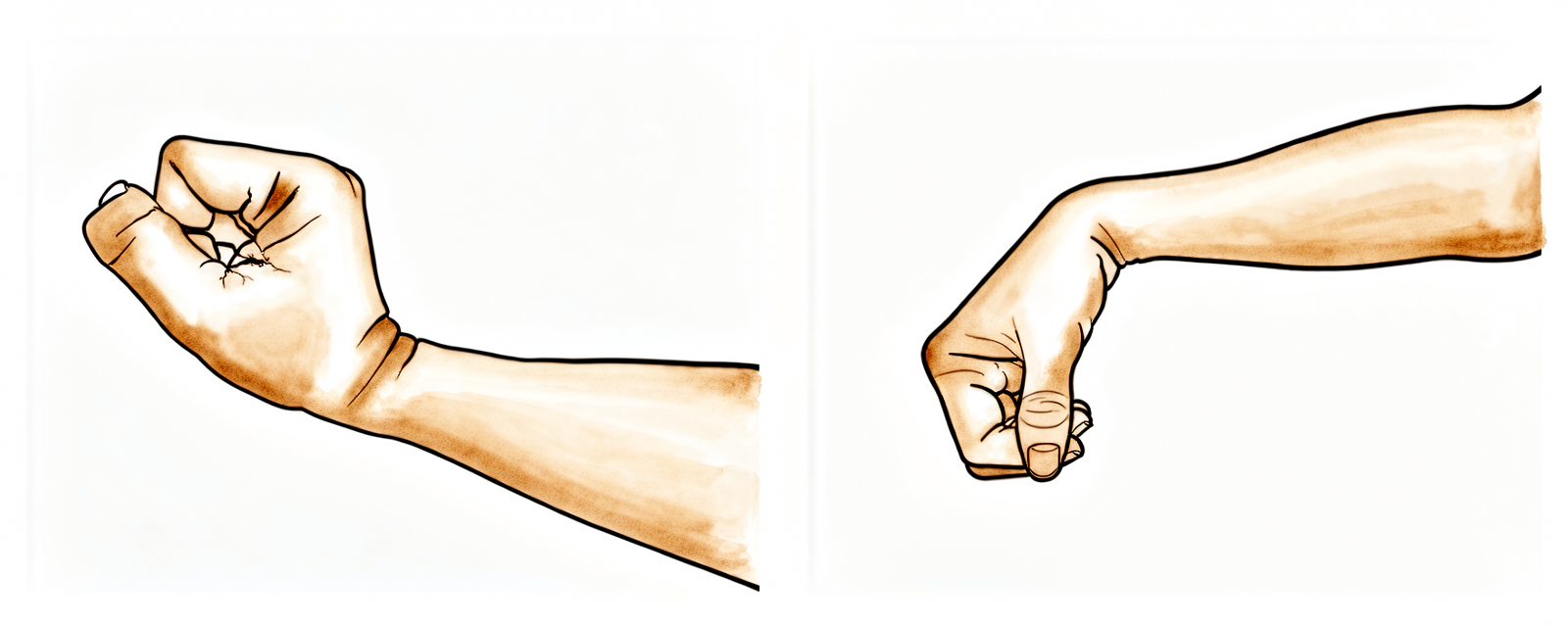
மணிக்கட்டு அசைவு
உங்கள் மணிக்கட்டை முன்னோக்கியும், பின்னோக்கியும், பக்கவாட்டில் இருபுறமும் வளைத்து உங்கள் கையை அசைத்துக்கொண்டே இருங்கள்.
10 முறை, நாளொன்றுக்கு 3 முறை
Kieran Hirpara 4.0
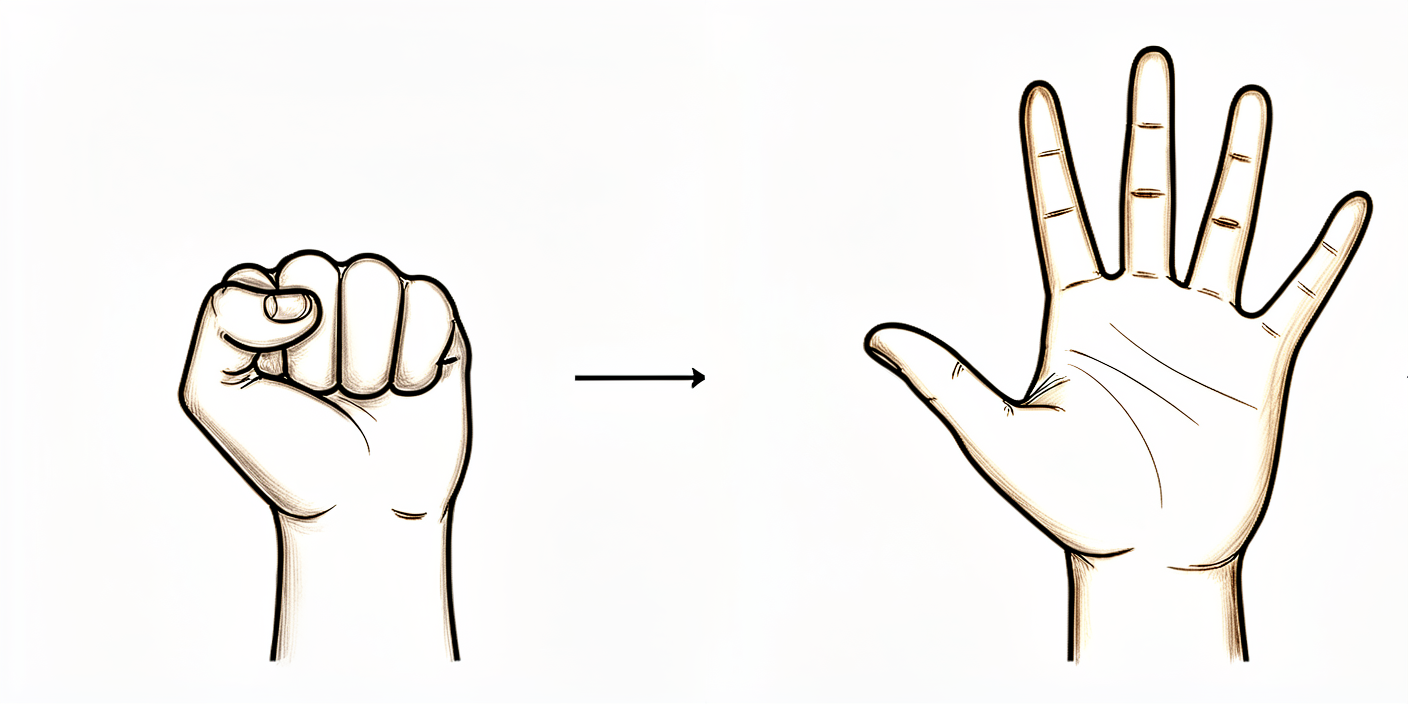
கையை விரித்து மூடுதல்
உங்கள் கையையும் விரல்களையும் விரித்து மூடுவதன் மூலம், அல்லது ஒரு மென்மையான பந்தை அழுத்துவதன் மூலம், அவற்றை அசைத்துக்கொண்டே இருங்கள்.
10 முறை, நாளொன்றுக்கு 3 முறை
Kieran Hirpara 4.0
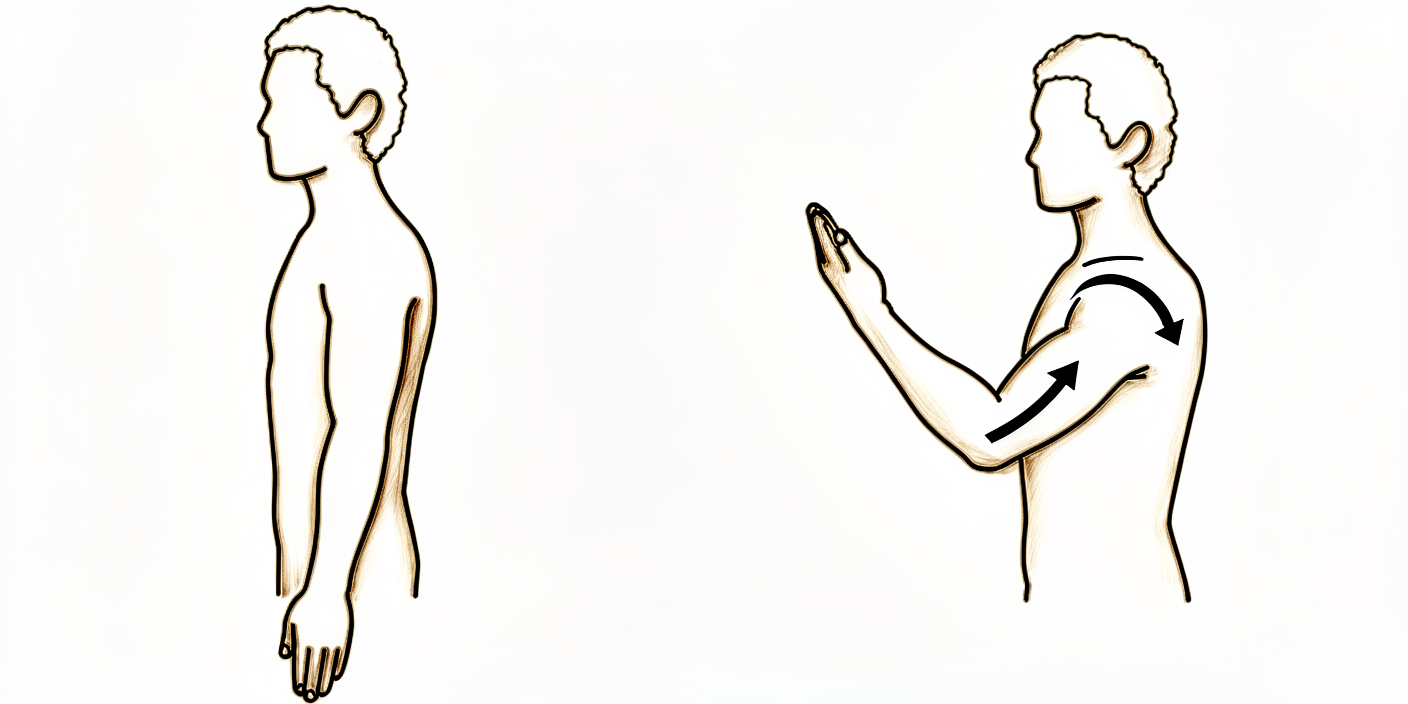
முழங்கையை மடக்குதல்
உங்கள் முழங்கையை மடக்கி நேராக்குங்கள்.
10 முறை, நாளொன்றுக்கு 3 முறை
Kieran Hirpara 4.0
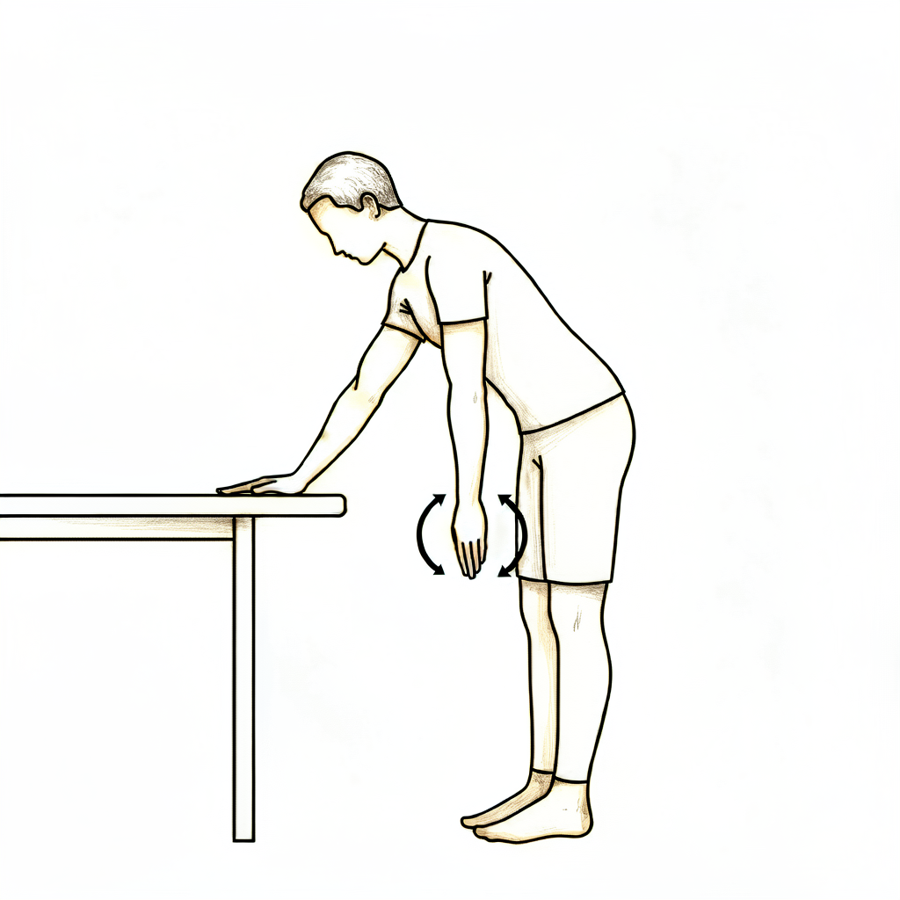
ஊசல் (pendulum) பயிற்சிகள்
இது ஒரு தளர்வான, செயலற்ற (passive) பயிற்சி. முன்னோக்கிக் குனிந்து, உங்கள் கை கீழே தொங்கித் தளர்ந்திருக்கட்டும். வலஞ்சுழியாகவும் இடஞ்சுழியாகவும் சிறிய வட்டங்களில், மேலும் முன்னும் பின்னுமாக, கையை மென்மையாக ஆட்ட உங்கள் உடலைப் பயன்படுத்துங்கள். தோள்பட்டைத் தசைகள் தளர்வாக இருக்க, கையின் எடையே வேலையைச் செய்யட்டும்.
ஒவ்வொரு திசையிலும் சுமார் 30 வினாடிகள், நாளொன்றுக்கு 3 முறை
Kieran Hirpara 4.0
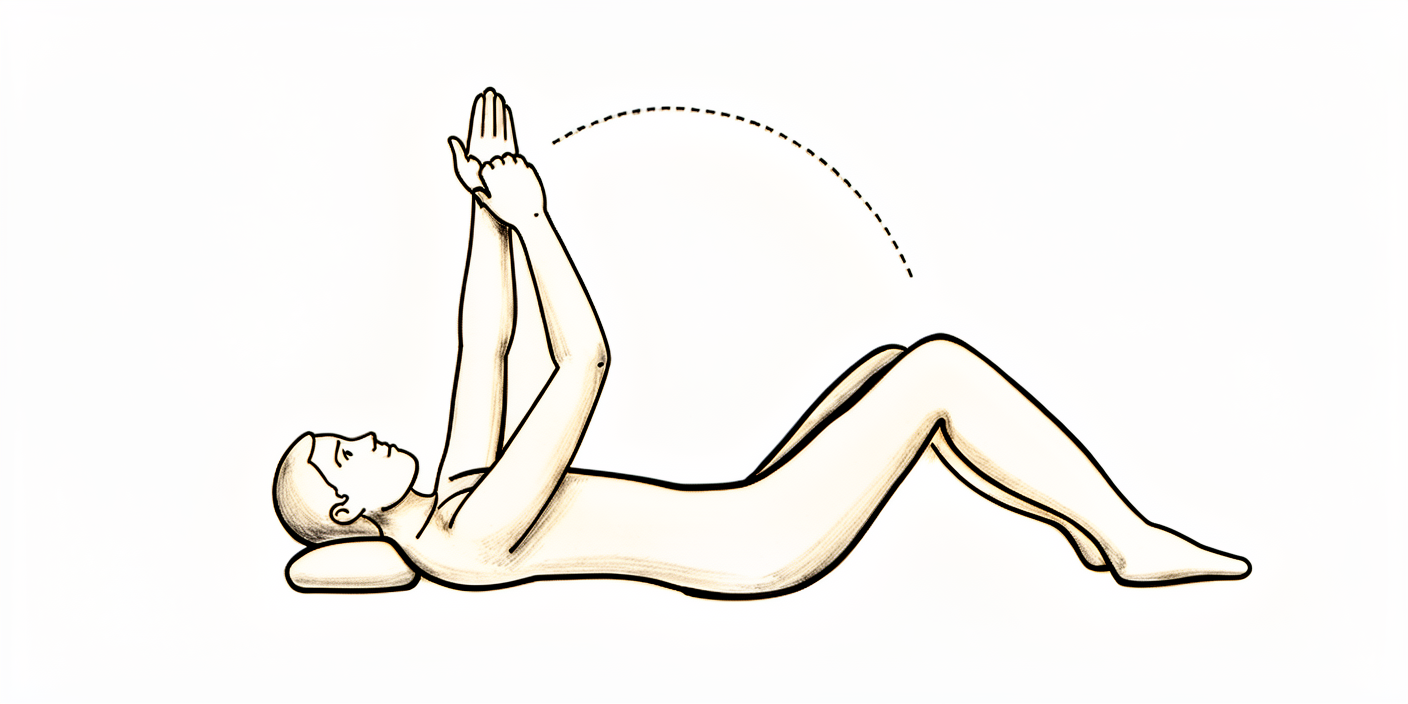
உதவியுடன் முன்னோக்கி உயர்த்துதல் (படுத்த நிலையில்)
நீங்கள் விரும்பினால், மல்லாந்து படுத்து, இரு கைகளிலும் ஒரு குச்சியை (அல்லது சுருட்டிய துண்டை) பிடியுங்கள். அறுவை சிகிச்சை செய்த கையை வசதியாக முடிந்த அளவு தலைக்கு மேல் தள்ளி உயர்த்த உங்கள் நல்ல கையைப் பயன்படுத்துங்கள்; பின்னர் மெதுவாக அதை இறக்குங்கள். ஒவ்வொரு முறையும் உறுதியான நீட்சி வரும் வரை தள்ளுங்கள்.
10 முறை, நாளொன்றுக்கு 3 முறை
Kieran Hirpara 4.0
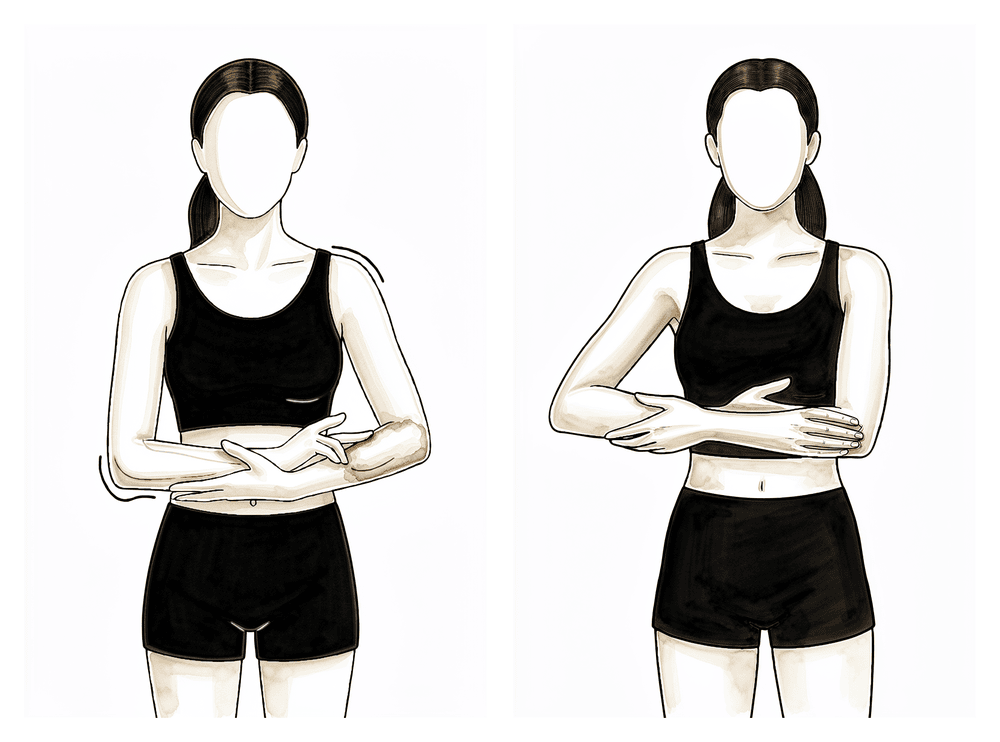
உதவியுடன் பக்கவாட்டில் விரித்தல் (தொட்டிலாட்டுதல்)
அறுவை சிகிச்சை செய்த கையை உங்கள் மற்றொரு கையால், முழங்கைக்குக் கீழே தாங்கிப் பிடித்து, குழந்தையைத் தொட்டிலாட்டுவது போல் மென்மையாகப் பக்கவாட்டில் வெளியேயும் திரும்பவும் ஆட்டுங்கள். ஒவ்வொரு முறையும் பக்கவாட்டில் உறுதியான நீட்சி வரும் வரை கொண்டு செல்லுங்கள்.
10 முறை, நாளொன்றுக்கு 3 முறை
Kieran Hirpara 4.0
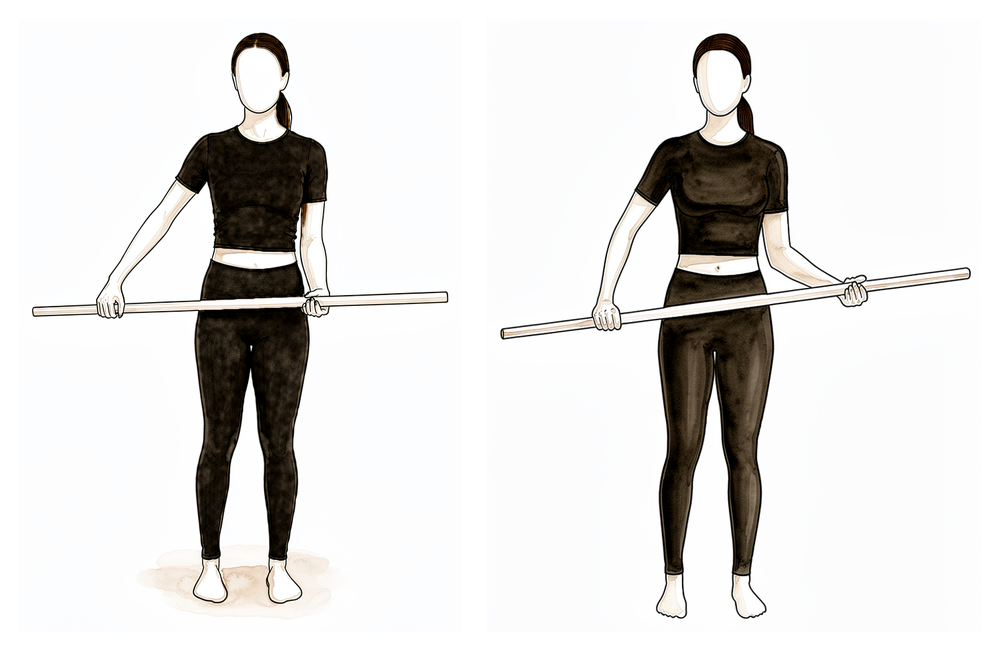
குச்சியுடன் உதவியுடன் செய்யும் வெளிப்புறச் சுழற்சி
முழங்கை உடலின் பக்கவாட்டில் ஒட்டியபடி 90 பாகைக்கு மடங்கியிருக்க, மல்லாந்து படுங்கள். இரு கைகளிலும் ஒரு குச்சியைப் பிடித்து, அறுவை சிகிச்சை செய்த கையை வெளிப்புறமாகத் தள்ளித் தோள்பட்டையைச் சுழற்ற உங்கள் நல்ல கையைப் பயன்படுத்துங்கள். உறுதியான நீட்சி வரும் வரை முழுமையாகக் கொண்டு செல்லுங்கள்: இந்த அறுவை சிகிச்சைக்குப் பிறகு எவ்வளவு தூரம் வெளியே செல்லலாம் என்பதற்கு வரம்பு எதுவும் இல்லை; எனவே அசைவு வரம்பைத் தள்ளுங்கள்.
10 முறை, நாளொன்றுக்கு 3 முறை
Kieran Hirpara 4.0
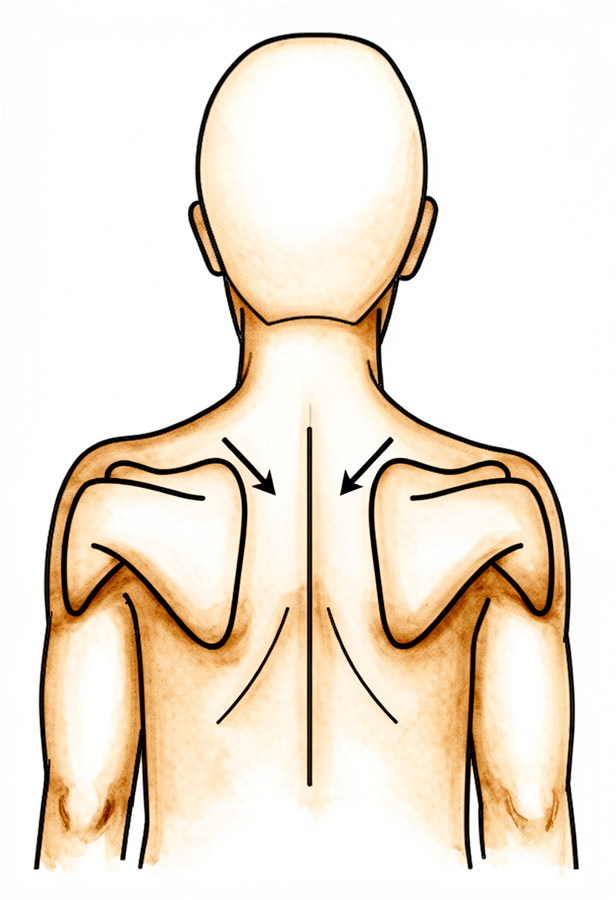
கீழ் ட்ரெப்பீசியஸ் (lower trapezius) தசையை இறுக்குதல்
உங்கள் தோள்பட்டை எலும்புகளை (shoulder blades) கீழ்நோக்கியும் ஒன்றோடொன்று நெருக்கியும் இறுக்கி, அப்படியே பிடித்து வைத்து, பின்னர் தளர்த்துங்கள்.
5 வினாடிகள் பிடித்து வைத்து, 5 முறை; நாளொன்றுக்கு 3 முறை மீண்டும் செய்யுங்கள்
Kieran Hirpara 4.0
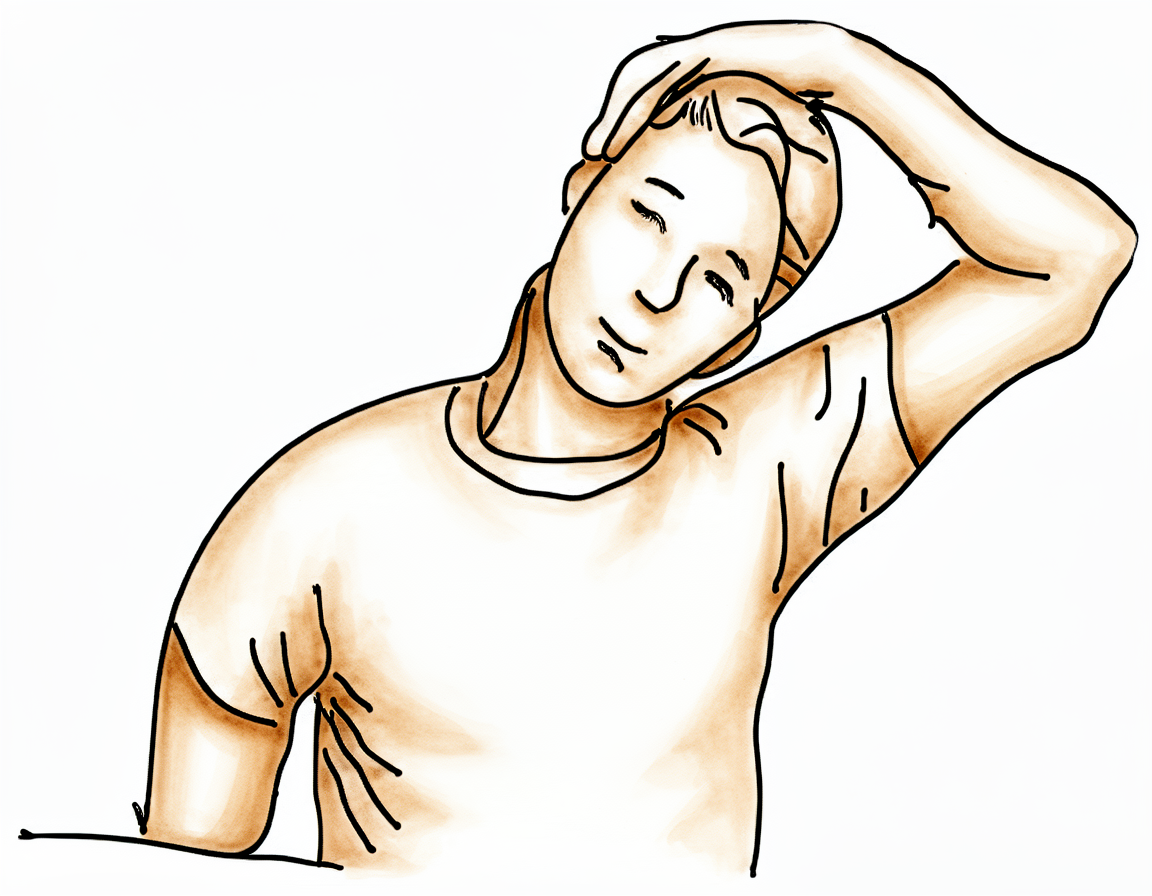
மேல் ட்ரெப்பீசியஸ் (upper trapezius) நீட்சி
கழுத்தின் பக்கவாட்டில் மேல்நோக்கி ஒரு நீட்சியை உணரும் வரை, அறுவை சிகிச்சை செய்த பக்கத்திலிருந்து விலகி, உங்கள் காதை மென்மையாகத் தோள்பட்டையை நோக்கிக் கொண்டு வர உங்கள் நல்ல கையைப் பயன்படுத்துங்கள்.
10 வினாடிகள் பிடித்து வைத்து, 3 முறை; நாளொன்றுக்கு 3 முறை மீண்டும் செய்யுங்கள்
Kieran Hirpara 4.0
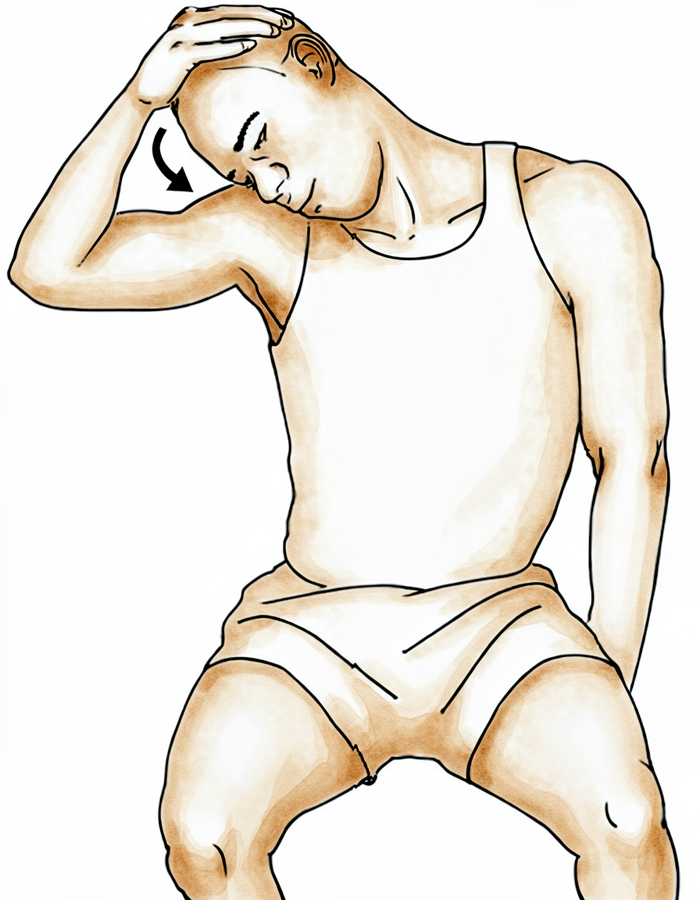
லெவேட்டர் ஸ்கேபுலே (levator scapulae) நீட்சி
கழுத்தின் அடிப்பகுதியில் ஒரு நீட்சியை உணரும் வரை, எதிர்ப் பக்கத்து அக்குளை நோக்கி உங்கள் மூக்கைக் கீழே கொண்டு வர உங்கள் நல்ல கையைப் பயன்படுத்துங்கள்.
10 வினாடிகள் பிடித்து வைத்து, 3 முறை; நாளொன்றுக்கு 3 முறை மீண்டும் செய்யுங்கள்
மருத்துவமனையில் ஓர் இயன்முறை சிகிச்சையாளர் உங்களைப் பார்த்து, நீங்கள் வீட்டுக்குச் செல்வதற்கு முன்பே கீழே உள்ள பயிற்சிகளைத் தொடங்கி வைப்பார். இவை கை, முழங்கை, தோள்பட்டை ஆகியவை அசைந்துகொண்டே இருக்கச் செய்கின்றன; தோள்பட்டையின் அசைவு வரம்பை உடனடியாகத் தள்ளத் தொடங்குகின்றன. தாராளமாக அசைய முடியும்படி, முன்கூட்டியே உங்கள் வலி நிவாரணியை எடுத்துக்கொள்ளுங்கள். உங்கள் குழு குறித்துக் காட்டியபடி அவற்றைச் செய்து, வீட்டிலும் அவற்றைத் தொடருங்கள்.
உங்கள் வெளிநோயாளி மறுவாழ்வுப் பயிற்சி
மூட்டுறை விடுவிப்புக்குப் பிறகு, ஒரு தசைநாணைப் பழுதுபார்க்கும் அறுவை சிகிச்சைகளுக்கு நேர் எதிர்த் திசையில் மறுவாழ்வுப் பயிற்சி நடக்கிறது: பாதுகாக்க எதுவும் இல்லை, எனவே முழு முயற்சியும் அசைவைத் தக்கவைப்பதிலேயே செல்கிறது. முதல் சில வாரங்களில்தான் தோள்பட்டை மீண்டும் இறுகுவதற்கான வாய்ப்பு அதிகம்; எனவே இயன்முறை சிகிச்சை உடனடியாகத் தொடங்கி, அடிக்கடி தொடர்ந்து, உங்கள் அசைவு வரம்பு நிலையாகும் வரை சில மாதங்களுக்கு நீடிக்கிறது. கீழே உள்ள கட்டங்கள், இந்த அறுவை சிகிச்சைக்காக வெளியிடப்பட்ட மறுவாழ்வு நெறிமுறைகளின் அமைப்பைப் பின்பற்றுகின்றன. வார வரம்புகள் நிலையானவை அல்ல, வழக்கமானவை: நாட்காட்டியை வைத்து அல்லாமல், உங்கள் தோள்பட்டை எப்படி அசைகிறது என்பதன் அடிப்படையிலேயே உங்கள் இயன்முறை சிகிச்சையாளர் உங்களை முன்னேற்றுவார்.
பயணம் ஒரே பார்வையில்:
- கட்டம் I — ஆரம்ப மறுவாழ்வுப் பயிற்சி: தோராயமாக முதல் இரண்டு வாரங்கள்
- கட்டம் II — உங்கள் அசைவு வரம்பைத் தக்கவைத்து மீட்டெடுத்தல்: வாரம் 2 முதல் 6 வரை
- கட்டம் III — வலுப்படுத்துதல்: வாரம் 6 முதல் 12 வரை
- கட்டம் IV — முழுச் செயல்பாட்டுக்குத் திரும்புதல்: வாரம் 12 முதல்
சுமார் மூன்று வாரங்களில், தோள்பட்டை உயரத்துக்குக் கீழான அசைவு பொதுவாக மேலும் வசதியாகிவிடும், உங்கள் அசைவு வரம்பில் பெரும்பகுதி திரும்பியிருக்கும்; இருப்பினும் தலைக்கு மேல் கையை உயர்த்துவது பெரும்பாலும் இன்னும் அசௌகரியமாகவே இருக்கும். சுமார் மூன்று மாதங்களில் தங்கள் அறிகுறிகள் பெருமளவு அடங்கிவிட்டதாகப் பெரும்பாலானோர் உணர்கிறார்கள்; முன்னேற்றம் பொதுவாக ஆறு முதல் ஒன்பது மாதங்கள் வரை, சில சமயம் ஓராண்டு வரை தொடர்கிறது.
கட்டம் I — ஆரம்ப மறுவாழ்வுப் பயிற்சி (வாரம் 0–2)
Kieran Hirpara 4.0
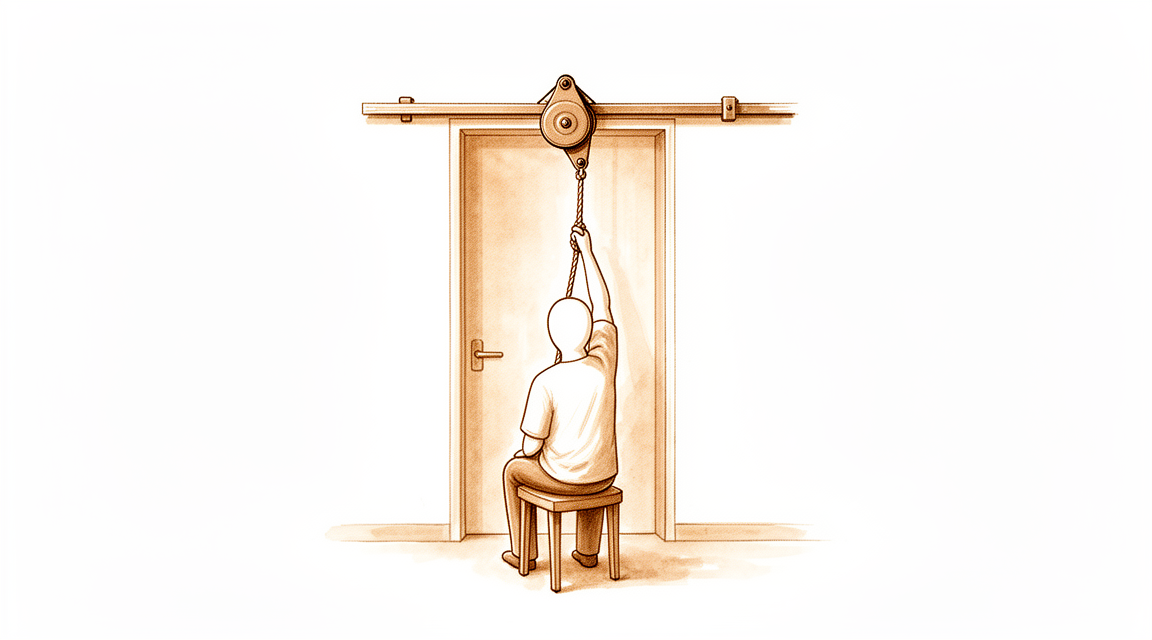
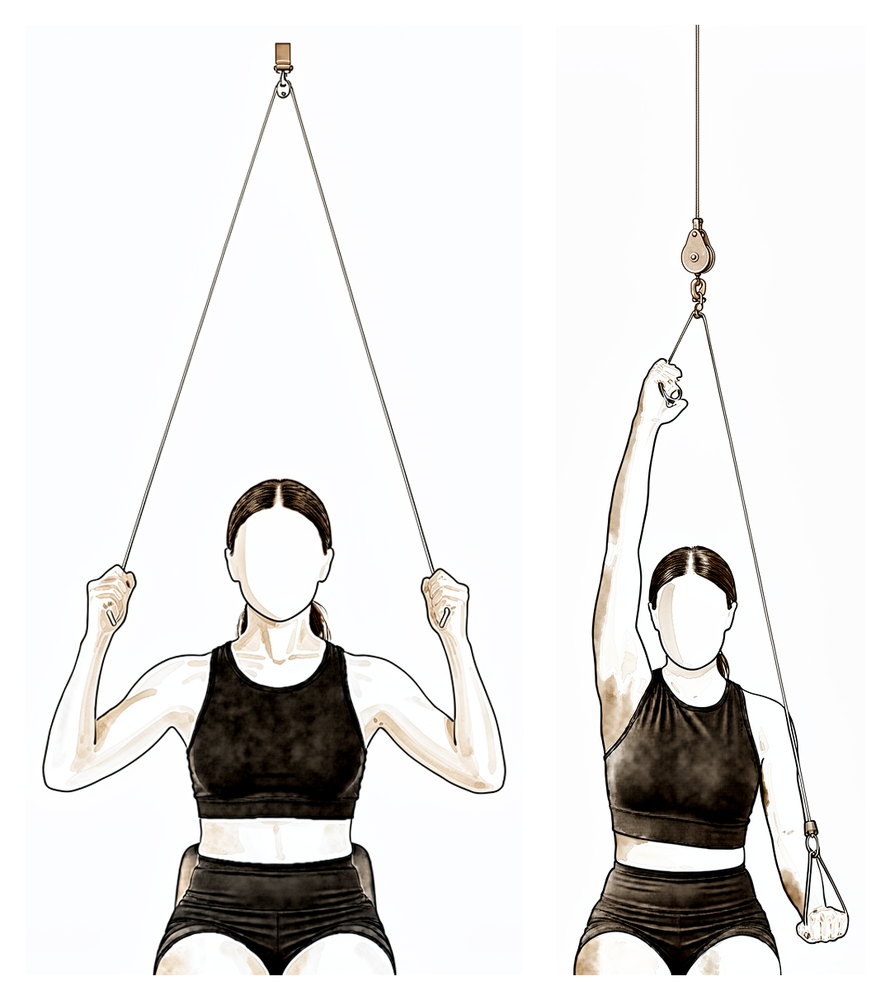
கதவின் மேலுள்ள கப்பி (pulley)
கதவின் மேல் பொருத்தப்பட்ட கப்பிக்குக் கீழே அமர்ந்து, ஒவ்வொரு கையிலும் ஒரு கைப்பிடியைப் பிடியுங்கள். நல்ல கையால் கீழ்நோக்கி இழுத்து, அறுவை சிகிச்சை செய்த கையை முடிந்த அளவு தலைக்கு மேல் உயர்த்துங்கள்; பின்னர் மெதுவாக இறக்குங்கள். ஒவ்வொரு முறையும் கடும் வலி வரும் வரை அல்ல, உறுதியான நீட்சி வரும் வரை தள்ளுங்கள்.
10 முறை, நாளொன்றுக்கு 3 முதல் 4 முறை
Kieran Hirpara 4.0
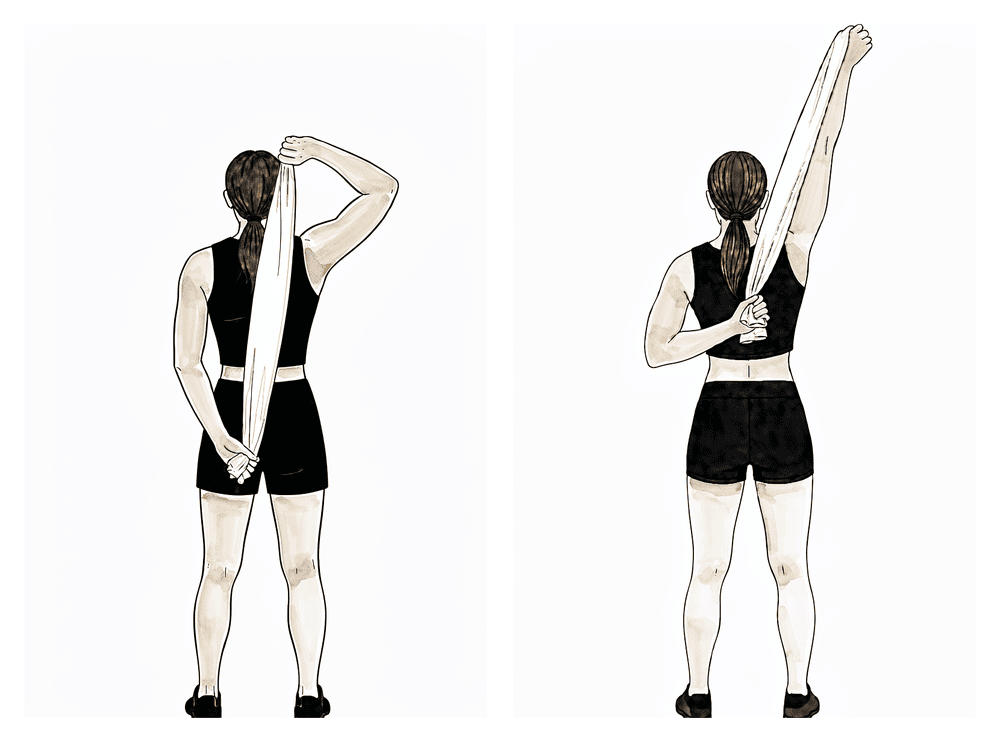
துண்டைப் பயன்படுத்தி முதுகுக்குப் பின்னால் செய்யும் நீட்சி
அறுவை சிகிச்சை செய்த கை கீழே இருக்கும்படி முதுகுக்குப் பின்னால் ஒரு துண்டைப் பிடித்து, கீழுள்ள கையை முதுகின் மேல்நோக்கி முடிந்த அளவு இழுக்க மேலுள்ள கையைப் பயன்படுத்துங்கள். உறுதியான நீட்சி வரும் வரை கொண்டு சென்று, பின்னர் விடுங்கள்: அதற்குச் சற்று நேரத்தில் நீட்சி உணர்வு தணிய வேண்டும்.
10 முறை, நாளொன்றுக்கு 3 முதல் 4 முறை
Kieran Hirpara 4.0
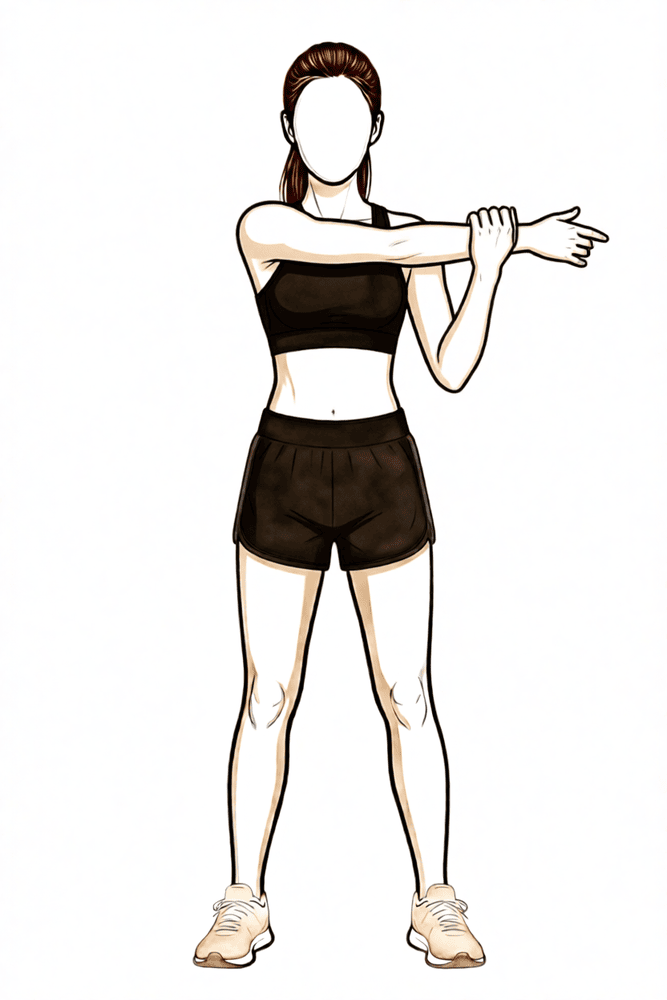
உடலின் குறுக்கே செய்யும் நீட்சி
தோள்பட்டையின் பின்புறத்தில் உறுதியான நீட்சியை உணரும் வரை, அறுவை சிகிச்சை செய்த கையை உங்கள் மார்பின் குறுக்கே இழுக்க உங்கள் நல்ல கையைப் பயன்படுத்துங்கள்; பின்னர் விடுங்கள்.
10 முறை, நாளொன்றுக்கு 3 முதல் 4 முறை
Kieran Hirpara 4.0
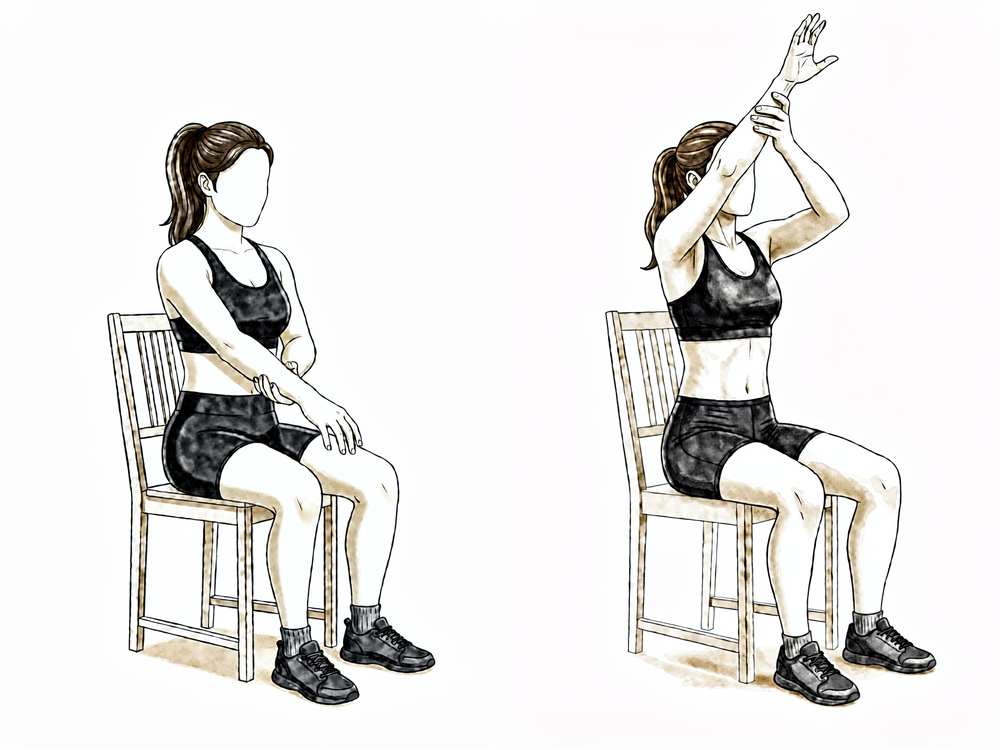
உதவியுடன் முன்னோக்கி உயர்த்துதல் (அமர்ந்த நிலையில்)
அமர்ந்து சற்று முன்னோக்கிச் சாய்ந்து, அறுவை சிகிச்சை செய்த முன்கையை உங்கள் நல்ல கையால் தாங்கிப் பிடித்து, வசதியாக முடிந்த அளவு அறுவை சிகிச்சை செய்த கையை உங்களுக்கு முன்னால் முன்னோக்கியும் மேல்நோக்கியும் உயர்த்துங்கள்; பின்னர் மெதுவாக அதை இறக்குங்கள். அறுவை சிகிச்சை செய்த தோள்பட்டை தளர்வாக இருக்க, நல்ல கையே வேலையைச் செய்யட்டும்.
உங்கள் இயன்முறை சிகிச்சையாளர் வழிகாட்டியபடி
இந்த முதல் இரண்டு வாரங்களின் இலக்கு எளிமையானது: அறுவை சிகிச்சையில் பெற்ற அசைவு வரம்பை இழந்துவிடாதீர்கள். மருத்துவமனையில் தொடங்கிய பயிற்சிகளை வீட்டில் நாளொன்றுக்குப் பல முறை தொடர்கிறீர்கள்; அத்துடன் தோள்பட்டையை எல்லாத் திசைகளிலும் அதன் எல்லைக்குத் தள்ளும் நீட்சிப் பயிற்சிகளையும் சேர்க்கிறீர்கள். நல்ல வலிக் கட்டுப்பாடுதான் இதைச் சாத்தியமாக்குகிறது; எனவே உங்கள் பயிற்சிகளுக்கும் இயன்முறை சிகிச்சை அமர்வுகளுக்கும் முன் வலி நிவாரணியைத் தொடர்ந்து எடுத்துக்கொள்ளுங்கள்; உதவியாக இருந்தால், நீட்டுவதற்கு முன் வெப்பமும் அதற்குப் பிறகு ஐஸும் பயன்படுத்துங்கள். குளிப்பது, உடை அணிவது, சாப்பிடுவது போன்ற இயல்பான இலகுவான அன்றாடச் செயல்களுக்குக் கையைப் பயன்படுத்துங்கள். ஒவ்வொரு நீட்சியையும் கடும் வலி வரும் வரை அல்ல, உறுதியான அசௌகரியம் உணரும் அளவுக்குத் தள்ளுங்கள்; நீங்கள் பின்வாங்க வேண்டிய தளம் எதுவும் இல்லை என்பதை நினைவில் கொள்ளுங்கள்.
அடுத்த கட்டத்துக்குத் தயார் எப்போது… உங்கள் வீட்டுப் பயிற்சித் திட்டத்தை நாளொன்றுக்குப் பல முறை நம்பிக்கையுடன் சுயமாகச் செய்யும்போது, அசைவு வரம்புக்குள் நீட்ட முடியுமளவு உங்கள் வலி கட்டுக்குள் இருக்கும்போது, அறுவை சிகிச்சையின்போது உங்கள் தோள்பட்டைக்கு இருந்த அசைவை நீங்கள் தக்கவைத்திருக்கும்போது.
கட்டம் II — உங்கள் அசைவு வரம்பைத் தக்கவைத்து மீட்டெடுத்தல் (வாரம் 2–6)
Kieran Hirpara 4.0
குச்சியுடன் வெளிப்புறச் சுழற்சி (முழு வரம்பு)
மருத்துவமனையில் தொடங்கிய, குச்சி உதவியுடன் செய்யும் வெளிப்புறச் சுழற்சியைத் தொடருங்கள்; அசைவு வரம்பு தளர்ந்து வரும்போது இப்போது இன்னும் அதிகமாகத் தள்ளுங்கள். முழங்கை உடலின் பக்கவாட்டில் இருக்க, முன்கையை முடிந்த அளவு வெளிப்புறமாகச் சுழற்றுங்கள். அதன் முழு எல்லைக்குத் தொடர்ந்து கொண்டு செல்லுங்கள்: இந்த அசைவு வரம்பைத் தள்ளுவதுதான் அறுவை சிகிச்சையின் முழு நோக்கமே.
10 முறை, நாளொன்றுக்கு 3 முதல் 4 முறை
Kieran Hirpara 4.0
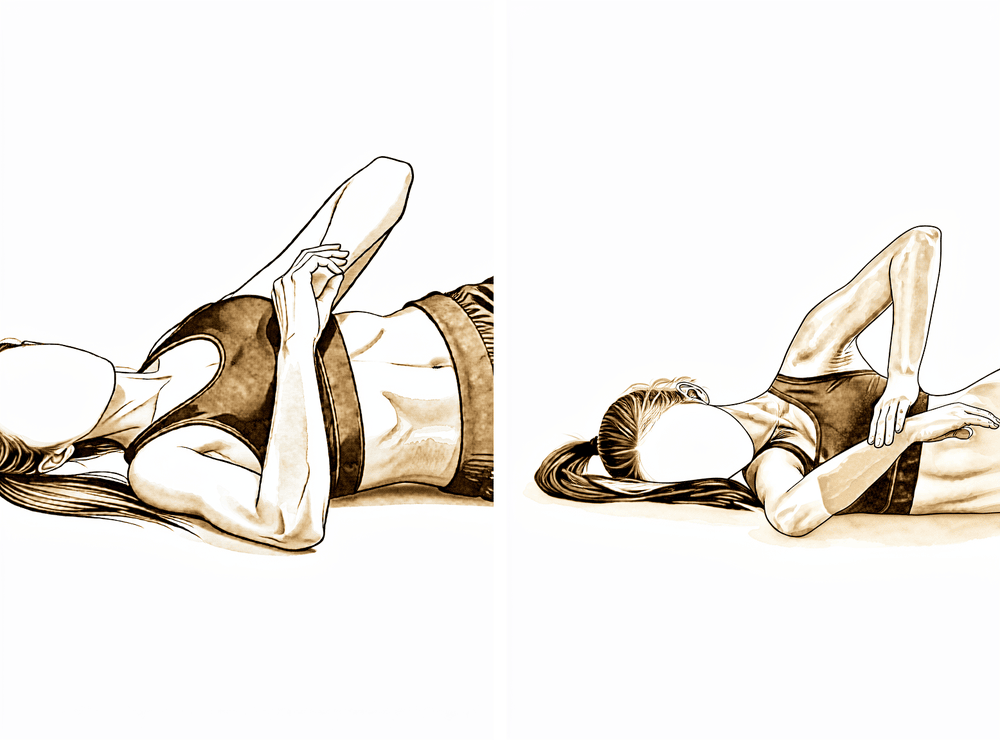
ஸ்லீப்பர் நீட்சி (sleeper stretch)
அறுவை சிகிச்சை செய்த பக்கத்தில், கை முன்னால் நீட்டப்பட்டு முழங்கை மடங்கியிருக்கும்படி படுங்கள். தோள்பட்டைக்குள் ஆழமாக ஒரு நீட்சியை உணரும் வரை, முன்கையை மென்மையாகப் படுக்கையை நோக்கிக் கீழே அழுத்த உங்கள் நல்ல கையைப் பயன்படுத்துங்கள்; பின்னர் அழுத்தத்தைத் தளர்த்துங்கள்.
20 முதல் 30 வினாடிகள் பிடித்து வைத்து, 3 முறை; நாளொன்றுக்கு 3 முதல் 4 முறை
அறுவை சிகிச்சையில் பெற்ற அசைவு இழக்கப்படாமல் இருக்கவும், அசைவு வரம்பு தொடர்ந்து வளரவும், இந்தக் கட்டத்தில் அடிக்கடியான இயன்முறை சிகிச்சையும், நாளொன்றுக்குப் பல முறை செய்யப்படும் வீட்டு நீட்சித் திட்டமும் தொடர்கின்றன. உங்கள் பயிற்சிகள், உதவியுடன் செய்யும் அசைவுகளிலிருந்து எல்லாத் திசைகளிலும் கையைச் சுயமாக அசைப்பதை நோக்கி முன்னேறுகின்றன; உதவுவதற்காக உங்கள் இயன்முறை சிகிச்சையாளர் கைகளால் செய்யும் மூட்டு அசைவூட்டலையும் (joint mobilisation) சேர்க்கலாம். வெளிப்புறச் சுழற்சி (external rotation) உட்பட ஒவ்வொரு தளத்திலும் அசைவு வரம்பை அதன் முழு எல்லை வரை தள்ளிக்கொண்டே இருங்கள். இலகுவான அன்றாடச் செயல்களுக்குக் கையை இயல்பாகப் பயன்படுத்துங்கள்.
அடுத்த கட்டத்துக்குத் தயார் எப்போது… அறுவை சிகிச்சையில் பெற்ற அசைவு வரம்பு தக்கவைக்கப்படும்போது அல்லது இன்னும் மேம்பட்டுக்கொண்டிருக்கும்போது, தோள்பட்டை உயரத்துக்குக் கீழான அசைவு வசதியாக இருக்கும்போது, மென்மையான எதிர்ப்புப் பயிற்சியைத் தொடங்கும் அளவுக்கு உங்கள் வலி அடங்கியிருக்கும்போது.
கட்டம் III — வலுப்படுத்துதல் (வாரம் 6–12)
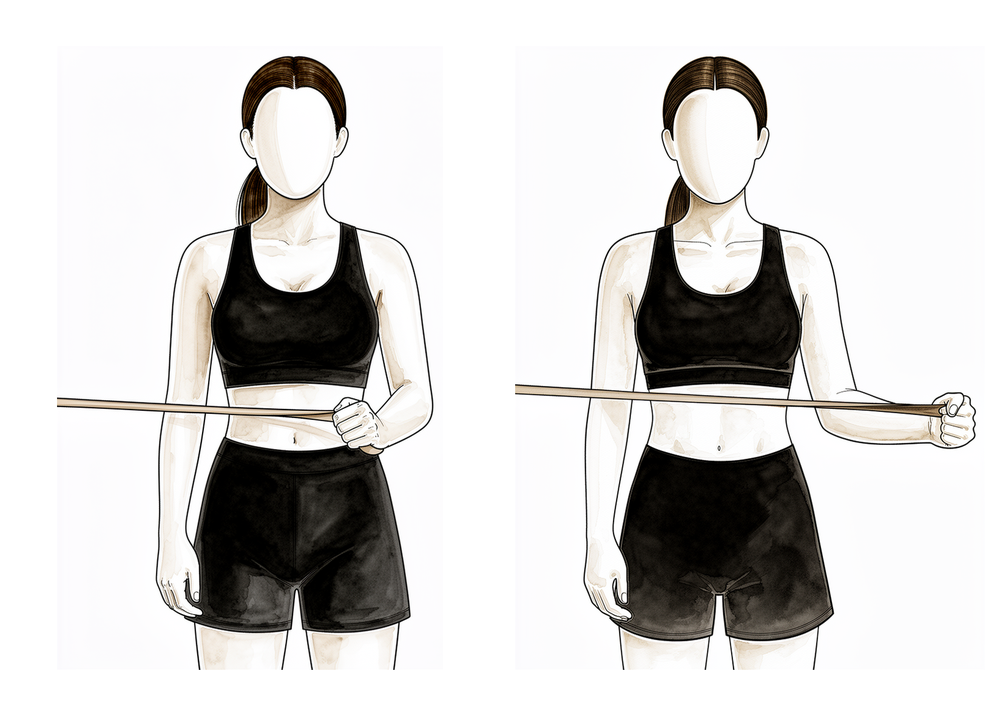
Kieran Hirpara 4.0
மீள்பட்டையுடன் வெளிப்புறச் சுழற்சி
இடுப்பு உயரத்தில் நிலைநிறுத்தப்பட்ட ஒரு மீள்பட்டையைப் பிடித்தபடி, முழங்கை உடலின் பக்கவாட்டில் ஒட்டி 90 பாகைக்கு மடங்கியிருக்க நில்லுங்கள். முழங்கையைப் பக்கவாட்டிலேயே வைத்துக்கொண்டு, பட்டையின் எதிர்ப்புக்கு எதிராக முன்கையை வெளிப்புறமாகச் சுழற்றி, பின்னர் மெதுவாகத் திரும்புங்கள்.
10 முதல் 15 வரையிலான 2 முதல் 3 தொகுதிகள், வாரத்திற்கு 5 நாட்கள்
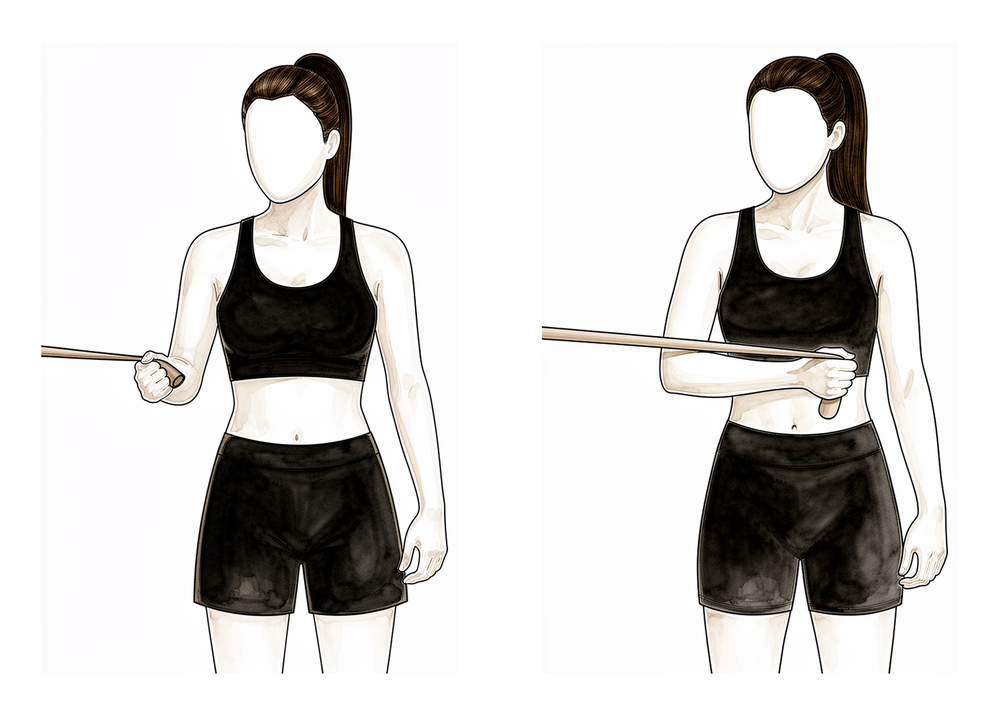
Kieran Hirpara 4.0
மீள்பட்டையுடன் உட்புறச் சுழற்சி
முழங்கை உடலின் பக்கவாட்டில் ஒட்டியிருக்க, ஒரு பக்கத்தில் நிலைநிறுத்தப்பட்ட பட்டையைப் பிடித்து, பட்டையின் எதிர்ப்புக்கு எதிராக முன்கையை உடலின் குறுக்கே உட்புறமாகச் சுழற்றி, பின்னர் மெதுவாகத் திரும்புங்கள்.
10 முதல் 15 வரையிலான 2 முதல் 3 தொகுதிகள், வாரத்திற்கு 5 நாட்கள்
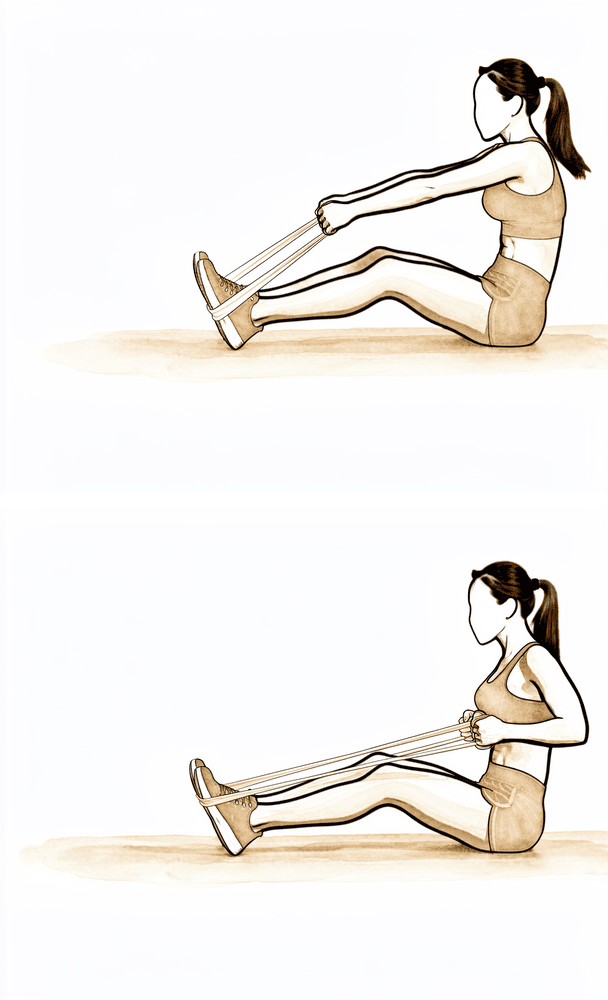
Kieran Hirpara 4.0
தாழ்வான இழுப்பு (low row)
உங்களுக்கு முன்னால் இடுப்பு உயரத்தில் நிலைநிறுத்தப்பட்ட ஒரு பட்டையைப் பிடியுங்கள். கையை ஓரளவு நேராக வைத்துக்கொண்டு, தோள்பட்டை எலும்பைக் கீழ்நோக்கியும் பின்னோக்கியும் இறுக்கியபடி, கையை உங்கள் இடுப்பை நோக்கிப் பின்னோக்கியும் கீழ்நோக்கியும் இழுத்து, பின்னர் மெதுவாகத் திரும்புங்கள்.
10 முதல் 15 வரையிலான 2 முதல் 3 தொகுதிகள், வாரத்திற்கு 5 நாட்கள்
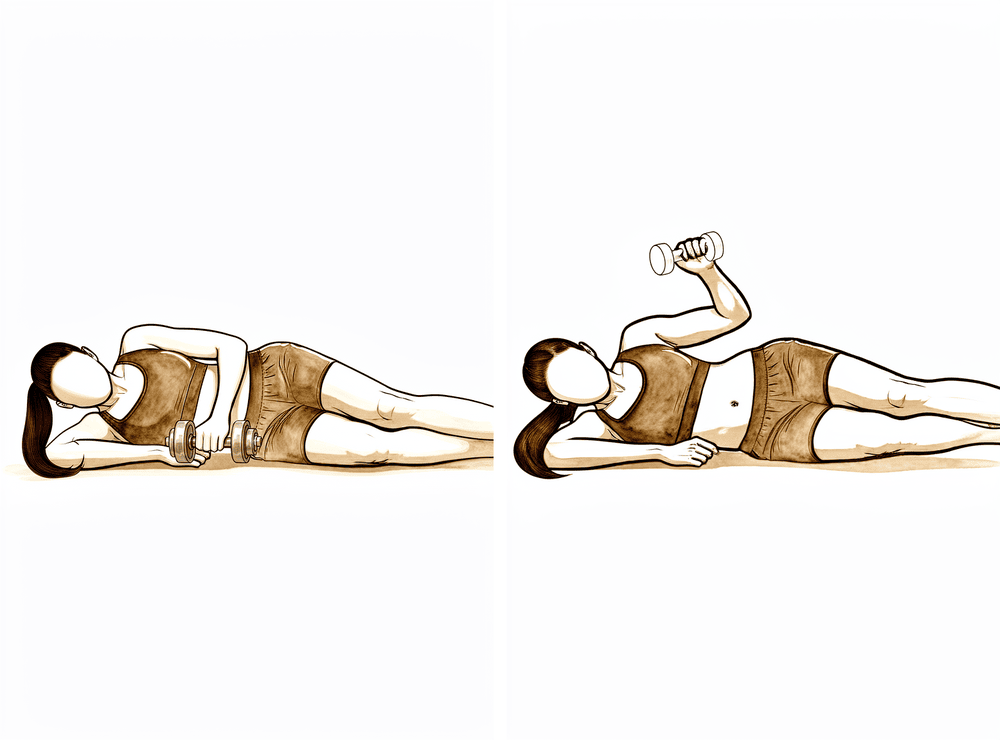
Kieran Hirpara 4.0
பக்கவாட்டில் படுத்து வெளிப்புறச் சுழற்சி (இலகுவான எடையுடன்)
அறுவை சிகிச்சை செய்த முழங்கை 90 பாகைக்கு மடங்கி உடலின் பக்கவாட்டில் ஒட்டியிருக்க, ஓர் இலகுவான எடையைப் (சுமார் 0.5 முதல் 1.5 கிலோகிராம்) பிடித்தபடி, உங்கள் நல்ல பக்கத்தில் படுங்கள். முன்கையை மேல்நோக்கிச் சுழற்றி, பின்னர் மெதுவாக இறக்குங்கள்: மெதுவாக இறக்குவதுதான் முக்கியமான பகுதி. தோள்பட்டை உயரத்துக்குக் கீழேயே பயிற்சியை வைத்திருங்கள்.
10 முதல் 15 வரையிலான 2 முதல் 3 தொகுதிகள், குறைந்த சுமையுடன்
உங்கள் அசைவு வரம்பு நிலையானதும், தோள்பட்டையின் வலிமையை மீண்டும் கட்டியெழுப்புவதில் கவனம் திரும்புகிறது. இந்தக் கட்டம் முழுவதும் தினசரி நீட்சிப் பயிற்சி தொடர்கிறது; ஏனெனில் நீங்கள் உழைத்துப் பெற்ற அசைவு வரம்பை இழந்து வலுப்படுத்துதல் வரவே கூடாது. சுழற்சி தசைநாண் பட்டைக்கும் (rotator cuff) தோள்பட்டை எலும்புத் தசைகளுக்கும் மீள்பட்டைகளையும் (elastic band) இலகுவான எடைகளையும் பயன்படுத்தி, குறைந்த சுமையுடனும் அதிக மறுசெய்கைகளுடனும், எதிர்ப்புப் பயிற்சி மென்மையாகத் தொடங்குகிறது. இயல்பான அன்றாடச் செயல்கள் பெருமளவு வழக்கத்துக்குத் திரும்பியிருக்க வேண்டும்; உங்கள் இயன்முறை சிகிச்சையாளர் வழிகாட்டியபடி, இலகுவான பொழுதுபோக்குச் செயல்கள் பொதுவாக இந்தக் கட்டத்தில் மீண்டும் தொடங்குகின்றன.
அடுத்த கட்டத்துக்குத் தயார் எப்போது… எல்லாத் திசைகளிலும் முழுமையான, அல்லது கிட்டத்தட்ட முழுமையான, வலியற்ற அசைவு உங்களுக்கு இருக்கும்போது, வலி மீண்டும் தூண்டப்படாமலும் அசைவு வரம்பை இழக்காமலும் வலுப்படுத்தும் பயிற்சிகளைச் செய்ய முடியும்போது.
கட்டம் IV — முழுச் செயல்பாட்டுக்குத் திரும்புதல் (வாரம் 12 முதல்)
இறுதிக் கட்டம், கனமான வேலை, தலைக்கு மேலான வேலைகள், விளையாட்டு ஆகியவற்றுக்குப் படிப்படியாகத் திரும்புவது. முறையான மறுவாழ்வுப் பயிற்சி பொதுவாக மொத்தம் மூன்று முதல் நான்கு மாதங்கள் நீடிக்கிறது; தோள்பட்டை அதற்கு வெகு காலம் கழித்தும் மேம்பட்டுக்கொண்டே இருக்கும்: பெரும்பாலானோர் ஆறு முதல் ஒன்பது மாதங்கள் வரை, சில சமயம் ஓராண்டு வரை, வசதியையும் நம்பிக்கையையும் தொடர்ந்து பெறுகிறார்கள். முறையான பயிற்சிகள் இல்லாமலேயே உங்கள் அசைவு வரம்பு தன்னைத் தானே தக்கவைத்துக்கொள்ளும் வரை, ஒரு குறுகிய நீட்சிப் பயிற்சி வழக்கத்தைத் தொடர்வது பயனுள்ளது. நீங்கள் எப்படி உணர்கிறீர்கள் என்பதே முன்னேற்றத்துக்குத் தொடர்ந்து வழிகாட்டுகிறது; எனவே இறுக்கமோ வலியோ மீண்டும் வரத் தொடங்கினால், தோள்பட்டைக்கு ஓய்வு கொடுப்பது அல்ல, சற்று மெதுவாகச் சென்று அசைவு வரம்பை மீட்டெடுப்பதே தீர்வு.
செயல்பாட்டுக்குத் திரும்புதல்
திசு குணமாவதற்குக் காத்திருப்பதை விட, உங்கள் அசைவு வரம்பைத் தக்கவைப்பதே இங்கு மீட்சியை இயக்குகிறது; எனவே பெரும்பாலானோர் நான்கு முதல் ஆறு வாரங்களுக்குள் இயல்பான அன்றாடச் செயல்களுக்கும் பல வகையான வேலைகளுக்கும் திரும்பிவிடுகிறார்கள். உங்கள் வலிமை திரும்பும்போது, கனமான, அதிக உடலுழைப்புள்ள வேலையும் தலைக்கு மேலான விளையாட்டும் அடுத்த சில வாரங்கள் முதல் மாதங்களுக்குள் படிப்படியாகத் திரும்பும். எந்த நேரத்திலாவது தோள்பட்டை மீண்டும் இறுகத் தொடங்கினால், அதை ஓய்வெடுப்பதற்கான அறிகுறியாக அல்ல, உங்கள் நீட்சிப் பயிற்சிகளை இன்னும் வலுவாகத் தள்ளி உங்கள் இயன்முறை சிகிச்சையாளரைப் பார்ப்பதற்கான அறிகுறியாகக் கருதுங்கள்.
உங்கள் பயிற்சிகள்
இவை உங்கள் கையேட்டில் உள்ள பயிற்சிகள். டாக்டர் ஹிர்பராவும் உங்கள் இயன்முறை சிகிச்சையாளரும் வழிகாட்டியபடி அவற்றைத் தொடங்குங்கள். மூட்டுறை விடுவிப்புக்குப் பிறகு பாதுகாக்க வேண்டிய பழுதுபார்ப்பு எதுவும் இல்லை; எனவே தோள்பட்டையை அசைக்காமல் வைத்திருப்பது உங்களுக்கு எதிராகவே செயல்படும் — விடுவிக்கப்பட்ட தோள்பட்டை அமர்வுகளுக்கு இடையில் மீண்டும் இறுகிவிடும். அதனால்தான் இந்தப் பட்டியல் நீளமானது, அதனால்தான் சிறிது சிறிதாக அடிக்கடி செய்வது ஒரு நீண்ட அமர்வை விடச் சிறந்தது: ஆரம்பகால மணிக்கட்டு, கை, முழங்கை அசைவுகளும் ஊசல் பயிற்சிகளும் முழுக் கையையும் தளர்வாக வைத்திருக்கின்றன; உதவியுடன் செய்யும் நீட்சிகள் (படுத்த நிலையில் முன்னோக்கி உயர்த்துதல், தொட்டிலாட்டுவது போல் பக்கவாட்டில் விரித்தல், குச்சியுடன் வெளிப்புறச் சுழற்சி) அறுவை சிகிச்சை பெற்றுத் தந்த அசைவு வரம்பைத் தக்கவைக்கின்றன; மீள்பட்டை மற்றும் தோள்பட்டை எலும்புப் பயிற்சிகள் கட்டுப்பாட்டை வளர்க்கப் பின்னர் சேர்க்கப்படுகின்றன. வலிமையை விட அடிக்கடி செய்வதே முக்கியம். நீட்சியாக அல்லாமல் கூர்மையான வலியை ஏற்படுத்தும் எதையும் நிறுத்திவிடுங்கள்.
உங்கள் நெறிமுறைக்குப் பிறகு
மேலே உள்ள வெளிநோயாளிக் கட்டங்கள், ஆர்த்ரோஸ்கோபிக் மூட்டுறை விடுவிப்புக்காக வெளியிடப்பட்ட மறுவாழ்வு நெறிமுறைகளிலிருந்து தழுவி எடுக்கப்பட்டவை; மீட்சியின் மைல்கற்களும் அதே ஆதாரங்களிலிருந்து எடுக்கப்பட்டவை. வார வரம்புகள் நிலையானவை அல்ல, வழக்கமானவை; உங்கள் தோள்பட்டை அசைவு எப்படி மீள்கிறது என்பதன் அடிப்படையில், கிளினிக்குடன் இணைந்து பணியாற்றும் உங்கள் இயன்முறை சிகிச்சையாளர் உங்கள் தொடர் மறுவாழ்வுப் பயிற்சிக்குத் தனிப்பட்ட முறையில் வழிகாட்டுவார். இந்தப் பக்கம் கிளினிக்கின் பொதுவான மீட்சி ஆலோசனைகளுடன் இணைந்து செயல்படுகிறது: அறுவை சிகிச்சைக்குப் பிந்தைய வலியைக் கையாளுதல் மற்றும் காயப் பராமரிப்பு பக்கங்களைப் பாருங்கள். அறுவை சிகிச்சை பற்றியும் அது சிகிச்சையளிக்கும் நிலை பற்றியும் அறிய, மூட்டுறை விடுவிப்பு மற்றும் உறைந்த தோள்பட்டை பக்கங்களைப் பாருங்கள்.
Evidence & references
This is the clinical evidence summary written for health professionals. It is technical, and it lists the research this page was built from. You do not need to read it to understand your treatment or to make a decision about it.
Adhesive Capsulitis (Frozen Shoulder) — Non-operative Staged Management & Post-operative Rehabilitation (Capsular Release)
Topic scope: Both (A) non-operative staged management of primary/secondary adhesive capsulitis (freezing -> frozen -> thawing), including physiotherapy, intra-articular steroid and hydrodilatation; and (B) post-operative rehabilitation after arthroscopic capsular release (ACR).
Defining principle of surgical rehab here (the inversion): Unlike virtually every other shoulder operation -- where a repair (cuff, labrum, pec major, instability) must be protected with a sling and ROM is restricted to avoid disrupting healing tissue -- frozen-shoulder release rehab is the OPPOSITE: the goal is to prevent re-formation of the capsular contracture. So the protocol is immediate, aggressive ROM, usually NO sling, passive + active ROM starting the same day or day 1, with stretching to the end of the freshly gained range. Delay or immobilisation is the enemy (re-stiffening), not the protector. This is the single most important point distinguishing this protocol from the others in this audit.
A. NON-OPERATIVE STAGED MANAGEMENT
Natural history / staging (consensus, weak evidence -- descriptive, no RCT)
Frozen shoulder is self-limiting in most but typically lasts 12-18 months across 3 clinical stages (Reeves' classic model; staging boundaries overlap and are not sharply separable in practice -- flagged as weak/consensus evidence; the original Reeves model was a single prospective cohort of 49 patients, not an RCT) [Brigham SOC; Chan 2017; Reeves 1975 via Willmore 2020]:
| Stage | Name | Typical duration | Clinical picture | Management emphasis |
|---|---|---|---|---|
| 1 | Freezing (painful/inflammatory) | 2-9 months | Diffuse constant pain, worse at night; progressive ROM loss in a capsular pattern (ER > ABD > flexion > IR); loss of passive ER with arm at side is the hallmark | Pain control; intra-articular steroid; gentle ROM within pain limits -- do NOT force end-range while highly inflamed |
| 2 | Frozen (adhesive/stiff) | 4-12 months | Pain subsides to dull ache; stiffness dominant; marked functional loss | Restore motion: stretching, joint mobilisation grades III-IV, hydrodilatation; consider surgery if recalcitrant |
| 3 | Thawing | 6-9 months (Brigham) | Gradual spontaneous return of motion | Progressive ROM + strengthening; PT 2-3x/week |
(Stage durations from Brigham Standard of Care 2010 and Chan 2017: freezing 2-9 mo, frozen 4-12 mo, thawing 6-9 mo.)
Stepped non-operative interventions
- Education / "supervised neglect" + analgesia -- many resolve with reassurance, activity modification and analgesia alone (Codman; Hsu 2011 review). Weak (cohort/expert).
- Physiotherapy -- pendulum, PROM/AAROM/AROM, capsular stretching, joint mobilisation (grades I-II early for pain, III-IV later for tissue extensibility), scapular/posture work. Brigham: PT 1-2x/week in early stages (mainly HEP instruction), 2-3x/week in thawing. PT is best supported as an adjunct to mobilisation/injection/distension, not as a stand-alone cure (Itoi 2016 Current Concepts; Kelley/McClure/Leggin JOSPT 2009 guidance). Moderate; intensity/timing debated. Intensity caveat: end-range/high-intensity stretching is appropriate in the frozen/thawing phase but can be counter-productive in the acutely inflamed freezing phase -- match intensity to irritability (Kelley 2009).
- Intra-articular corticosteroid (glenohumeral) -- superior to placebo and to physiotherapy for short-term (up to 4-12 weeks) pain and function; benefit wanes after ~3 months. Strong for short term (multiple RCTs; Koh 2016 systematic review of 10 RCTs; Cochrane Buchbinder shoulder injection review). BESS pathway: GH steroid recommended for short-term symptom control; long-term (>3 mo) benefit not demonstrated (Rupani/Gwilym BESS 2025). Earlier injection (freezing phase) is the rationale -- steroid targets the inflammatory component.
- Hydrodilatation (distension arthrography) -- distends/ruptures the contracted capsule with saline +/- steroid +/- LA. A controlled, image-guided alternative to surgery. RCT/meta-analytic evidence is mixed: generally produces a transient functional/ROM gain, with no clear superiority over IA steroid alone in several network meta-analyses (Wu 2017 SR/MA of RCTs; Lin 2018 network MA). Some evidence hydrodilatation + steroid > steroid alone in refractory cases (Lee 2017 RCT). Low rate of needing later surgery after distension arthrogram (Nicholson 2020). Moderate; conflicting.
B. POST-OPERATIVE REHABILITATION (the "immediate aggressive ROM" protocols)
Surgery is reserved for cases recalcitrant to >=3-6 months of adequate non-operative care (Struyf 2024; Mullen 2025).
Arthroscopic capsular release (ACR)
- Controlled, direct-vision release of the contracted capsule (rotator interval, CHL, anterior +/- inferior +/- 360 degree capsulotomy; care re axillary nerve inferiorly). Allows graded release with a low risk of iatrogenic fracture or cuff tear (Kanbe 2018, n=255; Jerosch 2001 360 degree release). Achieves reliable gains in final forward elevation and may shorten recovery (most improved by ~4 months -- McAllister/CORR Insights 2025; Saade 2023 MA favoured ACR for AFE). A gentle, controlled manipulation is often performed as part of the arthroscopic release to confirm the gained range.
Consensus POST-OP phased timeline (applies after arthroscopic capsular release)
The hallmark is immediate motion, no protective sling, same-day/day-1 ROM to hold the range just won in theatre.
| Phase | Window | Sling | ROM | Active ROM | Strengthening | Notes |
|---|---|---|---|---|---|---|
| 0 -- Immediate | Day 0-1 (same day) | NO sling (or sling only briefly for comfort/analgesia, discarded fast) | Full passive ROM immediately; PT-assisted forward flexion + ER begun day 1; +/- continuous passive motion (CPM); pendulums; patient does HEP several times/day | AAROM/AROM started day 1 alongside PROM (no protected period) | -- | Intra-articular steroid often injected at time of release to damp post-op inflammatory re-stiffening |
| 1 -- Early | Week 0-2 | None | Aggressive PROM/AAROM to maintain gained range; stretch into end-range daily; hold ER/ABD/flexion | Active motion continued | Light scapular/rotator-cuff activation as pain allows | Pain control critical to allow the patient to move -- adequate analgesia / interscalene block / oral steroid taper |
| 2 -- Strengthening | Week 2-6 | None | Continue to full ROM | Full AROM goal | Rotator cuff + scapular strengthening begins ~week 2 (Kanbe protocol) | Most back to normal daily activity / work by 4-6 weeks |
| 3 -- Return to function | ~6 weeks-3 months | None | Maintain full ROM | Full | Progressive strengthening to full | Recurrence of stiffness is the main failure mode -> continued HEP emphasised |
Representative published protocol (Kanbe 2018, J Orthop Surg Res, n=255, ACR): "passive, assisted-active and stooping (pendulum) exercises for forward flexion and external rotation commenced 1 day after surgery... after 2 weeks of passive exercise, patients began active exercise to strengthen the rotator cuff and scapular stabilisers... after 4-6 weeks patients returned to normal work without limitation." Many ACR series add an intra-articular steroid + controlled manipulation at the index procedure (Filip Struyf 2024; PMC5137660).
Post-surgical physiotherapy is universally agreed to be essential but is under-standardised -- there is no high-level RCT defining the optimal post-release regimen; protocols are consensus/expert and vary widely (Willmore 2020 Shoulder & Elbow, "Post-surgical physiotherapy in frozen shoulder: a review"). Weak/consensus.
KEY CONTROVERSIES
- Evidence base for arthroscopic release. ACR gives a controlled, direct-vision release with a low iatrogenic fracture/cuff-tear risk and reliable gains in final elevation. Systematic reviews show consistently acceptable results, though there is no definitive RCT defining the optimal technique (Saade 2023 MA; McAllister 2025). Weak/moderate evidence (large cohorts).
- Steroid timing. Strong short-term benefit (<12 wk) but no durable >3-month benefit; debate over injecting early (freezing/inflammatory phase) vs reserving for refractory cases (Koh 2016; Rupani/Gwilym BESS 2025; Lin 2018).
- Aggressive vs gentle physiotherapy. High-intensity end-range stretching helps in the frozen/thawing phases but may worsen pain and prolong the condition if applied to the acutely inflamed freezing phase -- "intensity should match irritability" (Kelley/McClure 2009; Itoi 2016). Post-operatively, by contrast, aggressive immediate ROM is mandatory to prevent re-stiffening.
- Hydrodilatation worth it? Transient benefit only and not clearly better than IA steroid alone in pooled RCT data (Wu 2017; Lin 2018), though some refractory-case RCT support (Lee 2017) and a low rate of needing later surgery (Nicholson 2020).
- Does anything change the natural history? No intervention is proven to shorten the overall 12-18 month course in the highest-quality reviews; most accelerate symptom relief rather than alter end-point (Rookmoneea 2010 JBJS Br; Hsu 2011). Strong (negative).
EVIDENCE STRENGTH FLAGS (summary)
- STRONG (RCT / SR-MA): IA corticosteroid short-term benefit (Koh 2016 SR of 10 RCTs; Cochrane); hydrodilatation = transient, not superior to steroid (Wu 2017 SR-MA of RCTs; Lin 2018 network MA).
- MODERATE: end-range/scapular mobilisation (Yang 2012 RCT); ACR clinical outcomes (large cohorts -- Kanbe 2018 n=255; Jerosch 2001).
- WEAK / CONSENSUS ONLY: 3-stage natural-history model & stage durations (Reeves cohort, descriptive); the post-operative rehab protocol itself (no defining RCT; expert/consensus -- Willmore 2020); optimal ACR technique (published series are heterogeneous).
CITATIONS
RAG corpus (180,000+ Orthopaedic articles)
- Guyver P, Bruce D, Rees J. Frozen shoulder -- a stiff problem that requires a flexible approach. Maturitas. 2014.
- Kim J, Gahlot N, Park HB. Frozen shoulder: a narrative review of current treatment concepts and the underlying scientific evidence. Clinics in Shoulder and Elbow. 2025;28(4).
- Hsu JE, Anakwenze OA, Warrender WJ, et al. Current review of adhesive capsulitis. J Shoulder Elbow Surg. 2011;20(3):502-514.
- Koh KH. Corticosteroid injection for adhesive capsulitis in primary care: a systematic review of randomised clinical trials. Singapore Med J. 2016.
- Rupani N, Gwilym SE. British Elbow and Shoulder Society patient care pathway: Frozen shoulder. Shoulder & Elbow. 2025;17(4).
- Sheridan MA, Hannafin JA. Upper Extremity: Emphasis on Frozen Shoulder. Orthop Clin North Am. 2006.
- Chan H, Pua P, How C. Physical therapy in the management of frozen shoulder. Singapore Med J. 2017.
- Willmore EG, Millar NL, van der Windt D. Post-surgical physiotherapy in frozen shoulder: a review. Shoulder & Elbow. 2020;14(4).
- Lamplot JD, Lillegraven O, Brophy RH. Outcomes from conservative treatment of shoulder idiopathic adhesive capsulitis... Orthop J Sports Med. 2018.
- Itoi E, Arce G, Bain GI, et al. Shoulder Stiffness: Current Concepts and Concerns. Arthroscopy. 2016;32(7).
- Kanbe K. Clinical outcome of arthroscopic capsular release for frozen shoulder: essential technical points in 255 patients. J Orthop Surg Res. 2018;13(1). (post-op protocol: day-1 ROM, 4-6 wk RTW)
- Jerosch J. 360 degree arthroscopic capsular release in patients with adhesive capsulitis... Knee Surg Sports Traumatol Arthrosc. 2001;9(3).
- McAllister NB. CORR Insights: Releasing forces in adhesive capsulitis... Clin Orthop Relat Res. 2025.
- Saade F, van Rooij F, Saffarini M, et al. Management of shoulder stiffness following rotator cuff repair: a systematic review and meta-analysis. JSES Rev Rep Tech. 2023.
- Wu W, Chang K, Han D, et al. Effectiveness of glenohumeral joint dilatation for treatment of frozen shoulder: a systematic review and meta-analysis of RCTs. Sci Rep. 2017. (SR-MA of RCTs)
- Lin M, Hsiao M, Tu Y, et al. Comparative efficacy of intra-articular steroid injection and distension... a systematic review and network meta-analysis. Arch Phys Med Rehabil. 2018. (network MA)
- Lee D, Yoon S, Lee MY, et al. Capsule-preserving hydrodilatation with corticosteroid vs corticosteroid alone in refractory adhesive capsulitis: a randomized controlled trial. Arch Phys Med Rehabil. 2017. (RCT)
- Nicholson JA, Slader B, Martindale A, et al. Distension arthrogram in the treatment of adhesive capsulitis has a low rate of repeat intervention. Bone Joint J. 2020;102-B(5).
- Uppal HS. Frozen shoulder: a systematic review of therapeutic options. World J Orthop. 2015.
- Mullen JP, Hauer TM, Lau EN, et al. Adhesive capsulitis of the shoulder. Arthroscopy. 2025;41(7).
- Yang J, Jan M, Chang C, et al. Effectiveness of the end-range mobilization and scapular mobilization approach... a randomized control trial. Manual Therapy. 2012. (RCT)
- Rookmoneea M, et al. The effectiveness of interventions in the management of patients with primary frozen shoulder. J Bone Joint Surg Br. 2010;92-B(9).
- Struyf F. Frozen Shoulder. 2024 (surgical indication & post-op steroid + controlled manipulation).
Published rehab protocols (URLs)
- Brigham & Women's Hospital -- Standard of Care: Shoulder Adhesive Capsulitis (Dept of Rehabilitation Services, 2010): https://www.brighamandwomens.org/assets/BWH/patients-and-families/rehabilitation-services/pdfs/shoulder-adhesive-capsulitis.pdf (source for the 12-18 mo / 3-stage durations, capsular pattern, PT frequency 1-2x/wk early & 2-3x/wk thawing, mobilisation grades, steroid 4-6 wk short-term benefit).
- BESS (British Elbow & Shoulder Society) Frozen Shoulder patient care pathway -- Rupani & Gwilym, Shoulder & Elbow 2025 (GH steroid short-term only, no >3 mo benefit).
- Kanbe 2018 ACR open-access (post-op day-1 ROM protocol): https://pmc.ncbi.nlm.nih.gov/articles/PMC5857121/
- ChoosePT / APTA patient guide to frozen shoulder (lay phased overview): https://www.choosept.com/guide/physical-therapy-guide-frozen-shoulder-adhesive-capsulitis