Patients › Rehabilitation
PIP ਜੋੜ ਬਦਲਣਾ (PIP Joint Replacement)
ਉਂਗਲ ਦੇ ਘਿਸੇ ਹੋਏ ਵਿਚਕਾਰਲੇ ਜੋੜ (PIP ਜੋੜ) ਨੂੰ ਸਿਲੀਕੋਨ ਨਾਲ ਬਦਲਣ ਤੋਂ ਬਾਅਦ ਬਚਾਅ ਵਾਲੀ ਸਿਹਤਯਾਬੀ ਦੀ ਯੋਜਨਾ, ਜਿਸ ਵਿੱਚ ਹਿਲਜੁਲ ਕਿੰਨੀ ਜਲਦੀ ਸ਼ੁਰੂ ਹੁੰਦੀ ਹੈ, ਇਹ ਇਸ ਗੱਲ ਉੱਤੇ ਨਿਰਭਰ ਕਰਦਾ ਹੈ ਕਿ ਸਰਜਨ ਉਂਗਲ ਦੇ ਅਗਲੇ ਪਾਸਿਓਂ (ਹਥੇਲੀ ਵਾਲੇ ਪਾਸਿਓਂ) ਅੰਦਰ ਗਏ ਜਾਂ ਪਿਛਲੇ ਪਾਸਿਓਂ।
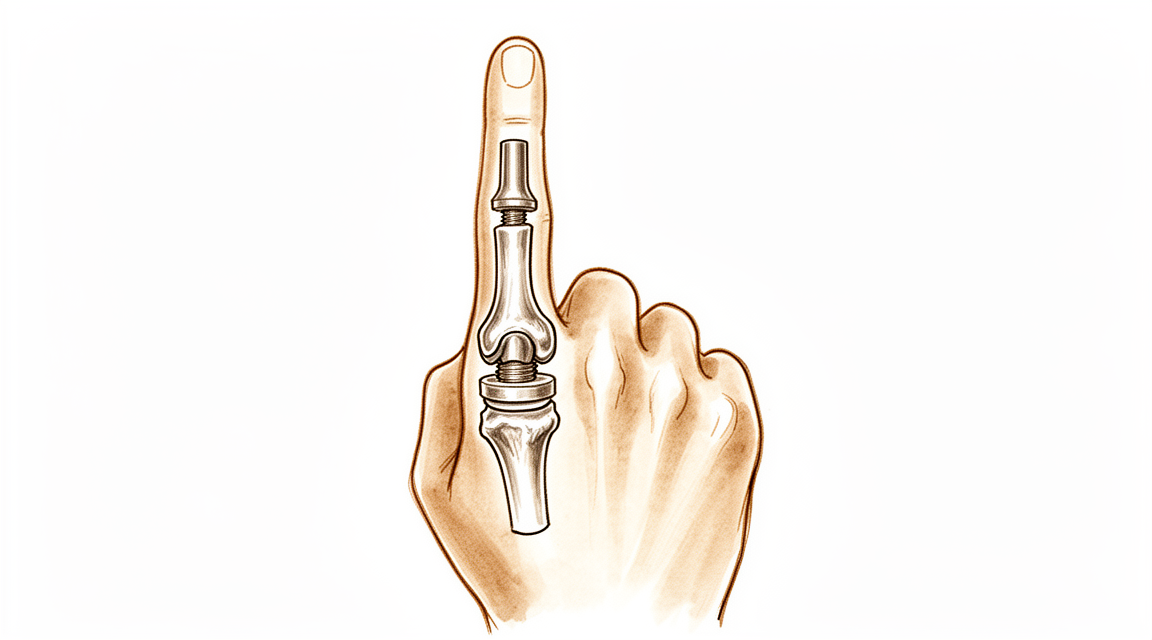
ਇਹ ਪ੍ਰੋਟੋਕੋਲ (protocol, ਇਲਾਜ ਦੀ ਪੜਾਅਵਾਰ ਯੋਜਨਾ) ਉਂਗਲ ਦੇ ਘਿਸੇ ਹੋਏ ਵਿਚਕਾਰਲੇ ਜੋੜ ਨੂੰ ਬਦਲਣ (ਪ੍ਰੌਕਸੀਮਲ ਇੰਟਰਫ਼ੈਲੈਂਜੀਅਲ (PIP) ਜੋੜ, ਯਾਨੀ ਉਂਗਲ ਦਾ ਵਿਚਕਾਰਲਾ ਜੋੜ) ਤੋਂ ਬਾਅਦ ਤੁਹਾਡੀ ਸਿਹਤਯਾਬੀ ਵਿੱਚ ਤੁਹਾਡੀ ਅਗਵਾਈ ਕਰਦਾ ਹੈ, ਜਿਸ ਵਿੱਚ ਜੋੜ ਦੀ ਥਾਂ ਇੱਕ ਲਚਕਦਾਰ ਸਿਲੀਕੋਨ ਸਪੇਸਰ (spacer, ਹੱਡੀਆਂ ਵਿਚਕਾਰ ਥਾਂ ਰੱਖਣ ਵਾਲਾ ਟੁਕੜਾ) ਲਗਾਇਆ ਜਾਂਦਾ ਹੈ ਅਤੇ ਜੋ ਮਾਟਰ ਪ੍ਰਾਈਵੇਟ ਹਸਪਤਾਲ ਰੌਕਹੈਂਪਟਨ ਵਿੱਚ ਡਾ. ਕੀਰਨ ਹਿਰਪਰਾ ਵੱਲੋਂ ਕੀਤਾ ਜਾਂਦਾ ਹੈ। ਇਹ ਤੁਹਾਡੇ ਘਰੇਲੂ ਕਸਰਤ ਪ੍ਰੋਗਰਾਮ ਨਾਲ ਸ਼ੁਰੂ ਹੁੰਦਾ ਹੈ, ਜਿਸ ਤੋਂ ਬਾਅਦ ਤੁਹਾਡੇ ਹੈਂਡ ਥੈਰੇਪਿਸਟ ਲਈ ਲਿਖਿਆ ਗਿਆ ਤਰਤੀਬਵਾਰ ਕਲੀਨਿਕਲ ਪ੍ਰੋਟੋਕੋਲ ਆਉਂਦਾ ਹੈ। ਥੈਰੇਪੀ ਦੀ ਆਪਣੀ ਪਹਿਲੀ ਮੁਲਾਕਾਤ 'ਤੇ ਇਹ ਪੰਨਾ ਜਾਂ ਇਸ ਦੀ PDF ਨਾਲ ਲਿਆਓ ਤਾਂ ਜੋ ਤੁਹਾਡੀ ਰੀਹੈਬਿਲੀਟੇਸ਼ਨ (rehabilitation, ਕਸਰਤਾਂ ਰਾਹੀਂ ਹਿਲਜੁਲ ਅਤੇ ਤਾਕਤ ਮੁੜ ਬਹਾਲ ਕਰਨਾ) ਤਾਲਮੇਲ ਨਾਲ ਚੱਲਦੀ ਰਹੇ। ਤੁਹਾਡੀ ਸਿਹਤਯਾਬੀ ਕਿਵੇਂ ਅੱਗੇ ਵਧਦੀ ਹੈ, ਇਸ ਦੇ ਹਿਸਾਬ ਨਾਲ ਤੁਹਾਡਾ ਥੈਰੇਪਿਸਟ ਯੋਜਨਾ ਵਿੱਚ ਬਦਲਾਅ ਕਰ ਸਕਦਾ ਹੈ।
ਜੇ ਸਰਜਰੀ ਤੋਂ ਬਾਅਦ ਤੁਹਾਨੂੰ ਆਪਣੇ ਜ਼ਖ਼ਮ ਬਾਰੇ ਕੋਈ ਚਿੰਤਾ ਹੈ, ਤਾਂ ਕਲੀਨਿਕ ਨਾਲ ਸੰਪਰਕ ਕਰੋ। ਅਕਸਰ ਜ਼ਖ਼ਮ ਦੀ ਫ਼ੋਟੋ ਖਿੱਚ ਕੇ ਜਾਂਚ ਲਈ ਈਮੇਲ ਕਰਨਾ ਮਦਦਗਾਰ ਹੁੰਦਾ ਹੈ।
ਕੀ ਉਮੀਦ ਰੱਖੀਏ
ਤੁਹਾਡੀ ਉਂਗਲ ਦਾ ਵਿਚਕਾਰਲਾ ਜੋੜ ਗਠੀਏ (ਆਰਥਰਾਈਟਿਸ) ਕਾਰਨ ਘਿਸ ਚੁੱਕਾ ਸੀ, ਜਿਸ ਨਾਲ ਦਰਦ ਅਤੇ ਅਕੜਾਅ ਹੁੰਦਾ ਹੈ। ਇਸ ਓਪਰੇਸ਼ਨ ਵਿੱਚ ਜੋੜ ਦੀਆਂ ਘਿਸੀਆਂ ਹੋਈਆਂ ਸਤ੍ਹਾਂ ਕੱਢ ਦਿੱਤੀਆਂ ਜਾਂਦੀਆਂ ਹਨ ਅਤੇ ਦੋਹਾਂ ਹੱਡੀਆਂ ਵਿਚਕਾਰ ਇੱਕ ਲਚਕਦਾਰ ਸਿਲੀਕੋਨ ਸਪੇਸਰ (ਸਵੈਨਸਨ ਕਿਸਮ ਦਾ ਇੰਪਲਾਂਟ, Swanson-type implant) ਰੱਖਿਆ ਜਾਂਦਾ ਹੈ। ਸਪੇਸਰ ਕੋਈ ਸਖ਼ਤ ਮਸ਼ੀਨੀ ਕਬਜ਼ਾ (hinge) ਨਹੀਂ ਹੈ; ਇਹ ਮੁੜਨ ਵਾਲਾ ਸਪੇਸਰ ਹੈ ਜੋ ਹੱਡੀਆਂ ਨੂੰ ਇੱਕ ਦੂਜੇ ਤੋਂ ਵੱਖ ਰੱਖਦਾ ਹੈ, ਉਂਗਲ ਨੂੰ ਮੁੜਨ ਦਿੰਦਾ ਹੈ, ਅਤੇ ਤੁਹਾਡੇ ਆਪਣੇ ਦਾਗ਼ ਵਾਲੇ ਟਿਸ਼ੂ (scar tissue) ਨੂੰ ਇਸ ਦੇ ਦੁਆਲੇ ਸਹਾਰਾ ਦੇਣ ਵਾਲਾ ਨਵਾਂ ਖੋਲ (sleeve) ਬਣਾਉਣ ਦਿੰਦਾ ਹੈ। ਮੁੱਖ ਅਤੇ ਸਭ ਤੋਂ ਭਰੋਸੇਯੋਗ ਫ਼ਾਇਦਾ ਦਰਦ ਤੋਂ ਰਾਹਤ ਹੈ। ਤੁਹਾਨੂੰ ਪੂਰੀ, ਆਮ ਹਿਲਜੁਲ ਦੀ ਬਜਾਏ ਮੋੜਨ ਦੀ ਕੰਮ ਆਉਣ ਵਾਲੀ, ਸੀਮਤ ਹੱਦ (ਆਮ ਤੌਰ 'ਤੇ ਲਗਭਗ 40 ਤੋਂ 60 ਡਿਗਰੀ) ਦੀ ਉਮੀਦ ਵੀ ਰੱਖਣੀ ਚਾਹੀਦੀ ਹੈ। ਜ਼ਿਆਦਾਤਰ ਲੋਕ ਬਹੁਤ ਸੰਤੁਸ਼ਟ ਹੁੰਦੇ ਹਨ ਕਿਉਂਕਿ ਦਰਦ ਖ਼ਤਮ ਹੋ ਜਾਂਦਾ ਹੈ ਅਤੇ ਉਂਗਲ ਨੂੰ ਵਰਤਣਾ ਆਰਾਮਦਾਇਕ ਹੁੰਦਾ ਹੈ।
ਤੁਹਾਡੀ ਸਿਹਤਯਾਬੀ ਬਾਰੇ ਸਭ ਤੋਂ ਅਹਿਮ ਗੱਲ ਇਹ ਹੈ ਕਿ ਸਰਜਨ ਕਿਸ ਪਾਸਿਓਂ ਅੰਦਰ ਗਏ, ਕਿਉਂਕਿ ਇਸੇ ਨਾਲ ਤੈਅ ਹੁੰਦਾ ਹੈ ਕਿ ਤੁਸੀਂ ਕਿੰਨੀ ਜਲਦੀ ਉਂਗਲ ਹਿਲਾ ਸਕਦੇ ਹੋ:
- ਅੱਗੇ ਤੋਂ (ਹਥੇਲੀ ਵਾਲੇ ਪਾਸਿਓਂ, ਵੋਲਰ ਅਪ੍ਰੋਚ, volar approach): ਉਂਗਲ ਦੇ ਪਿਛਲੇ ਪਾਸੇ ਵਾਲਾ ਸਿੱਧਾ ਕਰਨ ਵਾਲਾ ਟੈਂਡਨ (tendon, ਪੱਠੇ ਨੂੰ ਹੱਡੀ ਨਾਲ ਜੋੜਨ ਵਾਲੀ ਮਜ਼ਬੂਤ ਤੰਦ) ਪੂਰੀ ਤਰ੍ਹਾਂ ਸਹੀ-ਸਲਾਮਤ ਛੱਡਿਆ ਜਾਂਦਾ ਹੈ। ਕਿਉਂਕਿ ਪਿਛਲੇ ਪਾਸੇ ਕੁਝ ਵੀ ਭਰਨਾ ਨਹੀਂ ਹੁੰਦਾ, ਤੁਸੀਂ ਆਮ ਤੌਰ 'ਤੇ ਕੁਝ ਦਿਨਾਂ ਦੇ ਅੰਦਰ ਉਂਗਲ ਹਿਲਾਉਣੀ ਸ਼ੁਰੂ ਕਰ ਸਕਦੇ ਹੋ।
- ਪਿੱਛੇ ਤੋਂ (ਡੋਰਸਲ ਅਪ੍ਰੋਚ, dorsal approach): ਜੋੜ ਤੱਕ ਪਹੁੰਚਣ ਲਈ ਸਿੱਧਾ ਕਰਨ ਵਾਲੇ ਟੈਂਡਨ (ਸੈਂਟਰਲ ਸਲਿਪ, central slip) ਨੂੰ ਵਿਚਕਾਰੋਂ ਵੱਖ ਕਰਨਾ ਜਾਂ ਚੁੱਕਣਾ ਪੈਂਦਾ ਹੈ, ਅਤੇ ਫਿਰ ਉਸ ਦੀ ਮੁਰੰਮਤ ਕੀਤੀ ਜਾਂਦੀ ਹੈ। ਉਸ ਮੁਰੰਮਤ ਦਾ ਪਹਿਲਾਂ ਬਚਾਅ ਕਰਨਾ ਜ਼ਰੂਰੀ ਹੈ, ਇਸ ਲਈ ਸ਼ੁਰੂ ਵਿੱਚ ਉਂਗਲ ਨੂੰ ਸਪਲਿੰਟ ਵਿੱਚ ਸਿੱਧਾ ਰੱਖਿਆ ਜਾਂਦਾ ਹੈ ਅਤੇ ਮੋੜਨਾ ਤੁਹਾਡੇ ਹੈਂਡ ਥੈਰੇਪਿਸਟ ਦੀ ਅਗਵਾਈ ਹੇਠ ਵਧੇਰੇ ਹੌਲੀ-ਹੌਲੀ ਸ਼ੁਰੂ ਕੀਤਾ ਜਾਂਦਾ ਹੈ।
ਤੁਹਾਡਾ ਹੈਂਡ ਥੈਰੇਪਿਸਟ ਤੁਹਾਡੀ ਸਰਜਰੀ ਦੇ ਤਰੀਕੇ (approach) ਵਾਲੀ ਯੋਜਨਾ ਦੀ ਪਾਲਣਾ ਕਰੇਗਾ। ਡਾ. ਹਿਰਪਰਾ ਉਹਨਾਂ ਨੂੰ ਦੱਸਣਗੇ ਕਿ ਕਿਹੜਾ ਤਰੀਕਾ ਵਰਤਿਆ ਗਿਆ ਸੀ, ਅਤੇ ਹੇਠਾਂ ਦਿੱਤੇ ਸਮੇਂ ਉਸੇ ਅਨੁਸਾਰ ਢਾਲੇ ਗਏ ਹਨ। ਤੁਹਾਡੀ ਸਰਜਰੀ ਕਿਸੇ ਵੀ ਤਰੀਕੇ ਨਾਲ ਹੋਈ ਹੋਵੇ, ਨਵਾਂ ਜੋੜ ਇੱਕ ਕਬਜ਼ਾ ਹੈ: ਇਸ ਨੂੰ ਸਿੱਧੀ ਲਕੀਰ ਵਿੱਚ ਮੁੜਨਾ ਅਤੇ ਸਿੱਧਾ ਹੋਣਾ ਠੀਕ ਲੱਗਦਾ ਹੈ, ਪਰ ਪਾਸੇ ਵੱਲ ਧੱਕਿਆ ਜਾਂ ਮਰੋੜਿਆ ਜਾਣਾ ਠੀਕ ਨਹੀਂ ਲੱਗਦਾ। ਇਸ ਨੂੰ ਇੱਕ ਪਾਸੇ ਤੋਂ ਦੂਜੇ ਪਾਸੇ ਵਾਲੇ ਜ਼ੋਰ ਤੋਂ ਬਚਾਉਣਾ ਹੀ ਇਸ ਨੂੰ ਲੰਬੇ ਸਮੇਂ ਲਈ ਸਥਿਰ ਰੱਖਦਾ ਹੈ।
ਸਾਵਧਾਨੀਆਂ ਅਤੇ ਪਾਬੰਦੀਆਂ
- ਉਂਗਲ ਨੂੰ ਸਿਰਫ਼ ਸਿੱਧੀ ਲਕੀਰ ਵਿੱਚ ਹਿਲਾਓ (ਮੋੜਨਾ ਅਤੇ ਸਿੱਧਾ ਕਰਨਾ) ਅਤੇ ਓਪਰੇਸ਼ਨ ਵਾਲੀ ਉਂਗਲ ਉੱਤੇ ਪਾਸੇ ਵੱਲ ਦੇ ਜਾਂ ਮਰੋੜਨ ਵਾਲੇ ਕਿਸੇ ਵੀ ਜ਼ੋਰ ਤੋਂ ਬਚੋ। ਨਵਾਂ ਜੋੜ ਇੱਕ ਕਬਜ਼ਾ ਹੈ ਅਤੇ ਪਾਸੇ ਵਾਲੇ ਜ਼ੋਰ ਨਾਲ ਇਹ ਢਿੱਲਾ ਹੋ ਸਕਦਾ ਹੈ ਜਾਂ ਇਸ ਦੀ ਸ਼ਕਲ ਵਿਗੜ ਸਕਦੀ ਹੈ।
- ਆਪਣਾ ਸਪਲਿੰਟ ਹਦਾਇਤ ਅਨੁਸਾਰ ਪਾਓ, ਅਤੇ ਸਰਗਰਮੀ ਦੌਰਾਨ ਉਂਗਲ ਨੂੰ ਸਿੱਧੀ ਸੇਧ ਵਿੱਚ ਚੱਲਦਾ ਰੱਖਣ ਲਈ ਬੱਡੀ ਸਟ੍ਰੈਪਿੰਗ (buddy strapping, ਨਾਲ ਦੀ ਉਂਗਲ ਨਾਲ ਟੇਪ ਕਰਨਾ) ਵਰਤੋ।
- ਜੇ ਤੁਹਾਡੀ ਸਰਜਰੀ ਉਂਗਲ ਦੇ ਪਿਛਲੇ ਪਾਸਿਓਂ ਹੋਈ ਸੀ, ਤਾਂ ਸ਼ੁਰੂ ਵਿੱਚ ਤੁਹਾਨੂੰ ਦਿੱਤੀ ਗਈ ਹੱਦ ਤੋਂ ਅੱਗੇ ਆਪਣੀ ਉਂਗਲ ਨੂੰ ਜ਼ੋਰ ਲਗਾ ਕੇ ਸਿੱਧਾ ਨਾ ਕਰੋ: ਸਿੱਧਾ ਕਰਨ ਵਾਲਾ ਟੈਂਡਨ ਭਰ ਰਿਹਾ ਹੈ।
- ਜਦੋਂ ਤੱਕ ਤੁਹਾਡਾ ਹੈਂਡ ਥੈਰੇਪਿਸਟ ਤਾਕਤ ਵਾਲੀਆਂ ਕਸਰਤਾਂ ਦੀ ਇਜਾਜ਼ਤ ਨਹੀਂ ਦਿੰਦਾ (ਆਮ ਤੌਰ 'ਤੇ ਲਗਭਗ ਛੇ ਹਫ਼ਤਿਆਂ ਤੋਂ), ਉਦੋਂ ਤੱਕ ਨਾ ਜ਼ੋਰ ਨਾਲ ਪਕੜੋ, ਨਾ ਸਖ਼ਤ ਚੂੰਢੀ ਭਰੋ, ਅਤੇ ਨਾ ਹੀ ਭਾਰੀ ਜਾਂ ਮਰੋੜਨ ਵਾਲੇ ਕੰਮ ਕਰੋ।
- ਉਂਗਲਾਂ ਦੇ ਬਾਕੀ ਜੋੜਾਂ, ਆਪਣੇ ਗੁੱਟ ਅਤੇ ਆਪਣੇ ਮੋਢੇ ਨੂੰ ਸ਼ੁਰੂ ਤੋਂ ਹੀ ਹਿਲਾਉਂਦੇ ਰਹੋ, ਅਤੇ ਆਰਾਮ ਦੀ ਹੱਦ ਅੰਦਰ ਹਲਕੇ ਰੋਜ਼ਾਨਾ ਕੰਮਾਂ ਲਈ ਹੱਥ ਵਰਤੋ।
ਜ਼ਖ਼ਮ, ਸੋਜ ਅਤੇ ਦਾਗ਼ ਦੀ ਦੇਖਭਾਲ ਲਈ, ਪ੍ਰੈਕਟਿਸ ਦੀ ਜ਼ਖ਼ਮ ਦੀ ਦੇਖਭਾਲ ਬਾਰੇ ਸਲਾਹ ਦੇਖੋ।
ਤੁਹਾਡੀਆਂ ਕਸਰਤਾਂ
Kieran Hirpara 4.0
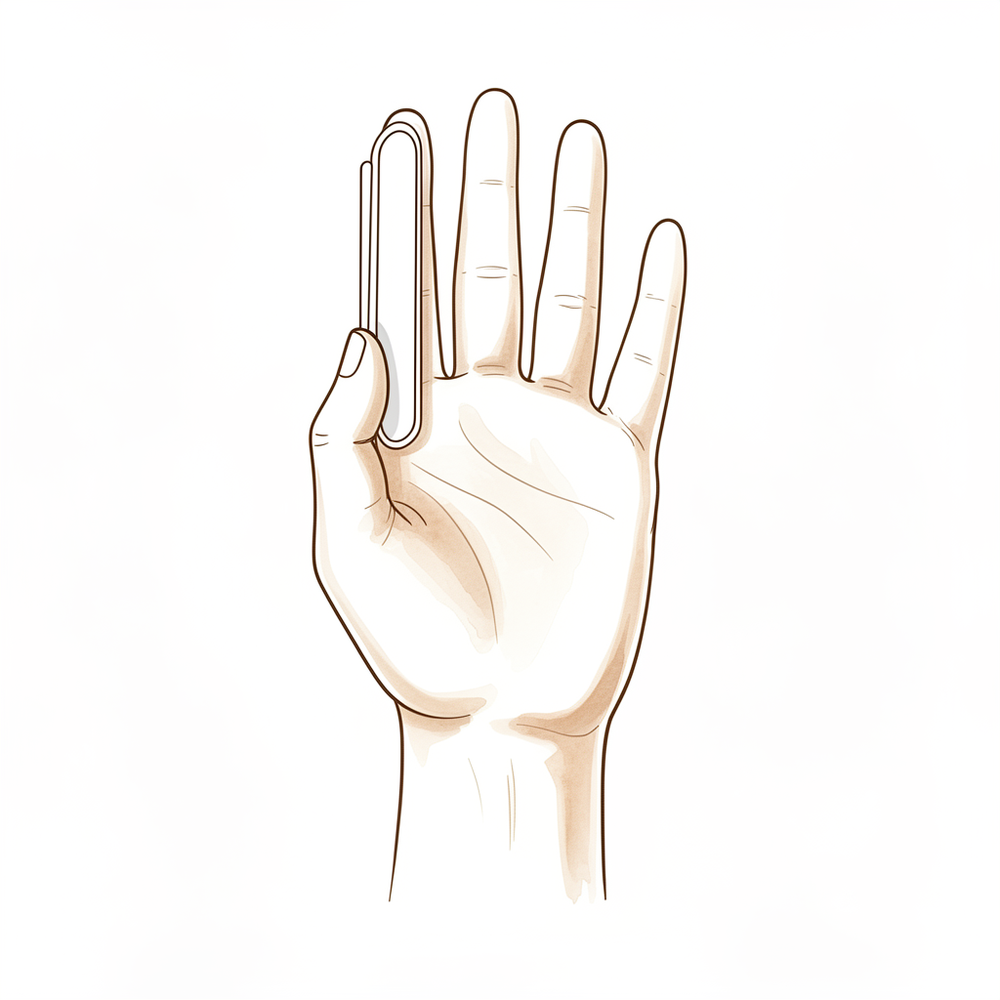
ਸੁਰੱਖਿਅਤ ਢੰਗ ਨਾਲ ਆਪਣੇ ਜ਼ੋਰ ਨਾਲ ਮੋੜਨਾ (PIP ਜੋੜ)
ਤੁਹਾਡੀਆਂ ਬਾਕੀ ਉਂਗਲਾਂ ਅਤੇ ਸਪਲਿੰਟ ਹੱਥ ਦੇ ਬਾਕੀ ਹਿੱਸੇ ਨੂੰ ਸਹਾਰਾ ਦੇਣ, ਅਤੇ ਤੁਸੀਂ ਉਂਗਲ ਦੇ ਓਪਰੇਸ਼ਨ ਵਾਲੇ ਵਿਚਕਾਰਲੇ ਜੋੜ ਨੂੰ ਉਸ ਹੱਦ ਅੰਦਰ ਹੌਲੀ ਜਿਹੇ ਮੋੜੋ ਅਤੇ ਸਿੱਧਾ ਕਰੋ ਜੋ ਤੁਹਾਡੇ ਹੈਂਡ ਥੈਰੇਪਿਸਟ ਨੇ ਤੈਅ ਕੀਤੀ ਹੈ। ਇਸ ਨੂੰ ਹੌਲੀ ਅਤੇ ਸਿੱਧਾ ਰੱਖੋ — ਉਂਗਲ ਨੂੰ ਇੱਕ ਪਾਸੇ ਵੱਲ ਖਿਸਕਣ ਦਿੱਤੇ ਬਿਨਾਂ, ਸਾਫ਼ ਸਿੱਧੀ ਲਕੀਰ ਵਿੱਚ ਮੋੜੋ ਅਤੇ ਸਿੱਧਾ ਕਰੋ। ਇਸ ਨਾਲ ਨਵਾਂ ਜੋੜ ਹਿਲਦਾ ਰਹਿੰਦਾ ਹੈ ਤਾਂ ਜੋ ਇਹ ਅਕੜ ਨਾ ਜਾਵੇ।
10 ਵਾਰ, ਦਿਨ ਵਿੱਚ ਕਈ ਵਾਰ, ਤੁਹਾਡੀ ਤੈਅ ਹੱਦ ਅੰਦਰ
Kieran Hirpara 4.0
ਆਪਣੇ ਜ਼ੋਰ ਨਾਲ ਸਿੱਧਾ ਕਰਨਾ (extension)
ਓਪਰੇਸ਼ਨ ਵਾਲੀ ਉਂਗਲ ਨੂੰ ਜਿੰਨਾ ਪੂਰਾ ਅਤੇ ਜਿੰਨਾ ਸਿੱਧਾ ਹੋ ਸਕੇ ਹੌਲੀ ਜਿਹੇ ਸਿੱਧਾ ਕਰੋ, ਫਿਰ ਢਿੱਲਾ ਛੱਡੋ। ਜੇ ਤੁਹਾਡੀ ਸਰਜਰੀ ਉਂਗਲ ਦੇ ਪਿਛਲੇ ਪਾਸਿਓਂ ਹੋਈ ਸੀ, ਤਾਂ ਇਹੀ ਉਹ ਹਿਲਜੁਲ ਹੈ ਜਿਸ ਦਾ ਸ਼ੁਰੂ ਵਿੱਚ ਬਚਾਅ ਕਰਨਾ ਹੈ — ਤੁਹਾਡਾ ਹੈਂਡ ਥੈਰੇਪਿਸਟ ਠੀਕ-ਠੀਕ ਦੱਸੇਗਾ ਕਿ ਕਿੰਨਾ ਕਰਨਾ ਹੈ ਅਤੇ ਕਦੋਂ, ਕਿਉਂਕਿ ਸਿੱਧਾ ਕਰਨ ਵਾਲੇ ਟੈਂਡਨ (tendon) ਨੂੰ ਪਹਿਲਾਂ ਭਰਨ ਦੀ ਲੋੜ ਹੈ। ਇਸ ਨਾਲ ਕਦੇ ਵੀ ਜ਼ਬਰਦਸਤੀ ਨਾ ਕਰੋ।
10 ਵਾਰ, ਦਿਨ ਵਿੱਚ ਕਈ ਵਾਰ, ਹਦਾਇਤ ਅਨੁਸਾਰ
Kieran Hirpara 4.0
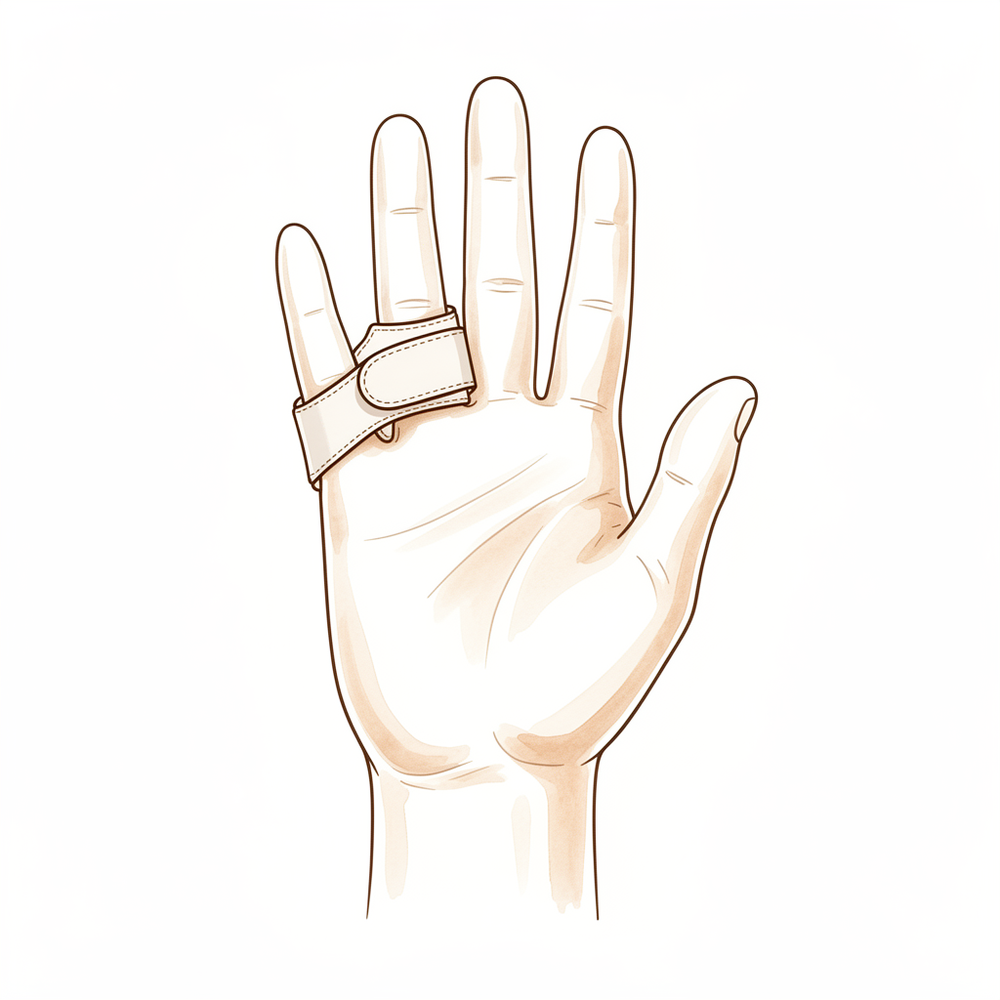
ਬੱਡੀ ਸਟ੍ਰੈਪਿੰਗ (ਨਾਲ ਦੀ ਉਂਗਲ ਨਾਲ ਟੇਪ ਕਰਨਾ)
ਓਪਰੇਸ਼ਨ ਵਾਲੀ ਉਂਗਲ ਨੂੰ ਨਾਲ ਦੀ ਉਂਗਲ ਨਾਲ ਹੌਲੀ ਜਿਹੇ ਟੇਪ ਕਰੋ (ਵਿਚਕਾਰਲੇ ਜੋੜ ਤੋਂ ਉੱਪਰ ਅਤੇ ਹੇਠਾਂ, ਜੋੜ ਦੇ ਉੱਤੇ ਨਹੀਂ)। ਨਾਲ ਦੀ ਉਂਗਲ ਇੱਕ ਸਪਲਿੰਟ ਵਾਂਗ ਕੰਮ ਕਰਦੀ ਹੈ ਜੋ ਤੁਹਾਡੀ ਉਂਗਲ ਨੂੰ ਸਿੱਧੀ ਲਕੀਰ ਵਿੱਚ ਮੁੜਨ ਅਤੇ ਸਿੱਧਾ ਹੋਣ ਲਈ ਸੇਧ ਦਿੰਦੀ ਹੈ ਅਤੇ ਇਸ ਨੂੰ ਨਵੇਂ ਜੋੜ ਉੱਤੇ ਪਾਸੇ ਵੱਲ ਝੁਕਣ ਤੋਂ ਰੋਕਦੀ ਹੈ। ਸਲਾਹ ਅਨੁਸਾਰ ਇਸ ਨੂੰ ਸਰਗਰਮੀ ਦੌਰਾਨ ਪਾਓ।
ਹਲਕੀ ਸਰਗਰਮੀ ਦੌਰਾਨ ਪਾਓ, ਤੁਹਾਡੇ ਹੈਂਡ ਥੈਰੇਪਿਸਟ ਦੀ ਹਦਾਇਤ ਅਨੁਸਾਰ
Kieran Hirpara 4.0
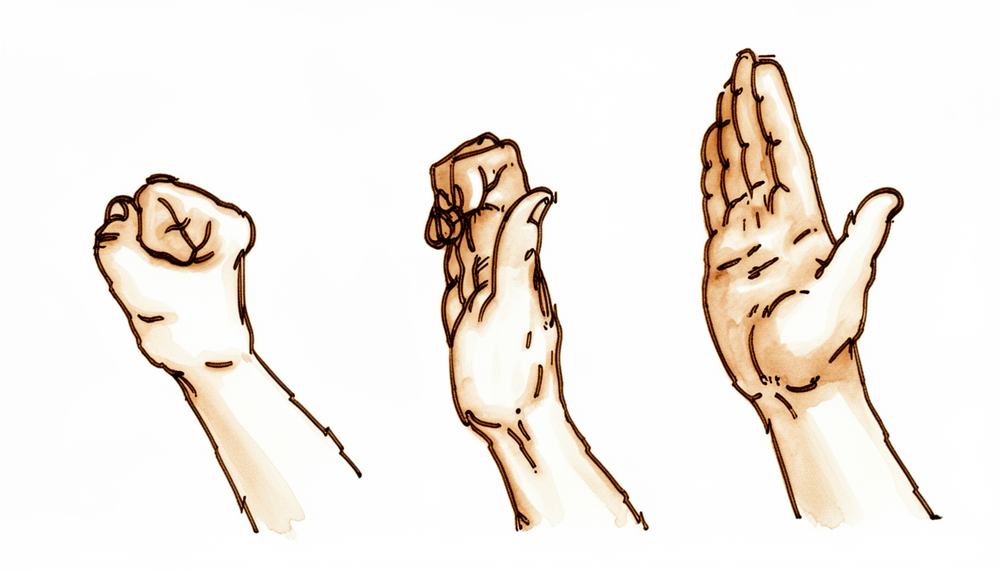
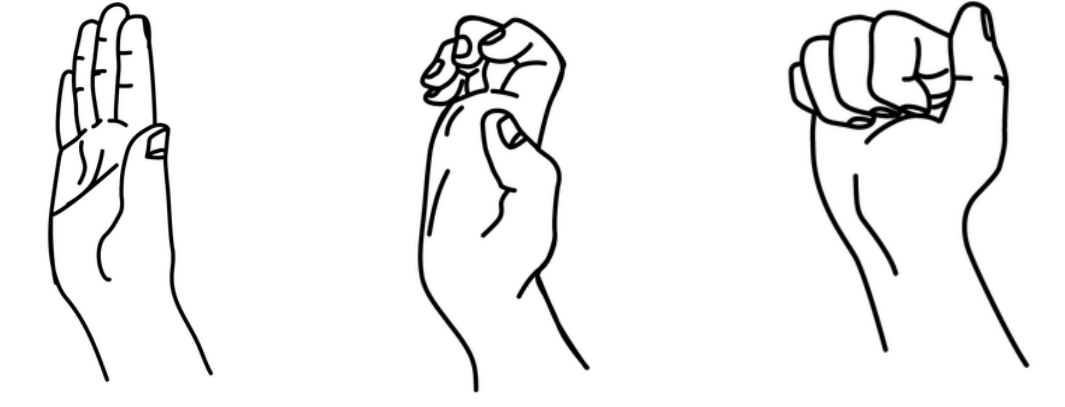
ਟੈਂਡਨ ਗਲਾਈਡ (tendon glides)
ਆਪਣੇ ਹੱਥ ਨੂੰ ਤਿੰਨ ਸ਼ਕਲਾਂ ਵਿੱਚੋਂ ਲੰਘਾਓ: ਉਂਗਲਾਂ ਸਿੱਧੀਆਂ (ਸਿੱਧਾ ਪੱਧਰਾ ਹੱਥ), ਫਿਰ ਸਿਰਫ਼ ਅਖ਼ੀਰਲੇ ਦੋ ਜੋੜਾਂ ਨੂੰ ਮੋੜ ਕੇ ਕੁੰਡੀ ਬਣਾਓ, ਫਿਰ ਹੌਲੀ ਜਿਹੇ ਪੂਰੀ ਮੁੱਠੀ ਬੰਦ ਕਰੋ, ਫਿਰ ਦੁਬਾਰਾ ਸਿੱਧਾ ਕਰੋ। ਇਸ ਨਾਲ ਟੈਂਡਨ ਖਿਸਕਦੇ ਰਹਿੰਦੇ ਹਨ ਤਾਂ ਜੋ ਉਂਗਲ ਦੇ ਭਰਨ ਦੌਰਾਨ ਉਹ ਚਿਪਕ ਨਾ ਜਾਣ। ਤੁਹਾਨੂੰ ਦਿੱਤੀ ਗਈ ਮੋੜਨ ਦੀ ਕਿਸੇ ਵੀ ਹੱਦ ਦੇ ਅੰਦਰ ਰਹੋ।
ਪੂਰੀ ਲੜੀ 5–10 ਵਾਰ, ਦਿਨ ਵਿੱਚ ਕਈ ਵਾਰ
Kieran Hirpara 4.0
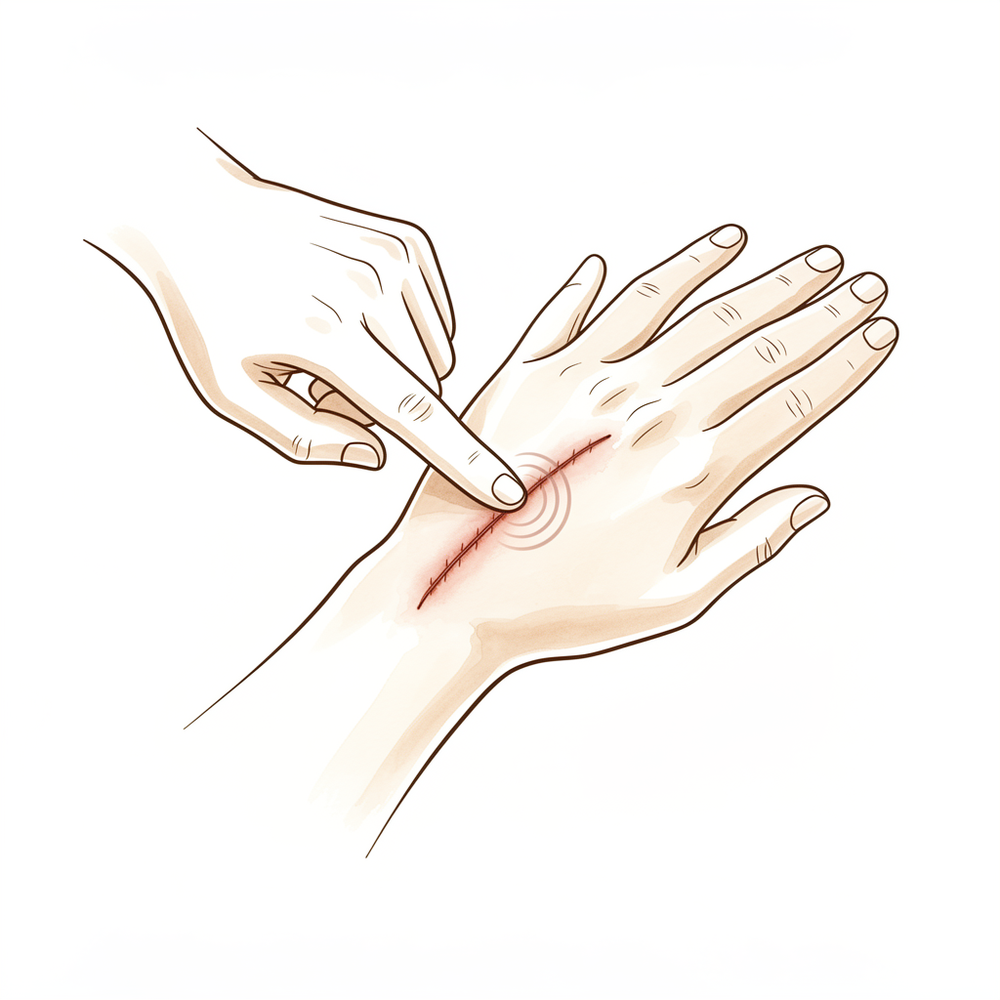
ਦਾਗ਼ ਦੀ ਮਾਲਿਸ਼
ਜਦੋਂ ਜ਼ਖ਼ਮ ਪੂਰੀ ਤਰ੍ਹਾਂ ਭਰ ਜਾਵੇ, ਤਾਂ ਥੋੜ੍ਹੀ ਜਿਹੀ ਸਾਦੀ ਕਰੀਮ ਨਾਲ ਦਾਗ਼ ਦੀ ਮਾਲਿਸ਼ ਕਰੋ, ਕੁਝ ਮਿੰਟਾਂ ਲਈ ਛੋਟੇ-ਛੋਟੇ ਪੱਕੇ ਦਬਾਅ ਵਾਲੇ ਗੋਲ ਚੱਕਰ ਬਣਾਉਂਦੇ ਹੋਏ। ਇਸ ਨਾਲ ਦਾਗ਼ ਨਰਮ ਰਹਿੰਦਾ ਹੈ ਅਤੇ ਇਹ ਹੇਠਲੇ ਟੈਂਡਨ ਅਤੇ ਜੋੜ ਨਾਲ ਚਿਪਕਦਾ ਨਹੀਂ। ਜਦੋਂ ਤੱਕ ਤੁਹਾਡਾ ਹੈਂਡ ਥੈਰੇਪਿਸਟ ਇਹ ਪੁਸ਼ਟੀ ਨਾ ਕਰੇ ਕਿ ਜ਼ਖ਼ਮ ਭਰ ਗਿਆ ਹੈ, ਉਦੋਂ ਤੱਕ ਸ਼ੁਰੂ ਨਾ ਕਰੋ।
ਕੁਝ ਮਿੰਟ, ਦਿਨ ਵਿੱਚ 2–3 ਵਾਰ, ਜ਼ਖ਼ਮ ਭਰ ਜਾਣ ਤੋਂ ਬਾਅਦ
Kieran Hirpara 4.0
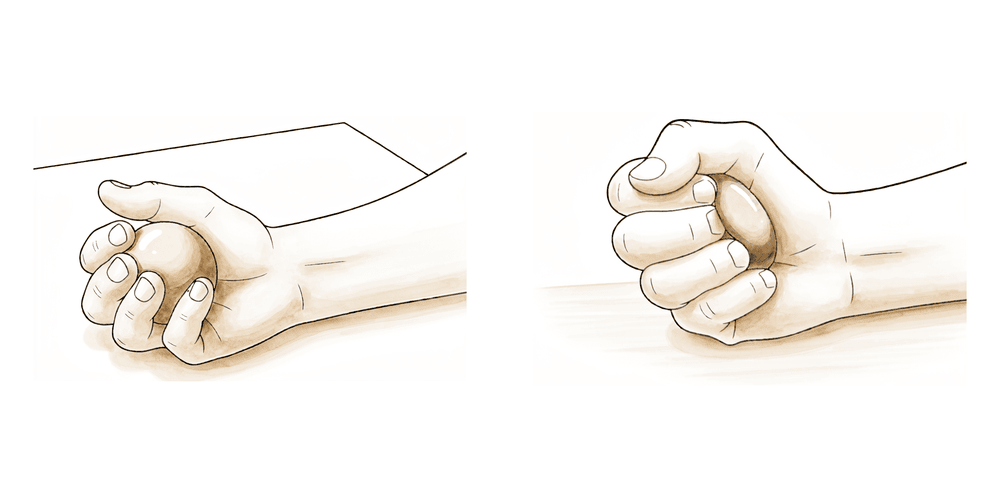
ਪਕੜ ਦੀ ਤਾਕਤ ਵਧਾਉਣਾ
ਇਹ ਬਾਅਦ ਵਾਲੀ ਕਸਰਤ ਹੈ — ਇਹ ਸਿਰਫ਼ ਉਦੋਂ ਕਰੋ ਜਦੋਂ ਤੁਹਾਡਾ ਹੈਂਡ ਥੈਰੇਪਿਸਟ ਤਾਕਤ ਵਧਾਉਣ ਦੀ ਇਜਾਜ਼ਤ ਦੇ ਦੇਵੇ (ਅਕਸਰ ਲਗਭਗ ਛੇ ਹਫ਼ਤਿਆਂ ਤੋਂ)। ਇੱਕ ਨਰਮ ਗੇਂਦ ਜਾਂ ਪੁਟੀ ਨੂੰ ਹੌਲੀ ਜਿਹੇ ਦਬਾਓ, ਹੌਲੀ-ਹੌਲੀ ਵਧਾਉਂਦੇ ਹੋਏ। ਜਦੋਂ ਤੱਕ ਤੁਹਾਨੂੰ ਇਹ ਨਾ ਦੱਸਿਆ ਜਾਵੇ ਕਿ ਹੁਣ ਸੁਰੱਖਿਅਤ ਹੈ, ਜ਼ੋਰ ਨਾਲ ਚੂੰਢੀ ਨਾ ਭਰੋ ਅਤੇ ਕੋਈ ਵੀ ਅਜਿਹਾ ਮਰੋੜਨ ਵਾਲਾ ਕੰਮ ਨਾ ਕਰੋ ਜੋ ਨਵੇਂ ਜੋੜ ਉੱਤੇ ਪਾਸੇ ਵੱਲ ਜ਼ੋਰ ਪਾਵੇ।
ਤੁਹਾਡੇ ਹੈਂਡ ਥੈਰੇਪਿਸਟ ਦੀ ਹਦਾਇਤ ਅਨੁਸਾਰ (ਸਿਰਫ਼ ਬਾਅਦ ਵਾਲੇ ਪੜਾਅ ਵਿੱਚ)
ਇਹ ਤੁਹਾਡੇ ਕਸਰਤਾਂ ਵਾਲੇ ਪਰਚੇ (handout) ਦੀਆਂ ਕਸਰਤਾਂ ਹਨ। ਇਹਨਾਂ ਨੂੰ ਸਿਰਫ਼ ਡਾ. ਹਿਰਪਰਾ ਅਤੇ ਆਪਣੇ ਹੈਂਡ ਥੈਰੇਪਿਸਟ ਦੀ ਅਗਵਾਈ ਅਨੁਸਾਰ ਸ਼ੁਰੂ ਕਰੋ, ਅਤੇ ਤੁਹਾਨੂੰ ਦਿੱਤੀ ਗਈ ਹਰ ਹੱਦ ਅਤੇ ਪਾਬੰਦੀ ਦੇ ਅੰਦਰ ਰਹੋ। ਸ਼ੁਰੂਆਤੀ ਕੰਮ ਉਂਗਲ ਨੂੰ ਪਾਸੇ ਵਾਲੇ ਜ਼ੋਰ ਤੋਂ ਬਿਨਾਂ ਸਿੱਧੀ ਲਕੀਰ ਵਿੱਚ ਹਿਲਦਾ ਰੱਖਦਾ ਹੈ: ਸੁਰੱਖਿਅਤ ਢੰਗ ਨਾਲ ਮੋੜਨਾ, ਹੌਲੀ ਜਿਹੇ ਸਿੱਧਾ ਕਰਨਾ, ਬੱਡੀ ਸਟ੍ਰੈਪਿੰਗ ਅਤੇ ਟੈਂਡਨ ਗਲਾਈਡ (tendon glides, ਟੈਂਡਨਾਂ ਨੂੰ ਖਿਸਕਾਉਣ ਵਾਲੀਆਂ ਕਸਰਤਾਂ)। ਜੇ ਤੁਹਾਡੀ ਸਰਜਰੀ ਉਂਗਲ ਦੇ ਪਿਛਲੇ ਪਾਸਿਓਂ ਹੋਈ ਸੀ, ਤਾਂ ਆਪਣੇ ਜ਼ੋਰ ਨਾਲ ਸਿੱਧਾ ਕਰਨ ਵਾਲੀ ਕਸਰਤ ਹੀ ਉਹ ਕਸਰਤ ਹੈ ਜਿਸ ਦਾ ਸ਼ੁਰੂ ਵਿੱਚ ਬਚਾਅ ਕਰਨਾ ਹੈ ਅਤੇ ਜਿਸ ਨੂੰ ਹੌਲੀ-ਹੌਲੀ ਵਧਾਉਣਾ ਹੈ। ਪਕੜ ਦੀ ਤਾਕਤ ਵਾਲੀਆਂ ਕਸਰਤਾਂ ਬਾਅਦ ਵਾਲੇ ਪੜਾਅ ਦੀਆਂ ਹਨ ਅਤੇ ਉਦੋਂ ਤੱਕ ਸ਼ੁਰੂ ਨਹੀਂ ਕਰਨੀਆਂ ਚਾਹੀਦੀਆਂ ਜਦੋਂ ਤੱਕ ਤੁਹਾਨੂੰ ਖ਼ਾਸ ਤੌਰ 'ਤੇ ਇਜਾਜ਼ਤ ਨਹੀਂ ਮਿਲਦੀ। ਜਿਸ ਵੀ ਚੀਜ਼ ਨਾਲ ਤਿੱਖਾ ਦਰਦ ਹੋਵੇ ਜਾਂ ਉਂਗਲ ਅਸਥਿਰ ਮਹਿਸੂਸ ਹੋਵੇ, ਉਸ ਨੂੰ ਬੰਦ ਕਰ ਦਿਓ।
ਤੁਹਾਡਾ ਕਲੀਨਿਕਲ ਪ੍ਰੋਟੋਕੋਲ
ਇਸ ਪੰਨੇ ਦਾ ਬਾਕੀ ਹਿੱਸਾ ਸਿਲੀਕੋਨ PIP ਜੋੜ ਆਰਥਰੋਪਲਾਸਟੀ (arthroplasty, ਜੋੜ ਬਦਲਣ ਦੀ ਸਰਜਰੀ) ਤੋਂ ਬਾਅਦ ਰੀਹੈਬਿਲੀਟੇਸ਼ਨ ਦਾ ਪੜਾਅਵਾਰ ਕਲੀਨਿਕਲ ਪ੍ਰੋਟੋਕੋਲ ਹੈ। ਇਹ ਹਿੱਸਾ ਤੁਹਾਡੇ ਹੈਂਡ ਥੈਰੇਪਿਸਟ ਨੂੰ ਦਿੱਤਾ ਜਾਣਾ ਹੈ, ਅਤੇ ਹਰ ਪੜਾਅ ਸਾਦੀ ਭਾਸ਼ਾ ਵਿੱਚ ਇਸ ਵਿਆਖਿਆ ਨਾਲ ਸ਼ੁਰੂ ਹੁੰਦਾ ਹੈ ਕਿ ਕੀ ਹੋ ਰਿਹਾ ਹੈ। ਪ੍ਰੋਟੋਕੋਲ ਸਰਜਰੀ ਦੇ ਤਰੀਕੇ ਉੱਤੇ ਨਿਰਭਰ ਕਰਦਾ ਹੈ, ਅਤੇ ਇਹੀ ਮੁੱਖ ਮੋੜ ਹੈ: ਵੋਲਰ (ਹਥੇਲੀ ਵਾਲਾ) ਤਰੀਕਾ ਐਕਸਟੈਂਸਰ ਮਕੈਨਿਜ਼ਮ (extensor mechanism, ਉਂਗਲ ਨੂੰ ਸਿੱਧਾ ਕਰਨ ਵਾਲੇ ਟੈਂਡਨਾਂ ਦਾ ਢਾਂਚਾ) ਨੂੰ ਸਹੀ-ਸਲਾਮਤ ਛੱਡਦਾ ਹੈ ਅਤੇ ਕੁਝ ਦਿਨਾਂ ਦੇ ਅੰਦਰ ਆਪਣੇ ਜ਼ੋਰ ਨਾਲ ਸ਼ੁਰੂਆਤੀ ਹਿਲਜੁਲ (early active motion) ਦੀ ਇਜਾਜ਼ਤ ਦਿੰਦਾ ਹੈ; ਡੋਰਸਲ ਤਰੀਕਾ ਸੈਂਟਰਲ ਸਲਿਪ ਨੂੰ ਕੱਟਦਾ ਜਾਂ ਵਿਚਕਾਰੋਂ ਵੱਖ ਕਰਦਾ ਹੈ, ਇਸ ਲਈ ਐਕਸਟੈਂਸਰ ਦੇ ਭਰਨ ਦਾ ਪਹਿਲਾਂ ਸਿੱਧਾ ਰੱਖਣ ਵਾਲੇ ਸਪਲਿੰਟਾਂ (extension orthoses) ਅਤੇ ਦਰਜਾਵਾਰ ਮੋੜਨ (graded flexion) ਨਾਲ ਬਚਾਅ ਕਰਨਾ ਜ਼ਰੂਰੀ ਹੈ। ਸਾਰੇ ਸਮੇਂ ਦੌਰਾਨ, ਸਿਲੀਕੋਨ ਇੰਪਲਾਂਟ ਇੱਕ ਲਚਕਦਾਰ ਸਪੇਸਰ ਹੈ ਜਿਸ ਦੀ ਲੰਬੇ ਸਮੇਂ ਦੀ ਸਥਿਰਤਾ ਇੰਪਲਾਂਟ ਦੇ ਦੁਆਲੇ ਬਣੇ ਕੈਪਸੂਲ (capsule, ਜੋੜ ਦੇ ਦੁਆਲੇ ਦੀ ਪਰਤ) ਉੱਤੇ ਨਿਰਭਰ ਕਰਦੀ ਹੈ, ਇਸ ਲਈ ਕੋਰੋਨਲ (ਪਾਸੇ ਵੱਲ ਦੇ, coronal/lateral) ਜ਼ੋਰ ਤੋਂ ਬਚਿਆ ਜਾਂਦਾ ਹੈ ਅਤੇ ਹਿਲਜੁਲ ਨੂੰ ਸਿਰਫ਼ ਸੈਜਿਟਲ ਚਾਪ (sagittal arc, ਸਿੱਧੀ ਲਕੀਰ ਵਿੱਚ ਮੋੜਨਾ-ਸਿੱਧਾ ਕਰਨਾ) ਵਿੱਚ ਰੱਖਿਆ ਜਾਂਦਾ ਹੈ।
ਇਲਾਜ ਤੋਂ ਪਹਿਲਾਂ, ਇਲਾਜ ਕਰਨ ਵਾਲੇ ਸਰਜਨ ਨਾਲ ਇਹ ਗੱਲਾਂ ਪੱਕੀਆਂ ਕਰੋ: ਸਰਜਰੀ ਦਾ ਤਰੀਕਾ (ਵੋਲਰ ਜਾਂ ਡੋਰਸਲ), ਸੈਂਟਰਲ ਸਲਿਪ ਅਤੇ ਕੋਲੈਟਰਲ ਲਿਗਾਮੈਂਟਾਂ (collateral ligaments, ਜੋੜ ਦੇ ਦੋਹੀਂ ਪਾਸੀਂ ਹੱਡੀ ਨੂੰ ਹੱਡੀ ਨਾਲ ਜੋੜਨ ਵਾਲੇ ਬੰਧਨ) ਦੀ ਹਾਲਤ/ਮੁਰੰਮਤ, ਅਤੇ ਓਪਰੇਸ਼ਨ ਦੌਰਾਨ ਮਿਲੀ ਹਿਲਜੁਲ ਦੀ ਹੱਦ (arc)। ਡਾ. ਹਿਰਪਰਾ ਤਰੀਕਾ ਦੱਸਣਗੇ; ਉਸੇ ਅਨੁਸਾਰ ਵੋਲਰ (ਸ਼ੁਰੂਆਤੀ ਆਪਣੇ-ਜ਼ੋਰ ਵਾਲੀ ਹਿਲਜੁਲ) ਜਾਂ ਡੋਰਸਲ (ਸਿੱਧਾ ਰੱਖ ਕੇ ਬਚਾਅ ਵਾਲਾ) ਰਸਤਾ ਚੁਣੋ। ਉਮੀਦ ਕੀਤਾ ਕੰਮਕਾਜੀ ਟੀਚਾ ਲਗਭਗ 40–60° ਦੀ ਬਿਨਾਂ ਦਰਦ ਵਾਲੀ ਹੱਦ ਹੈ, ਪੂਰੀ ਹੱਦ ਨਹੀਂ।
ਪੜਾਅ I — ਬਚਾਅ ਅਤੇ ਹਿਲਜੁਲ ਦੀ ਸ਼ੁਰੂਆਤ (ਹਫ਼ਤੇ 0 ਤੋਂ 3)
ਪਹਿਲੇ ਹਫ਼ਤਿਆਂ ਵਿੱਚ ਨਰਮ ਟਿਸ਼ੂਆਂ ਦਾ ਬਚਾਅ ਕੀਤਾ ਜਾਂਦਾ ਹੈ ਅਤੇ ਨਾਲ ਹੀ ਅਕੜਾਅ ਨੂੰ ਰੋਕਿਆ ਜਾਂਦਾ ਹੈ, ਅਤੇ ਰਫ਼ਤਾਰ ਪੂਰੀ ਤਰ੍ਹਾਂ ਸਰਜਰੀ ਦਾ ਤਰੀਕਾ ਤੈਅ ਕਰਦਾ ਹੈ। ਇੰਪਲਾਂਟ ਮੋੜਨ–ਸਿੱਧਾ ਕਰਨ ਵਿੱਚ ਸਥਿਰ ਹੁੰਦਾ ਹੈ ਪਰ ਪਾਸੇ ਵਾਲੇ ਭਾਰ ਅੱਗੇ ਨਾਜ਼ੁਕ ਹੁੰਦਾ ਹੈ, ਇਸ ਲਈ ਸਾਰੀ ਹਿਲਜੁਲ ਇੱਕ ਸਾਫ਼ ਸੈਜਿਟਲ ਤਲ (plane) ਵਿੱਚ ਰੱਖੀ ਜਾਂਦੀ ਹੈ ਅਤੇ ਉਂਗਲ ਨੂੰ ਬੱਡੀ ਸਟ੍ਰੈਪਿੰਗ ਅਤੇ ਸਪਲਿੰਟ ਨਾਲ ਸਹਾਰਾ ਦਿੱਤਾ ਜਾਂਦਾ ਹੈ।
ਤੁਹਾਡੇ ਹੈਂਡ ਥੈਰੇਪਿਸਟ ਲਈ:
ਸਿੱਖਿਆ ਅਤੇ ਸਾਵਧਾਨੀਆਂ - ਸਰਜਰੀ ਦੇ ਤਰੀਕੇ ਦੀ ਪਛਾਣ ਕਰੋ ਅਤੇ ਉਸ ਨਾਲ ਮੇਲ ਖਾਂਦੇ ਰਸਤੇ ਦੀ ਪਾਲਣਾ ਕਰੋ: - ਵੋਲਰ ਤਰੀਕਾ: ਐਕਸਟੈਂਸਰ ਮਕੈਨਿਜ਼ਮ ਸਹੀ-ਸਲਾਮਤ → 3–5 ਦਿਨਾਂ 'ਤੇ PIP/DIP ਦੀ ਆਪਣੇ ਜ਼ੋਰ ਨਾਲ ਹਿਲਜੁਲ ਸ਼ੁਰੂ ਕਰੋ। ਵੋਲਰ ਐਕਸਟੈਂਸ਼ਨ-ਬਲਾਕ / ਟੈਂਪਲੇਟ ਸਪਲਿੰਟ (extension-block / template splint) ਲਗਾਓ ਜੋ ਮੋੜਨ ਦੀ ਛੋਟੀ ਹੱਦ (ਆਮ ਤੌਰ 'ਤੇ ਸ਼ੁਰੂ ਵਿੱਚ ~30°) ਦੀ ਇਜਾਜ਼ਤ ਦੇਵੇ, ਜਿਸ ਨੂੰ ਹੌਲੀ-ਹੌਲੀ ਵਧਾਇਆ ਜਾਂਦਾ ਹੈ। - ਡੋਰਸਲ ਤਰੀਕਾ (ਸੈਂਟਰਲ ਸਲਿਪ ਵੱਖ ਕੀਤੀ/ਮੁਰੰਮਤ ਕੀਤੀ): ਸਿੱਧੇਪਣ (extension) ਦਾ ਬਚਾਅ ਕਰੋ। PIP ਨੂੰ ਲਗਭਗ ਪੂਰਾ ਸਿੱਧਾ ਰੱਖ ਕੇ ਹਰ ਵੇਲੇ ਸਪਲਿੰਟ ਵਿੱਚ ਰੱਖੋ; ਸੈਂਟਰਲ ਸਲਿਪ ਦੀ ਮੁਰੰਮਤ ਦਾ ਧਿਆਨ ਰੱਖਦੇ ਹੋਏ, ਨਿਗਰਾਨੀ ਹੇਠ ਸੀਮਤ ਛੋਟੀ ਹੱਦ ਵਿੱਚ ਆਪਣੇ ਜ਼ੋਰ ਨਾਲ ਮੋੜਨਾ ਸ਼ੁਰੂ ਕਰੋ। (ਸਰਜਨ ਦੀ ਪਸੰਦ ਅਨੁਸਾਰ ਰਿਲੇਟਿਵ-ਮੋਸ਼ਨ / ਡਾਇਨੈਮਿਕ-ਐਕਸਟੈਂਸ਼ਨ ਵਿਧੀ (relative-motion / dynamic-extension scheme) ਵਰਤੀ ਜਾ ਸਕਦੀ ਹੈ।) - ਓਪਰੇਸ਼ਨ ਵਾਲੇ ਜੋੜ ਉੱਤੇ ਕੋਰੋਨਲ (ਪਾਸੇ ਵੱਲ/ਰੇਡੀਅਲ–ਅਲਨਰ) ਜ਼ੋਰ ਤੋਂ ਸਖ਼ਤੀ ਨਾਲ ਬਚਾਅ: ਸਿਰਫ਼ ਸੈਜਿਟਲ ਸੇਧ ਵਿੱਚ ਚੱਲਣ ਲਈ ਨਾਲ ਦੀ ਉਂਗਲ ਨਾਲ ਬੱਡੀ ਸਟ੍ਰੈਪ ਕਰੋ। - ਨਾ ਪਕੜਨਾ, ਨਾ ਚੂੰਢੀ ਭਰਨਾ, ਅਤੇ ਨਾ ਹੀ ਰੁਕਾਵਟ ਦੇ ਉਲਟ/ਭਾਰ ਨਾਲ ਵਰਤੋਂ।
ਇਲਾਜ ਪ੍ਰਬੰਧ - ਜ਼ਖ਼ਮ: ਹਦਾਇਤ ਅਨੁਸਾਰ ਸਰਜੀਕਲ ਪੱਟੀਆਂ; ਲਾਗ (ਇਨਫੈਕਸ਼ਨ) ਲਈ ਨਿਗਰਾਨੀ ਕਰੋ - ਸੋਜ (oedema): ਹੱਥ ਉੱਚਾ ਰੱਖਣਾ, ਹਲਕੀ ਉਲਟ-ਦਿਸ਼ਾ ਮਾਲਿਸ਼ (retrograde massage, ਉਂਗਲ ਦੇ ਸਿਰੇ ਤੋਂ ਹੱਥ ਵੱਲ), ਹਲਕੀ ਦਬਾਅ ਵਾਲੀ ਲਪੇਟ - ਕਸਰਤਾਂ: ਤੈਅ ਹੱਦ ਅੰਦਰ ਸੁਰੱਖਿਅਤ ਢੰਗ ਨਾਲ ਆਪਣੇ ਜ਼ੋਰ ਨਾਲ PIP/DIP ਨੂੰ ਮੋੜਨਾ–ਸਿੱਧਾ ਕਰਨਾ; ਟੈਂਡਨ ਗਲਾਈਡ; ਜਿਹਨਾਂ ਜੋੜਾਂ ਦਾ ਓਪਰੇਸ਼ਨ ਨਹੀਂ ਹੋਇਆ (DIP, MCP, ਗੁੱਟ, ਅੰਗੂਠਾ) ਉਹਨਾਂ ਦੀ ਆਪਣੇ ਜ਼ੋਰ ਨਾਲ ਹਿਲਜੁਲ; ਸਰਗਰਮੀ ਲਈ ਬੱਡੀ ਸਟ੍ਰੈਪਿੰਗ ਸ਼ੁਰੂ ਕਰੋ - ਕਸਰਤ ਦੇ ਸੈਸ਼ਨਾਂ ਦੇ ਵਿਚਕਾਰ ਸਪਲਿੰਟ ਹਰ ਵੇਲੇ ਪਾਇਆ ਰਹੇ
ਅਗਲੇ ਪੜਾਅ ਵਿੱਚ ਜਾਣ ਦੀਆਂ ਸ਼ਰਤਾਂ - ਜ਼ਖ਼ਮ ਤਸੱਲੀਬਖ਼ਸ਼ ਢੰਗ ਨਾਲ ਭਰ ਰਿਹਾ ਹੈ; ਕੋਈ ਐਕਸਟੈਂਸਰ ਲੈਗ (extensor lag, ਜੋੜ ਦਾ ਆਪਣੇ ਜ਼ੋਰ ਨਾਲ ਪੂਰਾ ਸਿੱਧਾ ਨਾ ਹੋਣਾ) ਨਹੀਂ ਬਣ ਰਿਹਾ (ਡੋਰਸਲ ਰਸਤਾ); ਮੌਜੂਦਾ ਹੱਦ ਅੰਦਰ ਆਰਾਮਦਾਇਕ, ਕਾਬੂ ਵਾਲੀ ਹਿਲਜੁਲ
ਪੜਾਅ II — ਹਿਲਜੁਲ ਨੂੰ ਅੱਗੇ ਵਧਾਉਣਾ (ਹਫ਼ਤੇ 3 ਤੋਂ 6)
ਮੋੜਨ ਦੀ ਹੱਦ ਖੋਲ੍ਹੀ ਜਾਂਦੀ ਹੈ ਅਤੇ, ਡੋਰਸਲ ਤਰੀਕੇ ਵਾਲੀਆਂ ਉਂਗਲਾਂ ਲਈ, ਜਿਵੇਂ-ਜਿਵੇਂ ਸੈਂਟਰਲ ਸਲਿਪ ਮਜ਼ਬੂਤ ਹੁੰਦੀ ਹੈ, ਸਿੱਧਾ ਰੱਖਣ ਵਾਲਾ ਬਚਾਅ ਹੌਲੀ-ਹੌਲੀ ਢਿੱਲਾ ਕੀਤਾ ਜਾਂਦਾ ਹੈ। ਇਸ ਸਮੇਂ ਦਾ ਟੀਚਾ ਇਹ ਹੈ ਕਿ ਦਾਗ਼ ਦੇ ਸਖ਼ਤ ਹੋਣ ਨਾਲ ਹੱਦ ਸਥਿਰ ਹੋ ਜਾਣ ਤੋਂ ਪਹਿਲਾਂ ਕੰਮ ਆਉਣ ਵਾਲੀ ਹੱਦ (≈40–60°) ਹਾਸਲ ਕਰ ਲਈ ਜਾਵੇ।
ਤੁਹਾਡੇ ਹੈਂਡ ਥੈਰੇਪਿਸਟ ਲਈ:
ਮੁਲਾਂਕਣ - PIP ਦੀ ਆਪਣੇ ਜ਼ੋਰ ਨਾਲ (active) ਅਤੇ ਬਾਹਰੀ ਮਦਦ ਨਾਲ (passive) ਹੱਦ; ਐਕਸਟੈਂਸਰ ਲੈਗ (ਡੋਰਸਲ ਰਸਤਾ); ਕੋਰੋਨਲ ਸਥਿਰਤਾ; ਦਰਦ ਅਤੇ ਸੋਜ; ਜ਼ਖ਼ਮ/ਦਾਗ਼ ਦੀ ਜਾਂਚ
ਸਿੱਖਿਆ ਅਤੇ ਸਾਵਧਾਨੀਆਂ - ਕੰਮਕਾਜੀ ਟੀਚੇ (≈40–60°) ਵੱਲ ਮੋੜਨ ਦੀ ਇਜਾਜ਼ਤ ਵਾਲੀ ਹੱਦ ਹੌਲੀ-ਹੌਲੀ ਵਧਾਓ - ਵੋਲਰ: ਜਿੰਨਾ ਸਹਿ ਹੋਵੇ ਆਪਣੇ ਜ਼ੋਰ ਨਾਲ ਮੋੜਨਾ ਵਧਾਓ; ਜੇ ਸਿੱਧਾਪਣ ਪੂਰਾ ਅਤੇ ਸਥਿਰ ਹੈ ਤਾਂ ਬਾਹਰੀ ਮਦਦ ਨਾਲ ਹਲਕਾ ਮੋੜਨਾ (passive flexion) ਜੋੜੋ - ਡੋਰਸਲ: ਸੈਂਟਰਲ ਸਲਿਪ ਦੇ ਭਰਨ ਅਨੁਸਾਰ ਸਿੱਧਾ ਰੱਖਣ ਵਾਲਾ ਸਪਲਿੰਟ ਹੌਲੀ-ਹੌਲੀ ਛੁਡਾਓ (ਆਮ ਤੌਰ 'ਤੇ ਹਫ਼ਤੇ 4–6 ਦੌਰਾਨ ਦਿਨ ਵੇਲੇ ਦਾ ਸਹਾਰਾ ਛੁਡਾਉਣਾ); ਐਕਸਟੈਂਸਰ ਲੈਗ ਤੋਂ ਬਚਾਅ ਕਰੋ: ਆਪਣੇ ਜ਼ੋਰ ਨਾਲ ਸਿੱਧਾ ਕਰਨ ਦੀ ਕੀਮਤ 'ਤੇ ਮੋੜਨ ਦੇ ਪਿੱਛੇ ਨਾ ਪਓ - ਪਾਸੇ ਵਾਲੇ/ਮਰੋੜਨ ਵਾਲੇ ਭਾਰ ਤੋਂ ਸਖ਼ਤੀ ਨਾਲ ਬਚਾਅ ਜਾਰੀ ਰੱਖੋ; ਅਜੇ ਰੁਕਾਵਟ ਦੇ ਉਲਟ ਤਾਕਤ ਵਾਲੀਆਂ ਕਸਰਤਾਂ ਨਹੀਂ
ਇਲਾਜ ਪ੍ਰਬੰਧ - ਕਸਰਤਾਂ: ਦਰਜਾਵਾਰ ਆਪਣੇ ਜ਼ੋਰ ਨਾਲ ਅਤੇ ਮਦਦ ਨਾਲ (active-assisted) PIP ਨੂੰ ਮੋੜਨਾ–ਸਿੱਧਾ ਕਰਨਾ; PIP ਦੀ ਹਿਲਜੁਲ ਉੱਤੇ ਧਿਆਨ ਕੇਂਦਰਿਤ ਕਰਨ ਲਈ ਬਲਾਕਿੰਗ ਕਸਰਤਾਂ (blocking exercises); ਟੈਂਡਨ ਗਲਾਈਡ ਅਤੇ ਬੱਡੀ ਸਟ੍ਰੈਪਿੰਗ ਜਾਰੀ ਰੱਖੋ; ਜ਼ਖ਼ਮ ਭਰ ਜਾਣ ਤੋਂ ਬਾਅਦ ਦਾਗ਼ ਦੀ ਮਾਲਿਸ਼ ਸ਼ੁਰੂ ਕਰੋ - ਨਾਲ ਦੇ ਜੋੜਾਂ ਦੀ ਪੂਰੀ ਹਿਲਜੁਲ ਬਣਾਈ ਰੱਖੋ
ਅਗਲੇ ਪੜਾਅ ਵਿੱਚ ਜਾਣ ਦੀਆਂ ਸ਼ਰਤਾਂ - ਜ਼ਖ਼ਮ ਭਰ ਗਿਆ ਹੈ; ਜੋੜ ਕੋਰੋਨਲ ਤਲ ਵਿੱਚ ਸਥਿਰ ਹੈ; ਕੰਮ ਆਉਣ ਵਾਲੀ ਬਿਨਾਂ ਦਰਦ ਦੀ ਹੱਦ ਬਣ ਗਈ ਹੈ; ਬਹੁਤ ਘੱਟ ਐਕਸਟੈਂਸਰ ਲੈਗ (ਡੋਰਸਲ)
ਪੜਾਅ III — ਤਾਕਤ ਵਧਾਉਣਾ ਅਤੇ ਵਾਪਸੀ (ਹਫ਼ਤੇ 6 ਤੋਂ 12 ਅਤੇ ਉਸ ਤੋਂ ਬਾਅਦ)
ਜਦੋਂ ਹਿਲਜੁਲ ਬਣ ਜਾਂਦੀ ਹੈ ਅਤੇ ਨਰਮ ਟਿਸ਼ੂ ਮਜ਼ਬੂਤ ਹੋ ਜਾਂਦੇ ਹਨ (ਲਗਭਗ ਛੇ ਹਫ਼ਤਿਆਂ 'ਤੇ), ਤਾਂ ਹਲਕੀਆਂ ਤਾਕਤ ਵਾਲੀਆਂ ਕਸਰਤਾਂ ਸ਼ੁਰੂ ਹੁੰਦੀਆਂ ਹਨ ਅਤੇ ਹੌਲੀ-ਹੌਲੀ ਵਧਾਈਆਂ ਜਾਂਦੀਆਂ ਹਨ। ਤਾਕਤ ਵਾਲਾ ਕੰਮ ਧੁਰੇ ਦੀ ਸੇਧ ਵਿੱਚ (axial: ਪਕੜ ਅਤੇ ਸਿੱਧੀ ਲਕੀਰ ਵਾਲਾ ਭਾਰ) ਰੱਖਿਆ ਜਾਂਦਾ ਹੈ, ਜਦੋਂ ਕਿ ਇੰਪਲਾਂਟ ਉੱਤੇ ਪਾਸੇ ਵਾਲੇ/ਮਰੋੜਨ ਵਾਲੇ ਜ਼ੋਰ ਤੋਂ ਲੰਬੇ ਸਮੇਂ ਤੱਕ ਬਚਾਅ ਜਾਰੀ ਰਹਿੰਦਾ ਹੈ।
ਤੁਹਾਡੇ ਹੈਂਡ ਥੈਰੇਪਿਸਟ ਲਈ:
ਮੁਲਾਂਕਣ - ਦੂਜੇ ਪਾਸੇ ਦੇ ਮੁਕਾਬਲੇ ਪਕੜ ਅਤੇ ਚੂੰਢੀ; PIP ਦੀ ਅੰਤਿਮ ਹੱਦ; ਕੋਰੋਨਲ ਸਥਿਰਤਾ; ਕੰਮਕਾਜੀ ਅਤੇ ਕੰਮ-ਵਿਸ਼ੇਸ਼ ਜਾਂਚ
ਸਿੱਖਿਆ ਅਤੇ ਸਾਵਧਾਨੀਆਂ - ਲਗਭਗ ਛੇ ਹਫ਼ਤਿਆਂ ਤੋਂ ਪਕੜ ਦੀ ਹਲਕੀ ਤਾਕਤ ਵਾਲੀਆਂ ਕਸਰਤਾਂ ਸ਼ੁਰੂ ਕਰੋ, ਹੌਲੀ-ਹੌਲੀ ਵਧਾਉਂਦੇ ਹੋਏ - ਚੂੰਢੀ ਵਾਲਾ ਭਾਰ ਸਾਵਧਾਨੀ ਨਾਲ ਸ਼ੁਰੂ ਕਰੋ ਅਤੇ ਓਪਰੇਸ਼ਨ ਵਾਲੇ ਜੋੜ ਉੱਤੇ ਹਮੇਸ਼ਾ ਲਈ ਜ਼ੋਰਦਾਰ ਪਾਸੇ ਵਾਲੇ/ਮਰੋੜਨ ਵਾਲੇ ਭਾਰ ਤੋਂ ਬਚਦੇ ਰਹੋ (ਇੰਪਲਾਂਟ ਦੀ ਲੰਬੀ ਉਮਰ ਲਈ) - ਅਸਲੀਅਤ ਮੁਤਾਬਕ ਉਮੀਦਾਂ ਦੱਸੋ: ਟਿਕਾਊ ਦਰਦ ਤੋਂ ਰਾਹਤ ਮੁੱਖ ਫ਼ਾਇਦਾ ਹੈ; ਅੰਤਿਮ ਹੱਦ ਸੀਮਤ (≈40–60°) ਹੁੰਦੀ ਹੈ ਅਤੇ ਜ਼ਿਆਦਾਤਰ ~3 ਮਹੀਨਿਆਂ ਤੱਕ ਤੈਅ ਹੋ ਜਾਂਦੀ ਹੈ
ਇਲਾਜ ਪ੍ਰਬੰਧ - ਕਸਰਤਾਂ: ਵਧਦਾ ਪਕੜ/ਪੁਟੀ (putty, ਗੁੰਨ੍ਹਣ ਵਾਲੀ ਨਰਮ ਚੀਜ਼) ਵਾਲਾ ਕੰਮ; ਦਰਜਾਵਾਰ ਕੰਮਕਾਜੀ ਅਤੇ ਨੌਕਰੀ-ਵਿਸ਼ੇਸ਼ ਭਾਰ; ਹਿਲਜੁਲ ਅਤੇ ਦਾਗ਼ ਦਾ ਬਾਕੀ ਰਹਿੰਦਾ ਕੰਮ ਜਾਰੀ ਰੱਖੋ - ਜਦੋਂ ਸਥਿਰ, ਆਰਾਮਦਾਇਕ, ਕੰਮ ਕਰਨ ਵਾਲੀ ਉਂਗਲ ਅਤੇ ਕੰਮ ਆਉਣ ਵਾਲੀ ਬਿਨਾਂ ਦਰਦ ਦੀ ਹੱਦ ਹਾਸਲ ਹੋ ਜਾਵੇ, ਤਾਂ ਥੈਰੇਪੀ ਤੋਂ ਛੁੱਟੀ ਬਾਰੇ ਸੋਚੋ - ਜੇ ਸਿਹਤਯਾਬੀ ਰੁਕ ਜਾਵੇ, ਜੋੜ ਅਸਥਿਰ ਹੋ ਜਾਵੇ/ਟੇਢਾ ਹੋਣ ਲੱਗੇ, ਜਾਂ ਇੰਪਲਾਂਟ ਦੇ ਫ਼ੇਲ੍ਹ ਹੋਣ ਦਾ ਸ਼ੱਕ ਹੋਵੇ, ਤਾਂ ਇਲਾਜ ਕਰਨ ਵਾਲੇ ਡਾਕਟਰ ਕੋਲ ਵਾਪਸ ਭੇਜੋ
ਛੁੱਟੀ / ਵਾਪਸੀ ਦੀਆਂ ਸ਼ਰਤਾਂ - ਆਰਾਮਦਾਇਕ, ਬਿਨਾਂ ਦਰਦ ਵਾਲਾ, ਕੋਰੋਨਲ ਤਲ ਵਿੱਚ ਸਥਿਰ ਜੋੜ ਜਿਸ ਦੀ ਕੰਮ ਆਉਣ ਵਾਲੀ ਹੱਦ ਹੋਵੇ; ਢੁਕਵੀਂ ਪਕੜ; ਰੋਜ਼ਾਨਾ ਅਤੇ ਕੰਮ ਦੀਆਂ ਲੋੜਾਂ ਪੂਰੀਆਂ ਕਰਨ ਦੇ ਯੋਗ
ਕੰਮ ਅਤੇ ਸਰਗਰਮੀਆਂ ਵਿੱਚ ਵਾਪਸੀ
ਹੱਥ ਦੀ ਹਲਕੀ ਰੋਜ਼ਾਨਾ ਵਰਤੋਂ (ਖਾਣਾ, ਲਿਖਣਾ, ਹਲਕੀ ਆਪਣੀ ਦੇਖਭਾਲ) ਨੂੰ ਸ਼ੁਰੂ ਤੋਂ ਹੀ, ਆਰਾਮ ਦੀ ਹੱਦ ਅੰਦਰ, ਉਤਸ਼ਾਹਿਤ ਕੀਤਾ ਜਾਂਦਾ ਹੈ, ਬਸ਼ਰਤੇ ਇਹ ਸਿੱਧੀ ਲਕੀਰ ਵਿੱਚ ਰਹੇ ਅਤੇ ਓਪਰੇਸ਼ਨ ਵਾਲੀ ਉਂਗਲ ਉੱਤੇ ਪਾਸੇ ਵੱਲ ਦਾ ਜਾਂ ਮਰੋੜਨ ਵਾਲਾ ਜ਼ੋਰ ਨਾ ਪਵੇ। ਗੱਡੀ ਚਲਾਉਣਾ ਆਮ ਤੌਰ 'ਤੇ ਉਦੋਂ ਸੰਭਵ ਹੁੰਦਾ ਹੈ ਜਦੋਂ ਤੁਸੀਂ ਸਟੀਅਰਿੰਗ ਨੂੰ ਆਰਾਮ ਨਾਲ ਫੜ ਸਕੋ ਅਤੇ ਗੱਡੀ ਨੂੰ ਸੁਰੱਖਿਅਤ ਢੰਗ ਨਾਲ ਕਾਬੂ ਕਰ ਸਕੋ, ਤੁਸੀਂ ਕਿਸੇ ਵੀ ਰੋਕ ਲਾਉਣ ਵਾਲੇ ਸਪਲਿੰਟ ਤੋਂ ਬਾਹਰ ਹੋਵੋ, ਅਤੇ ਤੁਸੀਂ ਹੁਣ ਤਾਕਤਵਰ ਦਰਦ ਨਿਵਾਰਕ ਦਵਾਈ ਨਾ ਲੈ ਰਹੇ ਹੋਵੋ; ਇਸ ਵਿੱਚ ਆਮ ਤੌਰ 'ਤੇ ਦੋ ਕੁ ਹਫ਼ਤੇ ਲੱਗਦੇ ਹਨ, ਅਤੇ ਇਸ ਦੀ ਪੁਸ਼ਟੀ ਤੁਹਾਡੀ ਜਾਂਚ ਵੇਲੇ ਕੀਤੀ ਜਾਂਦੀ ਹੈ।
ਜ਼ਿਆਦਾ ਜ਼ੋਰ ਨਾਲ ਪਕੜਨਾ ਅਤੇ ਭਾਰ ਵਾਲੇ ਕੰਮ ਲਗਭਗ ਛੇ ਹਫ਼ਤਿਆਂ ਤੱਕ ਸ਼ੁਰੂ ਨਹੀਂ ਕੀਤੇ ਜਾਂਦੇ, ਅਤੇ ਫਿਰ ਹੌਲੀ-ਹੌਲੀ ਵਧਾਏ ਜਾਂਦੇ ਹਨ। ਭਾਰੀ ਹੱਥੀਂ ਕੰਮ ਜਾਂ ਮਰੋੜਨ ਵਾਲਾ ਕੰਮ ਸਭ ਤੋਂ ਅਖ਼ੀਰ ਵਿੱਚ ਵਾਪਸ ਆਉਂਦਾ ਹੈ, ਅਤੇ ਇਹ ਇਸ ਗੱਲ ਉੱਤੇ ਅਧਾਰਤ ਹੁੰਦਾ ਹੈ ਕਿ ਢੁਕਵੀਂ ਪਕੜ ਵਾਲੀ ਆਰਾਮਦਾਇਕ, ਸਥਿਰ ਉਂਗਲ ਵਾਪਸ ਮਿਲ ਗਈ ਹੈ ਜਾਂ ਨਹੀਂ; ਇਸ ਦਾ ਫ਼ੈਸਲਾ ਡਾ. ਹਿਰਪਰਾ ਅਤੇ ਤੁਹਾਡਾ ਹੈਂਡ ਥੈਰੇਪਿਸਟ ਕਰਦੇ ਹਨ, ਸਿਰਫ਼ ਕੈਲੰਡਰ ਨਹੀਂ। ਇਸ ਓਪਰੇਸ਼ਨ ਦਾ ਸਥਾਈ ਸੌਦਾ ਯਾਦ ਰੱਖੋ: ਭਰੋਸੇਯੋਗ ਦਰਦ ਤੋਂ ਰਾਹਤ ਅਤੇ ਲਗਭਗ 40 ਤੋਂ 60 ਡਿਗਰੀ ਦੀ ਕੰਮ ਆਉਣ ਵਾਲੀ ਹੱਦ, ਅਤੇ ਇੰਪਲਾਂਟ ਦੇ ਬਚਾਅ ਲਈ ਜੋੜ ਉੱਤੇ ਇੱਕ ਪਾਸੇ ਤੋਂ ਦੂਜੇ ਪਾਸੇ ਵਾਲੇ ਜ਼ੋਰ ਤੋਂ ਲੰਬੇ ਸਮੇਂ ਤੱਕ ਬਚਣਾ।
ਤੁਹਾਡੇ ਪ੍ਰੋਟੋਕੋਲ ਤੋਂ ਬਾਅਦ
ਇਹ ਪ੍ਰੋਟੋਕੋਲ ਪ੍ਰੈਕਟਿਸ ਦੀ ਆਮ ਸਿਹਤਯਾਬੀ ਸਲਾਹ ਦੇ ਨਾਲ ਕੰਮ ਕਰਦਾ ਹੈ; ਦੇਖੋ ਓਪਰੇਸ਼ਨ ਤੋਂ ਬਾਅਦ ਦਰਦ ਨੂੰ ਸੰਭਾਲਣਾ, ਜ਼ਖ਼ਮ ਦੀ ਦੇਖਭਾਲ ਅਤੇ ਦਾਗ਼ ਦੀ ਦੇਖਭਾਲ। ਉੱਪਰ ਦਿੱਤੀ ਪੜਾਅਵਾਰ ਯੋਜਨਾ ਸਿਲੀਕੋਨ PIP ਜੋੜ ਆਰਥਰੋਪਲਾਸਟੀ ਤੋਂ ਬਾਅਦ ਰੀਹੈਬਿਲੀਟੇਸ਼ਨ ਬਾਰੇ ਪ੍ਰਕਾਸ਼ਿਤ ਸੇਧਾਂ ਨੂੰ ਦਰਸਾਉਂਦੀ ਹੈ, ਅਤੇ ਤੁਹਾਡੀ ਅੱਗੇ ਦੀ ਸਿਹਤਯਾਬੀ ਦੀ ਅਗਵਾਈ ਡਾ. ਹਿਰਪਰਾ ਅਤੇ ਤੁਹਾਡਾ ਹੈਂਡ ਥੈਰੇਪਿਸਟ ਤੁਹਾਡੇ ਲਈ ਵੱਖਰੇ ਤੌਰ 'ਤੇ ਕਰਦੇ ਹਨ, ਇਸ ਅਨੁਸਾਰ ਕਿ ਸਰਜਰੀ ਦਾ ਕਿਹੜਾ ਤਰੀਕਾ ਵਰਤਿਆ ਗਿਆ ਸੀ ਅਤੇ ਤੁਹਾਡੀ ਉਂਗਲ ਕਿਵੇਂ ਅੱਗੇ ਵਧਦੀ ਹੈ।
Evidence & references
This is the clinical evidence summary written for health professionals. It is technical, and it lists the research this page was built from. You do not need to read it to understand your treatment or to make a decision about it.
Silicone PIP Joint Replacement — Procedure Outcomes & Post-operative Rehabilitation (Swanson-type Arthroplasty for PIP Osteoarthritis)
Topic scope: post-operative rehabilitation after silicone (Swanson-type) proximal interphalangeal (PIP) joint arthroplasty for primary osteoarthritis. The worn joint surfaces are excised and a flexible silicone spacer is implanted; this is an interposition / encapsulation arthroplasty, not a rigidly-fixed mechanical hinge. The implant works as a flexible spacer around which a peri-implant fibrous capsule forms to provide stability. The dominant, reliable benefit is pain relief; the functional gain is a modest active arc (~40–60°), not restoration of normal range.
Defining principle of the rehab here: the rehabilitation pathway is dictated by the surgical approach, because the rate-limiting tissue is the extensor mechanism, not the implant. A volar (palmar) approach leaves the central slip and extensor mechanism intact → it permits immediate / early active motion (within 3–5 days). A dorsal approach must split or reflect the central slip to reach the joint → the extensor repair must be protected first with extension orthotics and a graded, short-arc flexion programme. Across both pathways the silicone spacer is stable in the sagittal (flexion–extension) plane but vulnerable in the coronal plane, so the programme deliberately avoids lateral / torsional load and tracks the joint in a pure sagittal arc (buddy strapping). Therapy aims to bank the useful arc before scar maturation fixes it while protecting extension and the implant — it is not an immobilise-to-heal construct in the volar case.
A. PROCEDURE OUTCOMES (silicone PIP arthroplasty for osteoarthritis)
Silicone PIP arthroplasty is a reliable pain-relieving operation with predictable but modest motion; the principal debates are over surgical approach and implant choice (silicone vs surface-replacement/pyrocarbon), not whether arthroplasty relieves pain.
- Pain relief is high and durable; motion gains are modest. A long-term series of Swanson silicone PIP arthroplasty for osteoarthritis (mean ~10-year follow-up) reported excellent pain relief (mean VAS ~0.4) with essentially unchanged arc (≈55° pre-op → ≈50° post-op) and high patient satisfaction — patients would have the surgery again despite limited motion gain [Bales, Wall & Stern, J Hand Surg Am 2014]. Moderate (level-IV long-term cohort).
- The volar approach can improve the active arc. A volar-approach silicone PIP series reported the active arc improving from ~33° to ~72°, with good function and satisfaction, by preserving the extensor mechanism and enabling early motion [Proubasta et al., J Hand Surg Am 2014]. Moderate–weak (level-IV).
- Radiographic implant deformation/fracture is common but poorly correlated with symptoms. In the long-term Swanson series most implants deformed and many fractured radiographically, yet clinical revision was uncommon (survivorship ~90% at ~10 years) and there was no correlation between radiographs and satisfaction [Bales, Wall & Stern 2014]. Strong natural-history signal within a cohort.
- Silicone vs surface-replacement and pyrocarbon implants give broadly comparable clinical results; no implant is clearly superior. Systematic review across implants/approaches found comparable outcomes with implant-/approach-specific complication profiles [Yamamoto et al., Plast Reconstr Surg 2017; Carlson Strother, Moran & Rizzo, JAAOS 2023]. Moderate (SR + narrative review).
- Pyrocarbon and resurfacing implants carry their own failure modes (subsidence, squeaking, intra-operative periprosthetic fracture, instability), informing implant choice rather than rehab [Watts et al., J Hand Surg Am 2012; Wagner et al. medium-term 2018 & intra-op fractures 2015; Branam et al. resurfacing-vs-silicone 2007]. Moderate.
B. REHABILITATION / THERAPY EVIDENCE
The central rehab questions are (1) how soon to move and (2) how to splint, and the answer to both is set by the surgical approach and the extensor mechanism. The evidence base is low-level (expert consensus / single-cohort therapy series) — there are no RCTs comparing PIP arthroplasty rehab pathways.
- Approach dictates the timeline (the core principle). Surgical reviews establish that a volar approach preserves the central slip and permits immediate active and passive motion, while a dorsal approach requires post-operative protection of the split/repaired central slip before flexion is advanced [Renfree, Bone Joint J 2022 (surgical approaches); Herren, Hand Clin 2017; Yamamoto et al. 2017]. Moderate (surgical evidence) — strong mechanistic basis.
- A structured 12-week, splint-based therapy programme is the consensus framework (dorsal pathway). Feldscher's hand-therapy protocol for PIP (pyrocarbon, central-slip-splitting dorsal approach) uses a volar static finger orthosis allowing a limited short-arc PIP/DIP active arc that is increased over the rehab course, with a hand-based resting splint (MCP flexed, PIP/DIP near 0°) for full-time use except during template-splint exercise [Feldscher, J Hand Ther 2010]. Weak (expert-consensus protocol).
- A defined controlled-motion program exists and reports good arcs. A controlled-motion rehabilitation program for PIP arthroplasty reported favourable range-of-motion outcomes, supporting graded controlled motion over rigid immobilisation [Ramanathan, Koludrovich & Evans, J Hand Ther 2021]. Weak (cohort / programme description).
- Static and dynamic extension splinting give similar results. A comparison of static vs dynamic splinting after PIP pyrocarbon arthroplasty found comparable outcomes, favouring static splinting for simplicity and patient convenience [Jennings & Livingstone / static-vs-dynamic cohort, J Hand Ther 2011]. Weak–moderate (comparative cohort).
- Coronal-plane protection is the durable, lifelong caveat. Collateral integrity and avoidance of lateral stress underpin long-term implant stability; collateral compromise drives instability/deviation [Carlo et al., collateral reconstruction, J Hand Surg Am 2016; Carlson Strother et al. 2023]. Consensus / mechanistic.
Recovery trajectory (expected, evidence-anchored)
| Phase | Window | Restraint (by approach) | Hand-therapy focus | Strength / load | Notes |
|---|---|---|---|---|---|
| I — Protect & initiate motion | Week 0–3 | Volar: active motion at 3–5 days, short flexion arc (~30°) in template/extension-block splint. Dorsal: PIP splinted near extension full-time; supervised short-arc flexion only | Protected sagittal PIP/DIP motion; tendon glides; buddy strapping; uninvolved-joint motion; no lateral/torsional load | None (no grip/pinch) | Implant stable in flexion–extension, vulnerable coronally |
| II — Advance motion | Week 3–6 | Progressively increase flexion arc toward ~40–60°. Dorsal: wean extension splint as central slip consolidates (≈wk 4–6); guard against extensor lag | Graded active/AAROM flexion–extension; blocking; scar massage once healed; continue buddy strapping | Still no resisted strengthening | Bank the useful arc before scar maturation fixes it |
| III — Strengthen & return | Week 6–12+ | Lifting/grip restrictions progressively lifted; lateral/twisting load avoided indefinitely | Light grip → cautious pinch; functional & work-specific loading | Grip from ~6 wk, graded | Pain relief is the durable gain; final arc (~40–60°) largely set by ~3 months |
(Phase windows mirror the precautions in the patient protocol; they are typical guides — not trial-derived deadlines — and the volar vs dorsal split is the dominant variable.)
C. KEY CONTROVERSIES / EVIDENCE QUALITY
- Volar vs dorsal approach (the rehab-defining question). The volar approach spares the extensor mechanism and permits early active motion (and a better reported arc), at the cost of being more technically demanding; the dorsal approach is more familiar but mandates extensor protection and a slower, splint-led flexion programme. Choice is surgeon-dependent and drives the entire rehab pathway. Moderate surgical evidence; no head-to-head rehab RCT.
- Implant choice (silicone vs surface-replacement vs pyrocarbon). No implant is clearly superior on clinical outcomes; silicone is durable for pain relief with high radiographic deformation/fracture that poorly predicts symptoms, while pyrocarbon/resurfacing trade different complication profiles (subsidence, instability, intra-operative fracture). Moderate (SR + cohorts).
- Static vs dynamic splinting (dorsal pathway). Comparable outcomes; static splinting is favoured for simplicity and convenience. Weak–moderate.
- Motion gain is modest and that is expected, not failure. Patients reliably lose pain but gain little arc (especially via dorsal/silicone); mislabelling the modest arc as a poor result misframes a successful pain-relieving operation. Counsel the ~40–60° expectation up front. Strong natural-history signal.
- Lifelong coronal-stress avoidance. Long-term stability depends on the peri-implant capsule and collaterals; forceful lateral/twisting load risks deviation, instability and implant failure. Consensus.
D. EVIDENCE STRENGTH FLAGS (summary)
- STRONG (mechanistic / natural-history): the surgical-approach principle (volar preserves extensor mechanism → early motion; dorsal splits central slip → protect extension first); the modest-arc / reliable-pain-relief outcome pattern; radiographic implant deformation poorly predicting symptoms.
- MODERATE: procedure outcomes are level-IV case series (long-term Swanson silicone series; volar approach series); implant-comparison systematic review/narrative review; surgical-approach reviews.
- WEAK / EXPERT CONSENSUS: the specific rehabilitation regimen — short-arc controlled motion, 12-week splint-based programme, static-vs-dynamic splinting equivalence, exact phase timings. These are low-level, expert-consensus / single-cohort therapy descriptions, not trial-derived; individualise to the operative approach and tissue quality.
CITATIONS
RAG corpus (180,000+ Orthopaedic articles)
- Bales JG, Wall LB, Stern PJ. Long-term results of Swanson silicone arthroplasty for proximal interphalangeal joint osteoarthritis. J Hand Surg Am. 2014. DOI: 10.1016/j.jhsa.2013.11.008
- Proubasta IR, Lamas CG, Natera L, et al. Silicone proximal interphalangeal joint arthroplasty for primary osteoarthritis using a volar approach. J Hand Surg Am. 2014;39(6). DOI: 10.1016/j.jhsa.2014.03.033
- Weistra K, Kan HJ, van Alebeek VAHJ, et al. Proximal interphalangeal joint arthroplasty using a silicone implant: a comparison between Integra and NeuFlex in 72 cases. HAND. 2022. DOI: 10.1177/15589447221122829
- Branam BR, Tuttle HG, Stern PJ, et al. Resurfacing arthroplasty versus silicone arthroplasty for proximal interphalangeal joint osteoarthritis. J Hand Surg Am. 2007. DOI: 10.1016/j.jhsa.2007.04.006
- Yamamoto M, Malay S, Fujihara Y, et al. A systematic review of different implants and approaches for proximal interphalangeal joint arthroplasty. Plast Reconstr Surg. 2017. DOI: 10.1097/prs.0000000000003260
- Renfree KJ. Surgical approaches for proximal interphalangeal joint arthroplasty. Bone Joint J. 2022;104-B(12). DOI: 10.1302/0301-620x.104b12.bjj-2022-0946
- Herren DB. Current European practice in the treatment of proximal interphalangeal joint arthritis. Hand Clin. 2017. DOI: 10.1016/j.hcl.2017.04.002
- Carlson Strother CR, Moran SL, Rizzo M. Small joint arthroplasty of the hand: an update on indications, outcomes, and complications. J Am Acad Orthop Surg. 2023;31(15). DOI: 10.5435/jaaos-d-23-00034
- Feldscher SB. Postoperative management for PIP joint pyrocarbon arthroplasty. J Hand Ther. 2010. DOI: 10.1016/j.jht.2009.10.011
- Ramanathan D, Koludrovich J, Evans P. A new controlled motion program for rehabilitation of the proximal interphalangeal joint arthroplasty. J Hand Ther. 2021. DOI: 10.1016/j.jht.2019.04.003
- Watts AC, Hearnden AJ, Trail IA, et al. Pyrocarbon proximal interphalangeal joint arthroplasty: minimum two-year follow-up. J Hand Surg Am. 2012. DOI: 10.1016/j.jhsa.2012.02.012
- Wagner ER, Weston JT, Houdek MT, et al. Medium-term outcomes with pyrocarbon proximal interphalangeal arthroplasty: a study of 170 consecutive arthroplasties. J Hand Surg Am. 2018. DOI: 10.1016/j.jhsa.2018.06.020
- Wagner ER, Van Demark R, Kor DJ, et al. Intraoperative periprosthetic fractures in proximal interphalangeal joint arthroplasty. J Hand Surg Am. 2015. DOI: 10.1016/j.jhsa.2015.06.101
- McGuire DT, White CD, Carter SL, et al. Pyrocarbon proximal interphalangeal joint arthroplasty: outcomes of a cohort study. J Hand Surg Eur Vol. 2011;37(6). DOI: 10.1177/1753193411434053
- Carlo J, Dell PC, Matthias R, et al. Collateral ligament reconstruction of the proximal interphalangeal joint. J Hand Surg Am. 2016;41(1). DOI: 10.1016/j.jhsa.2015.10.007
- Aversano FJ, Calfee RP. Salvaging a failed proximal interphalangeal joint implant. Hand Clin. 2018. DOI: 10.1016/j.hcl.2017.12.011
PIP arthroplasty rehabilitation literature (URLs)
- Feldscher SB. Postoperative management for PIP joint pyrocarbon arthroplasty. J Hand Ther. 2010. https://pubmed.ncbi.nlm.nih.gov/20036511/
- Ramanathan D, Koludrovich J, Evans P. A new controlled motion program for rehabilitation of the proximal interphalangeal joint arthroplasty. J Hand Ther. 2021. https://pubmed.ncbi.nlm.nih.gov/31481342/
- Static versus dynamic splinting for proximal interphalangeal joint pyrocarbon implant arthroplasty: a comparison of current and historical cohorts. J Hand Ther. 2011. https://pmc.ncbi.nlm.nih.gov/articles/PMC3143198/
- Proubasta IR, et al. Silicone proximal interphalangeal joint arthroplasty for primary osteoarthritis using a volar approach. J Hand Surg Am. 2014. https://pubmed.ncbi.nlm.nih.gov/24799141/
- Bales JG, Wall LB, Stern PJ. Long-term results of Swanson silicone arthroplasty for PIP joint osteoarthritis. J Hand Surg Am. 2014. https://pubmed.ncbi.nlm.nih.gov/24559624/
- The dorsal approach to silicone implant arthroplasty of the proximal interphalangeal joint. J Hand Surg Am. 2007. https://www.sciencedirect.com/science/article/abs/pii/S0363502307004662
- Proximal interphalangeal joint arthroplasty using a silicone implant: a comparison between Integra and NeuFlex. HAND. 2022. https://pmc.ncbi.nlm.nih.gov/articles/PMC10953532/