Patients › Elbow
ਰੇਡੀਅਲ ਹੈੱਡ ਫ੍ਰੈਕਚਰ (Radial Head Fracture)
Radial head fractures — Mason classification, conservative management, and indications for fixation or replacement.
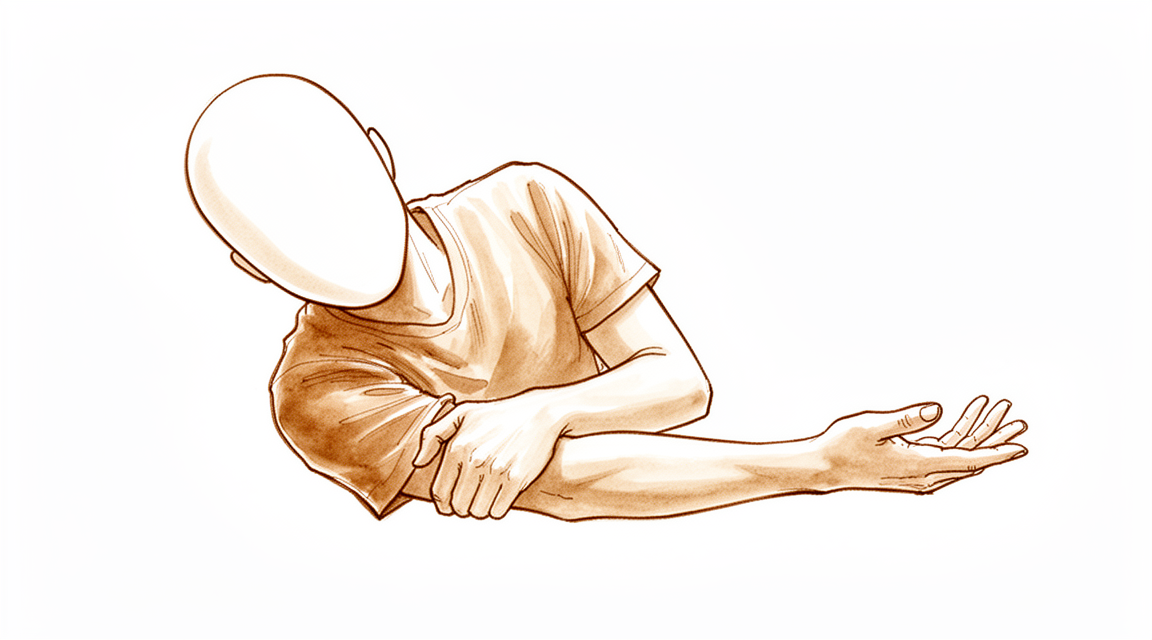
ਤੁਸੀਂ ਕੀ ਮਹਿਸੂਸ ਕਰਦੇ ਹੋ
ਰੇਡੀਅਲ ਹੈੱਡ ਫ੍ਰੈਕਚਰ (radial head fracture, ਕੂਹਣੀ ਦੇ ਬਿਲਕੁਲ ਹੇਠਾਂ ਰੇਡੀਅਸ ਹੱਡੀ ਦੇ ਗੋਲ ਸਿਰੇ ਦਾ ਟੁੱਟਣਾ) ਆਮ ਤੌਰ 'ਤੇ ਉਦੋਂ ਹੁੰਦਾ ਹੈ ਜਦੋਂ ਤੁਸੀਂ ਫੈਲੀ ਹੋਈ ਬਾਂਹ ਉੱਤੇ ਡਿੱਗਦੇ ਹੋ। ਝਟਕਾ ਤੁਹਾਡੀ ਬਾਂਹ ਦੇ ਹੇਠਲੇ ਹਿੱਸੇ (forearm) ਰਾਹੀਂ ਉੱਪਰ ਕੂਹਣੀ ਤੱਕ ਜਾਂਦਾ ਹੈ, ਅਤੇ ਕੂਹਣੀ ਦੇ ਬਿਲਕੁਲ ਹੇਠਾਂ, ਬਾਂਹ ਦੇ ਹੇਠਲੇ ਹਿੱਸੇ ਦੇ ਸਿਖਰ ਉੱਤੇ ਛੋਟੀ ਗੋਲ ਹੱਡੀ ਨੂੰ ਤੋੜ ਦਿੰਦਾ ਹੈ। ਇਸ ਹੱਡੀ ਨੂੰ ਰੇਡੀਅਲ ਹੈੱਡ ਕਿਹਾ ਜਾਂਦਾ ਹੈ। ਇਹ ਟੁੱਟਾਂ ਆਮ ਹਨ। ਇਹ ਕੂਹਣੀ ਦੇ ਸਾਰੇ ਫ੍ਰੈਕਚਰਾਂ ਵਿੱਚੋਂ ਲਗਭਗ 20% ਹਨ, ਅਤੇ ਕੂਹਣੀ ਦੇ ਆਲੇ-ਦੁਆਲੇ ਸਭ ਤੋਂ ਆਮ ਫ੍ਰੈਕਚਰ ਇਹੀ ਹੈ।
ਜ਼ਿਆਦਾਤਰ ਲੋਕਾਂ ਨੂੰ ਉਸੇ ਵੇਲੇ ਕੂਹਣੀ ਦੇ ਬਾਹਰਲੇ ਪਾਸੇ ਦਰਦ ਮਹਿਸੂਸ ਹੁੰਦਾ ਹੈ। ਉਸ ਥਾਂ ਨੂੰ ਛੂਹਣ 'ਤੇ ਦਰਦ ਹੋ ਸਕਦਾ ਹੈ, ਅਤੇ ਕੂਹਣੀ ਹਿਲਾਉਣ ਜਾਂ ਬਾਂਹ ਦੇ ਹੇਠਲੇ ਹਿੱਸੇ ਨੂੰ ਘੁਮਾਉਣ ਨਾਲ ਦਰਦ ਹੋ ਸਕਦਾ ਹੈ। ਜੋੜ ਉੱਤੇ ਅਕਸਰ ਸੋਜ ਆ ਜਾਂਦੀ ਹੈ, ਕਈ ਵਾਰ ਨੀਲ ਵੀ ਪੈ ਜਾਂਦਾ ਹੈ। ਤੁਹਾਡੀ ਕੂਹਣੀ ਵਿੱਚ ਅਕੜਾਅ ਮਹਿਸੂਸ ਹੋ ਸਕਦਾ ਹੈ, ਅਤੇ ਹੋ ਸਕਦਾ ਹੈ ਤੁਸੀਂ ਬਾਂਹ ਨੂੰ ਬਿਲਕੁਲ ਵਰਤਣਾ ਨਾ ਚਾਹੋ। ਕੁਝ ਡਿੱਗਣ ਨਾਲ ਕੂਹਣੀ ਜੋੜ ਤੋਂ ਉਤਰ ਵੀ ਜਾਂਦੀ ਹੈ (dislocation), ਜੋ ਇਹਨਾਂ ਵਿੱਚੋਂ 3% ਤੋਂ 14% ਫ੍ਰੈਕਚਰਾਂ ਨਾਲ ਹੁੰਦਾ ਹੈ।
ਪਹਿਲੇ ਦਿਨਾਂ ਵਿੱਚ, ਦਰਦ ਅਕਸਰ ਆਰਾਮ ਕਰਦੇ ਸਮੇਂ ਵੀ ਰਹਿੰਦਾ ਹੈ, ਅਤੇ ਇਹ ਤੁਹਾਡੀ ਨੀਂਦ ਖ਼ਰਾਬ ਕਰ ਸਕਦਾ ਹੈ। ਕੇਤਲੀ ਚੁੱਕਣਾ, ਦਰਵਾਜ਼ੇ ਦਾ ਹੈਂਡਲ ਘੁਮਾਉਣਾ, ਕੁਝ ਪੀਣ ਲਈ ਡੋਲ੍ਹਣਾ, ਜਾਂ ਸਰੀਰ ਦੇ ਪਾਰ ਹੱਥ ਵਧਾਉਣਾ ਵਰਗੇ ਸਾਦੇ ਕੰਮ ਬੇਆਰਾਮ ਹੋ ਸਕਦੇ ਹਨ। ਫ਼ੋਨ ਜਾਂ ਪਲੇਟ ਫੜਨ ਲਈ ਹਥੇਲੀ ਨੂੰ ਉੱਪਰ ਜਾਂ ਹੇਠਾਂ ਵੱਲ ਘੁਮਾਉਣਾ ਕੂਹਣੀ ਮੋੜਨ ਨਾਲੋਂ ਔਖਾ ਹੋ ਸਕਦਾ ਹੈ।
ਪਹਿਲੇ ਹਫ਼ਤਿਆਂ ਦੌਰਾਨ, ਜਿਵੇਂ ਹੱਡੀ ਜੁੜਨੀ ਸ਼ੁਰੂ ਹੁੰਦੀ ਹੈ, ਦਰਦ ਆਮ ਤੌਰ 'ਤੇ ਹੌਲੀ-ਹੌਲੀ ਘਟ ਜਾਂਦਾ ਹੈ। ਹਿਲਜੁਲ ਆਮ ਤੌਰ 'ਤੇ ਸੌਖੀ ਹੁੰਦੀ ਜਾਂਦੀ ਹੈ, ਹਾਲਾਂਕਿ ਤੁਹਾਡੀ ਕੂਹਣੀ ਨੂੰ ਦੁਬਾਰਾ ਆਮ ਵਰਗਾ ਮਹਿਸੂਸ ਹੋਣ ਵਿੱਚ ਸਮਾਂ ਲੱਗ ਸਕਦਾ ਹੈ।
ਇਹ ਜਾਣਨਾ ਚੰਗਾ ਹੈ ਕਿ ਇਹਨਾਂ ਫ੍ਰੈਕਚਰਾਂ ਨਾਲ ਕਈ ਵਾਰ ਉਸੇ ਬਾਂਹ ਵਿੱਚ ਹੋਰ ਸੱਟਾਂ ਵੀ ਹੁੰਦੀਆਂ ਹਨ। ਉਸੇ ਡਿੱਗਣ ਨਾਲ ਗੁੱਟ, ਬਾਂਹ ਦੇ ਹੇਠਲੇ ਹਿੱਸੇ ਜਾਂ ਮੋਢੇ ਨੂੰ ਵੀ ਸੱਟ ਲੱਗ ਸਕਦੀ ਹੈ, ਅਤੇ ਕੂਹਣੀ ਦੇ ਆਲੇ-ਦੁਆਲੇ ਦੇ ਲਿਗਾਮੈਂਟਾਂ (ligament, ਹੱਡੀ ਨੂੰ ਹੱਡੀ ਨਾਲ ਜੋੜਨ ਵਾਲਾ ਬੰਧਨ) ਵਿੱਚ ਮੋਚ ਆ ਸਕਦੀ ਹੈ। ਤੁਹਾਡਾ ਸਰਜਨ ਤੁਹਾਡੀ ਬਾਂਹ ਵਿੱਚ ਹੋਰ ਥਾਵਾਂ 'ਤੇ ਦਰਦ ਬਾਰੇ ਪੁੱਛੇਗਾ ਅਤੇ ਉਹਨਾਂ ਥਾਵਾਂ ਦੀ ਧਿਆਨ ਨਾਲ ਜਾਂਚ ਕਰੇਗਾ, ਕਿਉਂਕਿ ਇਹਨਾਂ ਸੱਟਾਂ ਦਾ ਜਲਦੀ ਪਤਾ ਲੱਗਣਾ ਇਸ ਗੱਲ ਲਈ ਅਹਿਮ ਹੈ ਕਿ ਬਾਅਦ ਵਿੱਚ ਕੂਹਣੀ ਕਿੰਨੀ ਚੰਗੀ ਤਰ੍ਹਾਂ ਕੰਮ ਕਰਦੀ ਹੈ।
ਜੇ ਡਿੱਗਣ ਤੋਂ ਬਾਅਦ ਤੁਹਾਡਾ ਦਰਦ ਕੂਹਣੀ ਦੇ ਬਾਹਰਲੇ ਪਾਸੇ ਹੈ, ਅਤੇ ਬਾਂਹ ਨੂੰ ਹਿਲਾਉਣਾ ਜਾਂ ਉਸ ਉੱਤੇ ਭਾਰ ਪਾਉਣਾ ਔਖਾ ਹੈ, ਤਾਂ ਇਹ ਨਮੂਨਾ ਇਸ ਸੱਟ ਨਾਲ ਮੇਲ ਖਾਂਦਾ ਹੈ। ਅਗਲੇ ਭਾਗ ਦੱਸਦੇ ਹਨ ਕਿ ਫ੍ਰੈਕਚਰ ਦੀ ਪੁਸ਼ਟੀ ਕਿਵੇਂ ਹੁੰਦੀ ਹੈ ਅਤੇ ਇਲਾਜ ਵਿੱਚ ਕੀ ਸ਼ਾਮਲ ਹੁੰਦਾ ਹੈ।
ਅਸਲ ਵਿੱਚ ਕੀ ਹੋ ਰਿਹਾ ਹੈ
ਰੇਡੀਅਲ ਹੈੱਡ ਇੱਕ ਛੋਟੀ, ਟਿੱਕੀ ਵਰਗੀ ਹੱਡੀ ਹੈ ਜਿਸ ਦੇ ਉੱਪਰ ਇੱਕ ਘੱਟ ਡੂੰਘੀ ਕੌਲੀ ਹੁੰਦੀ ਹੈ। ਇਹ ਕੌਲੀ ਉੱਪਰਲੀ ਬਾਂਹ ਦੀ ਹੱਡੀ ਦੇ ਸਿਰੇ ਨਾਲ ਖਿਸਕਦੀ ਹੈ, ਅਤੇ ਟਿੱਕੀ ਦਾ ਪਾਸਾ ਬਾਂਹ ਦੇ ਹੇਠਲੇ ਹਿੱਸੇ ਦੀ ਦੂਜੀ ਹੱਡੀ ਨਾਲ ਫਿੱਟ ਹੁੰਦਾ ਹੈ। ਇਸ ਨੂੰ ਦੋ ਹਿੱਲਣ ਵਾਲੇ ਪੁਰਜ਼ਿਆਂ ਵਿਚਕਾਰ ਪਈ ਇੱਕ ਵਾਸ਼ਰ ਵਾਂਗ ਸਮਝੋ: ਇਹ ਤੁਹਾਡੀ ਬਾਂਹ ਦੇ ਹੇਠਲੇ ਹਿੱਸੇ ਨੂੰ ਘੁੰਮਣ ਦਿੰਦੀ ਹੈ ਤਾਂ ਜੋ ਤੁਸੀਂ ਹਥੇਲੀ ਨੂੰ ਉੱਪਰ ਜਾਂ ਹੇਠਾਂ ਵੱਲ ਘੁਮਾ ਸਕੋ, ਅਤੇ ਇਹ ਤੁਹਾਡੀ ਬਾਂਹ ਵਿੱਚ ਉੱਪਰ ਵੱਲ ਜਾਂਦੇ ਭਾਰ ਨੂੰ ਗੱਦੀ ਵਾਂਗ ਝੱਲਦੀ ਹੈ।
ਇਹ ਇੱਕ ਦੂਜਾ ਕੰਮ ਵੀ ਕਰਦੀ ਹੈ। ਇਹ ਕੂਹਣੀ ਦੇ ਇੱਕ ਪਾਸੇ ਟੇਕ ਵਾਂਗ ਕੰਮ ਕਰਦੀ ਹੈ, ਅਤੇ ਜਦੋਂ ਤੁਸੀਂ ਬਾਂਹ ਨਾਲ ਧੱਕਦੇ ਹੋ ਜਾਂ ਉਸ ਨੂੰ ਸਿੱਧਾ ਕਰਦੇ ਹੋ ਤਾਂ ਲਿਗਾਮੈਂਟਾਂ ਨੂੰ ਜੋੜ ਸਿੱਧਾ ਰੱਖਣ ਵਿੱਚ ਮਦਦ ਕਰਦੀ ਹੈ। ਜੇ ਉਹ ਟੇਕ ਟੁੱਟ ਜਾਵੇ, ਤਾਂ ਕੂਹਣੀ ਡਾਵਾਂਡੋਲ ਮਹਿਸੂਸ ਹੋ ਸਕਦੀ ਹੈ, ਖ਼ਾਸ ਕਰਕੇ ਜੇ ਕੋਈ ਲਿਗਾਮੈਂਟ ਵੀ ਪਾਟ ਗਿਆ ਹੋਵੇ। ਇਸ ਛੋਟੀ ਹੱਡੀ ਨੂੰ ਖ਼ੂਨ ਦੀ ਸਪਲਾਈ ਸੀਮਤ ਹੁੰਦੀ ਹੈ, ਅਤੇ ਇਹ ਇੱਕ ਕਾਰਨ ਹੈ ਕਿ ਕੁਝ ਟੁੱਟਾਂ ਹੌਲੀ ਜੁੜਦੀਆਂ ਹਨ।
ਇਹਨਾਂ ਵਿੱਚੋਂ ਜ਼ਿਆਦਾਤਰ ਫ੍ਰੈਕਚਰ ਉਦੋਂ ਹੁੰਦੇ ਹਨ ਜਦੋਂ ਤੁਸੀਂ ਫੈਲੀ ਹੋਈ ਬਾਂਹ ਉੱਤੇ ਡਿੱਗਦੇ ਹੋ, ਅਤੇ ਝਟਕਾ ਰੇਡੀਅਲ ਹੈੱਡ ਨੂੰ ਉਸ ਦੇ ਉੱਪਰਲੀ ਹੱਡੀ ਨਾਲ ਜ਼ੋਰ ਨਾਲ ਟਕਰਾਉਂਦਾ ਹੈ। ਕਈ ਵਾਰ ਉਸੇ ਡਿੱਗਣ ਨਾਲ ਕੂਹਣੀ ਦੇ ਅੰਦਰਲੇ ਜਾਂ ਬਾਹਰਲੇ ਪਾਸੇ ਦੇ ਲਿਗਾਮੈਂਟਾਂ ਵਿੱਚ ਮੋਚ ਆ ਜਾਂਦੀ ਹੈ ਜਾਂ ਉਹ ਪਾਟ ਜਾਂਦੇ ਹਨ, ਜਾਂ ਅੱਗੇ ਜਾ ਕੇ ਗੁੱਟ ਜਾਂ ਬਾਂਹ ਦੇ ਹੇਠਲੇ ਹਿੱਸੇ ਨੂੰ ਸੱਟ ਲੱਗ ਜਾਂਦੀ ਹੈ। ਰੇਡੀਅਲ ਹੈੱਡ ਫ੍ਰੈਕਚਰ ਵਾਲੇ ਲਗਭਗ 30% ਲੋਕਾਂ ਨੂੰ ਉਸੇ ਬਾਂਹ ਵਿੱਚ ਹੋਰ ਸੱਟਾਂ ਵੀ ਹੁੰਦੀਆਂ ਹਨ। ਜਦੋਂ ਕੂਹਣੀ ਜੋੜ ਤੋਂ ਵੀ ਉਤਰ ਜਾਂਦੀ ਹੈ, ਤਾਂ ਕੂਹਣੀ ਦੇ ਹੋਰ ਹਿੱਸਿਆਂ ਨੂੰ ਵੀ ਨੁਕਸਾਨ ਹੋ ਸਕਦਾ ਹੈ, ਅਤੇ ਇਹ ਮੇਲ ਜੋੜ ਨੂੰ ਹੋਰ ਡਾਵਾਂਡੋਲ ਬਣਾ ਦਿੰਦਾ ਹੈ।
ਹੱਡੀ ਮੁੜ ਜੁੜ ਕੇ ਠੀਕ ਹੁੰਦੀ ਹੈ, ਅਤੇ ਹਫ਼ਤਿਆਂ ਦੌਰਾਨ ਨਵੀਂ ਹੱਡੀ ਟੁੱਟ ਉੱਤੇ ਪੁਲ ਬਣਾਉਂਦੀ ਹੈ। ਜੇ ਟੁਕੜੇ ਨੇੜੇ-ਨੇੜੇ ਅਤੇ ਠੀਕ ਸੇਧ ਵਿੱਚ ਹੋਣ, ਤਾਂ ਉਹ ਸਰਜਰੀ ਤੋਂ ਬਿਨਾਂ ਆਪਣੀ ਥਾਂ ਉੱਤੇ ਜੁੜ ਸਕਦੇ ਹਨ। ਜੇ ਕੋਈ ਟੁਕੜਾ 2 ਤੋਂ 3 ਮਿਲੀਮੀਟਰ ਜਾਂ ਇਸ ਤੋਂ ਵੱਧ ਦੂਰ ਖਿਸਕ ਗਿਆ ਹੋਵੇ, ਜਾਂ ਜੋੜ ਦੀ ਸਤ੍ਹਾ ਕਈ ਟੁਕੜਿਆਂ ਵਿੱਚ ਟੁੱਟ ਗਈ ਹੋਵੇ, ਤਾਂ ਹੋ ਸਕਦਾ ਹੈ ਹੱਡੀ ਆਪਣੇ ਆਪ ਕੰਮ ਦੇਣ ਯੋਗ ਸ਼ਕਲ ਵਿੱਚ ਨਾ ਜੁੜੇ। ਅਜਿਹੇ ਮਾਮਲਿਆਂ ਵਿੱਚ, ਸਰਜਰੀ ਦਾ ਮਕਸਦ ਟੁਕੜਿਆਂ ਨੂੰ ਆਪਣੀ ਥਾਂ ਉੱਤੇ ਟਿਕਾ ਕੇ ਰੱਖਣਾ ਹੁੰਦਾ ਹੈ, ਜਾਂ ਨੁਕਸਾਨੇ ਗਏ ਰੇਡੀਅਲ ਹੈੱਡ ਨੂੰ ਨਕਲੀ ਹਿੱਸੇ ਨਾਲ ਬਦਲਣਾ ਹੁੰਦਾ ਹੈ ਤਾਂ ਜੋ ਕੂਹਣੀ ਦੀ ਟੇਕ ਅਤੇ ਉਸ ਦੀ ਘੁੰਮਣ ਵਾਲੀ ਚਿਕਨੀ ਸਤ੍ਹਾ ਬਣੀ ਰਹੇ।
ਅਸੀਂ ਇਸ ਬਾਰੇ ਕੀ ਕਰ ਸਕਦੇ ਹਾਂ
ਡਾ. ਕੀਰਨ ਹਿਰਪਰਾ, ਜੋ ਮਾਟਰ ਪ੍ਰਾਈਵੇਟ ਹਸਪਤਾਲ ਰੌਕਹੈਂਪਟਨ ਵਿੱਚ ਉੱਪਰਲੇ ਅੰਗ (ਮੋਢੇ ਤੋਂ ਹੱਥ ਤੱਕ ਦੀ ਬਾਂਹ) ਦੇ ਸਰਜਨ ਹਨ, ਇਲਾਜ ਨੂੰ ਤੁਹਾਡੀ ਖ਼ਾਸ ਸੱਟ ਦੇ ਅਨੁਸਾਰ ਚੁਣਦੇ ਹਨ। ਮਰੀਜ਼ਾਂ ਨੂੰ ਆਮ ਤੌਰ 'ਤੇ ਉਨ੍ਹਾਂ ਦਾ ਜੀਪੀ (ਫ਼ੈਮਿਲੀ ਡਾਕਟਰ) ਸਾਡੇ ਕਲੀਨਿਕ ਵਿੱਚ ਭੇਜਦਾ ਹੈ; ਜੇ ਕਿਸੇ ਫਿਜ਼ੀਓਥੈਰੇਪਿਸਟ ਨੇ ਤੁਹਾਨੂੰ ਸਾਨੂੰ ਮਿਲਣ ਦੀ ਸਲਾਹ ਦਿੱਤੀ ਹੈ, ਤਾਂ ਵੀ ਮੈਡੀਕੇਅਰ ਰਿਬੇਟ (ਮੈਡੀਕੇਅਰ ਵੱਲੋਂ ਖ਼ਰਚੇ ਦੀ ਵਾਪਸੀ) ਦੇ ਯੋਗ ਹੋਣ ਲਈ ਤੁਹਾਨੂੰ ਆਪਣੇ ਜੀਪੀ ਤੋਂ ਰੈਫ਼ਰਲ ਦੀ ਲੋੜ ਪਵੇਗੀ। ਉਸ ਪਹਿਲੀ ਮੁਲਾਕਾਤ ਵੇਲੇ ਅਸੀਂ ਤੁਹਾਡੀ ਤਕਲੀਫ਼ ਦਾ ਵੇਰਵਾ ਲੈਂਦੇ ਹਾਂ, ਤੁਹਾਡੀ ਕੂਹਣੀ ਦੀ ਜਾਂਚ ਕਰਦੇ ਹਾਂ, ਅਤੇ ਜਿੱਥੇ ਲੋੜ ਹੋਵੇ ਸਕੈਨ ਕਰਵਾਉਂਦੇ ਹਾਂ। ਐਕਸ-ਰੇ ਵਿੱਚ ਆਮ ਤੌਰ 'ਤੇ ਟੁੱਟ ਦਿਖਾਈ ਦੇ ਜਾਂਦੀ ਹੈ। ਕਈ ਵਾਰ ਹੱਡੀ ਦੇ ਛੋਟੇ ਟੁਕੜਿਆਂ ਜਾਂ ਸੱਟ ਵਾਲੇ ਲਿਗਾਮੈਂਟਾਂ ਦੀ ਜਾਂਚ ਲਈ, ਜੋ ਯੋਜਨਾ ਬਦਲ ਸਕਦੇ ਹਨ, ਨਾਲ ਇੱਕ ਸਕੈਨ ਵੀ ਕੀਤਾ ਜਾਂਦਾ ਹੈ।
ਇਹਨਾਂ ਵਿੱਚੋਂ ਬਹੁਤ ਸਾਰੇ ਫ੍ਰੈਕਚਰ ਸਥਿਰ ਹੁੰਦੇ ਹਨ ਅਤੇ ਟੁਕੜੇ ਨੇੜੇ-ਨੇੜੇ ਹੁੰਦੇ ਹਨ। ਜਦੋਂ ਅਜਿਹਾ ਹੋਵੇ, ਅਤੇ ਤੁਹਾਡੀ ਕੂਹਣੀ ਬਿਨਾਂ ਕਿਸੇ ਰੁਕਾਵਟ ਦੇ ਅਜੇ ਵੀ ਮੁੜ ਅਤੇ ਘੁੰਮ ਸਕਦੀ ਹੋਵੇ, ਤਾਂ ਅਸੀਂ ਆਮ ਤੌਰ 'ਤੇ ਇਸ ਦਾ ਇਲਾਜ ਸਰਜਰੀ ਤੋਂ ਬਿਨਾਂ ਕਰਦੇ ਹਾਂ। ਆਰਾਮ ਲਈ ਤੁਸੀਂ ਇੱਕ ਹਫ਼ਤੇ ਜਾਂ ਇਸ ਤੋਂ ਘੱਟ ਸਮੇਂ ਲਈ ਸਲਿੰਗ (ਬਾਂਹ ਨੂੰ ਸਹਾਰਾ ਦੇਣ ਵਾਲੀ ਪੱਟੀ) ਪਾ ਸਕਦੇ ਹੋ, ਅਤੇ ਫਿਰ ਬਾਂਹ ਹਿਲਾਉਣੀ ਸ਼ੁਰੂ ਕਰਦੇ ਹੋ। ਕੁਝ ਲੋਕਾਂ ਦੇ ਜੋੜ ਵਿੱਚੋਂ ਸ਼ੁਰੂ ਵਿੱਚ ਹੀ ਸੂਈ ਨਾਲ ਤਰਲ ਕੱਢਿਆ ਜਾਂਦਾ ਹੈ, ਜਿਸ ਨਾਲ ਦਰਦ ਘਟਦਾ ਹੈ ਅਤੇ ਜਲਦੀ ਹਿਲਜੁਲ ਸੌਖੀ ਹੋ ਜਾਂਦੀ ਹੈ। ਜਿਵੇਂ-ਜਿਵੇਂ ਦਰਦ ਘਟਦਾ ਹੈ, ਫਿਜ਼ੀਓਥੈਰੇਪੀ ਪੜਾਅਵਾਰ ਸ਼ੁਰੂ ਕੀਤੀ ਜਾਂਦੀ ਹੈ। ਇਸ ਤਰ੍ਹਾਂ ਦੇ ਇਲਾਜ ਤੋਂ ਬਾਅਦ ਲੰਮੇ ਸਮੇਂ ਦੇ ਨਤੀਜੇ ਚੰਗੇ ਹੁੰਦੇ ਹਨ, ਅਤੇ ਕੁਝ ਕਿਸਮ ਦੇ ਫ੍ਰੈਕਚਰਾਂ ਵਿੱਚ ਸਰਜਰੀ ਅਤੇ ਬਿਨਾਂ ਸਰਜਰੀ ਦੋਹਾਂ ਨਾਲ ਇੱਕ ਸਾਲ ਬਾਅਦ ਬਾਂਹ ਦਾ ਕੰਮ ਲਗਭਗ ਇੱਕੋ ਜਿਹਾ ਹੁੰਦਾ ਹੈ। ਇੱਥੇ ਫ਼ੈਸਲਾ ਸੱਚਮੁੱਚ ਮਿਲ ਕੇ ਕੀਤਾ ਜਾਂਦਾ ਹੈ: ਬਿਨਾਂ ਓਪਰੇਸ਼ਨ ਵਾਲਾ ਇਲਾਜ ਵਾਜਬ ਹੈ, ਪਰ ਦਰਦ ਅਤੇ ਬਾਂਹ ਦੀ ਅੰਤਲੀ ਸਥਿਤੀ ਹਰ ਕਿਸੇ ਦੇ ਅਨੁਕੂਲ ਨਹੀਂ ਹੋ ਸਕਦੀ।
ਸਰਜਰੀ ਸ਼ੁਰੂ ਤੋਂ ਹੀ ਉਦੋਂ ਸੁਝਾਈ ਜਾਂਦੀ ਹੈ ਜਦੋਂ ਟੁੱਟ ਦੇ ਟੁਕੜੇ ਖਿਸਕ ਕੇ ਦੂਰ ਹੋ ਗਏ ਹੋਣ, ਜਦੋਂ ਟੁੱਟੇ ਟੁਕੜੇ ਜੋੜ ਵਿੱਚ ਫਸ ਕੇ ਉਸ ਨੂੰ ਘੁੰਮਣ ਤੋਂ ਰੋਕਦੇ ਹੋਣ, ਜਦੋਂ ਕੂਹਣੀ ਡਾਵਾਂਡੋਲ ਹੋਵੇ, ਜਾਂ ਜਦੋਂ ਉਸੇ ਬਾਂਹ ਵਿੱਚ ਹੋਰ ਸੱਟਾਂ ਦੀ ਮੁਰੰਮਤ ਕਰਨੀ ਹੋਵੇ। ਮਕਸਦ ਟੁਕੜਿਆਂ ਨੂੰ ਛੋਟੀਆਂ ਪਲੇਟਾਂ ਜਾਂ ਸਕਰੂਆਂ ਨਾਲ ਆਪਣੀ ਥਾਂ ਉੱਤੇ ਟਿਕਾਉਣਾ ਹੁੰਦਾ ਹੈ, ਜਾਂ, ਜਦੋਂ ਹੱਡੀ ਇੰਨੇ ਟੁਕੜਿਆਂ ਵਿੱਚ ਹੋਵੇ ਕਿ ਉਸ ਨੂੰ ਦੁਬਾਰਾ ਜੋੜਿਆ ਨਾ ਜਾ ਸਕੇ, ਤਾਂ ਰੇਡੀਅਲ ਹੈੱਡ ਨੂੰ ਨਕਲੀ ਹਿੱਸੇ ਨਾਲ ਬਦਲਣਾ ਹੁੰਦਾ ਹੈ। ਅਸੀਂ ਤੁਹਾਡੇ ਨਾਲ ਗੱਲ ਕਰਾਂਗੇ ਕਿ ਕਿਹੜਾ ਵਿਕਲਪ ਤੁਹਾਡੇ ਫ੍ਰੈਕਚਰ, ਤੁਹਾਡੀ ਉਮਰ, ਤੁਹਾਡੀ ਹੱਡੀ ਦੀ ਮਜ਼ਬੂਤੀ, ਅਤੇ ਤੁਹਾਨੂੰ ਆਪਣੀ ਬਾਂਹ ਤੋਂ ਕੀ ਕੰਮ ਲੈਣ ਦੀ ਲੋੜ ਹੈ, ਇਹਨਾਂ ਦੇ ਅਨੁਕੂਲ ਹੈ।
ਤੁਸੀਂ ਜਿਹੜਾ ਵੀ ਰਾਹ ਚੁਣੋ, ਪਹਿਲੇ ਹਫ਼ਤੇ ਆਰਾਮ ਅਤੇ ਬਚਾਅ ਬਾਰੇ ਹੁੰਦੇ ਹਨ। ਦਰਦ ਤੋਂ ਰਾਹਤ ਤੁਹਾਨੂੰ ਸਾਡੀਆਂ ਦੱਸੀਆਂ ਹੱਦਾਂ ਦੇ ਅੰਦਰ ਹਿਲਜੁਲ ਕਰਦੇ ਰਹਿਣ ਦਿੰਦੀ ਹੈ। ਜਦੋਂ ਤੱਕ ਹੱਡੀ ਜੁੜ ਰਹੀ ਹੁੰਦੀ ਹੈ ਜਾਂ ਮੁਰੰਮਤ ਟਿਕ ਰਹੀ ਹੁੰਦੀ ਹੈ, ਬਾਂਹ ਨੂੰ ਬਚਾ ਕੇ ਰੱਖਿਆ ਜਾਂਦਾ ਹੈ। ਫਿਰ ਸਹੀ ਪੜਾਅ ਉੱਤੇ ਫਿਜ਼ੀਓਥੈਰੇਪੀ ਕੰਮ ਸੰਭਾਲਦੀ ਹੈ, ਕਿਉਂਕਿ ਜਲਦੀ, ਅਗਵਾਈ ਹੇਠ ਕੀਤੀ ਹਿਲਜੁਲ ਹੀ ਅਕੜਾਅ ਨੂੰ ਰੋਕਦੀ ਹੈ। ਅਸੀਂ ਰਾਹ ਵਿੱਚ ਤੁਹਾਨੂੰ ਮਿਲਦੇ ਰਹਿੰਦੇ ਹਾਂ ਤਾਂ ਜੋ ਹੱਡੀ ਦੇ ਜੁੜਨ ਦੀ ਜਾਂਚ ਕਰ ਸਕੀਏ ਅਤੇ ਜਿਵੇਂ-ਜਿਵੇਂ ਤੁਹਾਡੀ ਕੂਹਣੀ ਸੁਧਰਦੀ ਹੈ, ਯੋਜਨਾ ਨੂੰ ਬਦਲ ਸਕੀਏ।
ਕੀ ਉਮੀਦ ਰੱਖੀਏ
ਜ਼ਿਆਦਾਤਰ ਰੇਡੀਅਲ ਹੈੱਡ ਫ੍ਰੈਕਚਰਾਂ ਵਿੱਚ ਟੁਕੜੇ ਆਪਣੀ ਥਾਂ ਤੋਂ ਨਹੀਂ ਖਿਸਕਦੇ ਅਤੇ ਇਹ ਸਰਜਰੀ ਤੋਂ ਬਿਨਾਂ ਠੀਕ ਹੋ ਜਾਂਦੇ ਹਨ। ਪਹਿਲੇ ਹਫ਼ਤਿਆਂ ਦੌਰਾਨ ਦਰਦ ਘਟ ਜਾਂਦਾ ਹੈ ਅਤੇ ਹਿਲਜੁਲ ਸੌਖੀ ਹੁੰਦੀ ਜਾਂਦੀ ਹੈ, ਹਾਲਾਂਕਿ ਕੂਹਣੀ ਵਿੱਚ ਕੁਝ ਮਹੀਨਿਆਂ ਤੱਕ ਅਕੜਾਅ ਰਹਿ ਸਕਦਾ ਹੈ। ਹਥੇਲੀ ਨੂੰ ਉੱਪਰ ਅਤੇ ਹੇਠਾਂ ਵੱਲ ਘੁਮਾਉਣਾ ਅਕਸਰ ਸਭ ਤੋਂ ਅਖ਼ੀਰ ਵਿੱਚ ਆਮ ਵਰਗਾ ਮਹਿਸੂਸ ਹੁੰਦਾ ਹੈ। ਤੁਸੀਂ ਉਮੀਦ ਕਰ ਸਕਦੇ ਹੋ ਕਿ ਖਾਣਾ ਖਾਣ ਅਤੇ ਕੱਪੜੇ ਪਾਉਣ ਵਰਗੇ ਰੋਜ਼ਾਨਾ ਕੰਮ ਜਲਦੀ ਹੀ ਕਰਨ ਲੱਗ ਪਵੋਗੇ, ਅਤੇ ਭਾਰੀ ਚੀਜ਼ਾਂ ਚੁੱਕਣਾ ਅਤੇ ਕੰਮ ਅਗਲੇ ਹਫ਼ਤਿਆਂ ਵਿੱਚ ਹੌਲੀ-ਹੌਲੀ ਵਾਪਸ ਆਉਣਗੇ। ਤੁਹਾਡਾ ਸਰਜਨ ਦੱਸੇਗਾ ਕਿ ਕੰਮ ਜਾਂ ਖੇਡ ਉੱਤੇ ਵਾਪਸ ਜਾਣਾ ਕਦੋਂ ਸੁਰੱਖਿਅਤ ਹੈ।
ਜੇ ਤੁਹਾਡੇ ਫ੍ਰੈਕਚਰ ਲਈ ਸਰਜਰੀ ਦੀ ਲੋੜ ਹੈ, ਤਾਂ ਹੱਡੀ ਨੂੰ ਛੋਟੀਆਂ ਪਲੇਟਾਂ ਜਾਂ ਸਕਰੂਆਂ ਨਾਲ ਟਿਕਾਇਆ ਜਾਂਦਾ ਹੈ, ਜਾਂ ਜਦੋਂ ਇਹ ਇੰਨੇ ਟੁਕੜਿਆਂ ਵਿੱਚ ਹੋਵੇ ਕਿ ਦੁਬਾਰਾ ਜੋੜੀ ਨਾ ਜਾ ਸਕੇ, ਤਾਂ ਇਸ ਨੂੰ ਨਕਲੀ ਰੇਡੀਅਲ ਹੈੱਡ ਨਾਲ ਬਦਲਿਆ ਜਾਂਦਾ ਹੈ। ਠੀਕ ਹੋਣਾ ਮੋਟੇ ਤੌਰ 'ਤੇ ਉਸੇ ਤਰੀਕੇ ਨਾਲ ਚੱਲਦਾ ਹੈ: ਪਹਿਲਾਂ ਬਾਂਹ ਨੂੰ ਬਚਾ ਕੇ ਰੱਖਿਆ ਜਾਂਦਾ ਹੈ, ਫਿਰ ਫਿਜ਼ੀਓਥੈਰੇਪੀ ਨਾਲ ਹਿਲਜੁਲ ਅਤੇ ਤਾਕਤ ਵਾਪਸ ਬਣਾਈ ਜਾਂਦੀ ਹੈ। ਇਸ ਫ੍ਰੈਕਚਰ ਦੀ ਸਰਜਰੀ ਤੋਂ ਬਾਅਦ ਬਹੁਤ ਸਾਰੇ ਲੋਕਾਂ ਦੀ ਬਾਂਹ ਦਾ ਕੰਮ ਚੰਗਾ ਵਾਪਸ ਆ ਜਾਂਦਾ ਹੈ।
ਇਮਾਨਦਾਰੀ ਨਾਲ ਕਹੀਏ ਤਾਂ ਕਦੇ-ਕਦਾਈਂ ਗੱਲਾਂ ਗ਼ਲਤ ਹੋ ਸਕਦੀਆਂ ਹਨ। ਹੱਡੀ ਹੌਲੀ ਜੁੜ ਸਕਦੀ ਹੈ, ਜਾਂ ਉਮੀਦ ਨਾਲੋਂ ਮਾੜੀ ਸਥਿਤੀ ਵਿੱਚ ਜੁੜ ਸਕਦੀ ਹੈ। ਅਕੜਾਅ ਸਭ ਤੋਂ ਆਮ ਸ਼ਿਕਾਇਤ ਹੈ, ਅਤੇ ਇਸੇ ਲਈ ਅਗਵਾਈ ਹੇਠ ਹਿਲਜੁਲ ਜਲਦੀ ਸ਼ੁਰੂ ਕੀਤੀ ਜਾਂਦੀ ਹੈ। ਜਦੋਂ ਨਕਲੀ ਹਿੱਸਾ (ਇੰਪਲਾਂਟ) ਲਗਾਇਆ ਜਾਂਦਾ ਹੈ, ਤਾਂ ਕਈ ਵਾਰ ਪਹਿਲੇ ਸਾਲ ਵਿੱਚ ਹੋਰ ਸਰਜਰੀ ਦੀ ਲੋੜ ਪੈਂਦੀ ਹੈ, ਅਤੇ 10 ਸਾਲਾਂ ਦੌਰਾਨ ਬਿਨਾਂ ਸੀਮਿੰਟ ਵਾਲੇ ਇੰਪਲਾਂਟਾਂ ਦੇ ਟਿਕੇ ਰਹਿਣ ਦੀ ਦਰ ਉੱਚੀ ਰਹਿੰਦੀ ਹੈ। 18 ਸਾਲਾਂ 'ਤੇ, ਇੰਪਲਾਂਟ ਦੇ ਟਿਕੇ ਰਹਿਣ ਦੀ ਦਰ 75.1% ਹੈ, ਅਤੇ ਅਸਫਲਤਾ ਦੀ ਸਭ ਤੋਂ ਵੱਧ ਦਰ ਸਰਜਰੀ ਤੋਂ ਬਾਅਦ ਪਹਿਲੇ ਸਾਲ ਵਿੱਚ ਹੁੰਦੀ ਹੈ। ਕੁਝ ਲੋਕ ਜਿਨ੍ਹਾਂ ਦਾ ਰੇਡੀਅਲ ਹੈੱਡ ਬਦਲਣ ਦੀ ਥਾਂ ਕੱਢ ਦਿੱਤਾ ਜਾਂਦਾ ਹੈ, ਉਹ ਵੀ ਚੰਗਾ ਕਰਦੇ ਹਨ: 96% ਲੰਮੇ ਸਮੇਂ ਵਿੱਚ ਤਸੱਲੀਬਖ਼ਸ਼ ਕੰਮਕਾਜ ਦੱਸਦੇ ਹਨ, ਭਾਵੇਂ ਬਾਅਦ ਦੇ ਐਕਸ-ਰੇ ਵਿੱਚ ਘਿਸਾਈ ਵਾਲੇ ਬਦਲਾਅ ਦਿਖਾਈ ਦਿੰਦੇ ਹਨ।
ਜੇ ਫ੍ਰੈਕਚਰ ਦੇ ਨਾਲ ਹੋਰ ਸੱਟਾਂ ਵੀ ਲੱਗੀਆਂ ਹੋਣ, ਜਿਵੇਂ ਪਾਟਿਆ ਹੋਇਆ ਲਿਗਾਮੈਂਟ ਜਾਂ ਉਤਰੀ ਹੋਈ ਕੂਹਣੀ, ਤਾਂ ਠੀਕ ਹੋਣ ਵਿੱਚ ਵੱਧ ਸਮਾਂ ਲੱਗ ਸਕਦਾ ਹੈ ਅਤੇ ਕੂਹਣੀ ਕੁਝ ਸਮੇਂ ਲਈ ਘੱਟ ਸਥਿਰ ਮਹਿਸੂਸ ਹੋ ਸਕਦੀ ਹੈ। ਇਹਨਾਂ ਸੱਟਾਂ ਦਾ ਜਲਦੀ ਪਤਾ ਲਗਾ ਕੇ ਇਲਾਜ ਕਰਨਾ ਚੰਗੇ ਨਤੀਜੇ ਦਾ ਸਭ ਤੋਂ ਵਧੀਆ ਮੌਕਾ ਦਿੰਦਾ ਹੈ, ਅਤੇ ਜਦੋਂ ਇਹਨਾਂ ਦਾ ਸਮੇਂ ਸਿਰ ਪਤਾ ਲੱਗ ਜਾਵੇ ਤਾਂ ਕਾਮਯਾਬੀ ਦੀ ਦਰ ਲਗਭਗ 80% ਹੁੰਦੀ ਹੈ।
ਡਾਕਟਰ ਨੂੰ ਕਦੋਂ ਮਿਲਣਾ ਚਾਹੀਦਾ ਹੈ
ਤੁਰੰਤ ਡਾਕਟਰੀ ਮਦਦ ਲਓ ਜੇ ਤੁਹਾਡੀ ਕੂਹਣੀ ਸਾਫ਼ ਤੌਰ 'ਤੇ ਬੇਢੰਗੀ ਦਿਸਦੀ ਹੋਵੇ, ਜੇ ਕੋਈ ਖੁੱਲ੍ਹਾ ਜ਼ਖ਼ਮ ਹੋਵੇ, ਜੇ ਤੁਹਾਡੀ ਬਾਂਹ ਜਾਂ ਹੱਥ ਵਿੱਚ ਸੁੰਨਪਨ ਜਾਂ ਝਰਨਾਹਟ ਹੋਵੇ, ਜਾਂ ਤੁਸੀਂ ਬਾਂਹ ਨੂੰ ਬਿਲਕੁਲ ਵੀ ਨਾ ਵਰਤ ਸਕੋ। ਇਹਨਾਂ ਨਿਸ਼ਾਨੀਆਂ ਦੀ ਉਸੇ ਵੇਲੇ ਜਾਂਚ ਹੋਣੀ ਚਾਹੀਦੀ ਹੈ।
ਨਹੀਂ ਤਾਂ, ਆਪਣੇ ਜੀਪੀ ਤੋਂ ਸ਼ੁਰੂਆਤ ਕਰੋ। ਜੇ ਦਰਦ ਘਟ ਨਹੀਂ ਰਿਹਾ, ਜਾਂ ਹੱਡੀ ਦੇ ਜੁੜਨ ਦੌਰਾਨ ਸੋਜ, ਹਿਲਜੁਲ ਜਾਂ ਬਾਂਹ ਦੀ ਵਰਤੋਂ ਹਫ਼ਤਾ-ਦਰ-ਹਫ਼ਤਾ ਸੁਧਰ ਨਹੀਂ ਰਹੀ, ਤਾਂ ਮਾਹਿਰ ਡਾਕਟਰ ਤੋਂ ਜਾਂਚ ਲਈ ਕਹੋ। ਠੀਕ ਹੋਣਾ ਆਮ ਤੌਰ 'ਤੇ ਲਗਾਤਾਰ ਅੱਗੇ ਵਧਦਾ ਹੈ, ਇਸ ਲਈ ਹਰ ਹਫ਼ਤੇ ਕੁਝ ਬਿਹਤਰੀ ਹੀ ਉਹ ਚੀਜ਼ ਹੈ ਜੋ ਤੁਸੀਂ ਦੇਖਣਾ ਚਾਹੁੰਦੇ ਹੋ। ਜੇ ਇਹ ਹੋਣਾ ਬੰਦ ਹੋ ਜਾਵੇ, ਤਾਂ ਕੂਹਣੀ ਦੀ ਦੁਬਾਰਾ ਜਾਂਚ ਕਰਵਾਉਣੀ ਚੰਗੀ ਹੈ।
ਵਿਸਥਾਰ ਵਿੱਚ
Advanced reading: the deeper science (optional)
ਇਹ ਭਾਗ ਤੁਹਾਡੇ ਆਪਣੇ ਇਲਾਜ ਦੇ ਫ਼ੈਸਲਿਆਂ ਲਈ ਲੋੜ ਤੋਂ ਵੱਧ ਵਿਸਥਾਰ ਵਿੱਚ ਜਾਂਦਾ ਹੈ। ਰੇਡੀਅਲ ਹੈੱਡ ਫ੍ਰੈਕਚਰ ਬਾਰੇ ਵਾਧੂ ਪੜ੍ਹਨਾ ਲਾਹੇਵੰਦ ਹੈ ਕਿਉਂਕਿ ਅਕਸਰ ਹੱਡੀ ਆਪ ਸੱਟ ਦਾ ਸਭ ਤੋਂ ਘੱਟ ਅਹਿਮ ਹਿੱਸਾ ਹੁੰਦੀ ਹੈ — ਤੁਹਾਡਾ ਨਤੀਜਾ ਆਮ ਤੌਰ 'ਤੇ ਇਸ ਗੱਲ ਉੱਤੇ ਨਿਰਭਰ ਕਰਦਾ ਹੈ ਕਿ ਕੀ ਉਸੇ ਵੇਲੇ ਕੂਹਣੀ ਵਿੱਚ ਕਿਸੇ ਹੋਰ ਚੀਜ਼ ਨੂੰ ਵੀ ਨੁਕਸਾਨ ਹੋਇਆ ਸੀ।
ਫ੍ਰੈਕਚਰ ਇੱਕ ਨਿਸ਼ਾਨੀ ਹੈ, ਸਿਰਫ਼ ਇੱਕ ਸੱਟ ਨਹੀਂ
ਰੇਡੀਅਲ ਹੈੱਡ ਸਥਿਰਤਾ ਦੇਣ ਵਾਲਾ ਹਿੱਸਾ ਹੈ। ਇਹ ਰੇਡੀਅਸ ਹੱਡੀ ਨੂੰ ਬਾਂਹ ਦੇ ਹੇਠਲੇ ਹਿੱਸੇ ਵਿੱਚ ਉੱਪਰ ਵੱਲ ਖਿਸਕਣ ਤੋਂ ਰੋਕਦਾ ਹੈ ਅਤੇ ਕੂਹਣੀ ਨੂੰ ਪਾਸੇ ਵੱਲ ਧੱਕੇ ਜਾਣ ਦਾ ਵਿਰੋਧ ਕਰਦਾ ਹੈ। ਇਸ ਲਈ ਜੋ ਝਟਕਾ ਇਸ ਨੂੰ ਤੋੜਨ ਜਿੰਨਾ ਵੱਡਾ ਹੋਵੇ, ਉਹ ਅਕਸਰ ਲਿਗਾਮੈਂਟਾਂ ਅਤੇ ਕੋਰੋਨੌਇਡ (coronoid, ਕੂਹਣੀ ਉੱਤੇ ਅਲਨਾ ਹੱਡੀ ਦਾ ਅਗਲਾ ਉੱਭਾਰ) ਨੂੰ ਵੀ ਨੁਕਸਾਨ ਪਹੁੰਚਾਉਣ ਜਿੰਨਾ ਵੱਡਾ ਹੁੰਦਾ ਹੈ, ਅਤੇ ਇਸ ਮੇਲ ਨੂੰ ਟੈਰੀਬਲ ਟ੍ਰਾਇਡ (terrible triad, ਤਿੰਨ ਸੱਟਾਂ ਦਾ ਗੰਭੀਰ ਮੇਲ) ਕਿਹਾ ਜਾਂਦਾ ਹੈ: ਰੇਡੀਅਲ ਹੈੱਡ ਫ੍ਰੈਕਚਰ, ਕੋਰੋਨੌਇਡ ਫ੍ਰੈਕਚਰ ਅਤੇ ਕੂਹਣੀ ਦਾ ਜੋੜ ਤੋਂ ਉਤਰ ਜਾਣਾ।
ਇਸੇ ਲਈ ਇਕੱਲਾ, ਆਪਣੀ ਥਾਂ ਤੋਂ ਨਾ ਖਿਸਕਿਆ ਰੇਡੀਅਲ ਹੈੱਡ ਫ੍ਰੈਕਚਰ ਅਤੇ ਟ੍ਰਾਇਡ ਦੇ ਹਿੱਸੇ ਵਜੋਂ ਹੋਇਆ ਰੇਡੀਅਲ ਹੈੱਡ ਫ੍ਰੈਕਚਰ ਬਿਲਕੁਲ ਵੱਖਰੀਆਂ ਸਮੱਸਿਆਵਾਂ ਹਨ, ਭਾਵੇਂ ਐਕਸ-ਰੇ ਰਿਪੋਰਟ ਉੱਤੇ ਨਾਮ ਇੱਕੋ ਹੋਵੇ। ਪਹਿਲੇ ਵਿੱਚ ਆਮ ਤੌਰ 'ਤੇ ਜਲਦੀ ਹਿਲਜੁਲ ਅਤੇ ਬਹੁਤ ਥੋੜ੍ਹੀ ਹੋਰ ਚੀਜ਼ ਦੀ ਲੋੜ ਹੁੰਦੀ ਹੈ। ਦੂਜਾ ਉੱਪਰਲੇ ਅੰਗ ਦੀ ਸਰਜਰੀ ਵਿੱਚ ਜ਼ਿਆਦਾ ਔਖੀਆਂ ਮੁੜ-ਉਸਾਰੀਆਂ ਵਿੱਚੋਂ ਇੱਕ ਹੈ।
ਟ੍ਰਾਇਡ ਲਈ ਸਰਜਰੀ ਦਾ ਰਾਹ (approach) ਵੀ ਵਿਵਾਦਿਤ ਹੈ। 866 ਮਰੀਜ਼ਾਂ ਦੇ ਅੰਕੜੇ ਇਕੱਠੇ ਕਰਨ 'ਤੇ, ਬਾਹਰਲੇ ਪਾਸੇ ਅਤੇ ਅੱਗੇ-ਅੰਦਰਲੇ ਪਾਸੇ ਦੋਹਾਂ ਤੋਂ ਮਿਲਿਆ-ਜੁਲਿਆ ਰਾਹ (lateral plus anteromedial) ਬਾਂਹ ਦੇ ਕੰਮਕਾਜ ਦੇ ਨਤੀਜੇ ਅਤੇ ਪੇਚੀਦਗੀਆਂ ਦੇ ਖ਼ਤਰੇ ਵਿਚਕਾਰ ਚੰਗਾ ਸੰਤੁਲਨ ਦਿੰਦਾ ਜਾਪਿਆ, ਜਦਕਿ ਸਿਰਫ਼ ਅੱਗੇ-ਬਾਹਰਲੇ (anterolateral) ਜਾਂ ਅੱਗੇ-ਅੰਦਰਲੇ (anteromedial) ਰਾਹਾਂ ਨੇ ਓਪਰੇਸ਼ਨ ਤੋਂ ਬਾਅਦ ਦੇ ਕੁਝ ਮਾਪਾਂ ਵਿੱਚ ਫ਼ਾਇਦੇ ਦਿੱਤੇ [1] — ਇਹ ਤੁਲਨਾ ਅਜੇ ਵੀ ਖੁੱਲ੍ਹੀ ਨਾ ਹੁੰਦੀ ਜੇ ਕੋਈ ਇੱਕ ਰਾਹ ਸਾਫ਼ ਤੌਰ 'ਤੇ ਬਿਹਤਰ ਹੁੰਦਾ।
ਜੋੜਨਾ ਜਾਂ ਬਦਲਣਾ
ਜਿੱਥੇ ਹੈੱਡ ਟੁੱਟਿਆ ਹੋਵੇ ਪਰ ਦੁਬਾਰਾ ਜੋੜਿਆ ਜਾ ਸਕਦਾ ਹੋਵੇ, ਉੱਥੇ ਉਸ ਨੂੰ ਜੋੜਨ ਨਾਲ ਤੁਹਾਡੀ ਆਪਣੀ ਬਣਤਰ ਬਚੀ ਰਹਿੰਦੀ ਹੈ। ਜਿੱਥੇ ਇਹ ਬਹੁਤ ਜ਼ਿਆਦਾ ਟੁਕੜਿਆਂ ਵਿੱਚ ਹੋਵੇ, ਉੱਥੇ ਆਮ ਤੌਰ 'ਤੇ ਅਜਿਹੀ ਜੋੜਨ ਦੀ ਕੋਸ਼ਿਸ਼ ਨਾਲੋਂ, ਜਿਸ ਦੇ ਅਸਫਲ ਹੋਣ ਦੀ ਸੰਭਾਵਨਾ ਹੋਵੇ, ਬਦਲਣ ਨੂੰ ਤਰਜੀਹ ਦਿੱਤੀ ਜਾਂਦੀ ਹੈ — ਅਸਫਲ ਜੋੜ ਇੱਕ ਆਕੜੀ, ਡਾਵਾਂਡੋਲ ਕੂਹਣੀ ਅਤੇ ਇੱਕ ਹੋਰ ਔਖਾ ਦੂਜਾ ਓਪਰੇਸ਼ਨ ਛੱਡ ਜਾਂਦਾ ਹੈ।
ਜਦੋਂ ਬਦਲਣਾ ਚੁਣਿਆ ਜਾਂਦਾ ਹੈ, ਤਾਂ ਡਿਜ਼ਾਈਨ ਬਾਰੇ ਬਹਿਸ ਉਮੀਦ ਨਾਲੋਂ ਸ਼ਾਂਤ ਰਹੀ ਹੈ। 591 ਮਰੀਜ਼ਾਂ ਵਿੱਚ ਮੋਨੋਪੋਲਰ (monopolar) ਅਤੇ ਬਾਈਪੋਲਰ (bipolar) ਰੇਡੀਅਲ ਹੈੱਡ ਨਕਲੀ ਹਿੱਸਿਆਂ ਦੀ ਤੁਲਨਾ ਵਿੱਚ ਅਸਰ ਜਾਂ ਸੁਰੱਖਿਆ ਵਿੱਚ ਕੋਈ ਖ਼ਾਸ ਫ਼ਰਕ ਨਹੀਂ ਮਿਲਿਆ, ਅਤੇ ਲੇਖਕਾਂ ਨੇ ਵਧੇਰੇ ਉੱਚ-ਗੁਣਵੱਤਾ ਵਾਲੇ ਰੈਂਡਮਾਈਜ਼ਡ ਟ੍ਰਾਇਲਾਂ (randomised trials) ਦੀ ਮੰਗ ਕੀਤੀ [2]।
ਜੇ ਤੁਹਾਨੂੰ ਦੱਸਿਆ ਜਾਵੇ ਕਿ ਕੋਈ ਖ਼ਾਸ ਇੰਪਲਾਂਟ ਬਿਹਤਰ ਹੈ, ਤਾਂ ਇਹ ਜਾਣਨਾ ਲਾਹੇਵੰਦ ਹੈ। ਮੌਜੂਦਾ ਸਬੂਤਾਂ ਅਨੁਸਾਰ ਇਹ ਫ਼ਰਕ ਸਾਬਤ ਨਹੀਂ ਹੋਇਆ ਹੈ।
ਇੰਪਲਾਂਟ ਕਿਉਂ ਕੱਢੇ ਜਾਂਦੇ ਹਨ — ਅਤੇ ਕਾਰਨ ਉਹ ਨਹੀਂ ਜੋ ਤੁਸੀਂ ਸੋਚੋਗੇ
1,017 ਰੇਡੀਅਲ ਹੈੱਡ ਬਦਲਣ ਦੇ ਓਪਰੇਸ਼ਨਾਂ (arthroplasty) ਦੇ ਇੱਕ ਮੈਟਾ-ਵਿਸ਼ਲੇਸ਼ਣ (meta-analysis, ਕਈ ਅਧਿਐਨਾਂ ਨੂੰ ਇਕੱਠਾ ਕਰਕੇ ਕੀਤਾ ਵਿਸ਼ਲੇਸ਼ਣ) ਵਿੱਚ ਪਾਇਆ ਗਿਆ ਕਿ ਇੰਪਲਾਂਟ ਨੂੰ ਕੱਢਣਾ ਜਾਂ ਬਦਲਣਾ ਲਗਾਉਣ ਤੋਂ ਦੋ ਸਾਲਾਂ ਦੇ ਅੰਦਰ ਸਭ ਤੋਂ ਵੱਧ ਹੁੰਦਾ ਸੀ, ਅਤੇ ਜ਼ਿਆਦਾਤਰ ਇੰਪਲਾਂਟ ਇੰਪਲਾਂਟ ਦੇ ਢਿੱਲੇ ਹੋਣ ਕਰਕੇ ਨਹੀਂ, ਸਗੋਂ ਕੂਹਣੀ ਦੇ ਅਕੜਾਅ ਅਤੇ ਹੈਟਰੋਟੋਪਿਕ ਓਸੀਫ਼ਿਕੇਸ਼ਨ (heterotopic ossification, ਜੋੜ ਦੇ ਆਲੇ-ਦੁਆਲੇ ਨਰਮ ਟਿਸ਼ੂ ਵਿੱਚ ਵਾਧੂ ਹੱਡੀ ਬਣਨਾ) ਦੇ ਇਲਾਜ ਲਈ ਕੱਢੇ ਗਏ ਸਨ [3]।
ਇਸ ਲਈ ਆਮ ਤੌਰ 'ਤੇ ਇੰਪਲਾਂਟ ਉਹ ਚੀਜ਼ ਨਹੀਂ ਹੁੰਦੀ ਜੋ ਅਸਫਲ ਹੋਈ। ਉਸ ਦੇ ਆਲੇ-ਦੁਆਲੇ ਕੂਹਣੀ ਆਕੜ ਗਈ, ਅਤੇ ਧਾਤ ਨੂੰ ਕੱਢਣਾ ਉਸ ਦੇ ਇਲਾਜ ਦਾ ਹਿੱਸਾ ਸੀ। ਇਹ ਇੱਥੇ "ਦੁਬਾਰਾ ਸਰਜਰੀ (revision surgery)" ਦੇ ਮਤਲਬ ਨੂੰ ਨਵੇਂ ਢੰਗ ਨਾਲ ਸਮਝਾਉਂਦਾ ਹੈ, ਅਤੇ ਦੱਸਦਾ ਹੈ ਕਿ ਇਸ ਓਪਰੇਸ਼ਨ ਤੋਂ ਬਾਅਦ ਦੀ ਕਸਰਤ ਅਤੇ ਮੁੜ-ਵਸੇਬਾ ਨਕਲੀ ਹਿੱਸੇ ਦੀ ਚੋਣ ਨਾਲੋਂ ਵੱਧ ਅਹਿਮ ਕਿਉਂ ਹੈ।
ਇਸ ਦਾ ਇਹ ਵੀ ਮਤਲਬ ਹੈ ਕਿ ਪ੍ਰਕਾਸ਼ਿਤ ਦੁਬਾਰਾ ਸਰਜਰੀ ਦੀਆਂ ਦਰਾਂ ਨੂੰ ਫਾਲੋ-ਅੱਪ ਦੀ ਲੰਬਾਈ ਧਿਆਨ ਵਿੱਚ ਰੱਖ ਕੇ ਪੜ੍ਹਨਾ ਚਾਹੀਦਾ ਹੈ। 1,272 ਮਰੀਜ਼ਾਂ ਦੀ ਇੱਕ ਵੱਖਰੀ ਸਮੀਖਿਆ ਨੇ ਸਿੱਟਾ ਕੱਢਿਆ ਕਿ ਮੈਡੀਕਲ ਲਿਖਤਾਂ ਦੁਬਾਰਾ ਓਪਰੇਸ਼ਨ ਦੀ ਦਰ ਦਾ ਭਰੋਸੇਯੋਗ ਅੰਦਾਜ਼ਾ ਨਹੀਂ ਦਿੰਦੀਆਂ, ਅਤੇ ਘੱਟੋ-ਘੱਟ ਤਿੰਨ ਸਾਲ ਦੇ ਫਾਲੋ-ਅੱਪ ਦੀ ਸਿਫ਼ਾਰਸ਼ ਕੀਤੀ, ਨਾਲ ਹੀ ਇਸ ਗੱਲ ਦੀ ਸਹਿਮਤ ਪਰਿਭਾਸ਼ਾ ਦੀ ਕਿ ਦੁਬਾਰਾ ਸਰਜਰੀ ਦਾ ਕਾਰਨ ਕੀ ਗਿਣਿਆ ਜਾਵੇ [4]। ਬਾਰਾਂ ਮਹੀਨਿਆਂ ਦੇ ਨਤੀਜੇ ਦੱਸਣ ਵਾਲਾ ਅਧਿਐਨ ਹਰ ਵਾਰ ਉਹ ਕੱਢੇ ਗਏ ਇੰਪਲਾਂਟ ਨਹੀਂ ਗਿਣੇਗਾ ਜੋ ਪਹਿਲੇ ਦੋ ਸਾਲਾਂ ਵਿੱਚ ਇਕੱਠੇ ਹੁੰਦੇ ਹਨ।
ਜਿਸ ਚੀਜ਼ ਨੂੰ ਬਚਾਉਣਾ ਹੈ ਉਹ ਹੈ ਹਿਲਜੁਲ
ਸਾਰੀ ਗੱਲ ਦਾ ਇੱਕੋ ਧਾਗਾ ਇਹ ਹੈ ਕਿ ਕੂਹਣੀ ਦੀ ਖ਼ਾਸ ਅਸਫਲਤਾ ਅਕੜਾਅ ਹੈ, ਨਾ ਕਿ ਡਾਵਾਂਡੋਲ ਹੋਣਾ ਜਾਂ ਇੰਪਲਾਂਟ ਦਾ ਅਸਫਲ ਹੋਣਾ। ਇਹ ਇੱਕ ਬੇਰਹਿਮ ਜੋੜ ਹੈ: ਇਹ ਨਾ ਹਿਲਾਏ ਜਾਣ ਨੂੰ ਮਾੜੀ ਤਰ੍ਹਾਂ ਸਹਿੰਦਾ ਹੈ ਅਤੇ ਸਿੱਧਾ ਹੋਣ ਦੀਆਂ ਆਖ਼ਰੀ ਕੁਝ ਡਿਗਰੀਆਂ ਆਸਾਨੀ ਨਾਲ ਗੁਆ ਦਿੰਦਾ ਹੈ। ਹੱਡੀ ਨਾਲ ਜੋ ਵੀ ਕੀਤਾ ਜਾਵੇ, ਉਸ ਤੋਂ ਬਾਅਦ ਦੇ ਮਹੀਨੇ ਹੀ ਤੈਅ ਕਰਦੇ ਹਨ ਕਿ ਬਾਂਹ ਕਿਵੇਂ ਕੰਮ ਕਰਦੀ ਹੈ।
ਹਵਾਲੇ
[1] Zheng M, Wan W, Liang S. Which is the optimal surgical strategy for the terrible triad of the elbow? A systematic review and meta-analysis. J Orthop Surg Res. 2026;21(1). https://doi.org/10.1186/s13018-025-06596-0
[2] Said E, Ameen M, Sayed AA, Mosallam KH, Ahmed AM, Tammam H. Efficacy and safety of monopolar versus bipolar radial head arthroplasty: a systematic review and meta-analysis. J Shoulder Elbow Surg. 2022;31(3):646-55. https://doi.org/10.1016/j.jse.2021.10.037
[3] Kachooei AR, Baradaran A, Ebrahimzadeh MH, van Dijk CN, Chen N. The rate of radial head prosthesis removal or revision: a systematic review and meta-analysis. J Hand Surg Am. 2018;43(1):39-53.e1. https://doi.org/10.1016/j.jhsa.2017.08.031
[4] Laumonerie P, Reina N, Kerezoudis P, Declaux S, Tibbo ME, Bonnevialle N, et al. The minimum follow-up required for radial head arthroplasty. Bone Joint J. 2017;99-B(12):1561-70. https://doi.org/10.1302/0301-620X.99B12.BJJ-2017-0543.R2
Evidence & references
This is the clinical evidence summary written for health professionals. It is technical, and it lists the research this page was built from. You do not need to read it to understand your treatment or to make a decision about it.
Overview
- The purpose of the 2015 World Journal of Orthopedics article was to provide an overview of current concepts in the management of radial head fractures [2].
- There is insufficient evidence to draw definitive conclusions on the optimal treatment of type II–IV radial head fractures [13].
- Recommendations for the surgical treatment of radial head and neck fractures according to the Mason classification can be given with the best available evidence [25].
- The intraoperative decision to fix or replace the radial head is critical to optimize treatment outcomes [81].
- Overall reoperation rates are high in patients undergoing operative treatment of radial head and neck fractures [51].
- The challenge in the coming years will be to perform high-level clinical studies to obtain consensus regarding the most appropriate treatment for comminuted radial head fractures [1].
Operative
- Clinical outcome studies of metallic radial head arthroplasty systems indicate that head replacement is a reasonable option to offer patients with comminuted radial head fractures and complex elbow trauma [14].
- Adequate knowledge of the surgical indications, types of implants, and surgical technique are essential for a satisfactory outcome when a radial head prosthesis is used for the treatment of nonreconstructable radial head fractures [23].
- Radial head replacement is recommended for comminuted fractures with satisfactory medium- and long-term results [29].
- Bipolar-cemented implants show lower revision rates [29].
- Radial head implants offer a reliable treatment for complex Mason type III and IV fractures, with good functional and survival outcomes and a low incidence of complications [4].
- Arthroscopic reduction internal fixation (ARIF) is a safe and viable option for treating displaced radial head fractures [35].
- For radial head arthroplasties, acute trauma is the most common indication [20].
- The Radial Head System is the most commonly used implant for radial head arthroplasties [20].
Anatomy & Pathophysiology
Bony Anatomy
- The radial head is disk-shaped and has a greater diameter than the neck [33].
- The radial head has a shallow cuplike surface that articulates with the capitellum proximally and the radial notch of the ulna medially [33].
- The biceps inserts on the tuberosity of the radial head immediately distal to the neck [33].
- The radial head is seated in the lesser sigmoid notch and has contact axially with the capitellum of the distal humerus [19].
- The radial head has a slightly elliptical cross section and interdigitates precisely with both the lesser sigmoid notch and the lateral lip of the trochlea [60].
- The radial head has a relatively small nonarticular surface [60].
- The nonarticular area of the radial head can be determined as an arc of roughly 90 degrees with its midpoint directly lateral with the arm in neutral position, with a slightly greater margin anteriorly [60].
- The area between the Lister tubercle and the radial styloid on the distal radius has been suggested as a rough guide to the nonarticular safe zone of the radial head [60].
- The proximal radius has a slight angulation with respect to the shaft [60].
- In children, the secondary ossification center of the proximal radius appears as a small sphere between the third and fifth years of life and fuses with the shaft between the ages of 16 and 18 years [33].
- The difference in radiographic height between the tip of the coronoid and anterior radial head in the normal elbow averages 5 mm [53].
Vascular Supply
- The blood supply to the epiphysis of the radial head is supplied through the more distal metaphysis because the entire radial head is covered with articular cartilage [33].
- The vascular supply to the radial head is limited and tenuous [60].
Ligaments and Stability
- The radial head plays an important role as a secondary valgus stabilizer of the elbow [18].
- The radial head is the secondary restraint to valgus stability of the elbow [19].
- The ligaments have the most marked influence on elbow stability, particularly when the upper limb is positioned such that valgus and varus gravity loads are applied [59].
- The radial head is an important secondary stabilizer of the elbow, and excision alone is contraindicated in the presence of extensive damage to primary stabilizers including the medial collateral ligament, coronoid, interosseous membrane, and lateral collateral ligament [18].
Mechanisms of Injury
- Radial head fractures typically result from a fall on an outstretched hand with the forearm in pronation, resulting in an axial load on the elbow [18].
- Radial head fractures are generally caused by longitudinal loading from a fall on an outstretched hand [19].
- Most radial head fractures occur as the result of low-energy mechanisms such as a trip and fall on an outstretched hand [42].
- A valgus load causes impaction of the radial head into the capitellum, commonly with rupture of the medial collateral ligament [42].
- Posterolateral rotatory subluxation of the radial head with respect to the capitellum causes a partial articular shear fracture of the anterior portion of the radial head often with rupture of the lateral collateral ligament [42].
- An axial forearm load causes impaction of the radial head into the capitellum, with more severe trauma producing a fracture of the coronoid or rupture of the interosseous membrane and distal radioulnar joint ligaments [42].
- Dislocation of the elbow is another cause of radial head fractures [19].
- In children, fractures of the radial head or neck usually result from a fall onto an outstretched hand with the elbow in extension and valgus [33].
- In children, fracture of the radial neck may occur as a result of dislocation of the elbow, either at the time of posterior dislocation or at the time of spontaneous reduction [33].
Associated Injuries
- Radial head fractures can occur in isolation; however, they are often associated with more complex injuries such as associated elbow fractures, dislocations, and soft-tissue injuries [18].
- Of patients with radial head fractures, 30% have other soft-tissue and skeletal injuries including carpal fractures, distal radioulnar joint disruption, interosseous membrane disruption, coronoid fractures, Monteggia fracture-dislocations, capitellar fractures, and medial and lateral collateral ligament injuries [18].
- Undisplaced and minimally displaced radial head fractures typically occur as isolated injuries while more displaced and comminuted fractures commonly have associated injuries to the collateral ligaments and may have associated fractures of the coronoid, capitellum, or proximal ulna [42].
- Tears of the lateral collateral ligaments and/or medial collateral ligaments are most commonly associated with radial head fractures [42].
- Dislocations of the elbow and fractures of the coronoid, capitellum, olecranon, and proximal ulna are also frequent associated injuries with radial head fractures [42].
- Rupture of the interosseous membrane while uncommon is best diagnosed and treated early as late reconstruction is challenging and often unsatisfactory [42].
- The incidence of injuries associated with radial head and neck fractures ranges from 11% to 90% [65].
- Increasing patient age, loss of cortical contact, and comminution are related to a higher incidence of associated injuries in radial head fractures [65].
- Posterolateral dislocation of the elbow is seen in 3% to 14% of radial head fractures [65].
- Ulnar fractures occur in 1.2% to 12% of patients with radial head fractures [65].
- Capitellar osteochondral damage occurs from radial head impaction and is seen on MRI 39% to 96% of the time [65].
- Capitellum fractures rarely occur in tandem with radial head fractures with an incidence of 2% [65].
- Scaphoid fractures are identified in 3% of patients with proximal radius fractures [92].
- There is a 10% incidence of concomitant scaphoid and radial head fractures in men aged 18 to 30 years [92].
Epidemiology
- Approximately 20% of all elbow fractures involve the radial head [18].
- Radial head fractures account for 15–25% of all elbow fractures [19].
- Radial head fractures are the most common fractures of the elbow with an estimated incidence of 2.5 to 2.9 per 10,000 people per year [42].
- Radial head fractures are more common in women than in men and most frequently occur between the ages of 20 and 60 years [42].
- Radial head fractures occur at a mean age of 40 years and are seen in a similar ratio between men and women; however, once the age rises above 50, the number of female patients with radial head fractures is significantly larger [65].
- Radial head fractures account for 4% of all fractures and greater than 30% of all fractures involving the elbow [65].
- In children, isolated radial head fractures are rare because the immature radial head is cartilaginous [46].
- In children, most children sustain fractures of the radial neck, which account for approximately 1% of all children’s fractures and 5% of pediatric elbow fractures [46].
- Approximately 50% of radial neck fractures in children are associated with other injuries to the elbow [33].
Classification
- The Mason classification was developed in 1954 based on 100 radial head fractures treated operatively or non-operatively and re-evaluated after more than 2 years [26].
- Mason Type I fractures are defined as non-displaced marginal fissures or fractures [26].
- Mason Type II fractures are defined as displaced marginal fractures with separation or impaction [26].
- Mason Type III fractures are defined as displaced comminuted fractures involving the entire radial head [26].
- Broberg and Morrey added a Type IV to the Mason classification, defined as a radial head fracture combined with elbow dislocation [26].
- Johnston added a fourth type to the Mason classification in 1962 to signify radial head fractures accompanied by dislocation, irrespective of displacement or fragment comminution [34].
- Broberg and Morrey modified the Mason classification in 1987 by suggesting that a partial radial head fracture must be of sufficient size (at least 30% of the articular surface) and displacement (at least 2 mm) to be considered a displaced fracture (Mason type II) [34].
- Hotchkiss modified Mason's classification by adding clinical criteria, defining Type II as a displaced fracture of the radial head or neck combined with mechanical blocking of joint motion or with loss of joint congruity [26].
- Hotchkiss defined Type III fractures as characterized by comminution, which precludes internal fixation and requires either resection or prosthetic replacement of the radial head [26].
- The Mason and modified Mason classifications exhibit limitations, notably moderate inter- and intraobserver reliability and inconsistent guidance regarding treatment or prognostic prediction [34].
- A key weakness of the Mason and Hotchkiss classifications is their failure to consider concomitant lesions, which are present in nearly 80% of multi-fragment fractures, particularly Type III fractures [26].
- The Mayo Clinic classification considers all concomitant lesions and is described as deserving preference over classifications that do not [26].
- In the Mayo Clinic classification, the radial head fracture is described as in Mason's classification, and letters are added to indicate concomitant lesions, with upper case indicating a treated lesion and lower case indicating an untreated lesion [26].
- The first classification of radial head fractures was described by Speed in 1924, who made a distinction between complete and incomplete fractures of the head and neck [75].
- Mason suggested treatment options according to fracture type: Type I was to be treated nonoperatively; Type II might be treated nonoperatively or the radial head could be resected depending on fragment size; and the radial head should be resected in Type III fractures [75].
- The PARMa classification is a computed tomography–based algorithm for the management of radial head and neck fractures [50].
- Radial fractures can be classified by the Mason-Johnston classification [68].
Clinical Presentation
Epidemiology and Mechanism
- Radial head fractures are common and frequently accompanied by associated osseous injuries [6].
- Radial head and neck fractures have distinct epidemiological characteristics, and consideration for osteoporosis in a subset of patients is recommended [16].
- Radial head fractures typically result from a fall on an outstretched hand with the forearm in pronation, which results in an axial load on the elbow [18].
- Radial head fractures are generally caused by longitudinal loading from a fall on an outstretched hand; dislocation of the elbow is another cause [19].
- In children, the cartilaginous radial head is resistant to fracture, and children are more likely to sustain fractures of the radial neck than fractures of the head [33].
- Fractures of the radial head or neck in children may result from a fall onto an outstretched hand with the elbow in extension and valgus [33].
- Fracture of the radial neck in children may occur as a result of dislocation of the elbow, specifically by impact against the inferior aspect of the capitellum at the time of posterior dislocation or spontaneous reduction [33].
Associated Injuries
- Radial head fractures can occur in isolation; however, they often are associated with more complex injuries, such as associated elbow fractures, dislocations, and soft-tissue injuries [18].
- Of patients with radial head fractures, 30% have other soft-tissue and skeletal injuries [18].
- Associated injuries in radial head fractures include carpal fractures, distal radioulnar joint (DRUJ) disruption, interosseous membrane disruption, coronoid fractures, Monteggia fracture-dislocations, capitellar fractures, and medial and lateral collateral ligament injuries [18].
- The incidence of associated, osseous injuries of the upper limb in radial head fractures is high [22].
- Associated injuries must be considered carefully when treating radial head fractures [17].
- When a radial head fracture is present, the wrist should be carefully examined for a scaphoid fracture, and vice versa [40].
- Displaced radial neck fractures in children older than 10 years may be associated with loss of forearm rotation [33].
Physical Examination
- The patient should be questioned carefully about concomitant wrist, forearm, or shoulder pain [18].
- Pain with palpation over the radial head is a clinical finding in radial head fractures [18].
- The surgeon should examine elbow range of motion (ROM) and assess for a block to pronation/supination or flexion/extension [18].
- The surgeon should examine the forearm, wrist, and elbow for tenderness along the course of the interosseous membrane (Essex-Lopresti lesion), instability of the DRUJ, pain at the medial side of the elbow (medial collateral ligament [MCL]), and pain at the lateral side of the elbow (lateral collateral ligament [LCL]) [18].
- Lateral elbow pain and tenderness or limitation in elbow or forearm motion should alert the examiner to the possibility of a radial head fracture [18].
- Aspiration of the intra-articular hematoma and injection of a local anesthetic can be helpful when assessing mechanical blocks to motion [18].
Imaging
- AP and lateral radiographs of the elbow are routinely obtained for radial head fractures [18].
- Nondisplaced fractures of the radial head may not be visible on radiographs; however, they may be diagnosed by elevation of the anterior and posterior fat pads (the sail sign) by an intra-articular hemarthrosis [18].
- The fat pad sign is usually present on the lateral projection in radial head fractures [19].
- The radiocapitellar view is accomplished by positioning the patient as for a lateral view but angling the tube 45° toward the shoulder [18].
- For comminuted fractures, CT can delineate the location, number, and size of the fragments and is rapidly emerging as a standard imaging method for more complicated radial head fractures [18].
- The absence of cortical irregularity in the transition zone of the radial head and neck can be used to correctly identify a non-fractured radial head [12].
- Ultrasound imaging proved to be an effective method for diagnosing occult fractures of the radial head or neck when initial radiograms showed only intraarticular effusion [45].
- Subsequent radiographs during nonoperative treatment of isolated radial head or neck fractures were unhelpful and might contribute to overtreatment [10].
Classification
- The Mason classification of radial head fractures categorizes Type I as a minimally displaced fracture, Type II as a displaced fracture, Type III as a comminuted fracture, and Type IV as a fracture associated with an elbow dislocation [18].
- Mason Type I is a nondisplaced fracture; type II is a fracture that is displaced, usually involving a single large fragment; type III is a comminuted fracture; and type IV is a fracture associated with an elbow dislocation [19].
- In children, O’Brien subdivided radial head and neck fractures into three categories based on the degree of angular displacement of the superior articular surface from the horizontal [33].
- In the O’Brien classification for pediatric radial head and neck fractures, Type I fractures have displacement of 30 degrees or less, Type II fractures have between 31 and 60 degrees of angulation, and Type III fractures have more than 60 degrees of displacement [33].
- Approximately 50% of fractures of the proximal radius in children involve the physis and 50% are completely within the metaphysis [33].
- Proximal radial physeal fractures in children are usually Salter-Harris type II injuries, while younger children may sustain Salter-Harris type I injuries [33].
Investigations
Radiography
- Nondisplaced fractures of the radial head may not be visible on radiographs [18].
- Nondisplaced fractures of the radial head may be diagnosed by elevation of the anterior and posterior fat pads (the sail sign) by an intra-articular hemarthrosis [18].
- The fat pad sign is usually present on the lateral projection of the elbow radiograph [19].
- A positive fat pad sign on a lateral radiograph indicates that fluid is in the elbow joint, which in the acute setting is blood most commonly from a fracture [19].
- In terrible triad injuries, the imaging appearance of radial head fractures has no measurable influence on treatment recommendations [74].
Computed Tomography
- CT can be used for preoperative planning for comminuted fractures of the olecranon if there is an associated radial head or coronoid fracture; however, this is not routinely utilized [21].
Ultrasound
Associated Injury Screening
- Of patients with radial head fractures, 30% have other soft-tissue and skeletal injuries, including carpal fractures, distal radioulnar joint (DRUJ), and interosseous membrane disruption, coronoid fractures, Monteggia fracture-dislocations, capitellar fractures, and medial and lateral collateral ligament injuries [18].
- It is important to determine which structures need to be repaired to avoid complications that could lead to elbow instability [8].
- Patients with a high-energy injury mechanism merit careful evaluation for more complex injury patterns that could potentially be missed [47].
Postoperative Imaging
- There is a positive association between radiographic findings and patient symptoms for postoperative complications after radial head arthroplasty, validating radiography as the preferred postsurgical modality of imaging [82].
- Anatomic radial head replacement has a risk of radiographic technical mistakes that correlate to poorer outcomes [85].
- Significant radiographic differences exist between two frequently used radial head arthroplasty implants [91].
Treatment
Nonoperative Management
- Most radial head fractures are stable and managed non-operatively with good long-term results [11].
- Long-term patient-reported outcomes were excellent following the nonoperative management of isolated stable fractures of the radial head or neck [9].
- Conservative management of isolated Mason II radial head fractures yields favorable therapeutic outcomes with a low incidence of complications [41].
- ORIF and nonoperative treatment of isolated Mason type II radial head fractures provide comparably satisfactory functional outcomes, without significant differences [71].
- Patients with nondisplaced or minimally displaced fractures without any block to forearm rotation should be treated nonoperatively [66].
- Indications for nonoperative treatment include less than 2 mm of displacement, no block to forearm rotation, and involvement of less than 30% of the articular surface [66].
- Relative contraindications for nonoperative treatment include an incarcerated intra-articular fragment, a block to forearm rotation, and fractures with concomitant injuries associated with elbow instability or disruption of the interosseous membrane [66].
- Patients can be initially immobilized based on symptoms for comfort for a short period of time (a week or less) and then active motion is encouraged with the use of a sling as needed [66].
- Treatment of radial head fractures in flexion casts should be avoided, as patients immobilized in a flexion cast had a significantly reduced range of movement compared with patients immobilized in extension [61].
- Immobilization greater than 2 weeks resulted in loss of extension [66].
- The most encountered adverse outcome in nonoperatively treated Mason 1 radial head fractures is elbow stiffness, due to elbow capsular contracture [66].
- Aspiration of a hematoma with or without a local anesthetic can provide immediate pain relief and improve the quality of the physical examination if the patient is unable to tolerate a range of motion examination [66].
- A prospective randomized controlled trial of 180 patients with simple radial head fractures reported that immobilization for 2 days with a sling followed by active mobilization had superior results in motion, strength, and functional outcomes compared with immediate mobilization and immobilization for 8 days [76].
- A fragment displaced more than 4 mm or angulated more than 30° resulted in an impaired outcome in the nonsurgical management of minimally displaced radial head fractures [76].
- There is insufficient evidence to draw definitive conclusions on optimal treatment of type II-IV radial head fractures [13].
Operative Management: General Indications
- Displaced unstable fractures require restoration of radiocapitellar contact via reconstruction or prosthetic replacement to prevent elbow instability [11].
- Patients with displaced radial head fractures with a block to motion, comminuted fragments, associated elbow instability, or retained intra-articular fragments may benefit from operative intervention [47].
- Patients with displaced radial head fractures with a block to motion, those who have concomitant injuries which require surgical intervention such as unstable fracture-dislocations, or those with retained intra-articular loose bodies are best treated surgically [77].
- Surgical treatment is indicated when fragment displacement or malalignment is sufficient to block elbow motion [72].
- The main types of surgical intervention for treating radial head fractures are open reduction and internal fixation (ORIF), resection and radial head replacement [27].
- Recommendations for surgical treatment of radial head and neck fractures according to the Mason classification can now be given with the best available evidence [25].
Operative Management: Fragment Excision
- Fragment excision can be used in patients with a block to forearm motion and a small displaced articular fracture of the radial head (<25% of the articular diameter) [47].
- Fragment excision is indicated in patients with a block to forearm motion by a small (less than 25% of the articular diameter) nonreconstructible displaced articular fracture of the radial head [77].
- The excision of large fragments of the radial head can cause painful clicking and contribute to instability in the setting of concomitant bony and ligament injuries as a consequence of loss of concavity–compression stability of the radiocapitellar joint [77].
- If fragment excision is chosen, the surgeon must ensure that the radial head defect does not engage the proximal radioulnar joint because this can cause pain and promote stiffness [72].
- Displaced fragments can be removed either arthroscopically or using standard open surgical techniques [77].
- ARIF is a safe and viable option for treating displaced radial head fractures [35].
Operative Management: Radial Head Resection
- Complete radial head excision can be considered for isolated displaced multifragmentary radial head fractures that are not amenable to internal fixation [47].
- The radial head should not be excised in the presence of concomitant ligamentous or bony injury, as doing so will lead to loss of radiocapitellar contact forces and precipitate instability [47].
- If excision is to be performed, the push–pull test intraoperatively should have no more than 2 to 4 mm of movement of the radius and a careful fluoroscopic examination should be performed to rule out any signs of instability [47].
- Even in the presence of intact collateral ligaments, excision alone has been shown to alter elbow kinematics and thus is infrequently performed [47].
- Radial head excision may be considered for isolated displaced fractures of the radial head that are not amenable to internal fixation [77].
- If excision is planned, a careful examination under anesthesia is mandatory to evaluate for the presence of elbow or forearm instability [77].
- Even in the presence of intact collateral ligaments, radial head excision has been documented to alter load transfer and kinematics across the elbow [77].
- In the presence of a stable elbow, good long-term outcomes have been reported for excision [72].
- If ligament instability is ignored or underestimated, then radial head excision will potentiate MCL laxity following injury [72].
- Lack of normal radial head-capitellum contact prevents this joint from providing posterolateral rotatory stability in the LUCL-deficient elbow and absorbing and dissipating longitudinal loads along the forearm [72].
- In the absence of this protective function, any interosseous membrane injury is rendered vulnerable to poor or incomplete healing, the consequence of which can be the dreaded proximal migration of the radius, with concomitant ulnar abutment syndrome [72].
- Excision therefore should be avoided when ligamentous instability is present [72].
- A higher incidence of radiographically demonstrated posttraumatic osteoarthritis in the ulnotrochlear joint has been reported after radial head excision [72].
- For the most part, these radiographic arthritic changes do not correlate with clinical symptoms [72].
- RHR is the safest choice to minimize postoperative complications and enable patients to perform all daily life activities [56].
Operative Management: Open Reduction and Internal Fixation (ORIF)
- ORIF with either low-profile plates or screws allows a stable anatomic reduction while preserving soft tissue attachments to fragments [47].
- Clear indications for ORIF include displaced, noncomminuted fractures of the radial head that impede rotation, or those associated with dislocation [47].
- Fractures with greater than 2 mm of displacement and greater than 30% of the articular surface (Mason II fractures) are indications for operative fixation; however, this remains controversial [47].
- The best candidates for ORIF are young patients with three or fewer fragments and good articular cartilage [47].
- Plates and screw fixation is predominantly used; however, malpositioned fixation can impede motion [47].
- Attempted fixation when there are more than three fragments can be fraught with fragment nonunion, osteonecrosis, failure of fixation, and unpredictable forearm motion requiring subsequent hardware removal [47].
- In young patients, the risks of ORIF needs to be weighed against the long-term effects of radial head arthroplasty [47].
- With surgical dissection, care should be taken to preserve all soft tissue attachments if possible [47].
- Reduction can be provisionally held with Kirschner wires and articular impaction and voids can be addressed with bone grafting if needed [47].
- After reduction, plates (either precontoured or mini-fragment plates) should be applied to the anatomic safe zone; however, due to high variability of patient anatomy, even precontoured plates need to be adjusted [47].
- Headless (1.5 to 2.4 mm) screws or countersunk headed screws can be inserted in a tripod configuration and has been shown to have less stiffness and less need for implant removal relative to plates; however, screw fixation may be unstable in the presence of comminution [47].
- Reports of widely displaced fractures devoid of soft tissue attachments reconstructed on the back table and then secured to the remaining head and neck has been described [47].
- The indications for ORIF remain controversial [77].
- Clear indications for ORIF include displaced, noncomminuted fractures of the radial head limit forearm rotation, or radial head fractures fixed as a component of the surgical repair of an elbow fracture-dislocation [77].
- It has been suggested that fractures displaced greater than 2 mm and involving greater than 30% of the articular surface (a type II fracture in the modified Mason classification) might be best treated with surgery; however, this remains unproven [77].
- In one nonrandomized comparative study, the complication rates were higher in patients managed with ORIF relative to nonoperative treatment, while the clinical outcome was better in the patients treated nonoperatively [77].
- The best candidates for internal fixation are younger patients with good-quality bone with three or fewer fragments [77].
- The management of partial articular fractures tends to be more successful than complete fractures of the radial head and neck likely due to both improved stability with partial articular fractures and compromised vascularity with complete fractures of the radial neck [77].
- Low-profile tripod screw fixation has been shown to provide improved results relative to plate fixation; however, screw fixation alone is only indicated for radial neck fractures without comminution [77].
- ORIF of comminuted radial head fractures gained popularity during the 1990s as the need to restore radiocapitellar contact and congruence was recognized [72].
- The use of ORIF has fallen out of favor because of technical difficulties, posterior interosseous nerve injury, osteonecrosis of fracture fragments, and fixation failure, even with the advent of modern, site-specific implants [72].
- A 2002 study showed that the fixation of radial head fractures with more than three fragments, or of those in which fragment diastasis or severe impaction was present, resulted in poor outcomes [72].
- This study suggested that, under such circumstances, radial head arthroplasty was preferred [72].
- A recent meta-analysis of randomized trials of radial head arthroplasty versus ORIF confirmed this conclusion [72].
- Radial head fractures with more than three fragments are often not amenable to open reduction and internal fixation because of small fragment size, comminution, and osteopenia [76].
- In the younger, active population, an initial attempt at fixation is appropriate [76].
- Avoid fixation when greater than three fragments if possible [28].
- Avoid fixation in severely comminuted fractures and in osteoporotic bone [28].
- Stable fixation with low-profile plates and/or screws angling into the neck is recommended for ORIF [28].
- Address all other bony and ligamentous pathology if present to avoid any postoperative elbow instability [28].
- Have a low threshold to use radial head arthroplasty especially in the setting of associated elbow instability [28].
- Early motion is recommended to prevent stiffness after ORIF [28].
- Avoid plate fixation, and only use it in the “safe zone” of radial head/neck to prevent stiffness [28].
- Removal of hardware can help to increase motion after ORIF [28].
- Avoid stripping of articular fragments to prevent avascular necrosis [28].
- Maintain periosteal attachment to prevent avascular necrosis [28].
- Maintain forearm in pronation during approach to prevent posterior interosseous nerve injury [28].
- Avoid anterior and medial aggressive retraction to prevent posterior interosseous nerve injury [28].
- Do not dissect distal to biceps tuberosity to prevent posterior interosseous nerve injury [28].
Operative Management: Radial Head Arthroplasty
- In the setting of an irreconstructable radial head and neck fracture, radial head arthroplasty is an excellent option in restoring radiocapitellar contact and elbow stability [47].
- Prosthetic head and stems have a wide variety of height, size, and offset to best replicate native radial heads [47].
- Radial head arthroplasty is preferred in the setting of unreconstructible comminuted radial head fractures due to the high incidence of associated ligamentous and bony injuries [77].
- Radial head arthroplasty should not be performed in the setting of gross wound contamination, if the radial neck cannot be reconstructed to accept an implant, or if the capitellum is deficient or missing from an associated injury [77].
- The management of acute unreconstructable fractures of the radial head in unstable elbow injuries with radial head replacement has a high risk of reoperation, with the peak risk appearing within 1 year after implantation [7].
- For radial head arthroplasties, acute trauma is the most common indication and Radial Head System the most commonly used implant [20].
- This study suggests that RHA is the best treatment of choice for efficacy and safety in the treatment of comminuted radial head fracture [56].
- Radial head implant arthroplasty has gained more acceptance for more comminuted fractures, or for those associated with elbow or forearm instability, as outcomes from resection arthroplasty and ORIF have demonstrated to be unreliable or unpredictable [72].
- To maximize elbow stability, radial head arthroplasty is an option, which is especially important for complex instability patterns [76].
- A report of 10-year follow-up of 16 patients treated with radial head arthroplasty showed promising midterm results, with no development of instability, loss of range of motion, or increased pain compared with the same cohort at 2-year follow-up [76].
- However, 2 of the 17 patients did develop radiographic osteoarthritis of the ulnohumeral joint [76].
- Implant options include monoblock or bipolar prostheses, smooth stems or porous-coated, and cemented or noncemented fixation [76].
- A prospective study comparing the performance of smooth stems with that of porous-coated, press-fit stems found no difference in functional outcome or range of motion, but found a higher rate of radiographic and symptomatic loosening in press-fit stems [76].
- A recent meta-analysis also found that rigidly fixed stems, with cement fixation or porous-coated press-fit options, had a higher rate of revision and complications [76].
- However, a second meta-analysis found that the lowest rates of implant revision were with cemented stems, compared with porous-coated or smooth stems [76].
- Further studies are needed to determine optimal implant design [76].
- Deliver radial neck atraumatically and avoid forced retractor placement behind the neck to prevent posterior interosseous nerve injury during arthroplasty [28].
- Measure size of radial head diameter and thickness and downsize from measured size to avoid implant size mismatch/overstuffing [28].
- Evaluate radiographically the relationship of the implant to the PRUJ and the coronoid to avoid implant size mismatch/overstuffing [28].
- Fluoroscopic evaluation of the ulnohumeral joint to avoid gapping is recommended during arthroplasty [28].
- Stability examination should be performed with trial as well as final implant during arthroplasty [28].
- Maintain forearm in pronation during approach to prevent posterior interosseous nerve palsy during arthroplasty [28].
- Avoid anterior and medial aggressive retraction to prevent posterior interosseous nerve palsy during arthroplasty [28].
- Do not dissect distal to biceps tuberosity to prevent posterior interosseous nerve palsy during arthroplasty [28].
- Early motion is recommended to prevent stiffness after arthroplasty [28].
- Avoiding overstuffing of the joint is recommended to prevent stiffness after arthroplasty [28].
Pediatric Considerations
- Thirteen percent of patients with radial neck fractures require operative treatment, 21% of which heal with fair or poor outcomes [30].
- Isolated radial head fractures in children are rare because the immature radial head is cartilaginous [46].
- When they do occur, they usually are Salter-Harris type IV injuries in children 10 to 12 years of age [46].
- Patients with true radial head fractures are at increased risk of progressive radial head subluxation, osteonecrosis, and radiocapitellar arthrosis and need to be followed long term [46].
- Most children sustain fractures of the radial neck, which account for approximately
Complications
Associated Injuries
- Radial head fractures are frequently accompanied by associated osseous injuries [6].
- Concomitant lesions are present in nearly 80% of multi-fragment fractures, particularly Type III fractures [26].
Surgical Complications and Reoperation
- Long-term outcomes for radial head arthroplasty are satisfactory; however, there is a high complication and revision rate, resulting in implant survival of 75.1% at 18 years with the highest annual failure rate observed in the first postoperative year [48].
- Although radial head arthroplasty for fractures has a high potential for reoperation within the first year, survival rates with uncemented implants remain high at 10 years [39].
- Overlengthening is a complication of radial head replacement [79].
- The complications of radial head fractures are characteristic to their classification [5].
Implant and Treatment Outcomes
- Radial head replacement is recommended for comminuted fractures with satisfactory medium- and long-term results, though bipolar-cemented implants show lower revision rates [29].
- Midterm outcomes of EVOLVE radial head prosthesis are satisfactory, and associated complication rates are low [49].
- Concomitant elbow fractures or dislocations do not affect the longer term outcomes of patients with unreconstructable radial head fractures requiring radial head arthroplasty [52].
- If impingement symptoms of radial head develop, secondary resection yields good results [24].
Non-Operative and Historical Context
- The fear of causing inferior radio-ulnar subluxation by radial-head excision complicates the treatment decision for radial head fractures [86].
Recovery
- Most fractures of the radial head are stable and managed non-operatively with good long-term results [11].
- Patients report excellent Quick Disability of the Arm, Shoulder, and Hand scores at long-term follow-ups after radial head arthroplasty, despite any need for reoperation [39].
- Long-term outcomes for radial head arthroplasty are satisfactory [48].
- There is a high complication and revision rate for radial head arthroplasty [48].
- Implant survival for monopolar radial head replacement is 75.1% at 18 years [48].
- The highest annual failure rate for monopolar radial head replacement is observed in the first postoperative year [48].
- Midterm outcomes of EVOLVE radial head prosthesis are satisfactory [49].
- Associated complication rates for EVOLVE radial head prosthesis are low [49].
- Thirteen percent of patients with radial neck fractures require operative treatment [30].
- Twenty-one percent of patients with radial neck fractures who require operative treatment heal with fair or poor outcomes [30].
- The outcomes of the use of biodegradable implants for isolated radial head fractures were comparable to those of metallic implants [93].
- Biodegradable implants for isolated radial head fractures are associated with a longer average time to fracture union compared to metallic implants [93].
Key Evidence
- [L5] The challenge in the coming years will be to perform high-level clinical studies to obtain consensus regarding the most appropriate treatment for comminuted radial head fractures. [1] (10.1007/s00264-018-4082-9)
- [L4] The purpose of this article was to provide an overview of current concepts of the management of radial head fractures. [2] (10.5312/wjo.v6.i11.954)
- [L4] Radial head implants offer a reliable treatment for complex Mason type III and IV fractures, with good functional and survival outcomes and a low incidence of complications. [4] (10.1016/j.jse.2025.05.038)
- [L4] The complications of radial head fractures are characteristic to their classification. [5] (10.1016/j.jse.2018.11.047)
- [L4] Radial head fractures are common and frequently accompanied by associated osseous injuries. [6] (10.1016/j.jse.2009.10.015)
- [L4] The management of acute unreconstructable fractures of the radial head in unstable elbow injuries with radial head replacement has a high risk of reoperation, with the peak risk appearing within 1 year after implantation. [7] (10.1097/corr.0000000000000876)
- [L3] It is important to determine which structures need to be repaired to avoid complications that could lead to elbow instability. [8] (10.1016/j.jse.2019.07.006)
- [L4] Long-term patient-reported outcomes were excellent following the nonoperative management of isolated stable fractures of the radial head or neck. [9] (10.2106/jbjs.m.01354)
- [L2] Subsequent radiographs during nonoperative treatment of isolated radial head or neck fractures were unhelpful and might contribute to overtreatment. [10] (10.1016/j.jse.2016.03.007)
- [L5] Most fractures of the radial head are stable and managed non-operatively with good long-term results, while displaced unstable fractures require restoration of radiocapitellar contact via reconstruction or prosthetic replacement to prevent elbow instability. [11] (10.1302/0301-620x.95b2.29877)
- [Paper] The absence of the cortical irregularity can be used to correctly identify a non-fractured radial head. [12] (10.1007/s00402-016-2496-7)
- [L2] There is insufficient evidence to draw definitive conclusions on optimal treatment of type II-IV radial head fractures. [13] (10.1007/s00402-006-0240-4)
- [L5] Clinical outcome studies of metallic radial head arthroplasty systems indicate that head replacement is a reasonable option to offer patients with comminuted radial head fractures and complex elbow trauma. [14] (10.1016/j.jhsa.2005.12.005)
- [L4] Radial head and neck fractures have distinct epidemiological characteristics, and consideration for osteoporosis in a subset of patients is recommended. [16] (10.1016/j.jhsa.2011.09.034)
- [L4] Associated injuries must be considered carefully when treating radial head fractures. [17] (10.1097/01.blo.0000180606.30981.78)
- [L3] For radial head arthroplasties, acute trauma is the most common indication and Radial Head System the most commonly used implant. [20] (10.1177/1758573220987843)
- [L4] The incidence of associated, osseous injuries of the upper limb in radial head fractures is high. [22] (10.1007/s11751-008-0038-8)
- [L5] Adequate knowledge of the surgical indications, types of implants, and surgical technique are essential for a satisfactory outcome when a radial head prosthesis is used for the treatment of nonreconstructable radial head fractures. [23] (10.5435/jaaos-22-10-633)
- [L3] If impingement symptoms of radial head develop, secondary resection yields good results. [24] (10.1016/j.jse.2011.02.002)
- [L1] Recommendations for surgical treatment of radial head and neck fractures according to the Mason classification can now be given with the best available evidence. [25] (10.1016/j.injury.2013.04.003)
- [L4] [26] (10.1016/j.otsr.2015.06.026)
- [L1] [27] (10.1002/14651858.cd008987.pub2)
- [L4] Radial head replacement is recommended for comminuted fractures with satisfactory medium- and long-term results, though bipolar-cemented implants show lower revision rates. [29] (10.1016/j.injury.2013.09.019)
- [L4] Thirteen percent of patients with radial neck fractures require operative treatment, 21% of which heal with fair or poor outcomes. [30] (10.1097/bpo.0000000000000387)
- [L5] [34] (10.1530/eor-24-0035)
- [L4] ARIF is a safe and viable option for treating displaced radial head fractures. [35] (10.1016/j.xrrt.2024.08.001)
- [L4] Although radial head arthroplasty for fractures has a high potential for reoperation within the first year, survival rates with uncemented implants remain high at 10 years, and patients report excellent Quick Disability of the Arm, Shoulder, and Hand scores at long-term follow-ups, despite any need for reoperation. [39] (10.1016/j.jhsa.2023.04.020)
- [L4] When a radial head fracture is present, the wrist should be carefully examined for a scaphoid fracture, and vice versa. [40] (10.1054/jhsb.2000.0495)
- [L1] Based on the current evidence, conservative management of isolated Mason II radial head fractures yields favorable therapeutic outcomes with a low incidence of complications. [41] (10.1186/s13018-024-05039-6)
- [L3] Ultrasound imaging proved to be an effective method for diagnosing occult fractures of the radial head or neck when initial radiograms showed only intraarticular effusion. [45] (10.1016/j.injury.2015.10.050)
- [L3] Long-term outcomes for radial head arthroplasty are satisfactory; however, there is a high complication and revision rate, resulting in implant survival of 75.1% at 18 years with the highest annual failure rate observed in the first postoperative year. [48] (10.1016/j.jse.2020.11.031)
- [L2] Midterm outcomes of EVOLVE radial head prosthesis are satisfactory, and associated complication rates are low. [49] (10.1177/1758573219850111)
- [L4] The study also provided a treatment algorithm for radial head and neck fractures. [50] (10.1016/j.jseint.2024.09.031)
- [L3] Overall reoperation rates are high in patients undergoing operative treatment of radial head and neck fractures. [51] (10.1177/1558944719837691)
- [L3] Concomitant elbow fractures or dislocations do not affect the longer term outcomes of patients with unreconstructable radial head fractures requiring radial head arthroplasty. [52] (10.1016/j.jse.2017.06.031)
- [L5] This study described the relationship between the coronoid and radial head, noting that the difference in radiographic height between the tip of the coronoid and anterior radial head in the normal elbow averages 5 mm. [53] (10.1016/j.jse.2021.05.025)
- [L1] This study suggests that RHA is the best treatment of choice for efficacy and safety in the treatment of comminuted radial head fracture, while RHR is the safest choice to minimize postoperative complications and enable patients to perform all daily life activities. [56] (10.1007/s12306-020-00679-3)
- [L5] The ligaments have the most marked influence on stability, particularly when the upper limb is positioned such that valgus and varus gravity loads are applied to the elbow. [59] (10.1016/j.jse.2004.09.034)
- [L1] [61] (10.1016/0020-1383(94)90154-6)
- [L4] [68] (10.5312/wjo.v4.i2.80)
- [L4] ORIF and nonoperative treatment of isolated Mason type II radial head fractures provide comparably satisfactory functional outcomes, without significant differences. [71] (10.1016/j.jse.2020.10.011)
- [L3] The results of this study suggest that in terrible triad injuries, the imaging appearance of radial head fractures has no measurable influence on treatment recommendations. [74] (10.5397/cise.2022.01368)
- [L4] [75] (10.1007/s11999-007-0064-8)
- [L4] The review aims to shed light into overlengthening as a complication of radial head replacement and to help identify and treat it. [79] (10.1007/s00402-020-03619-9)
- [L5] The intraoperative decision to fix or replace the radial head is critical to optimize treatment outcomes. [81] (10.1016/j.hcl.2004.06.003)
- [L4] The study shows a positive association between radiographic findings and patient symptoms for postoperative complications after radial head arthroplasty, validating radiography as the preferred postsurgical modality of imaging. [82] (10.2214/ajr.11.7674)
- [L3] Anatomic radial head replacement has a risk of radiographic technical mistakes that correlate to poorer outcomes. [85] (10.1016/j.jseint.2026.101671)
- [L4] [86] (10.2106/00004623-196648060-00003)
- [L3] Our study demonstrates significant radiographic differences between two frequently used radial head arthroplasty implants. [91] (10.1097/bot.0000000000000876)
- [L4] [92] (10.5435/jaaosglobal-d-19-00055)
- [Paper] The outcomes of the use of biodegradable implants for isolated radial head fractures were comparable to those of metallic implants along with a longer average time to fracture union for biodegradable implants. [93] (10.1016/j.injury.2019.08.005)
References
[1] Radial head arthroplasty: a historical perspective. International Orthopaedics. 2018. DOI: 10.1007/s00264-018-4082-9
[2] Current concepts in the management of radial head fractures. World Journal of Orthopedics. 2015. DOI: 10.5312/wjo.v6.i11.954
[4] Long-term survival of Acumed anatomical radial head implant for Mason type III-IV fractures: a 15-year follow-up. Journal of Shoulder and Elbow Surgery. 2026. DOI: 10.1016/j.jse.2025.05.038
[5] Surgical revision of radial head fractures: a multicenter retrospective analysis of 466 cases. Journal of Shoulder and Elbow Surgery. 2019. DOI: 10.1016/j.jse.2018.11.047
[6] The epidemiology of radial head fractures. Journal of Shoulder and Elbow Surgery. 2010. DOI: 10.1016/j.jse.2009.10.015
[7] High Risk of Further Surgery After Radial Head Replacement for Unstable Fractures: Longer-term Outcomes at a Minimum Follow-up of 8 Years. Clinical Orthopaedics & Related Research. 2019. DOI: 10.1097/corr.0000000000000876
[8] Isolated displaced type II partial articular radial head fracture: correlation of preoperative imaging with intraoperative findings of lateral ulnar collateral ligament tear. Journal of Shoulder and Elbow Surgery. 2020. DOI: 10.1016/j.jse.2019.07.006
[9] Long-Term Outcomes of Isolated Stable Radial Head Fractures. Journal of Bone and Joint Surgery. 2014. DOI: 10.2106/jbjs.m.01354
[10] The yield of subsequent radiographs during nonoperative treatment of radial head and neck fractures. Journal of Shoulder and Elbow Surgery. 2016. DOI: 10.1016/j.jse.2016.03.007
[11] Fractures of the radial head. The Bone & Joint Journal. 2013. DOI: 10.1302/0301-620x.95b2.29877
[12] The cortical irregularity in the transition zone of the radial head and neck: a reliable radiographic sign of an occult radial head fracture. Archives of Orthopaedic and Trauma Surgery. 2016. DOI: 10.1007/s00402-016-2496-7
[13] Radial head fractures: effectiveness of conservative treatment versus surgical intervention. Archives of Orthopaedic and Trauma Surgery. 2006. DOI: 10.1007/s00402-006-0240-4
[14] Radial Head Arthroplasty. The Journal of Hand Surgery. 2006. DOI: 10.1016/j.jhsa.2005.12.005
[16] The Epidemiology of Radial Head and Neck Fractures. The Journal of Hand Surgery. 2012. DOI: 10.1016/j.jhsa.2011.09.034
[17] Associated Injuries Complicating Radial Head Fractures. Clinical Orthopaedics and Related Research. 2005. DOI: 10.1097/01.blo.0000180606.30981.78
[18] Aaos Comprehensive Orthopaedic Review 3. Fractures of the Elbow > I. Radial Head Fractures.
[19] A Lange Medical Book Current Diagnosis Treatment In Orthopedics Fifth Edition. 2Musculoskeletal Trauma Surgery > FRACTURE OF THE RADIAL HEAD (ICD-9:813.05).
[20] A registry study on radial head arthroplasties in the Netherlands: Indications, types and short-term survival. Shoulder & Elbow. 2021. DOI: 10.1177/1758573220987843
[21] Rockwood And Green S Fractures In Adults. 40: Fractures of the Proximal Forearm: Olecranon, Proximal Radius, and Radial Head > Assessment of Olecranon Fractures.
[22] The incidence of associated fractures of the upper limb in fractures of the radial head. Strategies in Trauma and Limb Reconstruction. 2008. DOI: 10.1007/s11751-008-0038-8
[23] Radial Head Arthroplasty. Journal of the American Academy of Orthopaedic Surgeons. 2014. DOI: 10.5435/jaaos-22-10-633
[24] Management of the radial head and linked total elbow arthroplasty. Journal of Shoulder and Elbow Surgery. 2011. DOI: 10.1016/j.jse.2011.02.002
[25] Clinical results after different operative treatment methods of radial head and neck fractures. Injury. 2013. DOI: 10.1016/j.injury.2013.04.003
[26] Radial head replacement in adults with recent fractures. Orthopaedics & Traumatology: Surgery & Research. 2016. DOI: 10.1016/j.otsr.2015.06.026
[27] Surgical interventions for treating radial head fractures in adults. Cochrane Database of Systematic Reviews. 2013. DOI: 10.1002/14651858.cd008987.pub2
[28] Rockwood And Green S Fractures In Adults. 40: Fractures of the Proximal Forearm: Olecranon, Proximal Radius, and Radial Head > Potential Pitfalls and Preventive Measures.
[29] Radial head, radiocapitellar and total elbow arthroplasties: A review of recent literature. Injury. 2014. DOI: 10.1016/j.injury.2013.09.019
[30] Radial Neck Fractures in Children and Adolescents. Journal of Pediatric Orthopaedics. 2016. DOI: 10.1097/bpo.0000000000000387
[33] Tachdjian S Pediatric Orthopaedics From The Texas Scottish Rite Hospital For Children E Book. Pigmented Villonodular Synovitis and Giant Cell Tumor of the Tendon Sheath > Radial Head and Neck Fractures.
[34] Which radial head fractures are best treated surgically?. EFORT Open Reviews. 2024. DOI: 10.1530/eor-24-0035
[35] Arthroscopic reduction internal fixation for displaced radial head fractures: a systematic review of the outcomes and complications. JSES Reviews, Reports, and Techniques. 2024. DOI: 10.1016/j.xrrt.2024.08.001
[39] Radial Head Arthroplasty for Fracture: Implant Survivorship and Outcomes at Mean Follow-Up of 8 Years. The Journal of Hand Surgery. 2025. DOI: 10.1016/j.jhsa.2023.04.020
[40] The Incidence of Simultaneous Fractures of the Scaphoid and Radial Head. Journal of Hand Surgery. 2001. DOI: 10.1054/jhsb.2000.0495
[41] Comparison of operatively and nonoperatively treated isolated mason type II radial head fractures: a systematic review and meta-analysis. Journal of Orthopaedic Surgery and Research. 2024. DOI: 10.1186/s13018-024-05039-6
[42] Rockwood And Green S Fractures In Adults. 39: Elbow Dislocations and Terrible Triad Injuries > Radial Head Fractures.
[45] Diagnosis of occult radial head and neck fracture in adults. Injury. 2015. DOI: 10.1016/j.injury.2015.10.050
[46] Campbell S Operative Orthopaedics 4 Volume Set. OPEN REDUCTION AND INTERNAL FIXATION FOR DISPLACED OR ENTRAPPED MEDIAL EPICONDYLE > RADIAL HEAD AND NECK FRACTURES.
[47] Rockwood And Green S Fractures In Adults. 40: Fractures of the Proximal Forearm: Olecranon, Proximal Radius, and Radial Head > Operative Treatment of Radial Head and Neck Fractures.
[48] Long-term outcome and survival rate of monopolar radial head replacement. Journal of Shoulder and Elbow Surgery. 2021. DOI: 10.1016/j.jse.2020.11.031
[49] Midterm outcomes of 146 EVOLVE Proline modular radial head prostheses: a systematic review. Shoulder & Elbow. 2019. DOI: 10.1177/1758573219850111
[50] A proposal for computed tomography–based algorithm for the management of radial head and neck fractures: the Proximal and Articular Radial fractures Management (PARMa) classification. JSES International. 2025. DOI: 10.1016/j.jseint.2024.09.031
[51] Reoperation Rates and Costs of Radial Head Arthroplasty Versus Open Reduction and Internal Fixation of Radial Head and Neck Fractures: A Retrospective Database Study. HAND. 2019. DOI: 10.1177/1558944719837691
[52] The effect of associated fractures/dislocations on outcomes of unreconstructable radial head fractures managed with radial head arthroplasty: a cohort comparison. Journal of Shoulder and Elbow Surgery. 2017. DOI: 10.1016/j.jse.2017.06.031
[53] Computed tomography analysis of the relationship between the coronoid and the radial head. Journal of Shoulder and Elbow Surgery. 2021. DOI: 10.1016/j.jse.2021.05.025
[56] Clinical outcomes after internal fixation, arthroplasty and resection for treatment of comminuted radial head fractures: a systematic review and network meta-analysis. MUSCULOSKELETAL SURGERY. 2020. DOI: 10.1007/s12306-020-00679-3
[59] Kinematics and stability of the fractured and implant-reconstructed radial head. Journal of Shoulder and Elbow Surgery. 2005. DOI: 10.1016/j.jse.2004.09.034
[60] Green S Operative Hand Surgery. Radial Head.
[61] The non-operative management of radial head fractures: a randomized trial of three treatments. Injury. 1994. DOI: 10.1016/0020-1383(94)90154-6
[65] Rockwood And Green S Fractures In Adults. 40: Fractures of the Proximal Forearm: Olecranon, Proximal Radius, and Radial Head > Radial Head and Neck Fractures.
[66] Rockwood And Green S Fractures In Adults. 40: Fractures of the Proximal Forearm: Olecranon, Proximal Radius, and Radial Head > Treatment Options for Radial Head and Neck Fractures.
[68] Incidence and analysis of radial head and neck fractures. World Journal of Orthopedics. 2013. DOI: 10.5312/wjo.v4.i2.80
[71] The treatment of isolated Mason type II radial head fractures: a systematic review. Journal of Shoulder and Elbow Surgery. 2021. DOI: 10.1016/j.jse.2020.10.011
[72] Orthopaedic Knowledge Update Trauma. Fractures of the Proximal Radius and Ulna and Dislocations of the Elbow > Radial Head and Neck Fractures > Treatment.
[74] Variation in radial head fracture treatment recommendations in terrible triad injuries is not influenced by viewing two-dimensional computed tomography. Clinics in Shoulder and Elbow. 2023. DOI: 10.5397/cise.2022.01368
[75] Documentation of Associated Injuries Occurring With Radial Head Fracture. Clinical Orthopaedics & Related Research. 2008. DOI: 10.1007/s11999-007-0064-8
[76] Orthopaedic Knowledge Update Sports Medicine 6. Acute/Traumatic Elbow Injuries > Radial Head Fractures.
[77] Rockwood And Green S Fractures In Adults. 39: Elbow Dislocations and Terrible Triad Injuries > Operative Treatment of Radial Head Fractures.
[79] Overlengthening of the radial column in radial head replacement: a review of the literature and presentation of a classification system. Archives of Orthopaedic and Trauma Surgery. 2020. DOI: 10.1007/s00402-020-03619-9
[81] Management of comminuted radial head fractures with replacement arthroplasty. Hand Clinics. 2004. DOI: 10.1016/j.hcl.2004.06.003
[82] Radial Head Arthroplasty: A Radiologic Outcome Study. American Journal of Roentgenology. 2012. DOI: 10.2214/ajr.11.7674
[85] Hawkins Award 2025: clinical implications of radiological findings associated with radial head replacement. A long-term follow-up study. JSES International. 2026. DOI: 10.1016/j.jseint.2026.101671
[86] Fractures of the Radial Head. The Journal of Bone & Joint Surgery. 1966. DOI: 10.2106/00004623-196648060-00003
[91] Radial Neck Dilatory Remodeling After Radial Head Arthroplasty With an Uncemented, Press Fit, Fully Chemically Etched Stem Design. Journal of Orthopaedic Trauma. 2017. DOI: 10.1097/bot.0000000000000876
[92] The Incidence and Risk Factors of Scaphoid Fracture Associated With Radial Head and Neck Fracture in Trauma Patients. JAAOS: Global Research and Reviews. 2019. DOI: 10.5435/jaaosglobal-d-19-00055
[93] WITHDRAWN: Internal fixation of unstable radial head fracture: A comparison of metallic and biodegradable implants. Injury. 2019. DOI: 10.1016/j.injury.2019.08.005