Patients › Elbow
ਓਲੇਕ੍ਰੈਨਨ ਬਰਸਾਈਟਿਸ (ਕੂਹਣੀ ਦੀ ਨੋਕ ਉੱਤੇ ਬਰਸਾ ਦੀ ਸੋਜ)
Olecranon bursitis — causes, symptoms, and when to seek urgent medical attention for infection.
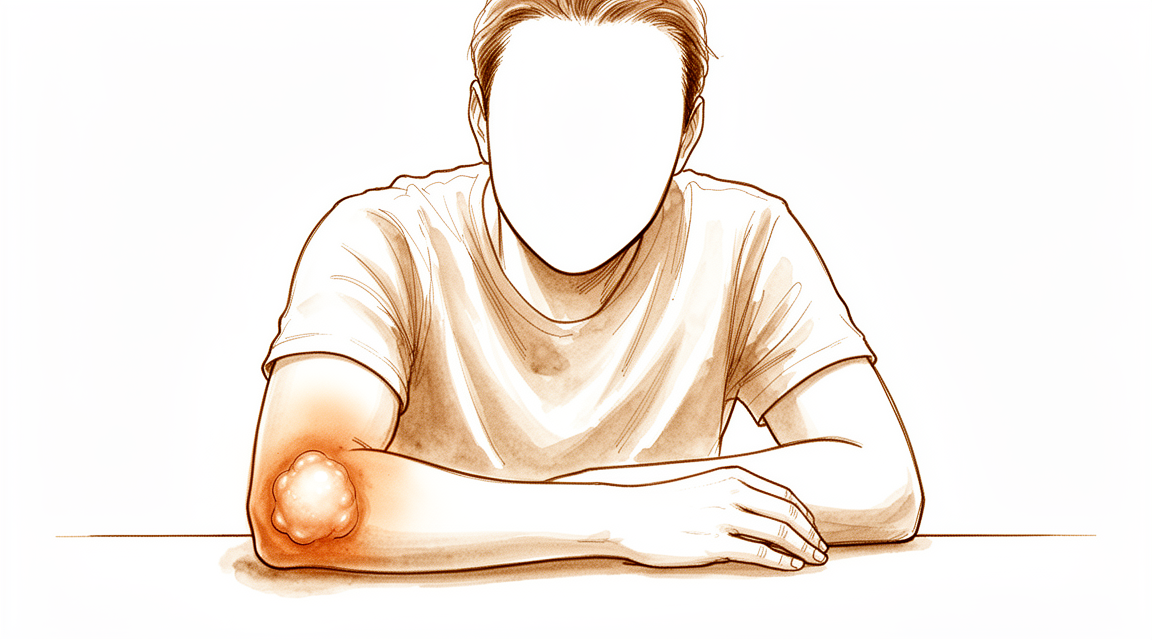
ਤੁਸੀਂ ਕੀ ਮਹਿਸੂਸ ਕਰਦੇ ਹੋ
ਓਲੇਕ੍ਰੈਨਨ ਬਰਸਾਈਟਿਸ (olecranon bursitis) ਦਾ ਮਤਲਬ ਹੈ ਕਿ ਤੁਹਾਡੀ ਕੂਹਣੀ ਦੀ ਨੋਕ ਉੱਤੇ ਗੱਦੀ ਦਾ ਕੰਮ ਕਰਨ ਵਾਲੀ ਛੋਟੀ ਥੈਲੀ ਸੁੱਜ ਗਈ ਹੈ। ਇਹ ਥੈਲੀ, ਜਿਸ ਨੂੰ ਬਰਸਾ (ਤਰਲ ਨਾਲ ਭਰੀ ਛੋਟੀ ਗੱਦੀ) ਕਹਿੰਦੇ ਹਨ, ਆਮ ਤੌਰ 'ਤੇ ਚਮੜੀ ਨੂੰ ਹੱਡੀ ਉੱਤੇ ਆਸਾਨੀ ਨਾਲ ਖਿਸਕਣ ਦਿੰਦੀ ਹੈ। ਜਦੋਂ ਇਹ ਭੜਕ ਉੱਠਦੀ ਹੈ, ਤਾਂ ਤੁਸੀਂ ਕੂਹਣੀ ਦੀ ਨੋਕ ਦੇ ਬਿਲਕੁਲ ਉੱਪਰ ਇੱਕ ਨਰਮ, ਕਦੇ-ਕਦੇ ਦੁਖਦੀ ਗੰਢ ਦੇਖਦੇ ਹੋ।
ਆਮ ਤੌਰ 'ਤੇ ਸਭ ਤੋਂ ਪਹਿਲਾਂ ਸੋਜ ਹੀ ਨਜ਼ਰ ਆਉਂਦੀ ਹੈ। ਇਹ ਇੱਕ-ਦੋ ਦਿਨਾਂ ਵਿੱਚ ਜਲਦੀ ਉੱਭਰ ਸਕਦੀ ਹੈ, ਜਾਂ ਹਫ਼ਤਿਆਂ ਵਿੱਚ ਹੌਲੀ-ਹੌਲੀ। ਉਸ ਕੂਹਣੀ ਦੇ ਭਾਰ ਝੁਕਣ ਨਾਲ ਇਹ ਵਿਗੜਦੀ ਹੈ, ਇਸ ਲਈ ਮੇਜ਼ ਉੱਤੇ ਬੈਠ ਕੇ ਕੰਮ ਕਰਨਾ, ਬਾਂਹ ਨੂੰ ਕੁਰਸੀ ਦੀ ਬਾਂਹ ਉੱਤੇ ਟਿਕਾਉਣਾ, ਜਾਂ ਕੂਹਣੀ ਨੂੰ ਆਪਣੇ ਹੇਠਾਂ ਮੋੜ ਕੇ ਸੌਣਾ, ਇਹ ਸਭ ਇਸ ਨੂੰ ਵਧਾ ਸਕਦੇ ਹਨ। ਬਹੁਤ ਸਾਰੇ ਲੋਕਾਂ ਨੂੰ ਰਾਤ ਨੂੰ ਇਸ ਵਿੱਚ ਦਰਦ ਹੁੰਦਾ ਹੈ, ਖ਼ਾਸ ਕਰਕੇ ਜੇ ਉਹ ਉਸ ਪਾਸੇ ਸੌਂਦੇ ਹਨ। ਬਾਂਹ ਨੂੰ ਸਿੱਧਾ ਕਰਨ ਅਤੇ ਕੂਹਣੀ ਦੀ ਨੋਕ ਤੋਂ ਦਬਾਅ ਹਟਾਉਣ ਨਾਲ ਅਕਸਰ ਇਹ ਸ਼ਾਂਤ ਹੋ ਜਾਂਦੀ ਹੈ।
ਰੋਜ਼ਾਨਾ ਦੇ ਉਹ ਕੰਮ ਔਖੇ ਹੋ ਜਾਂਦੇ ਹਨ ਜਿਨ੍ਹਾਂ ਵਿੱਚ ਕੂਹਣੀ ਜ਼ੋਰ ਲਗਾ ਕੇ ਮੋੜਨੀ ਪੈਂਦੀ ਹੈ ਜਾਂ ਨੋਕ ਉੱਤੇ ਦਬਾਅ ਪੈਂਦਾ ਹੈ। ਨੀਵੀਂ ਕੁਰਸੀ ਤੋਂ ਜ਼ੋਰ ਲਗਾ ਕੇ ਉੱਠਣਾ, ਡਿਸ਼ਵਾਸ਼ਰ ਵਿੱਚ ਭਾਂਡੇ ਰੱਖਣਾ, ਸੌਦੇ ਦੇ ਥੈਲੇ ਬਾਂਹ ਦੇ ਹੇਠਲੇ ਹਿੱਸੇ (forearm) ਨਾਲ ਲਾ ਕੇ ਚੁੱਕਣਾ, ਜਾਂ ਪੜ੍ਹਦੇ ਸਮੇਂ ਕੂਹਣੀ ਮੇਜ਼ ਉੱਤੇ ਟਿਕਾਉਣਾ, ਇਹ ਸਭ ਬੇਆਰਾਮ ਕਰ ਸਕਦੇ ਹਨ। ਸਿਰ ਤੋਂ ਉੱਪਰ ਹੱਥ ਵਧਾਉਣ ਨਾਲ ਵੀ ਸੁੱਜੇ ਹੋਏ ਹਿੱਸੇ ਉੱਤੇ ਖਿੱਚ ਪੈ ਸਕਦੀ ਹੈ।
ਸੋਜ ਹਮੇਸ਼ਾ ਸਧਾਰਨ ਘਿਸਾਈ ਕਾਰਨ ਨਹੀਂ ਹੁੰਦੀ। ਕਦੇ-ਕਦੇ ਇਹ ਥੈਲੀ ਵਿੱਚ ਲਾਗ (ਇਨਫੈਕਸ਼ਨ) ਕਾਰਨ ਹੁੰਦੀ ਹੈ, ਜਿਸ ਨਾਲ ਆਮ ਤੌਰ 'ਤੇ ਕੂਹਣੀ ਉੱਤੇ ਚਮੜੀ ਲਾਲ, ਗਰਮ ਅਤੇ ਜ਼ਿਆਦਾ ਦਰਦ ਵਾਲੀ ਹੋ ਜਾਂਦੀ ਹੈ। ਕਦੇ-ਕਦੇ ਇਹ ਜੋੜ ਵਿੱਚ ਕ੍ਰਿਸਟਲਾਂ (ਰਵਿਆਂ) ਕਾਰਨ ਹੁੰਦੀ ਹੈ, ਜਿਸ ਹਾਲਤ ਨੂੰ ਗਾਊਟ (gout) ਕਹਿੰਦੇ ਹਨ, ਖ਼ਾਸ ਕਰਕੇ ਜੇ ਤੁਹਾਨੂੰ ਪਹਿਲਾਂ ਵੀ ਅਜਿਹੇ ਦੌਰੇ ਪਏ ਹੋਣ ਜਾਂ ਦੂਜੀ ਕੂਹਣੀ ਵੀ ਪ੍ਰਭਾਵਿਤ ਹੋਵੇ। ਇੱਥੇ ਸੋਜ ਦਾ ਸਬੰਧ ਸੋਜਸ਼ (inflammation) ਵਾਲੀਆਂ ਜੋੜਾਂ ਦੀਆਂ ਬਿਮਾਰੀਆਂ ਨਾਲ ਵੀ ਹੋ ਸਕਦਾ ਹੈ, ਜਿਵੇਂ ਰਾਇਮੇਟਾਇਡ ਆਰਥਰਾਈਟਿਸ, ਜੋ ਆਮ ਤੌਰ 'ਤੇ ਇੱਕੋ ਸਮੇਂ ਸਰੀਰ ਦੇ ਦੋਹਾਂ ਪਾਸਿਆਂ ਦੇ ਕਈ ਜੋੜਾਂ ਨੂੰ ਪ੍ਰਭਾਵਿਤ ਕਰਦਾ ਹੈ।
ਕਿਉਂਕਿ ਇਹ ਕਾਰਨ ਇੱਕੋ ਜਿਹੇ ਦਿਸ ਸਕਦੇ ਹਨ, ਇਸ ਲਈ ਬਾਹਰੋਂ ਦੇਖ ਕੇ ਇਨ੍ਹਾਂ ਵਿੱਚ ਫ਼ਰਕ ਕਰਨਾ ਹਮੇਸ਼ਾ ਆਸਾਨ ਨਹੀਂ ਹੁੰਦਾ। ਜੇ ਤੁਹਾਡੀ ਕੂਹਣੀ ਗਰਮ, ਲਾਲ ਜਾਂ ਬਹੁਤ ਦਰਦ ਵਾਲੀ ਹੈ, ਜਾਂ ਸੋਜ ਹਫ਼ਤਿਆਂ ਤੋਂ ਬਿਨਾਂ ਘਟੇ ਟਿਕੀ ਹੋਈ ਹੈ, ਤਾਂ ਇਸ ਦੀ ਚੰਗੀ ਤਰ੍ਹਾਂ ਜਾਂਚ ਕਰਵਾਉਣੀ ਚਾਹੀਦੀ ਹੈ ਤਾਂ ਜੋ ਸਹੀ ਇਲਾਜ ਸ਼ੁਰੂ ਕੀਤਾ ਜਾ ਸਕੇ।
ਅਸਲ ਵਿੱਚ ਕੀ ਹੋ ਰਿਹਾ ਹੈ
ਤੁਹਾਡੀ ਕੂਹਣੀ ਦੀ ਨੋਕ ਉੱਤੇ ਤਰਲ ਦੀ ਇੱਕ ਛੋਟੀ ਥੈਲੀ ਹੁੰਦੀ ਹੈ ਜਿਸ ਨੂੰ ਬਰਸਾ ਕਹਿੰਦੇ ਹਨ। ਇਸ ਨੂੰ ਇੱਕ ਪਤਲੀ ਗੱਦੀ ਸਮਝੋ, ਚਮੜੀ ਅਤੇ ਹੱਡੀ ਵਿਚਕਾਰ ਇੱਕ ਗੱਦੇਦਾਰ ਥੈਲੀ ਵਾਂਗ। ਇਸ ਦਾ ਕੰਮ ਇਹ ਹੈ ਕਿ ਹਰ ਵਾਰ ਜਦੋਂ ਤੁਸੀਂ ਆਪਣੀ ਬਾਂਹ ਮੋੜਦੇ ਜਾਂ ਸਿੱਧੀ ਕਰਦੇ ਹੋ ਤਾਂ ਚਮੜੀ ਹੱਡੀ ਉੱਤੇ ਆਸਾਨੀ ਨਾਲ ਖਿਸਕ ਸਕੇ।
ਓਲੇਕ੍ਰੈਨਨ ਬਰਸਾਈਟਿਸ ਵਿੱਚ, ਉਸ ਗੱਦੀ ਵਿੱਚ ਸੋਜਸ਼ ਆ ਜਾਂਦੀ ਹੈ ਅਤੇ ਉਹ ਵਾਧੂ ਤਰਲ ਨਾਲ ਸੁੱਜ ਜਾਂਦੀ ਹੈ। ਇਹ ਆਮ ਤੌਰ 'ਤੇ ਕੂਹਣੀ ਦੀ ਨੋਕ ਉੱਤੇ ਵਾਰ-ਵਾਰ ਲੱਗਣ ਵਾਲੀਆਂ ਛੋਟੀਆਂ ਸੱਟਾਂ ਜਾਂ ਦਬਾਅ ਤੋਂ ਬਾਅਦ ਹੁੰਦਾ ਹੈ, ਜਿਹੋ ਜਿਹਾ ਦਿਨੋ-ਦਿਨ ਸਖ਼ਤ ਸਤ੍ਹਾ ਉੱਤੇ ਝੁਕਣ ਨਾਲ ਪੈਂਦਾ ਹੈ। ਥੈਲੀ ਸਮੇਂ ਦੇ ਨਾਲ ਰਗੜ ਕਾਰਨ ਵੀ ਵੱਡੀ ਹੋ ਸਕਦੀ ਹੈ। ਜੋ ਗੰਢ ਤੁਸੀਂ ਦੇਖ ਅਤੇ ਮਹਿਸੂਸ ਕਰ ਸਕਦੇ ਹੋ ਉਹ ਖ਼ੁਦ ਸੁੱਜੀ ਹੋਈ ਥੈਲੀ ਹੈ, ਅਤੇ ਦੁਖਣ ਉਸ ਦੇ ਆਲੇ-ਦੁਆਲੇ ਸੋਜਸ਼ ਵਾਲੇ ਟਿਸ਼ੂ ਕਾਰਨ ਹੁੰਦਾ ਹੈ।
ਕਦੇ-ਕਦੇ ਸੋਜ ਸਿਰਫ਼ ਥੈਲੀ ਦੇ ਚਿੜ ਜਾਣ (irritation) ਕਾਰਨ ਨਹੀਂ ਹੁੰਦੀ। ਥੈਲੀ ਵਿੱਚ ਲਾਗ ਲੱਗ ਸਕਦੀ ਹੈ, ਇਸੇ ਲਈ ਲਾਗ ਵਾਲਾ ਬਰਸਾ ਅਕਸਰ ਸਿਰਫ਼ ਸੋਜਸ਼ ਵਾਲੇ ਬਰਸਾ ਨਾਲੋਂ ਜ਼ਿਆਦਾ ਗਰਮ, ਲਾਲ ਅਤੇ ਦਰਦ ਵਾਲਾ ਹੁੰਦਾ ਹੈ। ਗਾਊਟ ਦੇ ਕ੍ਰਿਸਟਲ ਥੈਲੀ ਵਿੱਚ ਜਮ੍ਹਾ ਹੋ ਸਕਦੇ ਹਨ, ਅਤੇ ਰਾਇਮੇਟਾਇਡ ਆਰਥਰਾਈਟਿਸ ਵਰਗੀਆਂ ਸੋਜਸ਼ ਵਾਲੀਆਂ ਬਿਮਾਰੀਆਂ ਉਸੇ ਥਾਂ ਉੱਤੇ ਸੋਜ ਅਤੇ ਛੋਟੀਆਂ ਸਖ਼ਤ ਗੰਢਾਂ ਪੈਦਾ ਕਰ ਸਕਦੀਆਂ ਹਨ। ਕਿਉਂਕਿ ਇਹ ਕਾਰਨ ਬਾਹਰੋਂ ਇੰਨੇ ਮਿਲਦੇ-ਜੁਲਦੇ ਦਿਸਦੇ ਹਨ, ਇਸ ਲਈ ਇਨ੍ਹਾਂ ਵਿੱਚ ਫ਼ਰਕ ਕਰਨ ਲਈ ਚੰਗੀ ਤਰ੍ਹਾਂ ਜਾਂਚ ਦੀ ਲੋੜ ਪੈ ਸਕਦੀ ਹੈ।
ਕੂਹਣੀ ਦੀ ਨੋਕ ਵਾਲੀ ਹੱਡੀ, ਜਿਸ ਨੂੰ ਓਲੇਕ੍ਰੈਨਨ (olecranon) ਕਹਿੰਦੇ ਹਨ, ਚਮੜੀ ਦੇ ਬਿਲਕੁਲ ਹੇਠਾਂ ਹੁੰਦੀ ਹੈ ਅਤੇ ਇਸ ਦੇ ਆਲੇ-ਦੁਆਲੇ ਬਹੁਤ ਘੱਟ ਗੱਦੀ ਹੁੰਦੀ ਹੈ। ਇਹੀ ਖੁੱਲ੍ਹੀ ਥਾਂ ਕਾਰਨ ਹੈ ਕਿ ਇਸ ਨੂੰ ਇੰਨੀ ਆਸਾਨੀ ਨਾਲ ਸੱਟਾਂ ਲੱਗਦੀਆਂ ਹਨ, ਅਤੇ ਇਸ ਦੇ ਉੱਪਰਲਾ ਬਰਸਾ ਇੰਨੀ ਜ਼ਿਆਦਾ ਘਿਸਾਈ ਕਿਉਂ ਝੱਲਦਾ ਹੈ। ਇਹੀ ਹੱਡੀ ਤੁਹਾਡੀ ਬਾਂਹ ਦੇ ਪਿਛਲੇ ਪਾਸੇ ਵਾਲੀ ਉਸ ਮਾਸਪੇਸ਼ੀ ਦੇ ਟੈਂਡਨ (tendon, ਪੱਠੇ ਨੂੰ ਹੱਡੀ ਨਾਲ ਜੋੜਨ ਵਾਲੀ ਮਜ਼ਬੂਤ ਤੰਦ) ਨੂੰ ਵੀ ਜੋੜ ਕੇ ਰੱਖਦੀ ਹੈ ਜੋ ਤੁਹਾਡੀ ਕੂਹਣੀ ਨੂੰ ਸਿੱਧਾ ਕਰਦੀ ਹੈ, ਇਸ ਲਈ ਇਸ ਛੋਟੇ ਜਿਹੇ ਹਿੱਸੇ ਦੇ ਆਲੇ-ਦੁਆਲੇ ਦੀਆਂ ਸਮੱਸਿਆਵਾਂ ਇਸ ਗੱਲ ਉੱਤੇ ਅਸਰ ਪਾ ਸਕਦੀਆਂ ਹਨ ਕਿ ਪੂਰੀ ਕੂਹਣੀ ਕਿਵੇਂ ਮਹਿਸੂਸ ਹੁੰਦੀ ਹੈ ਅਤੇ ਕਿਵੇਂ ਹਿੱਲਦੀ ਹੈ।
ਅਸੀਂ ਇਸ ਬਾਰੇ ਕੀ ਕਰ ਸਕਦੇ ਹਾਂ
ਡਾ. ਕੀਰਨ ਹਿਰਪਰਾ, ਜੋ ਮਾਟਰ ਪ੍ਰਾਈਵੇਟ ਹਸਪਤਾਲ ਰੌਕਹੈਂਪਟਨ ਵਿੱਚ ਉੱਪਰਲੇ ਅੰਗ (ਮੋਢੇ ਤੋਂ ਹੱਥ ਤੱਕ ਦੀ ਬਾਂਹ) ਦੇ ਸਰਜਨ ਹਨ, ਤੁਹਾਡੀ ਹਾਲਤ ਦੇ ਅਨੁਕੂਲ ਸਭ ਤੋਂ ਘੱਟ ਚੀਰ-ਫਾੜ ਵਾਲੇ ਵਿਕਲਪਾਂ ਨਾਲ ਸ਼ੁਰੂਆਤ ਕਰਦੇ ਹਨ। ਮਰੀਜ਼ਾਂ ਨੂੰ ਆਮ ਤੌਰ 'ਤੇ ਉਨ੍ਹਾਂ ਦਾ ਜੀਪੀ (ਫ਼ੈਮਿਲੀ ਡਾਕਟਰ) ਸਾਡੇ ਕਲੀਨਿਕ ਵਿੱਚ ਭੇਜਦਾ ਹੈ; ਜੇ ਕਿਸੇ ਫਿਜ਼ੀਓਥੈਰੇਪਿਸਟ ਨੇ ਤੁਹਾਨੂੰ ਸਾਡੇ ਕੋਲ ਆਉਣ ਦੀ ਸਲਾਹ ਦਿੱਤੀ ਹੈ, ਤਾਂ ਵੀ ਮੈਡੀਕੇਅਰ ਰਿਬੇਟ (Medicare ਵੱਲੋਂ ਵਾਪਸ ਮਿਲਣ ਵਾਲੀ ਰਕਮ) ਦੇ ਯੋਗ ਹੋਣ ਲਈ ਤੁਹਾਨੂੰ ਆਪਣੇ ਜੀਪੀ ਤੋਂ ਰੈਫ਼ਰਲ ਦੀ ਲੋੜ ਪਵੇਗੀ। ਤੁਹਾਡੀ ਪਹਿਲੀ ਮੁਲਾਕਾਤ ਵੇਲੇ ਅਸੀਂ ਤੁਹਾਡਾ ਇਤਿਹਾਸ ਲੈਂਦੇ ਹਾਂ, ਤੁਹਾਡੀ ਕੂਹਣੀ ਦੀ ਜਾਂਚ ਕਰਦੇ ਹਾਂ ਅਤੇ ਜੇ ਮਦਦਗਾਰ ਹੋਵੇ ਤਾਂ ਅਲਟਰਾਸਾਊਂਡ ਜਾਂ MRI ਸਕੈਨ ਵਰਗੀ ਇਮੇਜਿੰਗ ਦਾ ਪ੍ਰਬੰਧ ਕਰਦੇ ਹਾਂ। MRI ਸਕੈਨ ਚੁੰਬਕਾਂ ਦੀ ਵਰਤੋਂ ਕਰਕੇ ਨਰਮ ਟਿਸ਼ੂਆਂ ਦੀਆਂ ਵਿਸਥਾਰਪੂਰਵਕ ਤਸਵੀਰਾਂ ਬਣਾਉਂਦਾ ਹੈ, ਅਤੇ ਇਹ ਦਿਖਾਉਣ ਵਿੱਚ ਚੰਗਾ ਹੈ ਕਿ ਥੈਲੀ ਕਿੰਨੀ ਸੁੱਜੀ ਹੋਈ ਹੈ ਅਤੇ ਉਸ ਵਿੱਚ ਕਿੰਨਾ ਤਰਲ ਹੈ। ਇਮੇਜਿੰਗ ਸੋਜ ਦੇ ਪਿੱਛੇ ਲੁਕੀਆਂ ਹੋਰ ਸਮੱਸਿਆਵਾਂ ਨੂੰ ਵੀ ਦਿਖਾ ਸਕਦੀ ਹੈ, ਜੋ ਮਹੱਤਵਪੂਰਨ ਹੈ ਕਿਉਂਕਿ ਵੱਖ-ਵੱਖ ਕਾਰਨਾਂ ਲਈ ਵੱਖ-ਵੱਖ ਇਲਾਜ ਦੀ ਲੋੜ ਹੁੰਦੀ ਹੈ।
ਲੰਮੇ ਸਮੇਂ ਤੋਂ ਚੱਲ ਰਹੇ ਜ਼ਿਆਦਾਤਰ ਮਾਮਲਿਆਂ ਵਿੱਚ, ਅਸੀਂ ਸਧਾਰਨ ਸਹਾਇਕ ਦੇਖਭਾਲ ਨਾਲ ਸ਼ੁਰੂਆਤ ਕਰਦੇ ਹਾਂ। ਇਸ ਦਾ ਮਤਲਬ ਹੈ ਬਰਫ਼, ਪੱਟੀ ਜਾਂ ਸਲੀਵ ਨਾਲ ਦਬਾਅ ਦੇਣਾ, ਕੂਹਣੀ ਦੀ ਨੋਕ ਉੱਤੇ ਬਚਾਅ ਲਈ ਗੱਦੀ, ਅਤੇ ਉਨ੍ਹਾਂ ਕੰਮਾਂ ਨੂੰ ਬਦਲਣਾ ਜੋ ਇਸ ਨੂੰ ਵਾਰ-ਵਾਰ ਵਧਾਉਂਦੇ ਹਨ। ਕੂਹਣੀ ਦੀ ਨੋਕ ਤੋਂ ਦਬਾਅ ਹਟਾਉਣਾ ਅਕਸਰ ਸਭ ਤੋਂ ਲਾਭਦਾਇਕ ਇਕੱਲੀ ਤਬਦੀਲੀ ਹੁੰਦੀ ਹੈ ਜੋ ਤੁਸੀਂ ਕਰ ਸਕਦੇ ਹੋ। ਫਿਜ਼ੀਓਥੈਰੇਪੀ ਦਾ ਮਕਸਦ ਚਿੜੇ ਹੋਏ ਬਰਸਾ ਨੂੰ ਸ਼ਾਂਤ ਕਰਨਾ ਅਤੇ ਸੋਜ ਨੂੰ ਭੜਕਾਏ ਬਿਨਾਂ ਆਰਾਮਦਾਇਕ ਹਿਲਜੁਲ ਨੂੰ ਮੁੜ ਬਣਾਉਣਾ ਹੈ। ਅਸੀਂ ਕਿਸੇ ਹੋਰ ਚੀਜ਼ ਬਾਰੇ ਸੋਚਣ ਤੋਂ ਪਹਿਲਾਂ ਇਸ ਤਰੀਕੇ ਨੂੰ ਪੂਰਾ ਮੌਕਾ ਦਿੰਦੇ ਹਾਂ, ਕਿਉਂਕਿ ਬਿਨਾਂ ਓਪਰੇਸ਼ਨ ਵਾਲੀ ਦੇਖਭਾਲ ਜ਼ਿਆਦਾਤਰ ਲੋਕਾਂ ਲਈ ਚੰਗਾ ਕੰਮ ਕਰਦੀ ਹੈ ਅਤੇ ਸੂਈਆਂ ਜਾਂ ਸਰਜਰੀ ਨਾਲ ਜੁੜੇ ਖ਼ਤਰਿਆਂ ਤੋਂ ਬਚਾਉਂਦੀ ਹੈ।
ਜੇ ਥੈਲੀ ਵਿੱਚ ਲਾਗ ਹੈ, ਤਾਂ ਅਸੀਂ ਸਿੱਧੇ ਉਸ ਲਾਗ ਦਾ ਇਲਾਜ ਕਰਦੇ ਹਾਂ। ਇਸ ਥੈਲੀ ਵਿੱਚ ਬਿਨਾਂ ਪੇਚੀਦਗੀ ਵਾਲੀ ਲਾਗ ਆਮ ਤੌਰ 'ਤੇ ਸਿਰਫ਼ ਦਵਾਈ ਨਾਲ ਠੀਕ ਕੀਤੀ ਜਾ ਸਕਦੀ ਹੈ, ਥੈਲੀ ਨੂੰ ਕੱਢਣ ਦੀ ਲੋੜ ਤੋਂ ਬਿਨਾਂ। ਅਸੀਂ ਰਾਇਮੇਟਾਇਡ ਆਰਥਰਾਈਟਿਸ ਵਾਲੇ ਲੋਕਾਂ ਉੱਤੇ ਵੀ ਨੇੜਿਓਂ ਨਜ਼ਰ ਰੱਖਦੇ ਹਾਂ, ਕਿਉਂਕਿ ਕਦੇ-ਕਦਾਈਂ ਬਰਸਾ ਦੇ ਨਾਲ-ਨਾਲ ਖ਼ੁਦ ਕੂਹਣੀ ਦਾ ਜੋੜ ਵੀ ਪ੍ਰਭਾਵਿਤ ਹੋ ਸਕਦਾ ਹੈ, ਅਤੇ ਇਸ ਨਾਲ ਇਲਾਜ ਬਦਲ ਜਾਂਦਾ ਹੈ।
ਇਸ ਹਾਲਤ ਲਈ ਸਰਜਰੀ ਸਾਡਾ ਆਮ ਪਹਿਲਾ ਕਦਮ ਨਹੀਂ ਹੈ। ਜ਼ਿਆਦਾਤਰ ਸਰਜਨ ਜਲਦੀ ਓਪਰੇਸ਼ਨ ਕਰਨ ਤੋਂ ਰੁਕਦੇ ਹਨ, ਕਿਉਂਕਿ ਇਸ ਉੱਭਰੀ ਹੋਈ ਹੱਡੀ ਉੱਤੇ ਜ਼ਖ਼ਮ ਹੌਲੀ-ਹੌਲੀ ਭਰ ਸਕਦਾ ਹੈ ਅਤੇ ਕਦੇ-ਕਦੇ ਇੱਕ ਸਾਈਨਸ (sinus) ਛੱਡ ਸਕਦਾ ਹੈ, ਯਾਨੀ ਇੱਕ ਛੋਟੀ ਨਾਲੀ ਜਿਸ ਵਿੱਚੋਂ ਲਗਾਤਾਰ ਰਿਸਾਵ ਹੁੰਦਾ ਰਹਿੰਦਾ ਹੈ। ਜਦੋਂ ਬਿਨਾਂ ਓਪਰੇਸ਼ਨ ਵਾਲੀ ਦੇਖਭਾਲ ਨਾਲ ਕਾਫ਼ੀ ਸੁਧਾਰ ਨਾ ਹੋਇਆ ਹੋਵੇ ਅਤੇ ਸੋਜ ਵਾਰ-ਵਾਰ ਮੁੜ ਆਉਂਦੀ ਰਹੇ, ਤਾਂ ਅਸੀਂ ਸੋਜਸ਼ ਵਾਲੀ ਥੈਲੀ ਨੂੰ ਕੱਢਣ ਬਾਰੇ ਸੋਚਦੇ ਹਾਂ, ਜਿਸ ਓਪਰੇਸ਼ਨ ਨੂੰ ਬਰਸੈਕਟੋਮੀ (bursectomy, ਬਰਸਾ ਕੱਢਣ ਦਾ ਓਪਰੇਸ਼ਨ) ਕਹਿੰਦੇ ਹਨ। ਜਿੱਥੇ ਢੁਕਵਾਂ ਹੋਵੇ, ਅਸੀਂ ਇਹ ਕੁਝ ਛੋਟੇ ਚੀਰਿਆਂ ਰਾਹੀਂ ਇੱਕ ਨਿੱਕੇ ਕੈਮਰੇ ਦੀ ਵਰਤੋਂ ਕਰਕੇ ਕਰ ਸਕਦੇ ਹਾਂ, ਜਿਸ ਤਰੀਕੇ ਨੂੰ ਦੂਰਬੀਨ ਵਾਲੀ (ਐਂਡੋਸਕੋਪਿਕ) ਸਰਜਰੀ ਕਹਿੰਦੇ ਹਨ। ਇਸ ਨਾਲ ਕੂਹਣੀ ਦੀ ਸੰਵੇਦਨਸ਼ੀਲ ਨੋਕ ਦੇ ਬਿਲਕੁਲ ਉੱਪਰ ਲੰਮੇ ਜ਼ਖ਼ਮ ਤੋਂ ਬਚਿਆ ਜਾਂਦਾ ਹੈ। ਸਰਜਰੀ ਤੁਹਾਡੇ ਲਈ ਸਹੀ ਹੈ ਜਾਂ ਨਹੀਂ, ਇਹ ਫ਼ੈਸਲਾ ਅਸੀਂ ਮਿਲ ਕੇ ਕਰਦੇ ਹਾਂ, ਇਹ ਤੋਲਦੇ ਹੋਏ ਕਿ ਤੁਸੀਂ ਕਿਹੜੇ ਕੰਮਾਂ ਵੱਲ ਵਾਪਸ ਜਾਣਾ ਚਾਹੁੰਦੇ ਹੋ ਅਤੇ ਹਰ ਵਿਕਲਪ ਵਿੱਚ ਕੀ-ਕੀ ਸ਼ਾਮਲ ਹੈ।
ਕੀ ਉਮੀਦ ਰੱਖੀਏ
ਜ਼ਿਆਦਾਤਰ ਲੋਕਾਂ ਲਈ, ਇਹ ਸੋਜ ਸਧਾਰਨ ਦੇਖਭਾਲ ਨਾਲ ਘਟ ਜਾਂਦੀ ਹੈ। ਆਪਣੀ ਕੂਹਣੀ ਦੀ ਨੋਕ ਤੋਂ ਦਬਾਅ ਹਟਾਉਣਾ, ਗੱਦੀ ਨਾਲ ਇਸ ਦਾ ਬਚਾਅ ਕਰਨਾ ਅਤੇ ਤਕਲੀਫ਼ ਵਧਾਉਣ ਵਾਲੇ ਕੰਮਾਂ ਨੂੰ ਘਟਾਉਣਾ ਥੈਲੀ ਨੂੰ ਸ਼ਾਂਤ ਹੋਣ ਦਾ ਮੌਕਾ ਦਿੰਦਾ ਹੈ। ਇਸ ਹਾਲਤ ਲਈ ਬਿਨਾਂ ਓਪਰੇਸ਼ਨ ਵਾਲਾ ਇਲਾਜ ਆਮ ਤੌਰ 'ਤੇ ਸਰਜਰੀ ਨਾਲੋਂ ਜ਼ਿਆਦਾ ਅਸਰਦਾਰ ਅਤੇ ਸੁਰੱਖਿਅਤ ਹੈ, ਅਤੇ ਜ਼ਿਆਦਾਤਰ ਲੋਕਾਂ ਨੂੰ ਕਦੇ ਵੀ ਓਪਰੇਸ਼ਨ ਦੀ ਲੋੜ ਨਹੀਂ ਪੈਂਦੀ। ਜੇ ਥੈਲੀ ਵਿੱਚ ਲਾਗ ਹੈ ਪਰ ਲਾਗ ਸਿੱਧੀ-ਸਾਦੀ ਹੈ, ਤਾਂ ਸਿਰਫ਼ ਦਵਾਈ ਨਾਲ ਇਲਾਜ ਆਮ ਤੌਰ 'ਤੇ ਕਾਰਗਰ ਹੁੰਦਾ ਹੈ, ਅਤੇ ਅਕਸਰ ਸੋਜ ਨੂੰ ਤਰਲ ਕੱਢੇ ਬਿਨਾਂ ਜਾਂ ਥੈਲੀ ਕੱਢੇ ਬਿਨਾਂ ਸੰਭਾਲਿਆ ਜਾ ਸਕਦਾ ਹੈ।
ਉਸ ਦੇਖਭਾਲ ਤੋਂ ਬਿਨਾਂ, ਜਾਂ ਜੇ ਉਹੀ ਦਬਾਅ ਲਗਾਤਾਰ ਪੈਂਦੇ ਰਹਿਣ, ਤਾਂ ਸੋਜ ਅਕਸਰ ਟਿਕੀ ਰਹਿੰਦੀ ਹੈ ਜਾਂ ਵਾਰ-ਵਾਰ ਮੁੜ ਆਉਂਦੀ ਹੈ। ਕੁਝ ਲੋਕਾਂ ਵਿੱਚ ਇਹ ਹਫ਼ਤਿਆਂ ਤੱਕ ਬਿਨਾਂ ਘਟੇ ਟਿਕੀ ਰਹਿੰਦੀ ਹੈ। ਜੇ ਤੁਹਾਡੀ ਕੂਹਣੀ ਲੰਮੇ ਸਮੇਂ ਤੱਕ ਸੁੱਜੀ ਰਹਿੰਦੀ ਹੈ, ਤਾਂ ਇਸ ਦੀ ਦੁਬਾਰਾ ਜਾਂਚ ਕਰਵਾਉਣੀ ਚਾਹੀਦੀ ਹੈ, ਕਿਉਂਕਿ ਨਾ ਘਟਣ ਵਾਲੀ ਸੋਜ ਕਦੇ-ਕਦਾਈਂ ਕਿਸੇ ਘੱਟ ਆਮ ਕਾਰਨ ਵੱਲ ਇਸ਼ਾਰਾ ਕਰ ਸਕਦੀ ਹੈ ਜਿਸ ਨੂੰ ਆਪਣੇ ਵੱਖਰੇ ਇਲਾਜ ਦੀ ਲੋੜ ਹੁੰਦੀ ਹੈ।
ਜਦੋਂ ਬਿਨਾਂ ਓਪਰੇਸ਼ਨ ਵਾਲੀ ਦੇਖਭਾਲ ਨੂੰ ਪੂਰਾ ਮੌਕਾ ਦੇ ਦਿੱਤਾ ਗਿਆ ਹੋਵੇ ਅਤੇ ਸੋਜ ਫਿਰ ਵੀ ਵਾਰ-ਵਾਰ ਮੁੜ ਆਉਂਦੀ ਹੋਵੇ, ਤਾਂ ਸੋਜਸ਼ ਵਾਲੀ ਥੈਲੀ ਨੂੰ ਕੱਢਣ ਦੀ ਸਰਜਰੀ ਇੱਕ ਵਿਕਲਪ ਬਣ ਜਾਂਦੀ ਹੈ। ਇਹ ਫ਼ੈਸਲਾ ਹਲਕੇ ਵਿੱਚ ਨਹੀਂ ਲਿਆ ਜਾਂਦਾ, ਅਤੇ ਇਸ ਨੂੰ ਆਮ ਤੌਰ 'ਤੇ ਉਦੋਂ ਤੱਕ ਰੋਕ ਕੇ ਰੱਖਿਆ ਜਾਂਦਾ ਹੈ ਜਦੋਂ ਤੱਕ ਸਧਾਰਨ ਉਪਾਅ ਨਾਕਾਮ ਨਾ ਹੋ ਜਾਣ। ਜਿੱਥੇ ਇਸ ਜ਼ਿੱਦੀ ਕਿਸਮ ਦੀ ਸੋਜ ਲਈ ਸਰਜਰੀ ਕੀਤੀ ਜਾਂਦੀ ਹੈ, ਉੱਥੇ ਲੋਕ ਅਕਸਰ ਦੇਖਦੇ ਹਨ ਕਿ ਉਨ੍ਹਾਂ ਦੀ ਕੂਹਣੀ ਕਿਵੇਂ ਮਹਿਸੂਸ ਹੁੰਦੀ ਹੈ ਅਤੇ ਕਿਵੇਂ ਕੰਮ ਕਰਦੀ ਹੈ, ਇਸ ਵਿੱਚ ਅਸਲ ਸੁਧਾਰ ਆਇਆ ਹੈ। ਕੁਝ ਛੋਟੇ ਚੀਰਿਆਂ ਰਾਹੀਂ ਨਿੱਕੇ ਕੈਮਰੇ ਨਾਲ ਥੈਲੀ ਕੱਢਣ ਨੂੰ ਓਪਰੇਸ਼ਨ ਤੋਂ ਬਾਅਦ ਬਹੁਤ ਘੱਟ ਦਰਦ ਅਤੇ ਤੇਜ਼ ਸਿਹਤਯਾਬੀ ਨਾਲ ਜੋੜਿਆ ਗਿਆ ਹੈ, ਅਤੇ ਜਿਨ੍ਹਾਂ ਮਰੀਜ਼ਾਂ ਬਾਰੇ ਰਿਪੋਰਟ ਕੀਤੀ ਗਈ ਉਨ੍ਹਾਂ ਵਿੱਚ ਨਾ ਤਾਂ ਸਮੱਸਿਆ ਮੁੜ ਆਈ ਅਤੇ ਨਾ ਹੀ ਜ਼ਖ਼ਮ ਭਰਨ ਦੀ ਕੋਈ ਅਜਿਹੀ ਪੇਚੀਦਗੀ ਹੋਈ ਜਿਸ ਲਈ ਮੁੜ ਓਪਰੇਸ਼ਨ ਥੀਏਟਰ ਜਾਣਾ ਪਿਆ ਹੋਵੇ। ਫਿਰ ਵੀ, ਇੱਥੇ ਸਰਜਰੀ ਪੂਰੀ ਤਰ੍ਹਾਂ ਭਰੋਸੇਮੰਦ ਨਹੀਂ ਹੈ: ਜਿਨ੍ਹਾਂ ਲੋਕਾਂ ਦੀ ਥੈਲੀ ਕੱਢੀ ਜਾਂਦੀ ਹੈ ਉਨ੍ਹਾਂ ਵਿੱਚੋਂ ਲਗਭਗ 11.5% ਨੂੰ ਬਾਅਦ ਵਿੱਚ ਇੱਕ ਹੋਰ ਓਪਰੇਸ਼ਨ ਦੀ ਲੋੜ ਪੈਂਦੀ ਹੈ। ਇਸ ਦੀ ਵੀ ਥੋੜ੍ਹੀ ਸੰਭਾਵਨਾ ਹੈ ਕਿ ਸਰਜਰੀ ਤੋਂ ਬਾਅਦ ਵੀ ਸੋਜ ਮੁੜ ਆ ਜਾਵੇ।
ਸਰਜਰੀ ਤੋਂ ਬਾਅਦ ਸਿਹਤਯਾਬੀ ਆਮ ਤੌਰ 'ਤੇ ਸਿੱਧੀ-ਸਾਦੀ ਹੁੰਦੀ ਹੈ, ਪਰ ਇਸ ਹੱਡੀ ਵਾਲੀ ਨੋਕ ਉੱਤੇ ਜ਼ਖ਼ਮ ਹੌਲੀ-ਹੌਲੀ ਭਰ ਸਕਦਾ ਹੈ, ਜੋ ਇੱਕ ਕਾਰਨ ਹੈ ਕਿ ਸਰਜਨ ਜਲਦੀ ਓਪਰੇਸ਼ਨ ਕਰਨ ਤੋਂ ਬਚਣਾ ਪਸੰਦ ਕਰਦੇ ਹਨ। ਜ਼ਿਆਦਾਤਰ ਲੋਕ ਮਹੀਨਿਆਂ ਦੀ ਬਜਾਏ ਹਫ਼ਤਿਆਂ ਵਿੱਚ ਹੀ ਕੂਹਣੀ ਦੀ ਆਰਾਮਦਾਇਕ, ਰੋਜ਼ਾਨਾ ਵਰਤੋਂ ਵੱਲ ਵਾਪਸ ਆ ਜਾਂਦੇ ਹਨ। ਜੇ ਕਦੇ ਸਰਜਰੀ ਯੋਜਨਾ ਦਾ ਹਿੱਸਾ ਬਣਦੀ ਹੈ, ਤਾਂ ਤੁਹਾਡਾ ਸਰਜਨ ਤੁਹਾਨੂੰ ਦੱਸੇਗਾ ਕਿ ਤੁਹਾਡੇ ਲਈ ਸਿਹਤਯਾਬੀ ਕਿਹੋ ਜਿਹੀ ਹੋਵੇਗੀ।
ਡਾਕਟਰ ਨੂੰ ਕਦੋਂ ਮਿਲਣਾ ਚਾਹੀਦਾ ਹੈ
ਕੂਹਣੀ ਦੀ ਨੋਕ ਉੱਤੇ ਜ਼ਿਆਦਾਤਰ ਸੋਜ ਆਰਾਮ ਅਤੇ ਸਧਾਰਨ ਦੇਖਭਾਲ ਨਾਲ ਘਟ ਜਾਂਦੀ ਹੈ। ਜੇ ਗੰਢ ਵਧਦੀ ਜਾ ਰਹੀ ਹੈ, ਜਾਂ ਕੂਹਣੀ ਤੋਂ ਦਬਾਅ ਹਟਾਉਣ ਦੇ ਕੁਝ ਹਫ਼ਤਿਆਂ ਬਾਅਦ ਵੀ ਨਹੀਂ ਘਟੀ, ਤਾਂ ਆਪਣੇ ਜੀਪੀ ਨੂੰ ਮਿਲੋ।
ਕੁਝ ਕਾਰਨਾਂ ਨੂੰ ਜਲਦੀ ਸੰਭਾਲਣ ਦੀ ਲੋੜ ਹੁੰਦੀ ਹੈ। ਜੇ ਕੂਹਣੀ ਉੱਤੇ ਚਮੜੀ ਗਰਮ, ਲਾਲ ਅਤੇ ਬਹੁਤ ਦਰਦ ਵਾਲੀ ਹੈ, ਤਾਂ ਐਮਰਜੈਂਸੀ ਵਿਭਾਗ ਜਾਓ, ਕਿਉਂਕਿ ਇਸ ਦਾ ਮਤਲਬ ਹੋ ਸਕਦਾ ਹੈ ਕਿ ਥੈਲੀ ਵਿੱਚ ਲਾਗ ਹੈ ਅਤੇ ਇੱਥੇ ਲਾਗ ਦੀ ਉਸੇ ਦਿਨ ਜਾਂਚ ਦੀ ਲੋੜ ਹੁੰਦੀ ਹੈ। ਜੇ ਤੁਹਾਨੂੰ ਪਹਿਲਾਂ ਗਾਊਟ ਦੇ ਦੌਰੇ ਪਏ ਹਨ, ਜੇ ਦੂਜੀ ਕੂਹਣੀ ਵੀ ਸੁੱਜੀ ਹੋਈ ਹੈ, ਜਾਂ ਜੇ ਤੁਹਾਡੇ ਸਰੀਰ ਦੇ ਦੋਹਾਂ ਪਾਸਿਆਂ ਦੇ ਕਈ ਜੋੜ ਪ੍ਰਭਾਵਿਤ ਹਨ, ਤਾਂ ਮਾਹਰ ਡਾਕਟਰ ਤੋਂ ਜਾਂਚ ਕਰਵਾਉਣ ਲਈ ਕਹੋ, ਕਿਉਂਕਿ ਇਹ ਗੱਲਾਂ ਸਧਾਰਨ ਚਿੜ ਜਾਣ ਦੀ ਬਜਾਏ ਗਾਊਟ ਜਾਂ ਰਾਇਮੇਟਾਇਡ ਆਰਥਰਾਈਟਿਸ ਵਰਗੀ ਸੋਜਸ਼ ਵਾਲੀ ਬਿਮਾਰੀ ਵੱਲ ਇਸ਼ਾਰਾ ਕਰਦੀਆਂ ਹਨ। ਬਾਹਰੋਂ ਦੇਖ ਕੇ ਲਾਗ ਅਤੇ ਗਾਊਟ ਵਿੱਚ ਫ਼ਰਕ ਕਰਨਾ ਔਖਾ ਹੋ ਸਕਦਾ ਹੈ, ਇਸ ਲਈ ਇਹ ਆਪਣੇ ਆਪ ਪਤਾ ਲਗਾਉਣ ਦੀ ਕੋਸ਼ਿਸ਼ ਨਾ ਕਰੋ।
ਵਿਸਥਾਰ ਵਿੱਚ
Advanced reading: the deeper science (optional)
ਇਹ ਹਿੱਸਾ ਤੁਹਾਡੇ ਆਪਣੇ ਇਲਾਜ ਦੇ ਫ਼ੈਸਲਿਆਂ ਲਈ ਲੋੜ ਤੋਂ ਜ਼ਿਆਦਾ ਡੂੰਘਾਈ ਵਿੱਚ ਜਾਂਦਾ ਹੈ। ਓਲੇਕ੍ਰੈਨਨ ਬਰਸਾਈਟਿਸ ਬਾਰੇ ਵਾਧੂ ਪੜ੍ਹਨਾ ਲਾਭਦਾਇਕ ਹੈ ਕਿਉਂਕਿ ਇਸ ਬਾਰੇ ਸੁਭਾਵਿਕ ਤੌਰ 'ਤੇ ਕੀਤੇ ਜਾਣ ਵਾਲੇ ਦੋ ਕੰਮਾਂ, ਯਾਨੀ ਸੋਜ ਵਿੱਚੋਂ ਸੂਈ ਨਾਲ ਤਰਲ ਕੱਢਣਾ ਅਤੇ ਇਸ ਵਿੱਚ ਸਟੀਰੌਇਡ ਦਾ ਟੀਕਾ ਲਗਾਉਣਾ, ਦੇ ਵਿਰੁੱਧ ਸਬੂਤ ਮੌਜੂਦ ਹਨ।
ਤਰਲ ਕੱਢਣਾ ਹੀ ਸਮੱਸਿਆ ਦਾ ਕਾਰਨ ਬਣ ਸਕਦਾ ਹੈ
ਮਨ ਦਾ ਝੁਕਾਅ ਬਹੁਤ ਮਜ਼ਬੂਤ ਹੁੰਦਾ ਹੈ: ਤਰਲ ਹੈ, ਇਸ ਲਈ ਤਰਲ ਕੱਢ ਦਿਓ। ਅਧਿਐਨਾਂ ਦੇ ਅੰਕੜੇ ਉਲਟ ਪਾਸੇ ਇਸ਼ਾਰਾ ਕਰਦੇ ਹਨ। ਬਿਨਾਂ ਪੇਚੀਦਗੀ ਵਾਲੀ ਲਾਗ ਵਾਲੀ (uncomplicated septic) ਓਲੇਕ੍ਰੈਨਨ ਬਰਸਾਈਟਿਸ ਦੇ ਇਲਾਜ ਦੇ ਤਰੀਕਿਆਂ ਦੀ ਤੁਲਨਾ ਵਿੱਚ, ਸੂਈ ਨਾਲ ਤਰਲ ਕੱਢੇ ਬਿਨਾਂ ਅੰਦਾਜ਼ੇ ਦੇ ਆਧਾਰ ਉੱਤੇ ਦਿੱਤਾ ਇਲਾਜ (empirical treatment) ਅਸਰਦਾਰ ਰਿਹਾ, ਅਤੇ ਕਿਸੇ ਵੀ ਮਰੀਜ਼ ਨੂੰ ਬਰਸੈਕਟੋਮੀ ਦੀ ਲੋੜ ਨਹੀਂ ਪਈ, ਜਦਕਿ ਰਵਾਇਤੀ ਤਰਲ ਕੱਢਣ ਵਾਲੇ ਸਮੂਹ ਵਿੱਚ, 11 ਵਿੱਚੋਂ 8 ਮਰੀਜ਼ਾਂ ਨੂੰ ਬਾਅਦ ਵਿੱਚ ਸਰਜਰੀ ਨਾਲ ਬਰਸਾ ਕਢਵਾਉਣਾ ਪਿਆ [1]।
ਇਹ ਇੱਕ ਛੋਟੀ ਲੜੀ ਵਿੱਚੋਂ ਨਿਕਲਿਆ ਹੈਰਾਨੀਜਨਕ ਫ਼ਰਕ ਹੈ, ਅਤੇ ਇਸ ਨੂੰ ਉਸੇ ਸਾਵਧਾਨੀ ਨਾਲ ਪੜ੍ਹਨਾ ਚਾਹੀਦਾ ਹੈ। ਪਰ ਇਸ ਦਾ ਕਾਰਨ ਕੋਈ ਭੇਤ ਨਹੀਂ ਹੈ। ਬਰਸਾ ਇੱਕ ਹੱਡੀ ਵਾਲੀ ਨੋਕ ਉੱਤੇ ਪਤਲੀ ਚਮੜੀ ਦੇ ਬਿਲਕੁਲ ਹੇਠਾਂ ਹੁੰਦਾ ਹੈ, ਜੋ ਹਰ ਸੱਟ ਅਤੇ ਮੇਜ਼ ਉੱਤੇ ਹਰ ਵਾਰ ਝੁਕਣ ਨੂੰ ਝੱਲਦੀ ਹੈ। ਉਸ ਚਮੜੀ ਵਿੱਚੋਂ ਸੂਈ ਲੰਘਾਉਣ ਨਾਲ ਇੱਕ ਰਸਤਾ ਬਣ ਜਾਂਦਾ ਹੈ, ਅਤੇ ਦਬਾਅ ਵਾਲੀ ਥਾਂ ਉੱਤੇ ਬਣਿਆ ਰਸਤਾ ਹੌਲੀ-ਹੌਲੀ ਬੰਦ ਹੁੰਦਾ ਹੈ ਅਤੇ ਉਸ ਵਿੱਚੋਂ ਰਿਸਾਵ ਹੁੰਦਾ ਰਹਿ ਸਕਦਾ ਹੈ।
ਆਮ ਸਮੀਖਿਆਵਾਂ ਵੀ ਇਸੇ ਦਿਸ਼ਾ ਨਾਲ ਸਹਿਮਤ ਹਨ। ਮੁੱਖ ਤੌਰ 'ਤੇ ਲੈਵਲ IV (level IV) ਦੇ ਸਬੂਤਾਂ ਦੇ ਆਧਾਰ ਉੱਤੇ, ਬਿਨਾਂ ਸਰਜਰੀ ਵਾਲਾ ਇਲਾਜ ਸਰਜਰੀ ਵਾਲੇ ਇਲਾਜ ਨਾਲੋਂ ਕਾਫ਼ੀ ਜ਼ਿਆਦਾ ਅਸਰਦਾਰ ਅਤੇ ਸੁਰੱਖਿਅਤ ਹੈ [2]।
ਸਟੀਰੌਇਡ ਟੀਕਾ ਨਤੀਜੇ ਨੂੰ ਸੁਧਾਰੇ ਬਿਨਾਂ ਖ਼ਤਰਾ ਲਿਆਉਂਦਾ ਹੈ
ਇਹ ਗੱਲ ਡਾਕਟਰੀ ਸਾਹਿਤ ਵਿੱਚ ਅਸਾਧਾਰਨ ਤੌਰ 'ਤੇ ਸਾਫ਼ ਕਹੀ ਗਈ ਹੈ। ਬਿਨਾਂ ਲਾਗ ਵਾਲੀ (aseptic) ਬਰਸਾਈਟਿਸ ਲਈ, ਕੋਰਟੀਕੋਸਟੀਰੌਇਡ ਟੀਕਾ ਨਤੀਜੇ ਨੂੰ ਸੁਧਾਰੇ ਬਿਨਾਂ ਮਹੱਤਵਪੂਰਨ ਖ਼ਤਰਿਆਂ ਨਾਲ ਜੁੜਿਆ ਹੋਇਆ ਹੈ [2]।
ਇਹ ਖ਼ਤਰੇ ਇਸ ਥਾਂ ਨਾਲ ਖ਼ਾਸ ਤੌਰ 'ਤੇ ਜੁੜੇ ਹਨ: ਚਮੜੀ ਦੇ ਬਿਲਕੁਲ ਹੇਠਾਂ ਉੱਭਰੀ ਹੱਡੀ ਉੱਤੇ ਚਮੜੀ ਦਾ ਪਤਲਾ ਹੋ ਜਾਣਾ (atrophy) ਅਤੇ ਉਸ ਦਾ ਰੰਗ ਉੱਡ ਜਾਣਾ (depigmentation), ਅਤੇ ਇੱਕ ਅਜਿਹੀ ਥਾਂ ਵਿੱਚ ਲਾਗ ਪਹੁੰਚ ਜਾਣਾ ਜਿੱਥੋਂ ਇਸ ਨੂੰ ਖ਼ਤਮ ਕਰਨਾ ਔਖਾ ਹੈ। ਉੱਪਰਲੇ ਅੰਗ ਵਿੱਚ ਹੋਰ ਥਾਵਾਂ ਉੱਤੇ, ਜਦੋਂ ਸਧਾਰਨ ਉਪਾਅ ਨਾਕਾਮ ਹੋ ਜਾਣ ਤਾਂ ਸਟੀਰੌਇਡ ਟੀਕਾ ਇੱਕ ਵਾਜਬ ਕਦਮ ਹੈ। ਇੱਥੇ ਸਬੂਤ ਇਸ ਦੀ ਹਮਾਇਤ ਨਹੀਂ ਕਰਦੇ, ਅਤੇ ਜੇ ਤੁਹਾਨੂੰ ਇਹ ਪੇਸ਼ ਕੀਤਾ ਜਾਵੇ ਤਾਂ ਇਹ ਫ਼ਰਕ ਜਾਣਨਾ ਲਾਭਦਾਇਕ ਹੈ।
ਸਰਜਰੀ ਸੱਚਮੁੱਚ ਆਖ਼ਰੀ ਰਾਹ ਹੈ, ਜਿਸ ਦੀ ਨਾਕਾਮੀ ਦੀ ਦਰ ਮਾਪੀ ਜਾ ਸਕਦੀ ਹੈ
ਜਿੱਥੇ ਬਰਸੈਕਟੋਮੀ ਕੀਤੀ ਜਾਂਦੀ ਹੈ, ਉੱਥੇ ਵੀ ਇਹ ਭਰੋਸੇ ਨਾਲ ਕਹਾਣੀ ਖ਼ਤਮ ਨਹੀਂ ਕਰਦੀ। ਬਰਸੈਕਟੋਮੀ ਤੋਂ ਬਾਅਦ ਰੀਵਿਜ਼ਨ (ਦੁਬਾਰਾ ਓਪਰੇਸ਼ਨ) ਦੀ ਦਰ 11.5% ਸੀ, ਅਤੇ ਰੀਵਿਜ਼ਨ ਰਾਇਮੇਟਾਇਡ ਆਰਥਰਾਈਟਿਸ, ਸ਼ੂਗਰ (ਡਾਇਬਟੀਜ਼) ਵਾਲੇ ਮਰੀਜ਼ਾਂ ਵਿੱਚ, ਕਿਸੇ ਵੀ ਕੂਹਣੀ ਵਿੱਚ ਪਹਿਲਾਂ ਬਰਸਾਈਟਿਸ ਹੋ ਚੁੱਕੇ ਮਰੀਜ਼ਾਂ ਵਿੱਚ, ਅਤੇ ਔਰਤਾਂ ਵਿੱਚ ਜ਼ਿਆਦਾ ਹੋਈ [3]।
ਇਹ ਖ਼ਤਰੇ ਵਾਲੇ ਕਾਰਕ ਉਨ੍ਹਾਂ ਹਾਲਤਾਂ ਨੂੰ ਦਰਸਾਉਂਦੇ ਹਨ ਜਿਨ੍ਹਾਂ ਵਿੱਚ ਬਰਸਾ ਦੇ ਮੁੜ ਬਣਨ ਦੀ ਸੰਭਾਵਨਾ ਹੈ: ਕੋਈ ਸੋਜਸ਼ ਵਾਲਾ ਜਾਂ ਸਰੀਰ ਦੇ ਮੈਟਾਬੋਲਿਜ਼ਮ (metabolic) ਨਾਲ ਜੁੜਿਆ ਕਾਰਨ ਜਿਸ ਨੂੰ ਸਰਜਰੀ ਖ਼ਤਮ ਨਹੀਂ ਕਰਦੀ, ਜਾਂ ਉਸ ਵਿਅਕਤੀ ਦੇ ਟਿਸ਼ੂ ਦਾ ਸਾਬਤ ਹੋ ਚੁੱਕਾ ਝੁਕਾਅ ਕਿ ਉਹ ਇਹ ਸਮੱਸਿਆ ਪੈਦਾ ਕਰਦਾ ਹੈ। ਵਾਰ-ਵਾਰ ਹੋਣ ਵਾਲੇ ਮਾਮਲਿਆਂ ਲਈ, ਬਰਸਾ ਦੇ ਅੰਦਰ ਡੌਕਸੀਸਾਈਕਲੀਨ ਸਕਲੀਰੋਥੈਰੇਪੀ (intrabursal doxycycline sclerotherapy), ਯਾਨੀ ਥੈਲੀ ਨੂੰ ਕੱਟ ਕੇ ਕੱਢਣ ਦੀ ਬਜਾਏ ਜਾਣ-ਬੁੱਝ ਕੇ ਦਾਗ਼ ਪੈਦਾ ਕਰਕੇ ਉਸ ਥਾਂ ਨੂੰ ਬੰਦ ਕਰਨਾ, 45 ਕੂਹਣੀਆਂ ਦੀ ਇੱਕ ਲੜੀ ਵਿੱਚ ਇੱਕ ਵਿਕਲਪ ਵਜੋਂ ਦੱਸੀ ਗਈ ਹੈ [4]।
ਅਸਲ ਵਿੱਚ ਇਸ ਨੂੰ ਕੀ ਠੀਕ ਕਰਦਾ ਹੈ
ਸਾਦਾ ਜਿਹਾ ਜਵਾਬ ਹੈ ਬਚਾਅ ਅਤੇ ਸਮਾਂ। ਕਿਉਂਕਿ ਬਰਸਾ ਕੂਹਣੀ ਦੀ ਨੋਕ ਉੱਤੇ ਪੈਂਦੇ ਦਬਾਅ ਨਾਲ ਮਕੈਨੀਕਲ ਤੌਰ 'ਤੇ ਚਿੜ ਜਾਂਦਾ ਹੈ, ਇਸ ਲਈ ਕਾਰਨ ਨੂੰ ਨਜਿੱਠਣ ਵਾਲਾ ਇਲਾਜ ਉਸ ਦਬਾਅ ਨੂੰ ਹਟਾਉਣਾ ਹੈ: ਗੱਦੀ ਲਗਾਉਣਾ, ਅਤੇ ਕੂਹਣੀ ਉੱਤੇ ਟਿਕਣ ਦੀ ਆਦਤ ਬਦਲਣਾ, ਅਤੇ ਇਹ ਉਸ ਤੋਂ ਵੀ ਲੰਮੇ ਸਮੇਂ ਤੱਕ ਜਾਰੀ ਰੱਖਣਾ ਜਿੰਨਾ ਜ਼ਰੂਰੀ ਲੱਗਦਾ ਹੈ। ਜ਼ਿਆਦਾਤਰ ਮਾਮਲੇ ਠੀਕ ਹੋ ਜਾਂਦੇ ਹਨ [5], ਅਤੇ ਉੱਪਰ ਦੱਸੇ ਦਖ਼ਲ ਜ਼ਿਆਦਾਤਰ ਉਸ ਬਿਮਾਰੀ ਦੇ ਸਮੇਂ ਨੂੰ ਛੋਟਾ ਕਰਨ ਦੀਆਂ ਕੋਸ਼ਿਸ਼ਾਂ ਹਨ ਜੋ ਵੈਸੇ ਵੀ ਠੀਕ ਹੋ ਜਾਂਦੀ ਹੈ, ਅਤੇ ਬਿਲਕੁਲ ਇਸੇ ਲਈ ਆਪਣਾ ਖ਼ਤਰਾ ਰੱਖਣ ਵਾਲੇ ਕਿਸੇ ਵੀ ਦਖ਼ਲ ਨੂੰ ਇੱਥੇ ਇੱਕ ਉੱਚਾ ਮਿਆਰ ਪਾਰ ਕਰਨਾ ਪੈਂਦਾ ਹੈ।
ਹਵਾਲੇ
[1] Deal JB, Vaslow AS, Bickley RJ, Verwiebe EG, Ryan PM. Empirical treatment of uncomplicated septic olecranon bursitis without aspiration. J Hand Surg Am. 2020;45(1):20-5. https://doi.org/10.1016/j.jhsa.2019.06.012
[2] Sayegh ET, Strauch RJ. Treatment of olecranon bursitis: a systematic review. Arch Orthop Trauma Surg. 2014;134(11):1517-36. https://doi.org/10.1007/s00402-014-2088-3
[3] Germawi L, Westenberg RF, Wang F, Schep NW, Chen NC, Eberlin KR. Factors associated with revision surgery for olecranon bursitis after bursectomy. J Shoulder Elbow Surg. 2021;30(5):1135-41. https://doi.org/10.1016/j.jse.2020.09.033
[4] McDermott D, Wakefield D, Kowalsky M, Sethi P, Vitale MA, Morrey BF. Intrabursal doxycycline sclerotherapy for recurrent olecranon bursitis of the elbow. J Hand Surg Glob Online. 2024;6(4):504-9. https://doi.org/10.1016/j.jhsg.2024.03.006
[5] Nchinda NN, Wolf JM. Clinical management of olecranon bursitis: a review. J Hand Surg Am. 2021;46(6):501-6. https://doi.org/10.1016/j.jhsa.2021.02.006
Evidence & references
This is the clinical evidence summary written for health professionals. It is technical, and it lists the research this page was built from. You do not need to read it to understand your treatment or to make a decision about it.
Overview
- Surgical resection of a chronic olecranon bursitis should not be considered lightly [1].
- The revision rate after bursectomy for olecranon bursitis was 11.5% [2].
- The operation appears to give satisfactory results for chronic olecranon bursitis [3].
- Based primarily on level IV evidence, nonsurgical management of olecranon bursitis is significantly more effective and safer than surgical management [4].
- Nontuberculous mycobacterial olecranon bursitis should be considered in any patient with a swollen bursa and protracted course, regardless of immune status [5].
- Patients who underwent endoscopic olecranon bursectomy experienced no recurrences or wound-healing complications necessitating return to the operating room [6].
- Empirical management of uncomplicated septic olecranon bursitis was found to be effective with no patients requiring bursectomy [7].
- In the traditional aspiration group for uncomplicated septic olecranon bursitis, 8 of 11 patients required bursectomy [7].
- Intrabursal doxycycline sclerotherapy may be an effective alternative to surgical bursectomy for patients with recurrent olecranon bursitis refractory to conservative management [8].
- Patients with refractory olecranon bursitis, particularly if aseptic, tend to gain significant physical health benefits from open bursectomy [9].
- Endoscopic bursectomies are a useful treatment option for patients with recalcitrant olecranon bursitis [10].
- Bursal suture repair is a viable alternative to bursectomy in selected patients with chronic traumatic olecranon bursitis [11].
- Bursal suture repair combines functional and cosmetic benefits in selected patients with chronic traumatic olecranon bursitis [11].
- Deferring aspiration in uncomplicated septic olecranon bursitis is a reasonable treatment option [16].
Anatomy & Pathophysiology
Bony Anatomy
- The olecranon and the coronoid process form the greater sigmoid notch, which articulates with the trochlea of the distal humerus [19].
- The intrinsic anatomy of the greater sigmoid notch allows flexion/extension movement of the elbow joint and provides stability for the elbow [19].
- The olecranon serves as the insertion for the triceps tendon, which blends with the periosteum of the proximal ulna [19].
- The exposed position of the olecranon renders it vulnerable to direct trauma and violent muscular contractions from the triceps [19].
- In children, the olecranon is predominantly cartilage, particularly in younger children, which reduces the chance of fracture occurring with a direct blow [20].
- The thick periosteum and relatively thin metaphyseal cortex of the olecranon in children predispose it to minimally displaced greenstick fractures [20].
Pathophysiology
- Olecranon bursitis is a condition where the bursal cavity, superficial to the olecranon, becomes inflamed [13].
- Olecranon bursitis can occur with or without infection [13].
- Olecranon bursitis is often predisposed by repeated minor trauma from external pressure [13].
- The olecranon bursa sometimes becomes enlarged as a result of pressure or friction [27].
- When the olecranon bursa is painful, the cause is more likely to be infection, gout, or rheumatoid arthritis [27].
- Gout is suspected in olecranon bursitis if there is a history of previous attacks, if the condition is bilateral, if there are tophi, or if X-ray shows calcification in the bursa [27].
- Rheumatoid arthritis causes both swelling and nodularity over the olecranon [27].
- In almost all cases of rheumatoid arthritis affecting the olecranon, it is associated with a typical symmetrical polyarthritis [27].
- In the late stages of rheumatoid arthritis, erosion of the elbow joint may cause marked instability [27].
Classification
- Olecranon bursitis has been given pseudonyms relating to the repeated minor trauma from external pressure that often predisposes [13].
- Traumatic lesions of the olecranon bursa are common injuries associated with a high risk of complications [14].
Clinical Presentation
- Olecranon bursitis is a common condition where the bursal cavity, superficial to the olecranon, becomes inflamed [13].
- Olecranon bursitis can occur either with or without infection [13].
- Due to multiple aetiologies, olecranon bursitis can present to any medical specialty with reasonable frequency [13].
- When the olecranon bursa is also painful, the cause is more likely to be infection, gout, or rheumatoid arthritis [27].
- Gout is suspected if there is a history of previous attacks, if the condition is bilateral, if there are tophi, or if X-ray shows calcification in the bursa [27].
- In almost all cases of rheumatoid arthritis-associated olecranon bursitis, the condition is associated with a typical symmetrical polyarthritis [27].
- Pyoderma gangrenosum must be considered in the differential diagnosis whenever a patient presents with ulcerative cutaneous lesions that resemble an infectious process such as olecranon bursitis [38].
Investigations
- MR imaging is probably the method of choice for determining both the development of the bursae and their fluid content [44].
Treatment
Non-Operative Management
- The first treatment line for olecranon bursitis is conservative, including ice, rest, anti-inflammatory and analgesic drugs and, occasionally, bursal fluid aspiration [25].
- More recent literature demonstrates adverse effects of intrabursal injections and surgery compared with noninvasive management for initial treatment of nonseptic olecranon bursitis [18].
- Hydrothermal ablation at temperatures between 50C and 52C is a safe treatment option for recurrent or chronic olecranon bursitis [34].
- Hydrothermal ablation for recurrent or chronic olecranon bursitis has fewer complications than open bursectomy and comparable efficacy [34].
Operative Management
- Open bursectomy appears to give satisfactory results for chronic olecranon bursitis [3].
- Endoscopic olecranon bursectomy provides a satisfactory view with less morbidity than the open method while avoiding a wound over the sensitive point of the olecranon [15].
- Bursal suture repair is a viable alternative to bursectomy in selected patients with chronic traumatic olecranon bursitis, combining functional and cosmetic benefits [11].
- Excision has been curative for all lesions of the olecranon bursa, whereas multiple medications have been tried for cutaneous and systemic infections without clear-cut success [17].
Surgical Complications and Outcomes
- More recent literature demonstrates adverse effects of surgery compared with noninvasive management for initial treatment of nonseptic olecranon bursitis [18].
- Surgeons are reluctant to perform surgical excision as first-line treatment for chronic olecranon bursitis due to the fear of causing a chronic draining sinus or infection [45].
Infection and Atypical Etiologies
Recovery
- Nonsurgical management of olecranon bursitis is significantly more effective and safer than surgical management [4].
- 8 of 11 patients in the traditional aspiration group required bursectomy [7].
- Bursal suture repair combines functional and cosmetic benefits [11].
- The extrabursal endoscopic approach provides a satisfactory view with less morbidity than the open method [15].
- The extrabursal endoscopic approach avoids a wound over the sensitive point of the olecranon [15].
- Excision has been curative for all lesions of the olecranon bursa [17].
- Multiple medications have been tried for cutaneous and systemic infections without clear-cut success [17].
Key Evidence
- [L3] The revision rate after bursectomy for olecranon bursitis was 11.5%. [2] (10.1016/j.jse.2020.09.033)
- [L4] The operation appears to give satisfactory results for chronic olecranon bursitis. [3] (10.1016/s0020-1383(77)80050-8)
- [L4] Based primarily on level IV evidence, nonsurgical management of olecranon bursitis is significantly more effective and safer than surgical management. [4] (10.1007/s00402-014-2088-3)
- [L4] Nontuberculous mycobacterial olecranon bursitis should be considered in any patient with a swollen bursa and protracted course, regardless of immune status. [5] (10.1016/j.jse.2008.07.009)
- [L4] In this population, patients who underwent endoscopic olecranon bursectomy experienced no recurrences or wound-healing complications necessitating return to the operating room. [6] (10.1016/j.asmr.2023.100832)
- [L4] Empirical management of uncomplicated septic olecranon bursitis was found to be effective with no patients requiring bursectomy, whereas 8 of 11 patients in the traditional aspiration group required bursectomy. [7] (10.1016/j.jhsa.2019.06.012)
- [L4] This may be an effective alternative to surgical bursectomy for patients with recurrent olecranon bursitis refractory to conservative management. [8] (10.1016/j.jhsg.2024.03.006)
- [L4] Patients with refractory olecranon bursitis, particularly if aseptic, tend to gain significant physical health benefits from open bursectomy. [9] (10.7759/cureus.43696)
- [L5] Endoscopic bursectomies are a useful treatment option for patients with recalcitrant olecranon bursitis. [10] (10.1016/j.eats.2023.09.004)
- [L5] Bursal suture repair is a viable alternative to bursectomy in selected patients with chronic traumatic olecranon bursitis, combining functional and cosmetic benefits. [11] (10.1016/j.xrrt.2025.100597)
- [L4] [13] (10.1177/1758573214532787)
- [Paper] Traumatic lesions of the olecranon bursa or prepatellar bursa are common injuries associated with a high risk of complications. [14] (10.1007/s00402-017-2690-2)
- [L4] This approach provides a satisfactory view with less morbidity than the open method while avoiding a wound over the sensitive point of the olecranon. [15] (10.1097/bth.0b013e31829c0535)
- [L4] Deferring aspiration in uncomplicated septic olecranon bursitis is a reasonable treatment option. [16] (10.1016/j.jhsa.2018.06.059)
- [Case_report] Excision has been curative for all lesions of the olecranon bursa, whereas multiple medications have been tried for cutaneous and systemic infections without clear-cut success. [17] (10.2106/00004623-198062050-00024)
- [L5] Older studies showed resolution with injections and surgery, but more recent literature demonstrates adverse effects of intrabursal injections and surgery compared with noninvasive management for initial treatment of nonseptic olecranon bursitis. [18] (10.1016/j.jhsa.2021.02.006)
- [L4] The first treatment line for olecranon bursitis is conservative, including ice, rest, anti-inflammatory and analgesic drugs and, occasionally, bursal fluid aspiration. [25] (10.1016/j.surge.2012.02.002)
- [L4] Hydrothermal ablation at temperatures between 50C and 52C is a safe treatment option for recurrent or chronic olecranon bursitis with fewer complications than open bursectomy and a comparable efficacy. [34] (10.1016/j.jse.2024.03.021)
- [Case_report] PG must be considered in the differential diagnosis whenever a patient presents with ulcerative cutaneous lesions that resemble an infectious process such as olecranon bursitis. [38] (10.1016/j.jse.2014.06.032)
- [L4] MR imaging is probably the method of choice for determining both the development of the bursae and their fluid content. [44] (10.1007/s002560050117)
- [L3] [45] (10.1016/j.jhsa.2010.12.030)
References
[1] Complications following resection of the olecranon bursa. Acta Orthopaedica Belgica. 2006.
[2] Factors associated with revision surgery for olecranon bursitis after bursectomy. Journal of Shoulder and Elbow Surgery. 2021. DOI: 10.1016/j.jse.2020.09.033
[3] A useful procedure in the treatment of chronic olecranon bursitis. Injury. 1977. DOI: 10.1016/s0020-1383(77)80050-8
[4] Treatment of olecranon bursitis: a systematic review. Archives of Orthopaedic and Trauma Surgery. 2014. DOI: 10.1007/s00402-014-2088-3
[5] Nontuberculous mycobacterial olecranon bursitis: Case reports and literature review. Journal of Shoulder and Elbow Surgery. 2009. DOI: 10.1016/j.jse.2008.07.009
[6] No Wound Healing Complications or Recurrences Were Seen and a High Level of Satisfaction Was Reported in Patients Who Underwent Endoscopic Olecranon Bursectomy for Recalcitrant Olecranon Bursitis. Arthroscopy, Sports Medicine, and Rehabilitation. 2024. DOI: 10.1016/j.asmr.2023.100832
[7] Empirical Treatment of Uncomplicated Septic Olecranon Bursitis Without Aspiration. The Journal of Hand Surgery. 2020. DOI: 10.1016/j.jhsa.2019.06.012
[8] Intrabursal Doxycycline Sclerotherapy for Recurrent Olecranon Bursitis of the Elbow: A Case Control Study. Journal of Hand Surgery Global Online. 2024. DOI: 10.1016/j.jhsg.2024.03.006
[9] Clinical Outcomes Following Open Olecranon Bursa Excision for Septic and Aseptic Olecranon Bursitis: An Observational Study. Cureus. 2023. DOI: 10.7759/cureus.43696
[10] Endoscopic Olecranon Bursectomy in the Treatment of Recalcitrant Olecranon Bursitis: Patient Selection and Operative Technique. Arthroscopy Techniques. 2023. DOI: 10.1016/j.eats.2023.09.004
[11] Olecranon bursal repair for chronic traumatic bursitis: a surgical technique. JSES Reviews, Reports, and Techniques. 2026. DOI: 10.1016/j.xrrt.2025.100597
[13] Olecranon bursitis: a systematic overview. Shoulder & Elbow. 2014. DOI: 10.1177/1758573214532787
[14] Treatment and outcome with traumatic lesions of the olecranon and prepatellar bursa: a literature review apropos a retrospective analysis including 552 cases. Archives of Orthopaedic and Trauma Surgery. 2017. DOI: 10.1007/s00402-017-2690-2
[15] Olecranon Extrabursal Endoscopic Bursectomy. Techniques in Hand & Upper Extremity Surgery. 2013. DOI: 10.1097/bth.0b013e31829c0535
[16] Empiric Treatment of Uncomplicated Septic Olecranon Bursitis Without Aspiration. The Journal of Hand Surgery. 2018. DOI: 10.1016/j.jhsa.2018.06.059
[17] Protothecal olecranon bursitis. A case report and review of the literature.. The Journal of Bone & Joint Surgery. 1980. DOI: 10.2106/00004623-198062050-00024
[18] Clinical Management of Olecranon Bursitis: A Review. The Journal of Hand Surgery. 2021. DOI: 10.1016/j.jhsa.2021.02.006
[19] Aaos Comprehensive Orthopaedic Review 3. Fractures of the Elbow > II. Olecranon Fractures.
[20] Tachdjian S Pediatric Orthopaedics From The Texas Scottish Rite Hospital For Children E Book. Pigmented Villonodular Synovitis and Giant Cell Tumor of the Tendon Sheath > Olecranon Fractures.
[25] Diagnosis and management of olecranon bursitis. The Surgeon. 2012. DOI: 10.1016/j.surge.2012.02.002
[27] Apley And Solomon S Concise System Of Orthopaedics And Trauma. OLECRANON BURSITIS.
[34] Hydrothermal ablation in recurrent or chronic olecranon bursitis: a prospective study. Journal of Shoulder and Elbow Surgery. 2024. DOI: 10.1016/j.jse.2024.03.021
[38] Case report: misdiagnosed olecranon bursitis: pyoderma gangrenosum. Journal of Shoulder and Elbow Surgery. 2014. DOI: 10.1016/j.jse.2014.06.032
[44] The US,CT and MR findings of cubital bursitis: a report of five cases. Skeletal Radiology. 1996. DOI: 10.1007/s002560050117
[45] Chronic Olecranon Bursitis. The Journal of Hand Surgery. 2011. DOI: 10.1016/j.jhsa.2010.12.030