Patients › Hand
ਮਿਊਕਸ ਸਿਸਟ
Mucous cysts – common bumps near finger joints, often linked to arthritis, and treatment options.
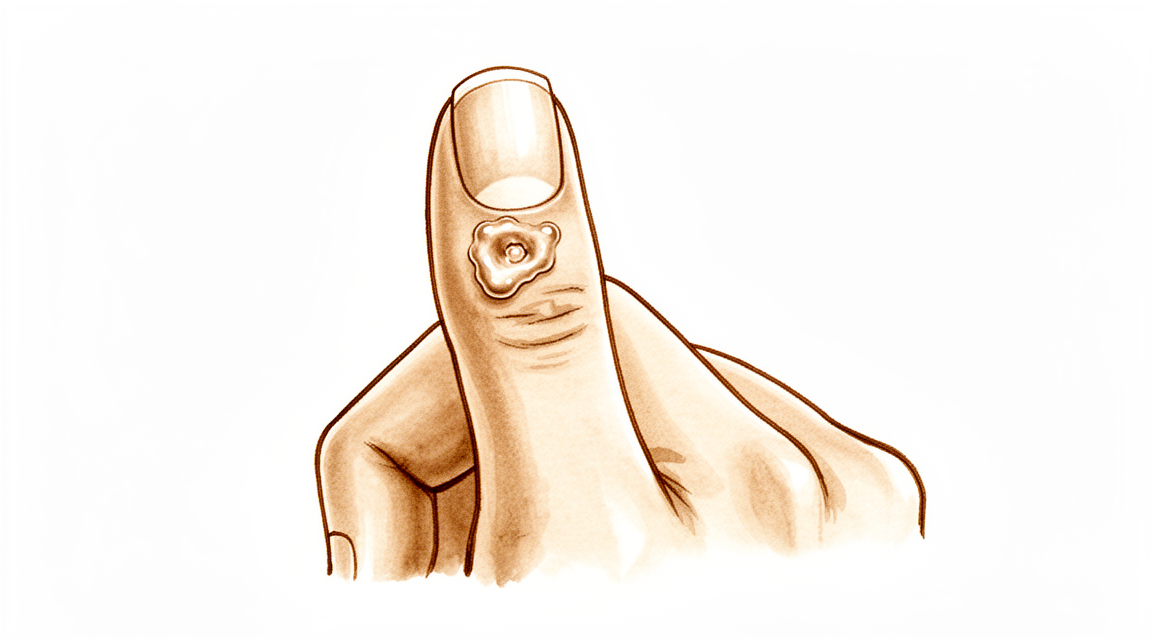
ਤੁਸੀਂ ਕੀ ਮਹਿਸੂਸ ਕਰਦੇ ਹੋ
ਮਿਊਕਸ ਸਿਸਟ (mucous cyst, ਤਰਲ ਨਾਲ ਭਰੀ ਗੰਢ) ਇੱਕ ਛੋਟੀ, ਸਖ਼ਤ ਗੰਢ ਹੁੰਦੀ ਹੈ ਜੋ ਉਂਗਲ ਦੇ ਪਿਛਲੇ ਪਾਸੇ, ਆਮ ਤੌਰ ਤੇ ਨਹੁੰ ਦੇ ਬਿਲਕੁਲ ਪਿੱਛੇ, ਨਿਕਲਦੀ ਹੈ। ਇਹ ਗਾੜ੍ਹੇ, ਸਾਫ਼ ਤਰਲ ਨਾਲ ਭਰੀ ਹੁੰਦੀ ਹੈ। ਗੰਢ ਖ਼ੁਦ ਅਕਸਰ ਦਰਦ ਨਹੀਂ ਕਰਦੀ, ਪਰ ਇਹ ਨੇੜਲੇ ਹਿੱਸਿਆਂ ਉੱਤੇ ਦਬਾਅ ਪਾ ਕੇ ਤਕਲੀਫ਼ ਕਰ ਸਕਦੀ ਹੈ।
ਤੁਸੀਂ ਨਹੁੰ ਵਿੱਚ ਵੀ ਤਬਦੀਲੀਆਂ ਦੇਖ ਸਕਦੇ ਹੋ। ਸਿਸਟ ਨਹੁੰ ਦੇ ਤਲ (nail bed, ਨਹੁੰ ਦੇ ਹੇਠਲੀ ਨਰਮ ਪਰਤ) ਦੇ ਨੇੜੇ ਹੁੰਦੀ ਹੈ, ਇਸ ਲਈ ਵਧਦੇ ਹੋਏ ਇਹ ਨਹੁੰ ਉੱਤੇ ਦਬਾਅ ਪਾ ਸਕਦੀ ਹੈ। ਇਸ ਨਾਲ ਅਕਸਰ ਨਹੁੰ ਦੀ ਪੂਰੀ ਲੰਬਾਈ ਵਿੱਚ ਚੱਲਦਾ ਖਾਂਚਾ ਜਾਂ ਉੱਭਰੀ ਲਕੀਰ ਬਣ ਜਾਂਦੀ ਹੈ। ਸਿਸਟ ਦੇ ਉੱਪਰਲੀ ਚਮੜੀ ਵੀ ਪਤਲੀ ਅਤੇ ਚਮਕਦਾਰ ਹੋ ਸਕਦੀ ਹੈ। ਕੁਝ ਮਾਮਲਿਆਂ ਵਿੱਚ, ਚਮੜੀ ਖੁਰ ਜਾਂਦੀ ਹੈ ਅਤੇ ਸਿਸਟ ਵਿੱਚੋਂ ਇੱਕ ਛੋਟੇ ਰਸਤੇ ਰਾਹੀਂ ਤਰਲ ਰਿਸਣ ਲੱਗਦਾ ਹੈ।
ਗੰਢ ਆਮ ਤੌਰ ਤੇ ਬਿਲਕੁਲ ਉੱਥੇ ਹੁੰਦੀ ਹੈ ਜਿੱਥੇ ਤੁਹਾਡੀ ਉਂਗਲ ਨਹੁੰ ਤੋਂ ਪਹਿਲਾਂ ਵਾਲੇ ਆਖ਼ਰੀ ਜੋੜ ਉੱਤੇ ਮੁੜਦੀ ਹੈ। ਇਸ ਨਾਲ ਰੋਜ਼ਾਨਾ ਦੇ ਕੁਝ ਕੰਮ ਔਖੇ ਹੋ ਜਾਂਦੇ ਹਨ। ਤੰਗ ਜੇਬ ਵਿੱਚ ਹੱਥ ਪਾਉਣਾ, ਮਰਤਬਾਨ ਦਾ ਢੱਕਣ ਫੜਨਾ, ਜਾਂ ਛੋਟੇ ਸਿੱਕੇ ਚੁੱਕਣਾ ਤਕਲੀਫ਼ ਵਾਲਾ ਹੋ ਸਕਦਾ ਹੈ। ਟਾਈਪ ਕਰਨ ਜਾਂ ਲਿਖਣ ਨਾਲ ਗੰਢ ਉੱਤੇ ਦਬਾਅ ਪੈ ਸਕਦਾ ਹੈ ਅਤੇ ਇਹ ਦੁਖਣ ਲੱਗ ਸਕਦੀ ਹੈ।
ਸਿਸਟ ਉਸੇ ਜੋੜ ਵਿੱਚ ਘਿਸਾਈ ਵਾਲੇ ਗਠੀਏ (ਆਰਥਰਾਈਟਿਸ) ਨਾਲ ਜੁੜੀ ਹੁੰਦੀ ਹੈ। ਹੱਡੀ ਦਾ ਇੱਕ ਛੋਟਾ ਉਭਾਰ, ਜਿਸ ਨੂੰ ਓਸਟੀਓਫਾਈਟ (osteophyte) ਕਹਿੰਦੇ ਹਨ, ਜੋੜ ਨੂੰ ਚਿੜਾਉਂਦਾ (irritate) ਹੈ ਅਤੇ ਉਸ ਤਰਲ ਦੇ ਬਣਨ ਦਾ ਕਾਰਨ ਬਣਦਾ ਹੈ ਜੋ ਸਿਸਟ ਨੂੰ ਭਰਦਾ ਹੈ। ਇਸ ਕਰਕੇ, ਹੱਥ ਨੂੰ ਬਹੁਤ ਜ਼ਿਆਦਾ ਵਰਤਣ ਤੋਂ ਬਾਅਦ ਜੋੜ ਦੁਖ ਸਕਦਾ ਹੈ, ਅਤੇ ਉਦੋਂ ਗੰਢ ਨੂੰ ਛੂਹਣ ਨਾਲ ਜ਼ਿਆਦਾ ਦਰਦ ਹੋ ਸਕਦਾ ਹੈ।
ਜੇ ਸਿਸਟ ਦੇ ਉੱਪਰਲੀ ਚਮੜੀ ਫਟ ਕੇ ਖੁੱਲ੍ਹ ਜਾਵੇ ਅਤੇ ਤਰਲ ਬਾਹਰ ਰਿਸੇ, ਤਾਂ ਉਸ ਥਾਂ ਨੂੰ ਸਾਫ਼ ਰੱਖੋ ਅਤੇ ਬਿਨਾਂ ਦੇਰੀ ਡਾਕਟਰੀ ਸਲਾਹ ਲਓ। ਚਮੜੀ ਤੋਂ ਉਂਗਲ ਦੇ ਜੋੜ ਤੱਕ ਬਣਿਆ ਰਸਤਾ ਲਾਗ (ਇਨਫੈਕਸ਼ਨ) ਨੂੰ ਅੰਦਰ ਜਾਣ ਦੇ ਸਕਦਾ ਹੈ, ਅਤੇ ਲਾਗ ਵਾਲੇ ਜੋੜ ਦਾ ਇਲਾਜ ਬਿਨਾਂ ਦੇਰੀ ਹੋਣਾ ਜ਼ਰੂਰੀ ਹੈ। ਜੇ ਤੁਹਾਡੀ ਉਂਗਲ ਗਰਮ, ਲਾਲ, ਸੁੱਜੀ ਹੋਈ ਅਤੇ ਦਰਦ ਵਾਲੀ ਹੋ ਜਾਵੇ, ਖ਼ਾਸ ਕਰਕੇ ਬੁਖ਼ਾਰ ਦੇ ਨਾਲ, ਤਾਂ ਉਸੇ ਦਿਨ ਐਮਰਜੈਂਸੀ ਵਿਭਾਗ ਜਾਓ। ਇਸ ਲਈ ਜੀਪੀ ਦੇ ਰੈਫ਼ਰਲ ਦੀ ਲੋੜ ਨਹੀਂ ਹੈ।
ਸਿਸਟ ਵਿੱਚ ਖ਼ੁਦ ਛੇਕ ਨਾ ਕਰੋ ਅਤੇ ਨਾ ਹੀ ਇਸ ਨੂੰ ਦਬਾ ਕੇ ਨਿਚੋੜੋ। ਇਸ ਨਾਲ ਜੋੜ ਵਿੱਚ ਲਾਗ ਜਾ ਸਕਦੀ ਹੈ।
ਜੇ ਗੰਢ ਵਧ ਰਹੀ ਹੈ, ਨਹੁੰ ਦਾ ਟੇਢਾਪਣ ਤੁਹਾਨੂੰ ਤੰਗ ਕਰ ਰਿਹਾ ਹੈ, ਜਾਂ ਲੱਛਣ ਹਫ਼ਤਿਆਂ ਵਿੱਚ ਠੀਕ ਨਹੀਂ ਹੋ ਰਹੇ, ਤਾਂ ਆਪਣੇ ਜੀਪੀ (ਫ਼ੈਮਿਲੀ ਡਾਕਟਰ) ਨੂੰ ਮਿਲੋ ਜਾਂ ਮਾਹਰ ਤੋਂ ਜਾਂਚ ਕਰਵਾਉਣ ਲਈ ਕਹੋ।
ਅਸਲ ਵਿੱਚ ਕੀ ਹੋ ਰਿਹਾ ਹੈ
ਤੁਹਾਡੀ ਉਂਗਲ ਦਾ ਆਖ਼ਰੀ ਜੋੜ ਇੱਕ ਛੋਟੇ ਕਬਜ਼ੇ ਵਾਂਗ ਕੰਮ ਕਰਦਾ ਹੈ। ਹਰ ਜੋੜ ਵਾਂਗ, ਇਸ ਦੇ ਅੰਦਰ ਨਰਮ ਝਿੱਲੀ ਦਾ ਇੱਕ ਖੋਲ ਹੁੰਦਾ ਹੈ ਜੋ ਥੋੜ੍ਹਾ ਜਿਹਾ ਤਰਲ ਬਣਾਉਂਦਾ ਹੈ ਤਾਂ ਜੋ ਜੋੜ ਦੀਆਂ ਸਤਹਾਂ ਆਸਾਨੀ ਨਾਲ ਫਿਸਲਦੀਆਂ ਰਹਿਣ। ਮਿਊਕਸ ਸਿਸਟ ਵਿੱਚ, ਉਸ ਜੋੜ ਵਿੱਚ ਘਿਸਾਈ ਵਾਲਾ ਗਠੀਆ ਹੋ ਚੁੱਕਾ ਹੁੰਦਾ ਹੈ। ਜੋੜ ਦੀ ਅੰਦਰਲੀ ਝਿੱਲੀ ਚਿੜ ਜਾਂਦੀ ਹੈ ਅਤੇ ਜੋੜ ਦੀ ਲੋੜ ਨਾਲੋਂ ਜ਼ਿਆਦਾ ਤਰਲ ਬਣਾਉਣ ਲੱਗ ਪੈਂਦੀ ਹੈ।
ਨਾਲ ਹੀ, ਗਠੀਆ ਅਕਸਰ ਜੋੜ ਦੇ ਕਿਨਾਰੇ ਉੱਤੇ ਹੱਡੀ ਦਾ ਇੱਕ ਛੋਟਾ ਉਭਾਰ ਬਣਾ ਦਿੰਦਾ ਹੈ। ਉਹ ਉਭਾਰ ਜੋੜ ਦੇ ਖੋਲ ਉੱਤੇ ਅੰਦਰੋਂ ਦਬਾਅ ਪਾਉਂਦਾ ਹੈ ਅਤੇ ਉਸ ਨੂੰ ਘਸਾ ਕੇ ਉਸ ਵਿੱਚ ਛੇਕ ਕਰ ਦਿੰਦਾ ਹੈ। ਫਿਰ ਤਰਲ ਉਸ ਘਸੀ ਹੋਈ ਥਾਂ ਰਾਹੀਂ ਬਾਹਰ ਰਿਸਦਾ ਹੈ ਅਤੇ ਤੁਹਾਡੀ ਉਂਗਲ ਦੇ ਪਿਛਲੇ ਪਾਸੇ ਚਮੜੀ ਦੇ ਹੇਠਾਂ ਇਕੱਠਾ ਹੋ ਜਾਂਦਾ ਹੈ। ਜੋ ਗੰਢ ਤੁਸੀਂ ਦੇਖ ਅਤੇ ਮਹਿਸੂਸ ਕਰ ਸਕਦੇ ਹੋ, ਉਹ ਇਹੀ ਫਸਿਆ ਹੋਇਆ ਤਰਲ ਹੈ, ਜੋ ਜੋੜ ਦੇ ਇੱਕ ਪਾਸੇ, ਨਹੁੰ ਦੇ ਬਿਲਕੁਲ ਪਿੱਛੇ, ਟਿਕਿਆ ਹੁੰਦਾ ਹੈ।
ਸਿਸਟ ਆਪਣੇ ਆਪ ਵਿੱਚ ਕੋਈ ਰਸੌਲੀ ਵਰਗਾ ਵਾਧਾ (growth) ਨਹੀਂ, ਸਗੋਂ ਪਤਲੀ ਕੰਧ ਵਾਲੀ ਇੱਕ ਥੈਲੀ ਹੈ। ਇਸ ਦੀ ਕੰਧ ਸਹਾਰਾ ਦੇਣ ਵਾਲੇ ਟਿਸ਼ੂ ਦੇ ਰੇਸ਼ਿਆਂ ਤੋਂ ਬਣੀ ਹੁੰਦੀ ਹੈ, ਅਤੇ ਇਸ ਦੀ ਆਪਣੀ ਕੋਈ ਸਹੀ ਅੰਦਰਲੀ ਪਰਤ ਨਹੀਂ ਹੁੰਦੀ। ਕਿਉਂਕਿ ਕੰਧ ਪਤਲੀ ਹੁੰਦੀ ਹੈ ਅਤੇ ਇਸ ਦੇ ਉੱਪਰਲੀ ਚਮੜੀ ਅਕਸਰ ਹੋਰ ਵੀ ਪਤਲੀ ਹੁੰਦੀ ਹੈ, ਇੱਕ ਛੋਟੀ ਜਿਹੀ ਸੱਟ ਨਾਲ ਇਹ ਫਟ ਸਕਦੀ ਹੈ। ਜਦੋਂ ਇਹ ਹੁੰਦਾ ਹੈ, ਤਾਂ ਅੰਦਰਲਾ ਸਾਫ਼, ਜੈਲੀ ਵਰਗਾ ਤਰਲ ਬਾਹਰ ਰਿਸ ਆਉਂਦਾ ਹੈ।
ਇਸ ਨਾਲ ਉਹਨਾਂ ਲੱਛਣਾਂ ਦੀ ਸਮਝ ਆਉਂਦੀ ਹੈ ਜਿਨ੍ਹਾਂ ਬਾਰੇ ਤੁਸੀਂ ਹੁਣੇ ਪੜ੍ਹਿਆ ਹੈ। ਗੰਢ ਨਹੁੰ ਦੇ ਤਲ ਦੇ ਨੇੜੇ ਹੁੰਦੀ ਹੈ, ਇਸ ਲਈ ਸਿਸਟ ਦਾ ਦਬਾਅ ਵਧਦੇ ਨਹੁੰ ਵਿੱਚ ਖਾਂਚਾ ਪਾ ਸਕਦਾ ਹੈ। ਜੋੜ ਇਸ ਲਈ ਦੁਖਦਾ ਹੈ ਕਿਉਂਕਿ ਉੱਥੇ ਗਠੀਆ ਵੀ ਹੈ, ਅਤੇ ਸਿਸਟ ਉਸੇ ਗਠੀਏ ਦੀ ਇੱਕ ਨਿਸ਼ਾਨੀ ਹੈ। ਜੋੜ ਦੇ ਕਿਨਾਰੇ ਵਾਲਾ ਉਭਾਰ ਹੀ ਤਰਲ ਨੂੰ ਵਗਦਾ ਰੱਖਦਾ ਹੈ, ਇਸ ਲਈ ਜਦੋਂ ਤੱਕ ਉਹ ਉੱਥੇ ਹੈ, ਸਿਸਟ ਰਿਸਣ ਜਾਂ ਖ਼ਾਲੀ ਕੀਤੇ ਜਾਣ ਤੋਂ ਬਾਅਦ ਵੀ ਅਕਸਰ ਮੁੜ ਭਰ ਜਾਂਦੀ ਹੈ।
ਇਸੇ ਲਈ ਇਲਾਜ ਸਿਰਫ਼ ਗੰਢ ਦੀ ਬਜਾਏ ਜੋੜ ਉੱਤੇ ਧਿਆਨ ਦਿੰਦਾ ਹੈ। ਉਭਾਰ ਹਟਾਉਣ ਨਾਲ ਰਿਸਾਵ ਉਸ ਦੇ ਸਰੋਤ ਉੱਤੇ ਹੀ ਬੰਦ ਹੋ ਜਾਂਦਾ ਹੈ, ਅਤੇ ਜਦੋਂ ਸਿਸਟ ਵਿੱਚ ਹੋਰ ਤਰਲ ਨਹੀਂ ਭਰਦਾ ਤਾਂ ਇਹ ਬੈਠ ਜਾਂਦੀ ਹੈ।
ਅਸੀਂ ਇਸ ਬਾਰੇ ਕੀ ਕਰ ਸਕਦੇ ਹਾਂ
ਡਾ. ਕੀਰਨ ਹਿਰਪਰਾ, ਜੋ ਮਾਟਰ ਪ੍ਰਾਈਵੇਟ ਹਸਪਤਾਲ ਰੌਕਹੈਂਪਟਨ ਵਿੱਚ ਉੱਪਰਲੇ ਅੰਗ (ਮੋਢੇ ਤੋਂ ਹੱਥ ਤੱਕ ਦੀ ਬਾਂਹ) ਦੇ ਸਰਜਨ ਹਨ, ਤੁਹਾਡੀ ਹਾਲਤ ਦੇ ਅਨੁਕੂਲ ਸਭ ਤੋਂ ਘੱਟ ਚੀਰ-ਫਾੜ ਵਾਲੇ ਵਿਕਲਪਾਂ ਨਾਲ ਸ਼ੁਰੂ ਕਰਦੇ ਹਨ। ਮਰੀਜ਼ਾਂ ਨੂੰ ਆਮ ਤੌਰ ਤੇ ਉਹਨਾਂ ਦਾ ਜੀਪੀ (ਫ਼ੈਮਿਲੀ ਡਾਕਟਰ) ਸਾਡੇ ਕਲੀਨਿਕ ਵਿੱਚ ਭੇਜਦਾ ਹੈ; ਜੇ ਕਿਸੇ ਫਿਜ਼ੀਓਥੈਰੇਪਿਸਟ ਨੇ ਤੁਹਾਨੂੰ ਸਾਡੇ ਕੋਲ ਆਉਣ ਦੀ ਸਲਾਹ ਦਿੱਤੀ ਹੈ, ਤਾਂ ਵੀ ਮੈਡੀਕੇਅਰ ਰਿਬੇਟ (Medicare rebate) ਦੇ ਯੋਗ ਹੋਣ ਲਈ ਤੁਹਾਨੂੰ ਆਪਣੇ ਜੀਪੀ ਤੋਂ ਰੈਫ਼ਰਲ ਦੀ ਲੋੜ ਪਵੇਗੀ। ਕਲੀਨਿਕ ਵਿੱਚ ਮੁਲਾਕਾਤ ਵੇਲੇ ਅਸੀਂ ਤੁਹਾਡੀ ਸਿਹਤ ਦਾ ਇਤਿਹਾਸ ਲੈਂਦੇ ਹਾਂ, ਤੁਹਾਡੀ ਉਂਗਲ ਦੀ ਜਾਂਚ ਕਰਦੇ ਹਾਂ ਅਤੇ ਲੋੜ ਹੋਵੇ ਤਾਂ ਤਸਵੀਰਾਂ ਵਾਲੀ ਜਾਂਚ (imaging) ਕਰਵਾਉਂਦੇ ਹਾਂ। ਜ਼ਿਆਦਾਤਰ ਮਿਊਕਸ ਸਿਸਟਾਂ ਜੋੜ ਵਿੱਚ ਘਿਸਾਈ ਵਾਲੇ ਗਠੀਏ ਨਾਲ ਜੁੜੀਆਂ ਹੁੰਦੀਆਂ ਹਨ, ਇਸ ਲਈ ਅਸੀਂ ਆਮ ਤੌਰ ਤੇ ਪਹਿਲਾਂ ਬਿਨਾਂ ਓਪਰੇਸ਼ਨ ਵਾਲਾ ਇਲਾਜ ਅਜ਼ਮਾਉਂਦੇ ਹਾਂ, ਅਤੇ ਜਦੋਂ ਉਸ ਨਾਲ ਕਾਫ਼ੀ ਸੁਧਾਰ ਨਾ ਹੋਵੇ ਤਾਂ ਸਰਜਰੀ ਬਾਰੇ ਸੋਚਦੇ ਹਾਂ।
ਪਹਿਲਾ ਕਦਮ ਅਕਸਰ ਸਿਰਫ਼ ਦੇਖਣਾ ਅਤੇ ਉਡੀਕ ਕਰਨਾ ਹੁੰਦਾ ਹੈ। ਕੁਝ ਸਿਸਟਾਂ ਛੋਟੀਆਂ ਹੀ ਰਹਿੰਦੀਆਂ ਹਨ ਅਤੇ ਘੱਟ ਤਕਲੀਫ਼ ਦਿੰਦੀਆਂ ਹਨ। ਉਂਗਲ ਨੂੰ ਬਚਾ ਕੇ ਰੱਖਣ ਨਾਲ ਮਦਦ ਮਿਲਦੀ ਹੈ: ਗੰਢ ਉੱਤੇ ਵਾਰ-ਵਾਰ ਸੱਟ ਵੱਜਣ ਤੋਂ ਬਚੋ, ਅਤੇ ਉਹਨਾਂ ਕੰਮਾਂ ਵਿੱਚ ਧਿਆਨ ਰੱਖੋ ਜੋ ਇਸ ਉੱਤੇ ਦਬਾਅ ਪਾਉਂਦੇ ਹਨ। ਜੇ ਭਾਰੀ ਵਰਤੋਂ ਤੋਂ ਬਾਅਦ ਜੋੜ ਦੁਖਦਾ ਹੈ, ਤਾਂ ਉਹ ਕੰਮ ਘਟਾਉਣ ਨਾਲ ਆਰਾਮ ਆ ਸਕਦਾ ਹੈ। ਹੈਂਡ ਥੈਰੇਪੀ ਅਕੜਾਅ ਘਟਾਉਣ ਵਿੱਚ, ਅਤੇ ਉਂਗਲ ਨੂੰ ਆਰਾਮ ਨਾਲ ਹਿੱਲਦਾ ਰੱਖਣ ਵਿੱਚ, ਮਦਦ ਕਰ ਸਕਦੀ ਹੈ। ਅੱਗੇ ਕੁਝ ਵੀ ਫ਼ੈਸਲਾ ਕਰਨ ਤੋਂ ਪਹਿਲਾਂ ਕਈ ਹਫ਼ਤਿਆਂ ਤੱਕ ਇਹਨਾਂ ਸਾਧਾਰਨ ਤਰੀਕਿਆਂ ਨੂੰ ਪੂਰਾ ਮੌਕਾ ਦਿਓ।
ਦਰਦ ਤੋਂ ਰਾਹਤ ਸਿੱਧੀ-ਸਾਦੀ ਹੈ। ਫਾਰਮੇਸੀ ਤੋਂ ਮਿਲਣ ਵਾਲੀਆਂ ਸਾਧਾਰਨ ਦਰਦ ਨਿਵਾਰਕ ਦਵਾਈਆਂ, ਦੱਸੇ ਮੁਤਾਬਕ ਲਈਆਂ ਜਾਣ, ਤਾਂ ਦੁਖਦੇ ਜੋੜ ਨੂੰ ਆਰਾਮ ਦੇ ਸਕਦੀਆਂ ਹਨ। ਸੋਜਸ਼-ਰੋਧੀ ਦਵਾਈਆਂ (anti-inflammatories) ਸਿਸਟ ਦੇ ਪਿੱਛੇ ਦੇ ਗਠੀਏ ਦੀ ਤਕਲੀਫ਼ ਘਟਾ ਸਕਦੀਆਂ ਹਨ। ਇਹ ਦਵਾਈਆਂ ਗੰਢ ਦਾ ਨਹੀਂ, ਸਗੋਂ ਤਕਲੀਫ਼ ਦਾ ਇਲਾਜ ਕਰਦੀਆਂ ਹਨ।
ਇੱਕ ਵਿਕਲਪ ਜੋ ਅਸੀਂ ਨਹੀਂ ਦਿੰਦੇ, ਉਹ ਹੈ ਸੂਈ ਨਾਲ ਸਿਸਟ ਨੂੰ ਖ਼ਾਲੀ ਕਰਨਾ। ਇਹ ਕਲੀਨਿਕ ਵਿੱਚ ਹੋਣ ਵਾਲੀ ਸੌਖੀ ਪ੍ਰਕਿਰਿਆ ਹੈ, ਪਰ ਇਸ ਤੋਂ ਬਾਅਦ ਲਗਭਗ ਅੱਧੇ ਮਾਮਲਿਆਂ ਵਿੱਚ ਸਿਸਟ ਵਾਪਸ ਆ ਜਾਂਦੀ ਹੈ। ਇਸ ਨਾਲ ਜੋੜ ਵਿੱਚ ਲਾਗ ਪਹੁੰਚਣ ਦਾ ਖ਼ਤਰਾ ਵੀ ਹੁੰਦਾ ਹੈ, ਇਸੇ ਲਈ ਅਸੀਂ ਘਰ ਵਿੱਚ ਵੀ ਸਿਸਟ ਵਿੱਚ ਛੇਕ ਕਰਨ ਜਾਂ ਉਸ ਨੂੰ ਦਬਾ ਕੇ ਨਿਚੋੜਨ ਤੋਂ ਮਨ੍ਹਾ ਕਰਦੇ ਹਾਂ।
ਸਰਜਰੀ ਬਾਰੇ ਉਦੋਂ ਸੋਚਿਆ ਜਾਂਦਾ ਹੈ ਜਦੋਂ ਸਿਸਟ ਵਾਰ-ਵਾਰ ਮੁੜ ਭਰਦੀ ਰਹਿੰਦੀ ਹੈ, ਨਹੁੰ ਦਾ ਟੇਢਾਪਣ ਤੁਹਾਨੂੰ ਤੰਗ ਕਰਦਾ ਹੈ, ਜਾਂ ਸਿਸਟ ਦੇ ਉੱਪਰਲੀ ਚਮੜੀ ਪਤਲੀ ਹੋ ਗਈ ਹੈ ਜਾਂ ਖੁਰ ਰਹੀ ਹੈ। ਓਪਰੇਸ਼ਨ ਸਿਰਫ਼ ਗੰਢ ਦਾ ਨਹੀਂ, ਸਗੋਂ ਜੋੜ ਦਾ ਇਲਾਜ ਕਰਦਾ ਹੈ। ਜੋੜ ਦੇ ਕਿਨਾਰੇ ਵਾਲਾ ਹੱਡੀ ਦਾ ਉਭਾਰ ਹਟਾ ਦਿੱਤਾ ਜਾਂਦਾ ਹੈ, ਜਿਸ ਨਾਲ ਤਰਲ ਦਾ ਰਿਸਾਵ ਉਸ ਦੇ ਸਰੋਤ ਉੱਤੇ ਹੀ ਬੰਦ ਹੋ ਜਾਂਦਾ ਹੈ, ਅਤੇ ਜਦੋਂ ਸਿਸਟ ਵਿੱਚ ਹੋਰ ਤਰਲ ਨਹੀਂ ਭਰਦਾ ਤਾਂ ਇਹ ਬੈਠ ਜਾਂਦੀ ਹੈ। ਕੁਝ ਮਾਮਲਿਆਂ ਵਿੱਚ ਸਿਸਟ ਅਤੇ ਨੇੜੇ ਦੀ ਚਮੜੀ ਦਾ ਇੱਕ ਛੋਟਾ ਟੁਕੜਾ (skin flap) ਵੀ ਹਟਾਏ ਜਾਂਦੇ ਹਨ, ਜੋ ਉਸ ਸਿਸਟ ਲਈ ਢੁਕਵਾਂ ਹੈ ਜਿਸ ਨੇ ਆਪਣੇ ਉੱਪਰਲੀ ਚਮੜੀ ਨੂੰ ਪਤਲਾ ਕਰ ਦਿੱਤਾ ਹੈ। ਉਭਾਰ ਨੂੰ ਸਿਸਟ ਦੀ ਡੰਡੀ (stalk, ਸਿਸਟ ਨੂੰ ਜੋੜ ਨਾਲ ਜੋੜਨ ਵਾਲਾ ਹਿੱਸਾ) ਸਮੇਤ ਹਟਾਉਣ ਨਾਲ ਸਿਸਟ ਦੇ ਵਾਪਸ ਆਉਣ ਦੀ ਸੰਭਾਵਨਾ ਸਭ ਤੋਂ ਘੱਟ ਹੁੰਦੀ ਹੈ। ਅਸੀਂ ਗੱਲ ਕਰਾਂਗੇ ਕਿ ਤੁਹਾਡੀ ਉਂਗਲ ਲਈ ਕਿਹੜਾ ਤਰੀਕਾ ਢੁਕਵਾਂ ਹੈ, ਅਤੇ ਮਿਲ ਕੇ ਫ਼ੈਸਲਾ ਕਰਾਂਗੇ।
ਕੀ ਉਮੀਦ ਰੱਖੀਏ
ਜੇ ਇਸ ਨੂੰ ਇਵੇਂ ਹੀ ਛੱਡ ਦਿੱਤਾ ਜਾਵੇ, ਤਾਂ ਮਿਊਕਸ ਸਿਸਟ ਅਕਸਰ ਗਾਇਬ ਹੋਣ ਦੀ ਥਾਂ ਮੁੜ-ਮੁੜ ਵਾਪਸ ਆਉਂਦੀ ਰਹਿੰਦੀ ਹੈ। ਜਦੋਂ ਤੱਕ ਜੋੜ ਦੇ ਕਿਨਾਰੇ ਉੱਤੇ ਹੱਡੀ ਦਾ ਉਭਾਰ ਮੌਜੂਦ ਹੈ, ਉਹ ਸਿਸਟ ਨੂੰ ਤਰਲ ਨਾਲ ਭਰਦਾ ਰਹਿੰਦਾ ਹੈ। ਕੁਝ ਸਿਸਟਾਂ ਲੰਮੇ ਸਮੇਂ ਤੱਕ ਛੋਟੀਆਂ ਰਹਿੰਦੀਆਂ ਹਨ ਅਤੇ ਘੱਟ ਤਕਲੀਫ਼ ਦਿੰਦੀਆਂ ਹਨ। ਹੋਰ ਸਿਸਟਾਂ ਹੌਲੀ-ਹੌਲੀ ਵਧਦੀਆਂ ਹਨ, ਨਹੁੰ ਦਾ ਖਾਂਚਾ ਹੋਰ ਡੂੰਘਾ ਕਰਦੀਆਂ ਹਨ, ਜਾਂ ਗੰਢ ਉੱਤੇ ਦੀ ਚਮੜੀ ਨੂੰ ਇੰਨਾ ਪਤਲਾ ਕਰ ਦਿੰਦੀਆਂ ਹਨ ਕਿ ਗੰਢ ਰਿਸਣ ਲੱਗ ਪੈਂਦੀ ਹੈ।
ਇਲਾਜ ਤੋਂ ਬਿਨਾਂ, ਮੁੱਖ ਖ਼ਤਰੇ ਉਹੀ ਹਨ ਜਿਨ੍ਹਾਂ ਬਾਰੇ ਤੁਸੀਂ ਪਹਿਲਾਂ ਹੀ ਪੜ੍ਹ ਚੁੱਕੇ ਹੋ: ਨਹੁੰ ਵਿੱਚ ਉਦੋਂ ਤੱਕ ਲਕੀਰ ਬਣੀ ਰਹਿਣਾ ਜਦੋਂ ਤੱਕ ਸਿਸਟ ਉਸ ਉੱਤੇ ਦਬਾਅ ਪਾਉਂਦੀ ਹੈ, ਅਤੇ ਚਮੜੀ ਦਾ ਖੁਰ ਕੇ ਜੋੜ ਤੱਕ ਇੱਕ ਰਸਤਾ ਖੋਲ੍ਹ ਦੇਣਾ। ਉਸ ਰਸਤੇ ਨੂੰ ਗੰਭੀਰਤਾ ਨਾਲ ਲੈਣਾ ਚਾਹੀਦਾ ਹੈ। ਜੇ ਤੁਹਾਡੀ ਉਂਗਲ ਗਰਮ, ਲਾਲ, ਸੁੱਜੀ ਹੋਈ ਅਤੇ ਦਰਦ ਵਾਲੀ ਹੋ ਜਾਵੇ, ਖ਼ਾਸ ਕਰਕੇ ਬੁਖ਼ਾਰ ਦੇ ਨਾਲ, ਤਾਂ ਉਸੇ ਦਿਨ ਐਮਰਜੈਂਸੀ ਵਿਭਾਗ ਜਾਓ। ਇਸ ਲਈ ਜੀਪੀ ਦੇ ਰੈਫ਼ਰਲ ਦੀ ਲੋੜ ਨਹੀਂ ਹੈ।
ਜੋੜ ਉੱਤੇ ਕੇਂਦਰਿਤ ਇਲਾਜ ਨਾਲ, ਅੱਗੇ ਦੀ ਤਸਵੀਰ ਸਾਫ਼ ਹੈ। ਉਭਾਰ ਹਟਾਉਣ ਨਾਲ ਤਰਲ ਦਾ ਰਿਸਾਵ ਉਸ ਦੇ ਸਰੋਤ ਉੱਤੇ ਹੀ ਬੰਦ ਹੋ ਜਾਂਦਾ ਹੈ, ਅਤੇ ਜਦੋਂ ਸਿਸਟ ਵਿੱਚ ਹੋਰ ਤਰਲ ਨਹੀਂ ਭਰਦਾ ਤਾਂ ਇਹ ਬੈਠ ਜਾਂਦੀ ਹੈ। ਜਦੋਂ ਉਭਾਰ ਹਟਾ ਦਿੱਤਾ ਜਾਂਦਾ ਹੈ, ਤਾਂ ਸਿਸਟ ਬਹੁਤ ਘੱਟ ਵਾਪਸ ਆਉਂਦੀ ਹੈ। ਜਿੱਥੇ ਸਿਸਟ ਨੂੰ ਵੀ ਕੱਢਿਆ ਜਾਂਦਾ ਹੈ, ਉੱਥੇ ਵੀ ਵਾਪਸ ਆਉਣ ਦੀ ਦਰ ਘੱਟ ਰਹਿੰਦੀ ਹੈ: ਸਰਜਰੀ ਨਾਲ ਇਲਾਜ ਕੀਤੀਆਂ ਹਰ 100 ਸਿਸਟਾਂ ਵਿੱਚੋਂ ਲਗਭਗ 2 ਵਾਪਸ ਆਉਂਦੀਆਂ ਹਨ, ਅਤੇ ਜਦੋਂ ਥਾਂ ਨੂੰ ਬੰਦ ਕਰਨ ਲਈ ਨੇੜੇ ਦੀ ਚਮੜੀ ਦਾ ਟੁਕੜਾ (skin flap) ਵਰਤਿਆ ਜਾਂਦਾ ਹੈ ਤਾਂ 100 ਵਿੱਚੋਂ ਲਗਭਗ 1.4। ਇਸ ਤਰ੍ਹਾਂ ਇਲਾਜ ਕਰਵਾਉਣ ਵਾਲੇ ਲੋਕ ਆਮ ਤੌਰ ਤੇ ਦਾਗ਼ ਦੀ ਦਿੱਖ ਤੋਂ ਖ਼ੁਸ਼ ਹੁੰਦੇ ਹਨ, ਅਤੇ ਦੁਬਾਰਾ ਵੀ ਇਹ ਇਲਾਜ ਕਰਵਾਉਣ ਲਈ ਤਿਆਰ ਹੁੰਦੇ ਹਨ।
ਠੀਕ ਹੋਣਾ ਕੋਈ ਵੱਡਾ ਕੰਮ ਨਹੀਂ, ਪਰ ਇਹ ਬਿਲਕੁਲ ਮਾਮੂਲੀ ਵੀ ਨਹੀਂ। ਉਂਗਲ ਵਿੱਚ ਅਕਸਰ ਕੁਝ ਹਫ਼ਤਿਆਂ ਲਈ ਅਕੜਾਅ ਰਹਿੰਦਾ ਹੈ ਅਤੇ ਛੂਹਣ ਨਾਲ ਦਰਦ ਹੁੰਦਾ ਹੈ, ਅਤੇ ਫੜਨ ਜਾਂ ਚੂੰਢੀ ਭਰਨ ਵਰਗੇ ਰੋਜ਼ਾਨਾ ਦੇ ਕੰਮਾਂ ਨੂੰ ਮੁੜ ਆਮ ਵਾਂਗ ਮਹਿਸੂਸ ਹੋਣ ਵਿੱਚ ਕੁਝ ਸਮਾਂ ਲੱਗਦਾ ਹੈ। ਸਰਜਰੀ ਤੋਂ ਬਾਅਦ ਹੈਂਡ ਥੈਰੇਪੀ ਐਕਸਟੈਂਡ ਰੀਹੈਬਿਲੀਟੇਸ਼ਨ (Extend Rehabilitation) ਵਿਖੇ ਰੂਬੀ ਡੂਲਨ (Ruby Doolan) ਨਾਲ ਹੁੰਦੀ ਹੈ। ਰੂਬੀ ਇੱਕ ਹੈਂਡ ਥੈਰੇਪਿਸਟ ਹਨ: ਉਹ ਤੁਹਾਡੀਆਂ ਕਸਰਤਾਂ ਦੀ ਅਗਵਾਈ ਕਰਦੇ ਹਨ ਅਤੇ ਤੁਹਾਨੂੰ ਲੋੜੀਂਦਾ ਕੋਈ ਵੀ ਸਪਲਿੰਟ ਬਣਾਉਂਦੇ ਹਨ। ਜ਼ਿਆਦਾਤਰ ਲੋਕ ਕੁਝ ਹਫ਼ਤਿਆਂ ਤੋਂ ਲੈ ਕੇ ਕੁਝ ਮਹੀਨਿਆਂ ਦੇ ਅੰਦਰ ਹੱਥ ਦੀ ਆਮ ਵਰਤੋਂ ਵੱਲ ਵਾਪਸ ਆ ਜਾਂਦੇ ਹਨ।
ਨਹੁੰ ਦੇ ਤਲ ਤੋਂ ਦਬਾਅ ਹਟ ਜਾਣ ਤੋਂ ਬਾਅਦ, ਨਹੁੰ ਦਾ ਖਾਂਚਾ ਵੀ ਆਮ ਤੌਰ ਤੇ ਠੀਕ ਹੋ ਜਾਂਦਾ ਹੈ। ਇਸ ਗੱਲ ਵਿੱਚ ਸਬਰ ਰੱਖੋ: ਨਹੁੰ ਦੇ ਨੁਕਸ ਵਾਲੇ ਹਿੱਸੇ ਨੂੰ ਵਧ ਕੇ ਬਾਹਰ ਨਿਕਲਣਾ ਪੈਂਦਾ ਹੈ, ਜਿਸ ਵਿੱਚ ਕਈ ਮਹੀਨੇ ਲੱਗਦੇ ਹਨ।
ਜੇ ਲੱਛਣ ਹਫ਼ਤਿਆਂ ਵਿੱਚ ਠੀਕ ਨਹੀਂ ਹੋ ਰਹੇ, ਜਾਂ ਵਿਗੜ ਰਹੇ ਹਨ, ਤਾਂ ਆਪਣੇ ਜੀਪੀ ਨੂੰ ਮਿਲੋ ਜਾਂ ਮਾਹਰ ਤੋਂ ਜਾਂਚ ਕਰਵਾਉਣ ਲਈ ਕਹੋ।
ਡਾਕਟਰ ਨੂੰ ਕਦੋਂ ਮਿਲਣਾ ਚਾਹੀਦਾ ਹੈ
ਜ਼ਿਆਦਾਤਰ ਮਿਊਕਸ ਸਿਸਟਾਂ ਵਿੱਚ ਫ਼ੌਰੀ ਇਲਾਜ ਦੀ ਲੋੜ ਨਹੀਂ ਹੁੰਦੀ, ਅਤੇ ਬਹੁਤ ਸਾਰੀਆਂ ਸਾਧਾਰਨ ਦੇਖਭਾਲ ਨਾਲ ਠੀਕ ਹੋ ਜਾਂਦੀਆਂ ਹਨ। ਕੁਝ ਨਿਸ਼ਾਨੀਆਂ ਉੱਤੇ ਕਾਰਵਾਈ ਜ਼ਰੂਰੀ ਹੈ।
ਜੇ ਤੁਹਾਡੀ ਉਂਗਲ ਗਰਮ, ਲਾਲ, ਸੁੱਜੀ ਹੋਈ ਅਤੇ ਦਰਦ ਵਾਲੀ ਹੋ ਜਾਵੇ, ਖ਼ਾਸ ਕਰਕੇ ਬੁਖ਼ਾਰ ਦੇ ਨਾਲ, ਤਾਂ ਉਸੇ ਦਿਨ ਐਮਰਜੈਂਸੀ ਵਿਭਾਗ ਜਾਓ। ਇਹ ਜੋੜ ਵਿੱਚ ਲਾਗ ਵੱਲ ਇਸ਼ਾਰਾ ਕਰਦਾ ਹੈ, ਜਿਸ ਦਾ ਇਲਾਜ ਬਿਨਾਂ ਦੇਰੀ ਹੋਣਾ ਜ਼ਰੂਰੀ ਹੈ। ਇਹੀ ਗੱਲ ਉਦੋਂ ਵੀ ਲਾਗੂ ਹੁੰਦੀ ਹੈ ਜੇ ਸਿਸਟ ਦੇ ਉੱਪਰਲੀ ਚਮੜੀ ਫਟ ਕੇ ਖੁੱਲ੍ਹ ਗਈ ਹੈ ਅਤੇ ਤਰਲ ਰਿਸ ਰਿਹਾ ਹੈ, ਕਿਉਂਕਿ ਉਸ ਛੇਕ ਰਾਹੀਂ ਲਾਗ ਅੰਦਰ ਜਾ ਸਕਦੀ ਹੈ।
ਜੇ ਗੰਢ ਵਧਦੀ ਜਾ ਰਹੀ ਹੈ, ਨਹੁੰ ਦਾ ਖਾਂਚਾ ਤੁਹਾਨੂੰ ਤੰਗ ਕਰ ਰਿਹਾ ਹੈ, ਜਾਂ ਸਿਸਟ ਦੇ ਉੱਪਰਲੀ ਚਮੜੀ ਪਤਲੀ ਹੋ ਗਈ ਹੈ, ਤਾਂ ਆਪਣੇ ਜੀਪੀ ਨੂੰ ਮਿਲੋ ਜਾਂ ਮਾਹਰ ਤੋਂ ਜਾਂਚ ਕਰਵਾਉਣ ਲਈ ਕਹੋ। ਇਹ ਉਹ ਨਿਸ਼ਾਨੀਆਂ ਹਨ ਜਿਨ੍ਹਾਂ ਵਿੱਚ ਇਲਾਜ ਬਾਰੇ ਗੱਲ ਕਰਨੀ ਫ਼ਾਇਦੇਮੰਦ ਹੈ। ਜੇ ਲੱਛਣ ਹਫ਼ਤਿਆਂ ਵਿੱਚ ਠੀਕ ਨਹੀਂ ਹੋ ਰਹੇ, ਜਾਂ ਵਿਗੜ ਰਹੇ ਹਨ, ਤਾਂ ਤੁਹਾਡਾ ਜੀਪੀ ਰੈਫ਼ਰਲ ਦਾ ਪ੍ਰਬੰਧ ਕਰ ਸਕਦਾ ਹੈ।
ਵਿਸਥਾਰ ਵਿੱਚ
Advanced reading: the deeper science (optional)
ਇਹ ਹਿੱਸਾ ਤੁਹਾਡੇ ਆਪਣੇ ਇਲਾਜ ਬਾਰੇ ਫ਼ੈਸਲਿਆਂ ਲਈ ਲੋੜੀਂਦੀ ਜਾਣਕਾਰੀ ਤੋਂ ਅੱਗੇ ਜਾਂਦਾ ਹੈ। ਮਿਊਕਸ ਸਿਸਟਾਂ ਬਾਰੇ ਵਾਧੂ ਪੜ੍ਹਨਾ ਇੱਕ ਛੋਟੀ, ਚੰਗੀ ਤਰ੍ਹਾਂ ਸਮਰਥਿਤ ਸਰਜੀਕਲ ਸੂਝ ਕਾਰਨ ਫ਼ਾਇਦੇਮੰਦ ਹੈ: ਸਿਸਟ ਅਸਲ ਸਮੱਸਿਆ ਨਹੀਂ ਹੈ, ਅਤੇ ਸਭ ਤੋਂ ਵਧੀਆ ਕੰਮ ਕਰਨ ਵਾਲਾ ਓਪਰੇਸ਼ਨ ਜ਼ਰੂਰੀ ਨਹੀਂ ਕਿ ਇਸ ਨੂੰ ਕੱਢੇ।
ਕਾਰਨ ਹੱਡੀ ਦਾ ਉਭਾਰ ਹੈ, ਸਿਸਟ ਨਹੀਂ
ਮਿਊਕਸ ਸਿਸਟ ਪੋਟੇ ਵਾਲੇ ਗਠੀਏ ਦੇ ਮਾਰੇ ਜੋੜ ਤੋਂ ਪੈਦਾ ਹੁੰਦੀ ਹੈ। ਹੱਡੀ ਦਾ ਇੱਕ ਉਭਾਰ, ਯਾਨੀ ਓਸਟੀਓਫਾਈਟ (osteophyte), ਜੋੜ ਦੇ ਕੈਪਸੂਲ ਨੂੰ ਚਿੜਾਉਂਦਾ ਹੈ ਅਤੇ ਉਸ ਵਿੱਚ ਛੇਕ ਕਰ ਦਿੰਦਾ ਹੈ, ਅਤੇ ਜੋੜ ਦਾ ਤਰਲ ਉਸ ਛੇਕ ਵਿੱਚੋਂ ਬਾਹਰ ਨਿਕਲ ਕੇ ਚਮੜੀ ਹੇਠ ਇਕੱਠਾ ਹੋ ਜਾਂਦਾ ਹੈ। ਸਿਸਟ ਉਸ ਪ੍ਰਕਿਰਿਆ ਦਾ ਦਿਸਣ ਵਾਲਾ ਸਿਰਾ ਹੈ, ਉਸ ਦੀ ਸ਼ੁਰੂਆਤ ਨਹੀਂ।
ਇਸ ਸਮਝ ਦਾ ਸਰਜਰੀ ਉੱਤੇ ਸਿੱਧਾ ਅਸਰ ਹੈ, ਜੋ ਇੱਕ ਅਧਿਐਨ ਵਿੱਚ ਦਿਖਾਇਆ ਗਿਆ ਜਿੱਥੇ ਸਿਸਟ ਕੱਢੇ ਬਿਨਾਂ ਓਸਟੀਓਫਾਈਟ ਨੂੰ ਕੱਢਣ ਨਾਲ ਜ਼ਿਆਦਾਤਰ ਮਾਮਲਿਆਂ ਵਿੱਚ ਪੂਰੀ ਤਰ੍ਹਾਂ ਠੀਕ ਹੋਣਾ ਹੋਇਆ, ਅਤੇ ਇਸ ਨੂੰ ਘੱਟ ਚੀਰ-ਫਾੜ ਵਾਲਾ ਤਰੀਕਾ ਦੇਣ ਵਾਲੀ ਇੱਕ ਚੰਗੀ ਇਲਾਜ ਚੋਣ ਦੱਸਿਆ ਗਿਆ [1]।
ਉਭਾਰ ਹਟਾਉਣ ਨਾਲ ਟੂਟੀ ਬੰਦ ਹੋ ਜਾਂਦੀ ਹੈ। ਸਿਸਟ, ਜੋ ਹੁਣ ਭਰ ਨਹੀਂ ਰਹੀ, ਠੀਕ ਹੋ ਜਾਂਦੀ ਹੈ। ਇਹ ਉਹੀ ਤਰਕ ਹੈ ਜੋ ਗੁੱਟ ਦੀ ਗੈਂਗਲੀਅਨ ਸਿਸਟ ਉੱਤੇ ਲਾਗੂ ਹੁੰਦਾ ਹੈ, ਜਿੱਥੇ ਥੈਲੀ ਦੀ ਥਾਂ ਉਸ ਦੀ ਡੰਡੀ ਤੈਅ ਕਰਦੀ ਹੈ ਕਿ ਸਿਸਟ ਵਾਪਸ ਆਵੇਗੀ ਜਾਂ ਨਹੀਂ, ਅਤੇ ਇਹ ਦੱਸਦਾ ਹੈ ਕਿ ਮਿਊਕਸ ਸਿਸਟ ਨੂੰ ਸਿਰਫ਼ ਖ਼ਾਲੀ ਕਰਨਾ ਜਾਂ ਸੂਈ ਨਾਲ ਛੇਕ ਕਰਨਾ ਏਨੀ ਪੱਕੀ ਤਰ੍ਹਾਂ ਅਸਫ਼ਲ ਕਿਉਂ ਹੁੰਦਾ ਹੈ।
ਜਿੱਥੇ ਸਿਸਟ ਕੱਢੀ ਜਾਂਦੀ ਹੈ, ਉੱਥੇ ਵੀ ਨਤੀਜੇ ਚੰਗੇ ਹਨ
ਦੂਜੇ ਤਰੀਕੇ ਵਿੱਚ ਸਿਸਟ ਨੂੰ ਕੱਢਿਆ ਜਾਂਦਾ ਹੈ ਅਤੇ ਖ਼ਾਲੀ ਥਾਂ ਨੂੰ ਬੰਦ ਕਰਨ ਲਈ ਨੇੜੇ ਦੀ ਚਮੜੀ ਦਾ ਇੱਕ ਟੁਕੜਾ (skin flap) ਵਰਤਿਆ ਜਾਂਦਾ ਹੈ। ਇਹ ਵੀ ਭਰੋਸੇਯੋਗ ਹੈ: 69 ਮਰੀਜ਼ਾਂ ਵਿੱਚ, ਨੇੜੇ ਦੀ ਚਮੜੀ ਨੂੰ ਖਿਸਕਾ ਕੇ ਬੰਦ ਕਰਨ (local advancement flap) ਨਾਲ ਸਰਜੀਕਲ ਤੌਰ ਤੇ ਸਿਸਟ ਕੱਢਣ ਵਿੱਚ ਸਿਸਟ ਦੇ ਵਾਪਸ ਆਉਣ ਦੀ ਦਰ 1.4% ਰਹੀ, ਅਤੇ ਮਰੀਜ਼ਾਂ ਨੇ ਦਾਗ਼ ਤੋਂ ਵੱਡੀ ਤਸੱਲੀ ਅਤੇ ਇਹ ਪ੍ਰਕਿਰਿਆ ਦੁਬਾਰਾ ਕਰਵਾਉਣ ਦੀ ਇੱਛਾ ਦੱਸੀ [2]।
ਦੋਵੇਂ ਤਰੀਕੇ ਕੰਮ ਕਰਦੇ ਹਨ, ਅਤੇ ਦੋਵੇਂ ਹੇਠਲੇ ਜੋੜ ਦਾ ਇਲਾਜ ਕਰਦੇ ਹਨ। ਅਮਲੀ ਫ਼ਰਕ ਇਹ ਹੈ ਕਿ ਕਿੰਨੀ ਚਮੜੀ ਸ਼ਾਮਲ ਹੈ: ਲੰਮੇ ਸਮੇਂ ਤੋਂ ਚੱਲ ਰਹੀ ਸਿਸਟ ਉੱਪਰਲੀ ਚਮੜੀ ਨੂੰ ਪਤਲਾ ਕਰ ਦਿੰਦੀ ਹੈ, ਕਈ ਵਾਰ ਏਨਾ ਕਿ ਉਸ ਵਿੱਚੋਂ ਤਰਲ ਰਿਸਣ ਲੱਗਦਾ ਹੈ, ਅਤੇ ਉਸ ਹਾਲਤ ਵਿੱਚ ਹੱਡੀ ਨਾਲ ਜੋ ਵੀ ਕੀਤਾ ਜਾਵੇ, ਪਤਲੀ ਹੋਈ ਚਮੜੀ ਨੂੰ ਕੱਢ ਕੇ ਬਦਲਣ ਦੀ ਲੋੜ ਹੁੰਦੀ ਹੈ।
ਨਹੁੰ ਟੇਢਾ ਕਿਉਂ ਹੋ ਜਾਂਦਾ ਹੈ, ਅਤੇ ਕੀ ਇਹ ਠੀਕ ਹੋ ਜਾਂਦਾ ਹੈ
ਨਹੁੰ ਦੀ ਪੂਰੀ ਲੰਬਾਈ ਵਿੱਚ ਚੱਲਦਾ ਖਾਂਚਾ ਜਾਂ ਉੱਭਰੀ ਲਕੀਰ ਇਸ ਦੇ ਨਾਲ ਆਮ ਤੌਰ ਤੇ ਹੁੰਦੀ ਹੈ, ਅਤੇ ਇਹ ਲੋਕਾਂ ਨੂੰ ਗੰਢ ਨਾਲੋਂ ਜ਼ਿਆਦਾ ਚਿੰਤਾ ਵਿੱਚ ਪਾਉਂਦੀ ਹੈ। ਇਸ ਦਾ ਕਾਰਨ ਮਸ਼ੀਨੀ ਹੈ: ਸਿਸਟ ਬਿਲਕੁਲ ਜਰਮੀਨਲ ਮੈਟ੍ਰਿਕਸ (germinal matrix, ਨਹੁੰ ਦੀ ਜੜ੍ਹ ਦਾ ਉਹ ਹਿੱਸਾ ਜੋ ਨਹੁੰ ਬਣਾਉਂਦਾ ਹੈ) ਦੇ ਉੱਪਰ ਹੁੰਦੀ ਹੈ ਅਤੇ ਉਸ ਉੱਤੇ ਦਬਾਅ ਪਾਉਂਦੀ ਹੈ, ਇਸ ਲਈ ਨਹੁੰ ਨੁਕਸ ਨਾਲ ਬਣਦਾ ਹੈ।
ਚੰਗੀ ਗੱਲ ਇਹ ਹੈ ਕਿ ਇਹ ਦਬਾਅ ਹੈ, ਤਬਾਹੀ ਨਹੀਂ। ਸਿਸਟ ਦਾ ਦਬਾਅ ਹਟ ਜਾਣ ਤੋਂ ਬਾਅਦ, ਨਹੁੰ ਆਮ ਤੌਰ ਤੇ ਠੀਕ ਢੰਗ ਨਾਲ ਉੱਗਦਾ ਹੈ, ਹਾਲਾਂਕਿ ਨੁਕਸ ਵਾਲੇ ਹਿੱਸੇ ਨੂੰ ਵਧ ਕੇ ਸਿਰੇ ਤੋਂ ਬਾਹਰ ਨਿਕਲਣ ਵਿੱਚ ਕਈ ਮਹੀਨੇ ਲੱਗਦੇ ਹਨ। ਇਸ ਲਈ ਨਹੁੰ ਦਾ ਟੇਢਾਪਣ ਸਿਸਟ ਦਾ ਇਲਾਜ ਕਰਨ ਦਾ ਇੱਕ ਕਾਰਨ ਹੈ, ਨਾ ਕਿ ਉਸ ਦਾ ਕੋਈ ਪੱਕਾ ਨਤੀਜਾ।
ਇਸ ਵਿੱਚ ਛੇਕ ਕਰਨ ਬਾਰੇ ਸਾਵਧਾਨ ਰਹਿਣ ਦਾ ਕਾਰਨ
ਮਿਊਕਸ ਸਿਸਟ ਸਿੱਧੀ ਜੋੜ ਨਾਲ ਜੁੜੀ ਹੁੰਦੀ ਹੈ। ਇਸ ਵਿੱਚ ਛੇਕ ਹੋਣਾ, ਭਾਵੇਂ ਜਾਣ-ਬੁੱਝ ਕੇ ਕੀਤਾ ਜਾਵੇ ਜਾਂ ਕਿਸੇ ਵੱਡੀ ਸਿਸਟ ਉੱਤੇ ਚਮੜੀ ਫਟਣ ਨਾਲ ਹੋਵੇ, ਬਾਹਰਲੀ ਦੁਨੀਆ ਤੋਂ ਉਂਗਲ ਦੇ ਜੋੜ ਦੇ ਅੰਦਰ ਤੱਕ ਇੱਕ ਰਸਤਾ ਬਣਾ ਦਿੰਦਾ ਹੈ, ਅਤੇ ਕਿਸੇ ਛੋਟੇ ਜੋੜ ਵਿੱਚ ਲਾਗ (septic arthritis) ਸਿਸਟ ਨਾਲੋਂ ਕਿਤੇ ਜ਼ਿਆਦਾ ਗੰਭੀਰ ਸਮੱਸਿਆ ਹੈ।
ਇਹੀ ਉਹ ਅਮਲੀ ਦਲੀਲ ਹੈ ਜਿਸ ਕਰਕੇ ਅਜਿਹੀ ਸਿਸਟ ਨੂੰ, ਜੋ ਸਿਰਫ਼ ਤਰਲ ਦਾ ਛਾਲਾ ਲੱਗਦੀ ਹੈ, ਘਰ ਵਿੱਚ ਖ਼ਾਲੀ ਨਹੀਂ ਕਰਨਾ ਚਾਹੀਦਾ, ਅਤੇ ਇਸੇ ਕਾਰਨ ਆਪਣੇ ਆਪ ਰਿਸਣ ਵਾਲੀ ਸਿਸਟ ਨੂੰ ਸਿਰਫ਼ ਦੇਖਦੇ ਰਹਿਣ ਦੀ ਥਾਂ ਕੁਝ ਜਲਦੀ ਨਾਲ ਇਲਾਜ ਕੀਤਾ ਜਾਂਦਾ ਹੈ।
ਹਵਾਲੇ
[1] Lee H, Kim P, Jeon I, Kyung H, Ra I, Kim T. Osteophyte excision without cyst excision for a mucous cyst of the finger. J Hand Surg Eur Vol. 2013;39(3):258-61. https://doi.org/10.1177/1753193413478549
[2] Johnson SM, Treon K, Thomas S, Cox QGN. A reliable surgical treatment for digital mucous cysts. J Hand Surg Eur Vol. 2013;39(8):856-60. https://doi.org/10.1177/1753193413508540
Evidence & references
This is the clinical evidence summary written for health professionals. It is technical, and it lists the research this page was built from. You do not need to read it to understand your treatment or to make a decision about it.
Overview
- The scientific data regarding mucous cysts consist almost entirely of retrospective studies, and much of what is done or recommended is based on expert opinion [3].
- Surgical treatment of mucous cysts is not a totally benign procedure, and complications do occur contrary to literature reporting glowing results [5].
- In-office excision is a safe and effective option for treating digital mucous cysts [6].
- Complications are rare and occur only in cysts associated with fistula, justifying their early surgical treatment [7].
- Surgery provided definitive treatment with no major long-term problems [10].
- Surgical excision was the primary treatment, with no reported recurrences [11].
- Incomplete excisions will invariably result in recurrence [12].
- Surgical excision with a local advancement skin flap is a reliable treatment for digital mucous cysts, demonstrating a low recurrence rate of 1.4% and high patient satisfaction regarding the scar and willingness to undergo the procedure again [13].
- The 2% recurrence rate (2 of 113) obtained in this series illustrates the advantage of this procedure [16].
- Osteophyte excision without cyst excision may be a good treatment choice for mucous cyst of the finger, providing a less invasive method with complete resolution in most cases [20].
- The final recurrence rate of less than 1.5% may be acceptable and comparable with other techniques [21].
- Excision with local flap cover offers benefit in terms of a reduced recurrence rate and is particularly valuable where the cyst has caused marked thinning of the skin [30].
- Excision with local flap cover would seem to offer benefit in terms of a reduced recurrence rate, and is particularly valuable where the cyst has caused marked thinning of the skin [34].
- Excision of the cyst and complete removal of the marginal osteophyte eradicates mucous cysts with extremely rare recurrence [1].
- A total dorsal capsulectomy alone was a simple treatment for mucous cysts and did not lead to any recurrence [8].
Anatomy & Pathophysiology
Clinical Presentation and Location
- Mucous cysts are small, firm, cystic masses that appear just distal to the distal interphalangeal joint [23].
- The lesion is always located to one side of the midline [23].
- Mucous cysts are rarely greater than fifteen millimeters in diameter [23].
- The skin over the mucous cyst is thinned out and occasionally may be ulcerated [23].
- Pressure on the mucous cyst does not usually result in a decrease in its size [23].
- Longitudinal grooving of the nail may be noted, occasionally occurring prior to the appearance of the cyst [23].
- Mucous cysts are usually small and located to one side as they emerge from the joint beside the extensor mechanism [28, 29].
- Occasionally, mucous cysts may spread across the whole of the dorsum of the digit between the distal interphalangeal joint and nail fold [28, 29].
- The overlying skin of a mucous cyst is frequently thin, and minimal trauma may result in rupture [28, 29].
Histology and Ultrastructure
- The histological appearance of a mucous cyst is essentially identical to that of ganglions, synovial cysts, and similar lesions appearing on other areas of the extremities [23].
- The mucous cyst is surrounded by an undemarcated fibrous capsule [23].
- The basic structure of the mucous cyst is myxomatous with interspersed fibroblasts [23].
- Areas of myxomatous degeneration tend to coalesce to form a multiloculated cyst [23].
- An epithelial lining has not been reported for mucous cysts [23].
- Digital mucous cysts and wrist ganglia show no anatomic difference at the light and scanning electron microscopic levels [19].
- The wall of a digital mucous cyst consists of multidirectional strata of collagen fibers with rare fibroblast-like cells on the inner surface [19].
- There are no signs of myxomatous degeneration in the wall of a digital mucous cyst [19].
- The surface of the digital mucous cyst wall is generally flat, with some areas showing localized elevations [19].
- Multifunctional mesenchymal cells are located beneath the lining of the ganglion and digital mucous cyst [19].
- These multifunctional mesenchymal cells contain abundant rough endoplasmic reticulum, smooth-walled vacuoles, and Golgi complexes [19].
- The ganglion fluid may be produced by these multifunctional cells and reaches the ganglion cavity by flowing through the porous collagen matrix of the ganglion wall [19].
- A digital mucous cyst has a large globular dome-shaped interconnecting cavity having a wall of collagen fibers covered by a fenestrated pseudomembrane [19].
- A porous network of collagen fibers is present in the wall of the digital mucous cyst on cross section [19].
Etiology and Pathogenesis
- Degenerative arthritis of the distal interphalangeal joint is a frequent associated finding with mucous cysts [23].
- An incidence of 78 percent for degenerative arthritis of the distal interphalangeal joint has been reported in association with mucous cysts [23].
- The etiology indicated by evidence is that the lesion arises from the joint capsule [23].
- Mucous cysts are often associated with degenerative changes at the distal interphalangeal joints [28, 29].
- Theories on the pathogenesis of mucous cysts include myxoid degeneration, repeated local trauma, vascular insufficiency, and synovial herniation [28, 29].
- Studies suggest that mucous cysts arise due to excessive hyaluronic acid production from a degenerate distal interphalangeal joint [28, 29].
Classification
- The lesion is a small, firm, cystic mass which appears just distal to the distal interphalangeal joint [23].
- The lesion is always located to one side of the mid-line [23].
- The lesion is rarely greater than fifteen millimeters in diameter [23].
- The skin over the lesion is thinned out and occasionally may be ulcerated [23].
- Pressure on the lesion does not usually result in a decrease in its size [23].
- Degenerative arthritis of the distal interphalangeal joint is a frequent associated finding [23].
- An incidence of 78 per cent has been reported for degenerative arthritis of the distal interphalangeal joint associated with mucous cysts [23].
- The histological appearance is essentially identical to that of ganglions, synovial cysts, and similar lesions appearing on other areas of the extremities [23].
- The lesion is surrounded by an undemarcated fibrous capsule [23].
- The basic structure is myxomatous with interspersed fibroblasts [23].
- An epithelial lining has not been reported [23].
- In spite of their different clinical settings, digital mucous cysts and wrist ganglia show no anatomic difference at the light and scanning electron microscopic levels [19].
- The wall of the digital mucous cyst consisted of multidirectional strata of collagen fibers with rare fibroblast-like cells on the inner surface [19].
- There were no signs of myxomatous degeneration in the wall of the digital mucous cyst [19].
- The surface of the digital mucous cyst was generally flat, with some areas showing localized elevations [19].
- Multifunctional mesenchymal cells beneath the lining of the ganglion are postulated to produce collagen fibers, elastic fibers, and the interfibrillary mucopolysaccharide matrix [19].
- The porous nature of the ganglion wall was confirmed in the ultrastructural study of digital mucous cysts [19].
- A previous ultrastructural study of digital mucous cysts demonstrated a large globular dome-shaped interconnecting cavity having a wall of collagen fibers covered by a fenestrated pseudomembrane [19].
- The current study confirmed the anatomic organization of a large globular dome-shaped interconnecting cavity having a wall of collagen fibers covered by a fenestrated pseudomembrane [19].
- A porous network of collagen fibers in the wall was revealed on cross section [19].
Clinical Presentation
- The mucous cyst presents as a small, firm, cystic mass located just distal to the distal interphalangeal joint [23].
- The lesion is easily distinguished from a Heberden's node by its placement distal to the distal interphalangeal joint [23].
- The histological appearance of the mucous cyst is essentially identical to that of ganglions, synovial cysts, and similar lesions appearing on other areas of the extremities [23].
- The basic structure of the lesion is myxomatous with interspersed fibroblasts [23].
- An epithelial lining has not been reported for the mucous cyst [23].
- The wall of the digital mucous cyst consists of a porous network of collagen fibers [19].
- The fluid within the digital mucous cyst is produced by underlying mesenchymal cells [19].
Investigations
- Ultrasound is a powerful modality for evaluation of pathologic conditions in the hand and wrist, providing a cost-effective and expedient alternative and/or adjunct to MRI [33].
- Ultrasound is best used when there is a specific clinical question regarding a well-localized abnormality [33].
- Ultra-sonography provides a new ability to study the complex anatomical structures of the hand, with the technique being quick and simple to perform [38].
- A careful physical examination is essential to direct care and future testing if indicated [35].
- Diagnostic tests such as imaging and serum laboratory studies are useful in this determination but can be expensive, time consuming, and often nonspecific [35].
Treatment
Operative Techniques
- Total dorsal capsulectomy alone is a simple treatment for mucous cysts that did not lead to any recurrence [8].
- Osteophyte-sparing treatment of mucous cysts has a final recurrence rate of less than 1.5% [21].
- Surgical excision was the primary treatment in a series with no reported recurrences [11].
- Surgery provided definitive treatment for mucous cysts with no major long-term problems [10].
- The 2% recurrence rate (2 of 113) obtained in a series of 191 excised cysts illustrates the advantage of the procedure [4, 16].
- The authors of a study on osteophyte excision without cyst excision state that their principle is not to do more damage to the friable skin because the skin is not the culprit of the cyst [15].
Outcomes and Complications
- Complications of surgical treatments include infection, recurrence, nail deformity, swelling, stiffness and pain [28].
- This report provides additional basis for prophylactic extirpation of mucous cyst of the finger [2].
- This case emphasizes the utility of a pathohistological analysis in cases where doubts arise about the initial diagnosis of a benign tumorous lesion [14].
Non-Operative and Adjunctive Considerations
- Aspiration with injection of steroid is a convenient technique that can be performed in an outpatient setting but is followed by a recurrence rate of 50% [28].
- Surgical treatment has a higher cure rate than aspiration with injection of steroid [28].
- Radical treatment with complete excision of the stalk and underlying osteophytes seems to reduce recurrence rates [28].
Complications
- Complications are rare and occur only in cysts associated with fistula [7].
- Aspiration with injection of steroid is followed by a recurrence rate of 50% [28].
- The 2% recurrence rate (2 of 113) was obtained in a series of surgically treated mucous cysts [16].
- Surgical excision with a local advancement skin flap demonstrated a low recurrence rate of 1.4% [13].
- A total dorsal capsulectomy alone did not lead to any recurrence [8].
- Eccrine porocarcinomas have a substantial risk of metastasis, high risk of local recurrence, and are potentially fatal [24].
Recovery
- Surgical excision with a local advancement skin flap demonstrated a low recurrence rate of 1.4% and high patient satisfaction regarding the scar and willingness to undergo the procedure again [13].
Key Evidence
- [L4] Excision of the cyst and complete removal of the marginal osteophyte eradicates mucous cysts with extremely rare recurrence. [1] (10.2106/00004623-197355030-00013)
- [L4] This report provides additional basis for prophylactic extirpation of mucous cyst of the finger. [2] (10.1016/s0363-5023(84)80152-5)
- [L4] The scientific data regarding mucous cysts consist almost entirely of retrospective studies, and much of what is done or recommended is based on expert opinion. [3] (10.1016/j.jhsa.2010.01.029)
- [L5] Of the 191 mucous cysts excised, 113 had at least 6 months of follow-up time. [4] (10.1016/j.jhsa.2010.07.028)
- [L4] Surgical treatment of mucous cysts is not a totally benign procedure, and complications do occur contrary to literature reporting glowing results. [5] (10.1016/s0266-7681(97)80067-8)
- [Paper] In-office excision is a safe and effective option for treating digital mucous cysts. [6] (10.1177/15589447251350168)
- [L4] Complications are rare and occur only in cysts associated with fistula, justifying their early surgical treatment. [7] (10.1016/j.main.2015.06.001)
- [L4] A total dorsal capsulectomy alone was a simple treatment for mucous cysts and did not lead to any recurrence. [8] (10.1016/j.jhsa.2014.03.004)
- [L4] Surgery provided definitive treatment with no major long-term problems. [10] (10.1053/jhsu.2003.50088)
- [L5] Incomplete excisions will invariably result in recurrence. [12] (10.1016/0363-5023(93)90302-j)
- [L4] Surgical excision with a local advancement skin flap is a reliable treatment for digital mucous cysts, demonstrating a low recurrence rate of 1.4% and high patient satisfaction regarding the scar and willingness to undergo the procedure again. [13] (10.1177/1753193413508540)
- [L5] This case emphasizes the utility of a pathohistological analysis in cases where doubts arise about the initial diagnosis of a benign tumorous lesion. [14] (10.1007/s00402-008-0794-4)
- [L5] The authors state that their principle is not to do more damage to the friable skin because the skin is not the culprit of the cyst. [15] (10.1177/1753193414546990)
- [L4] The 2% recurrence rate (2 of 113) obtained in this series illustrates the advantage of this procedure. [16] (10.1016/0363-5023(94)90071-x)
- [L5] [19] (10.1016/s0363-5023(88)80143-6)
- [L4] Osteophyte excision without cyst excision may be a good treatment choice for mucous cyst of the finger, providing a less invasive method with complete resolution in most cases. [20] (10.1177/1753193413478549)
- [L4] The final recurrence rate of less than 1.5% may be acceptable and comparable with other techniques. [21] (10.5435/jaaosglobal-d-21-00164)
- [L4] [23] (10.2106/00004623-197254070-00008)
- [L4] Prompt recognition and appropriate treatment are critical because eccrine porocarcinomas have a substantial risk of metastasis, high risk of local recurrence, and are potentially fatal. [24] (10.1016/j.jhsa.2016.07.112)
- [L4] [28] (10.1177/1753193408103498)
- [L4] [29] (10.1177/1753193409103498)
- [L4] Excision with local flap cover offers benefit in terms of a reduced recurrence rate and is particularly valuable where the cyst has caused marked thinning of the skin. [30] (10.1016/0266-7681(90)90064-b)
- [L5] Ultrasound is a powerful modality for evaluation of pathologic conditions in the hand and wrist, providing a cost-effective and expedient alternative and/or adjunct to MRI, best used when there is a specific clinical question regarding a well-localized abnormality. [33] (10.1016/j.jhsa.2009.02.010)
- [L4] Excision with local flap cover would seem to offer benefit in terms of a reduced recurrence rate, and is particularly valuable where the cyst has caused marked thinning of the skin. [34] (10.1016/0266-7681_90_90064-b)
- [L4] Ultra-sonography provides a new ability to study the complex anatomical structures of the hand, with the technique being quick and simple to perform. [38] (10.1016/0266-7681(90)90133-o)
References
[1] Marginal Osteophyte Excision in Treatment of Mucous Cysts. The Journal of Bone & Joint Surgery. 1973. DOI: 10.2106/00004623-197355030-00013
[2] Infected mucous cyst of the finger. The Journal of Hand Surgery. 1984. DOI: 10.1016/s0363-5023(84)80152-5
[3] Mucous Cysts. The Journal of Hand Surgery. 2010. DOI: 10.1016/j.jhsa.2010.01.029
[4] Mucous Cysts. The Journal of Hand Surgery. 2010. DOI: 10.1016/j.jhsa.2010.07.028
[5] Complications Following Mucous Cyst Excision. Journal of Hand Surgery. 1997. DOI: 10.1016/s0266-7681(97)80067-8
[6] Safety and Cost-Effectiveness of In-Office Digital Mucous Cyst Excisions. HAND. 2025. DOI: 10.1177/15589447251350168
[7] Surgical treatment of mucous cysts by subcutaneous excision and osteophyte resection: Results in 68 cases at a mean 6.63 years’ follow-up. Chirurgie de la Main. 2015. DOI: 10.1016/j.main.2015.06.001
[8] Total Dorsal Capsulectomy for the Treatment of Mucous Cysts. The Journal of Hand Surgery. 2014. DOI: 10.1016/j.jhsa.2014.03.004
[10] Treatment of mucous cysts of the fingers: Review of 134 cases with minimum 2-year follow-up evaluation. The Journal of Hand Surgery. 2003. DOI: 10.1053/jhsu.2003.50088
[11] 10.1177-15589447261433068. n.d..
[12] Juvenile hyaline fibromatosis of the hand in an adult. The Journal of Hand Surgery. 1993. DOI: 10.1016/0363-5023(93)90302-j
[13] A reliable surgical treatment for digital mucous cysts. Journal of Hand Surgery (European Volume). 2013. DOI: 10.1177/1753193413508540
[14] Malignant Natural-Killer cell neoplasm presenting as a mucous cyst on the distal interphalangeal joint of the finger. Archives of Orthopaedic and Trauma Surgery. 2008. DOI: 10.1007/s00402-008-0794-4
[15] Re: Lee, H.-J., Kim, P.-T., Jeon, I.-H., Kyung, H.-S., Ra, I.-H. and Kim, T.-K. Osteophyte excision without cyst excision for a mucous cyst of the finger. J Hand Surg Eur. 2014, 39: 258–61. Journal of Hand Surgery (European Volume). 2014. DOI: 10.1177/1753193414546990
[16] Outcome of surgically treated mucous cysts of the hand. The Journal of Hand Surgery. 1994. DOI: 10.1016/0363-5023(94)90071-x
[19] A surface ultrastructure study of ganglia and digital mucous cysts. The Journal of Hand Surgery. 1988. DOI: 10.1016/s0363-5023(88)80143-6
[20] Osteophyte excision without cyst excision for a mucous cyst of the finger. Journal of Hand Surgery (European Volume). 2013. DOI: 10.1177/1753193413478549
[21] Osteophyte-Sparing Treatment of Mucous Cysts: Case Analysis and Surgical Technique. JAAOS: Global Research and Reviews. 2021. DOI: 10.5435/jaaosglobal-d-21-00164
[23] Etiology and Treatment of the So-Called Mucous Cyst of the Finger. The Journal of Bone & Joint Surgery. 1972. DOI: 10.2106/00004623-197254070-00008
[24] Eccrine Porocarcinoma Presenting as a Hand Cyst. The Journal of Hand Surgery. 2016. DOI: 10.1016/j.jhsa.2016.07.112
[28] Use of Wolfe Graft for the Treatment of Mucous Cysts. Journal of Hand Surgery (European Volume). 2009. DOI: 10.1177/1753193408103498
[29] Use of Wolfe Graft for the Treatment of Mucous Cysts. Journal of Hand Surgery (European Volume). 2009. DOI: 10.1177/1753193409103498
[30] Mucous cyst of the distal interphalangeal joint: Treatment by simple excision or excision and rotation flap. The Journal of Hand Surgery: Journal of the British Society for Surgery of the Hand. 1990. DOI: 10.1016/0266-7681(90)90064-b
[33] Ultrasound of the Hand and Wrist. The Journal of Hand Surgery. 2009. DOI: 10.1016/j.jhsa.2009.02.010
[34] Mucous Cyst of the Distal Interphalangeal Joint: Treatment by Simple Excision or Excision and Rotation Flap. Journal of Hand Surgery. 1990. DOI: 10.1016/0266-7681_90_90064-b
[35] Orthopaedic Knowledge Update 13 Ebook Without Multimedia. Anatomy, Evaluation, Clinical Examination, and Imaging > Evaluation and Clinical Examination: Current Concepts.
[38] Diagnostic medical ultrasound in the management of hand injuries. The Journal of Hand Surgery: Journal of the British Society for Surgery of the Hand. 1990. DOI: 10.1016/0266-7681(90)90133-o