Skip to content

Olecranon Bursitis

Olecranon bursitis: aseptic vs septic etiology, diagnostic aspiration, and treatment algorithms including drainage & antibiotic guidance.
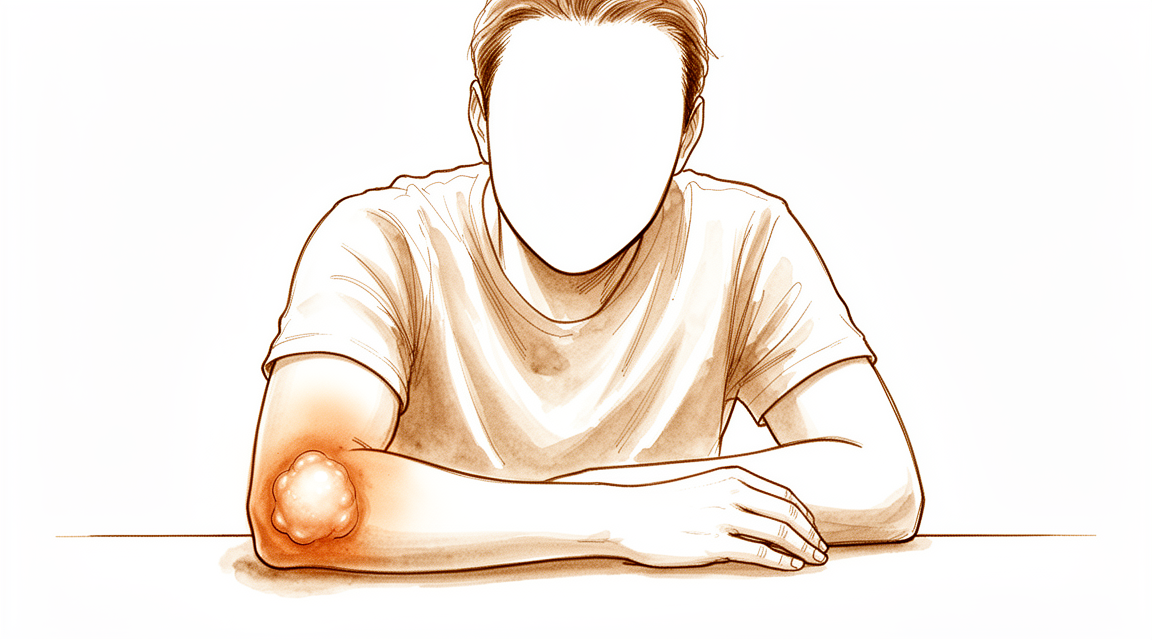
Overview

Olecranon bursitis encompasses a spectrum from uncomplicated septic cases to chronic traumatic or nontuberculous mycobacterial infections. Empirical management of uncomplicated septic olecranon bursitis is effective, with no patients requiring bursectomy, and deferring aspiration in these cases is a reasonable treatment option [4, 14]. Conversely, nontuberculous mycobacterial olecranon bursitis should be considered in any patient with a swollen bursa and protracted course, regardless of immune status [1]. While older studies demonstrated resolution of nonseptic olecranon bursitis with injections and surgery, recent literature indicates adverse effects of intrabursal injections and surgery compared with noninvasive management for initial treatment [6].

For recurrent or chronic cases refractory to conservative care, several surgical and interventional modalities are available. Intrabursal doxycycline sclerotherapy may be an effective alternative to surgical bursectomy [2], while hydrothermal ablation at temperatures between 50C and 52C offers a safe option with fewer complications than open bursectomy and comparable efficacy [13]. Surgical options include endoscopic olecranon bursectomy, which has shown no recurrences or wound-healing complications necessitating return to the operating room [3], and endoscopic debridement combined with compression suture for aseptic cases, which provides minimal invasiveness, rapid recovery, and a low recurrence rate [16]. Bursal suture repair is a viable alternative to bursectomy in selected patients with chronic traumatic olecranon bursitis, combining functional and cosmetic benefits [5].

Outcomes vary by patient presentation and technique. The revision rate after bursectomy for olecranon bursitis was 11.5% [7], and in a comparison group, 8 of 11 patients in the traditional aspiration group required bursectomy [4]. Patients with olecranon cords were less satisfied after surgical excision compared to those without cords [20].

Anatomy & Pathophysiology

Osseous and Articular

The elbow joint comprises the humerus, ulna, and radius [32]. Significant portions of the articular surface across all three bones may be overlooked during standard elbow arthroscopy [32]. The anconeus possesses predictable dimensions with limited influence from patient size, ensuring consistent and unobstructed visualization of the distal humerus during procedures like open reduction and internal fixation regardless of patient size [38]. Restoration of a congruent humeroulnar joint remains a guiding principle in the management of olecranon fractures [31]. Boxers are prone to anterior and posterior elbow impingement lesions involving the coronoid and olecranon process, with the lead arm demonstrating greater vulnerability than the non-lead arm [37].

Ligamentous and Soft Tissue

Elbow dislocations without associated fractures involve almost complete disruption of soft tissues [36]. The ulnar collateral ligament (UCL) reconstruction using the docking technique provides valgus stability to the medial elbow comparable to the native ligament at 90 degrees [40]. Similarly, UCL repair augmented with internal bracing provides valgus stability to the medial elbow comparable to the native ligament at 90 degrees [40]. Utilization of anatomic tunnel location in UCL reconstruction yields similar biomechanical properties compared to the traditional method at the time of initial fixation [29]. Snapping triceps syndrome involves dislocating structures that must be examined during passive elbow motion and/or myoelectrical stimulation to achieve excellent surgical results [26]. Biomechanics of the throwing motion contribute to elbow injuries common to throwers other than injuries to the ulnar collateral ligament [25].

Heterotopic Ossification and Morphology

Heterotopic ossification can occur around the elbow [39]. Early excision of heterotopic ossification around the elbow results in better restoration of elbow range of motion compared to delayed excision [39]. There are no significant differences in recurrence rates between early and delayed excision of heterotopic ossification around the elbow [39]. The central tension plate with sharp hook contours to the anatomic morphology of the proximal ulna well [34].

Classification

Infectious Etiologies: Nontuberculous mycobacterial olecranon bursitis should be considered in any patient with a swollen bursa and protracted course, regardless of immune status [1]. Recurrent bursitis of the olecranon should suggest a more unusual etiology, such as a mycobacterial infection [8]. Excision has been curative for all lesions of the olecranon bursa in cases of protothecal infection [9]. Pyoderma gangrenosum must be considered in the differential diagnosis whenever a patient presents with ulcerative cutaneous lesions that resemble an infectious process such as olecranon bursitis [17].

Diagnostic Differentiation: Distinguishing between septic and aseptic olecranon bursitis can be difficult because the physical and laboratory data overlap [11].

Other Considerations: The radiographic classification of persistent olecranon physis is useful for treatment decision making in adolescent throwing athletes [12].

Clinical Presentation

The clinical evaluation of olecranon bursitis requires careful differentiation between septic and aseptic etiologies, as physical and laboratory data often overlap [11]. A protracted course in a patient with a swollen bursa should prompt consideration of nontuberculous mycobacterial infection, regardless of the patient's immune status [1]. Similarly, recurrent bursitis suggests a more unusual etiology, such as mycobacterial infection [8].

Inspection must account for ulcerative cutaneous lesions that mimic infectious processes; pyoderma gangenousum is a critical differential diagnosis in this context [17]. While atraumatic spontaneous avascular necrosis (AVN) of the olecranon is rare in adults, it may present at this atypical site accompanied by pain [21].

Regarding surgical outcomes, the revision rate following bursectomy for olecranon bursitis is documented at 11.5% [7].

Investigations

Plain radiography: Radiographic classification of persistent olecranon physis is useful for treatment decision making in adolescent throwing athletes [12]. In the adult, atraumatic spontaneous avascular necrosis (AVN) can rarely be found at the olecranon and may be accompanied by pain [21]. Osteochondromas and bicipitoradial bursitis are known causes of antecubital fossa masses and pain, requiring an initial focus to exclude malignancy [42].

Aspiration: Distinguishing between septic and aseptic olecranon bursitis can be difficult because physical and laboratory data overlap [11]. Nontuberculous mycobacterial olecranon bursitis should be considered in patients with a swollen bursa and protracted course, regardless of immune status [1]. Recurrent olecranon bursitis should suggest unusual etiologies such as mycobacterial infection, prompting the surgeon to obtain appropriate mycobacterial cultures, smears, and acid-fast stains of tissue [8].

Other Considerations: Pyoderma gangrenosum must be considered in the differential diagnosis whenever a patient presents with ulcerative cutaneous lesions that resemble an infectious process such as olecranon bursitis [17]. Patients with olecranon cords were less satisfied after surgical excision compared to those without cords [20].

Treatment

Non-Operative

Empirical management of uncomplicated septic olecranon bursitis is effective, with no patients requiring bursectomy in one series [4]. Deferring aspiration in uncomplicated septic olecranon bursitis is a reasonable treatment option [14]. While older studies demonstrated resolution of nonseptic olecranon bursitis with injections and surgery [6], more recent literature indicates adverse effects of intrabursal injections and surgery compared with noninvasive management for initial treatment of nonseptic olecranon bursitis [6].

Operative

Indications: Surgical excision is indicated whenever recurrence or failure of conservative treatment occurs to completely remove the bursa [24]. Recurrent bursitis of the olecranon should suggest a more unusual etiology, such as a mycobacterial infection, and prompt the surgeon to obtain appropriate mycobacterial cultures, smears, and acid-fast stains of tissue [8]. Nontuberculous mycobacterial olecranon bursitis should be considered in any patient with a swollen bursa and protracted course, regardless of immune status [1].

Surgical Approach / Technique: Intrabursal doxycycline sclerotherapy may be an effective alternative to surgical bursectomy for patients with recurrent olecranon bursitis refractory to conservative management [2]. Hydrothermal ablation at temperatures between 50C and 52C is a safe treatment option for recurrent or chronic olecranon bursitis [13]. Endoscopic debridement combined with compression suture for the treatment of aseptic olecranon bursitis is minimally invasive, has a simple operation profile, results in minimal postoperative pain, allows for rapid recovery, has a low recurrence rate, and demonstrates satisfactory overall efficacy [16]. Bursal suture repair is a viable alternative to bursectomy in selected patients with chronic traumatic olecranon bursitis [5]. Excision has been curative for all lesions of the olecranon bursa in protothecal olecranon bursitis [9].

Outcomes and Complications: Patients who underwent endoscopic olecranon bursectomy for recalcitrant olecranon bursitis experienced no recurrences or wound-healing complications necessitating return to the operating room [3]. In a comparison group, 8 of 11 patients in the traditional aspiration group required bursectomy for uncomplicated septic olecranon bursitis [4]. The revision rate after bursectomy for olecranon bursitis was 11.5% [7]. Hydrothermal ablation for recurrent or chronic olecranon bursitis has fewer complications than open bursectomy [13]. Hydrothermal ablation for recurrent or chronic olecranon bursitis has comparable efficacy to open bursectomy [13]. Surgical excision for recurrent or failed conservative treatment of bursitis leads to good clinical and functional outcomes [24]. Short- to mid-term patient and examiner-determined outcomes after olecranon traction spur resection were acceptable [15].

Other Considerations: Bursal suture repair combines functional and cosmetic benefits compared to bursectomy in selected patients with chronic traumatic olecranon bursitis [5]. Multiple medications have been tried for cutaneous and systemic protothecal infections without clear-cut success [9].

Complications

Infection (PJI): Distinguishing between septic and aseptic olecranon bursitis can be difficult because physical and laboratory data overlap [11]. Nontuberculous mycobacterial olecranon bursitis should be considered in patients with a swollen bursa and protracted course regardless of immune status [1]. Recurrent bursitis of the olecranon should suggest a more unusual etiology such as mycobacterial infection, prompting the surgeon to obtain appropriate mycobacterial cultures, smears, and acid-fast stains of tissue [8]. Protothecal olecranon bursitis lesions have been curative with excision, whereas multiple medications have been tried for cutaneous and systemic infections without clear-cut success [9]. Empirical management of uncomplicated septic olecranon bursitis was found to be effective with no patients requiring bursectomy [4].

Wound complications: The revision rate after bursectomy for olecranon bursitis was 11.5% [7]. Patients who underwent endoscopic olecranon bursectomy experienced no recurrences or wound-healing complications necessitating return to the operating room [3]. Hydrothermal ablation at temperatures between 50C and 52C is a safe treatment option for recurrent or chronic olecranon bursitis with fewer complications than open bursectomy [13]. Older studies showed resolution of nonseptic olecranon bursitis with injections and surgery, but more recent literature demonstrates adverse effects of intrabursal injections and surgery compared with noninvasive management for initial treatment [6]. In a comparison group, 8 of 11 patients in the traditional aspiration group required bursectomy [4].

Other Considerations: Short- to mid-term patient and examiner-determined outcomes after olecranon traction spur resection were acceptable [15]. Atraumatic spontaneous avascular necrosis in the adult can rarely be found at atypical sites such as the olecranon and may be accompanied by pain [21].

Recovery

Light activity (weeks): Patients with uncomplicated septic olecranon bursitis managed empirically typically require no surgical intervention, allowing for immediate return to desk work and driving [4]. For those undergoing endoscopic bursectomy, the absence of wound-healing complications necessitating return to the operating room supports early mobilization [3].

Full activity (months): Short- to mid-term outcomes following olecranon traction spur resection are acceptable, permitting a gradual return to manual labor and sport [15]. Patients with olecranon cords demonstrate lower satisfaction scores post-excision compared to those without cords, which may influence the timeline for full functional return [20].

Complete recovery / outcome plateau (months): The revision rate after bursectomy for olecranon bursitis is 11.5%, indicating that final functional stability may be delayed in a subset of patients requiring re-intervention [7]. Older literature reported resolution with injections and surgery, though recent evidence highlights adverse effects of these invasive methods compared to noninvasive management for initial treatment [6].

Rehabilitation protocol: Intrabursal doxycycline sclerotherapy serves as an effective alternative to surgical bursectomy for recurrent cases refractory to conservative management, potentially altering the standard post-operative rehabilitation trajectory [2]. Hydrothermal ablation at temperatures between 50°C and 52°C offers a safe treatment option for recurrent or chronic bursitis with fewer complications than open bursectomy and comparable efficacy [13]. Bursal suture repair is a viable alternative to bursectomy in selected patients with chronic traumatic olecranon bursitis, combining functional and cosmetic benefits [5].

Functional milestones: Excision has been curative for all lesions of the olecranon bursa in protothecal infections, representing a definitive functional outcome for this specific etiology [9].

Other Considerations: Nontuberculous mycobacterial olecranon bursitis should be considered in patients with a swollen bursa and protracted course, regardless of immune status [1]. Recurrent bursitis of the olecranon should suggest a more unusual etiology, such as a mycobacterial infection, and prompt the surgeon to obtain appropriate mycobacterial cultures, smears, and acid-fast stains of tissue [8]. In a comparison group, 8 of 11 patients in the traditional aspiration group required bursectomy, whereas empirical management of uncomplicated septic olecranon bursitis was found to be effective with no patients requiring bursectomy [4].

Key Evidence

  • [L4] Nontuberculous mycobacterial olecranon bursitis should be considered in any patient with a swollen bursa and protracted course, regardless of immune status. (10.1016/j.jse.2008.07.009)
  • [L4] This may be an effective alternative to surgical bursectomy for patients with recurrent olecranon bursitis refractory to conservative management. (10.1016/j.jhsg.2024.03.006)
  • [L4] In this population, patients who underwent endoscopic olecranon bursectomy experienced no recurrences or wound-healing complications necessitating return to the operating room. (10.1016/j.asmr.2023.100832)
  • [L4] Empirical management of uncomplicated septic olecranon bursitis was found to be effective with no patients requiring bursectomy, whereas 8 of 11 patients in the traditional aspiration group required bursectomy. (10.1016/j.jhsa.2019.06.012)
  • [L5] Bursal suture repair is a viable alternative to bursectomy in selected patients with chronic traumatic olecranon bursitis, combining functional and cosmetic benefits. (10.1016/j.xrrt.2025.100597)
  • [L5] Older studies showed resolution with injections and surgery, but more recent literature demonstrates adverse effects of intrabursal injections and surgery compared with noninvasive management for initial treatment of nonseptic olecranon bursitis. (10.1016/j.jhsa.2021.02.006)
  • [L3] The revision rate after bursectomy for olecranon bursitis was 11.5%. (10.1016/j.jse.2020.09.033)
  • [Case_report] Recurrent bursitis of the olecranon should suggest a more unusual etiology, such as a mycobacterial infection, and prompt the surgeon to obtain appropriate mycobacterial cultures, smears, and acid-fast stains of tissue. (10.2106/00004623-198567070-00021)
  • [Case_report] Excision has been curative for all lesions of the olecranon bursa, whereas multiple medications have been tried for cutaneous and systemic infections without clear-cut success. (10.2106/00004623-198062050-00024)
  • [L5] Distinguishing between septic and aseptic olecranon bursitis can be difficult because the physical and laboratory data overlap. (10.1016/j.jse.2015.08.032)
  • [L3] The radiographic classification of persistent olecranon physis is useful for treatment decision making. (10.1177/0363546509342677)
  • [L4] Hydrothermal ablation at temperatures between 50C and 52C is a safe treatment option for recurrent or chronic olecranon bursitis with fewer complications than open bursectomy and a comparable efficacy. (10.1016/j.jse.2024.03.021)
  • [L4] Deferring aspiration in uncomplicated septic olecranon bursitis is a reasonable treatment option. (10.1016/j.jhsa.2018.06.059)
  • [L4] Short- to mid-term patient and examiner-determined outcomes after olecranon traction spur resection were acceptable. (10.1177/2325967114542775)
  • [L4] Endoscopic debridement combined with compression suture for the treatment of aseptic olecranon bursitis has several advantages: simple operation, minimal invasiveness, minimal postoperative pain, rapid recovery, a low recurrence rate, and satisfactory overall efficacy. (10.1186/s13018-024-05090-3)
  • [Case_report] PG must be considered in the differential diagnosis whenever a patient presents with ulcerative cutaneous lesions that resemble an infectious process such as olecranon bursitis. (10.1016/j.jse.2014.06.032)
  • [L4] Patients with olecranon cords were less satisfied after surgical excision compared to those without cords. (10.1016/j.jse.2015.04.016)
  • [L4] Atraumatic spontaneous AVN in the adult can rarely be found at atypical sites such as the olecranon, and may be accompanied by pain. (10.1016/j.jse.2017.02.022)
  • [L4] Whenever recurrence or failure of conservative treatment occurs, surgical excision may be indicated to completely remove the bursa, leading to good clinical and functional outcomes. (10.1016/j.jse.2010.09.002)
  • [L5] The purpose of the present review article is to describe the biomechanics of the throwing motion and the diagnosis and treatment of elbow injuries common to a thrower other than injuries to the ulnar collateral ligament. (10.2106/jbjs.rvw.n.00011)
  • [L4] In patients treated with surgery, it is crucial to make sure full resolution of the snapping by examining all dislocating structures during passive elbow motion and/or myoelectrical stimulation to achieve excellent results. (10.1016/j.xrrt.2025.08.017)
  • [L5] These results suggest that utilization of the anatomic tunnel location in UCL reconstruction has similar biomechanical properties compared to the traditional method at the time of initial fixation. (10.1177/2325967121s00550)
  • [L5] The guiding principle is to restore a congruent humeroulnar joint and allow restoration of upper extremity function. (10.1016/j.jhsa.2014.05.014)
  • [L5] There are significant areas of the articular surface of all three bones in the elbow joint which may be overlooked during standard elbow arthroscopy. (10.1016/j.arthro.2015.04.048)
  • [L4] The central tension plate with sharp hook contours to the anatomic morphology of the proximal ulna well. (10.1186/1471-2474-14-308)
  • [Case_report] Elbow dislocations without associated fractures are adequately treated by closed reduction, in spite of almost complete disruption of soft tissues. (10.1186/1471-2474-3-1)
  • [L4] Boxers are prone to development of anterior and posterior elbow impingement lesions, with the lead arm being more vulnerable. (10.1016/j.jse.2016.09.035)
  • [L5] Its predictable dimensions ensure a consistent and unobstructed visualization of the distal humerus during procedures like open reduction and internal fixation, regardless of patient size. (10.1016/j.xrrt.2025.04.014)
  • [L4] Patients who underwent early excision had better restoration of elbow ROM compared to delayed excision, with no significant differences in recurrence rates between the two groups. (10.3390/life13122358)
  • [L5] UCL reconstruction with docking technique and repair augmented with internal bracing provides valgus stability to the medial elbow comparable to the native ligament at 90 degrees. (10.1177/0363546518803771)
  • [L4] Osteochondromas and bicipitoradial bursitis are known causes of antecubital fossa masses and pain; the initial focus when approaching such masses is to exclude malignancy. (10.1155/2015/560372)

References

[1] Nontuberculous mycobacterial olecranon bursitis: Case reports and literature review. Journal of Shoulder and Elbow Surgery. 2009. DOI: 10.1016/j.jse.2008.07.009

[2] Intrabursal Doxycycline Sclerotherapy for Recurrent Olecranon Bursitis of the Elbow: A Case Control Study. Journal of Hand Surgery Global Online. 2024. DOI: 10.1016/j.jhsg.2024.03.006

[3] No Wound Healing Complications or Recurrences Were Seen and a High Level of Satisfaction Was Reported in Patients Who Underwent Endoscopic Olecranon Bursectomy for Recalcitrant Olecranon Bursitis. Arthroscopy, Sports Medicine, and Rehabilitation. 2024. DOI: 10.1016/j.asmr.2023.100832

[4] Empirical Treatment of Uncomplicated Septic Olecranon Bursitis Without Aspiration. The Journal of Hand Surgery. 2020. DOI: 10.1016/j.jhsa.2019.06.012

[5] Olecranon bursal repair for chronic traumatic bursitis: a surgical technique. JSES Reviews, Reports, and Techniques. 2026. DOI: 10.1016/j.xrrt.2025.100597

[6] Clinical Management of Olecranon Bursitis: A Review. The Journal of Hand Surgery. 2021. DOI: 10.1016/j.jhsa.2021.02.006

[7] Factors associated with revision surgery for olecranon bursitis after bursectomy. Journal of Shoulder and Elbow Surgery. 2021. DOI: 10.1016/j.jse.2020.09.033

[8] Tuberculous arthritis of the elbow presenting as chronic bursitis of the olecranon. A case report.. The Journal of Bone & Joint Surgery. 1985. DOI: 10.2106/00004623-198567070-00021

[9] Protothecal olecranon bursitis. A case report and review of the literature.. The Journal of Bone & Joint Surgery. 1980. DOI: 10.2106/00004623-198062050-00024

[11] Olecranon bursitis. Journal of Shoulder and Elbow Surgery. 2016. DOI: 10.1016/j.jse.2015.08.032

[12] The Value of Using Radiographic Criteria for the Treatment of Persistent Symptomatic Olecranon Physis in Adolescent Throwing Athletes. The American Journal of Sports Medicine. 2009. DOI: 10.1177/0363546509342677

[13] Hydrothermal ablation in recurrent or chronic olecranon bursitis: a prospective study. Journal of Shoulder and Elbow Surgery. 2024. DOI: 10.1016/j.jse.2024.03.021

[14] Empiric Treatment of Uncomplicated Septic Olecranon Bursitis Without Aspiration. The Journal of Hand Surgery. 2018. DOI: 10.1016/j.jhsa.2018.06.059

[15] Surgical Management of Symptomatic Olecranon Traction Spurs. Orthopaedic Journal of Sports Medicine. 2014. DOI: 10.1177/2325967114542775

[16] Clinical efficacy of endoscopic debridement combined with compression suture in the treatment of recalcitrant aseptic olecranon bursitis. Journal of Orthopaedic Surgery and Research. 2024. DOI: 10.1186/s13018-024-05090-3

[17] Case report: misdiagnosed olecranon bursitis: pyoderma gangrenosum. Journal of Shoulder and Elbow Surgery. 2014. DOI: 10.1016/j.jse.2014.06.032

[20] The existence of cords in olecranon bursae. Journal of Shoulder and Elbow Surgery. 2015. DOI: 10.1016/j.jse.2015.04.016

[21] Isolated avascular necrosis of the olecranon. Journal of Shoulder and Elbow Surgery. 2017. DOI: 10.1016/j.jse.2017.02.022

[24] Symptomatic bicipitoradial bursitis: a report of two cases and review of the literature. Journal of Shoulder and Elbow Surgery. 2011. DOI: 10.1016/j.jse.2010.09.002

[25] Elbow Injuries in the Throwing Athlete. JBJS Reviews. 2014. DOI: 10.2106/jbjs.rvw.n.00011

[26] Snapping triceps syndrome: a review of the literature and proposed operative treatment algorithm. JSES Reviews, Reports, and Techniques. 2026. DOI: 10.1016/j.xrrt.2025.08.017

[29] Paper 12: Biomechanical Comparison of Anatomic Restoration of the Ulnar Footprint Versus Traditional Ulnar Tunnels in Ulnar Collateral Ligament Reconstruction. Orthopaedic Journal of Sports Medicine. 2022. DOI: 10.1177/2325967121s00550

[31] Surgical Techniques of Olecranon Fractures. The Journal of Hand Surgery. 2014. DOI: 10.1016/j.jhsa.2014.05.014

[32] Quantification of The Articular View of The Elbow Afforded by Standard Arthroscopy Portals. Arthroscopy. 2015. DOI: 10.1016/j.arthro.2015.04.048

[34] The application of central tension plate with sharp hook in the treatment of intra-articular olecranon fracture. BMC Musculoskeletal Disorders. 2013. DOI: 10.1186/1471-2474-14-308

[36] Open antero-lateral dislocation of the elbow. A case report. BMC Musculoskeletal Disorders. 2002. DOI: 10.1186/1471-2474-3-1

[37] Boxer's elbow: internal impingement of the coronoid and olecranon process. A report of seven cases. Journal of Shoulder and Elbow Surgery. 2017. DOI: 10.1016/j.jse.2016.09.035

[38] Predictable anconeus dimensions with limited influence from patient size: implications for surgical planning and applications. JSES Reviews, Reports, and Techniques. 2025. DOI: 10.1016/j.xrrt.2025.04.014

[39] Heterotopic Ossification around the Elbow Revisited. Life. 2023. DOI: 10.3390/life13122358

[40] Biomechanical Comparison of Ulnar Collateral Ligament Reconstruction With the Docking Technique Versus Repair With Internal Bracing. The American Journal of Sports Medicine. 2018. DOI: 10.1177/0363546518803771

[42] Antecubital Fossa Solitary Osteochondroma with Associated Bicipitoradial Bursitis. Case Reports in Orthopedics. 2015. DOI: 10.1155/2015/560372

Creative Commons BY-NC 4.0

CC Creative Commons licence
BY Attribution — you must credit the source
NC NonCommercial — not for commercial use

Attribution-NonCommercial 4.0 International


Creative Commons Corporation ("Creative Commons") is not a law firm and does not provide legal services or legal advice. Distribution of Creative Commons public licenses does not create a lawyer-client or other relationship. Creative Commons makes its licenses and related information available on an "as-is" basis. Creative Commons gives no warranties regarding its licenses, any material licensed under their terms and conditions, or any related information. Creative Commons disclaims all liability for damages resulting from their use to the fullest extent possible.

Using Creative Commons Public Licenses

Creative Commons public licenses provide a standard set of terms and conditions that creators and other rights holders may use to share original works of authorship and other material subject to copyright and certain other rights specified in the public license below. The following considerations are for informational purposes only, are not exhaustive, and do not form part of our licenses.

Considerations for licensors: Our public licenses are intended for use by those authorized to give the public permission to use material in ways otherwise restricted by copyright and certain other rights. Our licenses are irrevocable. Licensors should read and understand the terms and conditions of the license they choose before applying it. Licensors should also secure all rights necessary before applying our licenses so that the public can reuse the material as expected. Licensors should clearly mark any material not subject to the license. This includes other CC- licensed material, or material used under an exception or limitation to copyright. More considerations for licensors: wiki.creativecommons.org/Considerations_for_licensors

Considerations for the public: By using one of our public licenses, a licensor grants the public permission to use the licensed material under specified terms and conditions. If the licensor's permission is not necessary for any reason--for example, because of any applicable exception or limitation to copyright--then that use is not regulated by the license. Our licenses grant only permissions under copyright and certain other rights that a licensor has authority to grant. Use of the licensed material may still be restricted for other reasons, including because others have copyright or other rights in the material. A licensor may make special requests, such as asking that all changes be marked or described. Although not required by our licenses, you are encouraged to respect those requests where reasonable. More considerations for the public: wiki.creativecommons.org/Considerations_for_licensees


Creative Commons Attribution-NonCommercial 4.0 International Public License

By exercising the Licensed Rights (defined below), You accept and agree to be bound by the terms and conditions of this Creative Commons Attribution-NonCommercial 4.0 International Public License ("Public License"). To the extent this Public License may be interpreted as a contract, You are granted the Licensed Rights in consideration of Your acceptance of these terms and conditions, and the Licensor grants You such rights in consideration of benefits the Licensor receives from making the Licensed Material available under these terms and conditions.

Section 1 -- Definitions.

a. Adapted Material means material subject to Copyright and Similar Rights that is derived from or based upon the Licensed Material and in which the Licensed Material is translated, altered, arranged, transformed, or otherwise modified in a manner requiring permission under the Copyright and Similar Rights held by the Licensor. For purposes of this Public License, where the Licensed Material is a musical work, performance, or sound recording, Adapted Material is always produced where the Licensed Material is synched in timed relation with a moving image.

b. Adapter's License means the license You apply to Your Copyright and Similar Rights in Your contributions to Adapted Material in accordance with the terms and conditions of this Public License.

c. Copyright and Similar Rights means copyright and/or similar rights closely related to copyright including, without limitation, performance, broadcast, sound recording, and Sui Generis Database Rights, without regard to how the rights are labeled or categorized. For purposes of this Public License, the rights specified in Section 2(b)(1)-(2) are not Copyright and Similar Rights.

d. Effective Technological Measures means those measures that, in the absence of proper authority, may not be circumvented under laws fulfilling obligations under Article 11 of the WIPO Copyright Treaty adopted on December 20, 1996, and/or similar international agreements.

e. Exceptions and Limitations means fair use, fair dealing, and/or any other exception or limitation to Copyright and Similar Rights that applies to Your use of the Licensed Material.

f. Licensed Material means the artistic or literary work, database, or other material to which the Licensor applied this Public License.

g. Licensed Rights means the rights granted to You subject to the terms and conditions of this Public License, which are limited to all Copyright and Similar Rights that apply to Your use of the Licensed Material and that the Licensor has authority to license.

h. Licensor means the individual(s) or entity(ies) granting rights under this Public License.

i. NonCommercial means not primarily intended for or directed towards commercial advantage or monetary compensation. For purposes of this Public License, the exchange of the Licensed Material for other material subject to Copyright and Similar Rights by digital file-sharing or similar means is NonCommercial provided there is no payment of monetary compensation in connection with the exchange.

j. Share means to provide material to the public by any means or process that requires permission under the Licensed Rights, such as reproduction, public display, public performance, distribution, dissemination, communication, or importation, and to make material available to the public including in ways that members of the public may access the material from a place and at a time individually chosen by them.

k. Sui Generis Database Rights means rights other than copyright resulting from Directive 96/9/EC of the European Parliament and of the Council of 11 March 1996 on the legal protection of databases, as amended and/or succeeded, as well as other essentially equivalent rights anywhere in the world.

l. You means the individual or entity exercising the Licensed Rights under this Public License. Your has a corresponding meaning.

Section 2 -- Scope.

a. License grant.

1. Subject to the terms and conditions of this Public License, the Licensor hereby grants You a worldwide, royalty-free, non-sublicensable, non-exclusive, irrevocable license to exercise the Licensed Rights in the Licensed Material to:

a. reproduce and Share the Licensed Material, in whole or in part, for NonCommercial purposes only; and

b. produce, reproduce, and Share Adapted Material for NonCommercial purposes only.

2. Exceptions and Limitations. For the avoidance of doubt, where Exceptions and Limitations apply to Your use, this Public License does not apply, and You do not need to comply with its terms and conditions.

3. Term. The term of this Public License is specified in Section 6(a).

4. Media and formats; technical modifications allowed. The Licensor authorizes You to exercise the Licensed Rights in all media and formats whether now known or hereafter created, and to make technical modifications necessary to do so. The Licensor waives and/or agrees not to assert any right or authority to forbid You from making technical modifications necessary to exercise the Licensed Rights, including technical modifications necessary to circumvent Effective Technological Measures. For purposes of this Public License, simply making modifications authorized by this Section 2(a) (4) never produces Adapted Material.

5. Downstream recipients.

a. Offer from the Licensor -- Licensed Material. Every recipient of the Licensed Material automatically receives an offer from the Licensor to exercise the Licensed Rights under the terms and conditions of this Public License.

b. No downstream restrictions. You may not offer or impose any additional or different terms or conditions on, or apply any Effective Technological Measures to, the Licensed Material if doing so restricts exercise of the Licensed Rights by any recipient of the Licensed Material.

6. No endorsement. Nothing in this Public License constitutes or may be construed as permission to assert or imply that You are, or that Your use of the Licensed Material is, connected with, or sponsored, endorsed, or granted official status by, the Licensor or others designated to receive attribution as provided in Section 3(a)(1)(A)(i).

b. Other rights.

1. Moral rights, such as the right of integrity, are not licensed under this Public License, nor are publicity, privacy, and/or other similar personality rights; however, to the extent possible, the Licensor waives and/or agrees not to assert any such rights held by the Licensor to the limited extent necessary to allow You to exercise the Licensed Rights, but not otherwise.

2. Patent and trademark rights are not licensed under this Public License.

3. To the extent possible, the Licensor waives any right to collect royalties from You for the exercise of the Licensed Rights, whether directly or through a collecting society under any voluntary or waivable statutory or compulsory licensing scheme. In all other cases the Licensor expressly reserves any right to collect such royalties, including when the Licensed Material is used other than for NonCommercial purposes.

Section 3 -- License Conditions.

Your exercise of the Licensed Rights is expressly made subject to the following conditions.

a. Attribution.

1. If You Share the Licensed Material (including in modified form), You must:

a. retain the following if it is supplied by the Licensor with the Licensed Material:

i. identification of the creator(s) of the Licensed Material and any others designated to receive attribution, in any reasonable manner requested by the Licensor (including by pseudonym if designated);

ii. a copyright notice;

iii. a notice that refers to this Public License;

iv. a notice that refers to the disclaimer of warranties;

v. a URI or hyperlink to the Licensed Material to the extent reasonably practicable;

b. indicate if You modified the Licensed Material and retain an indication of any previous modifications; and

c. indicate the Licensed Material is licensed under this Public License, and include the text of, or the URI or hyperlink to, this Public License.

2. You may satisfy the conditions in Section 3(a)(1) in any reasonable manner based on the medium, means, and context in which You Share the Licensed Material. For example, it may be reasonable to satisfy the conditions by providing a URI or hyperlink to a resource that includes the required information.

3. If requested by the Licensor, You must remove any of the information required by Section 3(a)(1)(A) to the extent reasonably practicable.

4. If You Share Adapted Material You produce, the Adapter's License You apply must not prevent recipients of the Adapted Material from complying with this Public License.

Section 4 -- Sui Generis Database Rights.

Where the Licensed Rights include Sui Generis Database Rights that apply to Your use of the Licensed Material:

a. for the avoidance of doubt, Section 2(a)(1) grants You the right to extract, reuse, reproduce, and Share all or a substantial portion of the contents of the database for NonCommercial purposes only;

b. if You include all or a substantial portion of the database contents in a database in which You have Sui Generis Database Rights, then the database in which You have Sui Generis Database Rights (but not its individual contents) is Adapted Material; and

c. You must comply with the conditions in Section 3(a) if You Share all or a substantial portion of the contents of the database.

For the avoidance of doubt, this Section 4 supplements and does not replace Your obligations under this Public License where the Licensed Rights include other Copyright and Similar Rights.

Section 5 -- Disclaimer of Warranties and Limitation of Liability.

a. UNLESS OTHERWISE SEPARATELY UNDERTAKEN BY THE LICENSOR, TO THE EXTENT POSSIBLE, THE LICENSOR OFFERS THE LICENSED MATERIAL AS-IS AND AS-AVAILABLE, AND MAKES NO REPRESENTATIONS OR WARRANTIES OF ANY KIND CONCERNING THE LICENSED MATERIAL, WHETHER EXPRESS, IMPLIED, STATUTORY, OR OTHER. THIS INCLUDES, WITHOUT LIMITATION, WARRANTIES OF TITLE, MERCHANTABILITY, FITNESS FOR A PARTICULAR PURPOSE, NON-INFRINGEMENT, ABSENCE OF LATENT OR OTHER DEFECTS, ACCURACY, OR THE PRESENCE OR ABSENCE OF ERRORS, WHETHER OR NOT KNOWN OR DISCOVERABLE. WHERE DISCLAIMERS OF WARRANTIES ARE NOT ALLOWED IN FULL OR IN PART, THIS DISCLAIMER MAY NOT APPLY TO YOU.

b. TO THE EXTENT POSSIBLE, IN NO EVENT WILL THE LICENSOR BE LIABLE TO YOU ON ANY LEGAL THEORY (INCLUDING, WITHOUT LIMITATION, NEGLIGENCE) OR OTHERWISE FOR ANY DIRECT, SPECIAL, INDIRECT, INCIDENTAL, CONSEQUENTIAL, PUNITIVE, EXEMPLARY, OR OTHER LOSSES, COSTS, EXPENSES, OR DAMAGES ARISING OUT OF THIS PUBLIC LICENSE OR USE OF THE LICENSED MATERIAL, EVEN IF THE LICENSOR HAS BEEN ADVISED OF THE POSSIBILITY OF SUCH LOSSES, COSTS, EXPENSES, OR DAMAGES. WHERE A LIMITATION OF LIABILITY IS NOT ALLOWED IN FULL OR IN PART, THIS LIMITATION MAY NOT APPLY TO YOU.

c. The disclaimer of warranties and limitation of liability provided above shall be interpreted in a manner that, to the extent possible, most closely approximates an absolute disclaimer and waiver of all liability.

Section 6 -- Term and Termination.

a. This Public License applies for the term of the Copyright and Similar Rights licensed here. However, if You fail to comply with this Public License, then Your rights under this Public License terminate automatically.

b. Where Your right to use the Licensed Material has terminated under Section 6(a), it reinstates:

1. automatically as of the date the violation is cured, provided it is cured within 30 days of Your discovery of the violation; or

2. upon express reinstatement by the Licensor.

For the avoidance of doubt, this Section 6(b) does not affect any right the Licensor may have to seek remedies for Your violations of this Public License.

c. For the avoidance of doubt, the Licensor may also offer the Licensed Material under separate terms or conditions or stop distributing the Licensed Material at any time; however, doing so will not terminate this Public License.

d. Sections 1, 5, 6, 7, and 8 survive termination of this Public License.

Section 7 -- Other Terms and Conditions.

a. The Licensor shall not be bound by any additional or different terms or conditions communicated by You unless expressly agreed.

b. Any arrangements, understandings, or agreements regarding the Licensed Material not stated herein are separate from and independent of the terms and conditions of this Public License.

Section 8 -- Interpretation.

a. For the avoidance of doubt, this Public License does not, and shall not be interpreted to, reduce, limit, restrict, or impose conditions on any use of the Licensed Material that could lawfully be made without permission under this Public License.

b. To the extent possible, if any provision of this Public License is deemed unenforceable, it shall be automatically reformed to the minimum extent necessary to make it enforceable. If the provision cannot be reformed, it shall be severed from this Public License without affecting the enforceability of the remaining terms and conditions.

c. No term or condition of this Public License will be waived and no failure to comply consented to unless expressly agreed to by the Licensor.

d. Nothing in this Public License constitutes or may be interpreted as a limitation upon, or waiver of, any privileges and immunities that apply to the Licensor or You, including from the legal processes of any jurisdiction or authority.


Creative Commons is not a party to its public licenses. Notwithstanding, Creative Commons may elect to apply one of its public licenses to material it publishes and in those instances will be considered the “Licensor.” The text of the Creative Commons public licenses is dedicated to the public domain under the CC0 Public Domain Dedication. Except for the limited purpose of indicating that material is shared under a Creative Commons public license or as otherwise permitted by the Creative Commons policies published at creativecommons.org/policies, Creative Commons does not authorize the use of the trademark "Creative Commons" or any other trademark or logo of Creative Commons without its prior written consent including, without limitation, in connection with any unauthorized modifications to any of its public licenses or any other arrangements, understandings, or agreements concerning use of licensed material. For the avoidance of doubt, this paragraph does not form part of the public licenses.

Creative Commons may be contacted at creativecommons.org.