یہ آپریشن کیوں تجویز کیا گیا ہے
ڈاکٹر کیرن ہِرپرا، جو Mater Private Hospital Rockhampton میں بازو اور ہاتھ کے سرجن (upper-limb surgeon) ہیں، علاج کا آغاز ان کم سے کم چیر پھاڑ والے طریقوں سے کرتے ہیں جو آپ کی حالت کے لیے موزوں ہوں۔ مریضوں کو عام طور پر ان کے فیملی ڈاکٹر (GP) ہمارے کلینک کے لیے ریفر کرتے ہیں؛ اگر کسی فزیوتھراپسٹ نے آپ کو ہمیں دکھانے کا مشورہ دیا ہے، تب بھی میڈیکیئر (Medicare) سے رقم کی واپسی (rebate) کا اہل ہونے کے لیے آپ کو اپنے فیملی ڈاکٹر سے ریفرل (referral) لینا ہوگا۔ آپ کی ملاقات پر ہم آپ کی تکلیف کی تفصیل پوچھتے ہیں، آپ کے ہاتھ کا معائنہ کرتے ہیں، اور اگر تشخیص کی تصدیق کے لیے ضرورت ہو تو ایکسرے یا اسکین جیسے تصویری ٹیسٹ (imaging) کا انتظام کرتے ہیں۔
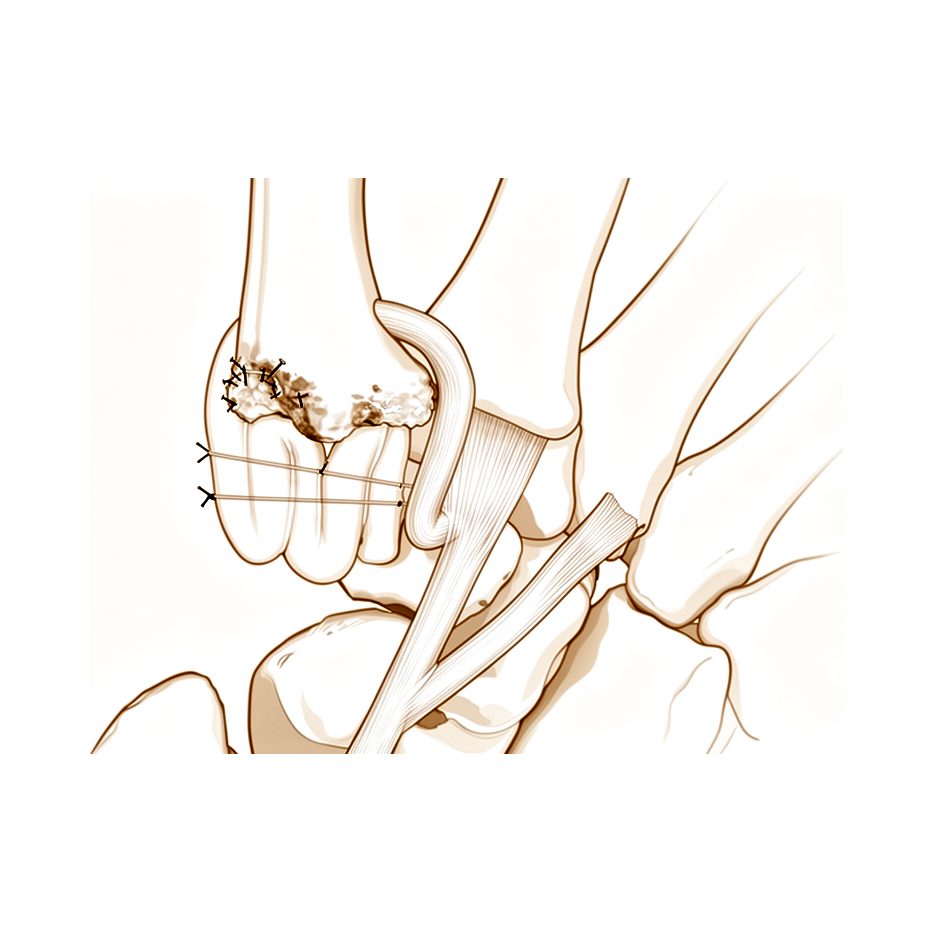
اس آپریشن کو ٹریپیزیکٹومی (trapeziectomy) کہتے ہیں۔ اس کا مطلب ہے انگوٹھے کی جڑ میں موجود ایک چھوٹی ہڈی، ٹریپیزیئم (trapezium)، کو نکال دینا، جہاں جوڑ کے گھسنے والے آرتھرائٹس (wear-and-tear arthritis) نے جوڑ کی سطح کو گھسا دیا ہے۔ ہم عام طور پر پہلے آپریشن کے بغیر علاج آزماتے ہیں، جیسے ہاتھ کے استعمال کا طریقہ بدلنا، ہینڈ تھراپی (ہاتھ کی بحالی کے ماہر کا علاج)، اور اسپلنٹ۔ سرجری کی بات اس وقت آتی ہے جب ان اقدامات سے آپ کو کافی بہتری نہ ملی ہو۔
ہو سکتا ہے ہم نے یہ آپریشن اس لیے تجویز کیا ہو کہ آپ کے انگوٹھے کا درد آپ کے کاموں کو محدود کر رہا ہے، یا اس لیے کہ آپ کے اسکین میں نظر آنے والی جوڑ کی تبدیلیاں آپ کی علامات سے مطابقت رکھتی ہیں۔ گھسی ہوئی ہڈی کو نکالنے سے وہ دردناک سطحیں ختم ہو جاتی ہیں جو آپس میں رگڑ کھاتی ہیں۔ مقصد درد سے دیرپا آرام اور ایسا انگوٹھا ہے جسے آپ روزمرہ کے کاموں میں زیادہ اعتماد سے استعمال کر سکیں۔
آپریشن سے پہلے
آپریشن سے پہلے ہم آپ کو عمل کرنے کے لیے واضح ہدایات دیں گے۔ آپ کو آپریشن سے سات گھنٹے پہلے کھانا پینا بند کرنا ہوگا۔ ہم چھ کے بجائے سات گھنٹے کا کہتے ہیں تاکہ اگر آپریشن کی فہرست وقت سے پہلے چل رہی ہو تو ہم آپ کو پہلے بلا سکیں۔ آپ کے سرجن بتائیں گے کہ آپ اپنی معمول کی دواؤں میں سے کون سی اور کب بند کریں۔ اپنی تمام دواؤں کی لکھی ہوئی فہرست ساتھ لائیں۔ بعد میں آپ کو گاڑی میں گھر لے جانے کے لیے کسی کا انتظام کریں، کیونکہ آپ خود گاڑی نہیں چلا سکیں گے۔ آپریشن کے دن ڈھیلے اور آرام دہ کپڑے پہنیں۔ آپریشن کی منصوبہ بندی کے لیے ہمارے پاس پہلے سے ایکسرے جیسے تصویری ٹیسٹ (imaging) ہوں گے، اور بعض اوقات ایم آر آئی یا الٹراساؤنڈ بھی۔ اگر آپ کو دوسری طبی بیماریاں ہیں تو ہو سکتا ہے آپ کو خون کے ٹیسٹ یا بے ہوشی کے ڈاکٹر (anaesthetist) سے معائنے کی ضرورت ہو۔
آپریشن کے دن
آپریشن کے دن آپ ہسپتال کے سرجری کے داخلے کے شعبے میں آتے ہیں۔ وہاں عملہ آپ کا اندراج کرتا ہے اور آپ کو آپریشن تھیٹر کے لیے تیار کرتا ہے۔ پھر آپ کی ملاقات بے ہوشی کے ڈاکٹر سے ہوگی، یعنی وہ ڈاکٹر جو سرجری کے دوران آپ کی بے ہوشی اور درد میں آرام کی ذمہ داری سنبھالتے ہیں۔ اس کے بعد آپ کو آپریشن تھیٹر میں لے جایا جاتا ہے، جہاں آپریشن کیا جاتا ہے۔
یہ آپریشن جنرل اینستھیزیا (مکمل بے ہوشی) میں کیا جاتا ہے۔ آپریشن کے دوران آپ مکمل طور پر بے ہوش ہوں گے۔ کچھ مریضوں کو آپریشن کے بعد درد میں آرام کے لیے اعصابی بلاک (nerve block)، یعنی ایک انجکشن جو جسم کے ایک حصے کو سُن کر دیتا ہے، بھی لگایا جا سکتا ہے؛ بے ہوشی کے ڈاکٹر آپ کے انفرادی حالات کی بنیاد پر اسی دن اس کا فیصلہ کرتے ہیں۔
آپریشن ختم ہونے کے بعد آپ ریکوری روم میں جاگتے ہیں۔ بے ہوشی کی دوا کا اثر ختم ہونے تک نرسیں آپ کے ساتھ رہتی ہیں اور آپ پر نظر رکھتی ہیں۔ جب آپ کی حالت مستحکم ہو جائے تو، طریقۂ علاج اور آپ کی صحت یابی کیسی چل رہی ہے اس کے مطابق، آپ یا تو وارڈ میں منتقل ہوتے ہیں یا گھر چلے جاتے ہیں۔
آپریشن میں کیا کیا جاتا ہے
ٹریپیزیکٹومی ایک کھلا آپریشن (open operation) ہے جو آپ کے انگوٹھے کی جڑ میں، آپریشن والی جگہ پر ایک ہی چیرے کے ذریعے کیا جاتا ہے۔ اس چیرے کے ذریعے آپ کے سرجن ٹریپیزیئم نکال دیتے ہیں، یعنی وہ چھوٹی گھسی ہوئی ہڈی جو آپ کے انگوٹھے اور کلائی کے درمیان ہوتی ہے۔ ہڈی کو نکالنے سے وہ کھردری، دردناک سطحیں ختم ہو جاتی ہیں جو آپس میں رگڑ کھا رہی تھیں۔
ہڈی نکالے جانے کے بعد اس کی خالی جگہ وقت کے ساتھ آپ کے اپنے زخم بھرنے سے بننے والے سخت ریشے (scar tissue) سے بھر جاتی ہے، اور انگوٹھا گھسے ہوئے جوڑ کے بجائے ایک گدی پر ٹک جاتا ہے۔ آپ کے سرجن کوئی مصنوعی جوڑ یا امپلانٹ (جسم میں لگایا گیا مصنوعی پرزہ) نہیں لگاتے۔ زخم کو ٹانکوں سے بند کیا جاتا ہے، اور اس کے اوپر زخم کی پٹی لگا دی جاتی ہے۔
آپریشن بذاتِ خود سیدھا سادہ ہے، اور یہ ڈے سرجری (day surgery) کے طور پر کیا جاتا ہے، اس لیے آپ اسی دن گھر چلے جاتے ہیں۔
آپریشن کے بعد
اس آپریشن کے بعد آپ اسی دن گھر جا سکتے ہیں یا ایک رات ہسپتال میں رہ سکتے ہیں۔ دونوں صورتیں عام ہیں، اور آپ کی ٹیم آپ سے بات کرے گی کہ آپ کے لیے کون سی مناسب ہے۔ آپ کے ہاتھ پر اسپلنٹ ہوگا اور زخم پر پٹیاں ہوں گی، اور پہلے ایک دو دن میں سلنگ (sling)، یعنی گلے سے لٹکی وہ پٹی جو بازو کو سہارا دیتی ہے، آپ کے بازو کو آرام سے ٹکائے رکھنے میں مدد کر سکتی ہے۔ نرسیں آپ کو دکھائیں گی کہ پٹیوں کا خیال کیسے رکھنا ہے اور سوجن کم کرنے کے لیے اپنا ہاتھ اونچا کیسے رکھنا ہے۔ ہم زخم کی پٹی تقریباً 10 دن تک لگی رہنے دیتے ہیں؛ براہ کرم اس سے پہلے اسے نہ اتاریں، جب تک ہم آپ کو ایسا کرنے کو نہ کہیں۔ جب ہم آپ سے ملتے ہیں تو اسے بدل دیتے ہیں یا اتار دیتے ہیں۔ گھر جانے سے پہلے درد کی دوا کا انتظام کر دیا جائے گا، اور نرسیں سمجھائیں گی کہ اسے کیسے لینا ہے۔ گھر پہنچنے کے بعد پہلے 24 گھنٹے کسی کو اپنے ساتھ رہنے کو کہیں۔
صحت یابی
پہلے چند دنوں تک آپ کے ہاتھ میں درد اور سوجن رہے گی، اور زخم والی جگہ میں ٹیس اٹھ سکتی ہے۔ اپنے ہاتھ کو تکیوں پر اونچا رکھنا، آرام کرتے یا سوتے وقت بھی، سوجن کم کرنے میں مدد دیتا ہے۔ درد کی دوا ہدایت کے مطابق لیں، درد بڑھنے کا انتظار نہ کریں۔
زخم بھرنے کے دوران آپ کا انگوٹھا ایک اسپلنٹ میں رہے گا۔ ہینڈ تھراپسٹ (ہاتھ کی بحالی کے ماہر) آپ کو ہلکی ورزشیں سکھائیں گے تاکہ آپ کی انگلیاں حرکت کرتی رہیں اور ان میں اکڑاؤ نہ آئے۔ آپ گھر کے ہلکے روزمرہ کام اپنے دوسرے ہاتھ سے کر سکیں گے، لیکن جب تک آپریشن والے انگوٹھے کی حفاظت کی جا رہی ہو، آپ اس سے گرفت، چٹکی کی گرفت یا وزن اٹھانے کا کام نہیں کریں گے۔ جب تک اسپلنٹ لگا ہو، آپ گاڑی نہیں چلا سکتے، کیونکہ اس کی وجہ سے آپ اسٹیئرنگ کو محفوظ طریقے سے نہیں پکڑ سکتے۔ جب اسپلنٹ اتر جائے اور آپ کے سرجن اجازت دے دیں تو گاڑی چلانا دوبارہ شروع کیا جا سکتا ہے؛ ہمارا صفحہ بازو اور ہاتھ کی سرجری کے بعد گاڑی چلانا دیکھیں۔
جیسے جیسے ہفتے گزرتے ہیں، سوجن کم ہوتی ہے اور حرکت تھوڑی تھوڑی کر کے واپس آتی ہے۔ ہینڈ تھراپی جاری رہتی ہے، اور آپ کے تھراپسٹ بتدریج انگوٹھے کا استعمال بڑھاتے جائیں گے۔ گرفت اور چٹکی کی گرفت کی طاقت آہستہ آہستہ واپس آتی ہے، اور بہت سے لوگ محسوس کرتے ہیں کہ روزمرہ کے کام معمول کے مطابق لگنے کے بعد بھی ان کا انگوٹھا پہلے جتنا مضبوط محسوس نہیں ہوتا۔ پورا فائدہ وقت کے ساتھ سامنے آتا ہے، اور درد اور طاقت میں ایک سال تک بہتری آتے رہنا عام ہے۔
آپ کی صحت یابی کا وقت کسی اور سے مختلف ہو سکتا ہے۔ آپ کے سرجن اور آپ کے ہینڈ تھراپسٹ ہر مرحلے پر آپ کی رہنمائی کریں گے۔
کیا مسائل پیدا ہو سکتے ہیں
زیادہ تر مریض ٹھیک رہتے ہیں، لیکن کبھی کبھار مسائل پیدا ہو سکتے ہیں۔ آپ کے سرجن اور ٹیم کسی بھی مسئلے کو جلد پکڑنے کے لیے آپ کی قریبی نگرانی کرتے ہیں۔
بعض اوقات سرجری کے بعد انگوٹھے کے قریب کے ایک عصب (nerve) میں جلن (irritation) پیدا ہو جاتی ہے۔ یہ ہاتھ یا انگوٹھے کی پشت پر جھنجھناہٹ، جلن کے احساس یا سُن پن کی طرح محسوس ہو سکتا ہے۔ اگر ایسا ہو تو یہ عام طور پر ایک سال کے اندر مکمل طور پر ٹھیک ہو جاتا ہے۔ اپنے اگلے معائنے پر اس کا ذکر کریں تاکہ ہم اس پر نظر رکھ سکیں۔
ہڈیوں کو اپنی جگہ پر رکھنے کے لیے بعض اوقات لگائے جانے والے تار مسائل پیدا کر سکتے ہیں۔ تار کے ارد گرد کی جلد میں درد یا جلن ہو سکتی ہے، یا تار ڈھیلا ہو کر اپنی جگہ سے سرک سکتا ہے۔ جو تار سرک جائے اسے عام طور پر جلدی نکالنا پڑتا ہے، اور یہ نہیں دیکھا گیا کہ اس سے حتمی نتیجے کو کوئی نقصان پہنچتا ہو۔ اگر تار والی جگہ میں درد ہونے لگے یا اس کے ارد گرد کی جلد میں سوزش نظر آئے تو معائنے کی ملاقات پر ہمیں بتائیں۔
انفیکشن عام نہیں، لیکن کسی بھی زخم میں ہو سکتا ہے۔ ان علامات پر نظر رکھیں: زخم سے باہر کی طرف پھیلتی ہوئی سرخی، اس سے رطوبت یا پیپ کا رسنا، یا بخار۔ اگر آپ کو ان میں سے کوئی بھی علامت نظر آئے تو اسی دن کلینک کو فون کریں۔ اگر درد کی دواؤں کے باوجود آپ کا درد بڑھتا ہی جا رہا ہو تو اس کے لیے بھی اسی دن کلینک کو فون کرنا ضروری ہے۔
بہت ہی کم صورتوں میں انگوٹھے کو خون کی فراہمی متاثر ہو سکتی ہے۔ اگر آپ کا انگوٹھا، انگلیاں یا ہاتھ سفید پڑ جائیں، ٹھنڈے ہو جائیں، یا ان کا رنگ بالکل سفید، نیلا یا گہرا ہو جائے، تو ہسپتال کی ایمرجنسی جائیں۔
اگر ہڈی والی خالی جگہ کو بھرنے کے لیے ٹینڈن (tendon)، یعنی وہ مضبوط ڈوری جو پٹھے کو ہڈی سے جوڑتی ہے، سے بنی گدی استعمال کی جائے، تو وہ کبھی کبھار جلد کے نیچے ابھر سکتی ہے۔ ہو سکتا ہے آپ کو انگوٹھے کے قریب ایک نرم گانٹھ، یا ایسی جگہ محسوس ہو جس میں سوزش ہو اور چھونے پر درد ہو۔ اس کا علاج عام طور پر اسے نکالنے کے ایک چھوٹے آپریشن سے کیا جا سکتا ہے، جس سے درد میں آرام آ جاتا ہے۔
کچھ زیادہ نایاب مسائل اس آپریشن کی زیادہ پیچیدہ شکلوں سے جڑے ہیں، جیسے مصنوعی جوڑ کے امپلانٹ۔ ان میں سادہ ٹریپیزیکٹومی کے مقابلے میں زیادہ خطرات ہوتے ہیں، اور یہی ایک وجہ ہے کہ ہم سادہ طریقے کو ترجیح دیتے ہیں۔ اگر پہلے آپریشن کو بعد میں درست کرنے کی ضرورت پڑے تو نتائج پہلی بار کے مقابلے میں کم بھروسے کے قابل ہوتے ہیں۔ فیصلہ کرنے سے پہلے ہم ان میں سے کسی بھی بات پر آپ سے تفصیل سے بات کریں گے۔
اگر آپ تفصیلی اعداد و شمار جاننا چاہتے ہیں تو اس صفحے پر پیچیدگیوں کا جدول عام شرحیں دکھاتا ہے۔
ہمیں کب فون کریں
زیادہ تر مسائل پہلے چند ہفتوں میں ظاہر ہوتے ہیں، اس لیے یہ جاننا مفید ہے کہ کن باتوں پر نظر رکھنی ہے۔ اگر آپ کی پنڈلی میں سوجن یا درد ہو، سانس پھولے یا سینے میں درد ہو تو ہسپتال کی ایمرجنسی جائیں، کیونکہ یہ خون کے لوتھڑے کی علامات ہو سکتی ہیں۔ اگر آپ کا انگوٹھا، انگلیاں یا ہاتھ سفید پڑ جائیں، ٹھنڈے ہو جائیں، یا ان کا رنگ بالکل سفید، نیلا یا گہرا ہو جائے، تو ہسپتال کی ایمرجنسی جائیں۔ اگر آپ کو بخار ہو، زخم کے ارد گرد سرخی پھیل رہی ہو، یا اس سے رطوبت یا پیپ رس رہی ہو تو اسی دن کلینک کو فون کریں۔ اگر درد کی دواؤں کے باوجود آپ کا درد بڑھتا ہی جا رہا ہو تو اسی دن کلینک کو فون کریں۔ اعصابی بلاک کے بعد پہلے 24 گھنٹوں میں سُن پن یا کمزوری متوقع ہے۔ بلاک کا اثر ختم ہونے کے بعد اگر آپ اپنے بازو، ہاتھ یا انگلیوں کو محسوس نہ کر سکیں یا ہلا نہ سکیں تو کلینک کو فون کریں۔ اگر آپ کلینک سے رابطہ نہ کر سکیں تو اپنے قریب ترین ہسپتال کی ایمرجنسی جائیں۔
اس مسئلے کے بارے میں مزید کہاں پڑھیں
یہ صفحہ خود آپریشن کے بارے میں ہے۔ جس بیماری کا یہ علاج کرتا ہے، اور اس بارے میں کہ شواہد کیا دکھاتے ہیں کہ سرجری کب مدد کرتی ہے اور کب نہیں، اس کی تفصیل انگوٹھے کی جڑ کا آرتھرائٹس والے صفحے پر دی گئی ہے۔
Evidence & references
This is the clinical evidence summary written for health professionals. It is technical, and it lists the research this page was built from. You do not need to read it to understand your treatment or to make a decision about it.
Overview
- Outcomes of trapeziectomy with or without ligament reconstruction or tendon interposition were very similar at 1-year follow-up [1].
- The value of adding ligament reconstruction and temporary stabilization with a Kirschner wire to trapeziectomy remains unproven until further larger studies are performed [2].
- Secondary trapeziectomy after revision of trapeziometacarpal implants provides results comparable with primary trapeziectomy [3].
- Partial trapeziectomy does not provide an advantage over total trapeziectomy at 1 year after surgery [4].
- Outcomes of secondary trapeziectomy after failed trapeziometacarpal joint replacement arthroplasty generally do not differ from primary trapeziectomy results [5].
- Simple trapeziectomy may have an advantage over trapeziectomy with ligament reconstruction and tendon interposition, though further study is warranted [6].
- A large improvement in pain and function can be expected after trapeziectomy, although it remains unclear how much of this change is attributable to the surgery itself [7].
- Thumb metacarpal immobilization after trapeziectomy is now routinely employed to address concerns with instability [8].
- Complications can occur after trapeziectomy and suspension arthroplasty despite proper preoperative evaluation, meticulous surgical technique, and vigilant postoperative rehabilitation [9].
- Trapeziectomy with an alternative suspension technique shows good patient-reported outcome measures for primary surgery and poor patient-reported outcome measures after secondary surgery [10].
- Total trapeziectomy is currently the only surgical technique for thumb basal joint arthritis that can lay claim to being a potential life-long procedure due to its long-lasting benefits and lack of need for an implant [11].
- Trapeziectomy combined with a Swanson implant gives better results in the short term if there are no complications of the operation [13].
- Outcomes of trapeziectomy variations including excision, tendon interposition, and ligament reconstruction with tendon interposition were similar after a minimum follow-up of 5 years [14].
- Standard radiographs are appropriate to use at the 1-year follow-up examination to assess and compare the trapezial space after different techniques of trapeziectomy [15].
- Improved clinical outcomes can be achieved by maintaining at least 50% of the preoperative trapezial space after trapeziectomy with ligament reconstruction tendon interposition [16].
- Complete trapezoid excision is not recommended in the context of abductor pollicis longus suspensionplasty [17].
- Simple excision of the trapezium remains an acceptable treatment for osteoarthritis of the trapeziometacarpal joint [18].
- Partial trapezoid excision is preferred over complete excision due to no significant differences in outcomes between the two [20].
- Surgeons should use caution when considering suture button fixation after complete trapeziectomy until more data are available [22].
- Functional outcomes of partial trapeziectomy and pyrocarbon interpositional arthroplasty were not superior to simpler techniques like trapeziectomy with or without ligamentoplasty [37].
- At 1 year, total joint arthroplasty showed no superiority over trapeziectomy regarding the total score of the Michigan Hand Outcomes Questionnaire [39].
- At 1 year, total joint arthroplasty demonstrated a significant advantage over trapeziectomy in strength and range of motion [39].
- Trapeziectomy produces better functional results and overall satisfaction than pyrocarbon arthroplasty [44].
Anatomy & Pathophysiology
Bony Anatomy
- The skeleton of the hand consists of 27 bones, of which 19 are long bones [48].
- The radial ray or first ray is the shortest and is made up of only three bones: a metacarpal and two phalanges [48].
- The trapezium is clearly angled out in front of the carpal plane so that the first metacarpal makes an angle of about 45 degrees with the second metacarpal in the sagittal plane [48].
- The thumb metacarpal is the shortest metacarpal [48].
- The thumb ray continues the external column of the carpus formed by the scaphoid and trapezium [48].
- The thumb metacarpal is independent and articulates with the trapezium [68].
- The epiphyseal plates are located at the proximal ends of the phalanges and the first metacarpal [48].
Joint Mechanics & Biomechanics
- The trapeziometacarpal joint has a saddle shape in opposing planes of the articular surfaces [48].
- The thumb ray is more mobile, shorter, and more proximal than the other rays, allowing it to project in front of the plane of the palm to oppose itself to the other four rays [48].
- The wrist has three axes of movement, permitting the hand to be positioned in any spatial configuration [48].
- The thumb metacarpal base articulates with the distal row of the carpus [48].
- The first ray is endowed with a relative autonomy owing to scapholunate mobility [48].
- The thumb metacarpal makes an angle of about 45 degrees with the second metacarpal in the sagittal plane, explaining the gap between the first ray and the palm [48].
- The thumb metacarpal is the shortest and the index metacarpal is by far the longest [48].
- The thumb ray is clearly separated from the fingers and is implanted proximally [63].
- The thumb has a more proximal and lateral position, allowing movement inward and outward from the palm [63].
- The web space of the thumb is the largest and deepest [63].
- The index metacarpal is the most firmly fixed [68].
- The ring metacarpal has about 10 degrees of mobility in flexion and extension [68].
- The fifth metacarpal has a range of flexion–extension of approximately 20 degrees [68].
- The thumb ray is the most divergent of the longitudinal arches [68].
- The thumb is the master digit of the hand and represents the dominant element which gives value to all the others [68].
- The thumb metacarpal base is fixed to the carpus by the intrinsic interlocking encasement of the bones themselves [68].
Soft Tissue Anatomy
- The abductor pollicis longus has multiple slips that insert at the base of the thumb metacarpal and radially abducts the thumb [47].
- The extensor pollicis brevis inserts on the dorsum of the proximal aspect of the proximal phalanx of the thumb and actively extends the metacarpophalangeal joint of the thumb [47].
- The extensor pollicis longus provides forceful extension of the thumb interphalangeal joint [47].
- The oblique course of the extensor pollicis longus tendon provides a substantial adduction component to its pull [47].
- The flexor pollicis longus inserts into the proximal base of the thumb distal phalanx and is innervated by the anterior interosseous branch of the median nerve [72].
- The flexor pollicis longus flexes both the interphalangeal and metacarpophalangeal joints of the thumb [72].
- The tenosynovial sheath of the flexor pollicis longus is continuous with the radial bursa [72].
- The "princeps pollicis" artery, the terminal branch of the radial artery, crosses the first intermetacarpal space and runs along the ulnar side of the first metacarpal bone [69].
- The princeps pollicis artery emerges onto the subcutaneous palmar tissue at the level of the cutaneous flexion crease of the metacarpophalangeal joint [69].
- The princeps pollicis artery divides into two terminal rami, namely the collateral palmar arteries of the thumb [69].
- The collateral palmar arteries of the thumb run along the digital tunnel symmetrically and are of equal caliber [69].
- An arcade located deep in the flexor tendon joins together the two arteries at the level of the distal metaphysis of the first phalanx [69].
- The dorsal arteries of the thumb stem from the terminal branches of the radial artery at the level of the anatomical snuff-box [69].
- The posterior area of the thumb is vascularized by two arteries which originate from the palmar arteries at the level of the first metacarpal [69].
- The ulnar dorso-collateral artery generally stems from the "princeps pollicis" onto the medial border of the neck of the first metacarpal [69].
- The skin of the radial portion of the palm covers the thenar eminence and is the mobile portion [64].
- The skin of the ulnar and distal portion covers the hypothenar eminence where the skin has poor mobility [64].
- The central triangular part of the palm has fixed and poorly vascularized skin covering almost directly the superficial palmar aponeurosis [64].
- The web spaces are formed from the union of two nonsymmetrical cutaneous surfaces [64].
- The dorsal slope of the web space has a gradual incline and its supple skin is not adherent to the subjacent region [64].
- The palmar surface of the web space is flat and precipitously interrupted, and the skin is densely adherent to the commissural skeleton [64].
- The commissural skeleton is formed by the interdigital palmar (natatory) ligament between the fingers and by the distal transverse ligament at the level of the thumb web [64].
- The distal transverse ligament at the level of the thumb web is by far the deepest and the most mobile [64].
- The superficial palmar fascia lies in a coronal plane beneath the palmar subcutaneous tissue [75].
- There is no central band of fascia for the thumb [75].
- A subdermal fascial layer borders the periphery of the web spaces from roughly the radial thumb sesamoid to the ulnar side of the small finger’s proximal flexion crease [75].
- The distal first web space ligament between thumb and index is in continuity with the natatory ligament that spans the remaining web spaces [75].
- The dorsal skin is thin and lined by a horny layer that is only 0.02 mm thick [74].
- The dorsal skin possesses a normal pilosebaceous system [74].
- The dorsal skin has loose connections with the deeper planes, allowing free gliding and full flexion at the digital joints [74].
- Flexion of the fingers produces a significant lengthening of the dorsal skin [74].
- In the middle finger, the distance between the wrist and the ungual fold shows an average increase of 3 cm as the finger goes from extension to full flexion [74].
- Flexion at the metacarpophalangeal joint alone requires an average skin lengthening of 1.25 cm [74].
- The dorsal and palmar areas of skin are independent because of a system of adhesions that anchors their common boundary to the underlying plane [74].
- In the proximal part of the first phalanx, fixation occurs almost in a straight line in the plane of the commissural crest [74].
- The fixation in the proximal part of the first phalanx takes the form of small fibrils arranged in the shape of a fan that unite the deep aspect of the skin and the digital fascia [74].
- More distally, and especially opposite the middle and distal phalanges, the adhesion band is more tightly packed and lies just posterior to the palmar collateral neurovascular bundle on the lateral side [74].
- These deep attachments stabilize the skin in relation to the skeleton and prevent the integument from sliding freely over the motor system like the finger of a glove [74].
- The necessary skin to cover the thumb distal to the metacarpophalangeal joint is about 9 cm wide and 8 cm long [67].
- Skin loss of thumb and first metacarpal is 13 cm wide and 12 cm long [67].
- The skin cover of both the palmar and dorsal surfaces of the hand is 12 cm by 10 cm [67].
- The skin covering each finger is 7 cm by 10 cm on both the palmar and dorsal aspects [67].
- Skin grafting or flaps for both sides of the hand and digits requires a skin of 20 cm by 20 cm [67].
- Skin grafting or flaps for one aspect of the forearm from wrist to elbow requires skin of 30 cm by 15 cm [67].
- Both aspects of the forearm require skin of 30 cm by 30 cm [67].
- The thumb skin distal to the metacarpophalangeal joint is 9 cm wide and 8 cm long [67].
- The thumb skin distal to thenar crease and dorsal line of index metacarpal is 13 cm wide and 12 cm long [67].
- The skin for palmar side of hand from thenar crease and midradial border to midulnar border, and from volar crease of wrist to proximal digital crease is 12 cm wide and 10 cm long [67].
- The skin for dorsal side of hand, midradial to midulnar border, and volar crease of wrist to dorsal web space is 12 cm wide and 10 cm long [67].
- The skin for entire surface of a single digit is 7 cm wide and 10 cm long [67].
- The skin for both sides of hands and digits is 20 cm wide and 20 cm long [67].
- The skin for volar surface of forearm is 28 cm wide and 15 cm long [67].
- The skin for dorsal surface of forearm is 28 cm wide and 15 cm long [67].
- The skin for entire volar and dorsal surface of forearm is 30 cm wide and 30 cm long [67].
Pathophysiology & Biomechanical Consequences
- The trapezial space ratio decreased significantly from a preoperative mean of 0.40 (range, 0.20–0.56) to a mean of 0.18 (range, 0.08–0.30) after trapeziectomy [34].
- The trapezial space ratio after trapeziectomy with tendon interposition was a mean of 0.16 (range, 0.07–0.30) [34].
- The trapezial space ratio after trapeziectomy with ligament reconstruction was a mean of 0.20 (range, 0.00–0.33) [34].
- There was no significant difference between the 1-year follow-up trapezial space ratios of trapeziectomy alone, with tendon interposition, or with ligament reconstruction [34].
- The placement of a K-wire across the trapezial void is as effective as tendon interposition or ligament reconstruction in creating a trapezial space in the short term [34].
- The trapezial space height did not correlate with thumb strength at 1-year follow-up examination [34].
- Performing a trapeziectomy followed by up to 4 mm of proximal trapezoid resection has a negligible effect upon carpal, specifically lunocapitate and scapholunate, stability [51].
- Trapeziectomy results in proximal migration of the first metacarpal [85].
- Proximal migration of the first metacarpal is mitigated by suture suspensionplasty while maintaining normal motion [85].
- Proximal migration of the thumb metacarpal does not appear to influence the functional outcome [86].
- With axial compressive loading of the arthroplasty, such as in lateral pinch, there is some further proximal migration of the first metacarpal [105].
- The proximal migration of the first metacarpal during axial compressive loading is minimal and does not correlate with functional outcome [105].
- Combining the trapeziectomy with surgeries addressing the MCP-1-joint hyperextension induced a shift of the thumb in pronation-abduction that could impair the key-pinch stability [102].
- The decrease in key pinch force was larger than the relatively small increase in thumb CMC force [87].
- The impact on wrist mobility is moderate [81].
- No intracarpal deformities were seen and there was no sign of graft wear; the length of the thumb ray is preserved [43].
- Important improvements in web space with increased palmar and radial abduction and grip and pinch strength measurements were observed [30].
- The procedure provides excellent pain relief and significant improvement in strength of thumb grip in severe carpometacarpal osteoarthritis [36].
- Excellent results were achieved in 23 thumbs or 92% of cases, with no deterioration of function or stability noted over time and no revisional procedures necessary [54].
- Although there is some reduction in thumb abduction from 3.5 to 13 years after surgery, other gains after surgery are retained and in some instances slightly improved [55].
- The modified procedure improves functional results by increasing active and passive range of movement at the TMCJ, providing joint stability and pain relief comparable to standard techniques, while preserving thumb length and key pinch strength [92].
- This technique also provided an increase in grip strength and key pinch with return of range of motion early in the postoperative period [93].
- LRTI and SSA exhibit equivalent thumb metacarpal subsidence over a greater than 6-month postoperative time frame [94].
- According to our series, this surgical technique relieves pain and provides stability and mobility of the thumb [96].
- Our results compare well with those of most studies in the literature in terms of pain relief, thumb motion, pinch strength, and function [99].
- The use of a tenodesis screw and half of the flexor carpi radialis had minor advantages, such as increasing the grip and key pinch strength without differences relative to the non-operated thumb, and minimal migration of the first metacarpal bone compared with the other technique [101].
- Both TightRope constructs provided improved axial stability after trapeziectomy while not excessively limiting any one motion of the thumb [104].
- This simple surgical reconstruction abducts the first metacarpal bone and improves metacarpophalangeal joint hyperextension [107].
- The position of the bone anchor in the thumb metacarpal base did not affect the range of motion [90].
- The SB's trajectory when passed from the thumb metacarpal to the second metacarpal minimally affects range of motion and resistance to subsidence following trapeziectomy [80].
- The SB's mechanism of action depends more on the proper tensioning of the device than on the trajectory angle or on any special features of the attachment site along the second metacarpal [80].
- The risk of injuring the nerve to the first DI during SB placement is also minimal [80].
- The proximal trajectory was significantly further away from the nerve compared to the distal trajectory, but the distal trajectory was still safely away from the nerve in all specimens (greater than 1 cm) [80].
- The SB suspension technique may serve as an alternative to the traditional K-wire fixation method [80].
- Suture button suspensionplasty may lead to earlier mobilization of the thumb because of the implanted nature of the device [80].
- No soft tissue healing is necessary prior to the onset of range of motion of the thumb, thereby accelerating recovery [80].
- K-wire related complications such as pin track infections may be eliminated [80].
- A potential complication from drilling the second metacarpal is metacarpal fracture if the drill is placed too far dorsally [80].
- With more recent refinement of the technique, a smaller (1.1-mm) guidewire is used to introduce the suture button device and the larger drill is no longer necessary, thereby theoretically decreasing the risk of iatrogenic fracture [80].
- These findings provide biomechanical context for reported index metacarpal fractures following SBS and may inform surgical technique and patient counseling [89].
Classification
- Osteoarthritis of the trapeziometacarpal joint is the fourth commonest condition referred to a hand unit, with an incidence of 34 per 100,000 of population per year [23].
- Approximately one-third of postmenopausal women have arthritis of the thumb carpometacarpal joint, and one-third of these patients experience pain at the base of their thumb [122].
- The treatment for trapeziometacarpal joint osteoarthritis is based on the patient’s symptomatology and expectations in combination with the radiological classification [60].
- Trapezium resection remains the reference standard for surgical treatment in Eaton-Littler stage III or IV thumb trapeziometacarpal osteoarthritis [60].
- The most common cause of pain originating at the base of the thumb in patients older than 50 years is osteoarthritis of the trapeziometacarpal joint [29].
- Isolated osteoarthritis of the scaphotrapeziotrapezoid joint occurs in 2% to 24% of patients with pain at the base of the thumb [29].
- Isolated scaphotrapeziotrapezoid osteoarthritis occurs more frequently combined with trapeziometacarpal joint osteoarthritis [29].
- Stage IV osteoarthritis is treated by trapeziectomy due to the potential occurrence of intra- or postoperative complications such as trapezial fracture and trapezial loosening associated with total joint replacement [26].
Clinical Presentation
- In some patients with pain at the base of the thumb, radiographs reveal isolated osteoarthritis of the scaphotrapeziotrapezoid joint, with an incidence varying between 2% and 24% [29].
- Surgery for trapeziometacarpal joint osteoarthritis is indicated due to the presence of pain, incapacitating working activities or daily life, after failure of conventional conservative methods for at least six months [23].
- Conventional conservative methods include NSAIDs, local infiltrations with corticoids, and temporary immobilisation devices [23].
- Patients with psychological risk factors experience improved pain and function outcomes following trapeziectomy, however their outcomes are significantly worse than patients who do not have psychological risk factors [84].
Investigations
- Standard radiographs are appropriate for assessing and comparing the trapezial space at the 1-year follow-up examination after trapeziectomy [15].
- Maintaining at least 50% of the preoperative trapezial space is associated with improved clinical outcomes after trapeziectomy with ligament reconstruction tendon interposition [16].
- The trapezial gap decreases by a mean of 61% two weeks after surgery [21].
- The trapezium space loses 14% of its height compared with preoperative values following trapeziectomy and intermetacarpal ligament reconstruction with the extensor carpi radialis longus [125].
- The radiographic presence of scaphotrapezoidal arthritis does not correlate with the patient's main symptoms after partial trapeziectomy [117].
- At an average 9-year follow-up, patients who underwent partial trapeziectomy demonstrated stage 1 disease (minimal narrowing) at the scaphotrapezoidal joint on radiographs [35].
- No symptomatic progression of arthritis at the scaphotrapezoidal joint was observed after partial trapeziectomy in patients with no preoperative symptoms of scaphotrapezoidal arthritis [35].
- Degenerative change at the pseudarthrosis site can occur at 6-year follow-up after trapeziectomy [18].
- Impingement between the base of the thumb metacarpal and the remaining trapezoid is a potential source of pain after trapeziectomy and basal joint soft tissue arthroplasty [40].
Treatment
Surgical Techniques and Variations
- Outcomes of trapeziectomy with ligament reconstruction or tendon interposition were very similar to other variations at 1-year follow-up [1].
- The value of ligament reconstruction and temporary stabilization of the pseudarthrosis with a Kirschner wire remains unproven until further larger studies are performed [2].
- Partial trapeziectomy does not provide a proven advantage over total trapeziectomy at 1 year after surgery for Eaton-Littler Grade II to III osteoarthritis [4].
- Simple trapeziectomy is an effective operation for osteoarthrosis at the base of the thumb, and the addition of ligament reconstruction was not shown to confer any additional benefit [82].
- Outcomes of three variations of trapeziectomy (excision, tendon interposition, and ligament reconstruction with tendon interposition) were similar after a minimum follow-up of 5 years [14].
- Trapeziectomy via the anterior approach yields functional results equally good as those via standard approaches [12].
- Outcomes for the anterior approach are equally good or better than with the posterior approach [79].
- Total video-assisted trapeziectomy is described as fulfilling the premises of a simple technique and patient comfort [33].
- Trapeziectomy and ligament reconstruction tendon interposition (LRTI) are effective procedures for patients aged less than 56 years [50].
- Trapeziectomy and LRTI is an effective treatment in significantly reducing pain in 80% of patients over a 12-month follow-up period [42].
- Total trapeziectomy is currently the only surgical technique for thumb basal joint arthritis that can lay claim to being a potential life-long procedure due to the lack of implants and long-lasting benefits [11].
- Abductor pollicis longus tendon interposition arthroplasty provides excellent pain relief and significant improvement in strength of thumb grip in severe carpometacarpal osteoarthritis [36].
- Partial trapeziectomy with capsular interposition arthroplasty results in a stable thumb with pain relief [56].
- Trapeziectomy with an alternative suspension technique shows good patient-reported outcome measures for primary surgery but poor outcomes after secondary surgery [10].
- In view of comparable results between fusion, trapeziectomy, and silastic replacement, excision of the trapezium with or without soft-tissue reconstruction is recommended as the operation of choice in middle-aged to elderly patients [27].
- Arthroscopic hemitrapsiectomy and thermal capsular modification without interposition for Stage III arthritis yields results that last for a minimum of 4 years and are comparable to open techniques involving complete trapeziectomy [19].
- Partial trapeziectomy with costal cartilage autograft preserves the length of the thumb ray with no intracarpal deformities or sign of graft wear [43].
- Partial trapeziectomy and pyrocarbon interpositional arthroplasty functional outcomes were not superior to simpler techniques like trapeziectomy with or without ligamentoplasty [37].
- At 1 year, total joint arthroplasty showed no superiority over trapeziectomy regarding the total score of the Michigan Hand Outcomes Questionnaire, but demonstrated a significant advantage in strength and range of motion [39].
Complications and Revision
- Increased complications have been observed in trapeziectomy with ligament reconstruction and tendon interposition compared with trapeziectomy alone, suggesting an advantage of simple trapeziectomy [6].
- Complications after trapeziectomy and suspension arthroplasty can occur despite proper preoperative evaluation, meticulous surgical technique, and vigilant postoperative rehabilitation [9].
- Management of complications of trapeziectomy is difficult, and results from retrospective series of failed cases are disappointing and disparate [25].
- The removal of a pyrocarbon carpometacarpal implant using subsequent trapeziectomy successfully relieves pain in patients in whom pyrocarbon arthroplasty has failed [28].
- Trapeziectomy with LRTI after TMC joint replacement appears to be an attractive salvage procedure [109].
- Scaphometacarpal arthroplasty is a reliable medium-term solution for revision of the loosening of a trapeziometacarpal prosthesis with trapezial damage and for failed trapeziectomy [31].
- Surgeons should use caution when considering suture button fixation after complete trapeziectomy until more data are available, due to reported index metacarpal fractures [22].
Biomechanics and Radiographic Outcomes
- Maintaining at least 50% of the preoperative trapezial space can achieve improved clinical outcomes after trapeziectomy with LRTI [16].
- Complete trapezoid excision is not recommended when performing abductor pollicis longus suspensionplasty [17].
- There was a significant mean decrease of 61% in the trapezial gap 2 weeks after surgery [21].
- Standard radiographs are appropriate for assessing and comparing the trapezial space at the 1-year follow-up examination [15].
- Biomechanical analysis found several advantages to tie-in trapezium implant arthroplasty compared with LRTI, including reduction in axial and radial displacement and maintenance of the trapezial space [53].
- Total trapeziectomy with external minifixation provides acceptable clinical results, stabilizes the base of the thumb, and prevents scapho-metacarpal impingement [103].
Perioperative Care and Rehabilitation
- A large improvement can be expected after trapeziectomy following orthosis, although it remains unclear how much of this change is attributable to the surgery itself [7].
- Continuous local anaesthetic infusion following trapeziectomy was used as a routine for 3 years on 40 patients for pain relief [83].
- Wide-awake basal joint trapeziectomy can be performed using only locally injected lidocaine and epinephrine without a tourniquet or sedation [61].
- A trapeziectomy rehabilitation protocol involves immobilizing the operated hand for 1 week in a back-slab and instructing patients to keep the hand elevated and regularly move fingers, thumb IPJ, elbow, and shoulder [116].
Complications
General Complications and Outcomes
- Management of complications of trapeziectomy is difficult, and the results of a retrospective series of 10 cases were disappointing and disparate [25].
- The postoperative intervals before pronouncing failure and the frequent need for iterative surgery can leave the patient in a position of perpetual convalescence, the functional benefit of which is not guaranteed [25].
- Clumsiness is a symptom that should be asked about in longer term follow-ups to determine if it is a common complaint specific to simple trapeziectomy [32].
- Women who are forty years or older with trapeziometacarpal osteoarthritis have fewer moderate and severe complications after trapeziectomy with ligament reconstruction and tendon interposition than those who undergo arthrodesis [52].
- Patients who undergo arthrodesis have higher reoperation rates and incidence of postoperative complications than those who undergo ligament reconstruction and tendon interposition [135].
- Although complications were more frequent following arthrodesis, most did not affect the overall outcome [134].
- The risk of complications and requirement for further surgery is greater for total joint arthroplasty compared to trapeziectomy and must be carefully considered during patient selection and preoperative counselling [128].
- The event-free survival rate for trapeziectomy with Gore-Tex ligament reconstruction was 92.5% at 5 years, 91.3% at 10 years, and 74.7% at 15 years [49].
- In a series of 117 trapeziectomy procedures with Gore-Tex ligament reconstruction, 16 events were recorded during follow-up [49].
- Complications that did not require revision in a series of trapeziectomy with Gore-Tex ligament reconstruction included chondrocalcinosis, trapezial dysplasia, and transient dysesthesia [49].
- In a series of partial trapeziectomy and interpositional arthroplasty, there were no post-operative infections, but one patient developed a sensitive scar requiring neurolysis of the sensory branch of the radial nerve [110].
- In a series of arthroscopic partial trapeziectomy with soft tissue interposition, there were no infections [114].
- In a series of arthroscopic partial trapeziectomy with soft tissue interposition, five patients developed transient superficial radial nerve neuritis that resolved over 3 months [114].
- In a series of arthroscopic partial trapeziectomy with soft tissue interposition, one patient developed a 30-degree hyperextension deformity at the MCP joint requiring MCP joint arthrodesis [114].
- In a series of arthroscopic partial trapeziectomy with soft tissue interposition, one patient developed painful instability of the thumb metacarpal base with radial and proximal migration of the thumb metacarpal [114].
- In a series of trapeziectomy with a Weilby sling, Grade 2 and 3 complications are associated with clinically relevant poorer patient-reported outcomes 12 months after surgery [132].
Nerve and Vascular Injuries
- Possible complications of trapeziectomy include injury to the superficial radial nerve or 1 of its branches [59].
- Possible complications of trapeziectomy include injury to the radial artery, which is minimized by a volar approach [59].
- Possible complications of trapeziectomy include injury to the flexor carpi radialis (FCR) tendon during bone removal [59].
- These nerve and vascular complications can be avoided with careful, meticulous dissection [59].
- Potential complications of suture button suspensionplasty include radial artery injury and injury to the FCR tendon during bone removal [106].
- A case report highlights radial artery thrombosis secondary to unrecognized iatrogenic injury during trapeziectomy with ligament reconstruction and tendon interposition [127].
- Thumb and fingertip ischaemia can occur after trapeziectomy [127].
Bony and Structural Complications
- Index metacarpal fracture after suture button suspensionplasty has been reported [106].
- Impingement between the base of the thumb metacarpal and remaining trapezoid should be considered a potential source of pain after trapeziectomy and soft tissue arthroplasty [40].
- Concurrent trapeziectomy with proximal row carpectomy resulted in a significant increase in thumb metacarpal subsidence compared to trapeziectomy alone [62].
- There is a substantial risk of first ray subsidence when performing trapeziectomy and proximal row carpectomy together [62].
- Postoperative subsidence with weakness and recurrence of pain is a potential complication of suture button suspensionplasty [106].
- Due to the potential occurrence of intra- or postoperative complications such as trapezial fracture and trapezial loosening, stage IV osteoarthritis is treated by trapeziectomy [26].
Tendon and Soft Tissue Complications
- High incidence of flexor carpi radialis tendinitis has been reported after trapeziectomy and abductor pollicis longus suspensionplasty for basal joint arthritis [131].
- Patients should be warned about the potential complication of flexor carpi radialis tendinitis after trapeziectomy and abductor pollicis longus suspensionplasty [131].
- Infection is a potential complication of suture button suspensionplasty [106].
- Sensory nerve irritation is a potential complication of suture button suspensionplasty [106].
Recovery
- A postoperative regimen with early mobilization after trapeziectomy is as safe and effective as a postoperative regimen with longer immobilization in patients with first carpometacarpal osteoarthritis [95].
- There was a significant mean decrease (P < 0.001) in the trapezial gap of 61% 2 weeks after surgery [21].
- Improved clinical outcomes can be achieved by maintaining at least 50% of the preoperative trapezial space [16].
- Over a follow-up period of 12 months, trapeziectomy and LRTI is an effective treatment in significantly reducing pain in 80% of patients [42].
- The authors draw attention to clumsiness as a symptom to encourage others to ask patients about it in longer term follow-ups to see whether it is a common complaint and specific to simple trapeziectomy [32].
- In contrast, a large improvement can be expected after trapeziectomy, although it remains unclear how much of this change is attributable to the surgery itself [7].
- The event-free survival rate was 92.5% (95% CI, 86.6–98.4) at 5 years, 91.3% (95% CI, 85–97.6) at 10 years, and 74.7% (95% CI, 62.3–87.1) at 15 years for trapeziectomy with Gore-Tex ligament reconstruction [49].
Key Evidence
- [L1] The outcomes of these 3 variations of trapeziectomy were very similar at 1-year follow-up evaluation. [1] (10.1016/j.jhsa.2004.06.017)
- [L1] Until further larger studies are performed, the value of such additions to trapeziectomy remains unproven. [2] (10.1177/1753193408098483)
- [L3] Secondary trapeziectomy after revision of trapeziometacarpal implants provides results comparable with primary trapeziectomy. [3] (10.1177/17531934211039184)
- [L2] We cannot conclude that partial trapeziectomy provides an advantage over total trapeziectomy at 1 year after surgery. [4] (10.1016/j.jhsg.2020.03.004)
- [L3] The outcomes of secondary trapeziectomy after failed trapeziometacarpal joint replacement arthroplasty generally do not differ from the primary trapeziectomy results. [5] (10.1016/j.jhsa.2013.01.030)
- [L3] These results suggest an advantage of simple trapeziectomy; however, further study is warranted. [6] (10.1177/1558944715617215)
- [L2] In contrast, a large improvement can be expected after trapeziectomy, although it remains unclear how much of this change is attributable to the surgery itself. [7] (10.1016/j.jhsg.2025.100741)
- [L5] They conclude that thumb metacarpal immobilization after trapeziectomy is now routinely employed to address concerns with instability. [8] (10.1177/17531934231217371)
- [L4] Complications after trapeziectomy and suspension arthroplasty can occur despite proper preoperative evaluation, meticulous surgical technique, and vigilant postoperative rehabilitation. [9] (10.1016/j.jhsa.2013.07.018)
- [L4] Trapeziectomy with this alternative suspension technique for treatment of carpometacarpal thumb joint osteoarthritis shows good patient-reported outcome measures for primary surgery and poor patient-reported outcome measures after the secondary surgery. [10] (10.1016/j.jhsg.2022.02.006)
- [Paper] Without the need for an implant and because of its long-lasting benefits, total trapeziectomy is currently the only surgical technique for thumb basal joint arthritis that can lay claim to being a potential life-long procedure. [11] (10.1016/j.hansur.2020.05.015)
- [L4] The functional results of trapeziectomy through the anterior approach are equally good with the results of trapeziectomy through the standard approaches. [12] (10.1097/00130911-200206000-00005)
- [L3] Trapeziectomy combined with Swanson implant gives better results in the short term if there are no complications of the operation. [13] (10.1054/jhsb.1999.0156)
- [L1] The outcomes of these 3 variations of trapeziectomy were similar after a minimum follow-up of 5 years. [14] (10.1016/j.jhsa.2011.11.027)
- [L3] It is thus appropriate to use standard radiographs at the 1-year follow-up examination to assess and compare the trapezial space after these different techniques of trapeziectomy. [15] (10.1053/jhsu.2003.50065)
- [L4] Improved clinical outcomes can be achieved by maintaining at least 50% of the preoperative trapezial space. [16] (10.1016/j.hansur.2021.01.002)
- [L4] Complete trapezoid excision is not recommended. [17] (10.1016/j.jhsa.2019.10.006)
- [L2] Simple excision of the trapezium remains an acceptable treatment for osteoarthritis of the trapeziometacarpal joint. [18] (10.1007/s11999-013-2956-0)
- [L4] These results appear to last for a minimum of 4 years and are comparable to those reported for open techniques involving complete trapeziectomy. [19] (10.1016/j.jhsa.2009.12.022)
- [L4] Due to no significant differences in outcomes between partial and complete excision, the authors now prefer partial trapezoid excision. [20] (10.1016/j.jhsa.2017.06.062)
- [L4] There was a significant mean decrease (P < 0.001) in the trapezial gap of 61% 2 weeks after surgery. [21] (10.1016/j.jhsb.2006.06.004)
- [Case_report] Surgeons should use caution when considering suture button fixation after complete trapeziectomy until more data are available. [22] (10.1016/j.jhsa.2011.12.017)
- [L3] [23] (10.1016/j.main.2009.02.001)
- [L4] [25] (10.1016/j.hansur.2021.03.014)
- [L4] Due to the potential occurrence of intra- or postoperative complications such as trapezial fracture and trapezial loosening, stage IV OA is treated by trapeziectomy. [26] (10.1016/j.hansur.2019.11.012)
- [L3] In view of the comparable results of the three treatments investigated in this study, we recommend excision of the trapezium with or without soft-tissue reconstruction as the operation of choice in middle aged to elderly patients. [27] (10.1016/j.jhsb.2004.08.006)
- [L3] The removal of a pyrocarbon carpometacarpal implant using subsequent trapeziectomy successfully relieves pain in patients in whom pyrocarbon arthroplasty has failed. [28] (10.1016/j.jhsa.2022.01.004)
- [L4] [29] (10.1177/1753193413514500)
- [L4] Important improvements in web space with increased palmar and radial abduction and grip and pinch strength measurements were observed. [30] (10.1053/jhsu.2000.jhsu025a0061)
- [L4] Scaphometacarpal arthroplasty is a reliable medium-term solution for revision of the loosening of a trapeziometacarpal prosthesis with trapezial damage and for failed trapeziectomy. [31] (10.1177/1753193419900470)
- [L4] The authors draw attention to this symptom to encourage others to ask patients about it in longer term follow-ups to see whether it is a common complaint and specific to simple trapeziectomy. [32] (10.1177/1753193414567828)
- [L4] The total video-assisted trapeziectomy fulfills 2 premises: a simple technique and comfort for the patient. [33] (10.1097/bth.0b013e3181f42899)
- [L1] [34] (10.1053/jhsu.2001.27761)
- [L4] [35] (10.1016/j.jhsa.2012.02.007)
- [L4] The procedure provides excellent pain relief and significant improvement in strength of thumb grip in severe carpometacarpal osteoarthritis. [36] (10.1053/jhsu.1999.0469)
- [L4] However, functional outcomes were not superior to simpler techniques like trapeziectomy with or without ligamentoplasty, suggesting a potential role only in select young patients as a time-procuring procedure. [37] (10.1177/1753193420906805)
- [L1] At 1 year, total joint arthroplasty showed no superiority over trapeziectomy regarding the total score of the Michigan Hand Outcomes Questionnaire, but demonstrated a significant advantage in strength and range of motion. [39] (10.1177/17531934231185245)
- [L4] Impingement between the base of the thumb metacarpal and remaining trapezoid should be considered a potential source of pain after trapeziectomy and soft tissue arthroplasty. [40] (10.1016/j.jhsa.2021.02.017)
- [L2] Over a follow-up period of 12 months, trapeziectomy and LRTI is an effective treatment in significantly reducing pain in 80% of patients. [42] (10.1016/j.jhsa.2021.04.036)
- [L4] No intracarpal deformities were seen and there was no sign of graft wear; the length of the thumb ray is preserved. [43] (10.1016/j.main.2012.03.002)
- [L3] Trapeziectomy produces better functional results and overall satisfaction than pyrocarbon arthroplasty. [44] (10.1177/1753193411433176)
- [L4] [49] (10.1016/j.otsr.2022.103366)
- [L4] Trapeziectomy and LRTI are effective procedures for patients aged less than 56 years. [50] (10.1016/j.jhsa.2024.07.024)
- [L5] This biomechanical cadaveric study shows that performing a trapeziectomy followed by up to 4 mm of proximal trapezoid resection has a negligible effect upon carpal, specifically lunocapitate and scapholunate, stability. [51] (10.1016/j.jhsa.2019.06.015)
- [L1] Women who are forty years or older with trapeziometacarpal osteoarthritis have fewer moderate and severe complications after trapeziectomy with ligament reconstruction and tendon interposition and are more likely to consider the surgery again under the same circumstances than are those who undergo arthrodesis. [52] (10.2106/jbjs.l.01344)
- [L5] The study found several biomechanic advantages to the implant compared with LRTI, including reduction in axial and radial displacement and maintenance of the trapezial space. [53] (10.1016/j.jhsa.2007.02.025)
- [L4] Excellent results were achieved in 23 thumbs or 92% of cases, with no deterioration of function or stability noted over time and no revisional procedures necessary. [54] (10.1016/s0363-5023(86)80137-x)
- [L3] Although there is some reduction in thumb abduction from 3.5 to 13 years after surgery, other gains after surgery are retained and in some instances slightly improved. [55] (10.1186/s12891-016-0910-5)
- [L5] The procedure results in a stable thumb with pain relief. [56] (10.1097/bth.0000000000000048)
- [L4] [59] (10.1097/bth.0b013e3181e71728)
- [L4] [60] (10.1177/1753193419843850)
- [L4] The paper presents a video detailing the technique for wide-awake basal joint trapeziectomy using only locally injected lidocaine and epinephrine without a tourniquet or sedation. [61] (10.1007/s11552-011-9367-z)
- [L5] Concurrent trapeziectomy with PRC resulted in a significant increase in thumb metacarpal subsidence compared to trapeziectomy alone, suggesting a substantial risk of first ray subsidence when performing both operations together. [62] (10.1016/j.jhsa.2023.06.013)
- [L1] Trapeziectomy is a good method of treating osteoarthritis of the thumb base, but outcomes for the anterior approach are equally good or better than with the posterior approach. [79] (10.1177/1753193407087571)
- [L5] [80] (10.1007/s11552-012-9473-6)
- [L5] The impact on wrist mobility is moderate. [81] (10.1016/j.main.2015.05.002)
- [L1] Simple trapeziectomy is an effective operation for osteoarthrosis at the base of the thumb and the addition of a ligament reconstruction was not shown to confer any additional benefit. [82] (10.1054/jhsb.2000.0431)
- [L4] The authors used continuous local anaesthetic infusion following trapeziectomy as a routine for 3 years on 40 patients. [83] (10.1016/j.jhsb.2006.04.022)
- [L2] Brief psychological screening shows that patients with psychological risk factors experience improved pain and function outcomes following trapeziectomy, however their outcomes are significantly worse than patients who do not have psychological risk factors. [84] (10.1177/17589983221120839)
- [L5] This biomechanical cadaver study supports the hypothesis that trapeziectomy results in proximal migration of the first metacarpal, which is mitigated by suture suspensionplasty while maintaining normal motion. [85] (10.1016/j.jhsa.2022.05.001)
- [L1] Furthermore, proximal migration of the thumb metacarpal does not appear to influence the functional outcome. [86] (10.2106/jbjs.d.02630)
- [L5] The decrease in key pinch force was larger than the relatively small increase in thumb CMC force. [87] (10.1016/j.jhsa.2022.11.018)
- [L5] These findings provide biomechanical context for reported index metacarpal fractures following SBS and may inform surgical technique and patient counseling. [89] (10.1016/j.jhsa.2026.07.009)
- [L5] The position of the bone anchor in the thumb metacarpal base did not affect the range of motion. [90] (10.1016/j.jhsa.2022.08.001)
- [L4] The modified procedure improves functional results by increasing active and passive range of movement at the TMCJ, providing joint stability and pain relief comparable to standard techniques, while preserving thumb length and key pinch strength. [92] (10.1177/1753193414553368)
- [L4] This technique also provided an increase in grip strength and key pinch with return of range of motion early in the postoperative period. [93] (10.1016/j.jhsa.2015.10.010)
- [L3] LRTI and SSA exhibit equivalent thumb metacarpal subsidence over a greater than 6-month postoperative time frame. [94] (10.1177/15589447221084014)
- [L2] A postoperative regimen with early mobilization after trapeziectomy is as safe and effective as a postoperative regimen with longer immobilization in patients with first carpometacarpal osteoarthritis. [95] (10.1016/j.jhsa.2021.08.015)
- [L4] According to our series, this surgical technique relieves pain and provides stability and mobility of the thumb. [96] (10.1016/j.main.2012.10.170)
- [L4] Our results compare well with those of most studies in the literature in terms of pain relief, thumb motion, pinch strength, and function. [99] (10.1016/j.hansur.2020.11.010)
- [L4] The use of a tenodesis screw and half of the flexor carpi radialis had minor advantages, such as increasing the grip and key pinch strength without differences relative to the non-operated thumb, and minimal migration of the first metacarpal bone compared with the other technique. [101] (10.1016/j.hansur.2021.03.009)
- [L5] Combining the trapeziectomy with surgeries addressing the MCP-1-joint hyperextension induced a shift of the thumb in pronation-abduction that could impair the key-pinch stability. [102] (10.1142/s2424835519500206)
- [L4] Total trapeziectomy with external minifixation provides acceptable clinical results, stabilizes the base of the thumb and prevents scapho-metacarpal impingement. [103] (10.1016/j.main.2013.10.180)
- [L5] Both TightRope constructs provided improved axial stability after trapeziectomy while not excessively limiting any one motion of the thumb. [104] (10.1177/1558944720906551)
- [L4] With axial compressive loading of the arthroplasty, such as in lateral pinch, there is some further proximal migration of the first metacarpal, but this is minimal and does not correlate with functional outcome. [105] (10.1016/s0363-5023(98)80167-6)
- [L4] [106] (10.1016/j.jhsa.2014.09.012)
- [L5] This simple surgical reconstruction abducts the first metacarpal bone and improves metacarpophalangeal joint hyperextension. [107] (10.1097/bth.0000000000000265)
- [L4] Trapeziectomy with LRTI after TMC joint replacement appears to be an attractive salvage procedure. [109] (10.1016/j.hansur.2015.09.002)
- [L4] [110] (10.1016/s0266-7681(05)80140-8)
- [L4] [114] (10.1016/j.jhsa.2017.10.016)
- [L3] [116] (10.1177/1758998317691792)
- [L4] The study cannot demonstrate that the radiographic presence of scaphotrapezoidal arthritis correlates with the patient's main symptoms after partial trapeziectomy. [117] (10.1016/j.jhsg.2020.06.005)
- [L1] [122] (10.1177/1753193420952966)
- [L4] The trapezium space lost 14% of its height compared with preoperative values, and there were no cases of instability. [125] (10.1016/j.jhsa.2006.07.002)
- [L5] This case highlights radial artery thrombosis secondary to unrecognized iatrogenic injury during trapeziectomy with LRTI. [127] (10.1177/17531934231151215)
- [L3] However the risk of complications and requirement for further surgery is greater and must be carefully considered during patient selection and preoperative counselling. [128] (10.1142/s0218810417500526)
- [L4] Patients should be warned about this potential complication. [131] (10.1177/1753193413506150)
- [L4] We recommend describing Grade 1 as 'adverse protocol deviations' and grade 2 and 3 as complications, because of clinically relevant poorer patient-reported outcomes 12 months after surgery. [132] (10.1016/j.jhsa.2023.01.022)
- [L3] Although complications were more frequent following arthrodesis, most did not affect the overall outcome. [134] (10.2106/00004623-200110000-00002)
- [L1] Patients who undergo arthrodesis have higher reoperation rates and incidence of postoperative complications than those who undergo LRTI. [135] (10.1016/j.jhsa.2024.10.018)
References
[1] Excision of the trapezium for osteoarthritis of the trapeziometacarpal joint: A study of the benefit of ligament reconstruction or tendon interposition. The Journal of Hand Surgery. 2004. DOI: 10.1016/j.jhsa.2004.06.017
[2] Trapeziectomy for Trapeziometacarpal Joint Osteoarthritis: Is Ligament Reconstruction and Temporary Stabilisation of the Pseudarthrosis with a Kirschner Wire Important?. Journal of Hand Surgery (European Volume). 2009. DOI: 10.1177/1753193408098483
[3] Outcomes of secondary trapeziectomy after revision of trapeziometacarpal implants: a retrospective comparative matched study. Journal of Hand Surgery (European Volume). 2021. DOI: 10.1177/17531934211039184
[4] Partial Versus Total Trapeziectomy With Interposition Arthroplasty for Trapeziometacarpal Osteoarthritis Grade II to III Eaton-Littler: A Clinical Trial. Journal of Hand Surgery Global Online. 2020. DOI: 10.1016/j.jhsg.2020.03.004
[5] Outcome Comparison of Primary Trapeziectomy Versus Secondary Trapeziectomy Following Failed Total Trapeziometacarpal Joint Replacement. The Journal of Hand Surgery. 2013. DOI: 10.1016/j.jhsa.2013.01.030
[6] Increased Complications in Trapeziectomy With Ligament Reconstruction and Tendon Interposition Compared With Trapeziectomy Alone. HAND. 2016. DOI: 10.1177/1558944715617215
[7] Orthosis Followed by Trapeziectomy for Thumb Base Osteoarthritis: A Cohort Pilot Study on Pain and Function. Journal of Hand Surgery Global Online. 2025. DOI: 10.1016/j.jhsg.2025.100741
[8] Re: Lui H, Galbraith JG, Meyers K, Bindra R, Lee SK. Biomechanical analysis of three techniques of suspensionplasty after trapeziectomy: a cadaveric study. J Hand Surg Eur. 2023, doi:10.1177/17531934231186495. Journal of Hand Surgery (European Volume). 2023. DOI: 10.1177/17531934231217371
[9] Complications of Trapeziectomy With or Without Suspension Arthroplasty. The Journal of Hand Surgery. 2014. DOI: 10.1016/j.jhsa.2013.07.018
[10] Trapeziectomy and Alternative Suspension Technique in Thumb Carpometacarpal Arthritis: Patient-Reported Outcome Measures. Journal of Hand Surgery Global Online. 2022. DOI: 10.1016/j.jhsg.2022.02.006
[11] Total trapeziectomy. Hand Surgery and Rehabilitation. 2021. DOI: 10.1016/j.hansur.2020.05.015
[12] Anterior Approach for Trapeziectomy. Techniques in Hand and Upper Extremity Surgery. 2002. DOI: 10.1097/00130911-200206000-00005
[13] A Patient-Reported Comparison of Trapeziectomy with Swanson Silastic Implant or Sling Ligament Reconstruction. Journal of Hand Surgery. 1999. DOI: 10.1054/jhsb.1999.0156
[14] Five- to 18-Year Follow-Up for Treatment of Trapeziometacarpal Osteoarthritis: A Prospective Comparison of Excision, Tendon Interposition, and Ligament Reconstruction and Tendon Interposition. The Journal of Hand Surgery. 2012. DOI: 10.1016/j.jhsa.2011.11.027
[15] Trapezial space height measurement after trapeziectomy: A comparison of the use of standard and stress radiographs. The Journal of Hand Surgery. 2003. DOI: 10.1053/jhsu.2003.50065
[16] The effect of remaining trapezial space on outcomes after trapeziectomy with ligament reconstruction tendon interposition for trapeziometacarpal osteoarthritis. Hand Surgery and Rehabilitation. 2021. DOI: 10.1016/j.hansur.2021.01.002
[17] Effect of Partial and Complete Trapezoid Excision on Radiographic and Functional Results After Abductor Pollicis Longus Suspensionplasty. The Journal of Hand Surgery. 2020. DOI: 10.1016/j.jhsa.2019.10.006
[18] Degenerative Change at the Pseudarthrosis After Trapeziectomy at 6-year Followup. Clinical Orthopaedics & Related Research. 2014. DOI: 10.1007/s11999-013-2956-0
[19] Prospective Outcomes of Stage III Thumb Carpometacarpal Arthritis Treated With Arthroscopic Hemitrapeziectomy and Thermal Capsular Modification Without Interposition. The Journal of Hand Surgery. 2010. DOI: 10.1016/j.jhsa.2009.12.022
[20] Long-term Outcomes of APL Suspensionplasty with No, Partial, or Complete Trapezoid Excision. The Journal of Hand Surgery. 2017. DOI: 10.1016/j.jhsa.2017.06.062
[21] The Gap after Trapeziectomy: A Prospective Study. Journal of Hand Surgery. 2006. DOI: 10.1016/j.jhsb.2006.06.004
[22] Index Metacarpal Fracture After Tightrope Suspension Following Trapeziectomy: Case Report. The Journal of Hand Surgery. 2012. DOI: 10.1016/j.jhsa.2011.12.017
[23] Partial trapeziectomy with ligament reconstruction – tendon interposition in thumb carpo-metacarpal osteoarthritis. A study of 112 cases. Chirurgie de la Main. 2009. DOI: 10.1016/j.main.2009.02.001
[25] Revision of trapeziectomy failures in thumb base osteoarthritis: retrospective analysis of ten cases and review of the literature. Hand Surgery and Rehabilitation. 2021. DOI: 10.1016/j.hansur.2021.03.014
[26] Trapeziometacarpal total joint replacement as an alternative to trapeziectomy depends on trapezium height: Retrospective study of 67 patients. Hand Surgery and Rehabilitation. 2020. DOI: 10.1016/j.hansur.2019.11.012
[27] A Comparison of Fusion, Trapeziectomy and Silastic Replacement for the Treatment of Osteoarthritis of the Trapeziometacarpal Joint. Journal of Hand Surgery. 2005. DOI: 10.1016/j.jhsb.2004.08.006
[28] Outcomes of Secondary Trapeziectomy Following Carpometacarpal Pyrocarbon Prosthetic Arthroplasty. The Journal of Hand Surgery. 2022. DOI: 10.1016/j.jhsa.2022.01.004
[29] Trapeziectomy and ligament reconstruction tendon interposition for isolated scaphotrapeziotrapezoid osteoarthritis of the wrist. Journal of Hand Surgery (European Volume). 2013. DOI: 10.1177/1753193413514500
[30] Thumb trapeziometacarpal joint arthritis: Partial trapeziectomy with ligament reconstruction and interposition costochondral allograft. The Journal of Hand Surgery. 2000. DOI: 10.1053/jhsu.2000.jhsu025a0061
[31] Scaphometacarpal arthroplasty: a report of ten cases of trapeziometacarpal prosthesis and trapeziectomy revision. Journal of Hand Surgery (European Volume). 2020. DOI: 10.1177/1753193419900470
[32] Clumsiness: a complication of trapeziectomy for thumb carpometacarpal joint arthritis?. Journal of Hand Surgery (European Volume). 2015. DOI: 10.1177/1753193414567828
[33] Arthroscopic Total Trapeziectomy. Techniques in Hand & Upper Extremity Surgery. 2010. DOI: 10.1097/bth.0b013e3181f42899
[34] Trapezial space height after trapeziectomy: Mechanism of formation and benefits. The Journal of Hand Surgery. 2001. DOI: 10.1053/jhsu.2001.27761
[35] The Scaphotrapezial Joint After Partial Trapeziectomy for Trapeziometacarpal Joint Arthritis: Long-term Follow-up. The Journal of Hand Surgery. 2012. DOI: 10.1016/j.jhsa.2012.02.007
[36] Abductor pollicis longus tendon interposition arthroplasty for carpometacarpal osteoarthritis of the thumb. The Journal of Hand Surgery. 1999. DOI: 10.1053/jhsu.1999.0469
[37] Partial trapeziectomy and pyrocarbon interpositional arthroplasty for trapeziometacarpal osteoarthritis: minimum 8-year follow-up. Journal of Hand Surgery (European Volume). 2020. DOI: 10.1177/1753193420906805
[39] Total joint arthroplasty versus trapeziectomy in the treatment of trapeziometacarpal joint arthritis: a randomized controlled trial. Journal of Hand Surgery (European Volume). 2023. DOI: 10.1177/17531934231185245
[40] Thumb Metacarpal-Trapezoid Impingement as an Etiology of Pain After Trapeziectomy and Basal Joint Soft Tissue Arthroplasty: A Case Series. The Journal of Hand Surgery. 2021. DOI: 10.1016/j.jhsa.2021.02.017
[42] Functional Recovery Following Trapeziectomy and Ligament Reconstruction and Tendon Interposition: A Prospective Longitudinal Study. The Journal of Hand Surgery. 2021. DOI: 10.1016/j.jhsa.2021.04.036
[43] Treatment of trapeziometacarpal osteoarthritis by partial trapeziectomy and costal cartilage autograft. A review of 100 cases. Chirurgie de la Main. 2012. DOI: 10.1016/j.main.2012.03.002
[44] Thumb carpometacarpal osteoarthritis: trapeziectomy versus pyrocarbon interposition implant (Pi2) arthroplasty. Journal of Hand Surgery (European Volume). 2012. DOI: 10.1177/1753193411433176
[47] A Lange Medical Book Current Diagnosis Treatment In Orthopedics Fifth Edition. 9Hand Surgery > Image DISORDERS OF THE MUSCULATURE OF THE HAND.
[48] Exam Of The Hand Wrist 2Ed. 1.1 SKELETON OF THE HAND > The osseous skeleton.
[49] Long-term outcomes of trapeziectomy with Gore-Tex® ligament reconstruction for trapezio-metacarpal osteoarthritis. Orthopaedics & Traumatology: Surgery & Research. 2024. DOI: 10.1016/j.otsr.2022.103366
[50] Outcome of Trapeziectomy and Ligament Reconstruction and Tendon Interposition for Patients Aged Less Than 56 Years: A Retrospective Study With a Minimum 5-Year Follow-Up. The Journal of Hand Surgery. 2024. DOI: 10.1016/j.jhsa.2024.07.024
[51] The Biomechanical Consequences of Trapeziectomy and Partial Trapezoidectomy in the Treatment of Thumb Carpometacarpal and Scaphotrapeziotrapezoid Arthritis. The Journal of Hand Surgery. 2020. DOI: 10.1016/j.jhsa.2019.06.015
[52] Trapeziometacarpal Arthrodesis or Trapeziectomy with Ligament Reconstruction in Primary Trapeziometacarpal Osteoarthritis. Journal of Bone and Joint Surgery. 2014. DOI: 10.2106/jbjs.l.01344
[53] Biomechanic Analysis of Trapeziectomy, Ligament Reconstruction With Tendon Interposition, and Tie-In Trapezium Implant Arthroplasty for Thumb Carpometacarpal Arthritis: A Cadaver Study. The Journal of Hand Surgery. 2007. DOI: 10.1016/j.jhsa.2007.02.025
[54] Surgical management of basal Joint arthritis of the thumb. Part II. Ligament reconstruction with tendon interposition arthroplast. The Journal of Hand Surgery. 1986. DOI: 10.1016/s0363-5023(86)80137-x
[55] Abductor pollicis longus tendon interposition for arthrosis of the first carpo-metacarpal joint. Long-term results. BMC Musculoskeletal Disorders. 2016. DOI: 10.1186/s12891-016-0910-5
[56] Partial Trapeziectomy With Capsular Interposition Arthroplasty (PTCI). Techniques in Hand & Upper Extremity Surgery. 2014. DOI: 10.1097/bth.0000000000000048
[59] Ligament Reconstruction Tendon Interposition With Mersilene Augmentation. Techniques in Hand & Upper Extremity Surgery. 2011. DOI: 10.1097/bth.0b013e3181e71728
[60] A health utility assessment of trapeziectomy with ligament reconstruction and tendon interposition for thumb trapeziometacarpal osteoarthritis. Journal of Hand Surgery (European Volume). 2019. DOI: 10.1177/1753193419843850
[61] Wide-Awake Trapeziectomy: Video Detailing Local Anesthetic Injection and Surgery. HAND. 2011. DOI: 10.1007/s11552-011-9367-z
[62] The Effect of Proximal Row Carpectomy and Trapeziectomy on First Ray Stability: A Cadaveric Study. The Journal of Hand Surgery. 2024. DOI: 10.1016/j.jhsa.2023.06.013
[63] Exam Of The Hand Wrist 2Ed. INTRODUCTION.
[64] Exam Of The Hand Wrist 2Ed. Functional cutaneous units.
[67] Exam Of The Hand Wrist 2Ed. Planning skin cover of the hand and forearm.
[68] Exam Of The Hand Wrist 2Ed. The arches of the hand > The metacarpal arch.
[69] Exam Of The Hand Wrist 2Ed. Techniques of investigation of the arterial supply by J P Melki > Vascularization of the thumb > Palmar aspect.
[72] A Lange Medical Book Current Diagnosis Treatment In Orthopedics Fifth Edition. 9Hand Surgery > FLEXOR TENDON INJURY.
[74] Exam Of The Hand Wrist 2Ed. The dorsal skin.
[75] Green S Operative Hand Surgery. PERTINENT ANATOMY.
[79] A Comparison of Trapeziectomy Via Anterior and Posterior Approaches. Journal of Hand Surgery (European Volume). 2008. DOI: 10.1177/1753193407087571
[80] Suture Button Suspension following Trapeziectomy in a Cadaver Model. HAND. 2012. DOI: 10.1007/s11552-012-9473-6
[81] Surgical treatment after a failed trapeziectomy: A case report. Chirurgie de la Main. 2015. DOI: 10.1016/j.main.2015.05.002
[82] A Comparison of Trapeziectomy with and without Ligament Reconstruction and Tendon Interposition. Journal of Hand Surgery. 2000. DOI: 10.1054/jhsb.2000.0431
[83] Continuous Local Anaesthetic Infusion after Trapeziectomy for Pain Relief. Journal of Hand Surgery. 2006. DOI: 10.1016/j.jhsb.2006.04.022
[84] Brief psychological screening for trapeziectomy: Identifying patients at high risk of a poor functional outcome. Hand Therapy. 2022. DOI: 10.1177/17589983221120839
[85] First Carpometacarpal Joint Motion and Proximal Migration of the First Metacarpal After Tensioning of a Suture Device Suspensionplasty Compared With Trapeziectomy: A Biomechanical Cadaver Study. The Journal of Hand Surgery. 2023. DOI: 10.1016/j.jhsa.2022.05.001
[86] Ligament Reconstruction with or without Tendon Interposition to Treat Primary Thumb Carpometacarpal Osteoarthritis. Journal of Bone and Joint Surgery. 2005. DOI: 10.2106/jbjs.d.02630
[87] The Effect of Thumb Metacarpophalangeal Hyperextension on Thumb Axial Load and Lateral Pinch Force in a Cadaver Model of Thumb Trapeziectomy and Flexor Carpi Radialis Suspensionplasty. The Journal of Hand Surgery. 2024. DOI: 10.1016/j.jhsa.2022.11.018
[89] Index Metacarpal Fracture Risk in Suture Button Suspensionplasty and the Effects of Drill Hole Position: A Cadaveric Study. The Journal of Hand Surgery. 2026. DOI: 10.1016/j.jhsa.2026.07.009
[90] Optimal Position of the Bone Anchor for the Internal Brace Suspensionplasty Technique for Thumb Basal Joint Arthroplasty. The Journal of Hand Surgery. 2024. DOI: 10.1016/j.jhsa.2022.08.001
[92] Re: Mariconda et al. Partial trapeziectomy and pyrocarbon interpositional arthroplasty for trapeziometacarpal joint osteoarthritis: results after minimum 2 years of follow-up. J Hand Surg Eur. 2014, 39: 604–610. Journal of Hand Surgery (European Volume). 2014. DOI: 10.1177/1753193414553368
[93] Trapeziectomy Arthroplasty With Suture Suspension: Short- to Medium-Term Outcomes From a Single-Surgeon Experience. The Journal of Hand Surgery. 2016. DOI: 10.1016/j.jhsa.2015.10.010
[94] Radiographic Thumb Metacarpal Subsidence Following Ligament Reconstruction With Tendon Interposition and Suture-Only Suspension Arthroplasty in the Treatment of Basal Joint Arthritis. HAND. 2022. DOI: 10.1177/15589447221084014
[95] Comparison of 2 Postoperative Therapy Regimens After Trapeziectomy Due to Osteoarthritis: A Randomized, Controlled Trial. The Journal of Hand Surgery. 2022. DOI: 10.1016/j.jhsa.2021.08.015
[96] Ligament reconstruction and tendon interposition arthroplasty of the trapeziometacarpal joint with the use of the full thickness of the flexor carpi radialis tendon. Chirurgie de la Main. 2012. DOI: 10.1016/j.main.2012.10.170
[99] Trapeziectomy and suspension arthroplasty with the flexor carpi radialis tendon for treatment of trapeziometacarpal osteoarthritis. Hand Surgery and Rehabilitation. 2021. DOI: 10.1016/j.hansur.2020.11.010
[101] Thumb carpometacarpal arthroplasty and trapeziectomy using a tenodesis screw compared to ligament reconstruction. Hand Surgery and Rehabilitation. 2021. DOI: 10.1016/j.hansur.2021.03.009
[102] Benefits of Additional Procedures for Metacarpophalangeal Hyperextension on Simple Trapeziectomy in Thumb Basal Osteoarthritis: A Biomechanical Cadaver Study. The Journal of Hand Surgery (Asian-Pacific Volume). 2019. DOI: 10.1142/s2424835519500206
[103] Trapeziometacarpal osteoarthrosis: Clinical results and sonographic evaluation of the interposed tissue after trapeziectomy and first metacarpal suspension by external minifixation at a minimal two-year follow-up. Chirurgie de la Main. 2014. DOI: 10.1016/j.main.2013.10.180
[104] Optimal Position of the Suture Button Suspensionplasty (TightRope) for Thumb Basal Joint Arthritis. HAND. 2020. DOI: 10.1177/1558944720906551
[105] First metacarpal subsidence during pinch after ligament reconstruction and tendon interposition basal joint arthroplasty of the thumb. The Journal of Hand Surgery. 1998. DOI: 10.1016/s0363-5023(98)80167-6
[106] Double Tightrope for Basilar Thumb Arthritis. The Journal of Hand Surgery. 2014. DOI: 10.1016/j.jhsa.2014.09.012
[107] Suture Suspension Arthroplasty With Trapeziectomy for Thumb Carpometacarpal Arthritis Using a Wide-awake Approach. Techniques in Hand & Upper Extremity Surgery. 2019. DOI: 10.1097/bth.0000000000000265
[109] Trapeziectomy and ligament reconstruction tendon interposition after failed trapeziometacarpal joint replacement. Hand Surgery and Rehabilitation. 2016. DOI: 10.1016/j.hansur.2015.09.002
[110] Partial Trapeziectomy and Interpositional Arthroplasty for Trapeziometacarpal Osteoarthritis of the Thumb. Journal of Hand Surgery. 1995. DOI: 10.1016/s0266-7681(05)80140-8
[114] Arthroscopic Partial Trapeziectomy With Soft Tissue Interposition for Symptomatic Trapeziometacarpal Arthritis: 6-Month and 5-Year Minimum Follow-Up. The Journal of Hand Surgery. 2018. DOI: 10.1016/j.jhsa.2017.10.016
[116] Development and implementation of a trapeziectomy rehabilitation protocol. Hand Therapy. 2017. DOI: 10.1177/1758998317691792
[117] Long-Term Evaluation Following Partial Trapeziectomy and Suspension Arthroplasty for Trapeziometacarpal Osteoarthritis: An Observational Study. Journal of Hand Surgery Global Online. 2020. DOI: 10.1016/j.jhsg.2020.06.005
[122] Simple trapeziectomy versus trapeziectomy with flexor carpi radialis suspension: a 17-year follow-up of a randomized blind trial. Journal of Hand Surgery (European Volume). 2020. DOI: 10.1177/1753193420952966
[125] Trapeziectomy and Intermetacarpal Ligament Reconstruction With the Extensor Carpi Radialis Longus for Osteoarthritis of the Trapeziometacarpal Joint: Surgical Technique and Long-Term Results. The Journal of Hand Surgery. 2006. DOI: 10.1016/j.jhsa.2006.07.002
[127] Thumb and fingertip ischaemia after trapeziectomy. Journal of Hand Surgery (European Volume). 2023. DOI: 10.1177/17531934231151215
[128] Early Results of the ARPE Arthroplasty Versus Trapeziectomy for the Treatment of Thumb Carpometacarpal Joint Osteoarthritis. The Journal of Hand Surgery (Asian-Pacific Volume). 2017. DOI: 10.1142/s0218810417500526
[131] High incidence and treatment of flexor carpi radialis tendinitis after trapeziectomy and abductor pollicis longus suspensionplasty for basal joint arthritis. Journal of Hand Surgery (European Volume). 2013. DOI: 10.1177/1753193413506150
[132] Prevalence of Complications and Association With Patient-Reported Outcomes After Trapeziectomy With a Weilby Sling: A Cohort Study. The Journal of Hand Surgery. 2023. DOI: 10.1016/j.jhsa.2023.01.022
[134] Thumb Carpometacarpal Osteoarthritis: Arthrodesis Compared with Ligament Reconstruction and Tendon Interposition. The Journal of Bone and Joint Surgery-American Volume. 2001. DOI: 10.2106/00004623-200110000-00002
[135] Arthrodesis Versus Ligament Reconstruction and Tendon Interposition for Thumb Carpometacarpal Joint Arthritis: A Systematic Review and Meta-Analysis. The Journal of Hand Surgery. 2025. DOI: 10.1016/j.jhsa.2024.10.018