Patients › Rehabilitation
ریورس شولڈر آرتھروپلاسٹی (کندھے کی الٹی تبدیلی)
Phase-by-phase rehabilitation protocol after reverse shoulder replacement, including dislocation precautions and the early exercise program.
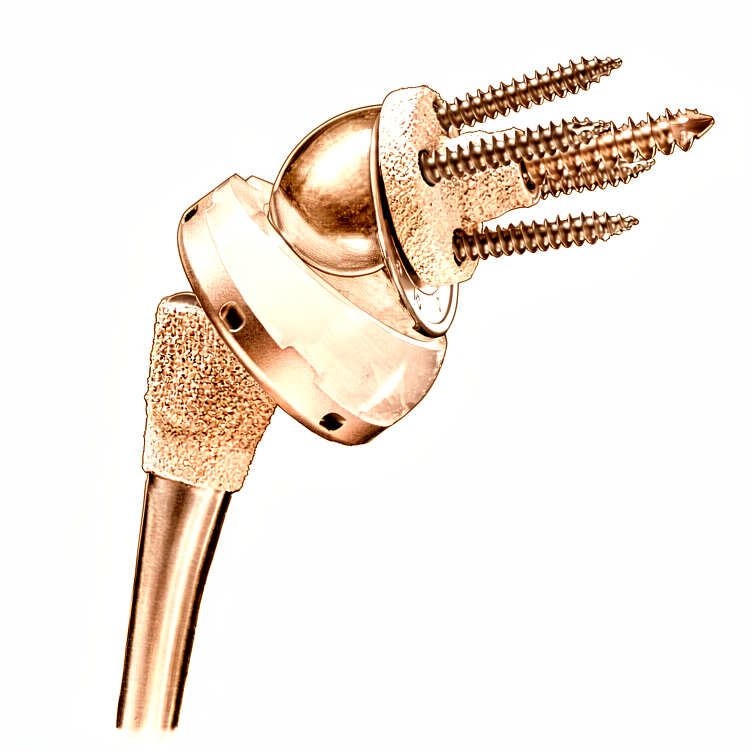
یہ پروٹوکول (protocol، یعنی بحالی کا مرحلہ وار منصوبہ) Mater Private Hospital Rockhampton میں ڈاکٹر کیرن ہِرپرا کے ہاتھوں ریورس شولڈر آرتھروپلاسٹی (reverse shoulder arthroplasty)، یعنی کندھے کی الٹی تبدیلی (reverse shoulder replacement)، کے بعد آپ کی صحت یابی میں رہنمائی کرتا ہے۔ نیچے ہر مرحلہ پہلے آسان زبان میں بتاتا ہے کہ کیا ہو رہا ہے اور سب سے زیادہ اہم کیا ہے، اور اس کے بعد آپ کے فزیوتھراپسٹ کے لیے لکھا گیا باقاعدہ پروٹوکول آتا ہے: فزیوتھراپی کی اپنی پہلی ملاقات پر یہ صفحہ یا اس کی پی ڈی ایف ساتھ لائیں تاکہ آپ کی بحالی کا علاج مربوط رہے۔ آپ کا فزیوتھراپسٹ آپ کی صحت یابی کی رفتار کے مطابق اس منصوبے میں تبدیلی کر سکتا ہے۔
اگر سرجری کے بعد آپ کو اپنے زخم کے بارے میں کوئی تشویش ہو تو کلینک سے رابطہ کریں۔ اکثر یہ مددگار ہوتا ہے کہ زخم کی تصویر لے کر جائزے کے لیے ای میل کر دیں۔
کیا توقع رکھیں
جب آپ ہوش میں آئیں گے تو آپ کا بازو سُن ہو گا، اور احساس عام طور پر 6 سے 12 گھنٹے کے اندر واپس آ جاتا ہے۔ کبھی کبھار کچھ سُن پن یا کمزوری 2 سے 3 دن تک رہ سکتی ہے۔
جب آپ آپریشن کے بعد ہوش میں آئیں گے تو آپ کا بازو سلنگ (sling)، یعنی گلے سے لٹکی وہ پٹی جو بازو کو سہارا دیتی ہے، میں ہو گا، اور آپ کے کندھے پر ایک بڑی گدی ہو گی۔ یہ گدی ہسپتال سے چھٹی سے پہلے ہٹا دی جائے گی۔ اس کے نیچے ایک واٹر پروف پٹی ہو گی جو سرجری والی گوند کی پٹی کو ڈھانپتی ہے، اور اسے 2 ہفتے تک ویسے ہی چھوڑا جا سکتا ہے۔ آپ کے ٹانکے خود گھل جانے والے ہیں اور انہیں نکالنے کی ضرورت نہیں، لیکن زخم کے ہر سرے پر ٹانکے کے دھاگے کے کچھ سرے باہر رہ سکتے ہیں جنہیں 2 ہفتے کے بعد جلد کے برابر سے کاٹا جا سکتا ہے۔ سرجری کے 1 سے 2 ہفتے بعد زخم کے معائنے کے لیے ہماری نرس سے آپ کی ملاقات طے کی جائے گی۔ اگر آپ پٹی کے معائنے پر نہ آ سکیں تو 2 ہفتے کے بعد آپ اپنی پٹی خود اتار سکتے ہیں۔
سرگرمیوں پر واپسی کے اندازاً اوقات:
- گاڑی چلانا: 6 ہفتے
- تیراکی: بریسٹ اسٹروک: 8 ہفتے؛ فری اسٹائل: 12 ہفتے
- گالف: 4 سے 6 ماہ
- وزن اٹھانا: ہلکا وزن اٹھانا 6 ہفتے پر شروع ہو سکتا ہے؛ 6 ماہ تک بھاری چیزیں اٹھانے سے بچیں
- کام: بیٹھ کر کیا جانے والا کام: 6 ہفتے؛ جسمانی مشقت والا کام: آپ کے سرجن کی رہنمائی کے مطابق
سلنگ پہننا
جب تک ابتدائی درد کم نہ ہو، آپ کی سلنگ آرام کے لیے آپ کے کندھے کو سہارا دیتی ہے۔ اس کا کام بازو کا وزن سنبھالنا ہے۔ یہ کسی مرمت کو اپنی جگہ پر نہیں تھامے ہوئے ہے۔ اصول سادہ ہیں:
- اسے آرام اور سہارے کے لیے تقریباً 2 ہفتے پہنیں، پھر دن کے وقت آہستہ آہستہ اس کا استعمال چھوڑنا شروع کریں۔ اگر رات کو تھوڑی دیر سلنگ پہننے سے آپ کو آرام سے سونے میں مدد ملے تو ٹھیک ہے، لیکن یہ اختیاری ہے۔
- نہانے کے لیے اور اپنی ورزشوں کے لیے اسے اتار دیں، جب آپ کو طریقہ دکھا دیا جائے۔
- گھر پر آرام کرتے ہوئے، جب بھی آپ آرام محسوس کریں اسے اتار سکتے ہیں: بیٹھتے وقت بازو کو تکیے پر سہارا دے کر رکھیں۔
- اگر کندھا سوجا ہوا ہو یا اس میں درد ہو، خاص طور پر ورزش کے بعد، تو برف استعمال کریں۔
شروع میں آپ کا فزیوتھراپسٹ سلنگ پہننے میں آپ کی مدد کرے گا، اور گھر جانے سے پہلے آپ کو اسے خود سنبھالنا سکھائے گا۔ اسے صحیح طرح لگانا اہم ہے، کیونکہ ڈھیلی سلنگ آپ کو ٹھیک سے سہارا نہیں دیتی:
- سلنگ لگاتے وقت ہمیشہ یقینی بنائیں کہ آپ کی کہنی سلنگ کے کونے میں ہو اور اسے اچھی طرح سہارا ملا ہو۔
- صحیح طرح لگی سلنگ کا سرا آرام سے آپ کی چھوٹی انگلی کے جوڑ (knuckle) تک آنا چاہیے۔ اگر آپ کا ہاتھ سلنگ سے بہت زیادہ باہر نکلا ہو تو یہ آپ کو مناسب سہارا نہیں دے گی۔
- آپ کی سلنگ میں ویلکرو کی دو پٹیاں ہیں: ایک گردن کے گرد لگتی ہے اور ایک کمر کے گرد۔
- جب آپ کہنی اور بازو کے نچلے حصے کو صحیح جگہ پر رکھ لیں تو آپریشن کے بغیر والے بازو سے اوپر والی پٹی کو گردن کے گرد گھما کر آگے لائیں اور سلنگ کے اوپر والے حلقے میں سے گزار کر لگا دیں۔
- اسی طریقے سے نیچے والی پٹی کو کمر کے گرد لگائیں، اور اسے سلنگ کے نیچے والے حلقے میں سے گزار کر کس دیں۔
سلنگ پہننے کے پورے عرصے میں ہر وقت اپنے بیٹھنے اور کھڑے ہونے کے انداز کا خیال رکھیں اور کندھوں کو جھکنے نہ دیں۔ اچھے انداز کے لیے کوشش کریں کہ آپ کے کان، کندھے اور کولہے ایک سیدھ میں رہیں؛ یہ آپ کی کمر کے لیے اہم ہے اور آپ کے کندھے کے جوڑ میں اکڑاؤ سے بچنے میں مدد دے گا۔ بیٹھتے وقت کمر کے نچلے حصے کے خم میں رکھا ہوا لپٹا ہوا تولیہ ایک اچھی یاد دہانی کا کام دے سکتا ہے۔
ہسپتال میں آپ کے پہلے دن
گھر جانے سے پہلے ہسپتال کے فزیوتھراپسٹ آپ کو نیچے دکھائی گئی چند سادہ ورزشیں شروع کرائیں گے۔ ان کی استعمال کردہ تین اصطلاحات سمجھ لینا مددگار ہے۔ فعال (active) حرکت کی حد کا مطلب وہ حرکت ہے جو آپ بغیر کسی سہارے یا مدد کے خود کرتے ہیں۔ معاون فعال (active-assisted) حرکت کی حد کا مطلب ہے کہ بازو کو حرکت دینے میں مدد کے لیے اپنا دوسرا بازو (یا کوئی چیز، جیسے چھڑی) استعمال کرنا۔ غیر فعال (passive) حرکت کی حد کا مطلب ہے کہ بازو پوری طرح ڈھیلا رہتا ہے جبکہ آپ کا دوسرا بازو (یا کوئی اور شخص) کام کرتا ہے۔ شروع سے ہی آپ اپنے دوسرے بازو کی مدد سے، اور آرام کی حد کے اندر آہستہ سے اپنی طاقت سے بھی، کندھے کو حرکت دینا شروع کر سکتے ہیں؛ یہ اکثر کمر کے بل لیٹ کر سب سے آسان ہوتا ہے تاکہ کشش ثقل مدد کرے۔ آرام کو اپنا رہنما بنائیں اور جتنا وہ اجازت دے اتنا آگے بڑھیں۔
ان پہلے دنوں کے لیے چند عملی باتیں:
- آرام کے لیے سلنگ استعمال کریں۔ اگر رات کو تھوڑی دیر سلنگ پہننے سے آپ کو آرام سے سونے میں مدد ملے تو ٹھیک ہے، لیکن یہ اختیاری ہے۔
- ضرورت ہو تو درد میں آرام کے لیے برف استعمال کریں۔
- سلنگ پہنتے وقت اپنے کندھے کو ڈھیلا چھوڑیں اور بازو کا وزن سلنگ کو اٹھانے دیں۔
- اپنی ورزشیں کرنے سے پہلے، اور فزیوتھراپی کی ملاقاتوں سے پہلے، اپنی درد کش دوا لیں۔
- آپ ورزشوں اور نہانے کے لیے بازو کو سلنگ سے باہر نکال سکتے ہیں۔
- آرام اور سہارے کے لیے سلنگ تقریباً 2 ہفتے پہنیں، پھر دن کے وقت اس کا استعمال چھوڑ دیں۔
- جب تک آپ نے اپنی فزیوتھراپی کا انتظام خود کرنے کا انتخاب نہ کیا ہو، آپ کے لیے ایک ملاقات طے کر دی گئی ہے جس کی تفصیل ہسپتال سے چھٹی کے وقت ملنے والے کاغذات میں ہے۔
- اگر کوئی مسئلہ ہو تو دفتر سے رابطہ کریں یا اپنے فزیوتھراپسٹ کو بتائیں۔
یہ وہ ورزشیں ہیں جو ہسپتال کے فزیوتھراپسٹ آپ کو شروع کرائیں گے، اور گھر پر آپ کے فزیوتھراپسٹ کی رہنمائی کے مطابق جاری رکھی جائیں گی۔
ہسپتال میں آپ کی ورزشیں
Kieran Hirpara 4.0
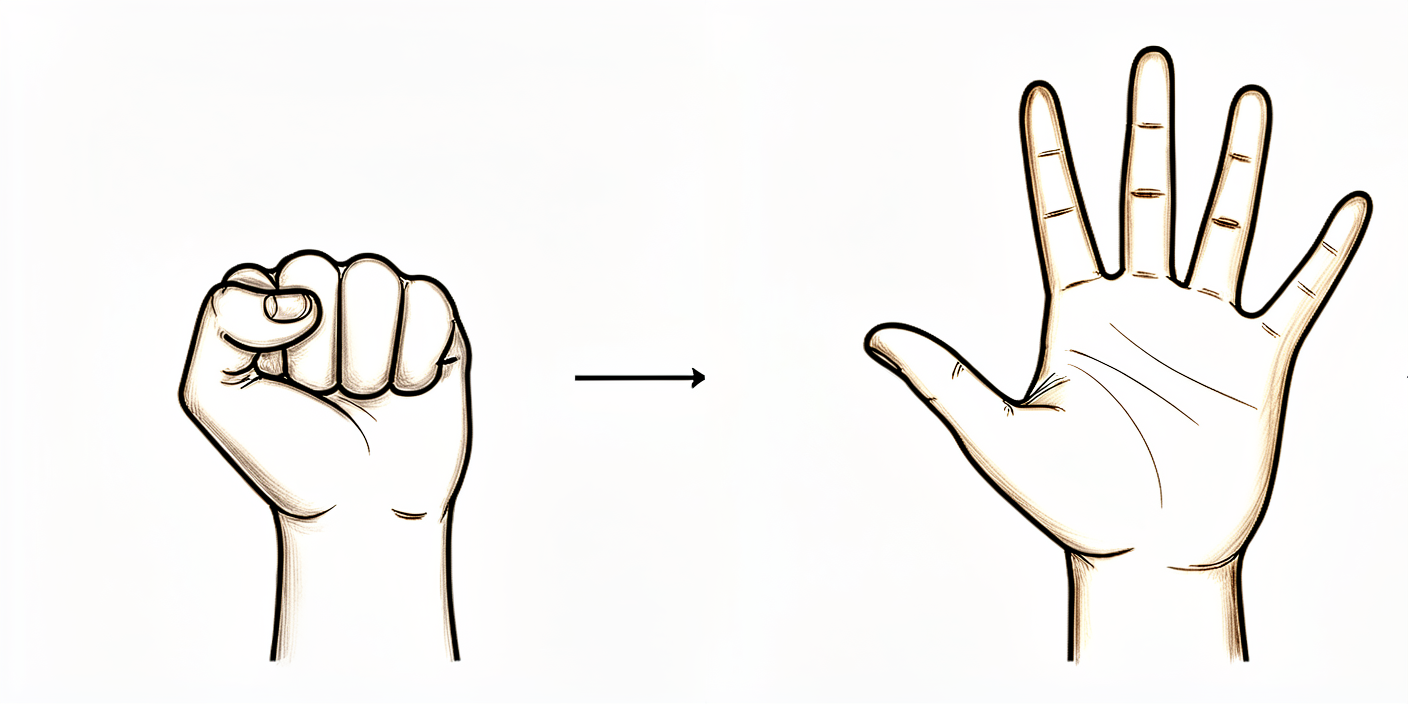
ہاتھ کھولنا اور بند کرنا
ہاتھ اور انگلیوں کو کھول کر اور بند کر کے، یا ایک نرم گیند دبا کر، انہیں حرکت میں رکھیں۔
10 بار، دن میں 3 مرتبہ
Kieran Hirpara 4.0
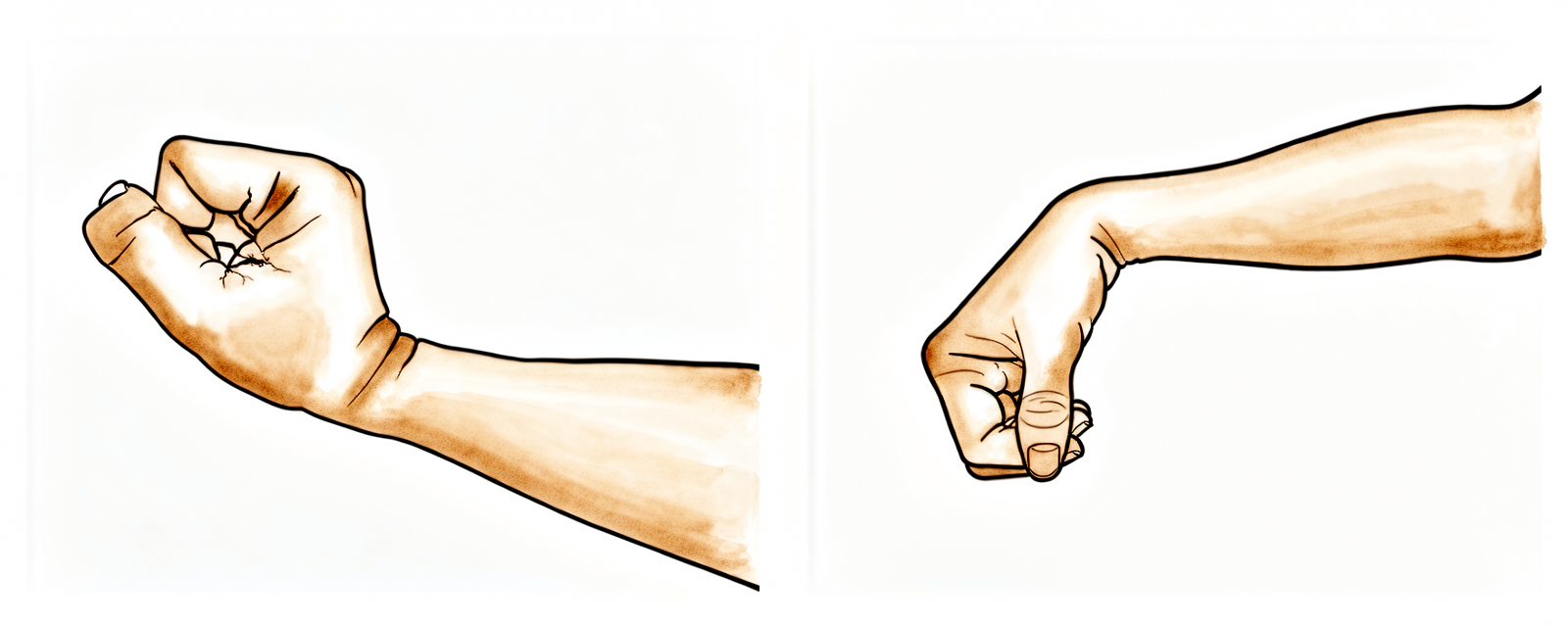
کلائی کی حرکت
کلائی کو آگے، پیچھے اور دائیں بائیں موڑ کر اسے حرکت میں رکھیں۔
10 بار، دن میں 3 مرتبہ
Kieran Hirpara 4.0
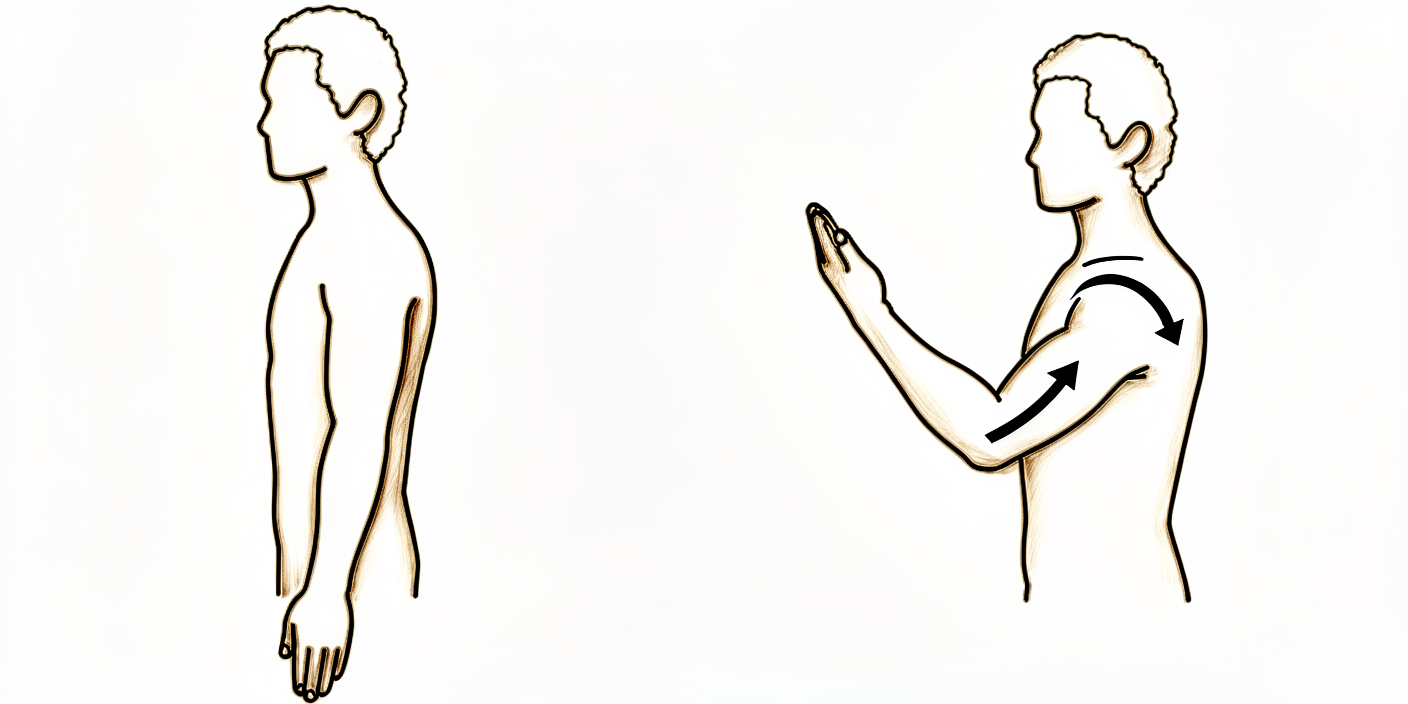
کہنی
اپنی کہنی کو موڑیں اور سیدھا کریں۔
10 بار، دن میں 3 مرتبہ
Kieran Hirpara 4.0
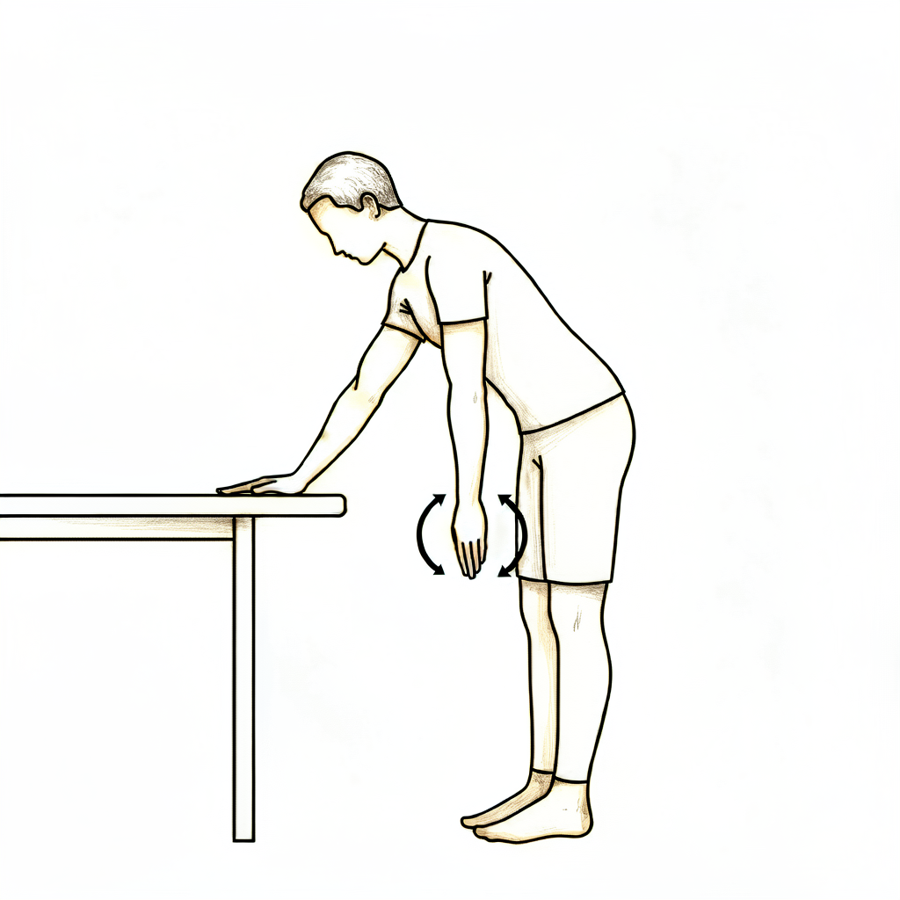
پینڈولم ورزش
یہ ایک غیر فعال (passive) ورزش ہے۔ آگے جھکیں اور بازو کو ڈھیلا ہو کر نیچے لٹکنے دیں۔ اپنے جسم کی حرکت سے بازو کو آہستہ سے گھڑی کی سوئی کی سمت یا اس کی الٹی سمت میں گھمائیں، اور ساتھ ہی آگے، پیچھے اور دائیں بائیں بھی حرکت دیں۔
ہر سمت میں تقریباً 30 سیکنڈ، دن میں 3 مرتبہ
Kieran Hirpara 4.0
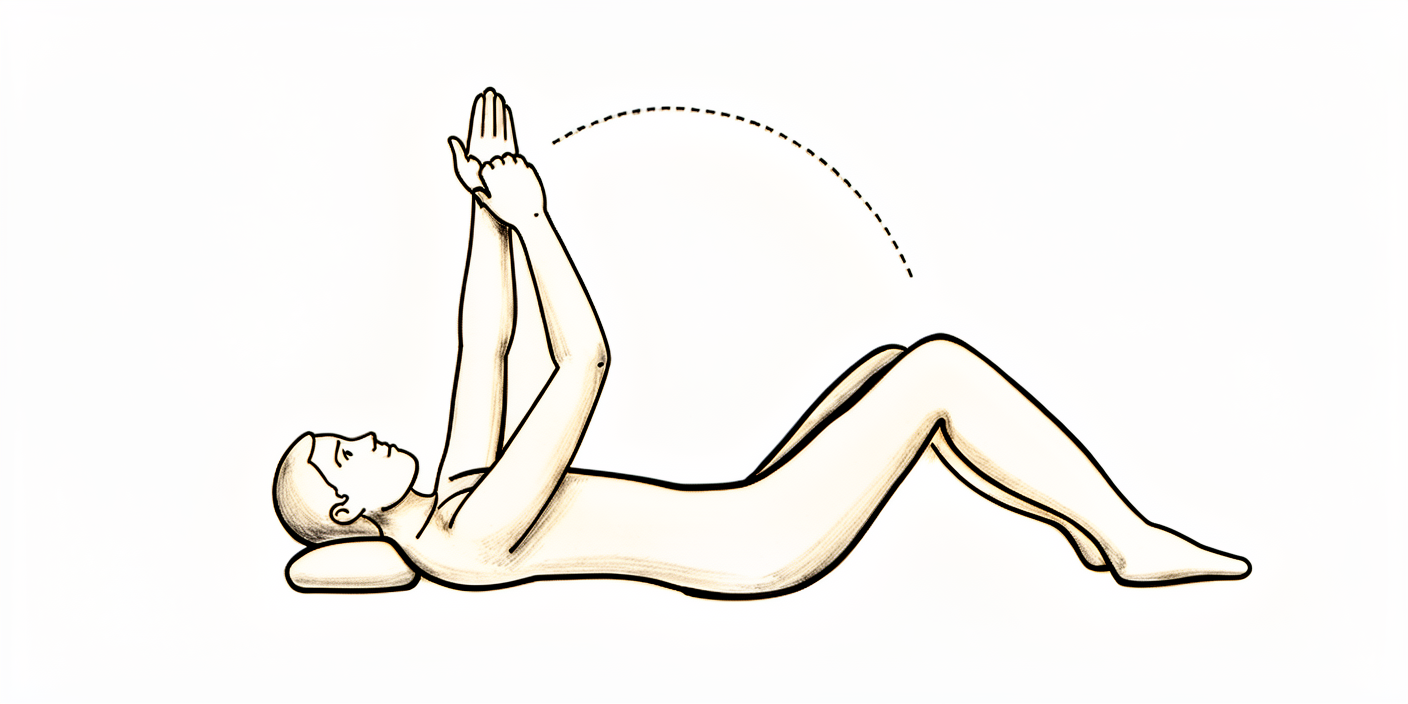
بازو کو آگے اٹھانا
کرسی پر بیٹھ کر اور آگے جھک کر، آپریشن والے بازو کو دوسرے بازو سے سہارا دیں اور اسے آہستہ سے اپنے سامنے اوپر کی طرف اٹھائیں۔ آپریشن کے بغیر والے بازو کی مدد سے اسے واپس نیچے لائیں۔ اگر آپ چاہیں تو بستر پر کمر کے بل لیٹ کر بازو کو اوپر اٹھانے میں مدد بھی دے سکتے ہیں۔
10 بار، دن میں 3 مرتبہ
Kieran Hirpara 4.0
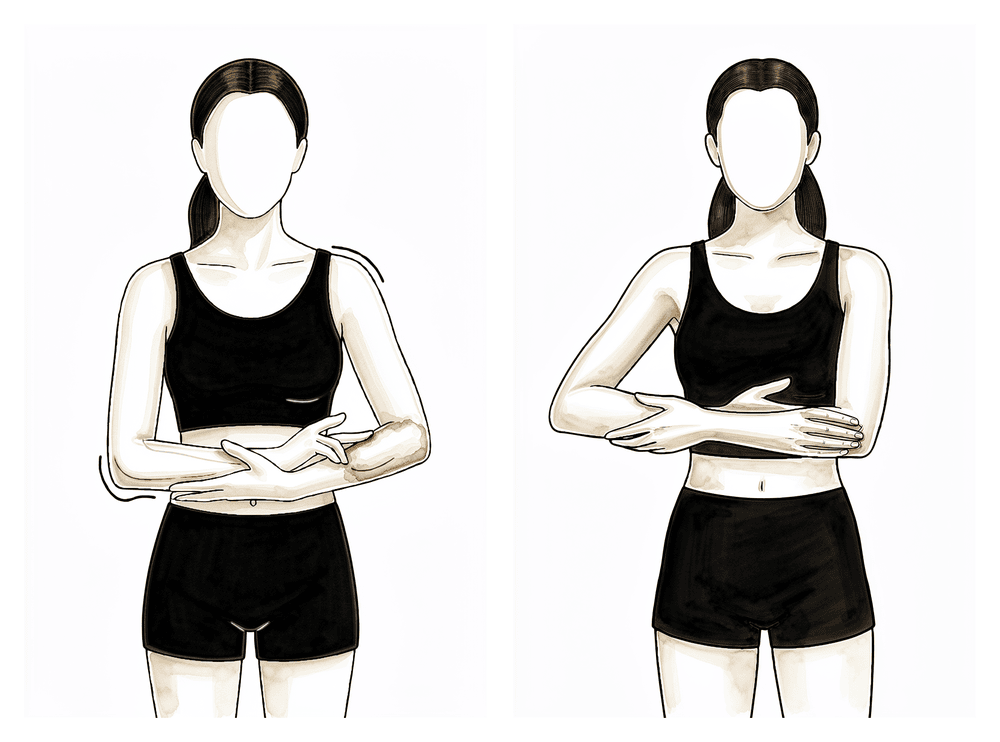
بازو کو پہلو کی طرف اٹھانا
کرسی پر بیٹھ کر اور آگے جھک کر، بازو کو دوبارہ سہارا دیں اور اسے پہلو کی طرف باہر لے جانے میں مدد دیں (مثلاً جیسے بچے کو جھلاتے ہیں)۔
10 بار، دن میں 3 مرتبہ
Kieran Hirpara 4.0
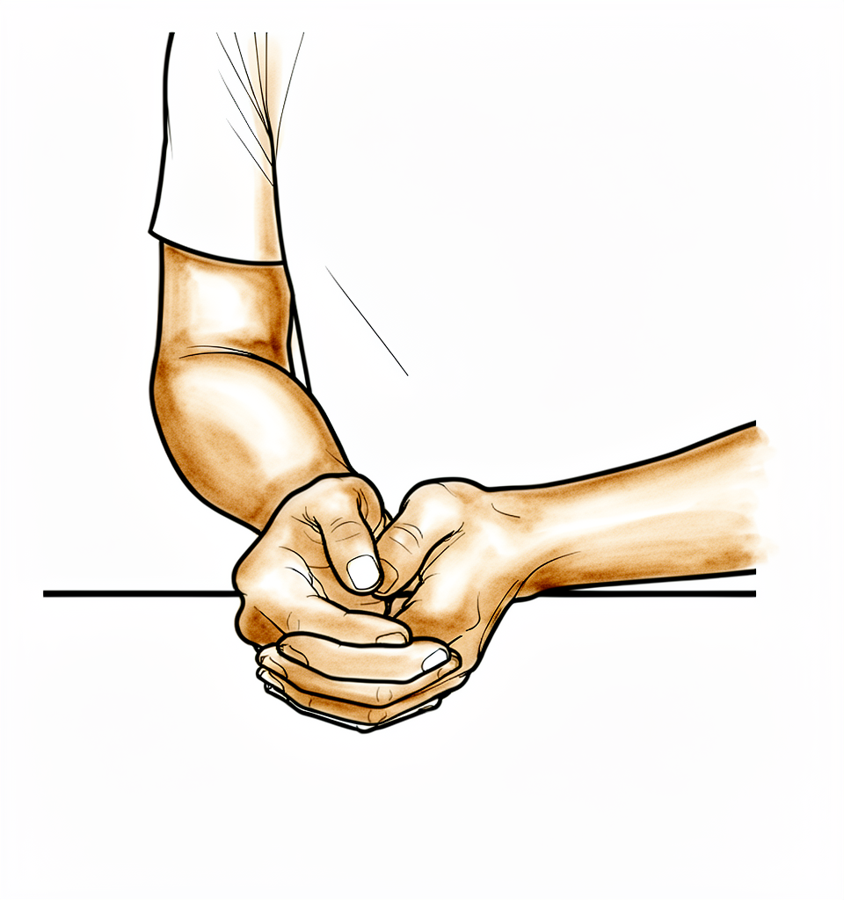
باہر کی طرف گھماؤ
کرسی پر بیٹھ کر، بازو کو صرف اس جگہ سے جہاں وہ سلنگ میں ہوتا ہے، اس حالت تک لائیں کہ وہ سیدھا آپ کے سامنے کی طرف ہو۔ اس سے زیادہ باہر کی طرف نہ لے جائیں۔
آہستہ سے، 10 بار، دن میں 3 مرتبہ
Kieran Hirpara 4.0
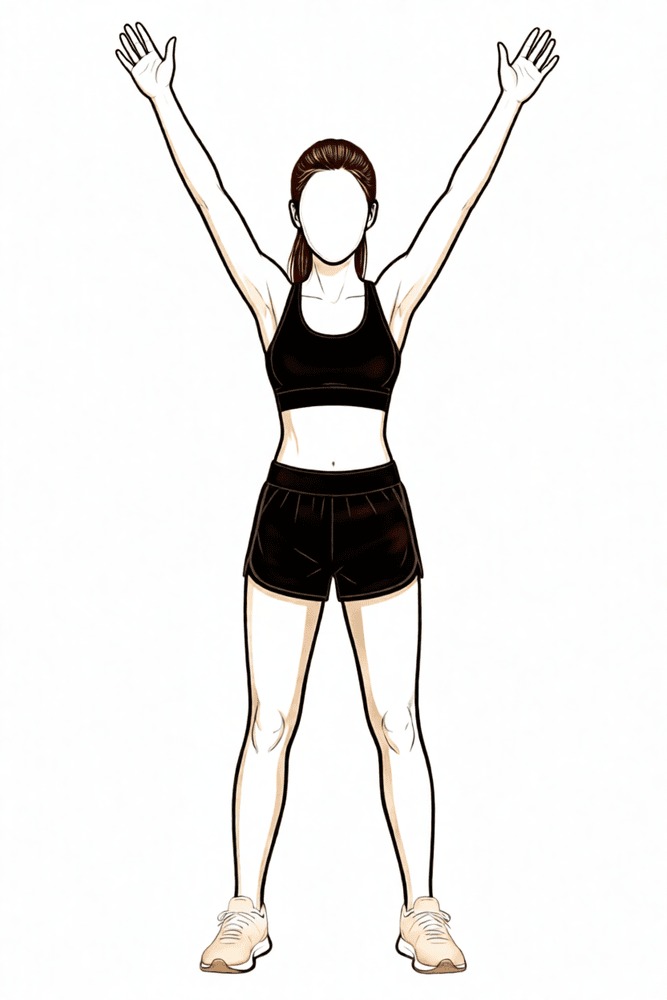
نچلے ٹریپیزیئس پٹھے کو جمانا
اپنے کندھے کی پچھلی ہڈیوں کو نیچے کی طرف اور ایک دوسرے کی طرف دبائیں۔
5 سیکنڈ روکیں، 5 بار؛ روزانہ 3 مرتبہ دہرائیں
Kieran Hirpara 4.0
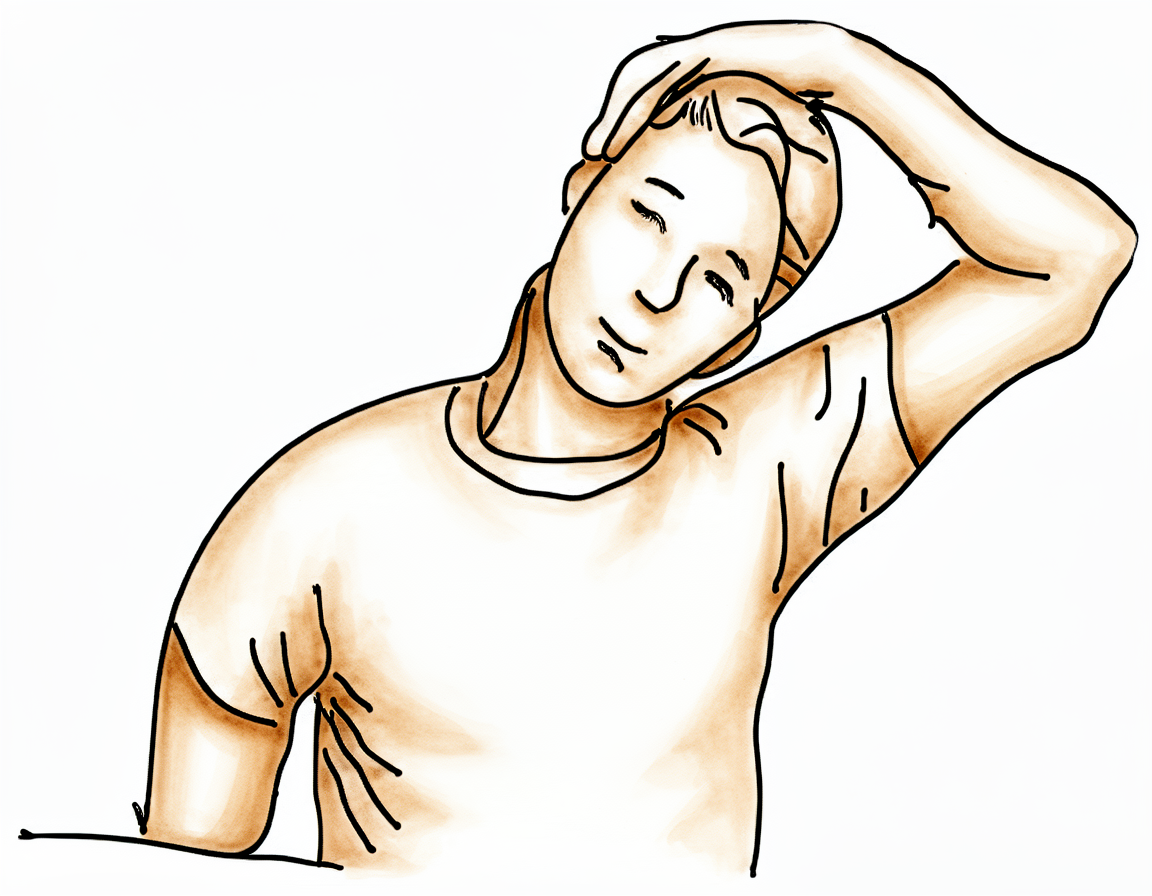
اوپری ٹریپیزیئس پٹھے کا اسٹریچ
آپریشن کے بغیر والے بازو سے اپنے کان کو کندھے کی طرف لائیں، آپریشن والی طرف سے دور۔
10 سیکنڈ روکیں، 3 بار؛ دن میں 3 مرتبہ دہرائیں
Kieran Hirpara 4.0
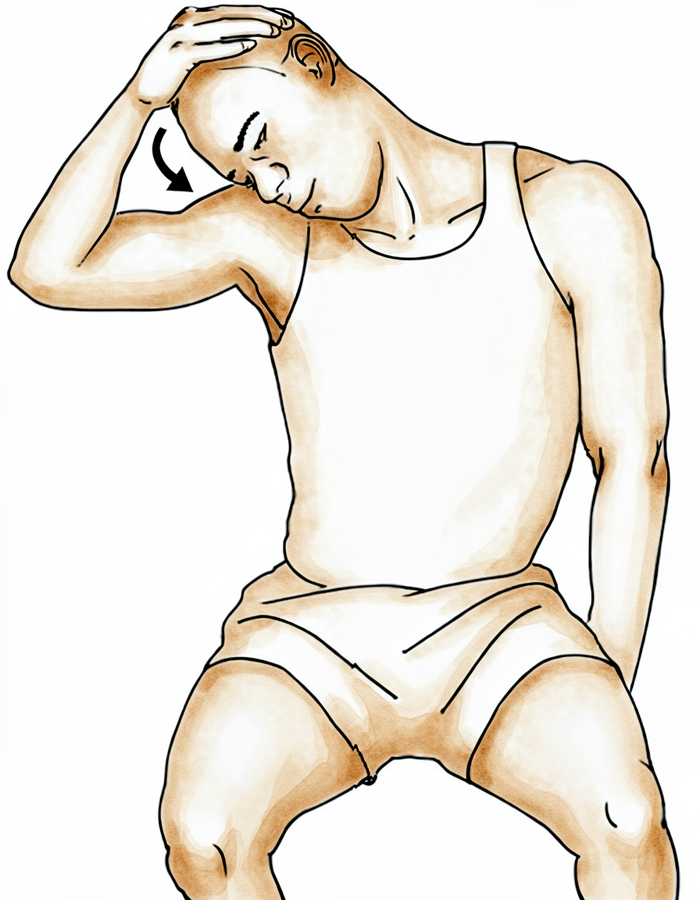
لیویٹر اسکیپولی (levator scapulae) پٹھے کا اسٹریچ
آپریشن کے بغیر والے بازو سے اپنی ناک کو اپنے نپل یا بغل کی طرف لائیں۔
10 سیکنڈ روکیں، 3 بار؛ دن میں 3 مرتبہ دہرائیں
مرحلہ I — حفاظت (ہفتہ 0 سے 3)
Kieran Hirpara 4.0
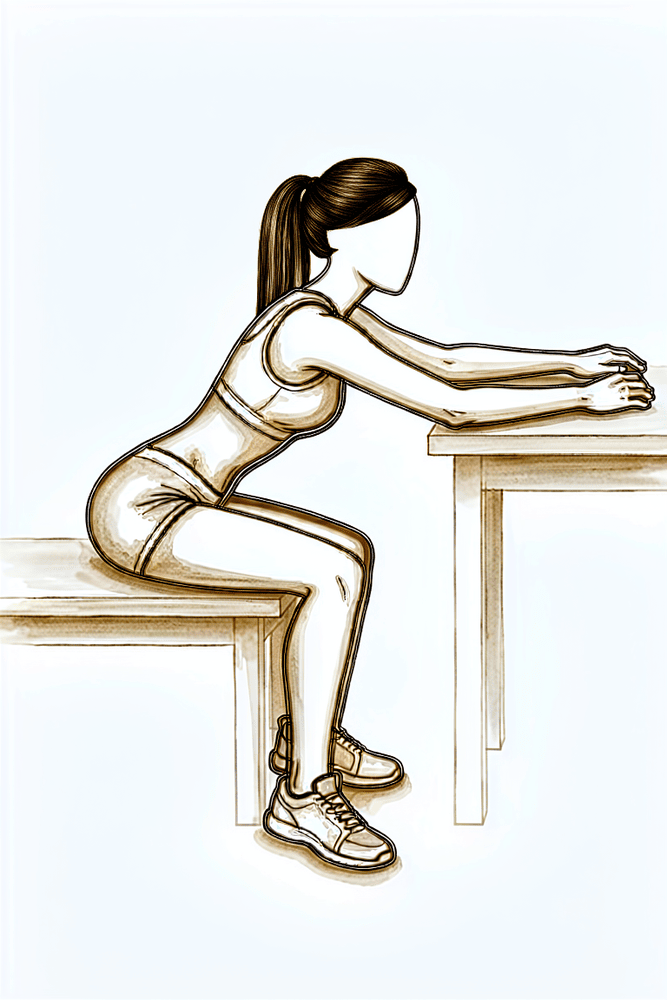
بیٹھ کر میز پر ہاتھ سرکانا
میز کے پاس بیٹھیں اور بازو کا نچلا حصہ میز کی سطح پر رکھیں۔ آہستہ سے آگے جھکتے ہوئے ہاتھ کو میز پر آگے سرکنے دیں، اور کندھے کے پٹھوں کو استعمال کیے بغیر کندھے کو آگے کی طرف مڑنے دیں، پھر واپس سرکائیں۔ حرکت کو ڈھیلا اور آرام دہ رکھیں — کندھا خود غیر فعال رہتا ہے۔
اپنے فزیوتھراپسٹ کی رہنمائی کے مطابق
پہلے تین ہفتے آپ کے نئے کندھے کے جوڑ کو جمنے دینے اور اسے آہستہ آہستہ حرکت میں واپس لانے کے لیے ہیں۔ آپ آرام کے لیے سلنگ استعمال کرتے ہیں، برف اور دباؤ (compression) سے سوجن کو قابو میں رکھتے ہیں، اور اپنی کہنی، کلائی اور ہاتھ کو حرکت دیتے رہتے ہیں۔ شروع سے ہی آپ کندھے کی ہلکی حرکت بھی شروع کرتے ہیں، اپنے دوسرے بازو کی مدد سے اور آرام کی حد کے اندر آہستہ سے اپنی طاقت سے بھی؛ یہ اکثر کمر کے بل لیٹ کر سب سے آسان ہوتا ہے تاکہ کشش ثقل مدد کرے۔ آرام کو اپنا رہنما بنائیں اور کسی چیز پر زور زبردستی نہ کریں۔ سب سے اہم اصول جوڑ کو اپنی جگہ سے نکلنے سے بچانے کے بارے میں ہیں: نہ ہاتھ کمر کے پیچھے لے جائیں اور نہ بازو کو اندر کی طرف گھمائیں، کوئی بھی چیز نہ اٹھائیں، اور ہاتھوں کے بل زور لگا کر نہ اٹھیں۔ کمر کے بل لیٹتے وقت کہنی کے نیچے ایک چھوٹا تکیہ یا لپٹا ہوا تولیہ رکھیں تاکہ کندھا پیچھے کی طرف نہ کھنچے۔
آپ کے فزیوتھراپسٹ کے لیے:
اہداف
- امپلانٹ کے حصوں کے استحکام کی حفاظت (جوڑ نکلنے والی حالت سے بچنا)
- سوجن کم کرنا، درد کم سے کم کرنا
- کہنی، ہاتھ اور کلائی میں بازو (upper extremity, UE) کی حرکت کی حد (range of motion, ROM) برقرار رکھنا
- آرام کی حد کے اندر کندھے کی ابتدائی معاون فعال اور فعال حرکت قائم کرنا
- پٹھوں کے کام کی رکاوٹ (muscle inhibition) کم سے کم کرنا
- مریض کی آگاہی
سلنگ
- درمیانی گھماؤ (neutral rotation)
- آرام اور سہارے کے لیے؛ رات کو تھوڑی دیر کا استعمال اختیاری؛ تقریباً 2 ہفتے سے دن کے وقت استعمال چھوڑنا
علاج کا طریقہ
- سوجن پر قابو: برف، دباؤ (compression)
- حرکت کی حد / حرکت پذیری:
- غیر فعال حرکت (PROM): کندھے کی پچھلی چپٹی ہڈی کی سطح (scapular plane) میں برداشت کی حد تک باہر کی طرف گھماؤ (external rotation, ER)؛ آگے اٹھانا (flexion) / اسکیپشن (scaption) زیادہ سے زیادہ 120 ڈگری؛ پہلو کی طرف اٹھانا (abduction, ABD) زیادہ سے زیادہ 90 ڈگری؛ بیٹھ کر میز پر ہاتھ سرکاتے ہوئے کندھے کے جوڑ (glenohumeral, GH) کو آگے اٹھانا؛ پینڈولم ورزش (pendulums)؛ بیٹھ کر میز پر افقی سمت میں ہاتھ سرکانا
- معاون فعال حرکت (AAROM): شروع سے: کندھے کو معاون فعال طریقے سے آگے اٹھانا (کمر کے بل لیٹ کر / کشش ثقل کی مدد سے شروع کریں)، اوپر دی گئی PROM کی حدود کے اندر
- فعال حرکت (AROM): شروع سے: آرام کی حد کے اندر برداشت کے مطابق کندھے کی ہلکی فعال حرکت؛ اس کے ساتھ کہنی، ہاتھ، کلائی
احتیاطیں
- اندر کی طرف گھماؤ (internal rotation, IR) میں کندھے کی کوئی PROM/AROM نہیں
- ہاتھ کمر کے پیچھے نہیں لے جانا، خاص طور پر اندر کی طرف گھماؤ میں
- پیچھے لے جانا + جسم کی طرف لانا + اندر کی طرف گھمانا (extension + adduction + internal rotation) کی ملی جلی (جوڑ نکلنے والی) حالت سے بچیں
- کوئی چیز نہیں اٹھانی
- ہاتھوں پر جسم کا وزن نہیں ڈالنا
- کمر کے بل لیٹتے وقت کہنی کے نیچے چھوٹا تکیہ / لپٹا ہوا تولیہ رکھیں تاکہ کندھا حد سے زیادہ پیچھے نہ کھنچے (hyperextension)
اگلے مرحلے میں جانے کی شرائط
- آرام کی حد کے اندر کندھے کی PROM، AAROM اور AROM میں بتدریج اضافہ
- اندر کی طرف گھماؤ (IR) میں کندھے کی PROM 0 ڈگری
- درد 4/10 سے کم
- مرحلہ I میں کوئی پیچیدگی نہ ہو
مرحلہ II — درمیانی مرحلہ (ہفتہ 4 سے 6)
Kieran Hirpara 4.0
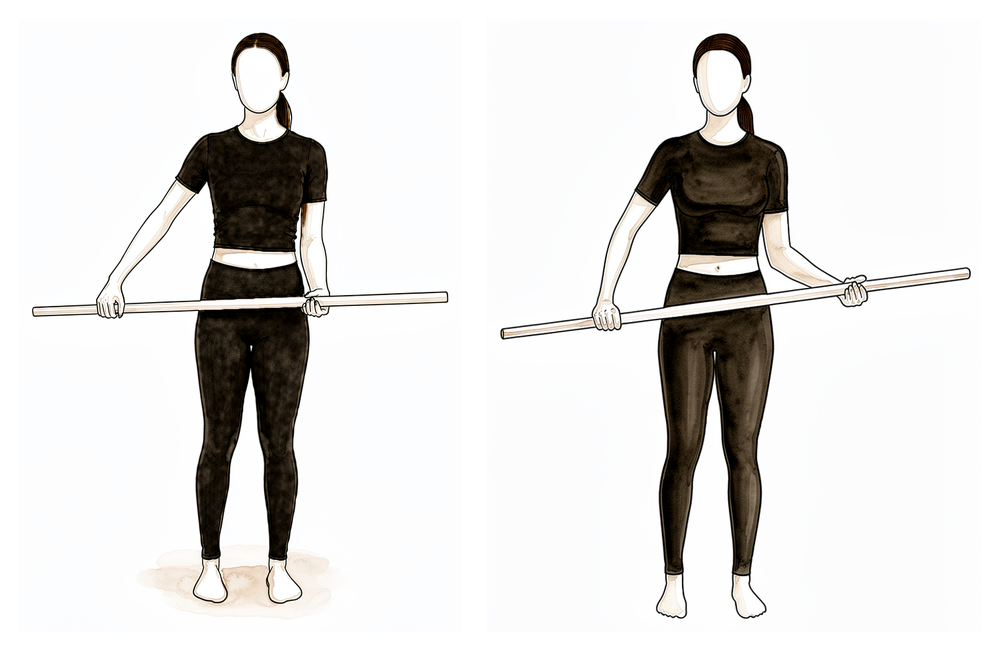
چھڑی سے باہر کی طرف گھماؤ کا اسٹریچ
کمر کے بل لیٹیں، کہنی پہلو میں ہو اور 90 ڈگری پر مڑی ہو۔ ایک چھڑی یا ڈنڈا دونوں ہاتھوں میں پکڑیں اور آپریشن کے بغیر والے بازو سے آپریشن والے بازو کے ہاتھ کو آرام کی حد کے اندر آہستہ سے باہر کی طرف دھکیلیں۔ حرکت پر کبھی زور زبردستی نہ کریں۔
اپنے فزیوتھراپسٹ کی رہنمائی کے مطابق
Kieran Hirpara 4.0
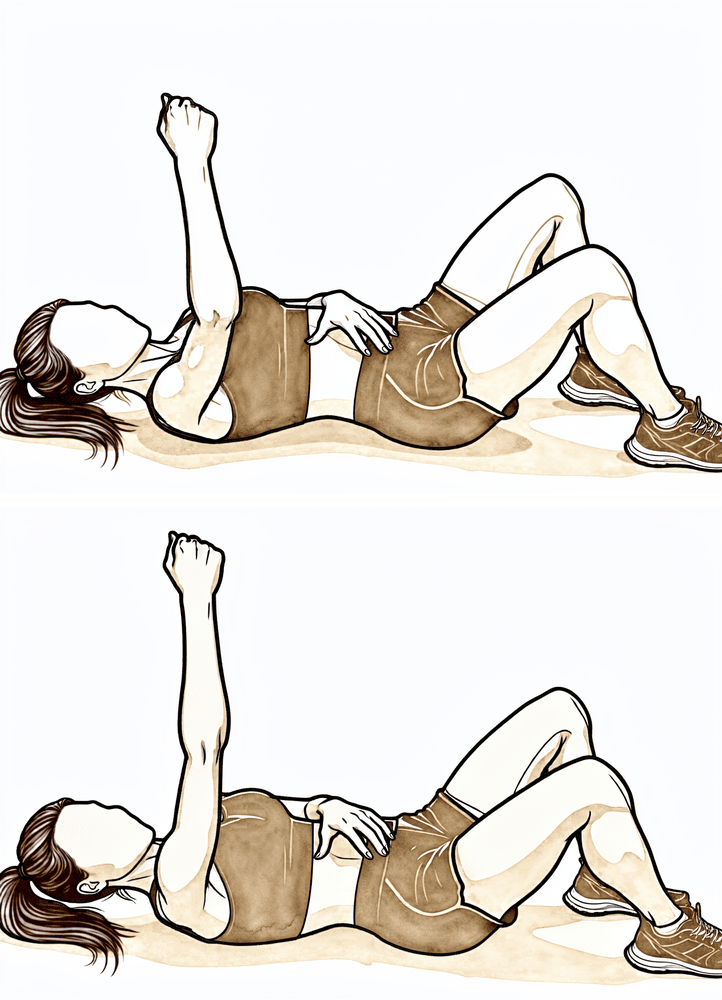
کمر کے بل لیٹ کر مکا اوپر کی طرف
کمر کے بل لیٹیں اور آپریشن والے بازو کو سیدھا اوپر چھت کی طرف اٹھائے رکھیں۔ کہنی کو سیدھا رکھتے ہوئے، ہاتھ کو تھوڑا سا اور چھت کی طرف دھکیلیں تاکہ کندھے کی پچھلی ہڈی بستر سے اٹھ جائے، پھر قابو کے ساتھ واپس نیچے لائیں۔
اپنے فزیوتھراپسٹ کی رہنمائی کے مطابق
اب کندھا اس حرکت کو آگے بڑھاتا ہے جو آپ نے سرجری کے فوراً بعد شروع کی تھی۔ حرکت کی حد بڑھتی رہتی ہے، اور کندھے کی پچھلی ہڈی کے گرد پٹھوں (periscapular muscles) اور ڈیلٹائیڈ (deltoid) کو متحرک کرنے اور مضبوط کرنے کا پہلا کام تقریباً ہفتہ 4 کے آس پاس شروع ہوتا ہے۔ اس مرحلے تک دن کے وقت آپ کو سلنگ سے باہر ہونا چاہیے؛ رات کو صرف اسی صورت میں تھوڑی دیر اسے استعمال کر سکتے ہیں اگر اس سے آرام ملے۔ حفاظتی اصول اب بھی لاگو ہیں: کافی کے ایک کپ سے زیادہ بھاری کوئی چیز نہ اٹھائیں، ہاتھ کمر کے پیچھے نہ لے جائیں، ہاتھوں کے بل زور نہ لگائیں، اور کمر کے بل لیٹتے وقت کہنی کے نیچے تکیہ رکھیں۔
آپ کے فزیوتھراپسٹ کے لیے:
اہداف
- امپلانٹ کے حصوں کے استحکام کی حفاظت جاری رکھنا (جوڑ نکلنے والی حالت سے بچنا)
- سوجن کم کرنا، درد کم سے کم کرنا
- کندھے کی PROM آہستہ آہستہ بڑھانا
- کندھے کی AAROM/AROM آگے بڑھانا
- کندھے کی پچھلی ہڈی کے گرد پٹھوں (periscapular) کو متحرک کرنا اور مضبوط کرنا شروع کرنا (تقریباً ہفتہ 4)
- ڈیلٹائیڈ کو متحرک کرنا اور مضبوط کرنا شروع کرنا (تقریباً ہفتہ 4؛ پچھلے ڈیلٹائیڈ کو متحرک کرتے وقت کندھے کو پیچھے لے جانے (extension) سے بچیں)
- مریض کی آگاہی
سلنگ
- دن کے وقت استعمال بند کریں (تقریباً 2 ہفتے سے استعمال چھوڑا جا چکا ہے)
- رات کو تھوڑی دیر کا استعمال اختیاری، صرف اس صورت میں کہ اس سے آرام ملے
علاج کا طریقہ
- مرحلہ I کے اقدامات جاری رکھیں
- حرکت کی حد / حرکت پذیری:
- معاون فعال حرکت (AAROM): کندھے کو معاون فعال طریقے سے آگے اٹھانا، چھڑی کی مدد سے کندھے کو آگے اٹھانا، چھڑی سے باہر کی طرف گھماؤ کا اسٹریچ، کپڑا دبا کر سرکانا (washcloth press)، بیٹھ کر چھڑی کی مدد سے کندھا اوپر اٹھانا
- فعال حرکت (AROM): کمر کے بل لیٹ کر آگے اٹھانا (supine flexion)، سلیوٹ (salutes)، کمر کے بل لیٹ کر مکا اوپر کی طرف (supine punch)
- مضبوطی:
- کندھے کی پچھلی ہڈی کے گرد پٹھے (periscapular): کندھے کی ہڈیوں کو پیچھے کھینچنا (scapular retraction)، کھڑے ہو کر کندھے کی ہڈی کو جمانا (standing scapular setting)، سہارے کے ساتھ کندھے کی ہڈی کو جمانا (supported scapular setting)، نیچا کھینچنا (low row)، نیچے کی طرف سرکانا (inferior glide)
- ڈیلٹائیڈ: کندھے کی پچھلی چپٹی ہڈی کی سطح میں آئسومیٹرک (isometrics، یعنی جوڑ کو حرکت دیے بغیر پٹھے کو کسنا)
احتیاطیں
- ہاتھ کمر کے پیچھے نہیں لے جانا، خاص طور پر اندر کی طرف گھماؤ میں
- تقریباً ہفتہ 6 تک پیچھے لے جانا + جسم کی طرف لانا + اندر کی طرف گھمانا کی ملی جلی (جوڑ نکلنے والی) حالت سے بچیں
- کافی کے ایک کپ سے زیادہ بھاری کوئی چیز نہیں اٹھانی
- ہاتھوں پر جسم کا وزن نہیں ڈالنا
- کمر کے بل لیٹتے وقت کہنی کے نیچے چھوٹا تکیہ / لپٹا ہوا تولیہ رکھیں تاکہ کندھا حد سے زیادہ پیچھے نہ کھنچے (hyperextension)
اگلے مرحلے میں جانے کی شرائط
- کندھے کی PROM، AAROM اور AROM میں بتدریج اضافہ
- اندر کی طرف گھماؤ (IR) میں کندھے کی PROM 0 ڈگری
- کندھے کی ہڈی کے پٹھوں میں چھونے پر محسوس ہونے والا پٹھوں کا سکڑاؤ
- درد 4/10 سے کم
- مرحلہ II میں کوئی پیچیدگی نہ ہو
مرحلہ III — درمیانی مرحلہ، جاری (ہفتہ 7 سے 8)
Kieran Hirpara 4.0
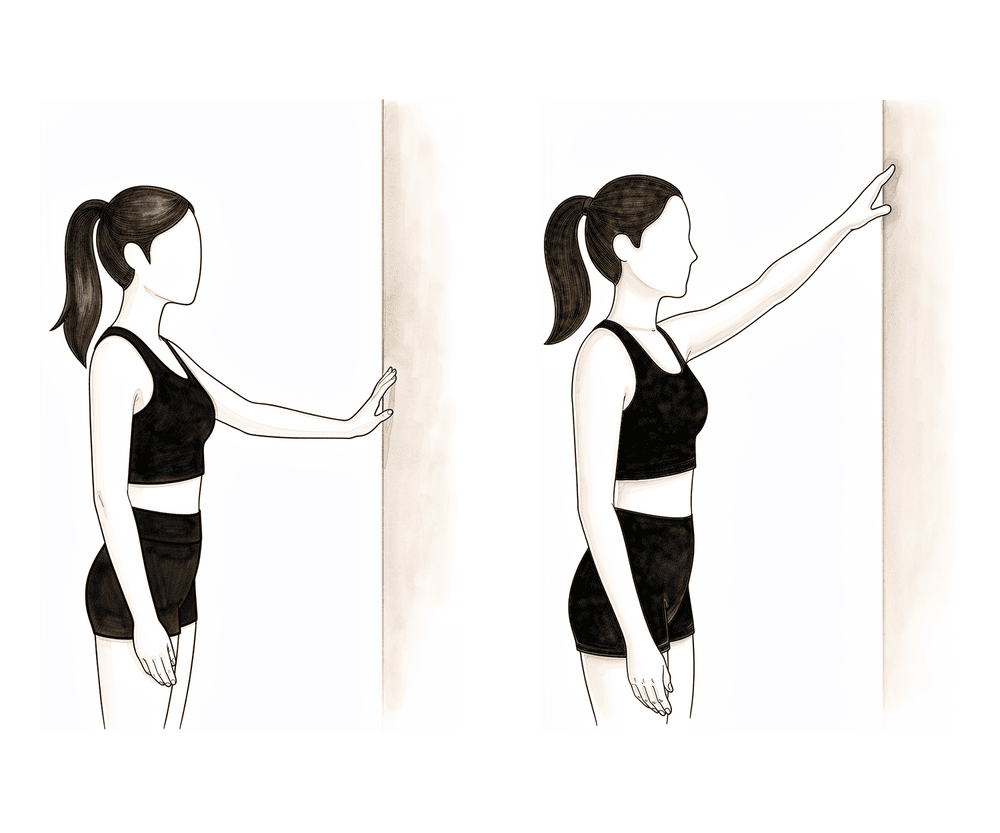
دیوار پر انگلیوں سے چڑھنا
دیوار کی طرف منہ کر کے کھڑے ہوں اور آپریشن والے بازو کی انگلیوں کو جتنا آرام سے ہو سکے دیوار پر اوپر چلائیں، اور دیوار کو بازو اوپر اٹھانے میں مدد دینے دیں۔ انگلیوں کو قابو کے ساتھ واپس نیچے چلائیں — بازو کو گرنے نہ دیں۔
اپنے فزیوتھراپسٹ کی رہنمائی کے مطابق
Kieran Hirpara 4.0
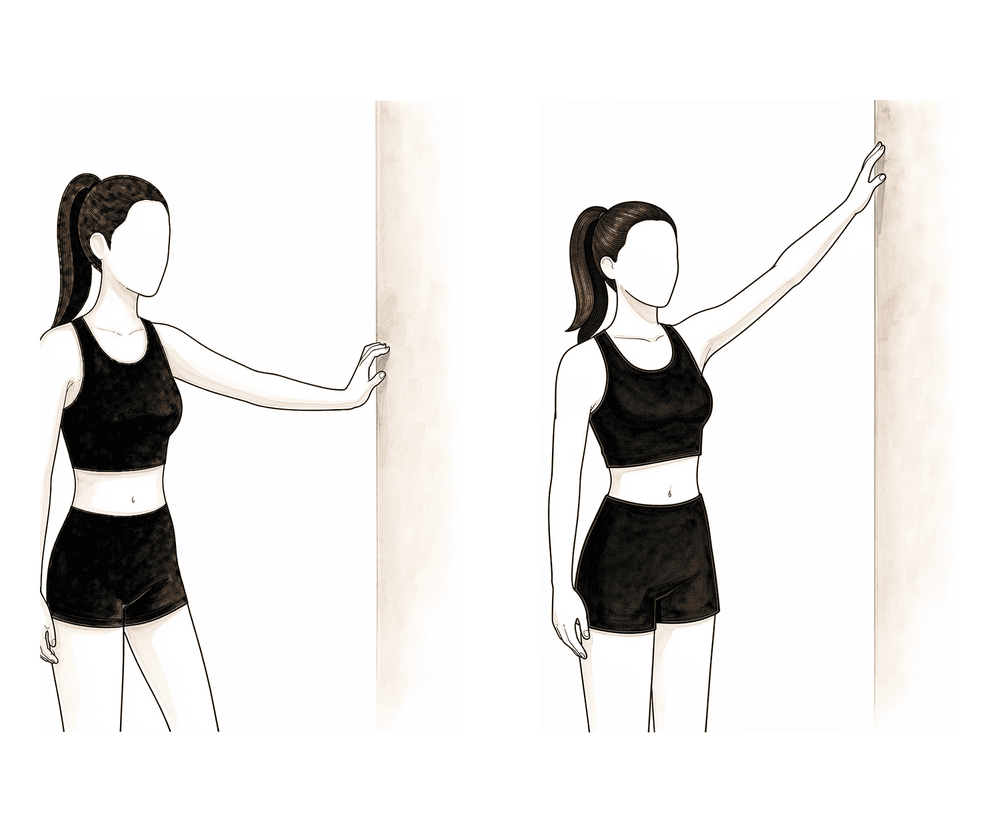
دیوار پر انگلیوں سے پہلو کی طرف چڑھنا
دیوار کی طرف پہلو کر کے کھڑے ہوں اور انگلیوں کے سرے دیوار پر ٹکا دیں۔ انگلیوں کو دیوار پر پہلو کی طرف اوپر چلائیں، اور بازو کو جتنا آرام سے ہو سکے اوپر اٹھائیں، پھر قابو کے ساتھ انہیں واپس نیچے چلائیں۔ جب آپ پہلو کی طرف حرکت دوبارہ حاصل کر رہے ہوں تو دیوار بازو کو سہارا دیتی ہے۔
اپنے فزیوتھراپسٹ کی رہنمائی کے مطابق
اب تک سلنگ کافی پیچھے رہ چکی ہے۔ حرکت ہر سمت میں آگے بڑھتی ہے، جس میں پہلی بار ہلکا غیر فعال اندر کی طرف گھماؤ (بازو کو اندر کی طرف گھمانا) بھی شامل ہے، اور ڈیلٹائیڈ اور کندھے کی پچھلی ہڈی کے پٹھوں کی مضبوطی کا کام بڑھتا ہے، اور ساتھ ہی حرکت پر قابو (motor control، یعنی ہم آہنگی) کی پہلی ورزشیں شروع ہوتی ہیں۔ جو پابندیاں باقی ہیں: کافی کے ایک کپ سے زیادہ بھاری کچھ نہیں، پتلون کی جیب سے آگے ہاتھ کمر کے پیچھے نہیں لے جانا، ہاتھوں پر جسم کا وزن نہیں ڈالنا، اور بازو کو جسم کے پیچھے کی طرف کھینچنے سے بچیں۔
آپ کے فزیوتھراپسٹ کے لیے:
اہداف
- درد کم سے کم کرنا
- کندھے کی PROM آہستہ آہستہ بڑھانا؛ کندھے کی پچھلی چپٹی ہڈی کی سطح میں اندر کی طرف گھماؤ (IR) کی PROM شروع کرنا
- کندھے کی AAROM آہستہ آہستہ بڑھانا
- کندھے کی AROM آہستہ آہستہ بڑھانا
- ڈیلٹائیڈ کی مضبوطی آگے بڑھانا
- کندھے کی پچھلی ہڈی کے گرد پٹھوں کی مضبوطی آگے بڑھانا
- حرکت پر قابو کی ورزش شروع کرنا
- مریض کی آگاہی
سلنگ
- استعمال بند کریں
علاج کا طریقہ
- مرحلہ I اور II کے اقدامات جاری رکھیں
- حرکت کی حد / حرکت پذیری:
- غیر فعال حرکت (PROM): تمام سمتوں میں پوری؛ کندھے کی پچھلی چپٹی ہڈی کی سطح میں اندر کی طرف گھماؤ (IR) کی PROM بتدریج، زیادہ سے زیادہ 50 ڈگری
- معاون فعال حرکت (AAROM): جھکی ہوئی میز پر ہاتھ سرکانا (incline table slides)، دیوار پر انگلیوں سے چڑھنا (wall climbs)، پُلی (pulleys)، بیٹھ کر چھڑی کی مدد سے کندھا اوپر اٹھانا اور اپنی طاقت سے نیچے لانا
- فعال حرکت (AROM): بیٹھ کر اسکیپشن (scaption)، بیٹھ کر آگے اٹھانا (flexion)، کمر کے بل لیٹ کر لچکدار مزاحمت کے ساتھ 90 ڈگری تک آگے اٹھانا
- مضبوطی:
- کندھے کی پچھلی ہڈی کے گرد پٹھے: ورزشی گیند (physioball) پر رو (row)، سیریٹس پنچ (serratus punches)
- ڈیلٹائیڈ: بیٹھ کر چھڑی کی مدد سے کندھا اوپر اٹھانا، بیٹھ کر چھڑی کی مدد سے کندھا اوپر اٹھانا اور اپنی طاقت سے نیچے لانا، دیوار پر گیند گھمانا (ball roll on wall)
- حرکت پر قابو:
- کمر کے بل لیٹ کر اسکیپشن کی سطح میں IR/ER اور 90 سے 125 ڈگری پر آگے اٹھانا (rhythmic stabilisation، یعنی باری باری ہلکے دھکوں کے خلاف بازو کو ساکن رکھنا)
- اسٹریچ:
- پہلو کے بل لیٹ کر افقی سمت میں بازو کو جسم کی طرف لانا (horizontal adduction, ADD)، ٹرائسیپس (triceps) اور لیٹس (lats)
احتیاطیں
- پتلون کی جیب سے آگے ہاتھ کمر کے پیچھے نہیں لے جانا
- کافی کے ایک کپ سے زیادہ بھاری کوئی چیز نہیں اٹھانی
- ہاتھوں پر جسم کا وزن نہیں ڈالنا
- کندھے کو حد سے زیادہ پیچھے کھینچنے (hyperextension) سے بچیں
اگلے مرحلے میں جانے کی شرائط
- حرکت کی حد (ROM) کے اہداف (PROM اور AROM کی توقعات ہر مریض کے لیے الگ ہیں اور آپریشن کے بعد آپریشن تھیٹر میں ماپی گئی حرکت کی حد پر منحصر ہیں):
- اوپر اٹھانا (elevation) زیادہ سے زیادہ 140 ڈگری
- درمیانی حالت (neutral) میں باہر کی طرف گھماؤ (ER) زیادہ سے زیادہ 30 ڈگری
- کندھے کی پچھلی چپٹی ہڈی کی سطح میں اندر کی طرف گھماؤ (IR) زیادہ سے زیادہ 50 ڈگری، یا ہاتھ پچھلی جیب تک
- کندھے کی AROM کے دوران دوسرے پٹھوں سے کام لینے (substitution patterns) کا کم سے کم ہونا یا بالکل نہ ہونا
- درد 4/10 سے کم
مرحلہ IV — منتقلی کا مرحلہ (ہفتہ 9 سے 11)
یہ مرحلہ بازو کے معمول کے استعمال کی طرف واپسی کا پل ہے۔ اب غیر فعال حرکت تمام سمتوں میں پوری ہونی چاہیے، اور توجہ ڈیلٹائیڈ اور کندھے کی پچھلی ہڈی کے پٹھوں کو مضبوط کرنے، حرکت کے دوران استحکام اور ہم آہنگی پیدا کرنے، اور طاقت اور برداشت کو آہستہ آہستہ بحال کرنے کی طرف منتقل ہو جاتی ہے، اور ساتھ ہی روزمرہ کی تمام سرگرمیوں پر واپسی ہوتی ہے۔ ایک سخت پابندی: بھاری چیزیں (5 کلوگرام سے زیادہ) نہیں اٹھانی۔
آپ کے فزیوتھراپسٹ کے لیے:
اہداف
- درد کے بغیر حرکت کی حد (ROM) برقرار رکھنا
- کندھے کی پچھلی ہڈی کے گرد پٹھوں کی مضبوطی آگے بڑھانا
- ڈیلٹائیڈ کی مضبوطی آگے بڑھانا
- حرکت پر قابو کی ورزش آگے بڑھانا
- حرکت کے دوران کندھے کا استحکام بہتر بنانا
- کندھے کی طاقت اور برداشت کو آہستہ آہستہ بحال کرنا
- روزمرہ کی تمام سرگرمیوں پر واپسی
علاج کا طریقہ
- مرحلہ II سے III کے اقدامات جاری رکھیں
- حرکت کی حد / حرکت پذیری:
- غیر فعال حرکت (PROM): تمام سمتوں میں پوری حرکت کی حد
- مضبوطی:
- کندھے کی پچھلی ہڈی کے گرد پٹھے: مزاحمتی بینڈ سے کندھے کو پیچھے لے جانا (extension)، مزاحمتی بینڈ سے بیٹھ کر رو (seated rows)، رو (rowing)، روبری (robbery)، لان موور (lawnmowers)، ٹرائی پوڈ (tripod)، پوائنٹر (pointer)
- ڈیلٹائیڈ: ڈیلٹائیڈ کی ورزش میں آہستہ آہستہ مزاحمت شامل کریں
- حرکت پر قابو:
- اندر/باہر گھماؤ (IR/ER) اور 90 سے 125 ڈگری پر آگے اٹھانا (rhythmic stabilisation)
- چاروں ہاتھ پاؤں کے بل (quadruped) باری باری آئسومیٹرک، اور دیوار پر گیند کو ساکن رکھنا
- فیلڈ گولز (field goals)
- پروپریوسیپٹیو نیورومسکولر فیسیلیٹیشن (proprioceptive neuromuscular facilitation, PNF): D1 ترچھی سمت میں اٹھانا، D2 ترچھی سمت میں اٹھانا
احتیاطیں
- بھاری چیزیں (5 کلوگرام سے زیادہ) نہیں اٹھانی
اگلے مرحلے میں جانے کی شرائط
- تمام ورزشیں کرتے ہوئے کندھے کی پچھلی ہڈی کی حرکت دونوں طرف یکساں ہو
- درد 2/10 سے کم
مرحلہ V — طاقت بڑھانے کا اعلیٰ مرحلہ (ہفتہ 12 سے 16)
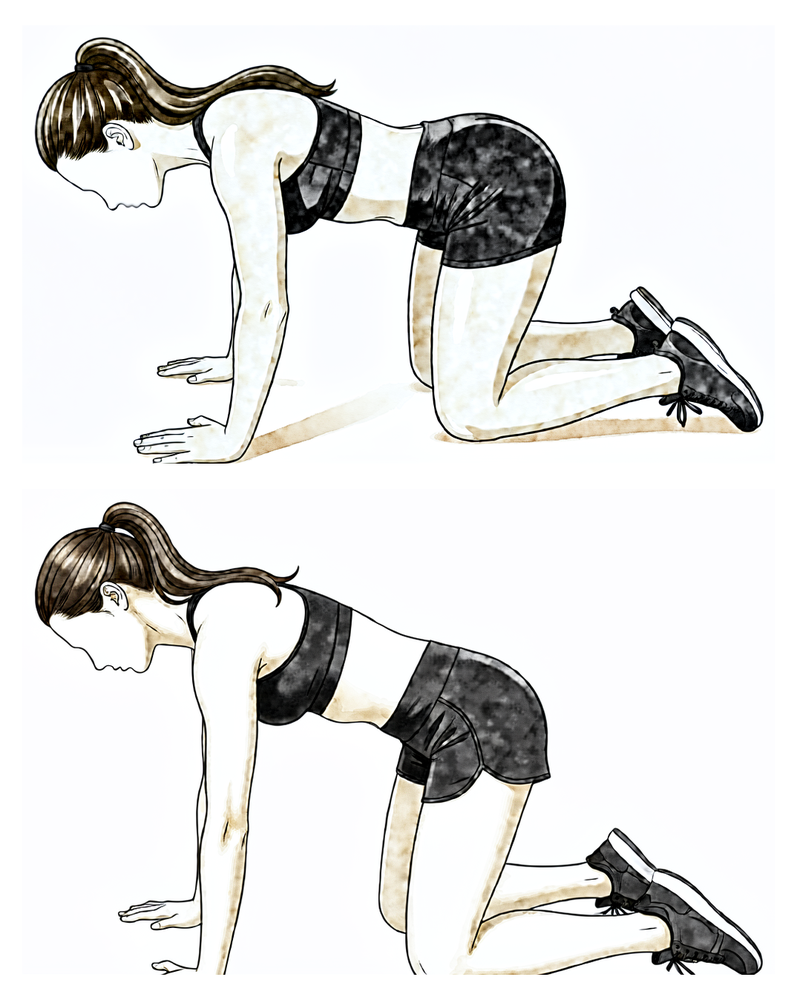
Kieran Hirpara 4.0
گھٹنوں کے بل پش اپ پلس
گھٹنوں کے بل پش اپ کی حالت میں، ہاتھ کندھوں کے نیچے رکھ کر، کہنیوں کو سیدھا رکھیں اور کمر کے اوپری حصے کو چھت کی طرف دھکیلیں تاکہ کندھے کی پچھلی ہڈیاں ایک دوسرے سے دور سرکیں، پھر قابو کے ساتھ نیچے آئیں۔
اپنے فزیوتھراپسٹ کی رہنمائی کے مطابق
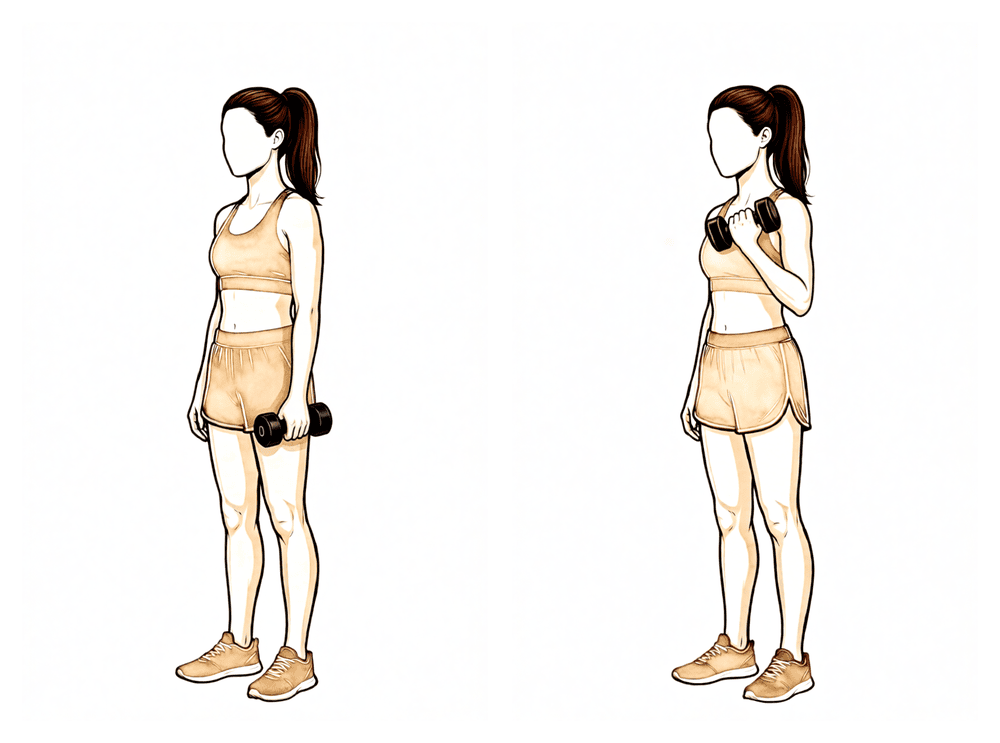
Kieran Hirpara 4.0
بائسیپس کرل
ہتھیلی اوپر کی طرف رکھ کر اور بازو کا اوپری حصہ پہلو میں رکھ کر ایک ہلکا وزن پکڑیں، کہنی کو موڑ کر ہاتھ کو کندھے کی طرف لائیں، پھر قابو کے ساتھ نیچے لائیں۔ وزن ہلکا رکھیں — اس مرحلے میں بھاری وزن اٹھانا (7 کلوگرام سے زیادہ) ابھی بھی ممنوع ہے۔
اپنے فزیوتھراپسٹ کی رہنمائی کے مطابق
آخری مرحلہ کندھے کو روزمرہ زندگی کے لیے تیار کرتا ہے: حرکت کو درد کے بغیر رکھتے ہوئے اتنی طاقت اور برداشت پیدا کرنا کہ آپ بازو کو اعتماد سے استعمال کر سکیں۔ اگر جوڑ کی تبدیلی کے ساتھ ہی روٹیٹر کف (rotator cuff)، یعنی ٹینڈنوں کا وہ گروپ جو کندھے کو تھامتا اور گھماتا ہے، کی مرمت بھی کی گئی تھی تو روٹیٹر کف (RTC) کی مضبوطی کی ورزشیں اب شروع ہوتی ہیں۔ وزن اٹھانے کی حد بڑھ جاتی ہے، لیکن بھاری چیزیں (7 کلوگرام سے زیادہ) اب بھی ممنوع ہیں۔ یہ مرحلہ، اور یہ پروٹوکول، اس وقت ختم ہوتا ہے جب تمام سنگ میل پورے ہونے کے بعد آپ کا سرجن اجازت دے دے۔
آپ کے فزیوتھراپسٹ کے لیے:
اہداف
- درد کے بغیر حرکت کی حد برقرار رکھنا
- اگر ساتھ میں مرمت کی گئی ہو تو روٹیٹر کف (RTC) کی مضبوطی شروع کرنا
- کندھے کی طاقت اور برداشت بہتر بنانا
- بازو (upper extremity) کا روزمرہ استعمال بڑھانا
علاج کا طریقہ
- مرحلہ II سے IV کے اقدامات جاری رکھیں
- مضبوطی:
- کندھے کی پچھلی ہڈی کے گرد پٹھے: گھٹنوں کے بل پش اپ پلس (push-up plus)، "W" ورزش، مزاحمتی بینڈ سے Ws، پیٹ کے بل لیٹ کر کندھے کو پیچھے لے جانے والی Is، ڈائنامک ہگ (dynamic hug)، مزاحمتی بینڈ سے ڈائنامک ہگ، مزاحمتی بینڈ سے آگے مکا (forward punch)، آگے مکا، T اور Y، "T" ورزش
- ڈیلٹائیڈ: روزمرہ کی حالتوں میں مزاحمت کے ساتھ آگے اٹھانے اور اسکیپشن کو آہستہ آہستہ بڑھاتے رہیں
- کہنی: بائسیپس کرل (bicep curl)، مزاحمتی بینڈ سے بائسیپس کرل، اور ٹرائسیپس
- روٹیٹر کف: اندر/باہر گھماؤ کی آئسومیٹرک، پہلو کے بل لیٹ کر باہر کی طرف گھماؤ، کھڑے ہو کر مزاحمتی بینڈ سے باہر کی طرف گھماؤ، کھڑے ہو کر مزاحمتی بینڈ سے اندر کی طرف گھماؤ، اندر کی طرف گھماؤ، باہر کی طرف گھماؤ، پہلو کے بل لیٹ کر پہلو کی طرف اٹھانا (ABD) سے کھڑے ہو کر پہلو کی طرف اٹھانے تک
- حرکت پر قابو:
- مزاحمتی بینڈ سے PNF انداز کی حرکت، مزاحمت کے ساتھ PNF D1 ترچھی سمت میں اٹھانا، ترچھا اوپر (diagonal-up)، ترچھا نیچے (diagonal-down)، مزاحمتی بینڈ کے ساتھ دیوار پر ہاتھ سرکانا
احتیاطیں
- بھاری چیزیں (7 کلوگرام سے زیادہ) نہیں اٹھانی
اگلے مرحلے میں جانے کی شرائط
- سرجن کی اجازت، اور سنگ میل کی تمام شرائط پوری ہو چکی ہوں
- درد کے بغیر PROM اور AROM برقرار رہے
- تمام ورزشیں کرتے ہوئے کندھے کی پچھلی ہڈی کی حرکت دونوں طرف یکساں ہو
- مریض کی اپنی رپورٹ پر مبنی نتائج کے پیمانے QuickDASH اور ASES
آپ کے پروٹوکول کے بعد
یہ پروٹوکول پریکٹس کے صحت یابی کے عمومی مشوروں کے ساتھ مل کر کام کرتا ہے: دیکھیں آپریشن کے بعد درد پر قابو اور زخم کی دیکھ بھال۔ خود آپریشن کے بارے میں کندھے کی الٹی تبدیلی دیکھیں۔
اس پروٹوکول کے پیچھے طبی شواہد (شائع شدہ بحالی کے ٹرائلز، سلنگ اور حرکت کے اصولوں کی وجوہات، اور تحقیقی حوالہ جات) ساتھ دیے گئے شواہد کے خلاصے میں بیان کیے گئے ہیں (جو ڈاؤن لوڈ کے قابل پی ڈی ایف کے طور پر دستیاب ہے)۔
Evidence & references
This is the clinical evidence summary written for health professionals. It is technical, and it lists the research this page was built from. You do not need to read it to understand your treatment or to make a decision about it.
Reverse Shoulder Arthroplasty (Cuff-Tear Arthropathy / Arthritis) — Post-operative Rehabilitation Evidence
Topic scope: Post-operative rehabilitation after elective reverse total shoulder arthroplasty (RSA / rTSA) for rotator-cuff-tear arthropathy, glenohumeral arthritis with an irreparable cuff, or a massive irreparable cuff tear — not the acute proximal-humerus-fracture indication, where tuberosity healing imposes its own restrictions. The evidence base for the operation (when RSA is indicated, implant survivorship, complication profile) is extensive; the evidence base for the rehabilitation protocol is smaller but, unusually for shoulder surgery, now includes several randomised trials directly comparing immobilisation strategies.
Defining principle of this rehab: RSA rehabilitation is comparatively permissive and is increasingly run on an accelerated footing. Two features of the reconstructed joint explain why. First, the deltoid — not the rotator cuff — drives elevation after RSA; the design medialises and lowers the centre of rotation so the deltoid can elevate an arm that has no functioning cuff. Second, there is usually no subscapularis repair to protect (and many surgeons deliberately leave it unrepaired with a lateralised implant), so the external-rotation restriction that dominates anatomic-TSA rehab is far less central here. The principal early caution is therefore not tissue healing but component stability: a reverse prosthesis can dislocate, and the at-risk position is the combination of extension + adduction + internal rotation (the hand-behind-the-back / tucking-in-a-shirt movement). Early rehab accordingly protects against that position while otherwise encouraging motion. The sling is largely for comfort, support and dislocation-avoidance, and the published trial evidence shows that shortening or even omitting it does not increase the dislocation or complication rate.
Surgeon's protocol note: Dr Hirpara's protocol on this page is run on an accelerated footing, directly aligned with the randomised and cohort evidence below: a short ~2-week comfort sling (weaned off during the day; optional brief night use), active-assisted and active shoulder motion from the start (within defined limits, beginning supine/gravity-assisted), and deltoid + periscapular strengthening from ~week 4. The main early constraint is component stability, so the extension + adduction + internal-rotation (hand-behind-back) dislocation position is avoided for the first ~6 weeks while motion is otherwise encouraged. Elevation after RSA is deltoid-driven, which is why strengthening is deltoid- and periscapular-focused. Follow the protocol your surgeon has set.
The operation, in brief
In a reverse replacement the normal anatomy is inverted: a ball (glenosphere) is fixed to the shoulder blade and a cup is fixed to the top of the arm bone. This moves the joint's pivot point down and in, which lengthens and tensions the deltoid and lets that muscle lift the arm even when the rotator cuff is gone — the situation in cuff-tear arthropathy. Because the implant, not the patient's own cuff, provides stability and power, the rehabilitation logic differs fundamentally from a cuff repair (where a healing tendon must be protected) and from an anatomic replacement (where a repaired subscapularis must be protected).
Evidence by theme
1. Early / accelerated motion is safe — multiple randomised trials
This is the best-supported part of RSA rehabilitation, and it is unusually strong for a shoulder rehab question because it rests on randomised controlled trials, not just consensus:
- Hagen et al. (2020), single-blind RCT, 107 shoulders — randomised to immediate physical therapy (passive + active ROM from the start) versus 6-week delayed therapy. No difference in final ROM, patient-reported outcomes, or dislocation/complication rate (early 7.1% vs delayed 9.1%). [RAG corpus — 10.1016/j.jse.2020.11.017]
- Edwards / "two rehabilitation approaches" RCT, 61 patients (63 shoulders) — early active (submaximal isometric deltoid work from week 2) versus delayed active rehab, both with a 6-week sling. Pain and overall function were equivalent at 3, 6 and 12 months, but the early-active group had significantly better active forward flexion at 3 months (p = 0.019) — i.e. earlier functional gain without added risk. [Literature — PMC8512973]
- Lee et al. (2021), 357 shoulders — randomised to no immobilisation / early motion, 3-week sling, or 6-week sling. No difference in patient-reported outcomes, satisfaction, pain or ROM; the immediate-motion group had the lowest overall complication rate (reported as ~4% vs ~24.6% in the 6-week cohort in the pooled systematic-review re-analysis). [via Sachinis 2024 SR]
A systematic review (Sachinis et al., 2024; 3 controlled trials, ~527 shoulders) concluded that accelerated rehabilitation is safe and yields equivalent 12-month outcomes, while cautioning that protocols should still be individualised by bone quality, age, diagnosis and surgical complexity rather than applied uniformly. [Literature — PMC11034463]
Evidence: MODERATE–STRONG (several RCTs + SR), though individual trials are modest in size.
2. Sling duration can be shortened without added risk
- A large retrospective cohort (960 patients) compared 2-week vs 6-week sling immobilisation after RSA and found no difference in complication rate (12.0% vs 15.0%, p = 0.21), dislocation rate (p = 0.79), acromial stress fracture, loosening or infection; final flexion and ER were equivalent. The authors concluded shorter immobilisation does not incur additional risk. [Literature — PMC10638591]
- Published institutional protocols (e.g. Massachusetts General Brigham) have themselves moved from a 6-week to a 4-week sling standard, attributing the change to improved implant design. [Published protocol — MGH Sports Medicine]
Evidence: MODERATE (one large cohort + protocol trend; the question is now whether 6 weeks is necessary, not whether it is safe).
3. The deltoid drives recovery — and formal active PT may add little
Because elevation depends on deltoid recruitment (with documented compensatory recruitment of upper trapezius, latissimus and posterior deltoid), strengthening is deltoid- and periscapular-focused rather than cuff-focused. Notably, a multicentre RCT found that a formal active physical-therapy programme did not improve outcomes over a home/self-directed programme after RSA — many patients recover well with a structured home programme and physiotherapist supervision rather than intensive hands-on active therapy. [RAG corpus — 10.1016/j.jse.2022.12.011] This supports a pragmatic, education-and-home-exercise model.
Evidence: MODERATE (RCT).
4. Dislocation: low but real, and the early protective position is specific
Dislocation is the relevant early stability complication (as opposed to the tissue-healing concern of a cuff repair). Corpus series on dislocation following RSA identify the at-risk position as adduction + internal rotation + extension, and identify subscapularis insufficiency and implant/soft-tissue tensioning as contributors to instability. [RAG corpus — 10.1016/j.jse.2016.12.073; 10.1016/j.jse.2008.12.013] This is precisely why early protocols — accelerated or conservative — restrict reaching behind the back and forced internal rotation while otherwise allowing supported elevation. The role of routine subscapularis repair in preventing dislocation is debated and interacts with glenosphere lateralisation (a lateralised design appears less reliant on subscapularis repair for stability). [RAG corpus — 10.5435/jaaos-d-16-00781]
Evidence: MODERATE (cohort/registry); the precaution itself is universal consensus.
5. Contrast with anatomic TSA rehabilitation
The American Society of Shoulder and Elbow Therapists (ASSET) consensus on anatomic TSA rehab centres on protecting the subscapularis repair — limiting passive external rotation and active internal rotation for ~6 weeks. [RAG corpus — 10.1016/j.jse.2020.05.019] After RSA that specific constraint is usually absent or much reduced (no cuff repair to protect; subscapularis often not repaired), which is the structural reason RSA rehab is more permissive in external rotation while being more attentive to the dislocation-position combination.
Phased post-operative timeline
This table reflects Dr Hirpara's protocol on this page (the accelerated, ~2-week-sling approach). The right-hand column notes the published evidence that the protocol is grounded in.
| Phase | Window | Sling | Shoulder motion | Strengthening | Accelerated-evidence basis |
|---|---|---|---|---|---|
| I — Protection | Week 0–3 | Comfort/support; wean off during the day from ~2 weeks; optional brief night use | Active-assisted and active as tolerated from the start (begin supine/gravity-assisted; ER in scapular plane to tolerance; flexion/scaption ≤120°; abduction ≤90°); no IR, no reaching behind back, avoid the dislocation position; elbow/wrist/hand active | — | RCTs show early active/AAROM from the start carries no added dislocation/complication risk (Hagen 2020; Edwards) |
| II — Intermediate | Week 4–6 | Off during the day; optional brief night use | Progress AAROM and AROM | Periscapular + deltoid activation and strengthening initiated (~week 4) | Early active deltoid work gives earlier functional gain without added risk (Edwards) |
| III — Intermediate cont. | Week 7–8 | Discontinued | Progress AROM all planes; first gentle passive IR in scapular plane (≤50°) | Deltoid + periscapular progressed; motor control | Cohort data: 2-week sling non-inferior to 6 weeks (no extra dislocations) |
| IV — Transitional | Week 9–11 | — | Full passive ROM all planes | Resisted deltoid/periscapular; dynamic stability; PNF; no lifting >5 kg | — |
| V — Advanced strengthening | Week 12–16 | — | Maintain pain-free full ROM | Add rotator-cuff strengthening if a cuff repair was done; functional loading; no lifting >7 kg | Resisted IR / eccentric / closed-chain typically from ~12 weeks |
Return-to-activity anchors (from this protocol): driving ~6 weeks; light lifting from 6 weeks but no heavy lifting for ~6 months; swimming (breaststroke) 8 weeks / freestyle 12 weeks; golf ~3 months; sedentary work 6 weeks, manual work surgeon-guided. Published sport-return data after RSA are encouraging for low-impact activity (≈60–86% return; swimming ~84%, golf/fitness ~77%) but caution against high-impact and contact sport given prosthesis-loading and revision concerns. [Literature — PMC10043097]
Key controversies / evidence quality
-
Accelerated vs conservative rehab — and where this protocol sits. The randomised evidence shows early motion and shorter (or no) immobilisation are safe and may give earlier functional gain, with equivalent 12-month outcomes. Dr Hirpara's ~2-week comfort sling, active-assisted/active motion from the start, strengthening from ~week 4 protocol aligns with this accelerated evidence. The systematic review still endorses individualisation (bone quality, fixation, intra-operative stability, soft-tissue tensioning, any concomitant cuff repair), so the surgeon may dial the plan back for a borderline-stable construct, softer bone, or a concomitant repair. The prescribed plan is the one to follow.
-
Immobilisation duration. Trial and large-cohort data show 2–4 weeks is non-inferior to 6 weeks for dislocation and complications, which is why this protocol uses a short ~2-week comfort sling. Longer 6-week protocols persist elsewhere out of surgeon preference and construct-specific factors, with the low absolute dislocation rate making the question hard to power definitively.
-
Precautions. The extension + adduction + internal rotation (hand-behind-back) restriction is near-universal consensus early on; the disagreement is about how long, and how much external-rotation freedom to allow (more than anatomic TSA, but bounded by soft-tissue tension).
-
Subscapularis repair. Whether to repair it — and whether repair reduces dislocation — interacts with glenosphere lateralisation and remains debated; this in turn influences how restrictive early rehab needs to be.
-
Active physiotherapy intensity. At least one RCT found formal active PT did not beat a structured home programme, supporting an education-led, home-exercise model with physiotherapist oversight rather than intensive hands-on therapy.
Evidence-strength flags (summary)
- MODERATE–STRONG (RCT / SR): accelerated/early-motion rehab is safe with equivalent 12-month outcomes (Hagen 2020 RCT; Edwards RCT; Lee 2021; Sachinis 2024 SR); formal active PT not superior to home programme (multicentre RCT).
- MODERATE (large cohort): 2-week sling non-inferior to 6-week sling for dislocation/complications (960-patient cohort); deltoid-driven recovery biomechanics.
- CONSENSUS / WEAK: the dislocation-position precaution (universal but not trial-quantified for duration); the specific phase timings of this protocol (drawn from published institutional protocols + surgeon preference, not a head-to-head rehab RCT); subscapularis-repair effect on instability (conflicting cohort data).
Citations
RAG corpus (180,000+ Orthopaedic articles) — real DOIs returned by search
- Hagen MS, et al. Accelerated rehabilitation following reverse total shoulder arthroplasty. J Shoulder Elbow Surg / Semin Arthroplasty. 2021. DOI: 10.1016/j.jse.2020.11.017
- Active physical therapy does not improve outcomes after reverse total shoulder arthroplasty: a multi-center, randomized clinical trial. J Shoulder Elbow Surg. 2023. DOI: 10.1016/j.jse.2022.12.011
- Kennedy J, et al. The American Society of Shoulder and Elbow Therapists' consensus statement on rehabilitation for anatomic total shoulder arthroplasty. J Shoulder Elbow Surg. 2020. DOI: 10.1016/j.jse.2020.05.019
- Dislocation following reverse total shoulder arthroplasty. J Shoulder Elbow Surg. 2017. DOI: 10.1016/j.jse.2016.12.073
- Edwards TB, et al. Subscapularis insufficiency and the risk of shoulder dislocation after reverse shoulder arthroplasty. J Shoulder Elbow Surg. 2009. DOI: 10.1016/j.jse.2008.12.013
- Clinical Outcomes After Reverse Shoulder Arthroplasty With and Without Subscapularis Repair: The Importance of Considering Glenosphere Lateralization. J Am Acad Orthop Surg. 2018. DOI: 10.5435/jaaos-d-16-00781
Literature (URLs)
- Sachinis NP, et al. Can we accelerate rehabilitation following reverse shoulder arthroplasty? A systematic review. Shoulder Elbow. 2024. https://pmc.ncbi.nlm.nih.gov/articles/PMC11034463/
- A randomised trial comparing two rehabilitation approaches following reverse total shoulder arthroplasty (early active vs delayed active). 2021. https://pmc.ncbi.nlm.nih.gov/articles/PMC8512973/
- No difference in complications between two-week vs. six-week duration of sling immobilization after reverse total shoulder arthroplasty (960-patient cohort). 2023. https://www.ncbi.nlm.nih.gov/pmc/articles/PMC10638591/
- Optimizing Outcomes After Reverse Total Shoulder Arthroplasty: Rehabilitation, Expected Outcomes, and Maximizing Return to Activities. 2023. https://pmc.ncbi.nlm.nih.gov/articles/PMC10043097/
- Kim Y-T, et al. Four weeks of immobilisation after reverse shoulder arthroplasty yields outcomes comparable to six weeks. Clin Shoulder Elb. 2024. https://www.ncbi.nlm.nih.gov/pmc/articles/PMC11546419/
Published rehabilitation protocols (basis for the phase structure)
- Massachusetts General Brigham Sports Medicine. Rehabilitation Protocol for Reverse Shoulder Arthroplasty. Revised December 2018. https://www.massgeneral.org/assets/mgh/pdf/orthopaedics/sports-medicine/physical-therapy/rehabilitation-protocol-for-reverse-shoulder-arthroplasty.pdf
- Brigham and Women's Hospital. Reverse Total Shoulder Arthroplasty Protocol. https://www.brighamandwomens.org/assets/BWH/patients-and-families/pdfs/shoulder--reverse-total-shoulder-arthroplasty-protocol.pdf