Patients › Rehabilitation
کندھے کے پچھلے حصے کا استحکام آپریشن (Posterior Stabilisation)
Rehabilitation protocol after posterior shoulder stabilisation, with posterior-specific precautions and return-to-sport criteria.
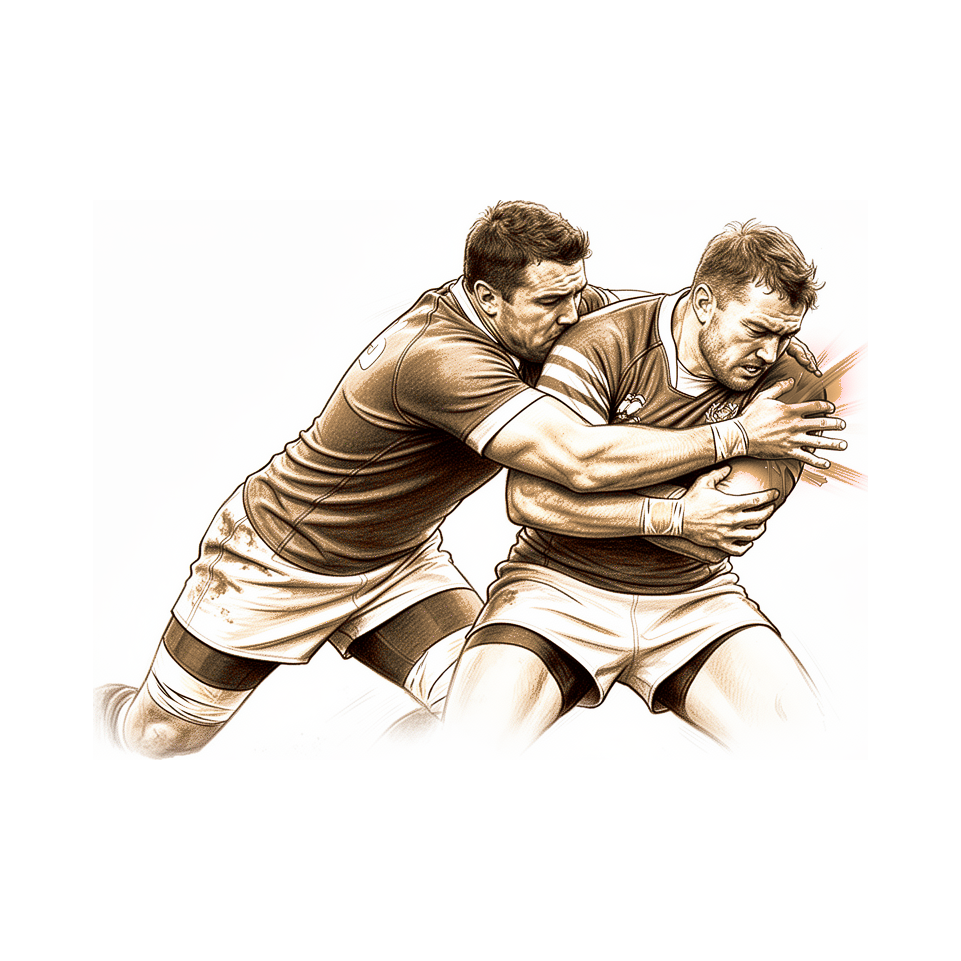
یہ پروٹوکول Mater Private Hospital Rockhampton میں ڈاکٹر کیرن ہِرپرا کے ہاتھوں کندھے کے پچھلے حصے کے استحکام کے آپریشن (posterior stabilisation) کے بعد آپ کی صحت یابی میں رہنمائی کرتا ہے۔ نیچے ہر مرحلہ سادہ زبان میں اس وضاحت سے شروع ہوتا ہے کہ اس وقت کیا ہو رہا ہے اور کیا سب سے زیادہ اہم ہے، اور اس کے بعد وہ منظم پروگرام آتا ہے جو آپ اپنے فزیوتھراپسٹ کو دکھا سکتے ہیں؛ فزیوتھراپی کے پہلے دورے پر یہ صفحہ یا اس کی پی ڈی ایف ساتھ لے کر جائیں تاکہ آپ کی بحالی کا علاج مربوط رہے۔ آپ کی صحت یابی کس طرح آگے بڑھتی ہے، اس کے مطابق آپ کا فزیوتھراپسٹ اس منصوبے میں تبدیلی کر سکتا ہے۔
اگر سرجری کے بعد آپ کو اپنے زخم کے بارے میں کوئی تشویش ہو تو کلینک سے رابطہ کریں۔ اکثر یہ مددگار ہوتا ہے کہ زخم کی تصویر لے کر جائزے کے لیے ای میل کر دیں۔
کیا توقع رکھیں
کندھے کے پچھلے حصے کے استحکام کا آپریشن کندھے کے پچھلے (posterior) حصے کی مرمت کرتا ہے، جہاں لیبرم (labrum، یعنی جوڑ کے کنارے کا کارٹلیج کا حلقہ) اور جوڑ کی جھلی (capsule) ساکٹ (جوڑ کے پیالے) سے پھٹ کر الگ ہو گئے ہیں۔ چونکہ مرمت جوڑ کے پچھلے حصے میں ہے، اس لیے جو حرکت اس پر سب سے زیادہ بوجھ ڈالتی ہے وہ بازو کو آگے بڑھاتے ہوئے اندر کی طرف گھمانا ہے، اور شروع میں روزمرہ کی تین حرکتوں سے بچایا جاتا ہے، کیونکہ ان میں سے ہر ایک جوڑ کے گولے کو تازہ مرمت کی طرف پیچھے دھکیلتی ہے:
- بازو کو اندر کی طرف گھمانا (internal rotation): کمر کے پیچھے ہاتھ لے جانا، یا ہاتھ کو اندر کی طرف اپنے پیٹ کی جانب اور اس کے آر پار موڑنا؛
- جسم کے آر پار مخالف کندھے کی طرف ہاتھ بڑھانا (cross-body adduction)؛
- آپریشن والے بازو پر ٹیک لگانا یا اس کے ذریعے دھکیلنا۔
یہ کندھے کے اگلے حصے کے استحکام کے آپریشن (anterior stabilisation) کا الٹ ہے، جس میں بازو کو باہر کی طرف گھمانے سے بچانا پڑتا ہے۔ پچھلی مرمت کے بعد محفوظ سمت دراصل بازو کو باہر کی طرف گھمانا ہے، اور اندر کی طرف گھمانا سب سے آخر میں بحال کیا جاتا ہے: آہستگی سے، اور تقریباً تین ماہ تک پوری حد تک نہیں۔ نیچے دیے گئے مراحل ٹھیک ٹھیک بتاتے ہیں کہ ہر محفوظ رکھی گئی حرکت کب واپس آ سکتی ہے۔
حرکت کو جلدی بڑھانے کا لالچ ہمیشہ رہتا ہے، لیکن شواہد بتاتے ہیں کہ جلدی کرنے سے حاصل ہونے والی اضافی حرکت عارضی ہوتی ہے، اور پہلے چھ ہفتوں میں مرمت سب سے کمزور ہوتی ہے۔ ایک مستقل، مرحلہ وار پروگرام پوری کارکردگی کی طرف سب سے محفوظ اور سب سے زیادہ قابلِ پیش گوئی واپسی دیتا ہے۔ کندھے کا پیچھے کی طرف سے ڈھیلا پن (posterior instability) کم ہوتا ہے، اس لیے یہ ٹائم لائن بڑے ٹرائلز کے بجائے بائیو مکینیکل استدلال اور ماہرین کے شائع شدہ فیلوشپ پروٹوکولز پر مبنی ہے؛ ڈاکٹر ہِرپرا رفتار کو آپ کے مطابق ڈھالیں گے۔
آپ ایک سادہ سلنگ (sling)، یعنی گلے سے لٹکی وہ پٹی جو بازو کو سہارا دیتی ہے، پہنیں گے، کوئی خاص ابڈکشن (abduction) یا "گن سلنگر" (gunslinger) بریس نہیں۔ حفاظت اوپر بیان کی گئی حالت سے متعلق احتیاطوں سے ہوتی ہے (بازو کو سامنے رکھنا اور اندر کی طرف گھمانے اور جسم کے آر پار لے جانے سے بچنا)، سلنگ کی شکل سے نہیں۔
ایک نظر میں پورا سفر:
- مرحلہ I — حفاظت، ہفتے 0 سے 2
- مرحلہ II — ابتدائی حرکت، ہفتے 2 سے 4
- مرحلہ III — حرکت بڑھانا اور طاقت کی ورزشیں شروع کرنا، ہفتے 4 سے 6
- مرحلہ IV — آگے بڑھنا، ہفتے 6 سے 8
- مرحلہ V — طاقت بڑھانا، ہفتے 8 سے 12
- مرحلہ VI — پوری حرکت اور وزن کے ساتھ ورزش، ہفتے 12 سے 14
- کھیل میں واپسی: 12ویں ہفتے سے، جبکہ ایسے کھیل جن میں کھلاڑی آپس میں ٹکراتے ہیں (contact sport) 5 ماہ سے پہلے نہیں
اپنی سرگرمیوں میں واپسی:
- کام: بیٹھ کر کیا جانے والا کام: جتنا برداشت ہو سکے؛ جسمانی مشقت والا کام: کم از کم 3 ماہ
- گاڑی چلانا: جب سلنگ اتر جائے اور بازو پر قابو ہو، عام طور پر تقریباً 6 ہفتوں پر
- وزن اٹھانا: ابتدائی ہفتوں میں حدود کے اندر ہلکا وزن اٹھانا شروع کیا جا سکتا ہے؛ تقریباً 3 ماہ تک زیادہ بھاری وزن اٹھانے سے بچیں
- ٹکراؤ والے کھیل (فٹ بال، رگبی، مارشل آرٹس، ریکٹ والے کھیل، راک کلائمبنگ، گھڑ سواری): زیادہ سے زیادہ جلدی 5 ماہ سے، اور صرف اس وقت جب کھیل میں واپسی کی شرائط پوری ہو جائیں
آپریشن
کندھے کے پچھلے حصے کے استحکام کا آپریشن عام طور پر دوربین کے ذریعے آپریشن (keyhole)، یعنی آرتھروسکوپی (arthroscopy) سے کیا جاتا ہے، یا کبھی کبھار ایک چھوٹے کھلے چیرے کے ذریعے۔ کندھے کے پچھلے حصے میں پھٹے ہوئے لیبرم اور جوڑ کی جھلی کو دوبارہ ساکٹ کے کنارے سے جوڑ کر کس دیا جاتا ہے (اسے کبھی کبھی ریورس بینکارٹ مرمت (reverse Bankart repair) یا پوسٹیریئر کیپسولوریفی (posterior capsulorrhaphy) کہا جاتا ہے)۔ بحالی کا کام یہ ہے کہ جب تک مرمت بھر رہی ہو، شروع میں آگے کی طرف، اندر کی طرف اور جسم کے آر پار کی حرکتوں کو محدود کر کے جوڑ کے گولے کو اس مرمت سے دور رکھا جائے، اور پھر مرحلہ وار پوری حرکت، طاقت اور کارکردگی دوبارہ بنائی جائے۔
سلنگ پہننا
آپ کی سلنگ بازو کو سہارا دیتی ہے اور یاد دلاتی ہے کہ مرمت بھرنے کے دوران بازو کو محفوظ حالت میں رکھنا ہے۔ اصول سادہ ہیں:
- تقریباً 6 ہفتوں تک سادہ سلنگ پہنیں، خاص طور پر جب آپ گھر سے باہر ہوں یا دوسرے لوگوں کے درمیان ہوں۔ ڈاکٹر ہِرپرا نہ ابڈکشن تکیہ (abduction pillow) استعمال کرتے ہیں، نہ ویج (wedge) اور نہ گن سلنگر بریس؛ پچھلی مرمت کی حفاظت ایک سادہ سلنگ اور نیچے دی گئی حالت سے متعلق احتیاطیں کرتی ہیں۔
- آپ سلنگ پہن کر نہیں سوتے۔ سلنگ کے بغیر سوئیں، اور بازو کو خطرے والی حالت سے باہر رکھیں: اسے تھوڑا سا اپنے سامنے رکھیں، نہ اندر کی طرف مڑا ہوا ہو اور نہ جسم کے آر پار دبا ہوا ہو۔ بازو کے نیچے رکھا گیا تکیہ اسے اسی جگہ رکھنے میں مدد دیتا ہے۔
- نہاتے وقت اور اپنی ورزشوں کے لیے سلنگ اتار دیں (جب آپ کو طریقہ دکھا دیا جائے)۔ جب بھی سلنگ اتری ہو، بازو کو ڈھیلا اور اپنے جسم کے سامنے رکھیں؛ اسے کبھی نہ کمر کے پیچھے جانے دیں اور نہ سینے کے آر پار۔
- اگر کندھے میں سوجن یا درد ہو تو برف استعمال کریں، خاص طور پر ورزش کے بعد۔
سلنگ استعمال کرتے وقت اپنی بیٹھنے اور کھڑے ہونے کی حالت (posture) پر نظر رکھیں: اپنے کان، کندھے اور کولہے ایک سیدھ میں رکھیں اور جھک کر نہ بیٹھیں۔ اچھی حالت آپ کی کمر کی حفاظت کرتی ہے اور کندھے کو اکڑنے سے بچانے میں مدد دیتی ہے۔
آپ کا فزیوتھراپسٹ تین قسم کی حرکت استعمال کرے گا: غیر فعال حرکت کی حد (PROM) (آپ کا بازو بالکل ڈھیلا رہتا ہے، اور سارا کام دوسرا بازو یا فزیوتھراپسٹ کرتا ہے)؛ مدد کے ساتھ فعال حرکت کی حد (AAROM) (آپ کا صحیح بازو یا کوئی چیز آپریشن والے بازو کو حرکت دینے میں مدد کرتی ہے)؛ اور فعال حرکت کی حد (AROM) (آپ بازو کو اس کی اپنی طاقت سے حرکت دیتے ہیں)۔ آپ کی علاج کرنے والی ٹیم بتائے گی کہ ہر مرحلے پر کون سی قسم لاگو ہوتی ہے۔
اہم احتیاطیں — یہ ہرگز نہ کریں
خاص طور پر پہلے چھ ہفتوں میں، درج ذیل باتیں کندھے کے پچھلے حصے میں کی گئی مرمت کی حفاظت کرتی ہیں:
- بازو کو سیدھے سامنے والی (نیوٹرل) حالت سے آگے اندر کی طرف ہرگز نہ گھمائیں: نہ کمر کے پیچھے ہاتھ لے جائیں، اور نہ ہاتھ کو اندر کی طرف پیٹ کے آر پار موڑیں۔ شروع میں اندر کی طرف گھمانا وہ واحد سب سے اہم حرکت ہے جس سے بچنا ہے، اور یہی سب سے آخر میں بحال کی جاتی ہے۔
- جسم کے آر پار مخالف کندھے کی طرف ہاتھ ہرگز نہ بڑھائیں (جسم کے آر پار کوئی حرکت نہیں)۔
- آگے ہاتھ بڑھانے کو بازو کو اندر کی طرف گھمانے کے ساتھ ہرگز نہ ملائیں؛ یہی وہ حالت ہے جو مرمت پر بوجھ ڈالتی ہے۔
- آپریشن والے بازو پر ہرگز ٹیک نہ لگائیں، نہ اس کے سہارے کرسی یا بستر سے اٹھیں، اور نہ اس پر وزن ڈالیں۔
- شروع میں آپریشن والے بازو سے کوئی بھاری چیز ہرگز نہ اٹھائیں، نہ دھکیلیں اور نہ کھینچیں۔
- ان میں سے کسی بھی سمت میں ہرگز نہ زبردستی کریں اور نہ کھنچاؤ دیں؛ حرکت کو اپنے فزیوتھراپسٹ کی حدود کے اندر آہستہ آہستہ واپس آنے دیں۔
- پچھلی مرمت کے بعد بازو کو باہر کی طرف گھمانا محفوظ سمت ہے، لیکن پھر بھی اپنے فزیوتھراپسٹ کی طے کردہ حدود کے اندر رہیں۔
ہسپتال میں آپ کے پہلے دن
Kieran Hirpara 4.0
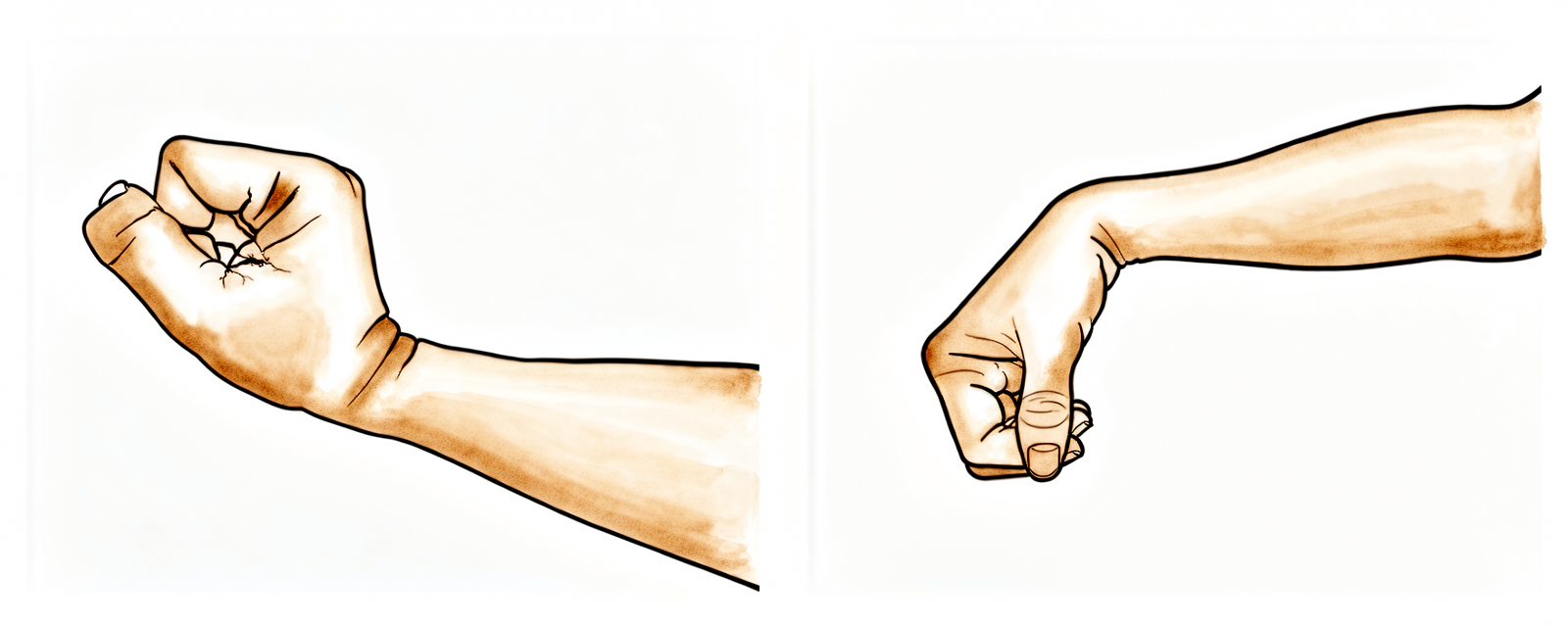
کلائی، ہاتھ اور انگلیاں
اپنی کلائی کو آگے، پیچھے اور دائیں بائیں موڑ کر، اور اپنی انگلیاں کھول بند کر کے یا ایک نرم گیند دبا کر اپنے ہاتھ کو حرکت میں رکھیں۔ اس سے ہاتھ اور کلائی لچکدار رہتے ہیں اور سوجن کم کرنے میں مدد ملتی ہے، اور اس سے مرمت پر بوجھ نہیں پڑتا۔
10 بار، دن میں 3 بار
Kieran Hirpara 4.0
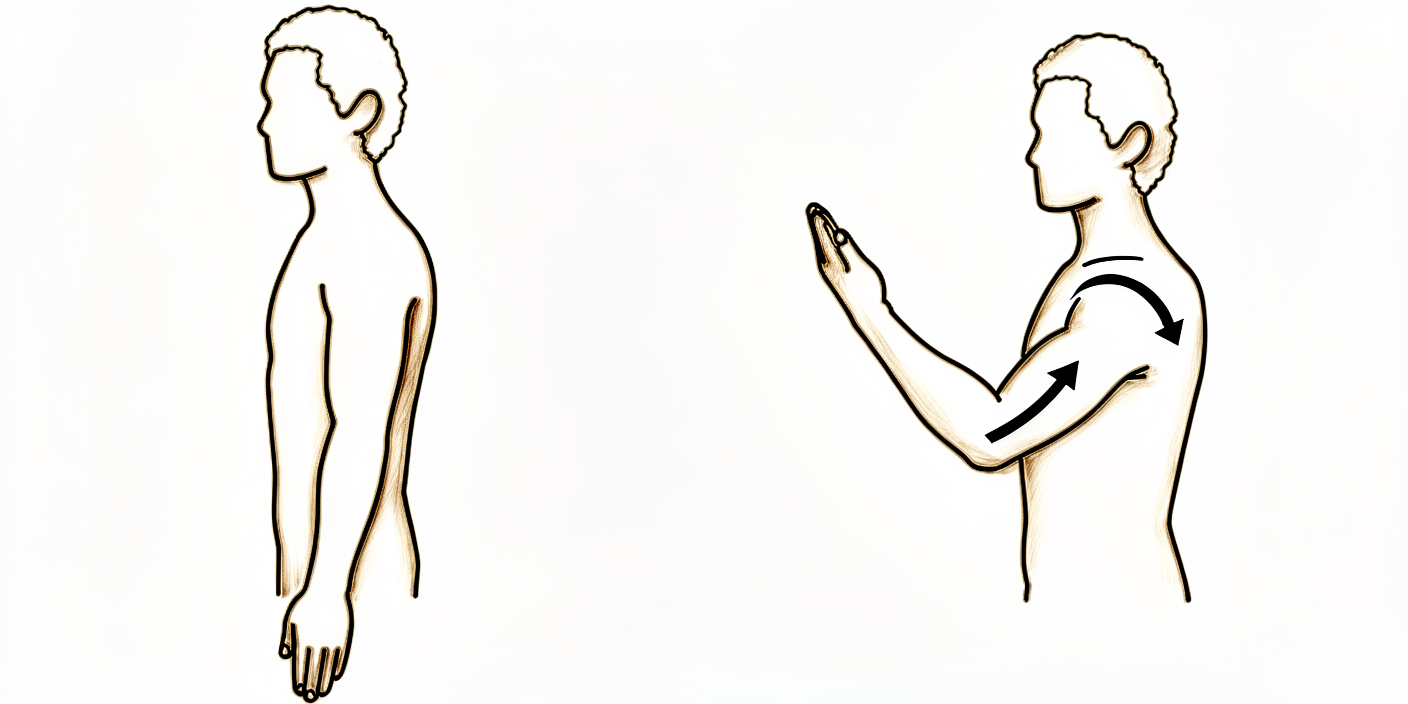
کہنی موڑنا
اپنے بازو کے اوپری حصے کو جسم کے سامنے رکھتے ہوئے اپنی کہنی کو آہستگی سے موڑیں اور سیدھا کریں۔ اپنے کندھے کو ڈھیلا اور ساکن رکھیں۔
10 بار، دن میں 3 بار
Kieran Hirpara 4.0
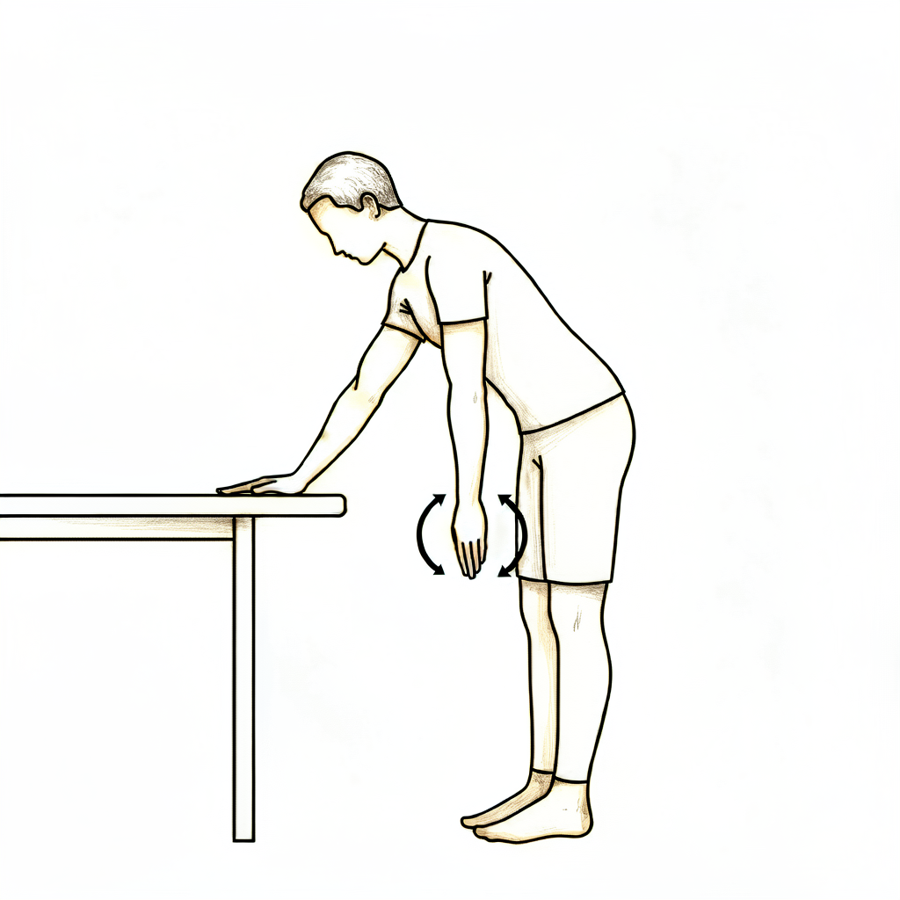
پینڈولم (جھولنے والی) ورزش
آگے کی طرف جھکیں اور آپریشن والے بازو کو بالکل ڈھیلا چھوڑ کر نیچے لٹکنے دیں۔ اپنے جسم کی حرکت سے بازو کو آہستگی سے جھلائیں: گھڑی کی سوئی کی سمت میں اور اس کی الٹی سمت میں چھوٹے دائرے، اور آہستگی سے آگے / پیچھے اور دائیں بائیں۔ آپ کے کندھے کے پٹھے کچھ نہیں کرتے؛ حرکت آپ کا جسم کرتا ہے۔ جھولا چھوٹا رکھیں۔
ہر سمت میں تقریباً 30 سیکنڈ، دن میں 3 بار
وارڈ اور گھر پر آپ کے پہلے دنوں کے لیے چند اصول:
- ضرورت ہو تو درد میں آرام کے لیے برف استعمال کریں۔
- سلنگ پہنے ہوئے اپنے کندھے کو ڈھیلا چھوڑیں اور بازو کا وزن سلنگ پر آنے دیں، اور بازو کو اپنے جسم کے سامنے رکھیں۔
- اپنی ورزشوں سے پہلے اور فزیوتھراپی کی ملاقاتوں سے پہلے اپنی درد کش دوا لیں۔
- آپ ورزشوں کے لیے اور نہانے کے لیے بازو کو سلنگ سے نکال سکتے ہیں۔
- تقریباً 6 ہفتوں تک سلنگ پہنیں، خاص طور پر جب گھر سے باہر ہوں۔
- اگر آپ نے اپنی فزیوتھراپی کا خود انتظام نہیں کیا تو آپ کے لیے ایک ملاقات طے کر دی گئی ہے جس کی تفصیل ہسپتال سے چھٹی کے وقت ملنے والے کاغذات میں ہے۔
- اگر کوئی مسئلہ ہو تو دفتر سے رابطہ کریں یا اپنے فزیوتھراپسٹ کو بتائیں۔
مرحلہ I — حفاظت (ہفتے 0 سے 2)
Kieran Hirpara 4.0
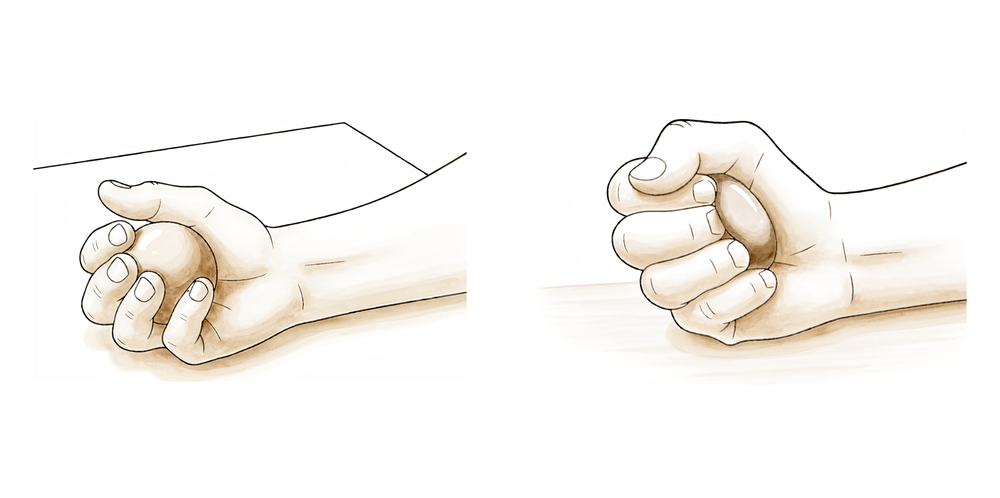
گیند دبانا
اپنے بازو کو آرام سے اپنے سامنے رکھ کر ایک نرم گیند یا لپیٹا ہوا موزہ دبائیں، تھوڑی دیر روکیں، پھر ڈھیلا چھوڑ دیں۔ اس سے کندھے کو حرکت دیے بغیر آپ کے بازو کا نچلا حصہ (forearm) اور گرفت فعال رہتے ہیں۔
5 سیکنڈ روکیں، 10 بار، دن میں 3 بار
Kieran Hirpara 4.0
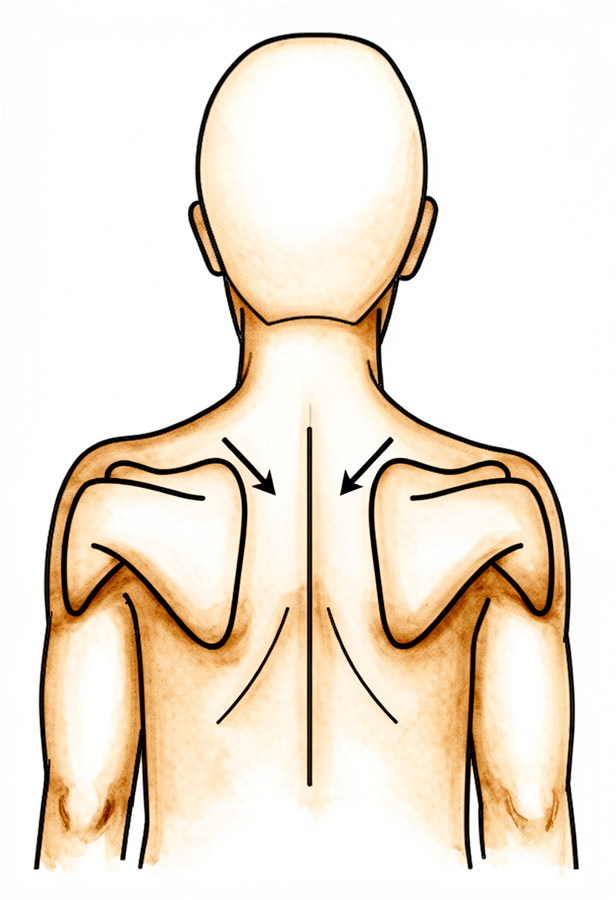
کندھے کی پچھلی چپٹی ہڈی (shoulder blade) کو جمانا
اپنے کندھے کی پچھلی چپٹی ہڈیوں کو آہستگی سے نیچے اور ایک دوسرے کی طرف کھینچیں، روکیں، پھر ڈھیلا چھوڑ دیں۔ آپ کا بازو حرکت نہیں کرتا: یہ پٹھوں کو ہلکا سا متحرک کرنے کی ورزش ہے جو کندھے کی پچھلی چپٹی ہڈی کو مستحکم کرتی ہے۔
5 سیکنڈ روکیں، 5 بار، دن میں 3 بار
Kieran Hirpara 4.0
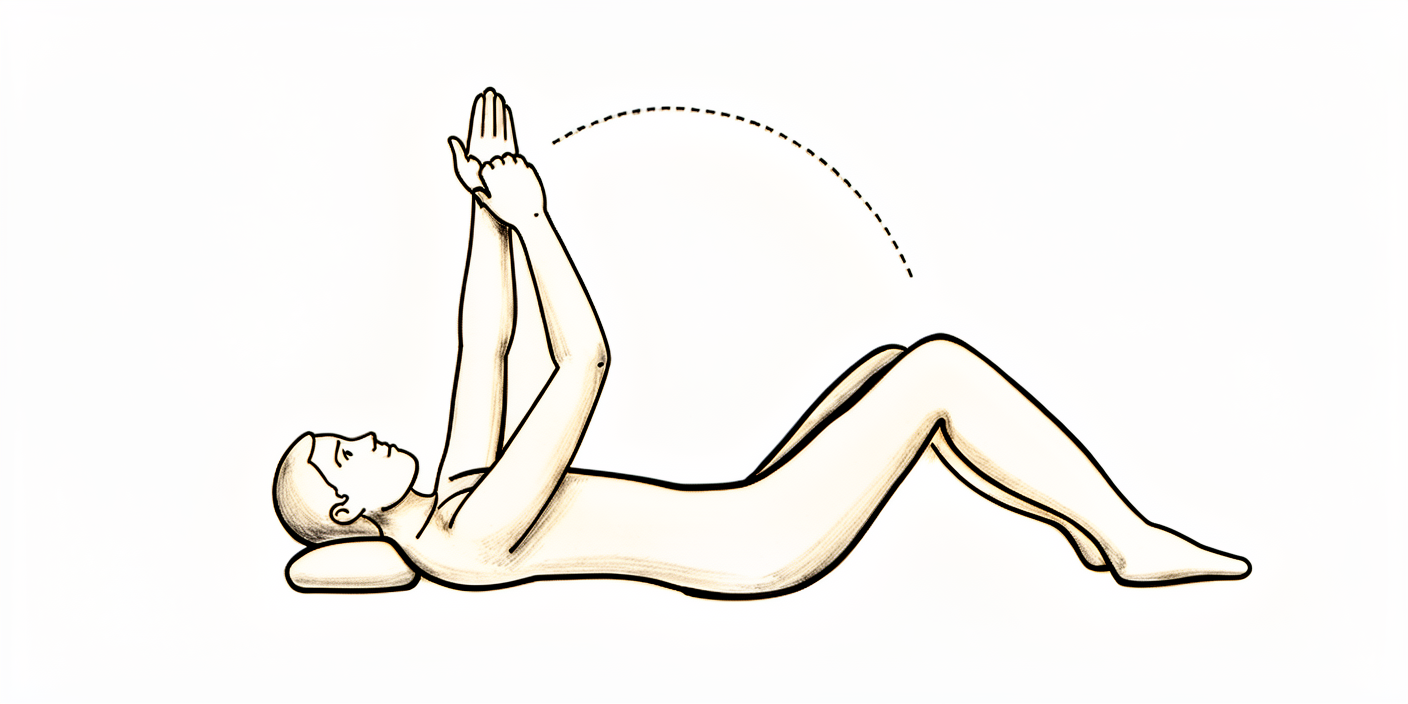
مدد کے ساتھ بازو کو آگے اٹھانا
بیٹھ کر تھوڑا سا آگے جھکیں، اپنے آپریشن والے بازو کو صحیح بازو سے سہارا دیں، اور اسے آہستگی سے اپنے سامنے اوپر اٹھانے میں مدد کریں۔ اس پہلے مرحلے میں تقریباً آدھے راستے (تقریباً 60 ڈگری) سے اوپر ہرگز نہ جائیں۔ اسے واپس نیچے لائیں اور یہ کام بھی صحیح بازو ہی کرے۔ پورے وقت بازو کو اپنے سامنے رکھیں اور کبھی زبردستی نہ کریں۔
10 بار، دن میں 3 بار، اپنے فزیوتھراپسٹ کی حد کے اندر
Kieran Hirpara 4.0
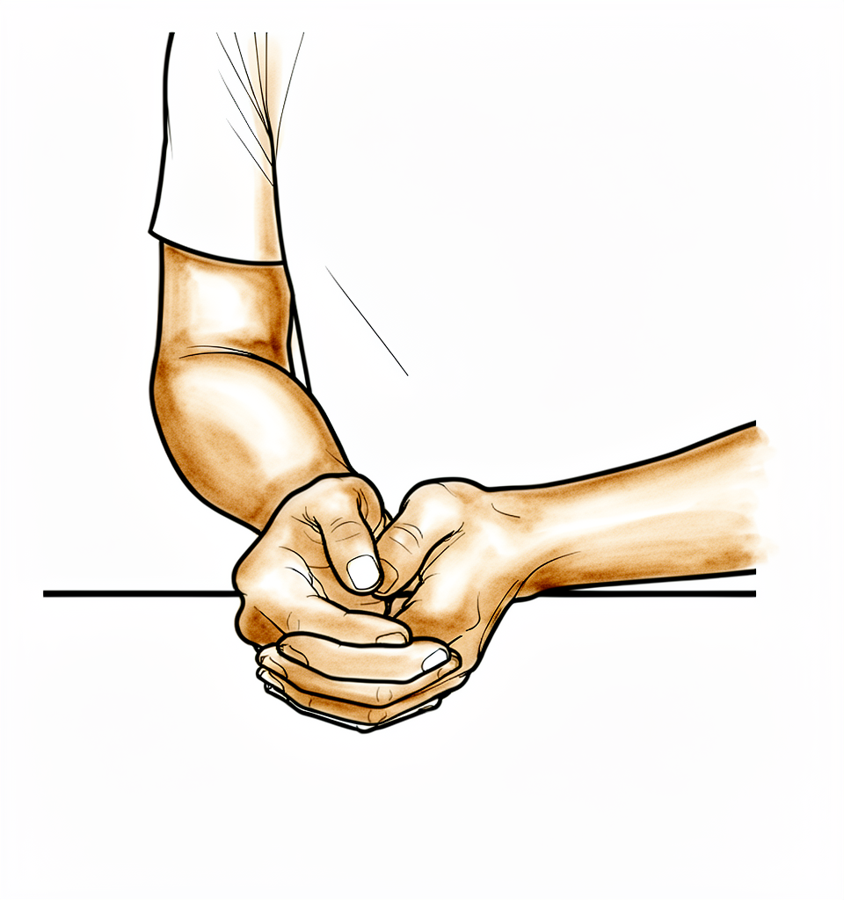
مدد کے ساتھ باہر کی طرف گھمانا (صرف نیوٹرل تک)
بیٹھ کر اپنی کہنی کو اپنے سامنے جسم کے قریب رکھیں اور بازو کے نچلے حصے کو باہر کی طرف صرف اتنا گھمائیں کہ وہ سیدھا سامنے کی طرف ہو جائے۔ پچھلی مرمت کے بعد باہر کی طرف گھمانا محفوظ ہے، لیکن اندر کی سمت وہ ہے جس سے آپ کو بچنا ہے، اس لیے ہاتھ کو اندر کی طرف جسم کے آر پار ہرگز نہ جانے دیں۔
آہستگی سے، 10 بار، دن میں 3 بار
پہلے دو ہفتے مرمت کی حفاظت کرتے ہوئے ہلکی حرکت جاری رکھنے کے بارے میں ہیں۔ آپ سادہ سلنگ میں رہتے ہیں، بازو کو جسم کے سامنے رکھتے ہیں، اور صرف ہلکی ورزشیں کرتے ہیں جو آپ کے ہاتھ، کلائی اور کہنی کو حرکت میں رکھتی ہیں اور کندھے کی پچھلی چپٹی ہڈی (shoulder blade) کو "جمانا" شروع کرتی ہیں، اور یہ سب کندھے کے پچھلے حصے پر بوجھ ڈالے بغیر۔ دو اصول سب سے اہم ہیں: بازو کو سامنے رکھیں اور اسے کبھی اندر کی طرف جسم کے آر پار نہ گھمائیں، اور کسی چیز میں نہ زبردستی کی جائے نہ کھنچاؤ دیا جائے۔ مدد کے ساتھ آگے اٹھانا تقریباً آدھے راستے تک محدود رکھا جاتا ہے، اور باہر کی طرف گھمانا صرف سیدھے سامنے والی حالت تک۔
- سلنگ: سادہ سلنگ، دن کے وقت؛ سوتے وقت سلنگ نہ پہنیں لیکن بازو کو سامنے رکھیں، اندر کی طرف مڑا ہوا نہیں۔ ورزشوں اور نہانے کے لیے اتار دیں۔
- اجازت شدہ حرکت: صرف مدد کے ساتھ اور غیر فعال حرکت۔ مدد کے ساتھ آگے اٹھانا تقریباً 60 ڈگری تک (تقریباً آدھے راستے تک)؛ باہر کی طرف گھمانا صرف سیدھے سامنے والی (نیوٹرل) حالت تک؛ نیوٹرل سے آگے اندر کی طرف گھمانا نہیں، کمر کے پیچھے ہاتھ لے جانا نہیں، جسم کے آر پار کوئی حرکت نہیں۔
- ورزشیں: پینڈولم (جھولنے والی) ورزش؛ ہاتھ، کلائی اور کہنی کی ہلکی حرکت؛ گیند دبانا؛ کندھے کی پچھلی چپٹی ہڈی کو جمانا؛ مدد کے ساتھ آگے اٹھانا (آدھے راستے تک)؛ مدد کے ساتھ باہر کی طرف نیوٹرل تک گھمانا۔
اگلے مرحلے کے لیے آپ تب تیار ہیں جب: آپ کا درد کم ہو رہا ہو اور اچھی طرح قابو میں ہو؛ آپ بازو کو آرام سے محفوظ حالت میں رکھ سکیں (سامنے، اندر کی طرف مڑا ہوا نہیں)؛ مدد کے ساتھ آگے اٹھانا آرام سے تقریباً آدھے راستے تک پہنچ جائے؛ آپ کا زخم کسی تشویش کے بغیر بھر چکا ہو؛ اور آپ اعتماد کے ساتھ پچھلی مرمت والی احتیاطوں پر عمل کر رہے ہوں۔
مرحلہ II — ابتدائی حرکت (ہفتے 2 سے 4)
Kieran Hirpara 4.0
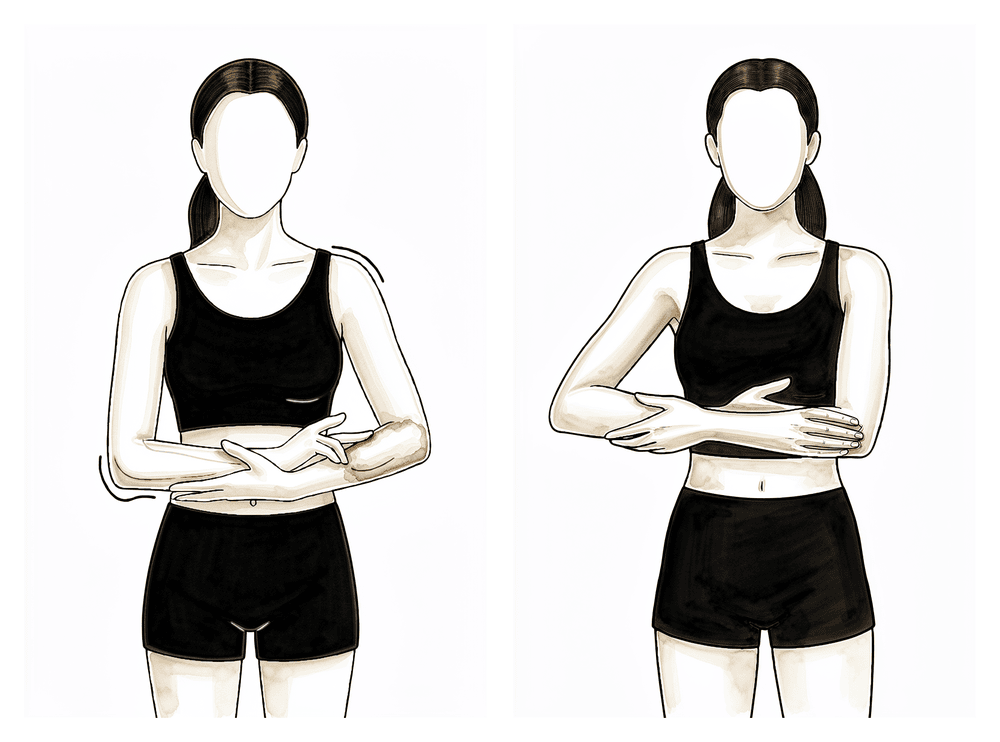
مدد کے ساتھ بازو کو پہلو کی طرف اٹھانا
بیٹھ کر اور تھوڑا سا آگے جھک کر، اپنے آپریشن والے بازو کو صحیح بازو سے سہارا دیں اور اسے پہلو کی طرف لے جانے میں مدد کریں، جیسے کسی بچے کو آہستگی سے جھلا رہے ہوں۔ اس حد کے اندر رہیں جو آپ کا فزیوتھراپسٹ طے کرے (تقریباً 90 ڈگری / کندھے کی اونچائی تک) اور بازو کو جسم کے سامنے رکھیں، پیچھے نہیں۔
10 بار، دن میں 3 بار
Kieran Hirpara 4.0
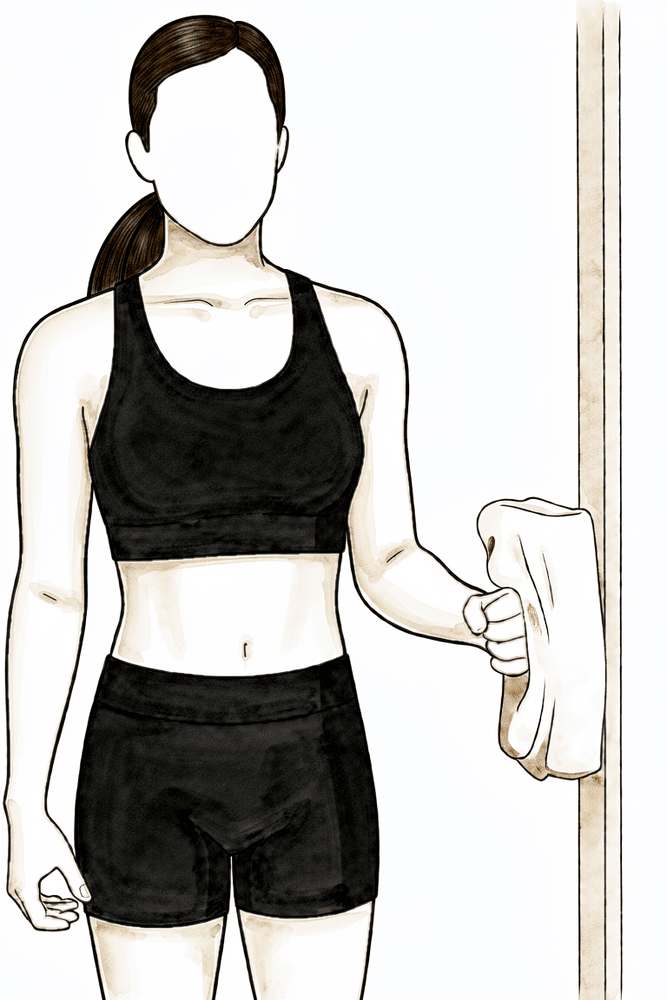
آئسومیٹرک (دبا کر روکنے والی) ورزش: باہر کی طرف گھمانا
کھڑے ہو کر اپنی کہنی کو اپنے سامنے جسم کے قریب رکھیں اور 90 ڈگری پر موڑیں، اور ہاتھ کی پشت کسی دیوار یا دروازے کی چوکھٹ کے قریب ہو۔ ہاتھ کی پشت سے سطح کو آہستگی سے باہر کی طرف دبائیں اور بازو کو بالکل حرکت نہ کرنے دیں: ہلکا زور، اپنی طاقت کا تقریباً چوتھائی، اور کوئی درد نہیں۔ روکیں، پھر ڈھیلا چھوڑ دیں۔
تقریباً 5 سیکنڈ روکیں، ہلکا (تقریباً 25 فیصد زور)، 10 بار، اپنے فزیوتھراپسٹ کی رہنمائی کے مطابق
Kieran Hirpara 4.0
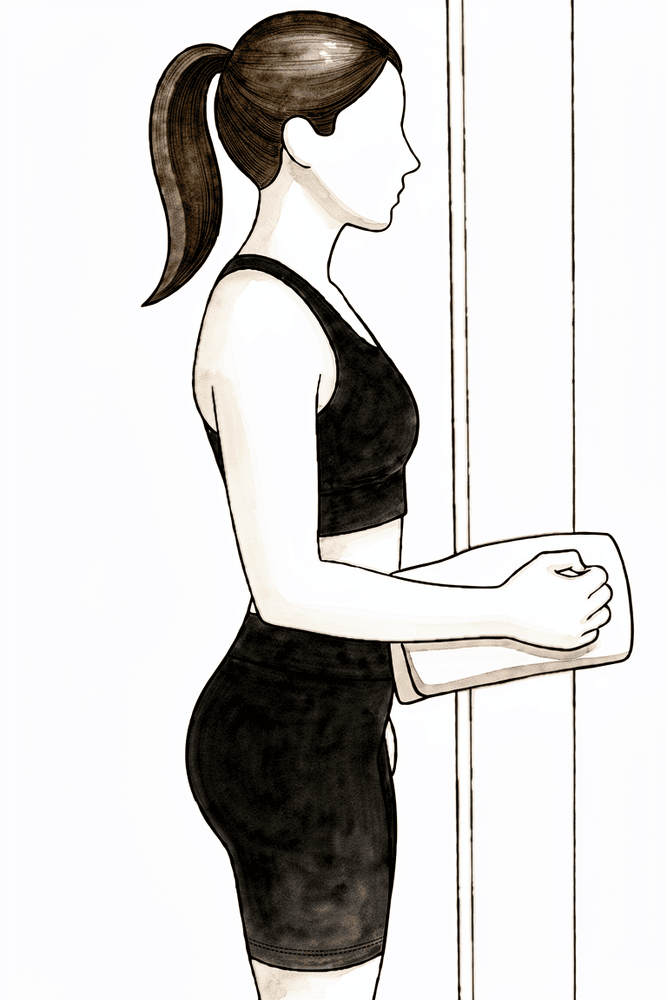
آئسومیٹرک ورزش: اندر کی طرف گھمانا (صرف نیوٹرل میں)
اس کی اجازت صرف اس وقت ہے جب بازو پہلو کے ساتھ ہو اور ہاتھ سیدھا سامنے کی طرف ہو (نیوٹرل)، اس وقت ہرگز نہیں جب ہاتھ اندر کی طرف جسم کے آر پار مڑا ہوا ہو۔ کہنی کو جسم کے قریب رکھیں اور ہتھیلی سے دیوار کو آہستگی سے اندر کی طرف دبائیں اور بازو کو بالکل حرکت نہ کرنے دیں: تقریباً چوتھائی زور، اور کوئی درد نہیں۔ روکیں، پھر ڈھیلا چھوڑ دیں۔ ہاتھ کے آپ کے پیٹ کی طرف جانے سے پہلے رک جائیں۔
تقریباً 5 سیکنڈ روکیں، ہلکا (تقریباً 25 فیصد زور)، 10 بار، اپنے فزیوتھراپسٹ کی رہنمائی کے مطابق
Kieran Hirpara 4.0
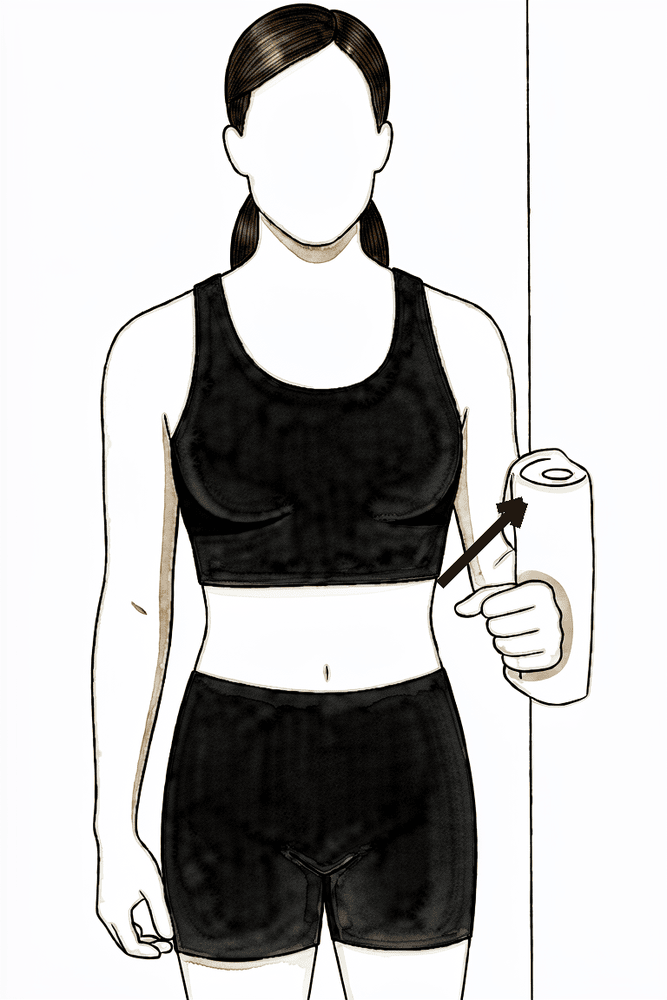
آئسومیٹرک ورزش: بازو کو پہلو کی طرف دبانا
دیوار کی طرف پہلو کر کے کھڑے ہوں تاکہ بازو کے اوپری حصے کی باہر والی طرف دیوار کے قریب ہو، اور کہنی جسم کے قریب ہو۔ بازو سے دیوار کو آہستگی سے باہر کی طرف دبائیں اور اسے بالکل حرکت نہ کرنے دیں: تقریباً چوتھائی زور، اور کوئی درد نہیں۔ روکیں، پھر ڈھیلا چھوڑ دیں۔
تقریباً 5 سیکنڈ روکیں، ہلکا (تقریباً 25 فیصد زور)، 10 بار، اپنے فزیوتھراپسٹ کی رہنمائی کے مطابق
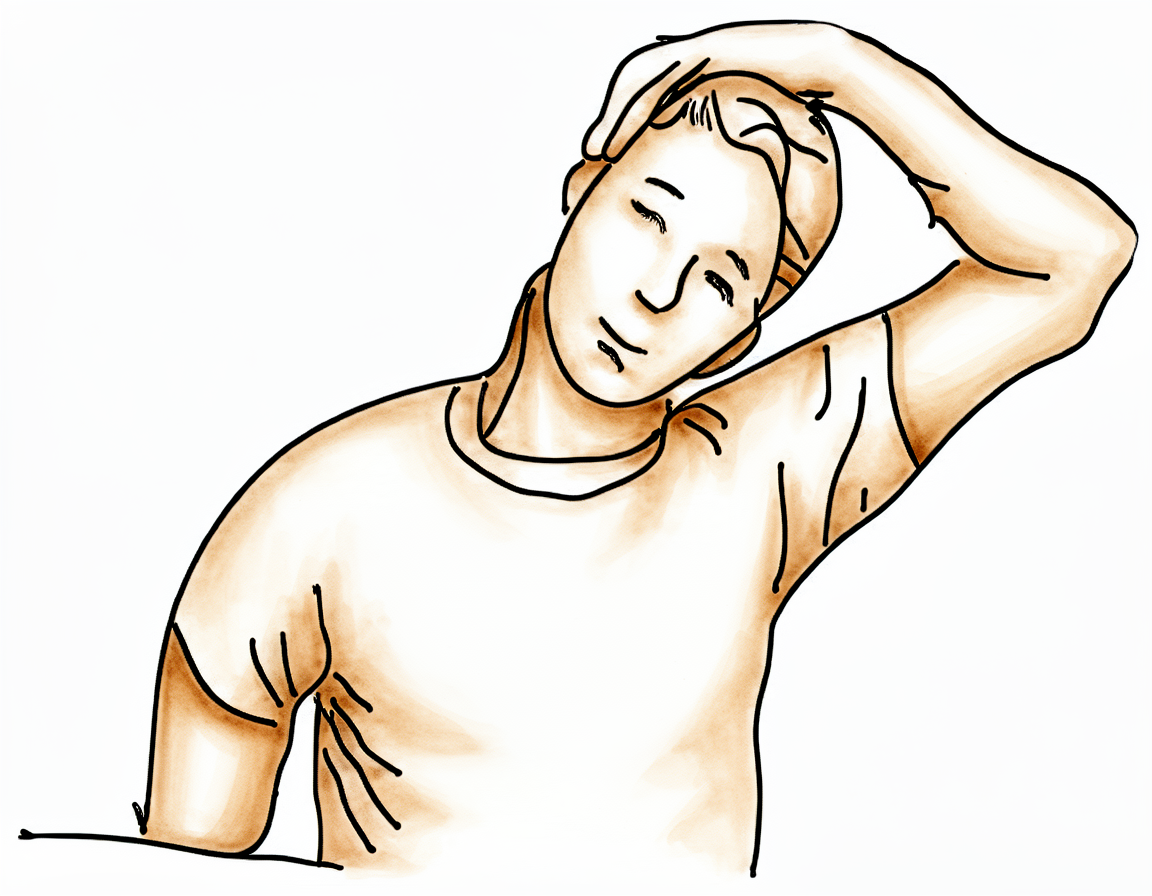
Kieran Hirpara 4.0
گردن کا پہلو کی طرف اسٹریچ
اپنے صحیح بازو سے اپنے کان کو آہستگی سے صحیح کندھے کی طرف لائیں، یعنی آپریشن والی طرف سے دور، یہاں تک کہ آپ کو گردن میں آرام دہ کھنچاؤ محسوس ہو۔
10 سیکنڈ روکیں، 3 بار، دن میں 3 بار
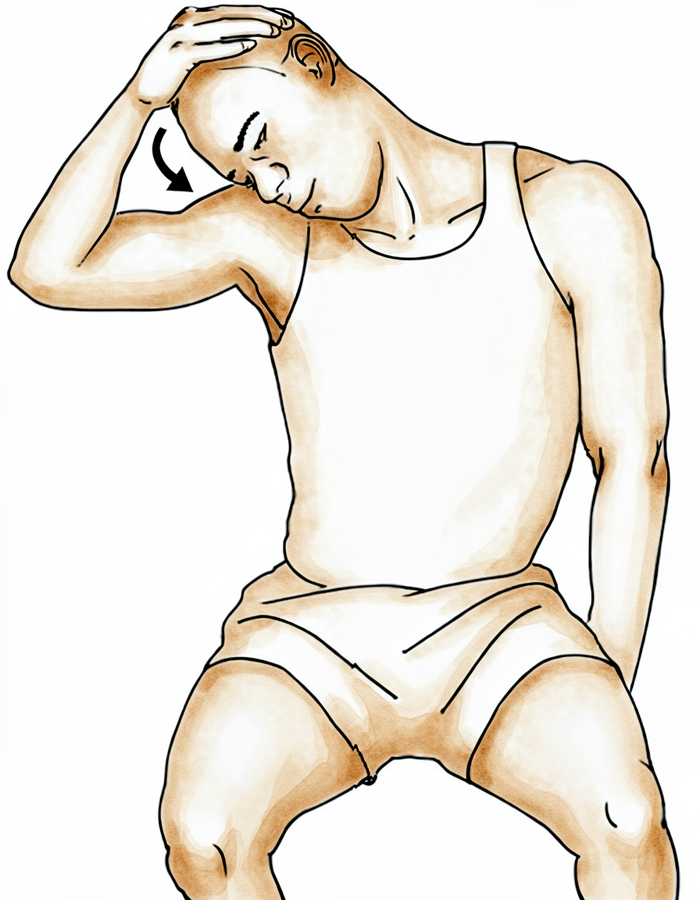
Kieran Hirpara 4.0
بغل کی طرف گردن کا اسٹریچ
اپنے صحیح بازو سے اپنی ناک کو آہستگی سے نیچے اپنی بغل کی طرف لائیں، یعنی آپریشن والی طرف سے دور، یہاں تک کہ آپ کو آرام دہ کھنچاؤ محسوس ہو۔
10 سیکنڈ روکیں، 3 بار، دن میں 3 بار
دوسرے ہفتے سے ہلکی حرکت بڑھتی ہے، لیکن اب بھی سختی سے محفوظ سمتوں کے اندر۔ آپ کا فزیوتھراپسٹ طے شدہ حدود تک نگرانی میں غیر فعال اور مدد کے ساتھ حرکت کرواتا ہے، اور آپ ہلکی دبا کر روکنے والی (آئسومیٹرک، isometric) ورزشیں شامل کرتے ہیں تاکہ بازو ساکن رہتے ہوئے پٹھے جاگنا شروع ہوں۔ بازو کو جسم کے سامنے ہی رہنا چاہیے: اب بھی کمر کے پیچھے ہاتھ لے جانا نہیں اور جسم کے آر پار کوئی حرکت نہیں، اور اندر کی طرف گھمانا صرف نیوٹرل تک رہتا ہے۔
- سلنگ: جاری رہتی ہے؛ بازو کو سامنے رکھیں؛ کمر کے پیچھے ہاتھ نہ لے جائیں۔
- اجازت شدہ حرکت (فزیوتھراپسٹ کی نگرانی میں): آگے اٹھانا تقریباً 60 ڈگری کی طرف بڑھاتے ہوئے، باہر کی طرف گھمانا تقریباً 45 ڈگری تک، پہلو کی طرف اٹھانا تقریباً 90 ڈگری تک؛ اندر کی طرف گھمانا پہلو پر نیوٹرل (0 ڈگری) پر ہی رکھا جائے۔ گھر پر پُلی (pulley) والی ورزشیں نہیں۔
- ورزشیں: مدد کے ساتھ بازو کو پہلو کی طرف اٹھانا؛ ہلکی آئسومیٹرک (دبا کر روکنے والی) ورزشیں: باہر کی طرف گھمانا، اندر کی طرف گھمانا (صرف نیوٹرل میں) اور پہلو کی طرف اٹھانا؛ کندھے کی پچھلی چپٹی ہڈی کے پٹھوں کو مضبوط کرنا؛ گردن کے اسٹریچ۔ جو بھی چیز کندھے کے پچھلے حصے میں درد پیدا کرے اسے روک دیں۔
اگلے مرحلے کے لیے آپ تب تیار ہیں جب: آپ کندھے کے پچھلے حصے میں کسی علامت کے بغیر اوپر دی گئی نگرانی والی حرکت کی حدود تک پہنچ جائیں؛ آپ کا درد اور کوئی بھی سوجن قابو میں ہو؛ اور ہلکی حرکت کے ساتھ کندھے کی پچھلی چپٹی ہڈی پر آپ کا قابو اچھا ہو۔
مرحلہ III — حرکت بڑھانا اور طاقت کی ورزشیں شروع کرنا (ہفتے 4 سے 6)
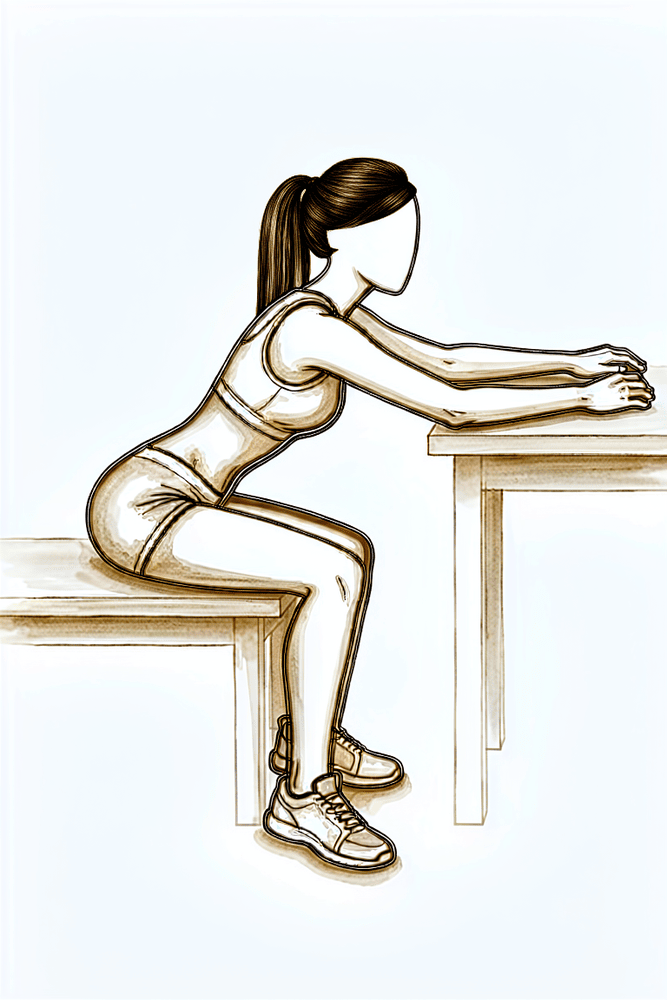
Kieran Hirpara 4.0
دیوار پر ہاتھ چلانا (wall walks)
دیوار کی طرف منہ کر کے کھڑے ہوں یا میز پر بیٹھیں اور آپریشن والا ہاتھ اس پر رکھیں۔ ہاتھ کو سطح پر آگے اور اوپر کی طرف سرکائیں تاکہ بازو آپ کے سامنے آگے بڑھے، اور وزن دیوار یا میز پر رہنے دیں، پھر واپس سرکائیں۔ بازو کو سامنے رکھیں اور اسے جسم کے آر پار نہ جانے دیں۔ اس سے وزن کے سہارے کے ساتھ آگے ہاتھ بڑھانے کی صلاحیت بنتی ہے۔
10 بار، دن میں 3 بار، اپنے فزیوتھراپسٹ کی حد کے اندر
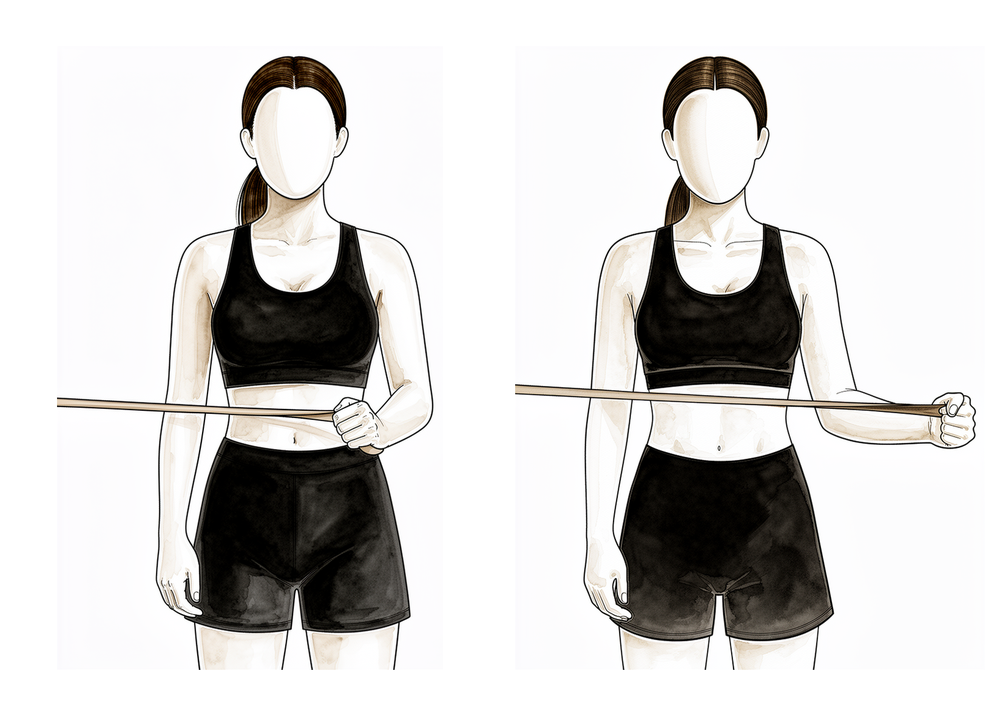
Kieran Hirpara 4.0
ربڑ بینڈ کے ساتھ ہلکا باہر کی طرف گھمانا
تقریباً ہفتے 4 سے 6 سے، اگر آپ کا فزیوتھراپسٹ متفق ہو۔ کہنی کو پہلو کے ساتھ جسم کے قریب رکھ کر 90 ڈگری پر موڑیں، ایک ہلکا ربڑ بینڈ پکڑیں اور بازو کے نچلے حصے کو اس کے خلاف باہر کی طرف گھمائیں، پھر قابو کے ساتھ واپس لائیں۔ پچھلی مرمت کے بعد باہر کی طرف گھمانا محفوظ سمت ہے۔ ہلکا بینڈ اور زیادہ دہرائیاں استعمال کریں، بھاری مزاحمت نہیں۔
اپنے فزیوتھراپسٹ کی رہنمائی کے مطابق
Kieran Hirpara 4.0
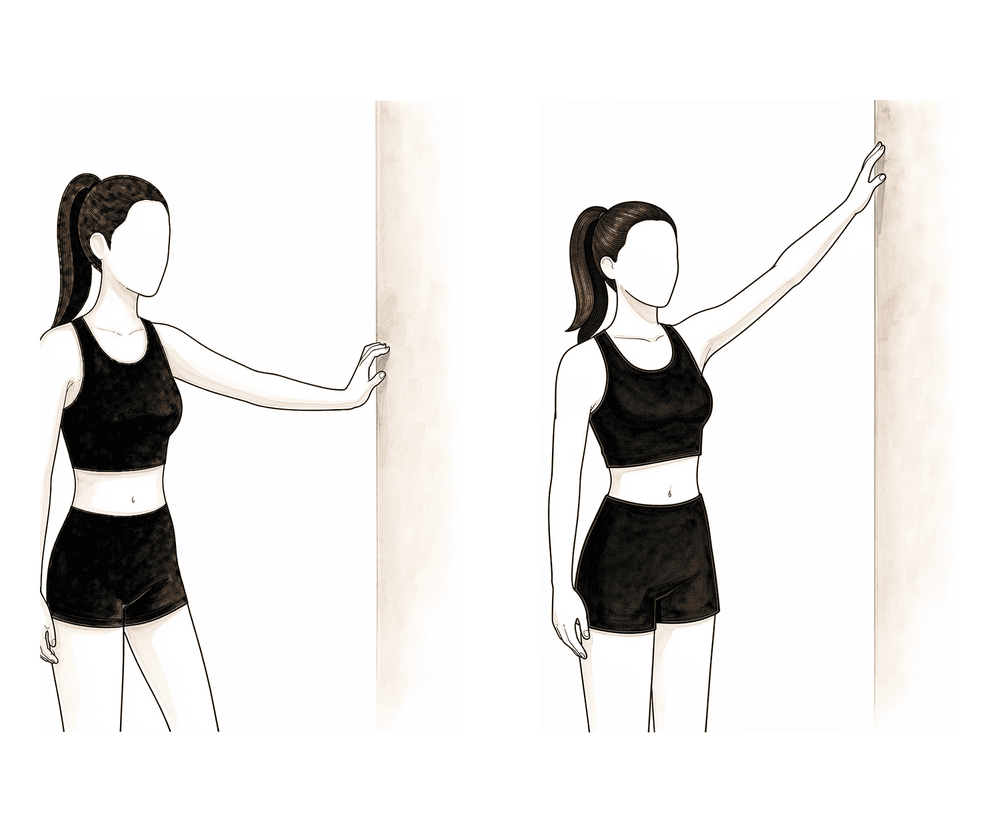
دیوار پر پہلو کی طرف انگلیاں چلانا
دیوار کی طرف پہلو کر کے کھڑے ہوں اور انگلیوں کے سرے دیوار پر رکھیں۔ انگلیوں کو دیوار پر پہلو کی طرف اوپر چلائیں، اور بازو کو جتنا آرام سے ہو سکے اٹھائیں، پھر انہیں قابو کے ساتھ واپس نیچے چلائیں۔ جب آپ پہلو کی طرف حرکت دوبارہ حاصل کر رہے ہوتے ہیں تو دیوار بازو کو سہارا دیتی ہے۔
اپنے فزیوتھراپسٹ کی رہنمائی کے مطابق
حرکت مزید کھلتی ہے، اور طاقت کی پہلی ہلکی ورزشیں محفوظ (باہر کی طرف گھمانے والی) سمت میں شروع ہوتی ہیں۔ آپ مدد کے ساتھ فعال طریقے سے ہاتھ بڑھانا شروع کرتے ہیں، جیسے دیوار پر انگلیاں چلانا (wall walks)، اور باہر کی طرف گھمانے والے پٹھوں کے لیے ہلکی ربڑ بینڈ کی ورزشیں۔ اندر کی طرف گھمانے کو صرف تھوڑا سا، اور صرف آپ کے فزیوتھراپسٹ کی ہدایت پر، بڑھنے دیا جاتا ہے؛ یہ اب بھی سب سے زیادہ محفوظ رکھی جانے والی حرکت ہے۔ سلنگ دن کے وقت چھ ہفتے پورے ہونے تک جاری رہتی ہے۔
- سلنگ: دن کے وقت تقریباً 6 ہفتوں تک سادہ سلنگ۔ اگر آپ رات کو اسے اتار دیتے ہیں تب بھی بازو کو اندر کی طرف گھمانے سے بچیں۔
- اجازت شدہ حرکت: آگے اٹھانا تقریباً 90 ڈگری تک، پہلو کی طرف اٹھانا جتنا آرام سے ہو سکے، باہر کی طرف گھمانا کندھے کی اونچائی پر تقریباً 45 ڈگری تک (یا پہلو پر پورا)؛ اندر کی طرف گھمانا تقریباً 30 ڈگری تک محدود، اور صرف آپ کے فزیوتھراپسٹ کی ہدایت پر۔ مدد کے ساتھ فعال طریقے سے ہاتھ بڑھانا (دیوار پر انگلیاں چلانا) شروع کریں۔ تقریباً 2 پاؤنڈ (lb) سے زیادہ وزن والی کوئی چیز نہ اٹھائیں، نہ دھکیلیں اور نہ کھینچیں، اور سر سے اوپر کوئی کام نہ کریں۔
- ورزشیں: دیوار پر انگلیاں چلانا؛ کندھے کی پچھلی چپٹی ہڈی اور آئسومیٹرک ورزشیں جاری رکھیں؛ پہلو پر ہلکی ربڑ بینڈ کے ساتھ باہر کی طرف گھمانے کی ورزش شروع کریں۔
اگلے مرحلے کے لیے آپ تب تیار ہیں جب: مدد کے ساتھ آپ کی فعال حرکت اچھی ہو اور کندھے کی پچھلی چپٹی ہڈی پر قابو ہموار اور یکساں ہو؛ آپ کا درد اچھی طرح قابو میں ہو؛ اور آپ کندھے کے پچھلے حصے کو تکلیف دیے بغیر مرحلہ وار حدود کے اندر آگے بڑھ رہے ہوں۔
مرحلہ IV — آگے بڑھنا (ہفتے 6 سے 8)
Kieran Hirpara 4.0
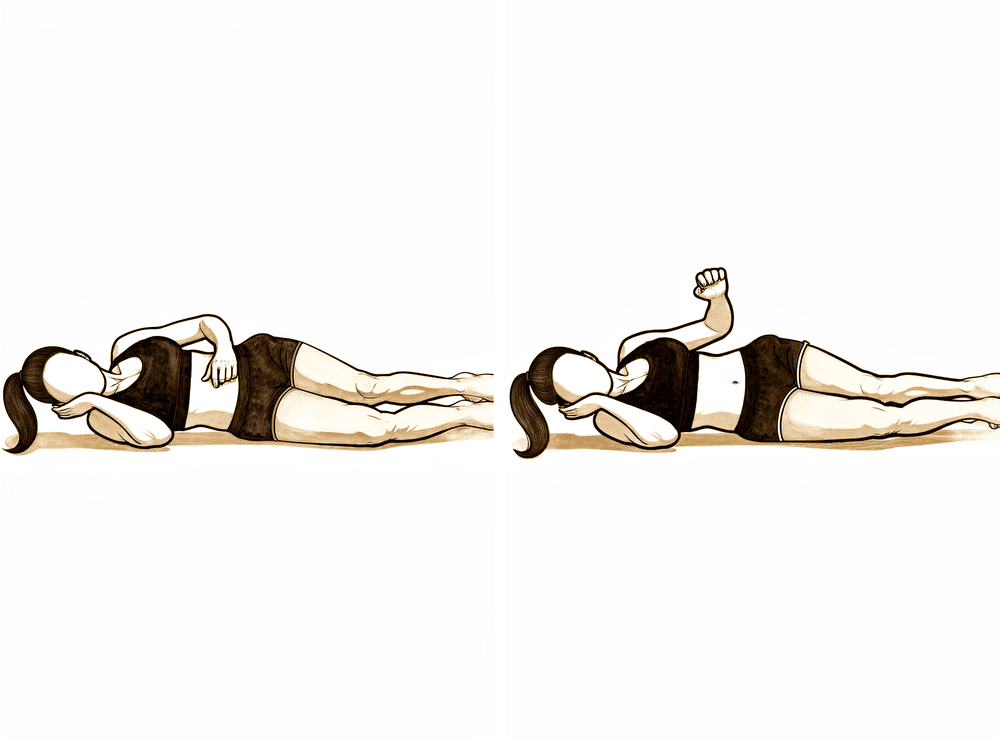
پہلو کے بل لیٹ کر باہر کی طرف گھمانا
اپنی صحیح طرف لیٹیں، آپریشن والی کہنی کمر کے ساتھ لگی ہو اور 90 ڈگری پر مڑی ہو۔ بازو کے نچلے حصے کو اوپر (باہر) کی طرف گھمائیں تاکہ ہاتھ چھت کی طرف اٹھے، پھر قابو کے ساتھ نیچے لائیں۔ اس سے روٹیٹر کف کے باہر کی طرف گھمانے والے پٹھے مضبوط ہوتے ہیں، جو اس مرحلے پر محفوظ سمت ہے۔
اپنے فزیوتھراپسٹ کی رہنمائی کے مطابق
Kieran Hirpara 4.0
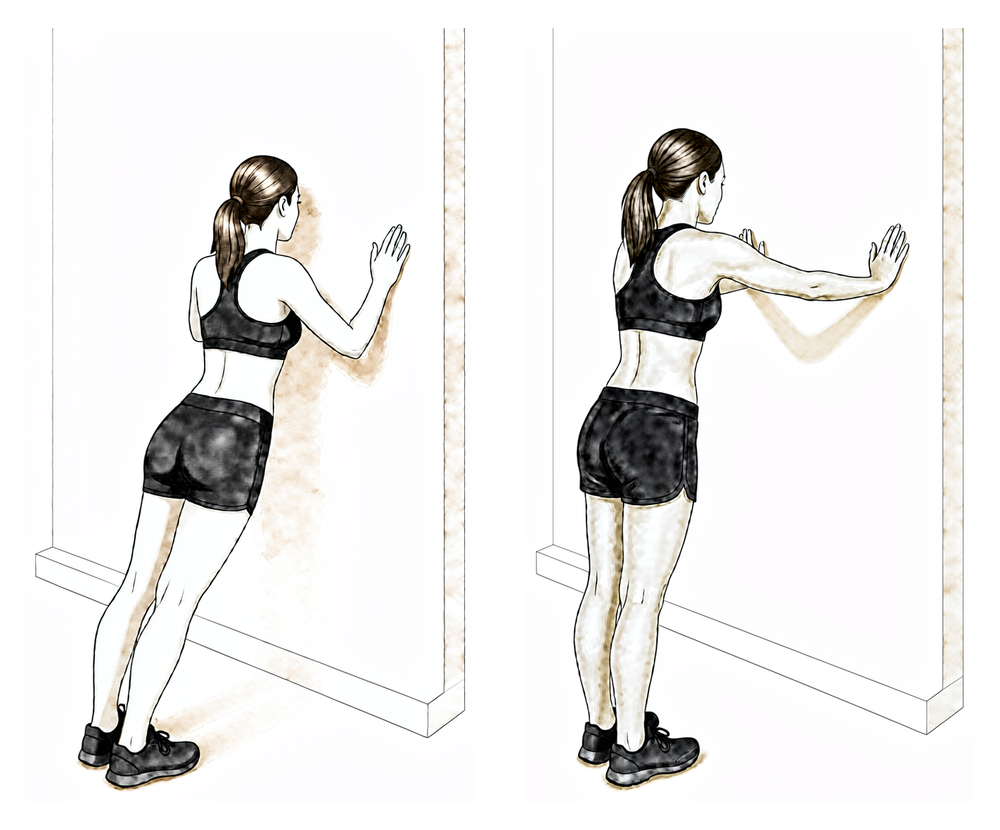
دیوار کے سہارے پُش اپ
اپنے ہاتھ کندھے کی اونچائی پر دیوار پر سیدھے رکھ کر اور بازو سیدھے رکھ کر کھڑے ہوں۔ کہنیاں موڑ کر سینے کو دیوار کی طرف لائیں، پھر دھکیل کر شروع کی حالت میں واپس آئیں، اور آخر میں کندھے کی پچھلی چپٹی ہڈیوں کو آہستگی سے ایک دوسرے سے دور دھکیلیں۔ آہستہ آہستہ بڑھائیں: یہ براہ راست کندھے کے پچھلے حصے پر بوجھ ڈالتی ہے، اس لیے اسے آہستہ اور صرف اسی مرحلے سے بڑھایا جاتا ہے۔
اپنے فزیوتھراپسٹ کی رہنمائی کے مطابق
Kieran Hirpara 4.0
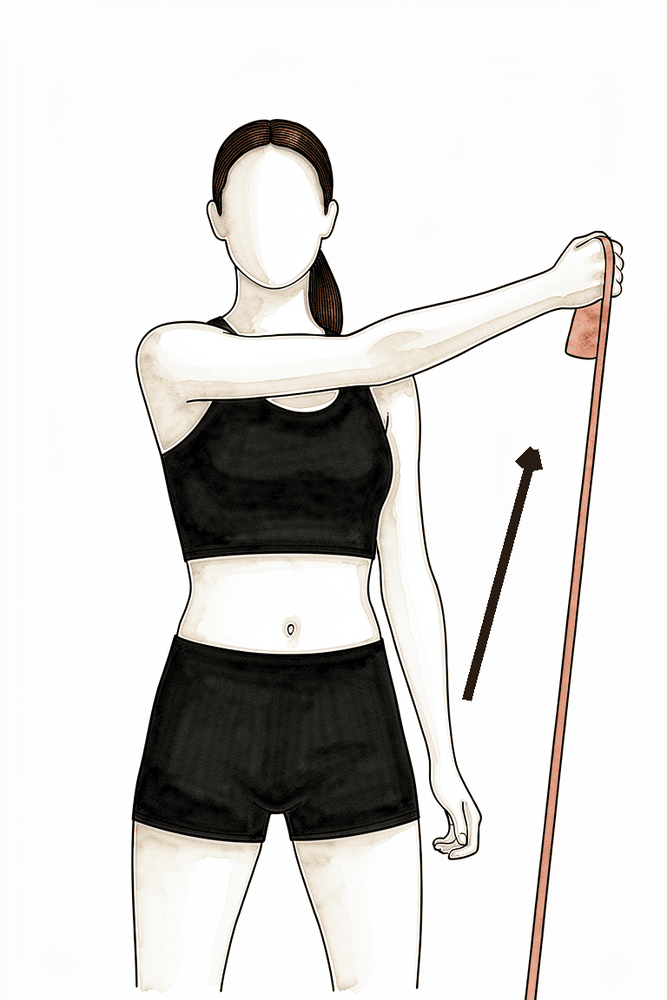
ربڑ بینڈ کے ساتھ ترچھی حرکت (باہر اور اوپر کی طرف)
ہلکے ربڑ بینڈ کے ساتھ پورے بازو کی طاقت بڑھانے والی ترچھی حرکت، جو نیچے اور جسم کے سامنے آر پار سے شروع ہو کر باہر اور اوپر کی طرف کھینچی جاتی ہے۔ حرکت ہموار رکھیں اور آرام دہ حد کے اندر رہیں؛ آپ کا فزیوتھراپسٹ ٹھیک طریقہ اور مزاحمت طے کرے گا۔
اپنے فزیوتھراپسٹ کی رہنمائی کے مطابق
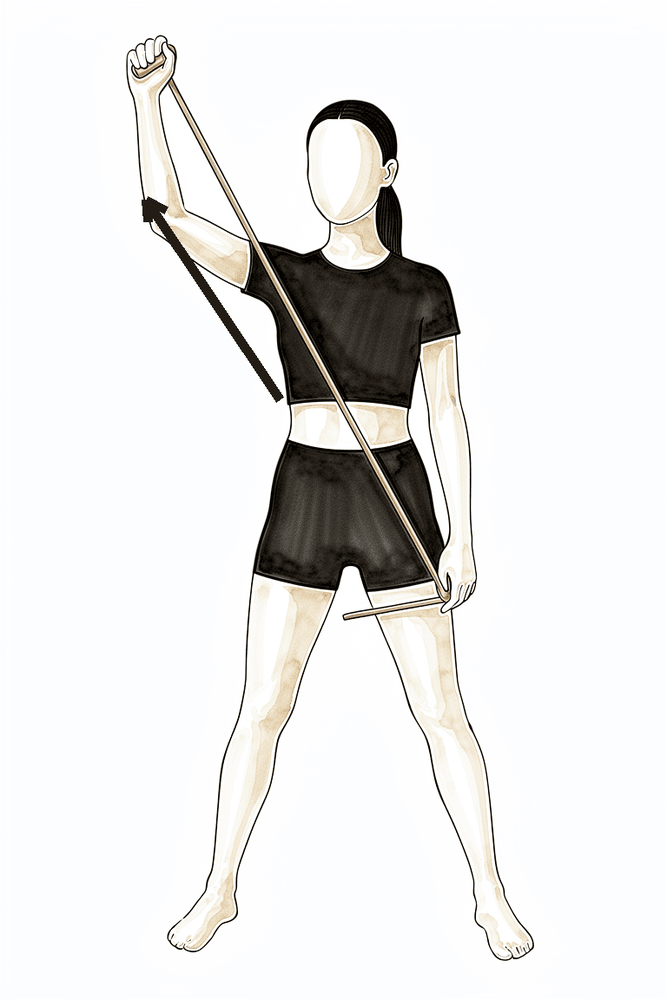
Kieran Hirpara 4.0
ربڑ بینڈ کے ساتھ ترچھی حرکت (آر پار اور نیچے کی طرف)
ہلکے ربڑ بینڈ کے ساتھ پورے بازو کی الٹی ترچھی حرکت، اوپر اور باہر سے نیچے اور آر پار کی طرف۔ اسے ہموار اور قابو میں رکھیں، اس حد کے اندر جو آپ کا فزیوتھراپسٹ طے کرے۔
اپنے فزیوتھراپسٹ کی رہنمائی کے مطابق
چھ ہفتوں پر سلنگ اتر جاتی ہے۔ اپنی طاقت سے حرکت کو ہر سمت میں پورا کیا جاتا ہے، سوائے اندر کی طرف گھمانے کے، جسے اب بھی جان بوجھ کر روکا جاتا ہے (بارہ ہفتوں تک تقریباً 45 ڈگری کی حد)۔ طاقت کی ورزشیں ایک قدم آگے بڑھتی ہیں: روٹیٹر کف (rotator cuff، یعنی ٹینڈنوں کا وہ گروپ جو کندھے کو تھامتا اور گھماتا ہے) اور کندھے کی پچھلی چپٹی ہڈی کی ہلکی ورزشیں، دیوار کے سہارے پہلی احتیاط سے قابو میں رکھی گئی پُش اپس، اور ہلکی ربڑ بینڈ کے ساتھ پورے بازو کی ترچھی (diagonal) حرکتیں۔
- سلنگ: 6 ہفتوں پر بند۔
- اجازت شدہ حرکت: فعال حرکت جتنی برداشت ہو پوری، سوائے اندر کی طرف گھمانے کے، جو 12 ہفتوں تک تقریباً 45 ڈگری تک محدود رہتا ہے (پہلو پر بھی اور کندھے کی اونچائی پر بھی)۔ تقریباً 5 پاؤنڈ (lb) تک ہلکا وزن اٹھانا۔
- ورزشیں: پہلو کے بل لیٹ کر باہر کی طرف گھمانا؛ دیوار کے سہارے پُش اپس (آہستہ آہستہ بڑھائیں: یہ براہ راست کندھے کے پچھلے حصے پر بوجھ ڈالتی ہیں)؛ ربڑ بینڈ کے ساتھ ترچھی حرکتیں؛ روٹیٹر کف اور کندھے کی پچھلی چپٹی ہڈی کی طاقت کی ورزشیں جاری رکھیں۔
اگلے مرحلے کے لیے آپ تب تیار ہیں جب: اندر کی طرف گھمانے کے سوا ہر سمت میں آپ کی اپنی طاقت سے پوری حرکت ہو؛ آپ کی طاقت مسلسل بڑھ رہی ہو؛ اور طاقت کی نئی ورزشوں کے بعد نہ درد ہو نہ سوجن۔
مرحلہ V — طاقت بڑھانا (ہفتے 8 سے 12)
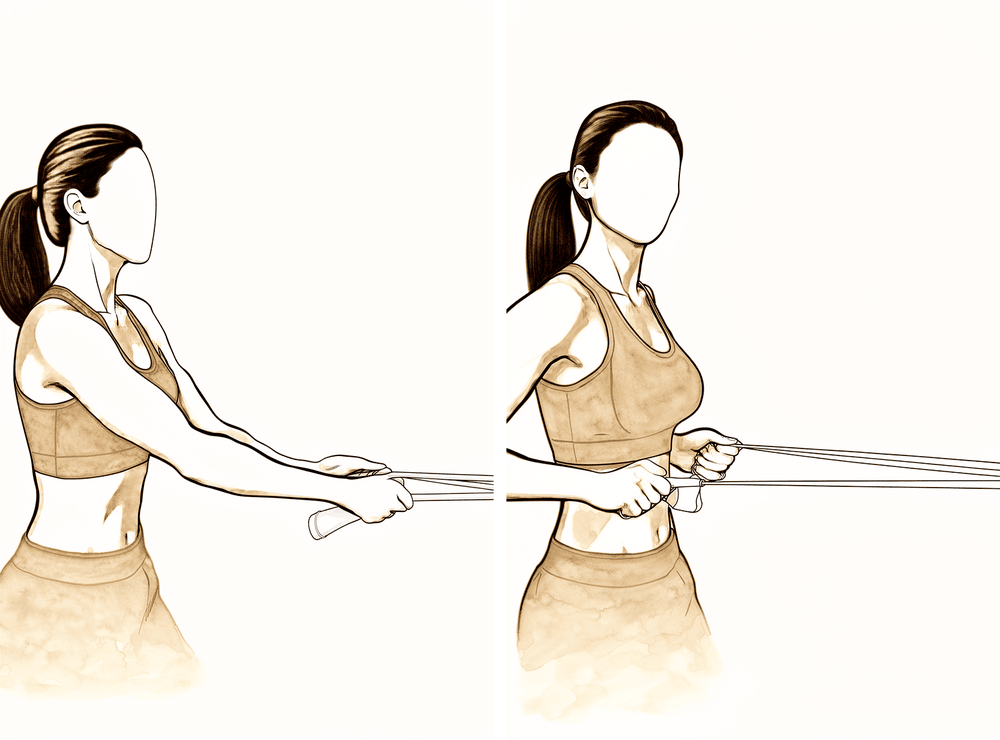
Kieran Hirpara 4.0
ربڑ بینڈ کے ساتھ رو (row)
اپنے سامنے کسی چیز سے بندھے ہوئے ربڑ بینڈ کے ہینڈل اپنی طرف کھینچیں، کہنیوں کو پیچھے لے جائیں اور کندھے کی پچھلی چپٹی ہڈیوں کو ایک دوسرے کی طرف دبائیں، پھر قابو کے ساتھ واپس جائیں۔ ہلکا بینڈ، زیادہ دہرائیاں؛ اگر کندھے میں درد ہونے لگے تو رک جائیں۔
اپنے فزیوتھراپسٹ کی رہنمائی کے مطابق
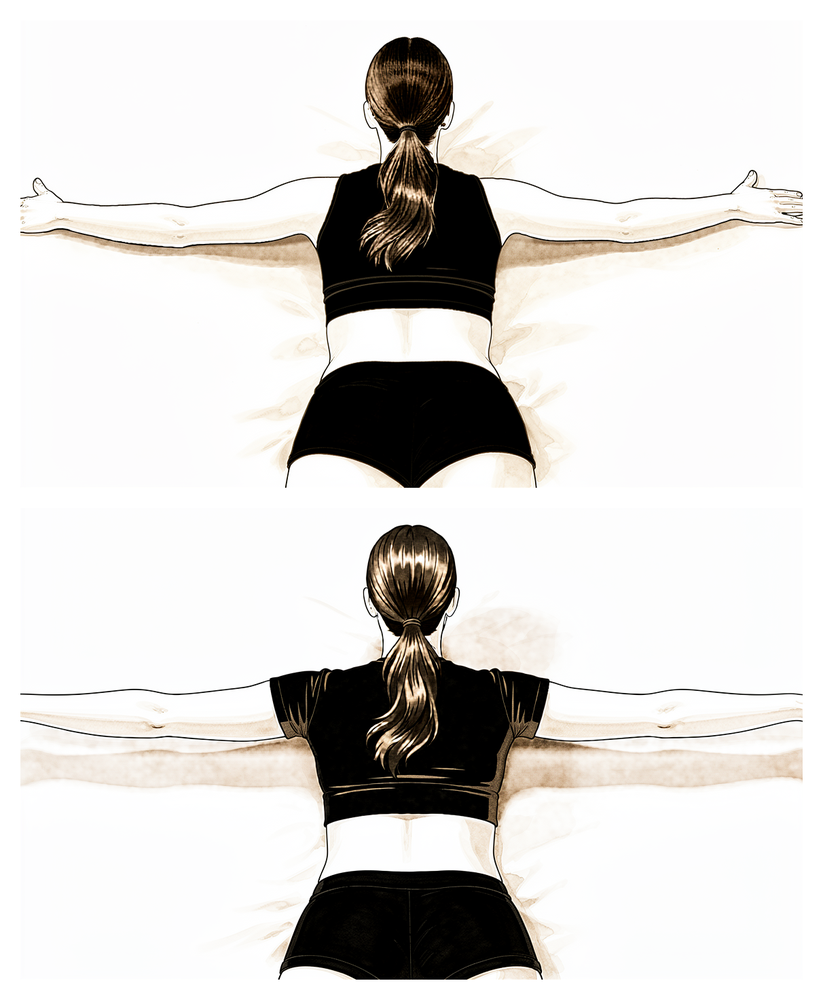
Kieran Hirpara 4.0
پیٹ کے بل لیٹ کر T
پیٹ کے بل لیٹ کر (یا کسی میز پر آگے جھک کر)، انگوٹھے اوپر کی طرف رکھتے ہوئے، اپنے بازوؤں کو دونوں پہلوؤں کی طرف اٹھا کر T کی شکل بنائیں، کندھے کی پچھلی چپٹی ہڈیوں کو ایک دوسرے کی طرف دبائیں، پھر قابو کے ساتھ نیچے لائیں۔ بغیر وزن کے شروع کریں اور بہت ہلکا وزن صرف اس وقت شامل کریں جب آپ کا فزیوتھراپسٹ ہدایت دے۔
اپنے فزیوتھراپسٹ کی رہنمائی کے مطابق
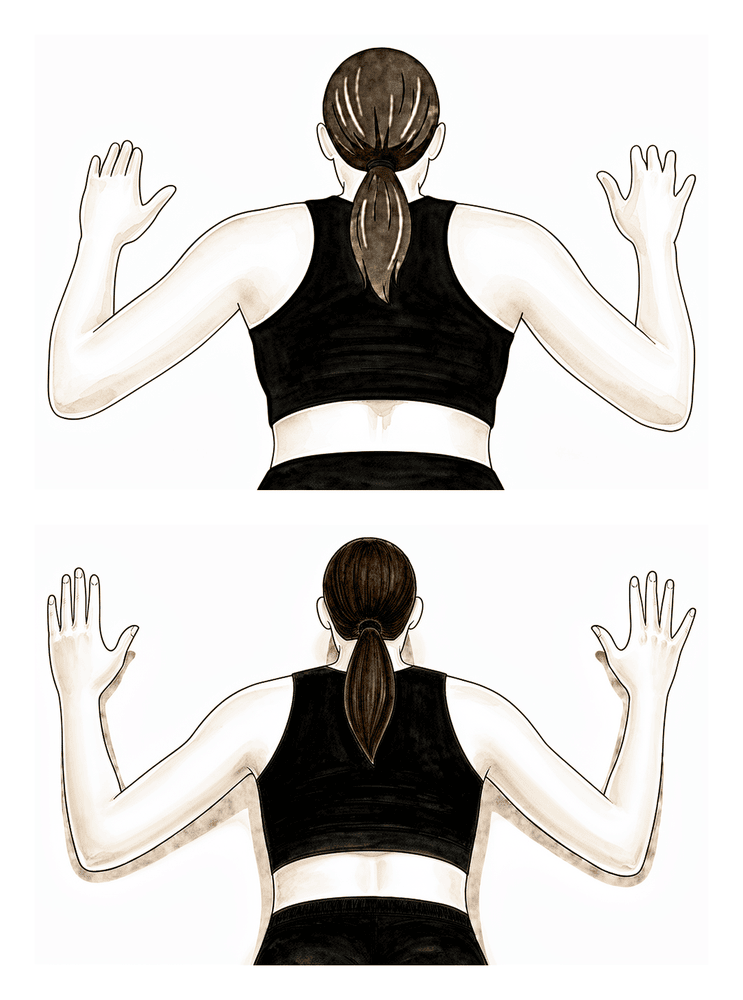
Kieran Hirpara 4.0
پیٹ کے بل لیٹ کر W
پیٹ کے بل لیٹ کر اپنی کہنیوں کو پیچھے اور نیچے اپنی کمر (waist) کی طرف کھینچیں، W کی شکل بنائیں اور کندھے کی پچھلی چپٹی ہڈیوں کو ایک دوسرے کی طرف اور نیچے دبائیں، پھر قابو کے ساتھ ڈھیلا چھوڑیں۔ اس سے کندھے کی پچھلی چپٹی ہڈی کے نچلے پٹھے مضبوط ہوتے ہیں۔
اپنے فزیوتھراپسٹ کی رہنمائی کے مطابق
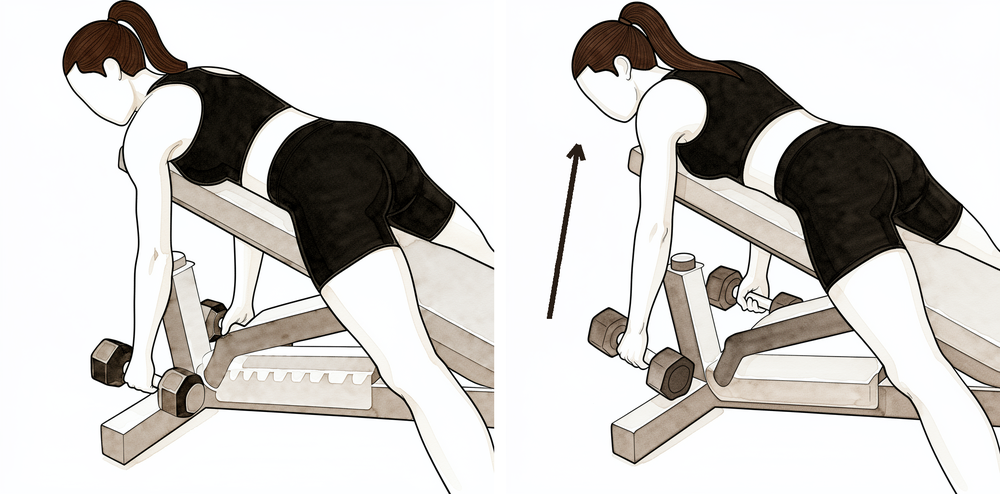
Kieran Hirpara 4.0
کندھے کی پچھلی چپٹی ہڈی کو مضبوط کرنے والی رو
کندھے کی پچھلی چپٹی ہڈی کو ہلکے وزن یا ربڑ بینڈ کے خلاف پیچھے اور نیچے کھینچیں، تھوڑی دیر روکیں، پھر قابو کے ساتھ ڈھیلا چھوڑیں۔ یہ طاقت بڑھانے کے ایک وسیع پروگرام کا حصہ ہے (آپ کا فزیوتھراپسٹ اسے "Thrower's 10" کہہ سکتا ہے) جو روٹیٹر کف اور کندھے کی پچھلی چپٹی ہڈی کے پٹھوں کو ایک ساتھ مضبوط کرتا ہے۔
اپنے فزیوتھراپسٹ کی رہنمائی کے مطابق
یہ مرحلہ آپ کے کام اور کھیل کے لیے طاقت، قابو اور برداشت بناتا ہے۔ اندر کی طرف گھمانا اب بھی بارہ ہفتوں تک تقریباً 45 ڈگری تک محدود رہتا ہے، لیکن باقی ہر سمت میں پوری ورزش کی جاتی ہے۔ پروگرام پھیل کر روٹیٹر کف اور کندھے کی پچھلی چپٹی ہڈی کی طاقت کا ایک زیادہ مکمل معمول بن جاتا ہے (آپ کا فزیوتھراپسٹ اسے "Thrower's 10" کہہ سکتا ہے)، جس کے ساتھ حرکت کے دوران قابو کی ورزشیں ہوتی ہیں۔
- سلنگ: نہیں۔
- اجازت شدہ حرکت: تمام سمتوں میں پوری، سوائے اندر کی طرف گھمانے کے، جو 12ویں ہفتے تک تقریباً 45 ڈگری تک محدود رہتا ہے۔
- ورزشیں: ربڑ بینڈ کے ساتھ رو (row)؛ پیٹ کے بل لیٹ کر T اور W؛ کندھے کی پچھلی چپٹی ہڈی کی طاقت کی ورزشیں؛ حرکت کے دوران قابو اور استحکام کی ورزشیں۔ قابو کو دوبارہ سکھانے کے لیے آپ کا فزیوتھراپسٹ ردھمک اسٹیبلائزیشن (rhythmic stabilisation، یعنی بازو کو ساکن رکھنے کی ہلکی ورزشیں جن میں وہ آپ کے بازو کو ہلکا سا دھکیلتے ہیں اور آپ مزاحمت کرتے ہیں) شامل کر سکتا ہے؛ یہ ہاتھوں سے کیا جانے والا کام ہے جس کی کوئی تصویر نہیں ہے۔ وزن اٹھانا بتدریج تقریباً 7 سے 10 پاؤنڈ (lb) کی طرف بڑھتا ہے۔
اگلے مرحلے کے لیے آپ تب تیار ہیں جب: اندر کی طرف گھمانے کی برداشت بہتر ہو رہی ہو؛ طاقت کی ورزشیں بغیر درد کے ہوں اور ان کے بعد سوجن نہ ہو؛ اور دوسری طرف کے مقابلے میں آپ کی طاقت یکساں طور پر بڑھ رہی ہو۔
مرحلہ VI — پوری حرکت اور وزن کے ساتھ ورزش (ہفتے 12 سے 14)
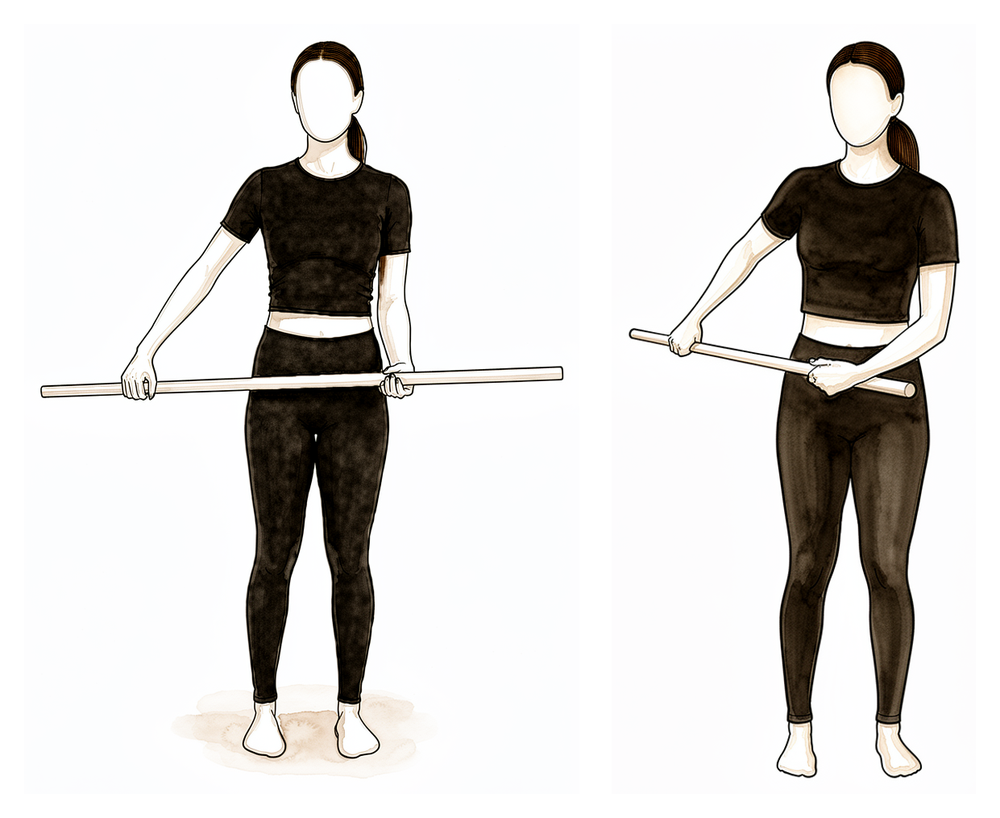
Kieran Hirpara 4.0
چھڑی کے ساتھ اندر کی طرف گھمانا
12ویں ہفتے سے، اس سے پہلے ہرگز نہیں۔ پچھلی مرمت کے بعد اندر کی طرف گھمانا سب سے آخر میں بحال کی جانے والی حرکت ہے، اس لیے کمر کے پیچھے ہاتھ لے جانا اب ہی شروع ہوتا ہے۔ ایک چھڑی کمر کے پیچھے پکڑیں اور صحیح ہاتھ سے آپریشن والے ہاتھ کو آہستگی سے کمر پر اوپر کی طرف کھینچیں، پھر قابو کے ساتھ نیچے لائیں۔ بتدریج بڑھائیں اور حد کے آخر پر کبھی زبردستی نہ کریں۔
اپنے فزیوتھراپسٹ کی رہنمائی کے مطابق
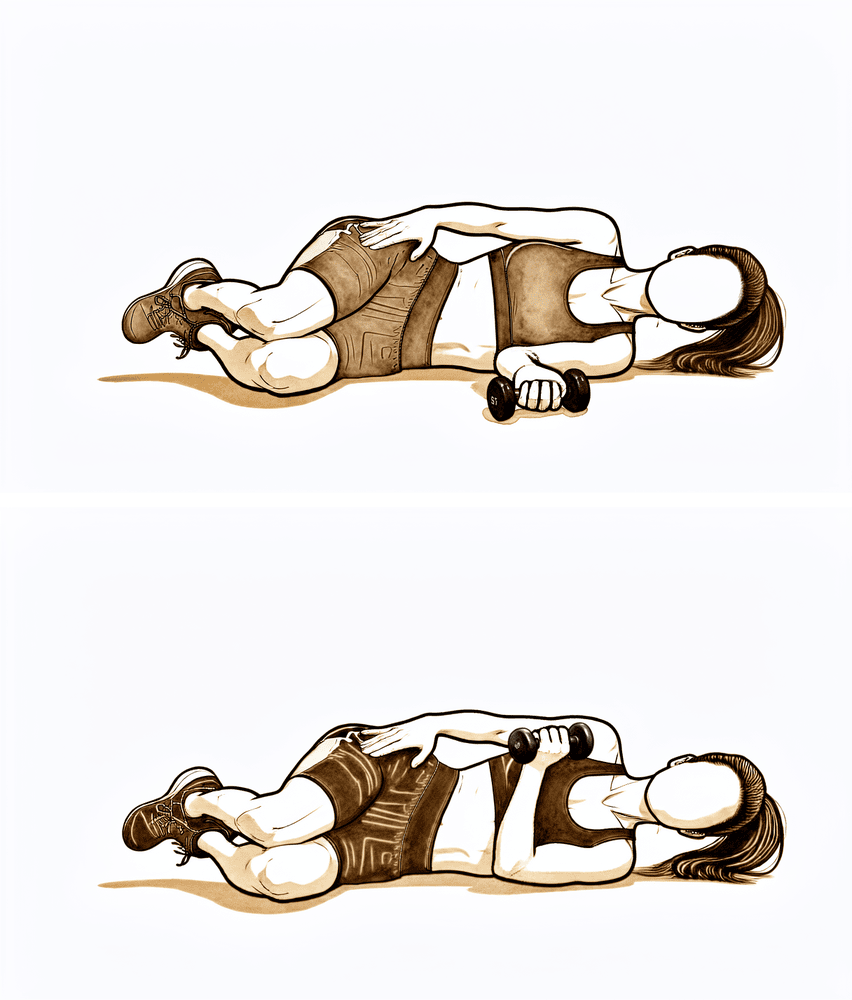
Kieran Hirpara 4.0
پہلو کے بل لیٹ کر اندر کی طرف گھمانا
12ویں ہفتے سے۔ اپنی آپریشن والی طرف لیٹیں، بازو آگے ہو اور کہنی 90 ڈگری پر مڑی ہو۔ بازو کے نچلے حصے کو گھمائیں تاکہ ہاتھ نیچے (اندر) کی طرف مڑے، پھر قابو کے ساتھ واپس لائیں۔ بغیر وزن کے شروع کریں اور ہلکا وزن صرف ہدایت کے مطابق شامل کریں: اس سے اندر کی طرف گھمانے والے پٹھے مضبوط ہوتے ہیں، جو پچھلی مرمت کے بعد سب سے آخر میں بحال ہوتے ہیں۔
اپنے فزیوتھراپسٹ کی رہنمائی کے مطابق
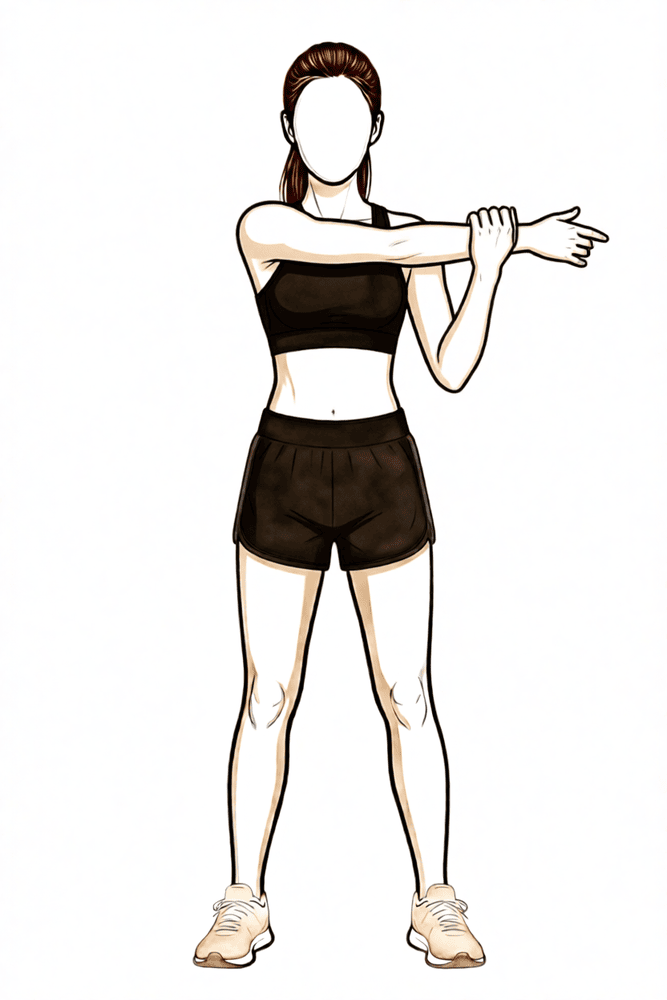
Kieran Hirpara 4.0
جسم کے آر پار اسٹریچ
12ویں ہفتے سے، اس سے پہلے نہیں، کیونکہ یہ کندھے کے پچھلے حصے اور مرمت والی جگہ پر بوجھ ڈالتا ہے۔ اپنے صحیح ہاتھ سے آپریشن والے بازو کو آہستگی سے سینے کے آر پار کھینچیں یہاں تک کہ آپ کو کندھے کے پچھلے حصے میں آرام دہ کھنچاؤ محسوس ہو۔ بتدریج بڑھائیں اور زبردستی نہ کریں۔
اپنے فزیوتھراپسٹ کی رہنمائی کے مطابق
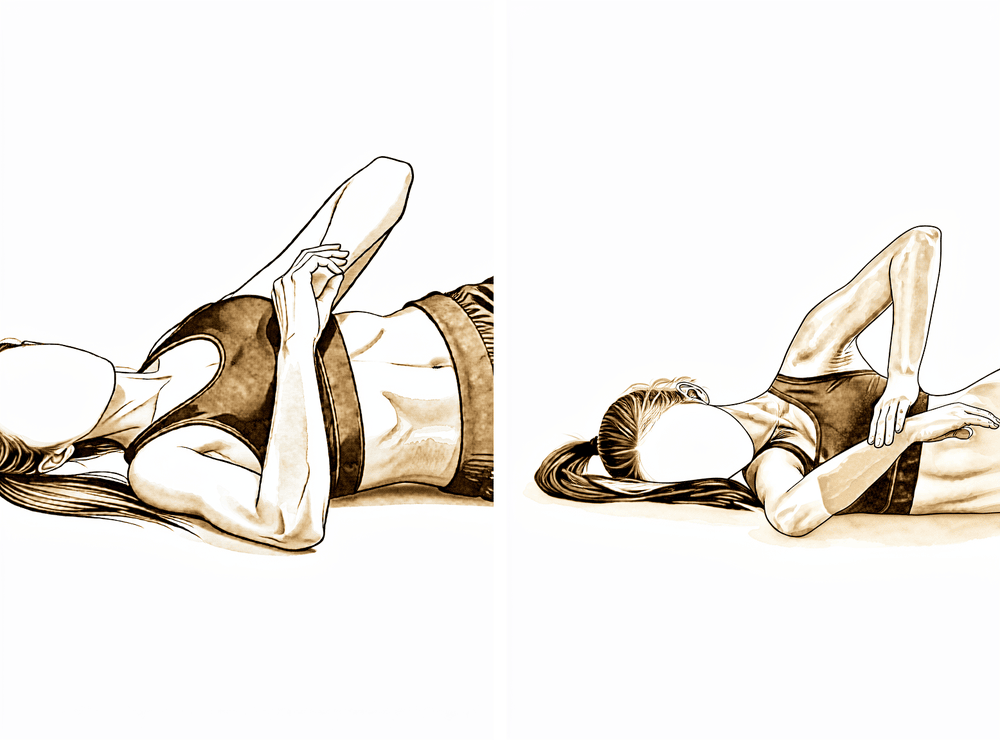
Kieran Hirpara 4.0
سلیپر اسٹریچ (sleeper stretch)
حد کے آخر تک اندر کی طرف گھمانے کا اسٹریچ 12ویں ہفتے سے شروع ہوتا ہے، اس سے پہلے نہیں۔ اپنی آپریشن والی طرف لیٹیں، بازو کندھے کی اونچائی پر سامنے کی طرف ہو اور کہنی 90 ڈگری پر مڑی ہو۔ دوسرے ہاتھ سے بازو کے نچلے حصے کو آہستگی سے بستر کی طرف نیچے دبائیں یہاں تک کہ آپ کو آرام دہ کھنچاؤ محسوس ہو۔ بتدریج بڑھائیں اور زبردستی نہ کریں۔
اپنے فزیوتھراپسٹ کی رہنمائی کے مطابق
Kieran Hirpara 4.0
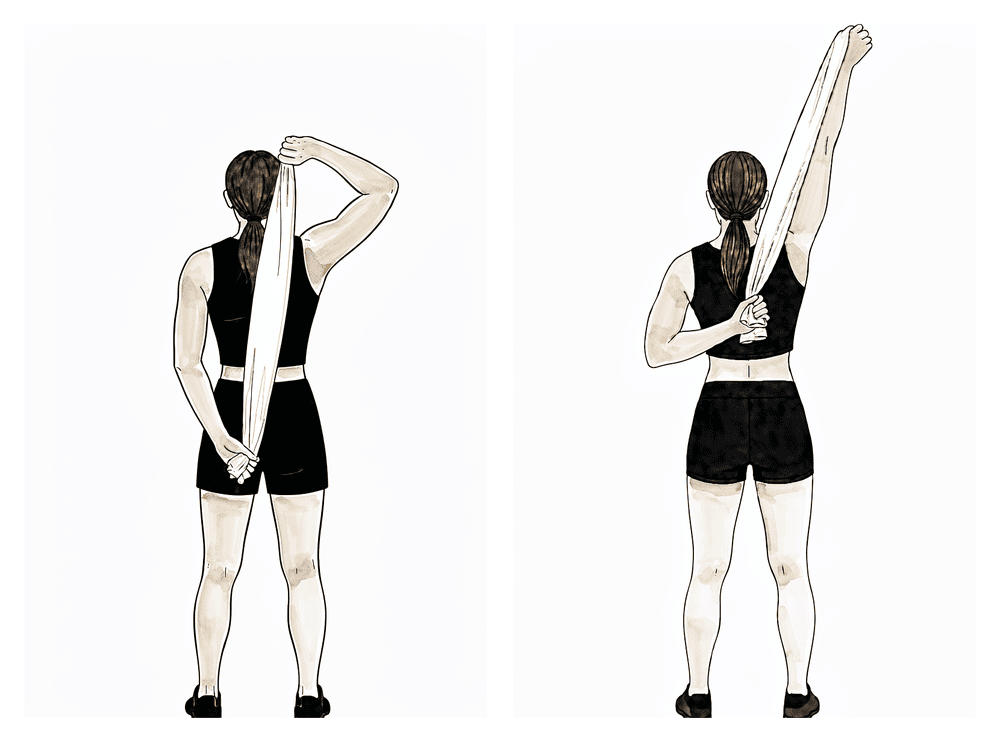
تولیے والا اسٹریچ (کمر کے پیچھے اندر کی طرف گھمانا)
12ویں ہفتے سے، کمر کے پیچھے پوری طرح ہاتھ پہنچانے کی صلاحیت بڑھانے کے لیے۔ ایک تولیہ کمر کے پیچھے پکڑیں، آپریشن والا ہاتھ نیچے ہو، اور اوپر والے ہاتھ سے نیچے والے ہاتھ کو آہستگی سے کمر پر اوپر کھینچیں۔ بتدریج بڑھائیں اور حد کے آخر تک اندر کی طرف گھمانے میں زبردستی نہ کریں۔
اپنے فزیوتھراپسٹ کی رہنمائی کے مطابق
Kieran Hirpara 4.0
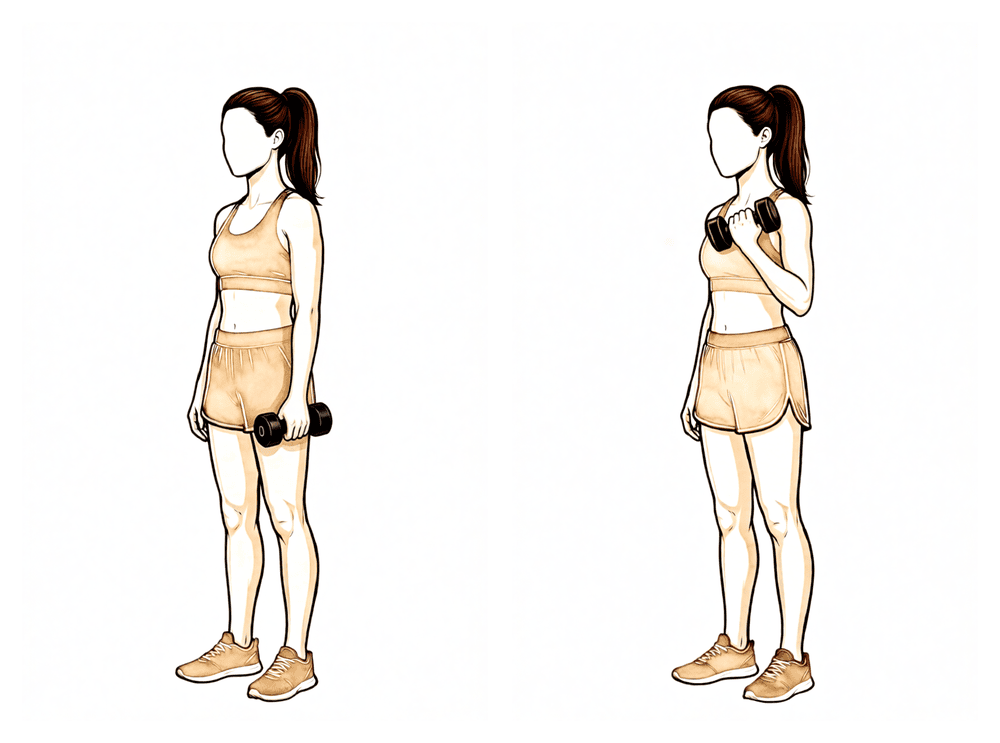
بائسیپس (biceps) کرل
12ویں ہفتے سے، جب بازو کی عمومی تیاری کی ورزشیں دوبارہ شروع ہوں۔ بازو کے اوپری حصے کو پہلو کے ساتھ لگا کر، کہنی موڑ کر ہلکا وزن اوپر اٹھائیں، پھر قابو کے ساتھ نیچے لائیں۔ کندھے کو ڈھیلا اور ساکن رکھیں۔
اپنے فزیوتھراپسٹ کی رہنمائی کے مطابق
بارہ ہفتوں پر اندر کی طرف گھمانا آخرکار پوری حد تک بحال کیا جاتا ہے۔ اسی وقت کمر کے پیچھے اور جسم کے آر پار والے اسٹریچ شروع ہوتے ہیں، اور جم کی ورزش مشینوں سے آزاد وزن (free weights) کی طرف بڑھتی ہے۔ پُش اپس دیوار سے فرش کی طرف بڑھائی جاتی ہیں۔ اس مرحلے کا ہدف اندر کی طرف پورا اور برابر گھماؤ ہے، جو آپ کی دوسری طرف کے برابر ہو، کیونکہ اندر کی طرف گھمانا وہ حرکت ہے جسے پچھلی مرمت سب سے زیادہ عرصے تک محفوظ رکھتی ہے۔
- سلنگ: نہیں۔
- اجازت شدہ حرکت: تمام سمتوں میں پوری حرکت، بشمول اندر کی طرف گھمانا، جسے بتدریج بڑھایا جائے اور کبھی زبردستی نہ کی جائے۔
- ورزشیں: چھڑی کے ساتھ اندر کی طرف گھمانا؛ پہلو کے بل لیٹ کر اندر کی طرف گھمانا؛ جسم کے آر پار اسٹریچ؛ سلیپر اسٹریچ (sleeper stretch)؛ کمر کے پیچھے ہاتھ پہنچانے کے لیے تولیے والا اسٹریچ؛ بائسیپس (biceps) کرل اور عمومی جسمانی تیاری۔ پچھلے مرحلے کی روٹیٹر کف، کندھے کی پچھلی چپٹی ہڈی اور ترچھی حرکتوں والی طاقت کی ورزشیں جاری رکھیں اور بڑھائیں۔
کھیل کی طرف بڑھنے کے لیے آپ تب تیار ہیں جب: اندر کی طرف آپ کا گھماؤ دوسری طرف کے برابر ہوتا جا رہا ہو؛ ہر سمت میں آپ کی پوری، بغیر درد کی حرکت ہو؛ اور ورزش کے بعد سوجن کے بغیر آپ کی طاقت دوسری طرف کے برابر پہنچ رہی ہو۔
کھیل اور کام میں واپسی
واپسی کا فیصلہ شرائط کی بنیاد پر ہوتا ہے، صرف کیلنڈر سے نہیں، اور اس کی منظوری ڈاکٹر ہِرپرا اور آپ کا فزیوتھراپسٹ دونوں دیتے ہیں۔
- پھینکنے والے اور سر سے اوپر ہاتھ لے جانے والے کھلاڑی: تقریباً 14 سے 16 ہفتوں سے پھینکنے کا درجہ بدرجہ یا وقفوں والا (interval) پروگرام شروع ہوتا ہے، جس میں مقدار اور شدت قدم بہ قدم بڑھائی جاتی ہے۔
- ٹکراؤ اور تصادم والے کھیل (رگبی، فٹ بال، مارشل آرٹس، ریکٹ والے کھیل، راک کلائمبنگ، گھڑ سواری): 5 ماہ سے پہلے نہیں، اور صرف اس وقت جب نیچے دی گئی شرائط پوری ہو جائیں۔
- کام: بیٹھ کر کیا جانے والا کام جتنا برداشت ہو؛ جسمانی مشقت والا یا بھاری کام کم از کم 3 ماہ بعد۔
آپ کھیل میں واپسی کے لیے تب تیار ہیں جب:
- ہر سمت میں آپ کی پوری، بغیر درد کی حرکت کی حد ہو، بشمول اندر کی طرف گھمانا جو دوسری طرف کے برابر ہو؛
- آپ کی باہر اور اندر کی طرف گھمانے کی طاقت دوسری طرف کے قریب ہو (آپ کے فزیوتھراپسٹ کے لیے: آئسوکائنیٹک یا ہاتھ میں پکڑے جانے والے ڈائنامومیٹر (isokinetic or hand-held dynamometry) پر اندرونی اور بیرونی گھماؤ کی طاقت کے لیے دونوں بازوؤں کی برابری کا اشاریہ (limb-symmetry index) تقریباً 90 فیصد یا اس سے بہتر؛ پچھلی مرمت میں خاص طور پر اندر کی طرف گھمانے کی طاقت کے برابر ہونے پر توجہ دیں، کیونکہ یہی محفوظ رکھی گئی سمت ہے)؛
- آپ نے کھیل سے متعلق کوئی بھی مخصوص پروگرام (جیسے وقفوں والا پھینکنے کا پروگرام) بغیر کسی درد یا ڈر (apprehension) کے مکمل کر لیا ہو؛ اور
- ڈاکٹر ہِرپرا نے معائنے پر آپ کو اجازت دے دی ہو۔
اپنے پروٹوکول کے بعد
یہ پروٹوکول پریکٹس کے صحت یابی سے متعلق عمومی مشوروں کے ساتھ کام کرتا ہے؛ دیکھیں آپریشن کے بعد درد پر قابو پانا اور زخم کی دیکھ بھال۔ خود اس مسئلے کے بارے میں کندھے کا ڈھیلا پن دیکھیں۔
مرحلہ وار ٹائم لائن، پچھلی مرمت کے لیے مخصوص حفاظتی حدود، اندر کی طرف گھمانے کی مرحلہ وار بحالی اور کھیل میں واپسی کی شرائط ان شائع شدہ پچھلے استحکام کے پروٹوکولز کو سامنے رکھ کر تیار کی گئی ہیں: University of Virginia Sports Medicine اور University of New Mexico Sports Medicine کے پروٹوکول (Posterior Labral Repair Rehabilitation Protocols)، Massachusetts General Brigham Sports Medicine کا پروٹوکول (Posterior Bankart Repair)، اور کلینیکل تبصرہ "Rehabilitation Following Posterior Shoulder Stabilization" (International Journal of Sports Physical Therapy, 2021)، جنہیں ڈاکٹر ہِرپرا نے اس پریکٹس کے طریقے کے مطابق ڈھالا ہے۔ ورزشوں کا اصل پروگرام Leonard Funk اور Wrightington Shoulder Unit کے کام پر مبنی ہے (shoulderdoc.co.uk)۔
Evidence & references
This is the clinical evidence summary written for health professionals. It is technical, and it lists the research this page was built from. You do not need to read it to understand your treatment or to make a decision about it.
Posterior Stabilisation (Posterior Labral / Capsular Repair): Rehabilitation Evidence
Topic: Arthroscopic or open posterior labral repair / posterior capsulorrhaphy (reverse Bankart) for posterior glenohumeral instability. Compiled: 2026-06-16. Sources: local RAG Orthopaedic corpus + published fellowship/PT "standard of care" protocols.
The key difference vs anterior (Bankart/Latarjet): the precaution is REVERSED
Posterior instability and the posterior repair are stressed by the OPPOSITE motions to an anterior repair. The provocative/at-risk position is flexion + adduction + internal rotation (and horizontal adduction) - exactly the position of a posterior load (Itoi/Shoulderology: recurrent posterior instability = PIGHL deficiency failing to resist posterior translation with the arm in flexion and internal rotation). Therefore: - EARLY PRECAUTION = limit flexion, internal rotation, adduction, and horizontal/cross-body adduction; protect against the posteriorly-directed load. (Anterior repairs instead limit ER + abduction.) - Sling/brace is positioned in slight ABDUCTION and NEUTRAL/slight EXTERNAL rotation - often a "gunslinger" brace or abduction pillow - to keep the humeral head off the posterior repair. The arm must be kept in front of the body; do NOT reach behind the back and avoid internal rotation early. - Posterior instability is uncommon (~3-5% of instability) so high-level evidence is sparser; protocols are consensus/biomechanically driven.
Consensus phased timeline (UVA Sports Medicine posterior labral repair standard of care)
| Phase | Week window | Sling/brace | ROM allowed & RESTRICTIONS | AROM / strengthening | RTS |
|---|---|---|---|---|---|
| I - Immediate / protect | 0-2 wk | Sling (all components) at all times incl. sleeping (gunslinger / neutral-to-slight-ER, slight abduction); off only for home ex/PT | Pendulums; elbow/wrist ROM only. No shoulder PROM into the at-risk arc. Keep arm in front of body | Grip/wrist; ball squeezes | None |
| II - Early PROM | 2-4 wk | Continue sling at all times; keep arm IN FRONT - do NOT reach behind back | PROM (PT-supervised), strictly limited: flexion to 60 deg, extension to neutral (0 deg), abduction to 90 deg, ER to 45 deg, IR to neutral (0 deg) at side. No home pulleys | Scapular strengthening; submaximal pain-free isometrics in ALL directions (in sling); cervical ROM | None |
| III - Increase PROM, begin AAROM/strengthening | 4-6 wk | Continue sling by day; may stop sling at night but AVOID internal rotation; keep arm in front | PROM: flexion to 90 deg, extension to 30 deg, abduction full as tolerated, ER 45 deg at 90 deg abd / full at side, IR limited to 30 deg at 90 deg abd. Begin AAROM (wall walks). No reaching behind back | Continue scapular + isometrics; begin light ER Theraband at side. No lift/push/pull >2 lb, no overhead | None |
| IV - Advance | 6-8 wk | Discontinue sling at 6 wk | Advance AROM to full as tolerated EXCEPT IR; limit IR to 45 deg (at side and at 90 deg abd) until 12 wk | Isotonic RC (to 6-8 lb), UBE, wall push-ups, advance scapular, begin D1/D2 PNF (<=3 lb). Lift <=5 lb | None |
| V - Strengthen | 8-12 wk | None | IR still limited to 45 deg until 12 wk; full in all other planes | Advance RC/scapular, dynamic stabilisation, isokinetics with 60 deg block; Thrower's 10 for throwers (from ~10-12 wk). Lift <=7 lb (wk 8-10) -> <=10 lb (wk 10-12) | None |
| VI - Full ROM / weight training | 12-14 wk | None | IR advanced to FULL at 12 wk. Full ROM all directions | Traditional weight training (machines -> free weights), eccentric RC, advance PNF/isokinetics. Begin overhead-work progression | Begin late-stage loading |
| Thrower progression / RTS | 14-24 wk | None | Full | Throwing program from 14-16 wk (60% velocity); isokinetic testing 16-24 wk; interval throwing once passed | No contact sport before 5 months; full RTS on criteria + surgeon clearance |
Active ROM start: AAROM ~4 wk, full AROM (except IR) by ~6-8 wk. Strengthening start: isometrics from ~2-4 wk; isotonic RC ~6 wk. RTS: throwing 14-16 wk; contact sport not before 5 months; criterion-based.
RTS criteria (UVA)
Pass isokinetic test (ER/IR unilateral >=70%, ER bilateral >=98%, IR bilateral >=105%, ER/IR peak-torque/BW ratios); completed throwing program; no pain with activity; surgeon clearance; >=5 months post-op for contact sport.
Posterior-specific precaution summary: sling in slight abduction/neutral-ER (gunslinger); keep arm in front; avoid IR, adduction, horizontal/cross-body adduction, and flexion past limits early; IR is the LAST motion restored (capped 45 deg until 12 wk, full at 12 wk). This is the exact inverse of the anterior protocols, which cap ER.
Key controversies & evidence flags
-
Brace type/position - gunslinger / neutral-to-ER vs simple sling. Biomechanical consensus favours immobilisation in neutral or slight external rotation with slight abduction to unload the posterior capsulolabral repair (reverse of the IR sling used after anterior repair). The Sheean/Kibler current-concepts review and the published PT protocols converge on this, but there is no RCT comparing posterior brace positions. Evidence: consensus / biomechanical (Level V).
-
Throwers / overhead athletes vs traumatic (collision) posterior instability. Posterior labral injury in overhead athletes is often insidious/atraumatic (Sheean 2020), demanding a slower, more conservative throwing return; traumatic posterior instability in collision athletes (Funk 2009 rugby series; Kang "batter's shoulder") may follow a more standard timeline. Savoie (Arthroscopy 2008, 136 shoulders) shows arthroscopic posterior reconstruction is effective after failed conservative care. Evidence: case-series level (Level IV); no RCTs on rehab pace.
-
Sparse high-level evidence overall. Because posterior instability is rare (~3-5%), there are no instability-position RCTs for the posterior repair and protocols are extrapolated/biomechanical. Flag everything here as CONSENSUS / Level IV-V. The "Rehabilitation Following Posterior Shoulder Stabilization" clinical commentary (PMC8168996) is the main synthesising source.
-
Contact-sport return timing. Recent series (e.g., "Favorable Outcomes After Arthroscopic Posterior Bankart Repair for Traumatic Posterior Shoulder Instability in Collision Athletes," PMC12800795) support good RTS, but timing remains criteria-based with a ~5-6 month floor for collision sport. Evidence: cohort (Level IV).
CITATIONS
Published rehabilitation protocols (URLs)
- University of Virginia Sports Medicine - Posterior Labral Repair Rehabilitation Protocol (Arthroscopic or Open): https://med.virginia.edu/orthopaedic-surgery/wp-content/uploads/sites/242/2021/06/Posterior-Labral-Repair.pdf
- St. Louis Orthopedic Specialists - Posterior Labral Repair and Capsulorrhaphy Protocol: https://www.stlorthospecialists.com/wp-content/uploads/2019/05/Posterior-Labral-Repair-and-Capsulorraphy-Rehab-Protocol.pdf
- Dr. Coyner - Posterior Labral Repair Protocol: https://www.drcoyner.com/pdf/posterior-labral-repair-protocol.pdf
- Indianapolis Sports Medicine - Posterior Labral Repair Rehab Protocol: https://www.indysportsdr.com/pdf/posterior-labral-repair-rehab-protocol.pdf
- "Rehabilitation Following Posterior Shoulder Stabilization" (clinical commentary), PMC8168996: https://pmc.ncbi.nlm.nih.gov/articles/PMC8168996/
- "Postsurgical Rehabilitation of Posterior Instability," Musculoskeletal Key: https://musculoskeletalkey.com/postsurgical-rehabilitation-of-posterior-instability/
Local RAG corpus (article / journal / year)
- Eiji Itoi. Shoulderology. 2023. (Posterior instability ~3% of instability; PIGHL deficiency; at-risk position = flexion + internal rotation - the basis for the reversed precaution.) [textbook / mechanism]
- Sheean AJ, Kibler WB, Conway J, et al. Posterior Labral Injury and Glenohumeral Instability in Overhead Athletes: Current Concepts for Diagnosis and Management. Journal of the American Academy of Orthopaedic Surgeons. 2020. [current-concepts review]
- Funk L, Badge R, Tambe A. Arthroscopic isolated posterior labral repair in rugby players. International Journal of Shoulder Surgery. 2009. [case series - traumatic posterior instability, collision athletes]
- Savoie FH, Holt MS, Field LD, Ramsey JR. Arthroscopic Management of Posterior Instability: Evolution of Technique and Results. Arthroscopy. 2008;24(4). (136 shoulders; arthroscopic posterior reconstruction after failed conservative rehab.) [large case series, Level IV]
- Kang RW, Mahony GT, Harris TC, et al. Posterior Instability Caused by Batter's Shoulder. Clinics in Sports Medicine. 2013. [technique / case series]
- Rockwood CA, Fehringer EV. Rockwood and Matsen's The Shoulder. 2016. (Posterior drawer / laxity exam in neutral rotation; diagnostic basis.) [textbook]
Overall evidence grade for the phased protocol itself: CONSENSUS / institutional standard-of-care, weaker than the anterior literature (Level IV-V; no RCTs on posterior brace position or rehab pace). The reversed precaution (limit IR/adduction/flexion; brace in abduction + neutral/ER) is biomechanically well-founded but not RCT-tested.