Patients › Rehabilitation
موڑنے والے ٹینڈن کی مرمت (Flexor Tendon Repair)
انگلی کے موڑنے والے ٹینڈن (flexor tendon) کی مرمت کے بعد جلد فعال حرکت پر مبنی صحت یابی کا منصوبہ، جس میں مانچسٹر شارٹ اسپلنٹ (Manchester short splint) کے ذریعے پہلے ہفتے سے بھرتے ہوئے ٹینڈن کو ہلکے اور محفوظ طریقے سے حرکت دی جاتی ہے، جبکہ چھ ہفتے تک مرمت کی حفاظت کی جاتی ہے۔
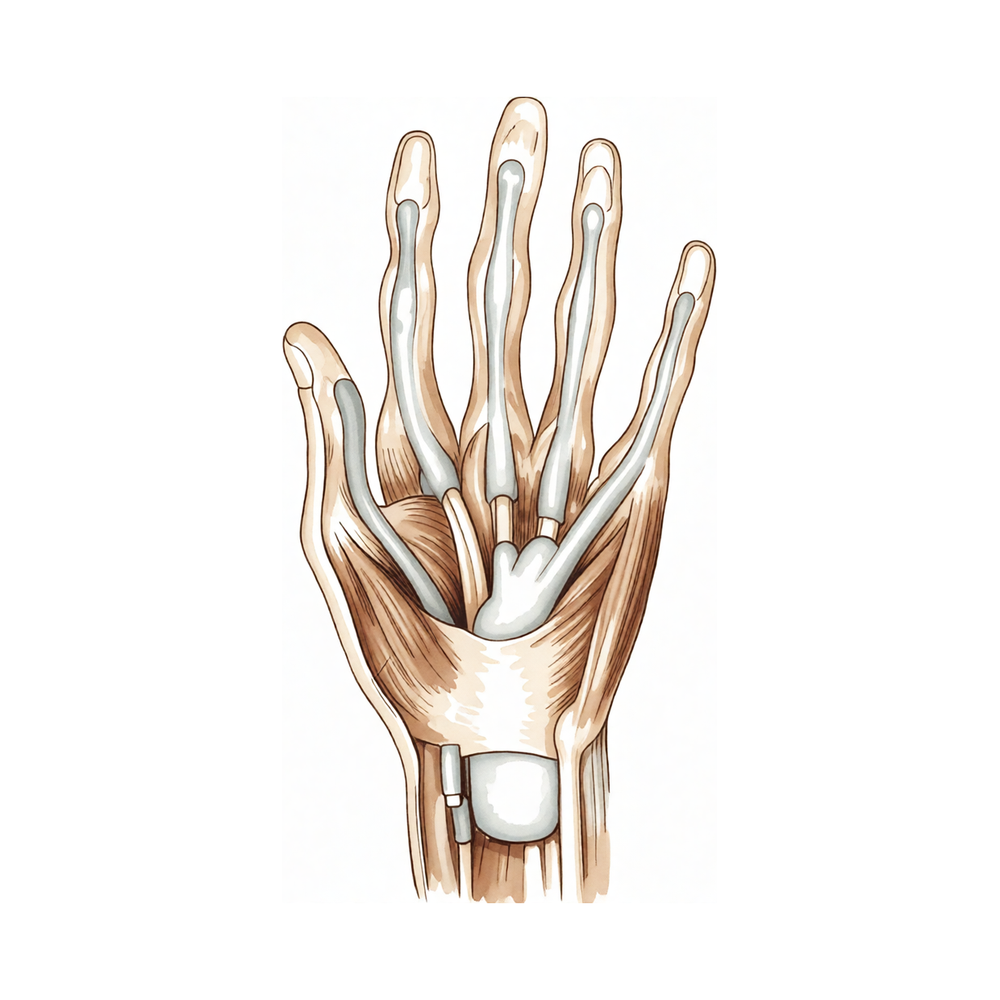
یہ پروٹوکول Mater Private Hospital Rockhampton میں ڈاکٹر کیرن ہِرپرا کے ہاتھوں انگلی کے موڑنے والے ٹینڈن (flexor tendon)، یعنی وہ ڈوری جو انگلی کی ہتھیلی والی طرف چلتی ہے اور انگلی کو ہتھیلی کی طرف موڑتی ہے، کی آپریشن سے مرمت کے بعد آپ کی صحت یابی میں رہنمائی کرتا ہے۔ یہ آپ کے گھر پر ورزش کے پروگرام سے شروع ہوتا ہے، اور اس کے بعد آپ کے ہینڈ تھراپسٹ (ہاتھ کی بحالی کے ماہر) کے لیے لکھا گیا باقاعدہ طبی پروٹوکول ہے: یہ صفحہ یا اس کی پی ڈی ایف تھراپی کی اپنی پہلی ملاقات پر ساتھ لے جائیں تاکہ آپ کی بحالی کا علاج مربوط رہے۔ آپ کا ہینڈ تھراپسٹ آپ کی صحت یابی کی رفتار کے مطابق اس منصوبے میں تبدیلی کر سکتا ہے۔
اگر آپریشن کے بعد آپ کو اپنے زخم کے بارے میں کوئی تشویش ہو تو کلینک سے رابطہ کریں۔ اکثر یہ مددگار ہوتا ہے کہ زخم کی تصویر کھینچ کر جائزے کے لیے ای میل کر دیں۔
کیا توقع رکھیں
موڑنے والے ٹینڈن (tendon)، یعنی وہ مضبوط ڈوری جو پٹھے کو ہڈی سے جوڑتی ہے، کی مرمت میں ٹینڈن کے کٹے ہوئے سروں کو ٹانکوں سے دوبارہ جوڑ دیا جاتا ہے تاکہ انگلی پھر سے مڑ سکے۔ مرمت اتنی مضبوط ہوتی ہے کہ اسے شروع سے ہی ہلکے سے حرکت دی جا سکے، لیکن پہلے چند ہفتوں میں، جب ٹینڈن جڑ رہا ہوتا ہے، یہ سب سے کمزور ہوتی ہے، اس لیے پورا منصوبہ اس بات پر بنا ہے کہ اسے بس اتنا حرکت دیا جائے کہ وہ کھسکتا رہے، مگر کبھی اتنا زور نہ ڈالا جائے کہ ٹانکے ٹوٹ جائیں۔
اس کے لیے آپ کے ہاتھ کو ایک خاص ہلکے اسپلنٹ میں رکھا جاتا ہے جسے مانچسٹر شارٹ اسپلنٹ (Manchester short splint) کہتے ہیں۔ پرانے، بھاری اسپلنٹس کے برعکس یہ چھوٹا ہوتا ہے اور کلائی کی لکیر پر ختم ہو جاتا ہے، اس لیے آپ کی کلائی آزاد رہتی ہے۔ یہ آپ کی کلائی کو پوری طرح آگے کی طرف، اور پیچھے کی طرف تقریباً 45 ڈگری تک حرکت کرنے دیتا ہے، جبکہ ایک چھوٹی سی رکاوٹ انگلیوں کی جڑ کے بڑے جوڑوں (knuckles) کو تقریباً 30 ڈگری سے زیادہ سیدھا ہونے سے روکتی ہے اور انگلیوں کے جوڑوں کو حرکت کے لیے آزاد چھوڑ دیتی ہے۔ آپ اسے چھ ہفتے تک ہر وقت پہنتے ہیں، اور صرف ورزشوں اور نہانے دھونے کے لیے ہدایت کے مطابق اتارتے ہیں۔
اصل ہوشیاری کلائی کے استعمال میں ہے۔ جب آپ اپنی کلائی آگے کی طرف موڑتے ہیں تو آپ کی انگلی تقریباً خود ہی سیدھی ہو جاتی ہے (اسے ٹینوڈیسس اثر (tenodesis effect) کہتے ہیں)، اور اس سے آپ اپنے پٹھوں کا زور لگائے بغیر انگلی کو پوری طرح کھول سکتے ہیں۔ جب آپ اپنی کلائی پیچھے کی طرف موڑتے ہیں تو انگلی کو آہستہ سے موڑنا زیادہ آسان اور محفوظ ہو جاتا ہے۔ اس طرح حرکت کرنے سے ٹینڈن کھسکتا رہتا ہے اور، سب سے اہم بات، انگلی اکڑ کر مڑی ہوئی حالت میں نہیں رہ جاتی، جو اس قسم کی مرمت کے بعد سب سے عام مسئلہ ہے۔
ابتدائی ورزشیں (تقریباً دن 4 سے 5 سے شروع ہو کر) ہلکی اور مخصوص ہوتی ہیں: پہلے انگلی کو دوسرے ہاتھ کی مدد سے (passive) موڑنا، پھر انگلی کے سرے سے شروع ہونے والا ہلکا فعال “ہک” (hook) کا موڑ، پھر کلائی کو موڑ کر انگلی کو سیدھا کرنا۔ چھ ہفتے تک نہ زور سے پکڑنا ہے اور نہ کوئی زبردستی کی حرکت۔ اسپلنٹ چھ ہفتے پر اتر جاتا ہے، ہلکی طاقت کی ورزشیں شروع ہوتی ہیں، اور زیادہ تر لوگ دس سے بارہ ہفتے تک ہاتھ کے بغیر پابندی کے مکمل استعمال پر واپس آ جاتے ہیں۔
احتیاطیں اور پابندیاں
- مانچسٹر شارٹ اسپلنٹ چھ ہفتے تک ہر وقت پہنیں: ہدایت کے مطابق اسے صرف اپنی ورزشوں اور نہانے دھونے کے لیے اتاریں۔
- پہلے چھ ہفتے ہرگز نہ زور سے کسی ہوئی مٹھی بنائیں، اور آپریشن والے ہاتھ سے ہرگز نہ کوئی چیز پکڑیں، نہ اٹھائیں، نہ کھینچیں اور نہ اٹھا کر لے جائیں: زیادہ بوجھ سے مرمت ٹوٹ سکتی ہے۔
- انگلی کو ہرگز نہ زبردستی سیدھا کریں اور نہ زبردستی موڑیں؛ ہر حرکت ہلکی رکھیں، اسی حد کے اندر جو آپ کو دکھائی گئی ہے۔
- آپ ہاتھ کو بہت ہلکے، محفوظ کاموں کے لیے استعمال کر سکتے ہیں، زخمی انگلی کو چھوڑ کر، بشرطیکہ کوئی چیز اسے نہ کھینچے یا اس پر زور نہ ڈالے۔
- اگر “کڑک” کی آواز آئے یا اچانک کچھ “ڈھیلا” محسوس ہو اور انگلی مڑنا بند ہو جائے تو اس کا مطلب ہو سکتا ہے کہ ٹینڈن ٹوٹ گیا ہے: ایسا ہو تو فوراً کلینک سے رابطہ کریں۔
- جب تک آپ اسپلنٹ میں ہیں، گاڑی ہرگز نہ چلائیں؛ گاڑی چلانا اسپلنٹ اترنے کے بعد (تقریباً چھ ہفتے) دوبارہ شروع ہوتا ہے، جب آپ کی گرفت اور قابو کافی ہو اور آپ کو اجازت دے دی جائے۔
زخم، سوجن اور زخم کے نشان کی دیکھ بھال کے لیے پریکٹس کی زخم کی دیکھ بھال سے متعلق ہدایات دیکھیں۔
آپ کی ورزشیں
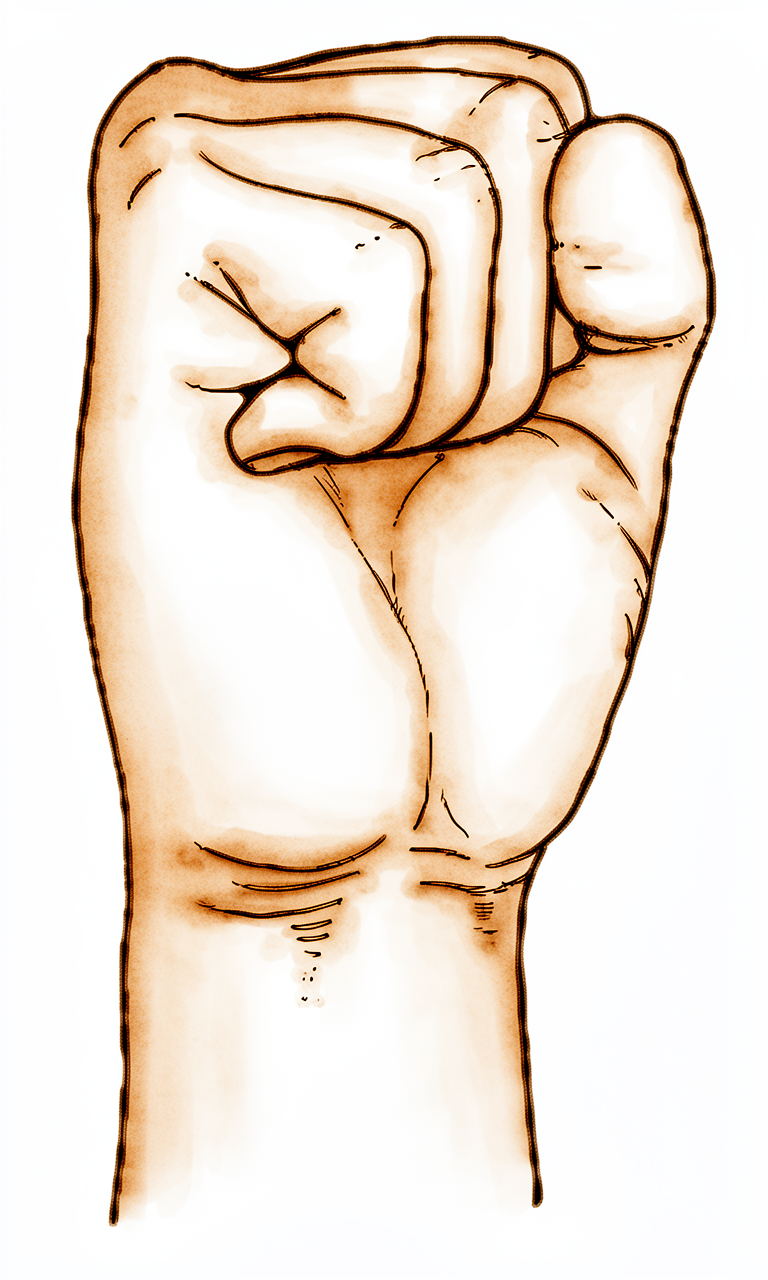
دوسرے ہاتھ کی مدد سے مٹھی کا اسٹریچ (IP جوڑوں کا موڑ)
اپنے دوسرے ہاتھ سے آپریشن والی انگلی کو آہستہ سے پوری طرح مٹھی کی شکل میں موڑیں، اور انگلی کے جوڑوں کو پورا موڑیں — انگلی کو بالکل ڈھیلا رکھیں تاکہ سارا کام آپ کا دوسرا ہاتھ کرے۔ یہ ہر سیشن میں سب سے پہلے کیا جاتا ہے تاکہ انگلی کے جوڑ لچکدار اور حرکت کے لیے تیار رہیں۔ اس سے مرمت پر کھنچاؤ نہیں پڑتا کیونکہ آپ کا اپنا پٹھا بند (ڈھیلا) رہتا ہے۔ آہستہ حرکت کریں اور درد شروع ہونے سے پہلے رک جائیں۔
10 بار، ہر سیشن کے شروع میں، دن میں کئی سیشن
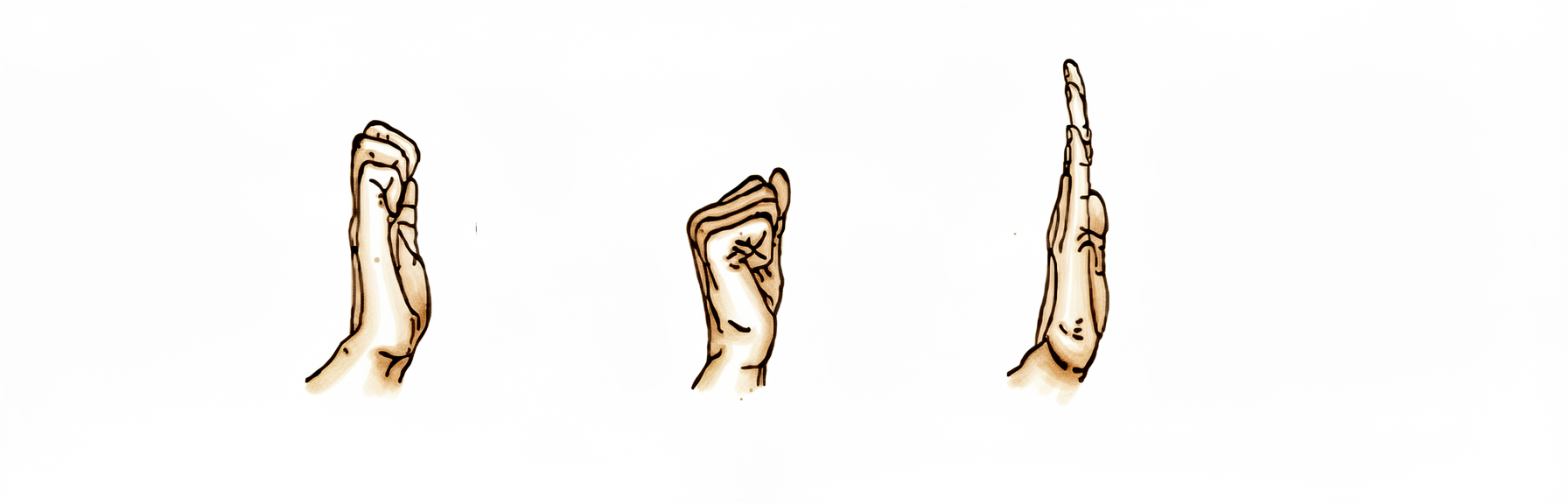
انگلی کے سرے والے جوڑ (DIP) سے فعال ہک مٹھی
اپنی کلائی کو پیچھے کی طرف موڑ کر (extended)، اسپلنٹ کے اندر یا باہر، پہلے اپنی انگلی کا سرا نیچے موڑ کر “ہک” بنائیں — آخری اور درمیانی جوڑ موڑیں جبکہ انگلی کی جڑ کا بڑا جوڑ سیدھا رکھیں۔ آہستہ سے روکیں، پھر چھوڑ دیں۔ موڑ کو انگلی کے سرے سے شروع کرنے سے بھرتا ہوا ٹینڈن اسی طرح کھسکتا ہے جیسے اسے کھسکنا چاہیے۔ صرف ہلکا زور لگائیں — کبھی زبردستی نہ کریں اور کبھی زور سے کسی ہوئی مٹھی نہ بنائیں۔
10 بار، رہنمائی کے مطابق دن میں کئی سیشن
Kieran Hirpara 4.0
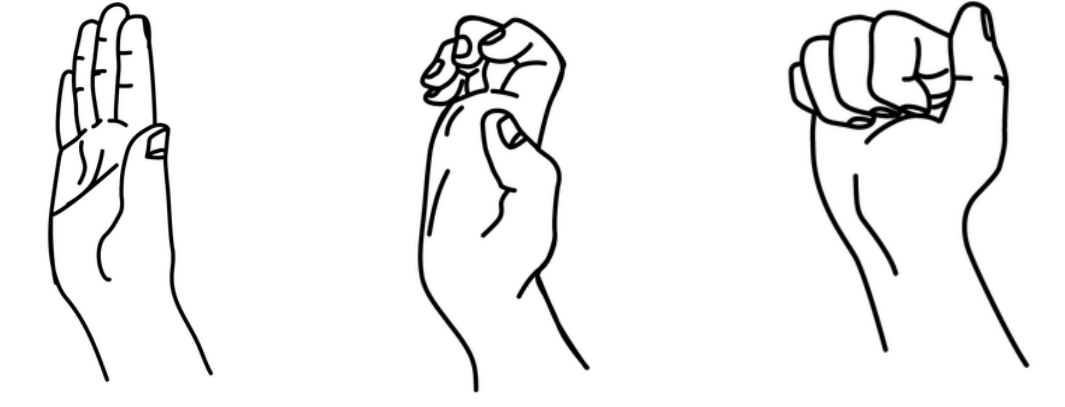
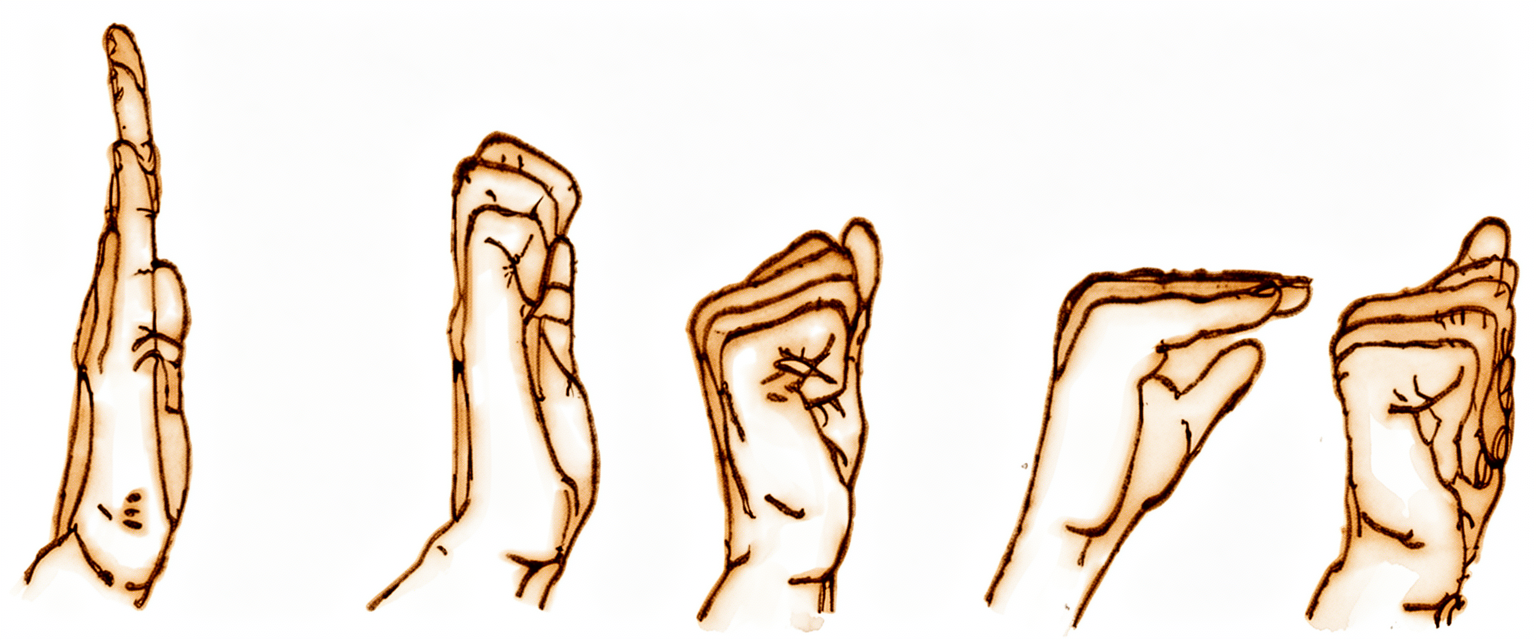
ٹینڈن گلائیڈز (ہک سے سیدھا، پھر پوری مٹھی)
ٹینڈن کو کھسکانے والی ترتیب سے آہستہ آہستہ گزریں: انگلیاں سیدھی، پھر ہک مٹھی (انگلی کے سرے کا موڑ)، پھر ڈھیلی پوری مٹھی، پھر واپس سیدھی۔ اس سے موڑنے والے دونوں ٹینڈن ایک دوسرے کے اور اردگرد کی بافتوں کے پاس سے ہمواری سے کھسکتے رہتے ہیں تاکہ وہ چپک نہ جائیں۔ ہر پوزیشن ہلکی اور آسان رکھیں — یہ کھسکانے کی حرکتیں ہیں، طاقت بڑھانے کی نہیں، اس لیے کوئی زور نہیں لگنا چاہیے۔
ہر پوزیشن 5 بار، رہنمائی کے مطابق دن میں کئی سیشن
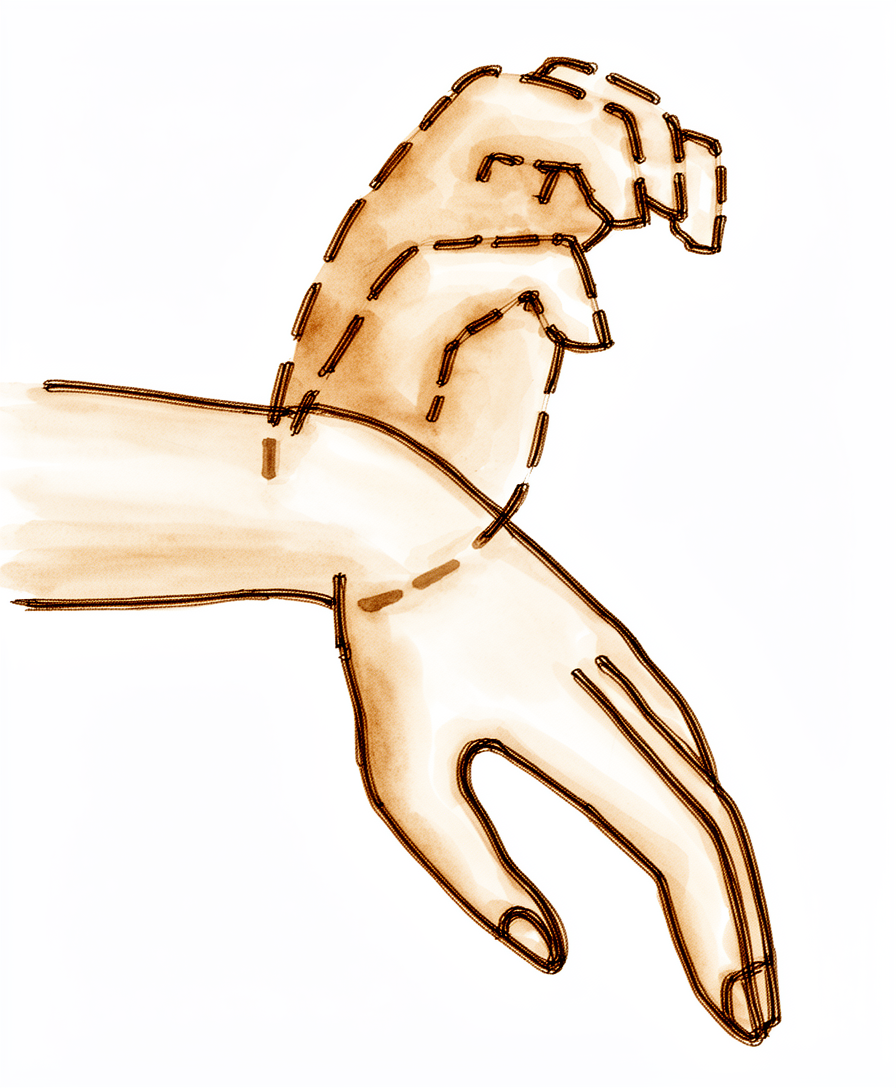
کلائی موڑ کر انگلی سیدھی کرنا (ہم آہنگ حرکت، synergy)
اپنی کلائی کو آگے کی طرف جھکنے دیں (flexed) اور پھر خود اپنی انگلی کو سیدھا کریں۔ کلائی کو اس طرح موڑنا قدرتی طور پر انگلی کو سیدھا ہونے میں مدد دیتا ہے، اس لیے انگلی بغیر زبردستی کے آسانی سے کھل جاتی ہے۔ یہی وہ اہم حرکت ہے جو انگلی کو مستقل مڑی ہوئی حالت میں جانے سے روکتی ہے — اسے پابندی سے کریں۔ کلائی کی مدد سے انگلی جتنی آرام سے سیدھی ہو سکے، بس اتنی ہی سیدھی کریں؛ اسے دبا کر یا زور لگا کر سیدھا نہ کریں۔
10 بار، رہنمائی کے مطابق دن میں کئی سیشن
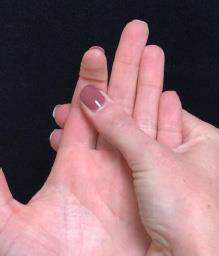
رکھ کر تھامنا (place-and-hold)
اپنے دوسرے ہاتھ سے آپریشن والی انگلی کو آہستہ سے ہلکی مٹھی کی شکل میں رکھیں، پھر چھوڑ دیں اور اپنے پٹھے کے بس ذرا سے زور سے اس پوزیشن کو تھامے رکھیں — بمشکل اتنا کہ انگلی وہیں رہے۔ اس سے مرمت شدہ ٹینڈن محفوظ طریقے سے دوبارہ کام شروع کرتا ہے کیونکہ موڑنے کا اصل کام آپ کا دوسرا ہاتھ کرتا ہے، اور آپ کے اپنے پٹھے کو صرف تھامنا ہوتا ہے، کھینچنا نہیں۔ زور بہت کم رکھیں؛ ہر بار کے درمیان پوری طرح ڈھیلا چھوڑیں۔
چند سیکنڈ روکیں، 5 سے 10 بار، صرف اپنے ہینڈ تھراپسٹ کی رہنمائی کے مطابق
Kieran Hirpara 4.0
جوڑ کو الگ سے حرکت دینا (blocking) (بعد میں، اگر ٹینڈن چپک جائے)
یہ بعد کے مرحلے کی ورزش ہے — صرف اس صورت میں جب آپ کا ٹینڈن چپک رہا ہو اور آپ کا ہینڈ تھراپسٹ اسے شروع کروائے۔ جس جوڑ کو حرکت دینا ہے اس کے ذرا نیچے والی ہڈی کو پکڑ کر اپنی انگلی کو ساکن رکھیں، پھر صرف اسی ایک جوڑ کو خود موڑیں (مثلاً انگلی کے درمیانی حصے کو ساکن پکڑیں اور صرف انگلی کا سرا موڑیں)۔ اس سے کھسکاؤ ایک ہی جوڑ پر مرکوز ہوتا ہے تاکہ بندھ جانے والا ٹینڈن آزاد ہو سکے۔ یہ ورزش خود سے شروع نہ کریں — یہ زیادہ سخت ہے اور صرف تب شامل کی جاتی ہے جب آپ کا تھراپسٹ اسے محفوظ سمجھے۔
اپنے ہینڈ تھراپسٹ کی رہنمائی کے مطابق (بعد کا مرحلہ، صرف ضرورت ہو تو)
یہ آپ کے ہینڈ آؤٹ (handout) والی ورزشیں ہیں۔ انہیں صرف ڈاکٹر ہِرپرا اور اپنے ہینڈ تھراپسٹ کی رہنمائی کے مطابق شروع کریں، اور جو بھی حرکت کی حد اور پابندیاں آپ کو بتائی گئی ہیں ان کے اندر رہیں۔ ہر سیشن ایک ہی محفوظ ترتیب سے ہوتا ہے: پہلے انگلی کو دوسرے ہاتھ کی مدد سے آہستہ سے موڑیں، پھر فعال “ہک” کا موڑ اور ٹینڈن گلائیڈز کریں، پھر کلائی کو موڑ کر انگلی کو سیدھا کریں تاکہ وہ مڑی ہوئی حالت میں اکڑ نہ جائے۔ سب کچھ ہلکا رکھیں: یہ ٹینڈن کو کھسکانے کی ورزشیں ہیں، طاقت بڑھانے کی نہیں۔ رکھ کر تھامنے کی ورزش (place-and-hold) اور جوڑ کو الگ سے حرکت دینے کی ورزش (blocking) بعد کے مرحلوں کی ہیں اور صرف تب شروع کی جانی چاہییں جب آپ کا ہینڈ تھراپسٹ انہیں شامل کرے۔ جو بھی چیز مرمت کی جگہ پر تیز درد پیدا کرے، اسے روک دیں، اور اجازت ملنے سے پہلے کبھی زور سے مٹھی نہ بنائیں۔
آپ کا طبی پروٹوکول
اس صفحے کا باقی حصہ مانچسٹر شارٹ اسپلنٹ اور جلد فعال حرکت (early active motion، EAM) کے طریقۂ علاج کے ساتھ موڑنے والے ٹینڈن کی مرمت کے بعد بحالی کا مرحلہ وار طبی پروٹوکول ہے۔ یہ حصہ آپ کے ہینڈ تھراپسٹ کو دینا ہے، اور ہر مرحلہ سادہ الفاظ میں اس وضاحت سے شروع ہوتا ہے کہ اس وقت کیا ہو رہا ہے۔ ابتدائی ہفتوں میں مرمت سب سے کمزور ہوتی ہے اور اس پر بوجھ انگلی کو فعال طور پر اور مزاحمت کے خلاف موڑنے (زور سے مٹھی بنانے) سے پڑتا ہے؛ اس لیے پروٹوکول زور دار موڑ سے حفاظت کرتا ہے، جبکہ جان بوجھ کر ٹینڈن کے کھسکاؤ (tendon excursion) اور انگلی کے جوڑوں (IP) کو فعال طور پر سیدھا کرنے پر زور دیتا ہے، تاکہ انگلی کے مستقل مڑ کر اکڑ جانے (flexion contracture) سے بچا جا سکے، جو سب سے بڑی پریشان کن پیچیدگی ہے۔
علاج سے پہلے مریض کی آپریشن کی رپورٹ اور سابقہ طبی تاریخ دیکھیں، اور چوٹ کے زون (zone of injury)، مرکزی ٹانکوں کی ترتیب (core-suture configuration) اور مرمت کی مضبوطی، پُلی کو جزوی طور پر کھولنے (pulley venting)، اور ساتھ ہی انگلی کے عصب کی کسی مرمت کے بارے میں علاج کرنے والے سرجن سے رابطہ کریں۔ ڈاکٹر ہِرپرا کی موڑنے والے ٹینڈن کی مرمتوں کا علاج ہاتھ کی پشت پر لگنے والے مانچسٹر شارٹ اسپلنٹ (Manchester short dorsal splint) میں کیا جاتا ہے (جو کلائی کی لکیر پر ختم ہوتا ہے)، جو کلائی کو پوری طرح آگے موڑنے اور پیچھے 45 ڈگری تک سیدھا کرنے کی اجازت دیتا ہے، جبکہ انگلیوں کی جڑ کے جوڑ (MCP) 30 ڈگری کے موڑ پر روکے جاتے ہیں اور انگلیوں کے جوڑ (IP) آزاد رہتے ہیں؛ یہ چھ ہفتے تک ہر وقت پہنا جاتا ہے۔ رات کو انگلی سیدھی رکھنے والے چھوٹے اسپلنٹ (night extension gutters) صرف اس صورت میں شامل کیے جاتے ہیں جب انگلی کے جوڑوں (IP) میں مڑنے کی خرابی (flexion deformity) پیدا ہونے لگے۔
مرحلہ I — مانچسٹر شارٹ اسپلنٹ میں جلد فعال حرکت (ہفتے 0 سے 6 تک)
پہلے چھ ہفتے جڑتی ہوئی مرمت کی حفاظت کرتے ہیں، جبکہ ٹینڈن کو کھسکتا رکھتے ہیں اور انگلی کو مستقل مڑ کر اکڑنے (flexion contracture) سے بچاتے ہیں۔ ہاتھ ہر وقت مانچسٹر شارٹ اسپلنٹ میں رہتا ہے (کلائی کا پورا آگے موڑ، پیچھے 45 ڈگری تک، MCP پر 30 ڈگری کی رکاوٹ، IP آزاد)۔ فعال حرکت تقریباً دن 4 سے 5 پر شروع ہوتی ہے۔ ہر سیشن ایک طے شدہ ترتیب سے ہوتا ہے: پہلے IP جوڑوں کو غیر فعال طور پر موڑنا، پھر کلائی پیچھے کی طرف رکھ کر انگلی کے سرے والے جوڑ (DIP) سے شروع ہونے والی فعال ہک مٹھی، پھر کلائی آگے موڑ کر IP جوڑوں کو فعال طور پر سیدھا کرنا (ہم آہنگ حرکت، اکڑاؤ سے بچاؤ)۔ حرکت کی آخری حد تک نہ زبردستی کی جائے اور نہ مزاحمت کے خلاف موڑا جائے۔
آپ کے ہینڈ تھراپسٹ کے لیے:
آگاہی اور احتیاطیں - مانچسٹر شارٹ اسپلنٹ ہر وقت: کلائی کا پورا آگے موڑ، پیچھے 45 ڈگری تک، MCP پر 30 ڈگری کی رکاوٹ، IP آزاد؛ صرف ورزشوں اور صفائی کے لیے اتاریں - جلد فعال حرکت (EAM) دن 4 سے 5 پر شروع کریں - نہ آخری حد تک زبردستی موڑنا اور نہ مزاحمت کے خلاف موڑنا؛ نہ پکڑنا، نہ اٹھانا اور نہ کھینچنا - ہاتھ کا ہلکا “محفوظ” استعمال، زخمی انگلی کو چھوڑ کر - رات کو سیدھا رکھنے والا چھوٹا اسپلنٹ صرف اس صورت میں جب IP جوڑوں میں مڑنے کی خرابی پیدا ہونے لگے
علاج کا طریقہ - زخم: ہدایت کے مطابق آپریشن کی پٹیاں؛ انفیکشن پر نظر رکھیں - سوجن (oedema): اونچا رکھنا، انگلی کی سوجن پر ہلکے طریقوں سے قابو، چپکنے (adhesion) کے خطرے کا انتظام - ہر سیشن میں ورزش کی ترتیب: (1) پہلے IP جوڑوں کا پورا غیر فعال موڑ؛ (2) کلائی کو پیچھے 45 ڈگری تک رکھ کر DIP سے شروع ہونے والی فعال ہک مٹھی؛ (3) کلائی آگے موڑ کر انگلی کو فعال طور پر سیدھا کرنا (ہم آہنگ حرکت / ٹینوڈیسس، اکڑاؤ سے بچاؤ)؛ رہنمائی کے مطابق ہلکی مٹھی تک رکھ کر تھامنا (place-and-hold) شامل کریں - اس پورے مرحلے میں ہینڈ تھراپی کا جائزہ ہر ہفتے
اگلے مرحلے میں جانے کی شرائط - زخم بھر چکا ہو؛ چھ ہفتے پر مرمت سلامت ہو؛ ٹینڈن کا کھسکنا برقرار ہو؛ IP جوڑوں میں کوئی نمایاں مستقل موڑ (flexion contracture) نہ ہو
مرحلہ II — اسپلنٹ سے باہر، نرم بافتوں اور زخم کے نشان پر کام (6 ہفتے پر)
چھ ہفتے پر اسپلنٹ اتر جاتا ہے۔ توجہ مکمل غیر فعال اور فعال حرکت کی حد واپس لانے، کسی بھی ابتدائی جکڑن کو کھولنے اور زخم کے نشان کی دیکھ بھال پر آ جاتی ہے۔ طاقت کی ورزشیں ابھی شروع نہیں ہوئیں؛ رات کو سیدھا رکھنے والا اسپلنٹ صرف اس صورت میں استعمال ہوتا ہے جب مڑنے کی کچھ خرابی باقی رہ جائے۔
آپ کے ہینڈ تھراپسٹ کے لیے:
معائنہ - انگلی کی جڑ، درمیانی اور سرے والے جوڑوں (MCP/PIP/DIP) پر فعال اور غیر فعال حرکت کی حد (ROM)؛ IP جوڑوں میں کسی مستقل موڑ کی موجودگی؛ ٹینڈن کے کھسکنے کا معیار (چپکنے کا جائزہ لیں)؛ زخم کے نشان اور زخم کا جائزہ
آگاہی اور احتیاطیں - چھ ہفتے پر اسپلنٹ بند (رات کو سیدھا رکھنے والا اسپلنٹ صرف IP جوڑوں میں باقی رہ جانے والی مڑنے کی خرابی کے لیے) - ہلکے روزمرہ استعمال کو آگے بڑھائیں؛ ابھی بھی نہ مزاحمت کے خلاف پکڑنا اور نہ بوجھ ڈالنا
علاج کا طریقہ - پورا اکٹھا موڑ (composite flexion) اور مکمل سیدھا کرنا بحال کرنے کے لیے نرم بافتوں کا اسٹریچ؛ زخم بھر جانے پر زخم کے نشان کی دیکھ بھال شروع کریں - ٹینڈن گلائیڈز جاری رکھیں؛ اگر چپکنے (adhesions) کی وجہ سے ٹینڈنوں کا الگ الگ کھسکنا محدود ہو تو جوڑ کو الگ سے حرکت دینے کی ورزش (blocking) شامل کریں - ہاتھ کے ہلکے روزمرہ استعمال کو آگے بڑھائیں
اگلے مرحلے میں جانے کی شرائط - زخم اور زخم کا نشان ٹھیک ہو چکے ہوں؛ غیر فعال حرکت کی حد تقریباً مکمل ہو؛ ٹینڈن کا کھسکنا برقرار ہو؛ درجہ بدرجہ طاقت کی ورزشوں کے لیے تیار
مرحلہ III — طاقت بڑھانا اور معمول پر واپسی (ہفتے 6 سے 12 تک)
مرمت کے زیادہ پختہ ہو جانے پر، درجہ بدرجہ اسٹریچ اور بتدریج بڑھتی طاقت کی ورزشیں شروع ہوتی ہیں اور انہیں مسلسل بڑھا کر بغیر پابندی کے استعمال تک لے جایا جاتا ہے۔ مکمل، بغیر پابندی کی سرگرمی پر واپسی تقریباً دس سے بارہ ہفتے پر متوقع ہے، جو شرائط پوری ہونے پر منحصر ہے۔
آپ کے ہینڈ تھراپسٹ کے لیے:
معائنہ - پوری اکٹھی حرکت کی حد (composite ROM) اور کوئی باقی رہ جانے والا مستقل موڑ؛ دوسری طرف کے مقابلے میں گرفت اور چٹکی کی گرفت؛ درجہ بدرجہ بوجھ پر مرمت کا ردعمل
آگاہی اور احتیاطیں - تقریباً چھ ہفتے سے درجہ بدرجہ اسٹریچ اور بتدریج طاقت کی ورزشیں شروع کریں؛ بوجھ آہستہ آہستہ بڑھائیں - جب تک طاقت دوبارہ نہ بن جائے، اچانک پوری طاقت سے پکڑنے یا مزاحمت کے خلاف بوجھ ڈالنے سے گریز کریں
علاج کا طریقہ - گرفت اور چٹکی کی گرفت کو بتدریج مضبوط کرنا (پٹی (putty) ← درجہ بدرجہ مزاحمت)؛ باقی رہ جانے والی کسی جکڑن کے لیے اسٹریچ جاری رکھیں؛ ضرورت کے مطابق زخم کے نشان پر کام جاری رکھیں - 10 سے 12 ہفتے پر مکمل / بغیر پابندی کی سرگرمی کی طرف بڑھیں - جب حرکت کی حد اور طاقت روزمرہ کام کے قابل ہو جائیں اور سرگرمی پر مناسب واپسی ہو جائے تو تھراپی سے فارغ کرنے پر غور کریں؛ اگر صحت یابی رک جائے یا مستقل موڑ برقرار رہے تو علاج کرنے والے سرجن کے پاس واپس بھیجیں
مکمل سرگرمی پر واپسی کی شرائط - روزمرہ کام کے قابل پوری اکٹھی حرکت کی حد؛ مناسب اور دوسرے ہاتھ کے تقریباً برابر گرفت اور چٹکی کی طاقت؛ بغیر درد کے، بغیر پابندی کا استعمال، عام طور پر 10 سے 12 ہفتے تک
کام اور سرگرمیوں پر واپسی
اسپلنٹ کے اندر ہاتھ کے ہلکے، محفوظ استعمال (زخمی انگلی کو چھوڑ کر) کی حوصلہ افزائی شروع سے کی جاتی ہے، بشرطیکہ کوئی چیز مرمت کو نہ کھینچے، نہ پکڑے اور نہ اس پر زور ڈالے۔ ابتدائی ہفتوں کے لیے مدد کا انتظام کر لیں، کیونکہ پہلے چھ ہفتے آپریشن والے ہاتھ سے نہ کچھ پکڑنا ہے، نہ اٹھانا ہے اور نہ اٹھا کر لے جانا ہے۔ اسپلنٹ تقریباً چھ ہفتے پر اتر جاتا ہے، اور ہلکی طاقت کی ورزشیں وہیں سے شروع ہوتی ہیں۔
چونکہ ہاتھ کی پشت والے اسپلنٹ میں رہتے ہوئے آپ کو گاڑی ہرگز نہیں چلانی، اس لیے پہلے چھ ہفتوں کے لیے آنے جانے کا انتظام کر لیں۔ گاڑی چلانا اسپلنٹ اترنے کے بعد (تقریباً چھ ہفتے) دوبارہ شروع ہوتا ہے، جب آپ کی گرفت اور انگلی پر قابو کافی ہو اور آپ کے معائنے پر آپ کو اجازت دے دی جائے۔ مکمل، بغیر پابندی کی سرگرمی پر واپسی، بشمول مضبوطی سے پکڑنا اور زیادہ بھاری کام، تقریباً دس سے بارہ ہفتے پر متوقع ہے؛ اسے آہستہ آہستہ بڑھایا جاتا ہے، اور اس کا فیصلہ ڈاکٹر ہِرپرا اور آپ کا ہینڈ تھراپسٹ صرف کیلنڈر دیکھ کر نہیں بلکہ اس بنیاد پر کرتے ہیں کہ انگلی کیسے حرکت کر رہی ہے اور کتنی مضبوط ہے۔
پروٹوکول کے بعد
یہ پروٹوکول پریکٹس کی صحت یابی سے متعلق عمومی ہدایات کے ساتھ مل کر کام کرتا ہے؛ آپریشن کے بعد درد پر قابو، زخم کی دیکھ بھال اور زخم کے نشان کی دیکھ بھال بھی دیکھیں۔ اوپر دیا گیا مرحلہ وار منصوبہ موڑنے والے ٹینڈن کی مرمت کے بعد جلد فعال حرکت والی بحالی کی شائع شدہ رہنمائی کی عکاسی کرتا ہے، اور آپ کی جاری صحت یابی میں ڈاکٹر ہِرپرا اور آپ کا ہینڈ تھراپسٹ آپ کی انگلی کی پیش رفت کے مطابق انفرادی طور پر رہنمائی کرتے ہیں۔
Evidence & references
This is the clinical evidence summary written for health professionals. It is technical, and it lists the research this page was built from. You do not need to read it to understand your treatment or to make a decision about it.
Flexor Tendon Repair — Procedure Outcomes & Post-operative Rehabilitation (Manchester Short-Splint Early Active Motion)
Topic scope: post-operative rehabilitation after primary surgical repair of a flexor tendon in the finger (especially zone II) with a robust multi-strand core repair, mobilised on an early-active-motion (EAM) regimen using the Manchester short splint. This is a repair of a divided structure that is at its weakest in the first weeks, so — unlike a decompression — the rehab is a carefully graded protected-but-moving pathway: enough controlled tendon excursion to prevent adhesion and flexion contracture, without the forceful flexion that ruptures the construct.
Defining principle of the rehab here: a repaired flexor tendon must glide to heal well but must not be loaded hard while it is weak. The two competing failures are rupture (from forceful or resisted flexion) and adhesion / PIP flexion contracture (from too little controlled motion). The Manchester short splint resolves this tension by leaving the wrist free: holding the wrist in 45° of extension minimises the work of flexion (Savage) so a gentle active hook fist glides the tendon at low tension, while permitting wrist flexion harnesses the extensor tenodesis effect to drive active IP extension — the single most effective lever against the PIP flexion contracture that is the characteristic nuisance complication of zone II repair. The deliberate sequence each session (passive IP flexion → active hook fist from the DIP, wrist extended → active IP extension, wrist flexed) is what makes the regimen safe and anti-contracture.
A. PROCEDURE / REPAIR OUTCOMES (early active motion vs passive mobilisation)
Flexor tendon repair is technically demanding and historically complication-prone (rupture and adhesion). Modern multi-strand core repairs combined with early active motion have shifted outcomes decisively toward better motion, with the central trade-off being a small rupture risk against markedly better range and function.
- Early active motion gives better finger motion than passive mobilisation, at a small rupture cost. A systematic review of controlled mobilisation after zone II repair found EAM regimens produced better total active motion than passive (Kleinert/Duran) protocols, with a modest increase in rupture (~5% vs ~4%) [Starr 2013]. The contemporary consensus favours active regimens with robust repairs. Moderate–strong (SR).
- The Manchester short splint specifically improves IP extension without increasing rupture. A clinical audit comparing the Manchester short splint (MSS) with a traditional full-length dorsal splint in uncomplicated zone II repairs found less PIP extension deficit (median 15° vs 28° at 6 weeks, p=0.003; 6° vs 18° at 12 weeks), a greater DIP flexion arc (59° vs 30°), and more excellent/good Strickland grades with the MSS. Rupture was not significantly different (2/45, 4.4% MSS vs 3/76, 3.9% traditional) [Peck 2014]. The headline advantage is the reduction in PIP flexion contracture. Moderate (single-centre non-randomised audit, Level III–IV).
- Forearm-based (wrist-blocking) splints constrain the very motion that prevents contracture. A comparison of splint designs found the Manchester short splint allowed greater PIP extension than forearm-based splints [Newington 2021], consistent with the mechanistic rationale that freeing the wrist enables the synergistic IP-extension move. Moderate.
- Mechanistic basis. Positioning the wrist in ~45° extension minimises the work of flexion required for active digital flexion, lowering the tension on the repair during the active hook fist [Savage 1988]; allowing wrist flexion recruits the extensor tenodesis effect to achieve full active IP extension at low cost — the anti-contracture engine of the regimen. Mechanistic.
B. REHABILITATION / THERAPY EVIDENCE
The rehab questions are (1) active vs passive early mobilisation, (2) splint design, and (3) how to structure the session to prevent both rupture and contracture. The evidence supports a robust repair mobilised with early active motion, a short wrist-free splint, and a fixed safe exercise sequence delivered through formal hand therapy.
- Early active motion is the modern default for robust repairs. Active regimens (partial-range combined passive/active, place-and-hold, true active flexion) outperform passive-only protocols on motion and are now standard where the core repair is strong enough to tolerate active glide [Tang 2021; Starr 2013]. Moderate–strong.
- A defined, low-tension active sequence is what makes EAM safe. Therapy guidance emphasises passive flexion first (preconditioning the joints), place-and-hold / active hook fist to glide the tendon at minimal tension, and synergistic wrist-flexion finger-extension to recover IP extension — the explicit structure of the Manchester regimen [Neiduski & Powell 2019; Saint John protocol]. Moderate (consensus + protocol cohorts).
- Splint design materially changes the contracture outcome. Shorter, wrist-free splinting that permits the synergistic extension move yields greater PIP extension than traditional or forearm-based dorsal splints [Peck 2014; Newington 2021]. Moderate.
- All flexor repairs are routed through formal hand therapy. The regimen is exercise-order- and tension-sensitive and is delivered with weekly hand-therapy review through the six-week splinted phase; it is not a self-directed pathway. Consensus / standard of care.
Recovery trajectory (expected, evidence-anchored)
| Phase | Window | Restraint | Hand use / therapy focus | Strength / load | Notes |
|---|---|---|---|---|---|
| I — Early active motion (in MSS) | Week 0–6 | Manchester short splint full-time (full wrist flexion, extension to 45°, MCP block 30°, IPs free) | Start day 4–5; each session: passive IP flexion → active hook fist from the DIP (wrist extended) → active IP extension (wrist flexed); place-and-hold as guided; weekly therapy | No resisted flexion, no gripping/lifting; light safe use excluding the injured finger | EAM drives glide + anti-contracture; rupture risk highest now |
| II — Splint off, soft-tissue / scar | Week 6 | Splint discontinued (night extension gutter only for residual IP flexion deformity) | Restore full passive/active ROM; scar management; tendon glides; blocking if adhesions | Still no resisted loading | PIP flexion contracture is the complication to chase down here |
| III — Strengthen / return | Week 6–12 | Restrictions progressively lifted | Graded stretching; progressive grip/pinch strengthening (putty → resistance) | Build grip/pinch gradually | Return to full / unrestricted activity 10–12 weeks, criterion-based |
(Phase windows mirror the precautions in the patient protocol; they are typical guides, not trial-derived deadlines.)
C. KEY CONTROVERSIES / EVIDENCE QUALITY
- Active vs passive early mobilisation. EAM gives better motion than passive Kleinert/Duran regimens at a small rupture-rate cost (~5% vs ~4%); it is the contemporary default for strong core repairs [Starr 2013; Tang 2021]. Moderate–strong.
- Manchester short splint vs traditional dorsal splint. The MSS audit shows clearly better IP extension and DIP flexion arc with no significant increase in rupture, but it is a single-centre, non-randomised audit (Level III–IV) — the authors themselves call for an RCT. The improvement is consistent with the mechanism (wrist-free synergistic extension), which raises confidence above the study design alone. Moderate; RCT recommended.
- The PIP flexion contracture is the outcome that discriminates protocols. Rupture rates are broadly similar across modern regimens; what separates them is residual PIP extension loss, and that is where the short, wrist-free splint and the synergistic-extension move earn their place [Peck 2014; Newington 2021]. Moderate.
- Repair strength gates the regimen. EAM is only safe with a robust multi-strand core repair; the protocol assumes that and is surgeon-confirmed per case (zone, suture configuration, pulley venting, concurrent nerve repair). Consensus.
D. EVIDENCE STRENGTH FLAGS (summary)
- MODERATE–STRONG (SR): early active motion produces better finger motion than passive mobilisation after zone II repair, at a small rupture-rate increase (~5% vs ~4%) [Starr 2013]; modern partial-range active regimens are the contemporary standard [Tang 2021].
- MODERATE: the Manchester short splint reduces PIP extension deficit (15° vs 28° at 6 wk, p=0.003) and improves DIP flexion arc without significantly increasing rupture (4.4% vs 3.9%) [Peck 2014]; greater PIP extension than forearm-based splints [Newington 2021]; defined low-tension exercise sequence [Neiduski & Powell 2019; Saint John].
- MECHANISTIC / CONSENSUS: wrist 45° extension minimises work of flexion [Savage 1988]; wrist flexion harnesses the extensor tenodesis effect for active IP extension (anti-contracture); exact phase timings are typical guides, not trial-derived; single-centre non-randomised MSS evidence — an RCT is recommended.
CITATIONS
RAG corpus (180,000+ Orthopaedic articles)
- Peck FH, et al. A comparative study of two methods of controlled mobilization of flexor tendon repairs in zone 2 (the Manchester short splint). Hand Ther. 2014. DOI: 10.1177/1758998314533306
- Starr HM, et al. Flexor tendon repair rehabilitation protocols: a systematic review. J Hand Surg Am. 2013. DOI: 10.1016/j.jhsa.2013.06.025
- Neiduski RL, Powell RK. Flexor tendon rehabilitation in the 21st century: a systematic review. J Hand Ther. 2019. DOI: 10.1016/j.jht.2018.06.001
- Tang JB. Rehabilitation after flexor tendon repair and others: a safe and efficient update. J Hand Surg Eur Vol. 2021. DOI: 10.1177/17531934211037112
- Tang JB, et al. (IFSSH flexor tendon committee report). J Hand Surg Eur Vol. 2014. DOI: 10.1177/1753193413500768
- Newington L, et al. Splinting after flexor tendon repair: comparison of the Manchester short splint with forearm-based splinting on PIP joint extension. Hand Ther. 2021. DOI: 10.1177/17589983211017584
Flexor tendon rehabilitation literature (URLs)
- Saint John flexor tendon protocol — early active motion regimen for zone II repair (protocol description and outcomes). PMC. https://www.ncbi.nlm.nih.gov/pmc/articles/PMC5142498/
- Savage R. The influence of wrist position on the minimum force required for active movement of the interphalangeal joints. J Hand Surg Br. 1988 (mechanistic basis: wrist extension minimises the work of flexion). https://doi.org/10.1016/0266-7681(88)90258-2