Skip to content

Patients › General-Health

اعصاب کیسے کام کرتے ہیں اور کیسے شفا پاتے ہیں

PDF

How nerves carry signals, sense the world, and heal after injury — in plain English, with an in-depth section.

اس صفحے کا ترجمہ مشین سے کیا گیا ہے اور ابھی تک کسی ڈاکٹر نے اس کی جانچ نہیں کی۔ انگریزی نسخہ ہی مستند ہے۔

اعصاب جسم کی وائرنگ ہیں. وہ آپ کے دماغ اور باقی جسم کے درمیان چھوٹے چھوٹے برقی سگنل لے کر جاتے ہیں، جو پٹھوں کو حرکت کرنے کا حکم دیتے ہیں اور جو کچھ آپ محسوس کرتے ہیں اسے واپس لے جاتے ہیں: لمس، درجہ حرارت، پوزیشن اور درد۔ جب اعصاب پریشان ہوتے ہیں، دب جاتے ہیں یا کاٹے جاتے ہیں، تو ان سگنلز میں خلل پڑ جاتا ہے، اور آپ کو اس کا احساس ہوتا ہے جیسے انجکشن اور انجکشن، بے حسی، کمزوری یا درد۔ اچھی خبر یہ ہے کہ اعصاب بحال ہو سکتے ہیں۔ وہ آہستہ آہستہ اور کافی حد تک متوقع طریقے سے ٹھیک ہو جاتے ہیں، اور اس نمونہ کو سمجھنا انتظار کو بہت کم پریشان کن بنا دیتا ہے۔ یہ صفحہ سادہ زبان میں بتاتا ہے کہ اعصاب کیا کرتے ہیں اور وہ کیسے ٹھیک ہوتے ہیں۔ اور تجسس رکھنے والوں کے لیے، آخری سیکشن حیاتیات میں ایک قدم گہرا جاتا ہے۔

اعصاب کیا ہے اور یہ کیا کرتا ہے

ایک اعصاب کو موصل کیبلز کے ایک بنڈل کے طور پر سوچیں۔ ہر "کیبل" ایک واحد اعصابی ریشہ ہے، اور ایک پورا اعصاب (جیسے آپ کی کلائی میں درمیانی اعصاب) ان میں سے ہزاروں کو ایک ساتھ پیک کیا جاتا ہے، حفاظتی غلافوں میں لپیٹ دیا جاتا ہے تھوڑا سا ایک کیبل بنڈل کی تہوں کی طرح.

سگنل دو سمتوں میں سفر کرتے ہیں، اس لیے اعصاب تین اہم کام کرتے ہیں:

  • موٹر: سگنل سفر باہر آپ کے دماغ اور ریڑھ کی ہڈی سے آپ کے پٹھوں تک، انہیں بتاتے ہوئے کہ کب اور کتنی سختی سے معاہدہ کرنا ہے۔ یہ ہے کہ آپ کس طرح پکڑ، چوٹکی اور منتقل.
  • حسی: سگنل سفر واپسی آپ کی جلد، جوڑوں اور ٹینڈوں سے، جس میں رابطے، کمپن، درجہ حرارت، درد اور آپ کا احساس ہوتا ہے کہ آپ کا عضو خلا میں کہاں ہے۔
  • خود مختار: خود کار طریقے سے پس منظر کے سگنل جن کے بارے میں آپ کبھی نہیں سوچتے ہیں ، جو پسینے اور چھوٹی خون کی وریدوں کی چوڑائی جیسی چیزوں کو کنٹرول کرتے ہیں (اسی وجہ سے جلد کا ایک زخمی ٹکڑا خشک محسوس کرسکتا ہے یا درجہ حرارت تبدیل کرسکتا ہے) ۔

ہر ریشہ ایک زندہ کور ہے ( محور) جو سگنل لے جاتا ہے، اور بہت سے ریشوں کو ایک چربی میں لپیٹ دیا جاتا ہے موصلیت ایک پرت جسے میلن کہتے ہیں۔ بجلی کی تاروں پر پلاسٹک کی کوٹنگ کی طرح، یہ موصلیت سگنل کو لیک ہونے سے روکتی ہے اور اسے زیادہ تیزی سے سفر کرنے دیتی ہے۔

جب اعصاب کو چوٹ پہنچتی ہے تو کیا ہوتا ہے؟

اعصاب دو بڑے طریقوں سے پریشانی میں پڑ جاتے ہیں، اور علامات آپ کو بتاتی ہیں کہ کون سا۔

دبے ہوئے یا دبے ہوئے اعصاب۔ جب کسی اعصاب پر دباؤ ڈالا جاتا ہے (مثال کے طور پر کارپل ٹنل سنڈروم میں میڈین اعصاب ، یا کہنی میں مضحکہ خیز ہڈی اعصاب) تو اس حصے کی موصلیت اور خون کی فراہمی سب سے پہلے متاثر ہوتی ہے۔ سگنل سست ہوجاتے ہیں یا بلاک ہوجاتے ہیں جب وہ دباؤ والے مقام سے گزرتے ہیں۔ آپ کو یہ محسوس ہوتا ہے جیسے انجکشن اور انجکشن، numbness اور clumsiness، اکثر رات میں یا بعض پوزیشنوں میں بدتر، اور اس اعصاب کی طرف سے فراہم کی پٹھوں وقت کے ساتھ کمزور ہو سکتا ہے. چونکہ کیبل خود عام طور پر برقرار رہتا ہے ، دباؤ کو دور کرنے سے اکثر اچھی بازیافت ہوتی ہے۔

ایک کاٹا ہوا یا پھٹا ہوا اعصاب۔ ایک laceration، ایک گہری کٹ، یا ایک شدید کھینچنے ریشوں خود کو تقسیم کر سکتے ہیں. اب یہ تعلق جسمانی طور پر ٹوٹ گیا ہے: زخم کے پیچھے اعصاب کا حصہ دماغ اور ریڑھ کی ہڈی سے منقطع ہو گیا ہے، اس لیے آپ ہر چیز میں احساس اور حرکت کھو دیتے ہیں جو اعصاب فراہم کرتے ہیں۔ ایک صاف طور پر تقسیم شدہ اعصاب کو عام طور پر سرجیکل طور پر ٹھیک کرنے کی ضرورت ہوتی ہے، ایک دوسرے کے ساتھ سلائی کی جاتی ہے تاکہ ریشوں کو دوبارہ بڑھنے کا راستہ مل سکے۔

علامات ظاہر ہونے کی وجہ بالکل سادہ ہے: ایک سگنل جو گزر نہیں سکتا وہ ایک سگنل ہے جو نہیں پہنچتا۔ موٹر ریشوں کو مسدود کریں اور عضلات کمزور ہوجائیں؛ حسی ریشوں کو مسدود کریں اور جلد بے حسی یا جھنجھٹ محسوس کرے؛ ریشوں کو چڑھا دیں اور آپ کو درد ہو جائے۔

اعصاب کیسے شفا پاتے ہیں

اعصاب کی شفا یابی واقعی سست ہوتی ہے، اور اس سے پہلے اس کو جاننے میں مدد ملتی ہے تاکہ رفتار ناکامی کی طرح محسوس نہ ہو۔

جب ریشوں کو نقصان پہنچتا ہے تو وہ چوٹ کی جگہ سے دوبارہ بڑھتے ہیں جلد اور پٹھوں کی طرف، تقریباً ایک ملی میٹر روزانہ، تقریباً ایک انچ ماہانہ۔ انگوٹھے کا یہ اصول بہت کچھ بتاتا ہے:

  • ہدف جتنا دور ہوتا ہے، انتظار اتنا ہی زیادہ ہوتا ہے۔ [ صفحہ ۲۱ پر تصویر] انگلی کی نوک کے قریب ایک چھوٹی سی چوٹ بہت جلد ٹھیک ہو جاتی ہے۔
  • احساس عام طور پر ٹھیک طاقت سے پہلے واپس آتا ہے. جب ریشے جلد تک پہنچتے ہیں تو آپ کو پہلے ایک مبہم بیداری محسوس ہوسکتی ہے، پھر tingling (اکثر ایک buzzing یا بجلی کا احساس جب علاقے ٹیپ کیا جاتا ہے، ایک اچھا فائبر آگے بڑھ رہے ہیں) ، پھر خام ٹچ، اور آخر میں ٹھیک امتیاز. طاقت اور ٹھیک کوآرڈینیشن آخر میں آتے ہیں.
  • ابتدائی، صاف مرمت کے معاملات. ایک تقسیم شدہ اعصاب بہتر کام کرتا ہے جب اسے فوری اور درست طریقے سے ٹھیک کیا جاتا ہے، کیونکہ جسم کے معاون خلیات جو دوبارہ نشوونما کی رہنمائی کرتے ہیں وہ چوٹ کے فوراً بعد کے مہینوں میں بہترین کام کرتے ہیں اور وقت کے ساتھ ساتھ اپنا کچھ اثر کھو دیتے ہیں۔

بحالی میں کیا مدد ملتی ہے: جوڑوں کو لچکدار اور پٹھوں کو صحت مند رکھنے کے لئے آپ کو دی جانے والی ہینڈ تھراپی کی مشقیں ، جلنے اور کاٹنے سے بے ہوش جلد کی حفاظت (یہ آپ کو نقصان سے متنبہ نہیں کرے گا) ، تمباکو نوشی نہیں ، اور صبر کرنا۔ اپنے دماغ کو دوبارہ تربیت دینا کہ وہ واپس آنے والے سگنلز کی تشریح کرے، ہدایت یافتہ حسی مشقوں کے ذریعے، یہ بھی ایک اچھا نتیجہ حاصل کرنے کا حصہ ہے۔ اگر ایک اعصاب جو ایک ٹائم لائن پر بہتر ہونا چاہئے نہیں ہے، اس کا جائزہ لینے کے قابل ہے، کیونکہ کچھ زخموں کو بحالی کا بہترین موقع دینے کے لئے سرجری کی ضرورت ہوتی ہے.

مزید گہرائی میں

یہ سیکشن سب سے اوپر کے پیچھے حیاتیات کی ایک زیادہ تفصیلی، طالب علم کی سطح کی وضاحت کے لئے اقدامات کرتا ہے. یہ آپ کی حالت کو سمجھنے کے لئے ضروری نہیں ہے، لیکن آپ کے بارے میں جاننا چاہتے ہیں تو کیسے وائرنگ اصل میں کام کرتا ہے، پر پڑھیں.

اعصابی خلیہ اور اس کی جھلی

آپ کے جسم کے باقی حصوں کی طرح اعصاب بھی خلیوں سے بنے ہوتے ہیں، خاص طور پر نیورونز سے۔ ایک نیورون ایک ہے سیل باڈی (جو نیوکلیو، سیل کے کنٹرول مرکز رکھتا ہے) ، مختصر وصول شاخیں کہا جاتا ہے ڈینڈرائٹس، اور ایک طویل محور کہ سگنل دور لے جاتا ہے، کبھی کبھی ایک میٹر کے بہتر حصہ.

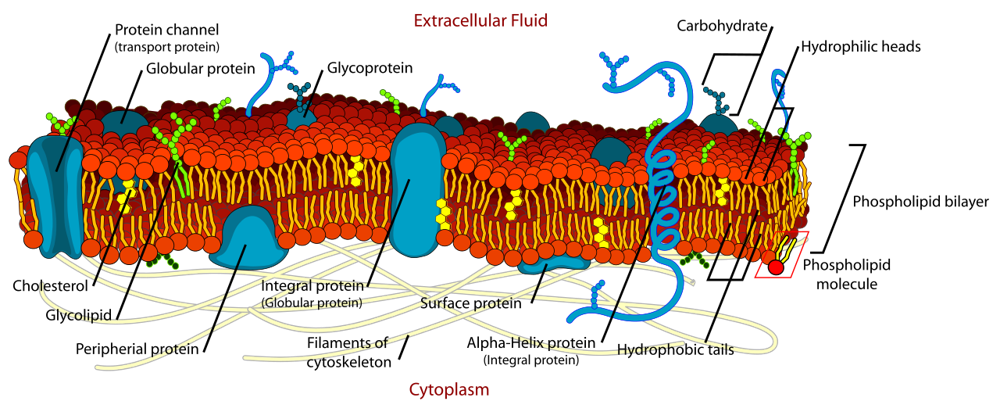
ہر سیل، نیورون سمیت، ایک میں لپیٹ ہے سیل جھلی، اور اس کی ساخت اس کے بعد کے لئے اہم ہے. جھلی ایک ہے فاسفولیپڈ ڈبل پرت، چربی کے انو کی ایک ڈبل شیٹ. ہر فاسفولیپڈ میں پانی سے محبت کرنے والا 'سر' اور پانی سے نفرت کرنے والی دو چربی 'پونچھیں' ہوتی ہیں۔ وہ پونچھ سے پونچھ میں دو پرتوں میں صف بندی کرتے ہیں ، جس میں سر خلیے کے اندر اور باہر پانی کی سیال کا سامنا کرتے ہیں اور تیل کی پونچھیں وسط میں گھس جاتی ہیں۔ یہ پتلی، موٹی فلم وہ رکاوٹ ہے جو اندر کو باہر سے الگ کرتی ہے، اور یہ اپنے آپ پر برقی چارج رکھ سکتی ہے۔ اگلے سیکشن میں بیان کردہ 'چینلز' اور 'پمپس' محض پروٹین گیٹ ہیں جو اس چربی جھلی میں بیٹھے ہیں۔

وائرنگ: ایکسنز، میلن اور رانویئر کے نوڈس

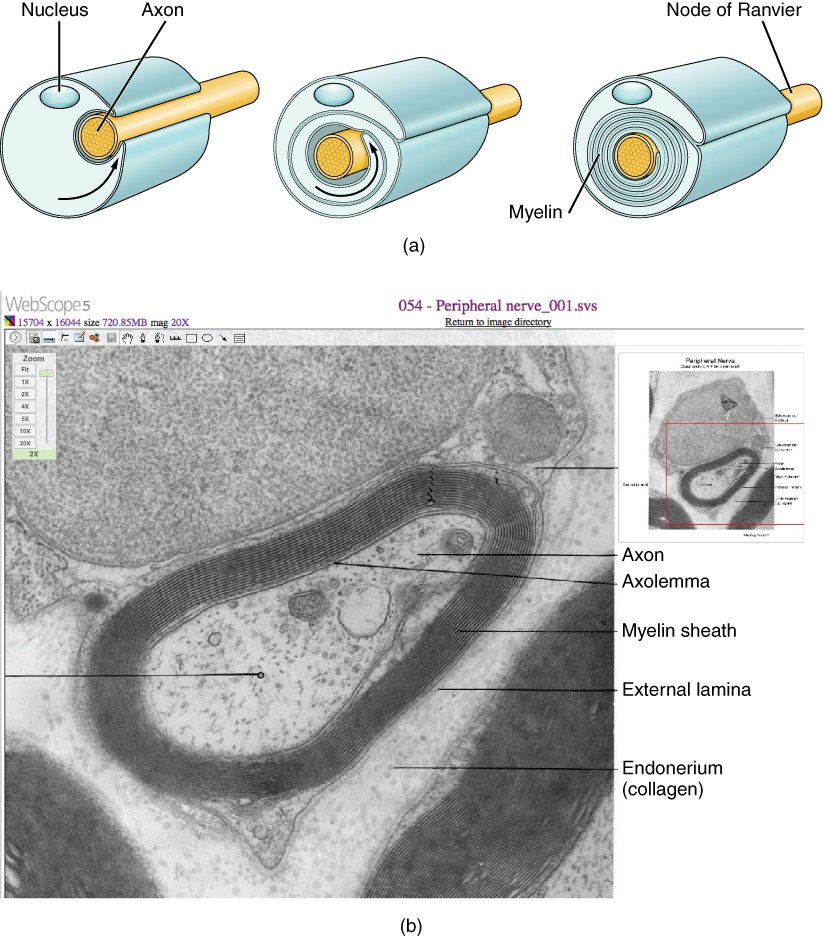
ایک واحد اعصابی ریشہ ایک کے ارد گرد بنایا گیا ہے محور، ایک اعصابی سیل کی ایک لمبی تار نما توسیع جو برقی سگنل لے جاتی ہے۔ بہت سے محوروں میں لپیٹ رہے ہیں مائیلن، ایک چربی موصلیت جھلی، اور یہ اصل میں کیا myelin جاننے کے قابل ہے ہے- جی ہاں . ایک سپورٹ سیل (ایک Schwann سیل آپ کے بازو کے پردیی اعصاب میں) اپنے ہی سیل کی جھلی کو محور کے گرد لپیٹتا ہے، گھومتا ہے اور گھومتا ہے، بار بار، جیسے پنسل کے گرد چپکنے والی فلم کی ایک چادر کو درجنوں بار لپیٹنا۔ چونکہ یہ جھلی ایک فاسفولیپڈ ڈبل پرت (بنیادی طور پر چربی) ہے، ہر لفافہ چربی کی ایک اور پرت لگاتا ہے، اور بہت سے ڈھیر شدہ تہوں ایک موٹی، موٹی آستین میں تعمیر کرتے ہیں. وہ ملفوف جھلی کا آستین ہے موصلیت: میلن زیادہ تر چربی ہے کیونکہ یہ سیل جھلی کی پرت پر پرت ہے. شوان سیل جتنا زیادہ گھومتا ہے ، اتنا ہی بہتر موصل ہوتا ہے ، اور فائبر اتنا ہی تیز ہوتا ہے۔

تاہم، میلن شیٹ مسلسل نہیں ہے. یہ حصوں میں رکھی جاتی ہے، ان کے درمیان چھوٹے ننگے فرقوں کے ساتھ کہا جاتا ہے رانویئر کے نوڈس- جی ہاں . برقی سگنل الگ تھلگ حصوں کے ذریعے باہر لیک نہیں کر سکتے ہیں، تو یہ مؤثر طریقے سے چھلانگ ایک نوڈ سے دوسرے نوڈ تک اسے کہتے ہیں saltatory کی ترسیل (لاطینی سے نمک دار، چھلانگ کرنے کے لئے) ، اور یہی وجہ ہے کہ myelinated ریشہ اتنی تیزی سے ہیں: نوڈ سے نوڈ میں چھلانگ 100 میٹر فی سیکنڈ سے زیادہ رفتار سے سگنل لے جا سکتا ہے، کے مقابلے میں ایک ننگے، unmyelinated ریشہ میں 10 میٹر فی سیکنڈ سے کم. یہی وجہ ہے کہ بیماریوں یا زخموں کی وجہ سے میلن کی سست ترسیل اتنی ڈرامائی طور پر ختم ہوجاتی ہے۔

سگنل کیسے سفر کرتا ہے

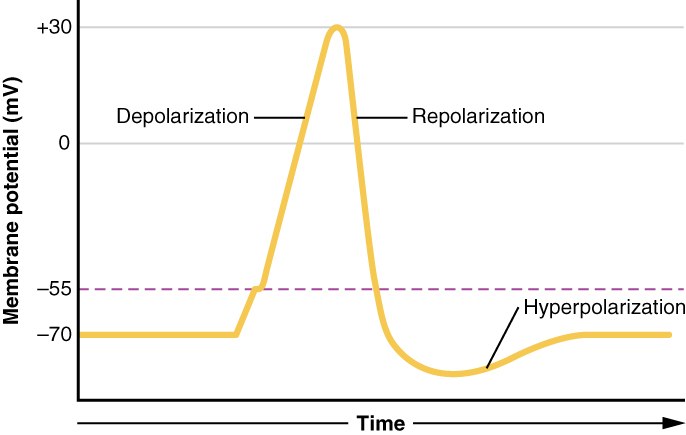
آرام کے وقت ، ایکسن کے اندرونی حصے کو بیرونی حصے کے مقابلے میں تھوڑا سا منفی چارج کیا جاتا ہے: آرام دہ جھلی کی صلاحیت، کے ارد گرد -70 ملی وولٹ. یہ چارج سوڈیم آئنوں کو زیادہ تر سیل کے باہر اور پوٹاشیم آئنوں کو زیادہ تر سیل کے اندر رکھنے سے برقرار رکھا جاتا ہے۔

جب اعصابی فائرنگ، ترتیب عین مطابق ہے:

  1. ڈیپولرائزیشن۔ وولٹیج گیٹڈ سوڈیم چینلز کریک کھولیں اور سوڈیم آئنوں رش میں- جی ہاں . اندرونی تیزی سے مثبت جھولتا ہے، +30 ملی وولٹ کے ارد گرد چوٹی. یہ ایکشن صلاحیت ہے.
  2. ریپولرائزیشن۔ سوڈیم چینلز بند اور وولٹیج گیٹ پوٹاشیم کھلے چینلز، پوٹاشیم بہاؤ کی اجازت باہر- جی ہاں . اندرونی اس کے منفی آرام کی قیمت کی طرف لوٹ جاتا ہے.
  3. ریفریکٹری (خفیہ) مدت. ایک مختصر لمحے کے لئے بعد میں جھلی کے پیچ دوبارہ فائر نہیں کر سکتے ہیں، کوئی بات نہیں کس طرح مضبوط محرک، جبکہ چینلز ری سیٹ.

کہ refractory مدت کچھ خوبصورت کرتا ہے: کیونکہ آگے بڑھنے سگنل کے پیچھے جھلی کی توسیع عارضی طور پر دوبارہ فائر کرنے کے قابل نہیں ہے، کارروائی کی صلاحیت صرف سفر کر سکتے ہیں فارورڈز- جی ہاں . اس کی وجہ یہ ہے کہ اعصابی سگنل آگے پیچھے اچھلنے کے بجائے ایک ہی سمت میں فائبر کے ساتھ چلتے ہیں۔

خلا کو عبور کرنا: سیناپس اور موٹر اینڈ پلیٹ

ایک اعصابی ریشہ جسمانی طور پر اس پٹھوں کو نہیں چھوتا جسے وہ کنٹرول کرتا ہے۔ جہاں ایک موٹر اعصاب ایک پٹھوں سے ملتا ہے وہاں ایک خصوصی جنکشن ہے، نیوروموسکولر جنکشن، اعصابی اختتام اور پٹھوں کی جھلی کے ایک موٹے ، جوڑے ہوئے علاقے کے درمیان ایک چھوٹا سا فرق (سنیپٹک شگاف) کے ساتھ موٹر آخر پلیٹ.

الیکٹرک سگنل اس خلا کو براہ راست پار نہیں کر سکتا، اس لیے اسے کیمیائی سگنل میں تبدیل کر دیا جاتا ہے۔ جب کارروائی کی صلاحیت اعصاب کے اختتام تک پہنچ جاتا ہے، یہ ایک نیورو ٹرانسمیٹر کی رہائی کو متحرک کرتا ہے ایسٹیلچولین خلا میں. Acetylcholine پار ڈرائیو اور موٹر آخر پلیٹ پر رسیپٹرز کے لئے پابند، چینلز کہ پٹھوں جھلی depolarise کی اجازت دیتے ہیں کھولنے. اگر یہ ڈیپولرائزیشن حد تک پہنچ جاتی ہے، تو یہ پٹھوں اور ریشوں کے معاہدوں کے ذریعے ایکشن صلاحیت کو لانچ کرتی ہے. ایک اینزائم (ایسیٹیل کولینسٹیرس) اسٹیل کولین کو تیزی سے توڑ دیتا ہے، اس لیے ہر اعصابی تحریک ایک تیز حرکت پیدا کرتی ہے نہ کہ ایک دیرپا حرکت۔ یہ کیمیائی ریلے کچھ بیہوش کرنے والی ادویات اور میاسٹینیا گریوس جیسی بیماریوں کا ہدف ہے۔

دنیا کو محسوس کرنا: حسی رسیپٹرز

حسی پہلو اس کے برعکس کام کرتا ہے: خصوصی اختتام ایک جسمانی محرک کو اعصابی سگنل میں تبدیل کرتے ہیں۔ مختلف ریسیپٹرز مختلف چیزوں کے لئے ٹیون کر رہے ہیں:

  • پیسینین کورپوسکلز جلد میں گہرائی میں بیٹھتے ہیں اور گہرے دباؤ اور ہائی فریکوئنسی کمپن کا جواب دیتے ہیں۔ وہ تیزی سے اپنانے، بجائے مسلسل کی بجائے کچھ بدل جاتا ہے اس وقت فائرنگ.
  • میسنر کے کورپوسلز انگلیوں کی نوک اور ہتھیلی کی جلد کی سطح کے نیچے واقع ہے اور ہلکی چھوٹ اور کم تعدد کی چمک کا پتہ لگاتا ہے، جو آپ کو چھوٹی چھوٹی چھوٹی چھوٹی چھوٹی چھوٹی چھوٹی چھوٹی چھوٹی چھوٹی چھوٹی چھوٹی چھوٹی چھوٹی چھوٹی چھوٹی چھوٹی چھوٹی چھوٹی چھوٹی چھوٹی چھوٹی چھوٹی چھوٹی چھوٹی چھوٹی چھوٹی چھوٹی چھوٹی چھوٹی چھوٹی چھوٹی چھوٹی چھوٹی چھوٹی چھوٹی چھوٹی چھوٹی چھوٹی چھوٹی چھوٹی چھوٹی چھوٹی چھوٹی چھوٹی چھوٹی چھوٹی چھوٹی چھوٹی چھوٹی چھوٹی چھوٹی چھوٹی چھوٹی
  • آزاد اعصابی اختتام ننگے، غیر محصور اختتام ہیں جو درد، درجہ حرارت اور ہلکے رابطے کو محسوس کرتے ہیں۔ وہ جلد میں سب سے زیادہ تعداد میں ختم ہوتے ہیں.
  • پٹھوں کے سپنڈلز یہ پٹھوں کے اندر بیٹھتے ہیں اور کھینچنے اور لمبائی کا پتہ لگاتے ہیں، پوزیشن اور حرکت کے بارے میں معلومات واپس کرتے ہیں (پروپریسیپشن) ، دماغ کیسے جانتا ہے کہ آپ کا ہاتھ کہاں ہے بغیر دیکھے

آپ جو مختلف خصوصیات محسوس کر سکتے ہیں (ایک انجکشن ، گرمی ، ایک بزنگ فون ، آپ کی کلائی کی پوزیشن) بڑے پیمانے پر اس بات پر منحصر ہے کہ ان میں سے کون سے رسیپٹر فائر ہو رہے ہیں اور کتنی تیزی سے۔

اعصابی چوٹ کے درجے

سرجن اعصاب کی چوٹ کی درجہ بندی کرتے ہیں نقصان کتنا گہرا ہے، کیونکہ اس سے یہ طے ہوتا ہے کہ یہ کیسے اور کیا ٹھیک ہو جائے گا۔ دو درجہ بندی ایک ساتھ استعمال کیا جاتا ہے.

پرانے، سادہ سیڈون نظام کی تین اقسام ہیں:

  • اعصابی بیماری: سب سے ہلکا ریشوں کو چوٹ پہنچتی ہے یا موصلیت مقامی طور پر خراب ہوجاتی ہے ، لیکن محور برقرار رہتے ہیں۔ کنڈکشن اس جگہ پر بلاک ہے، ایک kinked نلی کی طرح، لیکن ساخت آواز ہے. صحت یابی عام طور پر مکمل اور نسبتاً جلدی ہوتی ہے ایک بار جب اس کی وجہ سے راحت مل جاتی ہے۔
  • ایکسونٹومیسیس: خود محوریں پھاڑ دی جاتی ہیں، لیکن ارد گرد کے جڑنے والے ٹشو ٹیوبیں زندہ رہتی ہیں. زخم سے باہر کی ریشیاں مرجاتی ہیں اور دوبارہ بڑھنا پڑتی ہیں، اس لیے صحت یابی سست ہوتی ہے لیکن محفوظ شدہ ٹیوبیں نئی ریشوں کو پیروی کرنے کا راستہ فراہم کرتی ہیں، اور امکانات اکثر اچھے ہوتے ہیں۔
  • نیورو میسیس: سب سے زیادہ شدید. اعصاب، اس کی حمایت کے فریم ورک سمیت، مکمل طور پر تقسیم ہے. یہ خود بخود ٹھیک نہیں ہوگا؛ سرجری کی مرمت کی ضرورت ہے، اور اس کے بعد بھی بحالی نامکمل ہے۔

زیادہ تفصیلی سنڈر لینڈ نظام اس کو پانچ گریڈوں میں تقسیم کرتا ہے، سیڈن پر نقشہ سازی مندرجہ ذیل ہے:

  • گریڈ 1 = نیورپراکسیا (صرف موصل بلاک)
  • گریڈ 2 = اندرونی ٹیوب (endoneurium) برقرار کے ساتھ axonotmesis، بہترین regrowth کے امکانات کی پیشکش.
  • گریڈ 3 = اندرونی ٹیوب میں بھی خلل پڑ جاتا ہے ، لہذا دوبارہ بڑھتی ہوئی ریشوں کو غلط سمت میں بھیجا جاسکتا ہے۔ بحالی جزوی ہے۔
  • گریڈ 4 = صرف بیرونی غلاف (epineurium) برقرار رہتا ہے؛ ایک داغ بلاک عام طور پر آپریشن کے بغیر مفید بحالی کی روک تھام کرتا ہے.
  • گریڈ 5 = پورے اعصاب کی مکمل تقسیم، سیڈون کے نیوروٹمیس کے برابر، مرمت کی ضرورت ہے.

مختصر میں: جتنی زیادہ پرتیں پھاڑ دی جاتی ہیں، اتنی ہی دیر اور کم مکمل قدرتی بحالی، اور زیادہ امکان آپریشن کی ضرورت ہے.

والریئن انحطاط اور دوبارہ نشوونما

جب ایک ایکسن کاٹ یا پھاڑ دیا جاتا ہے، اس کا حصہ اس سے آگے زخم اب اس خلیے سے منقطع ہے جو اسے زندہ رکھتا ہے۔ مندرجہ ذیل دنوں کے دوران یہ ایک صاف، پروگرام عمل میں ٹوٹ جاتا ہے والریئن انحطاط: سٹرینڈڈ ایکسن اور اس کے میلن کو شنن خلیات اور بھرتی شدہ مدافعتی خلیات (میکروفیج) کے ذریعہ توڑ دیا جاتا ہے اور صاف کیا جاتا ہے۔

یہ محض مسمار کرنے کی بات نہیں ہے۔ یہ تیاری ہے۔ شوان کے خلیات جو پرانی ریشوں کو لپیٹتے ہیں زندہ رہتے ہیں، بڑھتے ہیں، اور کھوکھلی کالموں میں صف بندی کرتے ہیں Büngner کے بینڈ، اعصاب کے اصل راستے پر عمل کرتے ہوئے. یہ کالم زندہ اسکیفولڈنگ ٹیوبوں کی طرح کام کرتے ہیں: وہ نمو کے عوامل کو جاری کرتے ہیں اور جسمانی طور پر دوبارہ پیدا کرنے والے ریشوں کو اپنے اہداف کی طرف واپس لے جاتے ہیں.

چوٹ کی جگہ سے ، ہر ایکسن کا زندہ بچ جانے والا اختتام ایک نشوونما شنک بھیجتا ہے جو اس کے شوان سیل ٹیوب کے نیچے تقریبا. ایک ملی میٹر ایک دن، بالآخر جلد یا پٹھوں تک پہنچنے اور دوبارہ منسلک (reinnervation). یہی وجہ ہے کہ ایک صاف مرمت، جلد اور درست طریقے سے کی گئی، اتنی اہمیت رکھتی ہے: کٹے ہوئے ٹیوبوں کو سیدھا کرنے کی ضرورت ہے تاکہ ریشے دوبارہ صحیح چینلز میں داخل ہوں، اور Schwann خلیات چوٹ کے فورا بعد کے مہینوں میں سب سے زیادہ معاون ہیں؛ ان کے پاس، دراصل، "بہترین پہلے" کی تاریخ ہے۔ سرے کو اچھی طرح سے سیدھا کریں اور وقت پر پہنچیں، اور بہت زیادہ ریشے گھر کا راستہ تلاش کریں گے۔

مزید دیکھیے


Creative Commons BY-NC 4.0

CC Creative Commons licence
BY Attribution — you must credit the source
NC NonCommercial — not for commercial use

Attribution-NonCommercial 4.0 International


Creative Commons Corporation ("Creative Commons") is not a law firm and does not provide legal services or legal advice. Distribution of Creative Commons public licenses does not create a lawyer-client or other relationship. Creative Commons makes its licenses and related information available on an "as-is" basis. Creative Commons gives no warranties regarding its licenses, any material licensed under their terms and conditions, or any related information. Creative Commons disclaims all liability for damages resulting from their use to the fullest extent possible.

Using Creative Commons Public Licenses

Creative Commons public licenses provide a standard set of terms and conditions that creators and other rights holders may use to share original works of authorship and other material subject to copyright and certain other rights specified in the public license below. The following considerations are for informational purposes only, are not exhaustive, and do not form part of our licenses.

Considerations for licensors: Our public licenses are intended for use by those authorized to give the public permission to use material in ways otherwise restricted by copyright and certain other rights. Our licenses are irrevocable. Licensors should read and understand the terms and conditions of the license they choose before applying it. Licensors should also secure all rights necessary before applying our licenses so that the public can reuse the material as expected. Licensors should clearly mark any material not subject to the license. This includes other CC- licensed material, or material used under an exception or limitation to copyright. More considerations for licensors: wiki.creativecommons.org/Considerations_for_licensors

Considerations for the public: By using one of our public licenses, a licensor grants the public permission to use the licensed material under specified terms and conditions. If the licensor's permission is not necessary for any reason--for example, because of any applicable exception or limitation to copyright--then that use is not regulated by the license. Our licenses grant only permissions under copyright and certain other rights that a licensor has authority to grant. Use of the licensed material may still be restricted for other reasons, including because others have copyright or other rights in the material. A licensor may make special requests, such as asking that all changes be marked or described. Although not required by our licenses, you are encouraged to respect those requests where reasonable. More considerations for the public: wiki.creativecommons.org/Considerations_for_licensees


Creative Commons Attribution-NonCommercial 4.0 International Public License

By exercising the Licensed Rights (defined below), You accept and agree to be bound by the terms and conditions of this Creative Commons Attribution-NonCommercial 4.0 International Public License ("Public License"). To the extent this Public License may be interpreted as a contract, You are granted the Licensed Rights in consideration of Your acceptance of these terms and conditions, and the Licensor grants You such rights in consideration of benefits the Licensor receives from making the Licensed Material available under these terms and conditions.

Section 1 -- Definitions.

a. Adapted Material means material subject to Copyright and Similar Rights that is derived from or based upon the Licensed Material and in which the Licensed Material is translated, altered, arranged, transformed, or otherwise modified in a manner requiring permission under the Copyright and Similar Rights held by the Licensor. For purposes of this Public License, where the Licensed Material is a musical work, performance, or sound recording, Adapted Material is always produced where the Licensed Material is synched in timed relation with a moving image.

b. Adapter's License means the license You apply to Your Copyright and Similar Rights in Your contributions to Adapted Material in accordance with the terms and conditions of this Public License.

c. Copyright and Similar Rights means copyright and/or similar rights closely related to copyright including, without limitation, performance, broadcast, sound recording, and Sui Generis Database Rights, without regard to how the rights are labeled or categorized. For purposes of this Public License, the rights specified in Section 2(b)(1)-(2) are not Copyright and Similar Rights.

d. Effective Technological Measures means those measures that, in the absence of proper authority, may not be circumvented under laws fulfilling obligations under Article 11 of the WIPO Copyright Treaty adopted on December 20, 1996, and/or similar international agreements.

e. Exceptions and Limitations means fair use, fair dealing, and/or any other exception or limitation to Copyright and Similar Rights that applies to Your use of the Licensed Material.

f. Licensed Material means the artistic or literary work, database, or other material to which the Licensor applied this Public License.

g. Licensed Rights means the rights granted to You subject to the terms and conditions of this Public License, which are limited to all Copyright and Similar Rights that apply to Your use of the Licensed Material and that the Licensor has authority to license.

h. Licensor means the individual(s) or entity(ies) granting rights under this Public License.

i. NonCommercial means not primarily intended for or directed towards commercial advantage or monetary compensation. For purposes of this Public License, the exchange of the Licensed Material for other material subject to Copyright and Similar Rights by digital file-sharing or similar means is NonCommercial provided there is no payment of monetary compensation in connection with the exchange.

j. Share means to provide material to the public by any means or process that requires permission under the Licensed Rights, such as reproduction, public display, public performance, distribution, dissemination, communication, or importation, and to make material available to the public including in ways that members of the public may access the material from a place and at a time individually chosen by them.

k. Sui Generis Database Rights means rights other than copyright resulting from Directive 96/9/EC of the European Parliament and of the Council of 11 March 1996 on the legal protection of databases, as amended and/or succeeded, as well as other essentially equivalent rights anywhere in the world.

l. You means the individual or entity exercising the Licensed Rights under this Public License. Your has a corresponding meaning.

Section 2 -- Scope.

a. License grant.

1. Subject to the terms and conditions of this Public License, the Licensor hereby grants You a worldwide, royalty-free, non-sublicensable, non-exclusive, irrevocable license to exercise the Licensed Rights in the Licensed Material to:

a. reproduce and Share the Licensed Material, in whole or in part, for NonCommercial purposes only; and

b. produce, reproduce, and Share Adapted Material for NonCommercial purposes only.

2. Exceptions and Limitations. For the avoidance of doubt, where Exceptions and Limitations apply to Your use, this Public License does not apply, and You do not need to comply with its terms and conditions.

3. Term. The term of this Public License is specified in Section 6(a).

4. Media and formats; technical modifications allowed. The Licensor authorizes You to exercise the Licensed Rights in all media and formats whether now known or hereafter created, and to make technical modifications necessary to do so. The Licensor waives and/or agrees not to assert any right or authority to forbid You from making technical modifications necessary to exercise the Licensed Rights, including technical modifications necessary to circumvent Effective Technological Measures. For purposes of this Public License, simply making modifications authorized by this Section 2(a) (4) never produces Adapted Material.

5. Downstream recipients.

a. Offer from the Licensor -- Licensed Material. Every recipient of the Licensed Material automatically receives an offer from the Licensor to exercise the Licensed Rights under the terms and conditions of this Public License.

b. No downstream restrictions. You may not offer or impose any additional or different terms or conditions on, or apply any Effective Technological Measures to, the Licensed Material if doing so restricts exercise of the Licensed Rights by any recipient of the Licensed Material.

6. No endorsement. Nothing in this Public License constitutes or may be construed as permission to assert or imply that You are, or that Your use of the Licensed Material is, connected with, or sponsored, endorsed, or granted official status by, the Licensor or others designated to receive attribution as provided in Section 3(a)(1)(A)(i).

b. Other rights.

1. Moral rights, such as the right of integrity, are not licensed under this Public License, nor are publicity, privacy, and/or other similar personality rights; however, to the extent possible, the Licensor waives and/or agrees not to assert any such rights held by the Licensor to the limited extent necessary to allow You to exercise the Licensed Rights, but not otherwise.

2. Patent and trademark rights are not licensed under this Public License.

3. To the extent possible, the Licensor waives any right to collect royalties from You for the exercise of the Licensed Rights, whether directly or through a collecting society under any voluntary or waivable statutory or compulsory licensing scheme. In all other cases the Licensor expressly reserves any right to collect such royalties, including when the Licensed Material is used other than for NonCommercial purposes.

Section 3 -- License Conditions.

Your exercise of the Licensed Rights is expressly made subject to the following conditions.

a. Attribution.

1. If You Share the Licensed Material (including in modified form), You must:

a. retain the following if it is supplied by the Licensor with the Licensed Material:

i. identification of the creator(s) of the Licensed Material and any others designated to receive attribution, in any reasonable manner requested by the Licensor (including by pseudonym if designated);

ii. a copyright notice;

iii. a notice that refers to this Public License;

iv. a notice that refers to the disclaimer of warranties;

v. a URI or hyperlink to the Licensed Material to the extent reasonably practicable;

b. indicate if You modified the Licensed Material and retain an indication of any previous modifications; and

c. indicate the Licensed Material is licensed under this Public License, and include the text of, or the URI or hyperlink to, this Public License.

2. You may satisfy the conditions in Section 3(a)(1) in any reasonable manner based on the medium, means, and context in which You Share the Licensed Material. For example, it may be reasonable to satisfy the conditions by providing a URI or hyperlink to a resource that includes the required information.

3. If requested by the Licensor, You must remove any of the information required by Section 3(a)(1)(A) to the extent reasonably practicable.

4. If You Share Adapted Material You produce, the Adapter's License You apply must not prevent recipients of the Adapted Material from complying with this Public License.

Section 4 -- Sui Generis Database Rights.

Where the Licensed Rights include Sui Generis Database Rights that apply to Your use of the Licensed Material:

a. for the avoidance of doubt, Section 2(a)(1) grants You the right to extract, reuse, reproduce, and Share all or a substantial portion of the contents of the database for NonCommercial purposes only;

b. if You include all or a substantial portion of the database contents in a database in which You have Sui Generis Database Rights, then the database in which You have Sui Generis Database Rights (but not its individual contents) is Adapted Material; and

c. You must comply with the conditions in Section 3(a) if You Share all or a substantial portion of the contents of the database.

For the avoidance of doubt, this Section 4 supplements and does not replace Your obligations under this Public License where the Licensed Rights include other Copyright and Similar Rights.

Section 5 -- Disclaimer of Warranties and Limitation of Liability.

a. UNLESS OTHERWISE SEPARATELY UNDERTAKEN BY THE LICENSOR, TO THE EXTENT POSSIBLE, THE LICENSOR OFFERS THE LICENSED MATERIAL AS-IS AND AS-AVAILABLE, AND MAKES NO REPRESENTATIONS OR WARRANTIES OF ANY KIND CONCERNING THE LICENSED MATERIAL, WHETHER EXPRESS, IMPLIED, STATUTORY, OR OTHER. THIS INCLUDES, WITHOUT LIMITATION, WARRANTIES OF TITLE, MERCHANTABILITY, FITNESS FOR A PARTICULAR PURPOSE, NON-INFRINGEMENT, ABSENCE OF LATENT OR OTHER DEFECTS, ACCURACY, OR THE PRESENCE OR ABSENCE OF ERRORS, WHETHER OR NOT KNOWN OR DISCOVERABLE. WHERE DISCLAIMERS OF WARRANTIES ARE NOT ALLOWED IN FULL OR IN PART, THIS DISCLAIMER MAY NOT APPLY TO YOU.

b. TO THE EXTENT POSSIBLE, IN NO EVENT WILL THE LICENSOR BE LIABLE TO YOU ON ANY LEGAL THEORY (INCLUDING, WITHOUT LIMITATION, NEGLIGENCE) OR OTHERWISE FOR ANY DIRECT, SPECIAL, INDIRECT, INCIDENTAL, CONSEQUENTIAL, PUNITIVE, EXEMPLARY, OR OTHER LOSSES, COSTS, EXPENSES, OR DAMAGES ARISING OUT OF THIS PUBLIC LICENSE OR USE OF THE LICENSED MATERIAL, EVEN IF THE LICENSOR HAS BEEN ADVISED OF THE POSSIBILITY OF SUCH LOSSES, COSTS, EXPENSES, OR DAMAGES. WHERE A LIMITATION OF LIABILITY IS NOT ALLOWED IN FULL OR IN PART, THIS LIMITATION MAY NOT APPLY TO YOU.

c. The disclaimer of warranties and limitation of liability provided above shall be interpreted in a manner that, to the extent possible, most closely approximates an absolute disclaimer and waiver of all liability.

Section 6 -- Term and Termination.

a. This Public License applies for the term of the Copyright and Similar Rights licensed here. However, if You fail to comply with this Public License, then Your rights under this Public License terminate automatically.

b. Where Your right to use the Licensed Material has terminated under Section 6(a), it reinstates:

1. automatically as of the date the violation is cured, provided it is cured within 30 days of Your discovery of the violation; or

2. upon express reinstatement by the Licensor.

For the avoidance of doubt, this Section 6(b) does not affect any right the Licensor may have to seek remedies for Your violations of this Public License.

c. For the avoidance of doubt, the Licensor may also offer the Licensed Material under separate terms or conditions or stop distributing the Licensed Material at any time; however, doing so will not terminate this Public License.

d. Sections 1, 5, 6, 7, and 8 survive termination of this Public License.

Section 7 -- Other Terms and Conditions.

a. The Licensor shall not be bound by any additional or different terms or conditions communicated by You unless expressly agreed.

b. Any arrangements, understandings, or agreements regarding the Licensed Material not stated herein are separate from and independent of the terms and conditions of this Public License.

Section 8 -- Interpretation.

a. For the avoidance of doubt, this Public License does not, and shall not be interpreted to, reduce, limit, restrict, or impose conditions on any use of the Licensed Material that could lawfully be made without permission under this Public License.

b. To the extent possible, if any provision of this Public License is deemed unenforceable, it shall be automatically reformed to the minimum extent necessary to make it enforceable. If the provision cannot be reformed, it shall be severed from this Public License without affecting the enforceability of the remaining terms and conditions.

c. No term or condition of this Public License will be waived and no failure to comply consented to unless expressly agreed to by the Licensor.

d. Nothing in this Public License constitutes or may be interpreted as a limitation upon, or waiver of, any privileges and immunities that apply to the Licensor or You, including from the legal processes of any jurisdiction or authority.


Creative Commons is not a party to its public licenses. Notwithstanding, Creative Commons may elect to apply one of its public licenses to material it publishes and in those instances will be considered the “Licensor.” The text of the Creative Commons public licenses is dedicated to the public domain under the CC0 Public Domain Dedication. Except for the limited purpose of indicating that material is shared under a Creative Commons public license or as otherwise permitted by the Creative Commons policies published at creativecommons.org/policies, Creative Commons does not authorize the use of the trademark "Creative Commons" or any other trademark or logo of Creative Commons without its prior written consent including, without limitation, in connection with any unauthorized modifications to any of its public licenses or any other arrangements, understandings, or agreements concerning use of licensed material. For the avoidance of doubt, this paragraph does not form part of the public licenses.

Creative Commons may be contacted at creativecommons.org.