Patients › Rehabilitation
ایکسٹینسر ٹینڈن کی مرمت (Extensor Tendon Repair)
انگلی یا ہاتھ کی پشت پر ایکسٹینسر ٹینڈن (extensor tendon، انگلی کو سیدھا کرنے والا ٹینڈن) کی مرمت (زون IV سے VII) کے بعد صحت یابی کا منصوبہ، جس میں ریلیٹو موشن (relative-motion) یا یوک (yoke) اسپلنٹ استعمال ہوتا ہے جو مرمت کی حفاظت کرتے ہوئے آپ کو فوراً ہاتھ استعمال کرنے دیتا ہے، پھر محتاط مرحلوں میں اسپلنٹ چھڑایا جاتا ہے اور طاقت بڑھائی جاتی ہے۔
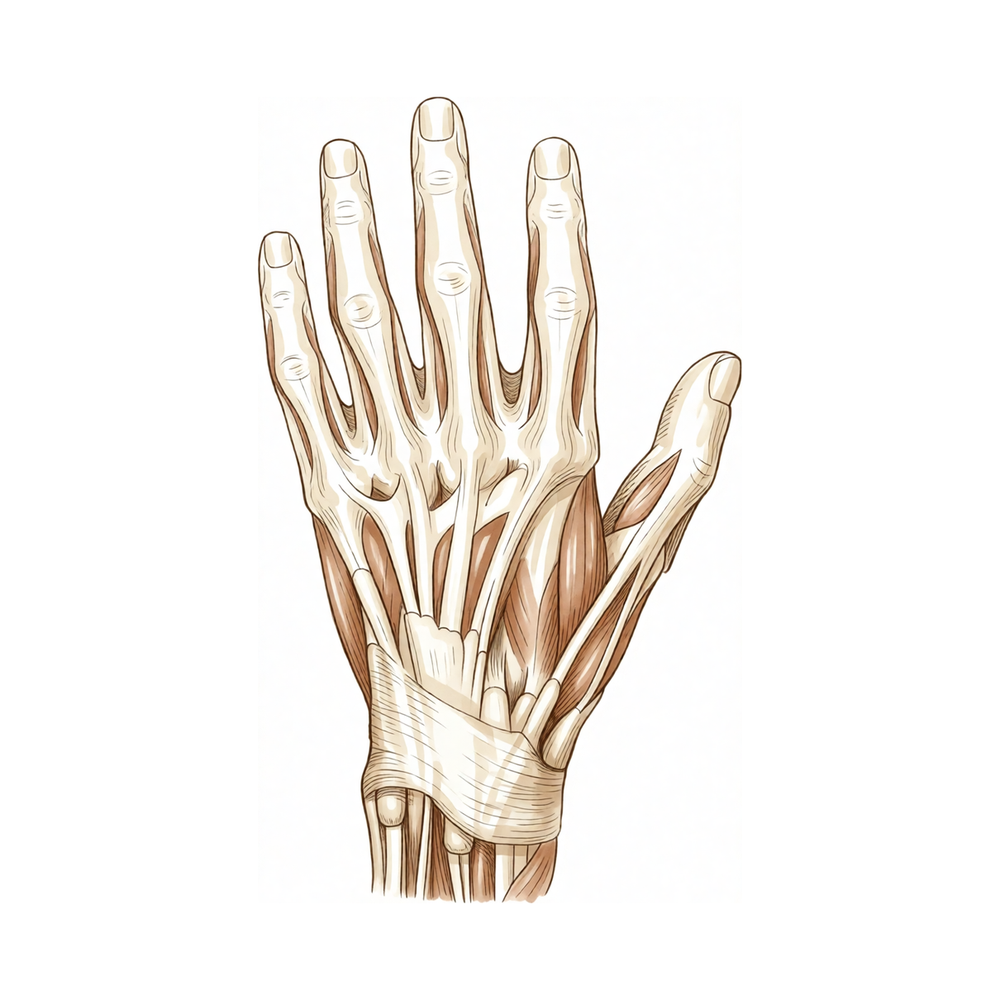
یہ پروٹوکول Mater Private Hospital Rockhampton میں ڈاکٹر کیرن ہِرپرا کے ہاتھوں ایکسٹینسر ٹینڈن (extensor tendon) (انگلی یا ہاتھ کی پشت پر موجود ان ٹینڈنوں میں سے ایک جو انگلی کو سیدھا کرتے ہیں؛ ٹینڈن (tendon)، یعنی وہ مضبوط ڈوری جو پٹھے کو ہڈی سے جوڑتی ہے) کی سرجری کے ذریعے مرمت کے بعد آپ کی صحت یابی میں رہنمائی کرتا ہے۔ اس میں انگلی، ہاتھ اور کلائی کی پشت پر ہونے والی مرمتیں شامل ہیں (وہ حصے جنہیں سرجن زون IV سے VII کہتے ہیں)۔ اس میں میلٹ فنگر (انگلی کا سرا نیچے لٹک جانا؛ یعنی بالکل انگلی کے سرے پر مرمت) یا درمیانی انگلی کے جوڑ کے اوپر سینٹرل سلپ / بوٹونیئر (central-slip / boutonnière) کی مرمت شامل نہیں ہے؛ ان کے منصوبے مختلف ہیں۔ اس کی شروعات آپ کے گھر پر ورزشوں کے پروگرام سے ہوتی ہے، اور اس کے بعد آپ کے ہینڈ تھراپسٹ (ہاتھ کی بحالی کے ماہر) کے لیے لکھا گیا باقاعدہ طبی پروٹوکول آتا ہے۔ تھراپی کی اپنی پہلی ملاقات پر یہ صفحہ یا اس کی پی ڈی ایف ساتھ لائیں تاکہ آپ کی بحالی کا علاج مربوط رہے۔ آپ کا تھراپسٹ آپ کی صحت یابی کی رفتار کے مطابق اس منصوبے میں تبدیلی کر سکتا ہے۔
اگر سرجری کے بعد آپ کو اپنے زخم کے بارے میں کوئی تشویش ہو تو کلینک سے رابطہ کریں۔ اکثر یہ مددگار ہوتا ہے کہ زخم کی تصویر لے کر جائزے کے لیے ای میل کر دیں۔
کیا توقع رکھیں
ایکسٹینسر ٹینڈن کی مرمت میں انگلی یا ہاتھ کی پشت پر کٹے ہوئے ٹینڈن کو ٹانکوں سے دوبارہ جوڑا جاتا ہے۔ اس مرمت کی حفاظت کا پرانا طریقہ یہ تھا کہ ہاتھ کو کئی ہفتوں تک اسپلنٹ میں بے حرکت رکھا جائے، لیکن اس سے اکثر انگلیاں اکڑ جاتی تھیں اور دیر سے ٹھیک ہوتی تھیں۔ اس کے بجائے، آپ کی صحت یابی میں ایک ذہین، جدید طریقہ استعمال ہوتا ہے جسے ریلیٹو موشن (relative-motion) بحالی (میرٹ طریقہ، Merritt method) کہا جاتا ہے۔
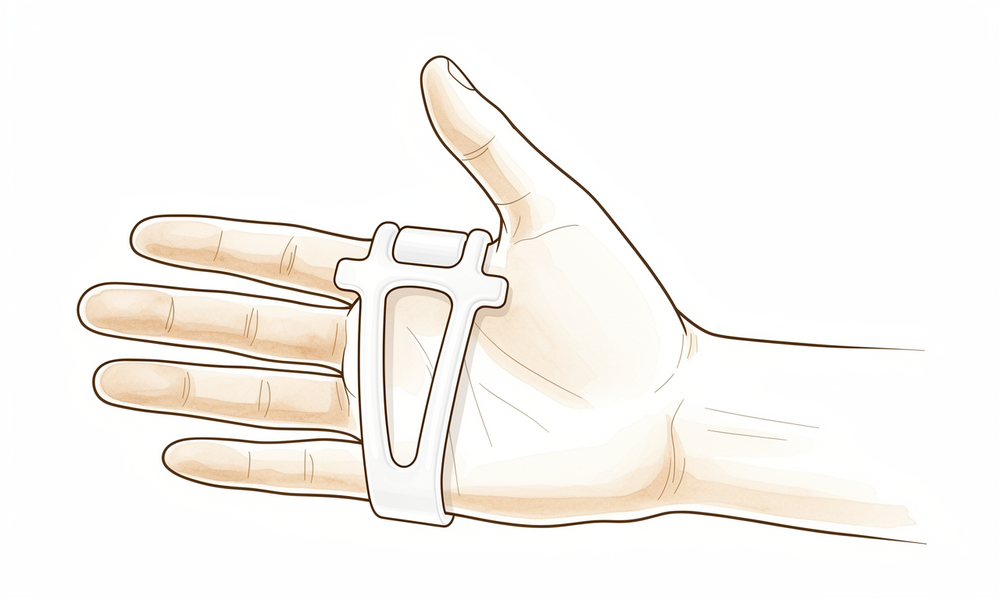
اس کی کنجی ایک چھوٹا اسپلنٹ ہے جسے یوک (yoke) کہتے ہیں، جو ہاتھ کی پشت کے آر پار پہنا جاتا ہے۔ یہ مرمت شدہ انگلی کے بڑے جوڑ (knuckle) کو دونوں طرف کی انگلیوں کے جوڑوں سے 15 سے 20 ڈگری زیادہ سیدھا رکھتا ہے۔ یہ چھوٹا سا فرق خاموشی سے بھرتے ہوئے ٹینڈن سے بوجھ ہٹا دیتا ہے، اس لیے آپ ہاتھ کو فوراً، آہستگی سے اور آرام کی حد میں استعمال کرنا شروع کر سکتے ہیں، بجائے اس کے کہ ہفتوں تک اسے اسپلنٹ میں بے حرکت رکھ کر انتظار کریں۔ اس محفوظ طریقے سے جلد حرکت کرنا ٹینڈن کو پھسلتا رکھتا ہے تاکہ وہ چپک نہ جائے، جبکہ یہ فرق اسے حد سے زیادہ کھنچنے سے روکتا ہے۔
زیادہ تر مرمتوں کے لیے (انگلی اور ہاتھ کی پشت کے عام زون) صرف یوک ہی کافی ہے۔ کچھ مرمتوں کے لیے (کلائی کے قریب والی، کمزور مرمتیں، یا جہاں اضافی حفاظت سمجھداری ہو) پہلے چند ہفتوں کے لیے ساتھ میں ایک کلائی کا اسپلنٹ بھی لگایا جاتا ہے۔ آپ کا ہینڈ تھراپسٹ آپ کو بتائے گا کہ کیا آپ کو کلائی کا اسپلنٹ بھی پہننا ہے۔
اس کے بعد منصوبہ محتاط مرحلوں میں آگے بڑھتا ہے: یوک تقریباً چھ ہفتے تک ہر وقت پہنا جاتا ہے اور تقریباً پانچویں ہفتے سے آہستہ آہستہ چھڑایا جاتا ہے؛ درمیانی ہفتوں میں کلائی اور انگلیوں کی ایک ساتھ حرکت شامل کی جاتی ہے؛ طاقت بڑھانا تقریباً آٹھ ہفتے سے شروع ہوتا ہے؛ اور پوری سرگرمی تقریباً دس سے بارہ ہفتے پر واپس آتی ہے، جب مرمت مضبوط ہو چکی ہو۔
احتیاطیں اور پابندیاں
- تقریباً پہلے چھ ہفتے اپنا یوک اسپلنٹ ہر وقت پہنیں، ورزشوں اور روزمرہ کاموں کے دوران بھی، اور اسے صرف اسی طرح اتاریں یا چھڑائیں جیسے آپ کا ہینڈ تھراپسٹ ہدایت دے۔ آپ کا ہینڈ تھراپسٹ آپ کو بتائے گا کہ کیا آپ کو کلائی کا اسپلنٹ بھی پہننا ہے۔
- شروع سے ہی اسپلنٹ میں آرام کی حد کے اندر ہاتھ کا ہلکا روزمرہ استعمال کریں۔ پہلے کئی ہفتوں تک نہ کوئی چیز اٹھائیں، نہ زور لگا کر گرفت کریں، اور نہ مزاحمت کے خلاف کوئی کام کریں۔
- جب تک اجازت نہ ملے، عام طور پر تقریباً آٹھ ہفتے تک، گرفت یا چٹکی کی گرفت کی طاقت بڑھانے کی ورزشیں شروع نہ کریں۔
- شروع میں نہ سخت پوری مٹھی بنائیں اور نہ انگلی پر زور لگائیں؛ صرف ان ہلکی، قابو میں رکھی گئی حدوں میں حرکت کریں جو آپ کو دکھائی گئی ہیں۔
- انگلی کے چھوٹے جوڑوں کو حرکت دیتے رہیں تاکہ وہ اکڑ نہ جائیں؛ ہلکے سے دوسرے ہاتھ کی مدد سے سیدھا کرنا اس میں مدد دیتا ہے۔
زخم، سوجن اور زخم کے نشان کی دیکھ بھال کے لیے پریکٹس کی زخم کی دیکھ بھال کی رہنمائی دیکھیں۔
آپ کی ورزشیں
Kieran Hirpara 4.0
اپنا ریلیٹو موشن (یوک) اسپلنٹ پہننا
آپ کی مرمت شدہ انگلی کو ایک چھوٹے اسپلنٹ میں رکھا جاتا ہے جسے یوک (yoke) یا ریلیٹو موشن اسپلنٹ کہتے ہیں۔ یہ مرمت شدہ انگلی کے بڑے جوڑ (MCP، جہاں انگلی ہاتھ سے ملتی ہے) کو دونوں طرف کی انگلیوں سے تقریباً 15 سے 20 ڈگری زیادہ سیدھا رکھتا ہے۔ یہ چھوٹا سا فرق بھرتے ہوئے ٹینڈن سے کھنچاؤ ہٹا دیتا ہے، اور اسی کی وجہ سے آپ ہاتھ کو فوراً استعمال کر سکتے ہیں۔ اسے تقریباً چھ ہفتے تک ہر وقت پہنیں — ورزشوں اور روزمرہ کاموں کے دوران بھی — اور اسے صرف اسی طرح اتاریں جیسے آپ کا ہینڈ تھراپسٹ ہدایت دے۔ آپ کا ہینڈ تھراپسٹ آپ کو بتائے گا کہ کیا آپ کو کلائی کا اسپلنٹ بھی پہننا ہے۔
تقریباً 6 ہفتے تک ہر وقت پہنا جاتا ہے، رہنمائی کے مطابق تقریباً ہفتہ 5 سے چھڑایا جاتا ہے
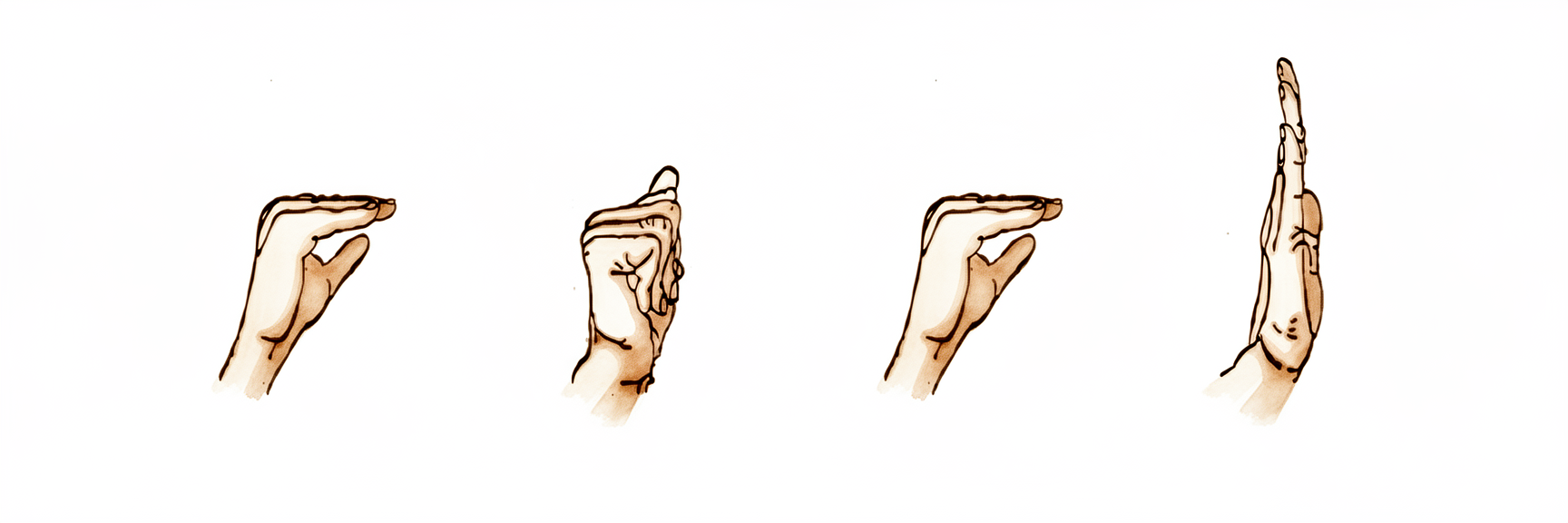
جڑ کے جوڑ موڑنا، انگلیاں سیدھی (انٹرنسک پلس، intrinsic-plus)
اسپلنٹ پہنے رکھتے ہوئے، انگلیوں کے بڑے جوڑوں (جہاں انگلیاں ہاتھ سے ملتی ہیں) کو موڑیں اور ہر انگلی کا باقی حصہ سیدھا رکھیں — جیسے ایک چپٹی 'میز' یا 'شیلف' کی شکل بنا رہے ہوں۔ پھر واپس سیدھا کریں۔ آرام کی حد میں ہموار حرکت کریں۔ اس سے مرمت شدہ ٹینڈن ایک محفوظ، قابو میں رکھی گئی مقدار میں پھسلتا ہے تاکہ وہ چپک نہ جائے، اور اس پر کھنچاؤ بھی نہیں پڑتا۔
10 بار، دن بھر میں ہر دو ایک گھنٹے بعد
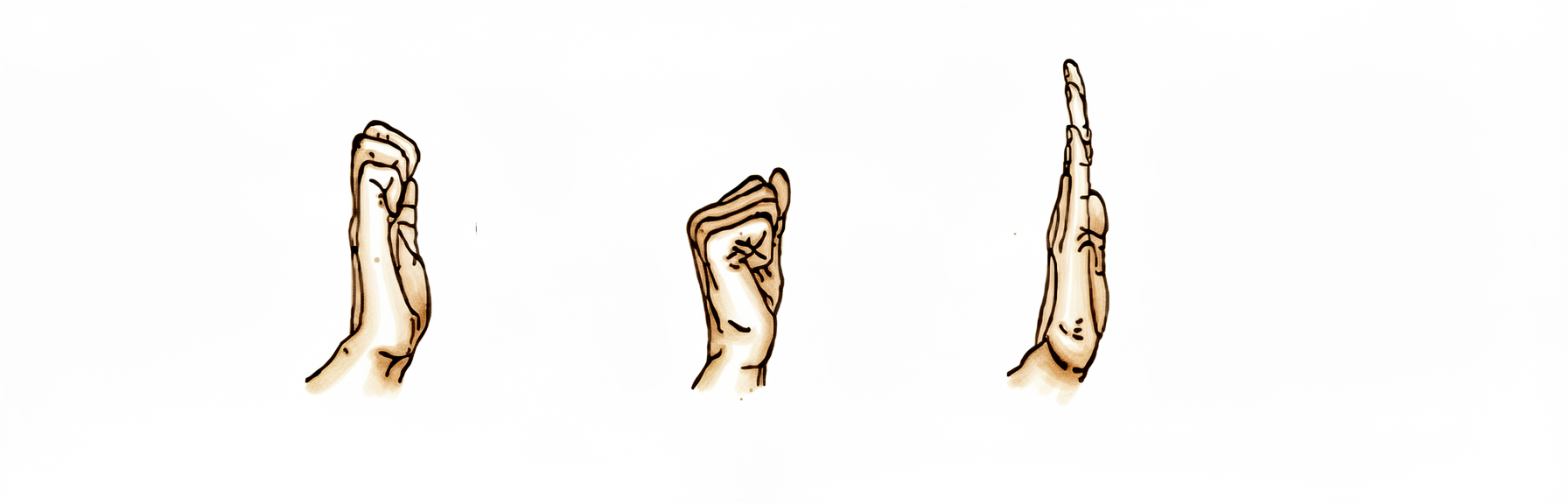
جڑ کے جوڑ سیدھے، انگلیاں لپیٹنا (انٹرنسک مائنس / ہک، intrinsic-minus / hook)
اسپلنٹ پہنے رکھتے ہوئے، بڑے جوڑوں کو سیدھا رکھیں اور صرف انگلیوں کے چھوٹے جوڑوں کو نیچے لپیٹ کر ہک (پنجے) کی شکل بنائیں، پھر انہیں دوبارہ سیدھا کریں۔ اس سے مرمت شدہ ٹینڈن اپنی دوسری حد میں حرکت کرتا ہے، یہ بھی محفوظ اور قابو میں رکھے گئے طریقے سے۔ آرام کی حد میں رہیں اور زور نہ لگائیں۔
10 بار، دن بھر میں ہر دو ایک گھنٹے بعد
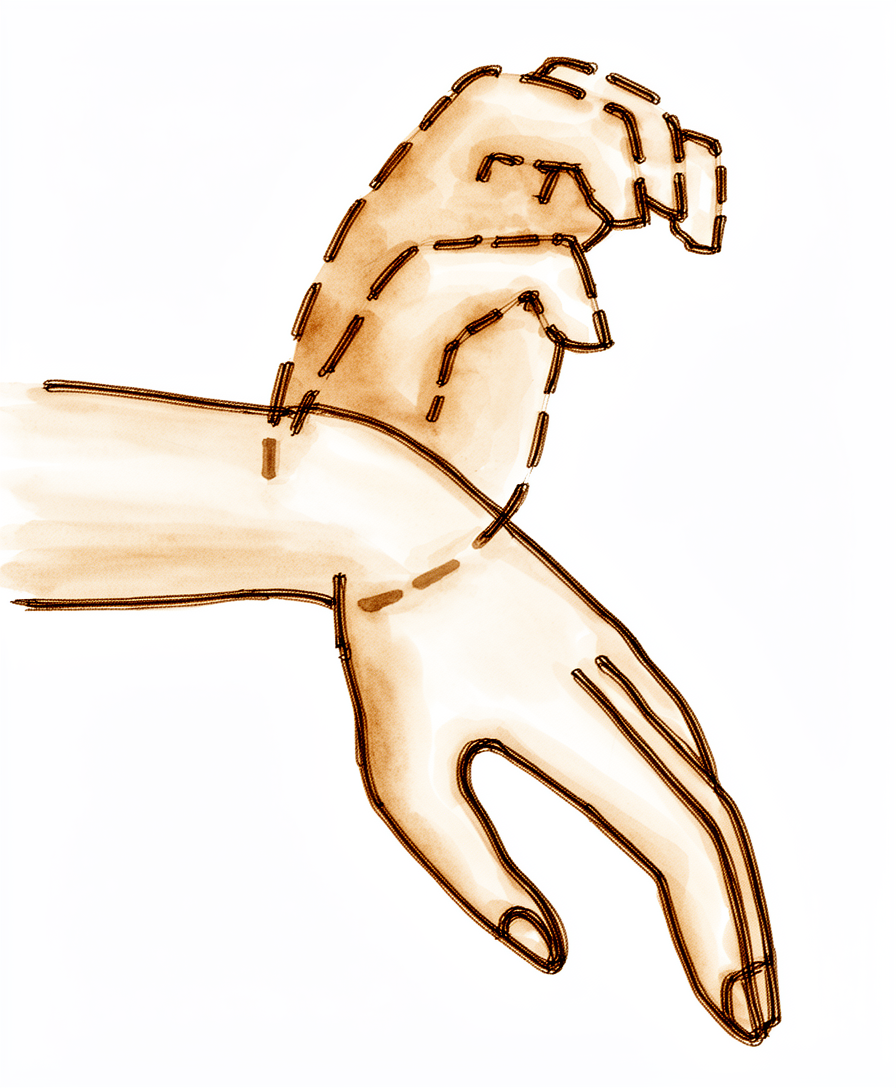
کلائی اور انگلیوں کی ایک ساتھ حرکت (ٹینوڈیسس، tenodesis)
یہ بعد کی ورزش ہے — جو آپ کا ہینڈ تھراپسٹ تقریباً تین سے چھ ہفتے سے شامل کرتا ہے۔ کلائی کو آہستگی سے پیچھے جھکائیں اور انگلیوں کو ڈھیلا ہو کر کھلنے دیں، پھر کلائی کو آگے گرنے دیں جبکہ انگلیاں آہستہ سے بند ہوتی ہیں۔ کلائی اور انگلیاں ایک جوڑی کی طرح ایک ساتھ حرکت کرتی ہیں۔ اس سے ایکسٹینسر ٹینڈن قدرتی اور محفوظ طریقے سے پھسلتے ہیں، اور یہ اس وقت شروع کی جاتی ہے جب مرمت زیادہ مضبوط ہو جائے۔
10 بار، دن میں 2 سے 3 مرتبہ (رہنمائی کے مطابق تقریباً 3 سے 6 ہفتے سے)
Kieran Hirpara 4.0
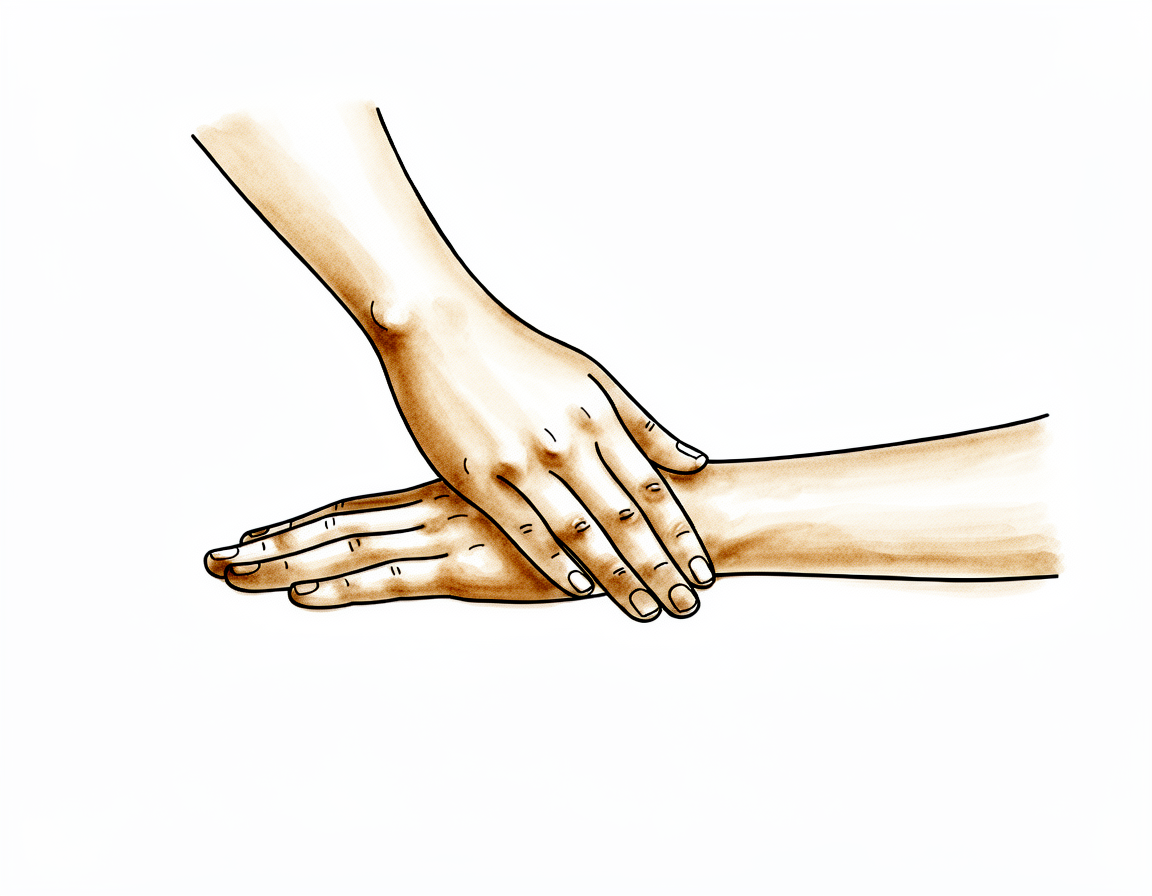
دوسرے ہاتھ سے انگلی کو سیدھا کرنا
اپنے دوسرے ہاتھ سے آہستگی سے مرمت شدہ انگلی کے چھوٹے جوڑوں کو سہارا دیں اور سیدھا کریں، تاکہ وہ زور لگائے بغیر پوری طرح سیدھی ہو جائے۔ اس سے ٹینڈن کے بھرنے کے دوران انگلی مڑی ہوئی حالت میں اکڑنے سے بچی رہتی ہے۔ اسے ہلکا اور بغیر درد کے رکھیں، اور صرف اسی طرح کریں جیسے آپ کا ہینڈ تھراپسٹ رہنمائی کرے۔
چند سیکنڈ روکیں، روزانہ 5 سے 10 بار، رہنمائی کے مطابق
Kieran Hirpara 4.0
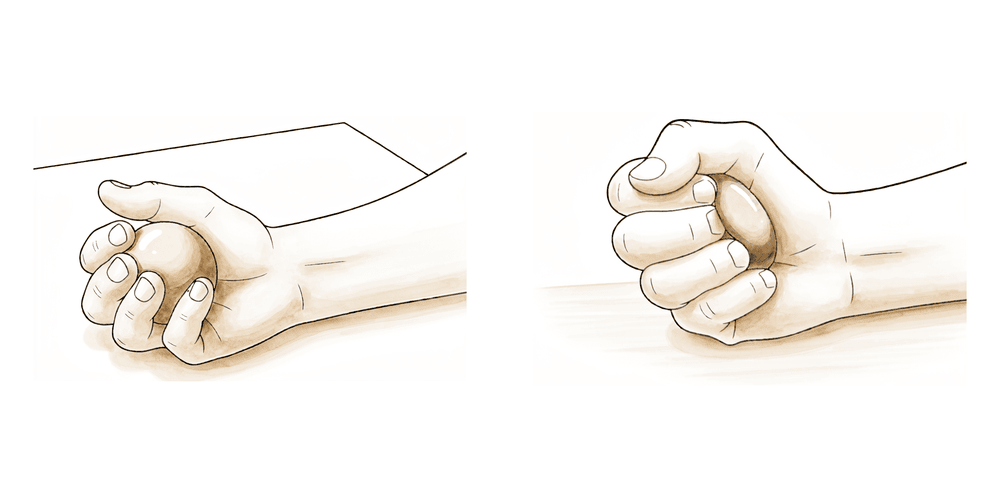
گرفت/چٹکی کی گرفت کی طاقت بڑھانا (ہفتہ 8 سے)
یہ بعد کی ورزش ہے — صرف تقریباً آٹھ ہفتے سے، جب آپ کا ہینڈ تھراپسٹ طاقت بڑھانے کی اجازت دے۔ ایک نرم گیند یا پُٹی (putty) کو پورے ہاتھ میں دبائیں، اور اسے انگوٹھے اور انگلیوں کے درمیان چٹکی سے دبائیں، اور کئی ہفتوں میں زور آہستہ آہستہ بڑھائیں۔ اس سے مرمت مضبوط ہو جانے کے بعد گرفت اور چٹکی کی گرفت کی طاقت دوبارہ بنتی ہے۔ اجازت ملنے سے پہلے مزاحمت کے ساتھ گرفت شروع نہ کریں۔
10 سے 15 بار دبائیں، دن میں 2 سے 3 مرتبہ (صرف تقریباً 8 ہفتے سے)
یہ آپ کے ہینڈ آؤٹ کی ورزشیں ہیں۔ انہیں صرف ڈاکٹر ہِرپرا اور اپنے ہینڈ تھراپسٹ کی رہنمائی کے مطابق شروع کریں، اور جو بھی حرکت کی حد اور پابندیاں آپ کو بتائی گئی ہیں ان کے اندر رہیں۔ ابتدائی ورزشیں یوک اسپلنٹ پہن کر کی جاتی ہیں: جوڑوں کو ہلکا موڑنا اور انگلیوں کو ہلکا لپیٹنا، جو مرمت شدہ ٹینڈن کو اس پر زور ڈالے بغیر ایک محفوظ، قابو میں رکھی گئی مقدار میں پھسلاتے ہیں۔ کلائی اور انگلیوں کی ایک ساتھ حرکت اور گرفت/چٹکی کی گرفت کی طاقت بڑھانا بعد کے مرحلوں کا حصہ ہیں اور اس وقت تک شروع نہیں کرنے چاہئیں جب تک آپ کو خاص طور پر اجازت نہ ملے۔ جس چیز سے انگلی یا ہاتھ کی پشت پر تیز درد ہو اسے روک دیں۔
آپ کا طبی پروٹوکول
اس صفحے کا باقی حصہ ریلیٹو موشن ایکسٹینشن (relative-motion extension, RME) استعمال کرتے ہوئے ایکسٹینسر ٹینڈن کی مرمت (زون IV سے VII) کے بعد بحالی کا مرحلہ وار طبی پروٹوکول ہے۔ یہ حصہ آپ کے ہینڈ تھراپسٹ کو دیا جانا ہے، اور ہر مرحلہ آسان زبان میں اس وضاحت سے شروع ہوتا ہے کہ کیا ہو رہا ہے۔ مرمت کی حفاظت ایک یوک اسپلنٹ کرتا ہے جو مرمت شدہ انگلی کے انگلی کی جڑ والے جوڑ (MCP) کو ساتھ والی انگلیوں سے 15 سے 20 ڈگری زیادہ سیدھا رکھتا ہے، جو کواڈریگا اثر (quadriga effect) اور ٹینڈنوں کے درمیانی رابطوں (juncturae tendineae) کے ذریعے ایکسٹینسر کی خود حرکت کے کھسکاؤ کا بوجھ ہٹاتا ہے، اس لیے فوری خود حرکت محفوظ ہے۔
علاج سے پہلے، مریض کی آپریشن رپورٹ اور پچھلی طبی تاریخ دیکھیں، اور علاج کرنے والے سرجن سے ان باتوں کے بارے میں رابطہ کریں: مرمت کیے گئے زون، متاثرہ ٹینڈن، مرمت کی مضبوطی، اور کیا کلائی کا اضافی اسپلنٹ (wrist orthosis) درکار ہے۔ زون V سے VI کے لیے ڈاکٹر ہِرپرا کا معمول کا طریقہ صرف یوک ہے (ریلیٹو موشن ایکسٹینشن اسپلنٹ، مرمت شدہ MCP کو ساتھ والی انگلیوں سے 15 سے 20 ڈگری زیادہ سیدھا رکھا جاتا ہے)۔ زون VII، کمزور مرمتوں، یا ہدایات پر عمل نہ کرنے والے مریضوں کے لیے کلائی کا اسپلنٹ (تقریباً 20 سے 25 ڈگری سیدھا، تقریباً پہلے 3 ہفتے) شامل کیا جاتا ہے۔ یہ پروٹوکول صرف ہاتھ کی پشت کی زون IV سے VII کی ایکسٹینسر مرمتوں کے لیے ہے، میلٹ (زون I سے II) یا سینٹرل سلپ/بوٹونیئر (زون III) کے لیے نہیں۔
پہلا مرحلہ — یوک (± کلائی کا اسپلنٹ)، فوری خود استعمال (ہفتہ 0 سے 3)
پہلے تین ہفتے یوک کے ذریعے مرمت کی حفاظت کرتے ہیں جبکہ مریض فوراً ہاتھ کو خود استعمال کرتا ہے۔ 15 سے 20 ڈگری کا نسبتی سیدھا فرق مرمت سے بوجھ ہٹاتا ہے، اس لیے شروع سے ہی قابو میں رکھی گئی خود حرکت کی حوصلہ افزائی کی جاتی ہے۔ اسپلنٹ میں ہلکا روزمرہ استعمال جائز ہے؛ نہ کچھ اٹھانا ہے اور نہ مزاحمت کے ساتھ گرفت۔
آپ کے ہینڈ تھراپسٹ کے لیے:
آگاہی اور احتیاطی تدابیر - یوک / ریلیٹو موشن ایکسٹینشن اسپلنٹ لگائیں: مرمت شدہ انگلی کا MCP ساتھ والی انگلیوں سے 15 سے 20 ڈگری زیادہ سیدھا؛ ہر وقت پہنا جائے - پہلے تقریباً 3 ہفتوں کے لیے کلائی کا اسپلنٹ (تقریباً 20 سے 25 ڈگری سیدھا) صرف زون VII / کمزور مرمتوں / ہدایات پر عمل نہ کرنے والے مریضوں کے لیے شامل کریں (زون V سے VI کے لیے معمول کا طریقہ صرف یوک ہے) - اسپلنٹ میں ہاتھ کے ہلکے استعمال کی حوصلہ افزائی کی جاتی ہے؛ نہ کچھ اٹھانا، نہ زور لگا کر گرفت، اور نہ مزاحمت کے خلاف کام - زبردستی پوری مٹھی (composite fisting) بنانے سے بچیں؛ حرکت کی حدیں قابو میں رکھیں
علاج - زخم: ہدایت کے مطابق سرجری کی پٹیاں؛ انفیکشن کی نگرانی کریں - سوجن (oedema): اونچا رکھنا، انگلیوں کو ہلکا ہلکا کھولنا بند کرنا (pump)، ضرورت کے مطابق برف - ورزشیں (اسپلنٹ میں، تقریباً ہر 2 گھنٹے): خود انٹرنسک پلس (intrinsic-plus) (انگلیوں کے چھوٹے جوڑ (IP) سیدھے رکھ کر MCP کو موڑنا) اور انٹرنسک مائنس / ہک (intrinsic-minus / hook) (MCP سیدھا رکھ کر IP کو موڑنا)؛ IP کے اکڑاؤ سے بچنے کے لیے روزانہ IP کو دوسرے ہاتھ سے سیدھا کرنا (passive IP extension) - زخم بھر جانے کے بعد زخم کے نشان کا علاج شروع کریں
اگلے مرحلے میں جانے کی شرائط - زخم ٹھیک ہو رہا ہو؛ انگلی کا پوری طرح سیدھا نہ ہو پانا (extensor lag) پیدا نہ ہو رہا ہو؛ تقریباً 3 ہفتے پر اسپلنٹ میں آرام دہ، قابو میں خود حرکت
دوسرا مرحلہ — کلائی کا اسپلنٹ اتر جاتا ہے، یوک جاری رہتا ہے، ایک ساتھ حرکت (ہفتہ 3 سے 6)
تقریباً تین ہفتے سے کوئی بھی اضافی کلائی کا اسپلنٹ بند کر دیا جاتا ہے (یوک ہر وقت جاری رہتا ہے)۔ کلائی اور انگلیوں کی ایک ساتھ (ٹینوڈیسس، tenodesis) حرکت اور انگلیوں کو پوری طرح خود موڑنا/سیدھا کرنا (composite active flexion/extension) شامل کیے جاتے ہیں، جو مرمت کے لیے محفوظ اور قابو میں رکھے گئے طریقے سے ٹینڈن کا کھسکاؤ بڑھاتے ہیں۔
آپ کے ہینڈ تھراپسٹ کے لیے:
جائزے - خود اور غیر فعال (passive) حرکت کی حد (ROM) (MCP اور IP)، انگلی کا پوری طرح سیدھا نہ ہو پانا (extensor lag)، درد اور سوجن؛ زخم/زخم کے نشان کا جائزہ
آگاہی اور احتیاطی تدابیر - اضافی کلائی کا اسپلنٹ (اگر استعمال ہوا ہو) بند کر دیں؛ یوک ہر وقت جاری رکھیں - حرکت کو آہستہ آہستہ بڑھائیں؛ ابھی بھی نہ مزاحمت کے ساتھ گرفت اور نہ طاقت بڑھانے کی ورزشیں
علاج - ورزشیں: کلائی اور انگلیوں کی ایک ساتھ حرکت (tenodesis) اور انگلیوں کو پوری طرح خود موڑنا/سیدھا کرنا شامل کریں؛ انٹرنسک پلس / انٹرنسک مائنس والی کھسکاؤ کی ورزشیں اور IP کو دوسرے ہاتھ سے سیدھا کرنا جاری رکھیں؛ یوک میں ہلکا روزمرہ استعمال - زخم بھر جانے کے بعد زخم کے نشان کی مالش جاری رکھیں
اگلے مرحلے میں جانے کی شرائط - انگلیوں کی پوری خود حرکت کی حد بڑھ رہی ہو (انگلیوں کی مکمل پوری حرکت عام طور پر تقریباً 6 سے 8 ہفتے تک)؛ انگلی کا پوری طرح سیدھا نہ ہو پانا (extensor lag) نہ ہو؛ درد کم ہو رہا ہو
تیسرا مرحلہ — یوک چھڑانا، طاقت بڑھانا، واپسی (ہفتہ 6 سے 12)
تقریباً پانچویں سے چھٹے ہفتے یوک کو آہستہ آہستہ چھڑایا جاتا ہے۔ گرفت اور چٹکی کی گرفت کی بتدریج طاقت بڑھانا تقریباً آٹھ ہفتے سے شروع ہوتا ہے جب مرمت مضبوط ہو چکی ہو، اور آہستہ آہستہ دس سے بارہ ہفتے پر پوری سرگرمی کی طرف بڑھتا ہے۔
آپ کے ہینڈ تھراپسٹ کے لیے:
جائزے - پوری خود اور غیر فعال حرکت کی حد، انگلی کا پوری طرح سیدھا نہ ہو پانا (extensor lag)، دوسری طرف کے مقابلے میں گرفت/چٹکی کی گرفت کی طاقت؛ ضرورت کے مطابق روزمرہ کام اور کام سے متعلق مخصوص جانچ
آگاہی اور احتیاطی تدابیر - تقریباً ہفتہ 5 سے یوک چھڑانا شروع کریں، اور جتنی حرکت اور قابو اجازت دے، تقریباً ہفتہ 6 تک اسے اتار دیں - 8 ہفتے سے گرفت/چٹکی کی گرفت کی بتدریج طاقت بڑھانا شروع کریں (اس سے پہلے نہیں) - 10 سے 12 ہفتے پر پوری سرگرمی کی طرف مزاحمت آہستہ آہستہ بڑھائیں
علاج - ورزشیں: ہفتہ 8 سے بتدریج گرفت اور چٹکی کی گرفت کی طاقت بڑھانا (گیند/پُٹی (putty) دبانا، چٹکی)؛ بتدریج بڑھتی مزاحمت؛ باقی رہ جانے والی حرکت اور IP کو سیدھا کرنے کی ورزشیں جاری رکھیں - جب حرکت اور طاقت دونوں طرف تقریباً برابر ہوں اور روزمرہ کام کی صلاحیت واپس آ جائے تو علاج ختم کرنے پر غور کریں - اگر انگلی کا پوری طرح سیدھا نہ ہو پانا برقرار رہے، حرکت رک جائے، یا نتیجہ خراب ہو تو علاج کرنے والے ڈاکٹر کے پاس واپس بھیجنے پر غور کریں
پوری سرگرمی پر واپسی کی شرائط - بغیر درد کے پوری حرکت کی حد اور انگلی کے سیدھا نہ ہو پانے کا کوئی خاص مسئلہ نہیں؛ دونوں طرف تقریباً برابر گرفت/چٹکی کی گرفت؛ تقریباً 10 سے 12 ہفتے
کام اور سرگرمیوں پر واپسی
یوک اسپلنٹ میں ہاتھ کے ہلکے روزمرہ استعمال (کھانا، لکھنا، کپڑے پہننا، ہلکی ذاتی دیکھ بھال) کی شروع سے ہی آرام کی حد میں حوصلہ افزائی کی جاتی ہے، بشرطیکہ اس میں نہ کچھ اٹھانا ہو، نہ زور لگا کر گرفت اور نہ مزاحمت کے خلاف کام۔ طاقت بڑھانا تقریباً آٹھ ہفتے سے شروع ہوتا ہے، اور پوری، بلا پابندی سرگرمی تقریباً دس سے بارہ ہفتے پر واپس آتی ہے جب مرمت مضبوط ہو چکی ہو اور آپ کی حرکت اور طاقت بحال ہو چکی ہو، جس کا فیصلہ صرف کیلنڈر سے نہیں بلکہ ڈاکٹر ہِرپرا اور آپ کا ہینڈ تھراپسٹ کرتے ہیں۔
گاڑی چلانا: یوک میں ہاتھ کا ہلکا استعمال ٹھیک ہے، اس لیے گاڑی چلانے پر مکمل پابندی نہیں ہے، لیکن آپ کو اسٹیئرنگ کو پکڑنے اور گاڑی کو محفوظ طریقے سے قابو میں رکھنے کے قابل ہونا چاہیے، ہنگامی صورت حال میں بھی۔ زیادہ تر لوگوں کے لیے اس کا مطلب ہے کہ یوک چھڑائے جانے کے ساتھ (تقریباً چھ ہفتے پر) دوبارہ شروع کریں؛ اگر آپ گاڑی کو آرام سے قابو میں رکھ سکیں تو یہ اس سے پہلے بھی ہو سکتا ہے، اور آپ کا سرجن تصدیق کرتا ہے کہ آپ کے لیے یہ کب محفوظ ہے۔
اپنے پروٹوکول کے بعد
یہ پروٹوکول پریکٹس کے عمومی صحت یابی کے مشوروں کے ساتھ مل کر کام کرتا ہے: آپریشن کے بعد درد پر قابو پانا، زخم کی دیکھ بھال اور زخم کے نشان کی دیکھ بھال دیکھیں۔ اوپر دیا گیا مرحلہ وار منصوبہ ریلیٹو موشن ایکسٹینشن استعمال کرتے ہوئے ایکسٹینسر ٹینڈن کی مرمت کے بعد بحالی کی شائع شدہ رہنمائی کی عکاسی کرتا ہے، اور آپ کی آگے کی صحت یابی میں ڈاکٹر ہِرپرا اور آپ کا ہینڈ تھراپسٹ اس بات کے مطابق آپ کی انفرادی رہنمائی کرتے ہیں کہ آپ کا ہاتھ کیسے بہتر ہو رہا ہے۔
Evidence & references
This is the clinical evidence summary written for health professionals. It is technical, and it lists the research this page was built from. You do not need to read it to understand your treatment or to make a decision about it.
Extensor Tendon Repair — Procedure Outcomes & Post-operative Rehabilitation (Relative-Motion Extension, Zones IV–VII)
Topic scope: post-operative rehabilitation after primary repair of an extensor tendon on the dorsum of the finger, hand or wrist — zones IV to VII — managed by relative-motion extension (RME / Merritt yoke splint, the ICAM family of regimens). This is a tendon repair (a construct that must heal under controlled load), but the relative-motion approach lets that load be applied immediately and actively rather than after weeks of immobilisation. This page does not cover mallet finger (zones I–II) or central-slip / boutonnière repair (zone III), which follow different regimens.
Defining principle of the rehab here: a yoke (relative-motion) splint holds the repaired digit's MCP joint 15–20° more extended than its neighbours. By the quadriga effect and the juncturae tendineae, this small relative offset offloads the repaired tendon — it reduces the active extensor excursion demanded of the healing repair (from roughly 12 mm of excursion in normal active extension to about 6 mm within the splint). That residual ~6 mm is enough to keep the tendon gliding and prevent adhesions, but too little to rupture the repair — which is why immediate active motion is safe. The single common branch point is whether a supplementary wrist orthosis (~20–25° extension, first ~3 weeks) is added for zone VII, weaker repairs, or non-compliant patients; the yoke alone is the default for zones V–VI.
A. PROCEDURE / REPAIR OUTCOMES (relative-motion vs immobilisation)
Extensor tendon repair on the back of the hand is reliable; the principal modern question is how to rehabilitate it — protected immobilisation versus an early-active programme such as relative-motion extension — not whether repair works.
- The mechanism that makes immediate active motion safe is well established. The 15–20° relative MCP-extension offset offloads the repair via the quadriga effect and the juncturae tendineae, cutting active extensor excursion from ~12 mm (normal) to ~6 mm within the splint — enough to prevent adhesions, too little to rupture. Cadaveric and mechanistic work underpins this rationale [Merritt, Wong & Lalonde 2020]. Strong (mechanistic + cadaveric).
- Relative-motion regimens match or improve on traditional early-active and immobilisation pathways. A randomised controlled trial in zones V–VI found relative-motion extension delivered earlier return of hand function and higher patient satisfaction with equivalent total active motion (TAM) versus the comparator early-active programme [Collocott RCT 2020]. A systematic review reported earlier return to work with equivalent range of motion and complication rates [Collocott review 2017]. Moderate–strong (1 RCT + SR; RME studies of generally lower methodological quality).
- Yoke-alone (no wrist splint) is supported for the common zones. Case series of relative-motion extension without a supplementary wrist orthosis for zones IV–VI report no ruptures, supporting yoke-alone as the default for these zones with the wrist orthosis reserved for zone VII / weaker / non-compliant repairs [Hirth 2021; Howell ICAM]. Moderate.
- The functional gain over immobilisation is large and practical. Early-active relative-motion programmes report return to work at roughly 17–25 days, versus the 3–4 months typical of immobilisation regimens — the headline advantage that has driven adoption [Collocott review 2017; Howell ICAM]. Moderate.
B. REHABILITATION / THERAPY EVIDENCE
The central rehab questions are (1) immobilise or move early, (2) is a wrist splint needed in addition to the yoke, and (3) how long must the splint stay on. The evidence favours early relative motion, supports yoke-alone for zones V–VI, and suggests splint duration can be shorter than the traditional six weeks without penalty.
- Early active motion via relative-motion extension is the modern default. The original technique description [Merritt 2014] and the clinical scheduling / yoke construction work [Lutz 2015] established a reproducible programme: immediate active intrinsic-plus and intrinsic-minus motion in the yoke, progressing to coupled (tenodesis) motion, weaning, then strengthening. Moderate (technique + cohort).
- A supplementary wrist splint is optional, not mandatory. Yoke-alone case series for zones IV–VI report no ruptures; the wrist orthosis (~20–25° extension, first ~3 weeks) is added selectively for zone VII, weaker repairs, or poor compliance [Hirth 2021; Howell ICAM]. Moderate (selective use).
- Splint duration may be shortened. A comparison of 4-week versus 6-week splinting found no difference in outcome, suggesting the traditional six-week full-time period can be safely abbreviated in selected patients [Svens 2015]. This page keeps full-time wear ~6 weeks (weaned from ~wk 5) as the conservative default while acknowledging the shorter option. Moderate (1 comparative study).
- The field is moving toward wider use of relative motion. A recent international consensus endorses broader application of relative-motion rehabilitation, including beyond its original zone V–VI indication [Tang consensus 2025]. Consensus.
Recovery trajectory (expected, evidence-anchored)
| Phase | Window | Splint / restraint | Hand use / therapy focus | Strength / load | Notes |
|---|---|---|---|---|---|
| I — Yoke (± wrist splint), immediate active use | Week 0–3 | Yoke full-time (repaired MCP 15–20° more extended); wrist orthosis ~20–25° ext only for zone VII / weak / non-compliant | Active intrinsic-plus (MCP flex, IPs straight) and intrinsic-minus / hook every ~2 h; passive IP extension daily; light use in the splint | Light functional use only; no lifting / resisted grip | Relative offset offloads repair (~12 mm → ~6 mm excursion); active motion is safe from day one |
| II — Wrist splint off, yoke continues | Week 3–6 | Discontinue any wrist splint; yoke continues full-time | Add coupled wrist-and-finger (tenodesis) motion + composite active flexion/extension; light functional use; scar massage once healed | Still no resisted grip | Composite active ROM building; watch for extensor lag |
| III — Wean yoke, strengthen, return | Week 6–12 | Yoke weaned from ~wk 5, off ~wk 6 | Progress full active motion; commence grip/pinch strengthening from week 8 | Graded strengthening from wk 8 → full activity ~10–12 wk | Return to work as early as ~17–25 days reported; full unrestricted activity ~10–12 wk |
(Phase windows mirror the precautions and recovery structure in the patient protocol; they are typical guides, not trial-derived deadlines. Splint duration may be safely shortened toward 4 weeks in selected patients.)
C. KEY CONTROVERSIES / EVIDENCE QUALITY
- Relative motion vs traditional immobilisation / other early-active regimens. One RCT (zones V–VI) and a systematic review favour relative-motion extension for earlier hand function, earlier return to work, higher satisfaction, with equivalent TAM and complications — though RME studies are generally of lower methodological quality, so the effect size is moderately rather than strongly certain. Moderate–strong.
- Wrist splint: needed or not? Yoke-alone gives good results with no ruptures in zone IV–VI series; the supplementary wrist orthosis is selective (zone VII / weaker / non-compliant). The defensible default is yoke-alone for the common zones — hence the page wording that the hand therapist will advise if a wrist splint also applies. Moderate.
- How long to splint. Traditional full-time wear is ~6 weeks; a 4-vs-6-week comparison showed no difference, so duration can be individualised and potentially shortened. Moderate.
- The 15–20° offset itself. The specific relative-extension increment is consensus-derived (it must offload enough to protect but leave enough excursion to glide); it rests on sound mechanism rather than a dose-finding trial. Consensus.
- Extending relative motion beyond zones V–VI (e.g. to sagittal-band injury and selected boutonnière/central-slip cases). The 2025 consensus endorses wider use, but evidence outside the core zones is weak–moderate, which is why this page deliberately scopes to zones IV–VII and excludes zone III. Weak–moderate.
D. EVIDENCE STRENGTH FLAGS (summary)
- STRONG: the mechanism — relative 15–20° MCP-extension offset offloads the repair (quadriga + juncturae tendineae; ~12 mm → ~6 mm active excursion) making immediate active motion safe (mechanistic + cadaveric).
- MODERATE–STRONG: relative-motion extension is at least as good as other early-active-motion regimens (1 RCT zones V–VI: earlier hand function, higher satisfaction, equal TAM; SR: earlier return to work, equal ROM/complications) — tempered by the lower methodological quality of RME studies.
- MODERATE: wrist-splint-optional (yoke-alone, no ruptures in zone IV–VI series); 4-vs-6-week splint duration (no difference); return to work ~17–25 days vs 3–4 months for immobilisation.
- CONSENSUS: the specific 15–20° offset increment; broader application of relative motion (Tang 2025).
- WEAK–MODERATE: extension of the technique to sagittal-band / boutonnière (central-slip) injuries outside the core zones.
CITATIONS
RAG corpus (180,000+ Orthopaedic articles)
- Merritt WH. Relative motion splint: active motion after extensor tendon injury and repair. J Hand Surg Am. 2014. DOI: 10.1016/j.jhsa.2014.03.015
- Merritt WH, Wong AL, Lalonde DH. Recent developments are changing extensor tendon management (relative motion / quadriga mechanism). Plast Reconstr Surg. 2020. DOI: 10.1097/prs.0000000000006556
- Lutz K, et al. Relative motion extension splinting for extensor tendon repair — clinical schedule and yoke. Hand Clin. 2015. DOI: 10.1016/j.hcl.2014.12.006
- Collocott SJF, et al. Relative motion flexion versus relative motion extension / early active motion after extensor tendon repair (zones V–VI): a randomized controlled trial. J Hand Ther. 2020. DOI: 10.1016/j.jht.2018.10.003
- Collocott SJF, Kelly E, Ellis RG. A systematic review of relative-motion orthoses for the management of extensor tendon repairs. Hand Ther. 2017. DOI: 10.1177/1758998317729713
- Svens B, et al. Four-week versus six-week immobilisation comparison after extensor tendon repair. J Hand Ther. 2015. DOI: 10.1016/j.jht.2014.07.006
- Hirth MJ, et al. Relative-motion approaches in extensor tendon rehabilitation. J Hand Ther. 2021. DOI: 10.1016/j.jht.2019.12.016
- Tang JB, et al. International consensus on relative-motion rehabilitation and extensor tendon management. J Hand Surg (Eur Vol). 2025. DOI: 10.1177/17531934251363138
Extensor tendon rehabilitation literature (URLs)
- Howell JW, Merritt WH, Robinson SJ. Immediate Controlled Active Motion (ICAM) following zone 4–7 extensor tendon repair. J Hand Ther / PMC. https://www.ncbi.nlm.nih.gov/pmc/articles/PMC3574475/