Clinicians › Hand
Trapeziectomy
For patients: a plain-language version of this topic is available. See the patient guide.
Overview
Trapeziectomy is the gold standard surgical treatment for thumb carpometacarpal osteoarthritis, regarded as the simplest and most established modality with good long-term outcomes and an acceptable side-effect profile [1, 13]. Total trapeziectomy is the only technique for thumb basal joint arthritis that can lay claim to being a potential life-long procedure, owing to its lack of implant requirement and long-lasting benefits [28]. Simple trapeziectomy remains a valid option with good to excellent results, while more complex reconstructive techniques and implants have not proven superior and carry higher complication rates [16]. Almost all investigators conclude that there is at best minimal difference in outcomes over simple trapeziectomy, while more complex procedures have more complications [6].
Comparative data indicate that at 1 year, total joint arthroplasty showed no superiority over trapeziectomy regarding the total score of the Michigan Hand Outcomes Questionnaire, though it demonstrated a significant advantage in strength and range of motion [157]. Partial trapeziectomy does not provide an advantage over total trapeziectomy at 1 year for Eaton-Littler grade II to III osteoarthritis [2]. Due to no significant differences in outcomes between partial and complete excision, authors prefer partial trapezoid excision in the context of APL suspensionplasty [39]. Trapeziectomy combined with Swanson implant gives better results in the short term if there are no complications of the operation [18]. Increased complications are observed in trapeziectomy with ligament reconstruction and tendon interposition compared with trapeziectomy alone [19]. The value of ligament reconstruction and temporary stabilisation of the pseudarthrosis with a Kirschner wire added to trapeziectomy remains unproven until further larger studies are performed [25]. Authors favor ligament reconstruction over trapeziectomy alone to preserve arthroplasty space and prevent instability, though they acknowledge the need for long-term randomized studies to confirm the benefits of simple trapeziectomy [69].
Clinical outcomes for basal metacarpal osteotomy are favorable, and the procedure does not jeopardize satisfactory execution of trapezial resection arthroplasty in the future [7]. Distraction arthroplasty of the trapeziometacarpal joint yields results identical to those achieved with trapeziectomy at an average follow-up interval of 18 months [12]. The GUEPAR trapeziometacarpal arthroplasty result is acquired more rapidly, around the 2nd month, compared to often six months after trapezectomy [3]. Trapezial excision and partial trapezoidal excision is an effective treatment with low morbidity and complications, although it can lead to weakness of the thumb [29]. Limited excision arthroplasty of the trapeziometacarpal and scaphotrapezial joints is a viable alternative to existing surgical treatments for stage IV thumb arthritis, as evidenced by statistically significant improvements in clinical parameters [156]. Standard radiographs are appropriate to use at the 1-year follow-up examination to assess and compare the trapezial space after different techniques of trapeziectomy [8]. A specific protocol for in vivo kinematics can be used in the postoperative follow-up of patients after trapezectomy [32].
Anatomy & Pathophysiology
Bony Anatomy & Joint Structure
The hand skeleton comprises 27 bones, including 19 long bones [47]. The first ray, or thumb, is the shortest ray and consists of a metacarpal and two phalanges [47]. The trapezium is angled anteriorly out of the carpal plane, positioning the first metacarpal at approximately 45 degrees to the second metacarpal in the sagittal plane [47]. The articular surfaces of the trapezium and the base of the first metacarpal exhibit a saddle shape in opposing planes [47]. The thumb metacarpal is independent and articulates with the trapezium [85]. The radius of curvature of the thumb metacarpal articular surface is approximately one-third larger than the trapezial surface, resulting in minimal bony constraint except at the extremes of motion [147].
Ligaments & Soft Tissue Constraints
The palmar scaphotrapezial and radial ligament complex is robust, making volar dislocation of the trapezium the most common direction [11]. Soft tissue structures provide stability at the basal articulation of the thumb, with ligament incompetence implicated in the etiology of articular cartilage degeneration [147]. The first dorsal interosseous (FDI) muscle may not function as an efficient dynamic stabilizer if atrophic in patients with trapeziometacarpal osteoarthritis [114].
Biomechanics & Kinematics
Thumb basal joint arthritis is a progressive disease, with substantial new biomechanical and longitudinal clinical studies altering prevailing opinions on serial degenerative changes [30]. Forces experienced at the thumb tip during lateral pinch are multiplied several-fold at the trapeziometacarpal joint [147]. During thumb oppositional motion, internal rotation of the first metacarpal occurs, with the palmar base rotating primarily with respect to the dorsal base [116]. Altered thumb rotation patterns during pinch may contribute to joint misalignment and the development of osteoarthritis [125]. Thumb motion capability is unaffected by sex and handedness [100]. Directionally coupled motion patterns in the carpometacarpal joint are similar in men and women [133].
Pathophysiology of Osteoarthritis
Painful basal joint hypermobility develops due to pathologic translation of trapeziometacarpal joint surfaces during lateral pinch [147]. A past history of a benign "sprain" may reflect transient trapeziometacarpal subluxation with secondary injury to the palmar oblique (beak) ligament [147]. A reduction in cylindrical grasp strength is associated with early symptomatic and radiographic carpometacarpal osteoarthritis, whereas gross grasp is not associated with early disease [107]. The cause of arthritic pain in thumb base osteoarthritis remains uncertain, as does the natural history [73].
Post-Trapeziectomy Anatomical Changes
The trapezial space ratio decreases significantly from a preoperative mean of 0.40 to a mean of 0.18 after trapeziectomy alone [35]. The trapezial space ratio decreases to a mean of 0.16 after trapeziectomy with tendon interposition [35]. The trapezial space ratio decreases to a mean of 0.20 after trapeziectomy with ligament reconstruction [35]. There is no significant difference in 1-year follow-up trapezial space ratios between trapeziectomy alone, trapeziectomy with tendon interposition, and trapeziectomy with ligament reconstruction [35]. Trapezial space height did not correlate with thumb strength at 1-year follow-up examination [35]. Standard radiographs are appropriate for assessing and comparing the trapezial space at the 1-year follow-up examination after trapeziectomy [8]. Trapezial space height measurement after trapeziectomy can be performed using standard radiographs [15]. Trapezial space height measurement after trapeziectomy has been compared using standard and stress radiographs [15]. The gap after trapeziectomy has been studied prospectively [15]. Degenerative change at the pseudarthrosis after trapeziectomy has been observed at 6-year follow-up [15]. Wrist biomechanics are significantly altered following trapeziectomy [96]. Ligament reconstruction with tendon interposition (LRTI) most closely resembles intact wrist biomechanics among tested reconstructions after trapeziectomy [96].
Classification
Eaton-Littler: This classification grades trapeziometacarpal osteoarthritis from Grade II to III in clinical trials comparing partial and total trapeziectomy [2]. It is also used to evaluate osteoarthritic damage radiologically in studies of trapeziectomy with interposition or suspensionplasty [186].
Dell: The Dell radiological classification grades thumb basal joint arthritis preoperatively. Stages II and III are considered suitable for specific arthroplasty procedures [63, 181].
Eaton-Glickel: This system evaluates osteophytes, joint space narrowing, osteosclerosis, subluxation, and cystic changes in the thumb carpometacarpal joint [187]. Stage IV is characterized by destructive changes in the scaphotrapezial joint [187].
Kellgren–Lawrence: This grading system is used to evaluate radiocarpal and midcarpal osteoarthritis in wrists with previous trapeziectomy [183].
Other Considerations: An anatomically based radiological classification has been proposed to differentiate between different forms of thumb basal joint arthritis, aiming to allow prospective studies to assess results for each anatomical and radiological form [165]. A classification system (Type I, II, III) has been proposed for trans-trapezium carpometacarpal dislocation of the thumb [139]. The Vitale et al. classification system divides implants into five classes: total joint replacement, hemiarthroplasty, interposition with partial trapezial resection, interposition with complete trapezial resection, and interposition with no trapezial resection [78].
Clinical Presentation
Thumb pain secondary to degenerative arthritis of the carpometacarpal joint is a common disabling condition [140]. Osteoarthritis of the thumb basal joint primarily affects postmenopausal women [153]. In a random sampling, radiographs of one in six women between the ages of 54 and 65 demonstrated moderately advanced osteoarthritic changes at the thumb trapezio-metacarpal joint [149]. However, many women with these radiographic findings are not symptomatic [149]. The frequency of stiff, painful basal thumb joints in the general population has been a major stimulus for a proliferation of reconstructive procedures [149]. Osteoarthritis of the base of the thumb is the second most common site of arthritis of the hand [154].
Symptoms of pain and eventual difficulty with dexterity and grasping can significantly debilitate patients with osteoarthritis of the thumb basal joint [153]. Radiographs may show less impressive evidence of degenerative changes than would be expected based on subjective complaints [153]. Advanced arthritic changes can be confirmatory of the disease even when radiographic evidence appears less impressive than subjective complaints [153]. Some patients have disabling symptoms without radiographic evidence of joint space narrowing, cyst formation, or bone sclerosis [145]. Patients can be disabled in their ability to use their thumbs because of joint surface derangement of articular cartilage that is not visualized on standard radiographs [145].
Arthroscopic evaluation of the trapeziometacarpal joint finds its greatest indication in patients with weakness in pinch or grasp because of severe pain at the base of the thumb [145]. Arthroscopy can identify florid synovitis and severe chondromalacia of the joint surface in patients whose radiographs appear normal [145]. Magnetic resonance imaging has been disappointing for evaluation of articular cartilage surface defects in the trapeziometacarpal joint [145]. The arthroscopic technique permits a "Go versus No go" decision-making opportunity for the surgeon in difficult situations in which major arthritic bone changes have yet to appear [145]. Arthroscopic evaluation is ideally suited for patients with primary chondromalacia, minimal bone changes, and adequate stability, but with disabling pain at the base of the thumb [145].
Wrist radiographs demonstrate a 47% sensitivity and 94% specificity in predicting end-stage scaphotrapezoid joint arthritis [56]. Direct visualization of the scaphotrapezoid joint after trapeziectomy is emphasized due to the limited sensitivity of wrist radiographs for end-stage scaphotrapezoid arthritis [56].
Dislocations of the trapezium have been anatomically described in the dorsoradial and volar directions [11]. Volar dislocation is the most common direction of trapezium dislocation given the robust palmar scaphotrapezial and radial ligament complex [11]. The mechanisms of trapezium dislocation and fracture-dislocation have been hypothesized to be the result of axial compression and hyperflexion of the first ray [11]. No cadaveric studies have confirmed the hypothesized mechanism of axial compression and hyperflexion for trapezium dislocation [11]. These injuries require critical radiographic analysis of carpal anatomy to prevent misdiagnosis, delayed diagnosis, and promote expeditious treatment [11].
Clumsiness is a symptom that may occur after trapeziectomy for thumb carpometacarpal joint arthritis [109]. Patients with psychological risk factors experience improved pain and function outcomes following trapeziectomy, however their outcomes are significantly worse than patients who do not have psychological risk factors [121].
Investigations
Plain radiography: Radiographic assessment of the thumb emphasizes the historical origin, positioning, and various measurements and classifications used to evaluate the trapeziometacarpal joint [40]. Trapezial inclination measurement is more reproducible than trapezial tilt and may be a better parameter to define bony trapezial dysplasia [203]. Radiographic development of trapeziometacarpal arthrosis is an expected part of human aging, although clinically significant, functionally limiting trapeziometacarpal arthrosis is less common [196]. The radiographic presence of scaphotrapezoidal arthritis does not correlate with the patient's main symptoms after partial trapeziectomy [198].
Bone scan: Bone scan uptake after trapeziometacarpal joint arthroplasty progressively decreases over time, with normalization of tracer uptake expected between 14 and 25.5 months after surgery [172].
Other Considerations: A careful physical examination is essential to direct care and future testing, as diagnostic tests such as imaging can be expensive, time-consuming, and often nonspecific [45].
Treatment
Non-Operative
The provided evidence does not detail specific conservative management protocols such as weight loss, physical therapy, NSAIDs, or injections. It notes only that for the majority of patients with trapeziometacarpal arthritis, trapeziectomy is a good solution, but the clinical focus should shift toward understanding why it fails in some patients and researching who benefits from other treatments or non-surgical options [52].
Operative
Indications: Trapeziectomy represents the gold standard in the surgical treatment of thumb carpometacarpal osteoarthritis [13]. It remains the simplest and one of the most established surgical modalities for base of thumb osteoarthritis, offering good long-term outcomes and acceptable side effect profiles [1]. Total trapeziectomy is currently the only surgical technique for thumb basal joint arthritis that can lay claim to being a potential life-long procedure [28]. Due to the potential occurrence of intra- or postoperative complications such as trapezial fracture and trapezial loosening, stage IV osteoarthritis is treated by trapeziectomy [71]. The gold-standard status of trapeziectomy, regardless of the patient’s age, should be weighed against the observation of cases of multi-operated patients in a situation of therapeutic impasse [26]. Consequently, the question arises whether indications for first-line trapeziectomy should be limited, especially in patients with a revision risk factor [26].
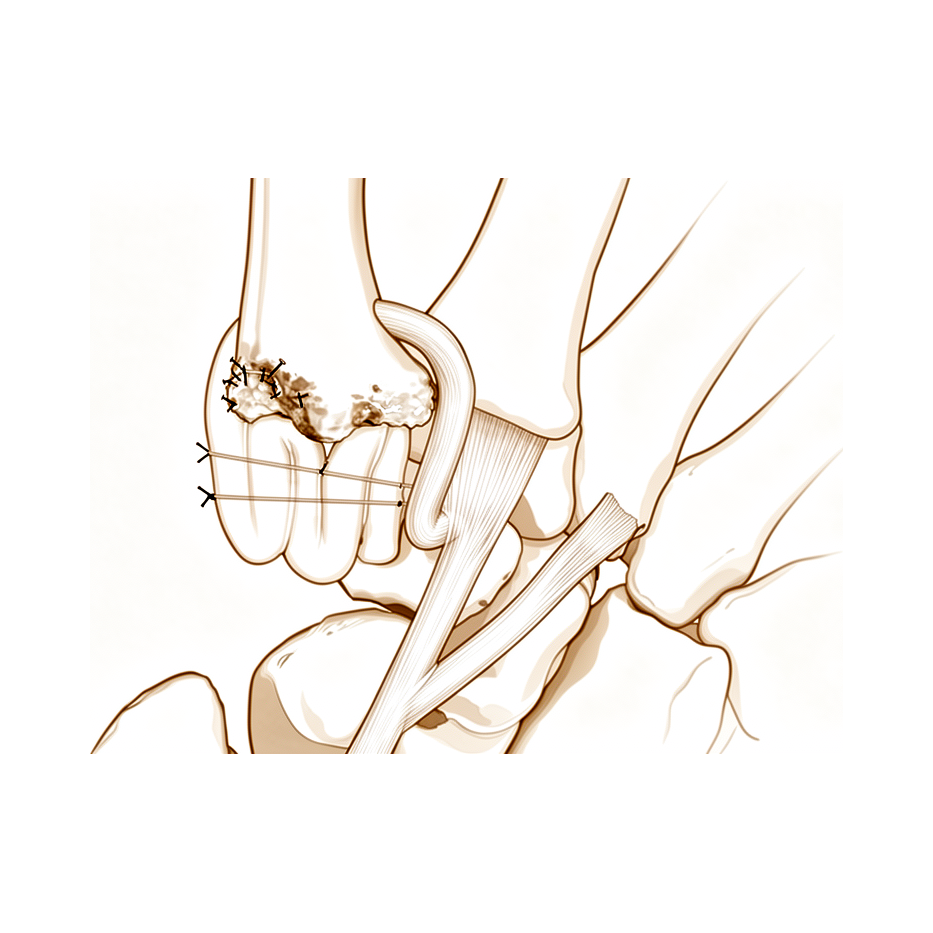
Surgical Approach / Technique: Excision of the trapezium appears to be the vital part of the surgery [17]. Trapeziectomy is performed under regional or general anesthesia and tourniquet control, on an outpatient basis, through a longitudinal incision on the radial aspect of the wrist [182]. A volar-radial triradiate incision centered over the trapezium is used for exposure of the trapeziometacarpal joint for ligament reconstruction and tendon interposition (LRTI), or alternatively a dorsoradial oblique or straight radial approach may be used [169]. The trapeziometacarpal joint of the thumb is exposed by means of a Wagner palmar approach for tendon interposition arthroplasty [170]. A standard curvilinear incision is carried longitudinally down the edge of the glabrous-nonglabrous skin border overlying the proximal first metacarpal and then curved transversely at the volar wrist crease for TESS [193]. For both abductor pollicis longus (APL) suspensionplasty and LRTI, a trapeziectomy is first performed via a dorsal approach [191]. The functional results of trapeziectomy through the anterior approach are equally good with the results of trapeziectomy through the standard approaches [48]. Outcomes for the anterior approach are equally good or better than with the posterior approach [101]. The arthroscopic approach presents an opportunity to access the entire trapezial surface, even if a high stage of osteoarthritis appears to be a risk for incomplete resection [106]. Arthroscopic techniques spare the joint capsule and ligaments, allow more accurate staging of cartilage degeneration to determine the most appropriate treatment, and decrease the risk of injury to the radial artery and superficial branch of the radial nerve [76]. The suture suspension arthroplasty technique is typically performed under regional anesthesia and takes approximately 25 to 30 minutes to perform [175]. The procedure for partial trapeziectomy with capsular interposition arthroplasty results in a stable thumb with pain relief [163]. The "Pillow" technique provides pain relief and satisfactory function at an average of 12.5 years after surgery [166].
Implant Selection: Except in very specific cases, trapeziectomy and trapeziometacarpal implant arthroplasty with a total joint prosthesis or an interposition implant are the two main surgical techniques for treating basal joint arthritis [158]. The published evidence does not show that total arthroplasty is better than trapeziectomy and its variants, yet there is a higher complication rate and significant extra cost of using an implant [70]. Suture button implants avoid the drawbacks of temporary fixation using Kirschner wire, as well as the drawbacks of ligament reconstruction, which necessitates the sacrifice of a tendon and involves both wide exposure and scar tissue [76]. However, surgeons should use caution when considering suture button fixation after complete trapeziectomy until more data are available [144]. We recommend cautious use of the Dacron device at trapeziectomy and attention must be paid to follow up of the patient due to intracarpal synovitis [68]. Complete trapezoid excision is not recommended [21].
Alignment / Balancing Strategy: The results demonstrate that it is unnecessary to perform a ligamentoplasty when a trapeziectomy is indicated [141]. These results suggest an advantage of simple trapeziectomy; however, further study is warranted [19]. Until further larger studies are performed, the value of such additions to trapeziectomy remains unproven [25]. We cannot conclude that partial trapeziectomy provides an advantage over total trapeziectomy at 1 year after surgery [2]. The results obtained in 25 patients operated on with distraction arthroplasty at an average follow-up interval of 18 months are good and are identical to those achieved with trapeziectomy [12]. Clinical outcomes are favorable for basal metacarpal osteotomy, and the procedure does not jeopardize satisfactory execution of trapezial resection arthroplasty in the future [7]. The result of GUEPAR arthroplasty is acquired more rapidly, around the 2nd month, compared to often six months after trapezectomy [3]. Trapeziectomy with LRTI remains the most popular treatment of choice, while the use of trapeziectomy with suture suspension is on the rise, particularly in younger surgeons [110].
Pain Management: The authors used continuous local anaesthetic infusion following trapeziectomy as a routine for 3 years on 40 patients [120].
Adjuncts: Thumb metacarpal immobilization after trapeziectomy is now routinely employed to address concerns with instability [23].
Setting of Care: Trapeziectomy is performed on an outpatient basis [182].
Revision: Management of complications of trapeziectomy is difficult and the disappointing and disparate results of retrospective series corroborate those of the literature [26]. A conversion to trapeziectomy with or without interposition (implant or ligament reconstruction) will be carried out in cases of revision after trapeziometacarpal surgery [37]. Scapho-metacarpal arthroplasty is a reliable medium-term solution for revision of the loosening of a trapezio-metacarpal prosthesis with trapezium damage, as well as for failed trapeziectomy [41]. Scaphometacarpal arthroplasty is a reliable medium-term solution for revision of the loosening of a trapeziometacarpal prosthesis with trapezial damage and for failed trapeziectomy [42].
Other Considerations: A large improvement can be expected after trapeziectomy, although it remains unclear how much of this change is attributable to the surgery itself [9]. Over a follow-up period of 12 months, trapeziectomy and LRTI is an effective treatment in significantly reducing pain in 80% of patients [74]. It is appropriate to use standard radiographs at the 1-year follow-up examination to assess and compare the trapezial space after different techniques of trapeziectomy [8]. Improved clinical outcomes can be achieved by maintaining at least 50% of the preoperative trapezial space [20]. A study protocol for in vivo kinematics can be used in the postoperative follow-up of patients after trapeziectomy [32]. The consensus underscores the importance of a systematic approach to addressing persistent symptoms after trapeziectomy [33]. These poor clinical and radiographic results post-trapeziectomy with major collapse are not acceptable in patients who have a longer life expectancy in good health [22].
Complications
General Complication Profile: Complications after trapeziectomy and suspension arthroplasty can occur despite proper preoperative evaluation, meticulous surgical technique, and vigilant postoperative rehabilitation [36]. Trapeziectomy remains the simplest and one of the most established surgical modalities with good long-term outcomes and acceptable side effect profiles [1]. More complex procedures for thumb base osteoarthritis have more complications than simple trapeziectomy [6]. More complex reconstructive techniques and implants for trapeziometacarpal arthritis have not proven superior to simple trapeziectomy and carry higher complication rates [16]. The early results of Pi2 arthroplasty show a high complication rate compared with trapeziectomy and no identifiable benefit [222]. CMC arthroplasty has a very low overall complication rate of 1.3% and wound complication rate of 0.66% [223]. The risk of complications and requirement for further surgery is greater for the ARPE arthroplasty compared to trapeziectomy and must be carefully considered during patient selection and preoperative counselling [217].
Nerve Injuries: Radial sensory neuritis is occasionally noted postoperatively after trapeziectomy [185]. The rare patient that develops radial sensory neuritis after trapeziectomy can expect full recovery within a year [185]. Radial sensory nerve traction palsies have been noted with distraction arthroplasty for basal thumb osteoarthritis but are rare [168]. Radial sensory nerve injuries observed with distraction arthroplasty have been transient, with patients reporting full recovery of sensation within a year [168]. One patient developed a sensitive scar and required neurolysis of the sensory branch of the radial nerve following partial trapeziectomy and interpositional arthroplasty [171]. A case report highlights radial artery thrombosis secondary to unrecognized iatrogenic injury during trapeziectomy with ligament reconstruction and tendon interposition [211].
Vascular and Soft Tissue Complications: Potential complications of trapeziometacarpal arthroplasty techniques include infection, sensory nerve irritation, radial artery injury, injury to the flexor carpi radialis tendon during bone removal, and postoperative subsidence with weakness and recurrence of pain [164]. Intracarpal synovitis related to Dacron interposition after trapeziectomy has been reported in three cases [68]. Cautious use of the Dacron device at trapeziectomy is recommended, and attention must be paid to follow-up of the patient [68]. Subcutaneous herniation of tendon interposition after trapeziectomy occurred in 3 cases in a series of 412 trapeziectomies, an incidence of 0.7% [180]. Dorsolateral dislocation of the interposition material can be very disabling and causes an inflammatory reaction due to the presence of nonvascularized tendon tissue in the subcutaneous region [180]. Removal of the subcutaneous herniation of tendon interposition provided pain relief in each reported case [180]. Reflex sympathetic dystrophy occurred in four cases following partial trapeziectomy and costal cartilage autograft, with three recovering after six months of medical treatment and one unresolved five years after surgery [173]. Seven patients experienced postoperative pain requiring re-operation following partial trapeziectomy and costal cartilage autograft [173]. One pleural wound occurred immediately following partial trapeziectomy and costal cartilage autograft, which was sutured by the hand surgeon and did not require pleural drainage [173]. There were no post-operative infections reported in a series of partial trapeziectomy and interpositional arthroplasty [171]. There were no infections reported in a series of 100 cases of partial trapeziectomy and costal cartilage autograft [173].
Hardware and Implant Complications: K-wire problems include skin irritation around the pin, loosening, and migration [185]. Pin track infections are possible but rarely encountered with K-wire fixation [185]. A loose or migrated K-wire usually requires early removal, which did not cause noted deterioration of results in reported series [185]. Kirschner wire–related complications include superficial pin track infections, migration, and loosening [168]. Index metacarpal fracture after suture button suspensionplasty has been reported [164]. High rates of trapezial subsidence and pain leading to revision were observed with a cementless thumb basal joint hemiarthroplasty [210]. Signs of migration in at least one component occurred in 83% of Moje thumb carpometacarpal joint arthroplasty cases, and tilting occurred in 92% [126]. Only 25% of Moje thumb carpometacarpal joint arthroplasty implants did not show obvious radiolucent lines around the implant [126]. A subluxated prosthesis and an old fracture of the base of the thumb metacarpal were identified 9 months after a fall in a patient with a cemented surface replacement prosthesis [184]. A neurapraxia of the radial nerve occurred after surgery for a cemented surface replacement prosthesis, presumably from injury of the sensory branch of the radial nerve during surgery [184].
Revision and Failure Outcomes: Management of complications of trapeziectomy is difficult, and the results of a retrospective series of 10 cases were disappointing and disparate [26]. The postoperative intervals before pronouncing failure and the frequent need for iterative surgery can leave the patient in a position of perpetual convalescence, the functional benefit of which is not guaranteed [26]. The outcome after revision surgery for thumb carpometacarpal resection arthroplasty was less favourable than that reported for primary trapeziectomy with ligament reconstruction and tendon interposition [75]. Although 68% of patients indicated that their thumb was better than before primary surgery after revision, the outcome was less favourable than primary trapeziectomy with ligament reconstruction and tendon interposition [75]. The results after revision surgery for interposition implant trapeziometacarpal arthroplasty may be worse than previously described, and there may also be a tendency for worse results than those of primary arthroplasty [213]. Trapeziectomy with an alternative suspension technique shows good patient-reported outcome measures for primary surgery and poor patient-reported outcome measures after the secondary surgery [24]. After revision following carpometacarpal pyrocarbon prosthetic arthroplasty, patients may lose abduction motion but have similar strength compared with those who undergo primary trapeziectomy [64].
Recovery
Light activity (weeks): The evidence provided does not specify a distinct week-based timeline for light activities such as desk work or driving. However, patients operated on for trapeziectomy recovered hand function compatible with daily activities without residual pain [54].
Full activity (months): Thumb opposition function at 3 months after surgery depends entirely on the transferred tendon rather than spontaneous thenar muscle recovery [202]. In patients 55 years of age or under, trapeziectomy combined with LRTI or MWS results in improvements in pain and grip strength that promote return to previous occupations [161].
Complete recovery / outcome plateau (months): The result of trapeziectomy is often acquired around six months [3]. Patients younger than 60 years treated by partial arthroscopic trapeziectomy are likely to experience improvements in pain and strength that persist in the medium term [51].
Rehabilitation protocol: Simple excision of the trapezium has a long post-operative rehabilitation period [62].
Functional milestones: The procedure described leads to very good patient satisfaction and high objective measures of function, including return of strength and dexterity to even the severely affected thumb, with excellent long-term results [174]. Comparable pain and function between operated and unoperated sides at long-term follow-up suggests that trapeziectomy and tendon suspension-interposition arthroplasty provides predictable outcomes, and surgeons can use these data to counsel patients that surgery can potentially return them to comparable use [205].
Other Considerations: In contrast to orthosis, a large improvement can be expected after trapeziectomy, although it remains unclear how much of this change is attributable to the surgery itself [9]. Patients younger than 60 years treated by partial arthroscopic trapeziectomy are likely to experience improvements in pain and strength that persist in the medium term [51]. Trapeziectomy and LRTI or MWS in patients 55 years of age or under results in improvements in pain and grip strength promoting return to their previous occupations, with a 10 year survivorship free from revision surgery [161]. Two patients who had previously undergone trapeziectomy in the other hand found that denervation yielded faster relief of pain and better pinch and grip, allowing them to resume usual activities much earlier [167].
Key Evidence
- [L1] Trapeziectomy remains the simplest and one of the most established surgical modalities with good long-term outcomes and acceptable side effect profiles. [1] (10.1016/j.jhsg.2024.12.005)
- [L2] We cannot conclude that partial trapeziectomy provides an advantage over total trapeziectomy at 1 year after surgery. [2] (10.1016/j.jhsg.2020.03.004)
- [L4] The result is acquired more rapidly, around the 2nd month, compared to often six months after trapezectomy. [3] (10.1016/s1297-3203(00)73580-3)
- [L3] The outcomes of secondary trapeziectomy after failed trapeziometacarpal joint replacement arthroplasty generally do not differ from the primary trapeziectomy results. [4] (10.1016/j.jhsa.2013.01.030)
- [Paper] Moreover, trapeziectomy after failed TMC arthroplasty provides outcomes equivalent to those of primary trapeziectomy. [5] (10.1016/j.hansur.2020.09.013)
- [L4] Almost all investigators conclude that there is at best minimal difference in outcomes over simple trapeziectomy, while more complex procedures have more complications. [6] (10.1016/j.jhsa.2014.11.026)
- [L4] Clinical outcomes are favorable, and the procedure does not jeopardize satisfactory execution of trapezial resection arthroplasty in the future. [7] (10.1016/j.jhsa.2011.03.035)
- [L3] It is thus appropriate to use standard radiographs at the 1-year follow-up examination to assess and compare the trapezial space after these different techniques of trapeziectomy. [8] (10.1053/jhsu.2003.50065)
- [L2] In contrast, a large improvement can be expected after trapeziectomy, although it remains unclear how much of this change is attributable to the surgery itself. [9] (10.1016/j.jhsg.2025.100741)
- [L3] Secondary trapeziectomy after revision of trapeziometacarpal implants provides results comparable with primary trapeziectomy. [10] (10.1177/17531934211039184)
- [L4] [11] (10.1177/1558944717744339)
- [L4] The results obtained in 25 patients operated on with this technique at an average follow-up interval of 18 months are good and are identical to those achieved with trapeziectomy. [12] (10.1016/j.jhsa.2007.08.017)
- [L4] Trapeziectomy represents currently the gold standard in surgical treatment of thumb carpometacarpal osteoarthritis. [13] (10.1016/j.hansur.2019.10.097)
- [L4] The mean survival of the prosthesis was 19.5 months, with loosening of the trapezial implant being the major indication for revision in 56% of cases. [14] (10.1016/j.hansur.2018.10.067)
- [L2] [15] (10.1007/s11999-013-2956-0)
- [L5] Simple trapeziectomy remains a valid option with good to excellent results, while more complex reconstructive techniques and implants have not proven superior and carry higher complication rates. [16] (10.1016/j.jhsa.2008.11.028)
- [L1] Excision of the trapezium appears to be the vital part of the surgery. [17] (10.1016/j.jhsa.2004.06.017)
- [L3] Trapeziectomy combined with Swanson implant gives better results in the short term if there are no complications of the operation. [18] (10.1054/jhsb.1999.0156)
- [L3] These results suggest an advantage of simple trapeziectomy; however, further study is warranted. [19] (10.1177/1558944715617215)
- [L4] Improved clinical outcomes can be achieved by maintaining at least 50% of the preoperative trapezial space. [20] (10.1016/j.hansur.2021.01.002)
- [L4] Complete trapezoid excision is not recommended. [21] (10.1016/j.jhsa.2019.10.006)
- [L4] These poor clinical and radiographic results post-trapeziectomy with major collapse are not acceptable in our patients who have a longer life expectancy in good health. [22] (10.1016/j.hansur.2018.10.065)
- [L5] They conclude that thumb metacarpal immobilization after trapeziectomy is now routinely employed to address concerns with instability. [23] (10.1177/17531934231217371)
- [L4] Trapeziectomy with this alternative suspension technique for treatment of carpometacarpal thumb joint osteoarthritis shows good patient-reported outcome measures for primary surgery and poor patient-reported outcome measures after the secondary surgery. [24] (10.1016/j.jhsg.2022.02.006)
- [L1] Until further larger studies are performed, the value of such additions to trapeziectomy remains unproven. [25] (10.1177/1753193408098483)
- [L4] [26] (10.1016/j.hansur.2021.03.014)
- [L4] The choice of alternative surgical options to secondary trapeziectomy can be based on residual trapezium bone stock, with overall good clinical results but a high rate of secondary revision. [27] (10.1016/j.jhsa.2026.01.014)
- [Paper] Without the need for an implant and because of its long-lasting benefits, total trapeziectomy is currently the only surgical technique for thumb basal joint arthritis that can lay claim to being a potential life-long procedure. [28] (10.1016/j.hansur.2020.05.015)
- [L1] Trapezial excision and partial trapezoidal excision is an effective treatment with low morbidity and complications, although can lead to weakness of the thumb. [29] (10.1142/s0218810417300017)
- [L5] Thumb basal joint arthritis is a progressive disease with substantial new biomechanical and longitudinal clinical studies changing prevailing opinions on serial degenerative changes. [30] (10.5435/jaaos-d-17-00374)
- [L4] Our study showed that this protocol can be used in the postoperative follow-up of patients after trapezectomy. [32] (10.1016/j.main.2011.01.020)
- [L5] The consensus underscores the importance of a systematic approach to addressing persistent symptoms after trapeziectomy. [33] (10.1177/17531934241227386)
- [L1] [35] (10.1053/jhsu.2001.27761)
- [L4] Complications after trapeziectomy and suspension arthroplasty can occur despite proper preoperative evaluation, meticulous surgical technique, and vigilant postoperative rehabilitation. [36] (10.1016/j.jhsa.2013.07.018)
- [L5] A conversion to trapeziectomy with or without interposition (implant or ligament reconstruction) will be carried out in the other cases. [37] (10.1016/j.hansur.2020.08.010)
- [L4] Due to no significant differences in outcomes between partial and complete excision, the authors now prefer partial trapezoid excision. [39] (10.1016/j.jhsa.2017.06.062)
- [L5] This review provides an overview of different radiological views described for the thumb, emphasizing their historical origin and positioning, and describes various measurements and classifications used to evaluate the trapeziometacarpal joint. [40] (10.1177/17531934221137979)
- [L4] Scapho-metacarpal arthroplasty is a reliable medium-term solution for revision of the loosening of a trapezio-metacarpal prosthesis with trapezium damage, as well as for failed trapeziectomy. [41] (10.1016/j.hansur.2017.10.077)
- [L4] Scaphometacarpal arthroplasty is a reliable medium-term solution for revision of the loosening of a trapeziometacarpal prosthesis with trapezial damage and for failed trapeziectomy. [42] (10.1177/1753193419900470)
- [L4] The functional results of trapeziectomy through the anterior approach are equally good with the results of trapeziectomy through the standard approaches. [48] (10.1097/00130911-200206000-00005)
- [L4] Patients younger than 60 years treated by partial arthroscopic trapeziectomy are likely to experience improvements in pain and strength that persist in the medium term. [51] (10.1016/j.otsr.2021.102983)
- [L5] Trapeziectomy is a good solution for the majority of patients with TMC arthritis, but the focus should shift to understanding why it fails in some patients and researching who benefits from other treatments or non-surgical options. [52] (10.1177/17531934221118818)
- [L4] Patients operated on for trapezectomy recovered hand function compatible with daily activities without residual pain but with a perceived lack of strength. [54] (10.1016/j.hansur.2019.10.093)
- [L3] Wrist radiographs demonstrate a 47% sensitivity and 94% specificity in predicting end-stage ST joint arthritis, emphasizing the importance of directly visualizing the ST joint after trapeziectomy. [56] (10.1177/1558944718765246)
- [L4] Simple excision of the trapezium is a satisfactory procedure for the majority of patients with this disorder, but has a long post-operative rehabilitation period. [62] (10.1016/0266-7681(94)90214-3)
- [L4] [63] (10.1177/17531934221123166)
- [L3] After revision, patients may lose abduction motion but have similar strength compared with those who undergo primary trapeziectomy. [64] (10.1016/j.jhsa.2022.01.004)
- [L4] We recommend cautious use of the Dacron device at trapeziectomy and attention must be paid to follow up of the patient. [68] (10.1016/j.main.2004.05.007)
- [L5] The authors favor ligament reconstruction over trapeziectomy alone to preserve arthroplasty space and prevent instability, though they acknowledge the need for long-term randomized studies to confirm the benefits of simple trapeziectomy. [69] (10.2106/00004623-200411000-00040)
- [L1] The published evidence does not show that total arthroplasty is better than trapeziectomy and its variants, yet there is a higher complication rate and significant extra cost of using an implant. [70] (10.1177/1753193414563243)
- [L4] Due to the potential occurrence of intra- or postoperative complications such as trapezial fracture and trapezial loosening, stage IV OA is treated by trapeziectomy. [71] (10.1016/j.hansur.2019.11.012)
- [Letter] [73] (10.1177/17531934211008365)
- [L2] Over a follow-up period of 12 months, trapeziectomy and LRTI is an effective treatment in significantly reducing pain in 80% of patients. [74] (10.1016/j.jhsa.2021.04.036)
- [L4] Although 68% of patients indicated that their thumb was better than before primary surgery, the outcome after revision surgery was less favourable than that reported for primary trapeziectomy with ligament reconstruction and tendon interposition. [75] (10.1177/17531934211050559)
- [L4] [76] (10.1055/s-0040-1710560)
- [L1] [78] (10.1016/j.jhsa.2019.05.003)
- [L5] Wrist biomechanics were significantly altered following trapeziectomy, and of the reconstructions tested, LRTI most closely resembled the intact biomechanics in this cadaveric model. [96] (10.1016/j.jhsa.2019.10.003)
- [L3] Thumb motion capability was unaffected by sex and handedness. [100] (10.1016/j.jhsa.2014.08.012)
- [L1] Trapeziectomy is a good method of treating osteoarthritis of the thumb base, but outcomes for the anterior approach are equally good or better than with the posterior approach. [101] (10.1177/1753193407087571)
- [L5] The arthroscopic approach presents an opportunity to access the entire trapezial surface, even if a high stage of osteoarthritis appears to be a risk for incomplete resection. [106] (10.1016/j.main.2010.03.003)
- [L3] A reduction in cylindrical grasp is associated with early symptomatic and radiographic CMC OA, whereas gross grasp is not associated with early thumb CMC OA, suggesting that cylindrical grasp may be a better tool to detect changes in thumb and hand function seen during early disease stages. [107] (10.1007/s11999-016-5151-2)
- [L4] The authors draw attention to this symptom to encourage others to ask patients about it in longer term follow-ups to see whether it is a common complaint and specific to simple trapeziectomy. [109] (10.1177/1753193414567828)
- [L4] Trapeziectomy with LRTI remains the most popular treatment of choice, while the use of trapeziectomy with suture suspension is on the rise, particularly in younger surgeons. [110] (10.1177/1558944717717506)
- [L4] Thumbs in patients with TMC-OA and healthy thumbs have different kinematics during FDI maneuvers, and an atrophic FDI may not be an efficient dynamic stabilizer. [114] (10.1016/j.jhsa.2024.12.018)
- [L5] During thumb oppositional motion, internal rotation of the first metacarpal occurred, with the palmar base rotating primarily with respect to the dorsal base. [116] (10.1016/j.jhsa.2017.07.028)
- [L4] The authors used continuous local anaesthetic infusion following trapeziectomy as a routine for 3 years on 40 patients. [120] (10.1016/j.jhsb.2006.04.022)
- [L2] Brief psychological screening shows that patients with psychological risk factors experience improved pain and function outcomes following trapeziectomy, however their outcomes are significantly worse than patients who do not have psychological risk factors. [121] (10.1177/17589983221120839)
- [L3] Altered thumb rotation patterns during pinch may contribute to joint misalignment and the development of osteoarthritis. [125] (10.1177/17531934251383073)
- [L4] [126] (10.1177/1753193412454252)
- [L4] Directionally coupled motion patterns in the CMC joint are similar in men and women. [133] (10.1007/s11999-013-3063-y)
- [L4] The authors propose a classification system (Type I, II, III) for trans-trapezium carpometacarpal dislocation of the thumb to aid management, suggesting non-operative treatment for stable Type I injuries and surgical fixation for unstable Type II and III injuries. [139] (10.1177/17531934241261628)
- [L4] [140] (10.1007/s11552-012-9438-9)
- [L4] The results demonstrate that it is unnecessary to perform a ligamentoplasty when a trapezectomy is indicated. [141] (10.1016/j.hansur.2017.10.096)
- [Case_report] Surgeons should use caution when considering suture button fixation after complete trapeziectomy until more data are available. [144] (10.1016/j.jhsa.2011.12.017)
- [L4] [145] (10.1097/00130911-200103000-00006)
- [L4] [147] (10.1016/s0749-0712(21)00240-7)
- [L5] [149] (10.1016/0266-7681(91)90004-8)
- [Paper] [153] (10.1016/j.hcl.2008.03.003)
- [L4] [154] (10.1177/1753193414564095)
- [L4] Limited excision arthroplasty of the trapeziometacarpal and scaphotrapezial joints is a viable alternative to existing surgical treatments for stage IV thumb arthritis, as evidenced by statistically significant improvements in clinical parameters. [156] (10.1177/1753193415609656)
- [L1] At 1 year, total joint arthroplasty showed no superiority over trapeziectomy regarding the total score of the Michigan Hand Outcomes Questionnaire, but demonstrated a significant advantage in strength and range of motion. [157] (10.1177/17531934231185245)
- [L3] Except in very specific cases, trapeziectomy and trapeziometacarpal implant arthroplasty with a total joint prosthesis or an interposition implant are the two main surgical techniques for treating basal joint arthritis. [158] (10.1016/j.otsr.2023.103772)
- [L4] Trapeziectomy and LRTI or MWS in patients 55 years of age or under results in improvements in pain and grip strength promoting return to their previous occupations, with a 10 year survivorship free from revision surgery. [161] (10.1177/1558944718769378)
- [L5] The procedure results in a stable thumb with pain relief. [163] (10.1097/bth.0000000000000048)
- [L4] [164] (10.1016/j.jhsa.2014.09.012)
- [L5] [165] (10.1016/j.hansur.2020.04.013)
- [L4] This technique provides pain relief and satisfactory function at an average of 12.5 years after surgery. [166] (10.1016/j.jhsa.2016.04.018)
- [L4] Two patients who had previously undergone trapeziectomy in the other hand found that denervation yielded faster relief of pain and better pinch and grip, allowing them to resume usual activities much earlier. [167] (10.1097/bth.0b013e31824f8c96)
- [Paper] [168] (10.1097/00130911-200403000-00002)
- [L5] [169] (10.1016/j.hcl.2010.05.006)
- [L4] [170] (10.1016/j.jhsa.2025.01.018)
- [L4] [171] (10.1016/s0266-7681(05)80140-8)
- [L4] Bone scan uptake after trapeziometacarpal joint arthroplasty progressively decreases over time, with normalization of tracer uptake expected between 14 and 25.5 months after surgery. [172] (10.1177/17531934251345359)
- [L4] [173] (10.1016/j.main.2012.03.002)
- [L4] The procedure described leads to very good patient satisfaction and high objective measures of function, including return of strength and dexterity to even the severely affected thumb, with excellent long-term results. [174] (10.1016/j.hcl.2012.08.018)
- [L5] [175] (10.1097/bth.0b013e3181b4c388)
- [L4] [180] (10.1053/jhsu.2001.24971)
- [L2] [181] (10.1177/1753193418797890)
- [L4] [182] (10.1016/s0749-0712(21)00243-2)
- [L3] [183] (10.1186/s13018-021-02856-x)
- [L4] [184] (10.1016/j.jhsa.2009.12.026)
- [L4] [185] (10.1016/j.hcl.2006.02.003)
- [L3] [186] (10.1016/j.otsr.2016.08.014)
- [L3] [187] (10.1177/1753193412466764)
- [L3] [191] (10.1177/1558944720906565)
- [L4] [193] (10.1097/bth.0000000000000046)
- [L5] Radiographic development of trapeziometacarpal arthrosis is an expected part of human aging, although clinically significant, functionally limiting trapeziometacarpal arthrosis is less common, and its development may be unrelated to hand use. [196] (10.1016/j.jhsa.2015.04.038)
- [L4] The study cannot demonstrate that the radiographic presence of scaphotrapezoidal arthritis correlates with the patient's main symptoms after partial trapeziectomy. [198] (10.1016/j.jhsg.2020.06.005)
- [L4] The thumb opposition function at 3 months after surgery depends entirely on the transferred tendon rather than spontaneous thenar muscle recovery. [202] (10.1016/j.jhsa.2021.04.007)
- [L4] This measurement is more reproducible than the more frequently used trapezial tilt and might be a better parameter to define bony trapezial dysplasia and guide its treatment. [203] (10.1016/j.hansur.2020.10.010)
- [L4] Comparable pain and function between operated and unoperated sides at long-term follow-up suggests that trapeziectomy and tendon suspension-interposition arthroplasty provides predictable outcomes, and surgeons can use these data to counsel patients that surgery can potentially return them to comparable use. [205] (10.1097/corr.0000000000001795)
- [L4] The authors observed high rates of trapezial subsidence and pain leading to revision. [210] (10.1016/j.jhsa.2016.07.021)
- [L5] This case highlights radial artery thrombosis secondary to unrecognized iatrogenic injury during trapeziectomy with LRTI. [211] (10.1177/17531934231151215)
- [L4] The results after revision surgery may be worse than previously described, and there may also be a tendency for worse results than those of primary arthroplasty. [213] (10.1177/15589447211028920)
- [L3] However the risk of complications and requirement for further surgery is greater and must be carefully considered during patient selection and preoperative counselling. [217] (10.1142/s0218810417500526)
- [L3] The early results of Pi2 arthroplasty show a high complication rate compared with trapeziectomy and no identifiable benefit. [222] (10.1177/1753193411433176)
- [L3] CMC arthroplasty has a very low overall complication rate of 1.3% and wound complication rate of 0.66%. [223] (10.1177/1558944717744341)
See Also
References
[1] Comparison of Surgical Techniques and Joint Injections for Base of Thumb Osteoarthritis: A Systematic Review. Journal of Hand Surgery Global Online. 2025. DOI: 10.1016/j.jhsg.2024.12.005
[2] Partial Versus Total Trapeziectomy With Interposition Arthroplasty for Trapeziometacarpal Osteoarthritis Grade II to III Eaton-Littler: A Clinical Trial. Journal of Hand Surgery Global Online. 2020. DOI: 10.1016/j.jhsg.2020.03.004
[3] 82 bis L’arthroplastie trapézométacarpienne GUEPAR dans le traitement de la rhizarthrose. Chirurgie de la Main. 2000. DOI: 10.1016/s1297-3203(00)73580-3
[4] Outcome Comparison of Primary Trapeziectomy Versus Secondary Trapeziectomy Following Failed Total Trapeziometacarpal Joint Replacement. The Journal of Hand Surgery. 2013. DOI: 10.1016/j.jhsa.2013.01.030
[5] Trapeziometacarpal prostheses. Hand Surgery and Rehabilitation. 2021. DOI: 10.1016/j.hansur.2020.09.013
[6] Management of Osteoarthrosis of the Thumb Joints. The Journal of Hand Surgery. 2015. DOI: 10.1016/j.jhsa.2014.11.026
[7] Basal Metacarpal Osteotomy for Osteoarthritis of the Thumb. The Journal of Hand Surgery. 2011. DOI: 10.1016/j.jhsa.2011.03.035
[8] Trapezial space height measurement after trapeziectomy: A comparison of the use of standard and stress radiographs. The Journal of Hand Surgery. 2003. DOI: 10.1053/jhsu.2003.50065
[9] Orthosis Followed by Trapeziectomy for Thumb Base Osteoarthritis: A Cohort Pilot Study on Pain and Function. Journal of Hand Surgery Global Online. 2025. DOI: 10.1016/j.jhsg.2025.100741
[10] Outcomes of secondary trapeziectomy after revision of trapeziometacarpal implants: a retrospective comparative matched study. Journal of Hand Surgery (European Volume). 2021. DOI: 10.1177/17531934211039184
[11] The Trapezium Dislocation: Case Presentation, Review of the Literature, Radiographic Analysis, Proposed Classification, and Treatment. HAND. 2017. DOI: 10.1177/1558944717744339
[12] Distraction Arthroplasty of the Trapeziometacarpal Joint. The Journal of Hand Surgery. 2007. DOI: 10.1016/j.jhsa.2007.08.017
[13] Courbes de survie à plus de 10 ans des prothèses trapézo-métacarpiennes: à propos de 294 cas. Hand Surgery and Rehabilitation. 2019. DOI: 10.1016/j.hansur.2019.10.097
[14] Trapézectomie secondaire après échec de prothèse trapézo-métacarpienne. Hand Surgery and Rehabilitation. 2018. DOI: 10.1016/j.hansur.2018.10.067
[15] Degenerative Change at the Pseudarthrosis After Trapeziectomy at 6-year Followup. Clinical Orthopaedics & Related Research. 2014. DOI: 10.1007/s11999-013-2956-0
[16] Management of Advanced Trapeziometacarpal Arthrosis. The Journal of Hand Surgery. 2009. DOI: 10.1016/j.jhsa.2008.11.028
[17] Excision of the trapezium for osteoarthritis of the trapeziometacarpal joint: A study of the benefit of ligament reconstruction or tendon interposition. The Journal of Hand Surgery. 2004. DOI: 10.1016/j.jhsa.2004.06.017
[18] A Patient-Reported Comparison of Trapeziectomy with Swanson Silastic Implant or Sling Ligament Reconstruction. Journal of Hand Surgery. 1999. DOI: 10.1054/jhsb.1999.0156
[19] Increased Complications in Trapeziectomy With Ligament Reconstruction and Tendon Interposition Compared With Trapeziectomy Alone. HAND. 2016. DOI: 10.1177/1558944715617215
[20] The effect of remaining trapezial space on outcomes after trapeziectomy with ligament reconstruction tendon interposition for trapeziometacarpal osteoarthritis. Hand Surgery and Rehabilitation. 2021. DOI: 10.1016/j.hansur.2021.01.002
[21] Effect of Partial and Complete Trapezoid Excision on Radiographic and Functional Results After Abductor Pollicis Longus Suspensionplasty. The Journal of Hand Surgery. 2020. DOI: 10.1016/j.jhsa.2019.10.006
[22] Traitement des grands collapsus de la colonne du pouce après trapézectomie à un recul minimum de 2 ans. Hand Surgery and Rehabilitation. 2018. DOI: 10.1016/j.hansur.2018.10.065
[23] Re: Lui H, Galbraith JG, Meyers K, Bindra R, Lee SK. Biomechanical analysis of three techniques of suspensionplasty after trapeziectomy: a cadaveric study. J Hand Surg Eur. 2023, doi:10.1177/17531934231186495. Journal of Hand Surgery (European Volume). 2023. DOI: 10.1177/17531934231217371
[24] Trapeziectomy and Alternative Suspension Technique in Thumb Carpometacarpal Arthritis: Patient-Reported Outcome Measures. Journal of Hand Surgery Global Online. 2022. DOI: 10.1016/j.jhsg.2022.02.006
[25] Trapeziectomy for Trapeziometacarpal Joint Osteoarthritis: Is Ligament Reconstruction and Temporary Stabilisation of the Pseudarthrosis with a Kirschner Wire Important?. Journal of Hand Surgery (European Volume). 2009. DOI: 10.1177/1753193408098483
[26] Revision of trapeziectomy failures in thumb base osteoarthritis: retrospective analysis of ten cases and review of the literature. Hand Surgery and Rehabilitation. 2021. DOI: 10.1016/j.hansur.2021.03.014
[27] Revision Strategies for Complications and Failure of Trapeziometacarpal Joint Arthroplasty Based on Residual Trapezial Bone Stock. The Journal of Hand Surgery. 2026. DOI: 10.1016/j.jhsa.2026.01.014
[28] Total trapeziectomy. Hand Surgery and Rehabilitation. 2021. DOI: 10.1016/j.hansur.2020.05.015
[29] Scaphotrapeziotrapezoidal Joint Osteoarthritis: A Systematic Review of Surgical Treatment. The Journal of Hand Surgery (Asian-Pacific Volume). 2017. DOI: 10.1142/s0218810417300017
[30] Thumb Basal Joint Arthritis. Journal of the American Academy of Orthopaedic Surgeons. 2018. DOI: 10.5435/jaaos-d-17-00374
[32] In vivo kinematics of the first carpometacarpal joint after trapezectomy. Chirurgie de la Main. 2011. DOI: 10.1016/j.main.2011.01.020
[33] Diagnostic and treatment recommendations for recurrent or persistent symptoms after trapeziectomy: a Delphi study. Journal of Hand Surgery (European Volume). 2024. DOI: 10.1177/17531934241227386
[35] Trapezial space height after trapeziectomy: Mechanism of formation and benefits. The Journal of Hand Surgery. 2001. DOI: 10.1053/jhsu.2001.27761
[36] Complications of Trapeziectomy With or Without Suspension Arthroplasty. The Journal of Hand Surgery. 2014. DOI: 10.1016/j.jhsa.2013.07.018
[37] Revision procedures after trapeziometacarpal surgery. Hand Surgery and Rehabilitation. 2021. DOI: 10.1016/j.hansur.2020.08.010
[39] Long-term Outcomes of APL Suspensionplasty with No, Partial, or Complete Trapezoid Excision. The Journal of Hand Surgery. 2017. DOI: 10.1016/j.jhsa.2017.06.062
[40] Radiological imaging of the trapeziometacarpal joint: a historical and clinical perspective. Journal of Hand Surgery (European Volume). 2022. DOI: 10.1177/17531934221137979
[41] 25 ans de chirurgie de l’instabilité trapézio-métacarpienne. Hand Surgery and Rehabilitation. 2017. DOI: 10.1016/j.hansur.2017.10.077
[42] Scaphometacarpal arthroplasty: a report of ten cases of trapeziometacarpal prosthesis and trapeziectomy revision. Journal of Hand Surgery (European Volume). 2020. DOI: 10.1177/1753193419900470
[45] Orthopaedic Knowledge Update 13 Ebook Without Multimedia. Anatomy, Evaluation, Clinical Examination, and Imaging > Evaluation and Clinical Examination: Current Concepts.
[47] Exam Of The Hand Wrist 2Ed. 1.1 SKELETON OF THE HAND > The osseous skeleton.
[48] Anterior Approach for Trapeziectomy. Techniques in Hand and Upper Extremity Surgery. 2002. DOI: 10.1097/00130911-200206000-00005
[51] Partial arthroscopic trapeziectomy and stabilisation by ligamentoplasty: Outcomes in patients younger than 60 years. Orthopaedics & Traumatology: Surgery & Research. 2021. DOI: 10.1016/j.otsr.2021.102983
[52] Trapeziometacarpal joint osteoarthritis: ongoing search for the ideal solution. Journal of Hand Surgery (European Volume). 2022. DOI: 10.1177/17531934221118818
[54] Descellements aseptiques de cupule des prothèses trapézo-métacarpiennes : proposition d’une stratégie de reprise. Hand Surgery and Rehabilitation. 2019. DOI: 10.1016/j.hansur.2019.10.093
[56] Comparison of Radiographic and Intraoperative Visual Assessment of Scaphotrapezoid Joint Arthritis in Patients With End-Stage Carpometacarpal Arthritis of the Thumb Base. HAND. 2018. DOI: 10.1177/1558944718765246
[62] Simple Excision of the Trapezium for Osteoarthritis of the Carpometacarpal Joint of the Thumb. Journal of Hand Surgery. 1994. DOI: 10.1016/0266-7681(94)90214-3
[63] The ISIS® prosthesis in 77 cases of trapeziometacarpal arthritis: outcomes and survival at a minimum follow-up of 5 years. Journal of Hand Surgery (European Volume). 2022. DOI: 10.1177/17531934221123166
[64] Outcomes of Secondary Trapeziectomy Following Carpometacarpal Pyrocarbon Prosthetic Arthroplasty. The Journal of Hand Surgery. 2022. DOI: 10.1016/j.jhsa.2022.01.004
[68] Intracarpal synovitis related to Dacron interposition after trapeziectomy: a report of three cases. Chirurgie de la Main. 2004. DOI: 10.1016/j.main.2004.05.007
[69] Ligament Reconstruction Versus Trapezial Resection Alone for Thumb Carpometacarpal Osteoarthritis. The Journal of Bone and Joint Surgery-American Volume. 2004. DOI: 10.2106/00004623-200411000-00040
[70] Thumb carpometacarpal joint total arthroplasty: a systematic review. Journal of Hand Surgery (European Volume). 2015. DOI: 10.1177/1753193414563243
[71] Trapeziometacarpal total joint replacement as an alternative to trapeziectomy depends on trapezium height: Retrospective study of 67 patients. Hand Surgery and Rehabilitation. 2020. DOI: 10.1016/j.hansur.2019.11.012
[73] Letter about a Published Paper. Journal of Hand Surgery (European Volume). 2021. DOI: 10.1177/17531934211008365
[74] Functional Recovery Following Trapeziectomy and Ligament Reconstruction and Tendon Interposition: A Prospective Longitudinal Study. The Journal of Hand Surgery. 2021. DOI: 10.1016/j.jhsa.2021.04.036
[75] Outcomes and recommendations for revision of thumb carpometacarpal resection arthroplasty. Journal of Hand Surgery (European Volume). 2021. DOI: 10.1177/17531934211050559
[76] Arthroscopic Trapeziectomy and Suture Button Suspensionplasty: A Review of the Literature and Description of the “Three-Step Arthroscopic Trapeziectomy Technique”. Journal of Wrist Surgery. 2020. DOI: 10.1055/s-0040-1710560
[78] Failure Rates of Base of Thumb Arthritis Surgery: A Systematic Review. The Journal of Hand Surgery. 2019. DOI: 10.1016/j.jhsa.2019.05.003
[85] Exam Of The Hand Wrist 2Ed. The arches of the hand > The metacarpal arch.
[96] The Effect of Surgical Treatments for Trapeziometacarpal Osteoarthritis on Wrist Biomechanics: A Cadaver Study. The Journal of Hand Surgery. 2020. DOI: 10.1016/j.jhsa.2019.10.003
[100] Effect of Carpometacarpal Joint Osteoarthritis, Sex, and Handedness on Thumb In Vivo Kinematics. The Journal of Hand Surgery. 2014. DOI: 10.1016/j.jhsa.2014.08.012
[101] A Comparison of Trapeziectomy Via Anterior and Posterior Approaches. Journal of Hand Surgery (European Volume). 2008. DOI: 10.1177/1753193407087571
[106] Trapézectomie partielle arthroscopique : étude radioanatomique de 14 cas. Chirurgie de la Main. 2010. DOI: 10.1016/j.main.2010.03.003
[107] Reduction in Cylindrical Grasp Strength Is Associated With Early Thumb Carpometacarpal Osteoarthritis. Clinical Orthopaedics & Related Research. 2017. DOI: 10.1007/s11999-016-5151-2
[109] Clumsiness: a complication of trapeziectomy for thumb carpometacarpal joint arthritis?. Journal of Hand Surgery (European Volume). 2015. DOI: 10.1177/1753193414567828
[110] Surgeon Preference, Influence, and Treatment of Thumb Carpometacarpal Arthritis. HAND. 2017. DOI: 10.1177/1558944717717506
[114] Kinematics of Trapeziometacarpal Joint During First Dorsal Interosseous Maneuver in Osteoarthritic Patients: An Imaging Study Using Real-Time Magnetic Resonance Imaging and Ultrasonography. The Journal of Hand Surgery. 2025. DOI: 10.1016/j.jhsa.2024.12.018
[116] In Vivo 3-Dimensional Kinematics of Thumb Carpometacarpal Joint During Thumb Opposition. The Journal of Hand Surgery. 2018. DOI: 10.1016/j.jhsa.2017.07.028
[120] Continuous Local Anaesthetic Infusion after Trapeziectomy for Pain Relief. Journal of Hand Surgery. 2006. DOI: 10.1016/j.jhsb.2006.04.022
[121] Brief psychological screening for trapeziectomy: Identifying patients at high risk of a poor functional outcome. Hand Therapy. 2022. DOI: 10.1177/17589983221120839
[125] Thumb rotation patterns during pinch in patients with trapeziometacarpal osteoarthritis. Journal of Hand Surgery (European Volume). 2025. DOI: 10.1177/17531934251383073
[126] High frequency failure of the Moje thumb carpometacarpal joint arthroplasty. Journal of Hand Surgery (European Volume). 2012. DOI: 10.1177/1753193412454252
[133] In Vivo Kinematics of the Thumb Carpometacarpal Joint During Three Isometric Functional Tasks. Clinical Orthopaedics & Related Research. 2014. DOI: 10.1007/s11999-013-3063-y
[139] Trans-trapezium carpometacarpal dislocation of the thumb. Journal of Hand Surgery (European Volume). 2024. DOI: 10.1177/17531934241261628
[140] A Three-Step Technique to Correctly Identify the Trapezium without the Need for Fluoroscopic Imaging. HAND. 2012. DOI: 10.1007/s11552-012-9438-9
[141] Résultat du traitement chirurgical de la rhizarthrose du pouce – trapézectomie simple versus trapézectomie avec ligamentoplastie. Hand Surgery and Rehabilitation. 2017. DOI: 10.1016/j.hansur.2017.10.096
[144] Index Metacarpal Fracture After Tightrope Suspension Following Trapeziectomy: Case Report. The Journal of Hand Surgery. 2012. DOI: 10.1016/j.jhsa.2011.12.017
[145] Arthroscopically Assisted Tendon Interposition Arthroplasty at the Base of the Thumb. Techniques in Hand & Upper Extremity Surgery. 2001. DOI: 10.1097/00130911-200103000-00006
[147] TREATMENT OF EATON STAGE I TRAPEZIOMETACARPAL DISEASE. Hand Clinics. 2001. DOI: 10.1016/s0749-0712(21)00240-7
[149] Surgical Management of Basal Joint Disease of the Thumb. Journal of Hand Surgery. 1991. DOI: 10.1016/0266-7681(91)90004-8
[153] Treatment of Advanced Carpometacarpal Joint Disease: Trapeziectomy and Hematoma Arthroplasty. Hand Clinics. 2008. DOI: 10.1016/j.hcl.2008.03.003
[154] Trapeziometacarpal arthrodesis: is bone union necessary for a good outcome?. Journal of Hand Surgery (European Volume). 2014. DOI: 10.1177/1753193414564095
[156] A new surgical technique for the treatment of scaphotrapezial arthritis associated with trapeziometacarpal arthritis: the narrow pseudoarthrosis. Journal of Hand Surgery (European Volume). 2016. DOI: 10.1177/1753193415609656
[157] Total joint arthroplasty versus trapeziectomy in the treatment of trapeziometacarpal joint arthritis: a randomized controlled trial. Journal of Hand Surgery (European Volume). 2023. DOI: 10.1177/17531934231185245
[158] Thumb basal joint arthritis in 2023. Orthopaedics & Traumatology: Surgery & Research. 2024. DOI: 10.1016/j.otsr.2023.103772
[161] Outcomes of Surgical Management for Thumb Basilar Arthritis in Patients 55 Years of Age and Younger. HAND. 2018. DOI: 10.1177/1558944718769378
[163] Partial Trapeziectomy With Capsular Interposition Arthroplasty (PTCI). Techniques in Hand & Upper Extremity Surgery. 2014. DOI: 10.1097/bth.0000000000000048
[164] Double Tightrope for Basilar Thumb Arthritis. The Journal of Hand Surgery. 2014. DOI: 10.1016/j.jhsa.2014.09.012
[165] Anatomically based radiological classification of thumb basal joint arthritis. Hand Surgery and Rehabilitation. 2021. DOI: 10.1016/j.hansur.2020.04.013
[166] The “Pillow” Technique for Thumb Carpometacarpal Joint Arthritis: Cohort Study With 10- to 15-Year Follow-Up. The Journal of Hand Surgery. 2016. DOI: 10.1016/j.jhsa.2016.04.018
[167] Wagner Approach for First Carpometacarpal Joint Denervation. Techniques in Hand & Upper Extremity Surgery. 2012. DOI: 10.1097/bth.0b013e31824f8c96
[168] Hematoma and Distraction Arthroplasty for Basal Thumb Osteoarthritis. Techniques in Hand and Upper Extremity Surgery. 2004. DOI: 10.1097/00130911-200403000-00002
[169] Interposition Arthroplasty Options for Carpometacarpal Arthritis of the Thumb. Hand Clinics. 2010. DOI: 10.1016/j.hcl.2010.05.006
[170] Tendon interposition arthroplasty for degenerative arthritis of the trapeziometacarpal joint of the thumb. The Journal of Hand Surgery. 2025. DOI: 10.1016/j.jhsa.2025.01.018
[171] Partial Trapeziectomy and Interpositional Arthroplasty for Trapeziometacarpal Osteoarthritis of the Thumb. Journal of Hand Surgery. 1995. DOI: 10.1016/s0266-7681(05)80140-8
[172] Bone scintigraphy in trapeziometacarpal joint replacement. Journal of Hand Surgery (European Volume). 2025. DOI: 10.1177/17531934251345359
[173] Treatment of trapeziometacarpal osteoarthritis by partial trapeziectomy and costal cartilage autograft. A review of 100 cases. Chirurgie de la Main. 2012. DOI: 10.1016/j.main.2012.03.002
[174] Ligament Reconstruction and Tendon Interposition for Thumb Basal Arthritis. Hand Clinics. 2013. DOI: 10.1016/j.hcl.2012.08.018
[175] Suture Suspension Arthroplasty Technique for Basal Joint Arthritis Reconstruction. Techniques in Hand & Upper Extremity Surgery. 2009. DOI: 10.1097/bth.0b013e3181b4c388
[180] Subcutaneous herniation of tendon interposition after trapeziectomy in three cases: Explanation and implications. The Journal of Hand Surgery. 2001. DOI: 10.1053/jhsu.2001.24971
[181] Ivory arthroplasty for trapeziometacarpal osteoarthritis: 10-year follow-up. Journal of Hand Surgery (European Volume). 2018. DOI: 10.1177/1753193418797890
[182] TREATMENT OF ARTHRITIS OF THE TRAPEZIOMETACARPAL JOINT WITH TRAPEZIECTOMY AND HEMATOMA ARTHROPLASTY. Hand Clinics. 2001. DOI: 10.1016/s0749-0712(21)00243-2
[183] Trapeziectomy for basal thumb osteoarthritis does not increase the risk of developing wrist osteoarthritis in the long term. Journal of Orthopaedic Surgery and Research. 2021. DOI: 10.1186/s13018-021-02856-x
[184] A Cemented Surface Replacement Prosthesis in the Basal Thumb Joint. The Journal of Hand Surgery. 2010. DOI: 10.1016/j.jhsa.2009.12.026
[185] Trapeziectomy. Hand Clinics. 2006. DOI: 10.1016/j.hcl.2006.02.003
[186] Minimum 10-year clinical and radiological follow-up of trapeziectomy with interposition or suspensionplasty for basal thumb arthritis. Orthopaedics & Traumatology: Surgery & Research. 2016. DOI: 10.1016/j.otsr.2016.08.014
[187] A three-dimensional analysis of osteoarthritic changes in the thumb carpometacarpal joint. Journal of Hand Surgery (European Volume). 2012. DOI: 10.1177/1753193412466764
[191] Efficacy of Abductor Pollicis Longus Suspensionplasty Compared to Ligament Reconstruction and Tendon Interposition. HAND. 2020. DOI: 10.1177/1558944720906565
[193] Trapezium Excision and Suture Suspensionplasty (TESS) for the Treatment of Thumb Carpometacarpal Arthritis. Techniques in Hand & Upper Extremity Surgery. 2014. DOI: 10.1097/bth.0000000000000046
[196] Epidemiology of Trapeziometacarpal Arthrosis. The Journal of Hand Surgery. 2015. DOI: 10.1016/j.jhsa.2015.04.038
[198] Long-Term Evaluation Following Partial Trapeziectomy and Suspension Arthroplasty for Trapeziometacarpal Osteoarthritis: An Observational Study. Journal of Hand Surgery Global Online. 2020. DOI: 10.1016/j.jhsg.2020.06.005
[202] Opponensplasty by the Palmaris Longus Tendon to the Rerouted Extensor Pollicis Brevis Transfer With Endoscopic Carpal Tunnel Release in Severe Carpal Tunnel Syndrome. The Journal of Hand Surgery. 2021. DOI: 10.1016/j.jhsa.2021.04.007
[203] Radiological measurement of trapezial dysplasia – variation of trapezial tilt and trapezial inclination. Hand Surgery and Rehabilitation. 2021. DOI: 10.1016/j.hansur.2020.10.010
[205] What Are the Patient-reported Outcomes of Trapeziectomy and Tendon Suspension at Long-term Follow-up?. Clinical Orthopaedics & Related Research. 2021. DOI: 10.1097/corr.0000000000001795
[210] Early Clinical Failure of a Cementless Thumb Basal Joint Hemiarthroplasty for the Treatment of Trapeziometacarpal Osteoarthritis. The Journal of Hand Surgery. 2016. DOI: 10.1016/j.jhsa.2016.07.021
[211] Thumb and fingertip ischaemia after trapeziectomy. Journal of Hand Surgery (European Volume). 2023. DOI: 10.1177/17531934231151215
[213] Outcomes of Revision of Interposition Implant Trapeziometacarpal Arthroplasty. HAND. 2021. DOI: 10.1177/15589447211028920
[217] Early Results of the ARPE Arthroplasty Versus Trapeziectomy for the Treatment of Thumb Carpometacarpal Joint Osteoarthritis. The Journal of Hand Surgery (Asian-Pacific Volume). 2017. DOI: 10.1142/s0218810417500526
[222] Thumb carpometacarpal osteoarthritis: trapeziectomy versus pyrocarbon interposition implant (Pi2) arthroplasty. Journal of Hand Surgery (European Volume). 2012. DOI: 10.1177/1753193411433176
[223] Risk Factors for 30-Day Complications After Thumb CMC Joint Arthroplasty: An American College of Surgeons National Surgery Quality Improvement Program Study. HAND. 2017. DOI: 10.1177/1558944717744341