Patients › Rehabilitation
کندھے کی آرتھروسکوپی (Shoulder Arthroscopy)
Recovery after simple or diagnostic shoulder arthroscopy with no repair — an early-mobilisation fast pathway.
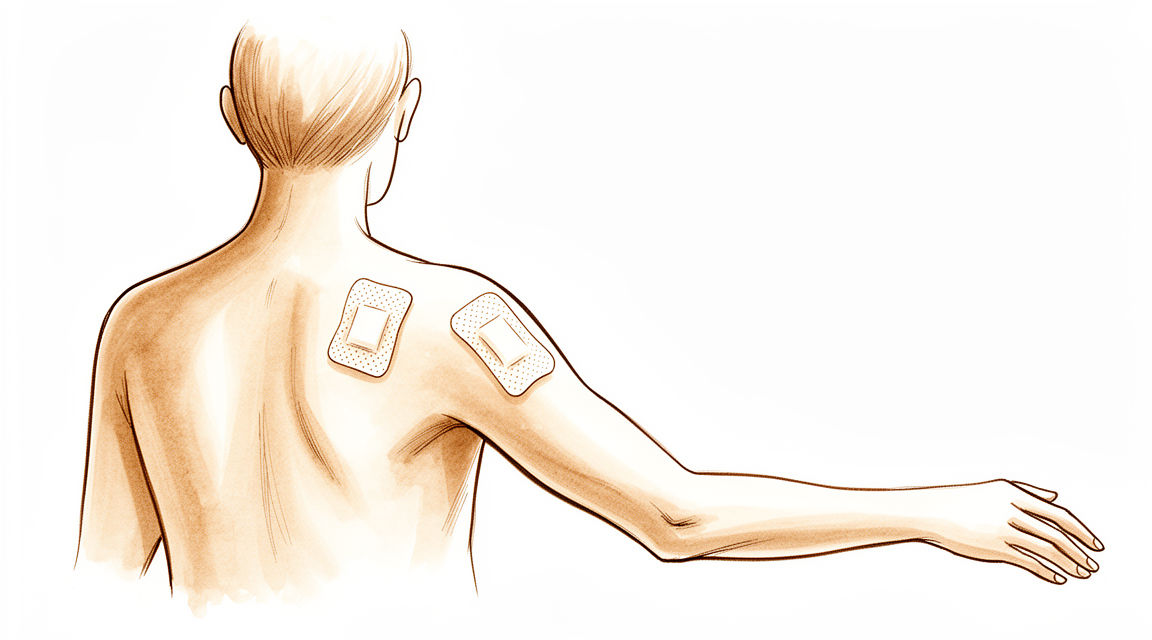
یہ پروٹوکول Mater Private Hospital Rockhampton میں ڈاکٹر کیرن ہِرپرا کے ہاتھوں کندھے کی سادہ یا تشخیصی آرتھروسکوپی (دوربین سے جوڑ کے اندر دیکھ کر علاج) کے بعد کی بحالی کا احاطہ کرتا ہے: یعنی دوربین کے ذریعے آپریشن (keyhole) جس میں جوڑ کا معائنہ کیا گیا، اسے دھویا گیا یا اس کی صفائی کی گئی (debrided)، اور کسی چیز کی مرمت نہیں کی گئی۔ چونکہ کسی مرمت کی حفاظت کی ضرورت نہیں، اس لیے یہ کندھے کے ان آپریشنوں میں سے ہے جن سے سب سے جلدی صحت یابی ہوتی ہے: مقصد جلد حرکت اور معمول کی زندگی میں جلد واپسی ہے۔ یہ صفحہ یا اس کی پی ڈی ایف فزیوتھراپی کی اپنی پہلی ملاقات پر ساتھ لے کر جائیں تاکہ آپ کی بحالی کا علاج مربوط رہے۔
یہ پروٹوکول اس وقت لاگو ہوتا ہے جب آرتھروسکوپی میں کوئی مرمت نہ کی گئی ہو: صرف صفائی (debridement)، جوڑ کو دھونا یا تشخیصی معائنہ۔ اگر آپ کی آرتھروسکوپی کے دوران کسی چیز کی مرمت کی گئی، دباؤ کم کیا گیا (decompression) یا جوڑ کو مستحکم کیا گیا، تو اس کے بجائے اسی آپریشن کے پروٹوکول پر عمل کریں: مثال کے طور پر، اگر آپ کے روٹیٹر کف (rotator cuff)، یعنی ٹینڈنوں کا وہ گروپ جو کندھے کو تھامتا اور گھماتا ہے، کی مرمت کی گئی ہو تو روٹیٹر کف کی مرمت کا پروٹوکول دیکھیں۔ اگر آپ کو یقین نہیں کہ کیا کیا گیا تھا تو آگے بڑھنے سے پہلے اپنے آپریشن کا نوٹ دیکھیں یا کلینک سے پوچھیں۔
اگر آپریشن کے بعد آپ کو اپنے زخم کے بارے میں کوئی تشویش ہو تو کلینک سے رابطہ کریں۔ اکثر یہ مددگار ہوتا ہے کہ زخم کی تصویر کھینچ کر جائزے کے لیے ای میل کر دیں۔
کیا توقع رکھیں
جس آرتھروسکوپی میں کوئی مرمت نہ کی گئی ہو اس کے بعد کندھے کے اندر ایسی کوئی چیز نہیں ہوتی جس کی حفاظت کرنی ہو، اس لیے حرکت پر کوئی سخت پابندیاں نہیں ہیں؛ آپ کے کندھے کو جلد حرکت دی جاتی ہے اور کیلنڈر کے بجائے آرام کے مطابق آگے بڑھایا جاتا ہے۔ سلنگ (sling)، یعنی گلے سے لٹکی وہ پٹی جو بازو کو سہارا دیتی ہے، صرف آرام کے لیے دی جاتی ہے: زیادہ تر لوگ اسے پہلے ایک دو دن استعمال کرتے ہیں اور پہلے ہفتے کے اندر اسے مکمل طور پر چھوڑ دیتے ہیں۔ کندھے کے کسی بھی آپریشن کے بعد کم از کم چھ ہفتے تک گاڑی نہ چلائیں، حالانکہ آپ سلنگ سے اس سے بہت پہلے آزاد ہو جائیں گے؛ آپ کے سرجن آپ کو گاڑی چلانے کی اجازت دیں گے، عموماً چھ ہفتے والے معائنے پر۔
صحت یابی کا سفر ایک نظر میں:
- مرحلہ I — ابتدائی حرکت اور کندھے کا سنبھلنا — تقریباً پہلے دو ہفتے
- مرحلہ II — مکمل حرکت کی بحالی اور مضبوطی کا آغاز — ہفتہ 2 سے 6
- مرحلہ III — مکمل سرگرمیوں میں واپسی — ہفتہ 6 اور اس کے بعد
زیادہ تر لوگ چند دن سے ایک ہفتے کے اندر دفتری کام پر واپس آ جاتے ہیں۔ گاڑی چلانا چھ ہفتے سے دوبارہ شروع ہوتا ہے، جب آپ کے سرجن آپ کو اجازت دے دیں۔ بھاری جسمانی مشقت والے کام اور کھیل میں عموماً زیادہ وقت لگتا ہے، کندھے پر پڑنے والے بوجھ کے مطابق عام طور پر چھ سے بارہ ہفتوں کے درمیان۔ جوڑ کے سنبھلنے تک کندھے میں اکثر کچھ ہفتوں تک ہلکی دکھن رہتی ہے؛ یہ معمول کی بات ہے اور حرکت اور طاقت کی واپسی کے ساتھ بہتر ہو جاتی ہے۔
مرحلہ I — ابتدائی حرکت اور کندھے کا سنبھلنا (ہفتہ 0 سے 2)
Kieran Hirpara 4.0
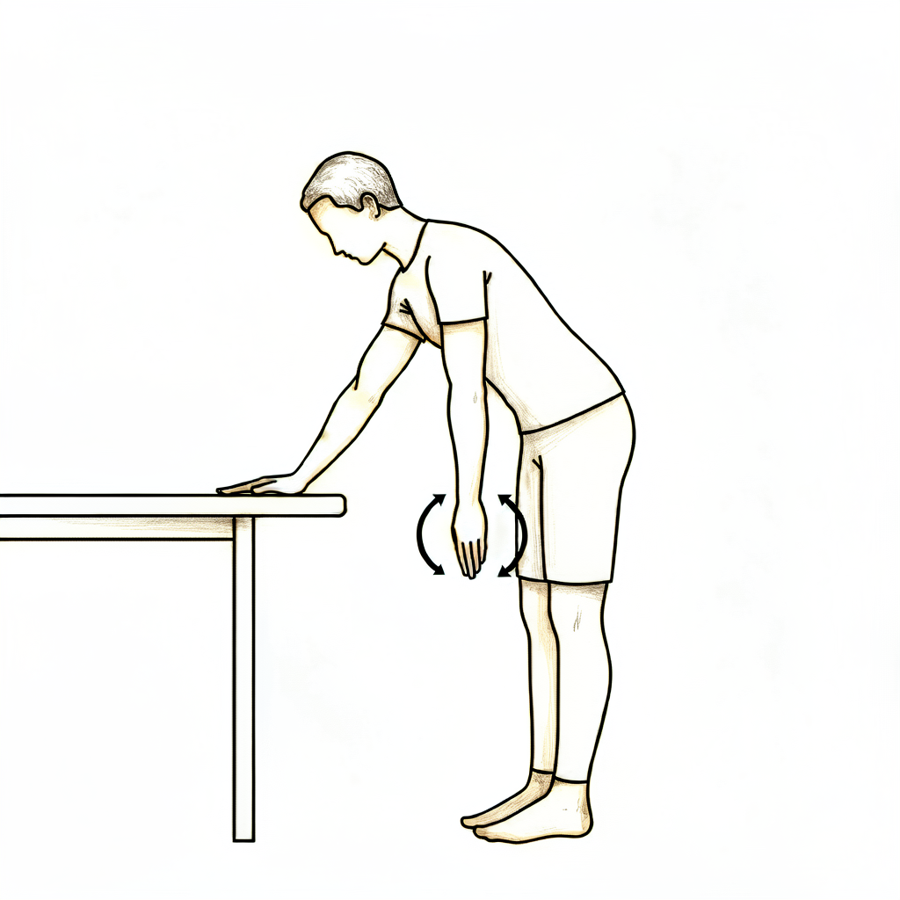
پینڈولم ورزشیں (pendulum)
آگے کی طرف جھکیں، اپنے دوسرے ہاتھ سے میز کا سہارا لیں، اور آپریشن والے بازو کو ڈھیلا لٹکنے دیں۔ اپنے جسم کو ہلکے سے جھلا کر چھوٹے دائرے بنائیں — پہلے گھڑی کی سوئیوں کی سمت میں، پھر الٹی سمت میں۔ بازو ڈھیلا رہتا ہے؛ حرکت آپ کے جسم سے آتی ہے، کندھے سے نہیں۔
آپ کے فزیوتھراپسٹ کی رہنمائی کے مطابق
Kieran Hirpara 4.0
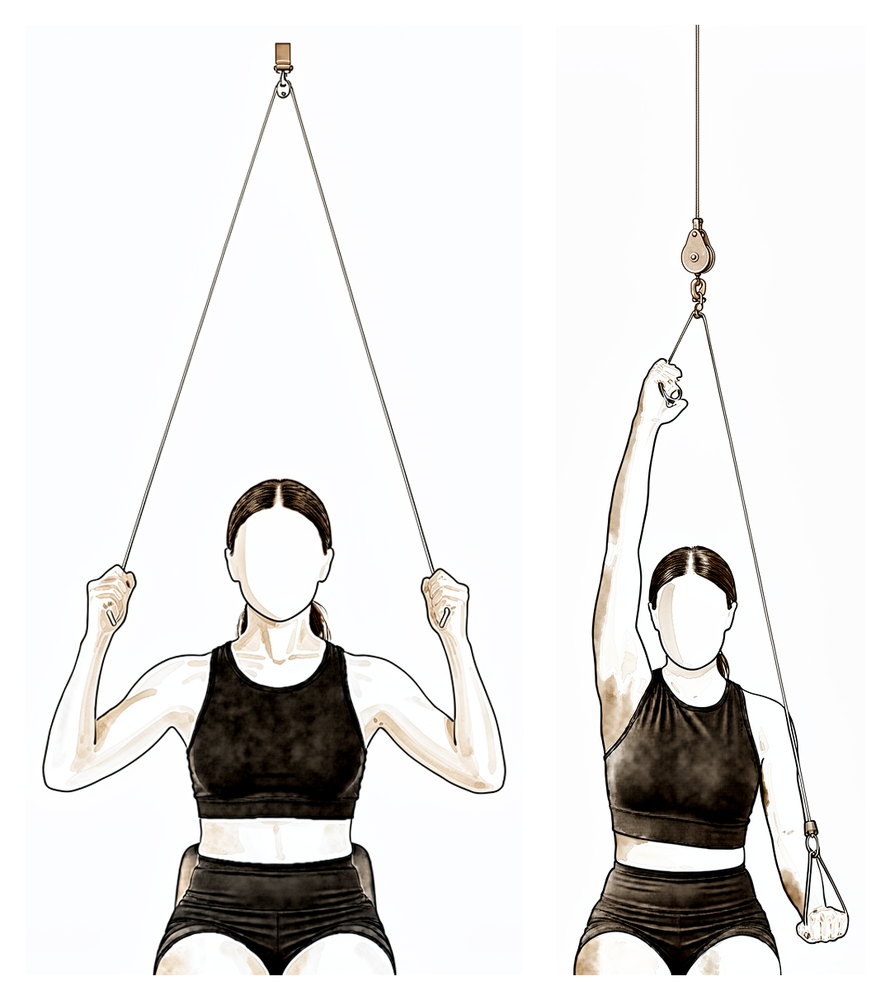
چرخی کی مدد سے حرکت
دروازے کے اوپر لگی چرخی کے نیچے بیٹھیں۔ آپریشن والے بازو کو ڈھیلا رکھتے ہوئے اپنے دوسرے ہاتھ سے رسی نیچے کھینچیں تاکہ رسی آپریشن والے بازو کو آہستہ سے اوپر اٹھائے، پھر اسے آہستہ آہستہ نیچے لائیں۔ آرام کے مطابق آگے بڑھیں — تیز یا دیر تک رہنے والے درد پر پیچھے ہٹیں، درد کے باوجود زور نہ لگائیں۔
آپ کے فزیوتھراپسٹ کی رہنمائی کے مطابق
Kieran Hirpara 4.0
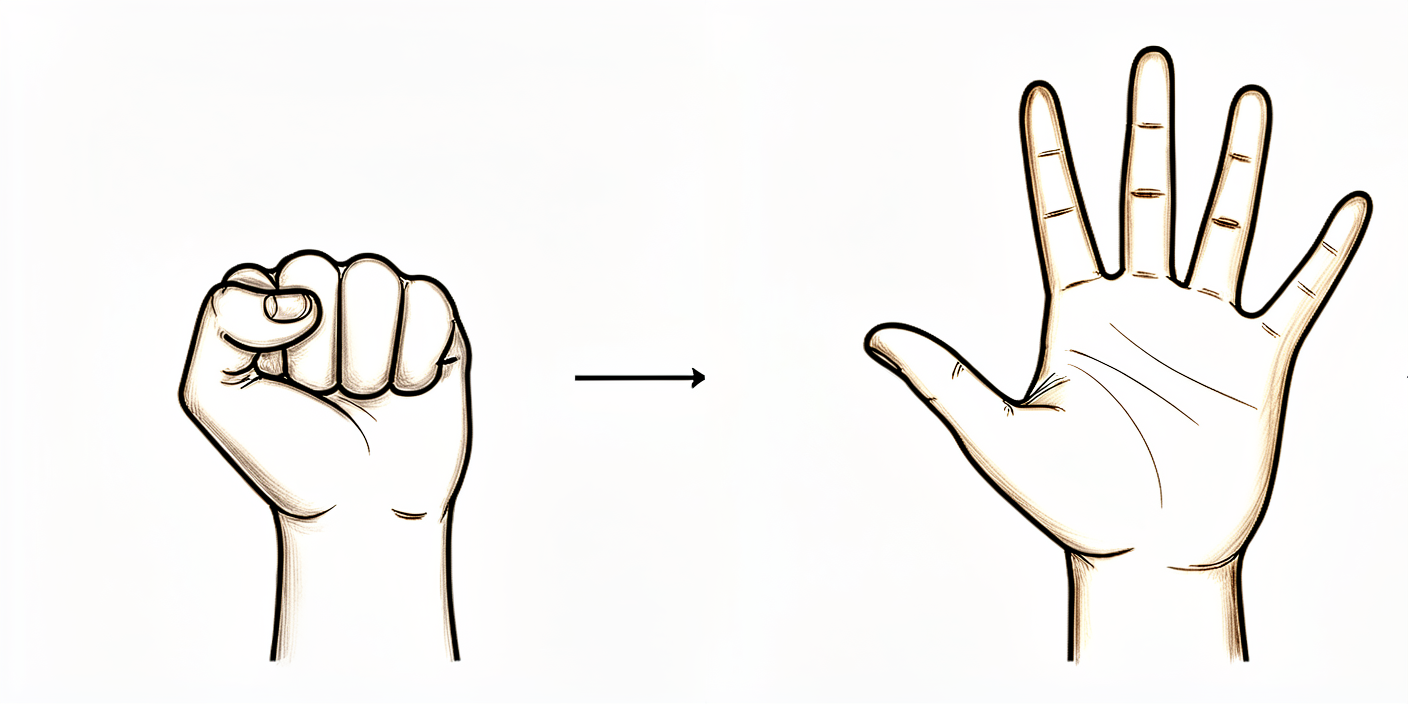
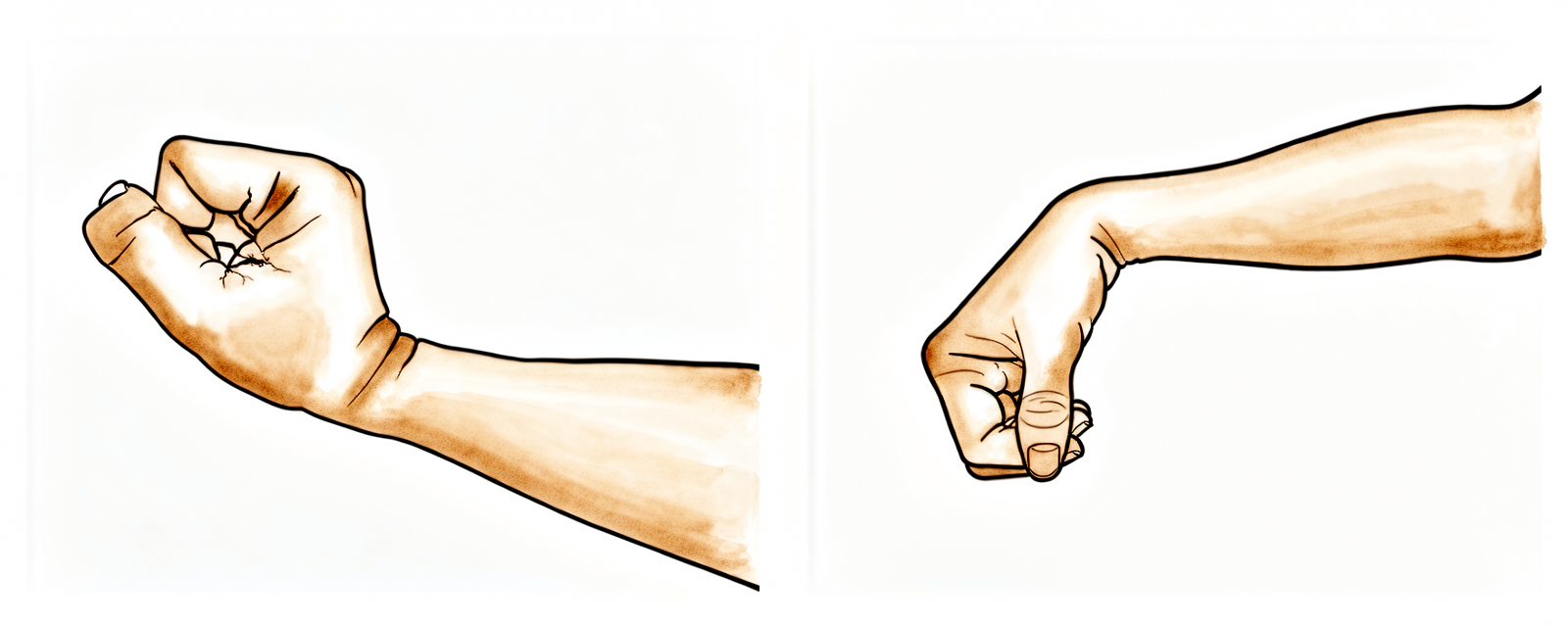
ہاتھ کھولنا اور بند کرنا
کس کر مٹھی بنائیں یا نرم گیند دبائیں، پھر ہاتھ کو پوری طرح کھول دیں۔ شروع سے ہی اپنے ہاتھ، کلائی اور کہنی کو آزادی سے حرکت دیں، اور آرام کے مطابق بازو کو روزمرہ کے ہلکے کاموں کے لیے استعمال کریں۔
آپ کے فزیوتھراپسٹ کی رہنمائی کے مطابق
Kieran Hirpara 4.0
کلائی کی حرکت
کلائی کو آگے، پیچھے اور ایک طرف سے دوسری طرف موڑ کر حرکت میں رکھیں۔ شروع سے ہی ہاتھ، کلائی اور کہنی کو آزادی سے حرکت دیں تاکہ کندھے کے سنبھلنے تک پورا بازو کام کرتا رہے۔
آپ کے فزیوتھراپسٹ کی رہنمائی کے مطابق
Kieran Hirpara 4.0
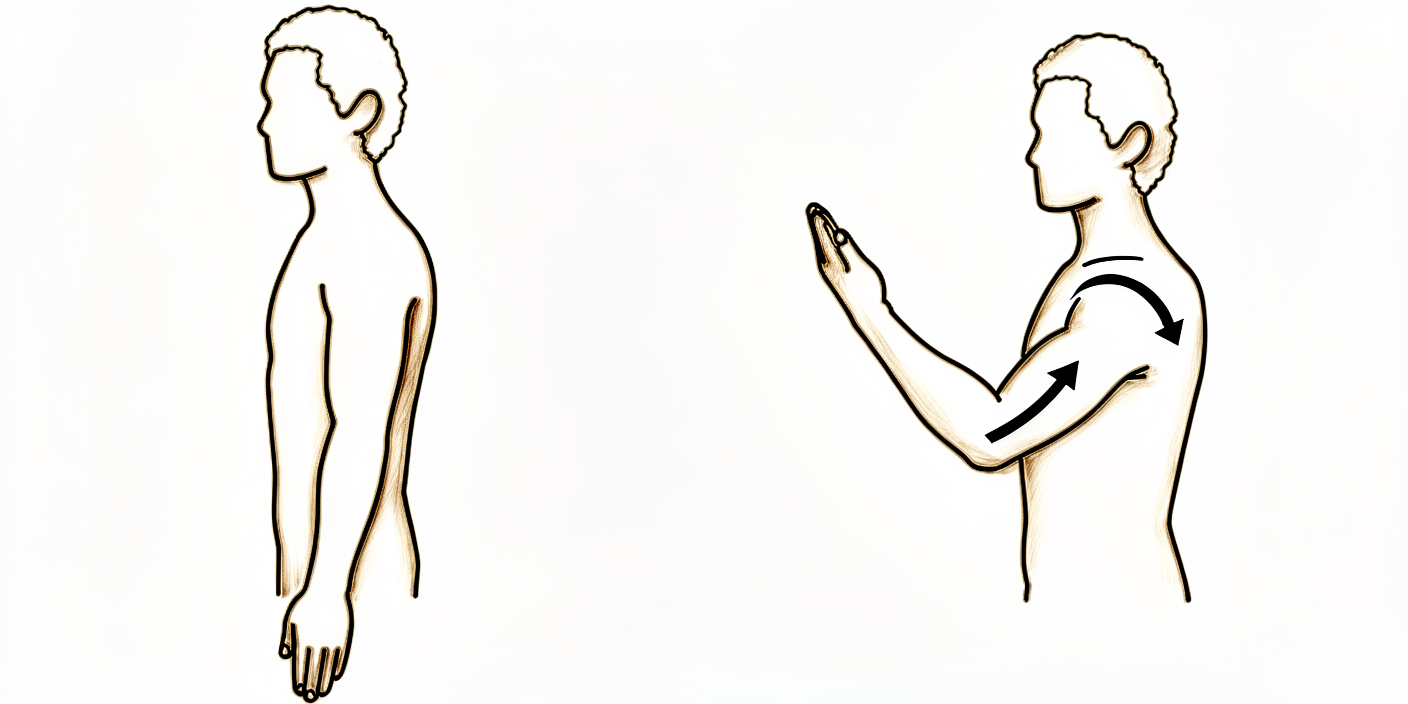
کہنی موڑنا
بازو کے اوپری حصے کو پہلو کے ساتھ ٹکا کر، کہنی کو جتنا آرام سے ہو سکے موڑیں، پھر اسے پوری طرح سیدھا کریں۔ صرف کہنی حرکت کرتی ہے — کندھے کو ڈھیلا رکھیں۔
آپ کے فزیوتھراپسٹ کی رہنمائی کے مطابق
Kieran Hirpara 4.0
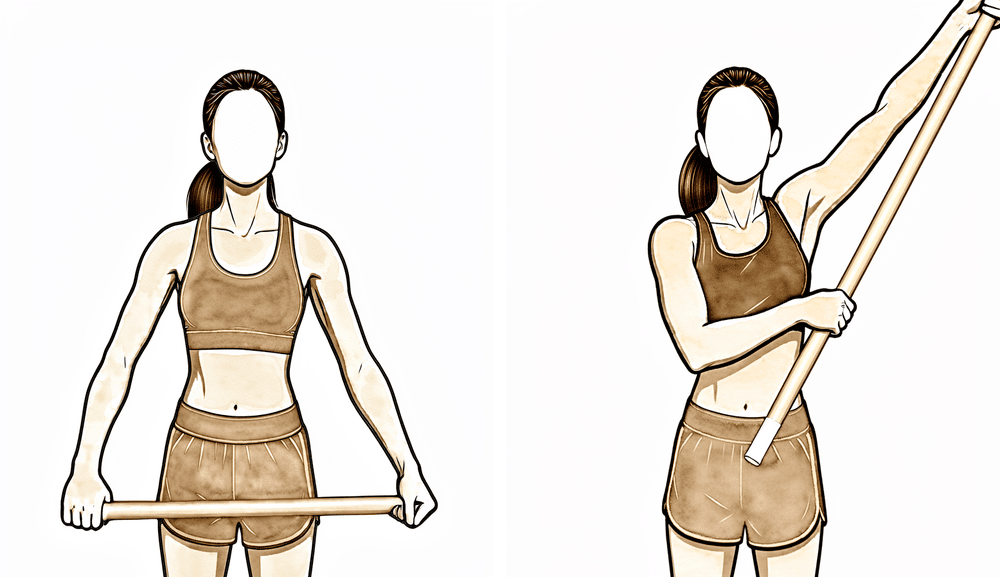
چھڑی کی مدد سے حرکت
دونوں ہاتھوں میں ایک چھڑی (ڈنڈا یا چھڑی) پکڑیں اور اپنے ٹھیک بازو کے ذریعے آپریشن والے بازو کو پہلو کی طرف اور آگے کی طرف لے جائیں، جتنا آرام اجازت دے، پھر قابو کے ساتھ نیچے لائیں۔ یہ معاون فعال حرکت (active-assisted) کندھے کے سنبھلنے کے دوران اسے جلد حرکت میں رکھتی ہے۔
آپ کے فزیوتھراپسٹ کی رہنمائی کے مطابق
Kieran Hirpara 4.0
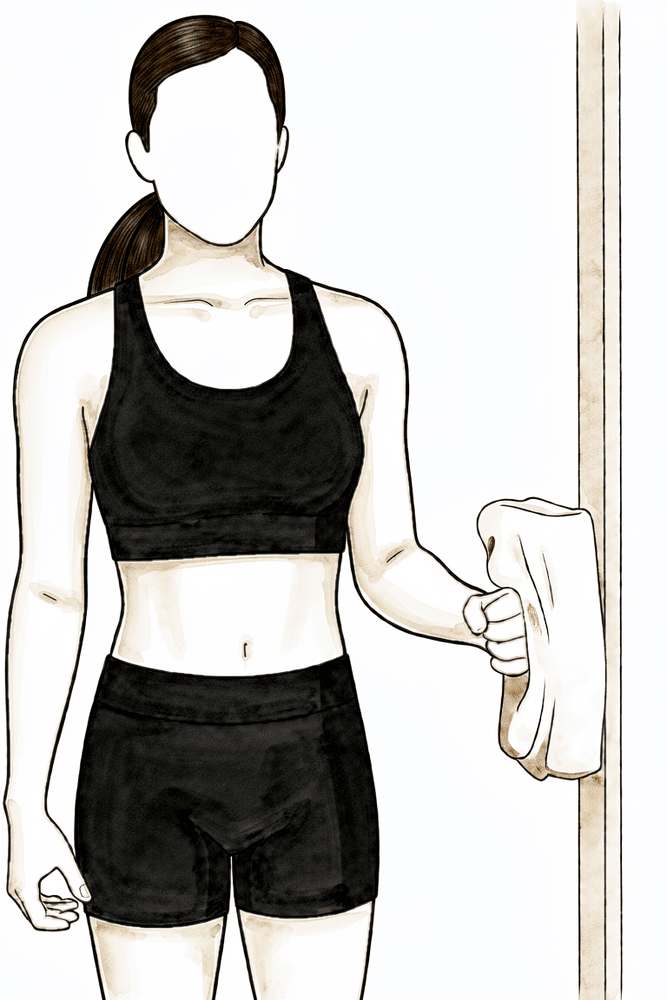
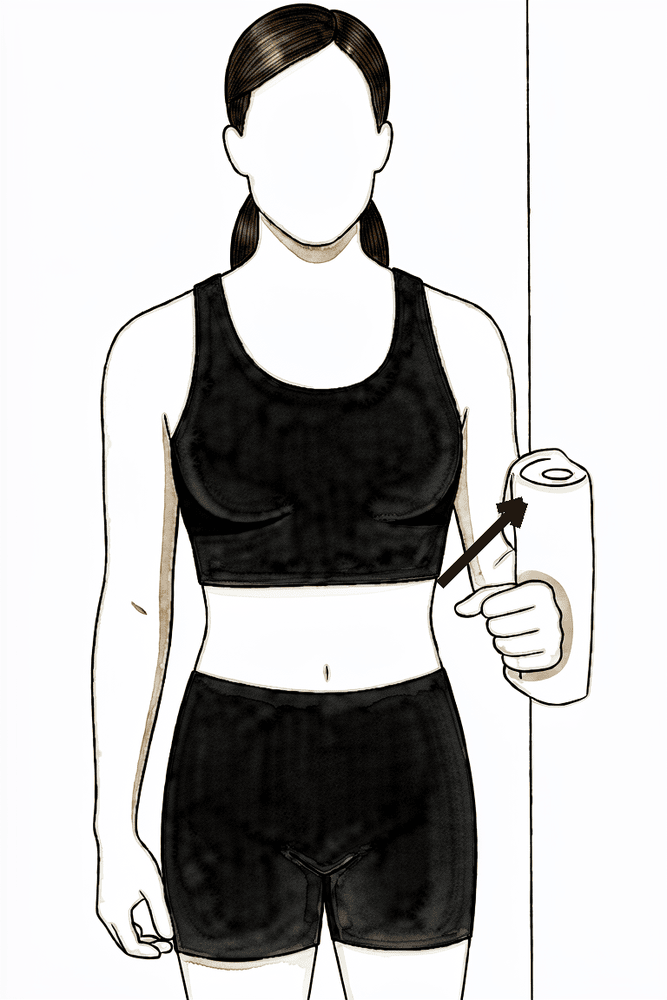
باہر کی طرف گھماؤ کی آئسومیٹرک ورزش (isometric external rotation)
کہنی کو پہلو سے لگا کر اور زاویۂ قائمہ (سیدھے زاویے) پر موڑ کر کھڑے ہوں، اور ہاتھ کی پشت کو دیوار یا دروازے کی چوکھٹ سے لگائیں۔ بازو کو حرکت دیے بغیر اس پر ہلکے سے باہر کی طرف دباؤ ڈالیں، چند سیکنڈ روکیں، پھر ڈھیلا چھوڑ دیں۔ اس سے آرام کے مطابق، بغیر حرکت کے، روٹیٹر کف (rotator cuff)، یعنی ٹینڈنوں کا وہ گروپ جو کندھے کو تھامتا اور گھماتا ہے، ہلکے سے فعال ہوتا ہے۔
آپ کے فزیوتھراپسٹ کی رہنمائی کے مطابق
Kieran Hirpara 4.0
بازو کو پہلو کی طرف اٹھانے کی آئسومیٹرک ورزش (isometric abduction)
دیوار کے ساتھ پہلو کے بل کھڑے ہوں، کہنی پہلو سے لگی ہو، اور بازو کے اوپری حصے کے باہری حصے کو ہلکے سے دیوار پر دبائیں، جیسے بازو کو پہلو کی طرف اٹھا رہے ہوں، لیکن اسے حرکت نہ کرنے دیں۔ چند سیکنڈ روکیں، پھر ڈھیلا چھوڑ دیں۔ اس سے آرام کے مطابق، بغیر کسی حرکت کے، ڈیلٹائیڈ (deltoid) پٹھے پر ہلکا کام ہوتا ہے۔
آپ کے فزیوتھراپسٹ کی رہنمائی کے مطابق
Kieran Hirpara 4.0
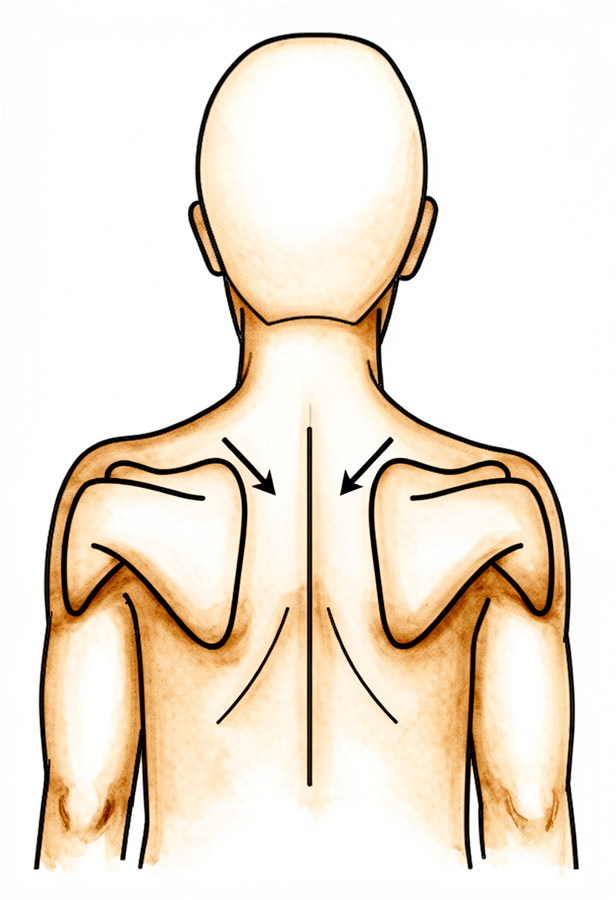
کندھے کی پچھلی ہڈیوں کو جمانا (scapular setting)
سیدھے بیٹھ کر یا کھڑے ہو کر، بازوؤں کو حرکت دیے بغیر کندھے کی پچھلی چپٹی ہڈیوں (shoulder blades) کو ہلکے سے نیچے اور پیچھے ایک دوسرے کی طرف کھینچیں، چند سیکنڈ روکیں، پھر ڈھیلا چھوڑ دیں۔ اپنے کان، کندھے اور کولہے ایک سیدھ میں رکھیں۔
آپ کے فزیوتھراپسٹ کی رہنمائی کے مطابق
پہلے دو ہفتوں کا مقصد کندھے کو حرکت میں رکھتے ہوئے اسے سنبھلنے دینا ہے۔ سلنگ صرف اس وقت تک استعمال کریں جب تک وہ آرام میں مدد دے رہی ہو (عموماً پہلے ایک دو دن) اور جتنا ہو سکے اسے اتار کر رکھیں؛ آپ کو اسے پہن کر سونے کی ضرورت نہیں۔ شروع سے ہی اپنے ہاتھ، کلائی اور کہنی کو آزادی سے حرکت دیں، اور آرام کے مطابق بازو کو روزمرہ کے ہلکے کاموں، جیسے کھانا کھانے، نہانے دھونے اور کپڑے پہننے، کے لیے استعمال کریں۔ کندھے کی ہلکی حرکت فوراً شروع ہو جاتی ہے: پینڈولم ورزشیں اور مدد سے کی جانے والی حرکتیں، جو کندھے کی اجازت کے مطابق خود سے کی جانے والی (فعال) حرکت کی طرف بڑھتی ہیں۔ برف اور سادہ درد کش دوا ورزشوں کو آرام دہ رکھنے میں مدد دیتی ہیں۔ آپ کے زخم کی پٹیاں واٹر پروف ہیں: آپ دن 1 سے ہی نہا سکتے ہیں اور ان پر پانی بہنے دے سکتے ہیں (اس جگہ کو نہ بھگوئیں اور نہ رگڑیں)۔ یہ آپریشن کے تقریباً دس سے بارہ دن بعد اتاری جاتی ہیں۔
آپ کے فزیوتھراپسٹ کے لیے:
اہداف
- درد اور سوجن کو کم کرنا
- حرکت کی حد (range of motion) کو جلد بحال کرنا، برداشت کے مطابق مدد والی حرکت سے فعال حرکت کی طرف بڑھتے ہوئے
- روزمرہ کے ہلکے کاموں میں خود مختاری
- پہلے چند دنوں میں سلنگ چھڑانا
علاج کا طریقہ
- سلنگ صرف آرام کے لیے: پہلے چند دنوں میں اسے بتدریج چھوڑنے کی ترغیب دیں، اور زیادہ سے زیادہ پہلے ایک سے دو ہفتوں کے اندر مکمل طور پر بند کر دیں
- پینڈولم ورزشیں؛ معاون فعال حرکت کی حد (active-assisted، چرخی، چھڑی یا ڈنڈے سے)، جو برداشت کے مطابق تمام سمتوں میں فعال حرکت کی حد کی طرف بڑھائی جائے
- ہاتھ، کلائی اور کہنی کی آزادانہ حرکت؛ آرام کے مطابق گرفت کی ورزش
- کندھے کی پچھلی چپٹی ہڈی (shoulder blade) کو صحیح جگہ پر جمانا (scapular setting) اور جسم کی درست وضع (posture) کی ورزش
- آرام کے مطابق روٹیٹر کف اور ڈیلٹائیڈ (deltoid) کی ہلکی آئسومیٹرک ورزشیں (isometrics، جوڑ کو ہلائے بغیر پٹھے کو کسنا)
- ورزش کے پروگرام میں مدد کے لیے برف سے ٹھنڈک (cryotherapy) اور درد کش دوا
احتیاطیں
- چھ ہفتے تک گاڑی نہ چلائیں (یہ کندھے کے کسی بھی آپریشن پر لاگو ہوتا ہے)
- حرکت آرام کے مطابق بڑھائی جاتی ہے: تیز درد یا دیر تک رہنے والے درد کا مطلب ہے پیچھے ہٹنا، درد کے باوجود زور لگانا نہیں
- پٹیاں واٹر پروف ہیں (ان کے اوپر سے نہانا ٹھیک ہے)؛ تقریباً 10 سے 12 دن پر اتاری جاتی ہیں۔ بہت زیادہ سرخی یا زخم سے رطوبت کے اخراج کی اطلاع دیں
اگلے مرحلے میں جانے کی شرائط
- سلنگ چھوٹ چکی ہو اور روزمرہ کے ہلکے کاموں میں آرام ہو
- درد اتنا کم ہو چکا ہو کہ حرکت کی حد پر فعال طور پر کام کیا جا سکے
مرحلہ II — مکمل حرکت کی بحالی اور مضبوطی کا آغاز (ہفتہ 2 سے 6)
Kieran Hirpara 4.0
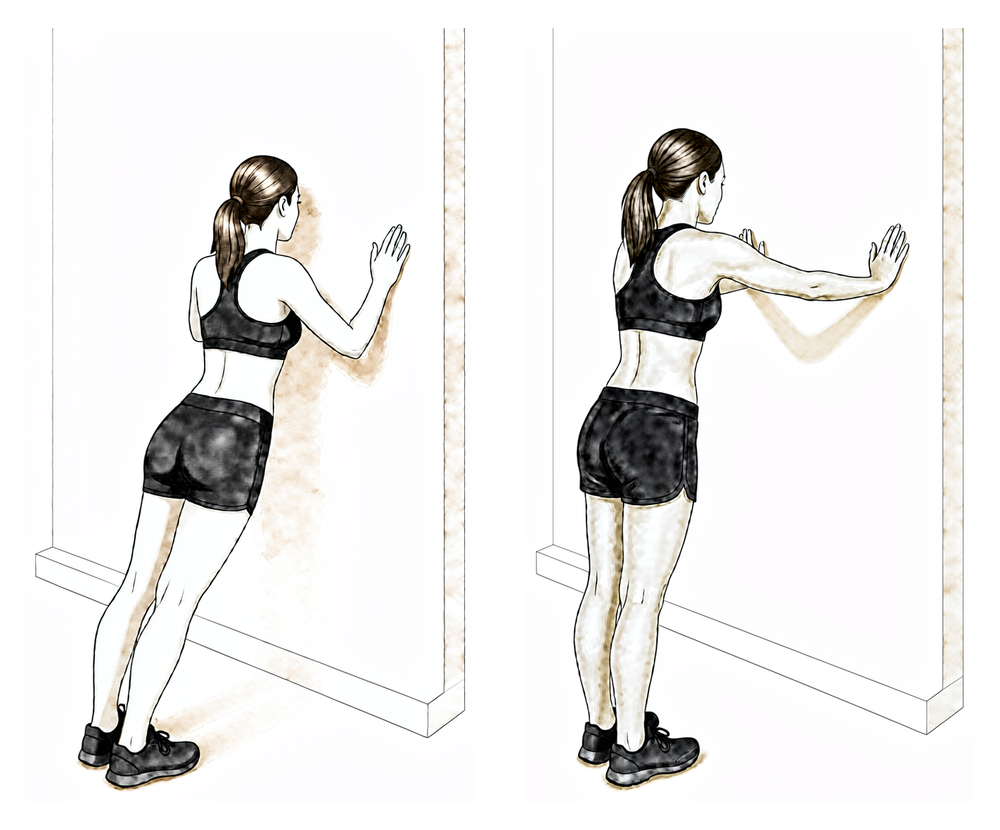
دیوار پر آگے دھکیلنا (wall protraction)
سینے کی اونچائی پر ہاتھ دیوار پر سیدھے رکھ کر اور بازو سیدھے رکھ کر کھڑے ہوں۔ کہنیاں موڑے بغیر دیوار کو پرے دھکیلیں تاکہ آپ کی کمر کا اوپری حصہ گول ہو جائے اور کندھے کی پچھلی ہڈیاں ایک دوسرے سے دور سرک جائیں، پھر قابو کے ساتھ واپس آئیں۔
آپ کے فزیوتھراپسٹ کی رہنمائی کے مطابق
Kieran Hirpara 4.0
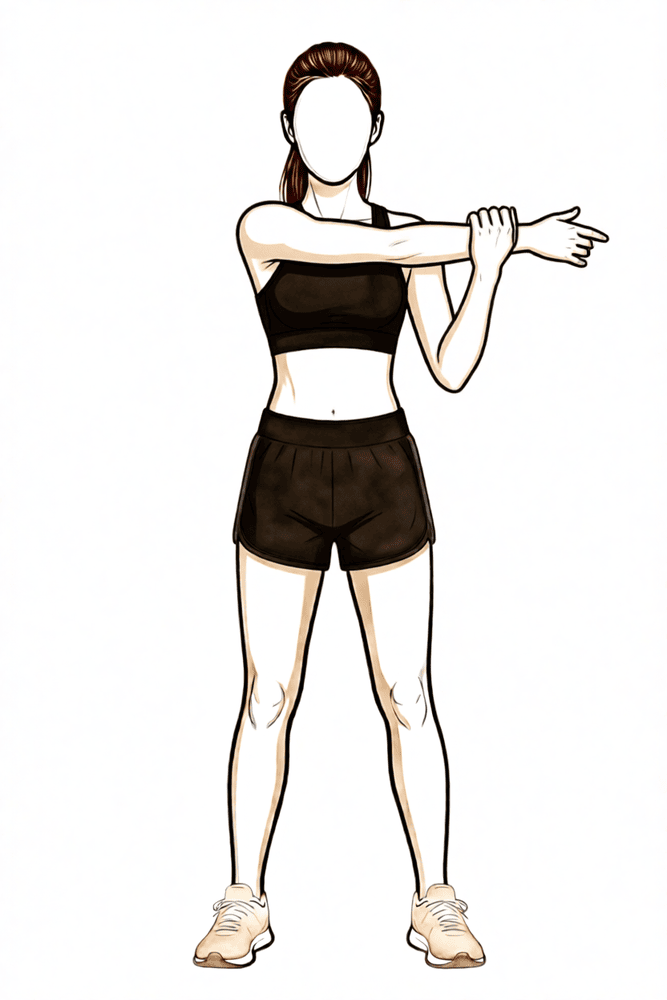
سینے کے آر پار اسٹریچ (cross-body stretch)
اگر کندھے کا پچھلا حصہ سخت رہے تو اپنے دوسرے ہاتھ سے آپریشن والے بازو کو سینے کے آر پار کھینچیں یہاں تک کہ کندھے کے پیچھے کھنچاؤ محسوس ہو۔ تھوڑی دیر روکیں، پھر چھوڑ دیں۔ صرف واضح تکلیف تک اسٹریچ کریں — اس سے ایسا درد نہیں ہونا چاہیے جو دیر تک رہے۔
آپ کے فزیوتھراپسٹ کی رہنمائی کے مطابق
Kieran Hirpara 4.0
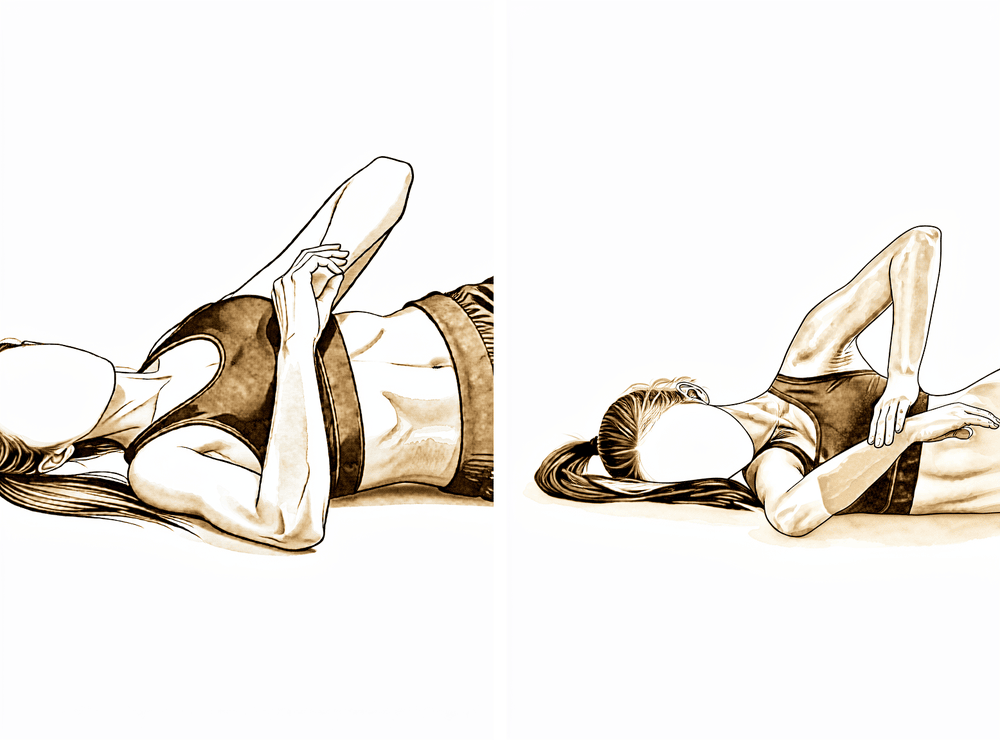
سلیپر اسٹریچ (sleeper stretch)
آپریشن والی طرف کے بل لیٹیں، بازو سامنے کی طرف ہو اور کہنی مڑی ہو۔ اپنے ٹھیک ہاتھ سے بازو کے نچلے حصے کو ہلکے سے بستر کی طرف نیچے دبائیں یہاں تک کہ کندھے کے اندر گہرائی میں کھنچاؤ محسوس ہو، پھر ڈھیلا چھوڑ دیں۔ اس سے کندھے کے پچھلے حصے میں باقی رہ جانے والی سختی کم ہوتی ہے۔
آپ کے فزیوتھراپسٹ کی رہنمائی کے مطابق
Kieran Hirpara 4.0
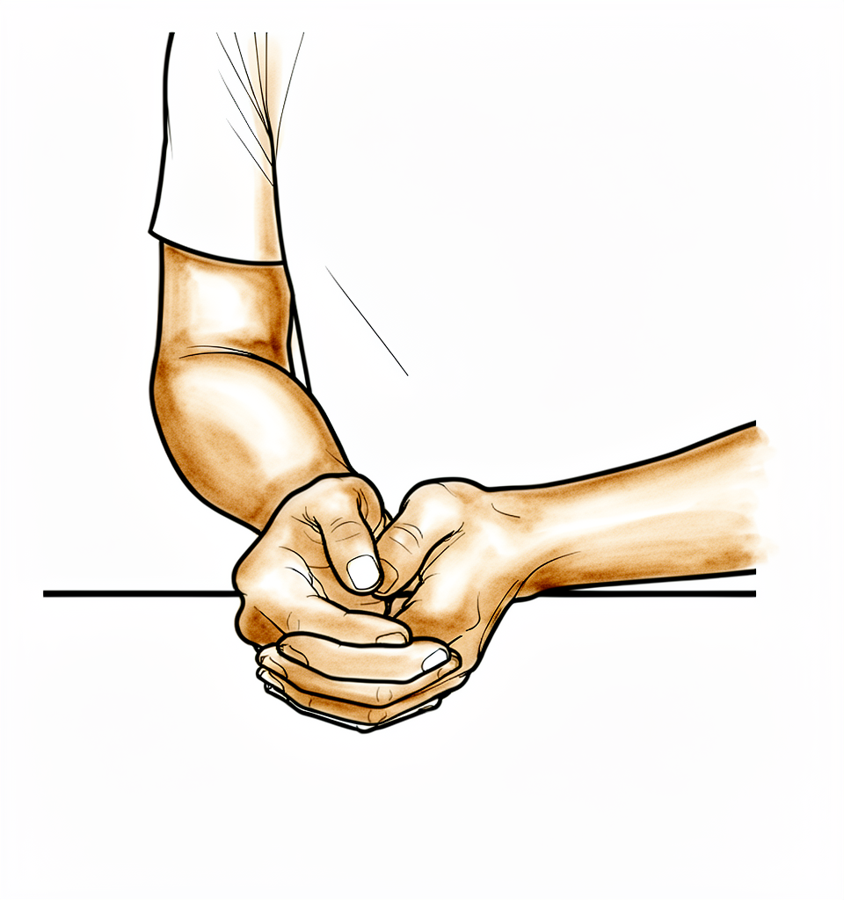
بینڈ کے ساتھ باہر کی طرف گھماؤ (غیر جانبدار پوزیشن کے قریب)
کہنی کو پہلو سے لگا کر اور زاویۂ قائمہ پر موڑ کر کھڑے ہوں، اور ایک لچکدار بینڈ پکڑیں جو کمر کی اونچائی پر آپ کے جسم کے دوسری طرف بندھا ہو۔ کہنی کو پہلو سے لگائے رکھتے ہوئے، بینڈ کی مزاحمت کے خلاف بازو کے نچلے حصے کو باہر کی طرف تقریباً درمیانی لکیر تک گھمائیں، پھر آہستہ سے واپس لائیں۔ جب آپ آئسومیٹرک ورزشوں سے آگے بڑھتے ہیں تو اس سے روٹیٹر کف کی مضبوطی شروع ہوتی ہے۔
کم مزاحمت، آپ کے فزیوتھراپسٹ کی رہنمائی کے مطابق
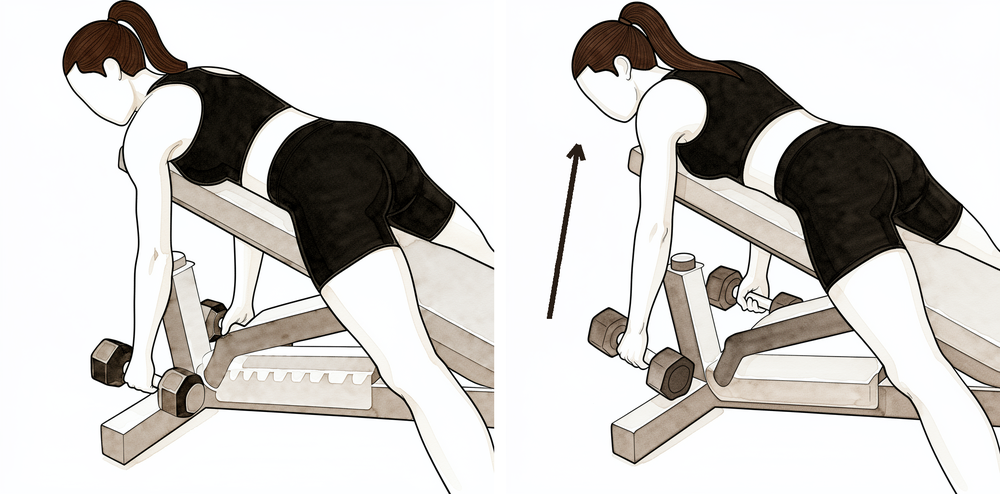
Kieran Hirpara 4.0
بینڈ کے ساتھ کندھے کی پچھلی ہڈیوں کو دبانا
اپنے سامنے بندھا ہوا بینڈ پکڑ کر، کہنیوں کو پیچھے کھینچیں اور کندھے کی پچھلی ہڈیوں کو ایک دوسرے کی طرف اور نیچے دبائیں، پھر آہستہ سے واپس آئیں۔ اس مرحلے میں مزاحمت بڑھنے کے ساتھ یہ ان پٹھوں کو مضبوط کرتی ہے جو کندھے کی پچھلی ہڈی کو مستحکم رکھتے ہیں۔
آپ کے فزیوتھراپسٹ کی رہنمائی کے مطابق
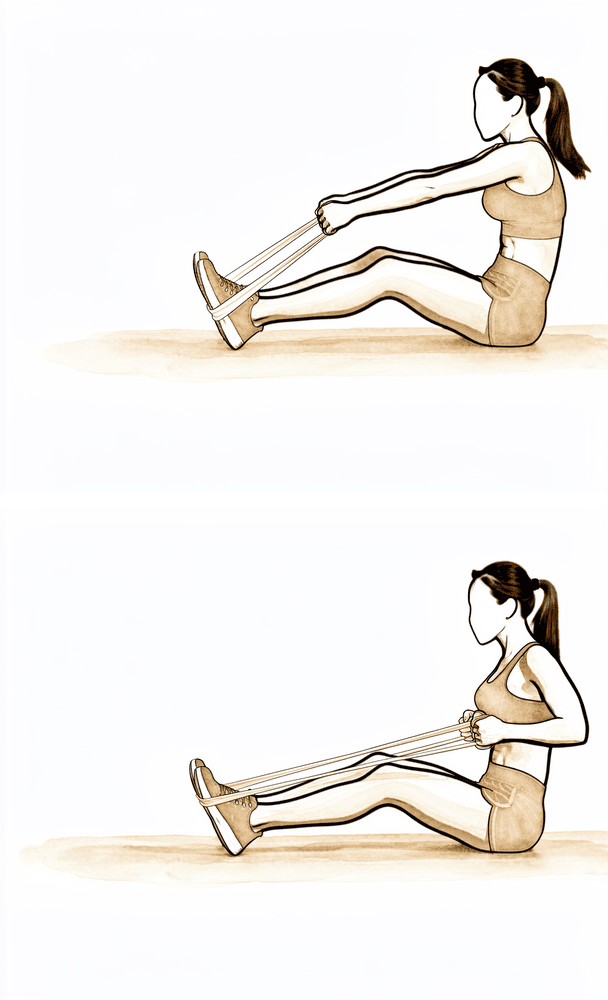
Kieran Hirpara 4.0
نیچے کی طرف کھینچنا (low row)
کمر کی اونچائی پر اپنے سامنے بندھا ہوا بینڈ پکڑیں۔ بازو کو تقریباً سیدھا رکھتے ہوئے اسے پیچھے اور نیچے اپنے کولہے کی طرف کھینچیں، اور کندھے کی پچھلی ہڈی کو نیچے اور پیچھے دبائیں، پھر آہستہ سے واپس لائیں۔ اس سے وہ پٹھے مضبوط ہوتے ہیں جو کندھے کی پچھلی ہڈی کو نیچے کھینچتے ہیں اور روٹیٹر کف کو سہارا دیتے ہیں۔
آپ کے فزیوتھراپسٹ کی رہنمائی کے مطابق
Kieran Hirpara 4.0
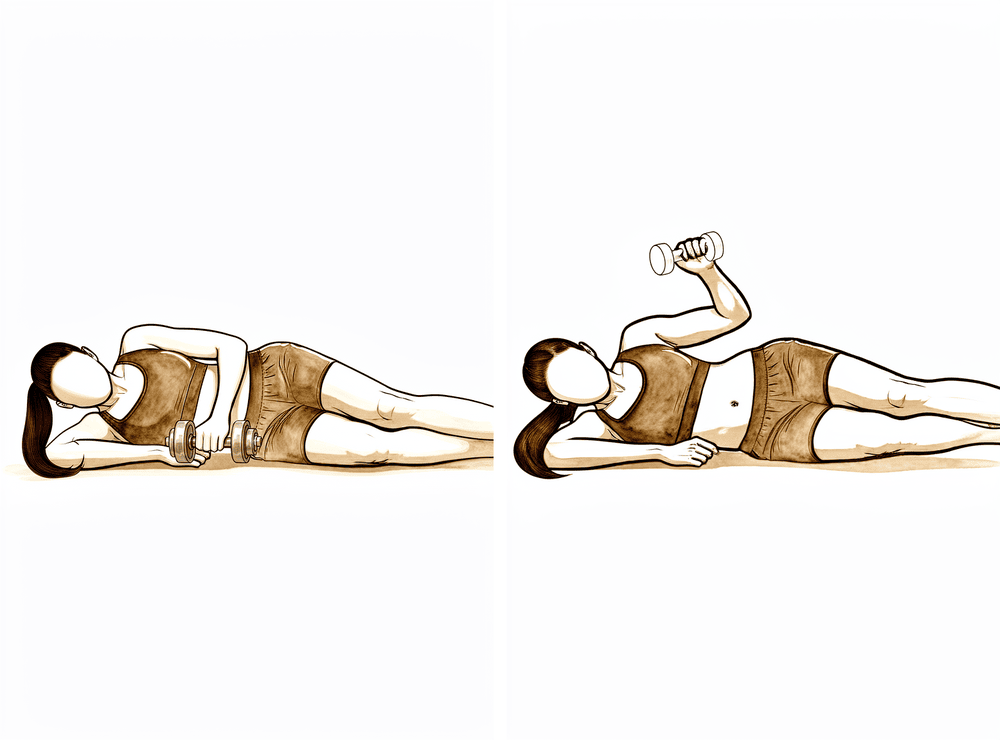
پہلو کے بل لیٹ کر وزن کے ساتھ باہر کی طرف گھماؤ
آپریشن کے بغیر والی طرف کے بل لیٹیں، اوپر والی کہنی زاویۂ قائمہ پر مڑی ہو اور جسم سے لگی ہو۔ ہلکا وزن پکڑ کر بازو کے نچلے حصے کو اوپر چھت کی طرف گھمائیں، پھر آہستہ سے نیچے لائیں۔ یہ روٹیٹر کف کی ہلکی آئسوٹونک (isotonic) ورزش ہے — کم وزن اور زیادہ تکرار — جو آرام کے مطابق تقریباً چوتھے ہفتے سے کی جاتی ہے۔
کم وزن، زیادہ تکرار، آپ کے فزیوتھراپسٹ کی رہنمائی کے مطابق
Kieran Hirpara 4.0
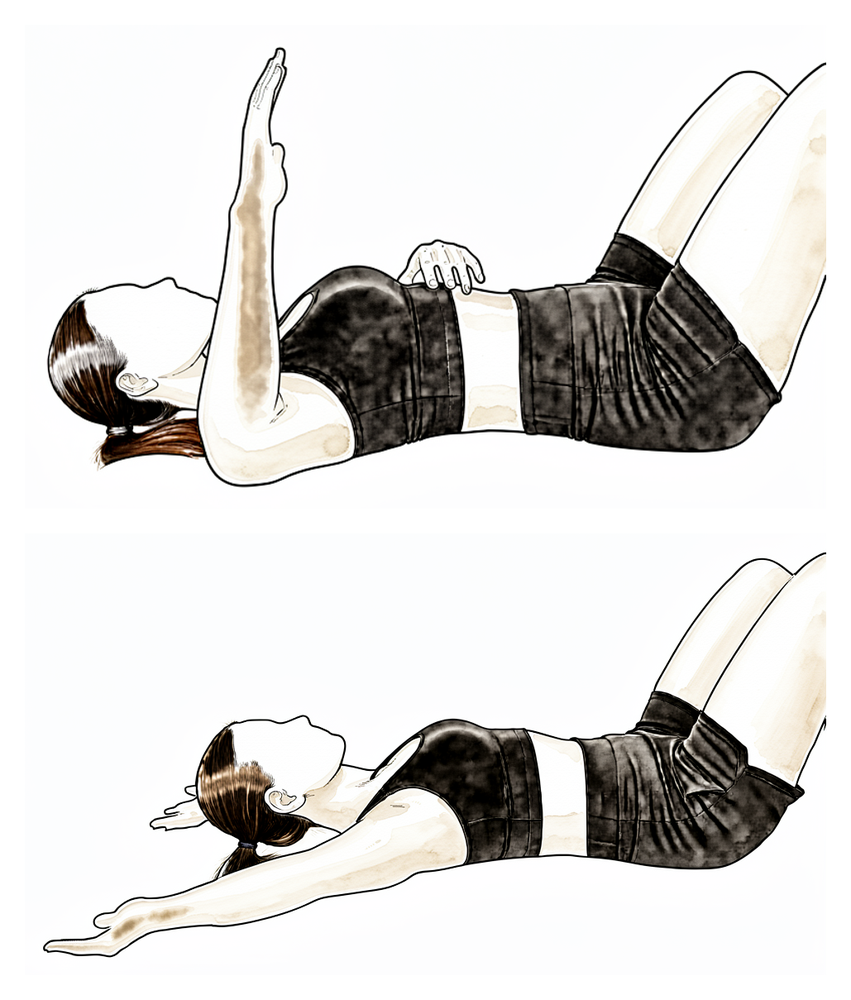
90/90 پر باہر کی طرف گھماؤ (لیٹ کر)
کمر کے بل لیٹیں، بازو کندھے کی اونچائی پر پہلو کی طرف نکلا ہو اور کہنی زاویۂ قائمہ پر مڑی ہو، اور بازو تکیے پر ٹکا ہو۔ بازو کے نچلے حصے کو آہستہ سے سر کی طرف پیچھے گھمائیں، جتنا آرام سے ہو سکے، پھر قابو کے ساتھ واپس لائیں۔ اس سے بازو اٹھی ہوئی پوزیشن میں گھماؤ بحال ہوتا ہے۔
10 بار، آپ کے فزیوتھراپسٹ کی رہنمائی کے مطابق
Kieran Hirpara 4.0
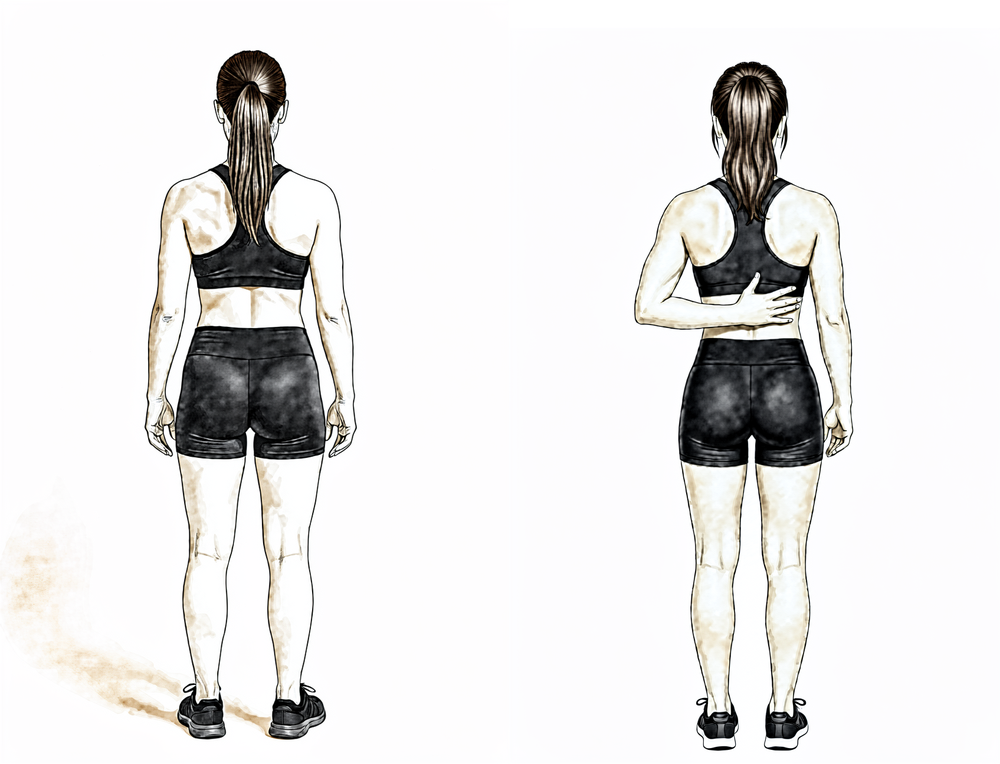
ہاتھ کمر کے پیچھے لے جانا
کھڑے ہو کر آپریشن والے ہاتھ کی پشت کو کمر کے نچلے حصے پر رکھیں اور اپنے ہی پٹھوں سے اسے آہستہ سے ریڑھ کی ہڈی کے ساتھ ساتھ اوپر سرکائیں، جتنا آرام سے ہو سکے، پھر نیچے لائیں۔ صرف آرام دہ حد کے اندر حرکت کریں اور کبھی زبردستی نہ کریں۔
آپ کے فزیوتھراپسٹ کی رہنمائی کے مطابق
جب کندھا سنبھلنے لگتا ہے تو توجہ مکمل حرکت دوبارہ حاصل کرنے اور مضبوطی کی ورزشیں شروع کرنے کی طرف ہو جاتی ہے۔ فعال حرکت کو ہر سمت میں مکمل حد کی طرف بڑھایا جاتا ہے، اور مزاحمت والا کام ہلکے سے شروع ہوتا ہے: آرام کے مطابق، روٹیٹر کف اور کندھے کی پچھلی ہڈی کے پٹھوں کے لیے آئسومیٹرک ورزشوں سے لچکدار بینڈ والی ورزشوں کی طرف۔ زیادہ تر لوگ، اگر پہلے واپس نہ جا چکے ہوں، تو پہلے ایک دو ہفتوں میں دفتری کام پر واپس آ جاتے ہیں۔ گاڑی چلانا اس وقت تک مؤخر رہتا ہے جب تک آپ کے سرجن چھ ہفتے والے معائنے پر اجازت نہ دے دیں۔ ہلکی تفریحی سرگرمیاں اس مرحلے کے دوران آپ کے فزیوتھراپسٹ کی رہنمائی کے مطابق دوبارہ شروع ہوتی ہیں۔
آپ کے فزیوتھراپسٹ کے لیے:
اہداف
- تمام سمتوں میں مکمل، یا تقریباً مکمل، فعال حرکت کی حد
- روٹیٹر کف اور کندھے کی پچھلی ہڈی کو مستحکم رکھنے والے پٹھوں کی بتدریج مضبوطی کا آغاز
- روزمرہ کے معمول کے کاموں اور کام پر واپسی (گاڑی چلانا صرف چھ ہفتے والے معائنے پر سرجن کی اجازت کے بعد)
علاج کا طریقہ
- تمام سمتوں میں فعال حرکت کی حد کو مکمل کی طرف بڑھائیں؛ درمیانی عام اہداف یہ ہیں: بازو کو آگے اٹھانا (forward flexion) 140 سے 160 ڈگری سے زیادہ اور باہر کی طرف گھماؤ (external rotation) 40 سے 60 ڈگری سے زیادہ
- آئسومیٹرک ورزشوں سے لچکدار بینڈ کے ساتھ روٹیٹر کف کی ورزش کی طرف بڑھیں (غیر جانبدار پوزیشن کے قریب اندر اور باہر کی طرف گھماؤ)، اور برداشت کے مطابق آگے بڑھائیں
- کندھے کی پچھلی ہڈی کی مضبوطی: کندھے اچکانا، پیچھے کھینچنا، آگے دھکیلنا اور نیچے دبانا، جو مزاحمت کے ساتھ ورزش کی طرف بڑھے
- تقریباً ہفتہ 4 سے، آرام کے مطابق کم وزن اور زیادہ تکرار کے ساتھ ہلکی آئسوٹونک (isotonic) مضبوطی
- جوڑ کی جھلی (capsule) میں باقی رہ جانے والی کسی بھی سختی کے لیے ہاتھ سے علاج (manual therapy) اور اسٹریچنگ، جس میں ضرورت ہو تو جھلی کے پچھلے حصے کی اسٹریچنگ بھی شامل ہے
احتیاطیں
- مضبوطی کی ورزشیں آرام دہ حد کے اندر رہیں اور ان سے ایسا درد نہیں ہونا چاہیے جو بعد میں دیر تک رہے
- بازو کو پہلو کی طرف اٹھا کر (90/90 پوزیشنوں میں) بوجھ کے ساتھ گھماؤ کو بتدریج بڑھائیں: اسے اس وقت شروع کریں جب غیر جانبدار پوزیشن میں گھماؤ والی ورزش آرام دہ ہو جائے
- جب تک طاقت واپس آ رہی ہو، بھاری وزن اٹھانے سے بھی اور زور لگا کر سر سے اوپر کام کرنے سے بھی پرہیز کریں
اگلے مرحلے میں جانے کی شرائط
- کم سے کم درد کے ساتھ مکمل یا تقریباً مکمل فعال حرکت کی حد
- بینڈ اور ہلکے وزن والی مضبوطی کی ورزشیں درد بھڑکے بغیر برداشت ہو رہی ہوں
مرحلہ III — مکمل سرگرمیوں میں واپسی (ہفتہ 6 اور اس کے بعد)
Kieran Hirpara 4.0
پُش اپ پلس (push-up plus)
پُش اپ کی پوزیشن سے — دیوار کے ساتھ، گھٹنوں کے بل، یا طاقت کے مطابق پورا — پُش اپ مکمل کریں، پھر تھوڑا سا اور اوپر دھکیلیں تاکہ آپ کی کمر کا اوپری حصہ گول ہو جائے اور کندھے کی پچھلی ہڈیاں ایک دوسرے سے دور پھیل جائیں، پھر واپس آئیں۔ مکمل سرگرمیوں کی طرف واپسی کے دوران یہ کلوزڈ چین (closed-chain) ورزش کنٹرول اور طاقت بڑھاتی ہے۔
آپ کے فزیوتھراپسٹ کی رہنمائی کے مطابق
آخری مرحلہ بھاری وزن اٹھانے، جسمانی مشقت والے کام، جم کی تربیت اور کھیل میں بتدریج واپسی کا ہے۔ عام ویٹ ٹریننگ عموماً تقریباً چھ ہفتے سے دوبارہ شروع ہو سکتی ہے، ہلکے سے شروع کر کے مسلسل بڑھاتے ہوئے، اور سر سے اوپر کے کھیل یا ایسے کھیل جن میں کھلاڑی آپس میں ٹکراتے ہیں (contact sport) عموماً چھ سے بارہ ہفتوں کے درمیان دوبارہ شروع ہوتے ہیں، کھیل کی قسم اور کندھے کی کارکردگی کے مطابق۔ بحالی مکمل ہونے کا پیمانہ ایک آرام دہ کندھا ہے جس میں پوری حرکت اور بھروسے کے قابل طاقت ہو؛ زیادہ تر لوگ تقریباً تین ماہ تک وہ سب کچھ دوبارہ کرنے لگتے ہیں جو وہ کرنا چاہتے ہیں، اور باقی رہ جانے والی کوئی بھی دکھن اس کے بعد بھی کم ہوتی رہتی ہے۔
آپ کے فزیوتھراپسٹ کے لیے:
اہداف
- مکمل، بغیر درد کے حرکت کی حد
- کام اور کھیل کے لیے طاقت، برداشت اور اعتماد کی بحالی
- بھاری جسمانی مشقت والے کام، جم کی تربیت اور کھیل میں بتدریج واپسی
علاج کا طریقہ
- تقریباً ہفتہ 6 سے عام مزاحمتی تربیت کی طرف بڑھیں، اور کنٹرول کے مطابق مشینوں سے آزاد وزن (free weights) کی طرف جائیں
- برداشت کے مطابق ایسینٹرک (eccentric) اور کلوزڈ چین (closed-chain) ورزشیں
- کھیل کے مطابق تیاری، جس میں ضرورت ہو تو گیند پھینکنے یا سر سے اوپر کی سرگرمیوں کا مرحلہ وار پروگرام شامل ہے
- زیادہ بوجھ سے ٹینڈن کی خرابی (overload tendinopathy) سے بچنے کے لیے روٹیٹر کف کی بھاری مضبوطی کو ہفتے میں تقریباً تین سیشن تک محدود رکھیں
احتیاطیں
- آگے بڑھنا علامات کے مطابق ہی رہتا ہے: ایسا درد جو بوجھ کے ساتھ بڑھے یا بعد میں دیر تک رہے اس کا مطلب ہے کہ بوجھ کم کیا جائے
- ٹکراؤ والے یا سر سے اوپر کے کھیلوں میں واپسی مکمل، بغیر درد کی حرکت کی حد اور مناسب طاقت حاصل ہونے تک مؤخر رہتی ہے
اگلے مرحلے میں جانے کی شرائط
- مطلوبہ سرگرمی کے لیے مکمل، بغیر درد کے حرکت کی حد اور دوسری طرف کے برابر طاقت
- کھیل یا کام سے متعلق کام بغیر درد بھڑکے انجام دیے جا سکیں
اپنے پروٹوکول کے بعد
اوپر دیے گئے مراحل کندھے کی سادہ اور تشخیصی آرتھروسکوپی کے لیے شائع شدہ بحالی کے پروٹوکولوں سے اخذ کیے گئے ہیں، جو ڈاکٹر Jorge Chahla (Rush University Medical Center)، ڈاکٹر Benedict Nwachukwu (Hospital for Special Surgery)، ڈاکٹر Blake Obrock (orthopaedic sports medicine، Amarillo) اور Royal National Orthopaedic Hospital کی کندھے کی تشخیصی آرتھروسکوپی سے متعلق مریضوں کی رہنما کتاب نے تیار کیے ہیں۔ ہفتوں کی یہ حدیں عام اندازے ہیں، طے شدہ نہیں، اور آپ کی بحالی کی رہنمائی آپ کا فزیوتھراپسٹ، پریکٹس کے ساتھ مل کر، آپ کے کندھے کی صحت یابی کے مطابق انفرادی طور پر کرتا ہے۔ یہ صفحہ پریکٹس کے عمومی صحت یابی کے مشوروں کے ساتھ مل کر کام کرتا ہے: آپریشن کے بعد درد پر قابو اور زخم کی دیکھ بھال دیکھیں۔ خود آپریشن کے بارے میں جاننے کے لیے کندھے کی آرتھروسکوپی دیکھیں۔ اس پروٹوکول کے پیچھے موجود شواہد (جلد حرکت کی وجہ، پلیسیبو کے مقابلے والے سرجیکل ٹرائلوں، اور وہ شائع شدہ بحالی کے پروٹوکول جن پر یہ مبنی ہے) کا خلاصہ شواہد والے حصے میں دیا گیا ہے، جو اس صفحے کے اوپر سے پی ڈی ایف کی صورت میں دستیاب ہے۔
Evidence & references
This is the clinical evidence summary written for health professionals. It is technical, and it lists the research this page was built from. You do not need to read it to understand your treatment or to make a decision about it.
Shoulder Arthroscopy (Diagnostic / Debridement / Washout) — Post-operative Rehabilitation
Topic scope: Post-operative rehabilitation after a generic keyhole shoulder arthroscopy in which nothing was repaired — diagnostic assessment, washout (lavage), debridement of degenerate tissue, removal of loose bodies, and isolated subacromial decompression or distal clavicle excision. Specific repair or reconstruction procedures have their own protocols that take priority — rotator-cuff repair, labral/instability stabilisation (anterior-Bankart, posterior-stabilisation, Latarjet), capsular release, biceps tenodesis and AC-joint stabilisation each convert to a slower, construct-protecting pathway. This page is the default keyhole pathway used only when the operation note confirms no repair was performed.
Defining principle of the rehab here: when nothing is repaired there is no construct to protect, so the rehab is an early-motion pathway — a sling for comfort only (days, not weeks), unrestricted use below shoulder height from day one, motion progressed on comfort rather than the calendar, and strengthening as soon as range and pain allow. The single branch point is whether anything was actually repaired or stabilised; if it was, recovery converts to that procedure's protected protocol. Unlike a cuff repair or a labral repair, there is no healing tissue that early movement can disrupt, so the usual risks of early motion (re-tear, construct failure) do not apply — the main thing early motion prevents here is post-operative stiffness.
The operation and why the rehab is fast
A keyhole (arthroscopic) shoulder operation in this scope involves looking inside the joint and subacromial space through small portals and doing one or more of: confirming a diagnosis, washing out the joint, trimming (debriding) frayed labrum, degenerate cuff or inflamed bursa, removing loose bodies, or shaving bone in a subacromial decompression or distal clavicle excision. None of these creates a repair that must heal under protection. That is the central fact that separates this pathway from cuff repair, stabilisation and the other audited protocols: the tissue is either removed or simply inspected, so the post-operative soreness — not a healing construct — is what paces recovery.
Because of this, recovery is among the quickest of any shoulder operation. Most people are back to desk-based work within days to a week, out of the sling within the first week, driving within one to three weeks once the sling is off and they can control the car confidently, and back to heavier manual work and sport somewhere between six and twelve weeks depending on the demands placed on the shoulder.
Evidence by theme
1. Early motion is the goal — there is no construct to protect
The case for early movement here is largely a mechanistic one rather than one settled by a dedicated trial: with no repair to disrupt, the only thing prolonged immobilisation achieves is avoidable stiffness, discomfort and delayed return to activity. The closest high-quality evidence comes by analogy from the cuff-repair literature, where — even with a real construct to protect — randomised trials and meta-analyses show early controlled motion does not increase re-tear and tends to reduce stiffness (number-needed-to-harm for re-tear in the order of several hundred). If early motion is safe when a repair is present, it is plainly safe when there is nothing to protect. Mechanistic + analogous moderate evidence; no debridement-specific RCT.
2. The procedures themselves: a candid note on efficacy
Two landmark placebo-controlled surgical trials bear directly on the commonest reason a no-repair arthroscopy is done — subacromial pain:
- FIMPACT (BMJ 2018) — a double-blind trial of 210 patients randomised to arthroscopic subacromial decompression, diagnostic arthroscopy (placebo surgery), or exercise therapy. At 24 months decompression gave no benefit over diagnostic arthroscopy; both surgical arms improved, but no more than each other. Strong (placebo-controlled RCT).
- CSAW (Lancet 2018) — a three-arm placebo-controlled UK trial reaching the same conclusion: decompression was no better than investigational (diagnostic) arthroscopy, and the small edge of either over no-treatment was not clinically important. Strong (placebo-controlled RCT).
The honest reading is that for subacromial pain the surgical element adds little over diagnostic arthroscopy or structured exercise — which reinforces why, when this operation is done, the rehabilitation (early motion, restoring strength and confidence) carries much of the recovery. A longer-term single RCT (Magnussen-class, 10-year follow-up, in the corpus) did favour decompression over therapy alone, so practice remains individualised — but the placebo-controlled data are the higher tier.
3. Debridement of degenerate tissue — limited, old evidence
Arthroscopic debridement of irreparable degenerative cuff lesions (Burkhart, J Bone Joint Surg 1995, in the corpus) can relieve pain and restore functional "force-couple" mechanics in selected patients, but the evidence base is small, old and uncontrolled. Debridement and washout are best understood as symptom-directed measures, not structural repairs — which again places the weight of recovery on rehabilitation rather than on a healing construct. Weak (historical case series).
4. The phased protocol is consensus, drawn from published surgeon protocols
The phase structure below is expert/consensus, compiled from published patient-guidance protocols for general/diagnostic shoulder arthroscopy and debridement (Chahla – Rush; Nwachukwu – HSS; Obrock; Royal National Orthopaedic Hospital). There is no rehabilitation RCT defining the optimal regimen for a no-repair arthroscopy; the week ranges are typical, not trial-derived. Weak/consensus.
Phased post-op timeline (no repair performed)
| Phase | Window | Sling | ROM / use | Strengthening | Notes |
|---|---|---|---|---|---|
| I — Early movement & settling | Week 0–2 | Comfort only, days (rarely > 1–2 wk), off ASAP; no sleeping in it | Free hand/wrist/elbow + light ADLs from day 1; pendulums and assisted ROM progressing to active ROM as comfort allows | Scapular setting; gentle cuff/deltoid isometrics as comfort allows | Settle the post-op flare. No driving while in the sling. Dressings off ~10–12 days |
| II — Restore movement, start strength | Week 2–6 | Off | Progress active ROM in all planes toward full (interim targets ~140–160° flexion, 40–60° ER) | Isometric → elastic-band cuff + scapular work; light isotonic from ~wk 4 | Desk work + driving once sling off, pain settled, confident to control the car (typically wk 1–3) |
| III — Return to full activity | Week 6 onward | Off | Maintain full, pain-free ROM | Conventional resistance training from ~wk 6; eccentric/closed-chain; sport-specific conditioning. Cap heavy cuff loading at ~3×/week | Heavier manual work & sport return ~6–12 wk by demand; most back to everything by ~3 months |
Branch point — if anything was repaired or stabilised: recovery converts to that procedure's protected protocol (e.g. rotator-cuff repair — sling ~6 weeks, restricted ROM, deferred strengthening, ~5 months total; or the relevant stabilisation/capsular-release pathway). The operation note and the rooms confirm which pathway applies.
Key controversies / evidence quality
- Does the surgery help at all (for subacromial pain)? Two placebo-controlled RCTs (FIMPACT, CSAW) found decompression no better than diagnostic arthroscopy, and arthroscopy little better than exercise. This is the strongest evidence in the topic — and it argues that, where a no-repair arthroscopy is performed, good rehabilitation is doing much of the work. Strong.
- Debridement evidence is thin and dated. The supportive data (e.g. Burkhart 1995) are small, uncontrolled case series; debridement is symptom-directed, not curative. Weak.
- The rehab protocol itself is consensus, not trial-derived. No RCT defines the optimal regimen after a no-repair arthroscopy; phase timings are typical surgeon-protocol values, and recovery is individualised by the treating physiotherapist. Weak/consensus.
- Safety of early motion is inferred, not directly tested here. It rests on a sound mechanism (nothing to protect) reinforced by analogy to the cuff-repair early-motion trials, rather than a debridement-specific RCT. Mechanistic + analogous moderate.
The evidence base for this generic pathway is genuinely limited. The high-quality data (placebo-controlled trials) speak to whether the operation helps, not to how best to rehabilitate it; the rehabilitation guidance is consensus-level. This is stated plainly because it is the honest position.
Evidence-strength flags (summary)
- STRONG (placebo-controlled RCT): subacromial decompression gives no benefit over diagnostic arthroscopy — FIMPACT (BMJ 2018), CSAW (Lancet 2018).
- MODERATE (analogous RCT/MA): safety of early controlled motion (extrapolated from cuff-repair early-motion trials — early motion does not raise re-tear and reduces stiffness even when a construct is present).
- WEAK (historical case series): arthroscopic debridement of irreparable degenerative cuff lesions (Burkhart 1995).
- WEAK / CONSENSUS: the post-operative rehabilitation protocol itself (published surgeon patient-guidance documents; no defining rehab RCT).
- SAFETY NOTE (rare complication): glenohumeral chondrolysis has been linked to post-arthroscopic intra-articular continuous bupivacaine infusion and to thermal capsulorrhaphy — a reason such adjuncts are avoided, not a reflection on standard debridement.
CITATIONS
RAG corpus (180,000+ Orthopaedic articles)
- Burkhart SS. Débridement of degenerative, irreparable lesions of the rotator cuff. J Bone Joint Surg Am. 1995. DOI: 10.2106/00004623-199506000-00006
- Magnussen R, et al. Subacromial decompression yields a better clinical outcome than therapy alone: a prospective randomized study with minimum 10-year follow-up. Am J Sports Med. 2018. DOI: 10.1177/0363546518755759
- Bailie DS, Ellenbecker TS. Severe chondrolysis after shoulder arthroscopy associated with continuous bupivacaine infusion. Arthroscopy. 2009. DOI: 10.1016/j.arthro.2009.08.024
- (The corpus is thin on no-repair / diagnostic-arthroscopy rehabilitation specifically; the higher-tier evidence below comes from the placebo-controlled surgical trials and published surgeon protocols.)
Literature (URLs)
- FIMPACT — Paavola M, et al. Subacromial decompression versus diagnostic arthroscopy for shoulder impingement: randomised, placebo surgery controlled clinical trial. BMJ. 2018. https://pmc.ncbi.nlm.nih.gov/articles/PMC6052435/
- CSAW — Beard DJ, et al. Arthroscopic subacromial decompression for subacromial shoulder pain: a multicentre, pragmatic, placebo-controlled, three-group, randomised surgical trial. Lancet. 2018. https://www.thelancet.com/journals/lancet/article/PIIS0140-6736(17)32457-1/fulltext
Published rehab protocols (patient-guidance — basis for the phase structure)
- Chahla J. Shoulder Arthroscopy Debridement — Rehab Protocol. Rush University Medical Center. https://www.jorgechahlamd.com/wp-content/uploads/2021/08/Shoulder-Arthroscopy-Debridement.pdf
- Nwachukwu BU. Post-Operative Shoulder Arthroscopy Debridement Rehab Protocol. Hospital for Special Surgery. https://manhattansportsdoc.com/post-operative-shoulder-arthroscopy-debridement-rehab-protocol/
- Obrock B. Post-operative Rehabilitation Protocol — General Shoulder Arthroscopy (Debridement, Subacromial Decompression, and/or Distal Clavicle Resection). https://www.drblakeobrock.com/pdf/obrock-shoulder-arthroscopy-general.pdf
- Royal National Orthopaedic Hospital. A Patient's Guide to Diagnostic Shoulder Arthroscopy. https://www.rnoh.nhs.uk/patients-and-visitors/patient-information-guides/diagnostic-shoulder-arthroscopy-patients-guide