Patients › Rehabilitation
کلائی کا فیوژن (Wrist Fusion)
کلائی کے مکمل فیوژن (آرتھروڈیسس (arthrodesis)) کے بعد صحت یابی کا منصوبہ، جس میں گھسی ہوئی کلائی کو پشت کی پلیٹ کے ذریعے جوڑ کر ٹھوس کر دیا جاتا ہے تاکہ وہ جان بوجھ کر پھر حرکت نہ کرے، جبکہ انگلیوں، انگوٹھے اور بازو کے نچلے حصے کی گردش کو شروع سے حرکت میں رکھا جاتا ہے اور ہڈی جڑ جانے کے بعد گرفت کی طاقت بڑھائی جاتی ہے۔
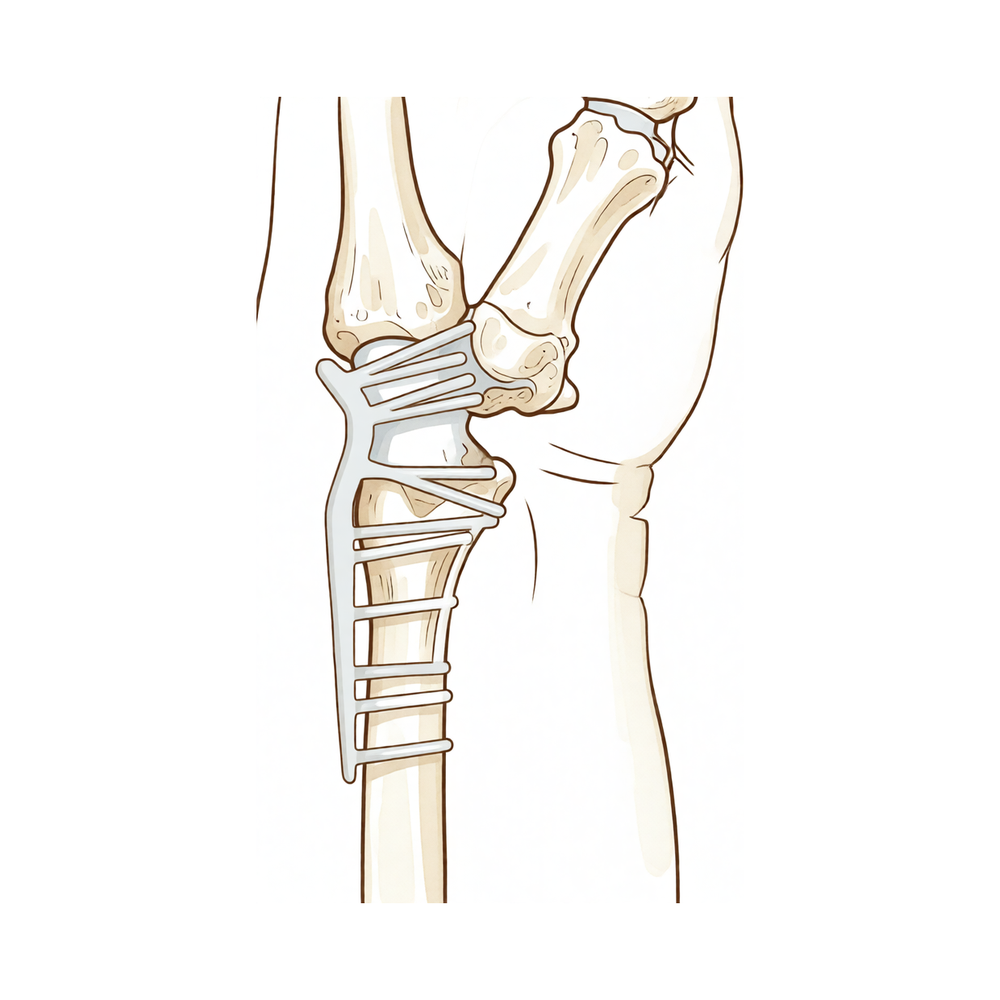
یہ پروٹوکول Mater Private Hospital Rockhampton میں ڈاکٹر کیرن ہِرپرا کے ہاتھوں کلائی کے مکمل فیوژن (total wrist fusion، جسے کلائی کی آرتھروڈیسس (wrist arthrodesis) بھی کہتے ہیں، یعنی وہ آپریشن جو گھسی ہوئی کلائی کو ہمیشہ کے لیے جوڑ کر ٹھوس کر دیتا ہے تاکہ وہ پھر حرکت نہ کرے) کے بعد آپ کی صحت یابی میں رہنمائی کرتا ہے۔ اس کا آغاز آپ کے گھریلو ورزشی پروگرام سے ہوتا ہے، جس کے بعد وہ منظم کلینیکل پروٹوکول آتا ہے جو آپ کے ہینڈ تھراپسٹ (ہاتھ کی بحالی کے ماہر) کے لیے لکھا گیا ہے: یہ صفحہ یا اس کی پی ڈی ایف تھراپی کی اپنی پہلی ملاقات پر ساتھ لے کر جائیں تاکہ آپ کی بحالی کا علاج مربوط رہے۔ آپ کا تھراپسٹ آپ کی صحت یابی کی پیش رفت کے مطابق منصوبے میں تبدیلی کر سکتا ہے۔
اگر آپریشن کے بعد آپ کو اپنے زخم کے بارے میں کوئی تشویش ہو تو کلینک سے رابطہ کریں۔ اکثر یہ مددگار ہوتا ہے کہ زخم کی تصویر کھینچ کر جائزے کے لیے ای میل کر دیں۔
کیا توقع رکھیں
کلائی کا مکمل فیوژن اس کلائی کے لیے کیا جاتا ہے جس کے تمام جوڑ گھس چکے ہوں (آخری درجے کا، یا "پین کارپل" (pancarpal)، آرتھرائٹس (جوڑ کی خرابی اور سوزش)) اور جو حرکت کرنے پر درد کرتی ہو۔ گھسے ہوئے جوڑ کو حرکت میں رکھنے کی کوشش کرنے کے بجائے یہ آپریشن حرکت کو جان بوجھ کر ختم کر دیتا ہے: بازو کے نچلے حصے کی ہڈی (ریڈیس (radius)، بازو کے نچلے حصے کی انگوٹھے والی طرف کی ہڈی) کو ہاتھ کی ہڈیوں (میٹاکارپل (metacarpals)) سے ایک پشت کی پلیٹ (dorsal plate) کے ذریعے جوڑ دیا جاتا ہے جو کلائی کی پشت پر لگی ہوتی ہے، اور کلائی کو ہلکا سا پیچھے کی طرف جھکی ہوئی حالت (slight extension) میں ٹھوس کر دیا جاتا ہے جو گرفت کے لیے سب سے بہتر ہے۔ اگلے ہفتوں میں ہڈیاں آپس میں جڑ کر (unite) ایک ٹھوس ٹکڑا بن جاتی ہیں۔
اس صحت یابی کا بنیادی خیال زیادہ تر آپریشنوں کے الٹ ہے: کلائی کا حرکت کرنا بند ہو جانا ہی مقصد ہے: یہی علاج ہے، کوئی پیچیدگی نہیں۔ اس لیے کلائی کی حرکت دوبارہ حاصل کرنے کا کوئی ہدف نہیں، اور کلائی کو موڑنے یا سیدھا کرنے کی کوئی ورزش نہیں۔ اس کے بجائے پوری بحالی ان دو چیزوں کی حفاظت کرتی ہے جنہیں فیوژن نہیں چھوتا اور جو ہاتھ کے کام کے لیے بہت زیادہ اہم ہیں:
- آپ کی انگلیوں اور انگوٹھے کو پوری طرح حرکت کے قابل رہنا چاہیے۔ اکڑی ہوئی انگلیاں ہی سب سے بڑی وجہ ہیں جو کلائی کے فیوژن کے نتیجے کو خراب کرتی ہیں، اس لیے انگلیوں اور انگوٹھے کی حرکت پہلے دن سے شروع ہوتی ہے۔
- بازو کے نچلے حصے کی گردش (ہتھیلی کو اوپر اور نیچے گھمانا) برقرار رہتی ہے۔ فیوژن میں یہ حرکت شامل نہیں، اور یہ بہت سا وہ کام سنبھال لیتی ہے جو پہلے کلائی کرتی تھی (چابی، نل اور دروازے کا ہینڈل گھمانا)، اس لیے اسے شروع سے لچکدار رکھا جاتا ہے۔
چونکہ پشت کی پلیٹ ہڈیوں کو مضبوطی سے تھامے رکھتی ہے (مستحکم فکسیشن (stable fixation))، اس لیے ہڈی جڑنے کے دوران تقریباً چھ ہفتوں تک اسپلنٹ پہنا جاتا ہے، اور انگلیوں اور بازو کے نچلے حصے کی ابتدائی حرکت کو روکنے کے بجائے اس کی ترغیب دی جاتی ہے۔ جب سرجن تصدیق کر دیں کہ ہڈی جڑ گئی ہے (union) تو گرفت مضبوط کرنے کی ورزشیں شروع ہوتی ہیں۔ بہت سے لوگ کلائی کے فیوژن کے بعد بہت اچھی طرح کام کرتے ہیں، اور چونکہ اب گرفت میں درد نہیں ہوتا، اس لیے گرفت کی طاقت اکثر آپریشن سے پہلے کی درد والی کلائی کے مقابلے میں بہتر ہو جاتی ہے۔
احتیاطیں اور پابندیاں
- خود کلائی کو حرکت دینے کی کوشش ہرگز نہ کریں: اسے جان بوجھ کر جوڑ کر ٹھوس کیا گیا ہے۔ کلائی موڑنے کی کوئی ورزش نہیں، نہ اب اور نہ کبھی۔
- پہلے دن سے اپنی انگلیوں، انگوٹھے اور بازو کے نچلے حصے کی گردش کو پوری طرح حرکت میں ضرور رکھیں: یہ سب سے اہم کام ہے جو آپ اپنے ہاتھ کے لیے کر سکتے ہیں۔
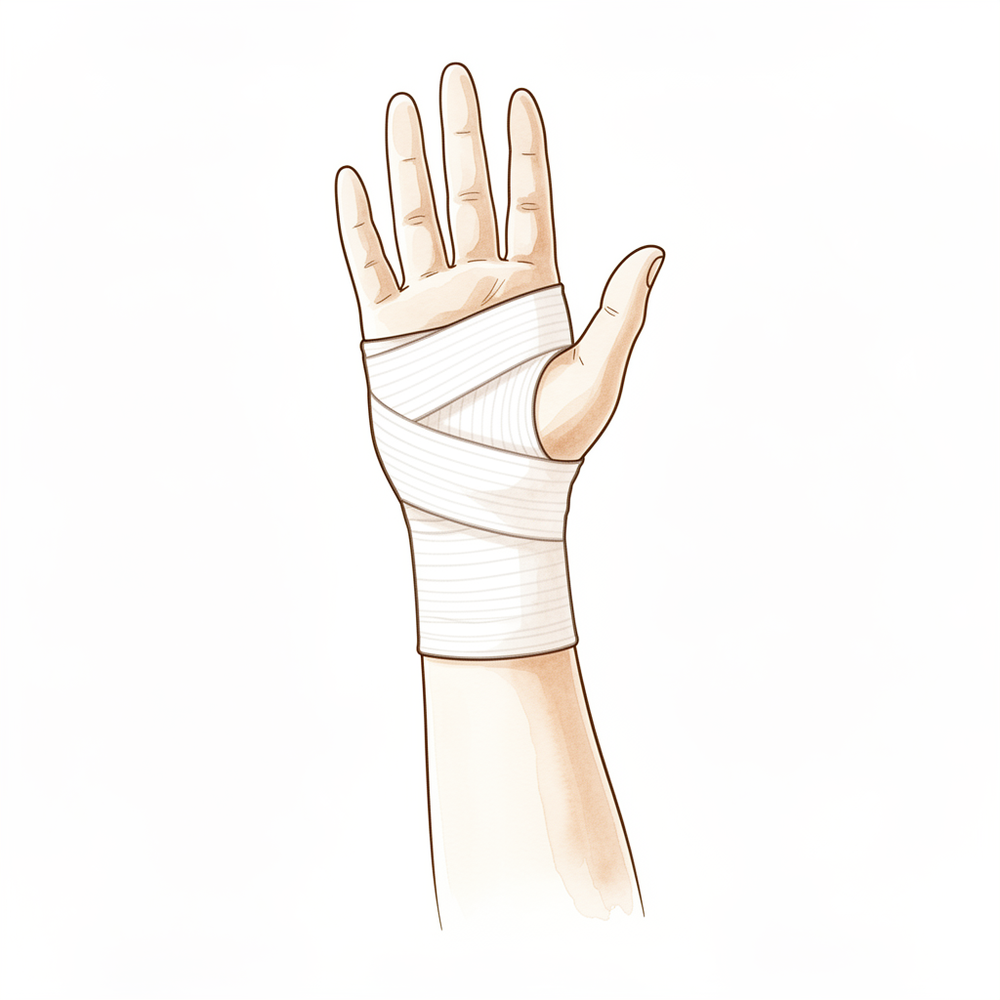
- ہڈی جڑنے تک آرام اور حفاظت کے لیے اپنا اسپلنٹ یا پٹی ہدایت کے مطابق پہنیں؛ اسے صاف اور خشک رکھیں۔
- جب تک فیوژن جڑ نہ جائے اور آپ کو اجازت نہ مل جائے (عموماً تقریباً چھ سے آٹھ ہفتے)، ہاتھ پر نہ بوجھ ڈالیں، نہ سختی سے گرفت کریں، اور ایک ہلکے کپ سے زیادہ وزن اٹھانے سے پرہیز کریں: ہڈی جڑنے سے پہلے بھاری بوجھ ڈالنے سے پلیٹ یا فیوژن کے ناکام ہونے کا خطرہ ہوتا ہے۔
- جب تک آپ اسپلنٹ میں ہوں یا گاڑی کو محفوظ طریقے سے قابو میں نہ رکھ سکیں، گاڑی نہ چلائیں؛ جب آپ اسپلنٹ سے باہر آ جائیں اور اسٹیئرنگ سنبھال سکیں، جس کی تصدیق آپ کے معائنے پر ہو، تب گاڑی چلانا دوبارہ شروع ہوتا ہے۔
زخم، سوجن اور زخم کے نشان کی دیکھ بھال کے لیے پریکٹس کی زخم کی دیکھ بھال سے متعلق رہنمائی دیکھیں۔
آپ کی ورزشیں
Kieran Hirpara 4.0
انگلیوں اور انگوٹھے کی حرکت
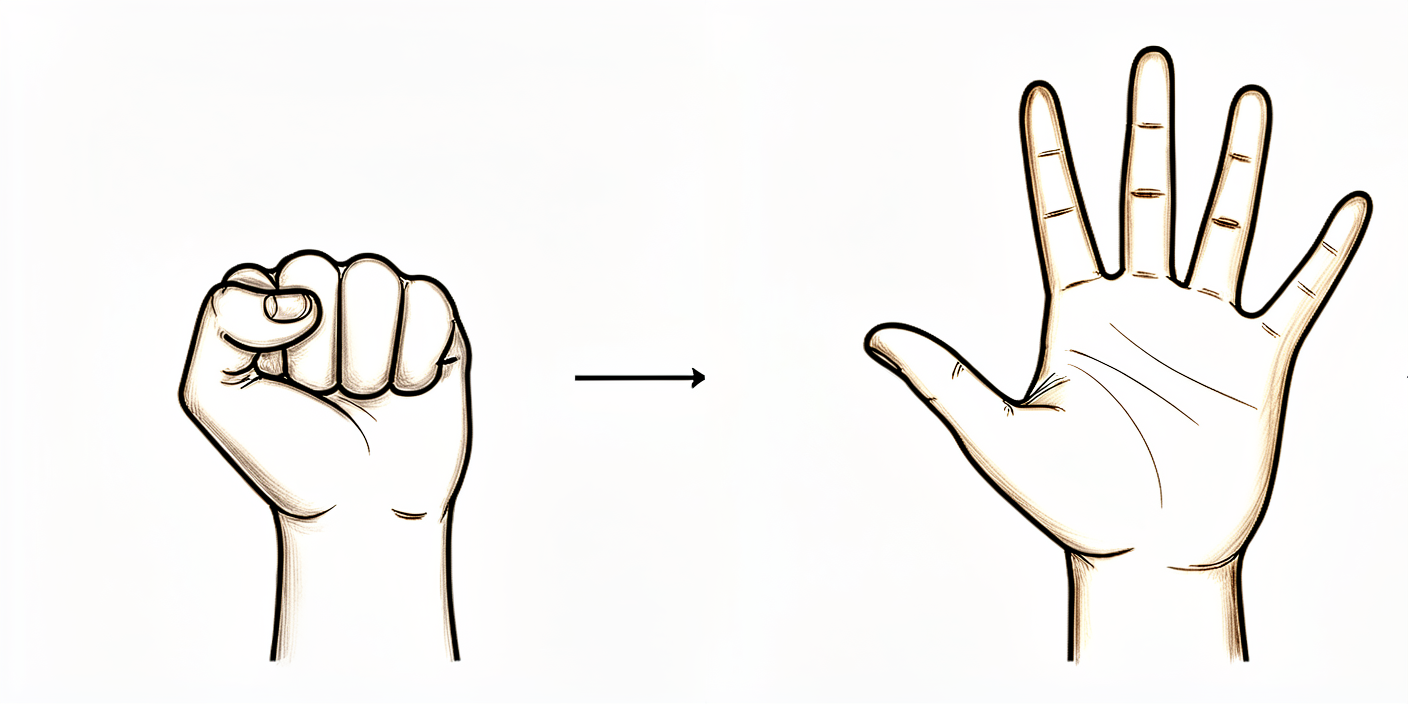
بالکل پہلے دنوں سے اپنی انگلیوں اور انگوٹھے کو پوری طرح حرکت دیتے رہیں۔ پوری مٹھی بنائیں، پھر ہاتھ کو پوری طرح کھولیں اور انگلیوں کو کھینچ کر سیدھا کریں؛ پھر باری باری اپنے انگوٹھے کو ہر انگلی کے سرے سے ملائیں۔ آپ کی کلائی حرکت نہیں کرتی — یہ معمول کی بات ہے اور یہی مقصد ہے — لیکن انگلیوں اور انگوٹھے کو ڈھیلا اور پوری طرح حرکت کے قابل رہنا چاہیے، کیونکہ کلائی کے فیوژن کے بعد ہاتھ کو سب سے زیادہ محدود کرنے والی چیز یہیں کا اکڑاؤ ہے۔
ہر ایک 10 بار، دن میں کئی بار، پہلے دن سے
Kieran Hirpara 4.0
بازو کے نچلے حصے کی گردش (ہتھیلی اوپر / ہتھیلی نیچے)
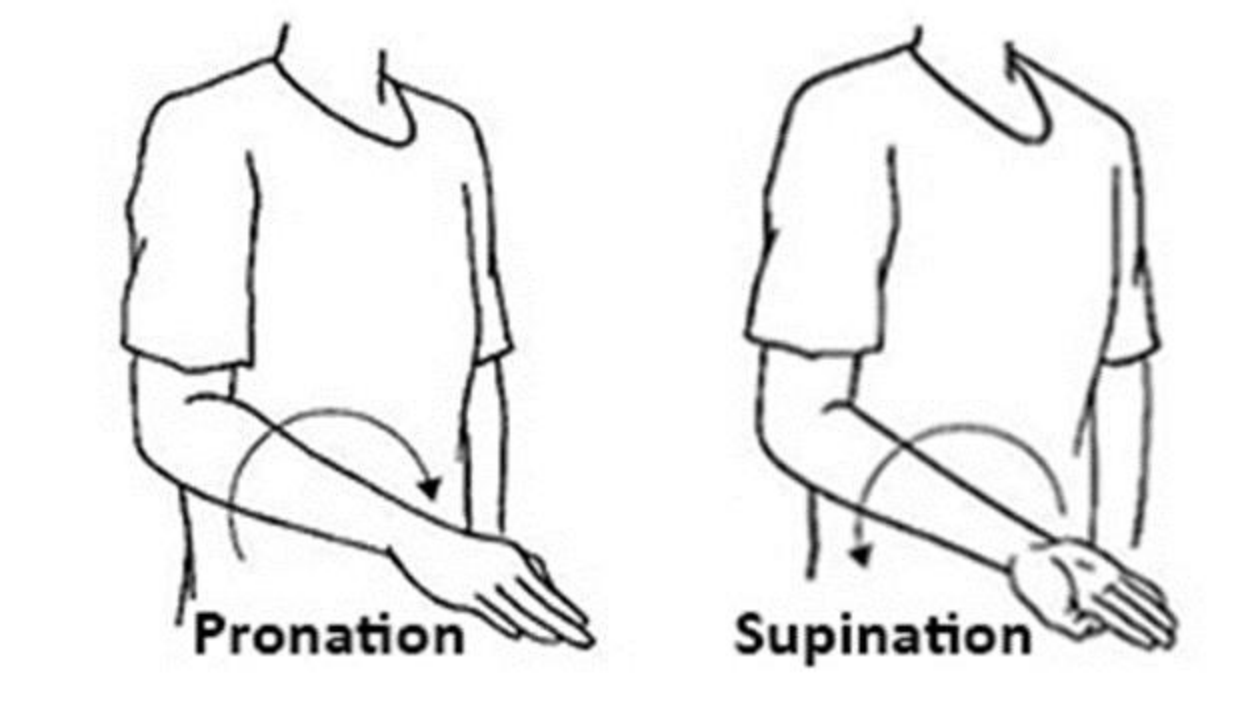
کہنی کو پہلو سے لگا کر اور زاویۂ قائمہ (سیدھے زاویے) پر موڑ کر، ہتھیلی کو آہستہ سے اوپر چھت کی طرف گھمائیں، پھر نیچے فرش کی طرف۔ فیوژن میں یہ گھمانے والی حرکتیں شامل نہیں، اس لیے یہ آزاد رہتی ہیں — انہیں لچکدار رکھنا اہم ہے، کیونکہ بازو کے نچلے حصے کو گھمانا بہت سا وہ کام کرتا ہے جو پہلے کلائی کرتی تھی (چابی، دروازے کا ہینڈل یا نل گھمانا)۔
ہر سمت میں 10 بار، دن میں 2 سے 3 بار
Kieran Hirpara 4.0
سوجن پر قابو
پہلے دو ایک ہفتوں میں، جب بھی آپ بیٹھیں یا لیٹیں، اپنے ہاتھ کو تکیوں پر دل کی سطح سے اوپر اٹھا کر رکھیں، اور انگلیوں کو آہستہ سے کھولتے اور بند کرتے رہیں۔ اس سے وہ سوجن نکلتی ہے جو ہاتھ کی سرجری کے بعد ہمیشہ ہوتی ہے؛ کم سوجن کا مطلب ہے کہ انگلیاں زیادہ آزادی سے حرکت کرتی ہیں اور زخم جلدی ٹھیک ہوتا ہے۔
آرام کرتے وقت ہمیشہ اونچا رکھیں؛ انگلیوں سے پمپنگ 10 بار، جاگتے ہوئے ہر گھنٹے
Kieran Hirpara 4.0
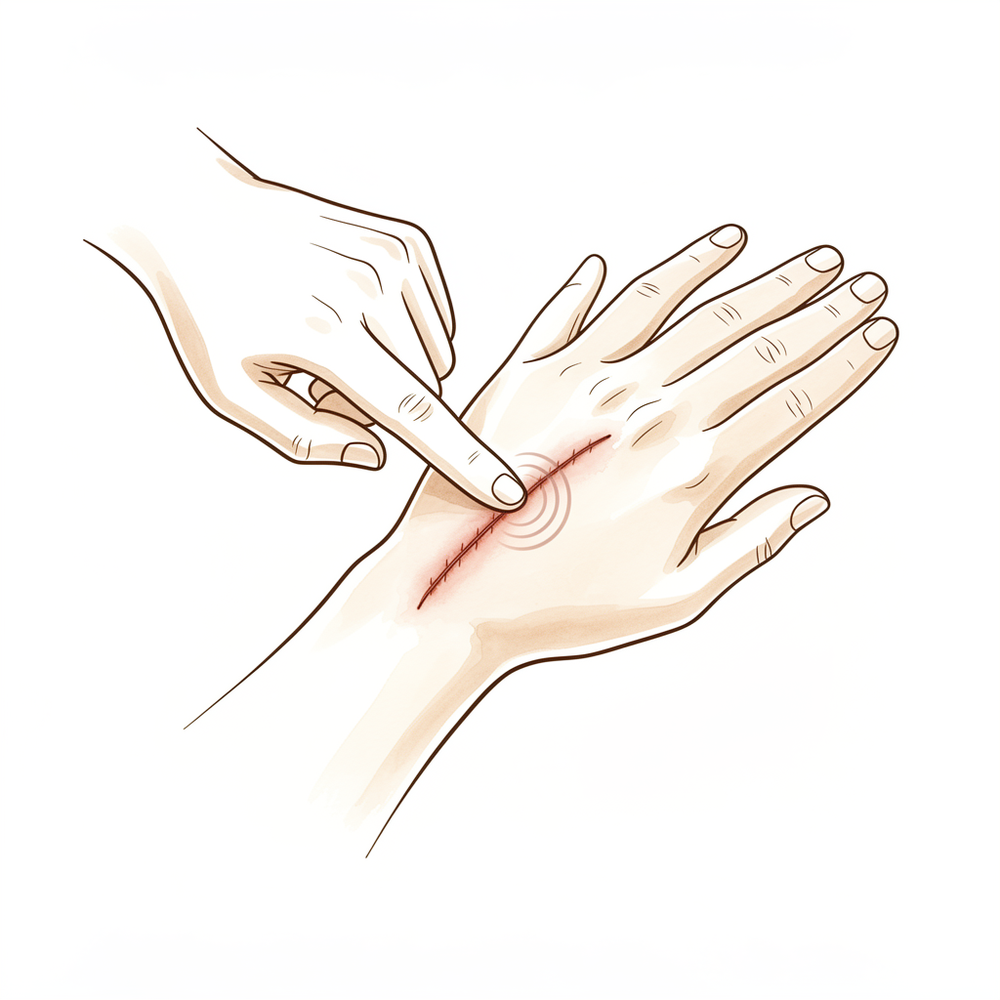
زخم کے نشان کی دیکھ بھال
جب زخم پوری طرح بھر جائے اور کوئی کھرنڈ باقی نہ رہے تو کلائی کی پشت پر نشان کی تھوڑے سے موئسچرائزر کے ساتھ چھوٹے، مضبوط دائروں میں مالش کریں۔ اس سے نشان نرم رہتا ہے اور نیچے موجود پلیٹ اور ٹینڈنوں سے نہیں چپکتا۔ آپ کا ہینڈ تھراپسٹ اسے صحیح وقت پر شروع کرائے گا۔
چند منٹ، دن میں 2 سے 3 بار، زخم بھر جانے کے بعد
Kieran Hirpara 4.0
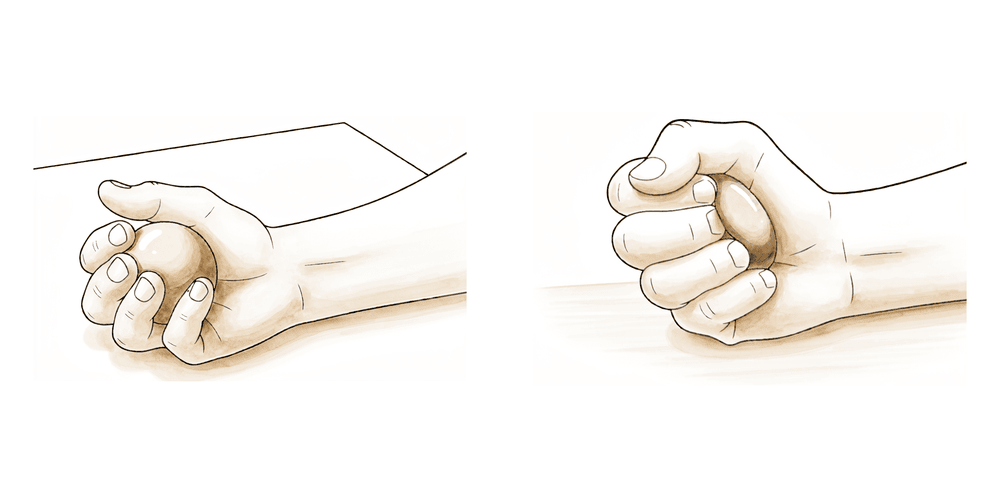
ہڈی جڑنے کے بعد گرفت مضبوط کرنا
یہ بعد کے مرحلے کی ورزش ہے — صرف اس وقت جب فیوژن جڑ چکا ہو (عموماً تقریباً چھ سے آٹھ ہفتے) اور آپ کو اجازت مل چکی ہو۔ ایک نرم گیند یا تھراپی پُٹی کو ہتھیلی میں دبا کر پکڑے رکھیں، پھر چھوڑ دیں۔ جڑی ہوئی کلائی ہاتھ کو گرفت کے لیے ایک مستحکم، بغیر درد کی بنیاد دیتی ہے، اس لیے گرفت کی طاقت عموماً اگلے مہینوں میں بہتر ہو جاتی ہے۔ اسے آہستہ آہستہ بڑھائیں۔
10 سے 15 بار دبانا، دن میں 2 سے 3 بار، ہڈی جڑنے کے بعد اجازت ملنے پر
یہ آپ کے ہینڈ آؤٹ میں دی گئی ورزشیں ہیں۔ انہیں صرف ڈاکٹر ہِرپرا اور آپ کے ہینڈ تھراپسٹ کی رہنمائی کے مطابق شروع کریں۔ ابتدائی ورزشیں سب کی سب ان چیزوں کی حفاظت کرتی ہیں جنہیں فیوژن آزاد چھوڑ دیتا ہے (انگلیوں اور انگوٹھے کی حرکت، بازو کے نچلے حصے کی گردش، اور سوجن پر قابو) اور ان میں سے کسی میں بھی کلائی شامل نہیں، جو ٹھوس رہتی ہے۔ گرفت مضبوط کرنے کی ورزشیں بعد کے مرحلے کا حصہ ہیں اور انہیں اس وقت تک شروع نہیں کرنا چاہیے جب تک فیوژن جڑ نہ جائے اور آپ کو خاص طور پر اجازت نہ ملے۔ جو بھی ورزش کلائی کی پشت پر تیز درد پیدا کرے اسے روک دیں۔
آپ کا کلینیکل پروٹوکول
اس صفحے کا باقی حصہ کلائی کی مکمل آرتھروڈیسس کے بعد بحالی کا مرحلہ وار کلینیکل پروٹوکول ہے۔ یہ حصہ آپ کے ہینڈ تھراپسٹ کو دیا جانا ہے، اور ہر مرحلہ سادہ زبان میں اس وضاحت سے شروع ہوتا ہے کہ اس دوران کیا ہو رہا ہے۔ کلائی کی حرکت کی حد (ROM) کا کوئی ہدف نہیں: ریڈیو کارپل (radiocarpal) (اور عموماً تیسرا کارپو میٹاکارپل (carpometacarpal)) جوڑ پشت کی پلیٹ سے جوڑ دیے جاتے ہیں۔ یہ پروٹوکول اس لیے ہے کہ فیوژن جڑنے کے دوران انگلیوں کی حرکت کی حد، بازو کے نچلے حصے کی گردش اور سوجن پر قابو برقرار رہے، اور پھر مستحکم ساخت پر گرفت بنائی جائے۔
علاج سے پہلے مریض کی آپریشن رپورٹ اور سابقہ طبی تاریخ دیکھیں، اور علاج کرنے والے سرجن سے ان باتوں پر رابطہ رکھیں: ساخت (پشت کی آرتھروڈیسس پلیٹ؛ تیسرا سی ایم سی (CMC) جوڑ شامل ہے یا چھوڑ دیا گیا)، جوڑی گئی کلائی کی حالت، ہڈی کی کوئی گرافٹ استعمال ہوئی یا نہیں، اور ہڈی کے جڑنے کی صورتحال۔ ڈاکٹر ہِرپرا کلائی کو پشت کی پلیٹ کے ساتھ ہلکا سا پیچھے جھکی ہوئی حالت (slight extension) میں جوڑتے ہیں؛ فکسیشن مستحکم ہوتی ہے، اس لیے لمبے عرصے کے سخت پلستر کے بجائے آرام کے لیے ہلکا اسپلنٹ/پٹی استعمال ہوتی ہے، اور انگلیوں اور بازو کے نچلے حصے کی ابتدائی حرکت اولین ترجیح ہے۔
مرحلہ I — ساخت کی حفاظت، آزاد جوڑوں کو حرکت دینا (ہفتہ 0 سے 6)
پہلے چھ ہفتے جڑتے ہوئے فیوژن کی حفاظت کرتے ہیں جبکہ ہر وہ چیز جو جوڑی نہیں گئی پوری طرح حرکت میں رکھی جاتی ہے۔ آرام کے لیے ہلکا اسپلنٹ یا پٹی پہنی جاتی ہے۔ کلائی کی کوئی حرکت نہیں (ساخت جان بوجھ کر سخت ہے) اور پوری توجہ انگلیوں، انگوٹھے، بازو کے نچلے حصے اور سوجن پر ہوتی ہے۔
آپ کے ہینڈ تھراپسٹ کے لیے:
آگاہی اور احتیاطیں - کلینیکل اور ایکسرے پر ہڈی جڑنے تک آرام اور حفاظت کے لیے اسپلنٹ/پٹی؛ مستحکم پلیٹ فکسیشن کی وجہ سے لمبے عرصے کے سخت پلستر کی ضرورت نہیں - کلائی کو حرکت دینے کی کوئی ورزش نہیں: ریڈیو کارپل/سی ایم سی ساخت جوڑ دی گئی ہے؛ حرکت کی حد کا کوئی ہدف نہیں - ہڈی جڑنے کی تصدیق تک نہ بوجھ والی گرفت اور نہ ایک ہلکے کپ سے زیادہ وزن اٹھانا - انگلیوں کے اکڑاؤ پر نظر رکھیں: کلائی کے فیوژن کے بعد نتیجے کے لیے یہی سب سے بڑا خطرہ ہے
علاج کا طریقہ - زخم: ہدایت کے مطابق سرجیکل پٹیاں؛ تقریباً 10 سے 14 دن پر ٹانکے نکالنا اور اسپلنٹ/ایکسرے کا معائنہ؛ انفیکشن پر نظر رکھیں - سوجن (oedema): دل کی سطح سے اوپر اونچا رکھنا، انگلیوں سے ہلکی پمپنگ کی ورزش، ضرورت کے مطابق برف - ورزشیں: پہلے دن سے انگلیوں اور انگوٹھے کی مکمل فعال حرکت کی حد (AROM) (پوری مٹھی بنانا اور پھر پوری طرح سیدھا کرنا، انگوٹھے کو انگلیوں کے سروں سے ملانا (opposition))؛ بازو کے نچلے حصے کی فعال گردش (pronation/supination)؛ کندھے اور کہنی کی فعال حرکت کی حد؛ کلائی کی کوئی حرکت نہیں، مزاحمت والی کوئی گرفت نہیں
اگلے مرحلے میں جانے کی شرائط - زخم بھر گیا ہو؛ انگلیوں کی مکمل یا تقریباً مکمل حرکت کی حد برقرار ہو؛ تقریباً چھ ہفتے پر ایکسرے پر ہڈی جڑنے کی ابتدائی علامات
مرحلہ II — ہڈی جڑنے کی تصدیق، گرفت پر بوجھ کا آغاز (ہفتہ 6 سے 12)
تقریباً چھ ہفتے سے ایکسرے پر فیوژن عموماً جڑتا ہوا نظر آتا ہے، اور جب سرجن اس کی تصدیق کر دیں تو اسپلنٹ چھوڑ دیا جاتا ہے اور گرفت مضبوط کرنے کی ورزشیں شروع ہوتی ہیں۔ بازو کے نچلے حصے اور انگلیوں کا کام جاری رہتا ہے؛ کلائی جڑی ہوئی رہتی ہے، اور اس پر بوجھ صرف ہڈی جڑنے کی تصدیق تک نہیں ڈالا جاتا۔
آپ کے ہینڈ تھراپسٹ کے لیے:
جائزے - بوجھ ڈالنے سے پہلے علاج کرنے والے سرجن سے ہڈی جڑنے کی صورتحال کی تصدیق کریں؛ انگلیوں کی حرکت کی حد؛ بازو کے نچلے حصے کی گردش کی حد؛ گرفت کی ابتدائی پیمائش؛ زخم/نشان کا معائنہ
آگاہی اور احتیاطیں - گرفت اور ہلکا بوجھ صرف سرجن کی طرف سے ہڈی جڑنے کی تصدیق کے بعد شروع کریں (عموماً چھ سے آٹھ ہفتے) - کلائی کی پشت پر لگی دھاتی چیزیں (hardware) جلد کے بالکل نیچے ہوتی ہیں؛ ان کے ابھرنے یا ان سے جلن (irritation) پر نظر رکھیں اور اس کی اطلاع دیں - پورے عرصے میں انگلیوں کی مکمل حرکت کی حد کو ترجیح دیتے رہیں
علاج کا طریقہ - ورزشیں: ہڈی جڑنے کی تصدیق کے بعد بتدریج بڑھتی گرفت کی مضبوطی (پہلے نرم گیند، پھر پُٹی (putty)، پھر درجہ بہ درجہ سخت گرفت والے آلات)؛ زخم بھرنے کے بعد نشان کی دیکھ بھال شروع کریں؛ بازو کے نچلے حصے کی گردش اور انگلیوں کی مکمل حرکت کی حد جاری رکھیں؛ ہاتھ کا ہلکا روزمرہ استعمال شروع کریں - مریض کو بتائیں کہ روزمرہ کاموں (چابی، نل، گھمانا) میں اب بازو کے نچلے حصے کی گردش کلائی کی ختم ہونے والی حرکت کی جگہ لیتی ہے
اگلے مرحلے میں جانے کی شرائط - ہڈی جڑنے کی تصدیق؛ بغیر درد کی ہلکی گرفت؛ انگلیوں کی مکمل حرکت کی حد؛ نشان حرکت کرتا ہو (جلد سے چپکا نہ ہو)
مرحلہ III — مضبوطی اور بوجھ پر واپسی (ہفتہ 12 اور اس کے بعد)
جب فیوژن ٹھوس ہو جائے تو حرکت کی کوئی ایسی پابندی نہیں رہتی جس کی حفاظت کرنی ہو؛ ہاتھ پر برداشت کے مطابق بوجھ ڈالا اور بڑھایا جا سکتا ہے۔ گرفت اور ہاتھ کی مجموعی طاقت کئی ماہ تک بہتر ہوتی رہتی ہے، اکثر آپریشن سے پہلے سے بھی بہتر، کیونکہ اب گرفت میں درد نہیں ہوتا۔
آپ کے ہینڈ تھراپسٹ کے لیے:
جائزے - گرفت کی طاقت کا دوسری طرف سے موازنہ؛ روزمرہ کاموں اور کام/کسی خاص کام سے متعلق ٹیسٹ؛ دھاتی چیزوں (hardware) کی برداشت
آگاہی اور احتیاطیں - ہڈی جڑنے کے بعد حرکت کی کوئی پابندی نہیں؛ برداشت کے مطابق بوجھ بڑھائیں - بھاری/جسمانی مشقت والا بوجھ بتدریج بڑھایا جائے؛ طاقت میں مکمل اضافہ تقریباً بارہ ماہ تک جاری رہتا ہے
علاج کا طریقہ - ورزشیں: بتدریج بڑھتی مزاحمت والی گرفت اور بازو کے نچلے حصے کی مضبوطی؛ روزمرہ اور کام کے کاموں پر درجہ بہ درجہ واپسی؛ انگلیوں کی حرکت کی جو کمی باقی ہو اس کا کام جاری رکھیں - جب گرفت کام کے قابل ہو اور بہتر ہو رہی ہو اور روزمرہ کام ہو رہے ہوں تو علاج ختم کرنے پر غور کریں؛ اگر انگلیوں میں اکڑاؤ، دھاتی چیزوں سے مسلسل جلن، یا خراب نتیجہ سامنے آئے تو مریض کو علاج کرنے والے ڈاکٹر کے پاس واپس بھیجیں
بوجھ پر واپسی کی شرائط - ہڈی کا ٹھوس جڑ جانا؛ کام کے قابل اور بہتر ہوتی گرفت؛ کسی خاص کام کے مطابق بوجھ بغیر درد کے
کام اور سرگرمیوں میں واپسی
ہاتھ کے ہلکے روزمرہ استعمال (کھانا کھانا، لکھنا، اپنی ہلکی دیکھ بھال) کی شروع سے ہی، آرام کی حد میں، ترغیب دی جاتی ہے، بشرطیکہ فیوژن جڑنے سے پہلے آپ نہ سختی سے گرفت کریں اور نہ ایک ہلکے کپ سے زیادہ وزن اٹھائیں۔ چونکہ اسپلنٹ میں ہوتے ہوئے یا گاڑی کو محفوظ طریقے سے قابو میں نہ رکھ سکنے کی صورت میں آپ کو گاڑی ہرگز نہیں چلانی چاہیے، اس لیے ابتدائی ہفتوں میں آنے جانے کے لیے مدد کا انتظام رکھیں؛ جب آپ اسپلنٹ سے باہر آ جائیں اور اسٹیئرنگ سنبھال سکیں، جس کی تصدیق آپ کے معائنے پر ہو، تب گاڑی چلانا دوبارہ شروع ہوتا ہے۔
بوجھ کے ساتھ گرفت، وزن اٹھانا اور کھینچنا اس وقت تک مؤخر رہتے ہیں جب تک فیوژن جڑ نہ جائے (عموماً تقریباً چھ سے آٹھ ہفتے) اور آپ کو اجازت نہ مل جائے، اور پھر انہیں بتدریج بڑھایا جاتا ہے۔ زیادہ تر لوگ تقریباً تین ماہ تک دفتری یا ہلکے کام پر واپس آ جاتے ہیں، اور بھاری یا جسمانی مشقت والا کام اس کے بعد، شرائط پر مبنی پیش رفت کے مطابق ہوتا ہے جس کا فیصلہ صرف کیلنڈر سے نہیں بلکہ ڈاکٹر ہِرپرا اور آپ کا ہینڈ تھراپسٹ کرتے ہیں۔ طاقت ایک سال تک بہتر ہوتی رہتی ہے، اور چونکہ گھسی ہوئی کلائی میں اب درد نہیں ہوتا، اس لیے بہت سے لوگ آپریشن سے پہلے کے مقابلے میں زیادہ مضبوطی سے گرفت کرتے ہیں اور ہاتھ کو زیادہ آزادی سے استعمال کرتے ہیں۔
اپنے پروٹوکول کے بعد
یہ پروٹوکول پریکٹس کے عمومی صحت یابی کے مشوروں کے ساتھ مل کر کام کرتا ہے: آپریشن کے بعد درد پر قابو، زخم کی دیکھ بھال اور زخم کے نشان کی دیکھ بھال دیکھیں۔ اوپر دیا گیا مرحلہ وار منصوبہ کلائی کی مکمل آرتھروڈیسس کے بعد شائع شدہ نتائج اور بحالی سے متعلق رہنمائی کی عکاسی کرتا ہے، اور آپ کی آگے کی صحت یابی میں ڈاکٹر ہِرپرا اور آپ کا ہینڈ تھراپسٹ آپ کے فیوژن اور ہاتھ کی پیش رفت کے مطابق انفرادی طور پر رہنمائی کرتے ہیں۔
Evidence & references
This is the clinical evidence summary written for health professionals. It is technical, and it lists the research this page was built from. You do not need to read it to understand your treatment or to make a decision about it.
Total Wrist Arthrodesis — Procedure Outcomes & Post-operative Rehabilitation (Radiocarpal Fusion, Dorsal Plate)
Topic scope: post-operative rehabilitation after total wrist arthrodesis — permanent surgical fusion of the radiocarpal (and usually the third carpometacarpal) joints with a dorsal arthrodesis plate, for end-stage pancarpal (panarticular) arthritis of the wrist. This is a salvage reconstruction that deliberately abolishes wrist motion, not a motion-preserving operation, so the rehabilitation has no wrist-ROM goal. It is built around preserving the joints the fusion leaves free — the fingers, thumb and forearm rotation — and controlling oedema while the fusion unites, then progressive grip loading once united.
Defining principle of the rehab here: total wrist fusion trades motion for a stable, pain-free wrist. The whole wrist is set solid (radius → metacarpals) in slight extension; loss of wrist movement is the intended endpoint, not a deficit to be rehabilitated. Modern dorsal locking-plate fixation is rigid enough that prolonged casting is unnecessary — so the deliberate priorities are early digital and forearm-rotation motion (digital stiffness is the principal threat to a good result) and swelling control, with grip strengthening deferred until radiographic union (typically 6–8 weeks). The single branch point is union status: loading is gated on the surgeon confirming the fusion has consolidated, after which there are no motion restrictions to protect.
A. PROCEDURE OUTCOMES (total wrist arthrodesis, dorsal plate)
Total wrist arthrodesis is a reliable, durable salvage for the painful, arthritic wrist that has failed non-operative care: the great majority of patients obtain lasting pain relief and a stable hand, accepting the loss of wrist motion in exchange.
- High union rates and durable pain relief. Plate arthrodesis is a well-established, reproducible operation; published series and the JAAOS review of indications and outcomes report reliable fusion, good pain relief and high patient satisfaction, with most patients willing to undergo it again [Wei & Feldon, JAAOS 2017; Shah et al., J Hand Surg Am 2022 — technique/modifications]. Moderate–strong (review + technique series).
- Grip strength is preserved or improves. Because gripping is no longer painful and the wrist is a stable platform, grip strength after fusion is typically equal to or better than the painful pre-operative wrist. A 2026 systematic review and meta-analysis of long-term grip strength after total wrist fusion (comparing inclusion vs sparing of the third CMC joint) confirms maintained long-term grip with comparable complication profiles between the two constructs [Lawson-Smith et al., J Hand Surg Glob Online 2026]. Moderate (SR/meta-analysis).
- Function is good for daily tasks; forearm rotation compensates for lost wrist motion. Patients adapt well because forearm pronation/supination (unaffected by the fusion) substitutes for much of the lost wrist arc in activities such as turning keys, taps and handles. Carpometacarpal-joint– sparing plate designs aim to retain a small amount of motion and reduce distal hardware issues [Briotti et al., HAND 2022 — Medartis CMC-sparing plate]. Moderate (cohort).
- Complications are defined and manageable. Principal complications are nonunion, hardware prominence/irritation requiring plate removal (the dorsal plate is subcutaneous), wound issues, and adjacent-segment problems (distal radioulnar joint / digital stiffness). These are recognised, generally treatable, and informed-consent staples rather than common catastrophes [Wei & Feldon, JAAOS 2017; Kalb & Prommersberger, Oper Orthop Traumatol 2009 — AO plate technique]. Moderate.
B. REHABILITATION / THERAPY EVIDENCE
The rehab questions after total wrist fusion are different from a motion-preserving operation: there is no wrist arc to recover. The evidence and consensus instead converge on early mobilisation of the unfused joints, oedema control, and union-gated grip loading, exploiting the stability of modern plate fixation.
- Stable plate fixation permits early digital and forearm motion. Rigid dorsal locking-plate constructs are robust enough that prolonged rigid immobilisation is unnecessary; a light splint or dressing for comfort, with immediate finger, thumb and forearm-rotation motion, is the intended default [Shah et al., J Hand Surg Am 2022; Kalb & Prommersberger, Oper Orthop Traumatol 2009]. Moderate (technique consensus).
- Preserving digital range is the priority — stiffness is the main avoidable failure. Because the hand's function after fusion depends entirely on the joints left mobile, full active finger and thumb range from day one, plus preserved forearm rotation, is the core therapeutic aim. This is a mechanistic/consensus position rather than one from comparative rehab trials. Weak–moderate (mechanism strong, dedicated rehab RCTs absent).
- Grip strengthening is deferred to union, then progressed freely. Loaded grip is withheld until the surgeon confirms radiographic union (commonly 6–8 weeks), after which there are no motion restrictions and strengthening is progressed as tolerated; grip continues to improve for several months. Consensus / protocol-based.
- Hand therapy targets the free joints, not the wrist. Published patient-guidance protocols and surgical references describe early referral to a hand therapist for finger and forearm mobility and later putty-based grip strengthening — there is no wrist-ROM component by design [AAOS OrthoInfo — Wrist Fusion; institutional post-op protocols]. Consensus (patient-guidance).
Recovery trajectory (expected, evidence-anchored)
| Phase | Window | Restraint | Hand use / therapy focus | Strength / load | Notes |
|---|---|---|---|---|---|
| I — Protect construct, mobilise free joints | Week 0–6 | Light splint/dressing for comfort; no wrist motion (fused) | Elevate; immediate full finger + thumb AROM; forearm pronation/supination; elbow/shoulder ROM; oedema control | Light functional use only; no loaded grip / lifting > a light cup | Sutures + splint/X-ray review ~10–14 days. Digital stiffness is the chief threat |
| II — Confirm union, begin grip loading | Week 6–12 | Loading gated on surgeon-confirmed union (≈6–8 wk) | Splint discarded at union; progressive grip (ball → putty → grippers); scar massage once healed; continue forearm + digital ROM | Grip introduced light → graded after union | Forearm rotation substitutes for lost wrist motion. Watch dorsal hardware prominence |
| III — Strengthening & return to load | Week 12 → 12 months | None once united | Progressive resisted grip/forearm strengthening; work-/task-specific loading | Full load as tolerated; heavy/manual built up gradually | Office/light work ~3 months; strength improves up to ~12 months, often exceeding pre-op (pain-free grip) |
(Phase windows mirror the precautions and recovery structure in the patient protocol; they are typical guides anchored to union, not trial-derived deadlines.)
C. KEY CONTROVERSIES / EVIDENCE QUALITY
- Fusion vs total wrist arthroplasty. The central modern controversy. Systematic review of total wrist arthroplasty versus arthrodesis (originally in rheumatoid disease) found insufficient evidence to declare either superior, with arthroplasty preserving some motion at the cost of higher revision/implant-related complications, and fusion offering durability at the cost of motion [Cavaliere & Chung, Plast Reconstr Surg 2008]. A cost-utility analysis found arthrodesis and arthroplasty both reasonable, with trade-offs in motion, complications and cost [Cavaliere & Chung, J Hand Surg Am 2010]. The "where are we now" synthesis frames the choice as patient-specific (demand, bilateral disease, expectations) rather than a settled winner [Jump, Trail & Talwalkar, J Hand Surg Eur 2025]. Moderate; genuine equipoise.
- Arthrodesis as salvage for failed arthroplasty. Total wrist fusion reliably salvages a failed total wrist arthroplasty, though such salvage fusions behave somewhat differently (bone loss, grafting) from primary arthrodesis [Zijlker et al., J Hand Surg Eur 2021]. Moderate.
- Include or spare the third CMC joint. Constructs differ in whether the plate crosses the third carpometacarpal joint. Long-term grip and complication outcomes are broadly comparable between inclusion and sparing, with CMC-sparing designs aiming to reduce distal hardware issues and retain a trace of motion [Lawson-Smith et al., J Hand Surg Glob Online 2026; Briotti et al., HAND 2022]. Moderate.
- Hardware prominence and removal. The subcutaneous dorsal plate is a recognised source of irritation and a common reason for elective hardware removal once the fusion is solid — expected, not a failure of the operation [Wei & Feldon, JAAOS 2017]. Moderate.
- Special populations. In spastic/neurological wrists (e.g. cerebral palsy), fusion changes hand function in nuanced ways — improving positioning but with task-specific trade-offs — underlining that the goal is a useful stable position, not motion [Hargreaves, Warwick & Tonkin, J Hand Surg Br 2000]. Moderate (specialised cohort).
D. EVIDENCE STRENGTH FLAGS (summary)
- STRONG (SR / meta-analysis): preserved-to-improved long-term grip strength after total wrist fusion; comparable outcomes between CMC-inclusion and CMC-sparing constructs [Lawson-Smith et al. 2026].
- MODERATE: reliable union, durable pain relief and high satisfaction with plate arthrodesis [Wei & Feldon 2017; Shah et al. 2022]; genuine equipoise between fusion and arthroplasty with motion-vs-durability/complication trade-offs [Cavaliere & Chung 2008, 2010; Jump et al. 2025]; fusion as salvage for failed arthroplasty [Zijlker et al. 2021]; defined complication set (nonunion, hardware removal, DRUJ/digital adjacent issues).
- WEAK / CONSENSUS: the specific early digital/forearm-motion, union-gated grip rehabilitation programme (mechanistically rationalised — stiffness avoidance — with no dedicated rehab RCTs); exact phase timings (typical, anchored to union rather than trial-derived); stable-fixation early-motion default from technique consensus [Shah et al. 2022; Kalb & Prommersberger 2009].
CITATIONS
RAG corpus (180,000+ Orthopaedic articles)
- Total Wrist Arthrodesis: Indications and Clinical Outcomes. J Am Acad Orthop Surg. 2017. DOI: 10.5435/jaaos-d-15-00424
- Radiocarpal Fusion: Indications, Technique, and Modifications. J Hand Surg Am. 2022. DOI: 10.1016/j.jhsa.2022.04.002
- Long-term Grip Strength and Complications After Total Wrist Fusion With and Without Inclusion of the Third Carpometacarpal Joint: A Systematic Review and Meta-analysis. J Hand Surg Glob Online. 2026. DOI: 10.1016/j.jhsg.2026.101022
- Wrist Arthrodesis Using the Medartis Carpometacarpal Joint Sparing Plate. HAND. 2022. DOI: 10.1177/15589447221141474
- A Systematic Review of Total Wrist Arthroplasty Compared with Total Wrist Arthrodesis for Rheumatoid Arthritis. Plast Reconstr Surg. 2008. DOI: 10.1097/prs.0b013e318180ece3
- A Cost-Utility Analysis of Nonsurgical Management, Total Wrist Arthroplasty, and Total Wrist Arthrodesis in Rheumatoid Arthritis. J Hand Surg Am. 2010. DOI: 10.1016/j.jhsa.2009.12.013
- Arthrodesis or arthroplasty, complete or partial: where are we at in the 21st century? J Hand Surg Eur Vol. 2025. DOI: 10.1177/17531934241296758
- Comparative outcomes of total wrist arthrodesis for salvage of failed total wrist arthroplasty and primary wrist arthrodesis. J Hand Surg Eur Vol. 2021. DOI: 10.1177/17531934211057389
- Die vollständige Versteifung des Handgelenks mit der AO-Handgelenk-Arthrodesenplatte (Complete wrist arthrodesis with the AO wrist arthrodesis plate). Oper Orthop Traumatol. 2009. DOI: 10.1007/s00064-009-1905-2
- Changes in Hand Function Following Wrist Arthrodesis in Cerebral Palsy. J Hand Surg Br. 2000. DOI: 10.1054/jhsb.2000.0366
Wrist-fusion rehabilitation / patient-guidance literature (URLs)
- American Academy of Orthopaedic Surgeons — Wrist Fusion (Wrist Arthrodesis), OrthoInfo (recovery timeline; fusion heals ~8–12 weeks; the fused wrist no longer moves; therapy for joints not fused). https://orthoinfo.aaos.org/en/treatment/wrist-fusion-wrist-arthrodesis/
- Wrist Arthrodesis Technique — postoperative care and approach considerations. Medscape eMedicine. https://emedicine.medscape.com/article/1241236-technique
- Total Wrist Arthrodesis (Wrist Fusion) — procedure and rehabilitation overview. Resurgens Orthopaedics. https://www.resurgens.com/hand-wrist/procedures/wrist-fusion-total-wrist-arthrodesis
- Full Wrist Fusion — Post-Operative Rehabilitation Protocol (institutional hand-therapy protocol; early digital/forearm motion, union-gated grip strengthening). Alaska Orthopedic. https://www.akortho.com/wp-content/uploads/Full-Wrist-Fusion.pdf