Clinicians › Hand
Extensor Tendon Repair
For patients: a plain-language version of this topic is available. See the patient guide.
Overview
Extensor tendon repair addresses injuries to the dorsal hand and forearm, with outcome data varying significantly by zone and injury complexity. Systematic review data specific to zone IV repairs remains minimal [1], and reported good or excellent results can be as low as 52%, mandating careful reexamination of evaluation and treatment methods [2]. In simple extensor tendon injuries, excellent or good function was achieved in 22 out of 24 patients six weeks post-repair, whereas complex injuries yielded excellent or good function in 11 out of 13 patients at the same interval [3]. For mallet finger injuries, nonsurgical treatment is supported for the majority of cases, although surgical indications remain unclear [11]. In select patients with severe extensor tendon injuries, emergency reconstruction appears to produce better function, involve fewer operations, result in a shorter hospital stay and period of disability, and carry minimal complications [5].
Surgical techniques and post-operative protocols must account for repair strength and motion constraints. The decrease in repair strength should be considered when planning a tendon suture to tolerate active finger flexion and a subsequent tendon motion protocol [24]. Consequently, active motion regimens are not always suitable for all extensor tendon repairs [27]. The relative motion approach is supported by good evidence as safe in zones V–VI repairs [9]. For zone I tendon loss or gaps, salvage and reconstruction using a tendon from an unsalvageable finger may be a reasonable remedy [4]. Specific techniques, such as extensor tendon shortening for unrecognized damage [17] or extensor indicis proprius to EPL transfers [21], show good results in limited case series.
Current real-world practices for extensor tendon repair lag behind expert recommendations, with significant discrepancies in splinting methods, repair techniques, and early motion protocols existing across continents [28]. Outpatient repair under WALANT is safe and effective, with low complication rates and favorable functional outcomes [37]. For post-operative treatment of zone IV–VII repairs, the Wyndell Merritt Immediate Controlled Active Motion (ICAM) protocol provides a safe, low-profile, and cost-effective alternative [62]. The lateral upper arm flap is preferred for extensor tendon reconstruction due to its safety, acceptable donor site morbidity, and suitability [38]. Surgical repair of the extensor mechanism has also brought good results in cases of boutonniere deformity of the second toe following planter dislocation of the proximal interphalangeal joint [7].
Anatomy & Pathophysiology
Extensor Mechanism Architecture
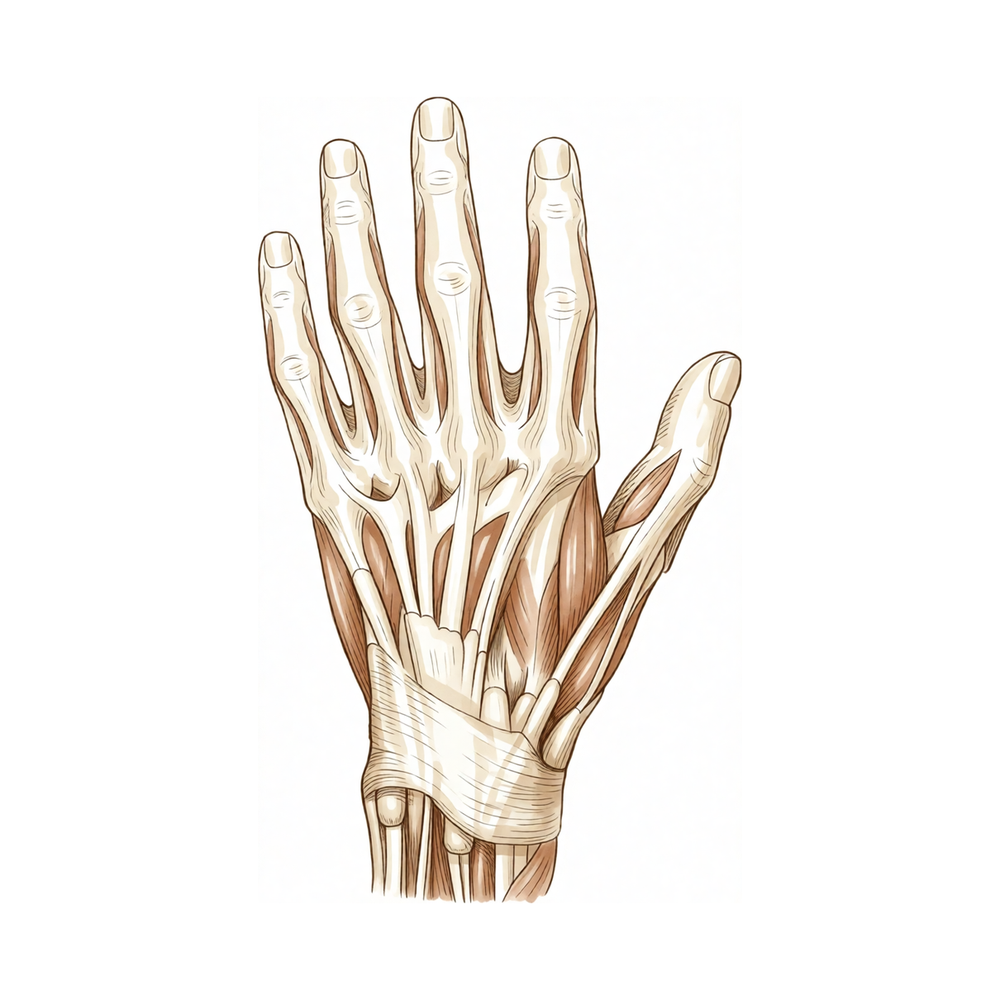
The extensor apparatus is a complex muscle-tendon system that requires integrity or optimal reconstruction to preserve hand function [6]. The extrinsic extensors run through six different fibroosseous retinacular compartments at the wrist level [45]. Compartmental contents: * First compartment: Contains the abductor pollicis longus and the extensor pollicis brevis [45]. * Second compartment: Contains the extensor carpi radialis longus and the extensor carpi radialis brevis [45]. * Third compartment: Contains the extensor pollicis longus, which turns abruptly radialward about Lister tubercle [45]. * Fourth compartment: Contains the extensor indicis proprius lying deep to the four tendons of the extensor digitorum communis [45]. * Fifth compartment: Contains the extensor digiti quinti [45]. * Sixth compartment: Contains the extensor carpi ulnaris [45].
The extensor digitorum communis tendons of the middle, ring, and little fingers are tethered together by juncturae tendinum over the dorsum of the hand proximal to the metacarpophalangeal joint [45]. Digital extensor tendons are stabilized over the mid-line of the metacarpophalangeal joint by their attachment to sagittal band fibers [45]. These fibers insert onto the volar proximal phalanx and onto the lateral borders of the volar plate [45]. The sagittal bands form a sling that allows proximal extrinsic extensor tension to be transmitted to the proximal phalanx, permitting metacarpophalangeal joint extension without a tendinous insertion onto the proximal phalanx [45]. With rupture or attenuation of the sagittal band fibers, the extrinsic extensor tendon can sublux to the ulnar side of the metacarpal head causing ulnar deviation of the finger [45].
Distal interphalangeal joint extension is achieved through the conjoined lateral bands that are composed of tendinous slips from the extrinsic and intrinsic tendons [45]. The deep head of each dorsal interosseous muscle forms a lateral tendon, or lateral band, at the level of the MP joint [77]. Transverse fibers arch dorsally from each lateral band to join each other over the dorsum of the finger, flexing the proximal phalanx [77]. Oblique fibers (spiral fibers) from the lateral bands sweep over the distal third of the proximal phalanx to insert onto the lateral tubercles at the base of the middle phalanx [77]. The lateral bands are joined by the lateral slips of the extensor tendon to form the conjoined lateral band [77]. The two conjoined lateral bands to each finger unite at the distal third of the middle phalanx to form the terminal tendon [77]. The terminal tendon inserts at the base of the distal phalanx to extend it [77]. The volar interossei form the ulnar lateral band of the index finger and the radial lateral band of the ring and little fingers [77]. The flexor digiti quinti brevis forms the ulnar lateral band of the little finger [77].
The extensor tendon apparatus of the fingers and wrist has been divided into nine anatomic zones intended to help guide management and injury rehabilitation [71]. A separate classification system consisting of five zones has been described for the thumb [71]. The extrinsic extensor tendons represent the terminal extensions of muscles that arise proximally from the lateral forearm and receive their innervation from the proper radial nerve or its posterior interosseous branch [71].
Tendon Physiology and Biomechanics
The extensor tendons in the dorsum of the hand lie relatively superficially, making open injuries to the extensor mechanism a common source of morbidity [19]. The extensor tendons are subcutaneous, making them susceptible to superficial injuries to the dorsum of the hand [14]. The extensor mechanism has less excursion than the flexor system [124]. Extensor tendon excursion in the region of the PIP joint is only between 2 and 5 mm [124]. The extensor mechanism has less ability to compensate for significant shortening because of the interconnections between the intrinsic and extrinsic mechanisms [124].
The central band cannot be modeled with the same elastic characteristics as the intercrossing fibers or the lateral bands because they are structurally different [176]. Histologic studies have shown absence of elastic fibers in any component of the extensor assembly [176]. Width and thickness vary significantly among the different segments of the extensor mechanism [176]. The superficial position of the extensor tendons, their complex architecture, and paucity of surrounding subcutaneous tissue often result in postoperative adhesions, which limit flexion and produce extensor lags [124]. Injuries in the distal zones (1 through 5) result in poorer outcomes and greater postoperative extension deficits [124]. Extensor tendon injuries carry a significantly worse prognosis when associated with underlying fractures [124].
Loss of long extensor function can destabilize the MP joint, resulting in a loss of active finger abduction-adduction [124]. Intrinsic function can be compromised after metacarpal fractures [124]. Metacarpal shortening or fracture angulation beyond 30 degrees can result in a shortening of intrinsic muscle fiber length [124]. The thumb tendon has a greater tendency to rupture than finger tendons because it provides about 50% of hand function and cannot be spared from use [125].
Pathophysiology of Injury
Chronic injuries of the finger extensor apparatus are the result of an open or closed initial injury that was either not treated or not treated properly [68]. Once chronic, the tendon injury is associated with varying amounts of tendon retraction, tendon callus lengthening, peritendinous scar adhesions, static and dynamic imbalances with the flexor apparatus and intrinsic muscles, and joint contractures [68]. Closed extensor tendon ruptures are well-described following traumatic hand and wrist injuries such as distal radius fractures [71]. Subacute or delayed rupture of the EPL, EDC, or EIP has been reported in up to 5% of patients with distal radius fractures, often more than 6 weeks from the initial traumatic injury [71]. In the case of the EPL, closed rupture is often attributable to hematoma and swelling in the tight tendon sheath at a vascular watershed area, which weakens the tendon, predisposing it to rupture [71].
Injuries to the finger extensor apparatus are very common and may produce chronic deformity and loss of function [33]. Extensor tendon repair has high rates of complication with generally less favorable results with more distal injuries [14]. 69% of injuries demonstrated fair or poor results in zones 1 to 4, whereas only 32% had fair or poor results in more proximal zones [14].
Classification
Anatomic Zoning: The extensor tendon apparatus of the fingers and wrist is divided into nine anatomic zones intended to help guide management and injury rehabilitation [71]. Injury classification into these anatomical zones, alongside the evaluation of lesion characteristics, is considered key to selecting appropriate treatment for extensor tendon injuries [6]. Recovery of finger function after primary extensor tendon repair depends on the complexity of trauma and the specific anatomical zone of tendon injury [12]. A previous study found that 69% of injuries demonstrated fair or poor results in zones 1 to 4, whereas only 32% had fair or poor results in other zones [14].
2025 Consensus Recommendations: The 2025 consensus panel recommends adapting a simpler classification system resembling that for flexor tendons [18]. This panel outlines specific treatment approaches for acute extensor tendon injuries in each zone to facilitate surgical decision-making and rehabilitation [18]. Authors have proposed a simpler classification system for extensor tendon zones to align with current treatment strategies, such as conservative splinting for closed injuries and strong surgical repair for open injuries [50].
Structural Basis: A classification of extensor tendon zones based on the presence of the extensor retinaculum is suggested as preferable to those based on the wrist joint, as it simplifies treatment discussion and aligns with flexor tendon zoning [148]. Grouping all structures in the finger distal to the metacarpophalangeal (MP) joint within one zone is considered better because the extensor structures over the finger differ completely from those proximally and treatment is also different [146].
Sagittal Band Injuries: The sagittal band comprises a portion of the retinacular system of the extensor apparatus to the digits, which also incorporates the triangular ligament between the lateral bands, the transverse and oblique retinacular ligaments, and the transverse aponeurotic fibers between the central tendon and lateral bands at the level of the proximal phalanx [161]. A modification to the most prevalent classification system for sagittal band injuries aims to incorporate the spectrum of disease seen, guide treatment, and allow standardization when documenting and describing injuries [161].
Clinical Presentation
Extensor tendon injuries are common in clinical practice, with over 45,000 cases seen in United States emergency departments annually, corresponding to a rate of approximately 14 per 100,000 [99]. These injuries arise from a complex muscle-tendon system that requires integrity or optimal reconstruction to preserve hand function [6]. Early recognition and treatment are key to management [16]. Common etiologies include sports, physical altercations, farm equipment, self-mutilation, crush injuries, and other trauma [97]. In the pediatric population, a detailed history and physical examination are crucial for management [97].
A careful clinical history and assessment remain the first step for diagnosis, followed by ultrasound and MRI to confirm suspect conditions or investigate doubtful cases and rule out associated lesions [6]. Open extensor tendon injuries range from simple clean lacerations to complex open injuries associated with severe skin and soft tissue loss [19]. The diagnosis of traumatic extensor carpi ulnaris lesions must be made early before tendon damage occurs [29].
Extensor tendon injuries are divided into 8 anatomic zones, with each zone having a unique combination of anatomic elements and cross-sectional tendon size which dictates the approach to treatment [99]. A previous study found that 69% of extensor tendon injuries demonstrated fair or poor results in zones 1 to 4, whereas only 32% had fair or poor results in more proximal zones [14].
Investigations
Clinical Assessment: A careful clinical history and assessment remain the first step for the diagnosis of extensor tendon injuries [6]. Clinical evaluation of the injured hand and wrist requires combining patient history with a careful physical examination to pinpoint or narrow the scope of possible pathologic processes [44].
MRI: Ultrasound and MRI are used to confirm suspicion or investigate doubtful conditions following clinical assessment [6]. These modalities are also employed to rule out associated lesions in extensor tendon injuries [6]. MRI is recommended for the evaluation of gaps after tendon repair, with 1.5T MRI showing slightly better sensitivity and specificity for distinguishing clinically intact from clinically impaired repairs than 3T MRI [53].
Other Considerations: Diagnostic tests such as imaging and serum laboratory studies are useful in determining hand pathology but can be expensive, time-consuming, and often nonspecific [44]. Advanced imaging may be considered when tendon irritation is clinically suspected in the context of carpal boss [190].
Treatment
Non-Operative
Conservative management is indicated for most closed extensor tendon injuries in the acute phase, particularly when the injury is expected to yield a favorable result with nonoperative procedures [6]. Nonsurgical treatment remains the standard of care for the majority of mallet finger injuries, although specific surgical indications for these cases remain unclear [11]. However, chronic injuries often require operative intervention, and historical data indicate that 69% of injuries in zones 1 to 4 demonstrated fair or poor results with conservative care, compared to only 32% in more proximal zones [14, 35].
Operative
Indications: Surgical repair is indicated for open injuries and complex dorsal hand wounds, where single-stage reconstruction provides reliable functional outcomes earlier in the postoperative period [23, 50]. In select patients with severe extensor tendon injuries, emergency reconstruction produces better function, fewer operations, shorter hospital stays, minimal complications, and reduced disability periods compared to delayed management [5].
Surgical Approach / Technique: The choice of repair technique depends on the anatomical zone and lesion characteristics [6]. For extensor central slip reconstruction, a modified technique using a distally based flexor digitorum superficialis slip provides a robust repair that anatomically mimics the native slip while preserving donor tendon function [30]. In cases of traumatic index extensor tendon attenuation, successful treatment involves shortening the attenuated tendon in combination with tendon graft or transfer [41]. For second toe boutonniere deformities, surgical repair of the extensor mechanism yields good results [7]. Reconstructive surgery on the sagittal band with stabilization of the extensor tendon over the metacarpophalangeal joint resolves symptoms in patients with extensor tendon instability [31].
Implant Selection: Polyester patches made from Bard-DeBakey Woven Fabric serve as the core for interlacing sutures, applied mainly to extensor tendon transfers on the dorsum of the hand [145]. Staged extensor tendon reconstruction in the finger utilizes a silicone implant inserted dorsal to the tendon beneath the peritendinous fascia [147].
Biomechanics and Suture Strength: Repairs achieved with all suture techniques are considerably weaker than those achieved when comparable techniques are used on flexor tendons [98]. A modified Becker extensor tendon repair with one cross-stitch provides superior mechanical properties for loads seen during postoperative rehabilitation compared to repairs with two or three cross-stitches for similar loads [187].
Adjuncts: The single-sided locking side-to-side reconstruction is especially suitable for extensor tendon transfers [174]. Simultaneous proximal interphalangeal joint arthroplasty and extensor tendon reconstruction offers functionally useful fingers and absence of pain, although the intrinsic extensor mechanism cannot be restored with this technique [191].
Rehabilitation and Post-Operative Protocols: Active motion regimens are desirable after flexor tendon repair in all zones but are not always suitable for all extensor tendon repairs [27]. There is good evidence that the relative motion approach is safe in zones V-VI extensor tendon repairs [9]. Relative motion extension orthoses plus management of finger zones V-VI extensor tendon repairs is non-inferior to dynamic wrist-hand finger orthoses regarding %TAM, therapy and orthotic satisfaction, QuickDASH, and %Grip [150]. For untidy extensor tendon injuries in zones V, VI, and VII and for the thumb in zones T IV and T V, controlled passive motion with dynamic splinting and supervised passive motion was permitted by the third postoperative day [34]. In a pilot study of 66 digits treated with early passive motion, the average total active range of motion was 210.41°, no extensor tenolysis was performed, and one rupture of an extensor indicis proprius occurred in a patient who removed his splint prematurely [34]. Six weeks after repair, excellent or good function was obtained in 22 out of 24 simple extensor tendon injuries and in 11 out of 13 complex injuries using early active mobilization [3].
Other Considerations: Current real-world practices for extensor tendon repair lag behind expert recommendations, with significant discrepancies in splinting methods, repair techniques, and early motion protocols across continents [28]. Literature describing surgical, post-operative management, and outcomes following EDC repairs in close proximity to or within the extensor retinaculum is limited [69]. Systematic reviews report minimal data on outcomes specific to zone IV extensor tendon repairs [1].
Complications
Adhesions and Stiffness: Immobilization following extensor tendon repair may lead to tendon tethering, resulting in failure to achieve full fist and grip strength [94]. Adhesions develop in injuries involving the periosteum, extensor retinaculum, or adjacent soft tissues, limiting ultimate recovery or necessitating additional surgical procedures [34]. Chronic extensor tendon injuries are associated with peritendinous scar adhesions, static and dynamic imbalances, and joint contractures [68]. Iatrogenic surgical factors may not play a significant role in poor or fair results after Zone IV extensor injury, leaving adhesion formation as the likely culprit [215]. Early controlled motion aims to prevent adhesions and increase tendon healing strength while preventing tendon repair rupture and scar elongation [94]. A decrease in repair strength must be considered when planning tendon sutures to tolerate active finger flexion and motion protocols after primary repair [24]. The need for secondary tenolysis following dynamic splinting after extensor tendon repair in Zones V to VII was low at 6% [204]. One participant in a relative motion extension group underwent tenolysis surgery at seven months postoperatively to maximize range of motion [118]. Potential complications of extensor tendon centralization at the metacarpophalangeal joint include failure of reconstruction, stiffness, and infection [153].
Rupture and Repair Failure: Extensor tendon repair has high rates of complication with generally less favorable results for more distal injuries [14]. Specifically, 69% of extensor tendon injuries in Zones 1 to 4 demonstrated fair or poor results, whereas only 32% had fair or poor results in more proximal zones [14]. The results of extensor tendon repair do not fare as well as some might believe, with reports of good or excellent results as low as 52% mandating reexamination of evaluation and treatment methods [2]. No tendon ruptures occurred in either the controlled active motion or relative motion extension groups in a randomized trial for Zones V and VI extensor tendon repairs [118]. No tendon repair ruptures occurred in a series of 9 Zone IV and V and Thumb Zone TI to TIV extensor tendon repairs using a running interlocking horizontal mattress technique [102]. One rupture of an extensor indicis proprius occurred in a patient who removed their splint prematurely during an early passive motion protocol [34]. Complete extensor tendon failure due to drill penetration was rare [218]. Extensor tendon rupture as a complication of Kienböck's disease is rare [58]. Clinical and functional results for extensor tendon ruptures after dorsal wrist surgery for rheumatoid arthritis are often moderate, primarily because these ruptures are multiple [40].
Infection and Wound Complications: One participant in a relative motion extension group had a subcutaneous suture that became infected, requiring surgical excision at four months postoperatively [118]. No wound complications occurred in a series of 9 Zone IV and V and Thumb Zone TI to TIV extensor tendon repairs [102]. Outpatient extensor tendon repair under WALANT is associated with low complication rates [37]. In select patients, emergency reconstruction of severe extensor tendon injuries produces minimal complications [5].
Other Considerations: One participant in a relative motion extension group developed irritation of the ulnar nerve, likely at the cubital tunnel, which was not thought to be related to the extensor tendon injury [118]. Extensor tendon lacerations can occur as a complication of arthroscopic excision of dorsal wrist ganglions [172]. The reported complication rate for arthroscopic wrist ganglion resection is comparable with open resection at 2%, though this rate may be underestimated [172]. Recent reviews suggest the incidence of complications for wrist arthroscopy may be up to 20% [172]. A cadaveric study examining the risk to extensor tendons in inexperienced arthroscopists' hands revealed 2 injuries to extensor digiti minimi out of 35 portals for 3 different case-types [172]. The overall complication incidence was 20% (n = 12) in a series of distal long finger amputations where the full middle phalanx was preserved [209]. Current real-world practices for extensor tendon repair lag behind expert recommendations, with significant discrepancies in splinting methods, repair techniques, and early motion protocols [28].
Recovery
Rehabilitation protocol: Early protected motion is a critical component of postoperative care for zone III extensor tendon repairs. A protocol allowing 30 degrees of active motion during the first two postoperative weeks, progressing to 40 degrees in the third week and 50 degrees in the fourth week, is tolerated by repaired zone III tendons and may prevent restrictive adhesions without causing dysfunctional repair site elongation [42]. For zone III central slip repairs, the use of a single orthosis throughout the entire protected phase of rehabilitation is an easy, cost-effective, and successful treatment strategy [137]. The decrease in repair strength must be considered when planning a tendon suture to tolerate active finger flexion and a tendon motion protocol after primary repair [24]. Tendons mobilized early demonstrate progressively greater ultimate load and linear slope values, with strength 2-3 times greater than immobilized repairs at 3 weeks [203]. The goal of surgical treatment for intrasynovial tendon lacerations is achieving a primary repair of tensile strength sufficient to allow a postoperative motion rehabilitation protocol that inhibits intrasynovial adhesions, facilitates restoration of the gliding surface, and stimulates strength accrual at the repair site [136].
Functional milestones: Clinical outcomes vary significantly based on injury complexity and zone. Six weeks after repair, excellent or good function was obtained in 22 out of 24 simple extensor tendon injuries and in 11 out of 13 complex injuries [3]. Results of uncomplicated proximal extensor tendon repairs performed by junior accident and emergency doctors are satisfactory, with 83 per cent of proximal injuries achieving excellent or good results based on Miller's grading [25]. Two-staged extensor tendon reconstruction for long tendon defects in zone 6, with or without zone 7 defects, provides full or near-full active flexion at the MCP joints, though minor extension lags of 10°–15° are common [72]. This series shows good long-term functional and patient reported outcomes in patients following extensor indicis proprius to EPL tendon transfers at a single center [21].
Other Considerations: The results of extensor tendon repair do not fare nearly as well as some might believe, and any report of good or excellent results as low as 52% mandates that methods of evaluation and treatment should be carefully reexamined [2]. Clinical and functional results are often moderate for extensor tendon ruptures following dorsal wrist surgery, primarily because these ruptures are multiple [40]. The panel recommends adapting a simpler classification system resembling that for flexor tendons and outlines specific treatment approaches for acute extensor tendon injuries in each zone to facilitate surgical decision-making and rehabilitation [18]. Included studies reported minimal data on outcomes specific to zone IV extensor tendon repairs [1]. Extensor tendon salvage and reconstruction using a tendon from an unsalvageable finger may be a reasonable remedy for reconstruction of tendon loss or gaps in zone I, offering advantages over other traditional techniques in certain cases [4]. Extensor lag after indicis proprius transfer is not caused by removal of the force of the tendon per se, but by factors which cause either disruption of normal hood function or tethering of its normal excursion [170]. The use of patient-reported outcomes, in addition to clinician-reported outcomes, provided deeper insight into patients' perceptions of their recovery after flexor tendon injury [52].
Key Evidence
- [L1] The included studies reported minimal data on outcomes specific to zone IV extensor tendon repairs. [1] (10.1016/j.jht.2022.12.001)
- [L4] The results of extensor tendon repair do not fare nearly as well as some might believe, and any report of good or excellent results as low as 52% mandates that methods of evaluation and treatment should be carefully reexamined. [2] (10.1016/0363-5023(90)90024-l)
- [L3] Six weeks after repair, excellent or good function was obtained in 22 out of 24 simple extensor tendon injuries and in 11 out of 13 complex injuries. [3] (10.1016/s0266-7681(97)80353-1)
- [L4] Extensor tendon salvage and reconstruction using a tendon from an unsalvageable finger may be a reasonable remedy for reconstruction of tendon loss or gaps in zone I, offering advantages over other traditional techniques in certain cases. [4] (10.1016/j.jhsa.2014.01.029)
- [L4] In select patients, emergency reconstruction of severe extensor tendon injuries appears to produce better function, with fewer operations, a shorter hospital stay, minimal complications, and a shorter period of disability. [5] (10.1016/0266-7681(93)90005-z)
- [L4] [6] (10.1055/s-0036-1572534)
- [Case_report] Surgical repair of the extensor mechanism brought good results. [7] (10.1007/s00402-009-0816-x)
- [L1] There is now good evidence that the RM approach is safe in zones V-VI extensor tendon repairs. [9] (10.1016/j.jht.2023.02.011)
- [L5] This article presents an overview of the treatment of extensor tendon injuries, with a focus on recent developments, noting that while nonsurgical treatment is supported for the majority of mallet finger injuries, surgical indications remain unclear. [11] (10.1016/j.jhsa.2010.03.002)
- [L4] Recovery of finger function after primary extensor tendon repair depends on the complexity of trauma and the anatomical zone of tendon injury. [12] (10.1007/s00402-006-0233-3)
- [L5] [14] (10.5435/jaaos-d-18-00218)
- [L5] Extensor tendon injuries are common and early recognition and treatment are key to the management of such injuries. [16] (10.1016/j.hcl.2014.12.006)
- [L4] This technique has been used with good results in four patients who had lengthening of an extensor tendon with extensor deficit due to unrecognized or inadequately treated damage. [17] (10.1016/s0266-7681(05)80021-x)
- [L5] The panel recommends adapting a simpler classification system resembling that for flexor tendons and outlines specific treatment approaches for acute extensor tendon injuries in each zone to facilitate surgical decision-making and rehabilitation. [18] (10.1177/17531934251363138)
- [L4] [19] (10.1016/j.jhsa.2014.06.136)
- [L4] This series shows good long-term functional and patient reported outcomes in patients following extensor indicis proprius to EPL tendon transfers at a single center. [21] (10.1016/j.jht.2024.02.004)
- [L4] Single-stage reconstruction of complex dorsal hand wounds with concurrent extensor tendon injuries is a reliable method that provides better functional outcomes earlier in the postoperative period. [23] (10.1177/1753193408092786)
- [L5] The decrease in repair strength should therefore be considered in planning a tendon suture to tolerate active finger flexion and a tendon motion protocol after primary tendon repair. [24] (10.1053/jhsu.2001.28425)
- [L4] The results of uncomplicated proximal extensor tendon repairs performed by junior accident and emergency doctors are satisfactory, with 83 per cent of proximal injuries achieving excellent or good results based on Miller's grading. [25] (10.1016/0020-1383(95)92187-f)
- [L5] Active motion regimens are desirable after repair of the flexor tendons in all zones but are not always suitable for all extensor tendon repairs. [27] (10.1016/j.injury.2013.01.022)
- [L4] Current real-world practices for extensor tendon repair lag behind expert recommendations, with significant discrepancies in splinting methods, repair techniques, and early motion protocols across continents. [28] (10.1177/17531934251408725)
- [L4] The diagnosis of traumatic extensor carpi ulnaris (ECU) lesions must be early before tendon damage occurs. [29] (10.1016/s1297-3203(00)73588-8)
- [L4] The modified technique provides a robust repair that anatomically mimics the extensor central slip yet maintains the function of the donor FDS tendon. [30] (10.1016/j.jhsa.2009.01.025)
- [L5] The patient's symptoms resolved after reconstructive surgery on the sagittal band with stabilization of the extensor tendon over the metacarpophalangeal joint. [31] (10.1142/s0218810417720017)
- [L5] Injuries to the finger extensor apparatus are very common and may produce chronic deformity and loss of function. [33] (10.1016/j.hcl.2013.03.003)
- [L4] [34] (10.1016/s0363-5023(86)80039-9)
- [L5] Most closed extensor tendon injuries can be treated conservatively in the acute phase, but chronic injuries often require operative intervention. [35] (10.1016/j.csm.2014.09.005)
- [L4] Outpatient extensor tendon repair under WALANT is safe and effective, with low complication rates and favorable functional outcomes. [37] (10.1016/j.injury.2025.112647)
- [L4] The lateral upper arm flap is preferred for its safety, acceptable donor site morbidity, and suitability for extensor tendon reconstruction. [38] (10.1177/175319340703201s14)
- [L4] Clinical and functional results are often moderate, primarily because these ruptures are multiple, which aligns with the literature on poor outcomes for primary multi-tendon ruptures. [40] (10.1016/s1297-3203(02)00009-4)
- [L4] Two cases of traumatic index extensor tendon attenuation were treated successfully by shortening the attenuated tendon in combination with tendon graft or transfer. [41] (10.1186/s12891-020-03692-6)
- [L4] This study demonstrates that 30 degrees of active motion the first two postoperative weeks, progressing to 40 degrees the third postoperative week and 50 degrees the fourth week, is tolerated by repaired zone III extensor tendons and may prevent restrictive adhesions in these zones without creating dysfunctional repair site elongation. [42] (10.1016/s0749-0712(21)00069-x)
- [L5] The authors propose a simpler classification system for extensor tendon zones to align with current treatment strategies, such as conservative splinting for closed injuries and strong surgical repair for open injuries. [50] (10.1177/17531934241274112)
- [L3] The use of patient-reported outcomes, in addition to clinician-reported outcomes, provided deeper insight into patients' perceptions of their recovery after flexor tendon injury. [52] (10.1016/j.jht.2024.12.011)
- [L5] We recommend MRI for evaluation of gaps after flexor tendon repair, as the 1.5T has slightly better sensitivity and specificity for distinguishing clinically intact from clinically impaired repairs than the 3T. [53] (10.1016/j.jhsa.2020.10.031)
- [L5] Extensor tendon rupture as a complication of Kienböck's disease is rare. [58] (10.1016/s0266-7681(97)80354-3)
- [L4] This protocol provides a safe, low-profile, cost-effective alternative for post-operative treatment of zone IV–VII extensor tendon repairs. [62] (10.1007/s11552-012-9488-z)
- [L5] [68] (10.1016/j.main.2015.05.001)
- [Paper] Literature describing surgical, post-operative management and outcomes following EDC repairs in close proximity to or within the extensor retinaculum is limited. [69] (10.1007/s12593-010-0008-5)
- [L4] [71] (10.5435/jaaos-d-25-00927)
- [L4] Two-staged extensor tendon reconstruction is suitable for long tendon defects in zone 6 with or without zone 7 defects, providing full or near-full active flexion at the MCP joints, though minor extension lags (10°–15°) are common. [72] (10.1177/1753193413517626)
- [L4] [94] (10.1177/175899830000500102)
- [L5] [97] (10.1007/s11552-014-9706-y)
- [L5] Repairs achieved with all suture techniques were considerably weaker than those achieved when comparable techniques were used on flexor tendons. [98] (10.1016/s0363-5023(09)91077-2)
- [L2] [99] (10.1016/j.jht.2017.02.013)
- [L4] [102] (10.1016/j.jhsa.2013.03.031)
- [L1] [118] (10.1016/j.jht.2018.10.003)
- [L5] [124] (10.1016/s0749-0712(02)00130-0)
- [L5] The author posits that the thumb tendon has a greater tendency to rupture than finger tendons because it provides about 50% of hand function and cannot be spared from use, unlike fingers which can share load. [125] (10.1054/jhsb.2000.0421)
- [Paper] The goal of surgical treatment of intrasynovial flexor tendon lacerations is the achievement of a primary tendon repair of tensile strength sufficient to allow the application of a postoperative motion rehabilitation protocol to inhibit the formation of intrasynovial adhesions, facilitate restoration of the gliding surface, and stimulate the accrual of strength at the repair site. [136] (10.1197/j.jht.2005.01.009)
- [Case_report] The use of a single orthosis throughout the entire protected phase of rehabilitation after zone III extensor tendon repair is an easy, cost-effective, and successful way to treat surgical repairs of the central slip. [137] (10.1016/j.jht.2019.03.014)
- [L4] The polyester patch made from Bard-DeBakey Woven Fabric was used as the core of the interlacing suture, applied mainly to extensor tendon transfers on the dorsum of the hand. [145] (10.1097/00130911-200209000-00003)
- [L5] Grouping all structures in the finger distal to the metacarpophalangeal (MP) joint within one zone is better, as the extensor structures over the finger differ completely from those proximally and treatment is also different. [146] (10.1177/17531934251396775)
- [L4] [147] (10.1016/s0363-5023(97)80077-9)
- [L5] The author suggests that a classification of extensor tendon zones based on the presence of the extensor retinaculum is preferable to those based on the wrist joint, as it simplifies treatment discussion and aligns with flexor tendon zoning. [148] (10.1177/17531934241232066)
- [L1] RME plus management of finger zones V-VI extensor tendon repairs is non-inferior to dynamic WHFO in %TAM, therapy and orthotic satisfaction, QuickDASH, and %Grip. [150] (10.1016/j.jht.2023.02.010)
- [L4] [153] (10.1016/j.jhsa.2010.04.029)
- [L4] [161] (10.1016/j.jhsa.2021.09.011)
- [L4] Extensor lag after indicis proprius transfer is not caused by removal of the force of the tendon per se, but by factors which cause either disruption of normal hood function or tethering of its normal excursion. [170] (10.1016/s0363-5023(79)80135-5)
- [Case_report] [172] (10.1016/j.jhsa.2013.07.005)
- [L5] The single-sided locking side-to-side reconstruction seems especially suitable for extensor tendon transfers. [174] (10.1016/j.jhsa.2020.09.015)
- [Paper] [176] (10.1016/s0363-5023(10)80080-2)
- [L5] A modified Becker extensor tendon repair with 1 cross-stitch provides superior mechanical properties for loads seen with postoperative rehabilitation compared with 2 and 3 cross-stitches for similar loads. [187] (10.1016/j.jhsa.2011.10.004)
- [L4] Advanced imaging may be considered when tendon irritation is clinically suspected, and carpal boss excision may be indicated to prevent rupture. [190] (10.1016/j.jhsa.2014.02.010)
- [Case_report] Functionally useful fingers and absence of pain are major advantages of such reconstructive surgery, although the intrinsic extensor mechanism cannot be restored with this technique. [191] (10.1016/j.jhsa.2014.04.002)
- [Paper] Tendons mobilized early showed progressively greater ultimate load and linear slope values, with strength 2-3 times greater than immobilized repairs at 3 weeks. [203] (10.1016/s0894-1130(89)80044-4)
- [L4] The need for secondary tenolysis was low (6%), and no other surgical complication occurred. [204] (10.1016/s0266-7681(03)00014-7)
- [L4] The overall complication incidence was 20% (n = 12) when considering all participants. [209] (10.1177/17531934221082412)
- [L5] This laboratory study provides evidence that iatrogenic surgical factors may not play a significant role in poor and fair results after extensor injury in Zone IV leaving adhesion formation the likely, but not yet proven, culprit. [215] (10.1016/s0363-5023(05)80285-0)
- [L5] Complete extensor tendon failure due to drill penetration was rare. [218] (10.1177/1558944716668824)
See Also
References
[1] Systematic review: Zone IV extensor tendon early active mobilization programs. Journal of Hand Therapy. 2023. DOI: 10.1016/j.jht.2022.12.001
[2] Long-term results of extensor tendon repair. The Journal of Hand Surgery. 1990. DOI: 10.1016/0363-5023(90)90024-l
[3] Early Active Mobilization for Extensor Tendon Injuries. Journal of Hand Surgery. 1997. DOI: 10.1016/s0266-7681(97)80353-1
[4] Zone I Extensor Reconstruction With Tendon Salvaged From Another Finger. The Journal of Hand Surgery. 2014. DOI: 10.1016/j.jhsa.2014.01.029
[5] Primary Extensor Tendon Reconstruction in Dorsal Hand Defects Requiring Free Flaps. Journal of Hand Surgery. 1993. DOI: 10.1016/0266-7681(93)90005-z
[6] Traumatic Extensor Tendon Injuries to the Hand: Clinical Anatomy, Biomechanics, and Surgical Procedure Review. Journal of Hand and Microsurgery. 2016. DOI: 10.1055/s-0036-1572534
[7] Boutonniere deformity of the second toe after planter dislocation of proximal interphalangeal joint: a case report. Archives of Orthopaedic and Trauma Surgery. 2009. DOI: 10.1007/s00402-009-0816-x
[9] Relative motion orthoses for early active motion after finger extensor and flexor tendon repairs: A systematic review. Journal of Hand Therapy. 2023. DOI: 10.1016/j.jht.2023.02.011
[11] Extensor Tendon Injuries. The Journal of Hand Surgery. 2010. DOI: 10.1016/j.jhsa.2010.03.002
[12] Results of primary extensor tendon repair in relation to the zone of injury and pre-operative outcome estimation. Archives of Orthopaedic and Trauma Surgery. 2006. DOI: 10.1007/s00402-006-0233-3
[14] Failed Extensor Tendon Repairs: Extensor Tenolysis and Reconstruction. Journal of the American Academy of Orthopaedic Surgeons. 2019. DOI: 10.5435/jaaos-d-18-00218
[16] Management of Complications of Extensor Tendon Injuries. Hand Clinics. 2015. DOI: 10.1016/j.hcl.2014.12.006
[17] A New Technique to Shorten Extensor Tendons in the Hand. Journal of Hand Surgery. 1995. DOI: 10.1016/s0266-7681(05)80021-x
[18] Extensor tendon repairs: consensus, current guidelines and recommendations. Journal of Hand Surgery (European Volume). 2025. DOI: 10.1177/17531934251363138
[19] Open Extensor Tendon Injuries. The Journal of Hand Surgery. 2015. DOI: 10.1016/j.jhsa.2014.06.136
[21] Extensor tendon transfer for fracture-related extensor pollicis longus rupture: Long-term outcome case series. Journal of Hand Therapy. 2024. DOI: 10.1016/j.jht.2024.02.004
[23] Complex Extensor Tendon Injuries: Early Active Motion Following Single-Stage Reconstruction. Journal of Hand Surgery (European Volume). 2008. DOI: 10.1177/1753193408092786
[24] Effects of tension direction on strength of tendon repair. The Journal of Hand Surgery. 2001. DOI: 10.1053/jhsu.2001.28425
[25] Results of extensor tendon repair performed by junior accident and emergency staff. Injury. 1995. DOI: 10.1016/0020-1383(95)92187-f
[27] Rehabilitation of flexor and extensor tendon injuries in the hand: Current updates. Injury. 2013. DOI: 10.1016/j.injury.2013.01.022
[28] How current extensor tendon repair practices differ from expert recommendations. Journal of Hand Surgery (European Volume). 2026. DOI: 10.1177/17531934251408725
[29] 90 Lésions traumatiques de l’extenseur carpi ulnaris. Chirurgie de la Main. 2000. DOI: 10.1016/s1297-3203(00)73588-8
[30] Reconstruction of the Extensor Central Slip Using a Distally Based Flexor Digitorum Superficialis Slip. The Journal of Hand Surgery. 2009. DOI: 10.1016/j.jhsa.2009.01.025
[31] Extensor Tendon Instability Due to Sagittal Band Injury in a Martial Arts Athlete: A Case Report. The Journal of Hand Surgery (Asian-Pacific Volume). 2017. DOI: 10.1142/s0218810417720017
[33] Diagnosis and Treatment of Finger Deformities Following Injuries to the Extensor Tendon Mechanism. Hand Clinics. 2013. DOI: 10.1016/j.hcl.2013.03.003
[34] A study of the dynamic anatomy of extensor tendons and implications for treatment. The Journal of Hand Surgery. 1986. DOI: 10.1016/s0363-5023(86)80039-9
[35] Extensor Tendons Injuries. Clinics in Sports Medicine. 2015. DOI: 10.1016/j.csm.2014.09.005
[37] Outcomes of outpatient hand extensor tendon injury repairs in Northern Ireland's regional plastic surgery service. Injury. 2025. DOI: 10.1016/j.injury.2025.112647
[38] Session 14: Flaps in Hand Reconstruction. Journal of Hand Surgery (European Volume). 2007. DOI: 10.1177/175319340703201s14
[40] Les ruptures des tendons extenseurs après chirurgie dorsale du poignet rhumatoïde : analyse de 9 cas revus. Chirurgie de la Main. 2003. DOI: 10.1016/s1297-3203(02)00009-4
[41] Traumatic index extensor tendon attenuation mimicking closed tendon rupture: two case reports. BMC Musculoskeletal Disorders. 2020. DOI: 10.1186/s12891-020-03692-6
[42] IMMEDIATE ACTIVE SHORT ARC MOTION FOLLOWING EXTENSOR TENDON REPAIR. Hand Clinics. 1995. DOI: 10.1016/s0749-0712(21)00069-x
[44] Orthopaedic Knowledge Update 13 Ebook Without Multimedia. Anatomy, Evaluation, Clinical Examination, and Imaging > Evaluation and Clinical Examination: Current Concepts.
[45] A Lange Medical Book Current Diagnosis Treatment In Orthopedics Fifth Edition. 9Hand Surgery > Image DISORDERS OF THE MUSCULATURE OF THE HAND.
[50] Extensor tendons: can we design a simpler classification zone system?. Journal of Hand Surgery (European Volume). 2024. DOI: 10.1177/17531934241274112
[52] Finger flexor tendon injuries repaired surgically followed by an early active motion program: A prospective cohort study of clinician- and patient-reported outcomes. Journal of Hand Therapy. 2026. DOI: 10.1016/j.jht.2024.12.011
[53] Comparative Accuracy of 1.5T MRI, 3T MRI, and Static Ultrasound in Diagnosis of Small Gaps in Repaired Flexor Tendons: A Cadaveric Study. The Journal of Hand Surgery. 2021. DOI: 10.1016/j.jhsa.2020.10.031
[58] Extensor Tendon Rupture due to Kienböck’s Disease. Journal of Hand Surgery. 1997. DOI: 10.1016/s0266-7681(97)80354-3
[62] Wyndell Merritt Immediate Controlled Active Motion (ICAM) Protocol following Extensor Tendon Repairs in Zone IV–VII: Review of Literature, Orthosis Design, and Case Study—A Multimedia Article. HAND. 2013. DOI: 10.1007/s11552-012-9488-z
[68] Treatment of chronic extensor tendons lesions of the fingers. Chirurgie de la Main. 2015. DOI: 10.1016/j.main.2015.05.001
[69] Complications of extensor tendon repairs at the extensor retinaculum. Journal of Hand and Microsurgery. 2010. DOI: 10.1007/s12593-010-0008-5
[71] Spontaneous Closed Extensor Tendon Ruptures in the Nonrheumatoid Hand and Wrist. Journal of the American Academy of Orthopaedic Surgeons. 2026. DOI: 10.5435/jaaos-d-25-00927
[72] Two-staged extensor tendon reconstruction for zone 6 extensor tendon loss of the fingers: indications, technique and results. Journal of Hand Surgery (European Volume). 2013. DOI: 10.1177/1753193413517626
[77] Green S Operative Hand Surgery. Interosseous and Hypothenar Muscles.
[94] Early Controlled Motion following Extensor Tendon Repair: A Critical Review. The British Journal of Hand Therapy. 2000. DOI: 10.1177/175899830000500102
[97] A Brief Review of Extensor Tendon Injuries Specific to the Pediatric Patient. HAND. 2014. DOI: 10.1007/s11552-014-9706-y
[98] Biomechanical characteristics of extensor tendon suture techniques. The Journal of Hand Surgery. 1992. DOI: 10.1016/s0363-5023(09)91077-2
[99] The optimal orthosis and motion protocol for extensor tendon injury in zones IV-VIII: A systematic review. Journal of Hand Therapy. 2017. DOI: 10.1016/j.jht.2017.02.013
[102] Outcomes of Digital Zone IV and V and Thumb Zone TI to TIV Extensor Tendon Repairs Using a Running Interlocking Horizontal Mattress Technique. The Journal of Hand Surgery. 2013. DOI: 10.1016/j.jhsa.2013.03.031
[118] A randomized clinical trial comparing early active motion programs: Earlier hand function, TAM, and orthotic satisfaction with a relative motion extension program for zones V and VI extensor tendon repairs. Journal of Hand Therapy. 2020. DOI: 10.1016/j.jht.2018.10.003
[124] Biomechanics and hand trauma: what you need. Hand Clinics. 2003. DOI: 10.1016/s0749-0712(02)00130-0
[125] Letters to the Editor. Journal of Hand Surgery. 2000. DOI: 10.1054/jhsb.2000.0421
[136] Recent Progress in Flexor Tendon Healing. Journal of Hand Therapy. 2005. DOI: 10.1197/j.jht.2005.01.009
[137] Treatment of a zone III extensor tendon injury using a single relative motion with dorsal hood orthosis and a modified short arc motion protocol—A case report. Journal of Hand Therapy. 2021. DOI: 10.1016/j.jht.2019.03.014
[145] The Polyester Patch: A New Technique to Promote Early Motion Exercises in Extensor Tendon Transfers. Techniques in Hand and Upper Extremity Surgery. 2002. DOI: 10.1097/00130911-200209000-00003
[146] Re: Tang JB, et al. Extensor tendon repairs: consensus, current guidelines and recommendations. Journal of Hand Surgery (European Volume). 2025. DOI: 10.1177/17531934251396775
[147] Staged extensor tendon reconstruction in the finger. The Journal of Hand Surgery. 1997. DOI: 10.1016/s0363-5023(97)80077-9
[148] Clarification and classification of extensor tendon zones in the hand. Journal of Hand Surgery (European Volume). 2024. DOI: 10.1177/17531934241232066
[150] Are the outcomes of relative motion extension orthoses non-inferior and cost-effective compared with dynamic extension orthoses for management of zones V-VI finger extensor tendon repairs: A randomized controlled trial. Journal of Hand Therapy. 2023. DOI: 10.1016/j.jht.2023.02.010
[153] Extensor Tendon Centralization at the Metacarpophalangeal Joint: Surgical Technique. The Journal of Hand Surgery. 2010. DOI: 10.1016/j.jhsa.2010.04.029
[161] Sagittal Band Injuries: A Review and Modification of the Classification System. The Journal of Hand Surgery. 2022. DOI: 10.1016/j.jhsa.2021.09.011
[170] Prevention of extensor lag after indicis proprius tendon transfer. The Journal of Hand Surgery. 1979. DOI: 10.1016/s0363-5023(79)80135-5
[172] Extensor Tendon Lacerations From Arthroscopic Excision of Dorsal Wrist Ganglion: Case Report. The Journal of Hand Surgery. 2013. DOI: 10.1016/j.jhsa.2013.07.005
[174] Biomechanical Study Comparing Pulvertaft, Double Side-to-Side, and Locking Side-to-Side Tendon Suture Techniques. The Journal of Hand Surgery. 2021. DOI: 10.1016/j.jhsa.2020.09.015
[176] Extensor mechanism of the fingers. II. Tensile properties of components. The Journal of Hand Surgery. 1991. DOI: 10.1016/s0363-5023(10)80080-2
[187] The Effect of the Number of Cross-Stitches on the Biomechanical Properties of the Modified Becker Extensor Tendon Repair. The Journal of Hand Surgery. 2012. DOI: 10.1016/j.jhsa.2011.10.004
[190] Attrition or Rupture of Digital Extensor Tendons Due to Carpal Boss: Report of 2 Cases. The Journal of Hand Surgery. 2014. DOI: 10.1016/j.jhsa.2014.02.010
[191] Simultaneous Proximal Interphalangeal Joint Arthroplasty and Extensor Tendon Reconstruction in Adjacent Fingers: Case Report. The Journal of Hand Surgery. 2014. DOI: 10.1016/j.jhsa.2014.04.002
[203] The physiological basis for application of controlled stress in the rehabilitation of flexor tendon injuries. Journal of Hand Therapy. 1989. DOI: 10.1016/s0894-1130(89)80044-4
[204] Dynamic Splinting After Extensor Tendon Repair in Zones V to VII. Journal of Hand Surgery. 2003. DOI: 10.1016/s0266-7681(03)00014-7
[209] The value of preserving the full middle phalanx in distal long finger amputations: A series of 59 cases. Journal of Hand Surgery (European Volume). 2022. DOI: 10.1177/17531934221082412
[215] Biomechanical characteristics of suture techniques in extensor zone IV. The Journal of Hand Surgery. 1995. DOI: 10.1016/s0363-5023(05)80285-0
[218] Drill Penetration Injury to Extensor Tendons: A Biomechanical Analysis. HAND. 2016. DOI: 10.1177/1558944716668824