Patients › Rehabilitation
肱骨近端固定(切开复位内固定术)
Rehabilitation after locking-plate fixation of a proximal humerus fracture, gated on radiographic healing at review.
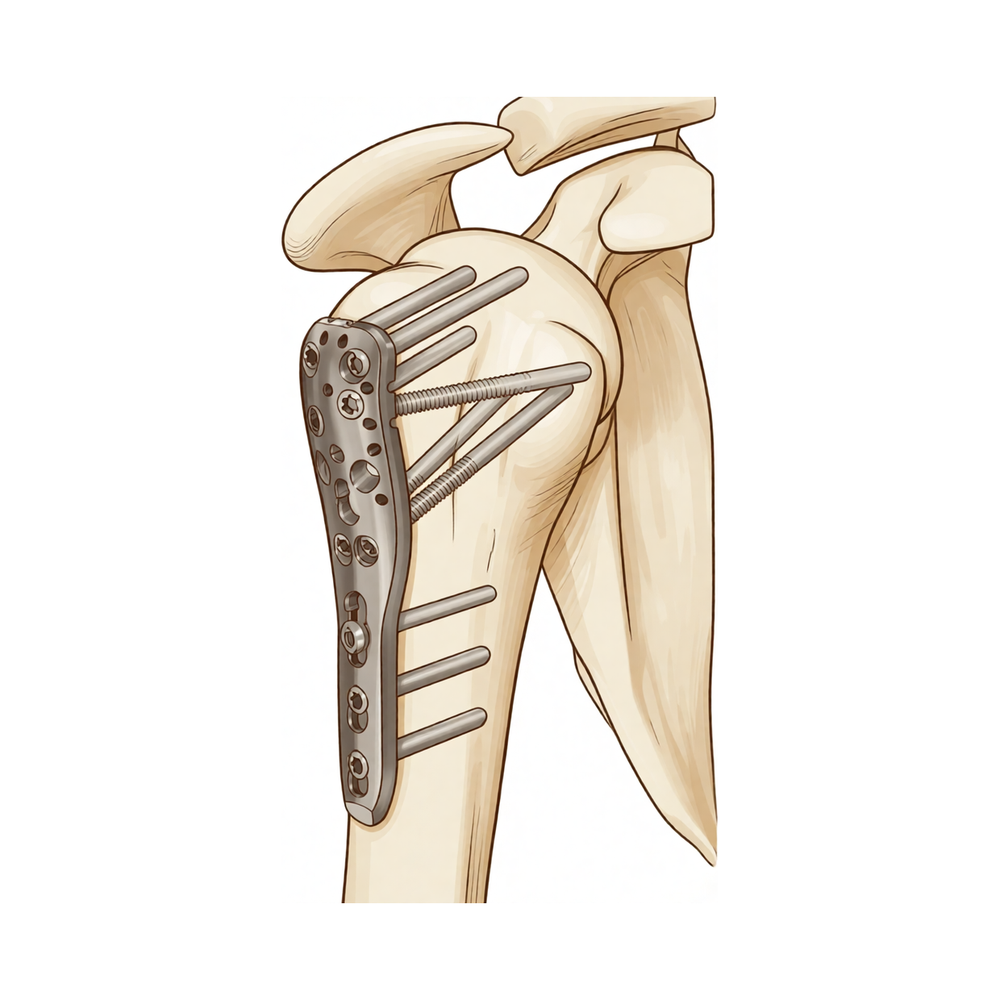
本方案涵盖在 Mater Private Hospital Rockhampton 由 Kieran Hirpara 医生进行近端肱骨骨折(上臂骨靠近肩部处的骨折,采用锁定钢板和螺钉进行切开复位内固定,ORIF)手术固定后的康复。请在首次物理治疗就诊时携带此页面或其 PDF 文件,以确保您的康复过程协调一致。您的康复将由物理治疗师根据骨折愈合情况,通过以下阶段进行个体化推进。
如果您在手术后对伤口有任何疑虑,请联系诊所。通常,拍摄伤口照片并通过电子邮件发送以供审阅会很有帮助。
预期情况
骨折固定术后的康复与大多数计划性肩部手术后的康复有所不同。钢板和螺钉将断裂的骨骼固定在原位,但骨骼本身仍需愈合,且愈合速度因人而异,差异显著。因此,以下时间表仅为典型指南,而非固定日程:您康复计划中每一步的推进,既取决于手术后的周数,也取决于X光片上骨折的愈合情况,并需经Hirpara医生在复诊时确认。切勿仅凭日历自行进入下一阶段;请等待复诊指示。
还有一点使该手术与众不同。肱骨顶端的骨性突起(结节)是肩袖肌腱的附着点,在许多肱骨近端骨折中,这些骨块是骨折的一部分,并通过钢板或缝线进行复位固定。过早或过度锻炼肩袖肌肉,可能在骨块愈合前对其产生牵拉。采用现代锁定钢板时,固定强度从第一天起就很强,因此鼓励早期温和活动:您可在早期即在无痛范围内进行主动辅助活动和轻柔的主动活动,并在无痛范围内抬高手臂。需谨慎的部分是肩袖负荷:若结节骨块不属于骨折部分,或已牢固固定,您的外科医生可能会允许您更早开始主动旋转和肩袖锻炼;若结节受累且正在愈合,则主动肩袖锻炼和强制外旋活动需稍作推迟。Hirpara医生会告知您适用哪种情况。
您的锻炼计划包含三种类型的运动,您的医疗团队将标注哪些适用于您:
- 主动活动范围: 允许在无辅助或帮助的情况下进行运动。
- 主动辅助活动范围: 使用另一只手臂或物体辅助移动手臂。
- 被动活动范围: 完全放松,由另一只手臂或外力完成100%的工作。
手术后您将在佩戴吊带中醒来。前大约三周需全天佩戴,随后根据舒适度在接下来几周内逐渐停用;已发表的方案平均约三周固定,且证据支持早期活动优于长时间佩戴吊带。您无需佩戴吊带睡觉。每天多次取下吊带进行锻炼、洗漱和穿衣,在家安静坐着时可将手臂移出吊带休息。任何肩部手术后至少六周内不得驾驶;您的外科医生将允许您驾驶,通常是在六周复诊时。
康复过程概览:
- 第一阶段 — 保护与早期活动: 第 0–6 周
- 第二阶段 — 恢复主动活动: 第 6–12 周
- 第三阶段 — 强化训练: 约第3至4.5个月
- 第四阶段 — 恢复完全活动: 约4.5至6个月后
第一阶段 — 保护与早期活动(第 0–6 周)
Kieran Hirpara 4.0
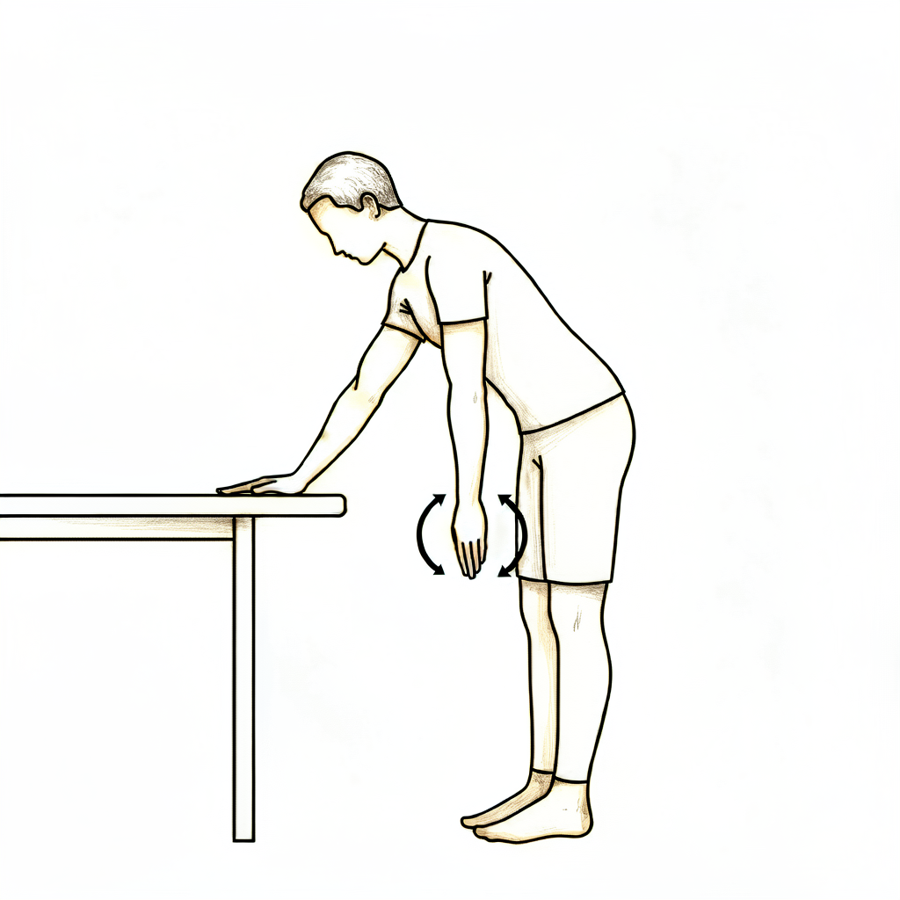
钟摆运动
身体前倾,用另一只手支撑在桌面上,让手术侧手臂自然放松下垂。通过轻轻晃动身体,做小范围的圆周运动——先顺时针,再逆时针。手臂被动摆动;动作来源于身体,而非肩部肌肉。
每天数次
Kieran Hirpara 4.0
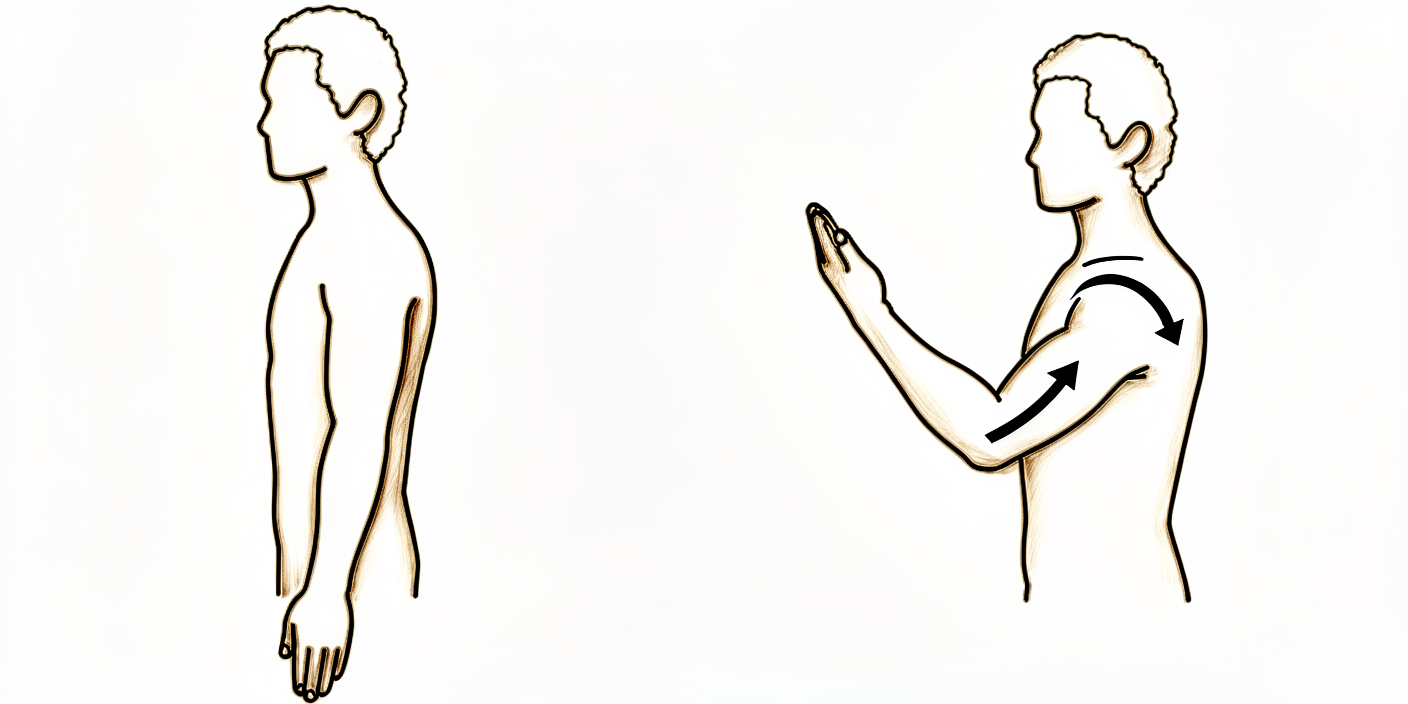
主动肘关节屈曲
将手臂从悬吊带中取出,上臂自然垂于体侧,将肘关节弯曲至舒适的最大范围,然后完全伸直。仅肘部活动——保持肩部静止,手臂置于体侧。
每天数次
Kieran Hirpara 4.0
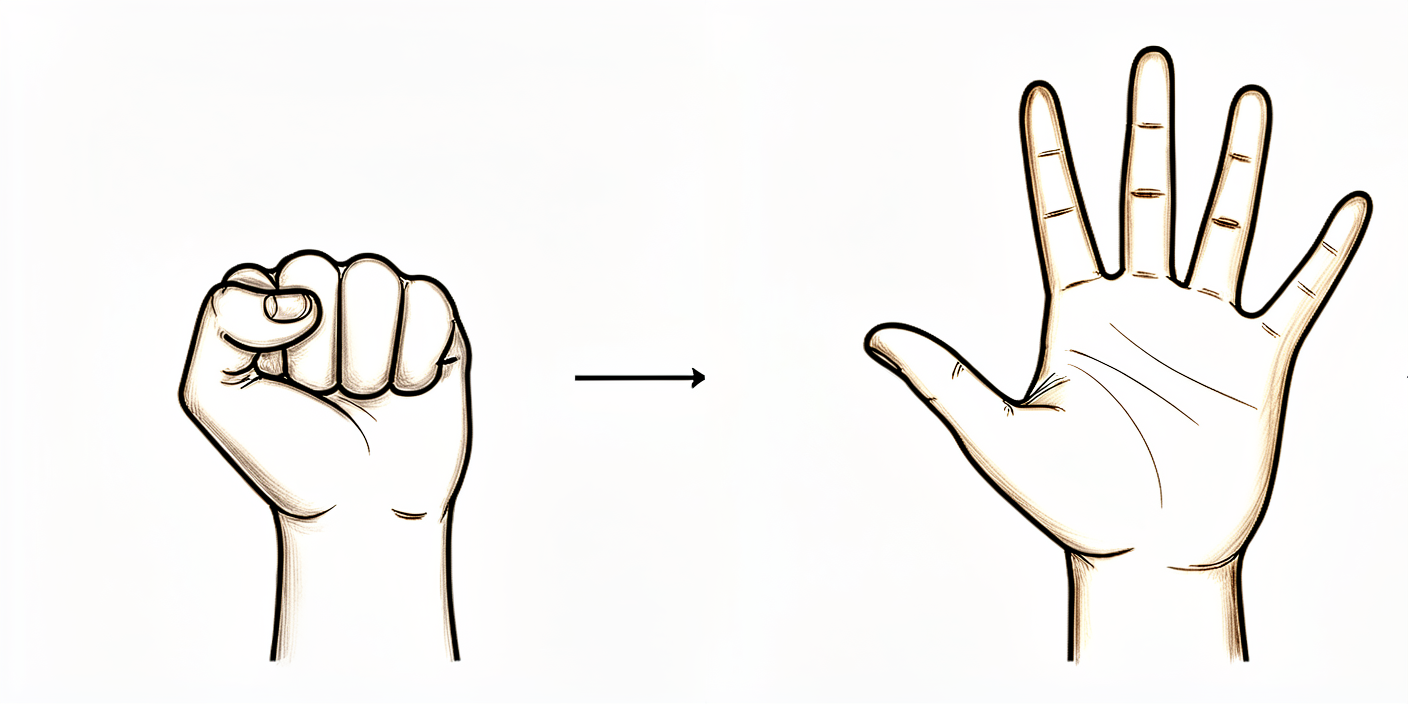
握球
在手臂得到支撑的情况下,挤压一个软球或紧握拳头,然后完全张开手掌。每次手臂脱离悬吊带时,都要保持手指、手腕和手部的活动。
每天数次
Kieran Hirpara 4.0
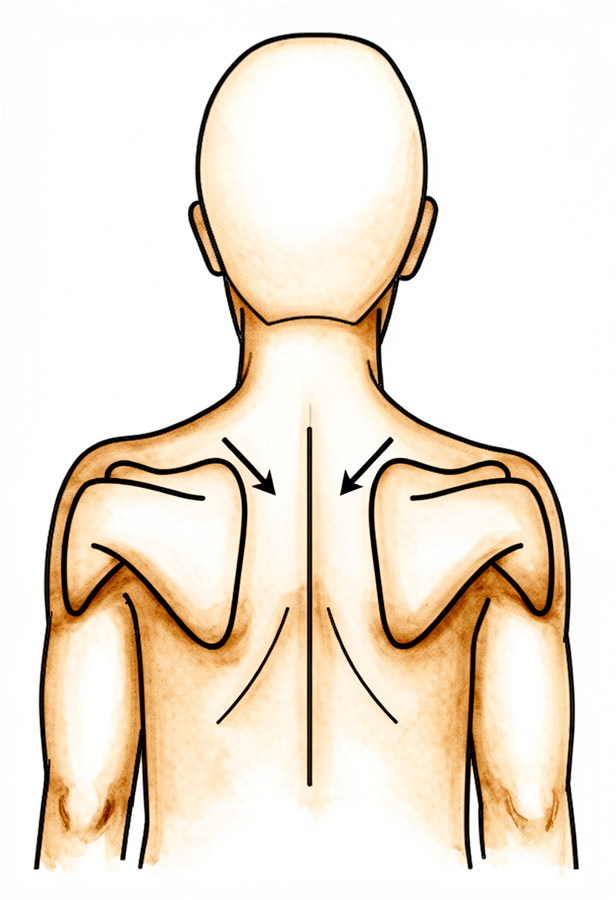
肩胛骨稳定练习
坐直或站直,在不移动手臂的情况下,轻轻将肩胛骨向下并向后收拢,保持几秒钟,然后放松。保持耳朵、肩膀和臀部在一条直线上。
在您的物理治疗师指导下
Kieran Hirpara 4.0
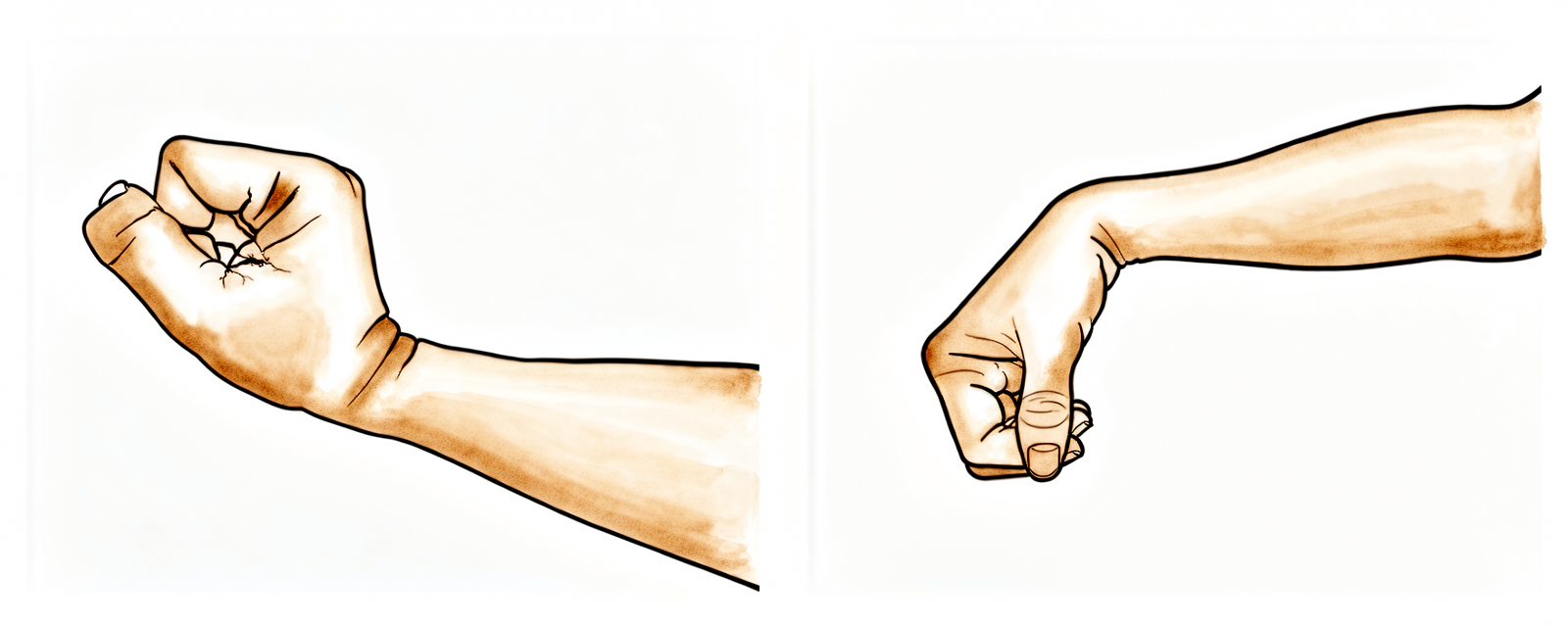
腕部运动
手臂脱离吊带后,通过向前、向后及轻柔地向左右侧屈伸来保持手腕活动。这能在保护肩关节的同时,使整条手臂保持活动状态。
每天数次
Kieran Hirpara 4.0
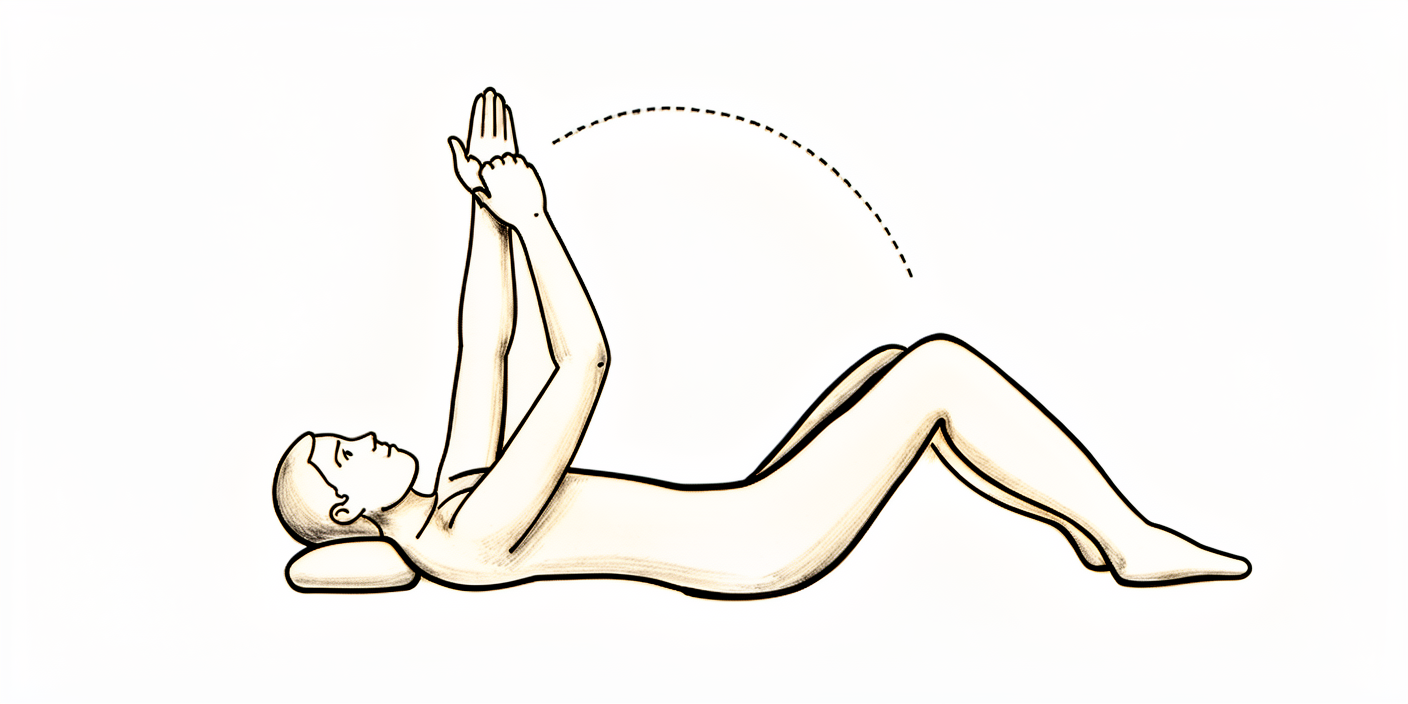
辅助前举(仰卧位)
仰卧,用健侧手臂协助将患侧手臂抬至身体前方,然后在健侧手臂的辅助下轻轻放下。仰卧位可借助重力,使早期抬举更容易。保持在舒适、无痛的范围内,在开始感到牵拉感时停止——切勿强行活动。
每天数次,在无痛范围内
Kieran Hirpara 4.0
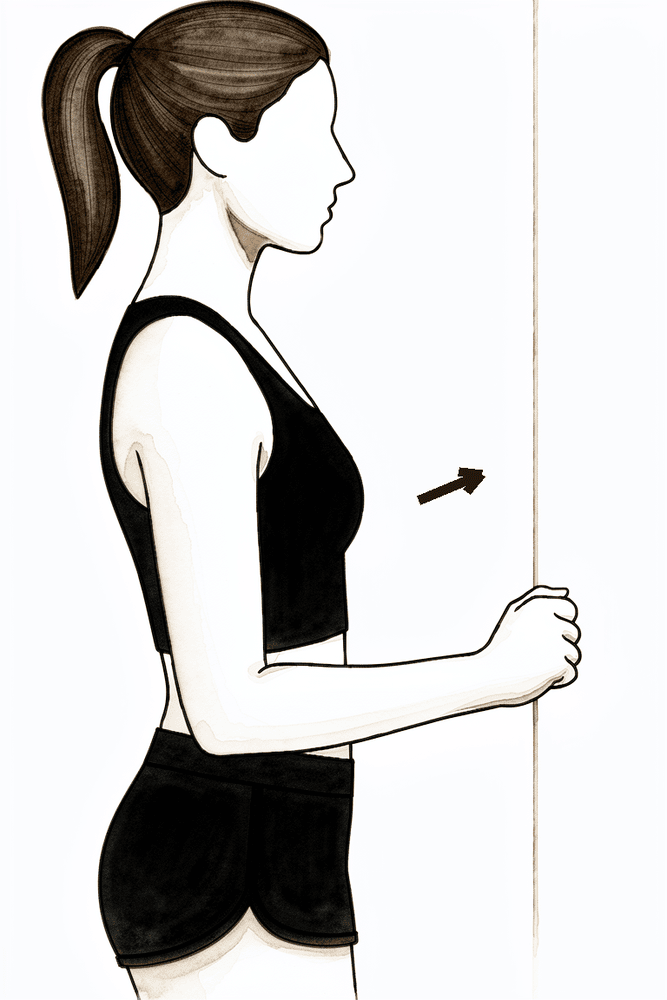
轻柔的前举等长收缩
面向墙壁站立,手术侧手臂自然下垂于体侧,以松握的拳头抵住身前的墙壁。轻轻将手向前推压墙面,同时保持手臂不动,保持数秒后放松。此动作可激活肩部上提肌群,而不会对愈合中的骨折造成过度牵拉。仅在您的物理治疗师已指导您开始进行此练习时方可执行。
在您的物理治疗师指导下
最初六周的重点在于保护固定后的骨折,同时防止手臂其余部分(以及肩关节本身)发生僵硬。由于锁定钢板从一开始就牢固地固定了骨骼,因此鼓励进行温和的早期活动,而不是等待六周。物理治疗师会在您出院前开始指导您进行温和的练习:钟摆运动(通过身体摆动让手臂自然下垂并轻轻摆动),以及每天多次将肘部、手腕和手部移出吊带进行活动。从早期开始,并在舒适、无痛的范围内,您可以在另一只手的帮助下(主动辅助)以及温和地依靠自身力量(主动)开始活动手臂,在舒适度允许的范围内将手臂抬至身前。需要谨慎的部分是肩袖负荷:在结节愈合之前,避免强行将手臂向外旋转(外旋),并避免抗阻肩袖训练,正如希拉帕博士(Dr Hirpara)所确认的那样。使用冰敷以缓解疼痛,并在练习和物理治疗预约前服用止痛药。
致您的物理治疗师:
目标
- 保护内固定并优化骨愈合
- 缓解疼痛和肿胀
- 在无痛范围内建立早期主动辅助抬举,并逐步过渡至主动抬举
- 维持颈部、肘部、手腕和手部的完全活动度
管理
- 全天佩戴吊带约 3 周,随后根据舒适度逐渐减少使用时间(文献惯例);每天多次取下吊带进行练习和清洁;卧床时无需佩戴
- 每天多次进行钟摆 / Codman 运动
- 对于稳定的内固定,从一开始即在舒适、无痛的范围内进行早期主动辅助和温和的主动前抬举;从仰卧位开始抬举,随着控制能力提高逐渐过渡至直立位;根据舒适度允许的范围逐步增加活动度
- 在主动活动尚不能耐受时,按需进行被动活动度训练:在肩胛骨平面内前抬举至约 90°,内旋至腹部(而非背后)
- 手臂置于体侧时,外旋保持在早期温和的默认值约 30–40°;如果结节未受累或固定牢固,外科医生可能会增加此角度
- 颈部、肘部、手腕和手部移出吊带进行主动活动度训练;握球以锻炼抓握力
- 肩胛骨定位和肩胛骨活动度训练(上提、下沉、后缩、前伸)
- 随着舒适度允许,可引入温和的三角肌和肩周肌群等长收缩训练
- 治疗前进行冷疗和镇痛;伤口愈合后进行瘢痕松动和脱敏训练
注意事项
- 在结节愈合得到确认之前(由外科医生指导),避免强行或抗阻外旋以及重度肩袖负荷;允许在无痛范围内进行主动抬举
- 禁止背后内旋;避免冠状面上的外展
- 保持早期活动无痛:温和且在舒适范围内,不可强行
- 手术侧手臂不得提举超过约 0.5–1 公斤的重物
- 手术侧手臂不得承重(不得从椅子或床上撑起身体)
- 六周内禁止驾驶(此规定适用于任何肩部手术)
- 禁止强行或疼痛的极限范围活动
进展标准
- 影像学显示愈合进展,并在约 6 周时与希拉帕博士(Dr Hirpara)的复诊中确认
- 疼痛得到良好控制
- 维持肘部、手腕和手部的完全活动度
- 在无痛范围内舒适地进行从主动辅助到主动的抬举
第二阶段 — 恢复主动活动(第 6–12 周)
Kieran Hirpara 4.0
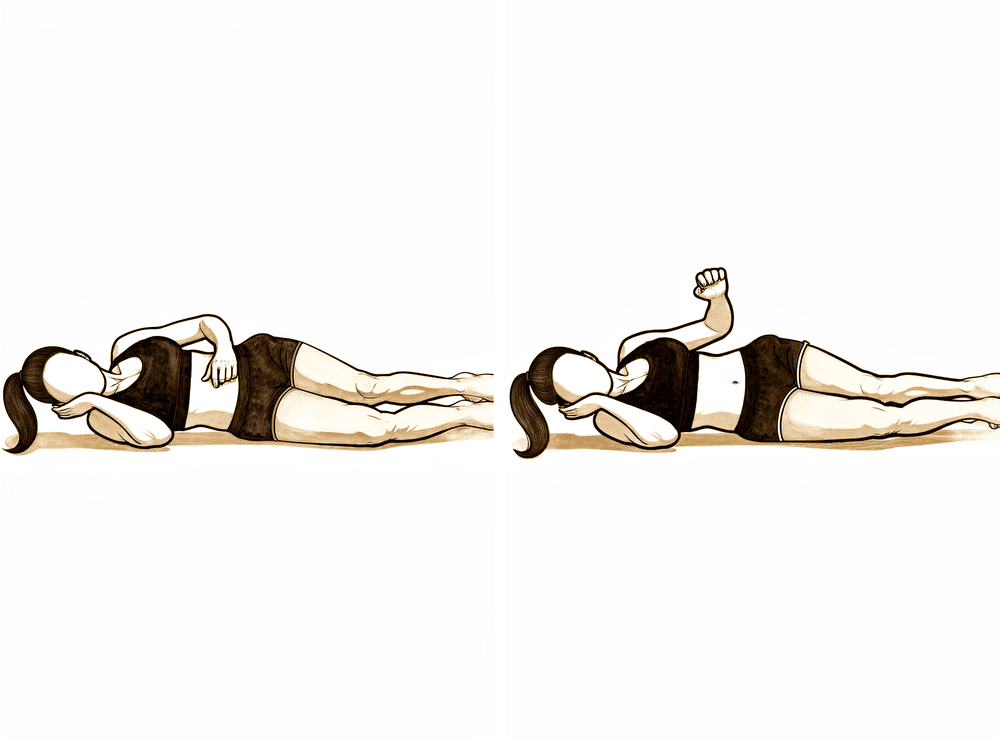
侧卧位外旋
非手术侧在下侧卧,手术侧手臂置于上方,肘关节屈曲90度并贴紧身体。保持肘部贴紧,将前臂向上远离腹部旋转至舒适的最大范围,然后有控制地放下。不增加额外重量——手臂依靠自身力量移动。
在您的物理治疗师指导下
Kieran Hirpara 4.0
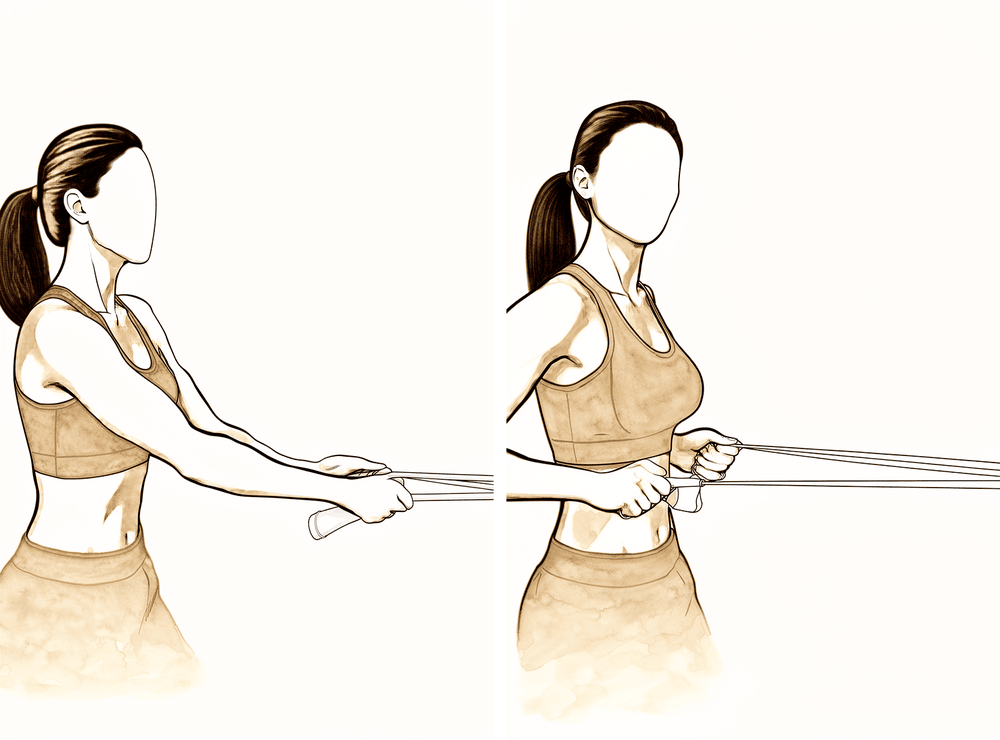
弹力带低位划船
将弹力带固定在身前腰部高度。保持直立站姿,将弹力带向身体方向拉动,轻柔地将肩胛骨向下、向后牵引,然后有控制地释放。保持阻力较轻。
在您的物理治疗师指导下
Kieran Hirpara 4.0
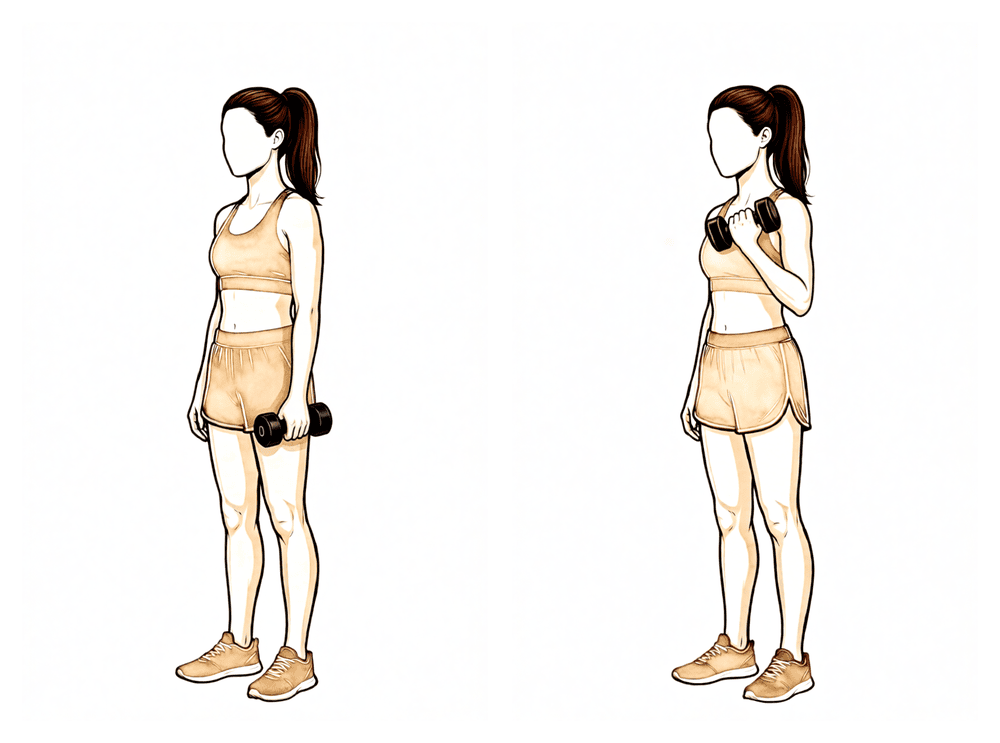
二头肌弯举
掌心向上持握轻重量,屈肘将重量移向肩部,然后缓慢放下。保持上臂静止于体侧,并确保重量较轻——在此阶段不超过约 1–2 kg。
在您的物理治疗师指导下
Kieran Hirpara 4.0
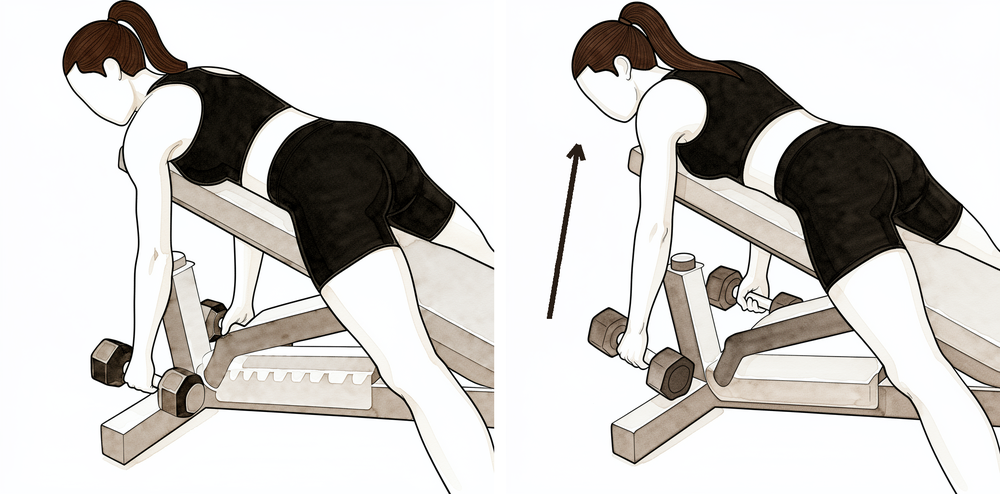
支撑位划船
身体前倾,健侧手臂支撑在桌面上,让手术侧手臂自然下垂并悬挂一个轻重量。将肩胛骨向后收,将重量向上拉向髋部,然后有控制地放下。保持躯干稳定——动作应来自肩胛骨和手臂,而非背部。
在您的物理治疗师指导下
Kieran Hirpara 4.0
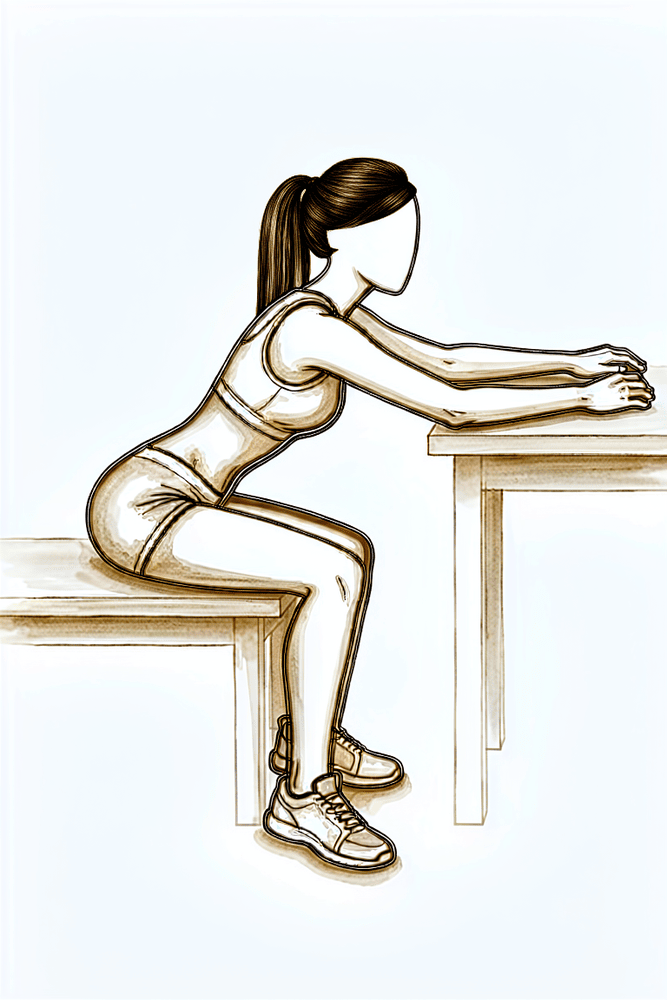
桌面滑动
坐在桌前,将手放在毛巾或布料上。身体前倾,沿桌面将手向远离身体的方向滑动,使手臂向前伸展得更远,然后再滑回。桌面承担了手臂的重量,因此这是一种温和地恢复前向活动度的方法。
在您的物理治疗师指导下
Kieran Hirpara 4.0
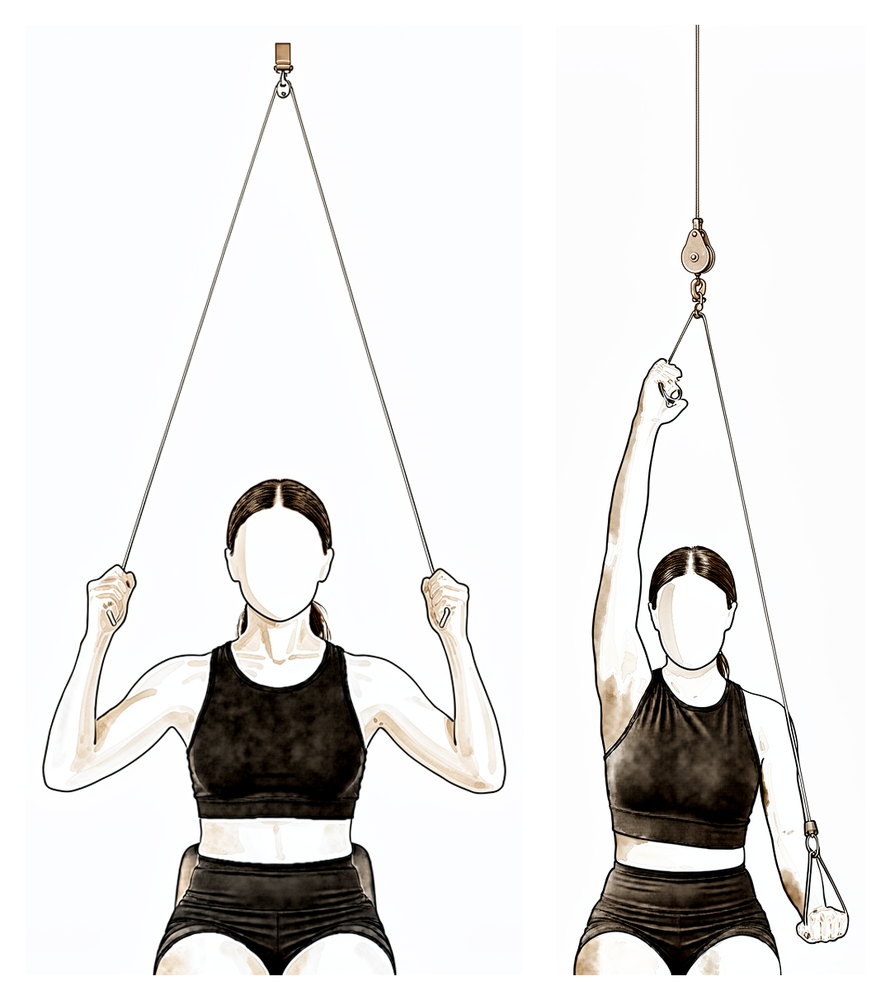
门顶滑轮
坐在门后滑轮装置下方,双手各握一个手柄。用健侧手臂向下拉,将患侧手臂向上抬起至舒适的最大范围,然后缓慢放下。让健侧手臂完成发力,并保持在舒适的范围内。
在您的物理治疗师指导下
Kieran Hirpara 4.0
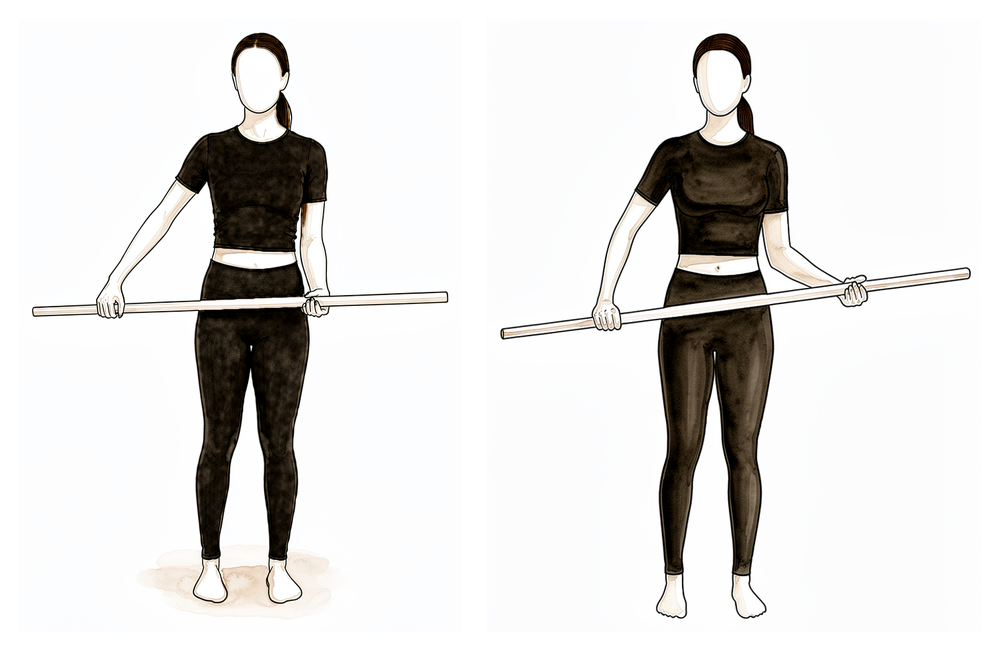
使用棍棒辅助外旋
仰卧,肘部贴紧体侧并屈曲成直角。双手握住一根棍棒,用健侧手臂带动患手向外旋转。在确认愈合后,可轻柔地进一步增加外旋幅度——但务必保持在外科医生和物理治疗师设定的活动范围内。
在您的物理治疗师指导下
Kieran Hirpara 4.0
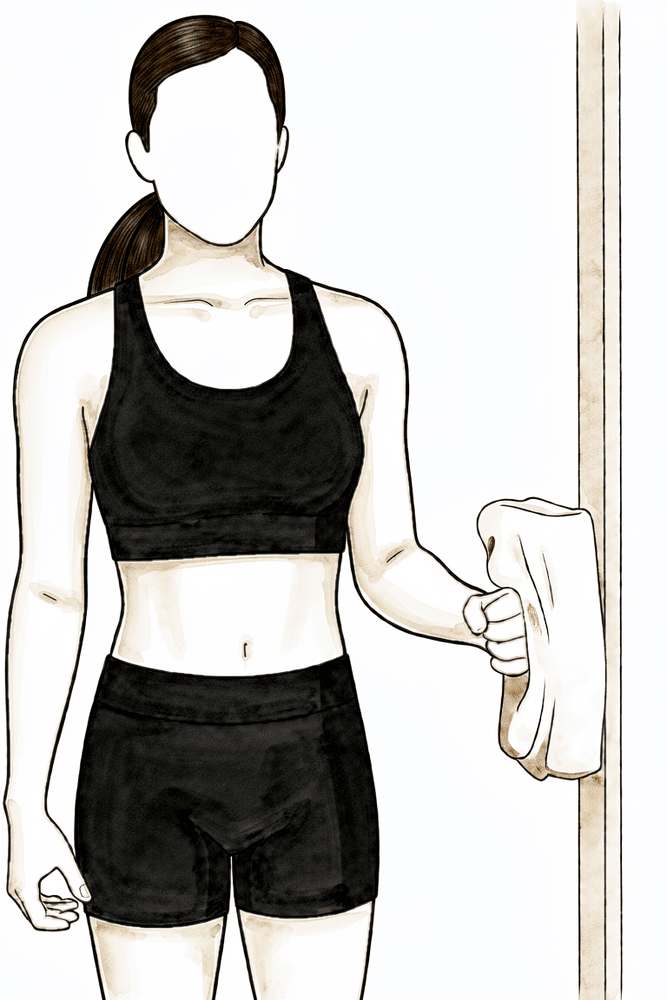
等长外旋
将肘部紧贴体侧并屈曲至直角,使手背抵住墙壁或门框。轻轻向外推压,保持手臂不动,维持数秒后放松。此动作可在无运动的情况下开始激活肩袖——仅在Hirpara医生确认您的愈合情况后开始进行。
在您的物理治疗师指导下
Kieran Hirpara 4.0
肱三头肌伸肘练习
手持轻重量,弯曲然后伸直肘部,以锻炼上臂后侧的肌肉。保持上臂稳定,重量要轻——在此阶段不超过约 1–2 公斤。
在您的物理治疗师指导下
Kieran Hirpara 4.0
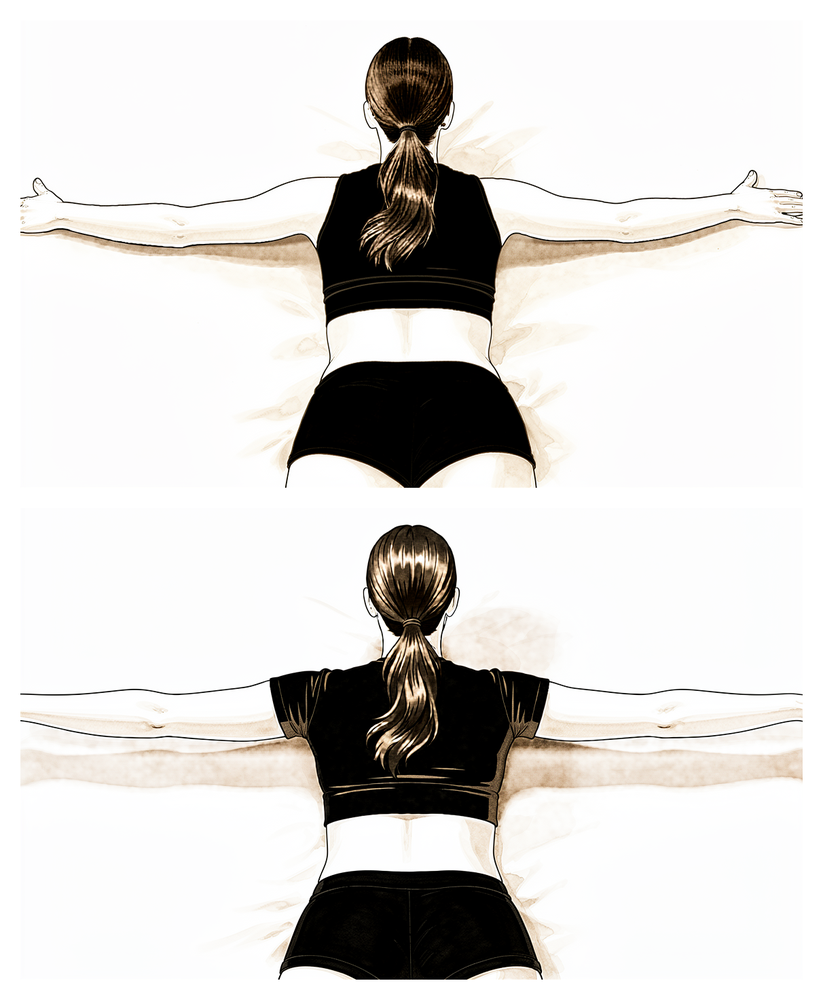
俯卧肩胛骨划船
俯卧,手臂悬垂于床或长凳边缘。将肩胛骨向后收,手臂向侧方抬起少许,同时夹紧两侧肩胛骨,然后有控制地放下。此动作可增强稳定肩胛骨的肌肉力量。
在您的物理治疗师指导下
在大约六周的复查时,Hirpara 医生会检查您的 X 光片。如果愈合进展符合预期,将停止使用任何剩余的悬吊带,您开始自行活动手臂,首先借助辅助(使用另一只手臂、拐杖或滑轮),然后进行主动活动。通常,仰卧时开始主动抬臂效果最佳,因为此时重力的阻力较小,随着控制能力的提高,逐步过渡到坐姿和站姿。一旦 Hirpara 医生确认愈合情况,本阶段将开始进行肩袖的温和肌肉等长收缩(等长)练习;抗阻练习将在后期进行。当您不再使用悬吊带,手臂具有足够的活动度和控制力以安全驾驶,且不再服用强效止痛药时,您可以恢复驾驶;如有疑虑,请在复查时讨论。
致您的物理治疗师:
目标
- 恢复完全被动活动范围
- 在所有平面上,从主动辅助活动范围过渡到主动活动范围
- 重建正常的肩肱节律,并最小化代偿模式
- 恢复正常轻度日常活动
管理
- 最迟在 6 周复查时完全弃用悬吊带
- 主动辅助活动范围:草坪椅式渐进训练、桌面/墙面滑动、滑轮、拐杖练习,在舒适度允许的情况下超越第一阶段限制
- 从大约 6–8 周开始主动活动范围:仰卧屈曲,逐步过渡到直立抬举;侧卧外旋和屈曲;低位划船/低位出拳
- 从大约 6–8 周开始,在确认愈合后,手臂置于体侧,进行亚最大强度的肩袖和三角肌等长收缩
- 轻度肘部等张运动(肱二头肌弯举、肱三头肌伸展)和肩胛骨强化(后缩、俯卧划船)
- 根据需要进行盂肱关节和肩胛胸壁关节松动术,随愈合情况提高手法等级
- 姿势矫正;根据偏好,在训练前后继续热敷/冰敷和镇痛
注意事项
- 在确认骨愈合前,禁止进行抗阻(等张)肩袖强化训练,通常不早于 8–12 周
- 禁止强力末端范围过压或激进被动拉伸
- 手术侧手臂提举重量限制在约 1–2 公斤以内
- 注意并纠正抬举时的肩部耸起和躯干倾斜代偿
晋级标准
- 完全或接近完全的被动活动范围
- 主动抬举具有良好的力学机制,至少低于肩部高度
- 等长收缩耐受良好,无疼痛加剧
- X 光显示愈合进展,并经您与 Hirpara 医生的复查确认
第三阶段 — 强化训练(约第3个月至4.5个月)
Kieran Hirpara 4.0
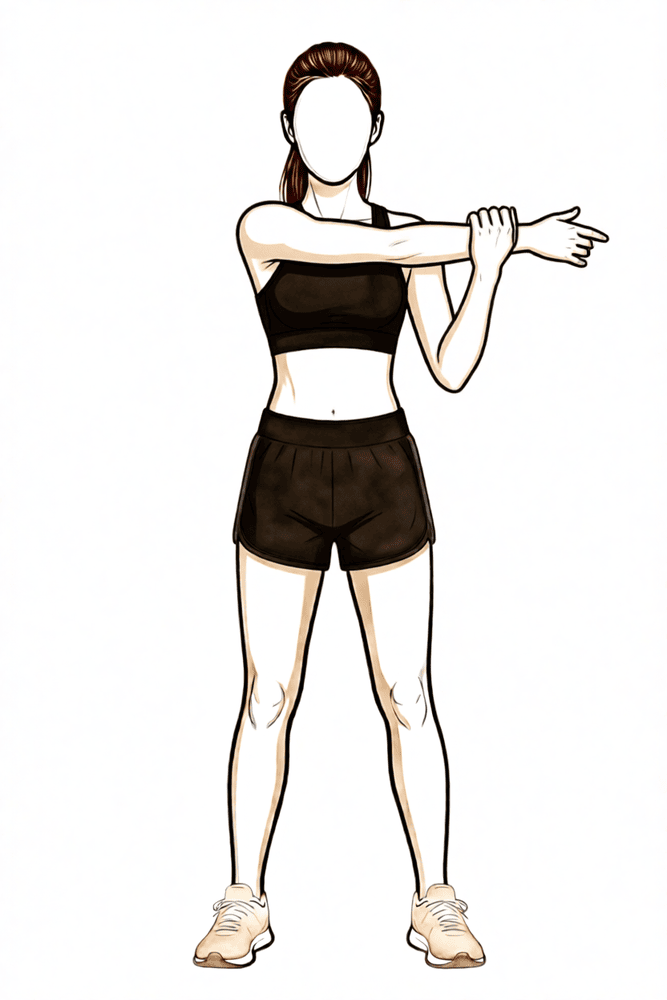
跨体拉伸
用另一只手将手术侧手臂横过胸前,直至感到肩后部有牵拉感。短暂保持后松开。仅拉伸至明显的牵拉不适感——切勿拉伸至出现锐痛。
在您的物理治疗师指导下
Kieran Hirpara 4.0
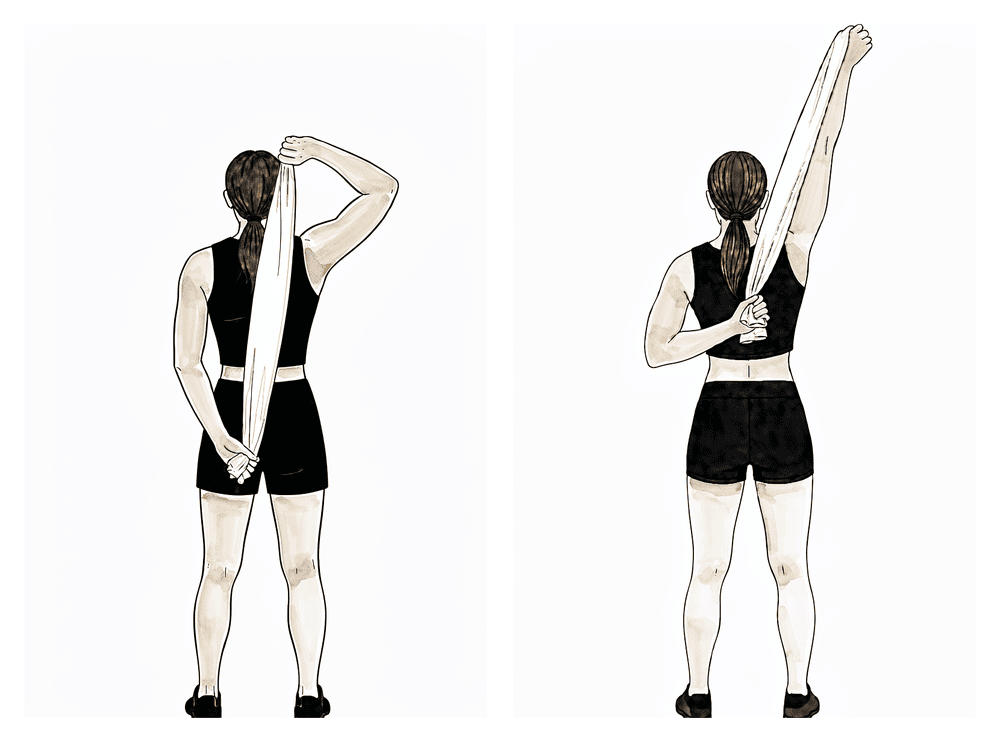
背后伸展
用健侧手臂在上、手术侧手臂在下的姿势,将毛巾置于背后。用上方的手轻轻将下方的手沿背部向上牵引,直至感到舒适的牵拉感,保持片刻后放松。逐步增加活动范围——切勿强行牵拉或推入锐痛区域。
在您的物理治疗师指导下
Kieran Hirpara 4.0
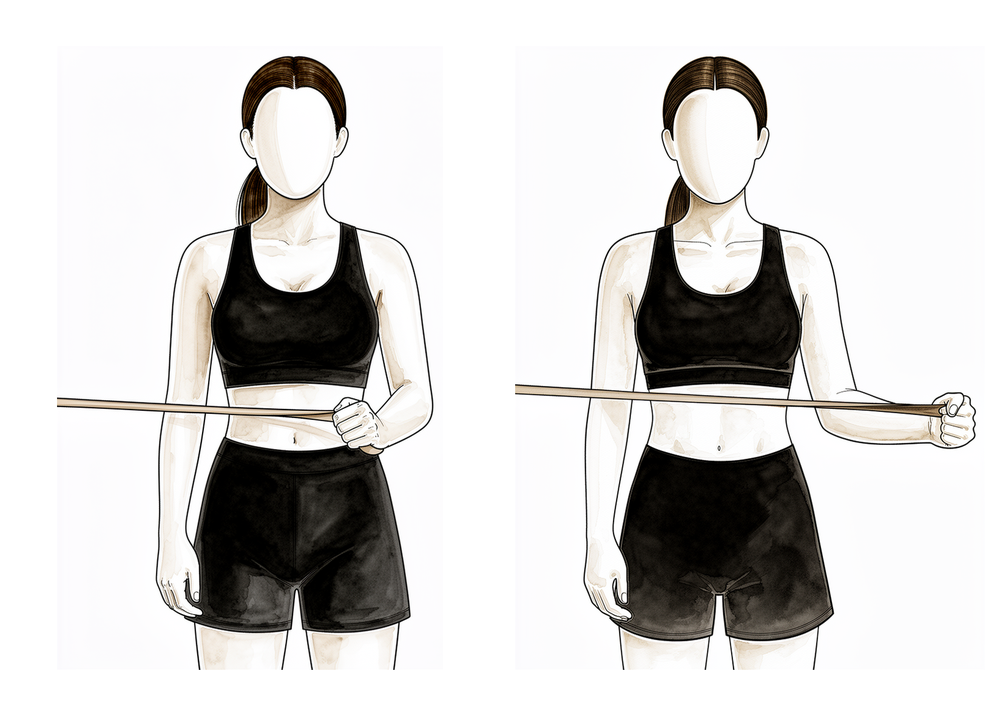
弹力带外旋
将肘部紧贴体侧并屈曲成直角,手持一条固定于腰部高度的橡皮筋。保持肘部贴于体侧,对抗橡皮筋阻力将前臂向外旋转,然后缓慢复位。此动作在手臂置于体侧时锻炼肩袖肌群,是旋转肌力训练的基础。
2至3组,每组8至12次,低阻力
Kieran Hirpara 4.0
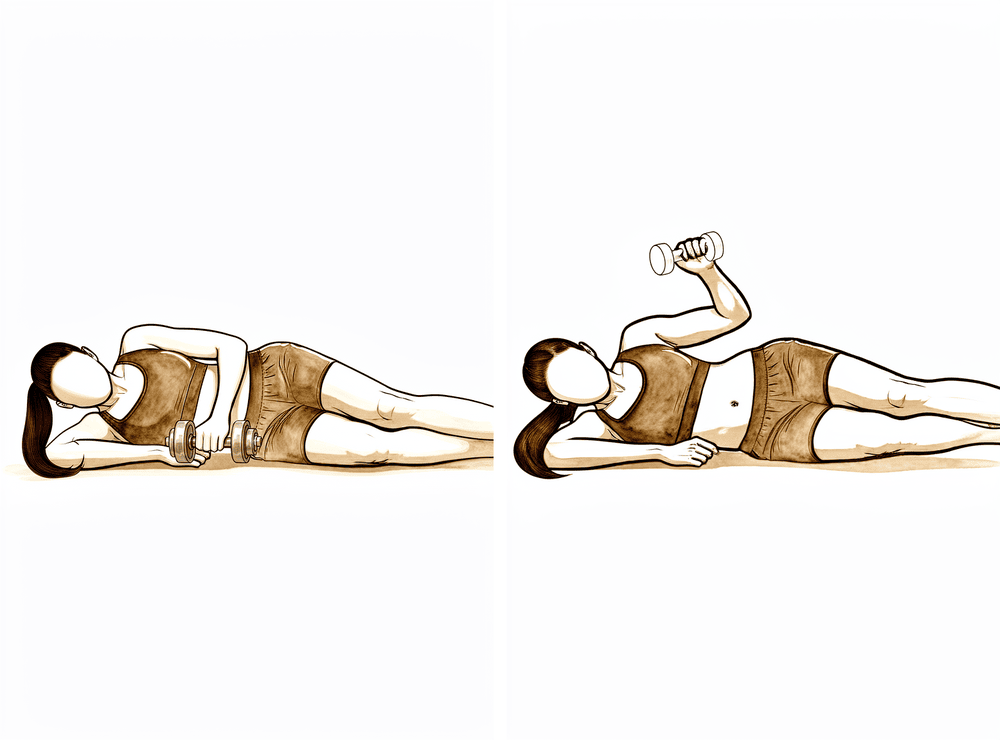
侧卧位负重外旋
非手术侧在下侧卧,上方肘关节屈曲成直角并紧贴身体。手持轻重量,将前臂向上旋转朝向天花板,然后缓慢放下。随着肩袖力量重建,保持负荷较轻且重复次数较高。
2至3组,每组8至12次,低负荷
Kieran Hirpara 4.0
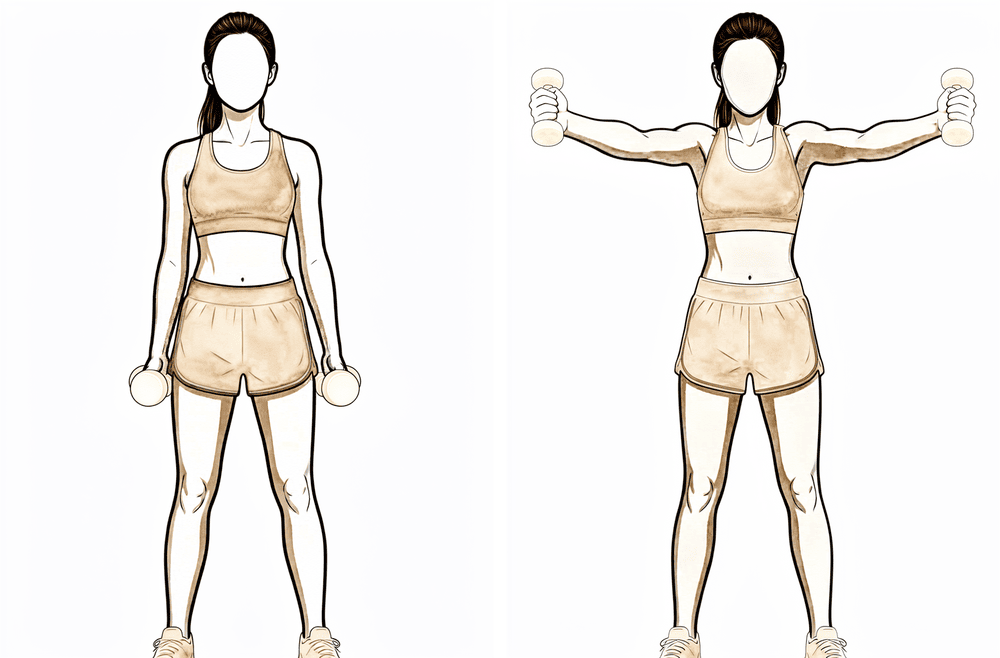
满罐式上举(肩胛平面上举)
拇指朝上握持轻重量,将手臂向前外侧斜上方抬起——而非完全向侧方——至约肩部高度,然后缓慢放下。此动作同时锻炼肩关节前部及肩袖。保持重量较轻,若引发持续疼痛则立即停止。
2至3组,每组8至12次,低负荷
Kieran Hirpara 4.0
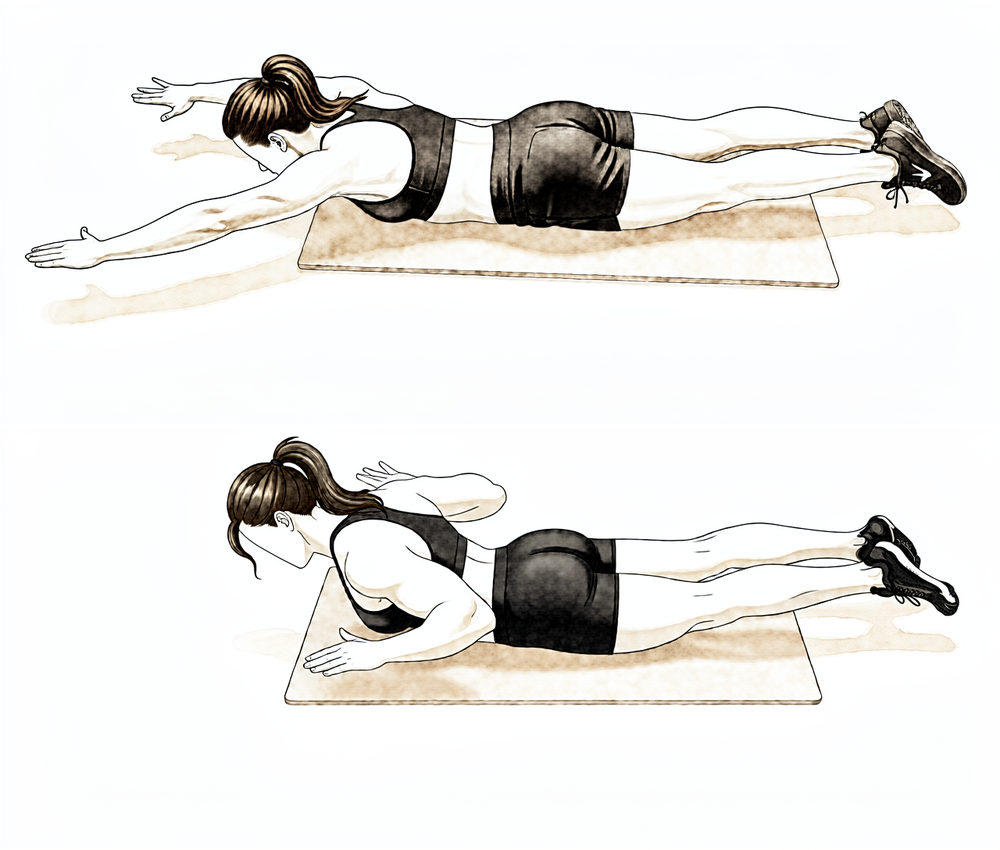
俯卧划船
俯卧,手术侧手臂自然下垂指向地面。将肘部向上(朝向天花板)抬起,同时将肩胛骨向脊柱方向内收挤压,然后缓慢放下。起始时不施加重量,并保持动作受控。
在您的物理治疗师指导下
Kieran Hirpara 4.0
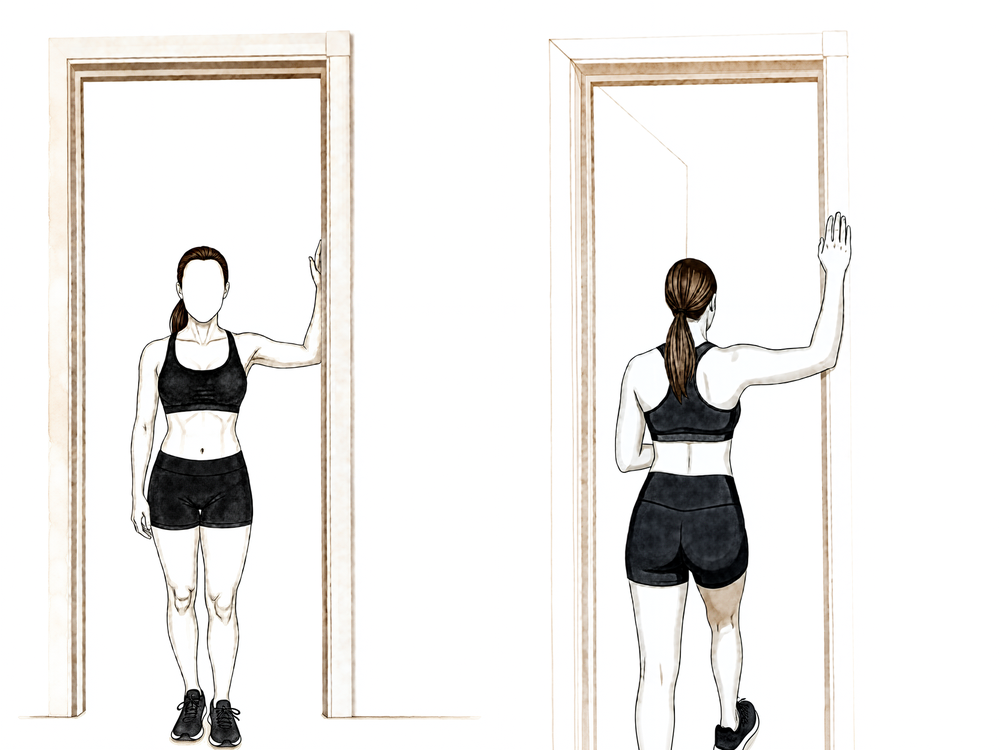
门框胸部拉伸
站在门框处,前臂搭在门框上,肘部大约与肩部同高。一只脚向前迈出,轻轻向前倾身,直到感到胸前有拉伸感,然后保持该姿势。动作要轻柔,切勿强行拉伸。
在物理治疗师的指导下,保持约20–30秒
Kieran Hirpara 4.0
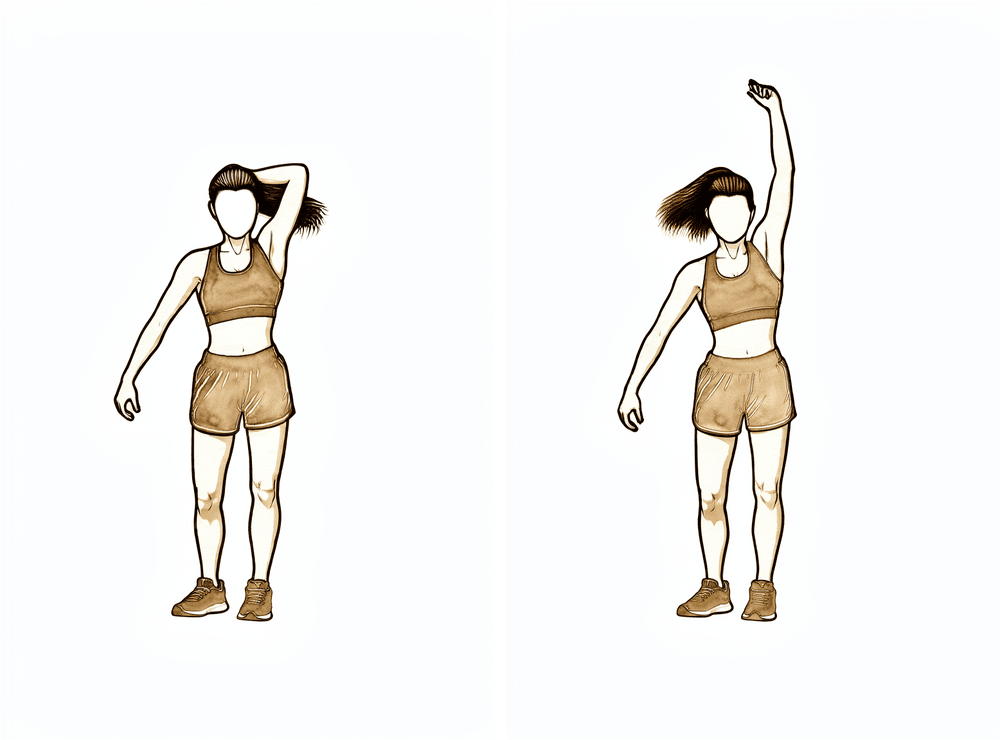
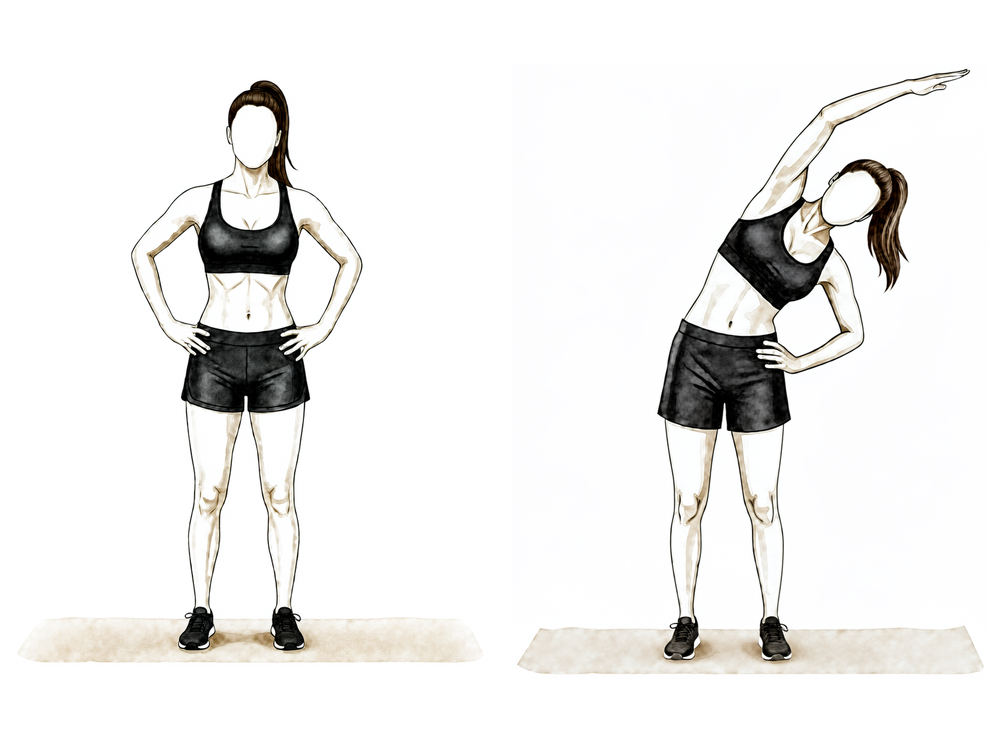
背阔肌(背部侧面)拉伸
将手术侧手臂举过头顶——如有需要,可用健侧手引导——然后轻轻向对侧倾斜,直至感到背部外侧有拉伸感,随后保持该姿势。保持动作舒适,并在您的活动范围内进行。
在物理治疗师的指导下,保持约20–30秒
随着骨折愈合及主动活动能力的恢复,重点转向重建肌力。抗阻训练从温和开始(针对肩袖、三角肌和肩胛骨肌肉使用弹力带和轻重量),并逐步进阶。拉伸训练同步进行,旨在实现所有方向(包括背伸)的完全活动度。在此阶段,日常活动应基本恢复正常,较轻的休闲活动通常也会恢复,具体以物理治疗师的指导为准。
致您的物理治疗师:
目标
- 在所有平面内实现完全主动活动范围,且生物力学正常
- 逐步恢复肩袖、三角肌和肩胛骨肌群的力量与耐力
管理
- 从等长收缩过渡到弹力带,再到轻自由重量强化训练(约 0.5–2 kg),针对肩袖、三角肌和肩胛骨稳定肌群:低负荷、高重复次数(例如 2–3 组,每组 8–12 次),抗阻训练每周约3次,以避免过度负荷
- 初期旋转强化训练时,手臂置于体侧,低于肩部高度
- 强调前三角肌以及斜方肌–前锯肌力偶,以建立稳定的肩胛骨基底
- 针对所有平面末端活动度的柔韧性训练:后关节囊(跨体)拉伸、背伸内旋、前胸壁/胸小肌拉伸、门框拉伸
- 随着活动度允许,开始进行背伸内旋及III–IV级松动术
- 低阻力上肢功率计;一般有氧体能训练
注意事项
- 强化训练应保持在舒适范围内,不应引发持续性疼痛
- 在此阶段,手术侧手臂提举重量不得超过约 4–5 kg
- 避免手臂过度负重(俯卧撑等动作留待后期进行)
进阶标准
- 完全主动活动范围,且无代偿策略
- 强化训练耐受良好,无疼痛加剧或活动度丧失
第四阶段 — 恢复完全活动(约4.5至6个月起)
最后阶段是逐步恢复较重的负重、体力劳动、过头任务及体育运动。力量训练将进阶至更重的阻力及复合动作,并在与工作或运动相关的情况下,进阶至更快、更具动态性的练习。大多数人约在六个月时即可恢复日常活动,尽管力量和信心通常会在长达一年的时间内持续改善。合适的终点取决于手臂所需承担的功能,因此,恢复重体力劳动或对抗性及过头运动的时机需与Hirpara医生及您的物理治疗师共同商定,而非仅由日历决定。
致您的物理治疗师:
目标
- 恢复完全的工作、休闲及体育活动
- 手术侧手臂的力量接近对侧水平
管理
- 通过弹力带、自由重量及健身房复合动作进行渐进性阻力训练
- 俯卧撑进阶(墙壁 → 长凳 → 跪姿 → 标准)及在可耐受范围内的闭链稳定性训练
- 约4.5个月起:在相关情况下进行离心负荷、增强式训练(负重球练习)、本体感觉及节律稳定训练
- 在90°外展位进行抗阻旋转,并根据情况实施间歇性运动专项或职业专项计划
注意事项
- 进阶仍以症状为导向:若疼痛或活动范围受限复发,应放缓进度,首先恢复舒适的活动度
出院标准
- 经测量,手术侧手臂力量至少达到对侧的80%左右
- 渐进性力量训练过程中无疼痛
- 可独立执行家庭维持训练计划
您的康复方案之后
上述各阶段改编自已发表的肱骨近端骨折固定术后康复方案,来源包括:马萨诸塞州总医院布莱根运动医学中心、双子城骨科中心、康涅狄格大学肌肉骨骼研究所、纽约大学朗格尼骨科中心以及南本德骨科中心,并结合了肱骨近端骨折术后康复的系统性综述。与大多数肩部手术相比,针对该手术的已发表方案差异更大,因为合适的康复进度取决于个体骨折的具体固定方式及其愈合情况;因此,您在各阶段间的推进由希拉帕医生(Dr Hirpara)在复诊时指导,并由您的物理治疗师在复诊间隙进行调整。本页面与本诊所的一般术后恢复建议配合使用;请参阅术后疼痛管理和伤口护理。关于手术本身,请参阅肱骨近端固定术。
如果您希望阅读本方案背后的证据(即关于钢板固定术后早期活动与延迟活动的研究、手术与悬吊治疗的争议,以及分阶段推进旨在避免的并发症),本页面旁附有一份完全标注参考文献的证据摘要 PDF。
Evidence & references
This is the clinical evidence summary written for health professionals. It is technical, and it lists the research this page was built from. You do not need to read it to understand your treatment or to make a decision about it.
Proximal Humerus Fracture Fixation (Locking-Plate ORIF) — Post-operative Rehabilitation: Evidence
Topic scope: Post-operative rehabilitation after open reduction and internal fixation (ORIF) of a proximal humerus fracture with a locking (angular-stable) plate and screws. This page covers the evidence behind the phased rehabilitation program — early protected/passive motion, deferred active and resisted motion, and graded strengthening — and the surgical-outcome facts that shape it. It does not cover the separate pathways of non-operative fracture management, intramedullary nailing, hemiarthroplasty or reverse total shoulder arthroplasty, although the operative-versus-non-operative debate is summarised because it frames who is offered this operation at all.
Defining principle of the rehab here (mobilise early, protect the tuberosities): A locking plate is an angular-stable construct — the screws lock into the plate, so the fixation holds even in osteoporotic bone without relying on bone-to-screw friction. Because that stability is present from day one, this protocol now permits early active (and active-assisted) shoulder elevation in a pain-free range for stable fixation, consistent with the early-active-motion RCT evidence (Loew 2025), rather than holding the shoulder passive-only for six weeks. The element still keyed to biological healing is rotation and rotator-cuff loading: where the tuberosity fragments to which the rotator cuff attaches are part of the fracture, active/resisted rotation and cuff work are held back until those fragments unite, whereas where the tuberosities are uninvolved or solidly fixed the surgeon may clear cuff loading sooner. The brake is therefore biological, not mechanical — the plate is strong immediately — and it is now selective (rotation/cuff), not a blanket movement ban. Progression of cuff loading remains governed by fracture stability and radiographic healing, not the calendar. This places the protocol close to the early-active-movement end of the spectrum while still being more tuberosity-aware than a pure debridement/decompression, and far less tuberosity-dependent than a fracture arthroplasty, where healing of the tuberosities to the prosthesis dictates a slower, stricter cuff-loading timetable.
The operation
A proximal humerus fracture is a break of the upper end of the arm bone, near the shoulder. In ORIF the fragments are realigned (reduced) and held with a pre-contoured locking plate on the outer surface of the bone, fixed with multiple locking screws into the humeral head. Where the tuberosities (the bony knobs carrying the rotator-cuff attachments) are part of the fracture, they are reduced and secured to the plate, often reinforced with heavy sutures through the cuff. The plate provides immediate mechanical stability; the rehabilitation then protects the biological healing of the fracture and the tuberosity fragments.
Evidence by theme
1. Modern locking plates permit early active motion — supported by RCT evidence and adopted here for stable fixation
The historical "restrictive" protocol kept the arm immobilised with no active movement for ~6 weeks, with passive limits of flexion to ~90°, external rotation to ~20° and internal rotation to the belly. The rationale for early motion is to prevent the shoulder stiffening (adhesive capsulitis is a recognised complication of these fractures) while still protecting the bone. Because an angular-stable locking plate is mechanically strong from day one, early active elevation can be permitted for stable fixation; the element kept keyed to biological healing is rotation and rotator-cuff loading, because that is what pulls on the tuberosity fragments.
The more aggressive question — can patients move actively from the start? — has now been tested. A prospective randomised controlled trial (Loew et al., J Orthop, 2025) compared a conventional 4-week sling-immobilisation group against an early functional group with no movement or force restrictions after locking-plate ORIF (both groups avoided heavy lifting and impact for 3 months). At 24 months there was no significant difference in DASH or Constant score: Constant score averaged 81.3 (conventional) vs 78.4 (early functional), with relative Constant score 89.8% of the uninjured side in both groups — i.e. early active motion was non-inferior. Moderate (single RCT). This is consistent with the broader signal that early intensive mobilisation yields similar outcomes to conventional later mobilisation after operative treatment. In line with this evidence, Dr Hirpara's protocol now permits early active elevation in a pain-free range for stable fixation; the literature still has no consensus on the optimal regimen, so the one element kept deliberately cautious and keyed to radiographic healing is active/resisted rotation and rotator-cuff loading, because that is the movement that stresses the healing tuberosity fragments.
2. Post-operative protocols are highly heterogeneous, but converge on short immobilisation and early passive ROM
The best summary of practice is a systematic review of 45 cohorts (40 articles, 3,507 patients, 3,519 fractures) (Budharaju et al., Shoulder Elbow, 2024). Across studies:
- Sling immobilisation averaged 3.1 weeks (most commonly 3 weeks; range 0–6).
- Passive ROM began at ~0.9 weeks on average (most commonly at 2 days).
- Active ROM began at ~2.5 weeks on average (most commonly at 3 weeks).
- Strengthening began at ~5.5 weeks on average (most commonly at 6 weeks).
The authors emphasised substantial variability regardless of management, concluded that this heterogeneity limits cross-study comparison, and noted that early mobilisation may produce superior function — supporting consideration of shorter immobilisation. The synthesis page's "~3 weeks in the sling, then wean" reflects this averaged convention, not a trial-proven optimum. Moderate for the descriptive pattern; weak/consensus for any specific timetable.
3. Progression is governed by fracture stability and healing, not the calendar — because of the tuberosities and biological complications
The locking plate is strong immediately; what limits the rehab is the bone. Two facts anchor the "wait-for-healing" rule:
- Tuberosity / cuff loading. When the tuberosities are part of the fracture, loading the rotator cuff (forced/resisted external rotation and resisted cuff work) too early risks displacing fragments before they unite. This is the explicit reason the early phases keep rotation cautious and defer cuff loading until healing, even though early active elevation in a pain-free range is permitted; where the tuberosities are uninvolved or solidly fixed, the surgeon may clear cuff loading sooner.
- The major complications of locking-plate ORIF are largely biological and mechanical, and several are loading- and reduction-sensitive. A systematic review (Thanasas / Brorson-class series) reports the commonest complications as intra-articular screw perforation (~9–12%), varus collapse (~6.8%), loss of reduction, avascular necrosis of the humeral head (~4.6%, reported range 0–15%), subacromial impingement (~5%), adhesive capsulitis (~4%), nonunion (~1.5%) and deep infection (~1.4%). Screw perforation and avascular necrosis frequently coincide, because a head that collapses or undergoes AVN lets fixed-length locked screws migrate into the joint. Moderate (pooled observational series).
This complication profile is why progression waits on radiographs: premature loading risks tipping a borderline reduction into varus collapse or screw cut-out. Some surgeons even advocate early planned plate removal to avoid secondary screw penetration once the head shows AVN/collapse (Dimitriou et al., J Orthop, 2019) — a salvage strategy, not part of routine rehab, but it illustrates how mechanical and biological failure interact.
4. Who is offered ORIF at all — the operative-versus-non-operative debate (PROFHER and after)
The single most influential trial is PROFHER (Rangan et al., JAMA, 2015; 250 patients, 32 UK centres, displaced fractures involving the surgical neck): surgery showed no important difference in Oxford Shoulder Score versus sling-based non-operative care over 2 years, and was more expensive. The 5-year follow-up (Handoll/Keding et al., Bone Joint J, 2017) confirmed no significant difference in shoulder function or quality of life persisting to 5 years. A smaller RCT in displaced 3-part fractures in the elderly (Fjalestad et al., J Shoulder Elbow Surg, 2012) similarly found no functional advantage to internal fixation over non-operative care in that group, and a systematic review and meta-analysis (Beks et al., J Shoulder Elbow Surg, 2018) found no clear superiority of operative treatment across observational and randomised data combined. Strong (multiple RCTs + SR-MA).
The clinical upshot — and the reason this matters to a rehab page — is that ORIF is selectively indicated, typically in younger patients, in fractures where reduction and stable fixation are achievable and worthwhile, and where the alternative (non-operative care or arthroplasty) is judged less favourable. The decision is individualised; "difficulty in decision-making" for displaced fractures is itself documented as affecting outcomes (Okike et al., J Shoulder Elbow Surg, 2018). Patients should understand that being offered ORIF is a considered judgement, not an automatic consequence of the fracture.
5. Adjacent rehabilitation evidence (non-operative immobilisation duration)
Although it concerns non-operatively treated fractures, a relevant randomised controlled trial (Tanji et al., J Bone Joint Surg Am, 2021) compared 1 versus 3 weeks of immobilisation and supports the broad theme that earlier movement is at least as good as longer immobilisation for many proximal humerus fractures. It does not directly govern the post-ORIF protocol but reinforces the same direction-of-travel away from prolonged slings. Moderate (RCT, non-operative population).
Phased post-operative timeline (consistent with the synthesis page)
| Phase | Window | Sling | Shoulder motion | Strengthening | Governing rule |
|---|---|---|---|---|---|
| I — Protection & early passive motion | Weeks 0–6 | Full-time ~3 weeks, then weaned; off for exercises/hygiene; not in bed | Early active-assisted/active elevation permitted in a pain-free range from the outset (supine-start → upright); passive as needed; pendulums; elbow/wrist/hand active. ER kept to a gentle ~30–40° default; rotation cautious — defer active/resisted cuff work until tuberosities heal (surgeon-guided) | None at the shoulder (deltoid/periscapular isometrics as comfort allows) | Protect fixation + tuberosities; settle pain/swelling |
| II — Regaining active movement | Weeks 6–12 | Discarded by the 6-week review at the latest | Active-assisted → active in all planes (supine-start elevation); submaximal cuff/deltoid isometrics once healing confirmed | Light elbow/scapular work; no resisted cuff work until union (typically not before 8–12 weeks) | Radiographic healing at the ~6-week review gates active motion |
| III — Strengthening | ~Months 3–4½ | Off | Full active ROM in all planes, including behind-the-back | Graded bands → light free weights (~0.5–2 kg) for cuff, deltoid, scapula | Union confirmed; symptom-guided load progression |
| IV — Return to full activity | ~4½–6 months | Off | Full, with dynamic/overhead drills as relevant | Heavier resistance, compound + sport/work-specific | Return-to-task agreed with surgeon/physio, not the calendar |
The phase boundaries are individualised at Dr Hirpara's reviews on the basis of X-ray healing — this is the operative consequence of the "stability- and healing-governed, not calendar-governed" principle.
Key controversies / evidence quality
-
Early active versus delayed (protected) mobilisation after ORIF. A single RCT (Loew 2025) found unrestricted early active motion non-inferior to 4-week immobilisation at 24 months, and the broader literature leans toward shorter immobilisation. The protocol here aligns with that early-active-motion evidence: early active and active-assisted elevation in a pain-free range is permitted for stable fixation, rather than holding the shoulder passive-only for six weeks. Because there is still no consensus and no large confirmatory trial (protocols remain heterogeneous — Budharaju 2024), the protocol keeps one deliberate, evidence-aware caution: active/resisted rotation and cuff loading is keyed to radiographic tuberosity healing rather than released wholesale on day one. Moderate evidence, unsettled.
-
Operative versus non-operative treatment of displaced fractures. PROFHER (2015) and its 5-year follow-up (2017), plus an elderly-3-part RCT (Fjalestad 2012) and a meta-analysis (Beks 2018), found no clear functional benefit of surgery on average — which is why ORIF is selectively, not routinely, offered. The trials enrolled broad/older populations; the subgroup most likely to benefit from fixation (younger patients, good bone, reconstructable head-preserving fractures) is exactly where this operation is concentrated. Strong evidence overall; subgroup benefit remains debated.
-
The post-operative rehab protocol itself is consensus/expert. No high-level RCT defines the optimal phase structure, ROM limits or strengthening onset after ORIF. The timings here are drawn from published surgeon protocols and the systematic-review averages, individualised at review. Weak/consensus.
Evidence-strength flags (summary)
- STRONG (RCT / SR-MA): operative versus non-operative equivalence on average for displaced fractures (PROFHER 2-yr JAMA 2015 + 5-yr Bone Joint J 2017; Fjalestad 2012 RCT; Beks 2018 SR-MA).
- MODERATE (single RCT / pooled series): early active motion non-inferior to immobilisation after ORIF at 24 months (Loew 2025 RCT); 1-vs-3-week immobilisation non-operatively (Tanji 2021 RCT); locking-plate complication profile — screw perforation, varus collapse, AVN, etc. (pooled observational series); descriptive practice pattern of short sling + early passive ROM (Budharaju 2024 SR of 45 cohorts).
- WEAK / CONSENSUS: the specific phased rehabilitation timetable after ORIF (no defining rehab RCT; published surgeon protocols + systematic-review averages; progression individualised by radiographic healing).
Citations
RAG corpus (180,000+ Orthopaedic articles) — real DOIs
- Five-year follow-up results of the PROFHER trial comparing operative and non-operative treatment of adults with a displaced fracture of the proximal humerus. Bone Joint J. 2017. DOI: 10.1302/0301-620x.99b3.bjj-2016-1028
- Operative versus nonoperative treatment of proximal humeral fractures: a systematic review, meta-analysis, and comparison of observational studies and randomized controlled trials. J Shoulder Elbow Surg. 2018. DOI: 10.1016/j.jse.2018.03.009
- Internal fixation versus nonoperative treatment of displaced 3-part proximal humeral fractures in elderly patients: a randomized controlled trial. J Shoulder Elbow Surg. 2012. DOI: 10.1016/j.jse.2010.12.018
- One Versus 3-Week Immobilization Period for Nonoperatively Treated Proximal Humeral Fractures: a randomized controlled trial. J Bone Joint Surg Am. 2021. DOI: 10.2106/jbjs.20.02137
- Contemporary Management of Proximal Humeral Fractures. J Am Acad Orthop Surg. 2024. DOI: 10.5435/jaaos-d-24-01073
- The Use of Precontoured Humeral Locking Plates in the Management of Displaced Proximal Humerus Fracture. J Am Acad Orthop Surg. 2009. DOI: 10.5435/00124635-200909000-00005
- Use of locking plates in the treatment of proximal humerus fractures. J Shoulder Elbow Surg. 2010. DOI: 10.1016/j.jse.2010.01.001
- Functional results and unfavorable events after treatment of proximal humerus fractures using a new locking plate system. BMC Musculoskelet Disord. 2023. DOI: 10.1186/s12891-023-06176-5
- Fracture site augmentation with calcium phosphate cement reduces screw penetration after open reduction–internal fixation of proximal humeral fractures. J Shoulder Elbow Surg. 2012. DOI: 10.1016/j.jse.2011.09.017
- Difficulty in decision making in the treatment of displaced proximal humerus fractures: the effect of uncertainty on surgical outcomes. J Shoulder Elbow Surg. 2018. DOI: 10.1016/j.jse.2017.09.033
Literature (URLs)
- Loew M, et al. Postoperative treatment of proximal humerus fractures with an early active motion protocol: a prospective randomized controlled trial. J Orthop. 2025. https://www.sciencedirect.com/science/article/pii/S1058274625001867 (Constant 81.3 conventional vs 78.4 early-functional at 24 months; early active motion non-inferior)
- Budharaju A, Hones KM, Hao KA, et al. Rehabilitation protocols in proximal humerus fracture management: a systematic review. Shoulder Elbow. 2024;16(4):449–458. https://pmc.ncbi.nlm.nih.gov/articles/PMC11437559/ (45 cohorts; sling 3.1 wk, passive 0.9 wk, active 2.5 wk, strengthening 5.5 wk; early mobilisation may improve function)
- Rangan A, et al. (PROFHER). Surgical vs nonsurgical treatment of adults with displaced fractures of the proximal humerus: the PROFHER randomized clinical trial. JAMA. 2015;313(10):1037–1047. https://pubmed.ncbi.nlm.nih.gov/25756440/ (250 patients; no important difference in Oxford Shoulder Score at 2 years)
- Complications associated with locking plate of proximal humerus fractures (systematic review of complication rates). PMC. https://pmc.ncbi.nlm.nih.gov/articles/PMC5858203/ (screw perforation ~9–12%, varus collapse ~6.8%, AVN ~4.6%)
- Avascular necrosis and posttraumatic arthritis after proximal humerus fracture internal fixation: evaluation and management. PMC. https://pmc.ncbi.nlm.nih.gov/articles/PMC9889581/ (AVN reported range 0–15%)
- Late screw-related complications in locking plating of proximal humerus fractures: a systematic review. Injury. https://www.sciencedirect.com/science/article/abs/pii/S0020138319306989
- Dimitriou D, et al. Early locking plate removal following ORIF of proximal humeral fractures could prevent secondary implant-related complications. J Orthop. 2019;17:106–109. https://pmc.ncbi.nlm.nih.gov/articles/PMC6919395/
Published rehabilitation protocols (patient-guidance — basis for the phase structure)
- Massachusetts General Brigham Sports Medicine. Rehabilitation Protocol for Proximal Humeral Fracture Open Reduction Internal Fixation (ORIF). https://www.massgeneral.org/assets/MGH/pdf/orthopaedics/sports-medicine/physical-therapy/rehabilitation-protocol-for-proximal-humeral-fracture-with-ORIF.pdf
- LaPrade CM. Post-Surgical Physical Therapy Protocol: Proximal Humerus Fracture ORIF. Twin Cities Orthopedics. https://tcomn.com/wp-content/uploads/2024/08/CML_Proximal-Humerus-ORIF-PT_10-2024.pdf
- Coyner KJ. ORIF Proximal Humerus Fractures Protocol. UConn Musculoskeletal Institute. https://www.drcoyner.com/pdf/orif-proximal-humerus-fractures-protocol.pdf
- Jazrawi LM. Rehabilitation Protocol: Proximal Humerus Open Reduction & Internal Fixation (ORIF). NYU Langone Orthopedic Center. https://www.newyorkortho.com/pdf/proximal-humerus-fracture-orif-post-op-instructions-and-rehab.pdf
- South Bend Orthopaedics. ORIF Proximal Humerus Fracture Rehab Protocol. https://www.sbortho.com/wp-content/uploads/2023/09/br-pt-fracture-orif-proximal-humerus.pdf