Skip to content

Patients › Hand

近端指间关节(PIP)置换术

PIP joint replacement addresses painful arthritis in the middle finger joint when non-surgical options fail.
Updated Sep 2026
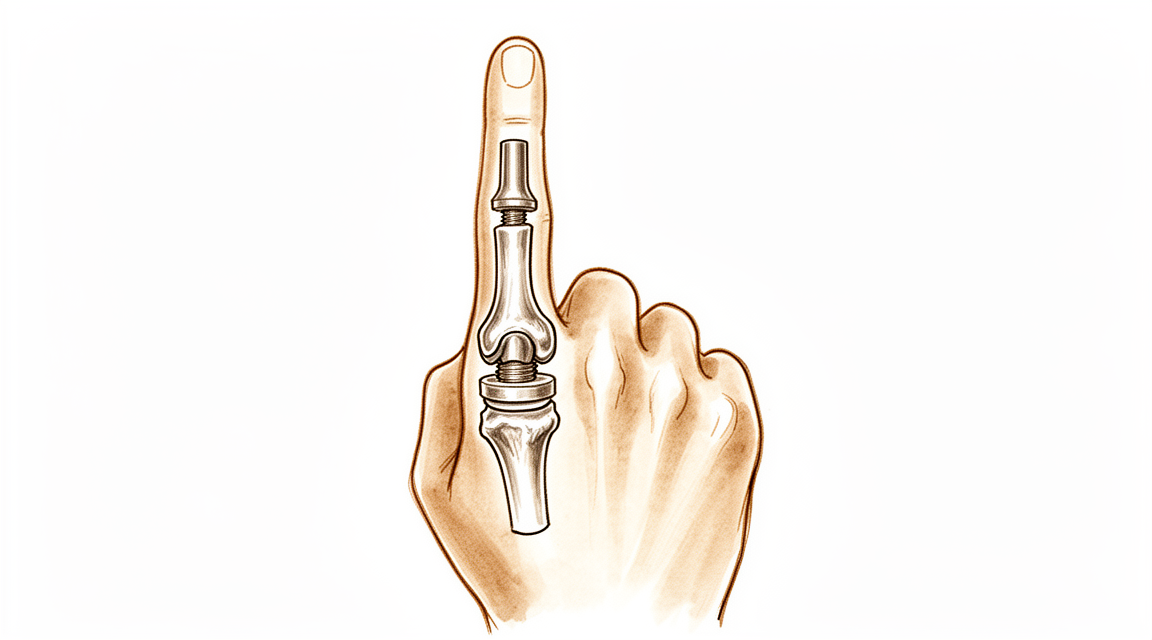
手指中间关节置换植入物的手绘插图。
近端指间关节是三个指关节中的中间关节。置换手术通过植入物对关节面进行重建,而非将其牢固融合。 Kieran Hirpara 4.0

本页面由机器翻译,尚未经临床医生审核。英文版本为权威版本。

为何建议进行此手术

Mater Private Hospital Rockhampton 的上肢外科医生 Kieran Hirpara 医生,会根据您的病情,从创伤最小的治疗方案开始。患者通常由其全科医生(GP)转诊至我们的诊所;如果物理治疗师建议您就诊,您仍需获得全科医生的转诊,方有资格享受 Medicare 报销。在您的预约就诊时,我们会采集病史、检查您的手部,并在必要时安排影像学检查。这将帮助我们明确关节存在的问题。

此手术使用人工植入物替换手指的中间关节(近端指间关节)。该手术通常推荐给患有退行性骨关节炎或创伤后关节炎的患者,最常见于年龄较大、活动量较少的患者。手术目的是保持关节活动度,避免关节融合(即永久性地将骨骼连接在一起)。

对于长期存在的关节炎,我们通常首先尝试非手术治疗。这可能包括改变手部使用方式、手部治疗或佩戴支具。如果这些措施未能带来足够的改善,我们才会与您讨论手术方案。主要目标是缓解疼痛并恢复关节功能。

手术前

为了规划您的手术,我们会对您的手指进行X光检查,有时还会进行MRI或超声扫描。这些影像可以显示磨损的关节,并帮助我们选择合适的植入物。

在手术前的几周内,请准备一些实际事项。手术前七小时停止进食和饮水。我们要求七小时而非六小时,以便如果手术室手术列表提前完成,您的手术时间可以提前。您的外科医生会告诉您需要停用哪些常规药物以及何时停用。请携带一份您服用所有药物的书面清单。请安排他人在术后开车送您回家,因为您将无法自行驾驶。请穿着宽松、舒适的衣服,袖子应能轻松滑过您的手部。

如果您有其他医疗状况,您可能需要进行血液检查或接受麻醉师(负责实施麻醉的医生)的评估。大多数人不需要这两项。

手术当日

您抵达医院的手术入院单元。工作人员为您办理入院手续并为您做好手术室准备。随后,您将见到麻醉医生。该手术在全身麻醉下进行。手术期间您将处于完全睡眠状态。部分患者可能还会接受区域神经阻滞以缓解术后疼痛;麻醉医生将根据您当日的具体情况决定是否实施。

接下来,您将被带入手术室进行手术。手术结束后,您将在复苏区醒来。在麻醉药效消退期间,护士会在该区域看护您。一旦您的生命体征稳定,您将被转入病房或于当日出院。具体采取哪种方式取决于手术类型及您的恢复情况。

手术内容

Hirpara 医生通过手指掌侧、正对疼痛关节处的单一切口进行此手术。从该侧打开关节可保持伸直手指的肌腱不受干扰,这有助于您在术后尽早开始活动。

关节打开后,您的外科医生会取出磨损和受损的关节面。这些关节面将被人工植入物取代,该植入物在两根指骨之间形成新的光滑表面。植入物的设计旨在让关节能够弯曲和伸直,同时缓解粗糙、磨损表面引起的疼痛。

随后用缝合线关闭伤口,并在上方放置敷料。您将带着该敷料回家,约 10 天后敷料移除时,我们会与您一起检查伤口。

术后

大多数患者在此手术后需在医院过夜,但部分患者当天即可出院。您将在复苏区苏醒,随后转入病房。护士会定期查看您的情况,并根据需要为您止痛。您的手指将包扎敷料,敷料需保留约10天;除非我们告知您,否则请勿提前拆除。我们会在复诊时为您更换或拆除敷料。只要您感觉可以,即可起身活动,护士会协助您。回家后,请确保前24小时内有人陪同。

恢复

最初几天,您的手指会感到疼痛和肿胀,这种情况会逐渐缓解。将手垫高放在枕头上,即使坐着或睡觉时也是如此,有助于减轻肿胀。按照医疗团队的指示服用简单的止痛药可以缓解不适。

您的敷料会保留约10天,我们在复诊时会检查伤口。之后,您的恢复将由 Extend Rehabilitation 的手部治疗师 Ruby Doolan 指导。Ruby 是一名手部治疗师:她指导您的锻炼,并为您制作手指所需的任何支具。您将在家进行轻柔的弯曲和伸直运动,少量多次。目标是保护正在愈合的肌腱,同时让关节逐渐恢复活动度,因此请遵循她制定的计划,而不是强忍疼痛。

在日常生活中,起初您会用另一只手完成大多数任务。只要您感觉能够胜任,就可以穿衣、准备简单的饭菜并在屋内走动。如果手指佩戴支具导致您无法安全握住方向盘,那么在支具佩戴期间请勿驾驶。一旦拆除支具且外科医生允许,即可恢复驾驶;请参阅我们关于 上肢手术后驾驶 的页面。

随着肿胀消退和活动度恢复,您会注意到关节弯曲幅度增大,并能为您做更多事情。恢复里程碑以这些事件为基准,而非以日期为基准。

每个人的愈合速度不同,因此您的时间表可能有所不同。您的外科医生和手部治疗师将在整个过程中为您提供指导。

可能出现的问题

大多数患者恢复良好,但偶尔也可能出现问题。您的外科医生和医疗团队会密切监测您的状况,以便尽早发现任何问题。

有时植入物本身会引发问题。它可能会松动,或者其周围的骨骼可能出现微小裂纹。您可能会注意到关节出现新的疼痛,感觉手指不如以前稳定,或者在活动时出现咔哒声或研磨感。关节内衬也可能受到刺激而发炎肿胀。如果关节再次开始错位,或者手指无法像以前那样充分弯曲或伸直,请在下次复诊时告知我们。即使这些变化没有疼痛,也值得进行检查。

植入物可能会断裂。对于硅胶植入物(一种柔软、有弹性的间隔物),植入物断裂通常会导致在一段改善期后疼痛复发。如果您的手指再次变得疼痛,或者活动受限(无论是否伴有疼痛),请告知我们。有时手指会出现之前没有的侧向倾斜。这些变化中的任何一种都意味着需要评估植入物。

关节可能会变得不稳定。手指可能会感到左右晃动,或者部分脱位。如果关节明显错位,需要及时处理,因此请致电诊所,而不是等待下次预约。

可能会出现僵硬。手指可能无法完全弯曲或伸直,关节可能会感觉紧绷。伴有疼痛的持续性僵硬应接受复查。

感染不常见但很严重。请注意观察深部搏动性疼痛(普通止痛药无法缓解)、从伤口向外扩散的发红、皮温升高或分泌物。如果您注意到这些迹象,请立即联系诊所,或在非工作时间前往急诊部门。

手术期间或手术后,植入物周围可能发生骨折。术后突然出现的疼痛、肿胀或手指形状改变应予以报告。

如果确实出现问题,有时需要进一步手术。这可能意味着修复或更换植入物,或者在某些情况下,改为永久性地融合骨骼。如果这种情况成为必要,我们会向您详细说明。

如果您想了解具体数据,本页上的并发症表列出了典型的发生率。

何时联系我们

大多数问题会以上述方式出现,但有些情况需要紧急处理。如果您出现发烧、伤口周围发红范围扩大,或伤口有新分泌物,请立即致电我们。如果您出现突然的剧烈疼痛,或手指麻木、无法活动,也请致电我们。如果您出现小腿肿胀或疼痛,或呼吸急促,请前往急诊科,因为这些症状可能提示血栓形成。如果是非工作时间且您感到担忧,请前往急诊,不要等到第二天早上。

在哪里阅读更多关于该疾病的资料

本页介绍的是手术本身。该手术所治疗的疾病,包括证据显示手术在何时有效、何时无效,在 PIP 关节关节炎 页面上有更详细的介绍。


Evidence & references

This is the clinical evidence summary written for health professionals. It is technical, and it lists the research this page was built from. You do not need to read it to understand your treatment or to make a decision about it.

Anatomy & Pathophysiology

General Hand Architecture

  • The hand is composed of 19 bones, 17 articulations, and 19 muscles situated entirely within the hand [2].
  • The hand contains approximately the same number of tendons activated by the forearm muscles as it has intrinsic muscles [2].
  • The hand functions as an organ designed to obtain information and an organ of execution [2].
  • The hand moves within a large volume of space with the shoulder as the apex, allowing it to reach any part of the body fairly easily due to the mobility of the shoulder, elbow, and wrist [2].
  • The open hand with fingers extended and in contact forms a balanced graceful oval in its longitudinal axis [2].
  • The dorsal aspect of the hand is convex, while the anterior, palmar or volar aspect is concave [2].
  • The distal half of the hand is separated into five digits which flex toward the palm [2].
  • The thumb has a more proximal and lateral position than the four fingers, allowing movement inward and outward from the palm [2].
  • The four fingers are the distal extension of the carpometacarpal part of the hand [2].
  • The hinges of finger movements are located at the thenar crease and at the transverse distal palmar crease, not at the bases of the digits [2].
  • When fingers are extended and separated, their tips lie on the circumference of a circle whose center is the head of the third metacarpal [2].

Osseous and Arch Anatomy

  • The metacarpal arch possesses adaptability due to the mobility of the peripheral metacarpals [7].
  • The index metacarpal is the most firmly fixed of the metacarpals [7].
  • The ring metacarpal has about 10 degrees of mobility in flexion and extension [7].
  • The fifth metacarpal is semi-independent and has a range of flexion–extension of approximately 20 degrees [7].
  • The second to fifth metacarpals are bound together by fibrous structures, the most distal of which is the deep transverse intermetacarpal ligament [7].
  • The deep transverse intermetacarpal ligament is also known as the interglenoid ligament because it ties together the anterior glenoid ligaments of the metacarpophalangeal articulations [7].
  • The longitudinal arches of the hand are composed of a fixed carpometacarpal portion and a mobile digital portion [7].
  • The metacarpophalangeal articulations serve as the keystones of the longitudinal arches [7].
  • The thick anterior glenoid capsules, known as volar plates, prevent hyperextension at the metacarpophalangeal joints [7].
  • The stability of the metacarpophalangeal joints is essential to the support of both the longitudinal and transverse metacarpal arches [7].

Intrinsic Musculature and Extensor Mechanism

  • There are seven interosseous muscles in the hand, consisting of four dorsal and three volar muscles [4].
  • The dorsal interossei are abductors, while the volar interossei are adductors [4].
  • The middle finger has two dorsal interossei and no volar interossei because the central axis of the hand lies within it [4].
  • Each dorsal interosseous muscle, with the exception of the third, has two muscle heads: a superficial head and a deep head [4].
  • The superficial head of the dorsal interosseous muscles abducts and weakly flexes the proximal phalanx [4].
  • The deep head of the dorsal interosseous muscles flexes and weakly abducts the proximal phalanx while extending the middle and distal phalanges [4].
  • Transverse fibers arch dorsally from each lateral band to join over the dorsum of the finger, flexing the proximal phalanx [4].
  • Oblique fibers, also called spiral fibers, from the lateral bands insert onto the lateral tubercles at the base of the middle phalanx to extend the middle phalanx at the PIP joint [4].
  • The lateral bands are joined by the lateral slips of the extensor tendon to form the conjoined lateral band [4].
  • The two conjoined lateral bands to each finger unite at the distal third of the middle phalanx to form the terminal tendon [4].
  • The terminal tendon inserts at the base of the distal phalanx to extend it [4].
  • The volar interossei have only one muscle head and do not insert onto the proximal phalanx [4].
  • The volar interossei form the ulnar lateral band of the index finger and the radial lateral band of the ring and little fingers [4].
  • The flexor digiti quinti brevis is structurally and functionally similar to the deep head of the dorsal interossei, forming the ulnar lateral band of the little finger [4].

Cutaneous Anatomy

  • Functional cutaneous units in the hand are similar to those described in the face [3].
  • One dorsal cutaneous unit extends from the wrist to the proximal interphalangeal joints of the fingers and the interphalangeal joint of the thumb [3].
  • The dorsal covering of the interphalangeal articulations forms a unique cutaneous unit characterized by considerable excess of skin when digits are in extension [3].
  • The fine tight skin of the dorsal aspect of the middle phalanx forms a distinct cutaneous unit [3].
  • The dorsal integument of the distal phalanx is distinct due to the nail bed with its matrix [3].
  • The palm forms a cutaneous unit extending from the distal transverse crease of the wrist up to the transverse crease at the base of the digits [3].
  • The palmar integument is subdivided into two zones by the oppositional crease of the thumb, which constitutes the oblique axis of the hand [3].
  • The skin of the radial portion of the palm covers the thenar eminence and is relatively well vascularized and mobile [3].
  • The skin of the ulnar and distal portion of the palm covers the hypothenar eminence where skin mobility is poor [3].
  • The central triangular part of the palm has fixed and poorly vascularized skin that covers almost directly the superficial palmar aponeurosis [3].
  • The integument of the palmar face of the digits is subdivided into phalangeal units separated by digital flexion folds [3].
  • When a digit is completely flexed, the integument of adjacent phalanges comes into contact in the zones of the flexion creases, establishing areas of cutaneous contact in the form of a diamond [3].
  • The sides of the diamond-shaped cutaneous contact zones do not undergo variations in length during flexion and extension movements [3].
  • Incisions made along the lines of the diamond-shaped cutaneous contact zones present a minimal chance of retraction [3].
  • The web spaces are formed from the union of two nonsymmetrical cutaneous surfaces [3].
  • The dorsal slope of the web space has a gradual incline and supple skin that is not adherent to the subjacent region [3].
  • The palmar surface of the web space is flat and precipitously interrupted, with skin densely adherent to the commissural skeleton [3].
  • The commissural skeleton is formed by the interdigital palmar ligament between the fingers and by the distal transverse ligament at the level of the thumb web [3].

Vascular Anatomy

  • The arteries of the thumb vary in both size and number, making surgical reconstruction delicate [8].
  • The layout of thumb arteries is the result of innumerable variations regarding origin, transit, connections, and size [8].
  • In anatomical studies, only 15% of dissections of the palmar arteries of the thumb fall into the classical "typical" category [8].
  • The princeps pollicis artery is the terminal branch of the radial artery that crosses the first intermetacarpal space [8].
  • The princeps pollicis artery runs along the ulnar side of the first metacarpal bone and along the volar surface of the adductor muscle [8].
  • The princeps pollicis artery emerges onto the subcutaneous palmar tissue at the level of the cutaneous flexion crease of the metacarpophalangeal joint [8].
  • At the metacarpophalangeal flexion crease, the princeps pollicis divides into two terminal rami known as the collateral palmar arteries of the thumb [8].
  • The collateral palmar arteries run along the digital tunnel symmetrically and are of equal caliber [8].
  • An arcade located deep in the flexor tendon joins together the two palmar arteries at the level of the distal metaphysis of the first phalanx [8].
  • Vessels entering the vincula and irrigating the flexor tendon originate from the subtendinous anastomosis at the neck of the first phalanx [8].
  • In the second segment of the thumb, the main artery is the ulnar collateral artery [8].
  • The subtendinous anastomosis situated at the level of the neck of the first phalanx acts as a moderator between the two collateral arteries [8].
  • In the pulp segment of the thumb, the two arteries are of similar size and run through thick fatty subcutaneous padding [8].
  • The dorsal arteries of the thumb originate from palmar arteries at the level of the first metacarpal [8].
  • The ulnar dorso-collateral artery generally stems from the princeps pollicis onto the medial border of the neck of the first metacarpal [8].

Surgical Anatomy and Incisions

  • Distal palmar incisions are typically transverse, while proximal palmar incisions tend to be more longitudinal [9].
  • Proximal palmar incisions should parallel the thenar crease [9].
  • Incisions extended proximal to the wrist should not cross the flexor wrist creases at a right angle [9].
  • The most important structure in the thenar area is the recurrent branch (motor) of the median nerve [9].
  • Anatomic studies show that there is no single longitudinal incision in the proximal palm that completely avoids the palmar cutaneous branches of the median and ulnar nerves [9].
  • The superficial volar neurovascular arch should be protected when deeper exposure is required in the distal palm [9].
  • Structures lying between the metacarpal heads in the distal palm are not protected by the palmar fascia [9].
  • Midlateral incisions described for fingers are suitable for the thumb, with the radial side being more accessible [9].
  • A midlateral thumb incision can be extended by curving its proximal end at the midmetacarpal area to create a flap on the palmar surface of the thumb [9].
  • Care must be taken to avoid injury to the dorsal branch of the superficial radial nerve when using a radial midlateral incision on the thumb [9].

Investigations

  • Clinical evaluation of the hand and wrist requires combining patient history with a careful physical examination to pinpoint or narrow the scope of possible pathologic processes [1].
  • Diagnostic tests such as imaging and serum laboratory studies are useful in determining pathology but can be expensive, time-consuming, and often nonspecific [1].
  • A careful physical examination is essential to direct care and future testing if indicated [1].
  • The skeleton of the hand and wrist consists of 27 bones, of which 19 are long bones [12].
  • The skeleton is divided into five rays, each ray making up a polyarticulated chain comprising the metacarpals and phalanges [12].
  • The base of each metacarpal articulates with the distal row of the carpus [12].
  • The carpus articulates with the skeleton of the forearm through its proximal row [12].
  • The radioulnocarpal articulation has two axes of movement to which is added a third—pronation and supination from the forearm [12].
  • The wrist has three axes of movement, permitting the hand to be positioned in any spatial configuration and allowing it to be placed as needed for grasping [12].
  • The radial ray or first ray is the shortest and is made up of only three bones—a metacarpal and two phalanges [12].
  • The trapezium is clearly angled out in front of the carpal plane so that the first metacarpal makes an angle of about 45 degrees with the second metacarpal in the sagittal plane [12].
  • The lengths of the metacarpals vary, with the thumb metacarpal being the shortest and the index finger the longest [12].
  • The proximal and particularly the middle phalanges of the middle and ring fingers are longer than those of the index finger [12].
  • The epiphyseal plates are located at the proximal ends of the phalanges and the first metacarpal [12].
  • The epiphyseal plates are located at the distal ends of the other metacarpals [12].

References

[1] Orthopaedic Knowledge Update 13 Ebook Without Multimedia. Anatomy, Evaluation, Clinical Examination, and Imaging > Evaluation and Clinical Examination: Current Concepts.

[2] Exam Of The Hand Wrist 2Ed. INTRODUCTION.

[3] Exam Of The Hand Wrist 2Ed. Functional cutaneous units.

[4] Green S Operative Hand Surgery. Interosseous and Hypothenar Muscles.

[7] Exam Of The Hand Wrist 2Ed. The arches of the hand > The metacarpal arch.

[8] Exam Of The Hand Wrist 2Ed. Techniques of investigation of the arterial supply by J P Melki > Vascularization of the thumb > Palmar aspect.

[9] Campbell S Operative Orthopaedics 4 Volume Set. RESULTS OF SUTURE OF THE SCIATIC NERVE > PALMAR INCISIONS.

[12] Exam Of The Hand Wrist 2Ed. 1.1 SKELETON OF THE HAND > The osseous skeleton.

Creative Commons BY-NC 4.0

CC Creative Commons licence
BY Attribution — you must credit the source
NC NonCommercial — not for commercial use

Attribution-NonCommercial 4.0 International


Creative Commons Corporation ("Creative Commons") is not a law firm and does not provide legal services or legal advice. Distribution of Creative Commons public licenses does not create a lawyer-client or other relationship. Creative Commons makes its licenses and related information available on an "as-is" basis. Creative Commons gives no warranties regarding its licenses, any material licensed under their terms and conditions, or any related information. Creative Commons disclaims all liability for damages resulting from their use to the fullest extent possible.

Using Creative Commons Public Licenses

Creative Commons public licenses provide a standard set of terms and conditions that creators and other rights holders may use to share original works of authorship and other material subject to copyright and certain other rights specified in the public license below. The following considerations are for informational purposes only, are not exhaustive, and do not form part of our licenses.

Considerations for licensors: Our public licenses are intended for use by those authorized to give the public permission to use material in ways otherwise restricted by copyright and certain other rights. Our licenses are irrevocable. Licensors should read and understand the terms and conditions of the license they choose before applying it. Licensors should also secure all rights necessary before applying our licenses so that the public can reuse the material as expected. Licensors should clearly mark any material not subject to the license. This includes other CC- licensed material, or material used under an exception or limitation to copyright. More considerations for licensors: wiki.creativecommons.org/Considerations_for_licensors

Considerations for the public: By using one of our public licenses, a licensor grants the public permission to use the licensed material under specified terms and conditions. If the licensor's permission is not necessary for any reason--for example, because of any applicable exception or limitation to copyright--then that use is not regulated by the license. Our licenses grant only permissions under copyright and certain other rights that a licensor has authority to grant. Use of the licensed material may still be restricted for other reasons, including because others have copyright or other rights in the material. A licensor may make special requests, such as asking that all changes be marked or described. Although not required by our licenses, you are encouraged to respect those requests where reasonable. More considerations for the public: wiki.creativecommons.org/Considerations_for_licensees


Creative Commons Attribution-NonCommercial 4.0 International Public License

By exercising the Licensed Rights (defined below), You accept and agree to be bound by the terms and conditions of this Creative Commons Attribution-NonCommercial 4.0 International Public License ("Public License"). To the extent this Public License may be interpreted as a contract, You are granted the Licensed Rights in consideration of Your acceptance of these terms and conditions, and the Licensor grants You such rights in consideration of benefits the Licensor receives from making the Licensed Material available under these terms and conditions.

Section 1 -- Definitions.

a. Adapted Material means material subject to Copyright and Similar Rights that is derived from or based upon the Licensed Material and in which the Licensed Material is translated, altered, arranged, transformed, or otherwise modified in a manner requiring permission under the Copyright and Similar Rights held by the Licensor. For purposes of this Public License, where the Licensed Material is a musical work, performance, or sound recording, Adapted Material is always produced where the Licensed Material is synched in timed relation with a moving image.

b. Adapter's License means the license You apply to Your Copyright and Similar Rights in Your contributions to Adapted Material in accordance with the terms and conditions of this Public License.

c. Copyright and Similar Rights means copyright and/or similar rights closely related to copyright including, without limitation, performance, broadcast, sound recording, and Sui Generis Database Rights, without regard to how the rights are labeled or categorized. For purposes of this Public License, the rights specified in Section 2(b)(1)-(2) are not Copyright and Similar Rights.

d. Effective Technological Measures means those measures that, in the absence of proper authority, may not be circumvented under laws fulfilling obligations under Article 11 of the WIPO Copyright Treaty adopted on December 20, 1996, and/or similar international agreements.

e. Exceptions and Limitations means fair use, fair dealing, and/or any other exception or limitation to Copyright and Similar Rights that applies to Your use of the Licensed Material.

f. Licensed Material means the artistic or literary work, database, or other material to which the Licensor applied this Public License.

g. Licensed Rights means the rights granted to You subject to the terms and conditions of this Public License, which are limited to all Copyright and Similar Rights that apply to Your use of the Licensed Material and that the Licensor has authority to license.

h. Licensor means the individual(s) or entity(ies) granting rights under this Public License.

i. NonCommercial means not primarily intended for or directed towards commercial advantage or monetary compensation. For purposes of this Public License, the exchange of the Licensed Material for other material subject to Copyright and Similar Rights by digital file-sharing or similar means is NonCommercial provided there is no payment of monetary compensation in connection with the exchange.

j. Share means to provide material to the public by any means or process that requires permission under the Licensed Rights, such as reproduction, public display, public performance, distribution, dissemination, communication, or importation, and to make material available to the public including in ways that members of the public may access the material from a place and at a time individually chosen by them.

k. Sui Generis Database Rights means rights other than copyright resulting from Directive 96/9/EC of the European Parliament and of the Council of 11 March 1996 on the legal protection of databases, as amended and/or succeeded, as well as other essentially equivalent rights anywhere in the world.

l. You means the individual or entity exercising the Licensed Rights under this Public License. Your has a corresponding meaning.

Section 2 -- Scope.

a. License grant.

1. Subject to the terms and conditions of this Public License, the Licensor hereby grants You a worldwide, royalty-free, non-sublicensable, non-exclusive, irrevocable license to exercise the Licensed Rights in the Licensed Material to:

a. reproduce and Share the Licensed Material, in whole or in part, for NonCommercial purposes only; and

b. produce, reproduce, and Share Adapted Material for NonCommercial purposes only.

2. Exceptions and Limitations. For the avoidance of doubt, where Exceptions and Limitations apply to Your use, this Public License does not apply, and You do not need to comply with its terms and conditions.

3. Term. The term of this Public License is specified in Section 6(a).

4. Media and formats; technical modifications allowed. The Licensor authorizes You to exercise the Licensed Rights in all media and formats whether now known or hereafter created, and to make technical modifications necessary to do so. The Licensor waives and/or agrees not to assert any right or authority to forbid You from making technical modifications necessary to exercise the Licensed Rights, including technical modifications necessary to circumvent Effective Technological Measures. For purposes of this Public License, simply making modifications authorized by this Section 2(a) (4) never produces Adapted Material.

5. Downstream recipients.

a. Offer from the Licensor -- Licensed Material. Every recipient of the Licensed Material automatically receives an offer from the Licensor to exercise the Licensed Rights under the terms and conditions of this Public License.

b. No downstream restrictions. You may not offer or impose any additional or different terms or conditions on, or apply any Effective Technological Measures to, the Licensed Material if doing so restricts exercise of the Licensed Rights by any recipient of the Licensed Material.

6. No endorsement. Nothing in this Public License constitutes or may be construed as permission to assert or imply that You are, or that Your use of the Licensed Material is, connected with, or sponsored, endorsed, or granted official status by, the Licensor or others designated to receive attribution as provided in Section 3(a)(1)(A)(i).

b. Other rights.

1. Moral rights, such as the right of integrity, are not licensed under this Public License, nor are publicity, privacy, and/or other similar personality rights; however, to the extent possible, the Licensor waives and/or agrees not to assert any such rights held by the Licensor to the limited extent necessary to allow You to exercise the Licensed Rights, but not otherwise.

2. Patent and trademark rights are not licensed under this Public License.

3. To the extent possible, the Licensor waives any right to collect royalties from You for the exercise of the Licensed Rights, whether directly or through a collecting society under any voluntary or waivable statutory or compulsory licensing scheme. In all other cases the Licensor expressly reserves any right to collect such royalties, including when the Licensed Material is used other than for NonCommercial purposes.

Section 3 -- License Conditions.

Your exercise of the Licensed Rights is expressly made subject to the following conditions.

a. Attribution.

1. If You Share the Licensed Material (including in modified form), You must:

a. retain the following if it is supplied by the Licensor with the Licensed Material:

i. identification of the creator(s) of the Licensed Material and any others designated to receive attribution, in any reasonable manner requested by the Licensor (including by pseudonym if designated);

ii. a copyright notice;

iii. a notice that refers to this Public License;

iv. a notice that refers to the disclaimer of warranties;

v. a URI or hyperlink to the Licensed Material to the extent reasonably practicable;

b. indicate if You modified the Licensed Material and retain an indication of any previous modifications; and

c. indicate the Licensed Material is licensed under this Public License, and include the text of, or the URI or hyperlink to, this Public License.

2. You may satisfy the conditions in Section 3(a)(1) in any reasonable manner based on the medium, means, and context in which You Share the Licensed Material. For example, it may be reasonable to satisfy the conditions by providing a URI or hyperlink to a resource that includes the required information.

3. If requested by the Licensor, You must remove any of the information required by Section 3(a)(1)(A) to the extent reasonably practicable.

4. If You Share Adapted Material You produce, the Adapter's License You apply must not prevent recipients of the Adapted Material from complying with this Public License.

Section 4 -- Sui Generis Database Rights.

Where the Licensed Rights include Sui Generis Database Rights that apply to Your use of the Licensed Material:

a. for the avoidance of doubt, Section 2(a)(1) grants You the right to extract, reuse, reproduce, and Share all or a substantial portion of the contents of the database for NonCommercial purposes only;

b. if You include all or a substantial portion of the database contents in a database in which You have Sui Generis Database Rights, then the database in which You have Sui Generis Database Rights (but not its individual contents) is Adapted Material; and

c. You must comply with the conditions in Section 3(a) if You Share all or a substantial portion of the contents of the database.

For the avoidance of doubt, this Section 4 supplements and does not replace Your obligations under this Public License where the Licensed Rights include other Copyright and Similar Rights.

Section 5 -- Disclaimer of Warranties and Limitation of Liability.

a. UNLESS OTHERWISE SEPARATELY UNDERTAKEN BY THE LICENSOR, TO THE EXTENT POSSIBLE, THE LICENSOR OFFERS THE LICENSED MATERIAL AS-IS AND AS-AVAILABLE, AND MAKES NO REPRESENTATIONS OR WARRANTIES OF ANY KIND CONCERNING THE LICENSED MATERIAL, WHETHER EXPRESS, IMPLIED, STATUTORY, OR OTHER. THIS INCLUDES, WITHOUT LIMITATION, WARRANTIES OF TITLE, MERCHANTABILITY, FITNESS FOR A PARTICULAR PURPOSE, NON-INFRINGEMENT, ABSENCE OF LATENT OR OTHER DEFECTS, ACCURACY, OR THE PRESENCE OR ABSENCE OF ERRORS, WHETHER OR NOT KNOWN OR DISCOVERABLE. WHERE DISCLAIMERS OF WARRANTIES ARE NOT ALLOWED IN FULL OR IN PART, THIS DISCLAIMER MAY NOT APPLY TO YOU.

b. TO THE EXTENT POSSIBLE, IN NO EVENT WILL THE LICENSOR BE LIABLE TO YOU ON ANY LEGAL THEORY (INCLUDING, WITHOUT LIMITATION, NEGLIGENCE) OR OTHERWISE FOR ANY DIRECT, SPECIAL, INDIRECT, INCIDENTAL, CONSEQUENTIAL, PUNITIVE, EXEMPLARY, OR OTHER LOSSES, COSTS, EXPENSES, OR DAMAGES ARISING OUT OF THIS PUBLIC LICENSE OR USE OF THE LICENSED MATERIAL, EVEN IF THE LICENSOR HAS BEEN ADVISED OF THE POSSIBILITY OF SUCH LOSSES, COSTS, EXPENSES, OR DAMAGES. WHERE A LIMITATION OF LIABILITY IS NOT ALLOWED IN FULL OR IN PART, THIS LIMITATION MAY NOT APPLY TO YOU.

c. The disclaimer of warranties and limitation of liability provided above shall be interpreted in a manner that, to the extent possible, most closely approximates an absolute disclaimer and waiver of all liability.

Section 6 -- Term and Termination.

a. This Public License applies for the term of the Copyright and Similar Rights licensed here. However, if You fail to comply with this Public License, then Your rights under this Public License terminate automatically.

b. Where Your right to use the Licensed Material has terminated under Section 6(a), it reinstates:

1. automatically as of the date the violation is cured, provided it is cured within 30 days of Your discovery of the violation; or

2. upon express reinstatement by the Licensor.

For the avoidance of doubt, this Section 6(b) does not affect any right the Licensor may have to seek remedies for Your violations of this Public License.

c. For the avoidance of doubt, the Licensor may also offer the Licensed Material under separate terms or conditions or stop distributing the Licensed Material at any time; however, doing so will not terminate this Public License.

d. Sections 1, 5, 6, 7, and 8 survive termination of this Public License.

Section 7 -- Other Terms and Conditions.

a. The Licensor shall not be bound by any additional or different terms or conditions communicated by You unless expressly agreed.

b. Any arrangements, understandings, or agreements regarding the Licensed Material not stated herein are separate from and independent of the terms and conditions of this Public License.

Section 8 -- Interpretation.

a. For the avoidance of doubt, this Public License does not, and shall not be interpreted to, reduce, limit, restrict, or impose conditions on any use of the Licensed Material that could lawfully be made without permission under this Public License.

b. To the extent possible, if any provision of this Public License is deemed unenforceable, it shall be automatically reformed to the minimum extent necessary to make it enforceable. If the provision cannot be reformed, it shall be severed from this Public License without affecting the enforceability of the remaining terms and conditions.

c. No term or condition of this Public License will be waived and no failure to comply consented to unless expressly agreed to by the Licensor.

d. Nothing in this Public License constitutes or may be interpreted as a limitation upon, or waiver of, any privileges and immunities that apply to the Licensor or You, including from the legal processes of any jurisdiction or authority.


Creative Commons is not a party to its public licenses. Notwithstanding, Creative Commons may elect to apply one of its public licenses to material it publishes and in those instances will be considered the “Licensor.” The text of the Creative Commons public licenses is dedicated to the public domain under the CC0 Public Domain Dedication. Except for the limited purpose of indicating that material is shared under a Creative Commons public license or as otherwise permitted by the Creative Commons policies published at creativecommons.org/policies, Creative Commons does not authorize the use of the trademark "Creative Commons" or any other trademark or logo of Creative Commons without its prior written consent including, without limitation, in connection with any unauthorized modifications to any of its public licenses or any other arrangements, understandings, or agreements concerning use of licensed material. For the avoidance of doubt, this paragraph does not form part of the public licenses.

Creative Commons may be contacted at creativecommons.org.