Patients › Rehabilitation
锁骨固定(切开复位内固定术)
Rehabilitation after plate fixation of a clavicle fracture, gated on radiographic healing at review.
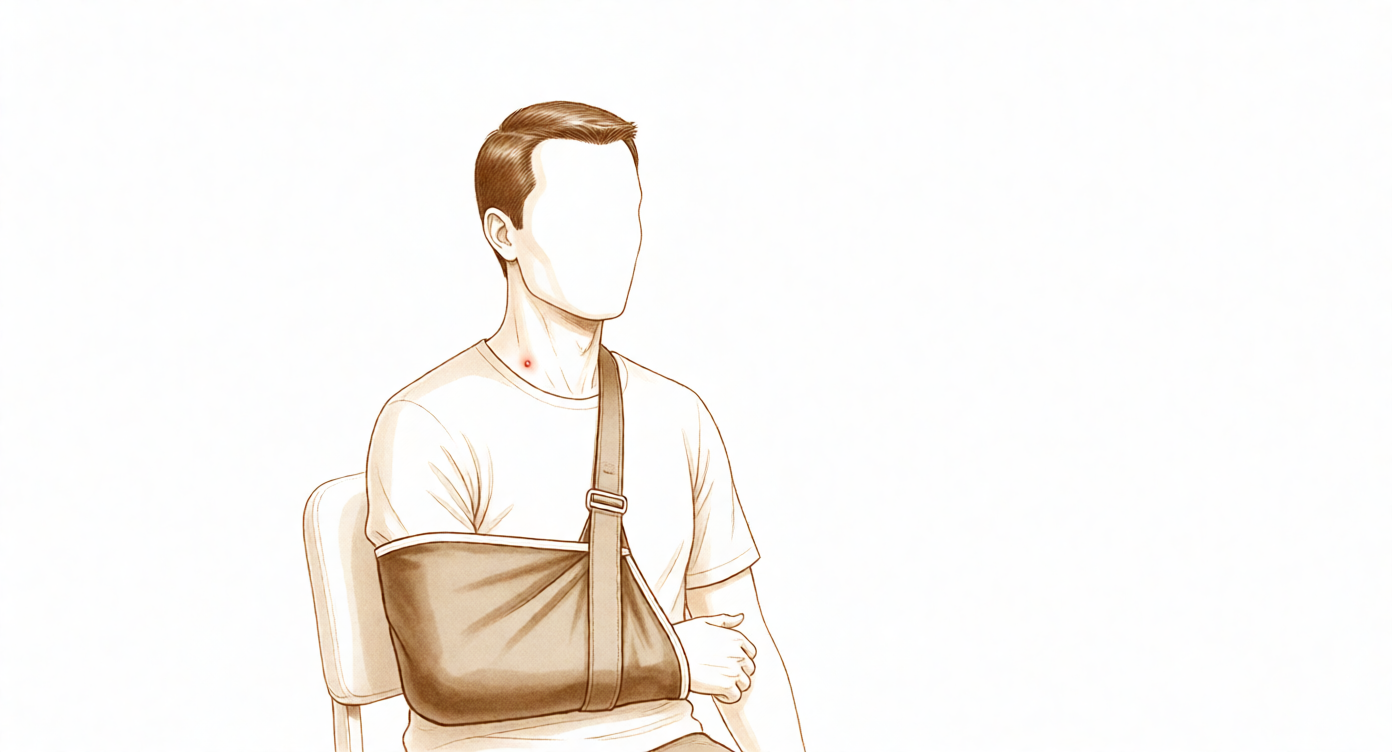
本方案指导您在 Mater Private Hospital Rockhampton 接受 Kieran Hirpara 医生进行的锁骨(锁骨)骨折切开复位内固定术(ORIF)后的康复过程。以下每个阶段均以通俗易懂的语言说明当前情况及最重要的事项,随后是为您的物理治疗师编写的结构化方案;请在首次物理治疗就诊时携带此页面或其 PDF 文件,以确保您的康复过程协调一致。您的物理治疗师可能会根据您的康复进展调整计划。
如果您对术后伤口有任何疑虑,请联系诊所。通常,拍摄伤口照片并发送电子邮件以供审阅会很有帮助。
预期情况
手术通过钢板和螺钉将锁骨骨折断端固定于原位,以便骨骼愈合。钢板强度较高,但它起的是夹板作用,而非愈合骨骼的替代品:骨骼本身通常需要约六至十二周才能实现骨性连接,且在此之后数月内会持续增强(重塑)。康复过程围绕这一生物学过程分阶段进行:早期数周旨在骨折开始连接时保护内固定,随后恢复活动度,最后,待骨骼能够承受负荷时,再逐步增加负重并恢复运动。
由于这是一处骨折,每个主要进阶步骤(将手臂抬高至肩部以上、强化训练、增加负重以及恢复运动)不仅取决于时间进度,还取决于X光片上骨折的愈合情况,并需经Hirpara医生在复诊时确认。以下周数范围仅为典型参考,并非固定标准。
吸烟者和糖尿病患者的骨骼愈合速度较慢,尤其是吸烟可能会延迟甚至阻止骨折愈合。如果您吸烟,骨折后的数周是戒烟的特别有价值时期。
锁骨位于皮肤正下方,因此肿胀消退后,触摸(甚至看到)钢板是常见现象。在早期数月内,钢板在安全带或背包肩带下方可能会感到压痛;随着该区域感觉逐渐钝化,这种情况通常会自行缓解。如果骨折完全愈合后钢板仍造成不适,可在后续复诊时讨论取出钢板的选项;这是一个独立的、无需仓促的决定,应在骨骼完全连接后较长时间再行决定。
康复过程概览:
- 第一阶段 — 保护期: 第 0–3 周
- 第二阶段 — 早期活动: 第 3–6 周
- 第三阶段 — 强化训练: 第 6–12 周
- 第四阶段 — 恢复完全活动及运动: 第12周起
佩戴悬臂带
悬臂带可承托手臂重量,减轻不适感,并在早期数周内保护正在愈合的骨骼。规则很简单:
- 外出时务必佩戴,以保护手臂并防止他人碰撞。您无需在睡眠时佩戴。
- 前三周大部分时间需佩戴。此后,随着舒适度提高逐渐减少佩戴时间,大多数人到第六周时已不再使用。
- 淋浴、做康复锻炼,以及坐着且手臂有支撑时进行的安静活动(如进食、书写、阅读)时,可取下悬臂带。
- 在家休息时,若操作得当,可取下悬臂带:坐着时手臂枕在枕头上,且手部保持在肩部高度以下。
- 六周内禁止驾驶(此规定适用于任何肩部手术),佩戴悬臂带期间亦禁止驾驶。此后,只有在您能舒适、安全地控制车辆时,方可恢复驾驶,具体以您与希拉帕医生(Dr Hirpara)复诊时的确认为准。
术后最初几天
如果手术中使用了神经阻滞,术后数小时内手臂可能会感到麻木和沉重;请在感觉恢复正常前,用吊带保护手臂。以下是术后初期的几点实用建议:
- 在进行锻炼和物理治疗预约之前,先服用止痛药。
- 使用冰敷以缓解疼痛和肿胀,每次约 15–20 分钟,用湿布包裹,切勿直接敷在皮肤或伤口上。
- 佩戴吊带时,放松肩部,让吊带承担手臂的重量。
- 注意姿势:保持耳朵、肩膀和臀部在一条直线上,避免肩膀向前下垂;良好的姿势有助于保护骨折位置并帮助预防僵硬。
- 从一开始就保持手指、手腕、肘部和颈部的活动。
- 如有任何问题,请联系病房或告知您的物理治疗师。
第一阶段 — 保护期(第 0–3 周)
Kieran Hirpara 4.0
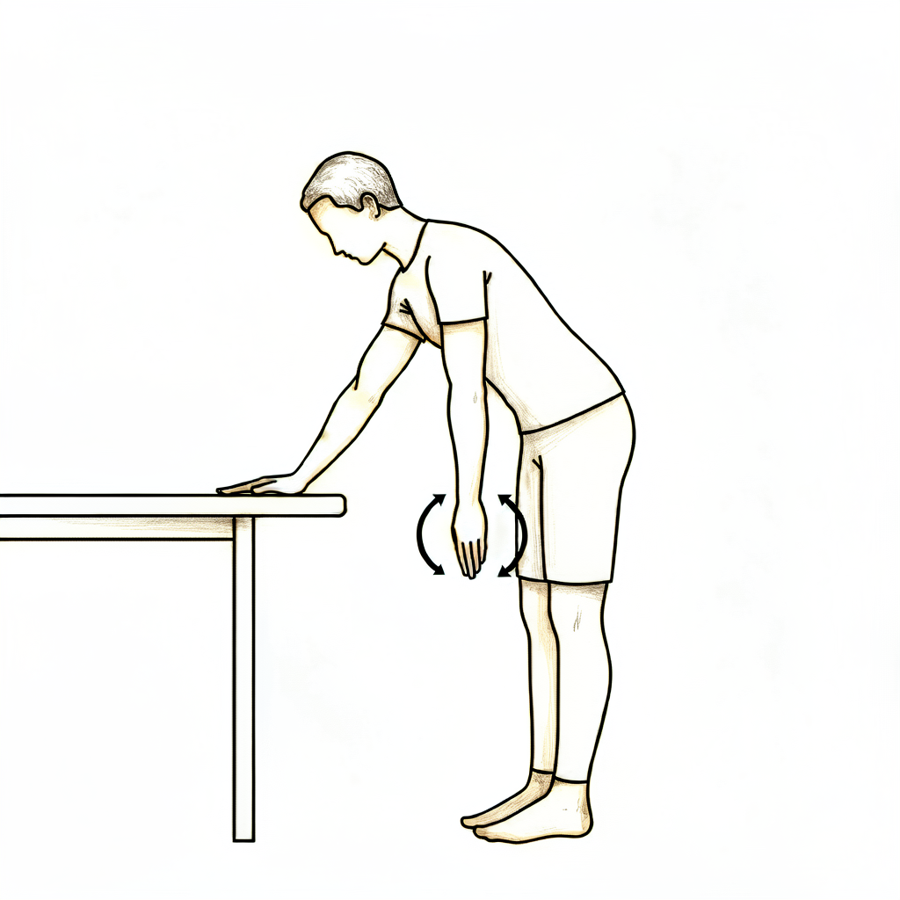
钟摆运动
身体前倾,用另一只手支撑在桌面上,让手术侧手臂自然放松下垂。通过轻轻晃动身体,做小范围的画圈动作——先顺时针,再逆时针。整个过程中手臂始终保持放松;动作来源于身体,而非肩部。
在您的物理治疗师指导下
Kieran Hirpara 4.0
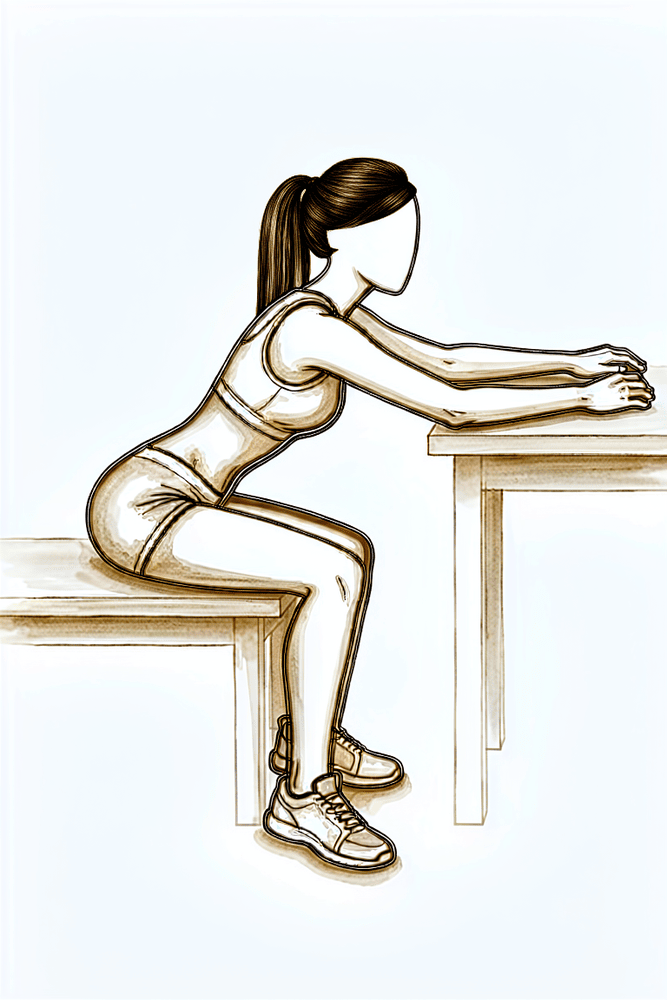
手术台滑动
坐在桌前,将前臂放在桌面上。轻轻向前倾斜身体,让手沿桌面滑动,使桌面承受手臂的重量,然后坐直。保持在舒适范围内,并让手臂低于肩部高度。
在您的物理治疗师指导下
Kieran Hirpara 4.0
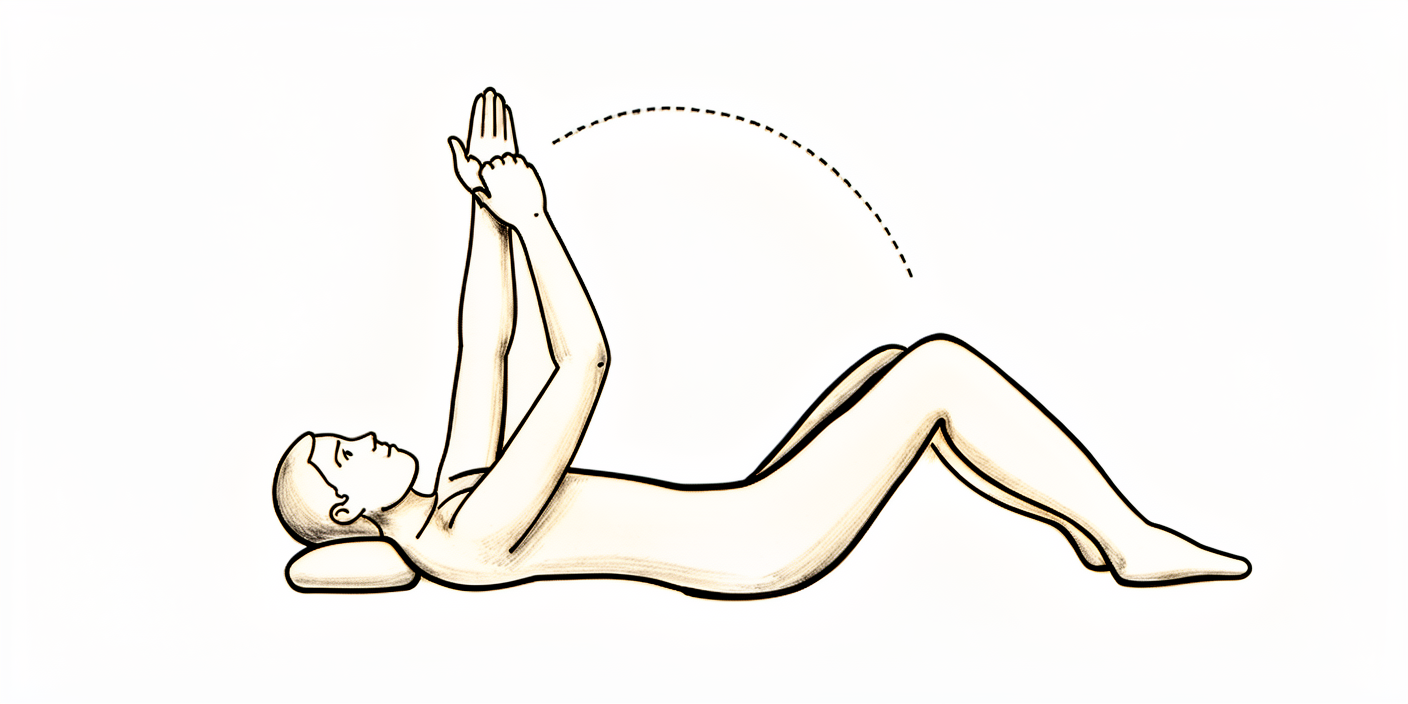
仰卧位辅助肩关节屈曲
仰卧。用另一只手在手腕处支撑患肢,轻轻将其向前抬起,最大角度不超过90度——指向天花板,不得更高——然后放下。患肢保持放松;由另一只手臂完成动作。在六周复查获得许可前,不要超过90度。
在您的物理治疗师指导下
Kieran Hirpara 4.0
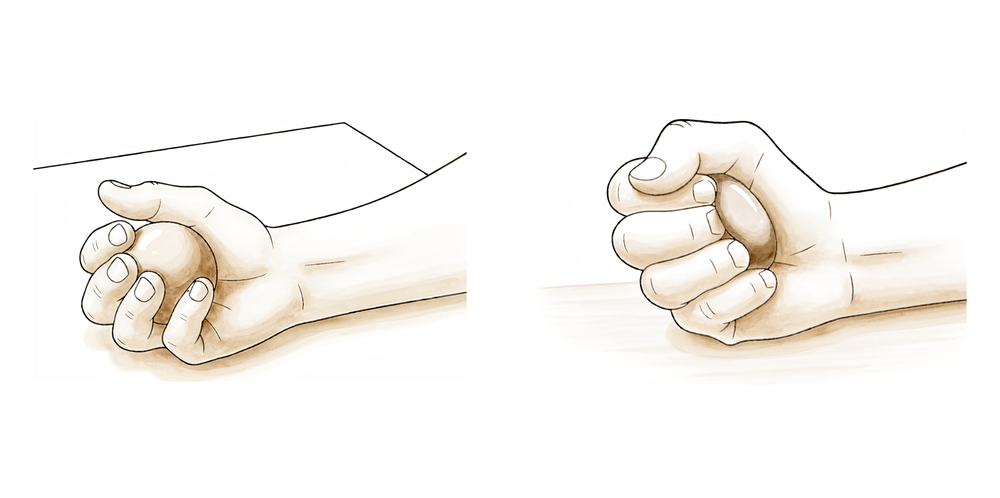
握球
在手臂得到支撑的情况下,挤压一个软球或紧握拳头,然后完全张开手掌。从一开始就保持手指、手腕和手部的活动。
在您的物理治疗师指导下
Kieran Hirpara 4.0
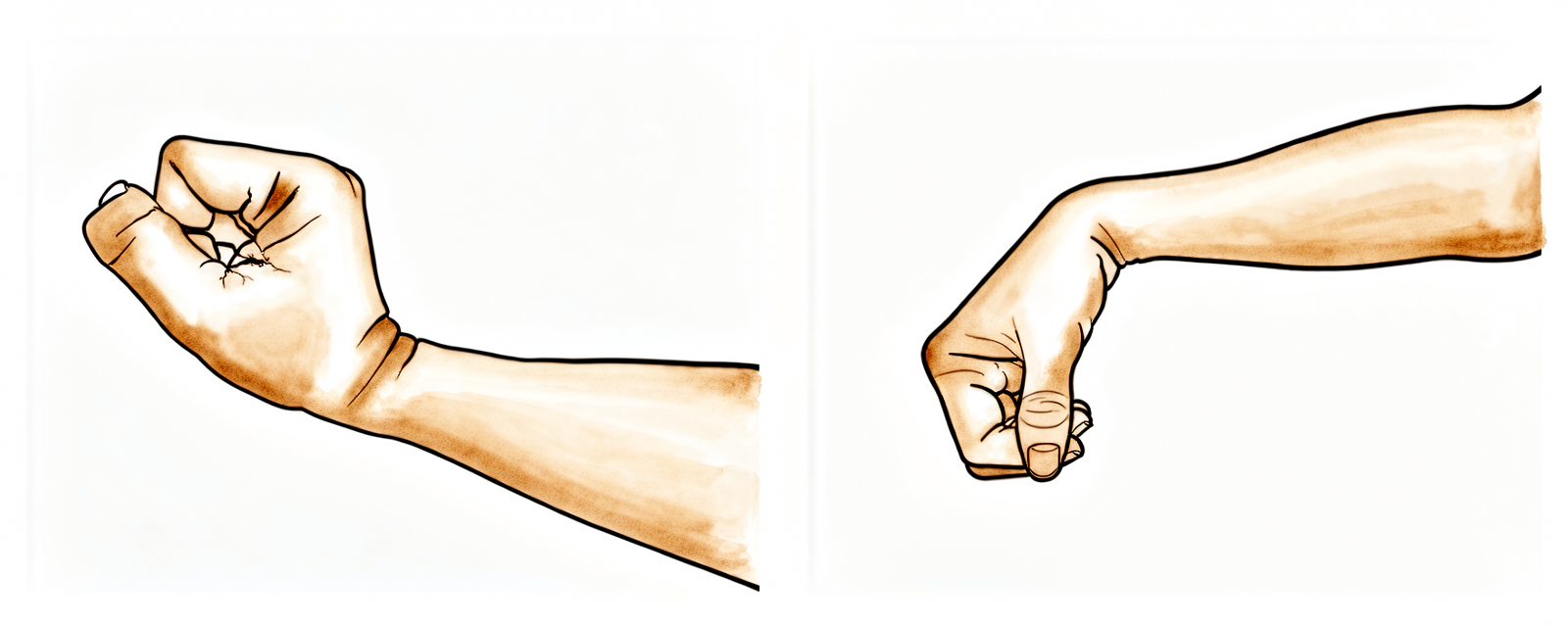
腕部运动
将手臂移出吊带并保持支撑,通过向前、向后及左右弯曲手腕来保持其活动。从一开始就保持手腕活动,可在保护肩关节的同时防止僵硬。
在您的物理治疗师指导下
Kieran Hirpara 4.0
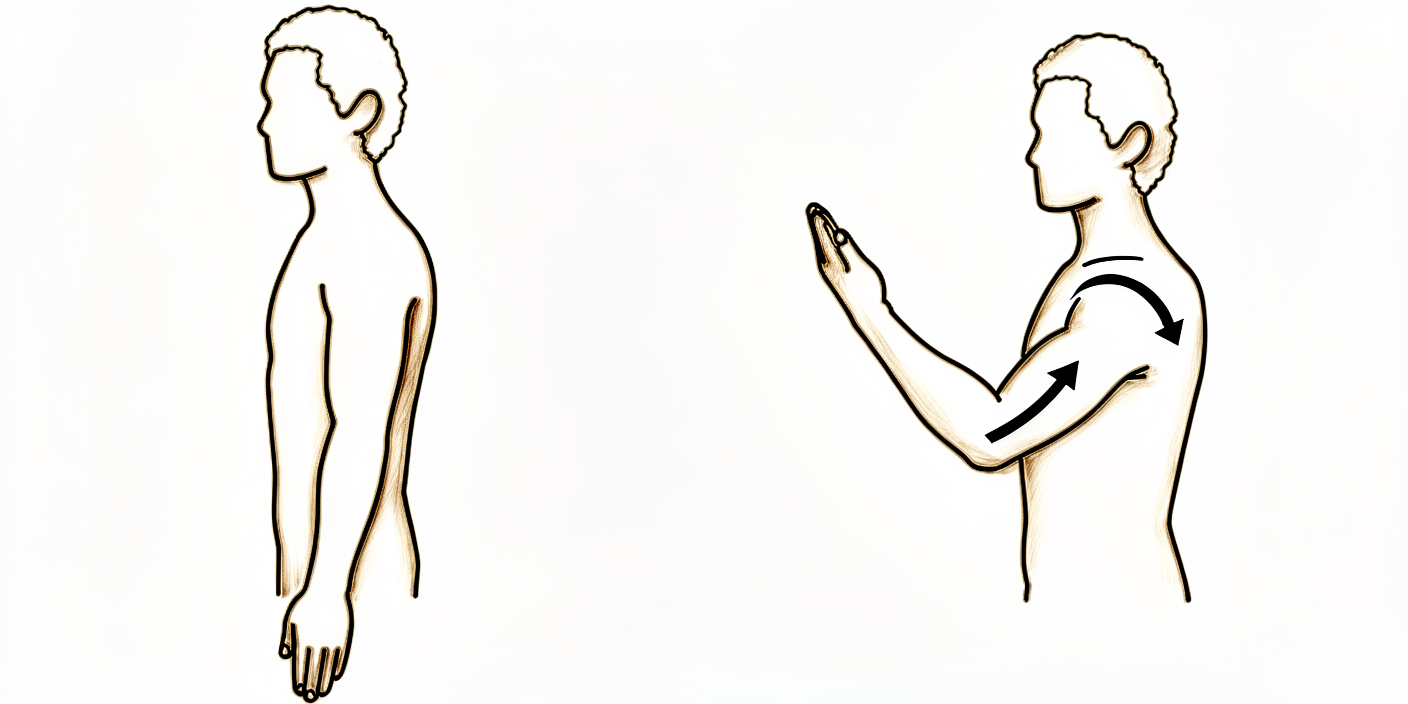
肘部弯曲
上臂自然下垂并得到支撑,将肘关节弯曲至舒适的最大范围,然后完全伸直。仅肘部活动——保持肩部放松。这可在保护锁骨的同时保持肘关节活动自如。
在您的物理治疗师指导下
Kieran Hirpara 4.0
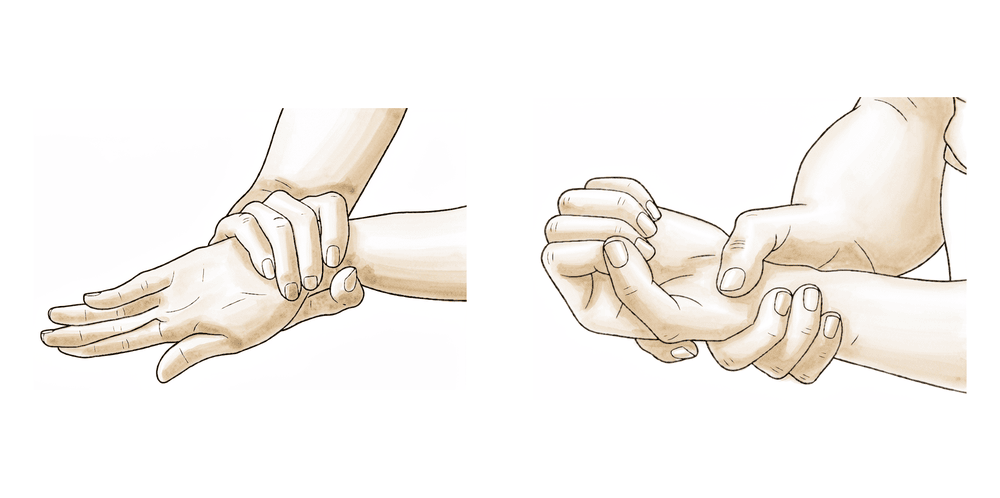
前臂旋转
将肘部贴紧身体一侧并屈曲至直角,先掌心向上旋转,再掌心向下旋转。保持上臂静止,仅前臂进行旋转。从第二周起,您的物理治疗师可能会在此动作中加入轻柔的阻力。
在您的物理治疗师指导下
Kieran Hirpara 4.0
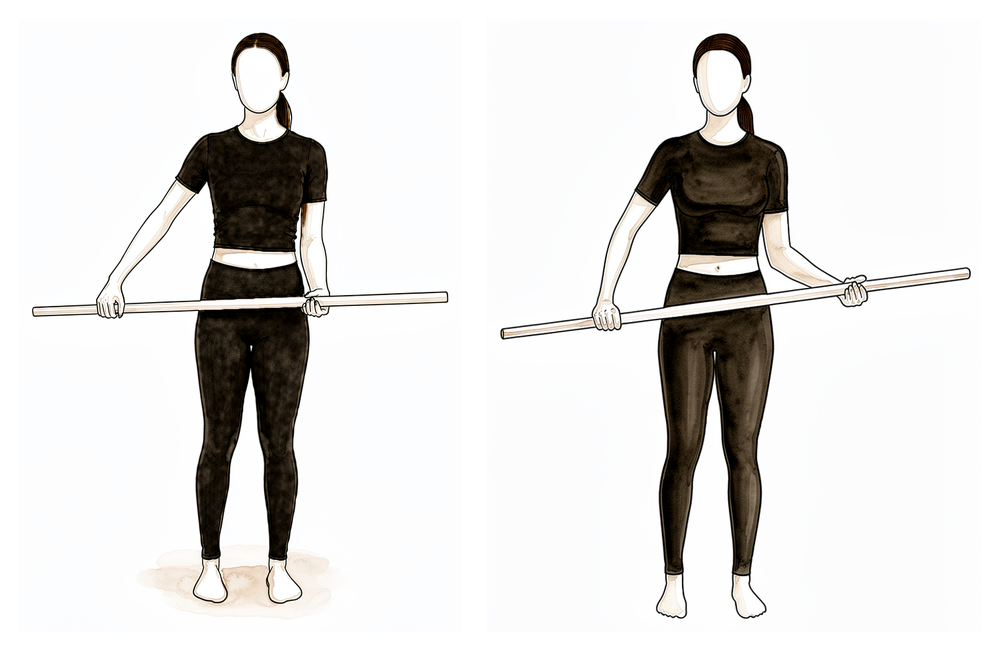
借助棍棒辅助外旋
仰卧,将手术侧肘部紧贴体侧并屈曲至直角。双手握住一根棍棒,用健侧手臂轻轻带动患侧手向外旋转,转动肩关节,然后复位。保持肘部紧贴体侧——这是一个辅助动作,而非强行动作。
在您的物理治疗师指导下
Kieran Hirpara 4.0
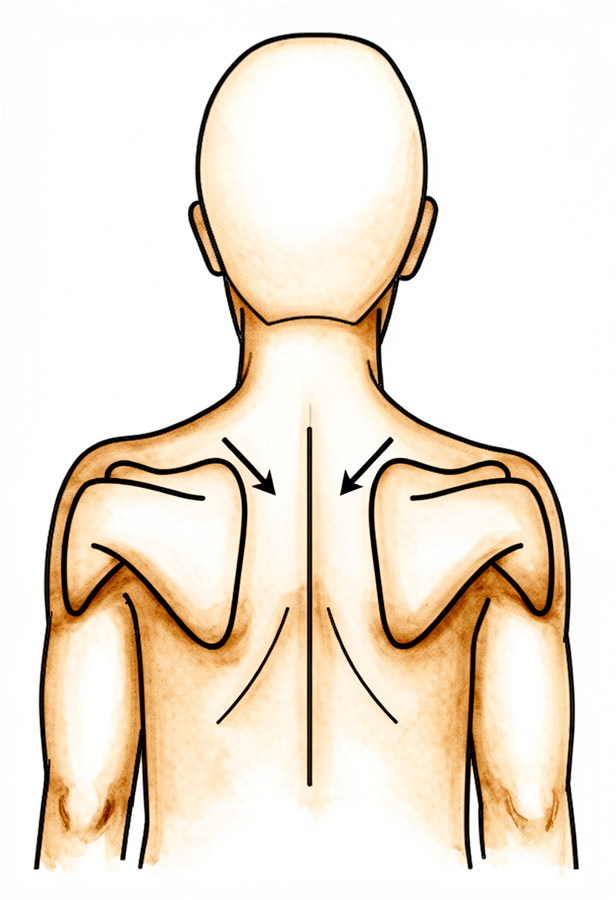
肩胛骨位置
坐直或站直,轻轻将肩胛骨向后、向下收拢,使其远离耳朵。保持几秒钟,然后放松。这能让肩胛骨周围的肌肉保持活跃,同时避免移动正在愈合的锁骨。
在您的物理治疗师指导下
Kieran Hirpara 4.0
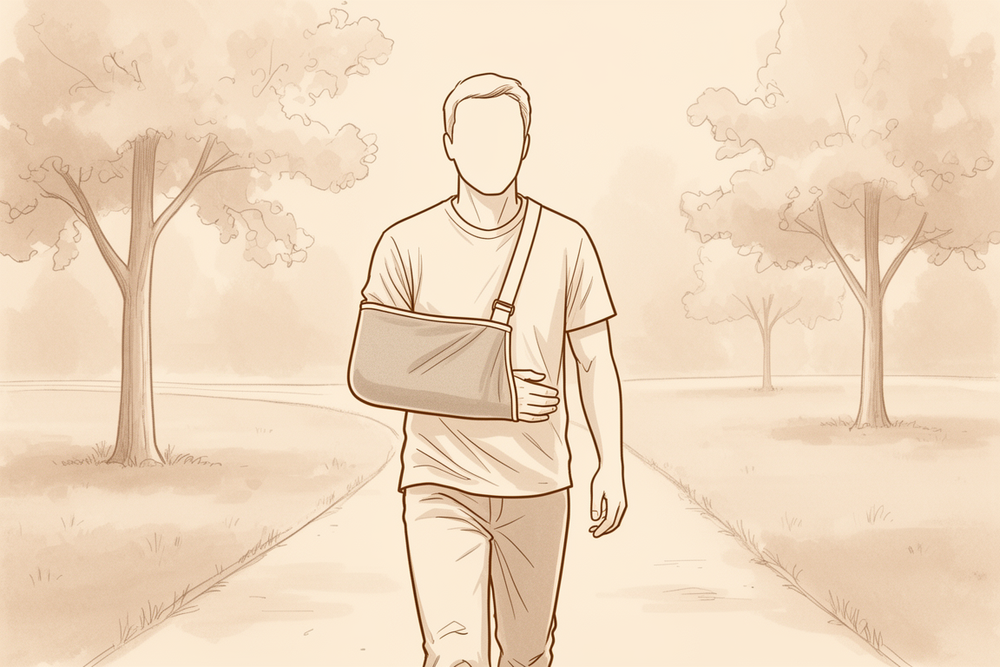
手臂佩戴吊带时行走
通过步行保持温和的心血管活动,手术侧手臂置于悬吊带中休息。这可在保护骨折的同时维持您的整体体能。
在您的物理治疗师指导下
最初几周的重点在于骨折开始愈合期间保护内固定装置。您将佩戴吊带,通过冰敷控制肿胀,并进行轻柔的练习以保持手臂其余部位的活动度:包括手、腕、肘和颈部,以及钟摆运动和低于肩高的轻柔辅助肩部活动。最重要的规则:肘部不要抬至肩高以上,手术侧手臂禁止提重物或搬运物品,禁止通过手臂支撑身体,六周内(此规定适用于任何肩部手术)或佩戴吊带期间禁止驾驶。
致您的物理治疗师:
目标
- 保护内固定装置及愈合中的骨骼和软组织
- 缓解疼痛和肿胀
- 恢复肩关节被动活动范围,屈曲不超过 90°
- 维持肘、腕、手及颈椎的全范围活动度
处理方案
- 根据需要使用冷疗和物理因子治疗;练习和治疗前给予镇痛
- 检查吊带佩戴情况;指导吊带使用(保护性佩戴,尤其是外出时;根据临床惯例,夜间无需佩戴)及姿势
- 钟摆运动和桌面滑动练习
- 被动活动范围(PROM):在肩胛骨平面内,外旋和内旋至舒适范围;屈曲/前举/外展最大不超过 90°
- 辅助主动活动范围(AAROM):中立位使用棍棒辅助外旋;仰卧位辅助屈曲至 90°
- 主动活动范围(AROM):肘、腕、手及颈椎;握力训练(捏球)
- 从第 2 周开始:抗阻腕关节屈伸和前臂旋转;轻柔的肩胛骨定位和后缩
- 有氧运动:佩戴吊带行走;佩戴吊带使用固定式或卧式自行车
注意事项
- 禁止主动肩关节上举
- 禁止肩关节屈曲或外展超过 90°,包括被动活动
- 手术侧手臂禁止提重物或搬运物品;禁止通过手臂承重
- 六周内禁止驾驶(此规定适用于任何肩部手术),佩戴吊带期间亦禁止驾驶
晋级标准
- 被动屈曲/前举至 90° 及外旋至约 30° 时感觉舒适
- 静息状态下疼痛缓解至 4/10 以下
- 肘、腕和手主动活动范围完全恢复
- 伤口愈合,无并发症迹象
第二阶段 — 早期活动(第 3–6 周)
Kieran Hirpara 4.0
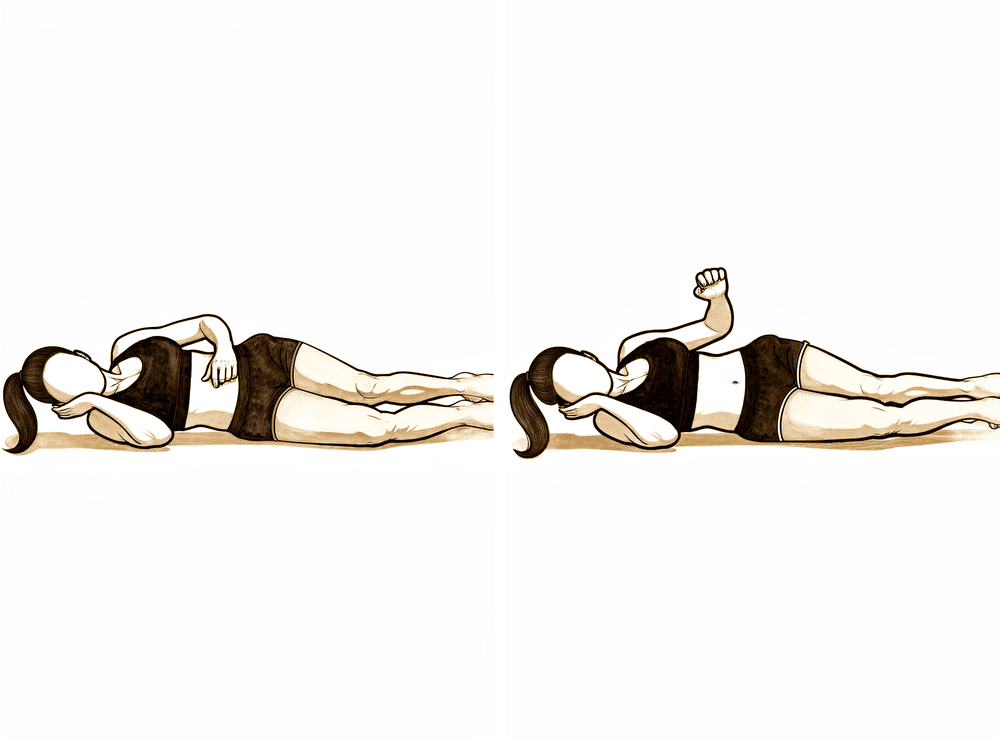
侧卧位外旋
仰卧于非手术侧,手术侧手臂置于上方,肘关节屈曲90度并贴紧身体。保持肘部内收,将前臂向上远离腹部方向旋转至舒适的最大范围,然后有控制地放下。此阶段不使用负重——手臂依靠自身力量活动。
在您的物理治疗师指导下
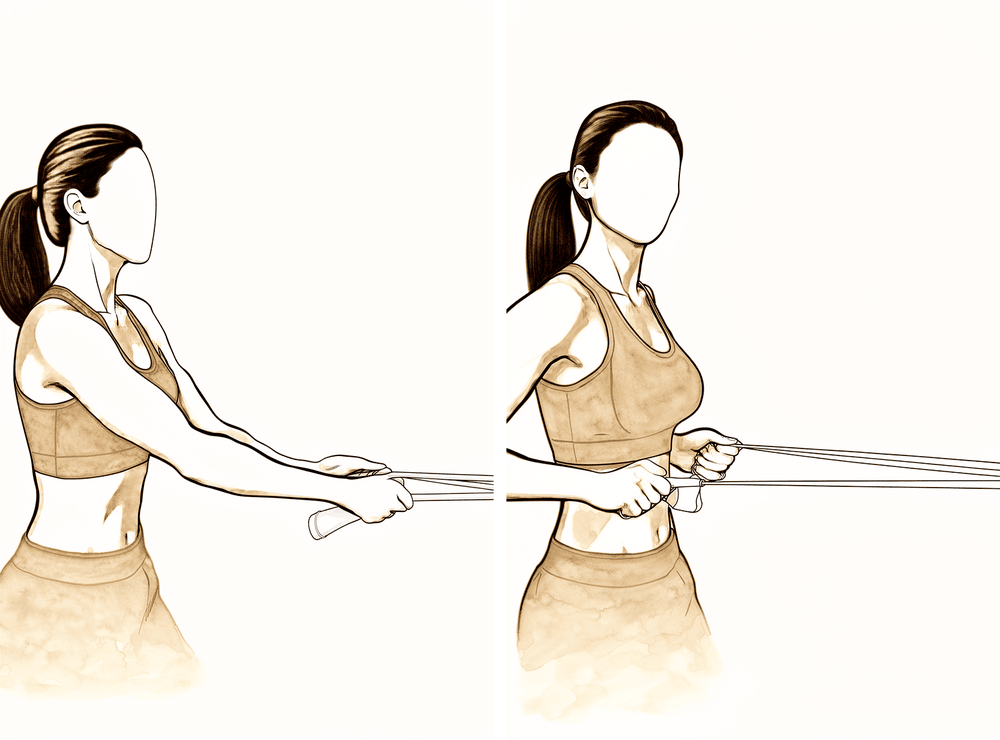
Kieran Hirpara 4.0
使用弹力带进行低位划船
将弹力带固定在身前腰部高度。保持直立站姿,将弹力带向身体方向拉动,轻柔地将肩胛骨向下、向后牵引,然后有控制地释放。保持阻力较轻。
在您的物理治疗师指导下
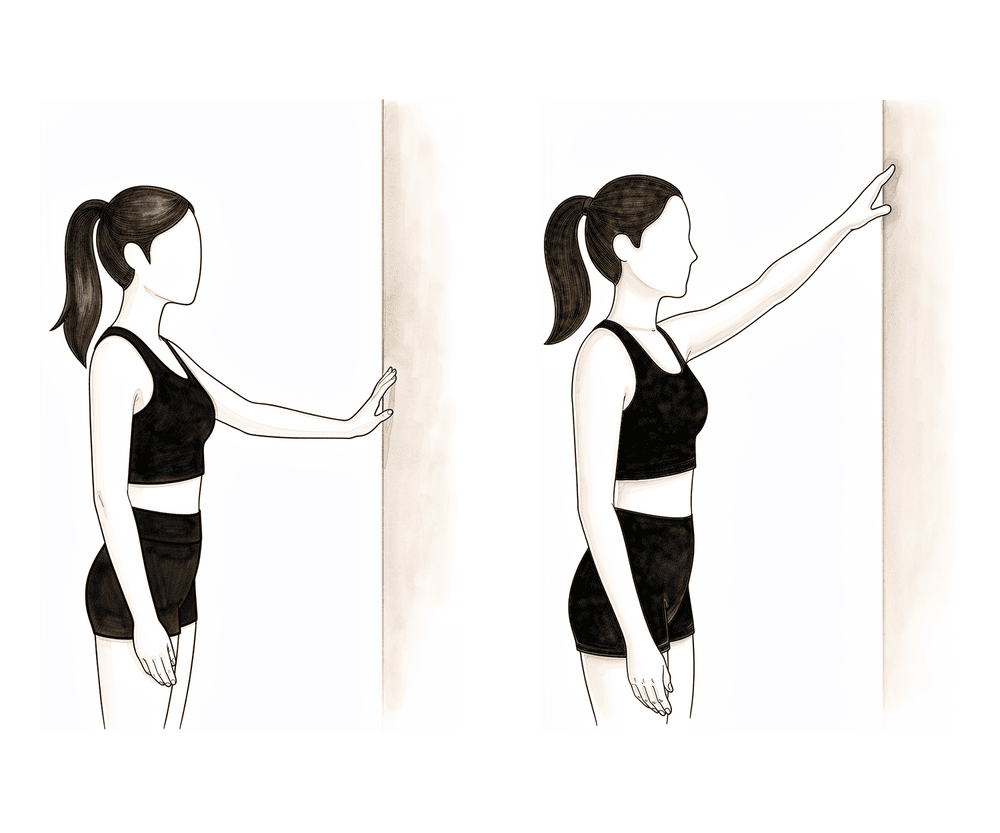
Kieran Hirpara 4.0
壁面滑动(手指行走)
面对墙壁站立,将手指置于墙上。沿墙壁向上移动手指以抬起手臂,让墙壁分担部分重量,然后沿墙壁向下移动。在此阶段,保持手臂低于肩部高度——墙壁起到辅助作用,因此动作保持轻柔。
在您的物理治疗师指导下
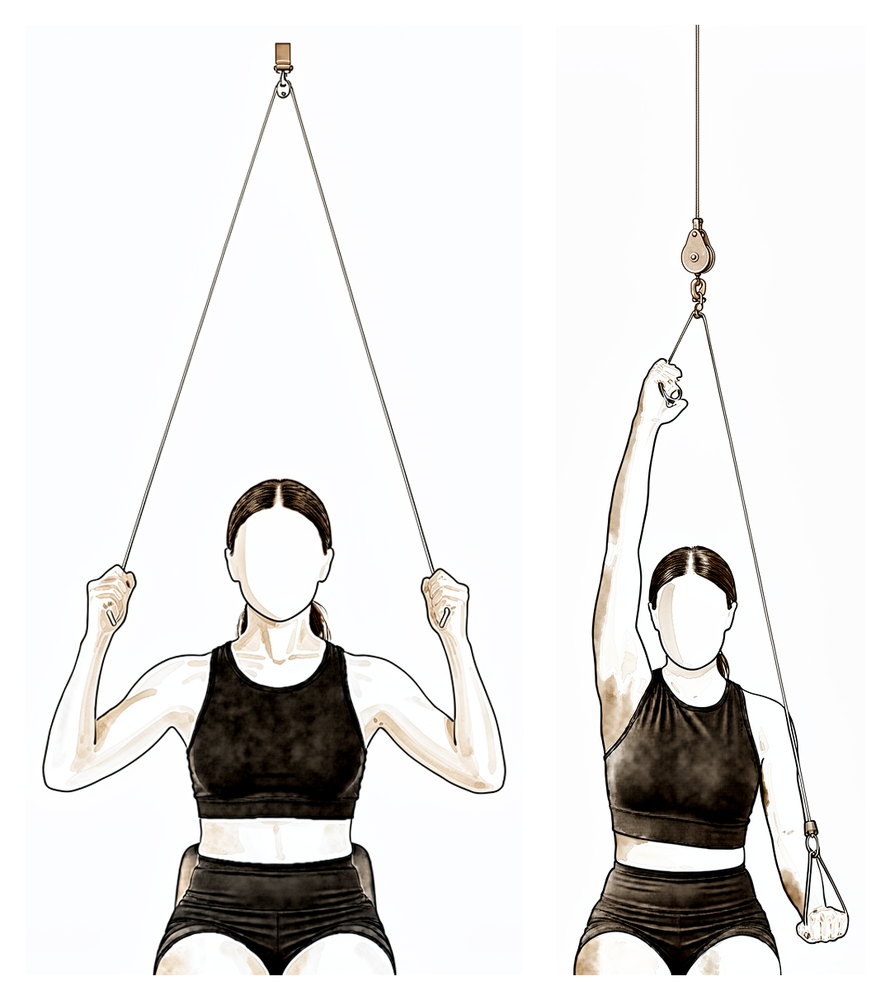
Kieran Hirpara 4.0
门顶滑轮
坐在门后滑轮装置下方,双手各握一个手柄。用健侧手臂向下拉,将患侧手臂抬高至舒适范围,然后缓慢放下。目前请保持在轻柔的活动范围内,且低于肩部高度——由健侧手臂完成发力。
在您的物理治疗师指导下
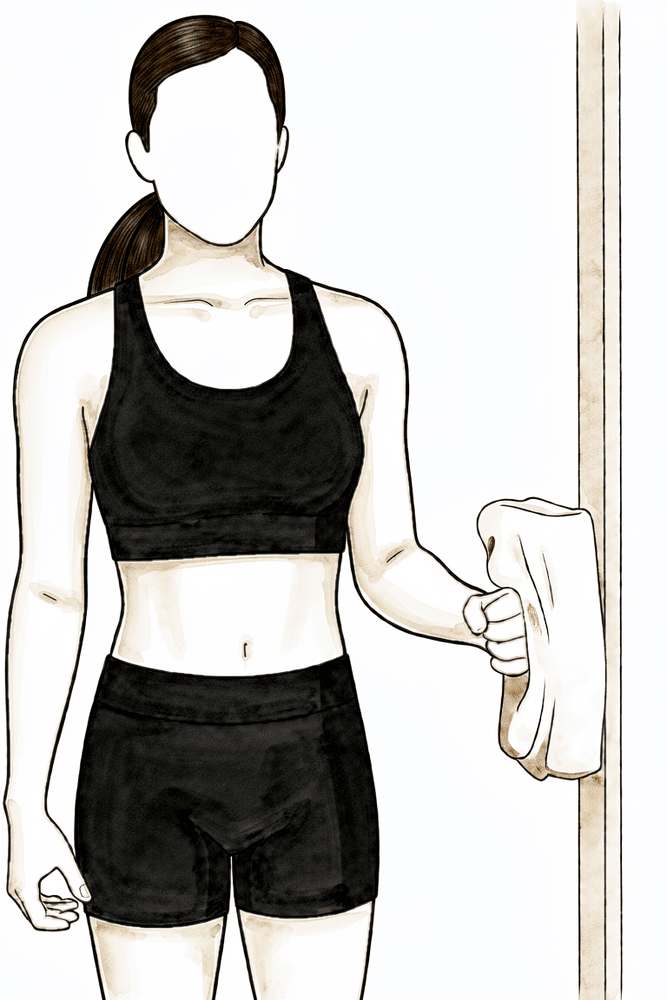
Kieran Hirpara 4.0
等长外旋
将肘部紧贴体侧并屈曲成直角,使手背抵住墙壁或门框。轻轻向外推压,保持手臂不动,维持数秒,然后放松。此动作可在肩部无运动的情况下激活肩袖。
在您的物理治疗师指导下
Kieran Hirpara 4.0
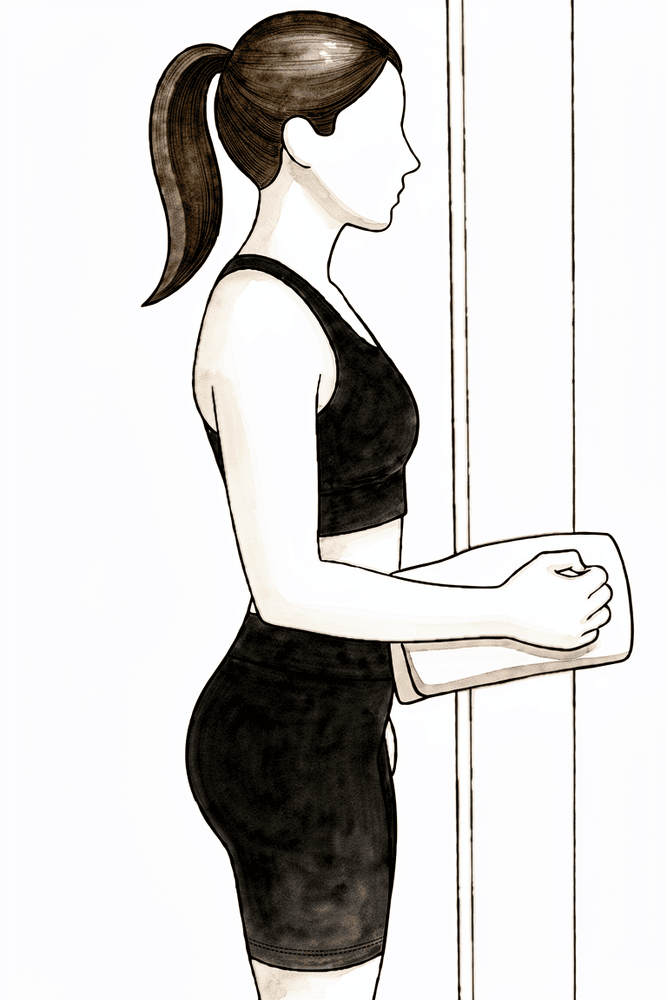
等长内旋
将肘部贴紧体侧并屈曲成直角,手掌抵住墙壁或门框。轻轻向内推压,同时保持手臂不动,保持数秒,然后放松。这是一种温和的启动肩袖肌群的方法。
在您的物理治疗师指导下
Kieran Hirpara 4.0
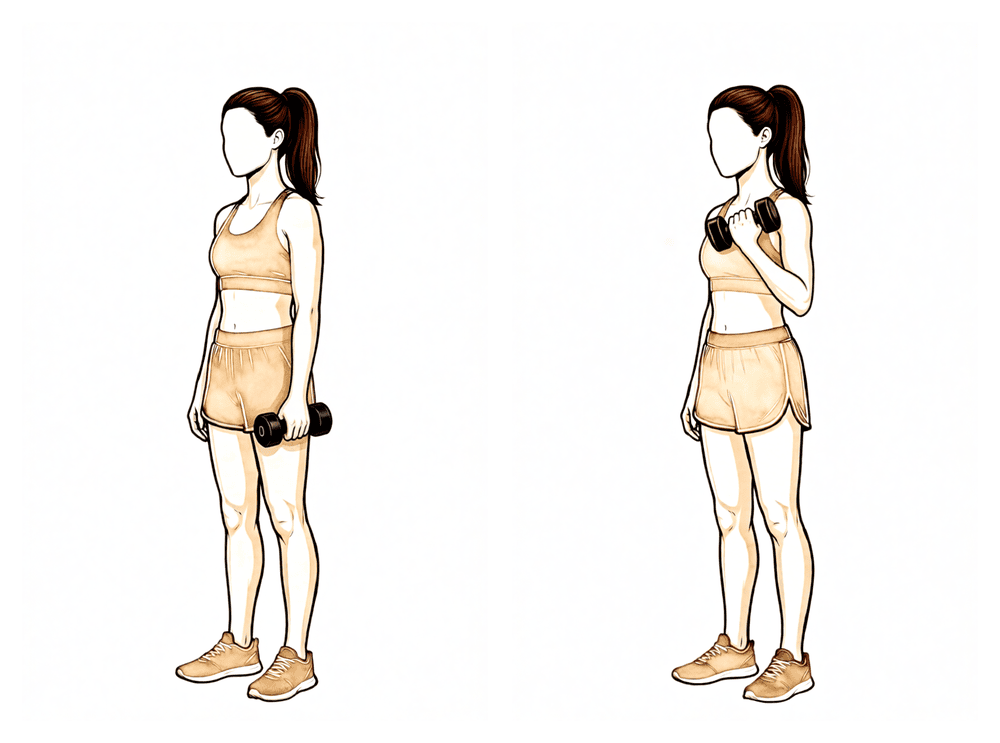
肱二头肌弯举
上臂贴于体侧,屈肘将轻重量物向肩部抬起,然后有控制地放下。保持负荷较轻——这是温和的手臂训练,而非大重量负重。
在您的物理治疗师指导下
骨折开始愈合,但尚未完全恢复:此阶段旨在恢复活动度,而非力量。随着舒适度允许,逐步减少使用吊带,被动和辅助活动范围逐渐接近全范围,并开始以自身力量在肩部高度以下活动手臂,同时进行温和的肌肉激活(等长)练习。任何举起或携带的物品重量不得超过一杯咖啡的重量,并避免任何强力拉伸。此阶段以约六周时的X光检查和与Hirpara医生的复查结束;正是该复查,而非仅凭日历时间,开启了进入强化训练及肩部高度以上活动的门槛。
致您的物理治疗师:
目标
- 逐步脱离吊带(约在第6周时完全弃用)
- 在所有平面上将被动活动范围逐步推进至全范围
- 建立90°以下的主动活动范围,且运动力学良好
- 开始温和的等长练习和肩胛周围肌肉训练
管理方案
- 被动活动范围(PROM):在所有平面上逐步推进至全范围,以耐受度为限;禁止强力拉伸
- 辅助主动活动范围(AAROM):仰卧位屈曲,使用木棍逐步过渡至直立位(“草坪椅”式渐进),墙面和栏杆滑动,滑轮练习
- 主动活动范围(AROM):90°以下的抬举,无痛;仰卧位屈曲逐步过渡至站立位;坐位和侧卧位外旋
- 中立位下的等长肩袖肌群练习;轻度肩胛周围肌肉强化(肩胛骨后缩、低位划船、中位划船);轻度肱二头肌和肱三头肌练习
- 监测代偿模式(肩部耸起、肩胛骨替代运动)
- 有氧运动:步行;固定式自行车
注意事项
- 禁止举起或携带重于约一杯咖啡的物品
- 在六周复查确认骨折愈合之前,禁止进行90°以上的主动抬举
- 禁止对肩部进行强力拉伸或采取引发疼痛的姿势
- 禁止通过手臂承重
- 六周内禁止驾驶(此规定适用于任何肩部手术),佩戴吊带期间亦禁止驾驶
晋级标准
- 被动活动范围达到全范围或接近全范围
- 主动抬举至90°,代偿极少,疼痛评分低于4/10
- X光显示骨折愈合满意,并经与Hirpara医生的复查确认
第三阶段 — 强化训练(第 6–12 周)
Kieran Hirpara 4.0
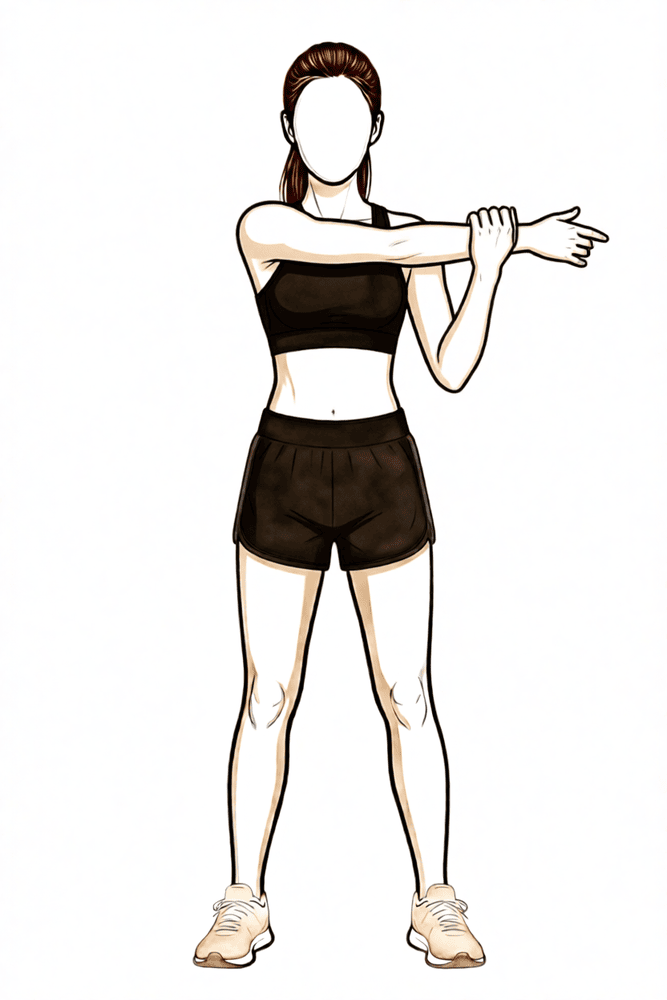
跨体拉伸
用另一只手将手术侧手臂横过胸前,直至感到肩后部有牵拉感。短暂保持后松开。仅拉伸至明显不适的程度——切勿拉伸至出现锐痛。
在您的物理治疗师指导下
Kieran Hirpara 4.0
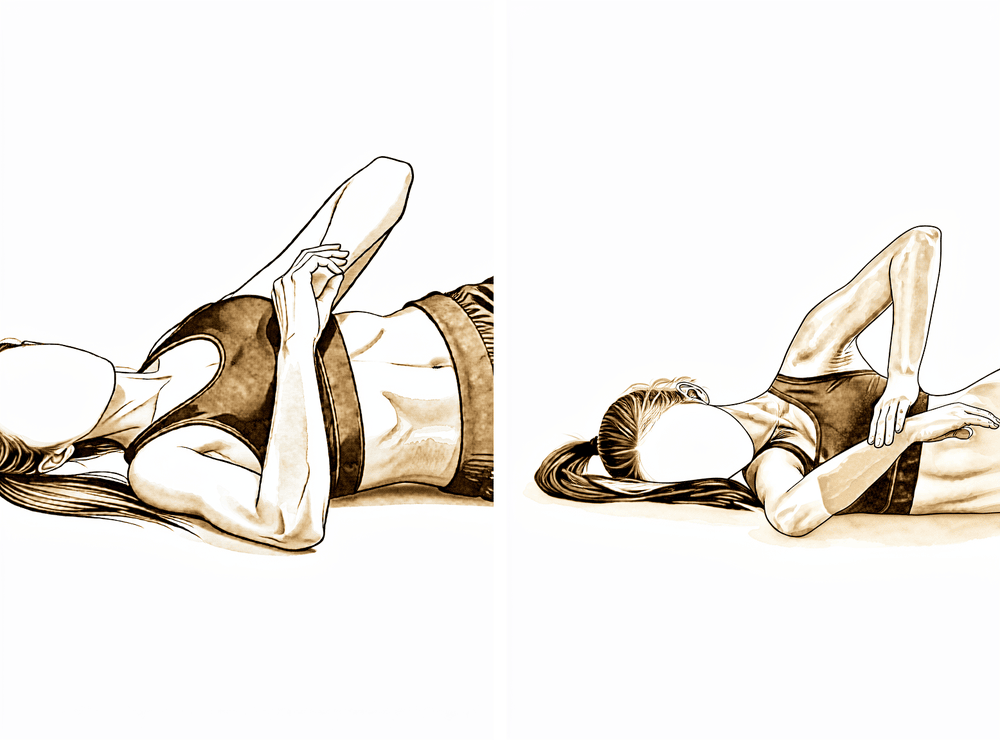
睡眠者拉伸
仰卧于手术侧,肩关节和肘关节均屈曲至90度。用另一只手轻轻将前臂向下压向床面,直至感到肩后部有牵拉感,然后松开。动作要轻柔——避免剧烈疼痛。
在您的物理治疗师指导下
Kieran Hirpara 4.0
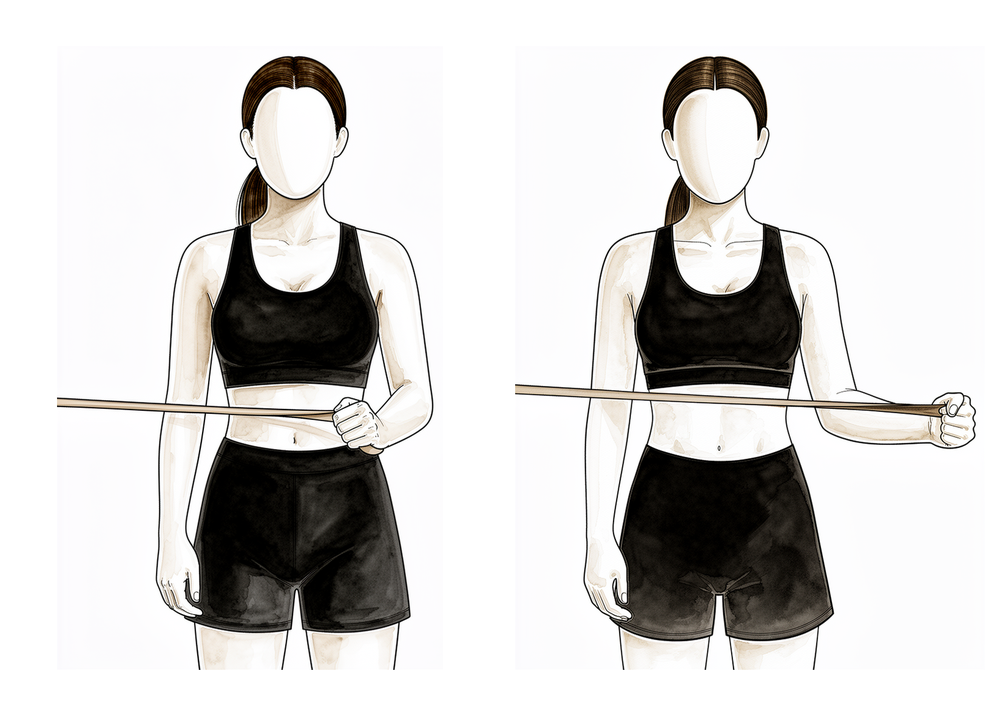
带状外旋
将肘部贴紧体侧并屈曲成直角,手持一根固定在腰部高度的橡皮筋。保持肘部贴于体侧,对抗橡皮筋阻力将前臂向外旋转,然后缓慢复位。此动作是在先前等长训练的基础上,进一步锻炼肩袖肌群。
在您的物理治疗师指导下
Kieran Hirpara 4.0
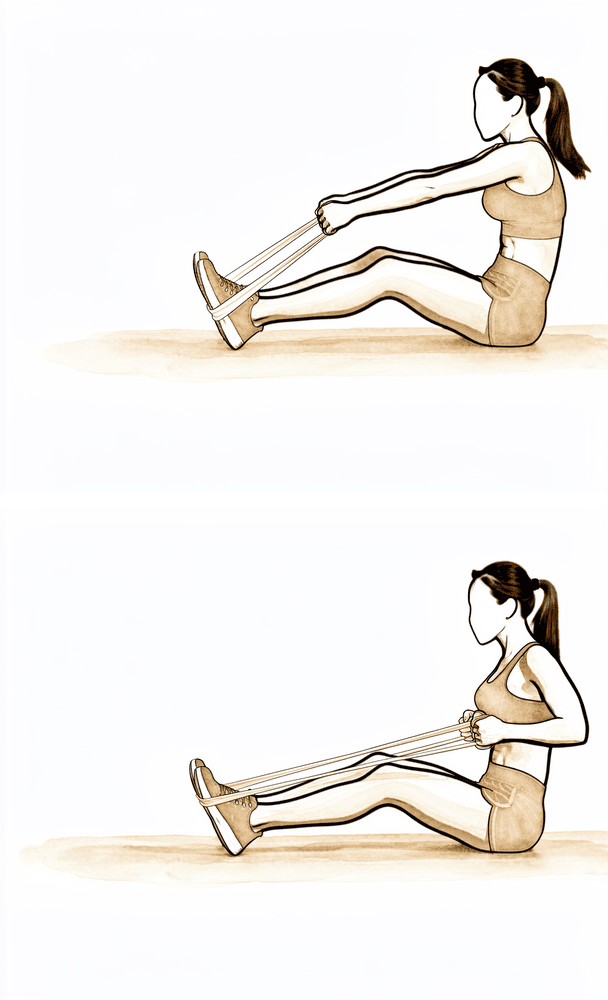
低排
手握一条固定在身前腰部高度的弹力带。保持手臂相对伸直,将弹力带向后下方拉向髋部,同时收紧肩胛骨使其向下向后移动,然后缓慢还原。此动作可锻炼支撑肩袖的肩胛骨肌肉。
在您的物理治疗师指导下
Kieran Hirpara 4.0
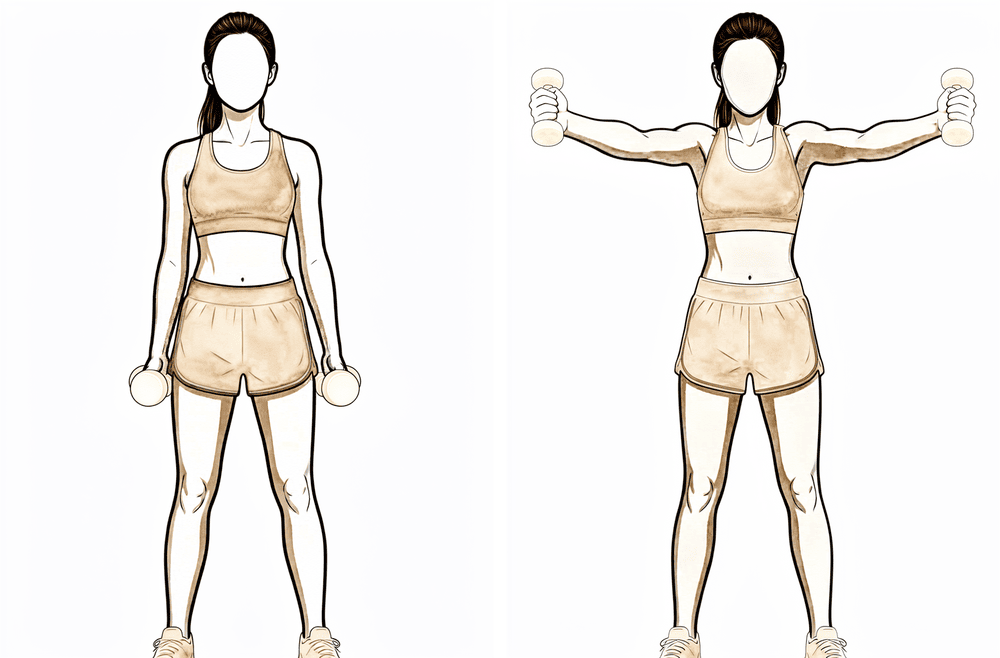
肩外展上举(完全上举)
拇指朝上,将手臂向前抬起至约45度——介于正前方与正侧方之间——然后有控制地放下。当肩高以上的活动范围恢复后,抬起至舒适的过头活动范围。保持负荷较轻。
在您的物理治疗师指导下
Kieran Hirpara 4.0
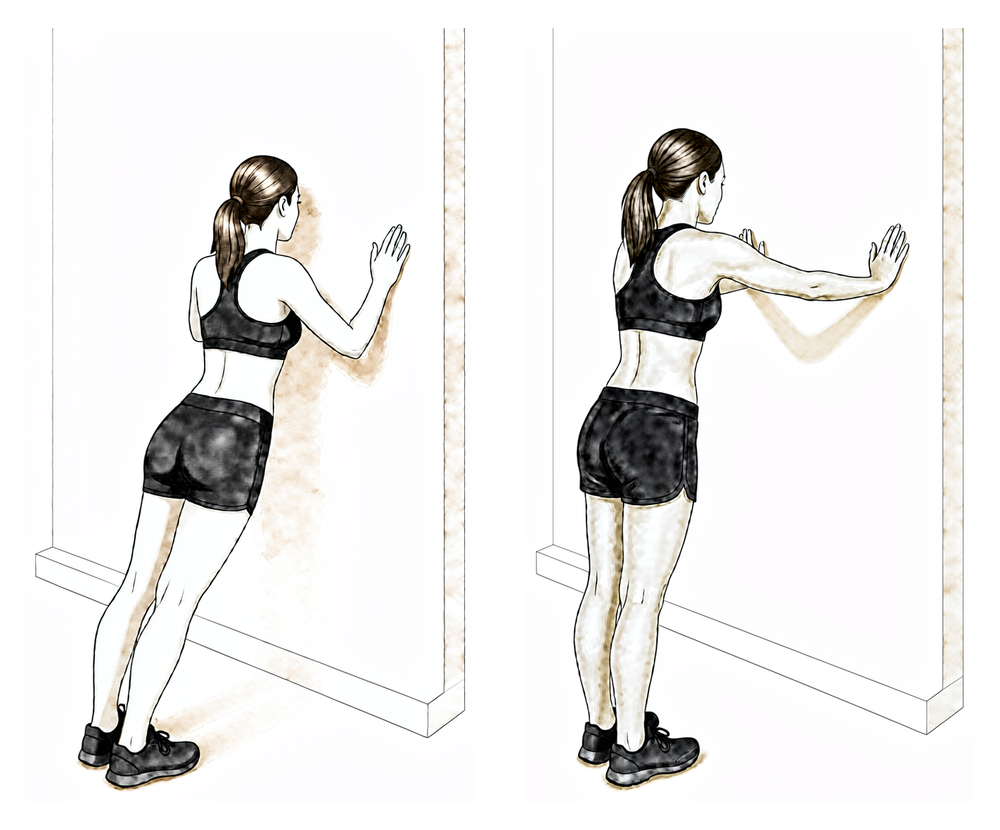
靠墙俯卧撑
面向墙壁站立,双手平贴于墙面,高度与肩部齐平。屈曲肘部向墙壁方向前倾,随后向后推回,并在动作末端通过双手施加轻柔推力以展开肩胛骨。仅在康复师指导下,于该阶段后期引入此动作。
在您的物理治疗师指导下
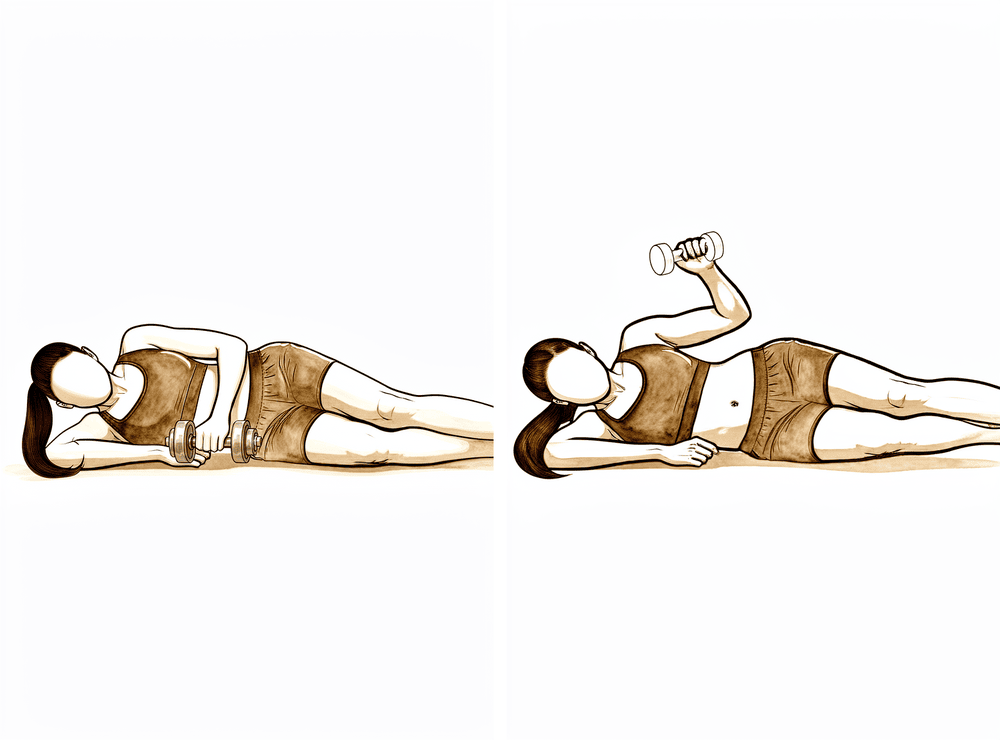
Kieran Hirpara 4.0
侧卧位负重外旋
仰卧于非手术侧,上方肘关节屈曲呈直角并紧贴身体。手持轻重量,将前臂向上旋转朝向天花板,然后缓慢放下。保持负荷较轻,重复次数较多。
在您的物理治疗师指导下
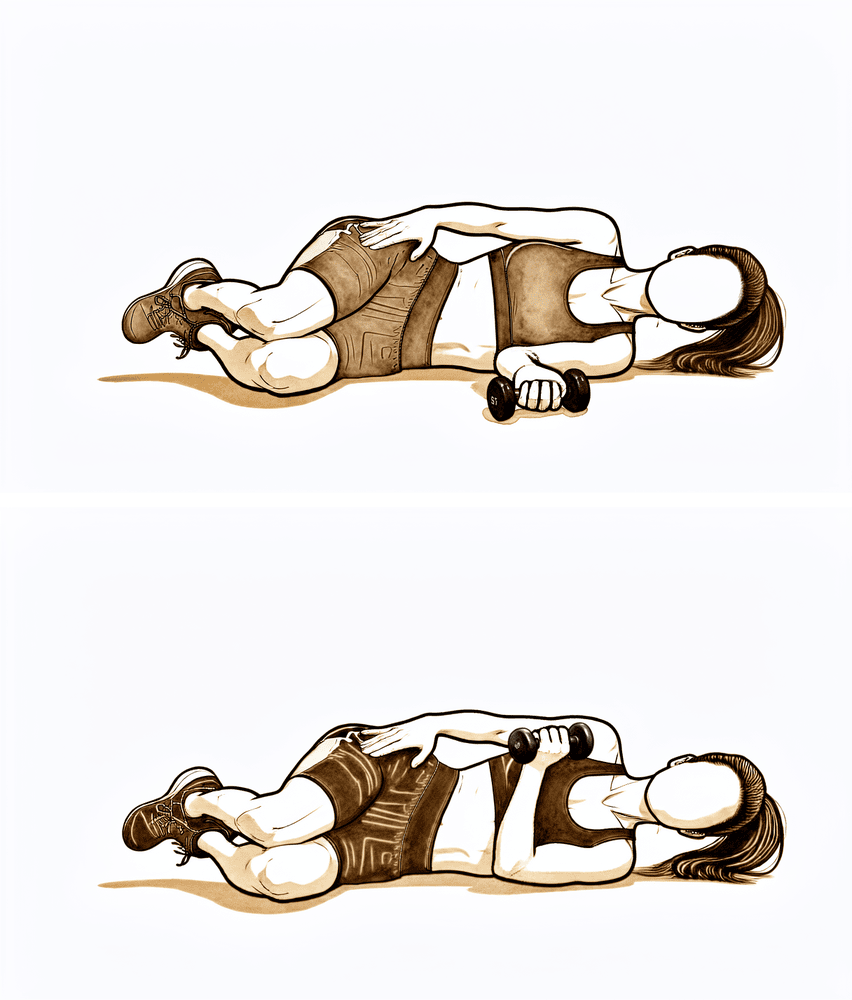
Kieran Hirpara 4.0
侧卧位负重内旋
仰卧于手术侧,肘关节屈曲成直角并紧贴身体。手持轻重量,通过肩关节内旋将重物向上抬向腹部,然后缓慢放下。保持负荷较轻,增加重复次数。
在您的物理治疗师指导下
一旦复查确认骨折愈合良好,即可开始肩高以上的活动,并在随后的几周内逐步建立完全主动活动范围。强化训练从温和开始:首先进行肌肉激活练习,然后使用弹力带,最后针对肩袖和肩胛骨肌肉使用轻重量。在十二周之前,提举重量需保持较轻(不超过约 2 公斤),避免重物或过头提举,且此阶段禁止参与对抗性运动。游泳和骑自行车通常在此阶段恢复,具体需遵循物理治疗师的指导。
致您的物理治疗师:
目标
- 在所有平面实现完全主动活动范围,且力学机制正常
- 启动并逐步推进肩袖和肩胛周围肌群的强化训练
- 恢复正常日常活动
管理措施
- 在所有平面推进肩高 90° 以上的主动活动范围(AROM),尽量减少代偿模式
- 按需进行拉伸:背阔肌、胸肌、后关节囊及“睡眠者”拉伸(sleeper stretches)
- 强化训练:等长肩袖练习,逐步过渡至使用弹力带进行抗阻外旋/内旋,初始阶段在肩高以下进行;肩胛骨后缩和划船动作;在阶段后期进行肩外展上举(scaption raises)、前锯肌训练和墙壁俯卧撑
- 轻自由重量,根据耐受情况逐步增加:低负荷,高重复次数
- 有氧运动:固定自行车和步行;若复查时获准,约在 8–10 周后开始游泳和跑步
注意事项
- 12 周前禁止提举超过约 2 公斤的重物
- 12 周前避免过头或远离身体的重物提举
- 禁止对抗性运动;阶段后期(约 10–12 周)前禁止增强式训练或冲击负荷
- 强化训练应保持在舒适范围内,不应引发持续性疼痛
晋级标准
- 主动活动范围至少达到对侧的 90%
- 肩袖和肩胛周围肌群激活良好,抗阻训练时疼痛不超过 3/10
- X 光显示骨折愈合进展良好,并经 Hirpara 医生复查确认
第四阶段 — 恢复完全活动及运动(第12周起)
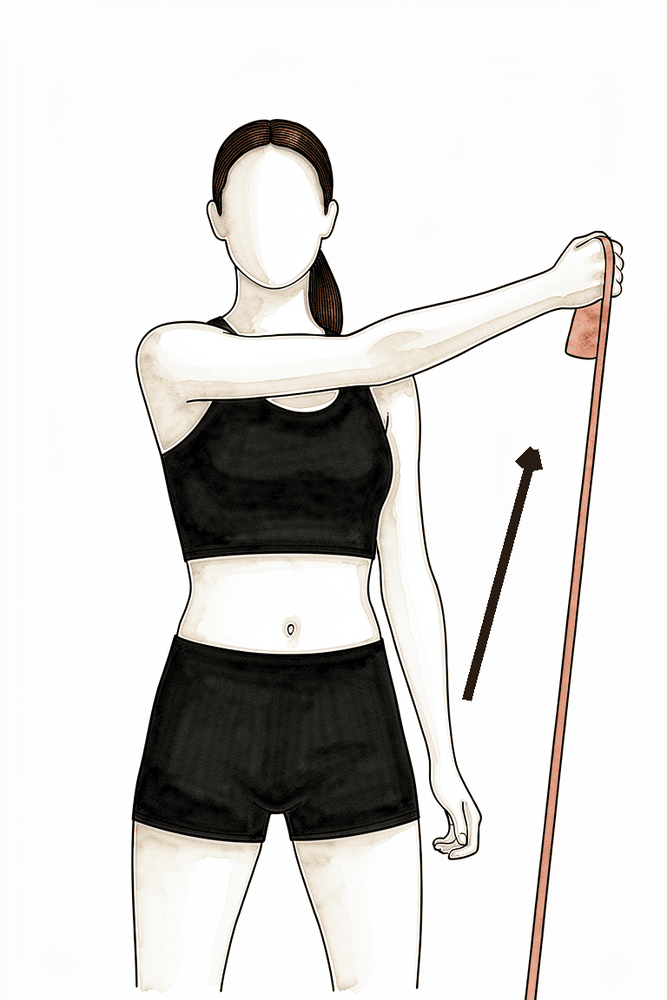
Kieran Hirpara 4.0
带条带的对角线模式(D1)
握住橡皮筋,将其斜向拉过身体——从一侧髋部向下并向对侧斜上方拉出,然后有控制地反向收回。这些功能性对角线模式可重建用于工作和运动中的协调性全臂动作。仅在骨折愈合后添加此练习。
在您的物理治疗师指导下
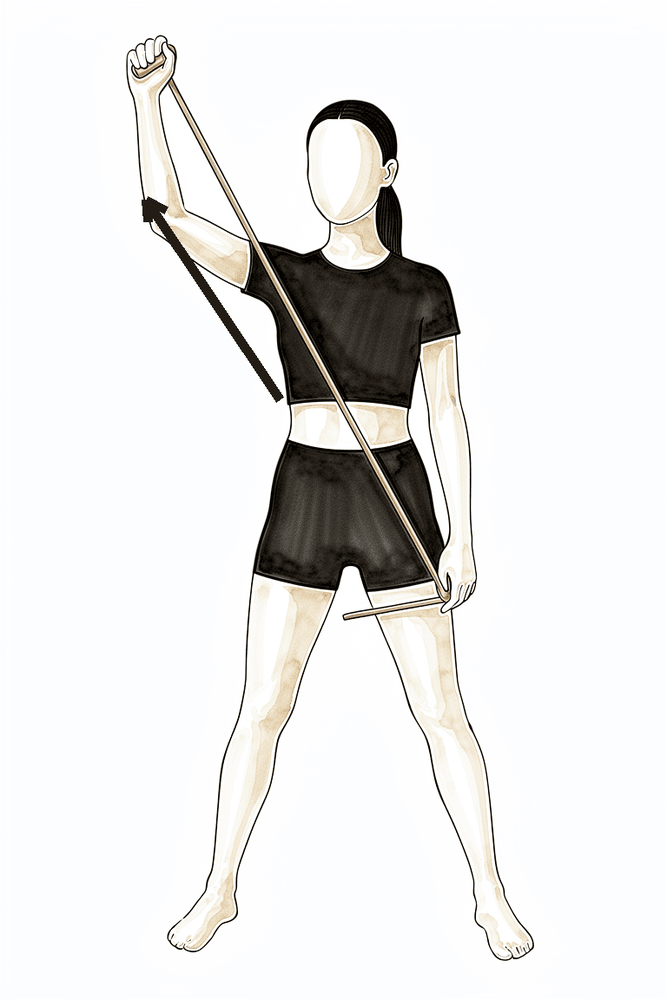
Kieran Hirpara 4.0
带带状的斜行模式(D2)
握住橡皮筋,从身体对侧下方斜向拉至头顶外侧,然后有控制地反向还原。此动作旨在建立肩关节的过头及运动专项动作模式。仅在骨折愈合且获得过头训练许可后方可添加此练习。
在您的物理治疗师指导下
最后阶段是逐步恢复较重的负重、体力劳动及运动。力量训练通过增加阻力、过头位姿势以及(针对运动员)增强式、投掷和专项运动训练进行推进。接触性和碰撞性运动(足球、橄榄球、骑马)需要X光片显示骨折愈合,这将在您与Hirpara医生的复诊中确认,通常最早在三个月到四个月后,某些方案将碰撞性运动推迟至六个月。在骨骼愈合前恢复运动有再次骨折的风险,因此这是一个值得遵守的门槛。
致您的物理治疗师:
目标
- 维持完全且无痛的活动范围
- 力量至少达到未患侧的90%
- 逐步恢复体力劳动、休闲活动及运动
管理
- 渐进性抗阻训练,包括在可耐受范围内的离心负荷、过头位姿势及功能性模式
- 节律性稳定训练和本体感觉训练;针对过头位运动员的增强式及间歇性投掷或球拍类项目
- 针对体力劳动者的工作特异性体能训练;在不受限制的比赛前进行专项运动训练
- 恢复运动的决策需个体化(接触性 vs 非接触性,上肢需求),并与外科医生协调
晋级标准
- 完全且无痛的主动活动范围
- 等速肌力测试显示力量至少达到未患侧的90%,且力量测试时无疼痛
- 完成分级恢复运动计划,无疼痛或恐惧感
- 在接触性或碰撞性运动前,经Hirpara医生复诊确认影像学愈合
您的康复方案之后
上述各阶段改编自已发表的锁骨骨折固定康复方案:马萨诸塞州总医院布莱根运动医学中心、猛犸骨科研究所、科罗拉多大学(Jonathan Bravman 医生)以及 Midwest Orthopaedics at Rush(Brian Cole 医生),并结合西萨福克郡和联合林肯郡的国家医疗服务体系(NHS)物理治疗指南,以及关于运动员锁骨骨折系统综述中重返运动的证据。周数范围通常为典型值而非固定值,您的康复进程由物理治疗师指导,并以您在 Hirpara 医生复诊时评估的骨折愈合情况为门槛。本页面与诊所的一般康复建议配合使用;请参阅 术后疼痛管理 和 伤口护理。关于手术本身,请参阅 锁骨固定术。本方案背后的证据(手术与非手术试验数据、骨愈合率及重返运动率,以及已发表的外科医生方案)已在证据部分进行总结,可从本页面顶部获取 PDF 版本。
Evidence & references
This is the clinical evidence summary written for health professionals. It is technical, and it lists the research this page was built from. You do not need to read it to understand your treatment or to make a decision about it.
Midshaft Clavicle Fracture — Operative vs Non-operative Management & Post-operative Rehabilitation (Plate ORIF)
Topic scope: (A) the decision between non-operative management and plate fixation for displaced midshaft clavicle fractures (the randomised-trial evidence on union, function and return to sport), and (B) post-operative rehabilitation after open reduction and internal fixation (ORIF) of the clavicle with a plate and screws. Distal-third and proximal-third fractures, which involve different fixation constructs, are noted only where they bear on the rehab principles.
Defining principle of the surgical rehab here: clavicle ORIF is a protect-the-fixation / protect-the-healing-fracture pathway, NOT an early-aggressive-motion pathway. The plate is a splint, not a substitute for healed bone — it neutralises load while the fracture itself unites over roughly 6–12 weeks and remodels for months afterwards. So the rehab is staged around fracture biology: a sling and below-shoulder-height-only motion early to protect the construct, range of motion progressed as the fracture knits (overhead motion deferred until the ~6-week x-ray), and strengthening / loading / collision sport withheld until radiographic union is confirmed. This is the opposite of a debridement or capsular-release pathway, where motion is the goal from day one and there is no fracture to protect. The single most important gate throughout is the x-ray, not the calendar — every major step up depends on how the fracture is healing.
A. THE OPERATIVE-vs-NON-OPERATIVE DECISION
Most clavicle fractures heal without surgery. The debate concerns completely displaced midshaft fractures (typically ≥100% displacement or ≥~2 cm shortening), where historic "all clavicles heal" teaching was overturned by randomised data.
The landmark trial — Canadian Orthopaedic Trauma Society (COTS) 2007
The COTS multicentre RCT randomised 132 patients with displaced midshaft clavicle fractures to plate ORIF vs non-operative sling treatment. Plate fixation produced a markedly lower nonunion rate (~2% vs ~23–24% non-operative), fewer symptomatic malunions, faster time to union, and better Constant and DASH scores at one year. This trial is the basis for offering surgery to active patients with completely displaced fractures — it did not establish that all such fractures require surgery. STRONG (RCT). [COTS 2007]
What later evidence tempered
- Meta-analyses of RCTs confirm operative fixation reduces nonunion and symptomatic malunion but show that much of the early functional advantage converges by 1 year, and comes at the cost of hardware-related reoperation. The decision is therefore shared and patient-specific (activity demands, displacement, comminution, smoking, occupation) rather than automatic. STRONG (SR/MA of RCTs). [Woltz-type meta-analysis; meta-regression, JSES 2020 — DOI 10.1016/j.jse.2020.02.011]
- A modern cohort comparison of dual mini-fragment plating vs non-operative care (mean 3.4-yr follow-up) found fewer union complications with fixation but similar patient-reported outcomes at final follow-up — echoing the "fixation buys reliable union, not necessarily a better long-term shoulder" theme. MODERATE (cohort). [DOI 10.1016/j.jse.2024.10.018]
- Heterogeneity between trials (how nonunion and displacement were defined, statistical handling of time-to-union) explains some of the apparent disagreement across studies — a caution against over-reading any single union statistic. MODERATE. [DOI 10.1016/j.jse.2012.03.015; meta-regression DOI 10.1016/j.jse.2020.02.011]
Construct choice (informs the rehab, not the patient's behaviour)
- Plate vs intramedullary fixation: an RCT comparing locked intramedullary nailing with plating found both achieve union; plates remain the workhorse for comminuted/displaced patterns. MODERATE (RCT). [DOI 10.1016/j.jse.2010.05.002]
- Plate position: superior plating is biomechanically strong but the plate lies directly under thin skin and is frequently symptomatic; anteroinferior plating lowers symptomatic hardware and removal rates. This is why patients commonly feel and see the plate, and why removal is a later, elective conversation. [Hardware-removal cohort, DOI 10.1016/j.jse.2017.03.011]
- Fixation reaches union even when delayed: immediate fixation vs delayed reconstruction of displaced midshaft fractures both restore objective strength and patient-oriented outcomes — reassuring that a fracture initially treated non-operatively can still be fixed successfully if it fails to unite. MODERATE (cohort). [DOI 10.1016/j.jse.2007.01.001]
B. POST-OPERATIVE REHABILITATION (plate ORIF)
The operation holds the fracture ends in position with a plate and screws so the bone can heal. Rehab is the same staged, fracture-protective sequence used across published surgeon and NHS protocols. Key facts that shape it:
- The plate neutralises load but the bone must unite biologically — typically 6–12 weeks to radiographic union, with remodelling for months after. Strengthening and loading that precede union risk implant loosening or re-fracture. Consensus / biomechanical.
- Bone healing is slower in smokers and in diabetics, and smoking can delay or prevent union — a modifiable risk worth addressing in the post-fracture window. Established.
- Overhead motion and strengthening are gated on the x-ray, not a fixed date — published protocols restrict elevation to ≤90° until early healing is confirmed (commonly the ~6-week review).
Consensus phased post-op timeline (plate ORIF)
| Phase | Window | Sling | ROM | Strengthening | Notes |
|---|---|---|---|---|---|
| I — Protection | Week 0–3 | Most of the time; off for showers/exercises/seated tasks; not required overnight | Passive/AAROM below 90° only — flexion/scaption/abduction capped at 90°, ER/IR in scapular plane to comfort; pendulums, table slides; full elbow/wrist/hand/cervical AROM | None at shoulder (grip + wrist only) | Protect fixation; settle pain/swelling; no driving while in sling; no lifting/carrying/weight-bearing through the arm |
| II — Early motion | Week 3–6 | Weaned as comfort allows; discarded by ~6 wk | Progress passive→full all planes (no forceful stretch); active motion below 90°; AAROM lawn-chair/pulley progression | Gentle isometrics + light periscapular work only | Recover movement, not strength. Lift ≤ a coffee cup. Phase ends with x-ray + review that gates overhead motion + strengthening |
| III — Strengthening | Week 6–12 | Off | AROM progresses above 90° once union confirmed; full active range built up | Cuff + scapular strengthening: isometric → bands → light weights; lift ≤ ~2 kg until 12 wk | Swimming/cycling typically return; no contact sport; no overhead/heavy lifting |
| IV — Return to activity & sport | Week 12 + | Off | Full, pain-free, maintained | Progressive heavy/eccentric/overhead loading; sport-specific + plyometric drills | Contact/collision sport needs radiographic union — typically ~3–4 months at the earliest, some protocols stage collision as late as 6 months |
The structure above matches the topic's patient protocol and is drawn from published surgeon ORIF protocols (Massachusetts General Brigham; Mammoth Orthopedic Institute; University of Colorado / Bravman; Midwest Orthopaedics at Rush / Cole) and NHS physiotherapy guidance (West Suffolk; United Lincolnshire). These protocols broadly agree on the sling ~3 weeks, ROM ≤90° early, overhead and strengthening after the ~6-week review, return to sport gated on union sequence; exact week boundaries vary by surgeon. WEAK / CONSENSUS — no rehab RCT defines the optimal regimen.
Return to sport — the evidence
- A systematic review of return to sport after clavicle fractures (Robertson & Wood, Br Med Bull 2016, 23 studies) found ~92% return to sport, at a mean of ~96 days (~3 months). MODERATE (SR of heterogeneous cohorts). [Robertson 2016]
- A more recent systematic review and meta-analysis reported mean return to play ~3.1 months operative vs ~3.9 months non-operative, with similar overall return rates but a higher rate of return to pre-injury level after operative treatment. MODERATE. [RTP SR-MA, JSES Rev 2024]
- In elite athletes specifically (e.g. NFL series), operative management has been used to achieve predictable, timely return — though selection bias makes these cohorts hard to generalise. WEAK (selected cohorts). [DOI 10.1177/0363546510372795]
The consistent signal: most athletes return by ~3 months, operative slightly faster and more reliably to pre-injury level — but union on x-ray, not the average timeline, governs clearance for collision sport.
C. KEY CONTROVERSIES / EVIDENCE QUALITY
- Who actually needs surgery. COTS established that fixation reduces nonunion/malunion in completely displaced midshaft fractures, but the early functional gap narrows by a year and fixation adds hardware reoperations. The modern position is shared decision-making for the active, completely-displaced patient — not routine fixation of all displaced fractures. Strong evidence, nuanced application.
- How big is the nonunion benefit, really? Reported nonunion rates vary with how "nonunion" and "displacement" are defined and how time-to-union is analysed; meta-regression shows this heterogeneity drives much of the between-study disagreement. Treat single headline figures with caution. Moderate.
- Hardware prominence and removal. Because the clavicle is subcutaneous, plates are often felt and sometimes symptomatic; removal rates depend heavily on plate position (anteroinferior < superior) and design (low-profile/dual). Removal is an elective, post-union decision. Moderate (cohorts).
- The rehab protocol itself is consensus. Phase timings come from surgeon patient-guidance documents and NHS leaflets, not a rehab RCT. The ≤90°-until-6-weeks and union-gated-sport principles are widely shared; precise week boundaries are not trial-derived. Weak/consensus.
D. EVIDENCE STRENGTH FLAGS (summary)
- STRONG (RCT / SR-MA of RCTs): plate fixation reduces nonunion and symptomatic malunion in displaced midshaft fractures (COTS 2007 RCT; meta-analyses), with early functional benefit that converges by ~1 year; plate vs IM nail both achieve union (RCT).
- MODERATE (cohorts / SR of cohorts): similar long-term PROs fixation vs non-op despite fewer union complications (dual-plate cohort 2024); return to sport ~92% at ~3 months, operative slightly faster/more reliable to pre-injury level (Robertson 2016 SR; RTP SR-MA 2024); hardware removal rate and its dependence on plate position; delayed fixation still succeeds.
- WEAK / CONSENSUS: the post-operative rehabilitation protocol itself (surgeon + NHS patient-guidance documents; no defining rehab RCT); elite-athlete operative series (selection bias).
CITATIONS
RAG corpus (180,000+ Orthopaedic articles) — clavicle-specific evidence
- Canadian Orthopaedic Trauma Society. Nonoperative treatment compared with plate fixation of displaced midshaft clavicular fractures: a multicenter, randomized clinical trial. J Bone Joint Surg Am. 2007;89(1):1–10. (also corpus-adjacent reanalysis: DOI 10.1016/j.jse.2012.03.015)
- Factors explaining heterogeneity in studies comparing surgical and nonsurgical treatment of midshaft clavicle fractures: a meta-regression analysis of RCTs and high-quality observational studies. J Shoulder Elbow Surg. 2020. DOI: 10.1016/j.jse.2020.02.011
- Dual mini-fragment plate fixation of midshaft clavicle fractures demonstrates fewer union complications but similar patient-reported outcomes compared to nonoperative management: a cohort study (mean 3.4-yr follow-up). J Shoulder Elbow Surg. 2024. DOI: 10.1016/j.jse.2024.10.018
- Locked intramedullary fixation vs plating for displaced and shortened mid-shaft clavicle fractures: a randomized clinical trial. J Shoulder Elbow Surg. 2010. DOI: 10.1016/j.jse.2010.05.002
- Does delay matter? Restoration of objectively measured shoulder strength and patient-oriented outcome after immediate fixation versus delayed reconstruction of displaced midshaft clavicle fractures. J Shoulder Elbow Surg. 2007. DOI: 10.1016/j.jse.2007.01.001
- Functional outcome of surgical treatment of symptomatic nonunion and malunion of midshaft clavicle fractures. J Shoulder Elbow Surg. 2007. DOI: 10.1016/j.jse.2006.12.002
- Plate fixation of midshaft clavicular fractures: patient-reported outcomes and hardware-related complications. J Shoulder Elbow Surg. 2015. DOI: 10.1016/j.jse.2015.09.029
- What is the hardware removal rate after anteroinferior plating of the clavicle? A retrospective cohort study. J Shoulder Elbow Surg. 2017. DOI: 10.1016/j.jse.2017.03.011
- A biomechanical and clinical comparison of midshaft clavicle plate fixation: are 2 screws as good as 3 on each side of the fracture? Orthop J Sports Med. 2017. DOI: 10.1177/2325967117725293
- Evolving management of middle-third clavicle fractures in the National Football League. Am J Sports Med. 2010. DOI: 10.1177/0363546510372795
- Effect of different statistical methods on union or time to union in a published study about clavicular fractures. J Shoulder Elbow Surg. 2012. DOI: 10.1016/j.jse.2012.03.015
- Treatment of clavicle fractures: current concepts review. J Shoulder Elbow Surg. 2011. DOI: 10.1016/j.jse.2011.08.053
Literature (URLs)
- Canadian Orthopaedic Trauma Society. Nonoperative treatment compared with plate fixation of displaced midshaft clavicular fractures: a multicenter RCT. JBJS 2007. https://journals.lww.com/jbjsjournal/fulltext/2007/01000/nonoperative_treatment_compared_with_plate.1.aspx
- Plate fixation versus nonoperative treatment for displaced midshaft clavicular fractures: a meta-analysis of RCTs. PubMed. https://pubmed.ncbi.nlm.nih.gov/28632595/
- Robertson GA, Wood AM. Return to sport following clavicle fractures: a systematic review. Br Med Bull. 2016;119(1):111–128. https://academic.oup.com/bmb/article-abstract/119/1/111/1744610
- Return to play following clavicular fracture — a systematic review and meta-analysis. JSES Rev Rep Tech. 2024. https://www.sciencedirect.com/science/article/pii/S2666639124001500
- Hardware removal after clavicle plating (rates, plate position): retrospective cohort. PubMed. https://pubmed.ncbi.nlm.nih.gov/28478898/
- Have new plate designs reduced hardware removal following midshaft clavicle fixation? J Clin Med. 2025. https://www.mdpi.com/2077-0383/14/18/6351
Published rehab protocols (patient-guidance — basis for the phase structure)
- Massachusetts General Brigham Sports Medicine. Rehabilitation Protocol for Clavicle ORIF. https://www.massgeneral.org/assets/MGH/pdf/orthopaedics/sports-medicine/physical-therapy/rehabilitation-protocol-for-clavicle-ORIF.pdf
- Crall T, Perumal J. Rehabilitation Guidelines for Clavicle Fracture S/P ORIF. Mammoth Orthopedic Institute. 2018. https://www.mammothortho.com/pdf/shoulder-clavicle-fx-orif-protocol.pdf
- Bravman JT. Clavicle ORIF Rehab Protocol. University of Colorado School of Medicine. https://www.sportsandshoulderdoc.com/pt-protocols/clavicle-orif.pdf
- Cole BJ. Clavicle Fracture ORIF Rehabilitation Protocol. Midwest Orthopaedics at Rush. https://www.briancolemd.com/wp-content/themes/ypo-theme/pdf/orif-clavicle-fracture-post-op-ver2.pdf
- West Suffolk NHS Foundation Trust. Clavicle ORIF — physiotherapy advice for patients after surgery. 2023. https://www.wsh.nhs.uk/CMS-Documents/Patient-leaflets/Physiotherapy/6857-1-Clavicle-open-reduction-internal-fixation-ORIF-physiotherapy-advice.pdf
- United Lincolnshire Teaching Hospitals NHS Trust. Clavicle Fracture ORIF — physiotherapy advice for patients after surgery. June 2025. https://www.ulh.nhs.uk/wp-content/uploads/2025/07/Clavicle-fracture.pdf