Patients › Hand
扳机指松解术
Trigger finger release — understanding the condition, conservative treatments, and surgical options for a stuck or clicking finger.
为何建议进行此手术
Mater Private Hospital Rockhampton 的上肢外科医生 Kieran Hirpara 医生会从适合您病情的最微创方案开始。患者通常由其全科医生(GP)转诊至我们的诊所;如果物理治疗师建议您就诊,您仍需获得全科医生的转诊才能符合 Medicare 报销资格。在您的预约就诊中,我们会采集病史、检查您的手部,并在必要时安排影像学检查。这有助于我们确定导致您的手指或拇指卡顿或锁定的原因。
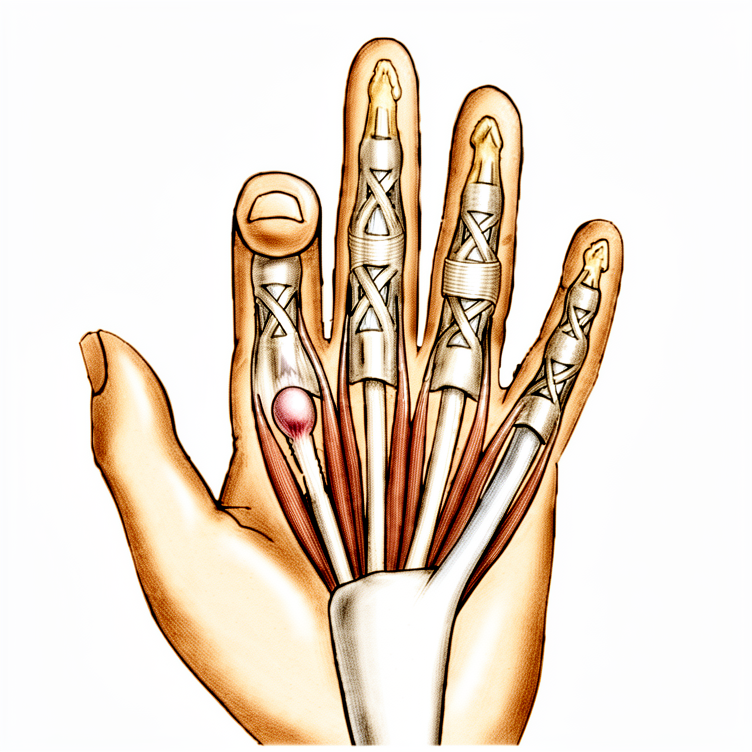
扳机指(Trigger finger)是指手指或拇指的肌腱在手掌内一个狭窄的通道中滑动时发生卡压。非手术治疗通常作为首选。这可能包括夹板固定、手部治疗或皮质类固醇注射(将药物注射至肌腱附近以减轻炎症)。当这些措施未能提供足够的改善,或手指已卡在弯曲位置且无法再伸直时,我们会考虑手术。
手术本身是一种松解术:在手术区域做一个切口,打开通道中狭窄的部分,使肌腱能够自由滑动。约 97% 的患者在手术后扳机指症状完全消失。目标是使手指或拇指能够顺畅活动,无卡顿、锁定或疼痛。
术前准备
大多数人无需过多准备。您将被告知在手术前七小时内禁食禁水。我们要求七小时而非六小时,以便在手术排程提前时,您的手术时间可以相应提前。您的外科医生会告知您哪些药物需要停用以及何时停用,您应携带一份您正在服用的所有药物的书面清单。请安排他人在术后驾车送您回家,并在手术当天穿着宽松、舒适的衣物。有时会在术前安排影像学检查(如X线、MRI或超声),以帮助规划手术。如果您有其他基础疾病,可能需要进行血液检查或由麻醉师(负责实施麻醉的医生)进行评估,但大多数人无需进行这些检查或评估。
手术当天
您抵达医院的手术入院单元,在此办理入院手续并做术前准备。您将会见麻醉师(负责实施麻醉的医生)。该手术可在局部麻醉下进行(仅注射麻醉手术区域,您保持清醒),也可在全身麻醉下进行(完全入睡)。大多数人选择局部麻醉:恢复更快,术后不久即可回家。如果您希望处于睡眠状态,这也是一个合理的选择;请与您的外科医生和麻醉师讨论。
随后,您将被带入手术室进行手术。术后,您将在复苏区醒来,护士会在麻醉消退期间监测您的状况。一旦您的情况稳定,根据手术类型和您的恢复情况,您将被送往病房或回家。接受此手术的大多数人当天即可回家。请带上您在上一部分安排的司机,并在离开前遵循护士关于您手部护理的任何指示。
手术内容
该手术称为扳机指松解术。您的外科医生将在手术区域做一个切口,通常长约 2 厘米。通过此切口,外科医生会触及手掌内肌腱滑行的隧道中狭窄的部分。外科医生会小心地切开狭窄的组织带,每次约 1 厘米,直到肌腱能够自由移动。随后,外科医生会检查手指或拇指能否顺畅地弯曲和伸直,而不会发生卡顿。
对于扳机拇指,只需松解一条狭窄带。对于手指,可能还需要切开附近第二条狭窄带。外科医生会小心操作以保护附近的神经,并保持手指内更深层的支持性组织带不受影响,因为这些组织带对维持肌腱的正常功能至关重要。
松解完成后,伤口将以缝合方式闭合。手部将覆盖加压敷料(紧实的绷带)。您需保留此敷料约 10 天,缝线在 10 至 14 天后拆除。建议立即开始正常活动您的手指或拇指。
如果您患有类风湿性关节炎(一种导致关节炎症的疾病),方案可能略有不同。在这种情况下,外科医生可能会切除一小条肌腱,而不是松解狭窄带,因为松解狭窄带可能导致手指随时间推移向侧方偏移。在您签署知情同意书之前,外科医生会向您解释针对您手部的具体方案。
术后
您将在恢复区苏醒,护士会在此监测您的情况,直至麻醉消退。由于这是日间手术,您当天即可回家。您的手部将包扎有加压敷料(紧实的绷带),您可以立即活动手指或拇指。术后头一两天出现一些疼痛属正常现象;通常使用药剂师或全科医生推荐的简单止痛药即可缓解。请安排人员在术后24小时内陪同您。敷料通常保留约10天;除非我们告知您,否则请勿提前拆除。我们将在复诊时为您更换或拆除敷料。大多数人可在术后一至两周内恢复驾驶,前提是伤口已无不适,且能在不保护手部的情况下正常握持并转动方向盘。
恢复
大多数人都会惊讶于手部恢复的速度之快。切口周围的区域在最初几天会感到疼痛并伴有轻微肿胀。通常,从药剂师或全科医生处获取的简单止痛药就足以让您保持舒适,而在坐着或休息时将手垫高放在枕头上有助于减轻肿胀。疤痕周围的某些敏感感可能比其他部位持续更久,随着伤口成熟,这种感觉会逐渐缓解。
您可以立即活动手指或拇指,并鼓励从一开始就进行正常的日常使用。无需佩戴石膏或支具,只需保留敷料,我们通常会保留约 10 天。复诊时,我们会更换或移除敷料并拆除缝线。术后手部治疗由 Extend Rehabilitation 的 Ruby Doolan 负责。Ruby 将指导您进行简单的练习,以保持手指顺畅地弯曲和伸直,如果您的手部需要,她还可以为您制作支具。
只要您感觉能够胜任,就可以尽快在家进行大多数活动:吃饭、穿衣、打字以及家中轻体力任务。在伤口愈合之前,请避免用力抓握、提重物以及接触脏污或潮湿的环境。一旦您能够抓握并转动方向盘而无需保护手部,驾驶通常就指日可待;请参阅我们关于上肢手术后驾驶的页面。
每个人的恢复情况各不相同,您的时间表可能也会有所不同。您的外科医生和治疗师将在整个过程中为您提供指导。
可能出现的并发症
大多数患者恢复良好,但偶尔可能出现一些问题。您的外科医生和医疗团队会密切监测您的状况,以便尽早发现任何问题。
最常见的问题通常是伤口周围的轻微问题,或手指在一段时间内感觉僵硬。您可能会注意到持续的酸痛、肿胀,或在最初几周内手指弯曲不如预期般自如。如果这些情况没有好转,请在下次复诊时提出。
感染并不常见,但值得了解。请观察伤口是否有从切口向外扩散的红肿、疼痛加剧、发热或渗液。深部感染可能导致深部搏动性疼痛,普通止痛药无法缓解,您可能会感到身体不适。如果您注意到这些迹象,请立即致电诊所,而不是等待下次预约。
手术附近的神经偶尔会受到刺激。这表现为手指或拇指部分区域出现麻木、刺痛或蚁走感。起初伤口边缘出现一些麻木是预期内的,但如果麻木持续存在或范围扩大,请在复诊时提及。
少数人的扳机指症状可能会复发。如果卡压或锁定在稳定后再次出现,请在随访时告知我们。
有些人会出现手指僵硬,即使扳机指症状已消失,手指仍无法完全伸直或弯曲。手部治疗练习有助于预防这种情况,因此请继续做Ruby教您的动作。如果手指似乎越来越僵硬而不是逐渐放松,请尽早告知您的治疗师或外科医生。
如果手术前您的扳机指症状持续时间较长,即使松解术后,手指中部的关节仍可能持续酸痛。这种情况通常会缓慢改善,而非立即好转。
最后,扳机指手术与发生屈肌腱鞘纤维瘤病(Dupuytren病)的小概率风险相关,这是一种手掌内形成坚硬索带并牵拉手指弯曲的疾病。如果您日后注意到手掌增厚或出现肿块,请进行检查。
本页上的并发症表格列出了典型发生率,如果您想了解具体数据,可查阅该表。
何时联系我们
如果您出现发热,或伤口周围的发红、发热或渗液情况加重,请立即致电诊所。如果疼痛突然变得剧烈,或麻木或刺痛感扩散且无法缓解,请致电我们。如果您出现小腿肿胀或疼痛,或呼吸困难,请前往急诊,因为这些可能是血凝块的征兆。如果您完全无法活动手指或拇指,或手部变得冰冷或苍白,请前往急诊。
在哪里阅读更多关于该疾病的资料
本页介绍的是手术本身。关于该疾病,包括证据显示手术在何时有效、何时无效,在扳机指页面上有更详细的介绍。
Evidence & references
This is the clinical evidence summary written for health professionals. It is technical, and it lists the research this page was built from. You do not need to read it to understand your treatment or to make a decision about it.
Overview
Operative Technique
- Local anesthetic infiltration in the palm proximal to the incision site is preferred for trigger finger release [5].
- A pneumatic arm tourniquet may be helpful, although a high forearm Esmarch wrap usually is sufficient [5].
- For middle, ring, and small trigger finger releases, a transverse incision about 2 cm long is made several millimeters distal to the distal palmar crease [5].
- For index trigger finger releases, a transverse incision about 2 cm long is made several millimeters distal to the proximal palmar crease [5].
- Trigger thumb releases can be performed through incisions either distal or proximal to the metacarpophalangeal joint flexion crease [5].
- Alternative incisions for fingers can be made obliquely or longitudinally between the metacarpophalangeal and distal palmar creases [5].
- Alternative incisions for the thumb can be made obliquely across the thumb metacarpophalangeal flexion crease [5].
- The digital nerves on the thumb are more palmar and closer to the flexor sheath than might be anticipated [5].
- The thumb radial digital nerve is especially vulnerable during trigger thumb release [5].
- Subcutaneous tissues are spread away from the underlying annular pulley system to ensure digital nerves are safely protected [5].
- Trigger thumbs require release of only the A1 pulley [5].
- Trigger digits require division of the A1 and A0, or proximal palmar pulley [5].
- Pulley division is usually accomplished with an initial opening of the pulley with a No. 15 knife blade and a pair of tenotomy scissors [5].
- For trigger thumb release, cutting too far distally should be avoided to prevent disrupting the oblique pulley [5].
- The sheath is incised from proximal to distal, approximately 1 cm, and reassessed for triggering [5].
- Persistent triggering after initial release implies that either the A1 and palmar pulleys are incompletely released or an alternate site of triggering is present [5].
- When the distal A1 pulley edge is released, the divided pulley leaves are parallel rather than ending in a V-shaped pattern [5].
- The distinction between the A1 and A2 pulleys may not be apparent during surgery [5].
- Other fingers can be found to trigger at the same surgical setting and can be managed at the same time [5].
Postoperative Care
- The compression dressing is removed after 48 hours [5].
- Sutures are removed at 10 to 14 days [5].
- Normal use of the finger or thumb is encouraged postoperatively [5].
Anatomy & Pathophysiology
Demographics & Epidemiology
- Trigger finger occurs in 2% to 3% of the general population [9].
- Women are more commonly affected than men [9].
- Women older than 50 years of age are the primary demographic for trigger finger [1, 2].
- Middle and ring finger involvement is most common in adults [1, 2].
- The digits are affected in the following order of decreasing prevalence: thumb, ring, long, little, and index [9].
- Stenosing tenosynovitis is more common in diabetic patients than in nondiabetic patients [4].
- Trigger finger is more common in patients with diabetes mellitus, with a 10% to 20% lifetime incidence [9].
Comorbidities & Etiology
- Trigger finger is associated with diabetes and inflammatory arthropathy [1, 2].
- Trigger finger is seen in patients with hypothyroidism, sarcoidosis, rheumatoid arthritis, and septic tenosynovitis [9].
- The etiology of trigger finger is possibly associated with repetitive grasping activities [1, 2].
- Gout can present as trigger finger due to monosodium urate precipitation eliciting a fulminant inflammatory reaction in the tenosynovium [9].
- Calcific tendinitis can result in triggering due to calcium salt deposition in the tenosynovium [9].
- Pseudogout can cause triggering via calcium pyrophosphate dihydrate crystal deposition [9].
- Amyloidosis, characterized by beta-2-microglobulin deposition, can cause trigger finger in patients with renal failure undergoing dialysis [9].
- Trigger finger is considered an early indication of Dupuytren’s disease by some authors [12].
- The incidence of concurrent trigger finger and Dupuytren’s disease is higher in the middle and ring fingers than expected by statistical coincidence [11].
Histology & Pathology
- Histology of the affected pulley demonstrates fibrocartilaginous metaplasia of the pulley and/or FDS tendon [1, 2].
- Pathologic examination of affected pulleys demonstrates a proliferation of chondrocytes and increased type III collagen [9].
- The flexor digitorum profundus tendon often demonstrates a pathologic nodule, while the flexor digitorum superficialis is often unaffected [9].
- A nodule or fusiform swelling of the flexor tendon just distal to the first annular pulley may be palpable [7].
- The tendon nodule is usually located just proximal to the anulus at the metacarpophalangeal joint level [7].
- In rheumatoid patients, a nodule distal to the metacarpophalangeal joint level may cause triggering [7].
- A volar retinacular ganglion cyst between the A1 and A2 pulleys may be present [9].
- In congenital trigger digits, the pathologic anatomy includes narrowing and thickening of the sheath with occasional formation of a ganglion cyst [10].
- An intratendinous nodule proximal to the first annular pulley, often referred to as Notta’s nodule, may be present in congenital trigger digits [10].
Clinical Presentation
- Patients present with pain and tenderness in the palm at the proximal edge of the digital A1 pulley [4].
- Patients frequently note catching or triggering of the affected finger or thumb after forceful flexion [4].
- In more severe cases, the opposite hand must be used to force the finger or thumb passively into extension [4].
- In the most severe cases, the finger becomes locked in a flexed position [4].
- Triggering is often more pronounced in the morning than later in the day [4].
- A common complaint is referred pain at the dorsal MCP/PIP area [1, 2].
- Patients frequently state that the problem is in the proximal interphalangeal joint with trigger finger or trigger thumb [7].
- Concomitant trigger finger and carpal tunnel syndrome occurs in 40% to 60% of patients [1, 2].
- Local tenderness may be present but is not a prominent complaint [7].
- Pressure accentuates the apparent snapping or triggering of the more distal joints [7].
Anatomical Variations & Specific Structures
- Newer evidence has found a fourth pulley (variable annular pulley) in 75% of patients with thumb trigger finger, which may contribute to stenosis [1, 2].
- The radial digital nerve is at risk of iatrogenic injury during thumb trigger finger release due to its superficial location [1, 2].
- On the thumb, digital nerves are more palmar and closer to the flexor sheath than might be anticipated [5].
- The thumb radial digital nerve is especially vulnerable during surgical release [5].
- Trigger thumbs require release of only the A1 pulley, whereas trigger digits require division of the A1 and A0 (or proximal palmar) pulley [5].
- The distinction between the A1 and A2 pulleys may not be apparent during surgery; however, when the distal A1 pulley edge is released, the divided pulley leaves are parallel rather than ending in a V-shaped pattern [5].
- The fibers of the A2 pulley must be spared to preserve effective digital flexion [4].
- In patients with rheumatoid arthritis, the entire annular pulley system should be preserved to prevent further ulnar drift of the fingers [4].
Classification
- Green Classification Grade I is defined as pain and tenderness at the A1 pulley [1, 2, 9].
- Green Classification Grade II is defined as catching of the finger [1, 2] or mechanical catching of the digit without locking [9].
- Green Classification Grade III is defined as locking of the finger that is passively correctable [1, 2] or mechanical locking of the digit which is passively correctable [9].
- Green Classification Grade IV is defined as a fixed, locked finger [1, 2, 9].
Classification
- The Green classification of trigger finger consists of four grades [1].
- Grade I is defined as pain and tenderness at the A1 pulley [1].
- Grade II is defined as catching of the finger [1].
- Grade III is defined as locking of the finger that is passively correctable [1].
- Grade IV is defined as a fixed, locked finger [1].
Clinical Presentation
Demographics and Epidemiology
- Trigger finger is most common in women older than 50 years of age [1, 2].
- Trigger finger is more common in patients with systemic diseases such as diabetes mellitus, hypothyroidism, sarcoidosis, rheumatoid arthritis, and septic tenosynovitis [9].
- Diabetes mellitus has a 10% to 20% lifetime incidence of trigger finger [9].
- When multiple digits are involved, the possibility of diabetes should be considered [4].
Etiology and Pathology
- Trigger finger is possibly associated with repetitive grasping activities [1, 2].
- Histology of the affected pulleys demonstrates fibrocartilaginous metaplasia of the pulley and/or FDS tendon [1, 2].
- Pathologic examination of the affected pulleys demonstrates a proliferation of chondrocytes and increased type III collagen [9].
- The flexor digitorus profundus tendon often demonstrates a pathologic nodule, while the flexor digitorus superficialis is often unaffected [9].
- A fourth pulley (variable annular pulley) is found in 75% of patients with thumb trigger finger, which may contribute to stenosis [1, 2].
Symptoms and Signs
- Patients present with pain and tenderness in the distal palm [1, 2].
- Pain and tenderness are located at the proximal edge of the digital A1 pulley [4].
- Symptoms progress to mechanical catching or locking of the finger [1, 2].
- In severe cases, the opposite hand must be used to force the finger or thumb passively into extension [4].
- Patients may note a lump or knot in the palm [7].
- The lump may be a thickened area in the first annular pulley or a nodule/fusiform swelling of the flexor tendon just distal to it [7].
- The tendon nodule can be palpated by the examiner’s fingertip and moves with the tendon [7].
- The tendon nodule is usually just proximal to the anulus at the metacarpophalangeal joint level [7].
- In rheumatoid patients, a nodule distal to the MCP joint level may cause triggering [7].
- Patients frequently state that the problem is in the proximal interphalangeal joint [7].
- Concomitant trigger finger and carpal tunnel syndrome occur in 40% to 60% of patients [1, 2].
Physical Examination Findings
- Tenderness to palpation of the flexor tendon at the level of the A1 pulley is a physical examination finding [9].
- Palpable triggering or pain with flexion and extension of the finger is a physical examination finding [9].
- Nodularity of the flexor tendon just proximal to the A1 pulley is a physical examination finding [9].
- Presence of a volar retinacular ganglion cyst between the A1 and A2 pulleys is a physical examination finding [9].
- Presence of a fixed flexion deformity of the proximal interphalangeal (PIP) joint is a physical examination finding [9].
Classification
- Green classification Grade II is defined as catching of the finger [1, 2].
- Green classification Grade II is defined as mechanical catching of the digit without locking [9].
- Green classification Grade III is defined as locking of the finger that is passively correctable [1, 2].
- Green classification Grade III is defined as mechanical locking of the digit which is passively correctable [9].
Differential Diagnosis Considerations
- Intraarticular disorders such as loose bodies, degenerative joint disease, and fractures can cause symptoms similar to trigger finger [7].
- Common extensor tendon subluxation can cause symptoms similar to trigger finger [7].
- Gout can mimic infectious tenosynovitis with marked pain, erythema, swelling, and warmth [9].
- Calcific tendinitis can resemble an infection and result in triggering [9].
- Pseudogout can present with calcium pyrophosphate dihydrate crystal deposition localized to the triangular fibrocartilage or within the carpal tunnel [9].
- Amyloidosis can present with beta-2-microglobulin deposition along flexor tendons, most commonly in patients with renal failure undergoing dialysis [9].
Investigations
Clinical Presentation and History
- Trigger finger is characterized by pain and tenderness in the palm at the proximal edge of the digital A1 pulley [4].
- Pain and tenderness in the distal palm progress to mechanical catching or locking, and may become fixed [1].
- A common complaint is referred pain at the dorsal MCP or PIP area [1].
Physical Examination Findings
- Physical examination may reveal tenderness to palpation of the flexor tendon at the level of the A1 pulley [9].
- Nodularity of the flexor tendon just proximal to the A1 pulley may be present on examination [9].
- A volar retinacular ganglion cyst between the A1 and A2 pulleys may be present on examination [9].
- A fixed flexion deformity of the proximal interphalangeal (PIP) joint may be present on examination [9].
Classification
Associated Conditions and Demographics
- The lifetime incidence of trigger finger in patients with diabetes mellitus is 10% to 20% [9].
- Calcific tendinitis can result in triggering and is affected five times more frequently in males than females [9].
- Pseudogout involves calcium pyrophosphate dihydrate crystal deposition often localized to the triangular fibrocartilage or within the carpal tunnel [9].
- Amyloidosis is characterized by the deposition of beta-2-microglobulin in thick, plaque-like accumulations along the flexor tendons [9].
Imaging and Histology
- MR imaging findings of trigger thumb have been described [3].
Treatment
Nonoperative
- Corticosteroid injection into the flexor tendon sheath is curative in about 60% of patients initially [1].
- Diabetic patients are generally less responsive to corticosteroid injection [1].
- There is no difference between soluble and insoluble corticosteroid preparations for trigger finger injection [1].
- In a study of 292 corticosteroid injections, repeat injections provided symptomatic relief for a year or more in 50% of patients [7].
- Corticosteroid injections may elevate serum glucose levels for 5 days or more in patients with diabetes mellitus [7].
- Patients with unstable diabetes may be better treated without corticosteroid injection [7].
- Preoperative hypoglycemia increases infection risk after trigger finger injection and release [7].
- Immediate surgical release in the clinic was identified as the most cost-effective treatment strategy for trigger finger in diabetic patients [7].
- Nonoperative methods for trigger digits include stretching, night splinting, and combinations of heat and ice [7].
Operative
- Surgical release of the A1 pulley is curative in digits refractory to steroid injection [4].
- Surgical release reliably relieves the problem for most patients, with approximately 97% of patients having complete resolution after operative treatment [7].
- Persistence of triggering is more common than recurrence after surgical release [7].
- Trigger release should be performed with a local block so that the cessation of triggering can be evaluated intraoperatively [7].
- Adjacent finger triggering may become obvious only after a given finger is released and can be managed at the same surgical setting [7].
- In patients with rheumatoid arthritis, the preference is to excise a slip of the FDS tendon rather than to release the A1 pulley to prevent exacerbation of ulnar drift at the MCP joint [1].
- The fibers of the A2 pulley must be spared during surgical release to preserve effective digital flexion [4].
- Minor complications of surgical release include wound dehiscence, scar tenderness, and decreased range of motion [1].
- Incomplete pulley release and damage to the flexor tendons and digital nerves remain concerns, especially in the index finger and thumb with limited exposure techniques [7].
- Percutaneous release of the A1 pulley may be accomplished with a needle on the middle and ring fingers, especially if they actively lock [4].
- The safety and effectiveness of percutaneous trigger finger release using a needle or a push knife have literature support [7].
- For percutaneous release, an 18- or 19-gauge needle may suffice [8].
- During percutaneous release, the bevel of the needle should be oriented longitudinally parallel to the flexor tendons [8].
- Injection of corticosteroid is optional during percutaneous trigger finger release [8].
- Postoperative compression dressing for open trigger finger release is removed after 48 hours [5].
- Sutures for open trigger finger release are removed at 10 to 14 days [5].
- Normal use of the finger or thumb is encouraged after open trigger finger release [5].
- Active hand and finger use with stretching exercises is encouraged after percutaneous trigger finger release [8].
Complications
Operative
- Digital nerves on the thumb are more palmar and closer to the flexor sheath than might be anticipated, making the thumb radial digital nerve especially vulnerable [5].
- Minor complications of trigger finger release are relatively high and include wound dehiscence, scar tenderness, and decreased range of motion [1].
- Incomplete pulley release remains a concern with limited exposure techniques [7].
- Damage to flexor tendons remains a concern with limited exposure techniques, especially in the index finger and thumb [7].
- Damage to digital nerves remains a concern with limited exposure techniques, especially in the index finger and thumb [7].
- Patients may experience triggering after operative release because of catching of the tendon on the palmar aponeurosis transverse fibers [7].
- Triggering caused by catching on palmar aponeurosis transverse fibers usually resolves with time [7].
- A partially lacerated flexor tendon at the metacarpophalangeal joint level may heal with a nodule sufficiently large to cause triggering [7].
- Persistence of triggering is more common than recurrence after operative treatment [7].
- Preoperative hypoglycemia increases infection risk after trigger finger release [3].
- Preoperative hypoglycemia increases infection risk after trigger finger injection [3].
- In patients with rheumatoid arthritis, release of the A1 pulley carries a chance of exacerbating ulnar drift at the MCP joint [1].
Non-Operative
- Corticosteroid injections may elevate serum glucose levels for 5 days or more [7].
References
[1] Miller S Review Of Orthopaedics. SECTION 16 PATELLAR TRACKING IN TOTAL KNEE ARTHROPLASTY > 2. Flexor tendon injury > 3. Stenosing tenosynovitis (trigger finger).
[2] Miller S Review Of Orthopaedics. 2. Flexor tendon injury > 3. Stenosing tenosynovitis (trigger finger).
[3] Campbell S Operative Orthopaedics 4 Volume Set. EXCISION OF NECROTIC MUSCLES COMBINED WITH NEUROLYSIS OF MEDIAN AND ULNAR NERVES FOR SEVERE CONTRACTURE > REFERENCES > TRIGGER THUMB AND TRIGGER FINGER.
[4] A Lange Medical Book Current Diagnosis Treatment In Orthopedics Fifth Edition. 9Hand Surgery > 2. Flexor Tenosynovitis (Trigger Finger and Trigger Thumb).
[5] Campbell S Operative Orthopaedics 4 Volume Set. EXCISION OF NECROTIC MUSCLES COMBINED WITH NEUROLYSIS OF MEDIAN AND ULNAR NERVES FOR SEVERE CONTRACTURE > TRIGGER FINGER AND THUMB > SURGICAL RELEASE OF TRIGGER FINGER.
[7] Campbell S Operative Orthopaedics 4 Volume Set. EXCISION OF NECROTIC MUSCLES COMBINED WITH NEUROLYSIS OF MEDIAN AND ULNAR NERVES FOR SEVERE CONTRACTURE > TRIGGER FINGER AND THUMB.
[8] Campbell S Operative Orthopaedics 4 Volume Set. EXCISION OF NECROTIC MUSCLES COMBINED WITH NEUROLYSIS OF MEDIAN AND ULNAR NERVES FOR SEVERE CONTRACTURE > PERCUTANEOUS RELEASE OF TRIGGER FINGER.
[9] Aaos Comprehensive Orthopaedic Review 3. Tendinopathy of the Hand and Wrist* > II. Trigger Finger.
[10] Campbell S Operative Orthopaedics 4 Volume Set. MULTIPLE Z-PLASTY RELEASE OF A CONGENITAL RING > TRIGGER FINGERS.
[11] Dupuytren S Disease And Related Hyperproliferative Disorders. 31. The Influence of Dupuytren’s Disease on Trigger Fingers and Vice Versa > 31.5 Discussion.
[12] Dupuytren S Disease And Related Hyperproliferative Disorders. 31. The Influence of Dupuytren’s Disease on Trigger Fingers and Vice Versa > 31.5 Discussion > 31.5.1 Why Is DD Concurring with TF?.