Skip to content

Patients › Shoulder

反式肩关节置换术

Reverse shoulder replacement for severe rotator cuff tears and arthritis—when a traditional replacement isn’t ideal.
Updated Aug 2026
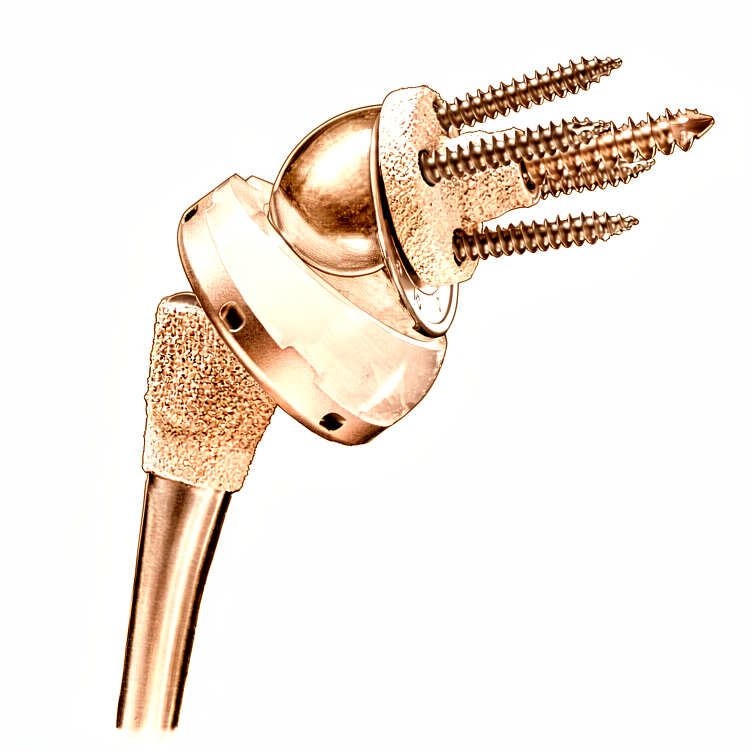
反式肩关节置换植入物示意图:一个金属球体位于螺钉固定的基板上,基板上方是一个杯状柄。
反式肩关节置换术后的X线片。球头现在固定在肩胛骨上,而杯状组件固定在肱骨上——这与正常解剖结构相反,使得当肩袖撕裂时,三角肌能够抬起手臂。 Kieran Hirpara 4.0

本页面由机器翻译,尚未经临床医生审核。英文版本为权威版本。

为何建议进行此手术

本页面反映了罗克汉普顿 Mater 私人医院上肢外科医生 Kieran Hirpara 博士在门诊中的诊疗思路。您需通过全科医生或物理治疗师转诊至我科门诊。门诊评估旨在明确诊断。对于退行性疾病,我们通常首先尝试非手术治疗。若非手术治疗未能带来足够改善,我们才会考虑手术。对于急性结构性损伤,则可能建议立即手术。

反式肩关节置换术使用金属和塑料假体替换您受损的关节。当您的肩袖撕裂或磨损时,通常推荐此手术。这使得您的肩关节肌肉能够在肌腱撕裂的情况下抬起手臂。在其他治疗失败时,我们提供此手术。该手术旨在减轻疼痛并恢复功能。翻修病例的假体十年生存率为 85%。在讨论共同决策时,这一数据具有说服力。

手术前

您需要安排车辆接送回家,并携带当前用药清单。当天请穿着舒适的衣物。您的外科医生可能会开具X光片、血液检查或麻醉评估,以评估您的健康状况并规划手术。这些步骤有助于确保您的安全和手术的成功。到达医院前必须禁食。您的外科医生将提供具体的禁食禁水时间以及需要暂停服用的药物清单。请仔细遵循这些指示。此准备工作有助于我们安全、有效地为您实施手术。

手术当天

本手术在全身麻醉联合区域神经阻滞下进行。手术期间您将完全入睡,而神经阻滞(在苏醒前注射以麻醉支配手臂的神经)可在术后最初12至24小时内提供镇痛效果。麻醉医师将在术前与您会面,并向您详细解释这两个部分。

您将抵达医院办理入院并完成术前准备。我们的团队将引导您进入手术室。本手术采用开放入路,在手术部位做一个常规的单一切口。这使我们能够直接显露关节。术后,您将在复苏室苏醒。我们的医护人员将监测您的舒适度与稳定性,陪伴您开启康复之旅。

手术过程

您的外科医生会在您肩膀前方做一个长约 8 至 10 厘米的切口。这种开放入路可清晰显露关节。外科医生会切除磨损的肱骨头和关节盂表面。这些表面将由金属和塑料部件替代。新设计将金属球置于肩胛骨上,将塑料杯置于肱骨上。这种改变使得即使您的肩袖肌腱撕裂或薄弱,您的肩关节肌肉仍能抬起手臂。

如果您存在骨折,您的外科医生可能需要重新固定断裂的骨块。这些骨块将通过小型锚钉或缝线进行固定。使这些骨块良好愈合有助于恢复您向外旋转手臂的能力。在某些情况下,外科医生可能会调整新部件的位置,以提高稳定性并降低脱位风险。

新关节安置到位后,切口将通过缝合或钉合关闭。随后施加敷料以保护该区域。该手术通过置换受损关节来缓解疼痛并恢复功能。术后,您将接受有关安全活动肩关节的指导,以支持愈合。

术后

您将在复苏室苏醒。我们将使用标准药物控制您的疼痛,以确保您舒适。您的肩部将使用吊带固定,伤口会覆盖敷料。术后24小时内必须有人陪同您。大多数患者在该手术后需住院一晚,但部分患者可在当天出院。我们采用开放入路,在手术部位做一个常规的单一切口。任何肩部手术后至少六周内不得驾驶,无论哪一侧手臂接受了手术。您必须能够脱离吊带才能安全驾驶。详情请参阅我们的指南 上肢手术后驾驶

恢复过程

您的肩部将有一个切口。在最初几天,疼痛和肿胀是正常的。您的手臂将使用吊带以保护修复部位。我们会通过药物和冰敷来帮助您缓解不适。大多数人会在最初的48小时内感到最严重的不适。随着肿胀消退,不适感会逐渐减轻。

您将按照物理治疗师的指导进行轻柔的锻炼。这些动作有助于在不拉伤愈合组织的情况下恢复活动范围。在日常活动中,您需要佩戴吊带以提供支撑。最初,一些简单的任务(如进食或刷牙)可能需要使用未手术的一侧手臂。起初睡眠可能会比较困难。建议尝试在枕头支撑下稍微抬高上半身睡觉。

随着活动能力的恢复,您将逐渐增加活动量。在获得许可后,您可以恢复步行和游泳。在佩戴吊带期间,不允许驾驶。您的外科医生通常会在六周复查时允许您驾驶。有关详细信息,请参阅我们的指南 上肢手术后的驾驶

每个人的恢复情况各不相同。您的恢复时间表可能有所不同;您的外科医生和物理治疗师将为您提供指导。您可能会在几个月内看到稳步改善。最大疗效通常需要长达一年的时间。您的外科医生将监测您的进展,以确保获得最佳效果。

可能发生的问题

大多数患者恢复良好,但偶尔也会出现并发症。您的外科医生和医疗团队会密切监测您,以便尽早发现任何问题。

感染是一个严重的风险。您可能会注意到切口周围出现加重的红肿、发热或肿胀。该区域可能感觉触痛或搏动性疼痛。您可能会出现发热或寒战。如果您看到脓液或发现伤口裂开,请立即致电诊所。不要等到下次复诊。

植入物组件可能会随时间发生松动。您可能会感到一种新的疼痛,且在活动时加重。肩部可能感觉不稳定或出现无力感。您可能会听到之前没有的咔哒声或研磨声。请向您的外科医生报告这些变化,以便其检查植入物的位置。

不稳定是另一个值得关注的问题,尤其是对于 55 岁以下的患者。您可能会感到关节突然移位或滑脱。肩部可能发生脱位,导致剧烈疼痛和手臂无法活动。如果发生这种情况,请前往急诊科进行评估。

骨折可能发生在手术期间或恢复期。受伤时您可能会听到断裂声或爆裂声。随后会出现剧烈疼痛和显著肿胀。您可能完全无法抬起手臂。如果您怀疑发生骨折,请立即寻求医疗救助。

伤口愈合问题可能会出现,特别是如果您术后需要服用抗凝药物。您可能会注意到持续性出血、大面积瘀斑或伤口无法闭合。切口周围的皮肤可能变得发红和发热。如果伤口看起来感染或无法愈合,请联系您的外科医生。

翻修手术的风险高于初次手术。如果您需要进行第二次手术,可能会经历更剧烈的疼痛和更长的恢复期。翻修病例的并发症发生率更高。在计划任何翻修手术之前,您的外科医生会与您讨论这些特定风险。

本页的并发症表格列出了典型的发生率,如果您需要了解具体数据,可参考该表格。

何时联系我们

如果您出现发热、伤口红肿加重或分泌物增多,或突发剧烈疼痛,请立即联系我们。如出现小腿肿胀或呼吸困难,请前往急诊。如出现感觉丧失或肢体无法活动,请立即寻求紧急医疗救助。这些症状需要立即评估,以确保您的康复进程不受影响。


Evidence & references

This is the clinical evidence summary written for health professionals. It is technical, and it lists the research this page was built from. You do not need to read it to understand your treatment or to make a decision about it.

Anatomy & Pathophysiology

  • Periprosthetic scapular fractures about reverse shoulder arthroplasty are universally associated with stable glenoid implants [2].
  • Scapular fractures are unlikely to occur in the face of dislocation, glenosphere dissociation, or baseplate pullout at the bone–baseplate interface [2].
  • Periprosthetic scapular fractures can result in new glenohumeral instability due to a change in the orientation of the glenosphere and loss of deltoid tension [2].
  • The glenoid is suspended from the body of the scapula by the neck and fixed to the clavicle by the acromioclavicular and coracoclavicular ligaments [3].
  • As the face of the glenoid transitions into the neck, the glenoid vault narrows [3].
  • Optimal fixation for reverse shoulder arthroplasty involves implanting the central peg or screw within the glenoid vault in the axis of the body of the scapula without perforation [3].
  • Peripheral locking screws enhance implant stability to allow for bony ingrowth [3].
  • Optimal bony corridors for peripheral screws guide fixation within the lateral pillar of the scapula (inferior and posterior screws), the base of the coracoid (superior screw), and the scapular spine (anterior screw) [3].
  • The scapular spine is subcutaneous posteriorly and widens gradually as it transitions into the base of the acromion laterally [3].
  • The acromion curves anteriorly and meets the clavicle at the acromioclavicular joint and the coracoid via the coracoacromial ligament, which originates under the anterior margin of the acromion [3].
  • The suprascapular nerve arises from the C4–C5 nerve roots off of the supraclavicular brachial plexus at "Erb's point" [3].
  • The suprascapular nerve runs just medial to the base of the coracoid, under the transverse scapular ligament within the suprascapular notch, and gives off branches to the supraspinatus within 1 cm of the notch [3].
  • The suprascapular nerve continues through the supraspinatus fossa heading laterally and distally on the under surface of the supraspinatus [3].
  • The suprascapular nerve runs under the ill-defined spinoglenoid ligament around the lateral base of the scapula within the spinoglenoid notch before terminating in posterior capsular sensory branches and an infraspinatus motor branch within 1 cm of the lateral margin of the scapular spine [3].
  • Cadaver studies show the suprascapular nerve is present 29 mm (23 to 35 mm) from the superior rim of the glenoid at the suprascapular notch [3].
  • Cadaver studies show the suprascapular nerve is present 18 mm (14 to 24 mm) from the posterior rim at the spinoglenoid notch [3].
  • Injury to the suprascapular nerve can cause pain and denervation of the supraspinatus and infraspinatus [3].
  • The traditional Grammont reverse prosthesis features a glenoid component with an articulating portion shaped as a third of a sphere [4].
  • In the Grammont reverse prosthesis, the center of rotation is medial to the glenoid component–bone interface [4].
  • The humeral component in the Grammont reverse prosthesis is inset, resting almost completely inside the proximal humerus metaphysis [4].
  • The opening angle of the polyethylene in the Grammont reverse prosthesis is relatively horizontal at 155 degrees [4].
  • In the Grammont reverse prosthesis, the humerus is positioned more medially and more distally than preoperatively [4].
  • The humeral component in the Grammont reverse prosthesis is recommended to be implanted in more anteversion (0 to 10 degrees of retroversion) than conventional arthroplasty [4].
  • Subsequent reverse designs have modified features to place the center of rotation more lateral than the Grammont prosthesis [4].
  • Later reverse designs introduced an opening angle of 135 degrees for the humeral component [4].
  • Later designs introduced humeral components with an onlay humeral bearing, which lateralized the position of the humerus without changing the center of rotation of the arthroplasty [4].
  • Later designs selected a 145-degree opening angle for the bearing [4].
  • The RSA does not require the rotator cuff for function but is dependent on an intact deltoid neuromuscular unit [7].
  • The Grammont principles of RSA include that the prosthesis must be inherently stable and perfectly concentric [7].
  • The Grammont principles of RSA include that the weight-bearing part must be convex and the supported part concave (reversed) [7].
  • The Grammont principles of RSA include that the center of the sphere must be at or within the glenoid neck (medialized) [7].
  • The Grammont principles of RSA include that the center of rotation must be medialized and distalized [7].
  • The traditional Grammont style decreases shear forces seen by the glenoid and lowers baseplate failure by medializing the center of rotation [7].
  • The traditional Grammont style carries a risk of inferior scapular notching in adduction, which is associated with poorer results [7].
  • Distalization in RSA doubles the lever arm of the deltoid and optimizes the length–tension curve of its sarcomeres [7].
  • Distalization in RSA increases deltoid efficiency by 30% at the cost of rotational strength [7].
  • Lateralized glenosphere and lateralized humerus designs have gained popularity to improve the rotational profile, deltoid function, implant stability, and decrease impingement (scapular notching) [7].
  • Early reverse shoulder arthroplasty designs had a high failure rate due to the profound lever arm on the glenoid and baseplate bone [7].
  • Recent reverse shoulder arthroplasty designs have a better track record but result in increased forces seen by the scapula and acromion [7].
  • Postoperative periprosthetic scapular fractures occur at rates of 0.9% to 11.2% [7].
  • Periprosthetic scapular fractures are a unique complication of reverse shoulder arthroplasty that occurs more commonly than periprosthetic humeral fractures [7].
  • Female gender has been implicated as a risk factor for postoperative periprosthetic scapular fractures, accounting for up to 100% of some series [7].
  • Postoperative periprosthetic scapular fractures typically occur in patients aged 70 to 80 years [7].
  • One study of patients under age 65 undergoing reverse shoulder arthroplasty showed a 0% (0/67) postoperative periprosthetic scapular fracture rate [7].
  • Osteoporosis has been implicated as a risk factor for postoperative periprosthetic scapular fractures [7].
  • In one study, 75% (6/8) of acromial fractures occurred in osteoporotic hosts [7].
  • A study comparing 53 postoperative scapular spine fractures with 212 matched controls identified osteoporosis as a significant risk factor (30.8% fracture patients vs. 18.4% controls; OR 1.97; p < 0.05) [7].
  • Fatigue fractures of the scapula have been found to occur through already weakened acromia or those with preexisting lesions [7].
  • Acromial thinning and eventual fragmentation occur at the final stages of rotator cuff-tear arthropathy [7].

Clinical Presentation

  • Periprosthetic scapular fractures are universally associated with stable glenoid implants [2].
  • Scapular fractures are unlikely to occur in the presence of glenohumeral dislocation, glenosphere dissociation, or baseplate pullout at the bone–baseplate interface [2].
  • Periprosthetic scapular fractures can rarely result in new glenohumeral instability due to a change in glenosphere orientation and loss of deltoid tension [2].
  • A case of periprosthetic scapular fracture occurred 8 months after successful reverse shoulder arthroplasty for rotator cuff tear arthropathy [2].
  • Patients with periprosthetic scapular fractures may experience a profound loss of function following a fall despite substantial prior pain relief and function [2].
  • Periprosthetic scapular fractures can present as minimally displaced fractures involving the scapular neck and body, confirmed via CT scanning [2].
  • Diagnosis of periprosthetic fractures often requires a high index of suspicion due to subtle presentation [2].
  • Workup for periprosthetic fractures should begin with a complete history and examination [2].
  • History taking should elucidate the underlying diagnosis for the index surgery, subsequent surgeries, and any complications including infection [2].
  • The examiner must understand the patient's shoulder function and level of disability before surgery, after surgery, and at present [2].
  • The time course of functional changes should be documented during history taking [2].
  • New pain at the base of the acromion may be the only finding in cases of stress reaction [2].
  • Stress fractures can be more painful than when they propagate into displaced fractures [2].
  • Patients with periprosthetic scapular fractures typically present in their 8th decade of life [2].
  • Presentation is generally characterized by a sudden increase in pain or loss of function in an otherwise smooth postoperative course [2].
  • Periprosthetic scapular fractures generally occur within 1 year but up to 2 years from surgery [2].
  • Patients who develop periprosthetic scapular fractures initially outperform those who do not [2].
  • Risk factors for periprosthetic scapular fractures include a history of steroid use, osteoporosis, subacromial decompression, or rotator cuff tear arthropathy [2].
  • Previous operative reports, clinic notes, and imaging can help identify risk factors such as previous shoulder surgeries or history of radiation [2].
  • Deformity on physical examination is concerning for dislocation, hematoma, or displaced fracture [2].
  • Erythema or incisional dehiscence on physical examination is concerning for infection [2].
  • Tenderness along the acromion or scapular spine raises suspicion for fracture [2].
  • A complete neurovascular examination is part of the physical assessment for periprosthetic fractures [2].
  • Active and passive motion should be assessed during the physical examination [2].
  • Fractures can result in motion limited by pain, new weakness, or loss of function [2].
  • Sudden loss of function or increase in pain is consistent with both scapular fracture and infection [2].

Investigations

  • Diagnosis of periprosthetic scapular fractures often requires a high index of suspicion as identification can be subtle [2].
  • Workup for periprosthetic scapular fractures should begin with a complete history and examination [2].
  • New pain at the base of the acromion may be the only finding in a stress reaction and should raise suspicion for further imaging or rest [2].
  • Stress fractures can be more painful than when they propagate into a displaced fracture [2].
  • Patients with periprosthetic scapular fractures typically present around their 8th decade of life after a sudden increase in pain or loss of function [2].
  • Physical examination for periprosthetic scapular fractures should include inspection for deformity, erythema, or incisional dehiscence [2].
  • Tenderness along the acromion or scapular spine raises suspicion for fracture and should be confirmed with imaging [2].
  • A complete neurovascular examination and assessment of active and passive motion are required during the physical examination for periprosthetic scapular fractures [2].
  • The glenoid vault narrows as the face of the glenoid transitions into the neck [3].
  • Peripheral locking screws enhance the ability to obtain implant stability long enough for bony ingrowth [3].
  • Optimal bony corridors for peripheral screws guide fixation within the lateral pillar of the scapula (inferior and posterior screws), the base of the coracoid (superior screw), and scapular spine (anterior screw) [3].
  • The suprascapular nerve runs just medial to the base of the coracoid, under the transverse scapular ligament within the suprascapular notch [3].
  • The suprascapular nerve gives off branches to the supraspinatus within 1 cm of the notch [3].
  • The suprascapular nerve runs under the spinoglenoid ligament around the lateral base of the scapula within the spinoglenoid notch before terminating in posterior capsular sensory branches and an infraspinatus motor branch [3].
  • It is recommended to limit superior screw length to ≤25 mm and posterior screws to ≤15 mm when possible to reduce the risk of suprascapular nerve injury [3].
  • The suprascapular nerve can be injured by the fracture itself or become encased in callus [3].
  • Careful assessment of preoperative radiographs and CT with three-dimensional reconstruction is extremely useful for preoperative planning in reverse shoulder arthroplasty for fracture [5].
  • Preoperative planning goals include understanding the fracture pattern and anticipating the ideal height of stem implantation [5].
  • Radiographs of both humeri with magnifier markers may be used to understand where the stem should be positioned in reference to the fracture line on the humeral shaft [5].
  • The glenoid should be assessed in radiographs and CT to plan for component positioning, version, inclination, and rotation, as well as anticipated screw length [5].
  • Rarely, there may be associated fractures of the rim of the glenoid in anterior or posterior fracture-dislocations [5].
  • If a fractured glenoid rim is large enough to interfere with the stability of the glenoid baseplate, fixation with small fragment screws may be performed [5].
  • Reverse shoulder arthroplasty is best performed in the beach chair position, specifically the "barber chair" position with the trunk at approximately 70 degrees [5].
  • The deltopectoral approach is preferred for reverse arthroplasty for fracture due to familiarity, easier placement of the glenoid component low and with an inferior tilt, and extensibility of exposure [5].
  • Management and reduction of the greater tuberosity is easier from a superior deltoid-splitting approach [5].
  • Radiographic identification of periprosthetic scapular fractures can be subtle [10].
  • Plane radiographs for periprosthetic scapular fractures should include AP, scapular Y, and axillary views [10].
  • Radiographs should be compared with preoperative and initial postoperative images to identify subtle changes [10].
  • Preoperative images can identify a missed os acromiale or insufficiency fracture which can displace after deltoid tensioning in reverse shoulder arthroplasty [10].
  • Implant dissociation or loosening presents with a change in implant position on serial radiographs [10].
  • Progressive downsloping of the acromion relative to the scapular spine indicates a displaced acromial fracture [10].
  • Narrowing of the acromial–tuberosity interval indicates a displaced acromial fracture [10].
  • The scapular Y view identifies displaced scapular spine or body fractures [10].
  • The axillary view is helpful for identifying the location of the fracture, especially at the acromial base [10].
  • Plain radiographs can miss more subtle fractures [10].
  • Levy et al. found that plain radiographs were unreliable at detecting fracture (k = 0.05) or fracture union (k = 0.05) [10].
  • In Otto's series, 32.1% (17/53) of fractures presented with pain and negative plain films [10].
  • Independent reviewers were able to accurately diagnose 78.8% of periprosthetic scapular fractures with good inter-rater reliability (k = 0.782) and excellent intra-rater reliability (k = 0.862) [10].
  • Patients with fractures had greater changes in acromial–tuberosity distance (p < 0.001) and acromial tilt (p < 0.001) from initial postoperative radiographs to final images [10].
  • It is recommended to routinely evaluate acromial–tuberosity distance and acromial tilt to improve detection of periprosthetic scapular fractures [10].
  • New pain along the scapula in the setting of normal radiographs should trigger a CT scan [10].
  • In Levy et al.'s series, 39% (7/18) of fractures were associated with negative plain films and required a CT scan to diagnose nondisplaced fractures [10].
  • A negative CT scan may occur in the setting of a stress reaction which may be better elicited on a bone scan [10].

Treatment

  • Reverse shoulder arthroplasty is currently the replacement procedure of choice when arthroplasty is considered for proximal humeral fractures [4].
  • The rate of utilization of reverse shoulder arthroplasty for proximal humeral fractures is increasing [4].
  • Reverse shoulder arthroplasty was developed for the surgical management of cuff tear arthropathy [4].
  • The semiconstrained nature of the reverse prosthesis provides a stable fulcrum that allows the deltoid to elevate the shoulder even in the absence of a functional rotator cuff [4].
  • Tuberosity and rotator cuff-related complications are the main reason for poor functional outcomes when a humeral head replacement is implanted for management of a proximal humeral fracture [4].
  • In the Grammont reverse prosthesis, the articulating portion of the glenoid component has the shape of a third of a sphere [4].
  • The intention of medializing the center of rotation in the Grammont design is to decrease shear stress and provide compressive stress to decrease the chances of glenoid loosening [4].
  • In the Grammont reverse prosthesis, the humeral component is inset, resting almost completely inside the proximal humerus metaphysis [4].
  • Once articulated in a Grammont reverse prosthesis, the humerus is positioned more medially and more distally than preoperatively [4].
  • A more horizontal opening angle was selected in the Grammont design to decrease the chances of dislocation [4].
  • Subsequent reverse designs have modified features such as using a larger portion of a sphere and placing the center of rotation more lateral than the Grammont prosthesis [4].
  • Selected later designs use a 145-degree opening angle for the bearing [4].
  • There is very little published on reverse arthroplasty biomechanics in the setting of a proximal humeral fracture [4].
  • Some surgeons initially elected to implant a reverse arthroplasty in proximal humeral fractures without repair or with excision of the greater and/or lesser tuberosity [4].
  • Controversy remains regarding the impact of tuberosity healing on the outcome of reverse arthroplasty for fracture [4].
  • Many believe that healing of at least the greater tuberosity in good position provides a higher chance of restoration of active external rotation [4].
  • Active external rotation is very important for the overall functional outcome [4].
  • In the treatment of proximal humeral nonunion, not performing a tuberosity repair at the time of reverse arthroplasty has been correlated with a higher rate of dislocation [4].
  • Technical principles for reverse arthroplasty in cuff tear arthropathy may need to be modified to enhance tuberosity healing, such as avoiding translating the humeral shaft too lateral or too distal [4].
  • The tuberosities should overlap a few millimeters with the shaft to facilitate healing [4].
  • Use of a stem with fracture-dedicated features, including a proximal ingrowth surface, small cross section, and holes for suture fixation, may be beneficial [4].
  • Shoulder arthroplasty is considered for proximal humeral nonunion in the presence of severe cavitation and bone loss at the humeral head and metaphysis or collapse and degenerative change of the humeral articular surface [6].
  • Severe tuberosity malunion in a proximal humeral nonunion is more reliably compensated for with reverse arthroplasty than with osteotomy and internal fixation [6].
  • Hemiarthroplasty is less commonly considered than reverse arthroplasty for proximal humeral nonunion [6].
  • The functional outcome of hemiarthroplasty for nonunion is particularly concerning when tuberosity osteotomies need to be added [6].
  • Most studies reporting on hemiarthroplasty for nonunion suggest the procedure may be effective in reducing or eliminating pain [6].
  • Hemiarthroplasty for nonunion is associated with a high rate of complications that often require further surgery and disappointing functional recovery [6].
  • Reverse shoulder arthroplasty may improve shoulder function in patients with nonunions associated with severe tuberosity malunions [6].

Complications

  • Scapular notching is a specific complication of reverse shoulder arthroplasty that requires avoidance strategies [1, 26].
  • The impact of scapular notching on clinical outcomes after reverse shoulder arthroplasty has been analyzed in a cohort of 476 shoulders [26].
  • Subscapularis tendon integrity after reverse shoulder arthroplasty impacts shoulder function [1].
  • Comparison of reverse total shoulder arthroplasty outcomes with and without subscapularis repair has been performed [1].
  • Sonographic assessment of the subscapularis after reverse shoulder arthroplasty evaluates the impact of tendon integrity on shoulder function [1].
  • Optimal screw placement for base plate fixation in reverse total shoulder arthroplasty is a critical technical consideration [1].
  • The effect of component positioning on intrinsic stability of the reverse shoulder arthroplasty has been studied [1].
  • Humeral component lateralization in reverse shoulder arthroplasty affects rotator cuff torque in a cadaver model [1].
  • Humeral version in reverse shoulder arthroplasty affects impingement in activities of daily living [1].
  • The clinical and radiographic impact of center of rotation in reverse shoulder arthroplasty has been reviewed systematically [1].
  • Glenoid bone grafting is utilized in primary reverse total shoulder arthroplasty for glenoid deficiency [1].
  • Structural bone grafting is used for glenoid deficiency in primary total shoulder arthroplasty [1].
  • Comparison of radiographic and clinical outcomes of revision reverse total shoulder arthroplasty with structural versus nonstructural bone graft has been conducted [1].
  • Posteriorly augmented glenoid components are used in anatomic total shoulder arthroplasty for primary osteoarthritis with posterior glenoid bone loss [1].
  • Reverse total shoulder arthroplasty is indicated for massive irreparable rotator cuff tears in patients younger than 65 years old [1].
  • Reverse total shoulder arthroplasty is indicated for massive, irreparable rotator cuff tears before the age of 60 years [1].
  • Reverse total shoulder arthroplasty is indicated for the treatment of irreparable rotator cuff tear without glenohumeral arthritis [1].
  • Reverse total shoulder arthroplasty improves function in cuff tear arthropathy [1].
  • Functional outcomes of reverse shoulder arthroplasty compared with hemiarthroplasty for acute proximal humeral fractures have been evaluated [1].
  • Comparison of hemiarthroplasty and reverse shoulder arthroplasty for the treatment of fractures in elderly patients has been performed [1].
  • Reverse total shoulder arthroplasty versus hemiarthroplasty for proximal humeral fractures has been the subject of a systematic review [1].
  • Three- and four-part displaced proximal humeral fractures in patients older than 70 years have been treated with reverse shoulder arthroplasty versus nonsurgical treatment [1].
  • Short-stem uncemented primary reverse shoulder arthroplasty has demonstrated clinical and radiological outcomes [1].
  • Reverse total shoulder arthroplasty in patients with rheumatoid arthritis has been studied [1].
  • Short-term results after reverse shoulder arthroplasty in patients with rheumatoid arthritis and irreparable rotator cuff tear have been reported [1].
  • Reverse total shoulder arthroplasty for primary glenohumeral osteoarthritis in patients with a biconcave glenoid has been evaluated [1].
  • Long-term outcomes of reverse total shoulder arthroplasty have been followed up in a previous study [1].

References

[1] Campbell S Operative Orthopaedics 4 Volume Set. RECONSTRUCTIVE PROCEDURES OF THE SHOULDER AND ELBOW IN ADULTS > REVERSE SHOULDER ARTHROPLASTY.

[2] Rockwood And Green S Fractures In Adults. 29: Principles of Nonunion and Bone Defect Treatment > Injuries Associated with Periprosthetic Scapular Fractures About Reverse Shoulder Arthroplasty.

[3] Rockwood And Green S Fractures In Adults. 29: Principles of Nonunion and Bone Defect Treatment > Pathoanatomy and Applied Anatomy Related to Periprosthetic Scapular Fractures About Reverse Shoulder Arthroplasty.

[4] Rockwood And Green S Fractures In Adults. 29: Principles of Nonunion and Bone Defect Treatment > Reverse Shoulder Arthroplasty.

[5] Rockwood And Green S Fractures In Adults. 29: Principles of Nonunion and Bone Defect Treatment > Preoperative Planning > Reverse Shoulder Arthroplasty for Fracture: Preoperative Planning Checklist.

[6] Rockwood And Green S Fractures In Adults. 29: Principles of Nonunion and Bone Defect Treatment > Reverse Shoulder Arthroplasty and Hemiarthroplasty.

[7] Rockwood And Green S Fractures In Adults. 29: Principles of Nonunion and Bone Defect Treatment > Periprosthetic Scapular Fractures About Reverse Shoulder Arthroplasty.

[10] Rockwood And Green S Fractures In Adults. 29: Principles of Nonunion and Bone Defect Treatment > Imaging and Other Diagnostic Studies on Periprosthetic Scapular Fractures About Reverse Shoulder Arthroplasty.

Creative Commons BY-NC 4.0

CC Creative Commons licence
BY Attribution — you must credit the source
NC NonCommercial — not for commercial use

Attribution-NonCommercial 4.0 International


Creative Commons Corporation ("Creative Commons") is not a law firm and does not provide legal services or legal advice. Distribution of Creative Commons public licenses does not create a lawyer-client or other relationship. Creative Commons makes its licenses and related information available on an "as-is" basis. Creative Commons gives no warranties regarding its licenses, any material licensed under their terms and conditions, or any related information. Creative Commons disclaims all liability for damages resulting from their use to the fullest extent possible.

Using Creative Commons Public Licenses

Creative Commons public licenses provide a standard set of terms and conditions that creators and other rights holders may use to share original works of authorship and other material subject to copyright and certain other rights specified in the public license below. The following considerations are for informational purposes only, are not exhaustive, and do not form part of our licenses.

Considerations for licensors: Our public licenses are intended for use by those authorized to give the public permission to use material in ways otherwise restricted by copyright and certain other rights. Our licenses are irrevocable. Licensors should read and understand the terms and conditions of the license they choose before applying it. Licensors should also secure all rights necessary before applying our licenses so that the public can reuse the material as expected. Licensors should clearly mark any material not subject to the license. This includes other CC- licensed material, or material used under an exception or limitation to copyright. More considerations for licensors: wiki.creativecommons.org/Considerations_for_licensors

Considerations for the public: By using one of our public licenses, a licensor grants the public permission to use the licensed material under specified terms and conditions. If the licensor's permission is not necessary for any reason--for example, because of any applicable exception or limitation to copyright--then that use is not regulated by the license. Our licenses grant only permissions under copyright and certain other rights that a licensor has authority to grant. Use of the licensed material may still be restricted for other reasons, including because others have copyright or other rights in the material. A licensor may make special requests, such as asking that all changes be marked or described. Although not required by our licenses, you are encouraged to respect those requests where reasonable. More considerations for the public: wiki.creativecommons.org/Considerations_for_licensees


Creative Commons Attribution-NonCommercial 4.0 International Public License

By exercising the Licensed Rights (defined below), You accept and agree to be bound by the terms and conditions of this Creative Commons Attribution-NonCommercial 4.0 International Public License ("Public License"). To the extent this Public License may be interpreted as a contract, You are granted the Licensed Rights in consideration of Your acceptance of these terms and conditions, and the Licensor grants You such rights in consideration of benefits the Licensor receives from making the Licensed Material available under these terms and conditions.

Section 1 -- Definitions.

a. Adapted Material means material subject to Copyright and Similar Rights that is derived from or based upon the Licensed Material and in which the Licensed Material is translated, altered, arranged, transformed, or otherwise modified in a manner requiring permission under the Copyright and Similar Rights held by the Licensor. For purposes of this Public License, where the Licensed Material is a musical work, performance, or sound recording, Adapted Material is always produced where the Licensed Material is synched in timed relation with a moving image.

b. Adapter's License means the license You apply to Your Copyright and Similar Rights in Your contributions to Adapted Material in accordance with the terms and conditions of this Public License.

c. Copyright and Similar Rights means copyright and/or similar rights closely related to copyright including, without limitation, performance, broadcast, sound recording, and Sui Generis Database Rights, without regard to how the rights are labeled or categorized. For purposes of this Public License, the rights specified in Section 2(b)(1)-(2) are not Copyright and Similar Rights.

d. Effective Technological Measures means those measures that, in the absence of proper authority, may not be circumvented under laws fulfilling obligations under Article 11 of the WIPO Copyright Treaty adopted on December 20, 1996, and/or similar international agreements.

e. Exceptions and Limitations means fair use, fair dealing, and/or any other exception or limitation to Copyright and Similar Rights that applies to Your use of the Licensed Material.

f. Licensed Material means the artistic or literary work, database, or other material to which the Licensor applied this Public License.

g. Licensed Rights means the rights granted to You subject to the terms and conditions of this Public License, which are limited to all Copyright and Similar Rights that apply to Your use of the Licensed Material and that the Licensor has authority to license.

h. Licensor means the individual(s) or entity(ies) granting rights under this Public License.

i. NonCommercial means not primarily intended for or directed towards commercial advantage or monetary compensation. For purposes of this Public License, the exchange of the Licensed Material for other material subject to Copyright and Similar Rights by digital file-sharing or similar means is NonCommercial provided there is no payment of monetary compensation in connection with the exchange.

j. Share means to provide material to the public by any means or process that requires permission under the Licensed Rights, such as reproduction, public display, public performance, distribution, dissemination, communication, or importation, and to make material available to the public including in ways that members of the public may access the material from a place and at a time individually chosen by them.

k. Sui Generis Database Rights means rights other than copyright resulting from Directive 96/9/EC of the European Parliament and of the Council of 11 March 1996 on the legal protection of databases, as amended and/or succeeded, as well as other essentially equivalent rights anywhere in the world.

l. You means the individual or entity exercising the Licensed Rights under this Public License. Your has a corresponding meaning.

Section 2 -- Scope.

a. License grant.

1. Subject to the terms and conditions of this Public License, the Licensor hereby grants You a worldwide, royalty-free, non-sublicensable, non-exclusive, irrevocable license to exercise the Licensed Rights in the Licensed Material to:

a. reproduce and Share the Licensed Material, in whole or in part, for NonCommercial purposes only; and

b. produce, reproduce, and Share Adapted Material for NonCommercial purposes only.

2. Exceptions and Limitations. For the avoidance of doubt, where Exceptions and Limitations apply to Your use, this Public License does not apply, and You do not need to comply with its terms and conditions.

3. Term. The term of this Public License is specified in Section 6(a).

4. Media and formats; technical modifications allowed. The Licensor authorizes You to exercise the Licensed Rights in all media and formats whether now known or hereafter created, and to make technical modifications necessary to do so. The Licensor waives and/or agrees not to assert any right or authority to forbid You from making technical modifications necessary to exercise the Licensed Rights, including technical modifications necessary to circumvent Effective Technological Measures. For purposes of this Public License, simply making modifications authorized by this Section 2(a) (4) never produces Adapted Material.

5. Downstream recipients.

a. Offer from the Licensor -- Licensed Material. Every recipient of the Licensed Material automatically receives an offer from the Licensor to exercise the Licensed Rights under the terms and conditions of this Public License.

b. No downstream restrictions. You may not offer or impose any additional or different terms or conditions on, or apply any Effective Technological Measures to, the Licensed Material if doing so restricts exercise of the Licensed Rights by any recipient of the Licensed Material.

6. No endorsement. Nothing in this Public License constitutes or may be construed as permission to assert or imply that You are, or that Your use of the Licensed Material is, connected with, or sponsored, endorsed, or granted official status by, the Licensor or others designated to receive attribution as provided in Section 3(a)(1)(A)(i).

b. Other rights.

1. Moral rights, such as the right of integrity, are not licensed under this Public License, nor are publicity, privacy, and/or other similar personality rights; however, to the extent possible, the Licensor waives and/or agrees not to assert any such rights held by the Licensor to the limited extent necessary to allow You to exercise the Licensed Rights, but not otherwise.

2. Patent and trademark rights are not licensed under this Public License.

3. To the extent possible, the Licensor waives any right to collect royalties from You for the exercise of the Licensed Rights, whether directly or through a collecting society under any voluntary or waivable statutory or compulsory licensing scheme. In all other cases the Licensor expressly reserves any right to collect such royalties, including when the Licensed Material is used other than for NonCommercial purposes.

Section 3 -- License Conditions.

Your exercise of the Licensed Rights is expressly made subject to the following conditions.

a. Attribution.

1. If You Share the Licensed Material (including in modified form), You must:

a. retain the following if it is supplied by the Licensor with the Licensed Material:

i. identification of the creator(s) of the Licensed Material and any others designated to receive attribution, in any reasonable manner requested by the Licensor (including by pseudonym if designated);

ii. a copyright notice;

iii. a notice that refers to this Public License;

iv. a notice that refers to the disclaimer of warranties;

v. a URI or hyperlink to the Licensed Material to the extent reasonably practicable;

b. indicate if You modified the Licensed Material and retain an indication of any previous modifications; and

c. indicate the Licensed Material is licensed under this Public License, and include the text of, or the URI or hyperlink to, this Public License.

2. You may satisfy the conditions in Section 3(a)(1) in any reasonable manner based on the medium, means, and context in which You Share the Licensed Material. For example, it may be reasonable to satisfy the conditions by providing a URI or hyperlink to a resource that includes the required information.

3. If requested by the Licensor, You must remove any of the information required by Section 3(a)(1)(A) to the extent reasonably practicable.

4. If You Share Adapted Material You produce, the Adapter's License You apply must not prevent recipients of the Adapted Material from complying with this Public License.

Section 4 -- Sui Generis Database Rights.

Where the Licensed Rights include Sui Generis Database Rights that apply to Your use of the Licensed Material:

a. for the avoidance of doubt, Section 2(a)(1) grants You the right to extract, reuse, reproduce, and Share all or a substantial portion of the contents of the database for NonCommercial purposes only;

b. if You include all or a substantial portion of the database contents in a database in which You have Sui Generis Database Rights, then the database in which You have Sui Generis Database Rights (but not its individual contents) is Adapted Material; and

c. You must comply with the conditions in Section 3(a) if You Share all or a substantial portion of the contents of the database.

For the avoidance of doubt, this Section 4 supplements and does not replace Your obligations under this Public License where the Licensed Rights include other Copyright and Similar Rights.

Section 5 -- Disclaimer of Warranties and Limitation of Liability.

a. UNLESS OTHERWISE SEPARATELY UNDERTAKEN BY THE LICENSOR, TO THE EXTENT POSSIBLE, THE LICENSOR OFFERS THE LICENSED MATERIAL AS-IS AND AS-AVAILABLE, AND MAKES NO REPRESENTATIONS OR WARRANTIES OF ANY KIND CONCERNING THE LICENSED MATERIAL, WHETHER EXPRESS, IMPLIED, STATUTORY, OR OTHER. THIS INCLUDES, WITHOUT LIMITATION, WARRANTIES OF TITLE, MERCHANTABILITY, FITNESS FOR A PARTICULAR PURPOSE, NON-INFRINGEMENT, ABSENCE OF LATENT OR OTHER DEFECTS, ACCURACY, OR THE PRESENCE OR ABSENCE OF ERRORS, WHETHER OR NOT KNOWN OR DISCOVERABLE. WHERE DISCLAIMERS OF WARRANTIES ARE NOT ALLOWED IN FULL OR IN PART, THIS DISCLAIMER MAY NOT APPLY TO YOU.

b. TO THE EXTENT POSSIBLE, IN NO EVENT WILL THE LICENSOR BE LIABLE TO YOU ON ANY LEGAL THEORY (INCLUDING, WITHOUT LIMITATION, NEGLIGENCE) OR OTHERWISE FOR ANY DIRECT, SPECIAL, INDIRECT, INCIDENTAL, CONSEQUENTIAL, PUNITIVE, EXEMPLARY, OR OTHER LOSSES, COSTS, EXPENSES, OR DAMAGES ARISING OUT OF THIS PUBLIC LICENSE OR USE OF THE LICENSED MATERIAL, EVEN IF THE LICENSOR HAS BEEN ADVISED OF THE POSSIBILITY OF SUCH LOSSES, COSTS, EXPENSES, OR DAMAGES. WHERE A LIMITATION OF LIABILITY IS NOT ALLOWED IN FULL OR IN PART, THIS LIMITATION MAY NOT APPLY TO YOU.

c. The disclaimer of warranties and limitation of liability provided above shall be interpreted in a manner that, to the extent possible, most closely approximates an absolute disclaimer and waiver of all liability.

Section 6 -- Term and Termination.

a. This Public License applies for the term of the Copyright and Similar Rights licensed here. However, if You fail to comply with this Public License, then Your rights under this Public License terminate automatically.

b. Where Your right to use the Licensed Material has terminated under Section 6(a), it reinstates:

1. automatically as of the date the violation is cured, provided it is cured within 30 days of Your discovery of the violation; or

2. upon express reinstatement by the Licensor.

For the avoidance of doubt, this Section 6(b) does not affect any right the Licensor may have to seek remedies for Your violations of this Public License.

c. For the avoidance of doubt, the Licensor may also offer the Licensed Material under separate terms or conditions or stop distributing the Licensed Material at any time; however, doing so will not terminate this Public License.

d. Sections 1, 5, 6, 7, and 8 survive termination of this Public License.

Section 7 -- Other Terms and Conditions.

a. The Licensor shall not be bound by any additional or different terms or conditions communicated by You unless expressly agreed.

b. Any arrangements, understandings, or agreements regarding the Licensed Material not stated herein are separate from and independent of the terms and conditions of this Public License.

Section 8 -- Interpretation.

a. For the avoidance of doubt, this Public License does not, and shall not be interpreted to, reduce, limit, restrict, or impose conditions on any use of the Licensed Material that could lawfully be made without permission under this Public License.

b. To the extent possible, if any provision of this Public License is deemed unenforceable, it shall be automatically reformed to the minimum extent necessary to make it enforceable. If the provision cannot be reformed, it shall be severed from this Public License without affecting the enforceability of the remaining terms and conditions.

c. No term or condition of this Public License will be waived and no failure to comply consented to unless expressly agreed to by the Licensor.

d. Nothing in this Public License constitutes or may be interpreted as a limitation upon, or waiver of, any privileges and immunities that apply to the Licensor or You, including from the legal processes of any jurisdiction or authority.


Creative Commons is not a party to its public licenses. Notwithstanding, Creative Commons may elect to apply one of its public licenses to material it publishes and in those instances will be considered the “Licensor.” The text of the Creative Commons public licenses is dedicated to the public domain under the CC0 Public Domain Dedication. Except for the limited purpose of indicating that material is shared under a Creative Commons public license or as otherwise permitted by the Creative Commons policies published at creativecommons.org/policies, Creative Commons does not authorize the use of the trademark "Creative Commons" or any other trademark or logo of Creative Commons without its prior written consent including, without limitation, in connection with any unauthorized modifications to any of its public licenses or any other arrangements, understandings, or agreements concerning use of licensed material. For the avoidance of doubt, this paragraph does not form part of the public licenses.

Creative Commons may be contacted at creativecommons.org.