Patients › Shoulder
肩锁关节骨关节炎
AC joint osteoarthritis causes localized shoulder pain with cross-body movements; treatment ranges from activity modification to surgery.
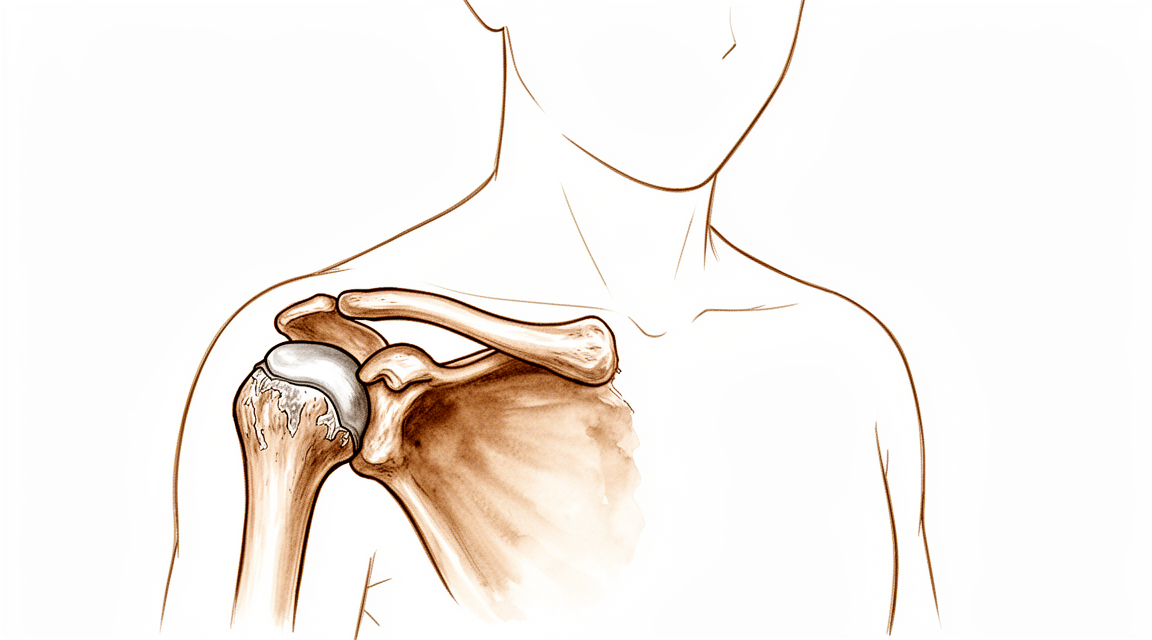
您的感受
疼痛正好位于您的肩部顶端,即锁骨与肩胛骨最高部分交汇的小关节处。疼痛常向肩部前方扩散,或向上延伸至从颈部延伸到肩部的那块肌肉。提起任何重物都会引发疼痛,夜间侧卧在患侧可能会使您痛醒,或让您难以找到舒适的姿势。
直接按压该部位通常会发现压痛。将手臂横过胸前,或将手臂完全向上并向侧面举起,往往会使该关节疼痛。会给肩部顶端带来负荷的日常事务会变得不便:在身体一侧提购物袋、把沉重的锅端上炉灶、伸手够高处的架子,或把安全带拉过身体。
这种酸痛往往在活动之后而不是活动期间发作,因此一天的提重物或过头顶工作可能会让您在当晚和第二天早上感到疼痛。患侧的夜间疼痛很常见,有些人发现自己只能仰卧或侧卧在另一侧睡觉。
有一点值得了解:许多完全没有任何感觉的人,在扫描中也会显示该关节存在关节炎。大多数在 X 光片上看起来已经磨损的此类关节都会一直保持安静,而肩部疼痛且关节看起来有磨损,并不一定意味着该关节就是病因。这就是为什么您的外科医生可能会建议向关节内注射麻醉药。如果注射后疼痛在短时间内缓解,那么该关节很可能就是问题的根源。如果疼痛没有缓解,那么扫描中显示的磨损可能并不是让您疼痛的原因,对其进行治疗也不太可能有帮助。
如果您的肩部疼痛在数周内没有缓解、逐渐加重、在夜间把您痛醒,或使您无法使用手臂或工作,请就诊您的全科医生(GP)或要求专科医生评估。
实际发生了什么
您的肩部有一个小关节,位于锁骨外侧端与肩胛骨顶端交汇处。这就是 AC 关节,即肩锁关节的简称。它是一个可以活动的关节,并不是僵硬固定的。在正常使用手臂时,随着肩胛骨的转动和滑动,它会移动几毫米,使肩胛骨和锁骨能够作为一个相互连接的整体协同工作。坚韧的韧带将它连接在一起,覆盖在肩部顶端的肌肉也起到辅助作用。
关节内有一个薄薄的缓冲盘,有点像两块骨头之间的垫圈。从中年早期开始,这个缓冲盘就会开始磨损,其后方的关节面也随之磨损。这就是磨损性关节炎,在这个关节非常常见。磨损通常在二十多岁和三十多岁时悄然开始,并在多年间缓慢进展。提重物或反复提举,尤其是过头顶工作,会加速这一过程。跌倒造成的该关节陈旧扭伤或分离也会加速这一过程,即使是看似已经愈合的轻度损伤也是如此。
问题在于,看起来已经磨损的关节并不一定会疼痛。许多人在扫描中显示有磨损,却完全没有症状,而且大多数看起来已经磨损的关节都会一直保持安静。因此,只有当磨损、粗糙的关节面或其周围的炎症真正刺激到那里的组织时,您感受到的疼痛才来自关节本身。这就是为什么您的症状正好位于肩部顶端,并在肩部承受负荷后发作。
这一问题有一种较少见的类型,称为锁骨远端骨溶解。在这种情况下,锁骨外侧端本身发生破坏,伴有炎症、骨内的细小骨折和骨质流失。它主要见于从事重体力或反复提举工作的年轻男性,并会导致该关节出现同样类型的关节炎。
如果磨损变得严重,关节附近可能会长出骨刺,压迫在肩部顶盖下方走行的肌腱,使问题更加严重。
我们能做什么
Mater Private Hospital Rockhampton 的上肢外科医生 Kieran Hirpara 医生会从适合您病情的最微创方案入手。患者通常由全科医生(GP)转诊至我们的诊所;如果物理治疗师建议您就诊,您仍需获得全科医生的转诊,才有资格享受 Medicare 报销。我们会通过仔细询问病史、体格检查以及必要时的影像学检查来确认具体情况。对于这类长期存在的问题,我们通常会先尝试非手术治疗,只有在非手术治疗未能带来足够改善时才考虑手术。
第一步是您自己就能采取的措施。让关节休息意味着减少会给肩部顶端带来负荷的提重物和过头顶工作。冰敷可以缓解忙碌一天后的疼痛发作。物理治疗旨在让受刺激的关节平静下来,并增强肩部周围的力量,从而减轻日常事务对关节的压力。在评判这些改变是否有效之前,请给它们充分的尝试时间,因为这种酸痛往往在活动之后而不是活动期间发作。
如果自我管理不够,止痛药和抗炎药可以有所帮助。抗炎药是一种既能缓解疼痛、又能平息关节内炎症的药片。我们还会将可的松(一种强效抗炎药物)直接注射到关节内。注射可以起到两个作用:它有助于确认该关节就是您疼痛的来源,同时作为一种治疗也可以缓解疼痛。接受注射的人中,每 100 人约有 47 人在一年后仍然效果良好。
当这些治疗后疼痛仍然持续时,就会考虑手术。手术会切除锁骨外侧端几毫米的骨质,即磨损关节中位于锁骨一侧的那一半。去除这一磨损的关节面后,两个粗糙的骨端就不再相互摩擦。该手术可以通过使用摄像头的小切口进行,也可以通过一个小的开放切口进行。如果您的这个关节以前曾发生过分离,并遗留有持续的不稳定,我们会与您仔细讨论这一点,因为它会影响这种手术的效果。手术是否适合您,是我们与您共同作出的决定,需要在您希望肩部能做到的事情与手术所涉及的内容之间进行权衡。
预期情况
对大多数人来说,该关节在扫描中显示有磨损但不引起疼痛的情况,通常会一直保持安静。在七年的病程中,一开始就无痛的此类关节有 90% 从未出现症状。因此,如果您的关节看起来有磨损但并不疼痛,那么它很有可能会继续保持良好状态。
当关节确实疼痛时,病程因人而异。有些人发现,通过休息、减少提重物以及物理治疗,酸痛会缓解。另一些人则发现疼痛时好时坏,在忙碌一天后发作,休息后又会减轻。如果不加治疗,每当肩部顶端承受负荷时,疼痛往往会持续存在或反复出现,因为关节内的磨损不会自行逆转。
如果非手术治疗不能带来足够的缓解,向关节内注射可的松对一些人有帮助。接受注射的人中,每 100 人约有 47 人在一年后仍然效果良好。这意味着对大约一半的人来说,缓解效果会在一年内消退,可能需要再次注射或考虑其他措施。
如果这些治疗后疼痛仍然持续,切除锁骨外侧端几毫米的骨质是您的外科医生可能会与您讨论的一个选择。其目的是让两个粗糙、磨损的关节面不再相互摩擦。该手术后的恢复需要数周至数月,并由您的物理治疗师指导,大多数人发现随着关节逐渐稳定,肩部顶端的酸痛会减轻。
在接下来的几个月里,您可以合理期待的结果取决于您选择哪种方式。通过合理的自我管理和物理治疗,许多人能够恢复正常活动,酸痛也会缓解到可以承受的程度。如果在充分尝试这些措施后关节仍然反复发作,与其忍痛坚持,不如再去看您的全科医生或要求专科医生评估。
何时就医
这是一种磨损性问题,并非急症,因此对于这种疾病,并没有需要当天就医的危险信号需要留意。重要的是疼痛是否会缓解。如果在停止提重物休息几周后,肩部顶端的疼痛仍未改善,或者当您侧卧在该侧时疼痛不断把您痛醒,请就诊您的全科医生。如果酸痛在数周内逐渐加重、使您无法工作或正常使用手臂,或者尽管已减少活动,提举和将手臂横过身体时仍然疼痛,请要求专科医生评估。如果您的肩部变得发热、发红、肿胀并疼痛,尤其是伴有发热时,那就不是关节炎,必须当天前往急诊科就诊。
深入探讨
Advanced reading: the deeper science (optional)
本节内容超出了您自身治疗决策所需的范围。肩锁关节(AC joint)的关节炎值得额外阅读,原因令人不适:它在影像学检查中极为常见,常被归咎为肩部疼痛的原因,而治疗该关节能带来益处的证据,比本站上几乎任何其他内容都更为薄弱。
现有证据未能证实任何疗法有效
一项针对原发性肩锁关节(AC joint)骨关节炎治疗的系统综述汇总了 1,902 例患者,并得出了一个极少被如此直白表述的结论:各研究在适应证、干预措施及质量方面存在差异,且未能提供证据表明非手术或手术干预均有效 [1]。
这并不等同于说没有任何疗法有帮助。这意味着旨在证明疗效的试验尚未达到足以支持该结论的标准。远端锁骨切除术是一项历史悠久的手术,其基于合理的力学逻辑,即去除磨损的关节面即可消除疼痛;但“历史悠久且力学上合理”并不等同于证据,在做出决策时,了解这一区别至关重要。
将其附加于其他手术并不会改善该手术的效果
最直接的检验来自同时接受其他手术的患者。在208例肩袖撕裂患者中,附加远端锁骨切除术并未带来更好的临床评分或更好的活动范围 [2]。
这一点至关重要,因为正是在这种情况下关节最常接受切除:外科医生已经进入肩关节,影像学显示肩锁关节存在退变,且切除几毫米的骨骼非常快捷。证据表明,患者并未获得可测量的获益。如果建议将其作为肩袖修复的附加手术,那么就此提出疑问是合理的。
技术并非关键问题
开放手术与关节镜切除术的比较已反复进行,结论一致: 在 319 例患者中,两种入路均显示出相似的功能和临床疗效 [3], 此前对 429 例患者的比较也未明确倾向于任何一方 [4]。
当两种截然不同的技术方法产生相同的结果时,诚实的推断是: 决定疗效的不是技术,而是患者选择。
为何在此处的选择如此困难
随着衰老,几乎所有人的肩锁关节(AC joint)都会发生退变。这是一个小而承受高负荷的关节,其关节盘较薄且早期磨损,因此扫描报告中描述的肩锁关节退变在中老年人群中更接近预期发现,而非诊断结果。
存在可测量的结构对应关系:在有症状的退变性肩锁关节中,远端锁骨和肩峰均增大,而在无症状人群中,两者之间的关系保持不变 [5]。这是一个有用的提示,表明有症状的退变与偶然发现的退变在结构上存在差异,但这是一个群体层面的观察结果,而非可应用于您肩部的测试。
实际上,这正是为什么在此处关节内诊断性注射具有实际分量的原因。如果局部麻醉药准确注入肩锁关节后疼痛消失,则该关节很可能是疼痛来源。如果疼痛未消失,则扫描上的退变可能只是旁观者,切除它不太可能有帮助,这正是上述证据所警示的情况。
参考文献
[1] Welch M, Rankin S, How Saw Keng M, Woods D. 原发性肩锁关节骨关节炎治疗的系统综述。Shoulder Elbow. 2023;16(2):129-44. https://doi.org/10.1177/17585732231157090
[2] Wang J, Ma J, Zhu S, Jia H, Ma X. 远端锁骨切除术能否减轻肩袖撕裂患者的疼痛或改善肩部功能?一项荟萃分析。Clin Orthop Relat Res. 2018;476(12):2402-14. https://doi.org/10.1097/CORR.0000000000000424
[3] Hohmann E, Tetsworth K, Glatt V. 开放与关节镜下肩锁关节切除术:系统综述与荟萃分析。Arch Orthop Trauma Surg. 2019;139(5):685-94. https://doi.org/10.1007/s00402-019-03114-w
[4] Pensak M, Grumet RC, Slabaugh MA, Bach BR. 开放与关节镜下远端锁骨切除术。Arthroscopy. 2010;26(5):697-704. https://doi.org/10.1016/j.arthro.2009.12.007
[5] Bulkmans K, Peeters I, De Wilde L, Van Tongel A. 正常及有症状的退行性肩锁关节中肩峰与远端锁骨的关系。Arch Orthop Trauma Surg. 2019;140(4):465-72. https://doi.org/10.1007/s00402-019-03258-9
Evidence & references
This is the clinical evidence summary written for health professionals. It is technical, and it lists the research this page was built from. You do not need to read it to understand your treatment or to make a decision about it.
Overview
- Asymptomatic acromioclavicular osteoarthritis remained asymptomatic in 90% of cases over a seven-year course [1].
- Treatment choice for acromioclavicular dislocation should not be influenced by the potential development of acromioclavicular osteoarthritis [2].
- Further characterisation is needed to identify patients in whom mild arthroscopic findings of acromioclavicular joint osteoarthritis are clinically significant and warrant resection [3].
- Persistent pain and osteoarthritis progression remain concerns following revision of failed open anterior stabilization of the shoulder [4].
- Both open and arthroscopic resection arthroplasty techniques provide predictable pain relief for symptomatic acromioclavicular osteoarthritis [5].
- Symptomatic acromioclavicular joint osteoarthritis occurred in 15.9% of patients after total anatomic shoulder replacement with follow-up of up to 12 years [6].
- Untreated acromioclavicular joint osteoarthritis, symptomatic or not, encountered during arthroscopic rotator cuff repair is associated with a low percentage of failure [8].
- Biplanar reconstruction with pectoralis minor tendon and coracoacromial ligament transfer aims to preserve the lateral portion of the clavicle whenever possible, limiting resection exclusively to cases of acromioclavicular joint osteoarthritis or irreducible joints [9].
- Radiographic acromioclavicular joint osteoarthritis is common in patients undergoing reverse shoulder arthroplasty [10].
- Clinicians should consider overreduction of the acromioclavicular joint because it may lead to favorable radiological results [11].
- A distinction between symptomatic and asymptomatic radiographic acromioclavicular osteoarthritis is unnecessary, as all patients were equally satisfied with the outcome following preoperative acromioclavicular injection [12].
- Open and arthroscopic acromioclavicular joint reconstruction techniques have no differences in loss of reduction, the complication rate, and the revision rate [13].
- Arthroscopic debridement of the acromioclavicular joint can produce a favorable result in young patients presenting with isolated acromioclavicular joint-related pain but with normal imaging [15].
- Limited distal clavicle excision of patients with acromioclavicular joint osteoarthritis resistant to conservative treatment reduced pain and improved shoulder function at midterm follow-up [17].
- All patients undergoing free tissue graft reconstruction of the acromioclavicular joint are satisfied with their surgery and demonstrate good reduction of the acromioclavicular joint on radiographs, although follow-up periods are less than 1 year [21].
- Additional research is needed to determine the main cause of pain and compare clinical outcomes of intra-articular versus extra-articular injections for isolated acromioclavicular osteoarthritis [23].
- Nanoscopic distal clavicle resection offers advantages including decreased morbidity, less risk to the acromioclavicular joint ligaments, and decreased loss and need for fluid [44].
Anatomy & Pathophysiology
Bony Anatomy and Joint Structure
- The acromioclavicular (AC) joint is a diarthrodial joint that supports the shoulder girdle through the clavicular “strut” [36].
- The AC joint serves as a primary link between the axial skeleton and the upper extremity [122].
- The AC joint is movable in all planes and is not a rigid structure [122].
- The normal AC joint is capable of translating 4 to 6 mm in the anterior, posterior, and superior planes under 70-N loads [122].
- The AC joint accommodates rotary motion of 5° to 8° during scapulothoracic motion and 40° to 45° with shoulder abduction and elevation [122].
- The scapula and clavicle are linked into a single segment referred to as the “claviscapula” [112].
Ligamentous Anatomy and Stability
- The AC and coracoclavicular (CC) ligaments are the static stabilizers of the AC joint, whereas the deltoid and trapezius muscles are the dynamic stabilizers [122].
- The horizontal plane stability of the clavicle is provided by the AC ligaments, specifically the posterior and superior portions [25].
- The AC and CC ligaments play a role in torque transduction and horizontal and vertical stability [112].
- Injury to the AC joint results in progressive disruption of the ligamentous support, beginning with the capsular ligaments and progressing to the CC ligaments [30].
Pathophysiology of Degeneration
- AC joint osteoarthritis is more common with advanced age following degeneration of the intra-articular disk [25].
- Arthritic deterioration of the AC joint starts in early middle age [25].
- AC joint osteoarthritis is more common in patients engaged in repetitive overhead or lifting activities [25].
- Previous low-grade AC joint separations can result in painful arthritis [25].
- The radiographic severity of AC joint arthritis does not always correlate with patient symptoms [25].
- Asymptomatic AC joint degeneration is frequent and does not always correlate with the presence of symptoms [36].
- Degeneration of the AC joint is classified as primary osteoarthritis, posttraumatic osteoarthritis, or distal clavicle osteolysis [123].
- The process of AC joint degeneration begins in the second decade of life and can progress to complete obliteration of the joint [123].
- Complete obliteration of the AC joint can lead to subclavicular spurring, which contributes to subacromial impingement of the supraspinatus [123].
- Asymptomatic AC osteoarthritis remained asymptomatic in 90% of cases over a seven-year course [1].
- Patients with loss of immediate postoperative reduction after AC joint dislocation more often developed radiologic and symptomatic AC osteoarthritis than those in whom the AC joint was anatomically restored [7].
- Kinematic changes associated with AC joint dislocation could be a potential source of pain and dysfunction in the shoulder [59].
- Scapular and clavicular kinematics are affected in AC separation models [60].
- Decoupling the claviscapular segment has deleterious effects on the functional integrity of the AC joint complex within scapulohumeral rhythm [112].
Distal Clavicle Osteolysis
- Distal clavicle osteolysis is characterized by localized hyperemia of the distal clavicle, resulting in inflammation, bone resorption, microfractures, and secondary arthritis of the AC joint [25].
- Distal clavicle osteolysis is more common in males and seen in younger patients [25].
- Distal clavicle osteolysis is associated with heavy lifting or repetitive motions [25].
- Osteolysis of the distal clavicle was first reported in conjunction with acute trauma [121].
- Intraarticular distal clavicle fractures and AC separations can lead to osteolysis [121].
- Other causes of distal clavicle osteolysis include rheumatoid arthritis, hyperparathyroidism, and repetitive microtrauma [121].
- The most common cause of distal clavicle osteolysis is repetitive microtrauma [121].
- Radiographic findings indicative of distal clavicle osteolysis include loss of subchondral bone detail, cystic reabsorption of the distal clavicle, and generalized osteopenia of the distal clavicle [121].
Classification
- Asymptomatic acromioclavicular osteoarthritis diagnosed by MRI remained asymptomatic in 90% of cases over a seven-year course [1].
- Treatment choice for acromioclavicular dislocation should not be influenced by the potential development of acromioclavicular osteoarthritis based on available evidence [2].
- Patients with loss of immediate postoperative reduction following arthroscopically assisted reduction of acute acromioclavicular joint dislocation more often developed radiologic and symptomatic acromioclavicular osteoarthritis than those in whom the joint was anatomically restored [7].
- Untreated acromioclavicular joint osteoarthritis, whether symptomatic or not, encountered during arthroscopic rotator cuff repair is associated with a low percentage of failure [8].
- Biplanar reconstruction with pectoralis minor tendon and coracoacromial ligament transfer aims to preserve the lateral portion of the clavicle, limiting resection exclusively to cases of acromioclavicular joint osteoarthritis or irreducible joints [9].
- Open and arthroscopic acromioclavicular joint reconstruction techniques have no differences in loss of reduction, complication rate, and revision rate based on available literature [13].
- A study evaluated three groups of patients: 84 acromioclavicular joints without clinical or radiological pathology, 39 patients with signs of osteoarthritis on CT without symptoms, and 30 patients with acromioclavicular joint pain [14].
- In the study of acromion-clavicle relationships, Group 2 included patients with signs of osteoarthritis on CT (joint space narrowing, osteophytes, and/or bone cyst) who were asymptomatic based on physical examination and negative cross-body adduction test [14].
- In the study of acromion-clavicle relationships, Group 3 included patients with acromioclavicular joint pain confirmed by tenderness and temporary pain relief with intra-articular injection, who were treated with open distal clavicle resection after failure of non-operative treatment [14].
- The occurrence of acromioclavicular joint osteoarthrosis was surprisingly frequent in a study of shoulder pain [18].
- Anatomic techniques that address both coracoclavicular ligaments and the acromioclavicular capsule are recommended to restore horizontal and vertical stability while allowing physiological rotation [19].
- The acromial center line to dorsal clavicle radiographic measurement and use of the Alexander view provides a more realistic appreciation of true acromioclavicular joint displacement, especially in defining watershed cases (IIIA/IIB/IV) [22].
- Osteolytic changes seemed to be associated with incongruity of the acromioclavicular joint but did not correlate with clinical results in a review of surgical treatment for acromioclavicular dislocation [24].
- A procedure for exact anatomical acromioclavicular joint reconstruction using acromioclavicular and coracoclavicular FiberWire cerclage shows good objective results with high Constant and Rowe scores for shoulder function [27].
- Preoperative radiographs were evaluated to determine whether there was any osteolysis of the distal clavicle in a study of preoperative factors associated with subsequent distal clavicle resection after rotator cuff repair [31].
- Preoperative radiographs were graded for severity of arthritis per the Petersson classification by two attending orthopaedic surgeons blinded to each other's grade in a study of preoperative factors associated with subsequent distal clavicle resection after rotator cuff repair [31].
- Type V acromioclavicular dislocations may be given a trial of conservative therapy [35].
- Non-operative reduction and stabilization of high-grade acromioclavicular joint separations seems to be a valuable treatment option [45].
- Evaluating the integrity of the capsuloligamentous structures stabilizing the acromioclavicular joint is reproducible and gives additional information on the severity of the injury, which might also influence the treatment decision [49].
- Severe chronic symptomatic acromioclavicular joint separations (Rockwood types III through V) can be repaired entirely by arthroscopy safely and effectively by transferring the coracoacromial ligament with a bone block in the distal clavicle [50].
- The treatment of Type III acromioclavicular joint separation has remained controversial, with many studies demonstrating good results with nonoperative management and most series failing to document the superiority of either operative or nonoperative management [51].
- Surgical management of acromioclavicular joint injuries is associated with a relatively high complication profile and common loss of reduction, though the revision surgery rate is low [53].
- Arthroscopically assisted treatment of acute acromioclavicular joint dislocation provides good clinical results and few complications, though the rate of recurrence and postoperative loss of reduction requires better definition of indications and improvement of surgical implants and technique [55].
- In every coracoclavicular loop repair, regardless of hole placement, complete acromioclavicular joint congruity is not restored [86].
- Given that more than 100 surgical stabilization techniques have been proposed for acromioclavicular joint injuries, a deeper understanding of the underlying anatomy integrated with biomechanical evidence may help guide the development of a standardized, evidence-based approach to treatment [88].
- Early and delayed surgical interventions of high-grade acromioclavicular joint dislocation provide equivalent clinical scores when combined coracoclavicular and acromioclavicular joint fixation is used for stabilization [95].
- Acromioclavicular joint osteoarthritis was graded using the Kellgren-Lawrence classification system in a retrospective cohort study of concomitant open distal clavicle excision after reverse total shoulder arthroplasty [101].
Clinical Presentation
History and Symptoms
- Patients report activity-related pain localized to the AC joint [25].
- Pain may radiate anteriorly or along the trapezius [25].
- Pain is reported with heavy lifting or when sleeping on the affected side [25].
- AC joint osteoarthrosis is a frequent cause of shoulder pain [18].
- In patients with rheumatoid arthritis, clinical symptoms and radiologic appearances are often poor indicators of the source of pain in the shoulder joint complex [64].
Physical Examination
- Point tenderness is seen at the AC joint [25].
- Horizontal stability of the AC joint should be assessed [25].
- Pain at the AC joint with terminal elevation and cross-body motion is often seen [25].
- The adduction sign, where pain is produced in the AC joint during maximal adduction of the internally rotated arm, was positive in all 20 patients with AC joint arthritis in one study [63].
- An average decrease of 5 cm in the distance from the ipsilateral antecubital fossa to the contralateral anterior shoulder was noted during cross-body adduction in patients with AC joint arthritis [63].
- Selective injection of anesthetic into the AC joint can confirm the diagnosis [25].
- Patients with ACJ pain showed clinical signs including AC joint tenderness to palpation and temporary pain relief with intra-articular injection [14].
Imaging
- An AP view and/or a Zanca view of the shoulder provides good visualization of the AC joint [25].
- Osteophyte formation, sclerotic reaction, and bone cysts are commonly seen on radiographs of the AC joint [25].
- Bone and joint edema on MRI correlate with AC joint pain [25].
- The radiographic severity of arthritis does not always correlate with patient symptoms [25].
- Radiographic ACJ osteoarthritis is common in patients undergoing reverse shoulder arthroplasty [10].
- Asymptomatic AC-OA remained asymptomatic in 90% of patients over a seven-year course [1].
- A distinction between symptomatic and asymptomatic radiographic AC OA may be unnecessary, as all patients were equally satisfied with the outcome in one study [12].
- Osteolytic changes seemed to be associated with incongruity of the AC joint but did not correlate with clinical results [24].
Investigations
Clinical Evaluation
- Patients with AC joint osteoarthritis report activity-related pain localized to the AC joint, with occasional radiation anteriorly or along the trapezius [25].
- Pain with heavy lifting or when sleeping on the affected side is reported in patients with AC joint osteoarthritis [25].
- Physical examination of the AC joint reveals point tenderness at the joint [25].
- Horizontal stability of the AC joint should be assessed during physical examination [25].
- Pain at the AC joint with terminal elevation and cross-body motion is often seen in patients with AC joint osteoarthritis [25].
- Selective injection of anesthetic into the AC joint can confirm the diagnosis of symptomatic AC osteoarthritis [25].
- A distinction between symptomatic and asymptomatic radiographic AC OA is unnecessary, as all patients were equally satisfied with the outcome following preoperative injection [12].
Imaging
- Patients with edema on MRI were more likely to present pain than patients without edema [92].
- Subchondral bone edema on histologic examination was more frequent in patients with pain [92].
- The AC-DC measurement and use of the Alexander view provides a more realistic appreciation of true AC joint displacement, especially in defining watershed cases (ie, IIIA/IIB/IV) [22].
- Preoperative radiographs are evaluated to determine whether there is any osteolysis of the distal clavicle [31].
- The Petersson classification is used to grade the severity of arthritis on preoperative radiographs [31].
- In a study of AC joint osteoarthrosis, the occurrence was surprisingly frequent [18].
Treatment
Non-Operative Management
- Rest, ice, and NSAIDs are used initially for AC joint osteoarthritis [25].
- Corticosteroid injections can be used for diagnostic or therapeutic purposes in AC joint osteoarthritis [25].
- AC injections offer a 1-year success rate of 47% [33].
- Conservative and surgical treatments are both effective in acromioclavicular joint osteoarthritis management [38].
- A distinction between symptomatic and asymptomatic radiographic AC OA is unnecessary, as all patients were equally satisfied with the outcome following injection [12].
- Additional research is needed to determine the main cause of pain and compare clinical outcomes of intra-articular versus extra-articular injections [23].
Operative Management: Distal Clavicle Resection
- Surgical indications for AC joint osteoarthritis include persistent pain and failure of nonsurgical treatment [25].
- Both open and arthroscopic resection arthroplasty techniques provide predictable pain relief for symptomatic AC osteoarthritis [5].
- Arthroscopic distal clavicle excision provides reliable pain relief in >90% of patients in the absence of instability [25].
- Previous traumatic instability is associated with persistent pain in 30% to 40% of cases following distal clavicle excision [25].
- One systematic review showed slightly better results with arthroscopic excision than with open distal clavicle excision [25].
- Direct comparison studies have shown similar or better results with arthroscopic excision than with open techniques [25].
- Biomechanical evidence suggests a resection of 5 mm is needed to prevent contact between the clavicle and the acromion in the absence of instability [25].
- Care should be taken to preserve the posterior and superior AC ligaments during arthroscopic distal clavicle excision [25].
- Between 5 and 10 mm of the distal clavicle should be resected during an open Mumford procedure [25].
- Meticulous repair of the deltotrapezial fascia is important during open distal clavicle resection [25].
- Limited distal clavicle excision of patients with AC joint osteoarthritis resistant to conservative treatment reduced pain and improved shoulder function at midterm follow-up [17].
- Arthroscopic debridement of the AC joint can produce a favorable result in young patients presenting with isolated AC joint-related pain but with normal imaging [15].
- The nanoscopic distal clavicle resection technique offers advantages including decreased morbidity, less risk to the AC joint ligaments, and decreased loss and need for fluid [44].
- Patients with AC joint instability have poor results after distal clavicle resection [36].
- The optimal amount of distal clavicle resection remains elusive [36].
Operative Management: Concomitant Procedures and Specific Populations
- Preventive arthroscopic distal clavicle resection is not recommended in patients with radiological but asymptomatic ACJ arthritis and rotator cuff tears [34].
- Untreated ACJ osteoarthritis, symptomatic or not, encountered during arthroscopic rotator cuff repair is associated with a low percentage of failure [8].
- Further characterisation of patients in whom mild arthroscopic findings of OA of AC joint are clinically significant and warrant resection is needed [3].
- Symptomatic ACJ OA occurred in 15.9% of patients after total anatomic shoulder replacement with follow-up of up to 12 years [6].
- Osteoarthritis is associated with poorer final clinical outcomes after rotator cuff repair, and an unhealed or re-torn cuff increases the risk of osteoarthritis [26].
Operative Management: Reconstruction and Stabilization
- Open and arthroscopic AC joint reconstruction techniques have no differences in loss of reduction, the complication rate, and the revision rate based on the available literature [13].
- Treatment choice for AC dislocation should not be influenced by the potential development of AC OA [2].
- Achieving and maintaining satisfactory joint reduction is a factor of good prognosis, both radiologically and functionally, in AC dislocation treatment [7].
- Patients with loss of immediate postoperative reduction more often developed radiologic and symptomatic AC osteoarthritis than those in whom the AC joint was anatomically restored [7].
- Clinicians should consider overreduction of the AC joint because it may lead to favorable radiological results [11].
- Ensuring good initial recovery of the coracoclavicular distance and precise placement of the AC joints was important in maintaining the proper AC position at the final follow-up [46].
- Combined stabilization of the AC capsule and CC ligaments demonstrated the greatest capacity to restore native stability against translational and rotational loads [81].
- The biplanar reconstruction procedure aims to preserve the lateral portion of the clavicle whenever possible, limiting resection exclusively to cases of AC joint osteoarthritis or irreducible joints [9].
- Some persistent pain and osteoarthritis progression remain concerns following revision of failed open anterior stabilization of the shoulder [4].
Complications
Natural History and Progression
- Patients who experienced loss of immediate postoperative reduction after acute acromioclavicular dislocation more often developed radiologic and symptomatic acromioclavicular osteoarthritis than those in whom the joint was anatomically restored [7].
- Osteoarthritis is associated with poorer final clinical outcomes following rotator cuff repair [26].
- An unhealed or re-torn rotator cuff increases the risk of developing osteoarthritis [26].
- Severe acromioclavicular joint osteoarthritis is associated with acromial stress fractures after reverse shoulder arthroplasty [10].
Surgical Complications and Outcomes
- Treatment of acromioclavicular dislocation by synthetic ligament reconstruction carries a risk of significant early osteolysis [56].
- Complications such as anterior shoulder pain, acromioclavicular joint asymmetry, and activity-related weakness are common sequelae of coracoclavicular ligament reconstruction [43].
- Three patients with old acromioclavicular separations had prominence of the distal clavicle or symptoms due to residual hypermobility of the clavicle despite concurrent coracoclavicular stabilization [114, 115, 116, 117].
- A patient who did not undergo anterior acromioplasty despite subacromial impingement had unchanged impingement symptoms after distal clavicle resection [114, 115, 116, 117].
- Open and arthroscopic resection arthroplasty techniques for symptomatic acromioclavicular osteoarthritis each have a unique set of potential complications that may be minimized with improved understanding of anatomy, biomechanics, and meticulous surgical technique [5].
Recovery
Natural History and Prognosis
- Asymptomatic acromioclavicular osteoarthritis diagnosed by MRI remained asymptomatic in 90% of patients over a seven-year course [1].
- Osteolytic changes associated with incongruity of the acromioclavicular joint did not correlate with clinical results in a review of 39 patients [24].
- An unhealed or re-torn rotator cuff increases the risk of osteoarthritis following rotator cuff repair [26].
Impact of Joint Reduction and Stability
- Patients with loss of immediate postoperative reduction after arthroscopically assisted reduction of acute acromioclavicular joint dislocation more often developed radiologic and symptomatic acromioclavicular osteoarthritis than those in whom the joint was anatomically restored [7].
- Achieving and maintaining satisfactory joint reduction is a factor of good prognosis, both radiologically and functionally [7].
- Ensuring good initial recovery of the coracoclavicular distance and precise placement of the acromioclavicular joints was important in maintaining the proper acromioclavicular position at final follow-up [46].
Surgical Considerations Regarding Osteoarthritis
- Further characterisation of patients in whom mild arthroscopic findings of acromioclavicular joint osteoarthritis are clinically significant and warrant resection is needed [3].
- Biplanar reconstruction for chronic acromioclavicular joint dislocations aims to preserve the lateral portion of the clavicle, limiting resection exclusively to cases of acromioclavicular joint osteoarthritis or irreducible joints [9].
- The average angle from the central portion of the acromioclavicular joint anteriorly for a novel anterior portal for arthroscopic distal clavicle excision was 6 degrees, with a range of 0 to 15 degrees [29].
Non-Operative Management and Diagnostic Implications
- Acromioclavicular injections offer a 1-year success rate of 47% in patients with acromioclavicular osteoarthritis [33].
Key Evidence
- [L2] Asymptomatic AC-OA remained asymptomatic in 90% over 7 years. [1] (10.1016/j.jse.2019.04.004)
- [L4] Based on the available evidence, treatment choice for AC dislocation should not be influenced by the potential development of AC OA. [2] (10.2106/jbjs.rvw.24.00085)
- [L2] Further characterisation of patients in whom mild arthroscopic findings of OA of AC joint are clinically significant and warrant resection is needed. [3] (10.1007/s00167-014-3114-2)
- [L4] Some persistent pain and osteoarthritis progression remain concerns. [4] (10.1016/j.arthro.2009.04.073)
- [L5] Both open and arthroscopic resection arthroplasty techniques provide predictable pain relief for symptomatic AC osteoarthritis, though each has a unique set of potential complications that may be minimized with improved understanding of anatomy, biomechanics, and meticulous surgical technique. [5] (10.1177/0363546513485359)
- [L4] Symptomatic ACJ OA occurred in 15.9% of patients after total anatomic shoulder replacement with follow-up of up to 12 years. [6] (10.1177/17585732221114796)
- [L4] [7] (10.1016/j.otsr.2017.11.001)
- [L2] Untreated ACJ osteoarthritis, symptomatic or not, encountered during arthroscopic RCR is associated with a low percentage of failure. [8] (10.1007/s00167-020-06098-y)
- [L5] The procedure aims to preserve the lateral portion of the clavicle whenever possible, limiting resection exclusively to cases of AC joint osteoarthritis or irreducible joints. [9] (10.1016/j.eats.2024.103104)
- [L3] Radiographic ACJ osteoarthritis is common in patients undergoing RSA. [10] (10.1016/j.jseint.2021.11.008)
- [L3] Clinicians should consider overreduction of the AC joint because it may lead to favorable radiological results. [11] (10.1177/0363546519862850)
- [L4] The outcomes of this study seem to suggest that a distinction between symptomatic and asymptomatic radiographic AC OA is unnecessary, as all patients were equally satisfied with the outcome. [12] (10.5397/cise.2023.00073)
- [L1] Open and arthroscopic AC joint reconstruction techniques have no differences in loss of reduction, the complication rate, and the revision rate based on the available literature. [13] (10.1177/0363546518795147)
- [L3] [14] (10.1007/s00402-019-03258-9)
- [L4] Arthroscopic debridement of the AC joint can produce a favorable result in this difficult group of young patients presenting with isolated AC joint-related pain but with normal imaging. [15] (10.1097/bte.0b013e31816276cb)
- [L4] Limited distal clavicle excision of patients with AC joint osteoarthritis resistant to conservative treatment reduced pain and improved shoulder function at midterm follow-up. [17] (10.1016/j.otsr.2016.01.008)
- [L3] In this study the occurrence of AC joint osteoarthrosis was surprisingly frequent. [18] (10.1016/s1058-2746(96)80122-4)
- [L5] Anatomic techniques that address both coracoclavicular ligaments and the AC capsule are recommended to restore horizontal and vertical stability while allowing physiological rotation. [19] (10.1016/j.arthro.2019.01.038)
- [L4] Although the follow-up periods are less than 1 year, all patients are satisfied with their surgery and demonstrate good reduction of the AC joint on radiographs. [21] (10.1097/bte.0b013e31818a5dd9)
- [L4] The AC-DC measurement and use of the Alexander view provides the clinician with a more realistic appreciation of true AC joint displacement, especially in defining watershed cases (ie, IIIA/IIB/IV) and may better inform the decision-making process regarding management options and recommendations. [22] (10.1016/j.jse.2019.12.014)
- [L4] Additional research is needed to determine the main cause of pain and compare clinical outcomes of intra-articular versus extra-articular injections. [23] (10.5397/cise.2023.00311)
- [L4] Osteolytic changes seemed to be associated with incongruity of the AC joint, but did not correlate with clinical results. [24] (10.1016/0020-1383(83)90092-x)
- [L4] Osteoarthritis is associated with poorer final clinical outcomes, and an unhealed or re-torn cuff increases the risk of osteoarthritis. [26] (10.1016/j.otsr.2017.03.007)
- [L4] This procedure for an exact anatomical AC joint reconstruction shows good objective results with a high Constant and Rowe scores for shoulder function. [27] (10.1055/s-2008-1038577)
- [L4] The average angle from the central portion of the AC joint anteriorly was 6 degrees (range, 0 to 15 degrees). [29] (10.1097/bte.0000000000000033)
- [L3] [31] (10.1177/2325967119844295)
- [L4] AC injections offer a 1-year success rate of 47%. [33] (10.5397/cise.2023.00031)
- [L1] Preventive arthroscopic DCR is not recommended in patients with radiological but asymptomatic ACJ arthritis. [34] (10.1177/0363546514547254)
- [L4] This suggests that Type V AC dislocations may be given a trial of conservative therapy. [35] (10.1177/2325967115s00017)
- [L5] [36] (10.5435/00124635-199905000-00004)
- [L4] Conservative and surgical treatments are both effective in acromioclavicular joint osteoarthritis management. [38] (10.1007/s00167-020-06377-8)
- [L4] Most patients were ultimately treated surgically, although complications such as anterior shoulder pain, AC joint asymmetry, and activity-related weakness were common sequelae resulting in physical limitations and separation from military service. [43] (10.1177/03635465211036713)
- [L5] The technique offers advantages including decreased morbidity, less risk to the AC joint ligaments, and decreased loss and need for fluid. [44] (10.1016/j.eats.2021.12.006)
- [L4] Non-operative reduction and stabilization of high-grade AC joint separations seems to be a valuable treatment option. [45] (10.1007/s00402-020-03630-0)
- [L4] Ensuring good initial recovery of the CCD and precise placement of the AC joints was important in maintaining the proper AC position at the final follow-up. [46] (10.1016/j.arthro.2018.07.007)
- [L1] Evaluating the integrity of the capsuloligamentous structures stabilizing the AC joint is reproducible and gives additional information on the severity of the injury, which might also influence the treatment decision. [49] (10.1016/j.jse.2020.10.026)
- [L4] Severe chronic symptomatic AC joint separations (Rockwood types III through V) can be repaired entirely by arthroscopy safely and effectively by transferring the coracoacromial ligament with a bone block in the distal clavicle. [50] (10.1016/j.arthro.2009.08.008)
- [L5] [51] (10.1097/00132589-200603000-00004)
- [L4] Surgical management of AC joint injuries is associated with a relatively high complication profile and common loss of reduction, though the revision surgery rate is low. [53] (10.1016/j.jse.2023.03.019)
- [L4] [55] (10.1016/j.otsr.2010.10.004)
- [L4] Treatment of ACD by synthetic ligament reconstruction gave satisfactory results, notably in terms of recovery of strength, but evolution is not risk-free with onset of significant early osteolysis. [56] (10.1016/j.otsr.2010.06.004)
- [L5] The kinematic changes could be a potential source of pain and dysfunction in the shoulder with AC joint dislocation. [59] (10.1177/0363546512458571)
- [L5] Scapular and clavicular kinematics were affected in AC separation models. [60] (10.1016/j.jse.2013.01.004)
- [L4] [63] (10.1177/036354659302100113)
- [L4] Clinical symptoms and radiologic appearances are often poor indicators of the source of pain in the shoulder joint complex in patients with rheumatoid arthritis. [64] (10.1016/s1058-2746(09)80111-0)
- [L5] Combined stabilization of the AC capsule and CC ligaments demonstrated the greatest capacity to restore native stability against translational and rotational loads. [81] (10.1177/0363546518807908)
- [L5] In every CC loop repair, regardless of hole placement, complete AC joint congruity is not restored. [86] (10.1016/s1058-2746(03)00050-8)
- [L5] Given that more than 100 surgical stabilization techniques have been proposed for AC-joint injuries, a deeper understanding of the underlying anatomy, integrated with biomechanical evidence, may help to guide the development of a standardized, evidence-based approach to the treatment of AC-joint instability. [88] (10.2106/jbjs.25.01392)
- [L4] Patients with edema on MRI were more likely to present pain than patients without edema, and subchondral bone edema on histologic examination was more frequent in patients with pain. [92] (10.1016/j.jseint.2020.03.007)
- [L3] Early and delayed surgical interventions of high-grade AC joint dislocation provide equivalent clinical scores when combined CC and AC joint fixation is used for stabilization. [95] (10.1016/j.jse.2020.06.026)
- [L3] [101] (10.5397/cise.2023.00465)
- [L5] [112] (10.5435/jaaos-d-24-00360)
- [L4] [114] (10.1016/s1058-2746(96)80521-0)
- [L4] [115] (10.1016/s1058-2746(96)80520-9)
- [L4] [116] (10.1016/s1058-2746(96)80523-4)
- [L3] [117] (10.1016/s1058-2746(96)80522-2)
- [L4] [121] (10.1016/s1058-2746(10)80007-2)
- [L4] [122] (10.1302/2058-5241.3.170027)
- [L5] [123] (10.1016/s0278-5919(02)00102-3)
References
[1] Seven-year course of asymptomatic acromioclavicular osteoarthritis diagnosed by MRI. Journal of Shoulder and Elbow Surgery. 2019. DOI: 10.1016/j.jse.2019.04.004
[2] Choice of Acromioclavicular Dislocation Treatment Should Not Be Influenced by Risk of Development of Acromioclavicular Osteoarthritis. JBJS Reviews. 2024. DOI: 10.2106/jbjs.rvw.24.00085
[3] Outcome of distal clavicle resection in patients with acromioclavicular joint osteoarthritis and full‐thickness rotator cuff tear. Knee Surgery, Sports Traumatology, Arthroscopy. 2014. DOI: 10.1007/s00167-014-3114-2
[4] The Role of Arthroscopy in Revision of Failed Open Anterior Stabilization of the Shoulder. Arthroscopy. 2009. DOI: 10.1016/j.arthro.2009.04.073
[5] Degenerative Joint Disease of the Acromioclavicular Joint. The American Journal of Sports Medicine. 2013. DOI: 10.1177/0363546513485359
[6] The incidence and treatment of symptomatic acromioclavicular joint osteoarthritis following total shoulder arthroplasty. Shoulder & Elbow. 2022. DOI: 10.1177/17585732221114796
[7] Arthroscopically assisted reduction of acute acromioclavicular joint dislocation using a single double-button device: Medium-term clinical and radiological outcomes. Orthopaedics & Traumatology: Surgery & Research. 2018. DOI: 10.1016/j.otsr.2017.11.001
[8] Acromioclavicular joint arthritis is not an indication for routine distal clavicle excision in arthroscopic rotator cuff repair. Knee Surgery, Sports Traumatology, Arthroscopy. 2020. DOI: 10.1007/s00167-020-06098-y
[9] Biplanar Reconstruction With Pectoralis Minor Tendon and Coracoacromial Ligament Transfer for Chronic Acromioclavicular Joint Dislocations. Arthroscopy Techniques. 2024. DOI: 10.1016/j.eats.2024.103104
[10] Severe acromioclavicular joint osteoarthritis is associated with acromial stress fractures after reverse shoulder arthroplasty. JSES International. 2022. DOI: 10.1016/j.jseint.2021.11.008
[11] Factors Predicting the Outcome After Arthroscopically Assisted Stabilization of Acute High-Grade Acromioclavicular Joint Dislocations. The American Journal of Sports Medicine. 2019. DOI: 10.1177/0363546519862850
[12] Diagnostic value of a preoperative acromioclavicular injection for symptomatic acromioclavicular osteoarthritis: a retrospective study of cross-sectional midterm outcomes. Clinics in Shoulder and Elbow. 2024. DOI: 10.5397/cise.2023.00073
[13] Current Concepts in the Operative Management of Acromioclavicular Dislocations: A Systematic Review and Meta-analysis of Operative Techniques. The American Journal of Sports Medicine. 2018. DOI: 10.1177/0363546518795147
[14] The relationship of the acromion to the distal clavicle in normal and symptomatic degenerated acromioclavicular joints. Archives of Orthopaedic and Trauma Surgery. 2019. DOI: 10.1007/s00402-019-03258-9
[15] Acromioclavicular Joint Arthroscopy and Debridement. Techniques in Shoulder & Elbow Surgery. 2008. DOI: 10.1097/bte.0b013e31816276cb
[17] Limited distal clavicle excision of acromioclavicular joint osteoarthritis. Orthopaedics & Traumatology: Surgery & Research. 2016. DOI: 10.1016/j.otsr.2016.01.008
[18] Osteoarthrosis of the acromioclavicular joint, an underestimated cause of shoulder pain. Journal of Shoulder and Elbow Surgery. 1996. DOI: 10.1016/s1058-2746(96)80122-4
[19] Editorial Commentary: Why We Have To Respect The Anatomy In Acromioclavicular Joint Surgery And Why Clinical Shoulder Scores Might Not Give Us The Information We Need!. Arthroscopy. 2019. DOI: 10.1016/j.arthro.2019.01.038
[21] Free Tissue Graft Reconstruction of the Acromioclavicular Joint. Techniques in Shoulder & Elbow Surgery. 2008. DOI: 10.1097/bte.0b013e31818a5dd9
[22] Improved identification of unstable acromioclavicular joint injuries in a clinical population using the acromial center line to dorsal clavicle radiographic measurement. Journal of Shoulder and Elbow Surgery. 2020. DOI: 10.1016/j.jse.2019.12.014
[23] Isolated acromioclavicular osteoarthritis and steroid injection. Clinics in Shoulder and Elbow. 2023. DOI: 10.5397/cise.2023.00311
[24] Surgical treatment of acromioclavicular dislocation: A review of 39 patients. Injury. 1983. DOI: 10.1016/0020-1383(83)90092-x
[25] Aaos Comprehensive Orthopaedic Review 3. Disorders of the Acromioclavicular Joint > III. Atraumatic and Degenerative Conditions of the AC Joint.
[26] Osteoarthritis after rotator cuff repair: A 10-year follow-up study. Orthopaedics & Traumatology: Surgery & Research. 2017. DOI: 10.1016/j.otsr.2017.03.007
[27] Versorgung der Schultereckgelenksprengung mittels akromioklavikulärer und korakoklavikulärer FiberWire®-Cerclage. Zeitschrift für Orthopädie und Unfallchirurgie. 2008. DOI: 10.1055/s-2008-1038577
[29] A Novel and Reproducible Anterior Portal for Arthroscopic Distal Clavicle Excision. Techniques in Shoulder & Elbow Surgery. 2014. DOI: 10.1097/bte.0000000000000033
[30] Aaos Comprehensive Orthopaedic Review 3. Disorders of the Acromioclavicular Joint > II. Traumatic Conditions of the AC Joint.
[31] Preoperative Factors Associated With Subsequent Distal Clavicle Resection After Rotator Cuff Repair. Orthopaedic Journal of Sports Medicine. 2019. DOI: 10.1177/2325967119844295
[33] Mid- to long-term success rate and functional outcomes of acromioclavicular injections in patients with acromioclavicular osteoarthritis. Clinics in Shoulder and Elbow. 2023. DOI: 10.5397/cise.2023.00031
[34] Is Arthroscopic Distal Clavicle Resection Necessary for Patients With Radiological Acromioclavicular Joint Arthritis and Rotator Cuff Tears?. The American Journal of Sports Medicine. 2014. DOI: 10.1177/0363546514547254
[35] Successful Conservative Therapy in Rockwood Type V Acromioclavicular Dislocations. Orthopaedic Journal of Sports Medicine. 2015. DOI: 10.1177/2325967115s00017
[36] Painful Conditions of the Acromioclavicular Joint. Journal of the American Academy of Orthopaedic Surgeons. 1999. DOI: 10.5435/00124635-199905000-00004
[38] No differences between conservative and surgical management of acromioclavicular joint osteoarthritis: a scoping review. Knee Surgery, Sports Traumatology, Arthroscopy. 2021. DOI: 10.1007/s00167-020-06377-8
[43] Coracoid or Clavicle Fractures Associated With Coracoclavicular Ligament Reconstruction. The American Journal of Sports Medicine. 2021. DOI: 10.1177/03635465211036713
[44] Nanoscopic Distal Clavicle Resection. Arthroscopy Techniques. 2022. DOI: 10.1016/j.eats.2021.12.006
[45] Can an acute high-grade acromioclavicular joint separation be reduced and stabilized without surgery? A surgeon’s experience. Archives of Orthopaedic and Trauma Surgery. 2020. DOI: 10.1007/s00402-020-03630-0
[46] Arthroscopic Coracoclavicular Fixation Using Multiple Low‐Profile Devices in Acute Acromioclavicular Joint Dislocation. Arthroscopy. 2018. DOI: 10.1016/j.arthro.2018.07.007
[49] The ligamentous injury pattern in acute acromioclavicular dislocations and its impact on clinical and radiographic parameters. Journal of Shoulder and Elbow Surgery. 2021. DOI: 10.1016/j.jse.2020.10.026
[50] All‐Arthroscopic Weaver‐Dunn‐Chuinard Procedure With Double‐Button Fixation for Chronic Acromioclavicular Joint Dislocation. Arthroscopy. 2009. DOI: 10.1016/j.arthro.2009.08.008
[51] Primary and Revision Acromioclavicular Joint Reconstruction. Techniques in Shoulder and Elbow Surgery. 2006. DOI: 10.1097/00132589-200603000-00004
[53] Complications after operative treatment of high-grade acromioclavicular injuries. Journal of Shoulder and Elbow Surgery. 2023. DOI: 10.1016/j.jse.2023.03.019
[55] Endoscopically assisted reconstruction of acute acromioclavicular joint dislocation using a synthetic ligament. Outcomes at 12 months. Orthopaedics & Traumatology: Surgery & Research. 2011. DOI: 10.1016/j.otsr.2010.10.004
[56] Acute grade III and IV acromioclavicular dislocations: Outcomes and pitfalls of reconstruction procedures using a synthetic ligament. Orthopaedics & Traumatology: Surgery & Research. 2010. DOI: 10.1016/j.otsr.2010.06.004
[59] The Function of the Acromioclavicular and Coracoclavicular Ligaments in Shoulder Motion. The American Journal of Sports Medicine. 2012. DOI: 10.1177/0363546512458571
[60] Acromioclavicular joint ligamentous system contributing to clavicular strut function: a cadaveric study. Journal of Shoulder and Elbow Surgery. 2013. DOI: 10.1016/j.jse.2013.01.004
[63] Arthroscopic resection of the acromioclavicular joint. The American Journal of Sports Medicine. 1993. DOI: 10.1177/036354659302100113
[64] The source of shoulder pain in rheumatoid arthritis: Usefulness of local anesthetic injections. Journal of Shoulder and Elbow Surgery. 1994. DOI: 10.1016/s1058-2746(09)80111-0
[81] Primary Stability of an Acromioclavicular Joint Repair Is Affected by the Type of Additional Reconstruction of the Acromioclavicular Capsule. The American Journal of Sports Medicine. 2018. DOI: 10.1177/0363546518807908
[86] A cadaveric study examining acromioclavicular joint congruity after different methods of coracoclavicular loop repair. Journal of Shoulder and Elbow Surgery. 2003. DOI: 10.1016/s1058-2746(03)00050-8
[88] Anatomical Nuance and Relevance: Reflections on the Trapezius and Acromioclavicular Joint Stability. Journal of Bone and Joint Surgery. 2026. DOI: 10.2106/jbjs.25.01392
[92] Histologic and magnetic resonance image evaluation in acromioclavicular joint osteoarthritis. JSES International. 2020. DOI: 10.1016/j.jseint.2020.03.007
[95] Early and delayed acromioclavicular joint reconstruction provide equivalent outcomes. Journal of Shoulder and Elbow Surgery. 2021. DOI: 10.1016/j.jse.2020.06.026
[101] Concomitant open distal clavicle excision is associated with greater improvement in range of motion without increased risk of acromial stress fracture after reverse total shoulder arthroplasty: a retrospective cohort study. Clinics in Shoulder and Elbow. 2023. DOI: 10.5397/cise.2023.00465
[112] Effect of Acromioclavicular Joint Injuries on the Acromioclavicular Joint Complex and Scapulohumeral Rhythm: A Functional and Mechanical Perspective. Journal of the American Academy of Orthopaedic Surgeons. 2025. DOI: 10.5435/jaaos-d-24-00360
[114] Arthroscopic surgery for the throwing injury of the shoulder department of orthopaedic surgery school of medicine, fukuoka university. Journal of Shoulder and Elbow Surgery. 1996. DOI: 10.1016/s1058-2746(96)80521-0
[115] The usefulness of distal clavicle resection for acromioclavicular joint disease. Journal of Shoulder and Elbow Surgery. 1996. DOI: 10.1016/s1058-2746(96)80520-9
[116] Open reduction and internal fixation for fractures of the proximal humerus by rush pin and wire. Journal of Shoulder and Elbow Surgery. 1996. DOI: 10.1016/s1058-2746(96)80523-4
[117] Natural history of rotator cuff tear using the evaluation of MR imaging. Journal of Shoulder and Elbow Surgery. 1996. DOI: 10.1016/s1058-2746(96)80522-2
[121] Arthroscopic resection of the distal clavicle with a superior approach. Journal of Shoulder and Elbow Surgery. 1995. DOI: 10.1016/s1058-2746(10)80007-2
[122] Acromioclavicular joint injuries: diagnosis, classification and ligamentoplasty procedures. EFORT Open Reviews. 2018. DOI: 10.1302/2058-5241.3.170027
[123] Complications of the treatment of the acromioclavicular and sternoclavicular joint injuries, including instability. Clinics in Sports Medicine. 2003. DOI: 10.1016/s0278-5919(02)00102-3