Skip to content

Patients › Elbow

桡骨管松解术

Radial tunnel release relieves pain from PIN compression – distinct from tennis elbow, and how surgery helps.
Updated Sep 2026
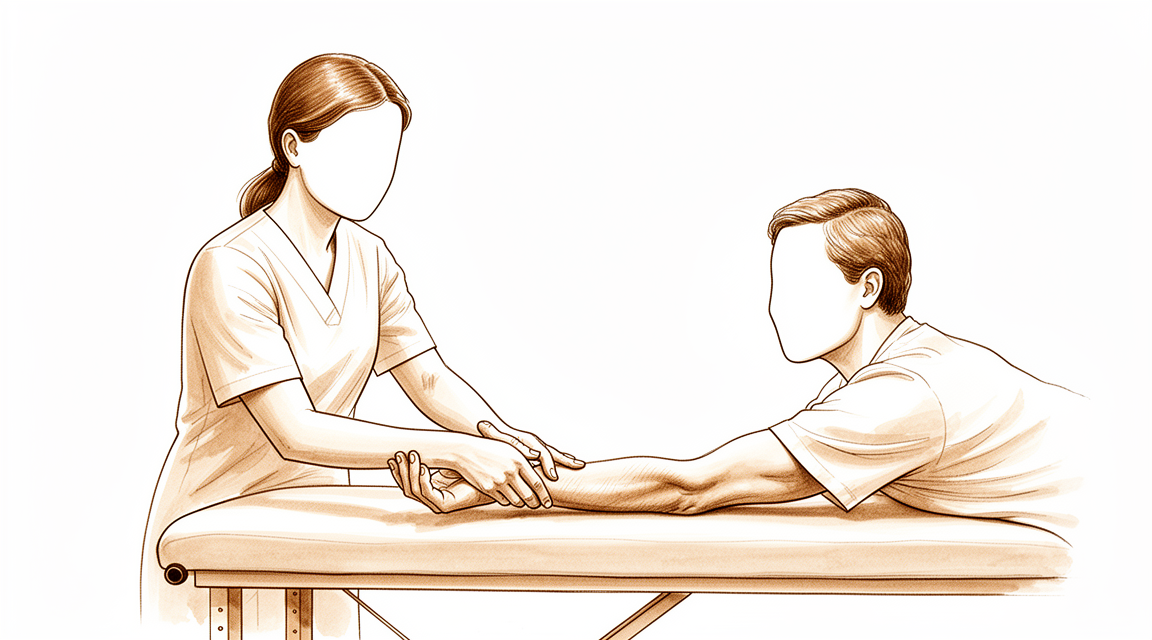
图示:手部治疗师在治疗床上对患者的前臂和手腕进行拉伸。
桡神经绕过肘部外侧,并在前臂分叉。桡骨管松解术旨在释放深支,该深支在旋后肌肌层之间受到挤压。 Kieran Hirpara 4.0

本页面由机器翻译,尚未经临床医生审核。英文版本为权威版本。

为何建议进行此手术

Mater Private Hospital Rockhampton 的上肢外科医生 Kieran Hirpara 医生会从适合您病情的最微创方案开始。患者通常由其全科医生(GP)转诊至我们的诊所;如果物理治疗师建议您就诊,您仍需获得全科医生的转诊才能符合 Medicare 报销资格。我们的评估基于您的病史、体格检查以及必要时进行的影像学检查,以确立诊断。

桡骨管综合征会导致肘部外侧和前臂疼痛。桡神经沿前臂下行,其路径上的多个独立结构可能会对其产生压迫。这些结构可能包括肌肉边缘、纤维带或跨越神经的小血管。我们通常首先采用非手术治疗,例如改变活动方式、物理治疗或手部治疗、夹板固定或注射治疗。当这些措施未能带来足够的改善时,我们会考虑手术。该手术称为桡骨管松解术,可缓解神经在这些各点受到的压迫。我们建议那些在其他治疗下疼痛持续存在的患者接受此手术。主要目标是缓解疼痛,并帮助您的前臂和手腕恢复正常功能。

术前

您需要在手术前七小时停止进食和饮水。我们要求的时间比一些其他诊所稍长,以便如果手术室手术日程提前,您的手术可以提前进行。您的外科医生会告诉您当天需要跳过哪些常规药物,以及哪些药物可以照常服用。请携带一份书面清单,列出您服用的所有药物,包括药片、注射剂以及任何滴剂或药膏。请安排他人在术后开车送您回家,因为您将无法安全驾驶。请穿着宽松、舒适的衣服,袖子应便于滑过手臂。某些影像学检查,如X光、核磁共振(MRI)或超声扫描,有助于我们制定手术计划。如果您有其他健康状况,可能需要进行血液检查或与麻醉师进行会诊。

手术当天

您将抵达医院的手术入院单元,在那里办理入院手续并为手术室做准备。您将见到麻醉师,即负责在手术期间管理您的睡眠和疼痛控制的医生。本手术在全身麻醉下进行。手术期间您将处于完全睡眠状态。部分患者可能还会接受区域神经阻滞以缓解术后疼痛;麻醉师将根据您当天的具体情况决定是否实施。随后,您将被带入手术室进行手术。

手术结束后,您将在恢复区醒来。在麻醉消退期间,护士将在那里监测您的状况。一旦您的情况稳定,根据手术类型及恢复情况,您将被转入病房或当天出院。如果您出院,您安排好的司机将接您回家。

手术内容

该手术称为桡骨管松解术。手术通过前臂前方、肘部褶皱下方的一处切口进行。外科医生通过这一单一开口到达桡神经。

在神经走行路径上,多个独立结构可能对其产生压迫。这些结构可能包括肌肉边缘、纤维带或跨越神经的小血管。外科医生会找到每一个压迫点并将其松解,以减轻对神经的挤压。周围组织尽可能保持不受干扰,同时保留神经的血供。

压迫点松解完成后,外科医生关闭切口。首先,在闭合的伤口上覆盖一层细密的自粘网状物,以固定皮肤边缘。随后,在网状物上涂抹液体皮肤粘合剂,其凝固后密封整个区域。该装置保留约一至两周,之后自行翘起并脱落,因此无需取出任何材料。

术后

麻醉消退期间,您将在恢复区醒来,护士会在您身边。您的手臂伤口处会覆盖一层软敷料,并会安排止痛措施以确保您舒适。一旦您感觉准备好,即可下床活动,并立即用手进行轻度活动。这通常是日间手术,因此您预计当天即可回家,但偶尔患者需留院过夜。回家后最初的24小时内,应有人陪伴您。我们会保留敷料约10天;除非我们告知您,否则请勿在此之前拆除。我们会在复诊时为您更换或拆除敷料。

恢复

出院时,您的手臂将覆盖有软敷料。术后最初几天,伤口周围出现一些疼痛和肿胀属于正常现象。在可能的情况下请让手臂休息,坐着时保持手臂抬高,并按已为您安排的方案服用止痛药。大多数人会发现,随着天数推移,不适感会稳步减轻。

您可以立即用手进行轻度活动。此手术后无需石膏或常规夹板固定,因此您的手腕和手指可以自由活动。轻柔的活动有助于神经滑动并防止僵硬。您的术后手部治疗将由 Extend Rehabilitation 的 Ruby Doolan 负责。Ruby 是一名手部治疗师:她将指导您的锻炼,并在过程中为您制作所需的任何夹板。在家期间,请保持伤口干燥,并在我们复查前不要触碰敷料。

随着肿胀消退,您将注意到抓握力和前臂力量逐渐恢复。穿衣、进食和打字等日常任务通常较早恢复。较重的提举和有力的抓握则较晚恢复,待您的手部感觉有力且压痛消失后进行。当您的治疗师对您的活动度和力量感到满意时,您可以逐步恢复正常的活动。

通常,一旦夹板拆除且疼痛缓解到足以握紧方向盘并快速反应,您即可驾车。佩戴夹板的患者不得驾车。请参阅我们关于 上肢手术后驾驶 的页面。

恢复情况因人而异。您的时间表可能有所不同,您的外科医生和治疗师将为您提供指导。

可能出现的并发症

大多数患者恢复良好,但偶尔可能出现并发症。您的外科医生和医疗团队会密切监测您的状况,以便尽早发现任何问题。

被松解的神经紧邻手术区域,因此在手术过程中可能会受到刺激或损伤。如果发生这种情况,您可能会注意到抬腕或伸直手指时出现无力,或者前臂、手腕或手背出现麻木和刺痛感。其中一些变化是暂时的,会在数周至数月内自行消退。如果您在术后发现新的无力或麻木,请在下次复诊时告知您的外科医生;如果症状突然发作,请提前联系诊所。

有时,神经在愈合过程中周围会形成瘢痕组织。这可能会再次压迫神经,导致您之前的疼痛复发,这种情况通常发生在情况好转后的数周或数月后。如果您的原始疼痛复发,请在下次就诊时提出。如有必要,可以进行进一步的手术以松解瘢痕组织。

此外,首次手术可能无法缓解您的症状,或者症状可能在术后不久复发。如果神经沿线的某个受压点被遗漏,或者诊断不完全准确,就可能出现这种情况。如果您的疼痛持续存在或复发,请告知您的外科医生。他们将重新评估您的情况并讨论下一步措施,这可能包括进一步的治疗。

任何前臂手术都存在伤口本身出现问题的微小风险。请留意切口周围红肿扩散、切口渗出液体或脓液,或发热。如果您发现其中任何症状,请立即联系诊所;如果无法联系我们,请前往急诊科。

如果您任何时候担心手臂的愈合情况,请致电诊所,而不要等到下次就诊。如果您想了解具体数据,本页上的并发症表格列出了典型的发病率。

何时联系我们

如果您的疼痛突然明显加重,或迅速出现新的无力或麻木,请致电我们。如果伤口变得更红、渗出液体或脓液,或您出现发热,请致电我们。如果您无法联系到我们,或手臂失去感觉或无法活动,请前往急诊。如果出现呼吸困难或小腿肿胀,请立即前往急诊。如果您有任何担忧,请致电诊所,而不是等待下次就诊。

关于该病症的更多阅读

本页主要介绍手术本身。关于该手术所治疗的病症,包括证据显示手术在何种情况下有效、在何种情况下无效,在桡骨管综合征页面上有更详细的介绍。


Evidence & references

This is the clinical evidence summary written for health professionals. It is technical, and it lists the research this page was built from. You do not need to read it to understand your treatment or to make a decision about it.

Anatomy & Pathophysiology

Bony Anatomy

  • The elbow is a trocho-ginglymoid joint consisting of medial and lateral articulations that provide bony stability [3].
  • The trochlea articulates with the ulna within the greater sigmoid notch to form the ulnohumeral, hinged, or trochoid portion of the elbow joint [3].
  • The ulnohumeral articulation has highly congruent anatomy through almost 180° of articular contact, except for the bare area of the greater sigmoid notch which is devoid of cartilage [3].
  • The coronoid process has medial and lateral facets that buttress the trochlea anteriorly [3].
  • The sublime tubercle is located just distal and medial to the coronoid and serves as the attachment site for the anterior bundle of the medial ulnar collateral ligament [3].
  • The medial epicondyle is larger and more posteriorly oriented than the lateral epicondyle and forms the attachment site for the origins of the flexor pronator mass [3].
  • The capitellum and radial head form the radiocapitellar joint on the lateral side [3].
  • The radius is held in close approximation to the ulna at the proximal radioulnar joint by the annular ligament [3].
  • The area of the ulna that articulates with the margin of the radial head at the proximal radioulnar joint is known as the lesser sigmoid notch [3].
  • The radial head is a concave elliptical structure covered with articular cartilage along the radiocapitellar joint and approximately 270° of the articular margin [3].
  • The radial head articulates with both the capitellum and the lesser sigmoid notch [3].
  • The lateral epicondyle is the origin of the lateral extensor musculature [3].
  • The origin of the lateral ulnar collateral ligamentous complex is located just distal to the lateral epicondyle at the geometric center of the radiocapitellar articulation [3].
  • The distal humeral articulation is angled 30° from the longitudinal axis [3].
  • The anterior humeral line should pass through the center of the axis of rotation [3].
  • The axis of rotation is angulated 5° to 7° in the coronal plane relative to the epicondylar axis, with the medial side more distal than the lateral side [3].
  • The angulation of the distal humeral articulation accounts for the change from a valgus carrying angle to a more varus position as the elbow is flexed [3].
  • There is a high correlation between the size of the radial head and capitellum on the left and right sides in the same individual [3].
  • The olecranon provides a broad attachment site for the triceps posteriorly [3].
  • The ulna bends approximately 8° medially at 8 cm from the tip of the olecranon [3].
  • The articulation to the tip of the coronoid is approximately 30° from the long axis of the ulna in the sagittal plane [3].
  • The radial head should line up with the capitellum at all arm positions on all radiographic views [4].

Ligaments and Capsule

  • Elbow stability is determined by primary and secondary stabilizers [1].
  • The three primary stabilizers of the elbow are the ulnohumeral articulation, the medial ulnar collateral ligament, and the lateral ulnar collateral ligament complex [1].
  • Secondary stabilizers of the elbow include the radiocapitellar articulation, the common flexor tendon, the common extensor tendon, and the joint capsule [1].
  • The medial ulnar collateral ligament is the primary valgus stabilizer of the elbow [4].
  • The anterior bundle of the medial ulnar collateral ligament is the most important component for stability [4].
  • The posterior bundle of the medial ulnar collateral ligament has the greatest change in length and becomes taut at flexion beyond 120 degrees [4].
  • The lateral ulnar collateral ligament is the posterolateral stabilizer of the elbow [4].
  • The joint capsule allows maximum distension at approximately 70 to 80 degrees of flexion [4].
  • The anterior capsule attaches at a point approximately 6 mm distal to the tip of the coronoid [4].
  • Tensile forces are present at the medial elbow and compressive forces are present at the lateral elbow [4].
  • The LUCL origin center is 10.7 mm from the lateral epicondyle [2].
  • The LUCL insertion is 3.3 mm from the apex of the supinator crest [2].

Muscles and Nerves

  • The brachialis is the strongest elbow flexor and attaches to the coronoid 11 mm distal to the tip [4].
  • The biceps brachii inserts at the ulnar margin of the radial tuberosity, with the long head inserting proximally and the short head distally [4].
  • The biceps brachii is a powerful supinator of the forearm [4].
  • The triceps is the primary elbow extensor and inserts on the olecranon process [4].
  • The mobile wad consists of the brachioradialis, extensor carpi radialis longus, and extensor carpi radialis brevis [4].
  • The flexor-pronator mass consists of the pronator teres, flexor carpi radialis, palmaris longus, flexor carpi ulnaris, and flexor digitorum superficialis [4].
  • The radial nerve enters the interval between the brachialis and brachioradialis muscles in the proximal angle of the lateral approach wound [6].
  • The deep branch of the radial nerve enters the supinator muscle [6].
  • The common origin of the extensor muscles is attached to the lateral epicondyle [6].
  • The common origin of the extensor muscles is attached to the lateral condylar fragment in lateral condyle fractures [6].
  • The interval between the triceps posteriorly and the origins of the extensor carpi radialis longus and brachioradialis anteriorly is used to expose the lateral border of the humerus [6].
  • The interval between the triceps posteriorly and the brachioradialis and extensor carpi radialis longus muscles anteriorly is used to expose the lateral condyle and capsule over the radial head [7].
  • The extensor carpi ulnaris is separated from the anconeus distal to the radial head during the lateral J-shaped approach [7].
  • The distal fibers of the anconeus are divided in line with the curved and transverse parts of the distal skin incision during the lateral J-shaped approach [7].
  • The anconeus is reflected subperiosteally from the proximal ulna to dislocate and examine the joint during the lateral J-shaped approach [7].

Functional Anatomy

  • The normal elbow has a range of motion from 0° to 140° from extension to flexion [1].
  • The normal elbow has a range of motion of 75° in pronation and 85° in supination [1].
  • A functional arc for elbow flexion and extension is 100° [1].
  • A functional arc for forearm rotation is 100° [1].

Investigations

Physical Examination

  • The physical examination of the elbow is directed by the history and the location of the patient's pain in the anterior, posterior, medial, or lateral aspect of the elbow [1].
  • Pathologic entities associated with specific compartments aid the examiner in detecting pathologic conditions [1].
  • Active and passive flexion, extension, supination, and pronation should be evaluated using a goniometer for accurate measurement [9].
  • The contralateral elbow should be examined for comparison during range of motion assessment [9].
  • Pain should be assessed during the mid-arc or at the terminal ends of motion [9].
  • Mid-arc range of motion pain is more common with intrinsic disease and may not improve with contracture release alone [9].
  • The ulnar nerve is of utmost importance in the neurovascular examination due to its anatomic proximity to the elbow [9].
  • Electromyography and nerve conduction velocity studies should be performed if there is any question about neurologic dysfunction [9].
  • An assessment for ulnar nerve subluxation should be performed [9].
  • Subluxation of the ulnar nerve is a relative contraindication for an arthroscopic procedure secondary to possible iatrogenic nerve injury [9].
  • If the elbow has less than 90° to 100° of flexion, the posterior bundle of the medial collateral ligament is contracted and must be released to restore flexion [9].

Imaging

  • Plain radiographs remain the hallmark and the best screening test for elbow evaluation [1].
  • Standard radiographic views include AP, lateral, and oblique views [9].
  • Serial radiography is used as follow-up when heterotopic ossification is present [9].
  • Primary bony landmarks assessed on radiographs include the ulnohumeral joint, coronoid process, radial head, capitellum, radiocapitellar joint, olecranon tip, coronoid/olecranon fossae, and trochlear ridge [9].
  • CT is helpful when assessing for malunion architecture and the location and pattern of osteophytes and/or loose bodies [9].
  • Three-dimensional CT is used to check for heterotopic ossification [9].
  • CT is not necessary when the stiffness is entirely soft-tissue related [9].
  • CT is beneficial if any joint incongruity or abnormal bony anatomy is present [9].
  • MRI can be used to evaluate ligaments and tendons, but it is rarely indicated for elbow stiffness [9].
  • AP, lateral, oblique, and axillary views of the elbow may reveal posteromedial olecranon osteophytes and/or loose bodies in valgus extension overload syndrome [11].
  • CT with two-dimensional reconstruction and three-dimensional surface rendering best visualizes the pathology of valgus extension overload syndrome [11].
  • MRI may be most helpful in evaluating associated injuries including partial or complete tears of the medial collateral ligament in valgus extension overload syndrome [11].
  • Radiographic evaluations are essential when diagnosing an osteochondritis dissecans lesion of the elbow [12].
  • Important aspects of osteochondritis dissecans lesions may be better seen with MRI [12].
  • Standard AP and lateral radiographs should be obtained for the evaluation of elbow osteoarthritis [13].
  • Radiographs for elbow osteoarthritis typically show osteophyte formation at the coronoid process, coronoid fossa, radial fossa, radial head, olecranon tip, and olecranon fossa [13].
  • Joint spaces at the ulnohumeral joint are usually preserved in elbow osteoarthritis [13].
  • Joint spaces at the radiocapitellar joint are mildly narrowed in elbow osteoarthritis [13].
  • Loose bodies may be evident on radiographs, which typically underestimate the number present [13].
  • CT may be useful for surgical planning of elbow osteoarthritis by allowing a detailed assessment of osteophytes and the presence of loose bodies [13].

References

[1] Orthopaedic Knowledge Update 13 Ebook Without Multimedia. Anatomy, Biomechanics, Physical Examination, and Imaging of the Elbow > Summary and Conclusions.

[2] Orthopaedic Knowledge Update 13 Ebook Without Multimedia. Anatomy, Biomechanics, Physical Examination, and Imaging of the Elbow > Annotated References.

[3] Orthopaedic Knowledge Update 13 Ebook Without Multimedia. Anatomy, Biomechanics, Physical Examination, and Imaging of the Elbow > Anatomy > Bony Anatomy.

[4] Miller S Review Of Orthopaedics. SECTION 16 PATELLAR TRACKING IN TOTAL KNEE ARTHROPLASTY > TABLE 2.3 Shoulder Spaces.

[6] Campbell S Operative Orthopaedics 4 Volume Set. LATERAL APPROACHES.

[7] Campbell S Operative Orthopaedics 4 Volume Set. LATERAL J-SHAPED APPROACH TO THE ELBOW.

[9] Aaos Comprehensive Orthopaedic Review 3. Elbow Stiffness* > IV. Evaluation.

[11] Aaos Comprehensive Orthopaedic Review 3. Elbow Injuries in the Athlete* > III. Valgus Extension Overload Syndrome and Posterior Impingement.

[12] Orthopaedic Knowledge Update. Osteochondritis Dissecans of the Knee and Elbow* > Summary.

[13] Aaos Comprehensive Orthopaedic Review 3. Arthritis and Arthroplasty of the Elbow > I. Osteoarthritis.

Creative Commons BY-NC 4.0

CC Creative Commons licence
BY Attribution — you must credit the source
NC NonCommercial — not for commercial use

Attribution-NonCommercial 4.0 International


Creative Commons Corporation ("Creative Commons") is not a law firm and does not provide legal services or legal advice. Distribution of Creative Commons public licenses does not create a lawyer-client or other relationship. Creative Commons makes its licenses and related information available on an "as-is" basis. Creative Commons gives no warranties regarding its licenses, any material licensed under their terms and conditions, or any related information. Creative Commons disclaims all liability for damages resulting from their use to the fullest extent possible.

Using Creative Commons Public Licenses

Creative Commons public licenses provide a standard set of terms and conditions that creators and other rights holders may use to share original works of authorship and other material subject to copyright and certain other rights specified in the public license below. The following considerations are for informational purposes only, are not exhaustive, and do not form part of our licenses.

Considerations for licensors: Our public licenses are intended for use by those authorized to give the public permission to use material in ways otherwise restricted by copyright and certain other rights. Our licenses are irrevocable. Licensors should read and understand the terms and conditions of the license they choose before applying it. Licensors should also secure all rights necessary before applying our licenses so that the public can reuse the material as expected. Licensors should clearly mark any material not subject to the license. This includes other CC- licensed material, or material used under an exception or limitation to copyright. More considerations for licensors: wiki.creativecommons.org/Considerations_for_licensors

Considerations for the public: By using one of our public licenses, a licensor grants the public permission to use the licensed material under specified terms and conditions. If the licensor's permission is not necessary for any reason--for example, because of any applicable exception or limitation to copyright--then that use is not regulated by the license. Our licenses grant only permissions under copyright and certain other rights that a licensor has authority to grant. Use of the licensed material may still be restricted for other reasons, including because others have copyright or other rights in the material. A licensor may make special requests, such as asking that all changes be marked or described. Although not required by our licenses, you are encouraged to respect those requests where reasonable. More considerations for the public: wiki.creativecommons.org/Considerations_for_licensees


Creative Commons Attribution-NonCommercial 4.0 International Public License

By exercising the Licensed Rights (defined below), You accept and agree to be bound by the terms and conditions of this Creative Commons Attribution-NonCommercial 4.0 International Public License ("Public License"). To the extent this Public License may be interpreted as a contract, You are granted the Licensed Rights in consideration of Your acceptance of these terms and conditions, and the Licensor grants You such rights in consideration of benefits the Licensor receives from making the Licensed Material available under these terms and conditions.

Section 1 -- Definitions.

a. Adapted Material means material subject to Copyright and Similar Rights that is derived from or based upon the Licensed Material and in which the Licensed Material is translated, altered, arranged, transformed, or otherwise modified in a manner requiring permission under the Copyright and Similar Rights held by the Licensor. For purposes of this Public License, where the Licensed Material is a musical work, performance, or sound recording, Adapted Material is always produced where the Licensed Material is synched in timed relation with a moving image.

b. Adapter's License means the license You apply to Your Copyright and Similar Rights in Your contributions to Adapted Material in accordance with the terms and conditions of this Public License.

c. Copyright and Similar Rights means copyright and/or similar rights closely related to copyright including, without limitation, performance, broadcast, sound recording, and Sui Generis Database Rights, without regard to how the rights are labeled or categorized. For purposes of this Public License, the rights specified in Section 2(b)(1)-(2) are not Copyright and Similar Rights.

d. Effective Technological Measures means those measures that, in the absence of proper authority, may not be circumvented under laws fulfilling obligations under Article 11 of the WIPO Copyright Treaty adopted on December 20, 1996, and/or similar international agreements.

e. Exceptions and Limitations means fair use, fair dealing, and/or any other exception or limitation to Copyright and Similar Rights that applies to Your use of the Licensed Material.

f. Licensed Material means the artistic or literary work, database, or other material to which the Licensor applied this Public License.

g. Licensed Rights means the rights granted to You subject to the terms and conditions of this Public License, which are limited to all Copyright and Similar Rights that apply to Your use of the Licensed Material and that the Licensor has authority to license.

h. Licensor means the individual(s) or entity(ies) granting rights under this Public License.

i. NonCommercial means not primarily intended for or directed towards commercial advantage or monetary compensation. For purposes of this Public License, the exchange of the Licensed Material for other material subject to Copyright and Similar Rights by digital file-sharing or similar means is NonCommercial provided there is no payment of monetary compensation in connection with the exchange.

j. Share means to provide material to the public by any means or process that requires permission under the Licensed Rights, such as reproduction, public display, public performance, distribution, dissemination, communication, or importation, and to make material available to the public including in ways that members of the public may access the material from a place and at a time individually chosen by them.

k. Sui Generis Database Rights means rights other than copyright resulting from Directive 96/9/EC of the European Parliament and of the Council of 11 March 1996 on the legal protection of databases, as amended and/or succeeded, as well as other essentially equivalent rights anywhere in the world.

l. You means the individual or entity exercising the Licensed Rights under this Public License. Your has a corresponding meaning.

Section 2 -- Scope.

a. License grant.

1. Subject to the terms and conditions of this Public License, the Licensor hereby grants You a worldwide, royalty-free, non-sublicensable, non-exclusive, irrevocable license to exercise the Licensed Rights in the Licensed Material to:

a. reproduce and Share the Licensed Material, in whole or in part, for NonCommercial purposes only; and

b. produce, reproduce, and Share Adapted Material for NonCommercial purposes only.

2. Exceptions and Limitations. For the avoidance of doubt, where Exceptions and Limitations apply to Your use, this Public License does not apply, and You do not need to comply with its terms and conditions.

3. Term. The term of this Public License is specified in Section 6(a).

4. Media and formats; technical modifications allowed. The Licensor authorizes You to exercise the Licensed Rights in all media and formats whether now known or hereafter created, and to make technical modifications necessary to do so. The Licensor waives and/or agrees not to assert any right or authority to forbid You from making technical modifications necessary to exercise the Licensed Rights, including technical modifications necessary to circumvent Effective Technological Measures. For purposes of this Public License, simply making modifications authorized by this Section 2(a) (4) never produces Adapted Material.

5. Downstream recipients.

a. Offer from the Licensor -- Licensed Material. Every recipient of the Licensed Material automatically receives an offer from the Licensor to exercise the Licensed Rights under the terms and conditions of this Public License.

b. No downstream restrictions. You may not offer or impose any additional or different terms or conditions on, or apply any Effective Technological Measures to, the Licensed Material if doing so restricts exercise of the Licensed Rights by any recipient of the Licensed Material.

6. No endorsement. Nothing in this Public License constitutes or may be construed as permission to assert or imply that You are, or that Your use of the Licensed Material is, connected with, or sponsored, endorsed, or granted official status by, the Licensor or others designated to receive attribution as provided in Section 3(a)(1)(A)(i).

b. Other rights.

1. Moral rights, such as the right of integrity, are not licensed under this Public License, nor are publicity, privacy, and/or other similar personality rights; however, to the extent possible, the Licensor waives and/or agrees not to assert any such rights held by the Licensor to the limited extent necessary to allow You to exercise the Licensed Rights, but not otherwise.

2. Patent and trademark rights are not licensed under this Public License.

3. To the extent possible, the Licensor waives any right to collect royalties from You for the exercise of the Licensed Rights, whether directly or through a collecting society under any voluntary or waivable statutory or compulsory licensing scheme. In all other cases the Licensor expressly reserves any right to collect such royalties, including when the Licensed Material is used other than for NonCommercial purposes.

Section 3 -- License Conditions.

Your exercise of the Licensed Rights is expressly made subject to the following conditions.

a. Attribution.

1. If You Share the Licensed Material (including in modified form), You must:

a. retain the following if it is supplied by the Licensor with the Licensed Material:

i. identification of the creator(s) of the Licensed Material and any others designated to receive attribution, in any reasonable manner requested by the Licensor (including by pseudonym if designated);

ii. a copyright notice;

iii. a notice that refers to this Public License;

iv. a notice that refers to the disclaimer of warranties;

v. a URI or hyperlink to the Licensed Material to the extent reasonably practicable;

b. indicate if You modified the Licensed Material and retain an indication of any previous modifications; and

c. indicate the Licensed Material is licensed under this Public License, and include the text of, or the URI or hyperlink to, this Public License.

2. You may satisfy the conditions in Section 3(a)(1) in any reasonable manner based on the medium, means, and context in which You Share the Licensed Material. For example, it may be reasonable to satisfy the conditions by providing a URI or hyperlink to a resource that includes the required information.

3. If requested by the Licensor, You must remove any of the information required by Section 3(a)(1)(A) to the extent reasonably practicable.

4. If You Share Adapted Material You produce, the Adapter's License You apply must not prevent recipients of the Adapted Material from complying with this Public License.

Section 4 -- Sui Generis Database Rights.

Where the Licensed Rights include Sui Generis Database Rights that apply to Your use of the Licensed Material:

a. for the avoidance of doubt, Section 2(a)(1) grants You the right to extract, reuse, reproduce, and Share all or a substantial portion of the contents of the database for NonCommercial purposes only;

b. if You include all or a substantial portion of the database contents in a database in which You have Sui Generis Database Rights, then the database in which You have Sui Generis Database Rights (but not its individual contents) is Adapted Material; and

c. You must comply with the conditions in Section 3(a) if You Share all or a substantial portion of the contents of the database.

For the avoidance of doubt, this Section 4 supplements and does not replace Your obligations under this Public License where the Licensed Rights include other Copyright and Similar Rights.

Section 5 -- Disclaimer of Warranties and Limitation of Liability.

a. UNLESS OTHERWISE SEPARATELY UNDERTAKEN BY THE LICENSOR, TO THE EXTENT POSSIBLE, THE LICENSOR OFFERS THE LICENSED MATERIAL AS-IS AND AS-AVAILABLE, AND MAKES NO REPRESENTATIONS OR WARRANTIES OF ANY KIND CONCERNING THE LICENSED MATERIAL, WHETHER EXPRESS, IMPLIED, STATUTORY, OR OTHER. THIS INCLUDES, WITHOUT LIMITATION, WARRANTIES OF TITLE, MERCHANTABILITY, FITNESS FOR A PARTICULAR PURPOSE, NON-INFRINGEMENT, ABSENCE OF LATENT OR OTHER DEFECTS, ACCURACY, OR THE PRESENCE OR ABSENCE OF ERRORS, WHETHER OR NOT KNOWN OR DISCOVERABLE. WHERE DISCLAIMERS OF WARRANTIES ARE NOT ALLOWED IN FULL OR IN PART, THIS DISCLAIMER MAY NOT APPLY TO YOU.

b. TO THE EXTENT POSSIBLE, IN NO EVENT WILL THE LICENSOR BE LIABLE TO YOU ON ANY LEGAL THEORY (INCLUDING, WITHOUT LIMITATION, NEGLIGENCE) OR OTHERWISE FOR ANY DIRECT, SPECIAL, INDIRECT, INCIDENTAL, CONSEQUENTIAL, PUNITIVE, EXEMPLARY, OR OTHER LOSSES, COSTS, EXPENSES, OR DAMAGES ARISING OUT OF THIS PUBLIC LICENSE OR USE OF THE LICENSED MATERIAL, EVEN IF THE LICENSOR HAS BEEN ADVISED OF THE POSSIBILITY OF SUCH LOSSES, COSTS, EXPENSES, OR DAMAGES. WHERE A LIMITATION OF LIABILITY IS NOT ALLOWED IN FULL OR IN PART, THIS LIMITATION MAY NOT APPLY TO YOU.

c. The disclaimer of warranties and limitation of liability provided above shall be interpreted in a manner that, to the extent possible, most closely approximates an absolute disclaimer and waiver of all liability.

Section 6 -- Term and Termination.

a. This Public License applies for the term of the Copyright and Similar Rights licensed here. However, if You fail to comply with this Public License, then Your rights under this Public License terminate automatically.

b. Where Your right to use the Licensed Material has terminated under Section 6(a), it reinstates:

1. automatically as of the date the violation is cured, provided it is cured within 30 days of Your discovery of the violation; or

2. upon express reinstatement by the Licensor.

For the avoidance of doubt, this Section 6(b) does not affect any right the Licensor may have to seek remedies for Your violations of this Public License.

c. For the avoidance of doubt, the Licensor may also offer the Licensed Material under separate terms or conditions or stop distributing the Licensed Material at any time; however, doing so will not terminate this Public License.

d. Sections 1, 5, 6, 7, and 8 survive termination of this Public License.

Section 7 -- Other Terms and Conditions.

a. The Licensor shall not be bound by any additional or different terms or conditions communicated by You unless expressly agreed.

b. Any arrangements, understandings, or agreements regarding the Licensed Material not stated herein are separate from and independent of the terms and conditions of this Public License.

Section 8 -- Interpretation.

a. For the avoidance of doubt, this Public License does not, and shall not be interpreted to, reduce, limit, restrict, or impose conditions on any use of the Licensed Material that could lawfully be made without permission under this Public License.

b. To the extent possible, if any provision of this Public License is deemed unenforceable, it shall be automatically reformed to the minimum extent necessary to make it enforceable. If the provision cannot be reformed, it shall be severed from this Public License without affecting the enforceability of the remaining terms and conditions.

c. No term or condition of this Public License will be waived and no failure to comply consented to unless expressly agreed to by the Licensor.

d. Nothing in this Public License constitutes or may be interpreted as a limitation upon, or waiver of, any privileges and immunities that apply to the Licensor or You, including from the legal processes of any jurisdiction or authority.


Creative Commons is not a party to its public licenses. Notwithstanding, Creative Commons may elect to apply one of its public licenses to material it publishes and in those instances will be considered the “Licensor.” The text of the Creative Commons public licenses is dedicated to the public domain under the CC0 Public Domain Dedication. Except for the limited purpose of indicating that material is shared under a Creative Commons public license or as otherwise permitted by the Creative Commons policies published at creativecommons.org/policies, Creative Commons does not authorize the use of the trademark "Creative Commons" or any other trademark or logo of Creative Commons without its prior written consent including, without limitation, in connection with any unauthorized modifications to any of its public licenses or any other arrangements, understandings, or agreements concerning use of licensed material. For the avoidance of doubt, this paragraph does not form part of the public licenses.

Creative Commons may be contacted at creativecommons.org.