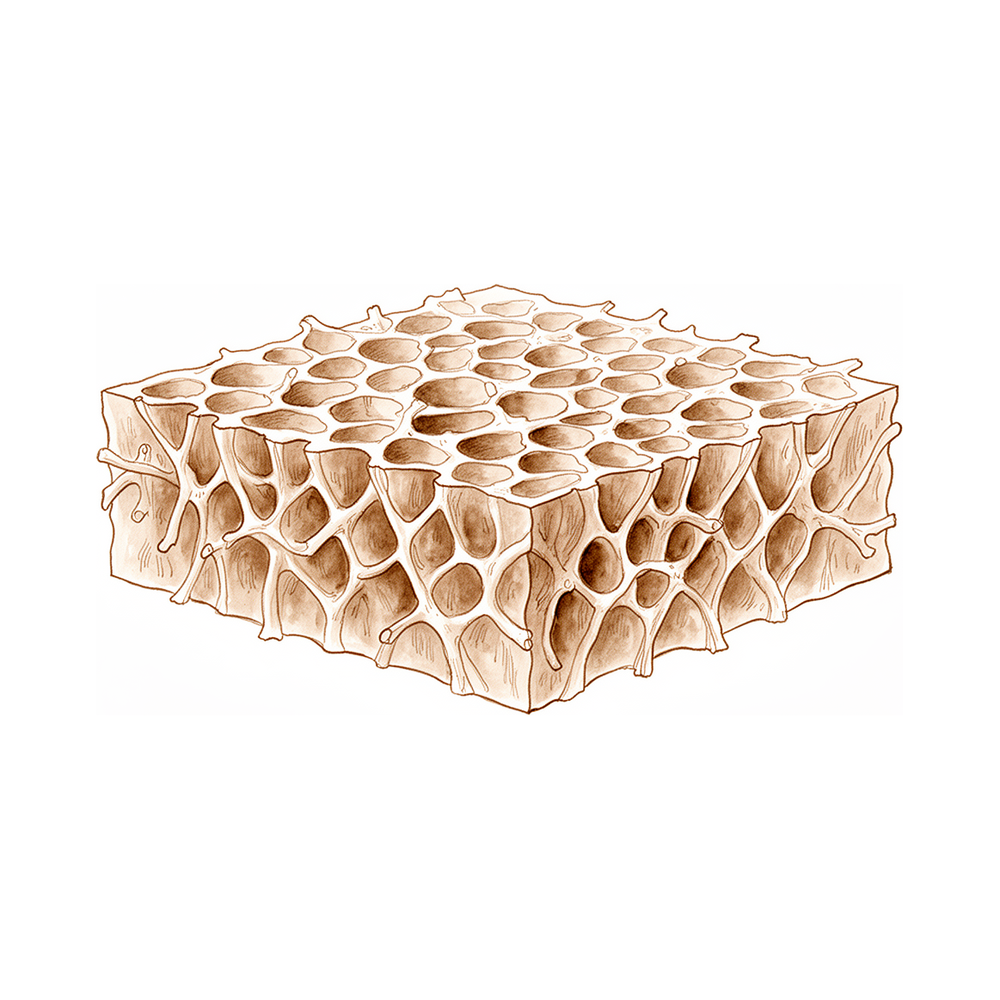
O osso parece sólido e permanente, mas na verdade é um tecido vivo, repleto de células e vasos sanguíneos, que é constantemente desmontado e reconstruído ao longo de toda a vida. É exatamente por isso que um osso fraturado consegue se unir novamente, tornando-se tão resistente quanto antes. O processo de cicatrização segue uma sequência previsível e leva mais tempo do que a maioria das pessoas imagina; portanto, conhecer esse padrão torna a espera muito menos preocupante. Esta página explica, em linguagem simples, o que é o osso e como ele se recupera; e, para os mais curiosos, aprofunda-se na biologia do osso, incluindo como ele se remodela continuamente e o que acontece quando esse mecanismo se volta contra ele.
O que é o osso e qual a sua função
O osso desempenha várias funções simultaneamente. Ele é a estrutura de suporte do corpo: o esqueleto que nos mantém de pé e ao qual os músculos se fixam para nos mover. É também uma espécie de armadura, protegendo o cérebro, o coração e os pulmões. Além disso, funciona como depósito de minerais, especialmente cálcio, que o restante do corpo utiliza constantemente.
Para cumprir todas essas funções, o osso é um material compósito, semelhante ao concreto armado. Uma rede flexível de proteínas (principalmente colágeno) confere-lhe a resistência necessária para dobrar ligeiramente sem se quebrar; já o mineral duro (um cristal de fosfato de cálcio) inserido nessa rede confere rigidez e resistência à compressão. Se retirarmos o mineral, o osso torna-se elástico; se retirarmos o colágeno, torna-se frágil como giz. Ambos são essenciais.
Contudo, o osso não é inerte. Está repleto de células vivas e permeado por vasos sanguíneos; por isso sangra quando se fratura, por que um bom suprimento sanguíneo é fundamental para a cicatrização e por que o osso, ao contrário de uma mesa arranhada, consegue reparar-se sozinho.
Como um osso quebrado cicatriza
Quando um osso se quebra, ele cicatriza em etapas sucessivas, transformando o espaço vazio em osso sólido novamente.
- O coágulo (primeiros dias). A fratura rompe os vasos sanguíneos dentro e ao redor do osso; o sangue forma então um coágulo na região da fratura. Esse coágulo não é apenas um tampão: ele serve como estrutura de suporte e centro de sinalização que atrai as células responsáveis pela reparação. É também por isso que, nos primeiros dias, a área fica inchada, com hematomas e dolorida.
- O calo mole (primeiras semanas). As células de reparação se deslocam para o local e formam uma ponte macia, elástica, composta de cartilagem e tecido imaturo, atravessando o espaço vazio. Nesse momento o osso já está unido, porém de forma frágil; por isso uma fratura recente precisa ser protegida com gesso, talas ou cirurgia, enquanto essa ponte ainda é fraca.
- O calo duro (de semanas a alguns meses). A ponte mole é gradualmente substituída por osso mineralizado e duro, formando um “anel” volumoso (o calo) ao redor da fratura. Ao final dessa etapa, o osso costuma estar sólido o suficiente para ser utilizado normalmente.
- Remodelação (de meses a anos). O calo irregular é lentamente redefinido e moldado conforme as linhas de tensão, até que o osso volte a ter aparência e função semelhantes aos originais. Nas crianças, essa remodelação é tão eficaz que até fraturas ligeiramente tortas podem se endireitar com o tempo.
A cicatrização é realmente lenta, e isso é normal. Como referência, muitas fraturas em adultos levam cerca de seis a doze semanas para ficarem sólidas, e ainda mais tempo para recuperar toda a força; a remodelação final pode durar um ano ou mais. O tempo exato depende do osso, da pessoa e da gravidade da lesão; portanto, considere esses prazos como orientações, não como garantias.
O que ajuda na cicatrização
Alguns fatores realmente fazem diferença, e a maioria está sob seu controle:
- Fluxo sanguíneo adequado e imobilização da fratura. O osso cicatriza melhor quando as extremidades fraturadas têm bom fluxo sanguíneo e são mantidas relativamente imóveis – esse é o objetivo de um gesso ou de uma cirurgia. Muito movimento ou fluxo sanguíneo insuficiente são as causas mais comuns de cicatrização lenta da fratura.
- Não fumar. O tabagismo e a nicotina estreitam os vasos sanguíneos e retardam significativamente a cicatrização óssea. Parar de fumar, mesmo próximo ao momento da lesão ou da cirurgia, ajuda bastante.
- Nutrição. O osso é formado a partir de proteínas e minerais; portanto, ingestão adequada de proteínas, cálcio e vitamina D favorece a cicatrização. A maioria das pessoas não precisa de doses excessivas; o importante é não ter deficiências.
- Carga física moderada. O osso responde ao uso. Seguir as orientações sobre carga e exercícios – nem em excesso, nem muito pouco – ajuda o osso em processo de cicatrização a se reconstruir nos locais corretos.
- Tempo e acompanhamento médico. A maioria das fraturas cicatriza no seu próprio ritmo. Caso uma fratura que deveria estar melhorando não evolua, vale a pena avaliar; algumas necessitam de intervenção cirúrgica.
Em maior profundidade
Advanced reading: the deeper science (optional)
Esta seção oferece uma explicação mais detalhada, adequada para estudantes, sobre a biologia por trás de tudo o que foi abordado anteriormente. Ela não é necessária para compreender uma fratura ou seu tratamento; porém, se você tem curiosidade sobre como o osso realmente funciona, e como o mesmo mecanismo responsável pela cicatrização de uma fratura pode ser usado também contra o esqueleto, continue lendo.
O osso como tecido vivo
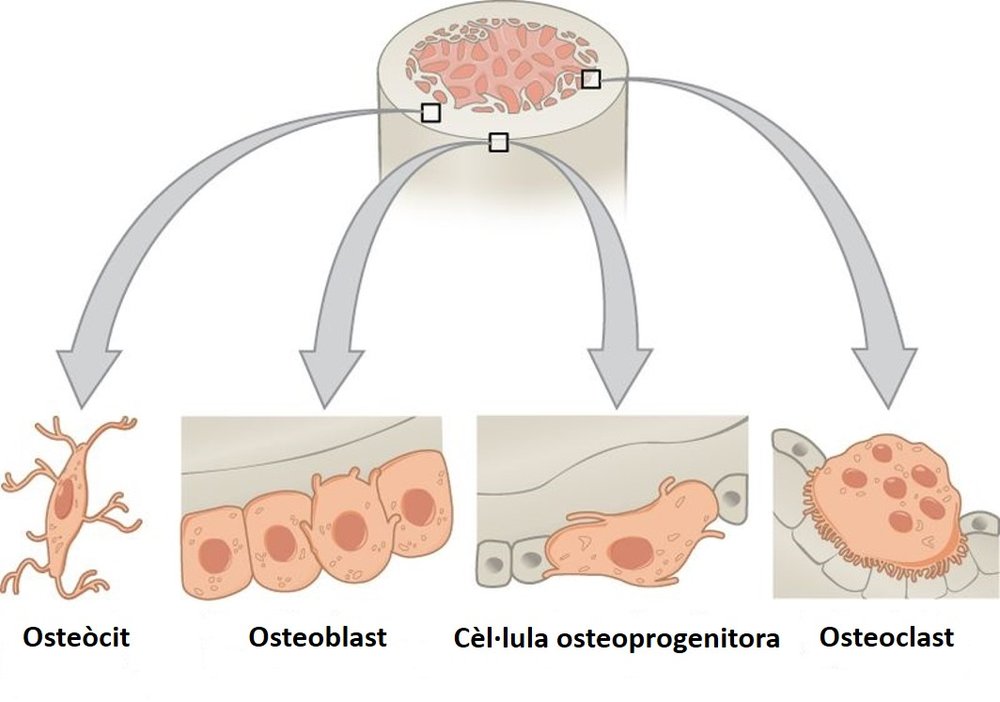
O osso é formado e mantido por três tipos principais de células; é útil conhecê-las, pois quase tudo o que se segue trata do equilíbrio entre elas:
- Osteoblastos são os construtores. Eles depositam novo osso: primeiro criam uma estrutura macia de colágeno (osteoide), que depois mineralizam para formar o osso duro.
- Osteoclastos são a equipe de demolição. São células grandes e multinucleadas que dissolvem o osso, atacando os minerais com ácido e digerindo o colágeno por meio de enzimas.
- Osteócitos são osteoblastos que acabaram ficando “presos” no osso que construíram. Eles ficam em pequenas câmaras interligadas por uma vasta rede de canais, funcionando como uma espécie de grade sensorial em todo o osso. Como veremos, são essas células que percebem a carga mecânica e orientam as outras duas.
A matriz rígida onde essas células vivem é composta por colágeno tipo I, endurecido por cristais de hidroxiapatita (um mineral de cálcio e fósforo). Existem dois tipos de estrutura óssea: o osso cortical (compacto) e denso, presente nos eixos dos ossos longos; e o osso trabecular (esponjoso), de estrutura aberta, encontrado nas extremidades dos ossos e no interior da coluna vertebral.
A cascata de cicatrização
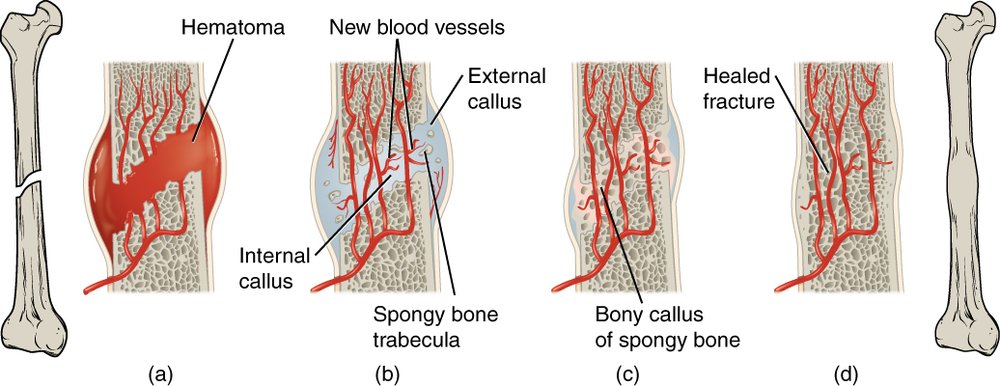
As quatro fases descritas acima, em linguagem simples, correspondem a uma sequência biológica precisa. O hematoma (coágulo) resultante da fratura libera uma grande quantidade de sinais inflamatórios e fatores de crescimento que atraem células-tronco. Essas células formam inicialmente um calo mole (cartilaginoso): o osso é construído sobre um molde de cartilagem por meio de um processo chamado ossificação endocondral, o mesmo processo responsável pelo crescimento da maior parte do esqueleto na infância. Em seguida, vasos sanguíneos invadem essa área e o cartilagem é substituído por osso entrelaçado, formando o calo duro, que por fim é remodelado até se tornar osso laminar maduro e organizado.
Esse é o processo de cicatrização secundária (indireta) (cicatrização por meio da formação de calo), que ocorre quando há algum movimento na fratura, como no caso de um gesso. Existe também a cicatrização primária (direta), que acontece apenas quando as extremidades ósseas são mantidas rigidamente unidas, sem qualquer espaço ou movimento entre elas (por exemplo, sob a pressão de uma placa metálica). Nesse caso, não se forma calo algum: o osso simplesmente se remodela diretamente através da junção. Nenhum dos dois processos é “melhor”; são as duas formas pelas quais o osso responde a diferentes condições mecânicas, razão pela qual os cirurgiões escolhem o método de fixação adequado à fratura.
Remodelação e o cone de corte
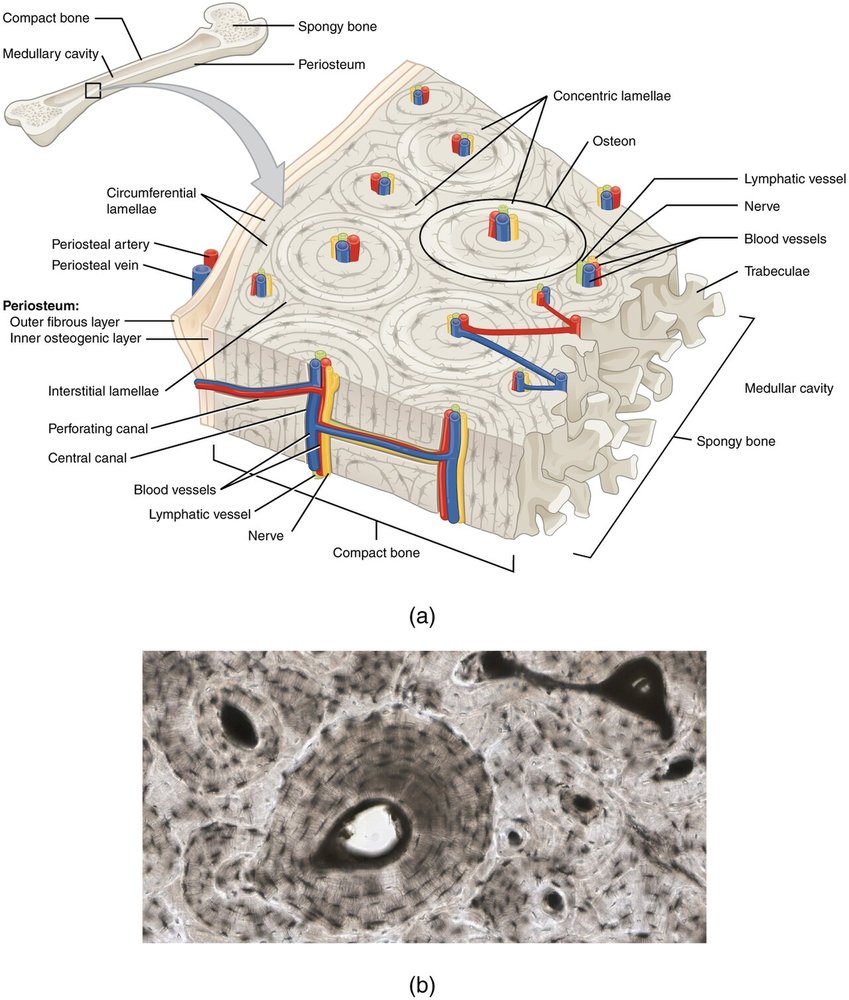
Até mesmo o osso intacto é continuamente reconstruído: a cada ano, cerca de um décimo do nosso esqueleto é substituído. Essa renovação contínua ao longo da vida é chamada de remodelação, e é realizada por grupos de células conhecidos como Unidades Multicelulares Básicas (UMBs).
No osso cortical denso, é possível observar uma UMB em ação, funcionando como uma espécie de “máquina de escavação” microscópica. Na sua extremidade frontal, um conjunto de osteoclastos abre um túnel diretamente através do osso, dissolvendo-o à medida que avançam; essa ponta resorvente é o chamado cone de corte. Logo atrás, no cone de fechamento, os osteoblastos revestem o novo túnel e o preenchem a partir das paredes para dentro, formando anéis concêntricos de osso novo ao redor de um canal central que contém um vaso sanguíneo. O cilindro resultante, formado por anéis ósseos em torno de um canal central, é chamado de osteão, a unidade estrutural básica do osso compacto. Portanto, a remodelação não é um processo aleatório: trata-se de um desfile coordenado de demolição seguido de reconstrução, que permite a formação de osso novo, bem alinhado, sobre o osso antigo.
É por isso também que o osso saudável necessita da atuação conjunta dos dois tipos de células. Os osteoclastos que formam o cone de corte são exatamente as mesmas células que, quando desreguladas, provocam as doenças de perda óssea descritas a seguir.
O “interruptor” de acoplamento: RANK, RANKL e OPG
Como as células construtoras controlam a equipe de demolição? Por meio de um “interruptor” molecular que merece ser conhecido, pois é o mecanismo por trás tanto da remodelação óssea normal quanto de diversas doenças (e de vários medicamentos).
As células de linhagem osteoblástica produzem um sinal chamado RANKL. Quando o RANKL se liga ao seu receptor, RANK, na superfície dos precursores dos osteoclastos, ele os estimula a amadurecer e se tornarem osteoclastos ativos, responsáveis pela reabsorção óssea. Assim, os “construtores” detêm o controle remoto da “equipe de demolição”. Para frear esse processo, os próprios osteoblastos secretam uma molécula “enganosa” chamada OPG (osteoprotegerina), que captura o RANKL antes que ele alcance o RANK. Portanto, a razão entre RANKL e OPG determina o ritmo da reabsorção óssea: valores mais altos de RANKL favorecem a perda óssea, enquanto valores mais altos de OPG promovem a preservação do osso.
Praticamente todo sinal que afeta o osso (hormônios, inflamação, medicamentos) acaba atuando sobre esse mecanismo. É exatamente nesse ponto que atua o medicamento para osteoporose denosumab: trata-se de um anticorpo sintético que funciona como o OPG, capturando o RANKL e inibindo a atividade dos osteoclastos. Tenha esse “interruptor” em mente; as duas próximas seções narram situações em que o RANKL é estimulado de maneira inadequada.
Mecanotransdução e a lei de Wolff
O osso, como se sabe, adapta-se às cargas que lhe são aplicadas. “O osso é depositado onde é necessário e reabsorvido onde não é” é a lei de Wolff, e é por isso que o braço que segura a raquete de um tenista possui osso mais denso, por que astronautas e pacientes acamados perdem massa óssea, e por que uma carga adequada ajuda um osso fraturado a se regenerar nos locais certos.
As células responsáveis por detectar essa carga são os osteócitos, localizados no interior do osso. Quando o osso é submetido a carga, o fluido é forçado a passar pelos minúsculos canais ao redor dos osteócitos; estes, por sua vez, percebem esse fluxo, num processo chamado mecanotransdução (conversão de um sinal mecânico em um sinal biológico). Os osteócitos sob carga reduzem a produção de uma molécula inibidora chamada esclerostina, o que permite que os osteoblastos atuem na formação óssea; no osso sem carga, ocorre o oposto, favorecendo a reabsorção. Portanto, o ditado “use ou perca” não é apenas um slogan; ele descreve como os osteócitos ajustam o equilíbrio entre RANKL e OPG em resposta às atividades do indivíduo.
Quando a remodelação óssea dá errado: osteólise e sonic hedgehog
Osteólise significa, simplesmente, a dissolução do osso: osteoclastos agindo sem controle, geralmente porque algo mantém o interruptor RANKL na posição “ligado”. É isso que faz um tumor destruir o osso, que faz um implante se soltar (ver próxima seção), e que gera cavidades ósseas em algumas doenças inflamatórias.
Um dos reguladores mais surpreendentes nesse processo é o sonic hedgehog (Shh), uma molécula sinalizadora conhecida principalmente por moldar o plano corporal do embrião (ela ajuda a formar os membros e os dedos). Essa mesma via é reutilizada no esqueleto adulto, e seus efeitos podem ser tanto positivos quanto negativos. Em uma fratura em processo de cicatrização, a sinalização por Shh realmente ajuda: ela estimula os osteoblastos e a formação óssea. Porém, na osteólise, o efeito é oposto: o Shh, atuando por meio de seu mensageiro downstream Gli, induz as células estromais a produzirem mais RANKL; mais RANKL significa mais osteoclastos e maior dissolução óssea. Vale notar que o Shh, por si só, não promove a reabsorção óssea; ele age ao amplificar a via RANKL, razão pela qual atua como fator agravante em condições como a destruição óssea associada ao câncer. Esse é um bom exemplo do tema recorrente nesta página: a maioria das doenças ósseas decorre do funcionamento excessivo da maquinaria normal de remodelação óssea (o “cone de corte”, o interruptor RANKL), levando a desequilíbrios patológicos.
Desgaste do polietileno e afrouxamento do implante
É aqui que a biologia se torna extremamente prática, pois explica como as próteses articulares acabam falhando. Uma prótese de quadril ou joelho possui uma superfície de deslizamento lisa; classicamente, uma esfera rígida ou componente metálico que se move contra um revestimento de polietileno (plástico de grau médico). Ao longo dos anos de uso, a fricção gera partículas de desgaste de polietileno extremamente pequenas, tão minúsculas que são invisíveis a olho nu; bilhões dessas partículas são liberadas.
O corpo considera essas partículas como corpos estranhos. Células imunológicas fagocitárias (macrófagos) ao redor do implante tentam englobá-las, mas o plástico é indigestível; assim, frustrados, os macrófagos liberam sinais inflamatórios. Esses sinais, como esperado, aumentam a expressão de RANKL, atraindo osteoclastos que reabsorvem o osso ao redor do implante. Essa osteólise induzida por partículas (ou por desgaste) corrói silenciosamente a fixação óssea, levando ao afrouxamento do implante – uma das principais causas de falha das próteses articulares e da necessidade de cirurgias de revisão, muitas vezes mais de uma década após a cirurgia inicial. Trata-se do mesmo mecanismo final descrito anteriormente: um estímulo externo que, por meio do RANKL, culmina na dissolução óssea pelos osteoclastos. É justamente por isso que tanto esforço de engenharia é dedicado ao desenvolvimento de materiais de deslizamento melhores (como o polietileno reticulado), que geram menos partículas e partículas menos problemáticas.
O que favorece e o que prejudica a cicatrização
Por fim, os fatores práticos, agora com base na biologia para explicá-los:
- A irrigação sanguínea transporta as células, o oxigênio e os sinais necessários para a cicatrização; um envoltório de tecidos moles desprovido de vascularização ou esmagado, ou uma fratura em um osso com má irrigação, cicatriza lentamente. Este é o fator mais importante.
- A estabilidade permite que o callo ósseo amadureça; o movimento excessivo rompe continuamente essa estrutura frágil na fase inicial, sendo uma causa comum de não união (quando a fratura não cicatriza).
- O tabagismo e a nicotina causam vasoconstrição e prejudicam as células responsáveis pela reparação: trata-se de um fator comprovado que atrasa a cicatrização óssea.
- O diabetes e alguns medicamentos (uso prolongado de esteroides e certos anti-inflamatórios próximos ao momento da fratura) podem retardar o processo de cicatrização.
- A nutrição (proteínas, cálcio e vitamina D em quantidade adequada) fornece os materiais básicos para a cicatrização; o problema está na deficiência, não no excesso.
- A idade diminui a eficiência dos processos celulares, mas o osso mantém uma capacidade notável de cicatrização ao longo de toda a vida.
Ver também
- Saúde óssea e osteoporose — quando o equilíbrio da remodelação óssea se desloca para a perda de massa óssea em todo o esqueleto
- Tabagismo e cicatrização musculoesquelética — por que o tabagismo retarda a cicatrização descrita aqui
- Vitamina D e saúde musculoesquelética — o papel dos minerais na formação óssea