Skip to content

Patients › Hand

Fraturas dos metacarpos (incluindo a fratura do boxeador)

A broken hand bone in the palm — including the common boxer's fracture — how it is treated, the rotation check that matters most, and recovery.
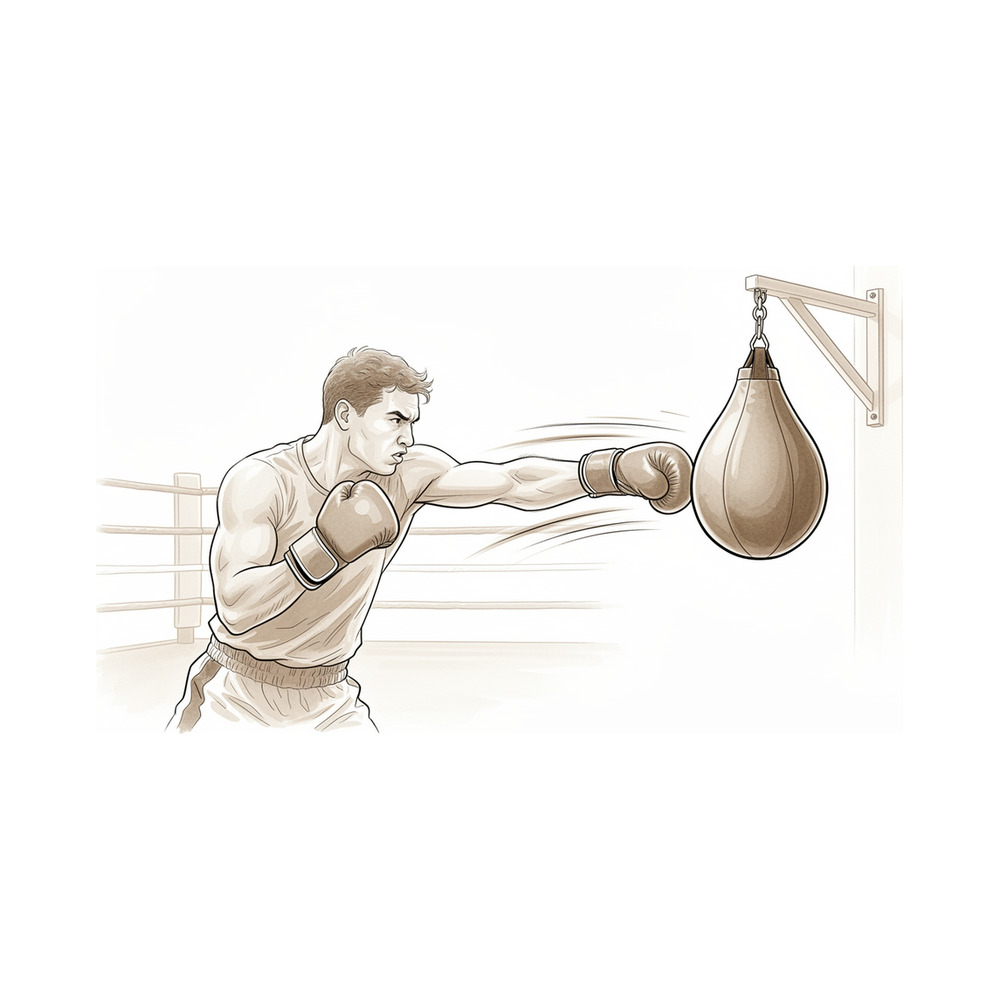
Um pugilista golpeando um saco de velocidade com o punho fechado.
As fraturas dos metacarpos — incluindo a comum “fratura do pugilista” na articulação do dedo mínimo — geralmente ocorrem após um soco ou impacto direto na mão. Kieran Hirpara 4.0

Esta página foi traduzida automaticamente e ainda não foi verificada por um médico. A versão em inglês é a versão oficial.

O que você está sentindo

Uma fratura de metacarpo é uma ruptura em um dos ossos longos da mão: os ossos que conectam o pulso aos dedos, aqueles que você sente como as “articulações dos nós dos dedos”. A fratura mais comum ocorre após um soco e afeta o osso atrás da articulação do dedo mindinho. Essa lesão é tão frequente que ganhou uma alcunha: fratura do pugilista.

Geralmente há um momento bem definido: um soco em algo sólido, uma queda sobre a mão, ou uma lesão por compressão ou torção. Imediatamente depois, a parte de trás da mão fica dolorida, inchada e com hematomas; a articulação pode parecer achatada ou “afundada” em comparação ao lado oposto. Fazer um punho dói, e a força de preensão fica reduzida. Algumas pessoas percebem que um dedo parece cruzar ou apontar para o vizinho ao tentar fechar a mão; essa torção é importante e é um dos principais aspectos que avaliamos.

O que realmente acontece

Você possui cinco ossos metacarpais, um para cada dedo e para o polegar. A fratura pode ocorrer no colo (logo atrás da articulação, o local clássico das fraturas de pugilista), ao longo do corpo do osso (a parte central) ou na base (próximo ao punho). Após a fratura, as extremidades quebradas podem formar um ângulo, encurtar ou torcer.

Um certo grau de ângulo costuma ser aceitável, pois a mão é bastante tolerante; os ossos do dedo anular e mindinho, em particular, suportam bastante flexão sem gerar problemas, já que essas articulações são naturalmente mais móveis. O que a mão não tolera bem é a torção (chamamos isso de rotação). Mesmo uma pequena rotação na região da fratura faz com que o dedo se desvie em relação aos vizinhos ao fechar o punho, impedindo que os dedos se alinhem corretamente. É por isso que a aparência da mão ao fechar o punho nos informa mais do que apenas o ângulo observado na radiografia.

O que podemos fazer a respeito

O Dr. Kieran Hirpara é cirurgião de membros superiores no Mater Private Hospital Rockhampton e acompanha o seu tratamento desde a primeira avaliação até à recuperação. Geralmente, os pacientes são encaminhados à nossa clínica pelo seu médico de família; caso um fisioterapeuta tenha sugerido que nos procurasse, ainda assim será necessário obter um encaminhamento do seu médico de família para ter direito ao reembolso do Medicare. Em seguida, confirmamos o diagnóstico e definimos um plano adequado às suas necessidades.

A boa notícia é que a maioria das fraturas de metacarpos cicatriza bem sem cirurgia.

Para a maioria dos casos (incluindo a maior parte das fraturas de boxeador), a solução é simples: suporte e movimentação precoce. Dependendo do tipo de fratura, podemos utilizar uma tala leve, um gesso ou simplesmente amarrar o dedo lesionado ao dedo vizinho; em seguida, incentivamos o paciente a começar a movimentar a mão bem cedo. Essa movimentação precoce é intencional: evita a rigidez da mão, e estudos demonstram que a simples imobilização com faixas associada à movimentação precoce produz resultados tão bons quanto o uso de gesso mais pesado nas fraturas típicas de boxeador [4, 5].

A cirurgia é indicada apenas para fraturas que não cicatrizariam bem sem intervenção. Os principais motivos para operar são: dedo rotacionado (torcido), deformidade ou encurtamento ósseo acentuado, múltiplas fraturas de metacarpos simultâneas, fratura que atinge a articulação ou ferida aberta sobre o local da fratura. Quando realizamos a correção cirúrgica, as opções incluem o uso de fios metálicos pequenos inseridos através da pele (fios de Kirschner) ou uma placa e parafusos inseridos por meio de uma incisão. Muitas dessas cirurgias podem ser feitas com o paciente acordado: a mão é anestesiada localmente, permitindo que o paciente permaneça consciente e confortável; assim, podemos pedir que ele movimente o dedo durante a operação para confirmar que a rotação foi corrigida antes de finalizarmos o procedimento.

O que esperar

A maioria das fraturas de metacarpos se consolida em aproximadamente quatro a seis semanas, e a mão volta a realizar a maioria das atividades normais pouco tempo depois. Mesmo que o osso cicatrize com um leve desvio, a articulação pode parecer um pouco menos proeminente do que antes; contudo, a mão geralmente funciona perfeitamente bem.

Independentemente de ter sido realizada cirurgia ou não, o fator decisivo para um bom resultado é a movimentação da mão após o tratamento: de forma suave, precoce e, quando necessário, sob orientação de um terapeuta da mão. As complicações que monitorizamos são a rigidez (a mais comum), um desvio residual na posição óssea (má união) e, ocasionalmente, certa dificuldade em esticar completamente o dedo. A rigidez é muito mais fácil de prevenir com movimentos precoces do que de tratar posteriormente; por isso incentivamos que você comece a movimentar a mão o quanto antes.

Quando procurar um especialista

  • Qualquer deformidade, ou um dedo que se cruza com os vizinhos ao fazer o punho: essa torção precisa ser avaliada imediatamente, pois é um motivo fundamental para endireitar ou corrigir o osso.
  • Um ferimento ou ruptura na pele sobre o nó do dedo, especialmente após um soco na boca de alguém: um dente pode causar infecção grave, e isso requer atenção médica urgente.
  • Dor intensa, inchaço acentuado, dormência ou dedos que parecem pálidos ou escuros: procure atendimento sem demora.
  • Uma mão que está ficando mais rígida, em vez de mais flexível, nas semanas seguintes à lesão: a fisioterapia precoce faz grande diferença.

Em maior profundidade

Advanced reading: the deeper science (optional)

Esta seção vai além do que você precisa saber para tomar decisões sobre o próprio tratamento. As fraturas dos metacarpos merecem uma leitura mais detalhada, pois a maioria delas não exige nenhuma intervenção cirúrgica; além disso, a deformidade que mais preocupa as pessoas — o achatamento da articulação — é, na verdade, a que a mão tolera melhor.

Por que a angulação é tolerada e por que varia conforme o dedo

Uma fratura no colo do metacarpo geralmente faz com que a cabeça do osso se incline para baixo, em direção à palma da mão; consequentemente, a articulação perde seu relevo característico. Isso parece anormal e pode ser facilmente interpretado como algo que necessita de correção.

O que determina se essa angulação é problemática é a quantidade de movimento residual que a articulação correspondente, na extremidade do punho, ainda permite. Os metacarpos do dedo indicador e do dedo médio são praticamente fixos em suas bases; portanto, qualquer angulação neles é pouco compensada. Já os metacarpos do dedo anular e do dedo mínimo estão ligados a articulações móveis que permitem grande rotação, o que absorve considerável grau de angulação sem causar prejuízo funcional.

É por isso que, na fratura do metacarpo do dedo mínimo – a mais comum de todas –, a angulação é tolerada em grau muito maior do que na mesma lesão em outros dedos; também é por isso que uma deformidade bastante visível nessa região frequentemente é tratada sem cirurgia.

A rotação é a deformidade que realmente importa

A exceção é a rotação; vale a pena compreendê-la, pois é fácil passar despercebida numa radiografia. Um metacarpo que cicatrizou com rotação faz com que os dedos se cruzem com os vizinhos quando a mão se fecha — um fenômeno conhecido como “tesoura”, que realmente prejudica a capacidade de preensão e não melhora com o tempo.

Para avaliar a rotação, pede-se à pessoa que faça um punho e verifica-se se as unhas dos dedos se alinham e se os dedos apontam de maneira convergente; não se mede nada na radiografia. Uma fratura que apresenta ângulos aceitáveis na radiografia, mas exibe esse fenômeno de “tesoura” ao exame, precisa ser corrigida; o contrário, geralmente, não exige correção.

Nos casos em que a fixação é utilizada, as evidências são limitadas

Para as fraturas que realmente necessitam de cirurgia, a fixação por meio de parafuso intramedular — que consiste em inserir um parafuso ao longo do eixo ósseo, partindo da articulação — tornou-se bastante popular, pois evita o uso de placas sob os tendões extensores. Ao analisar 1.014 pacientes, constatou-se que as complicações decorrentes da fixação por parafuso intramedular em fraturas de metacarpos são relativamente raras [1].

Contudo, as evidências comparativas são menos robustas do que a popularidade dessa técnica sugere. Uma revisão anterior envolvendo 502 pacientes concluiu que a fixação intramedular pode ter um papel no tratamento de determinadas fraturas de metacarpos; porém, não foi possível formular recomendações definitivas com base nos estudos disponíveis [2].

Ambas as afirmações podem ser verdadeiras: a técnica é segura, mas ainda não se demonstrou ser superior às demais. Considerando que a maioria dessas fraturas evolui bem sem intervenção cirúrgica, a decisão mais importante continua sendo a de operar ou não, e não a escolha do implante a ser utilizado.

A má união óssea pode ser corrigida, o que altera a avaliação clínica

Quando uma fratura cicatriza em posição inadequada e gera um problema funcional real, está disponível a osteotomia corretiva. As osteotomias corretivas quase sempre cicatrizam sem complicações, sendo que a maioria dos pacientes apresenta melhora ou correção da deformidade, além de movimentação digital aprimorada — embora a revisão aponte que muitos pacientes, apesar da melhora, ainda mantêm alguma limitação [3].

Esse é um argumento razoável para o tratamento não cirúrgico em casos limítrofes. A alternativa à cirurgia imediata não é “aceitar o que quer que aconteça”, mas sim “realizar a cirurgia posteriormente, apenas na minoria de pacientes que, de fato, precisarem dela”, mediante um procedimento que cicatriza de forma confiável.

Referências

[1] Anene CC, Thomas TL, Matzon JL, Jones CM. Complicações após a fixação com parafuso intramedular em fraturas de metacarpos: uma revisão sistemática. J Hand Surg Am. 2024;49(10):1043.e1-1043.e16. https://doi.org/10.1016/j.jhsa.2023.01.012

[2] Corkum JP, Davison PG, Lalonde DH. Revisão sistemática das melhores evidências sobre a fixação intramedular em fraturas de metacarpos. Hand (N Y). 2013;8(3):253-60. https://doi.org/10.1007/s11552-013-9531-8

[3] Freeland AE, Lindley SG. Pseudartroses dos metacarpos e falanges dos dedos. Hand Clin. 2006;22(3):341-55. https://doi.org/10.1016/j.hcl.2006.03.001

[4] van Aaken J, Fusetti C, Luchina S, Brunetti S, Beaulieu JY, Gayet-Ageron A, et al. Fraturas no colo do quinto metacarpo tratadas com enfaixamento elástico ou com redução e gesso: resultados de um ensaio clínico randomizado, multicêntrico e prospectivo. Arch Orthop Trauma Surg. 2015;136(1):135-42. https://doi.org/10.1007/s00402-015-2361-0

[5] Poolman RW, Goslings JC, Lee J, Statius Muller M, Steller EP, Struijs PA. Tratamento conservador de fraturas fechadas no colo do quinto metacarpo (dedo mínimo). Cochrane Database Syst Rev. 2005;(3):CD003210. https://doi.org/10.1002/14651858.cd003210.pub3


Creative Commons BY-NC 4.0

CC Creative Commons licence
BY Attribution — you must credit the source
NC NonCommercial — not for commercial use

Attribution-NonCommercial 4.0 International


Creative Commons Corporation ("Creative Commons") is not a law firm and does not provide legal services or legal advice. Distribution of Creative Commons public licenses does not create a lawyer-client or other relationship. Creative Commons makes its licenses and related information available on an "as-is" basis. Creative Commons gives no warranties regarding its licenses, any material licensed under their terms and conditions, or any related information. Creative Commons disclaims all liability for damages resulting from their use to the fullest extent possible.

Using Creative Commons Public Licenses

Creative Commons public licenses provide a standard set of terms and conditions that creators and other rights holders may use to share original works of authorship and other material subject to copyright and certain other rights specified in the public license below. The following considerations are for informational purposes only, are not exhaustive, and do not form part of our licenses.

Considerations for licensors: Our public licenses are intended for use by those authorized to give the public permission to use material in ways otherwise restricted by copyright and certain other rights. Our licenses are irrevocable. Licensors should read and understand the terms and conditions of the license they choose before applying it. Licensors should also secure all rights necessary before applying our licenses so that the public can reuse the material as expected. Licensors should clearly mark any material not subject to the license. This includes other CC- licensed material, or material used under an exception or limitation to copyright. More considerations for licensors: wiki.creativecommons.org/Considerations_for_licensors

Considerations for the public: By using one of our public licenses, a licensor grants the public permission to use the licensed material under specified terms and conditions. If the licensor's permission is not necessary for any reason--for example, because of any applicable exception or limitation to copyright--then that use is not regulated by the license. Our licenses grant only permissions under copyright and certain other rights that a licensor has authority to grant. Use of the licensed material may still be restricted for other reasons, including because others have copyright or other rights in the material. A licensor may make special requests, such as asking that all changes be marked or described. Although not required by our licenses, you are encouraged to respect those requests where reasonable. More considerations for the public: wiki.creativecommons.org/Considerations_for_licensees


Creative Commons Attribution-NonCommercial 4.0 International Public License

By exercising the Licensed Rights (defined below), You accept and agree to be bound by the terms and conditions of this Creative Commons Attribution-NonCommercial 4.0 International Public License ("Public License"). To the extent this Public License may be interpreted as a contract, You are granted the Licensed Rights in consideration of Your acceptance of these terms and conditions, and the Licensor grants You such rights in consideration of benefits the Licensor receives from making the Licensed Material available under these terms and conditions.

Section 1 -- Definitions.

a. Adapted Material means material subject to Copyright and Similar Rights that is derived from or based upon the Licensed Material and in which the Licensed Material is translated, altered, arranged, transformed, or otherwise modified in a manner requiring permission under the Copyright and Similar Rights held by the Licensor. For purposes of this Public License, where the Licensed Material is a musical work, performance, or sound recording, Adapted Material is always produced where the Licensed Material is synched in timed relation with a moving image.

b. Adapter's License means the license You apply to Your Copyright and Similar Rights in Your contributions to Adapted Material in accordance with the terms and conditions of this Public License.

c. Copyright and Similar Rights means copyright and/or similar rights closely related to copyright including, without limitation, performance, broadcast, sound recording, and Sui Generis Database Rights, without regard to how the rights are labeled or categorized. For purposes of this Public License, the rights specified in Section 2(b)(1)-(2) are not Copyright and Similar Rights.

d. Effective Technological Measures means those measures that, in the absence of proper authority, may not be circumvented under laws fulfilling obligations under Article 11 of the WIPO Copyright Treaty adopted on December 20, 1996, and/or similar international agreements.

e. Exceptions and Limitations means fair use, fair dealing, and/or any other exception or limitation to Copyright and Similar Rights that applies to Your use of the Licensed Material.

f. Licensed Material means the artistic or literary work, database, or other material to which the Licensor applied this Public License.

g. Licensed Rights means the rights granted to You subject to the terms and conditions of this Public License, which are limited to all Copyright and Similar Rights that apply to Your use of the Licensed Material and that the Licensor has authority to license.

h. Licensor means the individual(s) or entity(ies) granting rights under this Public License.

i. NonCommercial means not primarily intended for or directed towards commercial advantage or monetary compensation. For purposes of this Public License, the exchange of the Licensed Material for other material subject to Copyright and Similar Rights by digital file-sharing or similar means is NonCommercial provided there is no payment of monetary compensation in connection with the exchange.

j. Share means to provide material to the public by any means or process that requires permission under the Licensed Rights, such as reproduction, public display, public performance, distribution, dissemination, communication, or importation, and to make material available to the public including in ways that members of the public may access the material from a place and at a time individually chosen by them.

k. Sui Generis Database Rights means rights other than copyright resulting from Directive 96/9/EC of the European Parliament and of the Council of 11 March 1996 on the legal protection of databases, as amended and/or succeeded, as well as other essentially equivalent rights anywhere in the world.

l. You means the individual or entity exercising the Licensed Rights under this Public License. Your has a corresponding meaning.

Section 2 -- Scope.

a. License grant.

1. Subject to the terms and conditions of this Public License, the Licensor hereby grants You a worldwide, royalty-free, non-sublicensable, non-exclusive, irrevocable license to exercise the Licensed Rights in the Licensed Material to:

a. reproduce and Share the Licensed Material, in whole or in part, for NonCommercial purposes only; and

b. produce, reproduce, and Share Adapted Material for NonCommercial purposes only.

2. Exceptions and Limitations. For the avoidance of doubt, where Exceptions and Limitations apply to Your use, this Public License does not apply, and You do not need to comply with its terms and conditions.

3. Term. The term of this Public License is specified in Section 6(a).

4. Media and formats; technical modifications allowed. The Licensor authorizes You to exercise the Licensed Rights in all media and formats whether now known or hereafter created, and to make technical modifications necessary to do so. The Licensor waives and/or agrees not to assert any right or authority to forbid You from making technical modifications necessary to exercise the Licensed Rights, including technical modifications necessary to circumvent Effective Technological Measures. For purposes of this Public License, simply making modifications authorized by this Section 2(a) (4) never produces Adapted Material.

5. Downstream recipients.

a. Offer from the Licensor -- Licensed Material. Every recipient of the Licensed Material automatically receives an offer from the Licensor to exercise the Licensed Rights under the terms and conditions of this Public License.

b. No downstream restrictions. You may not offer or impose any additional or different terms or conditions on, or apply any Effective Technological Measures to, the Licensed Material if doing so restricts exercise of the Licensed Rights by any recipient of the Licensed Material.

6. No endorsement. Nothing in this Public License constitutes or may be construed as permission to assert or imply that You are, or that Your use of the Licensed Material is, connected with, or sponsored, endorsed, or granted official status by, the Licensor or others designated to receive attribution as provided in Section 3(a)(1)(A)(i).

b. Other rights.

1. Moral rights, such as the right of integrity, are not licensed under this Public License, nor are publicity, privacy, and/or other similar personality rights; however, to the extent possible, the Licensor waives and/or agrees not to assert any such rights held by the Licensor to the limited extent necessary to allow You to exercise the Licensed Rights, but not otherwise.

2. Patent and trademark rights are not licensed under this Public License.

3. To the extent possible, the Licensor waives any right to collect royalties from You for the exercise of the Licensed Rights, whether directly or through a collecting society under any voluntary or waivable statutory or compulsory licensing scheme. In all other cases the Licensor expressly reserves any right to collect such royalties, including when the Licensed Material is used other than for NonCommercial purposes.

Section 3 -- License Conditions.

Your exercise of the Licensed Rights is expressly made subject to the following conditions.

a. Attribution.

1. If You Share the Licensed Material (including in modified form), You must:

a. retain the following if it is supplied by the Licensor with the Licensed Material:

i. identification of the creator(s) of the Licensed Material and any others designated to receive attribution, in any reasonable manner requested by the Licensor (including by pseudonym if designated);

ii. a copyright notice;

iii. a notice that refers to this Public License;

iv. a notice that refers to the disclaimer of warranties;

v. a URI or hyperlink to the Licensed Material to the extent reasonably practicable;

b. indicate if You modified the Licensed Material and retain an indication of any previous modifications; and

c. indicate the Licensed Material is licensed under this Public License, and include the text of, or the URI or hyperlink to, this Public License.

2. You may satisfy the conditions in Section 3(a)(1) in any reasonable manner based on the medium, means, and context in which You Share the Licensed Material. For example, it may be reasonable to satisfy the conditions by providing a URI or hyperlink to a resource that includes the required information.

3. If requested by the Licensor, You must remove any of the information required by Section 3(a)(1)(A) to the extent reasonably practicable.

4. If You Share Adapted Material You produce, the Adapter's License You apply must not prevent recipients of the Adapted Material from complying with this Public License.

Section 4 -- Sui Generis Database Rights.

Where the Licensed Rights include Sui Generis Database Rights that apply to Your use of the Licensed Material:

a. for the avoidance of doubt, Section 2(a)(1) grants You the right to extract, reuse, reproduce, and Share all or a substantial portion of the contents of the database for NonCommercial purposes only;

b. if You include all or a substantial portion of the database contents in a database in which You have Sui Generis Database Rights, then the database in which You have Sui Generis Database Rights (but not its individual contents) is Adapted Material; and

c. You must comply with the conditions in Section 3(a) if You Share all or a substantial portion of the contents of the database.

For the avoidance of doubt, this Section 4 supplements and does not replace Your obligations under this Public License where the Licensed Rights include other Copyright and Similar Rights.

Section 5 -- Disclaimer of Warranties and Limitation of Liability.

a. UNLESS OTHERWISE SEPARATELY UNDERTAKEN BY THE LICENSOR, TO THE EXTENT POSSIBLE, THE LICENSOR OFFERS THE LICENSED MATERIAL AS-IS AND AS-AVAILABLE, AND MAKES NO REPRESENTATIONS OR WARRANTIES OF ANY KIND CONCERNING THE LICENSED MATERIAL, WHETHER EXPRESS, IMPLIED, STATUTORY, OR OTHER. THIS INCLUDES, WITHOUT LIMITATION, WARRANTIES OF TITLE, MERCHANTABILITY, FITNESS FOR A PARTICULAR PURPOSE, NON-INFRINGEMENT, ABSENCE OF LATENT OR OTHER DEFECTS, ACCURACY, OR THE PRESENCE OR ABSENCE OF ERRORS, WHETHER OR NOT KNOWN OR DISCOVERABLE. WHERE DISCLAIMERS OF WARRANTIES ARE NOT ALLOWED IN FULL OR IN PART, THIS DISCLAIMER MAY NOT APPLY TO YOU.

b. TO THE EXTENT POSSIBLE, IN NO EVENT WILL THE LICENSOR BE LIABLE TO YOU ON ANY LEGAL THEORY (INCLUDING, WITHOUT LIMITATION, NEGLIGENCE) OR OTHERWISE FOR ANY DIRECT, SPECIAL, INDIRECT, INCIDENTAL, CONSEQUENTIAL, PUNITIVE, EXEMPLARY, OR OTHER LOSSES, COSTS, EXPENSES, OR DAMAGES ARISING OUT OF THIS PUBLIC LICENSE OR USE OF THE LICENSED MATERIAL, EVEN IF THE LICENSOR HAS BEEN ADVISED OF THE POSSIBILITY OF SUCH LOSSES, COSTS, EXPENSES, OR DAMAGES. WHERE A LIMITATION OF LIABILITY IS NOT ALLOWED IN FULL OR IN PART, THIS LIMITATION MAY NOT APPLY TO YOU.

c. The disclaimer of warranties and limitation of liability provided above shall be interpreted in a manner that, to the extent possible, most closely approximates an absolute disclaimer and waiver of all liability.

Section 6 -- Term and Termination.

a. This Public License applies for the term of the Copyright and Similar Rights licensed here. However, if You fail to comply with this Public License, then Your rights under this Public License terminate automatically.

b. Where Your right to use the Licensed Material has terminated under Section 6(a), it reinstates:

1. automatically as of the date the violation is cured, provided it is cured within 30 days of Your discovery of the violation; or

2. upon express reinstatement by the Licensor.

For the avoidance of doubt, this Section 6(b) does not affect any right the Licensor may have to seek remedies for Your violations of this Public License.

c. For the avoidance of doubt, the Licensor may also offer the Licensed Material under separate terms or conditions or stop distributing the Licensed Material at any time; however, doing so will not terminate this Public License.

d. Sections 1, 5, 6, 7, and 8 survive termination of this Public License.

Section 7 -- Other Terms and Conditions.

a. The Licensor shall not be bound by any additional or different terms or conditions communicated by You unless expressly agreed.

b. Any arrangements, understandings, or agreements regarding the Licensed Material not stated herein are separate from and independent of the terms and conditions of this Public License.

Section 8 -- Interpretation.

a. For the avoidance of doubt, this Public License does not, and shall not be interpreted to, reduce, limit, restrict, or impose conditions on any use of the Licensed Material that could lawfully be made without permission under this Public License.

b. To the extent possible, if any provision of this Public License is deemed unenforceable, it shall be automatically reformed to the minimum extent necessary to make it enforceable. If the provision cannot be reformed, it shall be severed from this Public License without affecting the enforceability of the remaining terms and conditions.

c. No term or condition of this Public License will be waived and no failure to comply consented to unless expressly agreed to by the Licensor.

d. Nothing in this Public License constitutes or may be interpreted as a limitation upon, or waiver of, any privileges and immunities that apply to the Licensor or You, including from the legal processes of any jurisdiction or authority.


Creative Commons is not a party to its public licenses. Notwithstanding, Creative Commons may elect to apply one of its public licenses to material it publishes and in those instances will be considered the “Licensor.” The text of the Creative Commons public licenses is dedicated to the public domain under the CC0 Public Domain Dedication. Except for the limited purpose of indicating that material is shared under a Creative Commons public license or as otherwise permitted by the Creative Commons policies published at creativecommons.org/policies, Creative Commons does not authorize the use of the trademark "Creative Commons" or any other trademark or logo of Creative Commons without its prior written consent including, without limitation, in connection with any unauthorized modifications to any of its public licenses or any other arrangements, understandings, or agreements concerning use of licensed material. For the avoidance of doubt, this paragraph does not form part of the public licenses.

Creative Commons may be contacted at creativecommons.org.