Patients › Rehabilitation
Substituição da Articulação PIP
Um plano de recuperação protegido após a substituição com silicone da articulação média desgastada de um dedo (a articulação PIP), no qual a rapidez para iniciar os movimentos depende de o cirurgião ter acessado a região pela parte frontal (lado da palma) ou pela parte posterior do dedo.
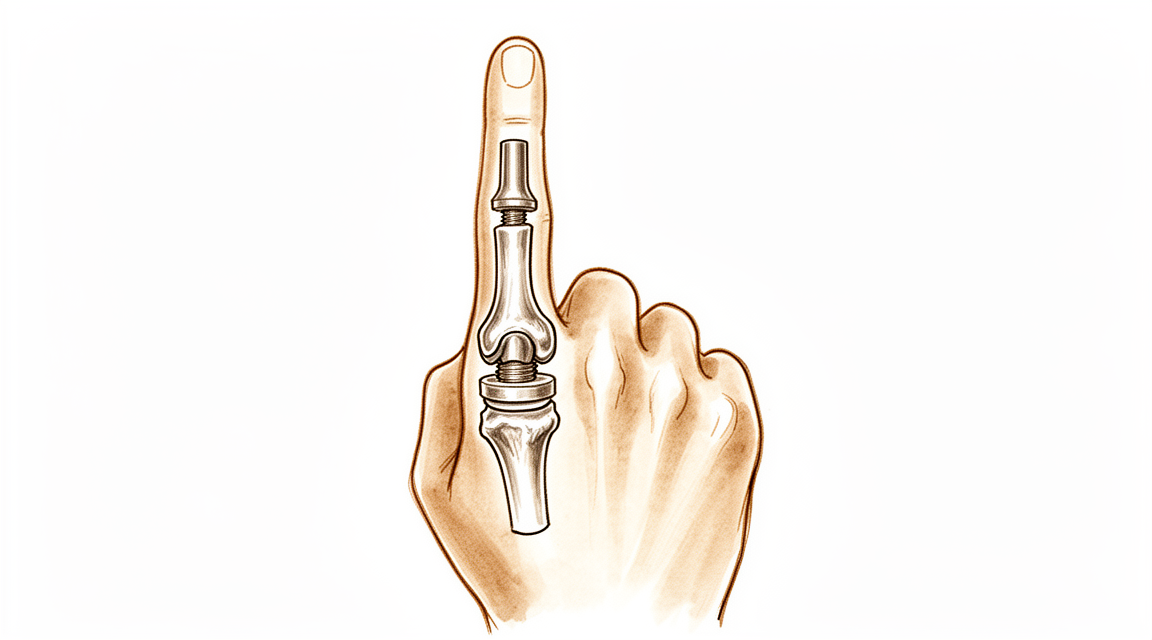
Este protocolo orienta sua recuperação após a substituição da articulação média desgastada do dedo (a articulação interfalângica proximal – PIP, ou seja, a “junta” do meio do dedo) por um espaçador flexível de silicone, procedimento realizado pelo Dr. Kieran Hirpara no Mater Private Hospital Rockhampton. Ele começa com um programa de exercícios para ser feito em casa, seguido pelo protocolo clínico estruturado elaborado para seu terapeuta de mão. Leve esta página ou seu arquivo PDF à sua primeira sessão de terapia, para que a reabilitação seja devidamente coordenada. Seu terapeuta poderá ajustar o plano conforme a evolução da sua recuperação.
Caso tenha alguma dúvida ou preocupação quanto à ferida cirúrgica, entre em contato com o consultório. Geralmente, é útil tirar uma foto da ferida e enviá-la por e-mail para análise.
O que esperar
A articulação média do seu dedo estava desgastada devido à artrite, o que causa dor e rigidez. Nesta cirurgia, as superfícies articulares desgastadas são removidas e um espaçador de silicone flexível (um implante do tipo Swanson) é colocado entre os dois ossos. Esse espaçador não é uma articulação mecânica rígida; é um elemento flexível que mantém os ossos separados, permite a flexão do dedo e permite que o próprio tecido cicatricial forme uma nova “capa” de suporte ao redor dele. O principal e mais confiável benefício é o alívio da dor. Você também deve esperar um arco de flexão útil, porém moderado (geralmente entre 40 e 60 graus), e não uma amplitude de movimento total e normal. A maioria dos pacientes fica muito satisfeita, pois a dor desaparece e o dedo torna-se confortável para uso.
O fator mais importante na sua recuperação é o tipo de abordagem cirúrgica utilizada, pois isso determina quando você poderá começar a movimentar o dedo:
- Abordagem pela frente (lado da palma da mão, abordagem volar): o tendão responsável pela extensão do dedo, localizado na parte dorsal, permanece totalmente intacto. Como nada na parte de trás precisa cicatrizar, geralmente você pode começar a mover o dedo poucos dias após a cirurgia.
- Abordagem pela parte de trás (abordagem dorsal): o tendão responsável pela extensão (o “central slip”) precisa ser dividido ou levantado para alcançar a articulação, sendo posteriormente reparado. Esse reparo exige proteção inicial; por isso, o dedo é imobilizado em posição reta e a flexão é introduzida de forma gradual, sob orientação do seu fisioterapeuta.
O seu fisioterapeuta seguirá o plano estabelecido conforme a abordagem cirúrgica utilizada. O Dr. Hirpara informará a ele qual foi a abordagem adotada, e os prazos abaixo são adaptados a cada caso. Independentemente da abordagem, a nova articulação funciona como uma dobradiça: ela se adapta bem à flexão e à extensão em linha reta, mas não tolera forças laterais ou torções. Proteger a articulação dessas tensões laterais é essencial para mantê-la estável a longo prazo.
Precauções e limitações
- Mova o dedo apenas em linha reta (dobrando e esticando), evitando qualquer força lateral ou de torção no dedo operado. A nova articulação funciona como uma dobradiça; forças laterais podem afrouxá-la ou deformá-la.
- Use a tala conforme orientado e empregue a técnica de “buddy strapping” durante as atividades para manter o dedo alinhado.
- Caso a cirurgia tenha sido na parte posterior do dedo, NÃO force o dedo a esticar além do limite indicado inicialmente: o tendão responsável pelo esticamento ainda está em processo de cicatrização.
- NÃO realize agarres firmes, pinçamentos intensos, nem tarefas que exijam força ou torção até que o fisioterapeuta autorize o fortalecimento (geralmente a partir da sexta semana).
- Desde o início, mantenha em movimento as demais articulações dos dedos, o pulso e o ombro; utilize a mão para tarefas cotidianas leves, dentro do limite do conforto.
Para orientações sobre cuidados com a ferida, inchaço e cicatrização, consulte o guia de cuidados com a ferida do consultório.
Seus exercícios
Kieran Hirpara 4.0
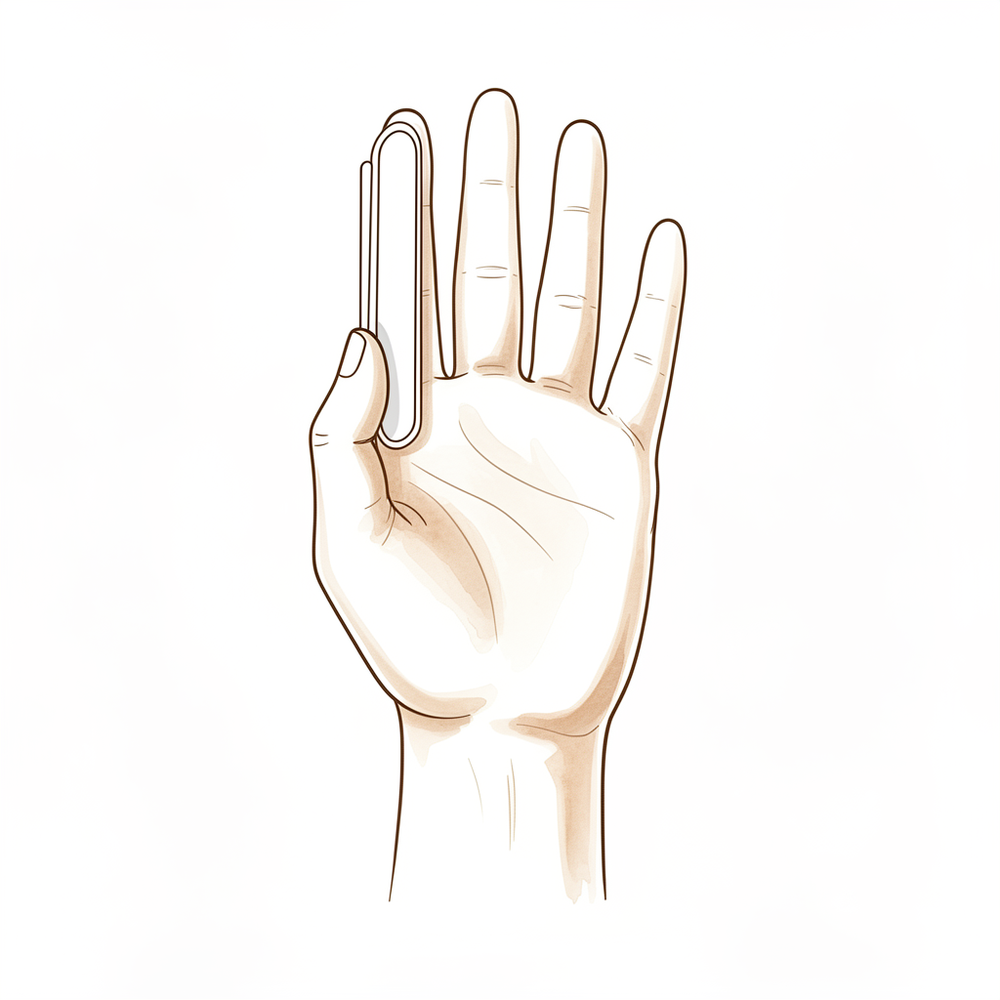
Flexão ativa protegida (articulação IPP)
Com os outros dedos e a tala que sustenta o restante da mão, dobre e estenda suavemente a articulação média do dedo operada, dentro dos limites estabelecidos pelo seu fisioterapeuta. Faça isso de maneira lenta e linear: dobre e estenda o dedo numa linha reta, sem permitir que ele se desvie para nenhum lado. Isso garante que a nova articulação continue se movimentando, evitando assim a rigidez.
10 vezes, várias vezes ao dia, dentro da amplitude estabelecida para você.
Kieran Hirpara 4.0
Extensão ativa (movimento de endireitamento)
Estique suavemente o dedo operado, na medida do possível e mantendo-o reto, e depois relaxe. Se a cirurgia foi realizada pela parte posterior do dedo, este é o movimento que precisa ser protegido no início — seu terapeuta de mão orientará exatamente quanto e quando fazer esse movimento, pois o tendão responsável pela extensão precisa cicatrizar primeiro. Nunca force o movimento.
10 vezes, várias vezes ao dia, conforme orientação.
Kieran Hirpara 4.0
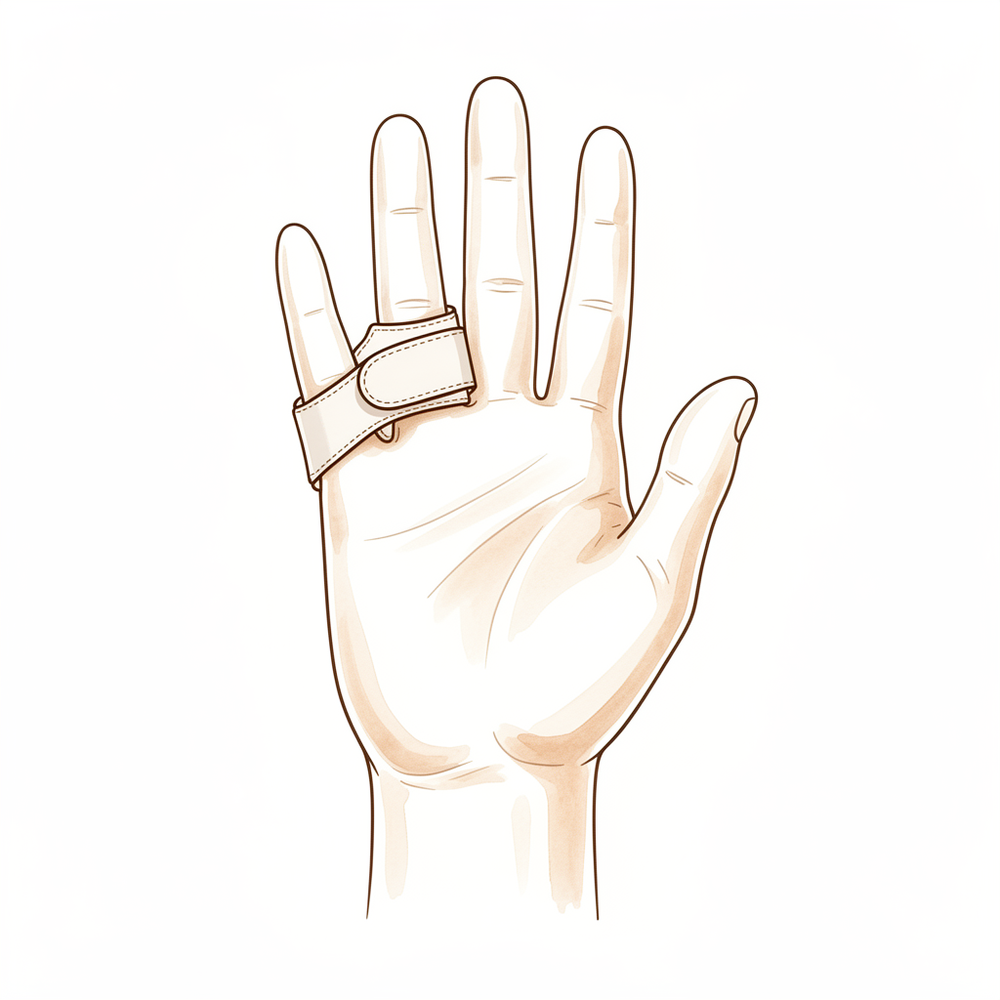
Fixação ao dedo vizinho (“buddy strapping”)
Fixe suavemente o dedo operado ao dedo vizinho (acima e abaixo da articulação média, mas não sobre ela). O dedo adjacente funciona como uma tala, orientando o seu dedo a dobrar e esticar em linha reta, impedindo que ele se desvie para os lados em relação à nova articulação. Use a fita conforme orientado, especialmente durante as atividades.
Utilizado durante atividades leves, conforme orientação do seu terapeuta de mão.
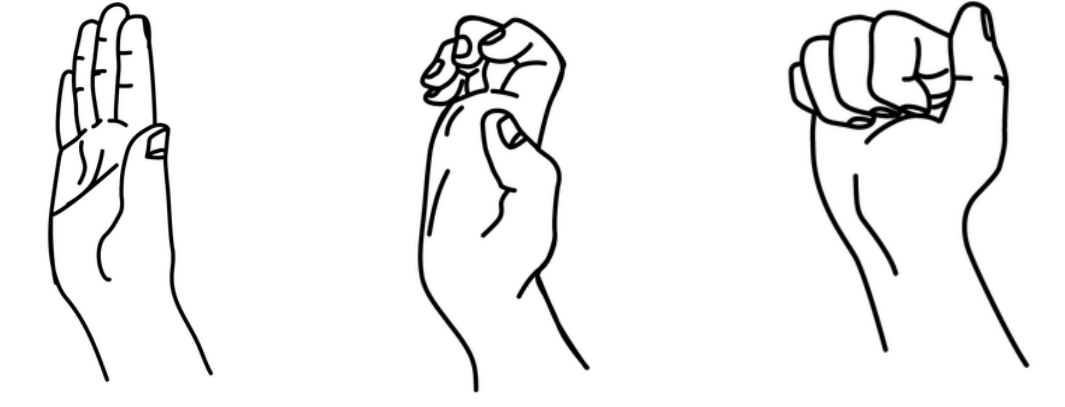
Kieran Hirpara 4.0
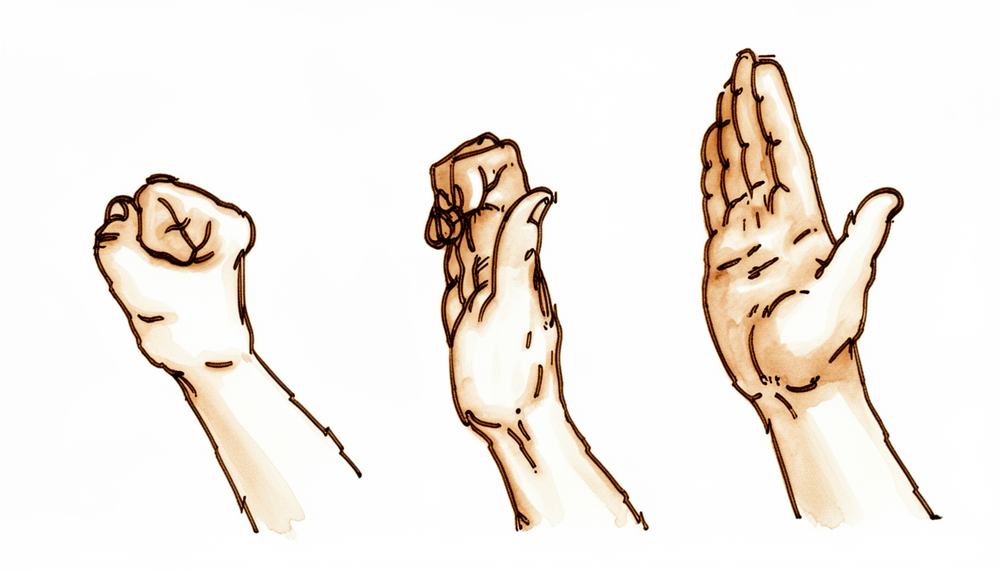
Deslizamentos tendinosos
Mova a mão executando três movimentos: primeiro, mantenha os dedos esticados (mão plana); depois, dobre apenas as duas articulações distais, formando um gancho; em seguida, faça um punho fechado de forma suave; por fim, estique a mão novamente. Esses movimentos ajudam a “deslizar” os tendões, evitando que eles fiquem aderidos enquanto o dedo cicatriza. Respeite sempre os limites de flexão que lhe foram indicados.
Percorra a sequência 5–10 vezes, várias vezes ao dia.
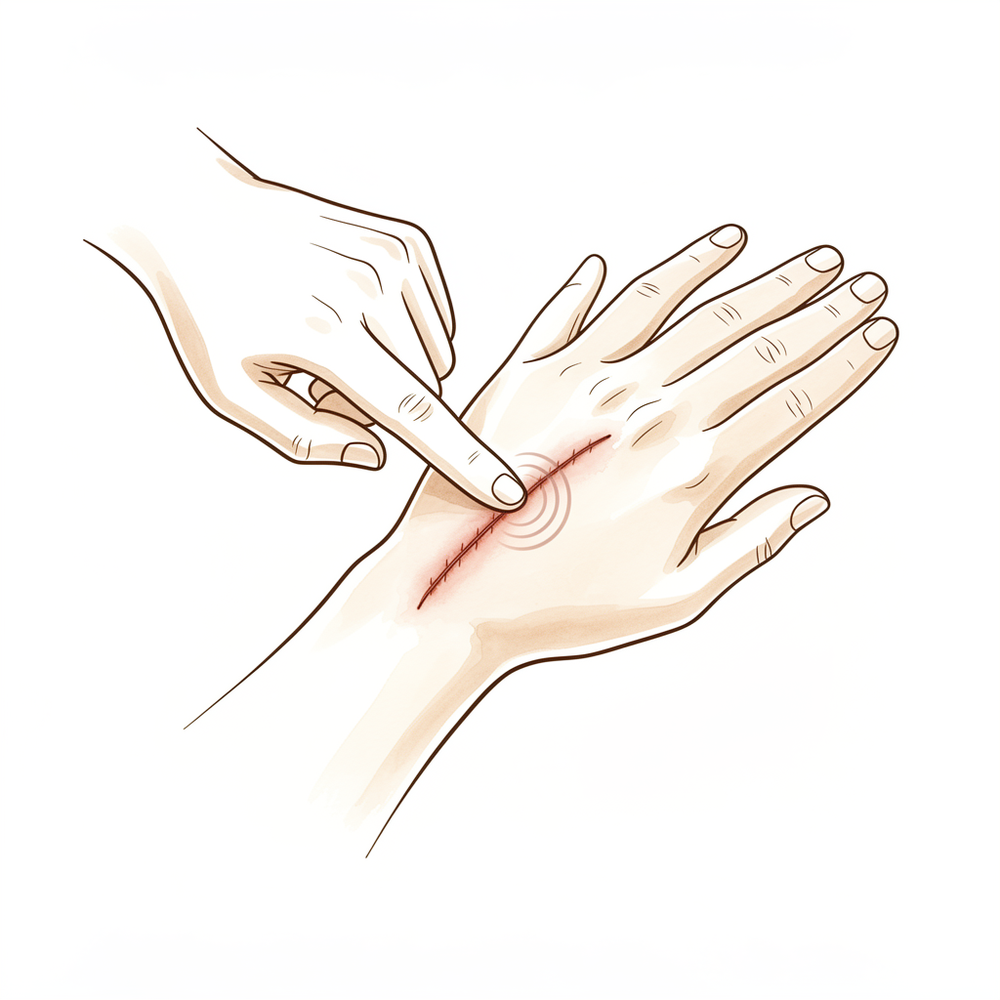
Kieran Hirpara 4.0
Massagem nas cicatrizes
Após a cicatrização completa da ferida, massageie a cicatriz com um pouco de creme neutro, fazendo pequenos círculos firmes por alguns minutos. Isso mantém a cicatriz macia e evita que ela se adira ao tendão e à articulação abaixo dela. Não inicie essa massagem antes que o fisioterapeuta da mão confirme que a ferida já cicatrizou.
Alguns minutos, 2–3 vezes ao dia, após a cicatrização da ferida.
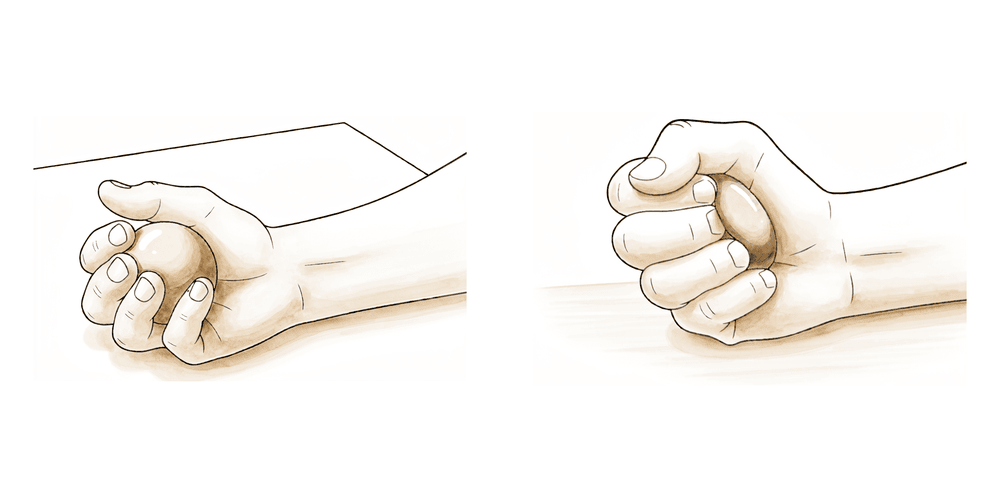
Kieran Hirpara 4.0
Fortalecimento da preensão
Um exercício posterior — somente depois que o seu terapeuta de mão autorizar o fortalecimento (geralmente a partir de cerca de seis semanas). Aperte suavemente uma bola macia ou massa de modelar, aumentando aos poucos. Evite pinçar com força ou qualquer torção que aplique força lateral sobre a nova articulação até ser informado de que é seguro.
Conforme orientação do seu terapeuta de mão (apenas na fase posterior).
Estes são os exercícios descritos no seu folheto informativo. Comece a realizá-los somente sob orientação do Dr. Hirpara e do seu fisioterapeuta, respeitando os limites e a amplitude de movimento que lhe foram indicados. Os primeiros exercícios visam manter o dedo movendo-se em linha reta, sem carga lateral: flexão controlada, extensão suave, imobilização com tala e deslizamentos tendíneos. Caso a sua cirurgia tenha sido na parte dorsal do dedo, o exercício de extensão ativa deve ser protegido nos primeiros dias e aumentado gradualmente. O fortalecimento da preensão pertence a uma fase posterior e só deve ser iniciado após autorização expressa. Interrompa qualquer exercício que cause dor intensa ou faça o dedo parecer instável.
Seu protocolo clínico
O restante desta página descreve o protocolo clínico em etapas para a reabilitação após artroplastia de articulação PIP com silicone. Esta seção deve ser entregue ao seu terapeuta de mão; cada fase começa com uma explicação simples em português sobre o que está ocorrendo. O protocolo varia conforme a abordagem cirúrgica, sendo este o ponto de decisão principal: a abordagem volar (palmar) mantém o mecanismo extensor intacto, permitindo movimento ativo precoce, dentro de poucos dias; já a abordagem dorsal requer a divisão ou separação do tendão central, portanto a cicatrização do extensor deve ser protegida primeiro por meio de órteses de extensão e movimentos de flexão controlados. Em todo o processo, o implante de silicone atua como um espaçador flexível; sua estabilidade a longo prazo depende da cápsula peri-implantar, razão pela qual deve-se evitar qualquer estresse coronal (lateral) e manter os movimentos apenas no plano sagital.
Antes de iniciar o tratamento, confirme com o cirurgião responsável qual foi a abordagem cirúrgica (volar ou dorsal), a integridade ou reparo do tendão central e dos ligamentos colaterais, bem como a amplitude de movimento observada intraoperatoriamente. O Dr. Hirpara indicará qual abordagem foi utilizada; escolha então o caminho volar (para movimento ativo precoce) ou dorsal (para proteção da extensão). O objetivo funcional esperado é alcançar uma amplitude de movimento livre de dor de aproximadamente 40–60°, não a amplitude total.
Fase I — proteção e início dos movimentos (semanas 0 a 3)
Nas primeiras semanas, visa-se proteger os tecidos moles e evitar a rigidez, sendo o ritmo de movimentação inteiramente determinado pelo tipo de abordagem cirúrgica utilizada. O implante permanece estável na flexão/extensão, porém é vulnerável a cargas laterais; por isso, todos os movimentos devem ser realizados no plano sagital, com o dedo apoiado por talas e faixas de suporte.
Para o seu fisioterapeuta:
Instruções e precauções - Identifique a abordagem cirúrgica e siga o protocolo correspondente: - Abordagem volar: mecanismo extensor intacto → inicie movimentos ativos da articulação PIP/DIP aos 3–5 dias. Utilize uma tala volar com bloqueio de extensão, permitindo um arco de flexão limitado (geralmente ~30° inicialmente), aumentado progressivamente. - Abordagem dorsal (com divisão/reparo do tendão extensor central): proteja a extensão. Mantenha a articulação PIP quase totalmente estendida, o tempo todo, introduzindo movimentos ativos de flexão em arco limitado, sob supervisão, respeitando o reparo do tendão. (Pode-se adotar um esquema dinâmico de extensão, conforme preferência do cirurgião.) - Evite rigorosamente qualquer carga coronal (lateral/radial-ulnar) na articulação operada: use uma faixa de suporte ligada ao dedo adjacente para garantir movimentos exclusivamente no plano sagital. - Proibido qualquer tipo de preensão, pinçamento ou uso com carga/resistência.
Tratamento - Ferida: trocar curativos conforme orientação; monitorar possíveis sinais de infecção. - Edema: elevar a mão, realizar massagem retrógrada suave e usar faixa compressiva leve. - Exercícios: movimentos ativos controlados de flexão/extensão da PIP/DIP dentro do arco estabelecido; deslizamentos tendíneos; movimentação ativa das articulações não afetadas (DIP, MCP, punho, polegar); iniciar o uso de faixas de suporte durante as atividades. - A tala deve ser usada o tempo todo, exceto durante os exercícios.
Critérios para avançar para a fase seguinte - Cicatrização da ferida satisfatória; ausência de déficit na extensão (no caso da abordagem dorsal); movimentos confortáveis e controlados dentro do arco atual.
Fase II — progressão do movimento (semanas 3 a 6)
O arco de flexão é ampliado e, no caso dos dedos operados por via dorsal, a proteção contra a extensão é progressivamente afrouxada à medida que o tendão central se consolida. O objetivo desta fase é consolidar o arco de movimento útil (≈40–60°) antes que a maturação da cicatriz limite definitivamente a amplitude articular.
Para o seu fisioterapeuta:
Avaliações - Amplitude de movimento ativa e passiva da articulação PIP; atraso na extensão (via dorsal); estabilidade coronal; presença de dor e edema; avaliação da ferida e da cicatriz
Instruções e precauções - Aumentar progressivamente a amplitude de flexão permitida até atingir o alvo funcional (≈40–60°) - Via volar: promover a flexão ativa conforme tolerado; acrescentar flexão passiva suave caso a extensão esteja completa e estável - Via dorsal: reduzir gradualmente o uso da órtese de extensão conforme a cicatrização do tendão central (geralmente reduzindo o suporte diurno ao longo de 4–6 semanas); evitar o atraso na extensão: não buscar a flexão em detrimento da extensão ativa - Manter estrita proibição de cargas laterais ou torcionais; ainda não realizar exercícios de fortalecimento resistido
Tratamento - Exercícios: flexão e extensão da articulação PIP de forma ativa e assistida; exercícios de bloqueio para focar o movimento da PIP; manter os deslizamentos tendíneos e a imobilização com bandagem; iniciar massagem da cicatriz após a cicatrização completa da ferida - Manter total amplitude de movimento nas articulações adjacentes
Critérios para avançar para a fase seguinte - Ferida completamente cicatrizada; articulação estável no plano coronal; amplitude de movimento funcional e sem dor estabelecida; mínimo atraso na extensão (via dorsal)
Fase III — fortalecimento e retorno às atividades (semanas 6 a 12 e além)
Após o restabelecimento da mobilidade e quando os tecidos moles estiverem saudáveis (por volta da sexta semana), inicia-se um fortalecimento leve, que é aumentado gradualmente. O fortalecimento deve ser feito de forma axial (aperto da mão e cargas em linha reta), respeitando-se sempre o estresse lateral/torsional sobre o implante a longo prazo.
Para o seu fisioterapeuta:
Avaliações - Comparação do aperto da mão e da pinça com o lado contralateral; amplitude final da flexão da falange proximal; estabilidade coronal; testes funcionais e específicos para cada tarefa
Instruções e precauções - Inicie o fortalecimento leve do aperto da mão por volta da sexta semana, aumentando progressivamente a intensidade - Introduza o carregamento por pinça com cautela; continue a evitar cargas laterais ou torcionais fortes sobre a articulação operada indefinidamente (para garantir a longevidade do implante) - Estabeleça expectativas realistas: o principal benefício é o alívio duradouro da dor; a amplitude final de movimento é modesta (≈40–60°) e praticamente definida após cerca de 3 meses
Tratamento - Exercícios: fortalecimento progressivo do aperto da mão e uso de massa de modelar; cargas funcionais e específicas para o trabalho, aplicadas de forma gradual; manutenção da mobilidade residual e dos exercícios para a cicatriz - Considere a alta terapêutica quando o dedo atingir estabilidade, conforto, funcionalidade e amplitude de movimento útil, sem dor - Encaminhe novamente ao médico responsável caso a recuperação estagne, a articulação se torne instável ou desvie, ou haja suspeita de falha do implante
Critérios para alta / retorno às atividades - Articulação estável, confortável, sem dor e com amplitude funcional; bom aperto da mão; capacidade de atender às exigências diárias e profissionais
Voltando ao trabalho e às atividades
O uso leve e cotidiano da mão (comer, escrever, cuidados pessoais simples) é incentivado desde o início, desde que feito com conforto, mantendo o dedo na posição reta e evitando forças laterais ou de torção sobre ele. Dirigir geralmente é possível quando você consegue segurar o volante confortavelmente e controlar o carro com segurança, quando não estiver mais usando nenhuma tala restritiva e quando tiver suspendido o uso de medicamentos analgésicos fortes; normalmente isso ocorre após algumas semanas, conforme confirmado na consulta de acompanhamento.
Tarefas que exigem maior força de preensão ou carga só podem ser retomadas por volta da sexta semana, sendo introduzidas gradualmente. Os trabalhos manuais mais pesados ou que envolvem torção são os últimos a serem retomados, e isso só acontece quando o dedo atinge estabilidade e força de preensão adequadas, conforme avaliação do Dr. Hirpara e do seu fisioterapeuta especializado em mão — e não apenas com base no tempo decorrido. Lembre-se do objetivo principal desta cirurgia: obter alívio da dor de forma duradoura e garantir um arco de movimento útil de cerca de 40 a 60 graus, evitando sempre, a longo prazo, forças laterais sobre a articulação para proteger o implante.
Após seguir este protocolo
Este protocolo complementa as orientações gerais de recuperação fornecidas pelo consultório; consulte controle da dor pós-operatória, cuidados com a ferida e tratamento das cicatrizes. O plano em fases descrito acima está alinhado com as diretrizes de reabilitação publicadas para a artroplastia de articulação PIP com silicone. Sua recuperação contínua será orientada individualmente pelo Dr. Hirpara e pelo seu fisioterapeuta especializado em mão, conforme o método cirúrgico utilizado e a evolução do seu dedo.
Evidence & references
This is the clinical evidence summary written for health professionals. It is technical, and it lists the research this page was built from. You do not need to read it to understand your treatment or to make a decision about it.
Silicone PIP Joint Replacement — Procedure Outcomes & Post-operative Rehabilitation (Swanson-type Arthroplasty for PIP Osteoarthritis)
Topic scope: post-operative rehabilitation after silicone (Swanson-type) proximal interphalangeal (PIP) joint arthroplasty for primary osteoarthritis. The worn joint surfaces are excised and a flexible silicone spacer is implanted; this is an interposition / encapsulation arthroplasty, not a rigidly-fixed mechanical hinge. The implant works as a flexible spacer around which a peri-implant fibrous capsule forms to provide stability. The dominant, reliable benefit is pain relief; the functional gain is a modest active arc (~40–60°), not restoration of normal range.
Defining principle of the rehab here: the rehabilitation pathway is dictated by the surgical approach, because the rate-limiting tissue is the extensor mechanism, not the implant. A volar (palmar) approach leaves the central slip and extensor mechanism intact → it permits immediate / early active motion (within 3–5 days). A dorsal approach must split or reflect the central slip to reach the joint → the extensor repair must be protected first with extension orthotics and a graded, short-arc flexion programme. Across both pathways the silicone spacer is stable in the sagittal (flexion–extension) plane but vulnerable in the coronal plane, so the programme deliberately avoids lateral / torsional load and tracks the joint in a pure sagittal arc (buddy strapping). Therapy aims to bank the useful arc before scar maturation fixes it while protecting extension and the implant — it is not an immobilise-to-heal construct in the volar case.
A. PROCEDURE OUTCOMES (silicone PIP arthroplasty for osteoarthritis)
Silicone PIP arthroplasty is a reliable pain-relieving operation with predictable but modest motion; the principal debates are over surgical approach and implant choice (silicone vs surface-replacement/pyrocarbon), not whether arthroplasty relieves pain.
- Pain relief is high and durable; motion gains are modest. A long-term series of Swanson silicone PIP arthroplasty for osteoarthritis (mean ~10-year follow-up) reported excellent pain relief (mean VAS ~0.4) with essentially unchanged arc (≈55° pre-op → ≈50° post-op) and high patient satisfaction — patients would have the surgery again despite limited motion gain [Bales, Wall & Stern, J Hand Surg Am 2014]. Moderate (level-IV long-term cohort).
- The volar approach can improve the active arc. A volar-approach silicone PIP series reported the active arc improving from ~33° to ~72°, with good function and satisfaction, by preserving the extensor mechanism and enabling early motion [Proubasta et al., J Hand Surg Am 2014]. Moderate–weak (level-IV).
- Radiographic implant deformation/fracture is common but poorly correlated with symptoms. In the long-term Swanson series most implants deformed and many fractured radiographically, yet clinical revision was uncommon (survivorship ~90% at ~10 years) and there was no correlation between radiographs and satisfaction [Bales, Wall & Stern 2014]. Strong natural-history signal within a cohort.
- Silicone vs surface-replacement and pyrocarbon implants give broadly comparable clinical results; no implant is clearly superior. Systematic review across implants/approaches found comparable outcomes with implant-/approach-specific complication profiles [Yamamoto et al., Plast Reconstr Surg 2017; Carlson Strother, Moran & Rizzo, JAAOS 2023]. Moderate (SR + narrative review).
- Pyrocarbon and resurfacing implants carry their own failure modes (subsidence, squeaking, intra-operative periprosthetic fracture, instability), informing implant choice rather than rehab [Watts et al., J Hand Surg Am 2012; Wagner et al. medium-term 2018 & intra-op fractures 2015; Branam et al. resurfacing-vs-silicone 2007]. Moderate.
B. REHABILITATION / THERAPY EVIDENCE
The central rehab questions are (1) how soon to move and (2) how to splint, and the answer to both is set by the surgical approach and the extensor mechanism. The evidence base is low-level (expert consensus / single-cohort therapy series) — there are no RCTs comparing PIP arthroplasty rehab pathways.
- Approach dictates the timeline (the core principle). Surgical reviews establish that a volar approach preserves the central slip and permits immediate active and passive motion, while a dorsal approach requires post-operative protection of the split/repaired central slip before flexion is advanced [Renfree, Bone Joint J 2022 (surgical approaches); Herren, Hand Clin 2017; Yamamoto et al. 2017]. Moderate (surgical evidence) — strong mechanistic basis.
- A structured 12-week, splint-based therapy programme is the consensus framework (dorsal pathway). Feldscher's hand-therapy protocol for PIP (pyrocarbon, central-slip-splitting dorsal approach) uses a volar static finger orthosis allowing a limited short-arc PIP/DIP active arc that is increased over the rehab course, with a hand-based resting splint (MCP flexed, PIP/DIP near 0°) for full-time use except during template-splint exercise [Feldscher, J Hand Ther 2010]. Weak (expert-consensus protocol).
- A defined controlled-motion program exists and reports good arcs. A controlled-motion rehabilitation program for PIP arthroplasty reported favourable range-of-motion outcomes, supporting graded controlled motion over rigid immobilisation [Ramanathan, Koludrovich & Evans, J Hand Ther 2021]. Weak (cohort / programme description).
- Static and dynamic extension splinting give similar results. A comparison of static vs dynamic splinting after PIP pyrocarbon arthroplasty found comparable outcomes, favouring static splinting for simplicity and patient convenience [Jennings & Livingstone / static-vs-dynamic cohort, J Hand Ther 2011]. Weak–moderate (comparative cohort).
- Coronal-plane protection is the durable, lifelong caveat. Collateral integrity and avoidance of lateral stress underpin long-term implant stability; collateral compromise drives instability/deviation [Carlo et al., collateral reconstruction, J Hand Surg Am 2016; Carlson Strother et al. 2023]. Consensus / mechanistic.
Recovery trajectory (expected, evidence-anchored)
| Phase | Window | Restraint (by approach) | Hand-therapy focus | Strength / load | Notes |
|---|---|---|---|---|---|
| I — Protect & initiate motion | Week 0–3 | Volar: active motion at 3–5 days, short flexion arc (~30°) in template/extension-block splint. Dorsal: PIP splinted near extension full-time; supervised short-arc flexion only | Protected sagittal PIP/DIP motion; tendon glides; buddy strapping; uninvolved-joint motion; no lateral/torsional load | None (no grip/pinch) | Implant stable in flexion–extension, vulnerable coronally |
| II — Advance motion | Week 3–6 | Progressively increase flexion arc toward ~40–60°. Dorsal: wean extension splint as central slip consolidates (≈wk 4–6); guard against extensor lag | Graded active/AAROM flexion–extension; blocking; scar massage once healed; continue buddy strapping | Still no resisted strengthening | Bank the useful arc before scar maturation fixes it |
| III — Strengthen & return | Week 6–12+ | Lifting/grip restrictions progressively lifted; lateral/twisting load avoided indefinitely | Light grip → cautious pinch; functional & work-specific loading | Grip from ~6 wk, graded | Pain relief is the durable gain; final arc (~40–60°) largely set by ~3 months |
(Phase windows mirror the precautions in the patient protocol; they are typical guides — not trial-derived deadlines — and the volar vs dorsal split is the dominant variable.)
C. KEY CONTROVERSIES / EVIDENCE QUALITY
- Volar vs dorsal approach (the rehab-defining question). The volar approach spares the extensor mechanism and permits early active motion (and a better reported arc), at the cost of being more technically demanding; the dorsal approach is more familiar but mandates extensor protection and a slower, splint-led flexion programme. Choice is surgeon-dependent and drives the entire rehab pathway. Moderate surgical evidence; no head-to-head rehab RCT.
- Implant choice (silicone vs surface-replacement vs pyrocarbon). No implant is clearly superior on clinical outcomes; silicone is durable for pain relief with high radiographic deformation/fracture that poorly predicts symptoms, while pyrocarbon/resurfacing trade different complication profiles (subsidence, instability, intra-operative fracture). Moderate (SR + cohorts).
- Static vs dynamic splinting (dorsal pathway). Comparable outcomes; static splinting is favoured for simplicity and convenience. Weak–moderate.
- Motion gain is modest and that is expected, not failure. Patients reliably lose pain but gain little arc (especially via dorsal/silicone); mislabelling the modest arc as a poor result misframes a successful pain-relieving operation. Counsel the ~40–60° expectation up front. Strong natural-history signal.
- Lifelong coronal-stress avoidance. Long-term stability depends on the peri-implant capsule and collaterals; forceful lateral/twisting load risks deviation, instability and implant failure. Consensus.
D. EVIDENCE STRENGTH FLAGS (summary)
- STRONG (mechanistic / natural-history): the surgical-approach principle (volar preserves extensor mechanism → early motion; dorsal splits central slip → protect extension first); the modest-arc / reliable-pain-relief outcome pattern; radiographic implant deformation poorly predicting symptoms.
- MODERATE: procedure outcomes are level-IV case series (long-term Swanson silicone series; volar approach series); implant-comparison systematic review/narrative review; surgical-approach reviews.
- WEAK / EXPERT CONSENSUS: the specific rehabilitation regimen — short-arc controlled motion, 12-week splint-based programme, static-vs-dynamic splinting equivalence, exact phase timings. These are low-level, expert-consensus / single-cohort therapy descriptions, not trial-derived; individualise to the operative approach and tissue quality.
CITATIONS
RAG corpus (180,000+ Orthopaedic articles)
- Bales JG, Wall LB, Stern PJ. Long-term results of Swanson silicone arthroplasty for proximal interphalangeal joint osteoarthritis. J Hand Surg Am. 2014. DOI: 10.1016/j.jhsa.2013.11.008
- Proubasta IR, Lamas CG, Natera L, et al. Silicone proximal interphalangeal joint arthroplasty for primary osteoarthritis using a volar approach. J Hand Surg Am. 2014;39(6). DOI: 10.1016/j.jhsa.2014.03.033
- Weistra K, Kan HJ, van Alebeek VAHJ, et al. Proximal interphalangeal joint arthroplasty using a silicone implant: a comparison between Integra and NeuFlex in 72 cases. HAND. 2022. DOI: 10.1177/15589447221122829
- Branam BR, Tuttle HG, Stern PJ, et al. Resurfacing arthroplasty versus silicone arthroplasty for proximal interphalangeal joint osteoarthritis. J Hand Surg Am. 2007. DOI: 10.1016/j.jhsa.2007.04.006
- Yamamoto M, Malay S, Fujihara Y, et al. A systematic review of different implants and approaches for proximal interphalangeal joint arthroplasty. Plast Reconstr Surg. 2017. DOI: 10.1097/prs.0000000000003260
- Renfree KJ. Surgical approaches for proximal interphalangeal joint arthroplasty. Bone Joint J. 2022;104-B(12). DOI: 10.1302/0301-620x.104b12.bjj-2022-0946
- Herren DB. Current European practice in the treatment of proximal interphalangeal joint arthritis. Hand Clin. 2017. DOI: 10.1016/j.hcl.2017.04.002
- Carlson Strother CR, Moran SL, Rizzo M. Small joint arthroplasty of the hand: an update on indications, outcomes, and complications. J Am Acad Orthop Surg. 2023;31(15). DOI: 10.5435/jaaos-d-23-00034
- Feldscher SB. Postoperative management for PIP joint pyrocarbon arthroplasty. J Hand Ther. 2010. DOI: 10.1016/j.jht.2009.10.011
- Ramanathan D, Koludrovich J, Evans P. A new controlled motion program for rehabilitation of the proximal interphalangeal joint arthroplasty. J Hand Ther. 2021. DOI: 10.1016/j.jht.2019.04.003
- Watts AC, Hearnden AJ, Trail IA, et al. Pyrocarbon proximal interphalangeal joint arthroplasty: minimum two-year follow-up. J Hand Surg Am. 2012. DOI: 10.1016/j.jhsa.2012.02.012
- Wagner ER, Weston JT, Houdek MT, et al. Medium-term outcomes with pyrocarbon proximal interphalangeal arthroplasty: a study of 170 consecutive arthroplasties. J Hand Surg Am. 2018. DOI: 10.1016/j.jhsa.2018.06.020
- Wagner ER, Van Demark R, Kor DJ, et al. Intraoperative periprosthetic fractures in proximal interphalangeal joint arthroplasty. J Hand Surg Am. 2015. DOI: 10.1016/j.jhsa.2015.06.101
- McGuire DT, White CD, Carter SL, et al. Pyrocarbon proximal interphalangeal joint arthroplasty: outcomes of a cohort study. J Hand Surg Eur Vol. 2011;37(6). DOI: 10.1177/1753193411434053
- Carlo J, Dell PC, Matthias R, et al. Collateral ligament reconstruction of the proximal interphalangeal joint. J Hand Surg Am. 2016;41(1). DOI: 10.1016/j.jhsa.2015.10.007
- Aversano FJ, Calfee RP. Salvaging a failed proximal interphalangeal joint implant. Hand Clin. 2018. DOI: 10.1016/j.hcl.2017.12.011
PIP arthroplasty rehabilitation literature (URLs)
- Feldscher SB. Postoperative management for PIP joint pyrocarbon arthroplasty. J Hand Ther. 2010. https://pubmed.ncbi.nlm.nih.gov/20036511/
- Ramanathan D, Koludrovich J, Evans P. A new controlled motion program for rehabilitation of the proximal interphalangeal joint arthroplasty. J Hand Ther. 2021. https://pubmed.ncbi.nlm.nih.gov/31481342/
- Static versus dynamic splinting for proximal interphalangeal joint pyrocarbon implant arthroplasty: a comparison of current and historical cohorts. J Hand Ther. 2011. https://pmc.ncbi.nlm.nih.gov/articles/PMC3143198/
- Proubasta IR, et al. Silicone proximal interphalangeal joint arthroplasty for primary osteoarthritis using a volar approach. J Hand Surg Am. 2014. https://pubmed.ncbi.nlm.nih.gov/24799141/
- Bales JG, Wall LB, Stern PJ. Long-term results of Swanson silicone arthroplasty for PIP joint osteoarthritis. J Hand Surg Am. 2014. https://pubmed.ncbi.nlm.nih.gov/24559624/
- The dorsal approach to silicone implant arthroplasty of the proximal interphalangeal joint. J Hand Surg Am. 2007. https://www.sciencedirect.com/science/article/abs/pii/S0363502307004662
- Proximal interphalangeal joint arthroplasty using a silicone implant: a comparison between Integra and NeuFlex. HAND. 2022. https://pmc.ncbi.nlm.nih.gov/articles/PMC10953532/