Skip to content

Patients › Shoulder

Lesão da articulação acromioclavicular (separação do ombro)

A shoulder separation from a fall on the point of the shoulder — grading, the bump that may remain, and when surgery is needed.
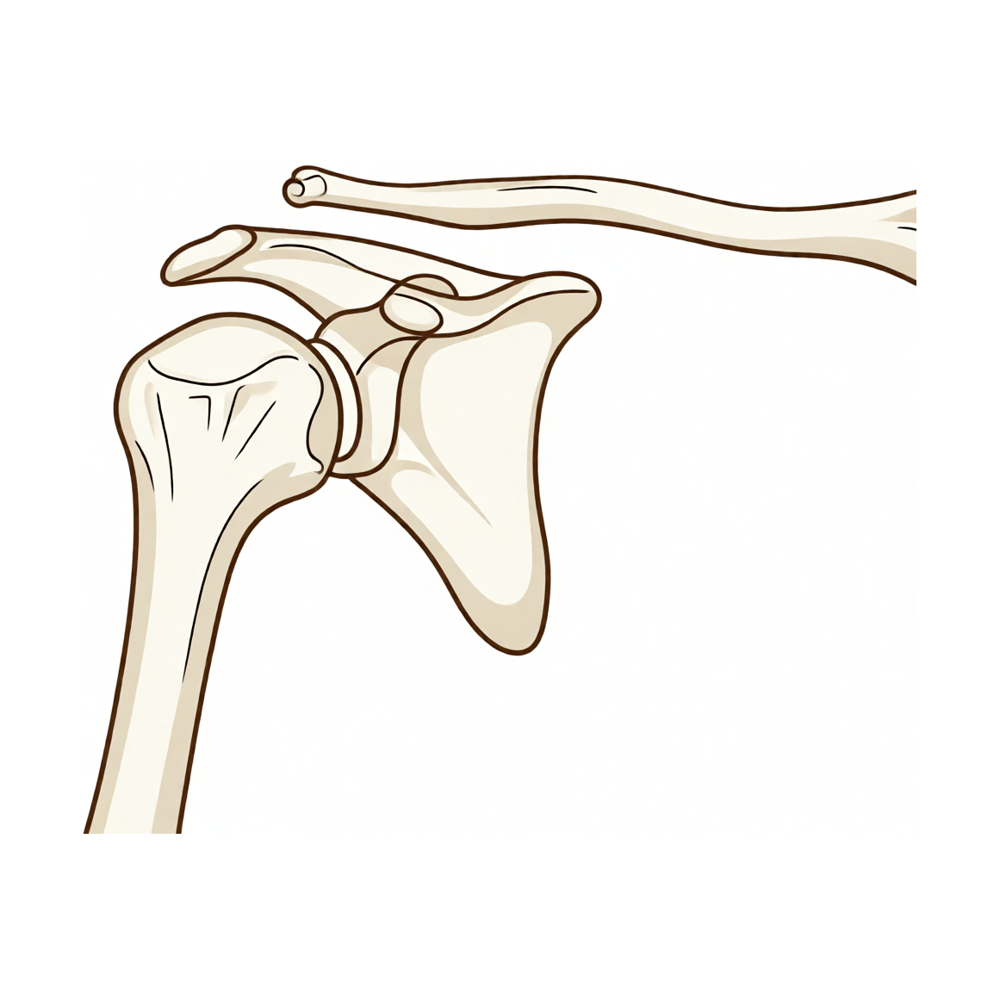
Ilustração de uma separação da articulação acromioclavicular, na qual a extremidade externa da clavícula se deslocou para cima.
Lesão da articulação acromioclavicular (separação do ombro): a extremidade externa da clavícula sobe, afastando-se da escápula. Root4(one) / Wikimedia Commons, CC BY 2.5

Esta página foi traduzida automaticamente e ainda não foi verificada por um médico. A versão em inglês é a versão oficial.

O que você está sentindo

Essa lesão quase sempre começa com uma queda diretamente sobre o topo do ombro: ao cair da bicicleta, após um choque ou contato intenso no esporte, ou até mesmo ao tropeçar numa superfície dura. Imediatamente, a parte superior do ombro fica dolorida; nas 24 a 48 horas seguintes, costuma surgir um caroço sensível ou uma elevação bem na ponta do ombro, onde a clavícula se une ao ombro.

Essa região dói ao toque e ao levantar o braço; esticar o braço para o lado do corpo ou acima da cabeça também é bastante desconfortável. Ao pressionar esse caroço, ele pode parecer elástico, como se ao pressionar a extremidade da clavícula ela voltasse à posição original, semelhante ao mecanismo de uma tecla de piano. Muitas pessoas, instintivamente, seguram o braço, pois deixá-lo pendurado aumenta a dor na articulação. É isso que se entende por “luxação do ombro”, que não é o mesmo que um ombro deslocado, em que a cabeça do úmero sai da cavidade articular.

O que realmente acontece

Na parte superior do ombro existe uma pequena articulação onde a extremidade externa da clavícula se encontra com uma ponta óssea da escápula chamada acrômio. Essa é a articulação acromioclavicular (AC). Ela é mantida unida por ligamentos: tanto os que circundam a própria articulação quanto um conjunto de ligamentos fortes um pouco mais abaixo (os ligamentos coracoclaviculares, ou CC), que funcionam como amarras que fixam a clavícula no lugar.

Quando a pessoa cai sobre o ponto do ombro, a escápula é empurrada para baixo enquanto a clavícula permanece imóvel, esticando ou rompendo esses ligamentos. Quando apenas os ligamentos da própria articulação sofrem entorse, a clavícula permanece mais ou menos no lugar. Porém, quando os ligamentos mais fortes também se rompem, a clavícula deixa de ser mantida para baixo e sobe, gerando o protuberância e o desnível visíveis.

Os cirurgiões classificam essas lesões conforme o grau de dano, utilizando a classificação de Rockwood, de I a VI. Os graus I e II correspondem a entorses com pouco ou nenhum deslocamento; o grau III fica no meio-termo, com uma protuberância perceptível, mas o ombro ainda funciona razoavelmente bem; e os graus IV a VI são lesões de alto grau, nas quais a clavícula fica muito deslocada. Vale ressaltar que esse problema é distinto de uma articulação AC desgastada e artrítica (resultante do desgaste ao longo dos anos) e de uma fratura de clavícula (ambos abordados separadamente).

O que podemos fazer a respeito

Em nossa clínica, o Dr. Kieran Hirpara trata essa lesão confirmando primeiro o diagnóstico por meio de uma avaliação minuciosa e exames de imagem.

A boa notícia é que a maioria das lesões da articulação acromioclavicular não necessita de cirurgia.

As lesões de grau leve (graus I, II e a maioria do grau III) são tratadas de forma simples. Um tala para conforto, usada por algumas semanas, retira a tensão da articulação e permite que a irritação diminua. Assim que a dor inicial cede, a fisioterapia restaura os movimentos e fortalece os músculos ao redor da escápula e do ombro. Em geral, os pacientes recuperam uma boa, muitas vezes total, funcionalidade e retornam ao trabalho e às atividades esportivas. O único ponto a ser considerado é estético: mesmo após a cicatrização completa, o “calombo” na parte superior do ombro costuma permanecer para sempre. Ele tem aparência diferente do lado oposto, mas geralmente não impede o bom funcionamento do ombro.

A cirurgia é indicada apenas para as lesões que realmente precisam dela. Ou seja, para as lesões de grau elevado (graus IV, V e VI), nas quais a clavícula fica gravemente deslocada, e também para um pequeno grupo de lesões de grau menor que continuam causando dor, fraqueza ou instabilidade mesmo após reabilitação adequada — especialmente em pessoas que realizam trabalhos manuais pesados ou atividades acima da cabeça, bem como em atletas de alto nível. A operação reconstrói os ligamentos rompidos, recolocando a clavícula em sua posição correta e mantendo-a ali até a cicatrização. Discutimos esse procedimento separadamente na seção sobre estabilização da articulação acromioclavicular.

O que esperar

Na grande maioria dos casos de lesões de grau leve, o prognóstico é animador. A dor aguda desaparece em poucas semanas e, com fisioterapia, o ombro recupera gradualmente a força e a amplitude de movimento. A maioria dos pacientes volta às suas atividades normais e ao esporte, aceitando que o calombo pode ser um lembrete permanente da lesão, sem, contudo, limitar a funcionalidade do ombro. Até mesmo algumas lesões de grau III, que à primeira vista parecem graves, evoluem bem sem necessidade de cirurgia.

As lesões que demandam mais tempo para recuperação são as de grau elevado, bem como as de grau leve que simplesmente não melhoram. Nesses casos, a questão é se a reconstrução cirúrgica proporcionará um ombro mais estável, mais forte e menos doloroso para suportar as exigências do dia a dia. A resposta depende muito do seu trabalho, do seu esporte e de como o ombro se comporta nas primeiras semanas após a lesão. Existem evidências sólidas de que essa decisão deve ser tomada sem pressa, dando ao ombro uma chance de recuperação antes de optar pela cirurgia, mas sem deixar uma lesão de grau elevado e claramente instável sem tratamento por tempo indeterminado.

Quando procurar um especialista

  • Queda sobre a ponta do ombro que causa dor, além de um nódulo sensível ou uma protuberância na parte superior; isso merece avaliação, tanto para determinar a gravidade da lesão quanto para descartar uma fratura da clavícula.
  • Protuberância visível e proeminente, com a sensação de que o braço está sendo puxado para baixo: isso indica uma lesão de maior gravidade que requer avaliação adequada.
  • Dor ou fraqueza que não melhoram após algumas semanas de uso de tipoia e fisioterapia, especialmente se você realiza trabalhos pesados, movimentos acima da cabeça ou pratica esportes.
  • Pele sob tensão sobre a protuberância, alteração na cor da pele nessa área, ou qualquer sensação de que o osso está pressionando intensamente a pele: procure atendimento o quanto antes.

Em maior profundidade

Advanced reading: the deeper science (optional)

Esta seção vai além do que você precisa saber para tomar suas próprias decisões de tratamento. Uma lesão na articulação acromioclavicular merece essa leitura adicional devido a uma discrepância que está no cerne de todas as decisões a respeito dela: a cirurgia corrige de forma confiável o que os raios X mostram, mas não altera, de maneira confiável, o funcionamento do ombro no final.

A cirurgia corrige a aparência, não o resultado funcional

As separações de alto grau parecem alarmantes em exames de imagem: a clavícula fica visivelmente deslocada em relação à escápula, e é intuitivo pensar que recolocá-la no lugar seria benéfico. Contudo, ao analisar 954 pacientes com luxações agudas de alto grau, não houve diferença clínica nos escores de desfecho funcional entre o tratamento cirúrgico e o não cirúrgico. As diferenças observadas foram em ambas as direções: o grupo que não foi operado retornou ao trabalho mais rapidamente, porém aceitou um resultado estético inferior; já a cirurgia proporcionou melhor redução radiográfica [1].

Ao restringir a análise ao tipo III de Rockwood – o grau em que o debate clínico é realmente relevante –, uma revisão de 397 pacientes realizada em 2025 não encontrou diferença significativa na função objetiva ou relatada pelos pacientes; a cirurgia melhorou a redução articular, mas aumentou o risco de complicações cirúrgicas [2]. Outra revisão anterior, envolvendo 646 ombros, chegou à mesma conclusão por outro caminho: não houve diferença significativa quanto ao desenvolvimento de artrose ou dor persistente, e a taxa de recorrência foi de 14% no grupo operado [3].

Três conjuntos independentes de evidências, uma única conclusão: a deformidade existe e é permanente sem cirurgia; contudo, sua correção não altera de forma mensurável a funcionalidade do ombro.

Portanto, a decisão diz respeito ao “calombo”, não à função

Essa redefinição é o valor prático das evidências científicas. Se a pergunta for “a cirurgia fará com que meu ombro funcione melhor?”, a resposta honesta é que isso ainda não foi comprovado. Se a pergunta for “a cirurgia eliminará o desnível na minha clavícula?”, a resposta geralmente é sim; para algumas pessoas, em determinadas profissões e esportes, isso por si só já é motivo suficiente para a cirurgia.

É um motivo legítimo para se operar. Trata-se simplesmente de um motivo diferente daquele que a maioria das pessoas supõe ser o motivo da indicação cirúrgica.

Nenhuma técnica se destacou, e uma delas apresentou piores resultados

Uma vez tomada a decisão cirúrgica, a escolha do método de fixação recebe grande atenção, porém sem diferenças significativas entre as opções. Em 939 pacientes, os resultados subjetivos após o tratamento cirúrgico foram comparáveis entre todas as modalidades; contudo, a fixação com placa em gancho e com fios de K apresentaram as maiores taxas de complicações, enquanto a técnica modificada de Weaver-Dunn teve a maior taxa de reoperações não planejadas [4]. Ao comparar as duas técnicas mais utilizadas atualmente em 399 pacientes, o uso de botões de sutura gerou melhores escores funcionais e menor dor em relação à placa em gancho, sem diferenças significativas no tempo cirúrgico, nas complicações ou na perda de redução [5].

Estudos de reconstrução corroboram esse cenário. Em 4.473 pacientes, as reconstruções biológicas e sintéticas produziram escores funcionais superiores à osteossíntese [6]; em 1.020 pacientes, as reconstruções anatômicas tiveram melhor desempenho, sendo que as abordagens artroscópicas superaram as abertas [7].

O padrão observado é que as reconstruções anatômicas modernas apresentam resultados semelhantes, enquanto os implantes rígidos mais antigos ficam atrás. Dentro do grupo moderno, as diferenças são pequenas o suficiente para que a familiaridade do cirurgião seja um critério razoável na escolha da técnica.

Um em cada cinco pacientes apresenta outra lesão dentro da articulação

Esse achado é importante, pois essas lesões não são visíveis nos exames de imagem que orientam o diagnóstico.
Ao analisar 860 pacientes submetidos a tratamento cirúrgico de luxações agudas da articulação acromioclavicular, verificou-se que aproximadamente um em cada cinco apresentava lesão intra-articular associada que exigia intervenção adicional, sendo as mais comuns as lesões do labrum ou do manguito rotador. Por esse motivo, os autores defendem a realização de artroscopia da articulação, mesmo quando a reconstrução é feita por via aberta [8].

Esse dado também explica um número considerável de casos frustrantes: o ombro que permanece dolorido após uma reconstrução tecnicamente bem-sucedida provavelmente já apresentava outra lesão desde o início.

Referências

[1] Chang N, Furey A, Kurdin A. Tratamento cirúrgico versus não cirúrgico das luxações agudas de alto grau da articulação acromioclavicular: uma revisão sistemática e meta-análise. J Orthop Trauma. 2018;32(1):1-9. https://doi.org/10.1097/BOT.0000000000001004

[2] Bianco Prevot L, Accetta R, Fozzato S, Moroder P, Basile G. Cirurgia versus tratamento conservador: qual é o melhor tratamento para a luxação aguda do tipo III da articulação acromioclavicular segundo Rockwood? EFORT Open Rev. 2025;10(3):141-50. https://doi.org/10.1530/EOR-2024-0077

[3] Longo UG, Ciuffreda M, Rizzello G, Mannering N, Maffulli N, Denaro V. Tratamento cirúrgico versus conservador da luxação do tipo III da articulação acromioclavicular: uma revisão sistemática. Br Med Bull. 2017;122(1):31-49. https://doi.org/10.1093/bmb/ldx003

[4] Moatshe G, Kruckeberg BM, Chahla J, Godin JA, Cinque ME, Provencher MT, et al. Reconstrução dos ligamentos acromioclavicular e coracoclavicular na instabilidade da articulação acromioclavicular: uma revisão sistemática dos resultados clínicos e radiográficos. Arthroscopy. 2018;34(6):1979-95. https://doi.org/10.1016/j.arthro.2018.01.016

[5] Wang C, Meng J, Zhang Y, Shi M. Botão de sutura versus placa com gancho no tratamento da luxação aguda e instável da articulação acromioclavicular: uma meta-análise. Am J Sports Med. 2019;48(4):1023-30. https://doi.org/10.1177/0363546519858745

[6] Saccomanno MF, Sircana G, Cardona V, Vismara V, Scaini A, Salvi AG, et al. As reconstruções ligamentares biológicas e sintéticas proporcionam melhores resultados funcionais em comparação com a osteossíntese no tratamento da luxação aguda da articulação acromioclavicular. Knee Surg Sports Traumatol Arthrosc. 2020;29(7):2175-93. https://doi.org/10.1007/s00167-020-06217-9

[7] Sircana G, Saccomanno MF, Mocini F, Campana V, Messinese P, Monteleone A, et al. A reconstrução anatômica da articulação acromioclavicular gera os melhores resultados funcionais no tratamento da instabilidade crônica. Knee Surg Sports Traumatol Arthrosc. 2020;29(7):2237-48. https://doi.org/10.1007/s00167-020-06059-5

[8] Ruiz Ibán MA, Moreno Romero MS, Diaz Heredia J, Ruiz Díaz R, Muriel A, López-Alcalde J. A prevalência de lesões intra-articulares associadas após lesões agudas da articulação acromioclavicular é de 20%. Uma revisão sistemática e meta-análise. Knee Surg Sports Traumatol Arthrosc. 2020;29(7):2024-38. https://doi.org/10.1007/s00167-020-05917-6


Creative Commons BY-NC 4.0

CC Creative Commons licence
BY Attribution — you must credit the source
NC NonCommercial — not for commercial use

Attribution-NonCommercial 4.0 International


Creative Commons Corporation ("Creative Commons") is not a law firm and does not provide legal services or legal advice. Distribution of Creative Commons public licenses does not create a lawyer-client or other relationship. Creative Commons makes its licenses and related information available on an "as-is" basis. Creative Commons gives no warranties regarding its licenses, any material licensed under their terms and conditions, or any related information. Creative Commons disclaims all liability for damages resulting from their use to the fullest extent possible.

Using Creative Commons Public Licenses

Creative Commons public licenses provide a standard set of terms and conditions that creators and other rights holders may use to share original works of authorship and other material subject to copyright and certain other rights specified in the public license below. The following considerations are for informational purposes only, are not exhaustive, and do not form part of our licenses.

Considerations for licensors: Our public licenses are intended for use by those authorized to give the public permission to use material in ways otherwise restricted by copyright and certain other rights. Our licenses are irrevocable. Licensors should read and understand the terms and conditions of the license they choose before applying it. Licensors should also secure all rights necessary before applying our licenses so that the public can reuse the material as expected. Licensors should clearly mark any material not subject to the license. This includes other CC- licensed material, or material used under an exception or limitation to copyright. More considerations for licensors: wiki.creativecommons.org/Considerations_for_licensors

Considerations for the public: By using one of our public licenses, a licensor grants the public permission to use the licensed material under specified terms and conditions. If the licensor's permission is not necessary for any reason--for example, because of any applicable exception or limitation to copyright--then that use is not regulated by the license. Our licenses grant only permissions under copyright and certain other rights that a licensor has authority to grant. Use of the licensed material may still be restricted for other reasons, including because others have copyright or other rights in the material. A licensor may make special requests, such as asking that all changes be marked or described. Although not required by our licenses, you are encouraged to respect those requests where reasonable. More considerations for the public: wiki.creativecommons.org/Considerations_for_licensees


Creative Commons Attribution-NonCommercial 4.0 International Public License

By exercising the Licensed Rights (defined below), You accept and agree to be bound by the terms and conditions of this Creative Commons Attribution-NonCommercial 4.0 International Public License ("Public License"). To the extent this Public License may be interpreted as a contract, You are granted the Licensed Rights in consideration of Your acceptance of these terms and conditions, and the Licensor grants You such rights in consideration of benefits the Licensor receives from making the Licensed Material available under these terms and conditions.

Section 1 -- Definitions.

a. Adapted Material means material subject to Copyright and Similar Rights that is derived from or based upon the Licensed Material and in which the Licensed Material is translated, altered, arranged, transformed, or otherwise modified in a manner requiring permission under the Copyright and Similar Rights held by the Licensor. For purposes of this Public License, where the Licensed Material is a musical work, performance, or sound recording, Adapted Material is always produced where the Licensed Material is synched in timed relation with a moving image.

b. Adapter's License means the license You apply to Your Copyright and Similar Rights in Your contributions to Adapted Material in accordance with the terms and conditions of this Public License.

c. Copyright and Similar Rights means copyright and/or similar rights closely related to copyright including, without limitation, performance, broadcast, sound recording, and Sui Generis Database Rights, without regard to how the rights are labeled or categorized. For purposes of this Public License, the rights specified in Section 2(b)(1)-(2) are not Copyright and Similar Rights.

d. Effective Technological Measures means those measures that, in the absence of proper authority, may not be circumvented under laws fulfilling obligations under Article 11 of the WIPO Copyright Treaty adopted on December 20, 1996, and/or similar international agreements.

e. Exceptions and Limitations means fair use, fair dealing, and/or any other exception or limitation to Copyright and Similar Rights that applies to Your use of the Licensed Material.

f. Licensed Material means the artistic or literary work, database, or other material to which the Licensor applied this Public License.

g. Licensed Rights means the rights granted to You subject to the terms and conditions of this Public License, which are limited to all Copyright and Similar Rights that apply to Your use of the Licensed Material and that the Licensor has authority to license.

h. Licensor means the individual(s) or entity(ies) granting rights under this Public License.

i. NonCommercial means not primarily intended for or directed towards commercial advantage or monetary compensation. For purposes of this Public License, the exchange of the Licensed Material for other material subject to Copyright and Similar Rights by digital file-sharing or similar means is NonCommercial provided there is no payment of monetary compensation in connection with the exchange.

j. Share means to provide material to the public by any means or process that requires permission under the Licensed Rights, such as reproduction, public display, public performance, distribution, dissemination, communication, or importation, and to make material available to the public including in ways that members of the public may access the material from a place and at a time individually chosen by them.

k. Sui Generis Database Rights means rights other than copyright resulting from Directive 96/9/EC of the European Parliament and of the Council of 11 March 1996 on the legal protection of databases, as amended and/or succeeded, as well as other essentially equivalent rights anywhere in the world.

l. You means the individual or entity exercising the Licensed Rights under this Public License. Your has a corresponding meaning.

Section 2 -- Scope.

a. License grant.

1. Subject to the terms and conditions of this Public License, the Licensor hereby grants You a worldwide, royalty-free, non-sublicensable, non-exclusive, irrevocable license to exercise the Licensed Rights in the Licensed Material to:

a. reproduce and Share the Licensed Material, in whole or in part, for NonCommercial purposes only; and

b. produce, reproduce, and Share Adapted Material for NonCommercial purposes only.

2. Exceptions and Limitations. For the avoidance of doubt, where Exceptions and Limitations apply to Your use, this Public License does not apply, and You do not need to comply with its terms and conditions.

3. Term. The term of this Public License is specified in Section 6(a).

4. Media and formats; technical modifications allowed. The Licensor authorizes You to exercise the Licensed Rights in all media and formats whether now known or hereafter created, and to make technical modifications necessary to do so. The Licensor waives and/or agrees not to assert any right or authority to forbid You from making technical modifications necessary to exercise the Licensed Rights, including technical modifications necessary to circumvent Effective Technological Measures. For purposes of this Public License, simply making modifications authorized by this Section 2(a) (4) never produces Adapted Material.

5. Downstream recipients.

a. Offer from the Licensor -- Licensed Material. Every recipient of the Licensed Material automatically receives an offer from the Licensor to exercise the Licensed Rights under the terms and conditions of this Public License.

b. No downstream restrictions. You may not offer or impose any additional or different terms or conditions on, or apply any Effective Technological Measures to, the Licensed Material if doing so restricts exercise of the Licensed Rights by any recipient of the Licensed Material.

6. No endorsement. Nothing in this Public License constitutes or may be construed as permission to assert or imply that You are, or that Your use of the Licensed Material is, connected with, or sponsored, endorsed, or granted official status by, the Licensor or others designated to receive attribution as provided in Section 3(a)(1)(A)(i).

b. Other rights.

1. Moral rights, such as the right of integrity, are not licensed under this Public License, nor are publicity, privacy, and/or other similar personality rights; however, to the extent possible, the Licensor waives and/or agrees not to assert any such rights held by the Licensor to the limited extent necessary to allow You to exercise the Licensed Rights, but not otherwise.

2. Patent and trademark rights are not licensed under this Public License.

3. To the extent possible, the Licensor waives any right to collect royalties from You for the exercise of the Licensed Rights, whether directly or through a collecting society under any voluntary or waivable statutory or compulsory licensing scheme. In all other cases the Licensor expressly reserves any right to collect such royalties, including when the Licensed Material is used other than for NonCommercial purposes.

Section 3 -- License Conditions.

Your exercise of the Licensed Rights is expressly made subject to the following conditions.

a. Attribution.

1. If You Share the Licensed Material (including in modified form), You must:

a. retain the following if it is supplied by the Licensor with the Licensed Material:

i. identification of the creator(s) of the Licensed Material and any others designated to receive attribution, in any reasonable manner requested by the Licensor (including by pseudonym if designated);

ii. a copyright notice;

iii. a notice that refers to this Public License;

iv. a notice that refers to the disclaimer of warranties;

v. a URI or hyperlink to the Licensed Material to the extent reasonably practicable;

b. indicate if You modified the Licensed Material and retain an indication of any previous modifications; and

c. indicate the Licensed Material is licensed under this Public License, and include the text of, or the URI or hyperlink to, this Public License.

2. You may satisfy the conditions in Section 3(a)(1) in any reasonable manner based on the medium, means, and context in which You Share the Licensed Material. For example, it may be reasonable to satisfy the conditions by providing a URI or hyperlink to a resource that includes the required information.

3. If requested by the Licensor, You must remove any of the information required by Section 3(a)(1)(A) to the extent reasonably practicable.

4. If You Share Adapted Material You produce, the Adapter's License You apply must not prevent recipients of the Adapted Material from complying with this Public License.

Section 4 -- Sui Generis Database Rights.

Where the Licensed Rights include Sui Generis Database Rights that apply to Your use of the Licensed Material:

a. for the avoidance of doubt, Section 2(a)(1) grants You the right to extract, reuse, reproduce, and Share all or a substantial portion of the contents of the database for NonCommercial purposes only;

b. if You include all or a substantial portion of the database contents in a database in which You have Sui Generis Database Rights, then the database in which You have Sui Generis Database Rights (but not its individual contents) is Adapted Material; and

c. You must comply with the conditions in Section 3(a) if You Share all or a substantial portion of the contents of the database.

For the avoidance of doubt, this Section 4 supplements and does not replace Your obligations under this Public License where the Licensed Rights include other Copyright and Similar Rights.

Section 5 -- Disclaimer of Warranties and Limitation of Liability.

a. UNLESS OTHERWISE SEPARATELY UNDERTAKEN BY THE LICENSOR, TO THE EXTENT POSSIBLE, THE LICENSOR OFFERS THE LICENSED MATERIAL AS-IS AND AS-AVAILABLE, AND MAKES NO REPRESENTATIONS OR WARRANTIES OF ANY KIND CONCERNING THE LICENSED MATERIAL, WHETHER EXPRESS, IMPLIED, STATUTORY, OR OTHER. THIS INCLUDES, WITHOUT LIMITATION, WARRANTIES OF TITLE, MERCHANTABILITY, FITNESS FOR A PARTICULAR PURPOSE, NON-INFRINGEMENT, ABSENCE OF LATENT OR OTHER DEFECTS, ACCURACY, OR THE PRESENCE OR ABSENCE OF ERRORS, WHETHER OR NOT KNOWN OR DISCOVERABLE. WHERE DISCLAIMERS OF WARRANTIES ARE NOT ALLOWED IN FULL OR IN PART, THIS DISCLAIMER MAY NOT APPLY TO YOU.

b. TO THE EXTENT POSSIBLE, IN NO EVENT WILL THE LICENSOR BE LIABLE TO YOU ON ANY LEGAL THEORY (INCLUDING, WITHOUT LIMITATION, NEGLIGENCE) OR OTHERWISE FOR ANY DIRECT, SPECIAL, INDIRECT, INCIDENTAL, CONSEQUENTIAL, PUNITIVE, EXEMPLARY, OR OTHER LOSSES, COSTS, EXPENSES, OR DAMAGES ARISING OUT OF THIS PUBLIC LICENSE OR USE OF THE LICENSED MATERIAL, EVEN IF THE LICENSOR HAS BEEN ADVISED OF THE POSSIBILITY OF SUCH LOSSES, COSTS, EXPENSES, OR DAMAGES. WHERE A LIMITATION OF LIABILITY IS NOT ALLOWED IN FULL OR IN PART, THIS LIMITATION MAY NOT APPLY TO YOU.

c. The disclaimer of warranties and limitation of liability provided above shall be interpreted in a manner that, to the extent possible, most closely approximates an absolute disclaimer and waiver of all liability.

Section 6 -- Term and Termination.

a. This Public License applies for the term of the Copyright and Similar Rights licensed here. However, if You fail to comply with this Public License, then Your rights under this Public License terminate automatically.

b. Where Your right to use the Licensed Material has terminated under Section 6(a), it reinstates:

1. automatically as of the date the violation is cured, provided it is cured within 30 days of Your discovery of the violation; or

2. upon express reinstatement by the Licensor.

For the avoidance of doubt, this Section 6(b) does not affect any right the Licensor may have to seek remedies for Your violations of this Public License.

c. For the avoidance of doubt, the Licensor may also offer the Licensed Material under separate terms or conditions or stop distributing the Licensed Material at any time; however, doing so will not terminate this Public License.

d. Sections 1, 5, 6, 7, and 8 survive termination of this Public License.

Section 7 -- Other Terms and Conditions.

a. The Licensor shall not be bound by any additional or different terms or conditions communicated by You unless expressly agreed.

b. Any arrangements, understandings, or agreements regarding the Licensed Material not stated herein are separate from and independent of the terms and conditions of this Public License.

Section 8 -- Interpretation.

a. For the avoidance of doubt, this Public License does not, and shall not be interpreted to, reduce, limit, restrict, or impose conditions on any use of the Licensed Material that could lawfully be made without permission under this Public License.

b. To the extent possible, if any provision of this Public License is deemed unenforceable, it shall be automatically reformed to the minimum extent necessary to make it enforceable. If the provision cannot be reformed, it shall be severed from this Public License without affecting the enforceability of the remaining terms and conditions.

c. No term or condition of this Public License will be waived and no failure to comply consented to unless expressly agreed to by the Licensor.

d. Nothing in this Public License constitutes or may be interpreted as a limitation upon, or waiver of, any privileges and immunities that apply to the Licensor or You, including from the legal processes of any jurisdiction or authority.


Creative Commons is not a party to its public licenses. Notwithstanding, Creative Commons may elect to apply one of its public licenses to material it publishes and in those instances will be considered the “Licensor.” The text of the Creative Commons public licenses is dedicated to the public domain under the CC0 Public Domain Dedication. Except for the limited purpose of indicating that material is shared under a Creative Commons public license or as otherwise permitted by the Creative Commons policies published at creativecommons.org/policies, Creative Commons does not authorize the use of the trademark "Creative Commons" or any other trademark or logo of Creative Commons without its prior written consent including, without limitation, in connection with any unauthorized modifications to any of its public licenses or any other arrangements, understandings, or agreements concerning use of licensed material. For the avoidance of doubt, this paragraph does not form part of the public licenses.

Creative Commons may be contacted at creativecommons.org.