Patients › Rehabilitation
Liberação de Contratura de Dupuytren
Rehabilitation after Dupuytren's fasciectomy — the extension splint regime and exercise program, with hand-therapist follow-up.
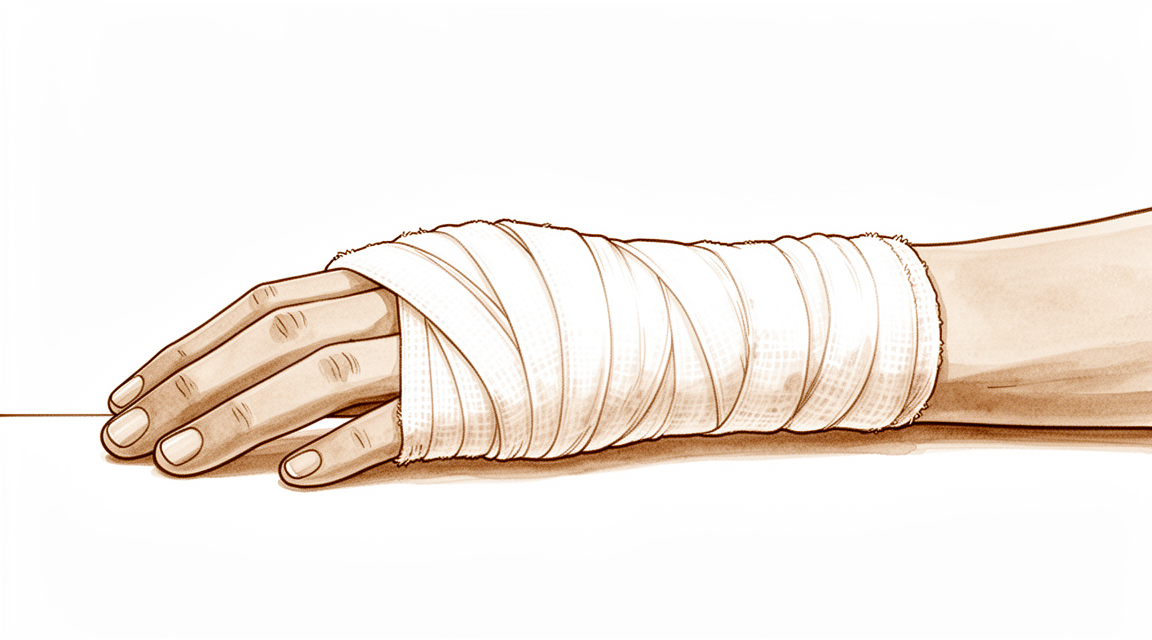
Este protocolo orienta sua recuperação após a liberação cirúrgica da contratura de Dupuytren (fasciectomia) realizada pelo Dr. Kieran Hirpara no Mater Private Hospital Rockhampton. Os dois pilares para um bom resultado são a tala, que mantém os dedos esticados enquanto tudo cicatriza, e o programa de exercícios, que garante a movimentação dos dedos. Leve esta página ou seu PDF ao seu terapeuta da mão para que a reabilitação seja coordenada de forma adequada.
Caso tenha alguma dúvida ou preocupação quanto à ferida pós-operatória, entre em contato com o consultório. Geralmente, é útil tirar uma foto da ferida e enviá-la por e-mail para análise.
O que esperar¶
A cirurgia para a doença de Dupuytren visa remover as bandas de tecido doentes que puxavam os dedos em direção à palma da mão, restaurando assim a capacidade de esticá-los. A própria condição é explicada na página Doença de Dupuytren; não existe cura definitiva, e o objetivo da cirurgia é excisar o tecido doente e restaurar a extensão dos dedos.
Geralmente, você será encaminhado a um terapeuta da mão 2–3 dias após a cirurgia. O terapeuta confeccionará uma tala de plástico personalizada para manter os dedos operados numa posição esticada (reta), além de iniciar o programa de exercícios suaves descrito abaixo. A tala e os exercícios atuam em conjunto: a tala preserva a posição reta obtida com a cirurgia, enquanto os exercícios evitam que os dedos fiquem rígidos ao impedir que se dobrem excessivamente.
Mantenha o ferimento limpo e seco até a retirada dos pontos. Após a remoção dos pontos, a pele pode ser molhada, porém evite submergir a mão na água por mais uma semana. A página Cuidados com o ferimento do consultório descreve detalhadamente os curativos, os sinais de infecção e os cuidados com as cicatrizes. A massagem nas cicatrizes é importante após a cirurgia de Dupuytren; seu terapeuta orientará como proceder assim que o ferimento estiver curado.
Cuidados com a sua cicatriz¶
Nas primeiras semanas após a cirurgia de Dupuytren, a cicatriz na palma da mão costuma ficar firme, elevada e sensível; com o passar dos meses, ela gradualmente amolece e desbota. A massagem da cicatriz é uma prática rotineira na terapia de mão na Austrália: em uma pesquisa nacional com terapeutas de mão credenciados, quase todos a utilizavam após cirurgias na mão (geralmente a partir do momento da retirada dos pontos, quando a ferida já está totalmente cicatrizada) para amolecer a cicatriz, melhorar o deslizamento da pele sobre os tecidos subjacentes e reduzir a sensibilidade da área cicatricial; normalmente essa massagem é associada ao uso de gel ou folhas de silicone, em vez de ser aplicada isoladamente [6]. As evidências científicas acerca da massagem da cicatriz ainda estão em desenvolvimento, mas indicam que ela ajuda a diminuir o desconforto relacionado à cicatriz e a melhorar a mobilidade [6]. O seu terapeuta lhe ensinará a técnica e poderá recomendar o uso de produtos à base de silicone, que geralmente são utilizados à noite, juntamente com a tala.
Recuperação, retorno ao trabalho e perspectivas a longo prazo¶
O inchaço e a rigidez são normais nas primeiras semanas e desaparecem à medida que a mão é utilizada; o conforto, a amplitude de movimento e a força de preensão geralmente melhoram ao longo de vários meses. Manter a mão elevada e movimentá-la suavemente nessas primeiras semanas ajuda a reduzir o inchaço e evita o endurecimento das pequenas articulações. A retificação obtida na cirurgia costuma ser bem mantida durante esse período. Em um estudo randomizado sobre reabilitação após liberação de contratura de Dupuytren, a maioria dos dedos operados manteve ou melhorou sua extensão durante os três primeiros meses de terapia manual [2].
O tempo necessário para retornar ao trabalho depende da natureza das atividades que exijam o uso das mãos. Em um estudo com mais de 2.500 pacientes tratados para doença de Dupuytren, o tempo médio para retorno ao trabalho após fasciectomia aberta foi de cerca de duas semanas; cerca de 90% das pessoas voltaram ao trabalho dentro de um ano; já os trabalhos fisicamente exigentes demandaram mais tempo [4]. O Dr. Hirpara discutirá o prazo adequado para o seu caso específico na consulta de acompanhamento; os trabalhos manuais mais pesados geralmente são retomados somente após a cicatrização completa da ferida e quando a preensão já for confortável.
Como a doença de Dupuytren é uma condição crônica, alguma rigidez pode reaparecer ao longo dos anos; as taxas de recorrência relatadas variam bastante entre estudos, dependendo da definição adotada para recorrência. No entanto, o prognóstico a longo prazo é geralmente favorável: em um acompanhamento de 142 casos de fasciectomia, ao longo de aproximadamente quatro anos e utilizando a definição consensual moderna, a recorrência verdadeira da contratura ocorreu em cerca de 3–4% das mãos; ainda assim, cerca de um terço dos pacientes manteve alguma curvatura residual, geralmente leve e muito inferior à contratura corrigida na cirurgia [5]. A órtese, os cuidados com a cicatriz e o programa de exercícios visam proteger o resultado obtido; caso algum dedo volte a ficar rígido, por favor, avise a equipe.
Sua tala¶
- Primeira semana aproximadamente: use a tala dia e noite, removendo-a apenas para fazer os exercícios (e para lavar a mão, quando permitido).
- Após a primeira semana: a maioria das pessoas passa a usar a tala apenas à noite e pode começar a utilizar a mão em atividades leves durante o dia.
- O uso noturno da tala deve ser mantido por cerca de 3 meses (e, em alguns casos, até 6 meses) para evitar que os dedos voltem a se curvar em direção à palma da mão, enquanto os tecidos se recuperam.
- Seu fisioterapeuta especializado em mão e o Dr. Hirpara lhe orientarão especificamente sobre o cronograma de uso da tala e as atividades permitidas. Os prazos acima representam o padrão comum, mas não são regras fixas.
Você não deve dirigir enquanto a mão estiver na tala. Após passar a usar a tala apenas à noite, poderá voltar a dirigir durante o dia, desde que se sinta confortável e consiga segurar o volante com segurança.
Para o seu fisioterapeuta / terapeuta da mão:
Manejo
- Encaminhamento 2–3 dias após a cirurgia para confecção de uma tala de extensão termoplástica.
- Esquema de uso da tala: dia e noite durante aproximadamente a primeira semana (retirada para exercícios), depois apenas à noite, permitindo atividades leves durante o dia; o uso noturno da tala deve ser mantido por cerca de 3 meses (podendo chegar a 6 meses, conforme avaliação do cirurgião/terapeuta).
- Programa de exercícios domiciliares conforme os cartões abaixo: extensão ativa, flexão bloqueada da articulação DIP, flexão das articulações DIP/PIP sobre uma caneta, flexão composta e tenodese do punho.
- Cuidados com a ferida seguindo as orientações da clínica; manejo da cicatriz após a cicatrização completa.
- O número de repetições e a frequência diária serão definidos pelo terapeuta responsável.
Precauções
- Mantenha a ferida limpa e seca até a retirada dos pontos; evite imersão ou molhar a mão por mais uma semana após esse período.
- O cumprimento rigoroso do uso da tala é essencial para manter a extensão obtida na cirurgia.
- Não dirija enquanto a mão estiver na tala.
Estes são os exercícios descritos no seu folheto, iniciados com o acompanhamento do terapeuta e continuados em casa.
Seus exercícios¶
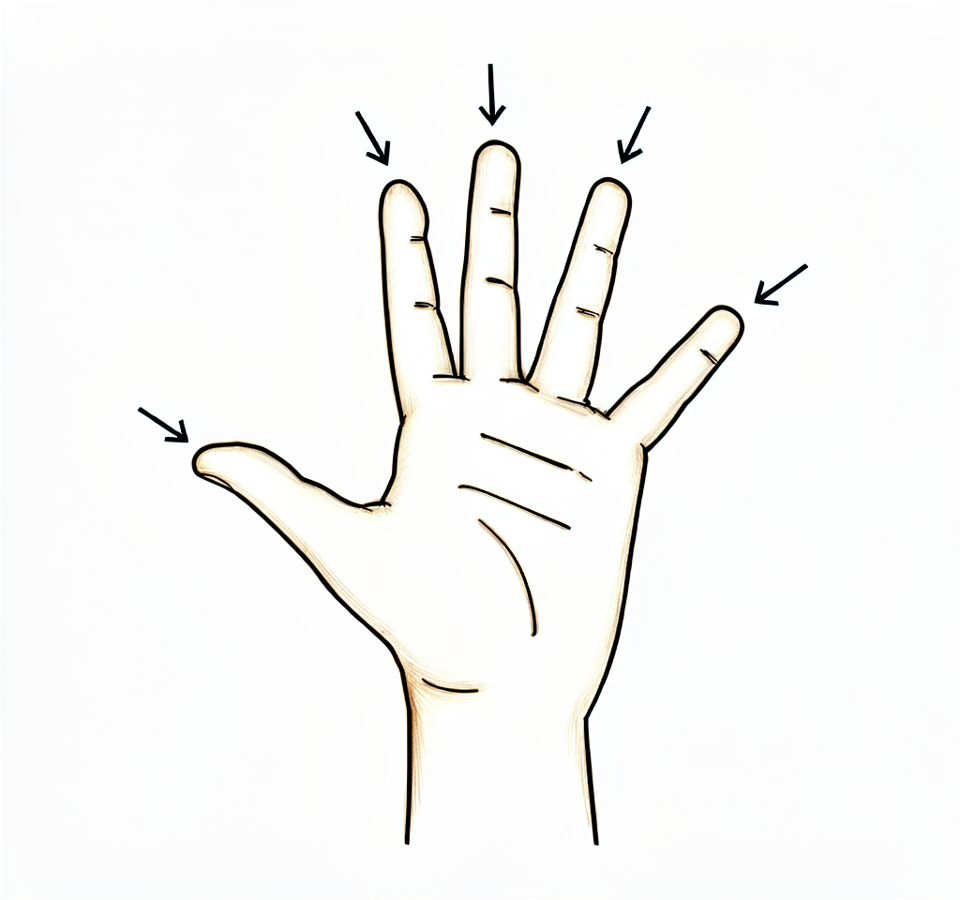
Kieran Hirpara 4.0
Extensão ativa
Com o pulso reto, estique e abra os dedos o máximo que puder. Você pode ajudar suavemente com a outra mão. Relaxe e repita.
Conforme prescrito pelo seu terapeuta da mão.
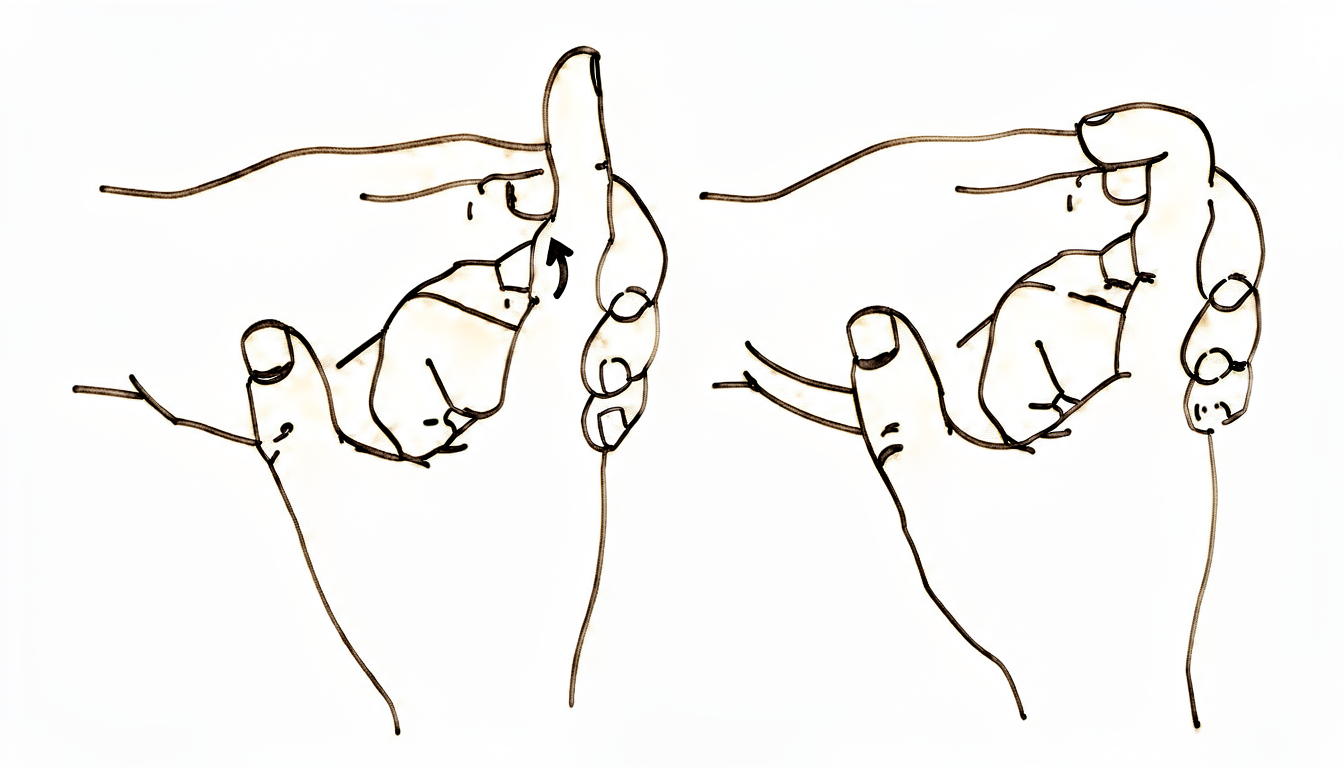
Kieran Hirpara 4.0
Flexão ativa da falange distal
Segure o dedo logo abaixo da dobra da articulação distal (DIP) com a outra mão. Flexione a articulação distal com firmeza e, em seguida, relaxe.
Conforme prescrito pelo seu terapeuta da mão.
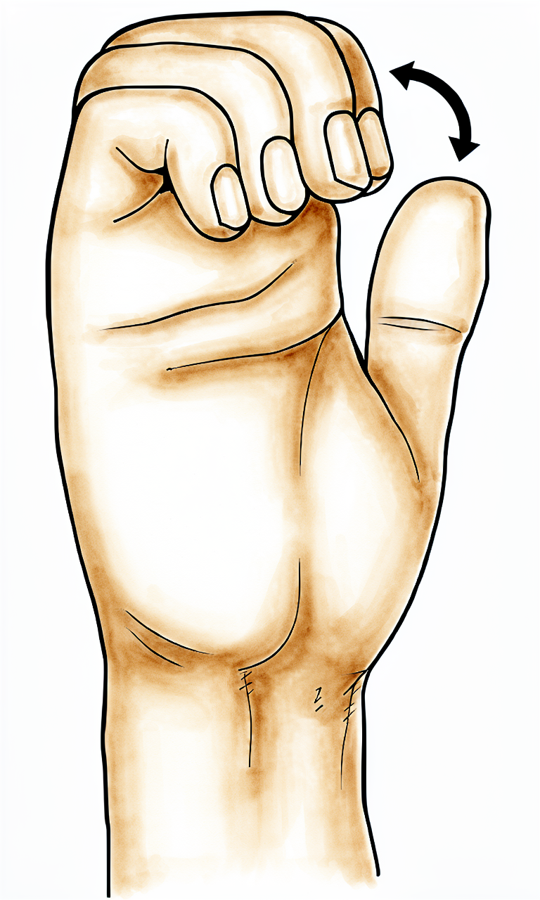
Kieran Hirpara 4.0
Flexão ativa das articulações DIP/PIP
Coloque uma caneta na base dos seus dedos. Enrole os dedos ao redor da caneta de modo que ambas as articulações (a média e a distal) se dobrem, e depois relaxe.
Conforme prescrito pelo seu terapeuta de mão.
Kieran Hirpara 4.0
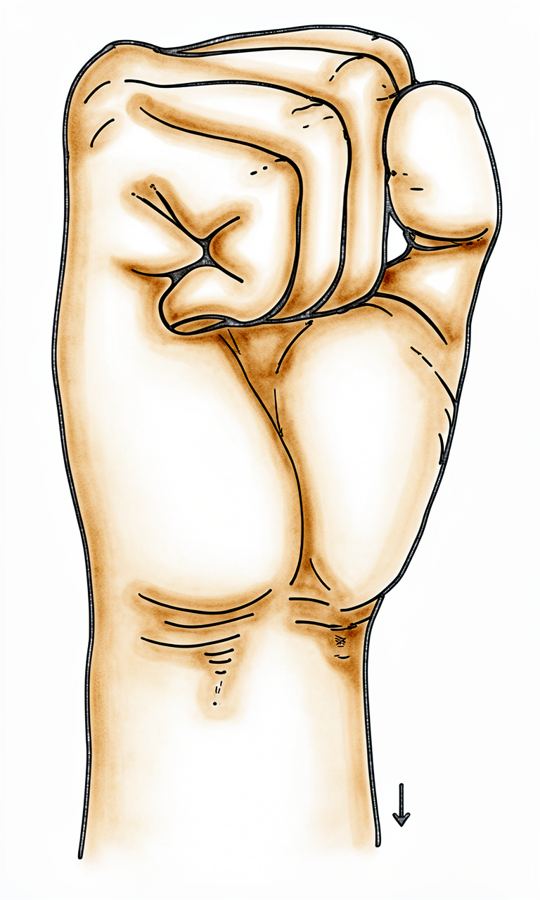
Flexão composta
Faça um punho frouxo, com cuidado, e depois relaxe para que os dedos se estendam novamente.
Conforme prescrito pelo seu terapeuta de mão.
Kieran Hirpara 4.0
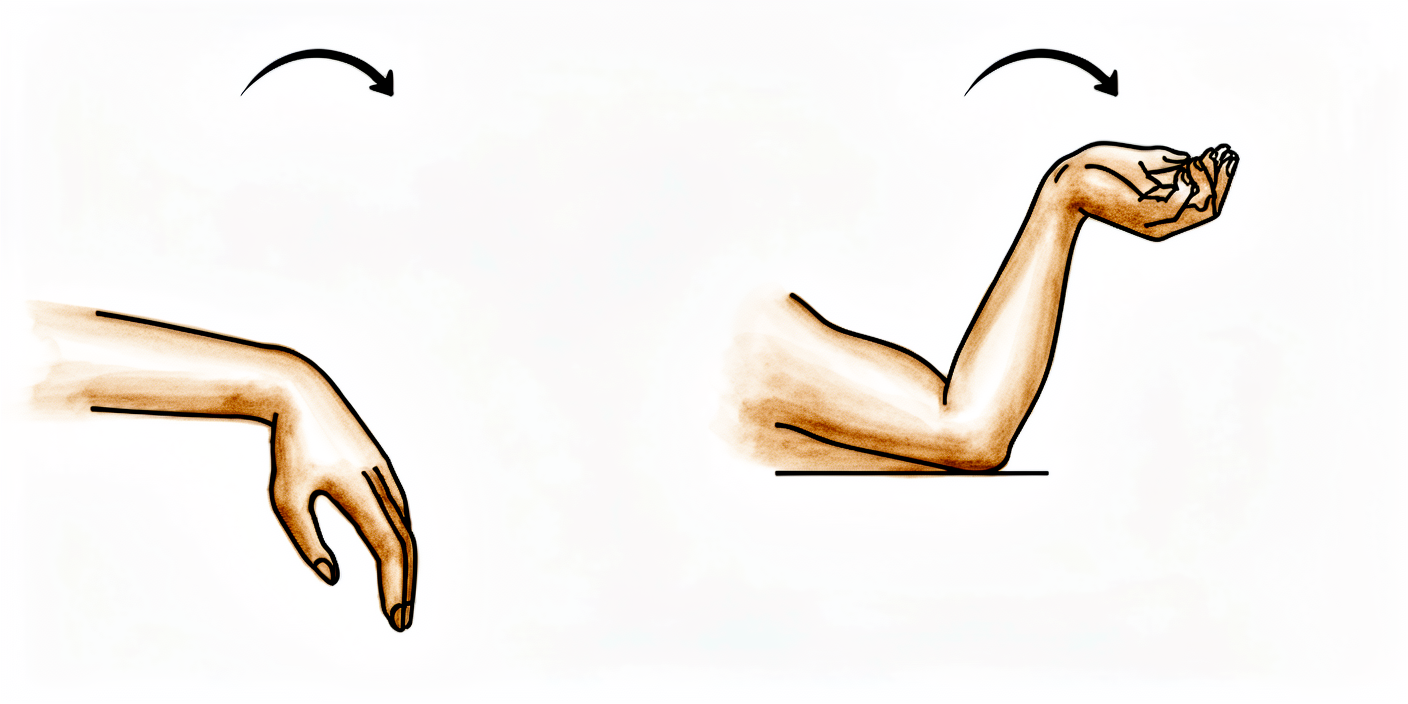
Tenodese do punho
Apoiando o cotovelo, com os dedos relaxados, dobre o pulso para a frente e depois para trás, permitindo que os dedos se movam naturalmente.
Conforme prescrito pelo seu terapeuta da mão.
Comece a realizar os exercícios abaixo somente sob orientação do Dr. Hirpara e do seu terapeuta ocupacional, respeitando os limites e a amplitude de movimento que lhe foram indicados. O objetivo principal desta cirurgia é a extensão dos dedos; portanto, a extensão ativa é o exercício prioritário — se você deixar os dedos livres, eles tenderão a voltar à posição flexionada, e a amplitude que você mantiver será a que utilizará no dia a dia. Os exercícios de flexão (flexão da falange distal, flexão da falange distal e proximal e flexão composta) também são importantes, pois um dedo que só se estende não é mais útil do que um que só se flexiona. A tenodese do punho conecta esses dois movimentos. Use a tala noturna conforme orientado. Interrompa qualquer exercício que cause dor aguda e informe ao seu terapeuta caso algum dedo comece a perder a capacidade de extensão.
Após seguir o protocolo¶
Este protocolo foi elaborado em colaboração com Ruby Doolan, Terapeuta de Mão Credenciada da Extend Rehabilitation. Ele complementa as orientações gerais de recuperação fornecidas pelo consultório: consulte controle da dor pós-operatória, cuidados com a ferida e noções básicas sobre terapia de mão. Quanto à própria cirurgia, veja fasciectomia para doença de Dupuytren.
As expectativas de recuperação, os dados sobre retorno ao trabalho e as orientações para cuidados com as cicatrizes mencionados acima foram extraídos de ensaios clínicos publicados, revisões e pesquisas sobre reabilitação após cirurgia de Dupuytren, incluindo ensaios randomizados e uma revisão sistemática sobre o uso de talas e terapia de mão após fasciectomia [1–3]. O regime de uso de talas e o programa de exercícios são propostos pelo próprio consultório, acordados entre o Dr. Hirpara e seu terapeuta de mão; o cronograma de uso das talas é personalizado em cada avaliação.
Referências¶
[1] Jerosch-Herold C, Shepstone L, Chojnowski AJ, Larson D, Barrett E, Vaughan SP. Uso de talas noturnas após fasciectomia ou dermo-fasciectomia para a contractura de Dupuytren: um ensaio clínico randomizado, multicêntrico e pragmático. BMC Musculoskeletal Disorders. 2011;12:136. https://pmc.ncbi.nlm.nih.gov/articles/PMC3146906/ [2] Collis J, Collocott S, Hing W, Kelly E. Efeito das órteses de extensão noturnas após liberação cirúrgica da contractura de Dupuytren: um ensaio clínico randomizado e controlado, realizado em um único centro. Journal of Hand Surgery (American). 2013;38(7):1285–1294.e2. https://doi.org/10.1016/j.jhsa.2013.04.012 [3] Karam M, Kahlar N, Abul A, Rahman S, Pinder R. Comparação entre terapia ocupacional com e sem uso de talas após fasciectomia para a contractura de Dupuytren: revisão sistemática e meta-análise. Journal of Hand and Microsurgery. 2022;14(4):308–314. https://pmc.ncbi.nlm.nih.gov/articles/PMC10042625/ [4] Blake SN, Poelstra R, Andrinopoulou ER, et al. Retorno ao trabalho e custos associados após tratamento da doença de Dupuytren. Plastic and Reconstructive Surgery. 2021;148(3):580–590. https://pubmed.ncbi.nlm.nih.gov/34292887/ [5] Radhamony NG, Nair RR, Sreenivasan S, et al. Deformidade residual versus recorrência após fasciectomia palmar para a doença de Dupuytren — acompanhamento de longo prazo de 142 casos. Annals of Medicine and Surgery. 2022;73:103224. https://pmc.ncbi.nlm.nih.gov/articles/PMC8767281/ [6] Scott HC, Robinson LS, Brown T. A massagem de cicatrizes como intervenção para cicatrizes pós-cirúrgicas: pesquisa prática com terapeutas ocupacionais especializados em mão na Austrália. Hand Therapy. 2024;29(1):21–29. https://pmc.ncbi.nlm.nih.gov/articles/PMC10901164/
Evidence & references
This is the clinical evidence summary written for health professionals. It is technical, and it lists the research this page was built from. You do not need to read it to understand your treatment or to make a decision about it.
Dupuytren Contracture — Surgical Release & Post-operative Hand-Therapy Rehabilitation (Open Fasciectomy)¶
Topic scope: post-operative rehabilitation after open excision of diseased palmar/digital fascia for Dupuytren contracture — limited/regional fasciectomy, extending to dermofasciectomy (fascia plus overlying involved skin, replaced with a graft) for aggressive or recurrent disease. The procedure-selection literature (fasciectomy vs needle aponeurotomy vs collagenase) is summarised only as far as it frames recurrence expectations and rehabilitation; the rehab focus is the post-fasciectomy pathway — early active and passive finger extension and flexion, oedema control, scar management, and night extension splinting.
Defining principle of this rehab: fasciectomy removes diseased tissue and restores extension that the disease had taken away — it does not cure the diathesis, and the corrected finger sits in a tissue bed that wants to contract back. So the rehab is a "regain-and-hold" pathway: early motion to keep the freed joints supple and prevent the new flexor-tendon and skin-glide planes from binding down, oedema and scar control so the soft tissues mature without tethering, and a night extension orthosis to defend the surgical correction during healing. The defining clinical question is not whether a construct needs protection (there is no construct), but how aggressively to splint — and here the evidence has shifted decisively toward selective, not routine, splinting.
A. PROCEDURE OUTCOMES & RECURRENCE (context for the rehab)¶
Open partial (limited) fasciectomy is the long-standing reference operation for Dupuytren contracture and gives the most durable correction of the three mainstream options:
- Correction is reliable and recurrence is the dominant long-term limitation. Across modern series the operation restores extension well, but Dupuytren is a lifelong diathesis and some tightening returns over years. Reported recurrence rates vary enormously because studies define recurrence differently (any palpable disease vs a threshold extension loss vs need for re-intervention). Using the modern consensus definition, true recurrence of contracture is low at medium-term follow-up, though a substantial minority retain mild residual curvature well short of the pre-operative deformity [corpus: jhsa.2012.06.032; literature: Radhamony 2022].
- Fasciectomy vs minimally invasive options. Compared with needle aponeurotomy/fasciotomy and collagenase Clostridium histolyticum, open fasciectomy has a longer recovery and higher minor complication rate but lower recurrence — the recurring trade-off in this disease. Needle and collagenase are quicker with faster return to function but recur sooner [corpus: jhsa.2021.05.022; jhsa.2011.08.004; 1753193418786947]. This trade-off is why fasciectomy is typically chosen for denser, multi-ray or PIP-predominant contractures — the same cases whose rehab is hardest and whose splinting is most likely to be justified.
- Repeat limited fasciectomy for recurrence is safe and effective, supporting fasciectomy as a durable, repeatable mainstay rather than a one-shot procedure [corpus: bjj-2020-1393.r2].
Why this matters for rehab: recovery counselling and splint expectations must be framed against a disease that cannot be cured, only corrected — the rehab protects a correction, it does not prevent the diathesis.
B. THE SPLINTING CONTROVERSY (the central rehab question)¶
Historically, every patient was issued a static night extension orthosis after fasciectomy on the assumption it preserved the correction. The best available evidence does not support routine splinting — it supports selective splinting for patients who lose extension.
- Jerosch-Herold 2011 (pragmatic multi-centre RCT, n = 154). Hand therapy alone vs hand therapy + night splinting after fasciectomy/dermofasciectomy. No between-group difference in self-reported function (DASH), finger range of motion, or satisfaction. Authors concluded routine night splinting for all patients is not recommended, reserving it for cases where extension deficits recur [literature: Jerosch-Herold 2011, BMC Musculoskelet Disord].
- Collis 2013 (single-centre RCT, n = 56). Night extension orthosis + hand therapy vs hand therapy alone after surgical release. No significant difference in total active extension or any secondary outcome at 3 months. Same conclusion: provide an orthosis selectively, when extension loss occurs, not universally [corpus: jhsa.2013.04.012; literature: Collis 2013].
- Karam 2022 (systematic review + meta-analysis, 4 RCTs, n = 295). Pooling the splint-vs-no-splint trials found no significant difference in total active flexion/extension, DASH, pain, grip or satisfaction. The collective signal is consistent and now moderately strong: adding a splint to good hand therapy does not improve the average outcome [corpus: 1055/s-0041-1725221; literature: Karam 2022].
- Earlier/smaller work (e.g., post-fasciectomy splinting pilot studies) pointed the same way — splinting is low-yield as a blanket policy [corpus: 1753193412437631].
Practical reading for this protocol. The practice's pattern — splint day-and-night for ~1 week, then night-only with a low threshold to continue (or reinstate) splinting if a finger starts to drift back into flexion — is a reasonable, evidence-aligned middle path: it defends the correction during the highest-risk early healing window and during sleep, while honouring the trial finding that indefinite routine splinting adds little. The trials measured average outcomes; they do not say splinting is useless for the individual who is losing extension, which is exactly the subgroup the authors carved out. This is a defensible selective-splinting stance, not a contradiction of the protocol.
C. HAND-THERAPY & EXERCISE EVIDENCE¶
- Early supervised hand therapy is the backbone of recovery and is where the demonstrable benefit lies (the splint trials all compared against a hand-therapy baseline, not against nothing). Active and passive extension and flexion, oedema control and scar management are standard from the first post-operative therapy visit, typically 2–3 days after surgery.
- Most operated fingers hold or improve their extension over the first three months of hand therapy — the window in which the protocol concentrates splinting and exercise [corpus: jhsa.2013.04.012, control arm; literature: Collis 2013].
- Scar management. Scar massage is near-universal in hand-therapy practice after Dupuytren surgery to soften the palmar scar, improve skin glide and settle sensitivity, generally combined with silicone gel/sheeting and begun around suture removal once the wound is healed. The supporting evidence is developing rather than definitive but favours reduced scar-related discomfort and improved movement [literature: Scott 2024, Australian hand-therapist survey].
- Return to work. In a large cohort, median return after open fasciectomy was ~2 weeks with ~90% back at work within the year; physically demanding jobs took longer [literature: Blake 2021].
- Pre-operative hand therapy has a thinner evidence base and is not a substitute for the post-operative programme [corpus: 17589983241227162].
Phased rehabilitation timeline (matching the synthesis phases)¶
| Phase | Window | Splint | Movement / use | Scar & oedema | Notes |
|---|---|---|---|---|---|
| I — Protect & mobilise | ~Days 2–7 | Custom thermoplastic extension orthosis day & night, off for exercises | Gentle active extension + active DIP/PIP and composite flexion from the first therapy visit; wrist tenodesis | Oedema control (elevation, gentle movement); wound kept clean & dry | Therapy referral 2–3 days post-op; splint defends the surgical correction during the highest-risk window |
| II — Restore motion | ~Week 1 → 6–8 | Transition to night-only; light functional day use of the hand | Progress active + passive extension and flexion; restore full composite fist and full extension | Scar massage + silicone once wound healed (around suture removal) | Most extension is held or regained through this window; daytime driving resumes once out of the splint and grip is safe |
| III — Strengthen & return | ~Week 6–8 → 3 months | Night-only continues ~3 months (up to ~6 months selectively if extension is being lost) | Grip and functional strengthening; return to heavier manual work as wound is soundly healed and grip comfortable | Ongoing scar maturation over months | Splinting beyond this window is selective, driven by extension loss — not routine (see §B) |
The phase structure and timings are protocol/consensus, agreed between the surgeon and hand therapist; the trials inform the splinting policy within them, not the exact week boundaries.
D. COMPLICATIONS (rehab-relevant)¶
- Flare reaction / early CRPS-spectrum. A proportion of patients develop a post-operative inflammatory "flare" — disproportionate swelling, stiffness, redness and pain — which can progress to complex regional pain syndrome (CRPS type 1). Early recognition, oedema control, gentle continued motion and analgesia matter; CRPS is one of the more feared rehab-derailing complications after hand surgery [corpus: jht.2024.09.002 (Dupuytren CRPS-1 case); hcl.2009.11.001 (CRPS after hand surgery)].
- Digital nerve / vessel injury. The neurovascular bundles are displaced by Dupuytren cords, especially in recurrent disease and at the PIP; injury is a recognised operative risk. New sensory change post-operatively warrants surgeon review [corpus: hansur.2017.07.002 — complications systematic review; 17531934231206317 — surgical complications/adverse events].
- Wound healing, haematoma, infection, stiffness. Open fasciectomy has a higher minor-complication rate than the minimally invasive options; meticulous wound care and early motion mitigate stiffness and tethering [corpus: hansur.2017.07.002].
- Incomplete correction / residual PIP deficit. PIP contractures correct less completely than MCP; residual deficit may persist and is the usual trigger for selective ongoing splinting.
E. KEY CONTROVERSIES / EVIDENCE QUALITY¶
- Routine vs selective splinting — the headline controversy, now reasonably settled toward selective: three RCTs and a meta-analysis show no average benefit from adding a static night orthosis to good hand therapy, with all authors carving out the extension-loss subgroup. The practice's "night-only, low threshold to continue if drifting" approach is consistent with this. Moderate (multiple RCTs + SR/MA).
- Recurrence is definition-dependent — headline recurrence figures are not comparable across studies; the consensus definition gives lower, more credible rates. Counsel against the cure expectation. Moderate.
- Procedure choice frames rehab — fasciectomy trades a longer recovery and more minor complications for lower recurrence than needle/collagenase. The fasciectomy cohort is, by selection, the harder-rehab cohort. Moderate.
- The phase timings are consensus — drawn from surgeon/therapist protocols, not a rehab RCT. The splinting policy within them is trial-informed; the week boundaries are typical, not trial-derived. Weak/consensus.
F. EVIDENCE STRENGTH FLAGS (summary)¶
- MODERATE (multiple RCTs + SR/MA): routine night splinting adds no average benefit over hand therapy alone after fasciectomy — splint selectively for extension loss (Jerosch-Herold 2011; Collis 2013; Karam 2022 meta-analysis of 4 RCTs / 295 patients).
- MODERATE (cohorts / comparative): fasciectomy gives durable correction with lower recurrence but longer recovery and more minor complications than needle aponeurotomy/collagenase; repeat fasciectomy is safe and effective; CRPS and digital-nerve injury are recognised rehab-relevant complications.
- WEAK / CONSENSUS: the post-operative phase structure and timings themselves (surgeon + hand-therapist protocol; no defining rehab RCT). Scar-massage benefit is supportive but the evidence base is still developing.
CITATIONS¶
RAG corpus (180,000+ Orthopaedic articles)¶
- Correction of contracture and recurrence rates of Dupuytren contracture following fasciectomy. J Hand Surg Am. 2012. DOI: 10.1016/j.jhsa.2012.06.032
- Repeat limited fasciectomy is a safe and effective treatment for recurrence of Dupuytren's contracture. Bone Joint J. 2021. DOI: 10.1302/0301-620X.103B5.BJJ-2020-1393.R2
- Limited fasciectomy versus collagenase Clostridium histolyticum for Dupuytren contracture. J Hand Surg Am. 2021. DOI: 10.1016/j.jhsa.2021.05.022
- The efficacy and safety of fasciectomy and fasciotomy for Dupuytren's contracture. J Hand Surg Eur. 2011. DOI: 10.1177/1753193410397971
- Cost-effectiveness of open partial fasciectomy, needle aponeurotomy, and collagenase injection for Dupuytren contracture. J Hand Surg Am. 2011. DOI: 10.1016/j.jhsa.2011.08.004
- Three-year recurrence of Dupuytren's contracture after needle fasciotomy and collagenase injection. J Hand Surg Eur. 2018. DOI: 10.1177/1753193418786947
- The effect of night extension orthoses following surgical release of Dupuytren contracture: a single-centre RCT. J Hand Surg Am. 2013. DOI: 10.1016/j.jhsa.2013.04.012
- Comparison of hand therapy with or without splinting postfasciectomy for Dupuytren's contracture: systematic review and meta-analysis. J Hand Microsurg. 2022. DOI: 10.1055/s-0041-1725221
- Does use of a night extension orthosis improve outcomes in patients with Dupuytren contracture? J Hand Surg Glob Online. 2021. DOI: 10.1016/j.jhsg.2021.05.001
- A pilot study assessing the effectiveness of postoperative splinting after limited fasciectomy. J Hand Surg Eur. 2012. DOI: 10.1177/1753193412437631
- Pre-operative hand therapy management of Dupuytren's disease: a systematic review. Hand Ther. 2024. DOI: 10.1177/17589983241227162
- Current concepts in the management of Dupuytren disease of the hand. J Am Acad Orthop Surg. 2020. DOI: 10.5435/JAAOS-D-20-00190
- Complications after treating Dupuytren's disease: a systematic literature review. Hand Surg Rehabil. 2017. DOI: 10.1016/j.hansur.2017.07.002
- Surgical complications: errors and adverse events (hand surgery). J Hand Surg Eur. 2023. DOI: 10.1177/17531934231206317
- The case of a woman with bilateral Dupuytren's contractures who developed CRPS-1. J Hand Ther. 2024. DOI: 10.1016/j.jht.2024.09.002
- Complex regional pain syndrome after hand surgery. Hand Clin. 2009. DOI: 10.1016/j.hcl.2009.11.001
Splinting & hand-therapy literature (URLs)¶
- Jerosch-Herold C, Shepstone L, Chojnowski AJ, et al. Night-time splinting after fasciectomy or dermo-fasciectomy for Dupuytren's contracture: a pragmatic, multi-centre, randomised controlled trial. BMC Musculoskelet Disord. 2011;12:136. https://pmc.ncbi.nlm.nih.gov/articles/PMC3146906/
- Collis J, Collocott S, Hing W, Kelly E. The effect of night extension orthoses following surgical release of Dupuytren contracture: a single-centre, randomised, controlled trial. J Hand Surg Am. 2013. https://pubmed.ncbi.nlm.nih.gov/23790420/
- Karam M, Kahlar N, Abul A, et al. Comparison of hand therapy with or without splinting postfasciectomy for Dupuytren's contracture: systematic review and meta-analysis. J Hand Microsurg. 2022. https://pmc.ncbi.nlm.nih.gov/articles/PMC10042625/
- Blake SN, Poelstra R, Andrinopoulou ER, et al. Return to work and associated costs after treatment for Dupuytren's disease. Plast Reconstr Surg. 2021. https://pubmed.ncbi.nlm.nih.gov/34292887/
- Radhamony NG, Nair RR, Sreenivasan S, et al. Residual deformity versus recurrence following Dupuytren's palmar fasciectomy — long-term follow-up of 142 cases. Ann Med Surg. 2022. https://pmc.ncbi.nlm.nih.gov/articles/PMC8767281/
- Scott HC, Robinson LS, Brown T. Scar massage as an intervention for post-surgical scars: a practice survey of Australian hand therapists. Hand Ther. 2024. https://pmc.ncbi.nlm.nih.gov/articles/PMC10901164/
Society guidance & published rehab protocols¶
- The British Society for Surgery of the Hand (BSSH) — Dupuytren's disease patient and professional guidance. https://www.bssh.ac.uk/patients/conditions/25/dupuytrens_disease
- BSSH — Assessing the outcome of surgery for Dupuytren's disease of the hand. https://www.bssh.ac.uk/assessing_the_outcome_of_surgery_for_dupuytrens_disease_of_the_hand.aspx