Patients › Recovery
Preparação para a cirurgia
O que deve ser resolvido nas semanas e dias que antecedem uma cirurgia do membro superior: o e-mail com os detalhes da cirurgia que enviamos, o cadastro online no hospital, quais medicamentos devem ser interrompidos e quais devem ser mantidos, como preparar o corpo e a casa, além dos fatores que mais frequentemente levam ao adiamento da cirurgia.
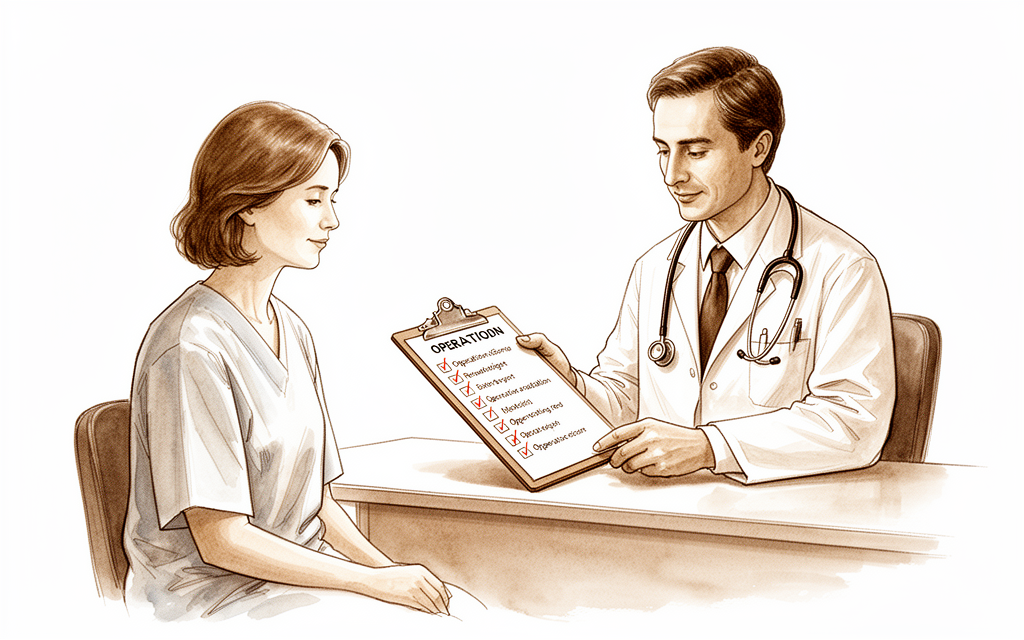
A maior parte dos fatores que garantem o bom desenrolar da cirurgia é definida antes mesmo de você chegar ao hospital. Esta página aborda as semanas e os dias que antecedem a sua cirurgia: o que enviamos para você, o que precisamos que você faça, o que você pode fazer por conta própria e o que deve ter em casa. O próprio dia da cirurgia, desde o check-in até a volta para casa, é descrito na página o dia da sua cirurgia.
Sua consulta pré-operatória
Antes da cirurgia, nos encontraremos para detalhar o plano de tratamento. Este é o melhor momento para fazer perguntas; portanto, anote-as com antecedência. Algumas perguntas úteis são: o que exatamente será feito, quais são as alternativas, como será a recuperação semana a semana, quando você poderá dirigir e voltar ao trabalho, e quais complicações podem ocorrer.
Leve consigo:
- Uma lista exata de todos os medicamentos e suplementos que você toma, com as respectivas doses: remédios prescritos, medicamentos vendidos sem receita, inaladores, cremes, vitaminas, óleo de peixe, açafrão e quaisquer outros suplementos. Anote tudo ou leve as embalagens.
- Quaisquer exames recentes, como tomografias, radiografias ou resultados de exames de sangue que você tenha recebido.
- Informações sobre outros médicos envolvidos no seu tratamento, especialmente cardiologistas ou especialistas em diabetes.
- Os dados do seu plano de saúde e, se desejar, a companhia de alguém para acompanhá-lo.
Também será solicitado que você assine um termo de consentimento. O consentimento é um diálogo, não apenas uma assinatura. Se algo não estiver claro, fale conosco; preferimos explicar tudo duas vezes a permitir que você assine algo sobre o qual tenha dúvidas.
O e-mail que enviamos a você
Após a agendamento da sua cirurgia, nossa equipe enviará a você os detalhes da cirurgia. Este é o documento mais importante que você receberá; portanto, leia-o atentamente e guarde-o. Ele informa:
- qual hospital, qual dia e a hora da internação, além de para onde ir no hospital ao chegar
- o horário do jejum: o momento a partir do qual você não deve comer nem beber nada. Caso a cirurgia seja feita apenas com anestesia local, o e-mail informará que não é necessário jejuar
- o nome do anestesista e como contatá-lo caso tenha dúvidas sobre a anestesia ou sobre os medicamentos que toma; para pacientes particulares, também constam informações sobre como consultar sobre os custos da anestesia
- se você ficará no hospital durante a noite ou irá para casa no mesmo dia; neste último caso, será preciso que alguém o leve e o traga de volta para casa
- quaisquer taxas a pagar à equipe cirúrgica, bem como as instruções para efetuar o pagamento
- instruções sobre medicamentos específicas para você, caso tenha nos informado que toma anticoagulantes, medicamentos para diabetes, insulina ou medicamentos injetáveis para diabetes ou perda de peso
O e-mail também contém instruções para o cadastro online no hospital. O hospital não entrará em contato para solicitar seus dados; você mesmo deverá preencher o formulário de admissão online. As instruções anexadas orientam passo a passo como fazê-lo, incluindo os códigos correspondentes ao seu procedimento solicitados no formulário. Por favor, faça isso assim que receber o e-mail, e não na véspera da cirurgia. O formulário aborda sua saúde geral, e é importante responder a todas as perguntas. Em especial, informe:
- apneia do sono ou ronco intenso acompanhado de sonolência durante o dia (sono, dor e recuperação)
- marca-passo, stents cardíacos ou qualquer problema cardíaco ou pulmonar
- alergias, inclusive a medicamentos, curativos, fita adesiva e látex; informe também se possui um EpiPen
- qualquer problema que você ou algum parente tenha tido com anestesia
- dentes soltos, coroas ou próteses dentárias
- qualquer possibilidade de estar grávida
Se, uma semana após o agendamento, você ainda não tiver recebido os detalhes da cirurgia ou se tiver dificuldades para completar o cadastro online, ligue para nossa equipe.
Medicamentos: quais devem ser interrompidos e quais devem ser mantidos
A maioria dos medicamentos deve ser tomada normalmente até a manhã da cirurgia, com um pequeno gole de água. Alguns exigem decisão, e essa decisão depende do tipo de operação e do seu caso específico; portanto, nunca interrompa ou altere nenhum medicamento por conta própria. As instruções aplicáveis a você estão no e-mail com os detalhes da cirurgia; caso elas não estejam lá e você achar que deveriam estar, avise-nos.
- Anticoagulantes. A aspirina e o clopidogrel (Plavix, bem como os comprimidos combinados como DuoCover) devem ser mantidos; informe-nos que os toma para que a equipe saiba disso. Anticoagulantes como warfarina, Xarelto, Eliquis e Pradaxa devem ser interrompidos 48 horas antes; o e-mail enviado a você indicará o dia e a hora da última dose. Siga essas instruções à risca, pois o momento escolhido é importante tanto para evitar sangramentos durante a cirurgia quanto para prevenir coagulação caso a interrupção ocorra muito cedo. A página Anticoagulantes e cirurgia explica como esses medicamentos atuam e por que o cronograma é tão importante. Não retome o uso sem antes consultar a equipe.
- Medicamentos para diabetes. Na manhã da cirurgia, não devem ser tomados. Os medicamentos mais recentes conhecidos como inibidores de SGLT2 (Forxiga, Jardiance, Steglatro) devem ser interrompidos três dias antes, pois podem provocar acúmulo perigoso de ácido no sangue durante o jejum.
- Insulina. Tome sua insulina de ação prolongada habitual na noite anterior, como de costume. Na manhã da cirurgia, tome metade da dose matinal habitual ou ajuste conforme a medição de glicose. Nunca interrompa completamente a insulina; leve sua insulina e o medidor de glicose para o hospital.
- Medicamentos injetáveis para diabetes e perda de peso, como Ozempic, Wegovy, Mounjaro, Trulicity e Byetta, devem ser mantidos conforme o habitual; não os interrompa. O que muda é o período de jejum: esses medicamentos retardam o esvaziamento do estômago, portanto o tempo de jejum habitual não é suficiente para garantir segurança sob anestesia; por isso, pedimos que você jeje até 24 horas antes da cirurgia. O horário exato constará no e-mail enviado. Consulte Medicamentos GLP-1 e cirurgia ortopédica.
- Medicamentos anti-inflamatórios e alguns suplementos. Ibuprofeno, naproxeno, óleo de peixe, açafrão, ginkgo e altas doses de vitamina E podem aumentar o risco de sangramento durante a cirurgia. Informaremos se e quando você deve interrompê-los.
- Medicamentos para pressão arterial, coração, tireoide, epilepsia e refluxo, tomados regularmente, devem ser ingeridos normalmente na manhã da cirurgia, a menos que receba instrução contrária.
- Antidepressivos e medicamentos para ansiedade devem ser mantidos. Interrompê-los abruptamente torna os dias próximos à cirurgia mais difíceis, e não mais fáceis.
Caso tenha dúvidas sobre qualquer item da lista, ligue para o consultório ou entre em contato com seu anestesista usando os dados fornecidos no e-mail. É muito mais fácil esclarecer essas questões por telefone na semana anterior do que no momento da admissão, na manhã da cirurgia.
Preparando o corpo para a cirurgia
Algumas semanas são suficientes para fazer uma grande diferença na recuperação.
- Pare de fumar e de usar cigarros eletrônicos. A nicotina estreita os pequenos vasos sanguíneos dos quais a pele, os tendões e os ossos dependem para cicatrizar; além disso, aumenta o risco de complicações na ferida e de recuperação lenta. Quanto mais cedo você parar, melhor; porém, até mesmo parar nas últimas semanas já ajuda. Consulte Fumo e recuperação musculoesquelética.
- Controle o nível de açúcar no sangue caso tenha diabetes. Níveis elevados de glicose nas semanas que antecedem a cirurgia aumentam o risco de infecção da ferida. Se seus valores estiverem fora do normal, consulte seu médico agora, em vez de esperar.
- Alimente-se bem. A cicatrização depende da ingestão de proteínas; muitas pessoas chegam à cirurgia consumindo menos do que precisam. A página Alimentação adequada para a cicatrização traz metas práticas a seguir.
- Reduza o consumo de álcool na semana anterior à cirurgia; na noite anterior, evite-o por completo. O álcool interfere no efeito da anestesia, no controle da dor e no sono.
- Mantenha-se ativo. Caminhe e movimente as articulações que não serão operadas. Estar em boa forma geral torna a anestesia mais segura e facilita as primeiras semanas de recuperação.
Cuide da pele do braço que será operado:
- Não faça a barba no braço na semana anterior à cirurgia. Lâminas deixam pequenos cortes pelos quais as bactérias podem entrar. Caso seja necessário remover os pelos, isso será feito no centro cirúrgico.
- Informe-nos sobre qualquer corte, arranhão, erupção cutânea, espinha ou infecção nesse braço, mesmo que sejam pequenos. Operar sobre pele infectada ou lesionada não é seguro; esse é um dos motivos mais comuns para o adiamento da cirurgia.
- Remova o esmalte e as unhas artificiais da mão que será operada. Eles impedem a visualização do leito ungueal, que a equipe utiliza para verificar a circulação sanguínea.
- Mantenha a pele limpa e hidratada; evite fazer tatuagens ou piercings nesse braço no mês anterior à cirurgia.
Preparando sua casa
Após uma cirurgia no membro superior, você precisará fazer tudo com uma só mão, muitas vezes com o braço preso em uma tipoia, gesso ou tala. Preparar a casa antes da cirurgia evita muita frustração depois.
- Organize alguém para levá-lo ao hospital, trazê-lo de volta para casa e ficar com você na primeira noite. Isso não é opcional. Você não pode dirigir após a anestesia, e não deve ficar sozinho durante a noite.
- Planeje como irá se locomover. Você não pode dirigir no dia da cirurgia, nem enquanto o braço estiver na tipoia, gesso ou tala. Após uma cirurgia no ombro, isso significa pelo menos seis semanas, independentemente do braço operado. A página Dirigir após cirurgia no ombro e no braço traz os prazos para cada tipo de operação. Providencie transporte ou planeje ficar sem carro antes do dia da cirurgia.
- Organize seu trabalho. O tempo que você precisará se afastar depende tanto do seu emprego quanto da cirurgia. Converse com seu empregador com antecedência; a página Retorno ao trabalho ajudará a planejar essa conversa.
- Faça estoques e preparativos. Cozinhe e congele algumas refeições. Coloque os itens que usa diariamente na cozinha e no banheiro na altura da cintura, para não precisar se esticar ou se curvar com apenas um braço. Compre xampu e sabonete em embalagens com pump, além de uma esponja de cabo longo, caso vá fazer cirurgia no ombro.
- Roupas. Prefira blusas largas e com abertura na frente, além de sapatos fáceis de calçar. Pratique vestir e tirar uma camisa com uma só mão antes de precisar fazê-lo com o braço na tipoia.
- Sono. Após uma cirurgia no ombro, a maioria das pessoas dorme em posição semi-reclinada nas primeiras semanas. Vale a pena preparar antecipadamente uma poltrona reclinável ou um conjunto de travesseiros. Consulte Como usar e dormir com uma tipoia.
- Crianças, animais de estimação e levantamento de peso. Organize ajuda para tudo o que exigir duas mãos ou força física nas primeiras semanas: cuidar de crianças pequenas, cuidar de cães grandes, fazer compras, levar o lixo, entre outros.
- Alívio da dor. Retire seus medicamentos antes do dia da cirurgia, para que estejam em casa quando você voltar. A página Controle da dor após a cirurgia explica como usá-los corretamente.
As páginas práticas sobre A vida diária após cirurgia na mão, no pulso ou no cotovelo e A vida diária após cirurgia no ombro merecem ser lidas antes da operação, e não depois.
Jejum
O e-mail com os detalhes da cirurgia informa o horário em que você deve parar de comer e beber. Siga esse horário indicado no e-mail; ele foi calculado com base no horário de internação e nos medicamentos que você toma. O jejum é um requisito de segurança para a anestesia, não uma mera formalidade; o descumprimento dessa regra é outra razão comum pela qual uma cirurgia é adiada no próprio dia. A página Jejum antes da cirurgia explica por que ter o estômago vazio é tão importante sob efeito da anestesia.
A semana anterior: uma lista de verificação
- O e-mail com os detalhes da cirurgia foi recebido, lido e guardado em um lugar de fácil acesso.
- O cadastro online no hospital foi concluído, com todos os números de itens devidamente informados.
- A lista de medicamentos foi anotada; você sabe quais deve interromper e quando.
- Se você toma varfarina, Xarelto, Eliquis ou Pradaxa: a data da última dose, informada no e-mail, está anotada no seu diário.
- Alguém foi agendado para levá-lo ao hospital, trazê-lo de volta para casa e ficar com você na primeira noite.
- Seu trabalho está ciente das datas da cirurgia; foram providenciados auxílios para o período em que você não poderá dirigir.
- Os medicamentos foram retirados na farmácia, as refeições congeladas e a casa adaptada para uso com apenas uma mão.
- A pele do braço está íntegra; não foi feita depilação e o esmalte das unhas foi removido.
- O período de jejum, indicado no e-mail, foi anotado em um local onde você o verá na noite anterior à cirurgia.
- Se você tem diabetes: a insulina e o glicômetro foram embalados. Se possui um EpiPen: também foi embalado, para ser entregue à equipe de enfermagem.
Ligue para nós no dia anterior, se:
- você não recebeu o e-mail com os detalhes da cirurgia, ou não conseguiu preencher o formulário de admissão online;
- você adoecer nos dias que antecedem a cirurgia: resfriado, tosse, febre ou distúrbios estomacais;
- houver corte, erupção cutânea, mancha ou qualquer sinal de infecção no braço onde será realizada a cirurgia;
- você não tiver certeza se deve tomar ou suspender algum medicamento;
- você acidentalmente comeu ou bebeu durante o período de jejum;
- algo em relação à sua saúde tiver mudado desde a última consulta conosco;
- você simplesmente mudou de ideia ou deseja discutir a decisão novamente.
Nada disso é incômodo. Preferimos muito mais receber sua ligação no dia anterior do que ter que mandá-lo para casa sem realizar a cirurgia na manhã seguinte.
Em maior profundidade
Advanced reading: the deeper science (optional)
Esta seção destina-se ao leitor que deseja saber quais aspectos da preparação para a cirurgia realmente geram uma diferença mensurável. A maior parte da pesquisa aqui apresentada provém de cirurgias de substituição de quadril e joelho, nas quais o grande número de pacientes facilita o estudo da questão; essas lições podem ser aplicadas à cirurgia de membros superiores, mas não se deve presumir que os valores numéricos sejam os mesmos.
A conversa é mais importante do que o formato
A descoberta mais relevante é bastante simples: o que se espera de uma cirurgia pode ser alterado ao se conversar sobre isso previamente, e essas expectativas determinam o grau de satisfação dos pacientes após o procedimento. Ensaios clínicos randomizados envolvendo sessões pré-operatórias para pacientes submetidos à artroplastia de quadril e joelho demonstraram que uma sessão estruturada modificou as expectativas desses pacientes quanto à sua recuperação [1]. Além disso, um programa formal de educação pré-operatória esteve associado a uma permanência hospitalar mais curta [2].
O tema da conversa também é relevante. Um ensaio clínico randomizado com um breve vídeo pré-operatório sobre analgésicos opioides revelou que os pacientes que o assistiram utilizaram quantidades significativamente menores desses medicamentos na primeira semana após a artroplastia de joelho [3]. Trata-se de um efeito considerável decorrente de uma intervenção simples; por isso, antes da sua cirurgia, dedicamos tempo ao esclarecimento sobre como utilizar os analgésicos, e não apenas ao procedimento em si. No que diz respeito à cirurgia da mão, uma revisão sistemática aponta indícios de que a educação pré-operatória sobre opioides é benéfica, embora os estudos disponíveis sejam poucos e de qualidade limitada [4].
Mais tecnologia não significa maior compreensão
Dois estudos atenuam esse entusiasmo. Em pacientes submetidos à artroscopia de quadril, o aconselhamento feito com um modelo 3D impresso, específico para cada paciente, não melhorou a compreensão ou a satisfação em comparação ao uso apenas das imagens de escaneamento padrão [5]. Além disso, uma aula pré-operatória ministrada durante uma missão cirúrgica trouxe apenas um aumento modesto no conhecimento dos pacientes sobre a artroplastia [6]. A conclusão prática é que o que realmente importa é uma explicação clara e pausada, permitindo que os pacientes façam perguntas; os recursos tecnológicos são opcionais.
Tenha cuidado com as fontes que consulta
Muitas pessoas se preparam pesquisando na internet, mas a qualidade do conteúdo encontrado é irregular. Uma análise de vídeos no YouTube sobre tratamentos injetáveis ortopédicos revelou que o conteúdo era inconsistente; a maioria foi produzida por usuários independentes, e não por organizações de saúde [7]. Este wiki existe, em parte, por esse motivo. Caso algo que você leia em outro lugar contradiga as informações que lhe foram dadas, traga esse material à sua consulta e analisaremos juntos.
Referências
[1] Mancuso CA, Graziano S, Briskie LM, Peterson MGE, Pellicci PM, Salvati EA, et al. Ensaios randomizados para modificar as expectativas pré-operatórias dos pacientes em relação às artroplastias de quadril e joelho. Clin Orthop Relat Res. 2008;466(2):424-31. https://doi.org/10.1007/s11999-007-0052-z
[2] Yoon RS, Nellans KW, Geller JA, Kim AD, Jacobs MR, Macaulay W. A educação do paciente antes da artroplastia de quadril ou joelho reduz o tempo de internação. J Arthroplasty. 2010;25(4):547-51. https://doi.org/10.1016/j.arth.2009.03.012
[3] Maheu AR, Hohmann AL, Cozzarelli NF, Khan IA, Hozack WJ, Ilyas AM, et al. A eficácia do aconselhamento pré-operatório sobre opioides por meio de vídeos na redução do consumo pós-operatório de opioides após artroplastia total do joelho: um ensaio clínico randomizado prospectivo. J Arthroplasty. 2024;39(8):S143-7. https://doi.org/10.1016/j.arth.2024.02.027
[4] Babiker-Moore T, Clark CJ, Kavanagh E, Crook TB. O efeito das intervenções pré-operatórias nos resultados pós-operatórios após cirurgias eletivas da mão: uma revisão sistemática. Hand Therapy. 2024;30(1):19-33. https://doi.org/10.1177/17589983241301449
[5] Childs S, McVicker Z, Trombetta R, Awad H, Elfar J, Giordano B. Modelagem tridimensional específica para cada paciente e seu uso no aconselhamento pré-operatório de pacientes submetidos à artroscopia de quadril. Orthop J Sports Med. 2018;6(9). https://doi.org/10.1177/2325967118794645
[6] Solano MA, Ramcharran KK, Jones LC, Sterling RS, Samaroo DR, Khanuja HS. Aulas de educação do paciente pré-operatória durante uma missão ortopédica: efeitos no conhecimento, ansiedade e consentimento informado. J Arthroplasty. 2020;35(9):2410-7. https://doi.org/10.1016/j.arth.2020.04.084
[7] Sachs JP, Weissman AC, Wagner KR, Joyce KM, Pickens T, Bi AS, et al. O YouTube é uma fonte inconsistente de informações sobre ortobiológicos: implicações para a qualidade, confiabilidade e abrangência do conteúdo, bem como para a tomada de decisão dos pacientes. Arthroscopy. 2025;41(10):4225-34. https://doi.org/10.1016/j.arthro.2025.03.062
Evidence & references
This is the clinical evidence summary written for health professionals. It is technical, and it lists the research this page was built from. You do not need to read it to understand your treatment or to make a decision about it.
Overview
- Preoperative opioid education shows some indication of favourable outcomes following elective hand surgery, though the number of studies were small, evidence quality was poor, and data were limited [1].
- A formal preoperative educational program can help to lower a patient's length of stay following hip or knee arthroplasty [2].
- Enhanced office and staff protocols that are proactive rather than reactive can provide a safe and successful outpatient experience by anticipating potential postoperative pitfalls associated with same-day discharge [3].
- Patients' preoperative expectations of their recovery from total hip arthroplasty (THA) or total knee arthroplasty (TKA) can be modified by preoperative educational classes [4].
- Maximizing opportunities to improve communication, learning from others, and treating patients as more than their radiographic findings can help improve patient outcomes and trust [5].
- Underserved patients' knowledge about total joint arthroplasty increased only modestly after taking a preoperative class during a surgical mission trip [6].
- A pilot randomized controlled trial will evaluate the feasibility and satisfaction of the PREPS program for individuals undergoing a shoulder replacement [7].
- Preoperative counseling with haptic 3D hip models does not appear to favorably affect patient-reported understanding or satisfaction with regard to femoroacetabular impingement (FAI) when compared with the use of CT imaging alone [8].
Anatomy & Pathophysiology
- Enhanced office and staff protocols that are proactive rather than reactive can provide a safe and successful outpatient experience by anticipating potential postoperative pitfalls associated with the unique 'ripple effects' of same-day discharge [3].
- Preoperative video counseling significantly decreased opioid consumption within the first week after total knee arthroplasty [9].
Investigations
- A pilot randomized controlled trial is evaluating the feasibility and satisfaction of the PREPS program for individuals undergoing a shoulder replacement [7].
Complications
- Preoperative opioid education showed some indication of favourable outcomes, though the number of studies was small, evidence quality was poor, and data were limited [1].
- A formal preoperative educational program can help lower a patient's length of stay following hip or knee arthroplasty [2].
- Patients' preoperative expectations of recovery from total hip arthroplasty (THA) or total knee arthroplasty (TKA) can be modified by preoperative educational classes [4].
- A pilot randomized controlled trial is evaluating the feasibility and satisfaction of the PREPS program for individuals undergoing shoulder replacement [7].
- Preoperative counseling with haptic 3D hip models does not appear to favorably affect patient-reported understanding or satisfaction regarding femoroacetabular impingement (FAI) when compared with the use of CT imaging alone [8].
Recovery
- Preoperative opioid education shows some indication of favourable outcomes following elective hand surgery, though the number of studies was small, evidence quality was poor, and data were limited [1].
Key Evidence
- [L1] There was some indication of favourable outcomes following preoperative opioid education; however, the number of studies were small, the evidence quality was poor, and data were limited. [1] (10.1177/17589983241301449)
- [L3] A formal preoperative educational program can indeed help to lower a patient's length of stay. [2] (10.1016/j.arth.2009.03.012)
- [L5] Enhanced office and staff protocols that are proactive rather than reactive can provide a safe and successful outpatient experience by anticipating potential postoperative pitfalls associated with the unique 'ripple effects' of same-day discharge. [3] (10.1016/j.arth.2019.01.001)
- [L1] Patients' preoperative expectations of their recovery from THA or TKA can be modified by preoperative educational classes. [4] (10.1007/s11999-007-0052-z)
- [L5] The author emphasizes that maximizing opportunities to improve communication, learning from others, and treating patients as more than their radiographic findings can help improve patient outcomes and trust. [5] (10.2106/jbjs.24.01274)
- [L4] On this surgical mission trip, underserved patients' knowledge about total joint arthroplasty increased only modestly after taking a preoperative class. [6] (10.1016/j.arth.2020.04.084)
- [L2] This pilot randomized controlled trial will evaluate the feasibility and satisfaction of the PREPS program for individuals undergoing a shoulder replacement. [7] (10.1177/17589983251345393)
- [L2] Preoperative counseling with haptic 3D hip models does not appear to favorably affect patient-reported understanding or satisfaction with regard to FAI when compared with the use of CT imaging alone. [8] (10.1177/2325967118794645)
- [L1] This study found significantly decreased opioid consumption within the first week after TKA in patients who received preoperative video counseling. [9] (10.1016/j.arth.2024.02.027)
References
[1] The effect of preoperative interventions on postoperative outcomes following elective hand surgery: A systematic review. Hand Therapy. 2024. DOI: 10.1177/17589983241301449
[2] Patient Education Before Hip or Knee Arthroplasty Lowers Length of Stay. The Journal of Arthroplasty. 2010. DOI: 10.1016/j.arth.2009.03.012
[3] Considerations for Office and Staff Protocols for Outpatient Joint Replacement. The Journal of Arthroplasty. 2019. DOI: 10.1016/j.arth.2019.01.001
[4] Randomized Trials to Modify Patients' Preoperative Expectations of Hip and Knee Arthroplasties. Clinical Orthopaedics & Related Research. 2008. DOI: 10.1007/s11999-007-0052-z
[5] What’s Important: Treat the Patient Instead of the Disease. Journal of Bone and Joint Surgery. 2025. DOI: 10.2106/jbjs.24.01274
[6] Preoperative Patient Education Class During an Orthopedic Mission Trip: Effects on Knowledge, Anxiety, and Informed Consent. The Journal of Arthroplasty. 2020. DOI: 10.1016/j.arth.2020.04.084
[7] Preoperative rehabilitation and education program for surgery (PREPS): A pilot randomized control trial protocol. Hand Therapy. 2025. DOI: 10.1177/17589983251345393
[8] Patient-Specific 3-Dimensional Modeling and Its Use for Preoperative Counseling of Patients Undergoing Hip Arthroscopy. Orthopaedic Journal of Sports Medicine. 2018. DOI: 10.1177/2325967118794645
[9] The Efficacy of Preoperative Video-Based Opioid Counseling on Postoperative Opioid Consumption After Total Knee Arthroplasty: A Prospective Randomized Controlled Trial. The Journal of Arthroplasty. 2024. DOI: 10.1016/j.arth.2024.02.027