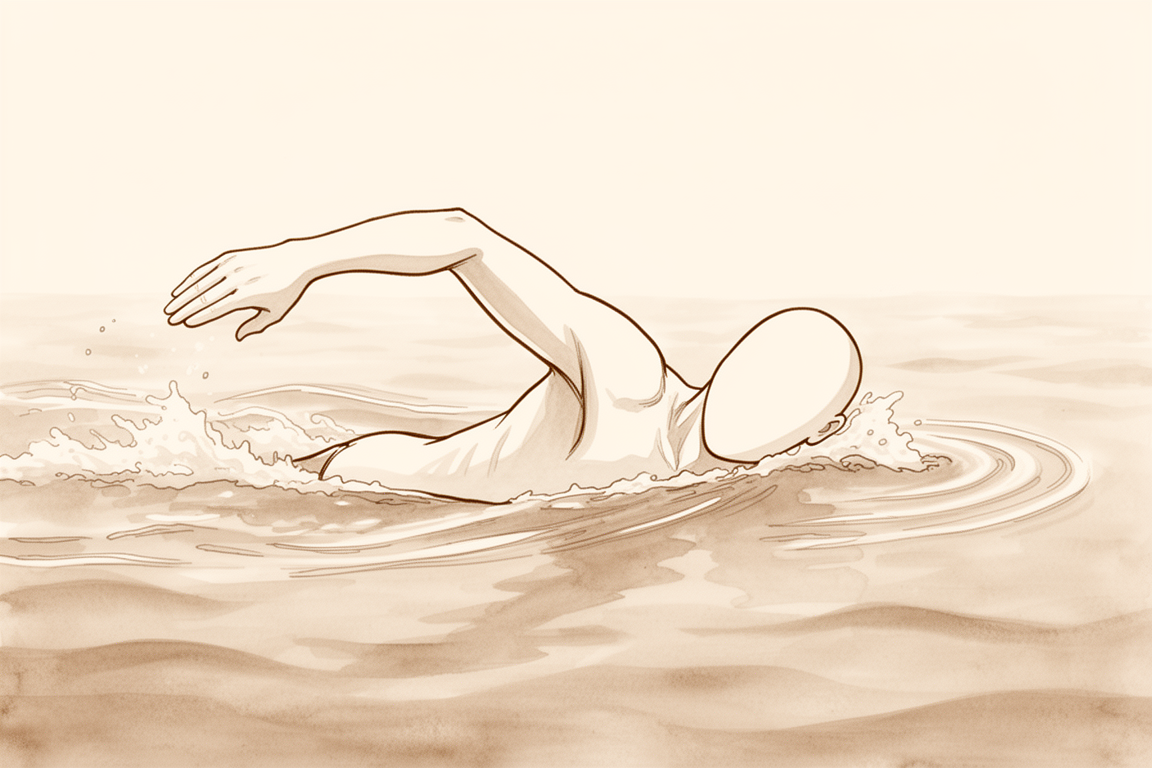
Este protocolo descreve a reabilitação após um procedimento de Tratamento Artroscópico Abrangente (Comprehensive Arthroscopic Management – CAM) realizado pelo Dr. Kieran Hirpara no Mater Private Hospital Rockhampton, abrangendo tanto os cuidados no hospital quanto as etapas nas semanas e meses seguintes. Leve esta página ou o seu PDF na sua primeira sessão de fisioterapia, para que a reabilitação seja devidamente coordenada. O seu fisioterapeuta guiará individualmente a evolução da reabilitação através das fases abaixo, conforme a mobilidade do seu ombro e os procedimentos realizados durante a cirurgia.
Caso tenha alguma dúvida ou preocupação em relação à ferida cirúrgica, entre em contato com o consultório. Geralmente, é útil tirar uma foto da ferida e enviá-la por e-mail para análise.
O que esperar
O procedimento CAM é uma cirurgia artroscópica para ombros desgastados e artríticos. Em vez de substituir a articulação, o objetivo é limpá-la e libertá-la para que se movimente melhor e com menos dor: o cirurgião alisa a cartilagem irregular, remove fragmentos soltos e osteófitos, liberta a membrana articular tensa para que o ombro volte a rotacionar, e liberta também o nervo que passa logo abaixo da articulação (o nervo axilar). O objetivo é proporcionar-lhe vários anos de maior conforto e mobilidade no ombro, adiando ou evitando a necessidade de uma prótese articular.
Essa combinação de intervenções determina o seu processo de recuperação. Como o cirurgião libertou um ombro rígido e trabalhou para restaurar a sua rotação, a tarefa mais importante após a cirurgia é manter essa mobilidade: um ombro assim tenderá a tornar-se novamente rígido se permanecer imóvel. Contudo, como o cirurgião também atuou diretamente nas superfícies articulares desgastadas, os movimentos iniciais são feitos de forma controlada e gradual: deve mover o ombro cedo e com frequência, mas de forma suave, sem forçar os alongamentos, para que a articulação se estabilize em vez de piorar. Assim, a recuperação baseia-se no movimento, tal como na libertação de um ombro congelado, porém de maneira mais suave e gradual.
Os exercícios incluem três tipos de movimentos; a sua equipa indicará quais se aplicam a si:
- Movimento passivo: o ombro permanece totalmente relaxado, enquanto o outro braço, uma vara ou um sistema de polias realiza o movimento.
- Movimento ativo-assistido: você move o braço por conta própria, com alguma ajuda do outro braço ou de um objeto.
- Movimento ativo: você move o braço usando apenas a sua própria força, sem qualquer ajuda.
Sobre a sua tipóia
Geralmente, você receberá uma tipóia para maior conforto durante a primeira ou segunda semana. Ela serve para manter o braço em repouso e protegê-lo de batidas enquanto a articulação se recupera; porém, não serve para manter uma reparação cirúrgica no lugar. O ponto principal é o oposto do que acontece em casos de reparo de tendões ou ligamentos: a tipóia é apenas para conforto, e o ombro não deve ficar imóvel para evitar rigidez. Comece a fazer os exercícios fora da tipóia desde o primeiro dia; utilize o braço para tarefas cotidianas leves, conforme o conforto permitir, e retire a tipóia sempre que possível, assim que a dor inicial diminuir.
Caso o cirurgião tenha reaplicado o tendão do bíceps durante a operação (procedimento chamado tenodese do bíceps), sua equipe médica pedirá que você evite levantar pesos e dobrar o cotovelo com força por cerca de seis semanas, até que a área cicatrize. Eles informarão se esse cuidado se aplica a você.
Pontos principais
- Mantenha o movimento. Use o braço para tarefas cotidianas leves, como lavar, vestir-se e comer, desde o início. Movimentos suaves e regulares são o que impedem que o ombro fique rígido novamente.
- Trabalhe a rotação. Girar o braço para fora (rotação externa) é um dos principais movimentos que esta cirurgia restaura; portanto, continue praticando-o. Recuperar e manter esse movimento é um objetivo fundamental.
- Faça alongamentos aos poucos, sem forçar. Alongue até sentir uma leve tensão, nunca dor aguda. As superfícies articulares foram manipuladas na cirurgia; assim, alongamentos forçados e dolorosos podem causar inflamação no ombro e atrasar a recuperação. Poucos e frequentes exercícios são melhores do que sessões longas e intensas.
- Controle a dor para conseguir se mover. Tome analgésicos antes dos exercícios e das sessões de fisioterapia. Muitas pessoas acham útil usar calor antes dos alongamentos e gelo depois.
- Compareça regularmente à fisioterapia. Procure manter sessões regulares durante as primeiras seis semanas. Leve esta página consigo na sua primeira consulta.
No hospital — seus primeiros exercícios
Kieran Hirpara 4.0
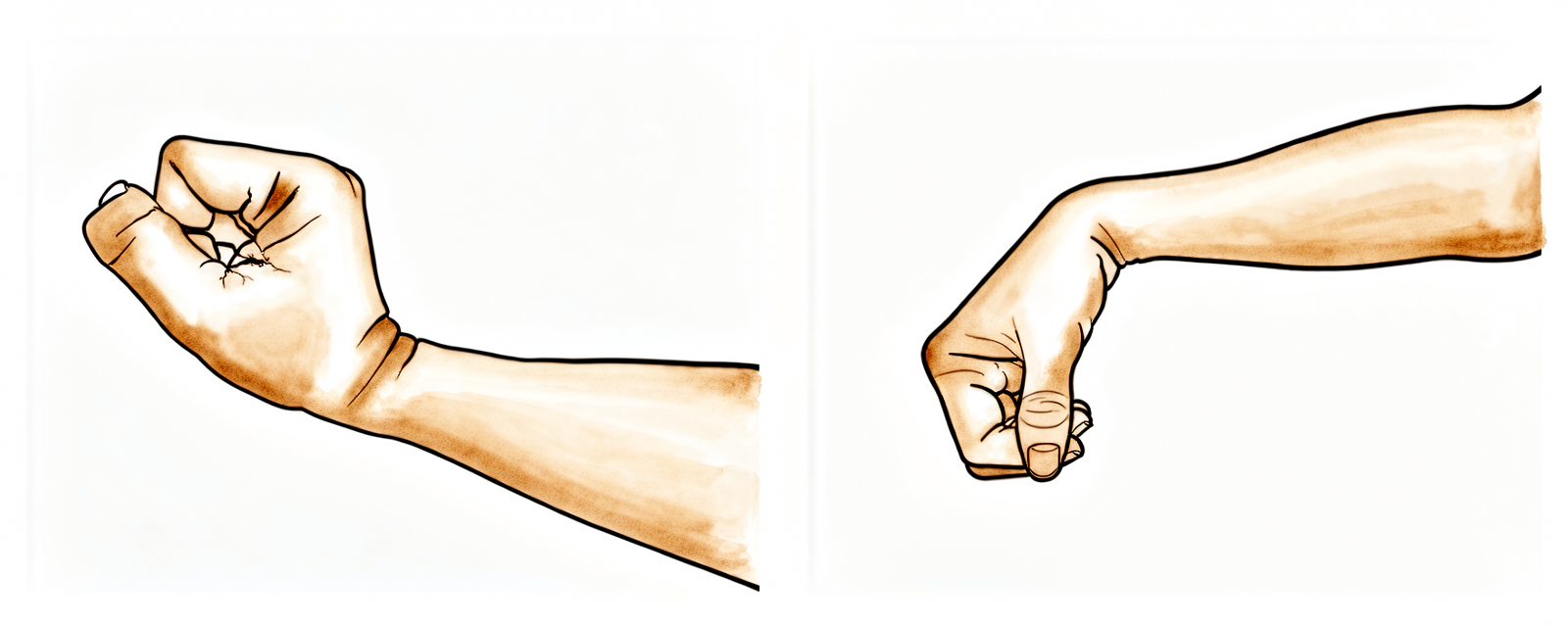
Movimento do punho
Mantenha a mão em movimento, dobrando o punho para a frente, para trás e para os lados.
10 vezes, 3 vezes por dia.
Kieran Hirpara 4.0
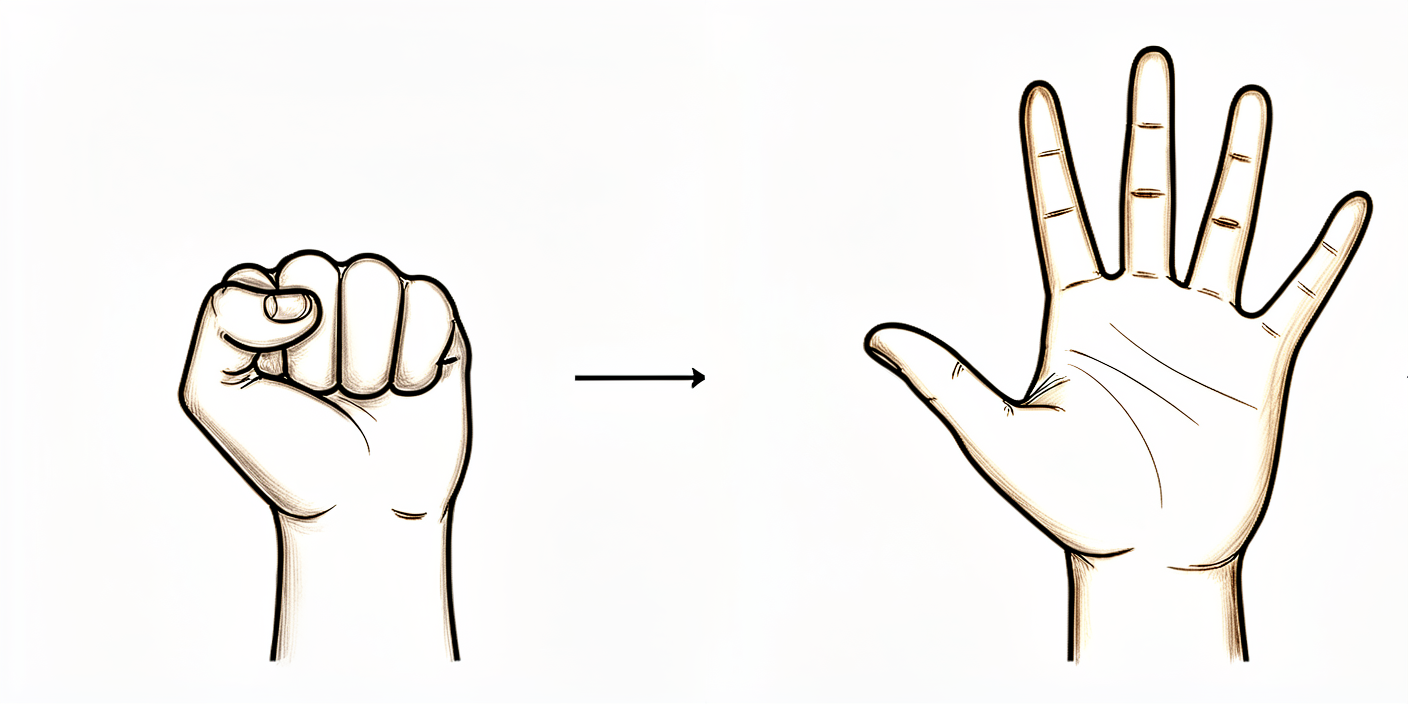
Abrir e fechar a mão
Mantenha a mão e os dedos em movimento, abrindo e fechando-os ou apertando uma bola macia.
10 vezes, 3 vezes por dia.
Kieran Hirpara 4.0
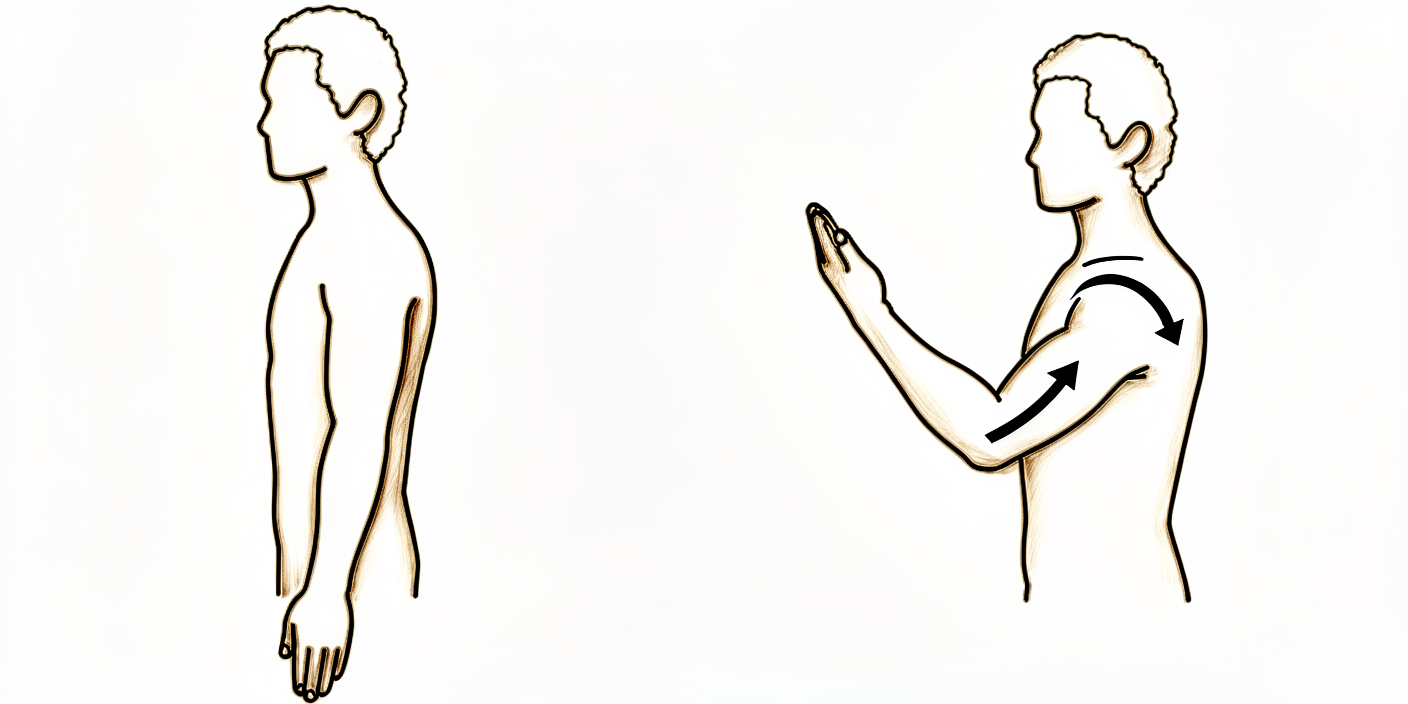
Flexão do cotovelo
Flexione e estenda o cotovelo. Caso o tendão do bíceps tenha sido reimplantado durante a cirurgia, a equipe médica orientará você a fazer isso com cuidado e a evitar levantar pesos com o braço nas primeiras semanas.
10 vezes, 3 vezes por dia.
Kieran Hirpara 4.0
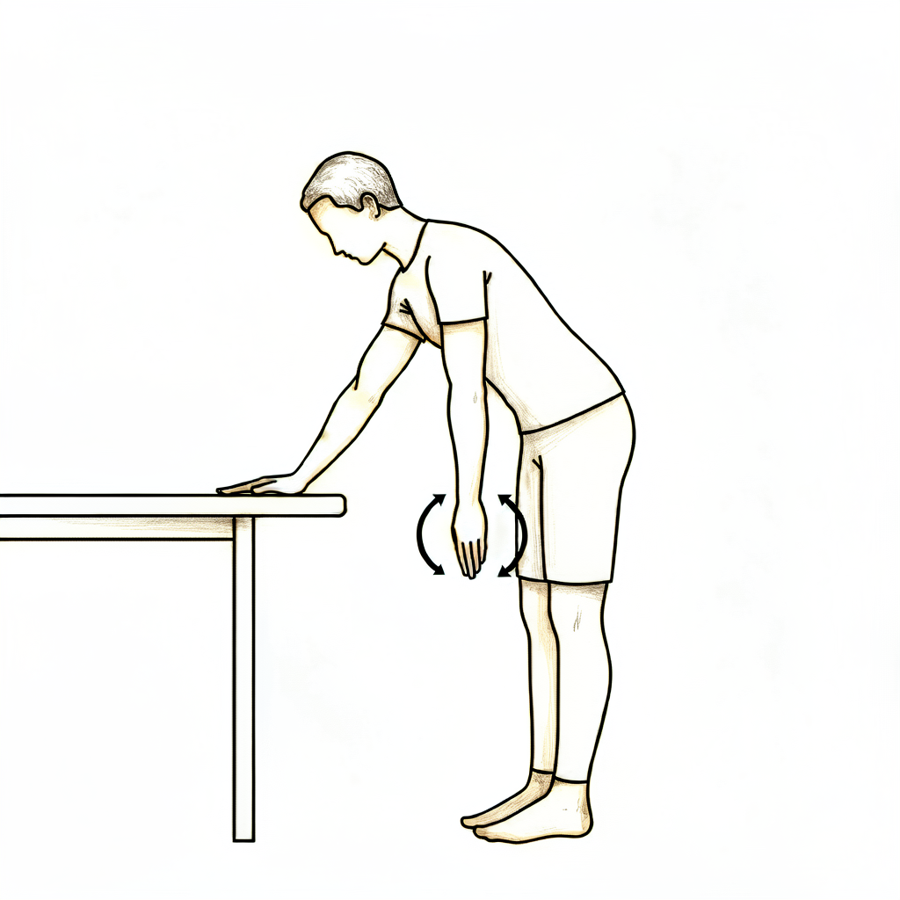
Pêndulos
Este é um exercício passivo e relaxante. Incline-se para a frente e deixe o braço pendurado, completamente relaxado. Use o movimento do corpo para balançar suavemente o braço em pequenos círculos, no sentido horário e anti-horário, para frente e para trás. Deixe que o peso do braço faça o trabalho, mantendo os músculos do ombro relaxados.
Cerca de 30 segundos em cada direção, 3 vezes por dia.
Kieran Hirpara 4.0
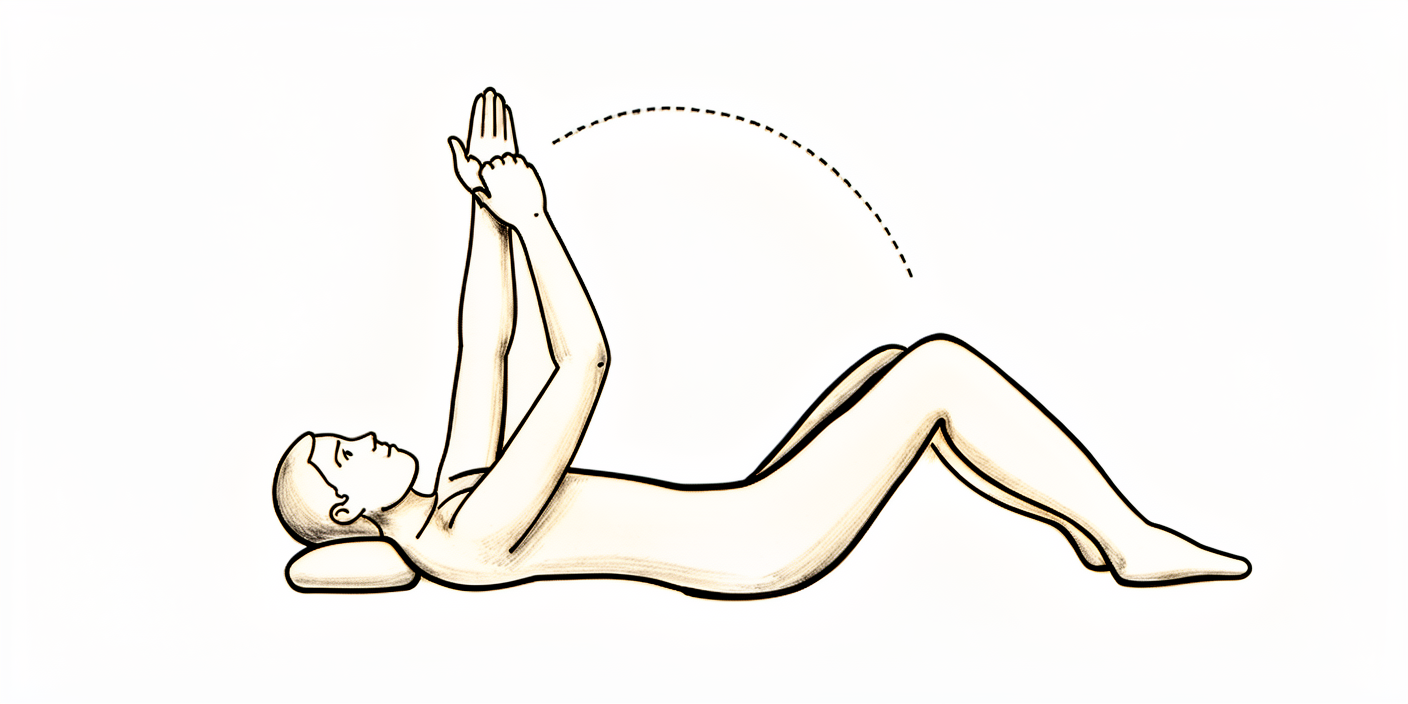
Flexão anterior assistida (deitado)
Se preferir, deite-se de costas e segure uma vara (ou uma toalha enrolada) com as duas mãos. Use o braço saudável para guiar o braço operado para cima, por cima da cabeça, até onde for confortável, e depois abaixe-o lentamente.
10 vezes, 3 vezes por dia.
Kieran Hirpara 4.0
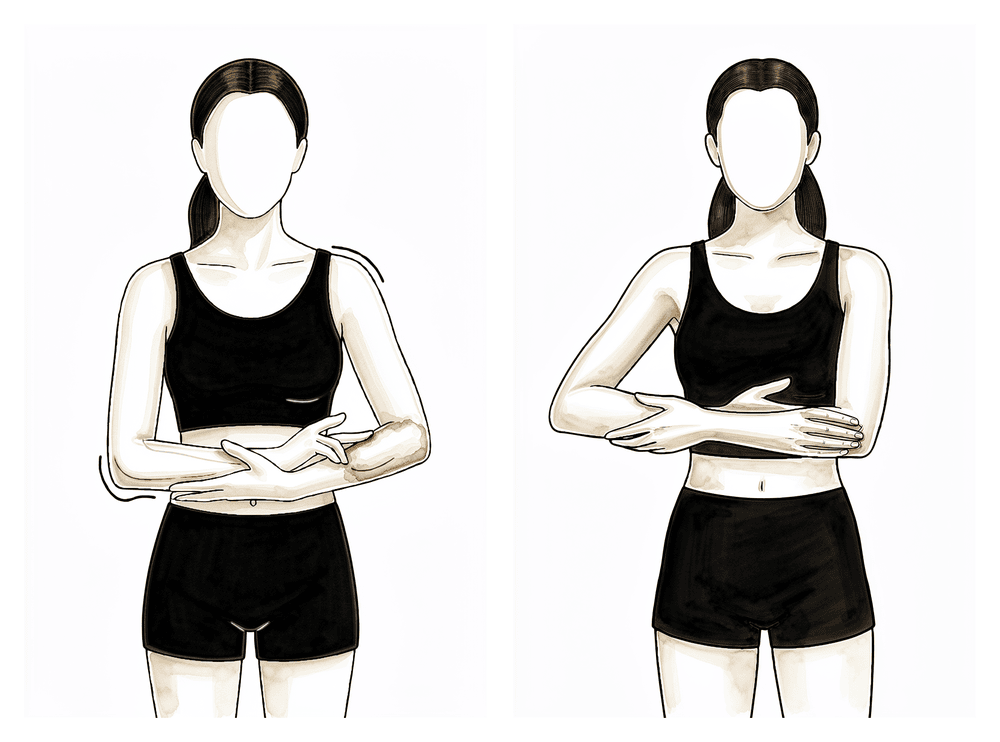
Abdução assistida (tipo “berço”)
Segure o braço operado com o outro braço, apoiando-o sob o cotovelo, e balance-o suavemente para o lado e para trás, como se estivesse embalando um bebê. A cada vez, leve-o a uma posição de alongamento confortável para o lado.
10 vezes, 3 vezes por dia.
Kieran Hirpara 4.0
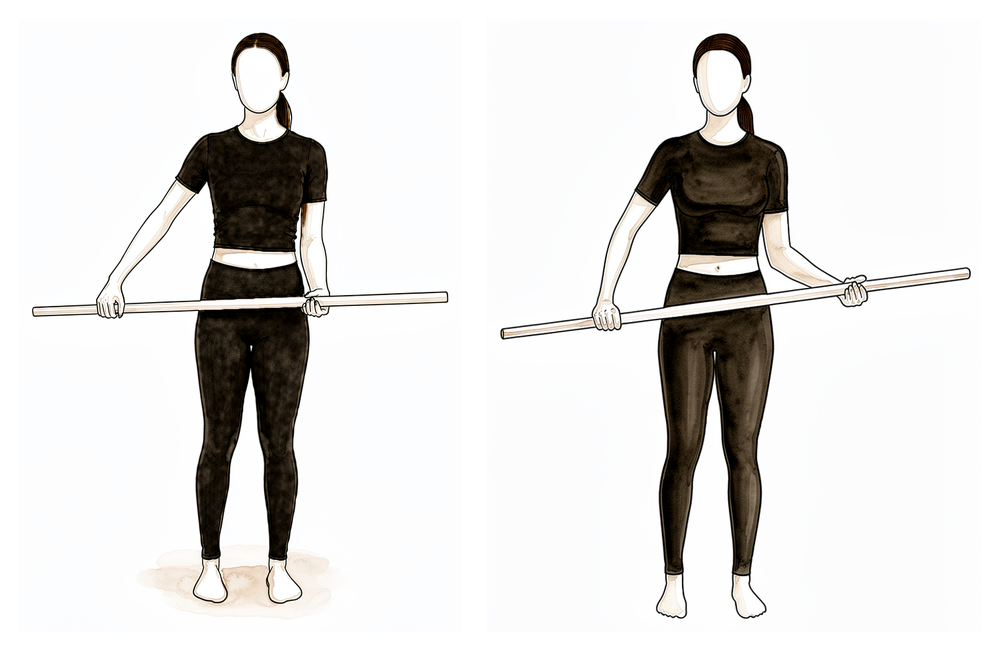
Rotação externa assistida com uma vara
Deite-se de costas, com o cotovelo junto ao corpo e dobrado a 90 graus. Segure uma vara com as duas mãos e use o braço saudável para girar a mão do braço operado para fora, fazendo a rotação do ombro. Essa rotação externa é um movimento importante a ser recuperado após esta cirurgia; portanto, continue a exercitá-la suavemente e aumentando gradualmente o grau de rotação ao longo das semanas.
10 vezes, 3 vezes por dia.
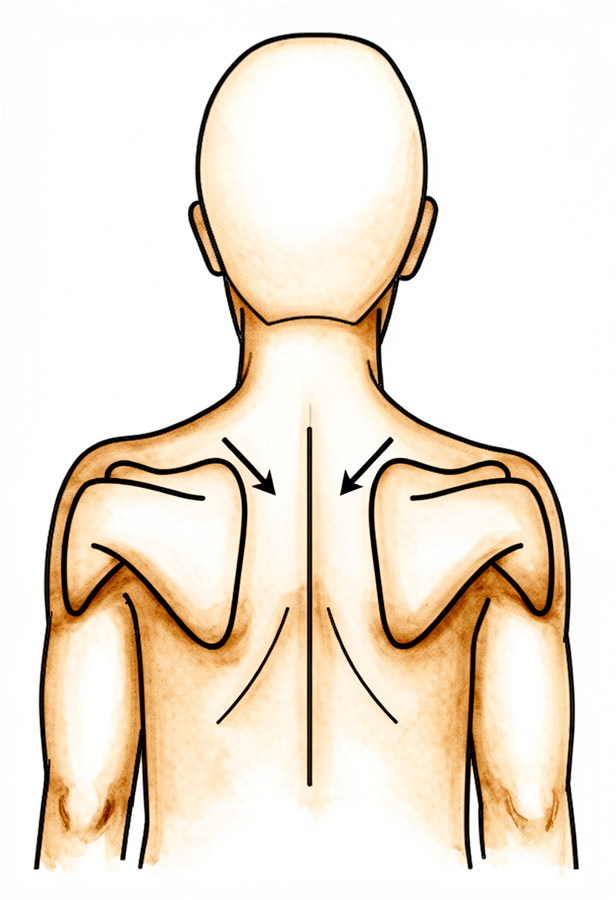
Kieran Hirpara 4.0
Ativação do trapézio inferior
Aperte as escápulas para baixo e para junto uma da outra, mantenha a posição e depois relaxe.
Mantenha por 5 segundos, 5 vezes; repita 3 vezes ao dia.
Um fisioterapeuta irá atendê-lo no hospital e iniciará os exercícios abaixo antes de você ir para casa. Eles mantêm a mão, o cotovelo e o ombro em movimento, iniciando imediatamente a recuperação da amplitude de movimento do ombro. Tome algum analgésico previamente para poder se movimentar confortavelmente. Execute-os conforme orientado pela equipe médica e continue fazendo-os em casa.
A sua reabilitação ambulatorial
Após um procedimento de CAM, a reabilitação é baseada no movimento: o ombro estava rígido e foi libertado; portanto, o foco inicial é manter e reconstruir essa amplitude de movimento antes que volte a ficar rígido, porém de forma gradual e respeitando as superfícies articulares que foram manipuladas. A fisioterapia começa cedo, é realizada regularmente e prossegue por alguns meses. As fases abaixo seguem o padrão do protocolo de reabilitação publicado para essa cirurgia. Os intervalos semanais são apenas indicativos, não fixos: o seu fisioterapeuta ajustará o progresso conforme a evolução do movimento do seu ombro, e não com base no calendário. Geralmente, são agendadas consultas de acompanhamento por volta da 2ª semana, da 6ª semana e dos 3 a 4 meses.
Visão geral do processo:
- Fase I — Movimentação inicial: aproximadamente as duas primeiras semanas
- Fase II — Recuperação da amplitude de movimento: da 2ª à 6ª semana
- Fase III — Fortalecimento: da 6ª à 12ª semana
- Fase IV — Retorno às atividades normais: a partir da 12ª semana (cerca de três meses)
A maioria das pessoas percebe alívio significativo da dor e maior facilidade de movimento nos primeiros um a três meses; a melhora costuma continuar progredindo ao longo de seis a doze meses.
Fase I — Movimentação inicial (Semana 0–2)
O objetivo dessas duas primeiras semanas é fazer com que o ombro se movimente e manter a amplitude de movimento obtida na cirurgia, sem causar irritação na articulação. Você deve continuar fazendo em casa, várias vezes ao dia, os exercícios ensinados no hospital: movimentos passivos e ativos assistidos, movimentos pendulares e alongamentos suaves em todas as direções, incluindo a rotação do braço para fora. Use a tipóia apenas para conforto; retire-a para fazer os exercícios e para realizar tarefas cotidianas leves. O bom controle da dor é essencial para permitir a movimentação; portanto, continue tomando os analgésicos antes dos exercícios, e use calor antes e gelo depois, se isso ajudar. Faça cada alongamento até sentir uma leve tensão, nunca dor aguda.
Pronto para a próxima fase quando… você estiver realizando o programa domiciliar com confiança, várias vezes ao dia; a dor estiver diminuindo; e o ombro estiver movendo-se livremente dentro da amplitude inicial.
Fase II — Restaurando a amplitude de movimento (Semana 2–6)
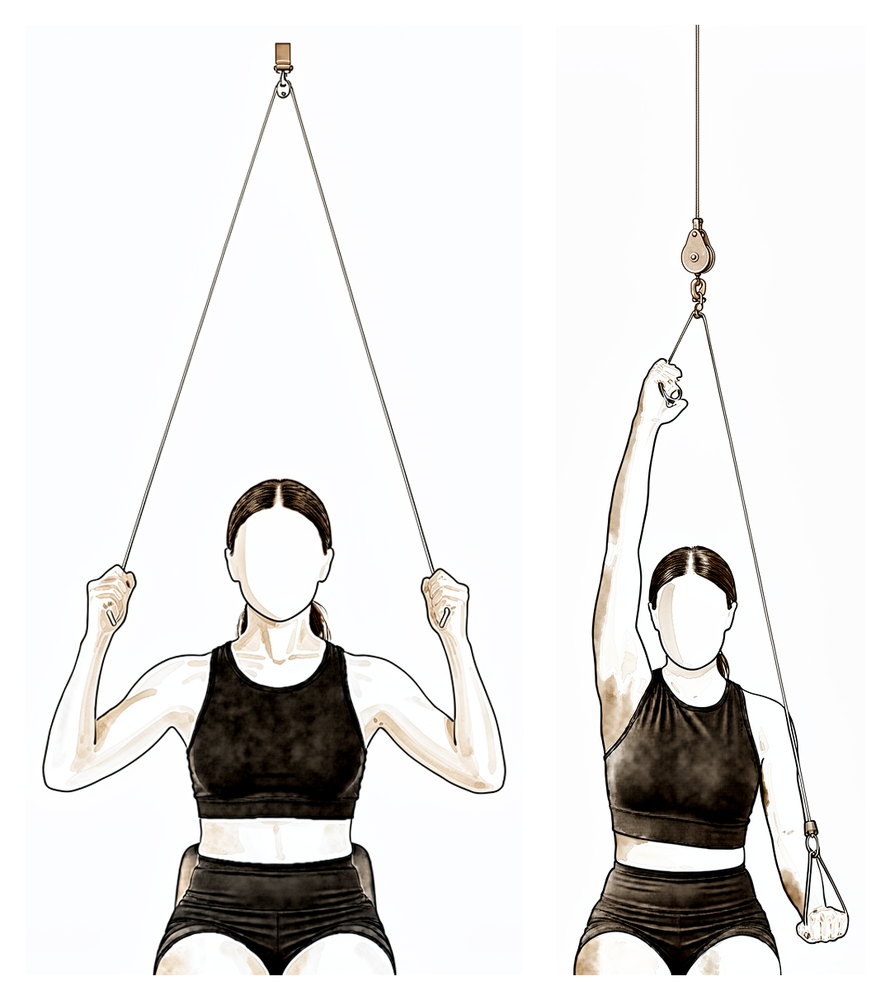
Kieran Hirpara 4.0
Polia de porta
Sente-se debaixo de uma polia de porta, segurando uma alça em cada mão. Puxe para baixo com o braço saudável, de modo a elevar o braço operado acima da cabeça até onde for confortável; em seguida, abaixe-o lentamente. O objetivo é obter um alongamento suave, sem causar dor intensa.
10 vezes, 3 a 4 vezes ao dia
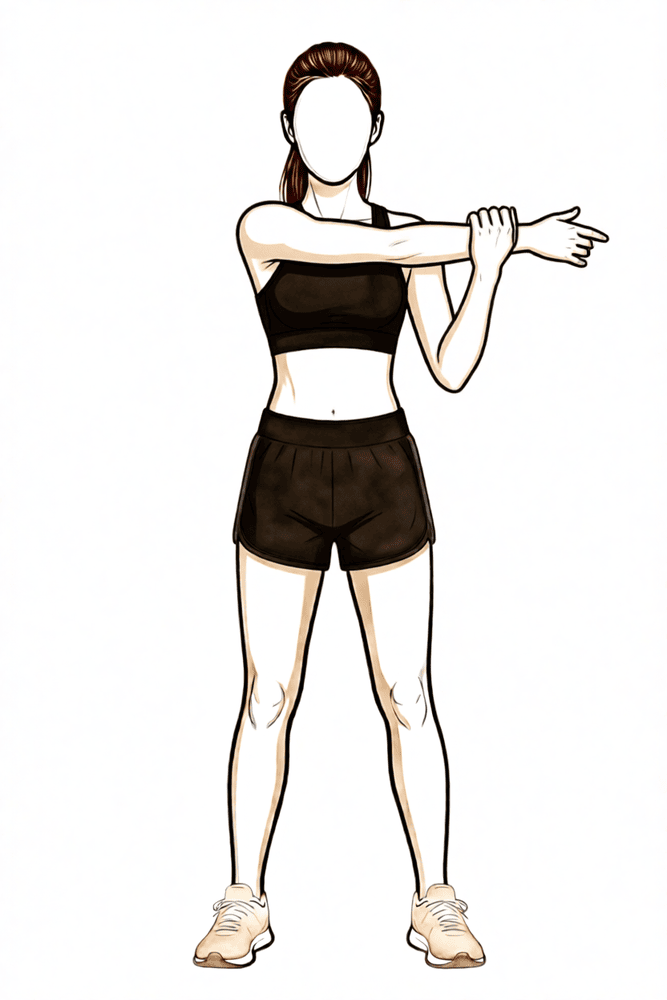
Kieran Hirpara 4.0
Alongamento cruzado do corpo
Use a sua mão boa para levar o braço operado até o peito, até sentir um leve alongamento na parte posterior do ombro; em seguida, solte-o.
10 vezes, 3 a 4 vezes ao dia
Kieran Hirpara 4.0
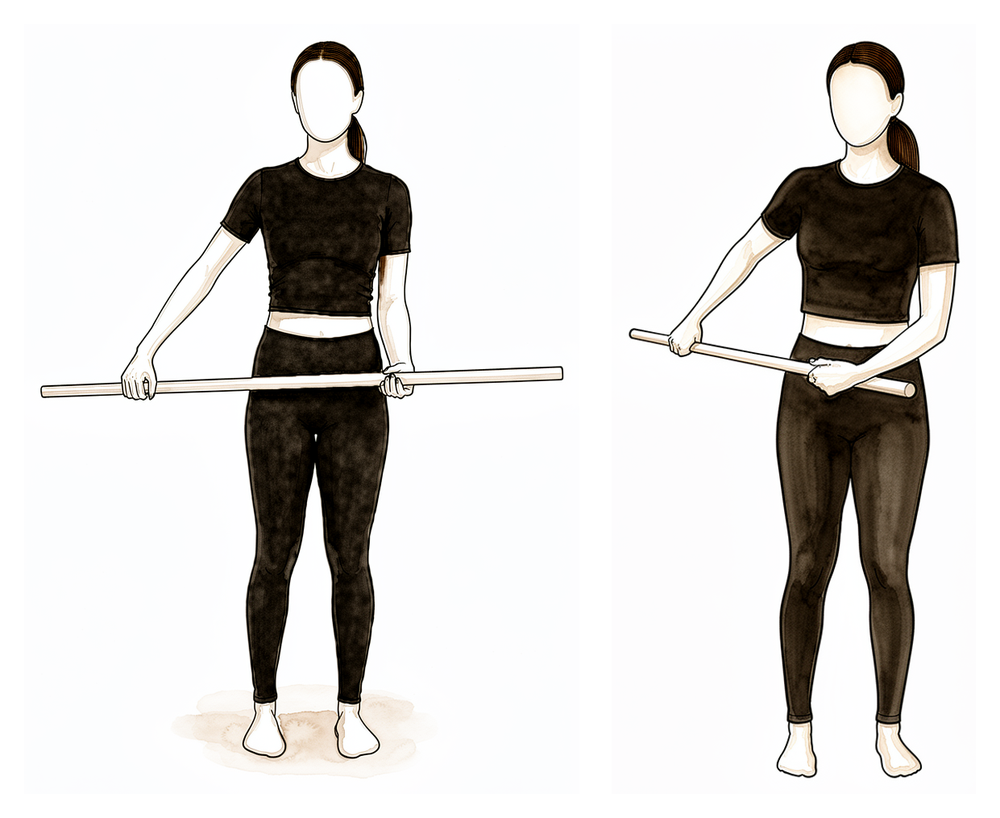
Rotação externa com bastão
Continue o movimento de rotação externa assistido por uma vareta, conforme ensinado no hospital, exercitando um pouco mais à medida que a amplitude de movimento aumenta. Com o cotovelo junto ao corpo, gire o antebraço para fora o máximo que for confortável, e depois volte à posição inicial.
10 vezes, 3 a 4 vezes ao dia
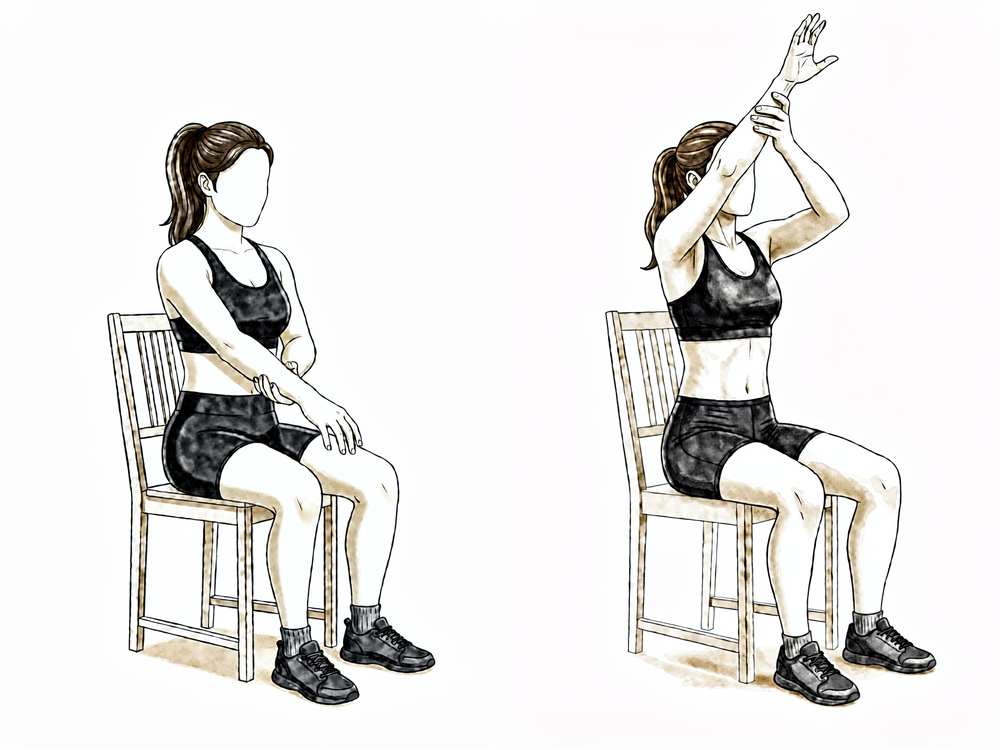
Kieran Hirpara 4.0
Elevação anterior assistida (em posição sentada)
Sente-se e incline-se ligeiramente para a frente; apoie o antebraço operado com a mão sã e use-a para levantar o braço operado para a frente e para cima, até onde lhe for confortável, depois abaixe-o lentamente. Deixe que o braço são realize o movimento, de modo que o ombro operado permaneça relaxado.
Conforme orientado pelo seu fisioterapeuta
Nesta fase, mantém-se a fisioterapia regular e o programa de exercícios em casa, trabalhando ainda mais a amplitude de movimento conforme o ombro permitir. Os exercícios evoluem de movimentos assistidos para movimentos ativos do braço em todas as direções; o fisioterapeuta pode acrescentar mobilizações articulares manuais, e você continua a praticar a rotação externa. Os alongamentos permanecem progressivos: mais intensos do que na primeira semana, porém ainda feitos de forma gradual, sem forçar. Na maioria dos casos, nesta fase já se retira a tipóia e o braço é utilizado normalmente nas atividades diárias leves.
Estará pronto para a fase seguinte quando… a amplitude de movimento melhorar de forma constante, os movimentos abaixo da altura do ombro forem confortáveis, e a dor diminuir o suficiente para iniciar exercícios de resistência suaves.
Fase III — Fortalecimento (Semana 6–12)
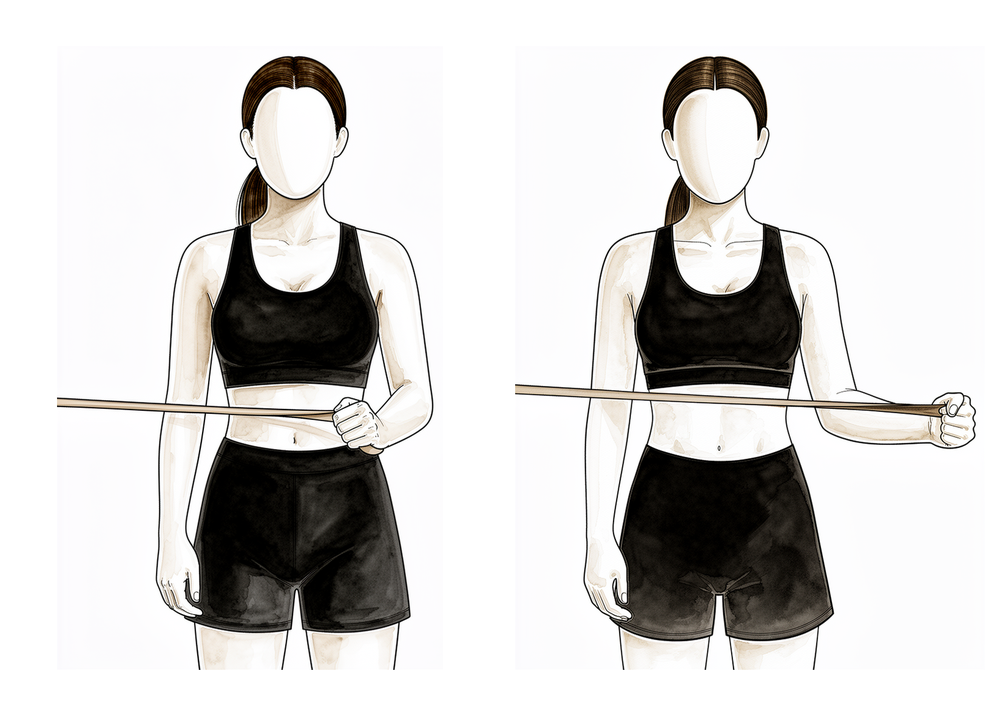
Kieran Hirpara 4.0
Rotação externa com faixa elástica
Fique de pé com o cotovelo pressionado contra o corpo e dobrado a 90 graus, segurando uma faixa elástica fixada na altura da cintura. Mantendo o cotovelo junto ao corpo, gire o antebraço para fora contra a resistência da faixa e depois volte lentamente à posição inicial.
2 a 3 séries de 10 a 15 repetições, 5 dias por semana.
Kieran Hirpara 4.0
Rotação interna com faixa elástica
Com o cotovelo pressionado contra o corpo, segure uma faixa fixada em um lado e gire o antebraço para dentro, em direção ao corpo, contra a resistência da faixa; em seguida, volte lentamente à posição inicial.
2 a 3 séries de 10 a 15 repetições, 5 dias por semana.
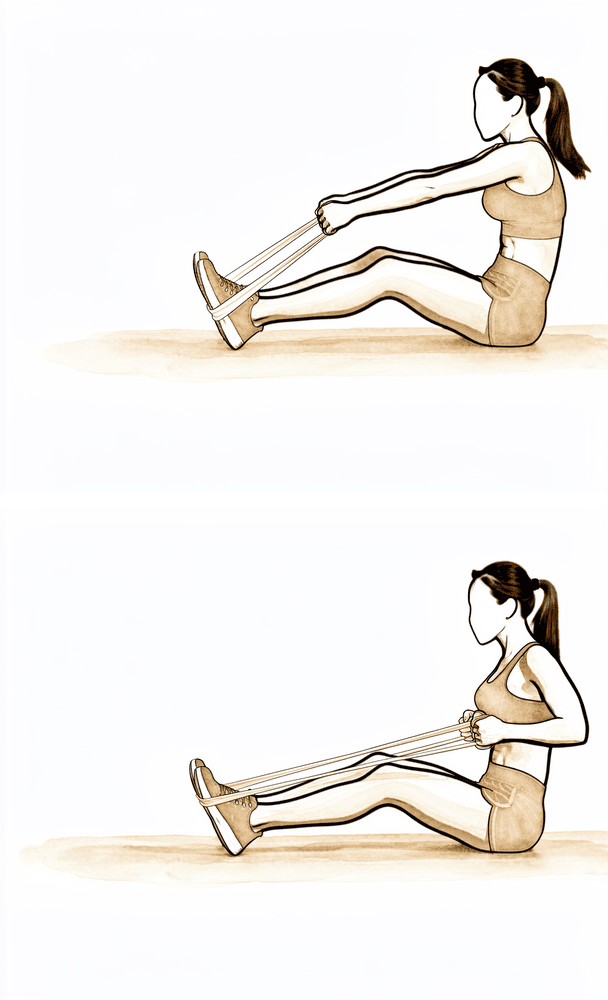
Kieran Hirpara 4.0
Remada baixa
Segure uma faixa à sua frente, na altura da cintura. Mantendo o braço relativamente esticado, puxe-o para trás e para baixo em direção ao quadril, contraindo a escápula para baixo e para trás; em seguida, volte lentamente à posição inicial.
2 a 3 séries de 10 a 15 repetições, 5 dias por semana.
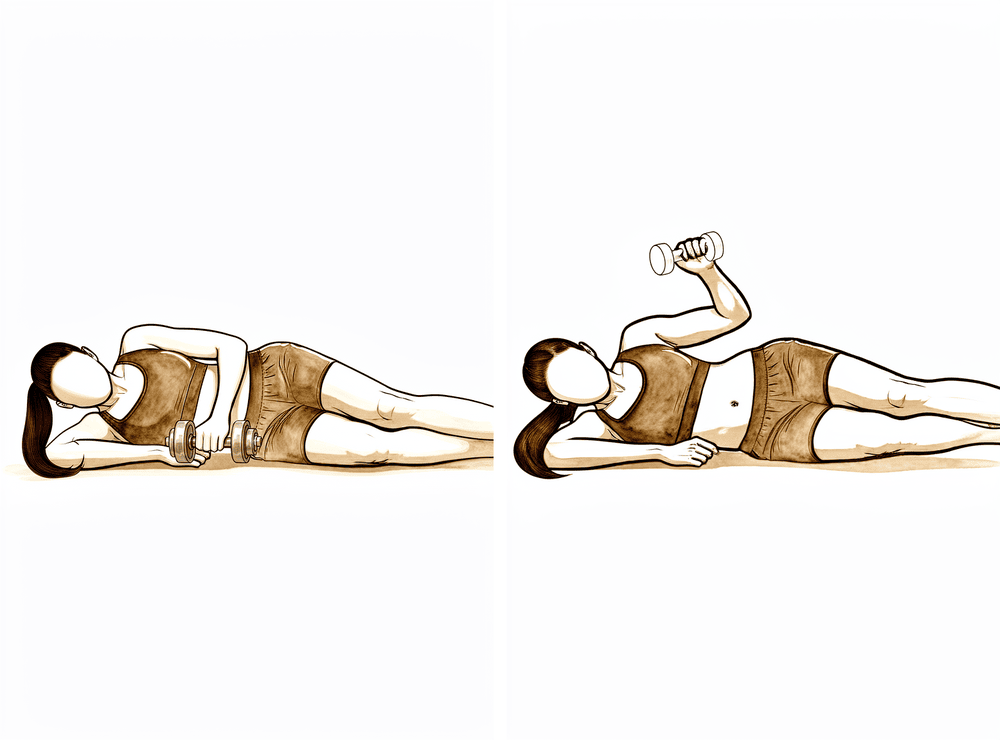
Kieran Hirpara 4.0
Rotação externa em decúbito lateral (peso leve)
Deite-se sobre o lado saudável, com o cotovelo operado dobrado a 90 graus e encostado ao corpo, segurando um peso leve (cerca de 0,5 a 1,5 kg). Gire o antebraço para cima e depois abaixe-o lentamente: o movimento lento de descida é o mais importante. Mantenha todo o movimento abaixo da altura dos ombros.
2 a 3 séries de 10 a 15 repetições, carga baixa
Com a melhora da amplitude de movimento, a atenção volta-se para o fortalecimento muscular. Os alongamentos suaves continuam a ser realizados para que você não perca os avanços alcançados. Por volta da sexta semana, inicia-se o trabalho de resistência de forma leve, utilizando faixas elásticas e pesos leves para os músculos do manguito rotador e da escápula, com cargas baixas e maior número de repetições. As atividades diárias normais geralmente já foram retomadas, e atividades recreativas mais leves também costumam ser retomadas nesta fase, conforme orientação do seu fisioterapeuta.
Pronto para a próxima fase quando… você tiver movimento total ou quase total e confortável em todas as direções, e conseguir realizar os exercícios de fortalecimento sem que a dor volte a aparecer.
Fase IV — Retorno às atividades plenas (a partir da semana 12)
A fase final, a partir dos três meses aproximadamente, consiste no retorno gradual a atividades mais pesadas, tarefas acima da cabeça e esportes, incluindo exercícios de fortalecimento mais avançados. O ombro continua a melhorar muito além desse período: a maioria das pessoas mantém ganhos em conforto e confiança ao longo de seis a doze meses. A progressão deve ser guiada pela sua percepção: caso sinta rigidez ou dor surgindo, reduza a intensidade, recupere a amplitude de movimento e estabilize a articulação, em vez de insistir no esforço.
Retorno às atividades
A maioria das pessoas retorna ao trabalho de escritório e a atividades cotidianas leves nas primeiras semanas, assim que se sentem confortáveis e deixam de usar a tipóia. Atividades mais pesadas e físicas, bem como esportes que exigem movimentos acima da cabeça, são retomadas gradualmente nas semanas e meses seguintes, geralmente a partir dos três meses, à medida que a força muscular é recuperada. Quanto à direção após qualquer cirurgia no ombro, segue-se a política padrão do consultório, em vez de um prazo fixo neste protocolo: consulte Direção após cirurgia no membro superior e confirme com seu cirurgião na consulta de acompanhamento.
Seus exercícios
Estes são os exercícios descritos no seu folheto. Comece a realizá-los conforme orientado pelo Dr. Hirpara e pelo seu fisioterapeuta. Os exercícios iniciais — movimentação do punho, abertura e fechamento da mão, flexão do cotovelo e movimentos pendulares — mantêm o restante do braço em movimento enquanto o ombro se recupera. Os alongamentos assistidos (flexão deitado, abdução em “berço” e rotação externa com bastão) restauram a amplitude de movimento sem sobrecarregar a articulação; os exercícios com elástico, remada leve e deitado de lado são acrescentados posteriormente, quando o movimento já for confortável. Primeiro aumente a amplitude de movimento e, depois, a força muscular. Interrompa qualquer exercício que cause dor aguda, em vez de uma sensação de alongamento.
Após o cumprimento do seu protocolo
As fases ambulatoriais descritas acima foram adaptadas do protocolo de reabilitação publicado para o procedimento CAM; os marcos de recuperação também foram extraídos das mesmas fontes. Os intervalos de semanas indicados são típicos, mas não fixos; a sua reabilitação contínua será orientada individualmente pelo seu fisioterapeuta, em conjunto com a clínica, com base na evolução da recuperação do seu ombro e nos detalhes exatos da cirurgia realizada. Esta página complementa as orientações gerais de recuperação fornecidas pela clínica: consulte controle da dor pós-operatória e cuidados com a ferida cirúrgica. Quanto à cirurgia em si e à condição que ela trata, veja tratamento artroscópico abrangente e artrite do ombro.
Evidence & references
This is the clinical evidence summary written for health professionals. It is technical, and it lists the research this page was built from. You do not need to read it to understand your treatment or to make a decision about it.
Comprehensive Arthroscopic Management (CAM) of Glenohumeral Osteoarthritis — Post-operative Rehabilitation
Topic scope: Post-operative rehabilitation after the Comprehensive Arthroscopic Management (CAM) procedure — a joint-preserving arthroscopic treatment for advanced glenohumeral osteoarthritis in young, active patients who wish to avoid or defer arthroplasty.
Defining principle of CAM rehab (a hybrid): CAM is not a repair, so — like a capsular release for frozen shoulder — there is no healing construct to protect and the priority is to keep the motion that was restored at surgery, especially external rotation freed by the capsular release and axillary nerve neurolysis. BUT, unlike a pure capsular release, CAM also resurfaces and reshapes the articular surfaces themselves (chondroplasty, microfracture, humeral osteoplasty). So the rehab is motion-led but graded: early and frequent passive/active-assisted ROM, short sling for comfort only, stretching eased to end-range rather than forced — Millett's own protocol instructs the patient to "proceed with caution while stretching to avoid joint inflammation and pain." Re-stiffening is the failure mode to prevent; joint flare from over-aggressive forcing is the one to avoid.
A. THE PROCEDURE (what is being rehabilitated)
CAM is a systematic, inclusive arthroscopic approach to the multiple pathologies of early-to-advanced glenohumeral OA, described by Millett and colleagues. It bundles, in one sitting, as many of the following as the joint requires [Millett 2013; Millett EATS 2015]:
- Debridement, chondroplasty, synovectomy and loose-body removal — smoothing frayed cartilage and clearing mechanical debris.
- Capsular release — to restore range, particularly external rotation, lost to the arthritic contracture.
- Inferior humeral osteoplasty — excision of the inferior humeral "goat's-beard" osteophyte that tethers the axillary nerve and blocks motion.
- Axillary nerve neurolysis — freeing the nerve adjacent to that osteophyte (a defining CAM step; note a validated CAM variant deliberately omits axillary nerve release and subacromial decompression with satisfactory durable results [Mahmoud/KSSTA 2023]).
- Subacromial decompression ± biceps tenodesis ± microfracture of focal chondral defects, where indicated.
Patient selection (drives prognosis, not the rehab itself): best results with > 2 mm of joint space and glenohumeral congruity without significant deformity; less joint space and abnormal posterior glenoid shape (Walch B2/C) predict early failure [Millett 2016 predictors]. Survivorship (freedom from arthroplasty): 76.9% at minimum 5 years, 63.2% at minimum 10 years in suitable candidates [Mitchell 2016; Spiegl/Horan 2020].
B. POST-OPERATIVE PHASED TIMELINE
The published protocol is a 3-phase, individually-tailored program (Millett group; mirrored in clinic patient materials). Mapped here onto the practice's standard 4-phase patient structure. Clinic follow-up at 2 weeks, 6 weeks, and 3–4 months.
| Phase | Window | Sling | ROM | Strengthening | Notes |
|---|---|---|---|---|---|
| I — Early motion | Week 0–2 | Comfort only, ~1–2 wk, off for exercise from day 0 | Passive + active-assisted ROM immediately; pendulums; gentle stretch in all planes incl. external rotation; caution — ease to end-range, do not force | Hand/elbow/scapular setting only | Goal: maintain the motion gained at surgery + prevent scar/re-contracture; pain control to permit motion |
| II — Restoring range | Week 2–6 | Off | Progress AAROM → AROM all planes; keep working external rotation; add joint mobilisation; stretching graded (firmer, still not forced) | Light scapular/cuff activation as pain allows | Most back to light daily activity/work by this window |
| III — Strengthening | Week 6–12 | Off | Maintain full/near-full ROM | Elastic-resistance + light-weight cuff & scapular strengthening from ~6 wk, low load / higher reps; continued stretching | Lighter recreation resumes |
| IV — Return to function/sport | ~3 months + | Off | Full | Advanced strengthening; graduated return to sport/heavy work | Outcomes continue to improve over 6–12 months |
Procedure-specific modifiers (surgeon-dependent): - Biceps tenodesis performed → avoid resisted elbow flexion / lifting ~6 weeks. - Microfracture of a focal chondral defect → early passive motion is beneficial for the marrow-stimulation clot (as in knee microfracture), but avoid heavy axial loading in the early weeks; favour motion over load. - Axillary nerve neurolysis performed → prioritise early external-rotation ROM to hold the gain; transient axillary nerve paraesthesia is recognised and usually settles.
Recovery milestones (from CAM outcome series, not a rehab trial): meaningful pain/function improvement within the first 1–3 months; sustained patient-reported improvement and satisfaction by 6–12 months [Outcomes/Survivorship series].
C. KEY CONTROVERSIES / EVIDENCE QUALITY
- No rehabilitation RCT exists for CAM. The post-operative regimen is expert/consensus from the originating group (Millett), not a tested protocol. Intensity and timing are reasoned from the procedure's components, not from comparative data. Weak/consensus.
- The evidence base for the operation is itself debated. CAM outcome series are predominantly Level IV (case series from a small number of high-volume centres); systematic reviews conclude arthroscopic debridement for GHOA lacks high-quality evidence for routine use, and isolated debridement + capsular release "may not provide substantial benefit" in most patients [Kelly 2014; van der Bracht 2013 critical review]. CAM's value is strongest in carefully selected young, high-demand patients with preserved joint space.
- Motion vs protection balance. The capsular-release component argues for aggressive early motion (re-stiffening is the enemy); the cartilage/microfracture/osteoplasty components argue for graded loading (joint flare is the enemy). The published protocol resolves this as early but cautious motion — the central rehab judgement.
- CAM is a family of procedures, not one operation. Exactly which steps were done (axillary nerve release, microfracture, biceps tenodesis) legitimately shifts the rehab — hence the per-patient modifiers above. A validated variant omits axillary nerve release/SAD entirely [Mahmoud 2023].
D. EVIDENCE STRENGTH FLAGS (summary)
- MODERATE (large/long-term cohorts): CAM mid- and long-term survivorship + PRO improvement (Mitchell 2016 n-series, 76.9% @5 yr; Spiegl/Horan 2020, 63.2% @10 yr); preoperative predictors of failure (Morrison/Millett 2016).
- WEAK / CONSENSUS ONLY: the post-operative rehabilitation protocol itself (no defining RCT; expert protocol from the originating group); debridement-based arthroscopy for GHOA (systematic reviews: low-quality evidence, Kelly 2014; van der Bracht 2013).
- EXTRAPOLATED: early-motion rationale borrowed from arthroscopic capsular-release rehab; microfracture early-motion / load-caution rationale borrowed from marrow-stimulation cartilage literature.
CITATIONS
RAG corpus (180,000+ Orthopaedic articles) — CAM clinical evidence base
- Millett PJ, Gobezie R, Boykin RE. Comprehensive Arthroscopic Management (CAM) procedure for treatment of glenohumeral osteoarthritis. Arthroscopy Techniques. 2015. (technique + post-op rehab description) DOI: 10.1016/j.eats.2015.04.003
- Millett PJ, et al. Comprehensive Arthroscopic Management (CAM) Procedure: clinical results of a joint-preserving arthroscopic treatment for young, active patients with advanced shoulder osteoarthritis. Arthroscopy. 2013. DOI: 10.1016/j.arthro.2012.10.028
- Mitchell JJ, et al. Survivorship and patient-reported outcomes after CAM of glenohumeral osteoarthritis (minimum 5 years; 76.9% survivorship). Am J Sports Med. 2016. DOI: 10.1177/0363546516656372
- Morrison/Millett, et al. CAM of glenohumeral osteoarthritis: preoperative factors predictive of treatment failure. Am J Sports Med. 2016. DOI: 10.1177/0363546516668823
- Survivorship and PROs after CAM, minimum 10-year follow-up (63.2% survivorship). Am J Sports Med. 2020. DOI: 10.1177/0363546520962756 / OJSM 2021. DOI: 10.1177/2325967121s00213
- Comprehensive arthroscopic management without axillary nerve release or subacromial decompression — satisfactory durable results in young patients. Knee Surg Sports Traumatol Arthrosc. 2023. DOI: 10.1007/s00167-023-07377-0
- Arthroscopic Management of Glenohumeral Arthritis: a joint-preservation approach. JAAOS. 2018. DOI: 10.5435/jaaos-d-17-00214
- Outcomes and survivorship after arthroscopic treatment of glenohumeral arthritis: a systematic review (ROM + PRO improvement, minimal complications). Arthroscopy. 2020. DOI: 10.1016/j.arthro.2020.02.036
- Kelly EW, et al. Arthroscopic debridement and capsular release for the treatment of shoulder osteoarthritis (may not justify routine use). Arthroscopy. 2014. DOI: 10.1016/j.arthro.2014.08.025
- van der Bracht H, et al. What is the role of arthroscopic debridement for glenohumeral arthritis? A critical examination of the literature (lacks high-quality evidence). Arthroscopy. 2013. DOI: 10.1016/j.arthro.2013.02.022
- CAM vs total shoulder arthroplasty and hemiarthroplasty in patients < 50 years. EFORT Open Reviews. 2026. DOI: 10.1530/eor-2023-0156
Published rehab protocol (URLs)
- Dr Peter Millett — Comprehensive Arthroscopic Management of Glenohumeral Osteoarthritis (procedure + components incl. inferior humeral osteoplasty, axillary nerve neurolysis, biceps tenodesis, microfracture): https://drmillett.com/wp-content/uploads/2017/02/comprehensive-arthroscopic-management-glenohumeral-osteoarthritis.pdf
- The Upper Limb Clinic — Comprehensive Arthroscopic Management (3-phase rehab description: sling few weeks; Phase 1 passive/active-assisted ROM + cautious stretching; Phase 2 strengthening ~6 wk; Phase 3 advanced/return-to-sport ~3 mo; follow-up 2 wk / 6 wk / 3–4 mo): https://theupperlimbclinic.co.uk/comprehensive-arthroscopic-management-a-joint-preserving-solution-for-shoulder-arthritis/
- Millett PJ, et al. CAM clinical results (open journal record): https://www.arthroscopyjournal.org/article/S0749-8063(12)01801-4/fulltext
- CAM (EATS technique record, PubMed): https://pubmed.ncbi.nlm.nih.gov/26697301/
Note on the rehab evidence: there is no CAM-specific rehabilitation trial in the corpus or the literature. The phased protocol above is the originating group's expert protocol (Millett, mirrored in clinic patient materials), with the early-motion and load-caution rationale extrapolated from arthroscopic-capsular-release and cartilage marrow-stimulation rehab respectively. Treat phase timings as typical, surgeon-adjustable defaults — not as trial-derived prescriptions.