Patients › Rehabilitation
Reparo do tendão extensor
Um plano de recuperação após a reparação de um tendão extensor na parte dorsal do dedo ou da mão (zonas IV a VII), que utiliza uma tala de movimento relativo (tipo “yoke”) permitindo o uso imediato da mão enquanto se protege a área reparada; posteriormente, a tala é retirada gradualmente e a força é recuperada em etapas cuidadosas.
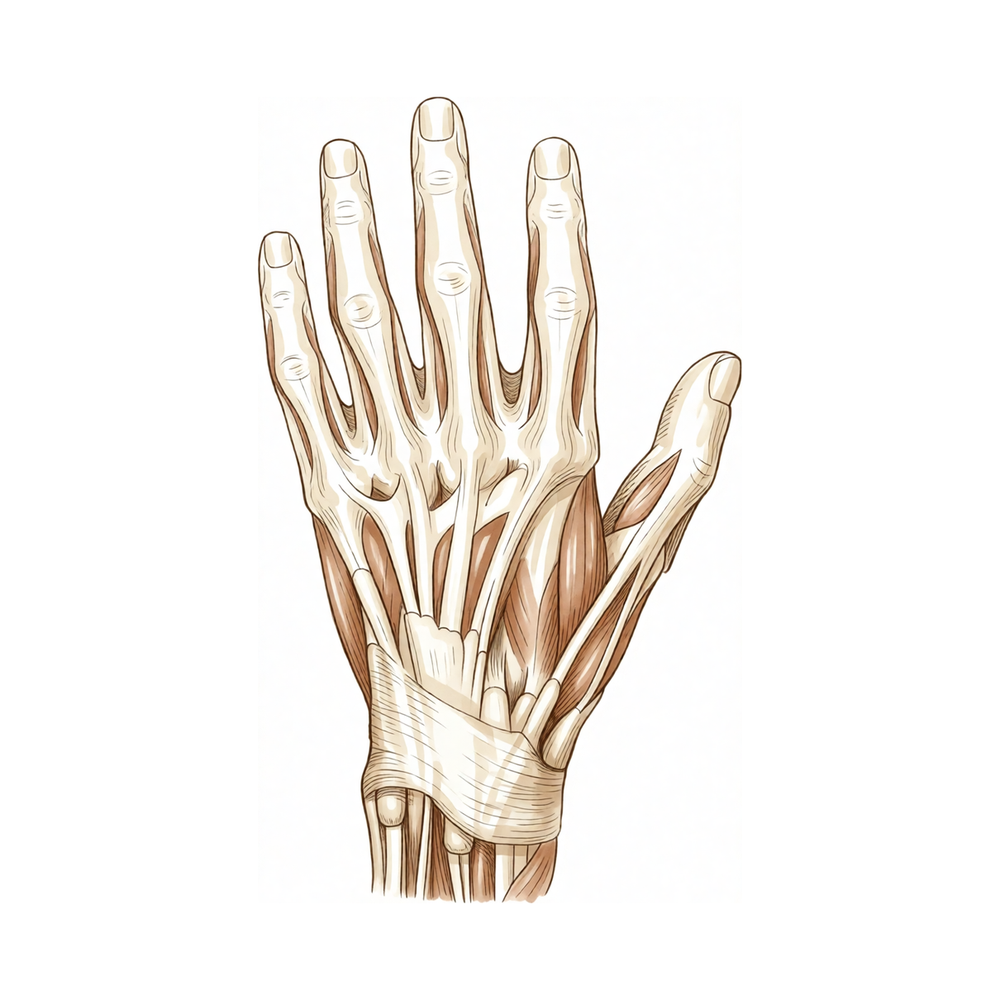
Este protocolo orienta sua recuperação após o reparo cirúrgico de um tendão extensor (um dos tendões na parte dorsal do dedo ou da mão responsável por esticar o dedo) realizado pelo Dr. Kieran Hirpara no Mater Private Hospital Rockhampton. Ele abrange reparos na parte dorsal do dedo, da mão e do pulso (as zonas que os cirurgiões denominam IV a VII). Não se aplica ao dedo em martelo (reparo exatamente na ponta do dedo) nem ao reparo do feixe central ou da deformidade em botão de flor na articulação média; para esses casos, existem protocolos distintos. O protocolo inicia-se com seu programa de exercícios domiciliares, seguido pelo plano clínico estruturado destinado ao seu fisioterapeuta. Leve esta página ou seu arquivo PDF à primeira sessão de terapia, para que a reabilitação seja devidamente coordenada. Seu terapeuta poderá ajustar o plano conforme a evolução da sua recuperação.
Caso tenha alguma dúvida ou preocupação quanto à ferida pós-cirúrgica, entre em contato com o consultório. Geralmente é útil tirar uma foto da ferida e enviá-la por e-mail para análise.
O que esperar
A reparação do tendão extensor consiste em unir novamente o tendão rompido na parte dorsal do dedo ou da mão. Antigamente, para proteger essa reparação, a mão precisava ser imobilizada com uma tala por várias semanas; contudo, isso frequentemente deixava os dedos rígidos e com recuperação lenta. Atualmente, a recuperação utiliza uma abordagem moderna e inteligente chamada reabilitação por movimento relativo (método Merritt).
O elemento-chave é uma pequena tala denominada “yoke”, usada na parte de trás da mão. Ela mantém a articulação do dedo reparado cerca de 15 a 20 graus mais esticada do que as articulações dos dedos vizinhos. Essa pequena diferença alivia discretamente a tensão sobre o tendão em cicatrização, permitindo que o paciente comece a usar a mão imediatamente, de forma suave e confortável, em vez de aguardar semanas com a mão imobilizada. O movimento precoce, dentro desses limites, garante que o tendão continue deslizando normalmente, evitando aderências; além disso, esse desvio angular impede que o tendão seja sobrecarregado.
Na maioria das reparações (nas áreas mais comuns na parte dorsal do dedo e da mão), a tala “yoke” por si só é suficiente. Porém, em alguns casos (reparações próximas ao punho, reparações mais frágeis ou quando se julga necessária proteção extra), uma tala de punho também é utilizada nas primeiras semanas. Seu fisioterapeuta informará se você precisará usar também a tala de punho.
O plano de recuperação é implementado em etapas cuidadosas: a tala “yoke” deve ser usada o tempo todo por cerca de seis semanas, sendo gradualmente retirada a partir da quinta semana; o movimento conjunto de punho e dedos é introduzido nas semanas intermediárias; o fortalecimento começa por volta da oitava semana; e a volta às atividades normais ocorre entre dez e doze semanas, quando a reparação já estiver consolidada.
Precauções e limitações
- Use a órtese o tempo todo durante as primeiras seis semanas, inclusive durante os exercícios e tarefas cotidianas; retire-a ou reduza seu uso apenas conforme orientação do seu terapeuta de mão. O terapeuta informará se você também precisará usar uma órtese de punho.
- Desde o início, faça um uso leve da mão dentro da órtese, dentro dos limites do conforto. NÃO realize nenhum tipo de levantamento, aperto forçado ou atividade com resistência nas primeiras semanas.
- NÃO inicie exercícios de fortalecimento da preensão ou do aperto até receber autorização, geralmente por volta da oitava semana.
- NÃO faça um punho fechado com força nem force os dedos precocemente; movimente-os apenas dentro das amplitudes suaves e controladas que lhe forem ensinadas.
- Mantenha as articulações menores dos dedos em movimento para evitar rigidez; o alongamento passivo suave ajuda nesse sentido.
Para orientações sobre cuidados com a ferida, inchaço e cicatrização, consulte o guia de cuidados com feridas do consultório.
Seus exercícios
Kieran Hirpara 4.0
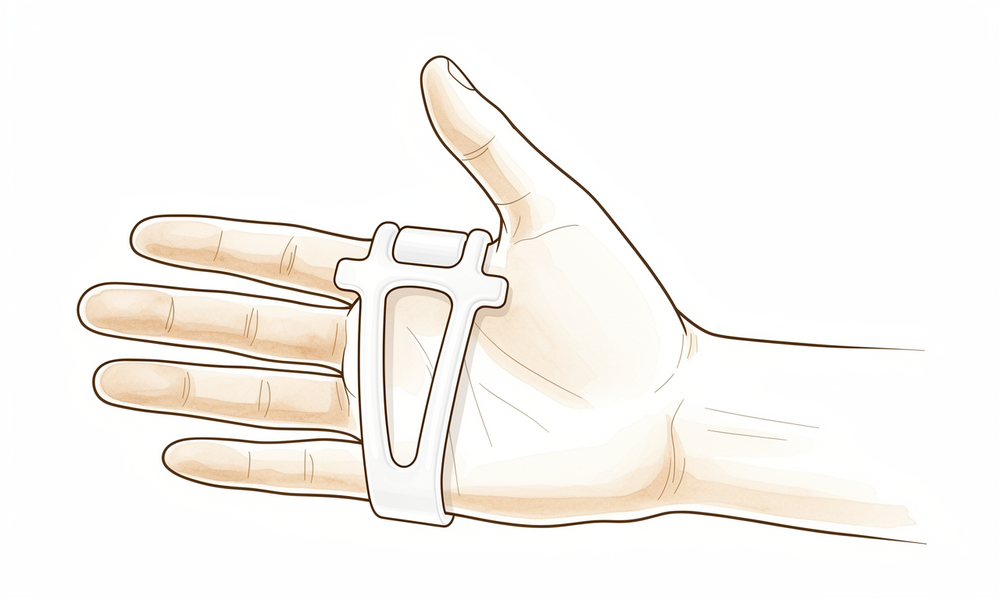
Uso da tala de movimento relativo (tipo “yoke”)
O dedo operado fica imobilizado em uma pequena tala chamada “yoke” (ou tala de movimento relativo). Essa tala mantém a articulação proximal do dedo (a MCP, onde o dedo se conecta à mão) cerca de 15 a 20 graus mais esticada em relação aos dedos vizinhos. Essa pequena diferença alivia a tensão sobre o tendão em recuperação, permitindo que você utilize a mão imediatamente. Use a tala o tempo todo por aproximadamente seis semanas — inclusive durante os exercícios e as atividades diárias — e retire-a somente conforme orientação do seu terapeuta de mão. O terapeuta também lhe informará se você precisará usar também uma tala para o punho.
Usada em tempo integral por cerca de 6 semanas, com retirada gradual a partir da 5ª semana, conforme orientação.
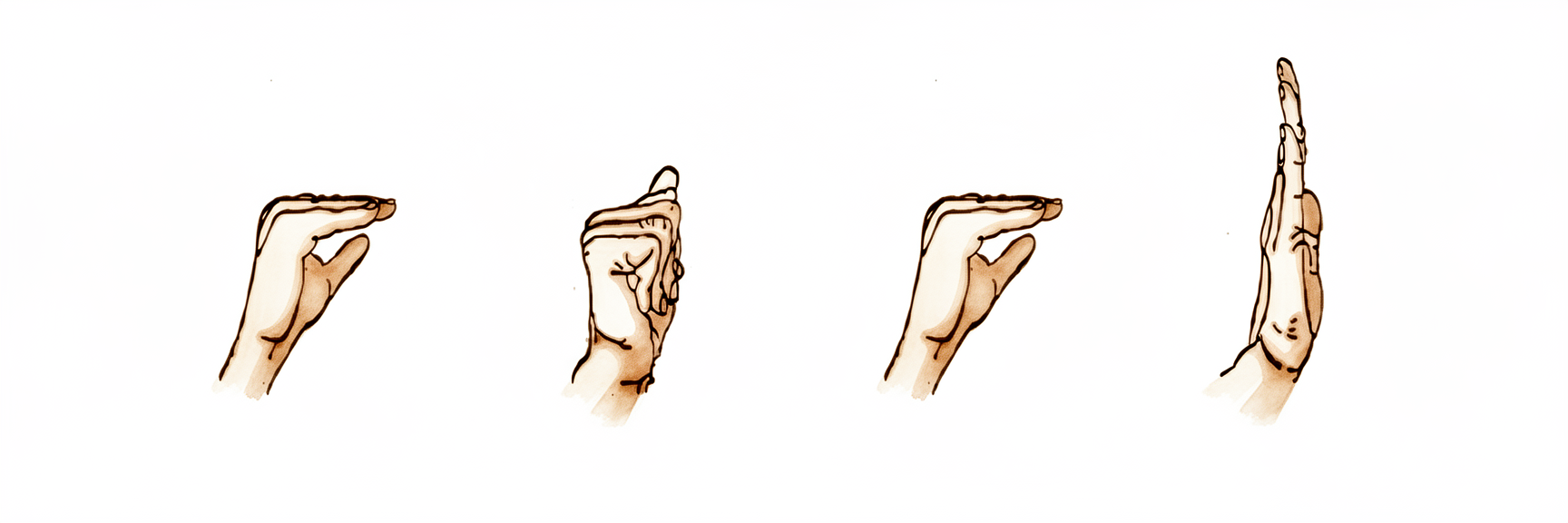
Flexão dos nós dos dedos, dedos esticados (intrínseco-plus)
Mantenha a tala no lugar e flexione as articulações metacarpofalângicas (onde os dedos se conectam à mão), mantendo o restante de cada dedo reto — formando assim uma espécie de “superfície plana” ou “prateleira”. Em seguida, volte à posição reta. Faça os movimentos de maneira suave, dentro do limite do conforto. Isso permite que o tendão reparado se deslize de forma segura e controlada, evitando que ele aderisse ou ficasse preso, sem sofrer qualquer sobrecarga.
10 vezes, a cada duas horas ao longo do dia.
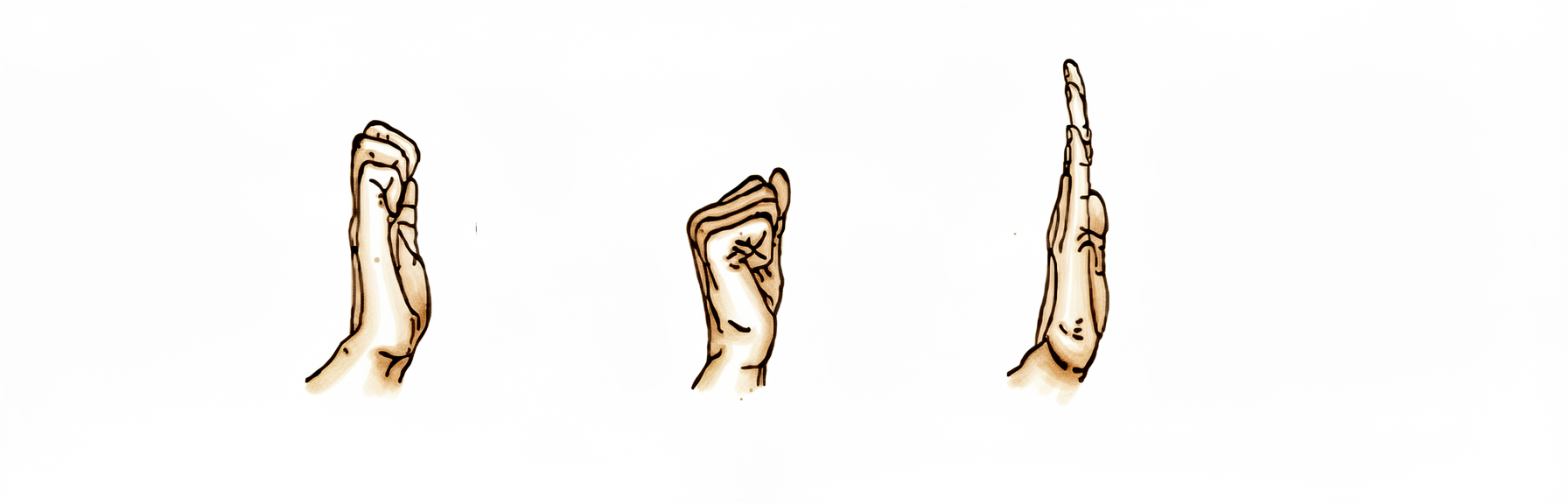
Dedos retos nas articulações metacarpofalângicas, com flexão dos dedos (tipo “intrínseco negativo”/em gancho)
Mantendo a tala no lugar, mantenha as articulações metacarpofalângicas (os nós dos dedos) retas e curve apenas as articulações menores dos dedos para baixo, formando um gancho (garra); em seguida, estique os dedos novamente. Isso movimenta o tendão reparado pela outra parte da sua amplitude, novamente de maneira segura e controlada. Faça o exercício dentro dos limites do conforto, sem forçar.
10 vezes, a cada duas horas ao longo do dia.
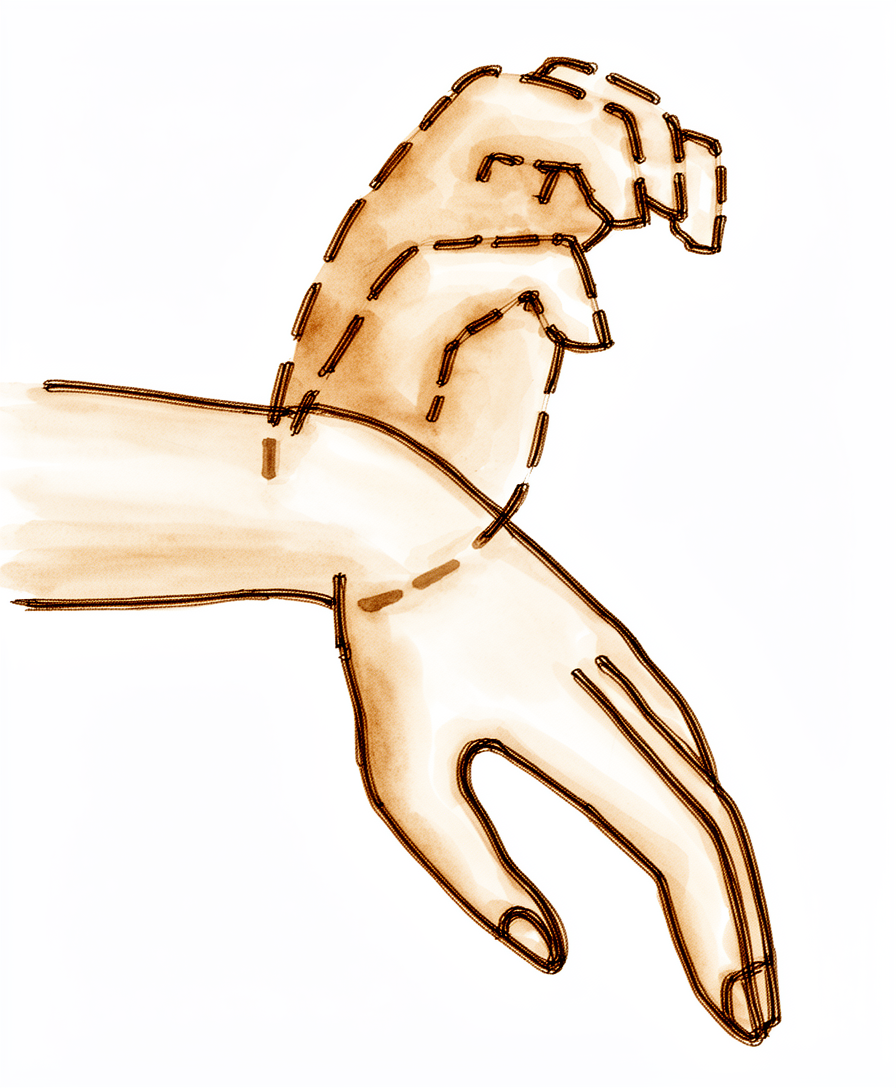
Movimento acoplado de punho e dedos (tenodese)
Um exercício posterior — indicado pelo seu terapeuta da mão, geralmente entre três e seis semanas após a cirurgia. Incline suavemente o punho para trás e deixe os dedos relaxarem, abrindo-se; em seguida, deixe o punho cair para a frente enquanto os dedos se fecham delicadamente. O punho e os dedos se movem em conjunto. Esse movimento faz com que os tendões extensores deslizem de forma natural e segura, sendo iniciado somente quando a reparação tecidual já estiver mais estável.
10 vezes, 2 a 3 vezes por dia (a partir de aproximadamente 3 a 6 semanas, conforme orientação).
Kieran Hirpara 4.0
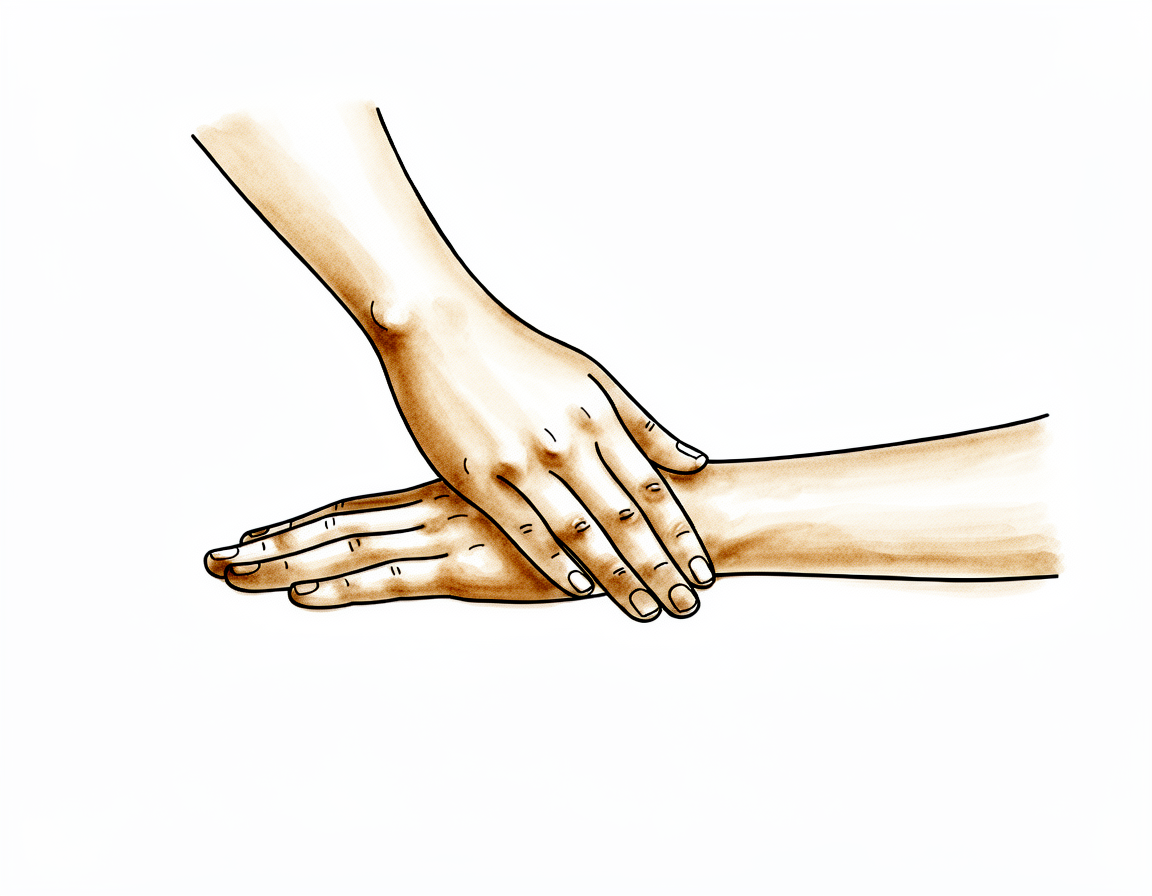
Extensão passiva dos dedos
Use delicadamente a outra mão para sustentar e endireitar as articulações menores do dedo operado, ajudando-o a ficar completamente reto sem forçar. Isso evita que o dedo fique rígido numa posição curvada enquanto o tendão cicatriza. Faça tudo com suavidade e sem causar dor, seguindo sempre as orientações do seu terapeuta de mão.
Mantenha por alguns segundos, de 5 a 10 vezes ao dia, conforme orientado.
Kieran Hirpara 4.0
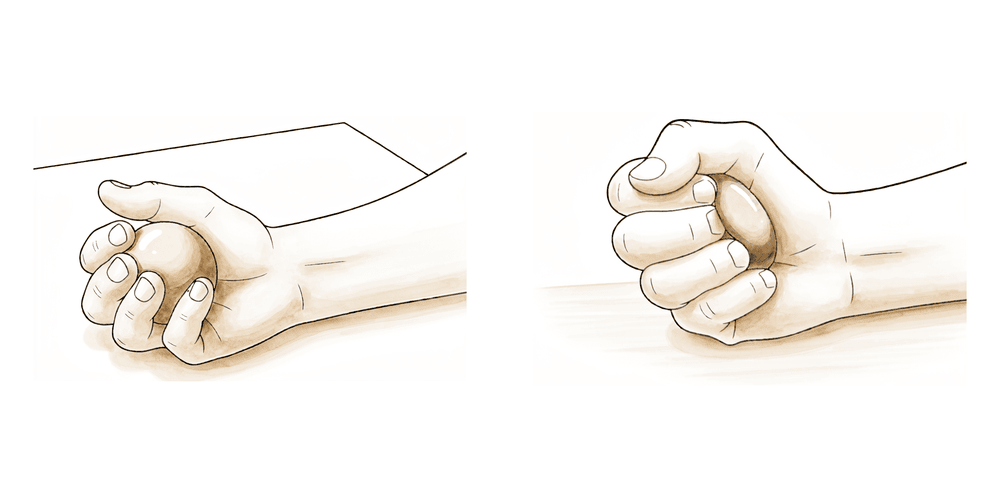
Fortalecimento da preensão/pinça (a partir da 8ª semana)
Um exercício posterior — só a partir de aproximadamente oito semanas, após a autorização do terapeuta da mão para iniciar o fortalecimento. Aperte uma bola macia ou massa de modelar com toda a mão, e faça o movimento de pinça entre o polegar e os dedos, aumentando gradualmente a intensidade ao longo de várias semanas. Isso restaura a força de preensão e de pinça, uma vez que a reparação esteja consolidada. Não inicie exercícios de preensão com resistência antes de receber autorização.
De 10 a 15 compressões, 2 a 3 vezes ao dia (apenas a partir de aproximadamente 8 semanas).
Estes são os exercícios contidos no seu folheto informativo. Comece a realizá-los somente sob orientação do Dr. Hirpara e do seu terapeuta ocupacional, respeitando sempre os limites e a amplitude de movimento que lhe foram indicados. Os primeiros exercícios devem ser feitos com a tala em formato de “Y”: flexões suaves dos nós dos dedos e contrações dos dedos que permitem o deslizamento seguro e controlado do tendão reparado, sem sobrecarregá-lo. Os movimentos combinados de punho e dedos, bem como os exercícios de fortalecimento da preensão, pertencem a fases posteriores e só devem ser iniciados após autorização explícita. Interrompa qualquer exercício que cause dor aguda na parte dorsal dos dedos ou da mão.
Seu protocolo clínico
O restante desta página descreve o protocolo clínico em etapas para a reabilitação após reparo de tendões extensores (zonas IV a VII), utilizando a extensão por movimento relativo (RME). Esta seção deve ser entregue ao seu terapeuta de mão; cada fase começa com uma explicação simples, em linguagem acessível, sobre o que está ocorrendo. O reparo é protegido por uma tala em formato de “yoke” que mantém a articulação metacarpofalangeana do dedo reparado 15 a 20 graus mais estendida em relação aos dedos adjacentes, reduzindo assim a tensão exercida sobre o tendão extenso graças ao efeito da “quadriga” e às juncturae tendineae; por isso, o movimento ativo imediato é seguro.
Antes de iniciar o tratamento, verifique o relatório cirúrgico do paciente e seu histórico médico; consulte também o cirurgião responsável quanto às zonas reparadas, tendões envolvidos, resistência da sutura e necessidade de uso de uma órtese de punho complementar. Por padrão, para as zonas V e VI, o Dr. Hirpara recomenda apenas a tala “yoke” (tala de extensão por movimento relativo, mantendo a MCP do dedo reparado 15–20° mais estendida que os demais dedos). Para a zona VII, reparos mais frágeis ou pacientes não aderentes ao tratamento, acrescenta-se uma órtese de punho (~20–25° de extensão, por cerca de 3 semanas). Este protocolo aplica-se exclusivamente a reparos dos tendões extensores dorsais nas zonas IV–VII; NÃO se aplica a lesões do tipo “mallet” (zonas I–II) nem a lesões do feixe central ou da juntura de boutonnière (zona III).
Fase I — talhador (tala para punho ±), uso ativo imediato (semanas 0 a 3)
Nas três primeiras semanas, o talhador protege a reparação cirúrgica enquanto o paciente utiliza a mão de forma ativa desde o início. O deslocamento de extensão relativo de 15–20° diminui a carga sobre a área reparada, motivando assim o deslizamento ativo controlado desde o princípio. É permitido um uso funcional leve com a tala; porém, não se deve levantar pesos nem fazer preensões resistidas.
Para o seu terapeuta da mão:
Instruções e precauções - Ajuste o talhador/tala de extensão com movimento relativo: a articulação MCP do dedo operado deve ficar 15–20° mais estendida em relação aos dedos adjacentes; a tala deve ser usada em tempo integral. - Adicione uma ortose de punho (~20–25° de extensão) apenas nas primeiras 3 semanas, exclusivamente para casos na zona VII, reparações mais frágeis ou pacientes não aderentes ao tratamento (para as zonas V–VI, o uso isolado do talhador é suficiente). - É recomendado o uso leve da mão com a tala; proíbe-se levantar pesos, fazer preensões forçadas ou atividades resistidas. - Evite movimentos de fechamento da mão excessivamente forçados; mantenha os arcos de movimento sob controle.
Cuidados gerais - Ferida: troque os curativos cirúrgicos conforme orientação; verifique se há sinais de infecção. - Edema: mantenha o membro elevado, realize bombeamento digital suave e aplique gelo conforme necessário. - Exercícios (dentro da tala, a cada ~2 horas): movimentos ativos do tipo intrínseco-plus (flexão da MCP com as IPs estendidas) e intrínseco-minus/gancho (extensão da MCP com flexão das IPs); realize também extensão passiva das IPs diariamente para prevenir rigidez articular. - Inicie o tratamento cicatricial assim que a ferida estiver curada.
Critérios para avançar para a fase seguinte - A ferida está cicatrizando bem; não há atraso na extensão do dedo; o paciente consegue realizar movimentos ativos controlados com a tala após ~3 semanas.
Fase II — retirada da tala de punho, manutenção do “yoke”, movimento acoplado (semanas 3 a 6)
A partir da terceira semana, a tala suplementar para o punho é retirada (o “yoke” continua sendo usado o tempo todo). Passa-se então a realizar movimentos acoplados de punho e dedos (tenodese) e flexão/extensão ativa composta, aumentando a excursão tendínea de forma controlada e segura para a cicatrização.
Para o seu terapeuta da mão:
Avaliações - Amplitude de movimento ativa e passiva (articulações metacarpofalangeanas e interfalangeanas), atraso na extensão, dor e inchaço; avaliação da ferida/ Cicatriz
Instruções e precauções - Retirar a tala suplementar de punho (caso tenha sido utilizada); manter o “yoke” em uso contínuo - Progredir os movimentos gradualmente; ainda NÃO é permitido realizar preensão resistida nem exercícios de fortalecimento
Tratamento - Exercícios: incluir movimento acoplado de punho e dedos (tenodese) e flexão/extensão ativa composta; manter os exercícios de deslizamento intrínseco e extensão passiva das articulações interfalangeanas; uso funcional leve enquanto o “yoke” estiver sendo usado - Continuar a massagem da cicatriz após sua completa cicatrização
Critérios para progressão - A amplitude de movimento ativa composta deve evoluir (movimento composto completo geralmente por volta de 6 a 8 semanas); ausência de atraso na extensão; dor controlada
Fase III — retirada do suporte, fortalecimento e retorno às atividades (semanas 6 a 12)
Por volta da quinta ou sexta semana, o suporte é retirado gradualmente. O fortalecimento progressivo da força de preensão e pinça começa por volta da oitava semana, quando a reparação está consolidada, evoluindo gradualmente até o retorno total às atividades entre a décima e a décima segunda semana.
Para o seu fisioterapeuta da mão:
Avaliações - Amplitude completa de movimento ativa e passiva, presença de atraso na extensão, força de preensão/pinça comparada ao lado contralateral; testes funcionais e específicos para o trabalho, conforme apropriado
Instruções e precauções - Retirar o suporte a partir da semana 5, completamente por volta da semana 6, conforme a amplitude de movimento e o controle melhorarem - Iniciar o fortalecimento progressivo da força de preensão/pinça a partir da 8ª semana (nunca antes) - Aumentar gradualmente a resistência até o retorno total às atividades na 10ª a 12ª semana
Tratamento - Exercícios: fortalecimento progressivo da força de preensão e pinça (apertar bola ou massa de modelar, exercícios de pinça) a partir da semana 8; aumento progressivo da resistência; manter exercícios para manter a mobilidade residual e a extensão das falanges distais - Considerar a alta terapêutica quando a amplitude de movimento e a força estiverem quase simétricas e o retorno funcional for alcançado - Encaminhar novamente ao médico responsável caso persista atraso na extensão, a amplitude de movimento estagne ou o resultado do tratamento seja insatisfatório
Critérios para retorno total às atividades - Amplitude de movimento completa e indolor, sem atraso significativo na extensão; força de preensão/pinça quase simétrica; em torno de 10 a 12 semanas
Retorno às atividades e ao trabalho
É recomendado, desde o início, o uso leve e cotidiano da mão dentro da tala em Y (comer, escrever, vestir-se, cuidados pessoais leves), dentro dos limites do conforto, desde que não envolva levantamento de peso, aperto forçado ou atividades com resistência. O fortalecimento muscular começa por volta da oitava semana, e as atividades completas e sem restrições podem ser retomadas entre dez e doze semanas, quando a reparação estiver consolidada e a amplitude de movimento e a força da mão tiverem sido restauradas — avaliação feita pelo Dr. Hirpara e pelo seu terapeuta da mão, e não apenas com base no calendário.
Dirigir: o uso leve da mão com a tala em Y é permitido, portanto dirigir não é proibido de forma absoluta; porém, você deve ser capaz de segurar o volante e controlar o carro com segurança, inclusive em situações de emergência. Para a maioria das pessoas, isso significa retomar a atividade por volta da sexta semana, ao se começar a retirar a tala; pode ser antes, caso consiga controlar o carro confortavelmente e o cirurgião confirme que é seguro para você.
Após seguir este protocolo
Este protocolo complementa as orientações gerais de recuperação fornecidas pelo consultório: consulte controle da dor pós-operatória, cuidados com a ferida e tratamento das cicatrizes. O plano em fases descrito acima segue as diretrizes de reabilitação publicadas para casos de reparo de tendões extensores utilizando a técnica de extensão com movimento relativo; sua recuperação contínua será acompanhada individualmente pelo Dr. Hirpara e pelo seu terapeuta de mão, conforme a evolução da sua mão.
Evidence & references
This is the clinical evidence summary written for health professionals. It is technical, and it lists the research this page was built from. You do not need to read it to understand your treatment or to make a decision about it.
Extensor Tendon Repair — Procedure Outcomes & Post-operative Rehabilitation (Relative-Motion Extension, Zones IV–VII)
Topic scope: post-operative rehabilitation after primary repair of an extensor tendon on the dorsum of the finger, hand or wrist — zones IV to VII — managed by relative-motion extension (RME / Merritt yoke splint, the ICAM family of regimens). This is a tendon repair (a construct that must heal under controlled load), but the relative-motion approach lets that load be applied immediately and actively rather than after weeks of immobilisation. This page does not cover mallet finger (zones I–II) or central-slip / boutonnière repair (zone III), which follow different regimens.
Defining principle of the rehab here: a yoke (relative-motion) splint holds the repaired digit's MCP joint 15–20° more extended than its neighbours. By the quadriga effect and the juncturae tendineae, this small relative offset offloads the repaired tendon — it reduces the active extensor excursion demanded of the healing repair (from roughly 12 mm of excursion in normal active extension to about 6 mm within the splint). That residual ~6 mm is enough to keep the tendon gliding and prevent adhesions, but too little to rupture the repair — which is why immediate active motion is safe. The single common branch point is whether a supplementary wrist orthosis (~20–25° extension, first ~3 weeks) is added for zone VII, weaker repairs, or non-compliant patients; the yoke alone is the default for zones V–VI.
A. PROCEDURE / REPAIR OUTCOMES (relative-motion vs immobilisation)
Extensor tendon repair on the back of the hand is reliable; the principal modern question is how to rehabilitate it — protected immobilisation versus an early-active programme such as relative-motion extension — not whether repair works.
- The mechanism that makes immediate active motion safe is well established. The 15–20° relative MCP-extension offset offloads the repair via the quadriga effect and the juncturae tendineae, cutting active extensor excursion from ~12 mm (normal) to ~6 mm within the splint — enough to prevent adhesions, too little to rupture. Cadaveric and mechanistic work underpins this rationale [Merritt, Wong & Lalonde 2020]. Strong (mechanistic + cadaveric).
- Relative-motion regimens match or improve on traditional early-active and immobilisation pathways. A randomised controlled trial in zones V–VI found relative-motion extension delivered earlier return of hand function and higher patient satisfaction with equivalent total active motion (TAM) versus the comparator early-active programme [Collocott RCT 2020]. A systematic review reported earlier return to work with equivalent range of motion and complication rates [Collocott review 2017]. Moderate–strong (1 RCT + SR; RME studies of generally lower methodological quality).
- Yoke-alone (no wrist splint) is supported for the common zones. Case series of relative-motion extension without a supplementary wrist orthosis for zones IV–VI report no ruptures, supporting yoke-alone as the default for these zones with the wrist orthosis reserved for zone VII / weaker / non-compliant repairs [Hirth 2021; Howell ICAM]. Moderate.
- The functional gain over immobilisation is large and practical. Early-active relative-motion programmes report return to work at roughly 17–25 days, versus the 3–4 months typical of immobilisation regimens — the headline advantage that has driven adoption [Collocott review 2017; Howell ICAM]. Moderate.
B. REHABILITATION / THERAPY EVIDENCE
The central rehab questions are (1) immobilise or move early, (2) is a wrist splint needed in addition to the yoke, and (3) how long must the splint stay on. The evidence favours early relative motion, supports yoke-alone for zones V–VI, and suggests splint duration can be shorter than the traditional six weeks without penalty.
- Early active motion via relative-motion extension is the modern default. The original technique description [Merritt 2014] and the clinical scheduling / yoke construction work [Lutz 2015] established a reproducible programme: immediate active intrinsic-plus and intrinsic-minus motion in the yoke, progressing to coupled (tenodesis) motion, weaning, then strengthening. Moderate (technique + cohort).
- A supplementary wrist splint is optional, not mandatory. Yoke-alone case series for zones IV–VI report no ruptures; the wrist orthosis (~20–25° extension, first ~3 weeks) is added selectively for zone VII, weaker repairs, or poor compliance [Hirth 2021; Howell ICAM]. Moderate (selective use).
- Splint duration may be shortened. A comparison of 4-week versus 6-week splinting found no difference in outcome, suggesting the traditional six-week full-time period can be safely abbreviated in selected patients [Svens 2015]. This page keeps full-time wear ~6 weeks (weaned from ~wk 5) as the conservative default while acknowledging the shorter option. Moderate (1 comparative study).
- The field is moving toward wider use of relative motion. A recent international consensus endorses broader application of relative-motion rehabilitation, including beyond its original zone V–VI indication [Tang consensus 2025]. Consensus.
Recovery trajectory (expected, evidence-anchored)
| Phase | Window | Splint / restraint | Hand use / therapy focus | Strength / load | Notes |
|---|---|---|---|---|---|
| I — Yoke (± wrist splint), immediate active use | Week 0–3 | Yoke full-time (repaired MCP 15–20° more extended); wrist orthosis ~20–25° ext only for zone VII / weak / non-compliant | Active intrinsic-plus (MCP flex, IPs straight) and intrinsic-minus / hook every ~2 h; passive IP extension daily; light use in the splint | Light functional use only; no lifting / resisted grip | Relative offset offloads repair (~12 mm → ~6 mm excursion); active motion is safe from day one |
| II — Wrist splint off, yoke continues | Week 3–6 | Discontinue any wrist splint; yoke continues full-time | Add coupled wrist-and-finger (tenodesis) motion + composite active flexion/extension; light functional use; scar massage once healed | Still no resisted grip | Composite active ROM building; watch for extensor lag |
| III — Wean yoke, strengthen, return | Week 6–12 | Yoke weaned from ~wk 5, off ~wk 6 | Progress full active motion; commence grip/pinch strengthening from week 8 | Graded strengthening from wk 8 → full activity ~10–12 wk | Return to work as early as ~17–25 days reported; full unrestricted activity ~10–12 wk |
(Phase windows mirror the precautions and recovery structure in the patient protocol; they are typical guides, not trial-derived deadlines. Splint duration may be safely shortened toward 4 weeks in selected patients.)
C. KEY CONTROVERSIES / EVIDENCE QUALITY
- Relative motion vs traditional immobilisation / other early-active regimens. One RCT (zones V–VI) and a systematic review favour relative-motion extension for earlier hand function, earlier return to work, higher satisfaction, with equivalent TAM and complications — though RME studies are generally of lower methodological quality, so the effect size is moderately rather than strongly certain. Moderate–strong.
- Wrist splint: needed or not? Yoke-alone gives good results with no ruptures in zone IV–VI series; the supplementary wrist orthosis is selective (zone VII / weaker / non-compliant). The defensible default is yoke-alone for the common zones — hence the page wording that the hand therapist will advise if a wrist splint also applies. Moderate.
- How long to splint. Traditional full-time wear is ~6 weeks; a 4-vs-6-week comparison showed no difference, so duration can be individualised and potentially shortened. Moderate.
- The 15–20° offset itself. The specific relative-extension increment is consensus-derived (it must offload enough to protect but leave enough excursion to glide); it rests on sound mechanism rather than a dose-finding trial. Consensus.
- Extending relative motion beyond zones V–VI (e.g. to sagittal-band injury and selected boutonnière/central-slip cases). The 2025 consensus endorses wider use, but evidence outside the core zones is weak–moderate, which is why this page deliberately scopes to zones IV–VII and excludes zone III. Weak–moderate.
D. EVIDENCE STRENGTH FLAGS (summary)
- STRONG: the mechanism — relative 15–20° MCP-extension offset offloads the repair (quadriga + juncturae tendineae; ~12 mm → ~6 mm active excursion) making immediate active motion safe (mechanistic + cadaveric).
- MODERATE–STRONG: relative-motion extension is at least as good as other early-active-motion regimens (1 RCT zones V–VI: earlier hand function, higher satisfaction, equal TAM; SR: earlier return to work, equal ROM/complications) — tempered by the lower methodological quality of RME studies.
- MODERATE: wrist-splint-optional (yoke-alone, no ruptures in zone IV–VI series); 4-vs-6-week splint duration (no difference); return to work ~17–25 days vs 3–4 months for immobilisation.
- CONSENSUS: the specific 15–20° offset increment; broader application of relative motion (Tang 2025).
- WEAK–MODERATE: extension of the technique to sagittal-band / boutonnière (central-slip) injuries outside the core zones.
CITATIONS
RAG corpus (180,000+ Orthopaedic articles)
- Merritt WH. Relative motion splint: active motion after extensor tendon injury and repair. J Hand Surg Am. 2014. DOI: 10.1016/j.jhsa.2014.03.015
- Merritt WH, Wong AL, Lalonde DH. Recent developments are changing extensor tendon management (relative motion / quadriga mechanism). Plast Reconstr Surg. 2020. DOI: 10.1097/prs.0000000000006556
- Lutz K, et al. Relative motion extension splinting for extensor tendon repair — clinical schedule and yoke. Hand Clin. 2015. DOI: 10.1016/j.hcl.2014.12.006
- Collocott SJF, et al. Relative motion flexion versus relative motion extension / early active motion after extensor tendon repair (zones V–VI): a randomized controlled trial. J Hand Ther. 2020. DOI: 10.1016/j.jht.2018.10.003
- Collocott SJF, Kelly E, Ellis RG. A systematic review of relative-motion orthoses for the management of extensor tendon repairs. Hand Ther. 2017. DOI: 10.1177/1758998317729713
- Svens B, et al. Four-week versus six-week immobilisation comparison after extensor tendon repair. J Hand Ther. 2015. DOI: 10.1016/j.jht.2014.07.006
- Hirth MJ, et al. Relative-motion approaches in extensor tendon rehabilitation. J Hand Ther. 2021. DOI: 10.1016/j.jht.2019.12.016
- Tang JB, et al. International consensus on relative-motion rehabilitation and extensor tendon management. J Hand Surg (Eur Vol). 2025. DOI: 10.1177/17531934251363138
Extensor tendon rehabilitation literature (URLs)
- Howell JW, Merritt WH, Robinson SJ. Immediate Controlled Active Motion (ICAM) following zone 4–7 extensor tendon repair. J Hand Ther / PMC. https://www.ncbi.nlm.nih.gov/pmc/articles/PMC3574475/