Patients › Hand
Dedo em martelo
Mallet finger causes fingertip drooping after extensor tendon injury; splinting is key, surgery occasionally needed.
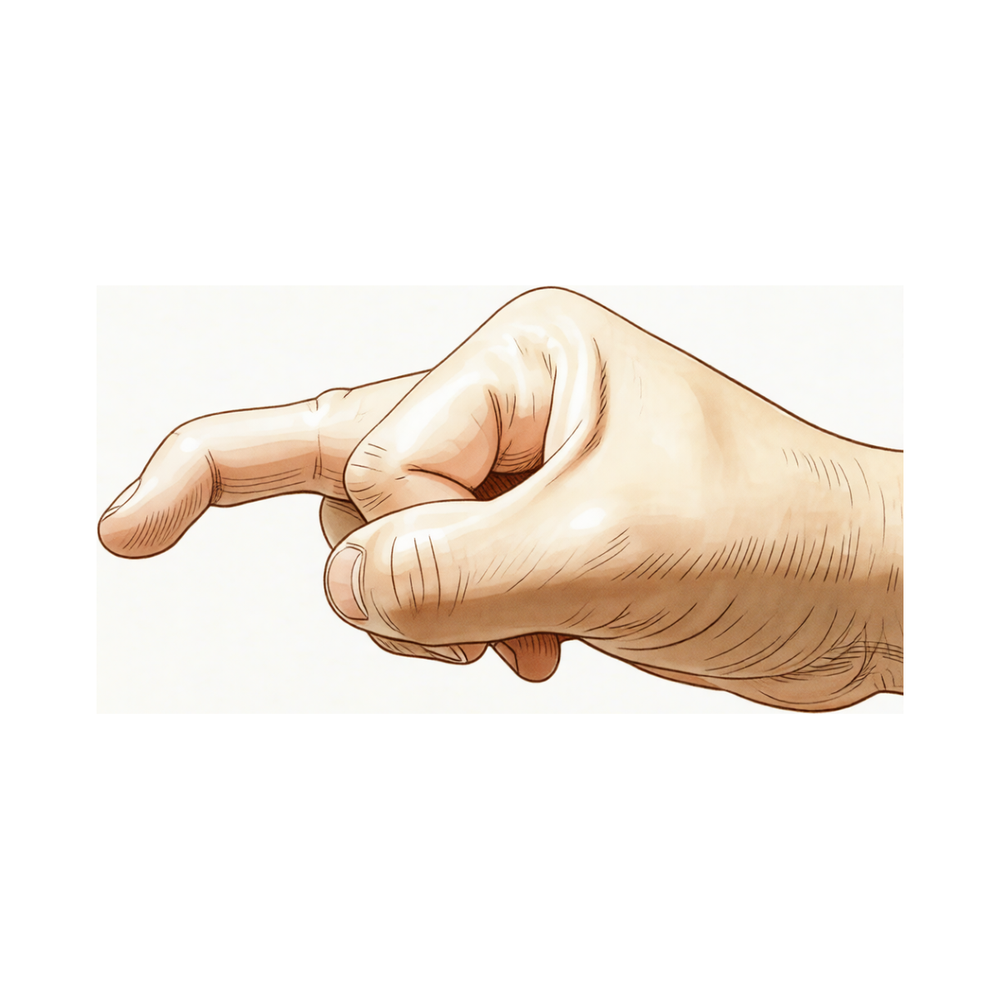
O que você está sentindo
No dedo em martelo, a última articulação do dedo fica caída e você não consegue esticar a ponta do dedo sozinho. Geralmente, o dedo ainda consegue dobrar para baixo normalmente. A lesão acontece quando o tendão responsável por esticar a ponta do dedo se desprende, às vezes levando consigo um pequeno pedaço de osso. Ela costuma ocorrer quando uma bola atinge a ponta de um dedo esticado, e é por isso que é uma lesão comum no futebol.
A dor fica na parte de trás da última articulação, logo abaixo da unha. Geralmente ela é mais forte nos primeiros dias após a lesão, quando o dedo está inchado e sensível ao toque. Dobrar a ponta do dedo piora a dor. Depois que o dedo é imobilizado com a tala e mantido reto, a dor geralmente melhora. A queda em si não dói, mas muda a forma como o dedo funciona.
As tarefas do dia a dia que exigem uma ponta do dedo firme ficam desajeitadas. Pegar moedas pequenas, passar a linha na agulha, girar uma chave pequena ou apertar botões pode ficar difícil, porque a ponta do dedo não consegue empurrar de forma reta. Escrever ou segurar o celular também pode parecer diferente. A articulação do meio do dedo também pode se dobrar para trás mais do que o normal para compensar a ponta caída.
Algumas pessoas percebem que o dedo parece pior pela manhã, depois que a mão ficou parada durante a noite, e que ele se solta assim que começam a movimentá-lo.
Alguns sinais de alerta exigem ação rápida. Se o seu dedo ficar quente, vermelho, inchado e dolorido, principalmente se houver febre, vá ao pronto-socorro no mesmo dia. Se houver pele rompida sobre a articulação lesionada, ou se o dedo parecer claramente deformado, vá no mesmo dia. Se o seu dedo ficar pálido, frio, branco ou azulado, ou se você perder subitamente a sensibilidade ou o movimento dele após uma lesão, vá no mesmo dia. Se os sintomas não estiverem melhorando, estiverem piorando ao longo das semanas ou impedirem você de trabalhar ou de usar a mão, procure seu médico de família ou peça uma avaliação com um especialista.
O que está realmente acontecendo
Na parte de trás da ponta do seu dedo passa um cordão fino de tendão, uma corda de fibras que liga o músculo ao osso. Suas fibras mais baixas se fixam no último osso pequeno do dedo, logo abaixo da unha. Quando você estica o dedo, esse cordão puxa o osso. No dedo em martelo, o cordão se soltou do seu ponto de fixação. Às vezes, ele arranca junto uma pequena lasca de osso.
Quando o cordão deixa de estar fixado, não há nada que sustente a ponta do dedo para cima. O músculo que dobra a ponta do dedo para baixo continua funcionando e, sem nada puxando no sentido contrário, ele vence. A ponta fica caída e você não consegue esticá-la sozinho, embora ainda consiga empurrá-la até ficar reta com a outra mão. Isso acontece porque o músculo que dobra está intacto e o cordão que estica não está.
A lesão geralmente acontece quando a ponta de um dedo esticado é forçada de repente a dobrar, por exemplo, quando ela fica presa em um bolso ou em um lençol ao esticar o braço. A superfície da articulação também pode ser afetada. Se o pedaço de osso arrancado ocupar mais de um terço da superfície articular, ou se o último osso sair do alinhamento, a cirurgia geralmente é recomendada. Fragmentos menores costumam ser tratados apenas com a tala.
Alguma queda pode permanecer mesmo quando o tratamento dá certo, e a maioria das pessoas se adapta a ela sem muita dificuldade. Se a tala não funcionou, a cirurgia é uma opção, embora uma vantagem da cirurgia não tenha sido claramente comprovada.
O que podemos fazer a respeito
O Dr. Kieran Hirpara, cirurgião de membro superior no Mater Private Hospital Rockhampton, adapta o tratamento à sua lesão específica. Alguns casos de dedo em martelo cicatrizam sem cirurgia, e outros precisam de cirurgia logo, por isso uma avaliação rápida é importante. Geralmente, os pacientes são encaminhados à nossa clínica pelo médico de família; caso um fisioterapeuta tenha sugerido que você nos procure, ainda assim será necessário um encaminhamento do seu médico de família para ter direito ao reembolso do Medicare. Na clínica, colhemos o seu histórico, examinamos o seu dedo e solicitamos uma radiografia se for necessário. A radiografia mostra se um pedaço de osso se desprendeu junto com o tendão, qual é o tamanho desse pedaço e se o último osso do dedo saiu do alinhamento.
Na maioria das lesões, o tratamento começa com uma tala que mantém a ponta do dedo reta. A tala precisa ficar no lugar continuamente por 6 a 8 semanas, porque mesmo alguns minutos de flexão, como quando você lava as mãos, podem desfazer a cicatrização. Nossa terapeuta da mão, Ruby Doolan, da Extend Rehabilitation, ajusta a sua tala e orienta os seus exercícios. Um terapeuta da mão consegue tratar essas lesões tão bem quanto um cirurgião, e a tala causa pouquíssimos problemas de pele. Se o seu dedo ainda estiver caído quando a tala for retirada, semanas extras de tala fazem parte do plano, e não são sinal de que o tratamento falhou. Uma tala noturna adicional não traz nenhum benefício. Se você pratica esportes, precisará evitar o esporte que causou a lesão enquanto o dedo estiver com a tala. Mesmo lesões que ficaram sem tratamento por 2 a 4 semanas ainda podem ter bons resultados com a tala.
A cirurgia geralmente é recomendada quando o pedaço de osso arrancado envolve mais de um terço da superfície articular, ou quando o último osso do dedo saiu do alinhamento em direção à palma da mão. Ocasionalmente, ela também é oferecida para uma queda que persiste após o uso da tala, ou para uma lesão antiga que nunca foi tratada. Se a tala não funcionou, a cirurgia é uma opção, embora uma vantagem da cirurgia não tenha sido claramente comprovada. A operação mantém o tendão ou o fragmento ósseo no lugar para que a ponta do dedo possa voltar a ficar reta, e ela tem uma página própria.
O que esperar
A maioria dos casos de dedo em martelo melhora com uma tala. Cerca de metade das lesões é curada ou melhora claramente apenas com a tala. A tala mantém a ponta do dedo reta por 6 a 8 semanas, e o tendão cicatriza nessa posição. Se o seu dedo ainda estiver caído quando a tala for retirada, mais semanas de tala fazem parte do plano, e não são sinal de que o tratamento falhou.
O seu resultado depende muito de usar a tala exatamente conforme orientado. As pessoas que seguem as instruções da tala têm resultados melhores do que as que a retiram. Mesmo alguns minutos de flexão podem desfazer a cicatrização, e é por isso que a tala fica no lugar continuamente. Lesões tratadas dentro de duas semanas após acontecerem raramente deixam uma incapacidade duradoura. Lesões que ficaram sem tratamento por 2 a 4 semanas ainda podem ter bons resultados com a tala, portanto um início tardio não é motivo para desistir.
Alguma queda pode permanecer mesmo quando o tratamento dá certo. A ponta do dedo pode não ficar perfeitamente reta, e a maioria das pessoas se adapta a isso sem muita dificuldade. A última articulação faz pouco do trabalho de preensão, por isso uma pequena queda permanente geralmente importa menos do que parece. Se a tala não funcionou, a cirurgia é uma opção, embora uma vantagem da cirurgia não tenha sido claramente comprovada.
Se o dedo ficar completamente sem tratamento, a queda tende a permanecer. O tendão não volta a se fixar sozinho sem ajuda. Algumas pessoas convivem com a queda e se viram bem, enquanto outras acham a ponta do dedo desajeitada frustrante ao longo dos meses. Se os seus sintomas não estiverem melhorando, estiverem piorando ao longo das semanas ou impedirem você de trabalhar ou de usar a mão, procure seu médico de família ou peça uma avaliação com um especialista.
Quando procurar um especialista
A maioria dos casos de dedo em martelo resulta de uma bola que atinge a ponta de um dedo esticado, muitas vezes no futebol. A ponta do dedo fica caída e não se estica sozinha, o que geralmente já é suficiente para levar a uma consulta. Algumas fraturas maiores se comportam de forma diferente: a ponta do dedo pode continuar reta mesmo que um pedaço de osso tenha se desprendido, por isso um dedo dolorido que não melhora após uma pancada na ponta ainda merece uma radiografia. As lesões ósseas do dedo em martelo geralmente acontecem quando o dedo é forçado para trás, e não para a frente.
Alguns sinais exigem ação rápida. Se o seu dedo ficar quente, vermelho, inchado e dolorido, principalmente se houver febre, vá ao pronto-socorro no mesmo dia. Se houver pele rompida sobre a articulação lesionada, ou se o dedo parecer claramente deformado, vá no mesmo dia. Se o seu dedo ficar pálido, frio, branco ou azulado, ou se você perder subitamente a sensibilidade ou o movimento dele após uma lesão, vá no mesmo dia. Se os sintomas não estiverem melhorando, estiverem piorando ao longo das semanas ou impedirem você de trabalhar ou de usar a mão, procure seu médico de família ou peça uma avaliação com um especialista.
Em maior profundidade
Advanced reading: the deeper science (optional)
Esta seção vai além do que você precisa saber para tomar decisões sobre o próprio tratamento. O dedo em martelo merece essa leitura adicional, pois as duas situações geralmente consideradas indicações claras para cirurgia — um fragmento ósseo grande e a persistência da deformidade após o uso da tala — não estão tão bem estabelecidas quanto a confiança com que são citadas.
Ambos os tratamentos produzem bons resultados, mas ninguém sabe onde está o limite
Uma revisão sistemática sobre os tratamentos cirúrgicos e não cirúrgicos chegou a uma conclusão inusualmente direta: ambos levam a bons resultados clínicos, e não há evidências suficientes para determinar quando a intervenção cirúrgica é indicada [1].
Essa segunda parte é a mais importante. A discussão não diz respeito à eficácia de cada tratamento. O problema é que o limiar para optar pela cirurgia – o ponto em que a fratura é considerada muito grande ou a articulação muito subluxada – baseia-se em convenções, e não em evidências comparativas.
Quando um fragmento envolve mais de um terço da superfície articular, ou quando a falange distal está subluxada, a cirurgia geralmente é indicada; contudo, ainda não foi comprovada de forma clara uma vantagem significativa do tratamento cirúrgico, mesmo nesses casos complexos [2].
A imobilização com talas funciona; o número que importa é o tempo de aplicação
As evidências científicas sobre o uso de órteses são mais concretas. Dois de três estudos constataram um grande efeito da intervenção com órteses, variando de 2,17 a 12,12, sendo recomendado um período de imobilização de 6 a 8 semanas, além de semanas adicionais caso persista algum atraso na recuperação [3].
Existem dois pontos práticos a se considerar. O primeiro é que a tala deve manter a ponta do dedo reta continuamente; a posição da tala já é suficiente para manter as extremidades do tendão alinhadas, e alguns minutos de flexão durante a lavagem reiniciam o cronômetro da recuperação. O segundo é que “as semanas adicionais caso persista algum atraso” fazem parte do protocolo de tratamento, e não são sinal de falha no mesmo.
Por que um leve atraso residual na extensão é geralmente aceitável
É comum haver um pequeno atraso permanente na extensão após o tratamento, e isso geralmente não impede o uso normal da mão. A articulação distal contribui relativamente pouco para a força de preensão; a maioria das pessoas se adapta a alguns graus de atraso na extensão sem perceber qualquer impacto funcional.
Isso é relevante ao avaliar a necessidade de cirurgia, mesmo quando o resultado esperado não é perfeito: a intervenção nessa articulação traz riscos consideráveis — o fragmento ósseo é pequeno, a pele é fina, e a fixação com pinos ou arames nessa região pode provocar infecções, deformidade das unhas e rigidez articular. Tais riscos precisam ser ponderados em relação aos benefícios estéticos e funcionais, que costumam ser modestos. Dado que as evidências científicas não demonstram vantagem clara da cirurgia, mesmo nos casos mais complexos, aceitar um pequeno atraso na extensão é uma decisão coerente com as evidências, em vez de um mero compromisso.
A deformidade que não é dedo em martelo
O dedo em martelo pertence a um grupo de lesões do mecanismo extensor, sendo distinguido principalmente pelo local onde ocorre a ruptura do tendão: na ponta do dedo no caso do dedo em martelo, na articulação média no caso da deformidade em botão, e na banda sagital na articulação metacarpofalângica [4]. No início, quando o inchaço dificulta a identificação do padrão clínico, essas lesões são frequentemente confundidas entre si; além disso, cada uma requer uma posição específica de imobilização com tala. Imobilizar uma deformidade em botão como se fosse um dedo em martelo mantém a articulação errada imóvel, razão pela qual é importante confirmar o diagnóstico antes de optar por seis semanas de imobilização.
Referências
[1] Lin JS, Samora JB. Tratamento cirúrgico e não cirúrgico do dedo em martelo: uma revisão sistemática. J Hand Surg Am. 2018;43(2):146-163.e2. https://doi.org/10.1016/j.jhsa.2017.10.004
[2] Lamaris GA, Matthew MK. O diagnóstico e tratamento das lesões do dedo em martelo. Hand (N Y). 2016;12(3):223-8. https://doi.org/10.1177/1558944716642763
[3] Valdes K, Naughton N, Algar L. Tratamento conservador do dedo em martelo: uma revisão sistemática. J Hand Ther. 2015;28(3):237-46. https://doi.org/10.1016/j.jht.2015.03.001
[4] Lin JD, Strauch RJ. Lesões fechadas do mecanismo extensor dos tecidos moles (dedo em martelo, dedo em botão e lesão da banda sagital). J Hand Surg Am. 2014;39(5):1005-11. https://doi.org/10.1016/j.jhsa.2013.11.018
Evidence & references
This is the clinical evidence summary written for health professionals. It is technical, and it lists the research this page was built from. You do not need to read it to understand your treatment or to make a decision about it.
Overview
- Most mallet finger injuries can be managed non-surgically with splinting [6].
- Surgery is occasionally recommended for acute or chronic mallet finger cases or for salvage of failed prior treatment [6].
- Mallet fingers can be cured or significantly improved in approximately 50% of cases by simple splintage [3, 9].
- After a mallet-finger injury treated within two weeks by either internal or external splintage, few patients have significant persistent disability [8].
- Both surgical and nonsurgical treatments of mallet finger injuries lead to excellent clinical outcomes [7].
- There was insufficient evidence from randomised controlled trials to establish the relative effectiveness of different custom-made or off-the-shelf finger splints used for treating mallet finger injury [15].
- The perforated mallet finger splint can produce consistently good results even in patients who would not tolerate a conventional splint [33, 34].
- Compliant patients have significantly better outcomes than noncompliant patients in the treatment for mallet finger injuries [22].
- Specialist hand therapists could treat mallet finger by themselves, providing that the patients fit the inclusion criteria for non-operative treatment [17].
- The authors propose to treat all cases of mallet finger with a dorsal glued splint except for stage IV mallet finger, which they treat with extra-articular pinning [1].
- Absolute indications for surgical intervention for mallet fingers in the pediatric population remain unclear [2].
- Simple surgery such as Kirschner wire fixation of the DIP joint or tenodermodesis is of benefit in most patients with mallet finger who fail to be cured by simple splintage [11].
- Delayed surgical management of bony mallet fingers demonstrated adequate functional outcome with minimal complications when compared with prior literature [4].
- Complication rates were low, suggesting that large-fragment mallet finger cases can be effectively managed conservatively [5].
- Surgery is generally indicated in the case of mallet fractures involving more than one-third of the articular surface as well as in all patients who develop volar subluxation of the distal phalanx [46].
- A significant advantage of surgical management even in complicated mallet fracture cases has yet to be clearly proven [46].
- The role of surgery for mallet fractures of the thumb remains unclear due to their uncommon nature and favorable radiographic findings [18].
- Primary surgical repair is the preferred treatment for mallet thumb, but conservative treatment should be the first choice if there is no skin wound or the conditions at first consultation are not appropriate for surgery [32].
- Central slip tenotomy is the best choice for mallet finger deformity because of the minimal amount of time required to return to function [14].
- The authors recommend the central slip release as an alternative to reconstruction in certain types of chronic mallet finger deformity [24].
- A safe and simple technique for chronic mallet fingers is proposed if deformity exceeds 30°, for patients untreated after the second month, or when splinting has failed [13].
- Today most authorities splint only the distal joint for mallet finger deformities [10].
Anatomy & Pathophysiology
Anatomy
- The extensor apparatus of the fingers includes the interosseous muscle, extensor digitorum communis tendon, lumbrical muscle, flexor tendon sheath, sagittal bands, transverse metacarpal ligament, interosseous hood, interosseous hood oblique fibers, extensor lateral band, extensor middle band, interosseous middle band, interosseous lateral band, oblique retinacular ligament, central extensor lateral, spiral fibers, transverse retinacular ligament, lateral extensor tendon, triangular lamina, and terminal extensor tendon [27].
- The terminal extensor tendon inserts onto the distal phalanx [27].
- The mallet finger deformity reflects the loss of normal extensor force transmission via the terminal tendon insertion onto the distal phalanx [41].
- The unopposed flexor digitorum profundus pulls the distal joint into flexion in mallet finger deformity [41].
- Displacement of the epiphysis of the distal phalanx can cause the digit to assume a mallet finger posture [27].
- Hyperextension of the phalanx usually affords satisfactory reduction of a displaced epiphysis in mallet finger [27].
Pathophysiology
- Mallet finger involves loss of continuity of the extensor tendon over the distal interphalangeal joint [28].
- Mallet finger results in a flexion deformity of the distal finger joint [28].
- Mallet finger may lead to an imbalance between flexion and extension forces more proximally in the digit [28].
- The mallet finger deformity is characterized by a loss of active distal interphalangeal joint extension with full passive range of motion evident [41].
- The usual mechanism of injury involves sudden passive flexion of the actively extended distal interphalangeal joint [41].
- Disruption of the terminal tendon may be entirely confined to the tendon or may involve an avulsed fracture fragment from the dorsal lip of the distal phalanx proximal articular surface [41].
- Because the avulsed fragment includes the terminal tendon insertion, the clinical appearance of soft tissue and bony mallet fingers is similar [41].
- The distal joint rests in flexion, a posture that cannot be actively changed in mallet finger [41].
- Full passive extension of the distal interphalangeal joint is possible in mallet finger [41].
- Mallet finger is due to a disruption of the extensor mechanism from its insertion at the dorsal base of the distal phalanx [57].
- Closed mallet injuries are usually from a sudden forced flexion of a previously extended distal interphalangeal joint [57].
- Mallet finger most commonly involves a closed rupture of the terminal tendon with or without associated fracture of the distal phalanx [91].
- Snagging the extending finger on a pants cuff, a bedsheet, or other object that suddenly flexes the extending distal interphalangeal joint is a frequent cause of mallet finger [91].
- A forceful hyperextension injury of the distal interphalangeal joint may result in a large fracture of the base of the distal phalanx involving one-third or more of the articular surface [91].
- Elderly patients with osteoarthritis of the distal interphalangeal joint may have mallet deformities that are not related to trauma [91].
- Individuals with hyperlax joints may have multiple pseudomallet swan neck postures that are unrelated to trauma [91].
- Open mallet injuries are uncommon [91].
- The most frequently involved digits in mallet finger are the small, ring, and middle fingers of the dominant hand [91].
- Mallet finger has a male predominance [91].
- Tendinous mallet fingers have been reported to occur from age 11 onward [91].
- In skeletally immature individuals, a transepiphyseal plate fracture may be seen in mallet finger [91].
- There may be a familial predisposition to mallet fingers [91].
- An epidemiologic survey of 24 members of a three-generation family revealed an unusually high incidence of mallet fingers [12].
- Twenty mallet fingers were found in seven family members by clinical examination, suggesting a familial predisposition to develop this deformity [12].
- Multiple mallet fingers occurred in the surveyed family, with a range of two to six per member [12].
- The term "mallet finger" refers to a disruption to the terminal extensor mechanism with a lack of full or active extension through the distal interphalangeal joint [53].
- The term "mallet finger" is a misnomer, as rarely do these digits actually resemble a mallet [53].
- Other descriptions for mallet finger injuries include "baseball finger," "cricket finger," and "drop finger" [53].
- The direction of force on the fingertip that results in a mallet fracture has yet to be determined [115].
- The precise mechanism of injury leading to different sizes of mallet fracture fragments might be difficult to delineate due to multiple variables, including tendon tension at the time of injury and the strain-rate-dependent mechanical properties of the affected bone and soft tissues [115].
- Distal interphalangeal joint subluxation is expected with a mallet fracture fragment involving more than one-half of the joint surface [115].
- The distal interphalangeal joint has a remarkable ability to remodel [115].
Classification
- The Doyle classification system describes four types of mallet finger injuries [119].
- In the Doyle classification, Type IV represents mallet fractures and is further broken into three subtypes according to the size of articular involvement [119].
- The Wehbe and Schneider classification describes DIP joint subluxation and epiphyseal and physeal injuries [119].
- In the Wehbe and Schneider classification, articular injuries are subdivided into type A (less than one-third), type B (between one-third and two-thirds), and type C (larger than two-thirds of the joint) [119].
- The Doyle classification is proposed to be modified to make it more encompassing and less prone to interobserver error [53].
- The modified Mallet classification demonstrated strong to excellent agreement and interrater reliability across face-to-face, live tele-assessment, and video-based conditions [113].
- The modified Mallet classification is suggested to be appropriate for remote medical follow-up [113].
- The interrater reliability of the Kellgren & Lawrence and OARSI classification systems for post-traumatic osteoarthritis in the distal interphalangeal joint after mallet finger fractures is considerably lower than initially assumed [102].
- There is a need for better randomized, prospective studies to separate the various types of mallet injuries and their treatments [31].
Clinical Presentation
- Mallet injuries can be classified into four types based on skin integrity and the presence or absence of bony involvement [28].
- The diagnosis of bony mallet finger is usually straightforward based on the patient’s history, typical findings observed on physical examination (i.e., drop finger deformity and lack of DIPJ extension) and identification of an avulsion fracture on lateral finger radiographs [66].
- Mallet finger is often associated with a dorsal fracture of the base of the terminal phalanx [67].
- In cases of mallet finger with fracture, the avulsed fragment is typically small [67].
- In cases of mallet finger with fracture, there may be hyperextension at the proximal interphalangeal joint [67].
- In some cases of dorsal basal fracture, the fragment is appreciably larger and widely separated but there is no dropping of the fingertip [67].
- In cases with a larger dorsal basal fragment and no dropping of the fingertip, there is no associated hyperextension at the proximal interphalangeal joint [67].
- In cases with a larger dorsal basal fragment and no dropping of the fingertip, there may be volar subluxation of the terminal phalanx [67].
- Bony mallet injuries are typically caused by hyperextension rather than hyperflexion [44].
- Mallet finger injuries are frequent in football [43].
- Mallet deformity accounts for a minority of sporting injuries [36].
- Multiple mallet fingers occurred in the surveyed family, with a range of two to six per individual [12].
Investigations
- A radiograph should be obtained to determine whether a fracture is present [41].
- If a fracture is present, a radiograph should determine whether the dorsal fragment is large and whether the distal phalanx is subluxed palmarward [41].
- The clinical appearance of soft tissue and bony mallet fingers is similar, with the distal joint resting in a flexion posture that cannot be actively changed [41].
- Full passive extension of the distal interphalangeal joint is possible in mallet finger deformities [41].
Treatment
Non-Operative Management
- Splinting of the distal interphalangeal joint for 6 to 8 weeks has yielded good results while minimizing morbidity in the majority of patients [28].
- Non-operative management of mallet fractures, regardless of fracture classification, joint congruence or pre-existing degenerate change in the DIP joint, is safe and yields predictably good outcomes in most patients [30].
- This study supports the rationale for nonsurgical treatment of closed and displaced mallet finger fractures with greater than one-third articular surface involvement [39].
- The author argues that mallet fractures can be treated by nonoperative methods, stating that nonoperative treatment provided good results without the need for manipulation, open or closed, and without the use of pins [99].
- Conservative management of tendinous mallet finger injuries that have been neglected for 2 to 4 weeks can be treated as well as those injuries in patients presenting within the first 2 weeks of injury with low long-term complication rates [38].
- A hand therapist can treat mallet finger injuries of type 1 as effectively as a surgeon, with a method of immobilisation that offers practically no complications regarding skin condition [86].
- A hand therapist can treat type 1 mallet finger injuries as effectively as a surgeon [97].
- The management of uncomplicated mallet fingers by the hand therapy team achieved satisfactory results, indicating that specialist hand therapists could treat mallet finger by themselves, providing that the patients fit the inclusion criteria for non-operative treatment [17].
- Supplemental night splinting does not improve the outcome of mallet finger in terms of extensor lag, disability, or satisfaction with treatment [52].
- There was insufficient evidence from comparisons tested within randomised controlled trials to establish the relative effectiveness of different, either custom-made or off-the-shelf, finger splints used for treating mallet finger injury [15].
- Conservative therapeutic management of acute, closed mallet finger is diverse and varied, with exercises and interventions supplementary to splinting commonly utilised [82].
- Mallet deformity accounts for a minority of sporting injuries, but excellent functional outcome can be achieved with splintage and avoidance of the causative sport while splinted [36].
- Two patients with closed mallet deformities of the thumb were treated conservatively with satisfactory results [19].
- The prevailing opinion of most authors is to treat a closed mallet thumb injury nonsurgically with splinting [111].
- A retrospective study examined the outcomes of acute bony mallet injuries treated with 4 weeks of static immobilization in a splint, followed by graduated mobilization [44].
- The clinical efficacy of the proposed method of elastic taping for the treatment of mallet finger injuries remains to be tested vigorously [76].
- The study recommends a simple splint as an alternative means of treating mallet finger [23].
Operative Management
- Surgery is occasionally recommended for acute or chronic cases or for salvage of failed prior treatment [6].
- It is concluded that simple surgery such as Kirschner wire fixation of the DIP joint or tenodermodesis is of benefit in most patients with mallet finger who fail to be cured by simple splintage [11].
- Although surgery is generally indicated in the case of mallet fractures involving more than one-third of the articular surface as well as in all patients who develop volar subluxation of the distal phalanx, a significant advantage of surgical management even in those complicated cases has yet to be clearly proven [46].
- The indications for surgical treatment of bony mallet injuries include dorsal fracture fragments of more than one-third of the joint surface on the lateral radiograph or volar subluxation of the main remainder of the distal phalanx [109].
- It is a challenging surgery performed in treatment of bony mallet finger [16].
- We propose this safe and simple technique for chronic mallet fingers if deformity exceeds 30°, for patients untreated (after the second month), or when splinting has failed [13].
- The method is a suitable alternative in patients with annoying chronic mallet finger who refuse arthrodesis or further conservative treatment [45].
- The method is simple and very effective for treatment of chronic mallet deformity [50].
- This method seems to be a new reliable alternative in the treatment of chronic mallet finger [55].
- Scar overlapping suture for treating chronic tendinous mallet finger in children is safe and effective [89].
Complications
- The complication rate after operative treatment of mallet fracture was 41% [117].
- The high complication rate after operative treatment of mallet fracture is likely attributable to anatomical factors such as thin extensor tendon and poor blood supply [117].
- Delayed surgical management of bony mallet fingers demonstrated minimal complications when compared with prior literature [4].
- Complication rates were low in large-fragment mallet finger cases managed conservatively [5].
- Conservative management of tendinous mallet finger injuries neglected for 2 to 4 weeks is associated with low long-term complication rates [38].
- A series of acute combined tendon and bone mallet fingers treated with pullout wire fixation and Kirschner wire stabilization reported no complications such as infection, nonunion, or nail deformity [59].
Recovery
Non-Operative Management
- Treatment by splintage produces a cure or improvement in half the patients studied [9].
- Most authorities splint only the distal joint for mallet finger deformities [10].
- The management of uncomplicated mallet fingers by a hand therapy team achieved satisfactory results, indicating that specialist hand therapists could treat mallet finger by themselves provided patients fit inclusion criteria for non-operative treatment [17].
- Conservative management of tendinous mallet finger injuries neglected for 2 to 4 weeks can be treated as well as those presenting within the first 2 weeks of injury with low long-term complication rates [38].
- Nonsurgical treatment is supported for closed and displaced mallet finger fractures with greater than one-third articular surface involvement [39].
- Large-fragment mallet finger cases can be effectively managed conservatively with low complication rates [5].
Operative Management
- The chronic mallet deformity was corrected in each of the 12 cases reported in a series using oblique retinacular ligament reconstruction [25].
- Tenodermodesis is a useful surgical procedure in cases of mallet fingers where conservative treatment has failed [49].
- Mallet finger injuries are frequent in football and difficult to treat during the competitive season, often requiring delayed treatment or internal splinting [43].
Key Evidence
- [L5] The authors propose to treat all cases of mallet finger with a dorsal glued splint except for stage IV mallet finger, which they treat with extra-articular pinning. [1] (10.5999/aps.2016.43.2.134)
- [L4] Absolute indications for surgical intervention for mallet fingers in this population remain unclear. [2] (10.1016/j.jhsa.2018.03.037)
- [L1] Mallet fingers can be cured or significantly improved in approximately 50% of cases by simple splintage. [3] (10.1016/0266-7681(88)90124-6)
- [L4] Delayed surgical management of bony mallet fingers demonstrated adequate functional outcome with minimal complications when compared with prior literature. [4] (10.1177/1558944719840749)
- [L4] Complication rates were low, suggesting that large-fragment mallet finger cases can be effectively managed conservatively. [5] (10.1186/s12891-026-09787-w)
- [L5] Most mallet finger injuries can be managed non-surgically with splinting, although surgery is occasionally recommended for acute or chronic cases or for salvage of failed prior treatment. [6] (10.1007/s11552-014-9609-y)
- [L4] Both surgical and nonsurgical treatments of mallet finger injuries lead to excellent clinical outcomes. [7] (10.1016/j.jhsa.2017.10.004)
- [L1] After a mallet-finger injury treated within two weeks by either method few patients have significant persistent disability. [8] (10.1016/s0072-968x(82)80011-9)
- [L1] Our study shows that treatment by splintage is worthwhile in cases of mallet finger, producing a cure or improvement in half the patients studied. [9] (10.1016/0266-7681_88_90124-6)
- [L5] Today most authorities splint only the distal joint for mallet finger deformities. [10] (10.1016/s0749-0712(21)00059-7)
- [L4] It is concluded that simple surgery such as Kirschner wire fixation of the DIP joint or tenodermodesis is of benefit in most patients with mallet finger who fail to be cured by simple splintage. [11] (10.1016/0266-7681(88)90127-1)
- [L4] [12] (10.1016/s0363-5023(88)80003-0)
- [L4] We propose this safe and simple technique for chronic mallet fingers if deformity exceeds 30°, for patients untreated (after the second month), or when splinting has failed. [13] (10.1016/s1297-3203(02)00008-2)
- [L4] Central slip tenotomy is the best choice for mallet finger deformity because of the minimal amount of time required to return to function. [14] (10.1016/s0363-5023(87)80205-8)
- [L1] There was insufficient evidence from comparisons tested within randomised controlled trials to establish the relative effectiveness of different, either custom-made or off-the-shelf, finger splints used for treating mallet finger injury. [15] (10.1002/14651858.cd004574.pub2)
- [L4] It is a challenging surgery performed in treatment of bony mallet finger. [16] (10.1177/1753193414553139)
- [L3] The management of these uncomplicated mallet fingers by the hand therapy team achieved satisfactory results, indicating that specialist hand therapists could treat mallet finger by themselves, providing that the patients fit the inclusion criteria for non-operative treatment. [17] (10.1016/s0266-7681(03)00220-1)
- [L3] The role of surgery for mallet fractures of the thumb remains unclear due to their uncommon nature and favorable radiographic findings. [18] (10.1177/1558944716672192)
- [L4] Two patients with closed mallet deformities of the thumb were treated conservatively with satisfactory results. [19] (10.1016/s0363-5023(86)80058-2)
- [L4] Compliant patients have significantly better outcomes than noncompliant patients in the treatment for mallet finger injuries. [22] (10.1016/s0894-1130(12)80037-8)
- [L2] The study recommends this splint as an alternative means of treating mallet finger. [23] (10.1136/emj.10.3.244)
- [L4] The authors recommend the central slip release as an alternative to reconstruction in certain types of chronic mallet finger deformity. [24] (10.1016/s0363-5023(78)80042-2)
- [L4] The chronic mallet deformity was corrected in each of the 12 cases reported in this series. [25] (10.1016/s0363-5023(84)80231-2)
- [L5] [28] (10.5435/00124635-200509000-00007)
- [L3] Non-operative management of mallet fractures, regardless of fracture classification, joint congruence or pre-existing degenerate change in the DIP joint, is safe and yields predictably good outcomes in most patients. [30] (10.1177/1753193421992986)
- [L4] Primary surgical repair is the preferred treatment for mallet thumb, but conservative treatment should be the first choice if there is no skin wound or the conditions at first consultation are not appropriate for surgery. [32] (10.1016/s0363-5023(86)80057-0)
- [L1] The perforated mallet finger splint can produce consistently good results even in those patients who would not tolerate a conventional splint. [33] (10.1016/0266-7681(86)90276-7)
- [L1] The perforated mallet finger splint can produce consistently good results even in those patients who would not tolerate a conventional splint. [34] (10.1016/0266-7681_86_90276-7)
- [L4] Mallet deformity accounts for a minority of sporting injuries, but excellent functional outcome can be achieved with splintage and avoidance of the causative sport while splinted. [36] (10.1054/jhsb.2000.0484)
- [L3] Conservative management of tendinous mallet finger injuries that have been neglected for 2 to 4 weeks can be treated as well as those injuries in patients presenting within the first 2 weeks of injury with low long-term complication rates. [38] (10.1016/j.jhsa.2014.06.140)
- [L4] This study supports the rationale for nonsurgical treatment of closed and displaced mallet finger fractures with greater than one-third articular surface involvement. [39] (10.1016/j.jhsa.2005.02.010)
- [L5] Mallet finger injuries are frequent in football and difficult to treat during the competitive season, often requiring delayed treatment or internal splinting. [43] (10.1016/j.hcl.2012.05.043)
- [L4] [44] (10.1177/17531934251382017)
- [L4] The method is a suitable alternative in patients with annoying chronic mallet finger who refuse arthrodesis or further conservative treatment. [45] (10.1016/0266-7681(89)90102-2)
- [L4] Although surgery is generally indicated in the case of mallet fractures involving more than one-third of the articular surface as well as in all patients who develop volar subluxation of the distal phalanx, a significant advantage of surgical management even in those complicated cases has yet to be clearly proven. [46] (10.1177/1558944716642763)
- [L4] Tenodermodesis is a useful surgical procedure in cases of mallet fingers where conservative treatment has failed. [49] (10.1016/s0363-5023(77)80095-6)
- [L5] The method is simple and very effective for treatment of chronic mallet deformity. [50] (10.1097/00130911-200403000-00006)
- [L1] Supplemental night splinting does not improve the outcome of mallet finger in terms of extensor lag, disability, or satisfaction with treatment. [52] (10.1007/s11552-013-9600-z)
- [L4] [53] (10.1016/j.jhsa.2022.10.013)
- [Paper] This method seems to be a new reliable alternative in the treatment of chronic mallet finger. [55] (10.1016/j.injury.2013.01.013)
- [L3] [57] (10.1016/0363-5023(94)90200-3)
- [L4] The study describes a surgical technique for acute combined tendon and bone mallet fingers and reports good to excellent long-term results with no reported complications such as infection, nonunion, or nail deformity in the series. [59] (10.1016/j.jhsa.2014.11.011)
- [L4] [66] (10.1016/j.hansur.2020.08.008)
- [L4] [67] (10.1016/0020-1383(81)90167-4)
- [L4] The clinical efficacy of the proposed method of elastic taping for the treatment of mallet finger injuries remains to be tested vigorously. [76] (10.1016/j.jht.2014.02.005)
- [L4] Conservative therapeutic management of acute, closed mallet finger is diverse and varied, with exercises and interventions supplementary to splinting commonly utilised. [82] (10.1177/1758998316664822)
- [L4] A hand therapist can treat mallet finger injuries of type 1 as effectively as a surgeon, with a method of immobilisation that offers practically no complications regarding skin condition. [86] (10.1177/175899830501000103)
- [L4] Scar overlapping suture for treating chronic tendinous mallet finger in children is safe and effective. [89] (10.1186/s13018-019-1106-0)
- [L4] A hand therapist can treat type 1 mallet finger injuries as effectively as a surgeon. [97] (10.1197/j.jht.2008.04.002)
- [L5] The author argues that mallet fractures can be treated by nonoperative methods, stating that nonoperative treatment provided good results without the need for manipulation, open or closed, and without the use of pins. [99] (10.1016/j.jhsa.2005.01.011)
- [L4] The interrater reliability of the Kellgren & Lawrence and OARSI classification systems for post-traumatic osteoarthritis in the distal interphalangeal joint after mallet finger fractures is considerably lower than initially assumed. [102] (10.1016/j.jhsa.2024.03.012)
- [L3] [109] (10.1177/1753193415581517)
- [L5] [111] (10.1016/j.jhsa.2013.02.001)
- [L3] The modified Mallet classification demonstrated strong to excellent agreement and interrater reliability across face-to-face, live tele-assessment, and video-based conditions, suggesting it is appropriate for remote medical follow-up. [113] (10.1177/17531934231196118)
- [L5] [115] (10.1016/j.jhsa.2008.04.014)
- [L4] The complication rate after operative treatment of mallet fracture was 41%, likely attributable to anatomical factors such as thin extensor tendon and poor blood supply. [117] (10.1054/jhsb.2000.0440)
- [L5] [119] (10.1177/1753193414554772)
References
[1] Review of Acute Traumatic Closed Mallet Finger Injuries in Adults. Archives of Plastic Surgery. 2016. DOI: 10.5999/aps.2016.43.2.134
[2] Outcomes of Splinting in Pediatric Mallet Finger. The Journal of Hand Surgery. 2018. DOI: 10.1016/j.jhsa.2018.03.037
[3] Mallet finger: A trial of two splints. The Journal of Hand Surgery: Journal of the British Society for Surgery of the Hand. 1988. DOI: 10.1016/0266-7681(88)90124-6
[4] Delayed Extension Block Pinning in 27 Patients With Mallet Fracture. HAND. 2019. DOI: 10.1177/1558944719840749
[5] Surgical versus conservative management of Doyle type 4c mallet finger: a comparative study. BMC Musculoskeletal Disorders. 2026. DOI: 10.1186/s12891-026-09787-w
[6] Current Concepts: Mallet Finger. HAND. 2014. DOI: 10.1007/s11552-014-9609-y
[7] Surgical and Nonsurgical Management of Mallet Finger: A Systematic Review. The Journal of Hand Surgery. 2018. DOI: 10.1016/j.jhsa.2017.10.004
[8] Mallet-Finger Injuries: A Prospective, Controlled Trial of Internal and External Splintage.. Hand. 1982. DOI: 10.1016/s0072-968x(82)80011-9
[9] Mallet Finger: A Trial of Two Splints. Journal of Hand Surgery. 1988. DOI: 10.1016/0266-7681_88_90124-6
[10] EXTENSOR TENDON INJURIES AT THE DISTAL INTERPHALANGEAL JOINT. Hand Clinics. 1995. DOI: 10.1016/s0749-0712(21)00059-7
[11] Mallet finger : Comparison between operative and conservative management in those cases failing to be cured by splintage. The Journal of Hand Surgery: Journal of the British Society for Surgery of the Hand. 1988. DOI: 10.1016/0266-7681(88)90127-1
[12] Epidemiologie study of the mallet finger deformity. The Journal of Hand Surgery. 1988. DOI: 10.1016/s0363-5023(88)80003-0
[13] Traitement chirurgical du doigt en maillet invétéré par accourcissement–suture du cal tendineux. À propos de 66 cas. Chirurgie de la Main. 2003. DOI: 10.1016/s1297-3203(02)00008-2
[14] Central slip tenotomy for chronic mallet finger deformity. The Journal of Hand Surgery. 1987. DOI: 10.1016/s0363-5023(87)80205-8
[15] Interventions for treating mallet finger injuries. Cochrane Database of Systematic Reviews. 2004. DOI: 10.1002/14651858.cd004574.pub2
[16] The treatment of bony mallet fingers using a triple K-wire fixation technique. Journal of Hand Surgery (European Volume). 2014. DOI: 10.1177/1753193414553139
[17] A Model for the Conservative Management of Mallet Finger. Journal of Hand Surgery. 2004. DOI: 10.1016/s0266-7681(03)00220-1
[18] Mallet Fractures of the Thumb Compared With Mallet Fractures of the Fingers. HAND. 2016. DOI: 10.1177/1558944716672192
[19] Conservative treatment of two cases of mallet thumb. The Journal of Hand Surgery. 1986. DOI: 10.1016/s0363-5023(86)80058-2
[22] The Impact of Cormpliance on the Rehabilitation of Patients with Mallet Finger Injuries. Journal of Hand Therapy. 1994. DOI: 10.1016/s0894-1130(12)80037-8
[23] The conservative treatment of mallet finger with a simple splint: a case report.. Emergency Medicine Journal. 1993. DOI: 10.1136/emj.10.3.244
[24] Chronic mallet finger: The use of Fowler's central slip release. The Journal of Hand Surgery. 1978. DOI: 10.1016/s0363-5023(78)80042-2
[25] Oblique retinacular ligament reconstruction for chronic mallet finger deformity. The Journal of Hand Surgery. 1984. DOI: 10.1016/s0363-5023(84)80231-2
[27] Campbell S Operative Orthopaedics 4 Volume Set. RECONSTRUCTION OF FINGER FLEXORS: SINGLE-STAGE TENDON GRAFT > CHRONIC MALLET FINGER (SECONDARY REPAIR).
[28] Mallet Finger. Journal of the American Academy of Orthopaedic Surgeons. 2005. DOI: 10.5435/00124635-200509000-00007
[30] The non-operative management of bony mallet injuries. Journal of Hand Surgery (European Volume). 2021. DOI: 10.1177/1753193421992986
[31] In_Reply_S0363502310000766. n.d..
[32] Conservative treatment for a ruptured extensor tendon on the dorsum of the proximal phalanges of the thumb (mallet thumb). The Journal of Hand Surgery. 1986. DOI: 10.1016/s0363-5023(86)80057-0
[33] A comparative controlled trial of a new perforated splint and a traditional splint in the treatment of mallet finger. The Journal of Hand Surgery: Journal of the British Society for Surgery of the Hand. 1986. DOI: 10.1016/0266-7681(86)90276-7
[34] A Comparative Controlled Trial of a New Perforated Splint and a Traditional Splint in the Treatment of Mallet Finger. Journal of Hand Surgery. 1986. DOI: 10.1016/0266-7681_86_90276-7
[36] Mallet Deformity in Sport. Journal of Hand Surgery. 2001. DOI: 10.1054/jhsb.2000.0484
[38] Soft-Tissue Mallet Injuries: A Comparison of Early and Delayed Treatment. The Journal of Hand Surgery. 2014. DOI: 10.1016/j.jhsa.2014.06.140
[39] Nonsurgical Treatment of Closed Mallet Finger Fractures. The Journal of Hand Surgery. 2005. DOI: 10.1016/j.jhsa.2005.02.010
[41] A Lange Medical Book Current Diagnosis Treatment In Orthopedics Fifth Edition. 9Hand Surgery > 3. Mallet Finger.
[43] Tendon Ruptures: Mallet, FDP in Football. Hand Clinics. 2012. DOI: 10.1016/j.hcl.2012.05.043
[44] Four-week splint with early mobilization protocol for the management of bony mallet injuries. Journal of Hand Surgery (European Volume). 2025. DOI: 10.1177/17531934251382017
[45] Abbrevatio: A new operation for chronic mallet finger. The Journal of Hand Surgery: Journal of the British Society for Surgery of the Hand. 1989. DOI: 10.1016/0266-7681(89)90102-2
[46] The Diagnosis and Management of Mallet Finger Injuries. HAND. 2016. DOI: 10.1177/1558944716642763
[49] A simplified technique for treating mallet fingers: Tenodermodesis. The Journal of Hand Surgery. 1977. DOI: 10.1016/s0363-5023(77)80095-6
[50] The Brooks and Graner Procedure for Treatment of Chronic Tendinous Mallet Finger Deformity. Techniques in Hand and Upper Extremity Surgery. 2004. DOI: 10.1097/00130911-200403000-00006
[52] A Prospective Randomized Controlled Trial Comparing Night Splinting with No Splinting after Treatment of Mallet Finger. HAND. 2014. DOI: 10.1007/s11552-013-9600-z
[53] Acute Mallet Finger Injuries—A Review. The Journal of Hand Surgery. 2023. DOI: 10.1016/j.jhsa.2022.10.013
[55] A new surgical treatment for mallet finger deformity: Deepithelialised pedicled skin flap technique. Injury. 2013. DOI: 10.1016/j.injury.2013.01.013
[57] Mallet finger: Results of early versus delayed closed treatment. The Journal of Hand Surgery. 1994. DOI: 10.1016/0363-5023(94)90200-3
[59] Pullout Wire Fixation Together With Distal Interphalangeal Joint Kirschner Wire Stabilization for Acute Combined Tendon and Bone (Double Level) Mallet Finger Injury. The Journal of Hand Surgery. 2015. DOI: 10.1016/j.jhsa.2014.11.011
[66] Reliability of subluxation and articular involvement measurements during the assessment of bony mallet finger. Hand Surgery and Rehabilitation. 2021. DOI: 10.1016/j.hansur.2020.08.008
[67] Mallet finger and fractures. Injury. 1981. DOI: 10.1016/0020-1383(81)90167-4
[76] A novel way of treating mallet finger injuries. Journal of Hand Therapy. 2014. DOI: 10.1016/j.jht.2014.02.005
[82] How do hand therapists conservatively manage acute, closed mallet finger? A survey of members of the British Association of Hand Therapists. Hand Therapy. 2016. DOI: 10.1177/1758998316664822
[86] Hand Therapist-led Management of Mallet Finger. The British Journal of Hand Therapy. 2005. DOI: 10.1177/175899830501000103
[89] Scar overlapping suture for treating chronic tendinous mallet finger in children. Journal of Orthopaedic Surgery and Research. 2019. DOI: 10.1186/s13018-019-1106-0
[91] Green S Operative Hand Surgery. CASE STUDY 5.2 Unusual Mallet Finger Presentation.
[97] Hand Therapist-led Management of Mallet Finger. Journal of Hand Therapy. 2008. DOI: 10.1197/j.jht.2008.04.002
[99] A Simple Fixation Method for Unstable Bony Mallet Finger. The Journal of Hand Surgery. 2005. DOI: 10.1016/j.jhsa.2005.01.011
[102] Rater Agreement of Post-Traumatic Osteoarthritis of the Distal Interphalangeal Joint 12 Years After a Mallet Finger Fracture. The Journal of Hand Surgery. 2024. DOI: 10.1016/j.jhsa.2024.03.012
[109] Clinical comparison of hook plate fixation versus extension block pinning for bony mallet finger: a retrospective comparison study. Journal of Hand Surgery (European Volume). 2015. DOI: 10.1177/1753193415581517
[111] Mallet Thumb. The Journal of Hand Surgery. 2013. DOI: 10.1016/j.jhsa.2013.02.001
[113] Interrater reliability of face-to-face, tele- and video-based assessments with the modified Mallet classification in brachial plexus birth injuries. Journal of Hand Surgery (European Volume). 2023. DOI: 10.1177/17531934231196118
[115] A Biomechanical Study of Distal Interphalangeal Joint Subluxation After Mallet Fracture Injury. The Journal of Hand Surgery. 2008. DOI: 10.1016/j.jhsa.2008.04.014
[117] Complications of Operative Treatment for Mallet Fractures of the Distal Phalanx. Journal of Hand Surgery. 2001. DOI: 10.1054/jhsb.2000.0440
[119] Mallet fingers with bone avulsion and DIP joint subluxation. Journal of Hand Surgery (European Volume). 2014. DOI: 10.1177/1753193414554772