Patients › Rehabilitation
Dedo em martelo
Um plano de recuperação com uso de tala para o dedo em martelo: a articulação da ponta do dedo deve ser mantida completamente reta, sem interrupções, por cerca de seis a oito semanas, para que o tendão extensor possa cicatrizar, enquanto as demais articulações do dedo continuam a se mover.
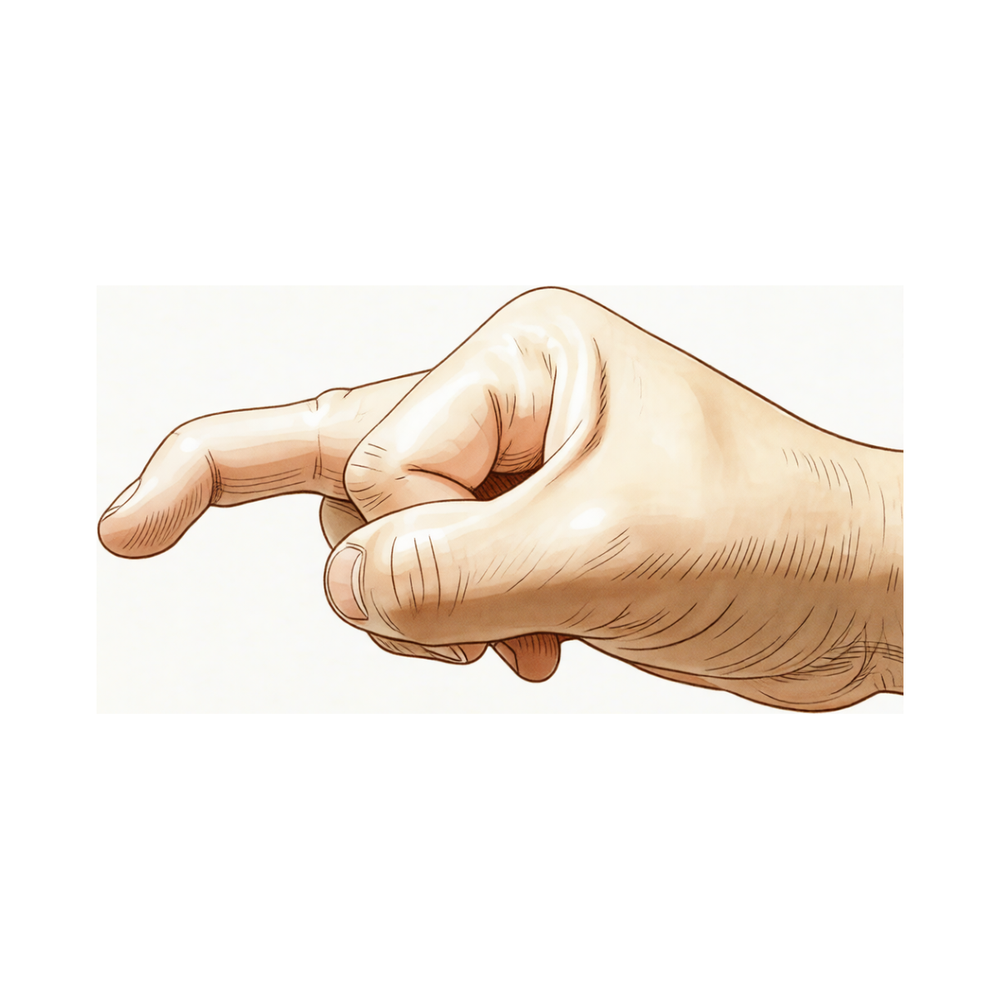
Este protocolo orienta sua recuperação de um dedo em martelo (condição em que a ponta do dedo fica curvada para baixo devido a uma lesão no tendão responsável por esticar a última articulação do dedo), sob os cuidados do Dr. Kieran Hirpara no Mater Private Hospital Rockhampton. Na maioria dos casos, o dedo em martelo é tratado sem cirurgia, utilizando uma tala que mantém a ponta do dedo reta durante o processo de cicatrização. O tratamento começa com um programa de exercícios para ser feito em casa, seguido pelo protocolo clínico estruturado elaborado para seu terapeuta da mão. Leve esta página ou seu arquivo PDF à primeira sessão de terapia, para que sua reabilitação seja devidamente coordenada. Seu terapeuta poderá ajustar o plano conforme a evolução da sua recuperação.
Caso tenha alguma dúvida ou preocupação quanto ao dedo, à pele sob a tala ou ao seu progresso na recuperação, entre em contato com o consultório. Geralmente, é útil tirar uma foto e enviá-la por e-mail para análise.
O que esperar
O dedo em martelo ocorre quando o tendão extensor terminal (o tendão fino responsável por esticar a última articulação do dedo, a DIP, mais próxima da unha) se desprende do osso. Geralmente, isso acontece após uma flexão forçada da ponta do dedo, como ao acertar uma bola ou ao bater o dedo contra algo. Às vezes, o tendão arranca consigo um pequeno fragmento ósseo (mallet ósseo); outras vezes, ele se rompe isoladamente (mallet tendinoso). Em ambos os casos, o resultado é o mesmo: a ponta do dedo fica caída e você não consegue esticá-la sozinho, embora o restante do dedo funcione normalmente.
A boa notícia é que essa lesão cicatriza muito bem apenas com o uso de talas; para a maioria das pessoas, não é necessária cirurgia. Todo o tratamento se baseia em um único princípio simples:
- A articulação da ponta do dedo deve ser mantida completamente esticada, sem interrupção, enquanto o tendão cicatriza. A tala mantém essa última articulação reta (ou muito levemente inclinada para trás), permitindo que as extremidades rompidas se unam. Essa tala deve ser usada o tempo todo (dia e noite) por cerca de oito semanas no caso de mallet tendinoso, ou cerca de seis semanas no caso de mallet ósseo.
- Durante esse período, a ponta do dedo jamais deve ser flexionada. Se ela chegar a cair, mesmo que por pouco tempo (por exemplo, ao trocar a tala ou ao lavar as mãos), o processo de cicatrização é interrompido e o prazo começa a contar do zero. Por isso, o cuidado com que você mantém a ponta do dedo esticada é o fator mais importante para a recuperação.
- As demais articulações do dedo devem permanecer livres e em movimento. A articulação média (PIP) e a articulação metacarpofalângica (MCP) não são envolvidas pela tala e devem ser movimentadas livremente desde o início; esse movimento não interfere na cicatrização da ponta do dedo.
Após esse período de uso contínuo, a tala é retirada gradualmente (primeiro apenas à noite ou durante atividades de risco, depois por completo), enquanto a flexão da ponta do dedo é retomada aos poucos. É normal que reste uma leve inclinação permanente de cerca de cinco a dez graus; isso é esperado, geralmente não afeta o funcionamento do dedo, e a maioria das pessoas fica bastante satisfeita com o resultado.
Precauções e limitações
- NUNCA permita que a ponta do dedo se dobre durante a fase de imobilização, nem mesmo por um segundo ao lavar ou trocar a tala. Se ela cair, o processo de cicatrização recomeça e o período de imobilização volta a contar do zero.
- Use a tala o tempo todo (dia e noite) durante todo o período indicado pelo seu terapeuta: cerca de 8 semanas para lesões tendinosas, aproximadamente 6 semanas para lesões ósseas.
- Retire a tala apenas para limpar e secar a pele, e somente se conseguir manter a ponta do dedo completamente reta durante todo esse tempo (apoiando-a plana sobre uma mesa ou segurando-a reta com a outra mão).
- Mantenha a articulação média e o nó do dedo em movimento livre desde o início; apenas a última articulação deve permanecer imóvel.
- Verifique a pele diariamente. Informe ao seu terapeuta da mão se a pele na parte superior da articulação ficar pálida, branca ou dolorida; isso pode indicar que a tala está mantendo a ponta do dedo muito para trás, necessitando ajuste.
- Não comece a dobrar a ponta do dedo até que o terapeuta da mão inicie a fase de desmame da imobilização.
Para cuidados com feridas, inchaço e pele, consulte as orientações de cuidados com feridas do consultório.
Seus exercícios
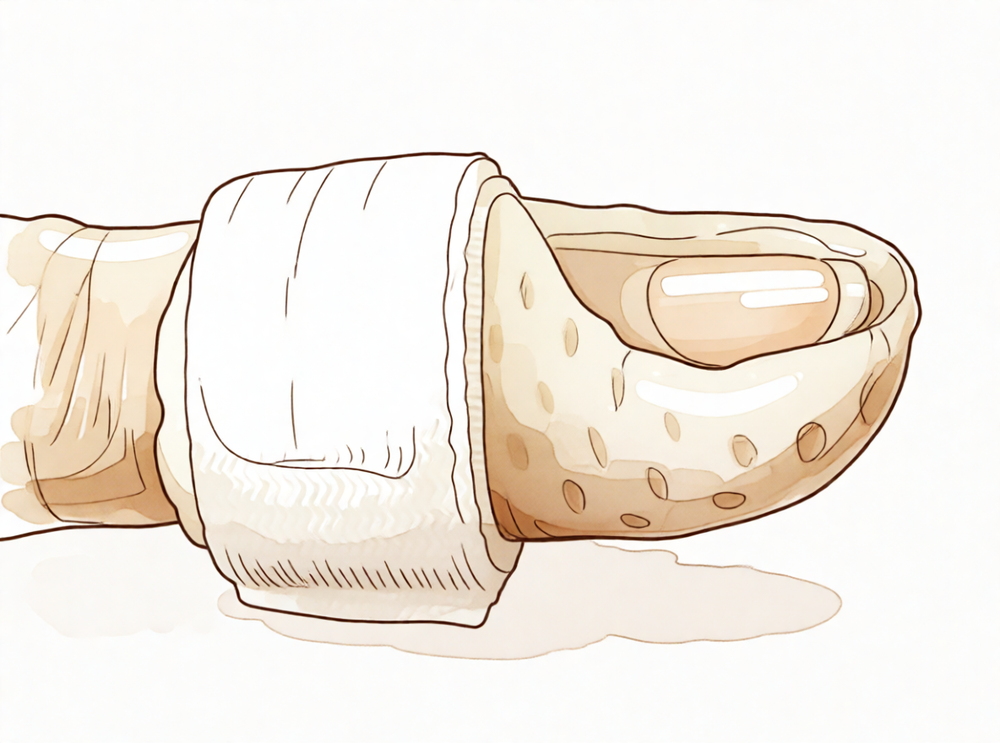
Davplast / Wikimedia Commons, CC BY-SA 4.0
Uso da tala de extensão da articulação DIP (a ponta do dedo nunca deve dobrar)
Use a tala na articulação da ponta do dedo em TODOS os momentos — dia e noite — de modo que a última articulação (a DIP, a mais próxima da unha) permaneça completamente reta. Esta é a parte mais importante do seu tratamento. NUNCA se deve permitir que a ponta do dedo dobre, nem por um instante sequer: se ela se curvar a qualquer momento, a cicatrização recomeça do zero e o cronômetro é reiniciado. Mantenha a tala durante o banho, ao dormir e ao trabalhar, e verifique sempre se a ponta do dedo permanece reta dentro dela.
Usada continuamente — cerca de 8 semanas para o martelo tendinoso e cerca de 6 semanas para o martelo ósseo
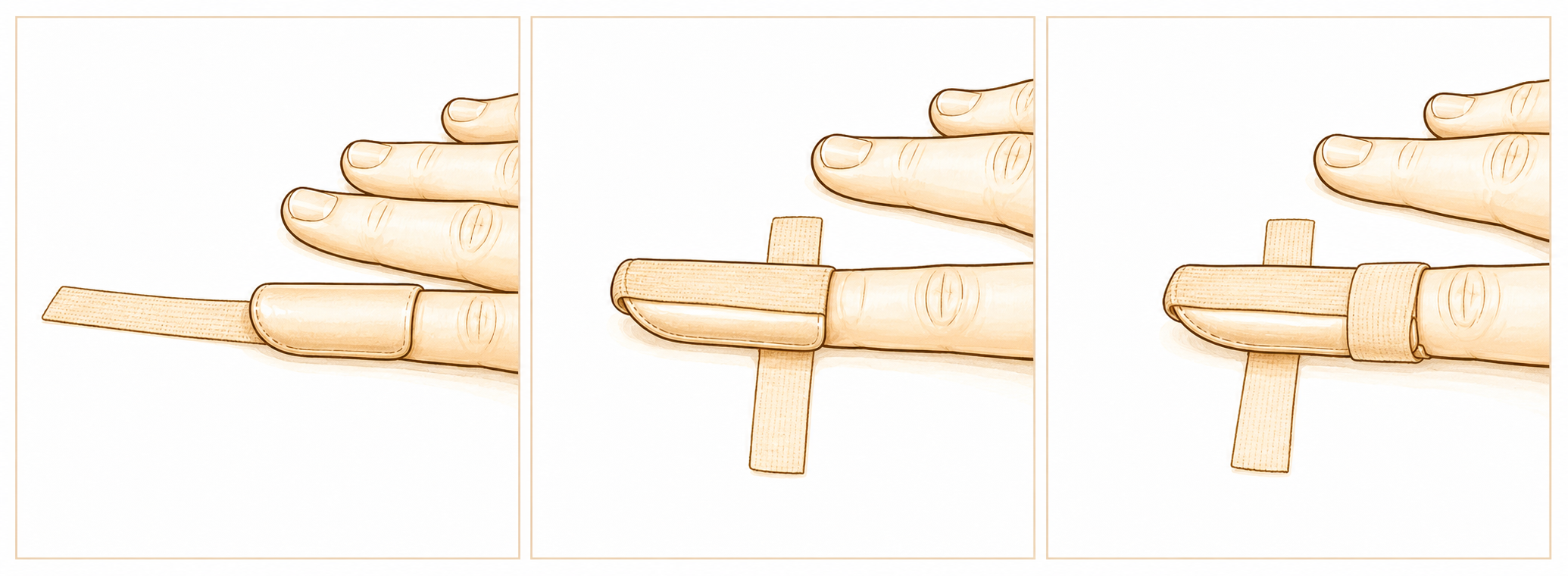
Kieran Hirpara 4.0
Como trocar a tala com segurança (mantenha a ponta do dedo reta)
A tala só deve ser retirada para limpar e secar a pele — e apenas se conseguir manter a ponta do dedo completamente reta durante todo o processo. Deixe o dedo deitado na borda de uma mesa, de modo que a ponta fique apoiada e não possa dobrar; ou use a outra mão para mantê-lo reto. Retire a tala antiga, limpe e seque a área, e depois coloque a nova tala — tudo sem jamais permitir que a ponta do dedo se dobre. Se não se sentir seguro para fazer isso, deixe a tarefa para o seu terapeuta da mão.
Uma vez ao dia para cuidados com a pele, apenas com a ponta do dedo mantida totalmente reta
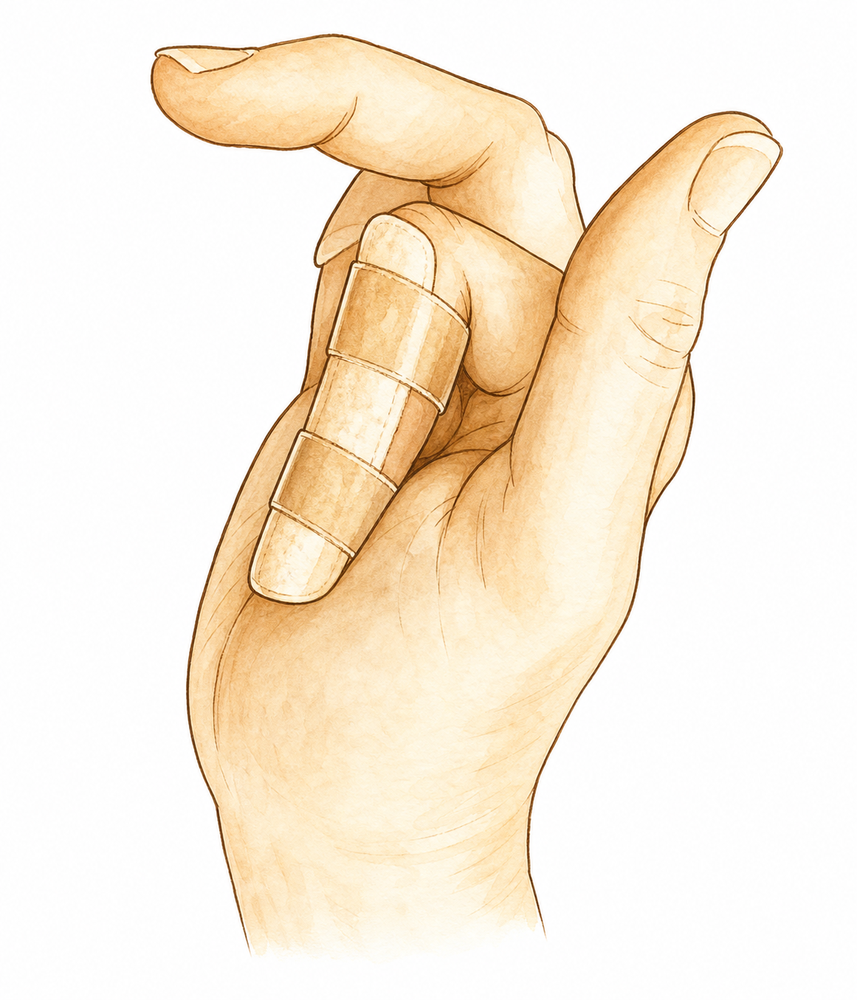
Kieran Hirpara 4.0
Mantenha em movimento a articulação do meio e a dos nós dos dedos (PIP e MCP)
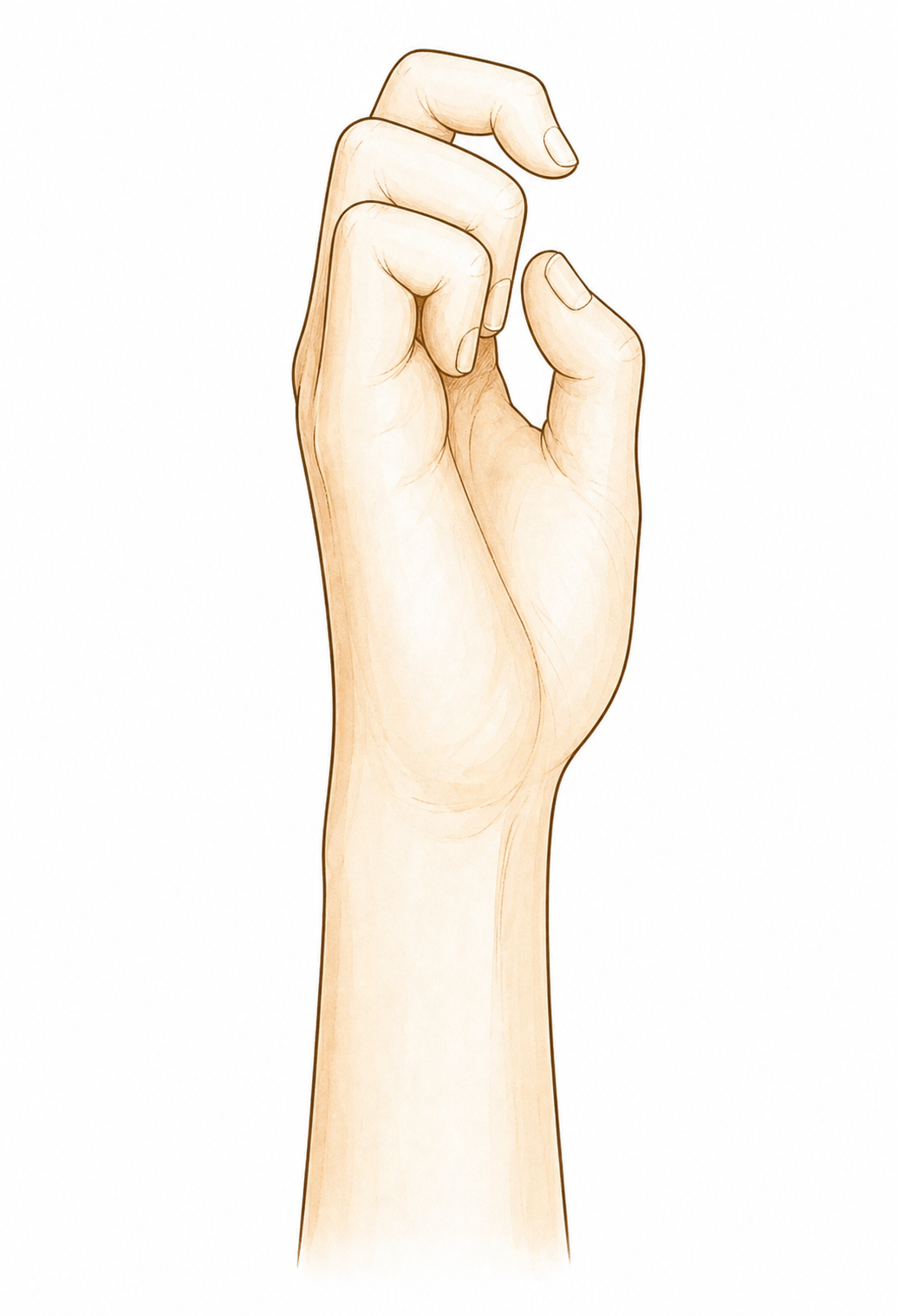
Embora a ponta do dedo deva permanecer imobilizada em posição reta graças à tala, as demais articulações do dedo devem ser movimentadas para evitar rigidez. Flexione e estenda completamente a articulação média (articulação PIP) e a articulação dos nós dos dedos (articulação MCP); essas articulações podem ser movimentadas livremente, sem prejudicar a cicatrização do tendão na ponta do dedo. Faça um movimento semelhante ao de fechar o punho parcialmente e depois abra-o novamente, mantendo sempre a ponta do dedo imobilizada em posição reta.
10 vezes em cada articulação, algumas vezes ao dia, com a tala colocada
Kieran Hirpara 4.0
Cuidados com a pele e o inchaço sob a tala
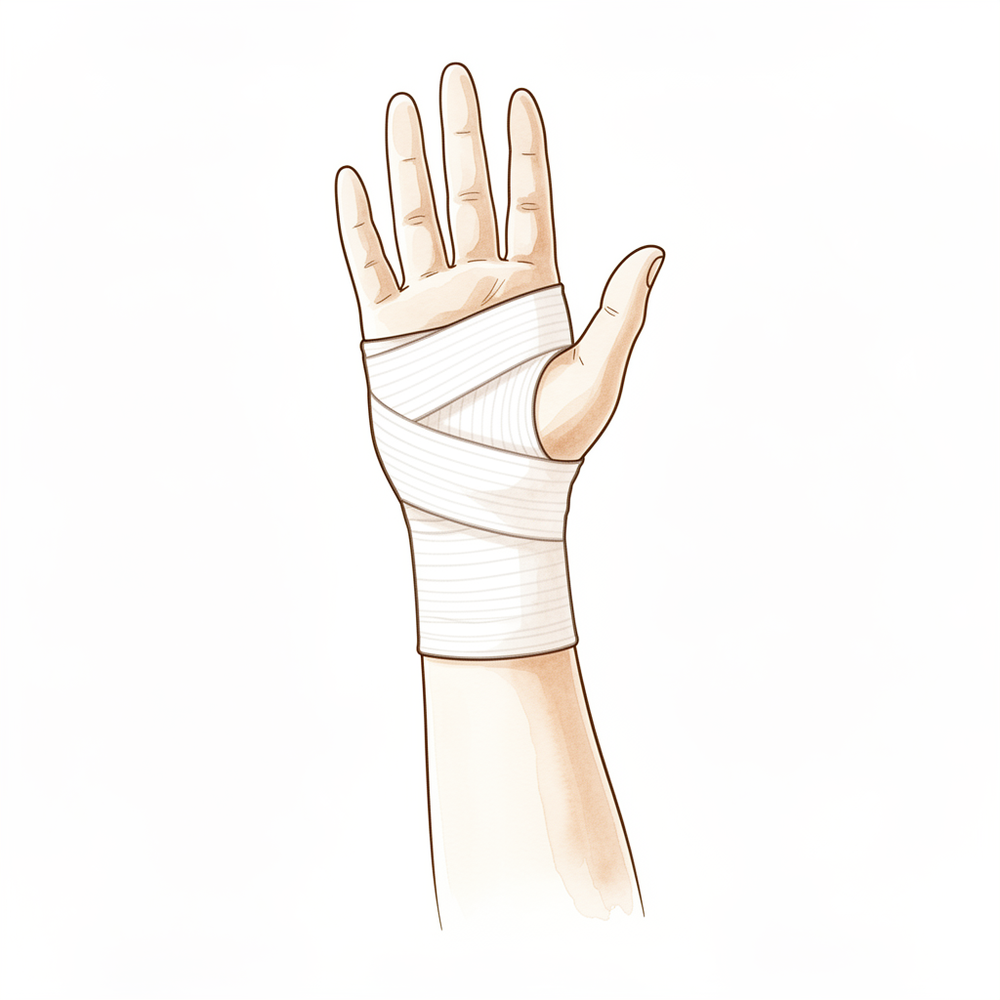
Todos os dias, mantendo a ponta do dedo esticada, verifique a pele — especialmente na parte superior da articulação e na unha. Um leve tom rosado é normal; porém, se a pele parecer pálida, branca ou irritada onde a tala exerce pressão, pode ser que a tala esteja mantendo a ponta do dedo muito para trás. Nesse caso, informe ao seu terapeuta da mão para que a tala seja ajustada. Mantenha o dedo e a tala limpos e secos, e eleve a mão caso ela inche.
Verifique diariamente; relate qualquer pele pálida, dolorida ou lesionada
Kieran Hirpara 4.0
Flexão gradual da ponta dos dedos (fase de desmame)
Um exercício posterior — somente quando o terapeuta da mão começar a reduzir o uso da tala (geralmente a partir da 6ª à 8ª semana) e não houver queda da ponta do dedo, ou apenas uma queda aceitável. Fora da tala, dobre suavemente a articulação da ponta do dedo apenas um pouquinho, depois estique-a completamente, sempre mantendo-se dentro dos limites do conforto. Não force o movimento. Se a ponta do dedo começar a cair novamente, volte a usar a tala o tempo todo e informe seu terapeuta.
Algumas flexões suaves, apenas conforme orientado na fase de desmame
Estes são os exercícios descritos no seu folheto informativo. O “exercício” mais importante de todos é simplesmente usar a tala corretamente e manter a ponta do dedo reta em todo momento; todo o restante se baseia nisso. No início, sua tarefa é manter a tala no lugar, preservar a saúde da pele e garantir que as demais articulações dos dedos se movam livremente. Os exercícios suaves de flexão da ponta do dedo e de extensão com bloqueio pertencem à fase posterior de desmame da tala e só devem ser iniciados quando o terapeuta da mão os indicar especificamente. Interrompa qualquer exercício que faça a ponta do dedo cair e volte a usar a tala o tempo todo.
Seu protocolo clínico
O restante desta página descreve o protocolo clínico em etapas para a reabilitação de um dedo em martelo por meio de talas. Esta seção deve ser entregue ao terapeuta da mão; cada fase começa com uma explicação simples, em linguagem acessível, sobre o que está ocorrendo. A cicatrização depende da extensão ininterrupta da articulação DIP: o tendão terminal (ou o fragmento ósseo descolado) só se une se nunca se permitir que a DIP flexione durante o período de imobilização, enquanto as articulações PIP e MCP devem permanecer livres, pois seus movimentos não interferem na cicatrização do tendão terminal. A adesão do paciente é o fator determinante para o sucesso do tratamento.
Antes do tratamento, confirme se o dedo em martelo é de origem tendinosa ou óssea e revise as imagens radiológicas. Utiliza-se uma órtese de extensão da DIP: de tipo Stack, termoplástica ou de espuma de alumínio volar/dorsal; o tipo de tala não influencia significativamente o resultado, portanto escolha conforme o ajuste, tolerância cutânea e adesão do paciente. Mantenha a DIP em extensão total ou leve hiperextensão, mas evite hiperextensão excessiva (risco de palidez ou úlcera na pele dorsal). No caso de dedo em martelo de origem óssea, prefira uma posição neutra/retilínea da DIP em vez de hiperextensão, para evitar a subluxação volar da falange distal. A articulação PIP deve sempre permanecer livre.
Fase I — imobilização contínua com tala de extensão em tempo integral (semanas 0 a 6/8)
A articulação da ponta do dedo é mantida continuamente esticada, dia e noite, para que o tendão ou o fragmento ósseo possam cicatrizar. A tala é retirada apenas para cuidados com a pele, e sempre com a articulação DIP mantida em extensão; qualquer episódio isolado de flexão da DIP reinicia o processo de cicatrização. As articulações PIP e MCP permanecem livres para movimentação.
Para o seu terapeuta da mão:
Instruções e precauções - Aplique uma ortose de extensão da DIP (tipo Stack/termoplástica/alumifoam), mantendo a DIP em extensão total ou leve hiperextensão; evite hiperextensão excessiva (pode causar palidez cutânea ou úlceras); no caso de fratura óssea tipo “mallet”, mantenha a articulação reta/neutra, sem hiperextensão (risco de subluxação) - Uso contínuo: cerca de 8 semanas para lesões tendinosas, 6 semanas para lesões ósseas; durante esse período, a DIP nunca deve se flexionar - Ensine a técnica de troca da tala sobre uma superfície plana, de modo que a DIP jamais se flexione; caso o paciente não consiga manter a extensão, o terapeuta deve realizar a troca - As articulações PIP e MCP devem permanecer livres e serem movimentadas ativamente desde o primeiro dia
Manejo - Pele: inspeção diária na face dorsal da DIP e na dobra ungueal; ajuste a ortose caso haja palidez ou pressão excessiva; mantenha a área limpa e seca - Edema: elevação da mão; movimentação suave das articulações proximais - Exercícios: movimentação ativa completa das articulações PIP e MCP; não permitir nenhum movimento da DIP - Fratura óssea tipo “mallet”: manter acompanhamento radiográfico durante o uso da tala (alinhamento/subluxação), pois a imobilização é tão eficaz quanto a fixação com pinos para correção do atraso na extensão, porém a posição do fragmento deve ser monitorada
Critérios para avançar para a fase seguinte - Período de imobilização completo (cerca de 8 semanas para lesões tendinosas / 6 semanas para lesões ósseas), sem atraso na extensão da DIP além do limite aceitável, e com pele saudável
Fase II — desmame da órtese e início de movimentação controlada da articulação DIP (semanas 6/8, depois mais 2 a 6)
Após o término do período de uso contínuo da órtese e na ausência de atraso na extensão, ou caso este seja aceitável, a órtese passa a ser usada apenas à noite ou em atividades de risco, enquanto se inicia uma flexão controlada e suave da articulação DIP. O uso noturno da órtese pode ser considerado opcional (um estudo de Nível I demonstrou que não é essencial) e deve ser adotado de forma pragmática. Caso um atraso significativo na extensão reapareça, o paciente deve retomar o uso contínuo da órtese de extensão.
Para o seu terapeuta da mão:
Avaliações - Atraso na extensão ativa da articulação DIP (em graus) e amplitude de flexão ativa; condição da pele; nível de confiança do paciente ao deixar a ponta do dedo fora da órtese
Instruções e precauções - Desmame da órtese, passando-a a ser usada apenas à noite ou em atividades de alto risco, por mais 2 a 6 semanas; o uso noturno é opcional, conforme evidências atuais - Se o atraso na extensão ultrapassar 20° após o desmame da órtese, retome o uso contínuo da órtese de extensão por cerca de 4 a 6 semanas
Manejo - Exercícios: iniciar flexão ativa da DIP de forma suave e gradual (começando com pequena amplitude) e extensão ativa controlada da DIP com bloqueio (estabilizar a articulação PIP enquanto se estende a DIP); aumentar a amplitude de flexão conforme o atraso na extensão permitir - Reduzir o uso diurno da órtese assim que a articulação DIP mantiver a extensão ativamente, sem atraso ou com atraso aceitável (≤10–20°) - Manter a amplitude completa de movimento nas articulações PIP e MCP; cuidados com cicatrizes e pele conforme necessário - Pacientes com lesões do tipo “mallet finger” crônicas ou diagnosticadas tardiamente ainda respondem bem ao uso da órtese de extensão; o início tardio do tratamento não é contraindicação
Critérios para avançar para a fase seguinte - A articulação DIP mantém a extensão ativa com atraso aceitável; flexão controlada e indolor da DIP foi recuperada; pele do dedo permanece íntegra
Fase III — fortalecimento e retorno às atividades (aproximadamente das semanas 8 a 12)
Com a cicatrização do tendão e a recuperação do movimento ativo, a tala é retirada completamente, iniciando-se o fortalecimento gradual e o retorno às atividades. É esperado um pequeno déficit permanente na extensão do dedo (média de ~8°), o qual é compatível com um excelente resultado funcional.
Para o seu terapeuta da mão:
Avaliações - Déficit de extensão ativa na articulação DIP e amplitude de flexão; força de preensão; prontidão para cargas e prática esportiva
Instruções e precauções - Uso diário sem tala; uso de tala protetora em esportes de contato durante o retorno às atividades - Orientar que um déficit residual de extensão de aproximadamente 5–10° é normal e não afeta a satisfação do paciente
Tratamento - Exercícios: fortalecimento progressivo da preensão e pinça; recuperação total da amplitude de movimento dos dedos; progressão conforme tarefas e esportes específicos - O retorno ao esporte ou a trabalhos pesados ocorre por volta da 8ª a 12ª semana, com base em critérios clínicos (usando tala protetora em esportes de contato) - O paciente é considerado apto para alta quando a força e a função estão adequadas e o déficit de extensão permanece estável; encaminhar novamente caso um déficit acentuado persista ou reapareça
Voltando ao trabalho e às atividades
O uso leve da mão imobilizada com tala é permitido desde o início: a tala permanece no lugar, a ponta do dedo fica reta, e você pode utilizá-la para tarefas cotidianas dentro desses limites. Você não deve dirigir enquanto estiver com a tala na ponta do dedo: a direção deve esperar até que a tala tenha sido retirada e você consiga segurar o volante e controlar o carro com segurança, conforme confirmado com o Dr. Hirpara na sua consulta de acompanhamento. A força de preensão e a resistência muscular começam a se desenvolver por volta da sexta à oitava semana, à medida que a tala é retirada gradualmente. O retorno a esportes e a atividades manuais mais pesadas costuma ocorrer entre a oitava e a décima segunda semana; essa decisão baseia-se na recuperação do movimento controlado, e não apenas no tempo decorrido; durante esse período, deve-se usar uma tala protetora em esportes de contato. É normal haver uma leve inclinação permanente na ponta do dedo, de cerca de cinco a dez graus; isso é normal, não afeta o funcionamento da mão, e a maioria das pessoas mal percebe essa alteração.
Após seguir este protocolo
Este protocolo complementa as orientações gerais de recuperação fornecidas pela clínica; consulte controle da dor pós-operatória, cuidados com a ferida e tratamento das cicatrizes. O plano em fases descrito acima baseia-se em diretrizes publicadas sobre o uso de talas para dedos em martelo, e a sua recuperação contínua será acompanhada individualmente pelo Dr. Hirpara e pelo seu terapeuta da mão, conforme a evolução da ponta do seu dedo.
Observações caso o dedo em martelo seja corrigido cirurgicamente
Na maioria dos casos, o dedo em martelo não necessita de cirurgia. A intervenção cirúrgica é considerada apenas nos casos de dedo em martelo ósseo, quando a fratura afeta grande parte da superfície articular (mais de um terço, aproximadamente) ou quando a última articulação está saindo do lugar (subluxação volar). Quando a fixação é realizada, geralmente utiliza-se um fio de K tipo “bloqueador de extensão” (Ishiguro); às vezes, um fio temporário é passado através da articulação da ponta do dedo para mantê-la reta. Esse fio costuma permanecer no local por quatro a seis semanas e é removido por volta da quinta ou sexta semana, após o que se iniciam os movimentos ativos da ponta do dedo, e pode-se usar uma tala noturna por cerca de mais quatro semanas. As evidências científicas demonstram que o uso de talas produz resultados comparáveis ao uso de pinos para minimizar o grau de flexão residual; portanto, a cirurgia deve ser reservada para as situações específicas mencionadas acima, em vez de ser realizada rotineiramente.
Evidence & references
This is the clinical evidence summary written for health professionals. It is technical, and it lists the research this page was built from. You do not need to read it to understand your treatment or to make a decision about it.
Mallet Finger — Injury Outcomes & Splint-Led Rehabilitation (Terminal Extensor Tendon, DIP)
Topic scope: non-operative (and, where indicated, post-fixation) management of a mallet finger — disruption of the terminal extensor tendon at the distal interphalangeal (DIP) joint, either purely tendinous or with an avulsion bony fragment (bony mallet). This is a healing injury, not a reconstruction: the entire treatment is uninterrupted DIP extension splinting that holds the tendon (or fragment) in apposition while it unites, with the PIP and MCP left free.
Defining principle of the rehab here: the terminal extensor tendon heals only if the DIP is held in continuous extension and is never allowed to flex during the splinting period. Any single lapse into DIP flexion separates the healing ends and restarts the healing clock, which is why patient compliance is the dominant outcome driver. The PIP is deliberately kept mobile because proximal-joint motion does not disturb terminal-tendon healing. Splint type (Stack, thermoplastic, volar/dorsal alumifoam) does not materially change the outcome — fit, skin tolerance and compliance matter more than the device. The single branch point is the bony mallet with a large articular fragment or DIP volar subluxation, where surgical fixation is considered; even there, splinting is non-inferior to pinning for the final extensor lag, so operation is reserved rather than routine.
A. INJURY OUTCOMES (tendinous vs bony mallet; splinting vs fixation)
Mallet finger is one of the most reliably treated closed tendon injuries in the hand: the great majority heal well with splinting alone, and the principal debate is over the bony mallet — when, if ever, to fix it.
- Continuous extension splinting is the standard of care and works well for both tendinous and bony mallets, including chronic and delayed presentations, which still respond to splinting weeks after injury [Valdes systematic review LoE 1a; Salazar Botero review; Medscape; StatPearls]. Strong (SR + reviews).
- Splint type makes no meaningful outcome difference. A randomised comparison of splint designs found no superiority of one orthosis over another; the determinant is uninterrupted DIP extension and compliance, not the device [Pike RCT]. Strong (RCT).
- Splinting is non-inferior to extension-block pinning for the final extensor lag. A randomised trial comparing conservative extension splinting with operative extension-block K-wiring for bony mallet found no advantage to pinning in the residual lag, supporting non-operative management as the default even for many bony mallets [Thillemann RCT]. Strong (RCT).
- Surgery is reserved for the large bony fragment or subluxating DIP. Operative fixation is
considered when the fracture involves a large part of the articular surface (often cited as
~30%) or there is volar subluxation of the distal phalanx; common techniques are extension-block (Ishiguro) K-wiring with or without a trans-articular DIP pin. Single-K-wire constructs perform less well in non-compliant settings [Aksan; Salazar Botero; Medscape]. Moderate.
- Stack splints can subluxate a bony mallet. Volar-based Stack-type orthoses holding the DIP in hyperextension can displace a bony-mallet fragment / promote subluxation, which is why a straight/neutral DIP is preferred for bony mallets rather than hyperextension [Kaplan]. Moderate (mechanistic/clinical).
- The underlying mechanism is a terminal tendon avulsion at the distal phalanx. Anatomical and injury studies characterise the lesion as avulsion of the terminal extensor at its distal-phalanx insertion, and a very small amount of tendon lengthening translates into a large extensor lag — roughly 1 mm of lengthening ≈ 25° of lag — which is the biomechanical reason apposition must be maintained so strictly [Tuttle; Yeh; PMC current concepts]. Mechanistic.
B. REHABILITATION / THERAPY EVIDENCE
The central rehab questions are (1) how long and how strictly to splint, (2) whether the PIP should be included, and (3) whether night-time and post-splinting splinting are needed. The evidence supports uninterrupted full-time DIP extension splinting (~6–8 weeks) with the PIP free, followed by a weaning phase, and downgrades routine night-splinting to optional.
- Uninterrupted DIP extension is the active ingredient; the PIP must stay free. Splinting holds the DIP in full extension (or slight hyperextension) continuously; the PIP and MCP are mobilised from the outset because proximal-joint motion does not load the terminal tendon. Full-time wear is about 8 weeks for tendinous and 6 weeks for bony mallets [Valdes SR 1a; Salazar Botero; StatPearls; Physiopedia]. Strong (SR + guideline-level reviews).
- Compliance is the dominant outcome driver. Because any DIP flexion restarts healing, outcome tracks adherence to continuous extension more than any device choice; patient education and a safe flat-surface splint-change technique are central [Valdes SR; Cook BAHT survey of therapist practice]. Strong (mechanism + practice consensus).
- Avoid excessive hyperextension. Holding the DIP in marked hyperextension risks dorsal-skin blanching and pressure ulceration over the joint; slight hyperextension or neutral is sufficient, and bony mallets should be held straight/neutral to avoid fragment subluxation [Azad dorsal splinting outcomes; Kaplan]. Moderate.
- Night-time splinting after the full-time phase is non-essential (optional). A Level-I study found that continued night-splinting after the primary full-time period was not essential to the result, so the ~2–6 week post-splinting night/risky-activity phase is framed as optional and pragmatic rather than mandatory [Valdes SR 1a evidence base]. Moderate (Level I within SR).
- Recurrent lag responds to re-splinting. If an extensor lag (>~20°) recurs after the splinting period, a further ~4–6 weeks of full-time extension splinting is appropriate; chronic/delayed mallets likewise still respond [Salazar Botero; Medscape; StatPearls]. Moderate.
- A small residual extensor lag is the expected, satisfactory result. Most patients are left with a slight permanent lag (mean ~8°, typically 5–10°) that does not impair function or satisfaction; this should be counselled as normal rather than as failure [Salazar Botero; PMC current concepts; Physiopedia]. Moderate–strong (natural history).
Recovery trajectory (expected, evidence-anchored)
| Phase | Window | Restraint | Hand use / therapy focus | Strength / load | Notes |
|---|---|---|---|---|---|
| I — Continuous DIP extension splinting | Week 0–6/8 (bony ~6, tendinous ~8) | DIP held continuously extended; never flex the DIP | Full-time extension orthosis (Stack/thermoplastic/alumifoam); flat-surface splint changes only; PIP + MCP moved freely from day 1; daily dorsal-skin checks | No DIP loading; light splinted hand use | Any DIP flexion resets the clock; bony mallet held straight/neutral + radiographic surveillance |
| II — Weaning & controlled DIP motion | +2–6 weeks after full-time phase | Night / high-risk-activity splinting (night wear optional) | Begin gentle graded active DIP flexion + blocked active DIP extension; reduce day wear once lag ≤10–20° | Light functional load | Lag >20° recurring → re-splint full-time ~4–6 wk; chronic mallets still respond |
| III — Strengthening & return | From ~week 8–12 | None (protective splint for contact sport) | Splint-free use; graded grip/pinch strengthening; full ROM; sport-/work-specific progression | Grip/strength built up; driving once able to grip the wheel safely | Expect ~5–10° permanent lag (mean ~8°) — normal, satisfaction preserved |
(Phase windows mirror the precautions in the patient protocol; they are typical guides, not trial-derived deadlines.)
C. KEY CONTROVERSIES / EVIDENCE QUALITY
- Splint type. Stack vs thermoplastic vs volar/dorsal alumifoam — randomised data show no meaningful outcome difference; the determinant is uninterrupted extension and compliance, not the device [Pike RCT]. Strong evidence of equivalence.
- Splinting vs operative fixation for bony mallet. Randomised data show extension splinting is non-inferior to extension-block pinning for the residual lag; surgery is reserved for the large articular fragment (>~30%) or volar DIP subluxation, not used routinely [Thillemann RCT; Aksan; Salazar Botero]. Strong (RCT) for non-inferiority; moderate for the fixation indications.
- Hyperextension vs neutral. Slight hyperextension aids tendinous apposition but excessive hyperextension risks dorsal-skin ischaemia/ulcer, and in bony mallets can subluxate the fragment — hence straight/neutral for bony mallets [Azad; Kaplan]. Moderate.
- Is night-splinting necessary? A Level-I study found continued night-splinting after the full-time phase non-essential; the post-splinting phase is therefore optional/pragmatic rather than mandatory [Valdes SR 1a]. Moderate.
- Residual lag as expected outcome, not failure. A small permanent lag (mean ~8°) is the norm and is compatible with full function and satisfaction; mislabelling it as failure drives unnecessary intervention [Salazar Botero; PMC current concepts]. Strong natural-history data.
D. EVIDENCE STRENGTH FLAGS (summary)
- STRONG (RCT / SR): uninterrupted DIP extension splinting as standard of care (6–8 wk full-time, tendinous ~8 / bony ~6); splint-type equivalence; PIP-free mobilisation; compliance as the key outcome driver; expected ~5–10° residual lag; splinting non-inferior to pinning for bony mallet (with radiographic surveillance during splinting).
- MODERATE: exact length of the weaning/night-splinting phase (night wear non-essential per a Level-I study); strengthening and return-to-sport/work timing (~8–12 weeks, criterion-based); hyperextension-vs-neutral splint positioning and the bony-mallet subluxation caveat; surgical indications (>~30% articular fragment / volar subluxation) and fixation technique.
- WEAK / CONFIRM: driving — a fingertip splint is not usually a contraindication once the wheel can be gripped safely, but this is confirmed clinically rather than evidence-defined.
CITATIONS
RAG corpus (180,000+ Orthopaedic articles)
- A randomized controlled trial comparing splint designs for mallet finger. J Hand Surg Am. 2010. DOI: 10.1016/j.jhsa.2010.01.005
- Conservative management of mallet finger: a systematic review (Level of Evidence 1a). J Hand Ther. 2015. DOI: 10.1016/j.jht.2015.03.001
- Mallet finger: a survey of British Association of Hand Therapists practice. Hand Therapy. 2016. DOI: 10.1177/1758998316664822
- The mallet finger injury: a review (current concepts in diagnosis and management). Arch Plast Surg. 2016. DOI: 10.5999/aps.2016.43.2.134
- Outcomes of dorsal splinting for mallet finger. Hand (N Y). 2022. DOI: 10.1177/15589447221093674
- Conservative splinting versus extension-block K-wiring for bony mallet finger: a randomized controlled trial. J Hand Surg (Eur Vol). 2020. DOI: 10.1177/1753193420917567
- Tendon avulsion fractures of the distal phalanx (terminal extensor avulsion). Clin Orthop Relat Res. 2006. DOI: 10.1097/01.blo.0000205903.51727.62
- Tendon ruptures in the hand. Hand Clin. 2012. DOI: 10.1016/j.hcl.2012.05.040
- Single K-wire fixation of bony mallet finger in non-compliant patients. Arch Orthop Trauma Surg. 2021. DOI: 10.1007/s00402-021-03793-4
- Subluxation of bony mallet fractures with Stack splint immobilisation. J Hand Surg Am. 2013. DOI: 10.1016/j.jhsa.2013.08.111
Mallet-finger management literature (URLs)
- Medscape — Mallet Finger Treatment & Management. https://emedicine.medscape.com/article/1242305-treatment
- StatPearls — Mallet Finger (NCBI Bookshelf). https://www.ncbi.nlm.nih.gov/books/NBK459373/
- Current concepts in the management of mallet finger (PMC; ~1 mm terminal-tendon lengthening ≈ 25° extensor lag). https://pmc.ncbi.nlm.nih.gov/articles/PMC4022957/
- Physiopedia — Mallet Finger. https://www.physio-pedia.com/Mallet_Finger