Patients › Rehabilitation
Fixação da clavícula (Redução aberta e fixação interna)
Rehabilitation after plate fixation of a clavicle fracture, gated on radiographic healing at review.
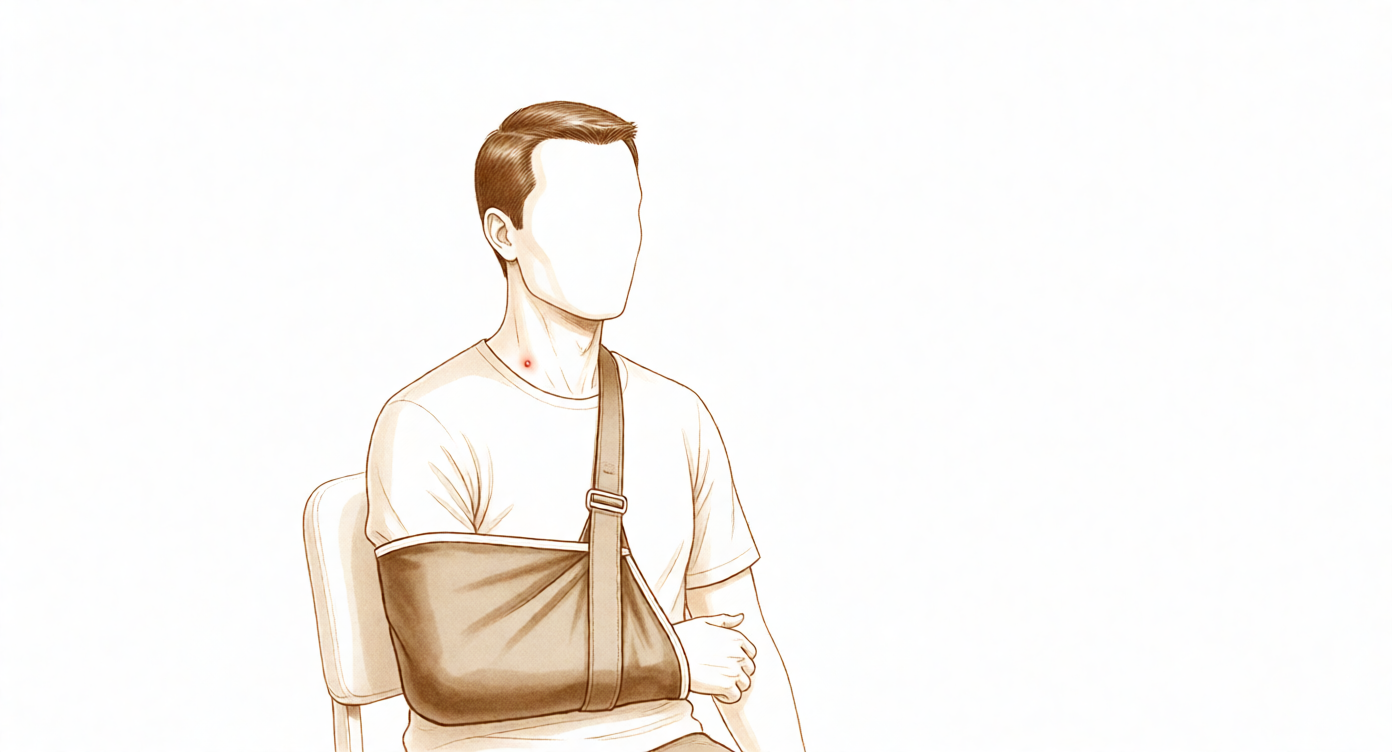
Este protocolo orienta sua recuperação após a fixação da fratura da clavícula com placa, por meio de redução aberta e fixação interna (ORIF), realizada pelo Dr. Kieran Hirpara no Mater Private Hospital Rockhampton. Cada fase abaixo começa com uma explicação simples, em linguagem acessível, sobre o que está ocorrendo e o que é mais importante; em seguida, apresenta o protocolo estruturado destinado ao seu fisioterapeuta. Leve esta página ou seu PDF na primeira sessão de fisioterapia, para que a reabilitação seja devidamente coordenada. O fisioterapeuta poderá ajustar o plano conforme a evolução da sua recuperação.
Caso tenha alguma dúvida ou preocupação quanto à ferida cirúrgica, entre em contato com o consultório. Geralmente, é útil tirar uma foto da ferida e enviá-la por e-mail para análise.
O que esperar
A cirurgia serve para manter as extremidades quebradas da clavícula em posição, usando uma placa e parafusos, de modo que o osso possa cicatrizar. A placa é resistente, mas funciona apenas como um suporte, não como substituto do osso curado: normalmente, o osso leva de seis a doze semanas para se unir, e continua a se fortalecer (remodelar) por vários meses após isso. A reabilitação é planejada com base nesse processo biológico: nas primeiras semanas, protege-se a fixação enquanto a fratura começa a se consolidar; em seguida, restaura-se o movimento; por fim, só se permite carga e prática esportiva quando o osso já suportar essas condições.
Como se trata de uma fratura, cada etapa importante (elevar o braço acima da altura do ombro, fortalecimento muscular, levantar cargas maiores e retorno ao esporte) depende não apenas do tempo decorrido, mas também do aspecto da fratura nos exames de raio-X, conforme avaliado na consulta com o Dr. Hirpara. Os intervalos de semanas abaixo são típicos, porém não fixos.
A cicatrização óssea é mais lenta em fumantes e em pessoas com diabetes; o tabagismo, em particular, pode atrasar ou até impedir a união da fratura. Se você fuma, as semanas após a fratura são um momento especialmente adequado para parar.
A clavícula fica logo abaixo da pele, por isso é comum sentir (e até ver) a placa após o inchaço diminuir. Nos primeiros meses, ela pode ficar sensível sob o cinto de segurança ou a alça de uma mochila; isso geralmente melhora à medida que a área se torna menos sensível. Caso a placa continue a incomodar mesmo após a fratura estar totalmente curada, sua remoção é uma opção que pode ser discutida em uma consulta posterior; essa decisão é independente e tomada somente após a consolidação completa do osso.
Resumo do processo:
- Fase I — Proteção: semanas 0–3
- Fase II — Movimentação inicial: semanas 3–6
- Fase III — Fortalecimento: semanas 6–12
- Fase IV — Retorno às atividades completas e ao esporte: a partir da semana 12
Como usar a tipóia
A tipóia sustenta o peso do braço, alivia o desconforto e protege o osso em processo de cicatrização durante as primeiras semanas. As regras são simples:
- Use-a especialmente quando estiver fora de casa, para proteger o braço e evitar que alguém o esbarre. Não é necessário dormir com ela.
- Durante as três primeiras semanas, use-a a maior parte do tempo. Depois disso, vá diminuindo o uso conforme se sentir confortável; a maioria das pessoas para de usá-la por volta da sexta semana.
- Remova-a para tomar banho, para fazer os exercícios e para tarefas tranquilas feitas sentado, com o braço apoiado: comer, escrever, ler.
- Em casa, pode tirar a tipóia se agir com cautela: mantenha o braço apoiado num travesseiro enquanto estiver sentado, e a mão abaixo da altura do ombro.
- Não dirija durante seis semanas (isso aplica-se a qualquer cirurgia no ombro), nem enquanto estiver usando a tipóia. Depois disso, a condução pode ser retomada quando conseguir controlar o carro de forma confortável e segura, conforme confirmado na consulta com o Dr. Hirpara.
Seus primeiros dias após a cirurgia
Caso tenha sido utilizado bloqueio nervoso durante a cirurgia, o braço poderá permanecer dormente e pesado por algumas horas; mantenha-o protegido na tipóia até que a sensibilidade volte ao normal. Seguem algumas dicas práticas para os primeiros dias:
- Tome os analgésicos antes de fazer os exercícios e antes das sessões de fisioterapia.
- Aplique gelo na região afetada para aliviar a dor e o inchaço, por cerca de 15–20 minutos de cada vez, envolvido em um pano úmido; nunca coloque o gelo diretamente na pele ou na ferida.
- Ao usar a tipóia, relaxe o ombro e deixe que ela suporte o peso do braço.
- Preste atenção à postura: mantenha as orelhas, ombros e quadris alinhados, evitando que os ombros se curvem para a frente; uma boa postura protege a posição do osso fraturado e ajuda a prevenir rigidez.
- Comece desde já a movimentar os dedos, o pulso, o cotovelo e o pescoço.
- Caso tenha algum problema, entre em contato com o consultório ou informe seu fisioterapeuta.
Fase I — Proteção (Semana 0–3)
Kieran Hirpara 4.0
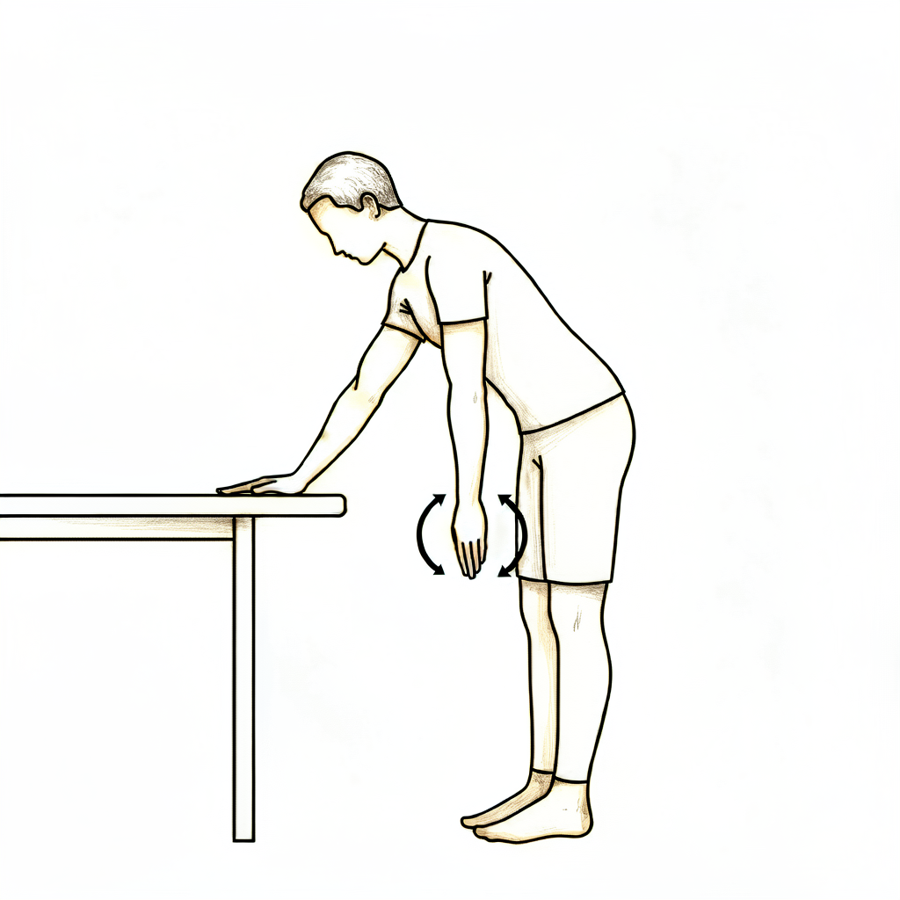
Exercícios pendulares
Incline-se para a frente, apoiando-se na mesa com a outra mão, e deixe o braço operado pendurado de forma relaxada. Faça pequenos círculos — primeiro no sentido horário, depois no anti-horário — balançando suavemente o corpo. O braço deve permanecer relaxado durante todo o movimento; o movimento deve vir do corpo, não do ombro.
Conforme orientado pelo seu fisioterapeuta
Kieran Hirpara 4.0
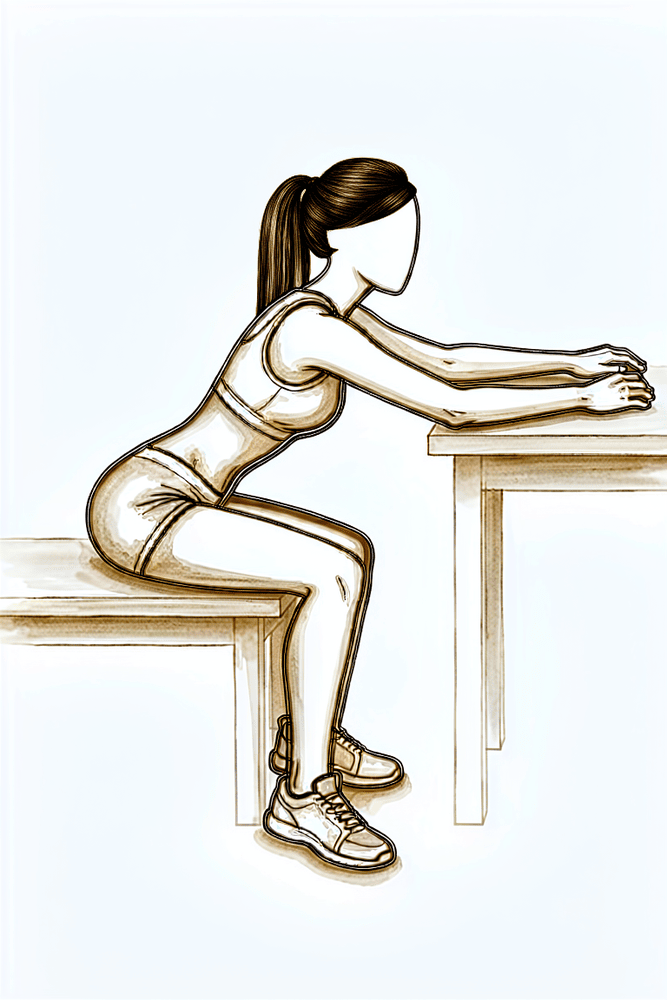
Deslizamentos na mesa
Sente-se à mesa com o antebraço apoiado nela. Incline-se suavemente para a frente de modo que a mão deslize pela mesa, permitindo que a mesa suporte o peso do braço; em seguida, volte à posição inicial. Mantenha-se confortável e mantenha o braço abaixo da altura dos ombros.
Conforme orientado pelo seu fisioterapeuta
Kieran Hirpara 4.0
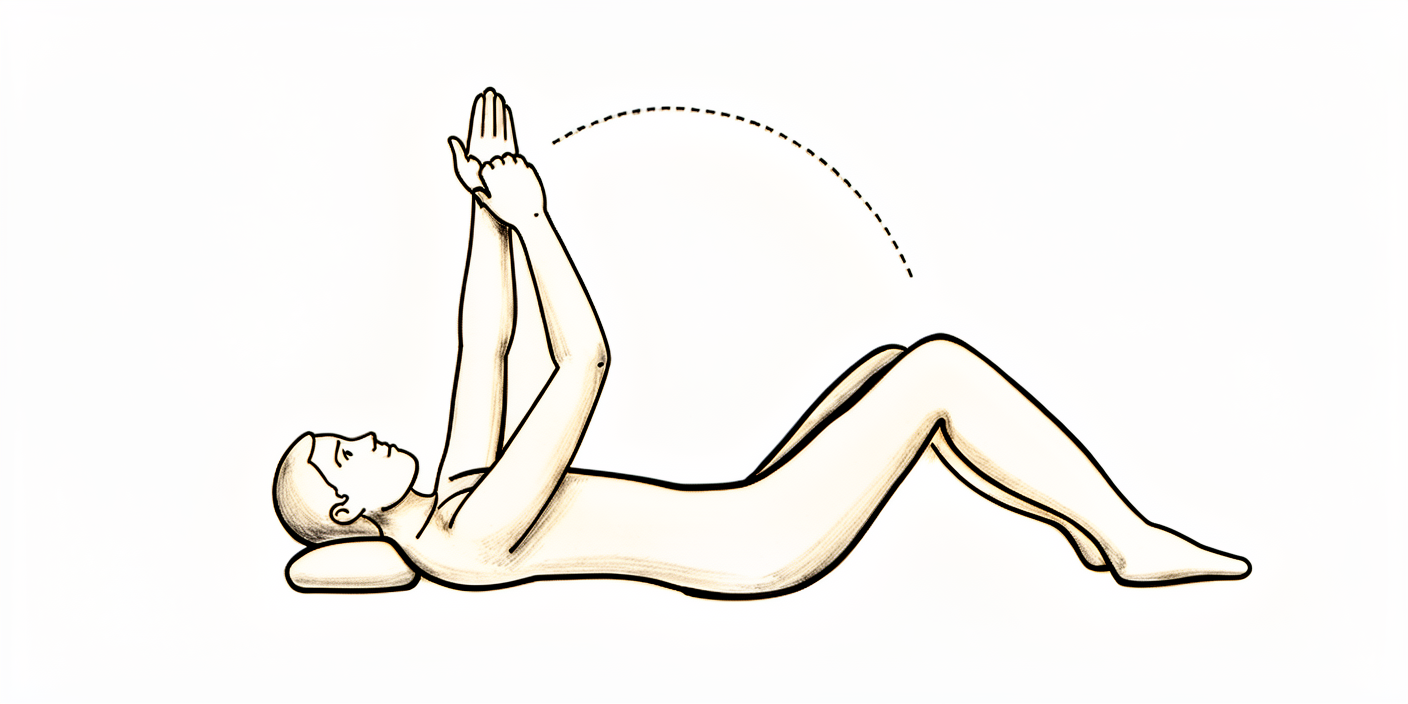
Flexão assistida do ombro (deitado)
Deite-se de costas. Com a outra mão, apoie o braço operado no pulso e levante-o suavemente para a frente, até um máximo de 90 graus — apontando para o teto, mas não mais alto — e depois abaixe-o. O braço operado deve permanecer relaxado; é a outra mão que realiza o movimento. Não ultrapasse os 90 graus até receber autorização na consulta de acompanhamento, às seis semanas.
Conforme orientado pelo seu fisioterapeuta
Kieran Hirpara 4.0
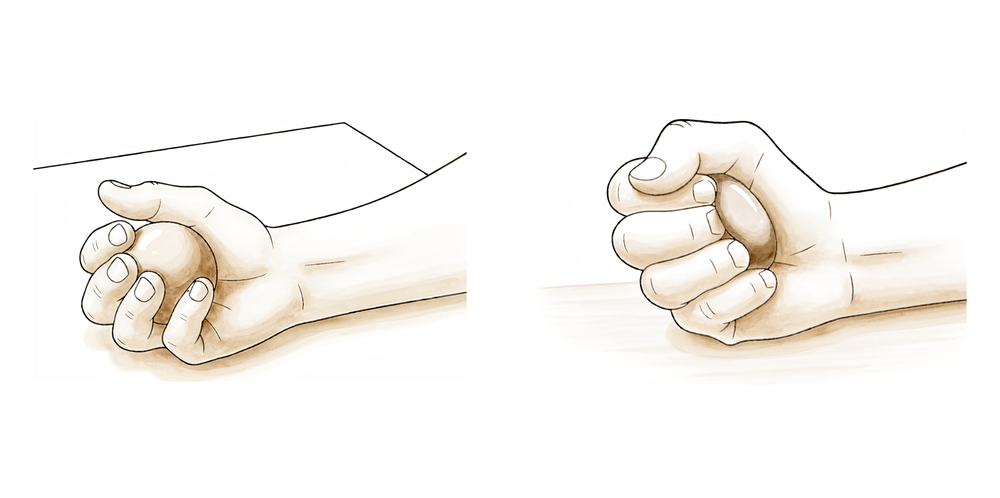
Apertar bolas
Com o braço apoiado, aperte uma bola macia ou faça um punho fechado com força, depois abra a mão completamente. Mantenha os dedos, o pulso e a mão em movimento desde o início.
Conforme orientado pelo seu fisioterapeuta
Kieran Hirpara 4.0
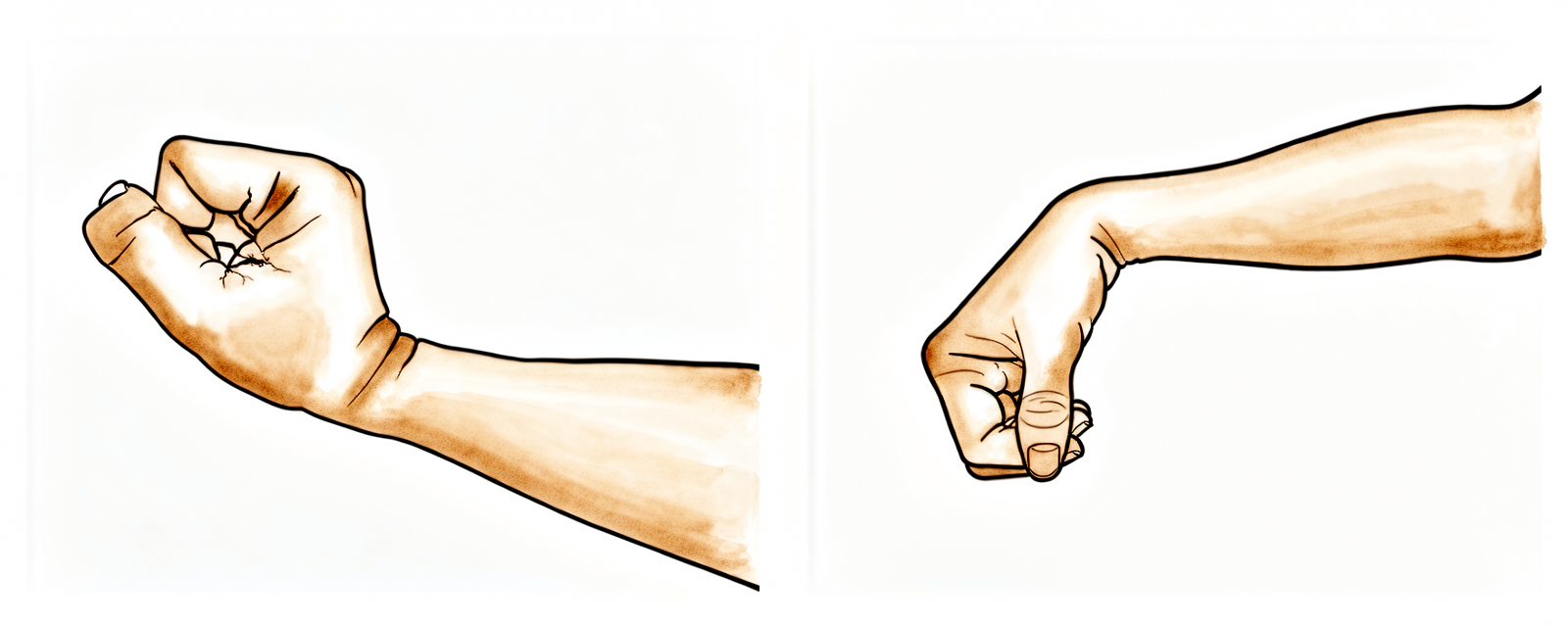
Movimento do punho
Com o braço livre da tipóia e devidamente sustentado, movimente o pulso, dobrando-o para a frente, para trás e para os lados. Manter o movimento do pulso desde o início evita a rigidez, enquanto o ombro permanece protegido.
Conforme orientado pelo seu fisioterapeuta
Kieran Hirpara 4.0
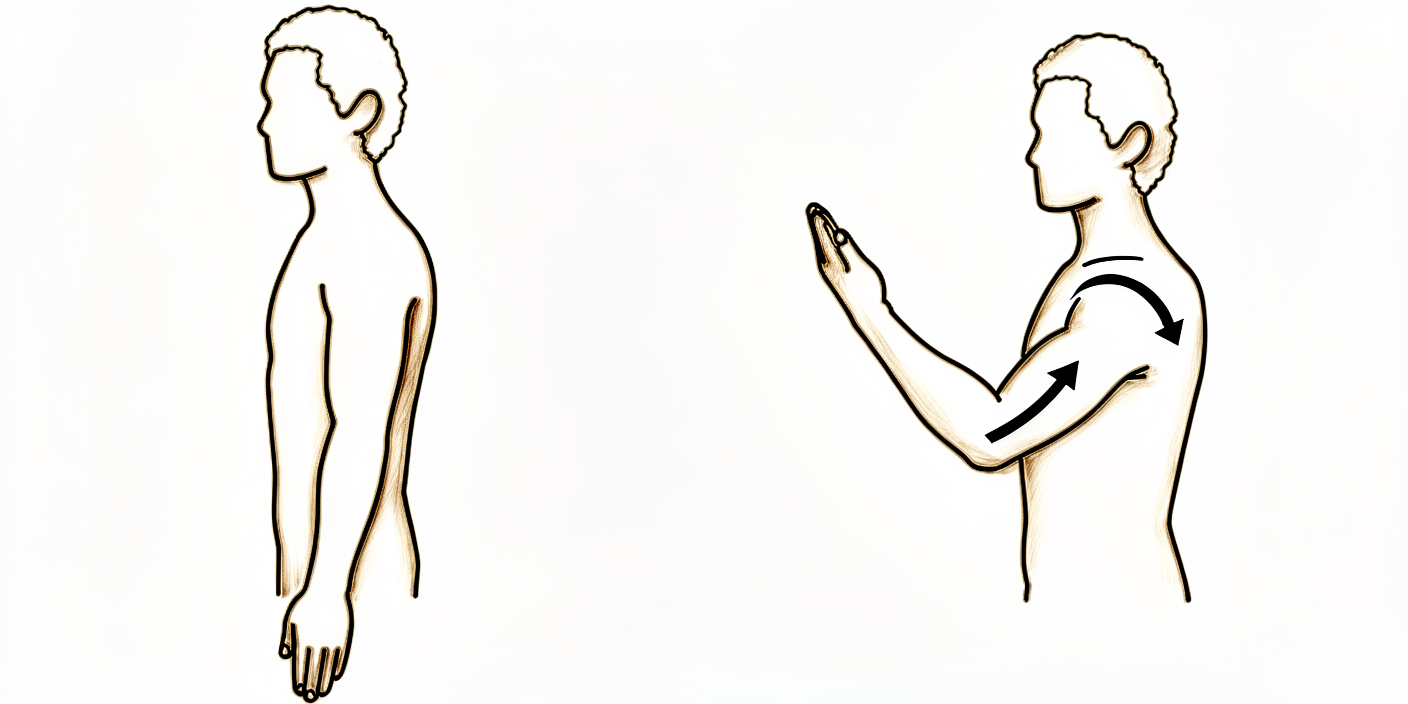
Flexão do cotovelo
Com o braço apoiado ao lado do corpo, flexione o cotovelo o máximo que puder confortavelmente e, em seguida, estenda-o completamente. Apenas o cotovelo deve se mover; mantenha o ombro relaxado. Isso mantém o cotovelo livre, ao mesmo tempo em que protege a clavícula.
Conforme orientado pelo seu fisioterapeuta
Kieran Hirpara 4.0
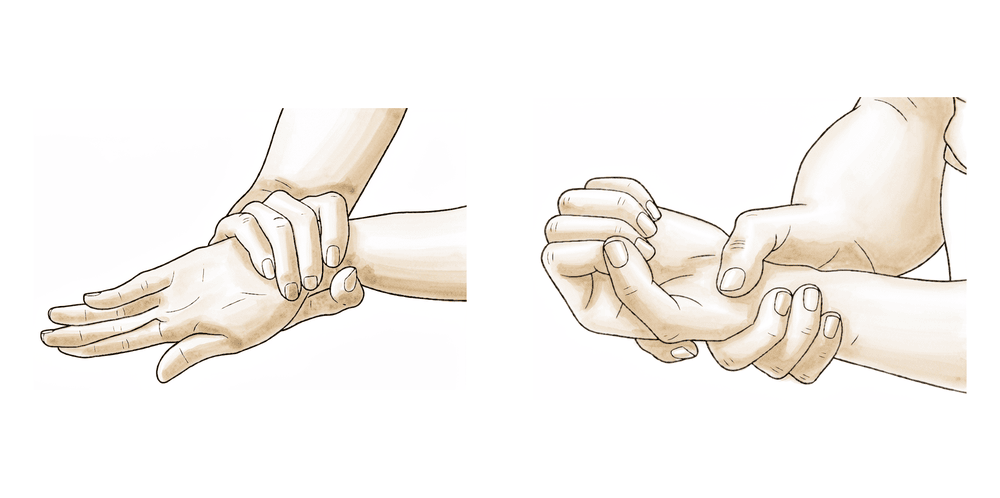
Rotação do antebraço
Com o cotovelo pressionado contra o corpo e dobrado em um ângulo reto, vire a palma da mão para cima e depois para baixo. Mantenha o braço imóvel, de modo que apenas o antebraço gire. A partir da segunda semana, seu fisioterapeuta poderá acrescentar uma resistência suave a esse exercício.
Conforme orientado pelo seu fisioterapeuta
Kieran Hirpara 4.0
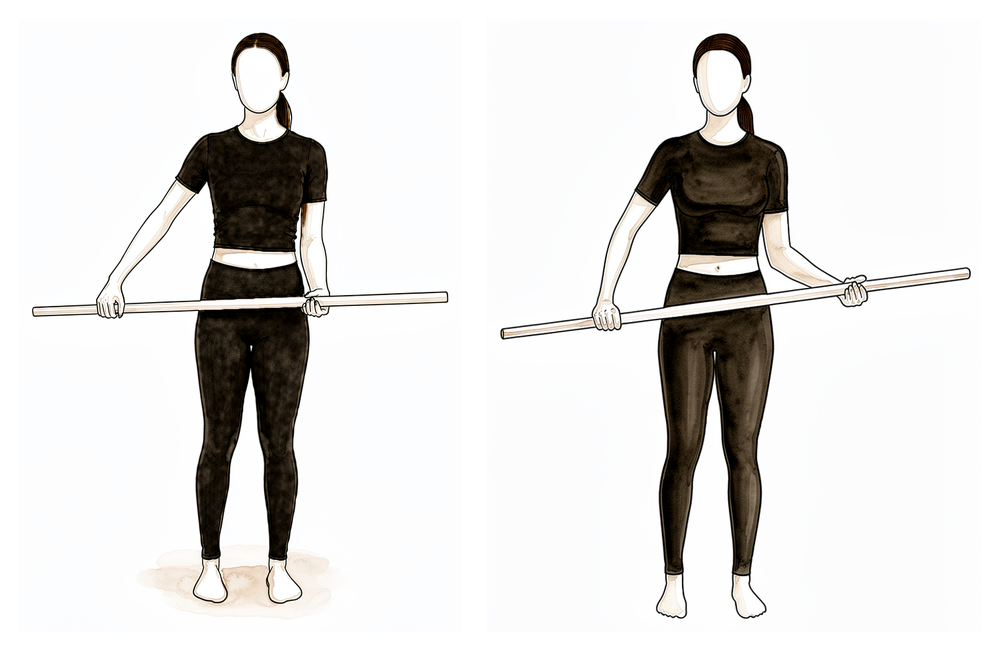
Rotação externa assistida com uma vara
Deite-se de costas, com o cotovelo operado junto ao corpo e dobrado em um ângulo reto. Segure uma vareta com as duas mãos e use o braço saudável para girar suavemente a mão operada para fora, fazendo a rotação do ombro; em seguida, volte à posição inicial. Mantenha o cotovelo junto ao corpo — este é um movimento assistido, não forçado.
Conforme orientado pelo seu fisioterapeuta
Kieran Hirpara 4.0
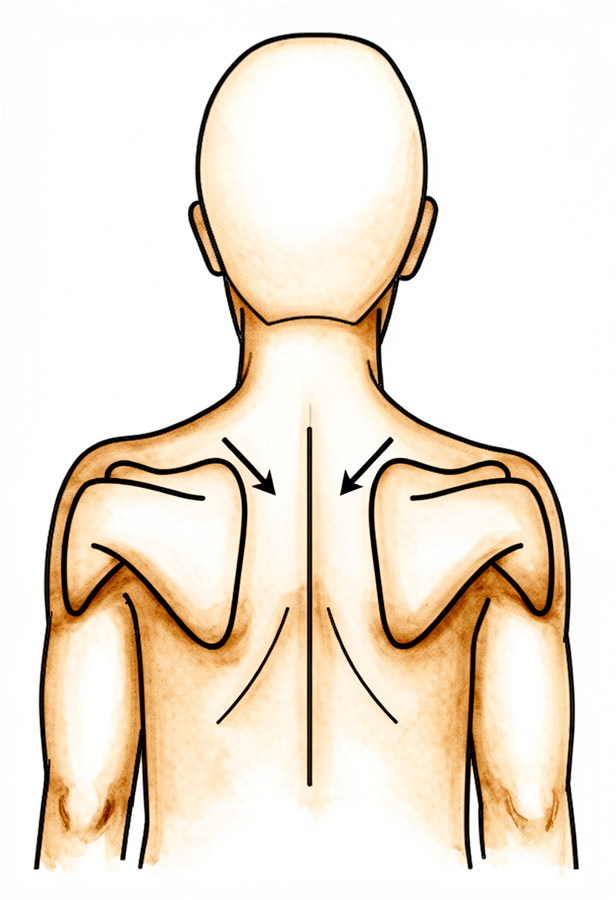
Posicionamento da escápula
Sentado ou em pé, puxe suavemente as escápulas para trás e para baixo, afastando-as das orelhas. Mantenha a posição por alguns segundos e depois relaxe. Isso mantém os músculos das escápulas ativos, sem mover a clavícula em processo de cicatrização.
Conforme orientado pelo seu fisioterapeuta
Kieran Hirpara 4.0
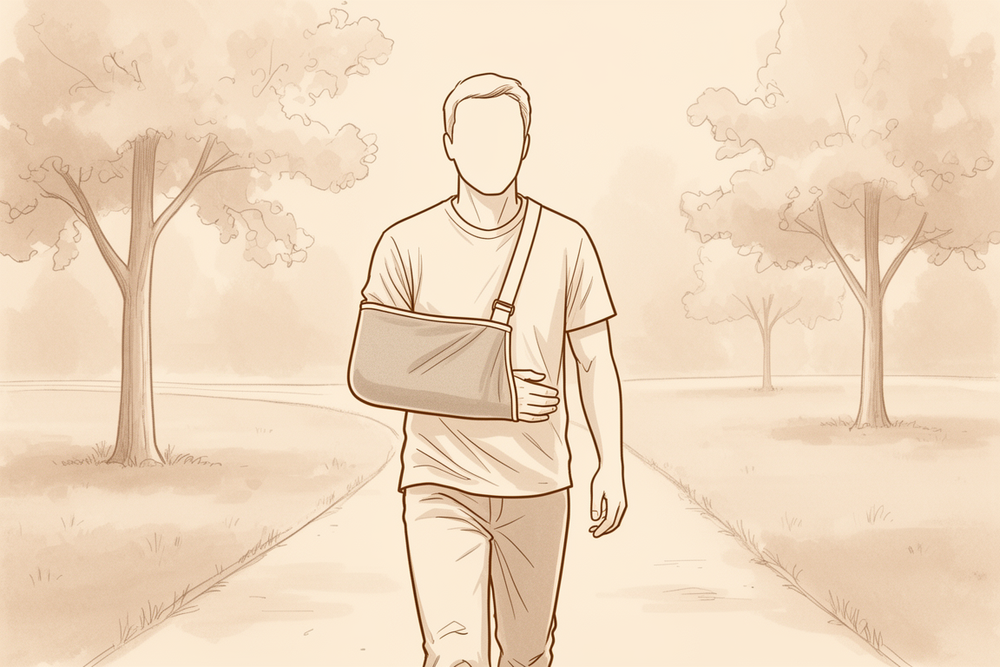
Andar com o braço na tipóia
Mantenha uma atividade cardiovascular leve, como caminhadas, com o braço operado apoiado na tipoia. Isso ajuda a preservar sua condição física geral, ao mesmo tempo em que protege a fratura.
Conforme orientado pelo seu fisioterapeuta
As primeiras semanas têm como objetivo proteger a fixação da fratura enquanto ela começa a consolidar. Você permanecerá usando a tipóia, controlando o inchaço com gelo e realizando exercícios suaves para manter em movimento o restante do braço: mão, punho, cotovelo e pescoço, além de movimentos pendulares e movimentos leves de ombro assistidos, sempre abaixo da altura do ombro. As regras mais importantes são: não levante o cotovelo acima da altura do ombro; não levante nem carregue nada com o braço operado; não faça esforços de empuxo com esse braço; e não dirija durante seis semanas (isso aplica-se a qualquer cirurgia no ombro) nem enquanto estiver usando a tipóia.
Para o seu fisioterapeuta:
Objetivos
- Proteger a fixação, o osso e os tecidos moles em processo de cicatrização
- Controlar a dor e o inchaço
- Restaurar a amplitude de movimento passivo do ombro até 90° de elevação
- Manter a amplitude total de movimento ativo do cotovelo, punho, mão e coluna cervical
Conduta terapêutica
- Crioterapia e outras modalidades conforme necessário; analgesia antes dos exercícios e sessões
- Verificar o ajuste da tipóia; orientar sobre seu uso (uso protetor, especialmente fora de casa; não é necessária durante a noite, conforme prática habitual) e sobre a postura corporal
- Movimentos pendulares e deslizamentos sobre a mesa
- PROM: rotação externa e interna no plano da escápula, conforme conforto do paciente; flexão, abdução e elevação até no máximo 90°
- AAROM: rotação externa com auxílio de uma vara na posição neutra; flexão assistida em decúbito dorsal até 90°
- AROM: movimentos ativos do cotovelo, punho, mão e coluna cervical; exercícios de preensão (apertar uma bola)
- A partir da 2ª semana: exercícios resistidos de flexão/extensão do punho e rotação do antebraço; movimentos suaves de fixação e retração da escápula
- Atividade cardiovascular: caminhada com o braço na tipóia; ciclismo estacionário ou deitado com o braço na tipóia
Precauções
- Proibida qualquer elevação ativa do ombro
- Proibida flexão ou abdução do ombro além de 90°, inclusive de forma passiva
- Não levante nem carregue nada com o braço operado; proibido qualquer suporte de carga com esse braço
- Não dirija durante seis semanas (isso aplica-se a qualquer cirurgia no ombro), nem enquanto estiver usando a tipóia
Critérios para avançar para a fase seguinte
- Flexão/abdução passiva confortável até 90° e rotação externa de aproximadamente 30°
- Dor controlada, abaixo de 4/10 em repouso
- Amplitude completa de movimento ativo do cotovelo, punho e mão
- Ferida cicatrizada, sem sinais de complicações
Fase II — Movimentação precoce (Semana 3–6)
Kieran Hirpara 4.0
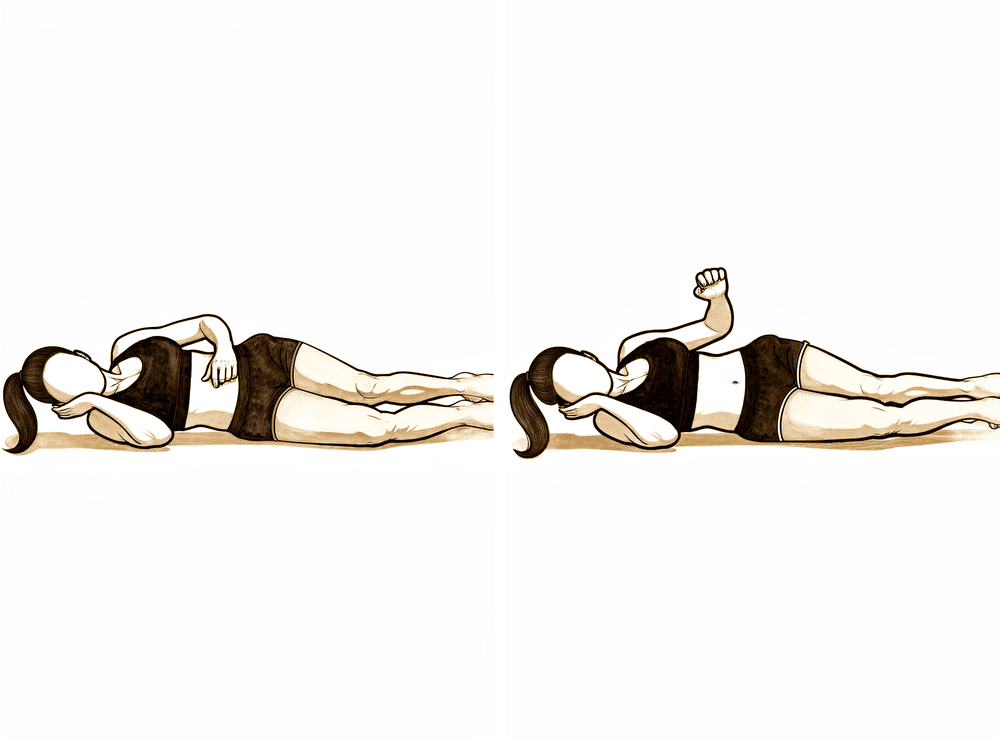
Rotação externa em decúbito lateral
Deite-se sobre o lado não operado, com o braço operado por cima; dobre o cotovelo a 90 graus e mantenha-o junto ao corpo. Mantendo o cotovelo junto ao corpo, gire o antebraço para cima, afastando-o do abdômen, até o limite do conforto, e depois abaixe-o de forma controlada. Nesta fase, não se deve usar pesos — o braço deve se mover apenas pela força muscular.
Conforme orientado pelo seu fisioterapeuta
Kieran Hirpara 4.0
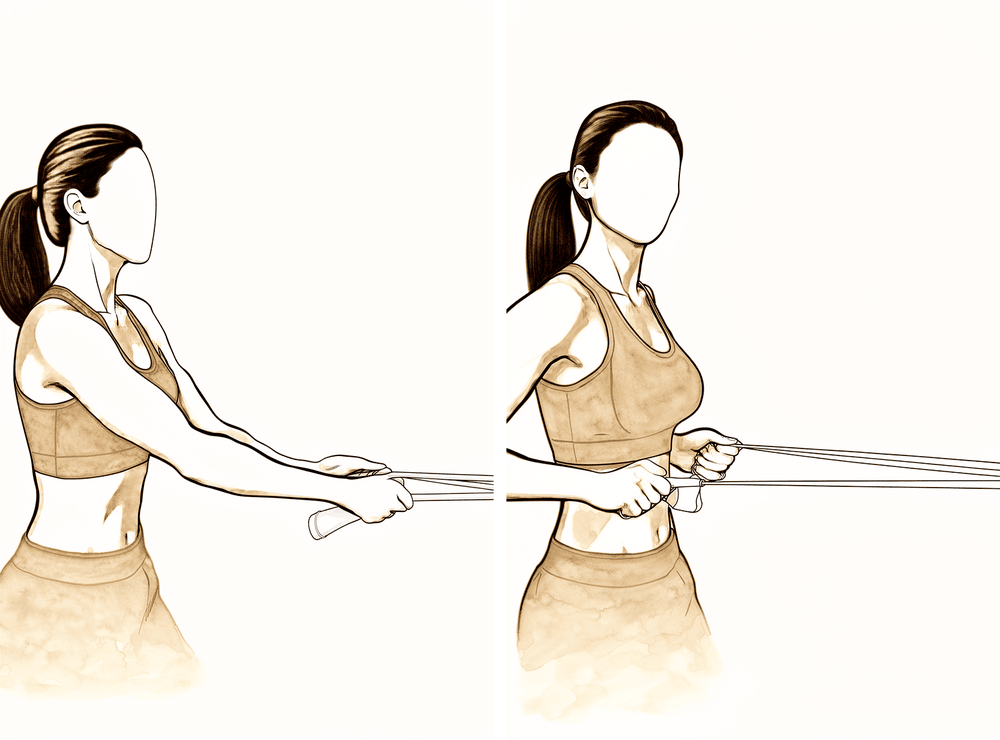
Remada baixa com faixa elástica
Fixe uma faixa elástica à sua frente, na altura da cintura. Em pé, puxe a faixa em direção a si, levando a escápula suavemente para baixo e para trás; em seguida, solte-a com controle. Mantenha a resistência leve.
Conforme orientado pelo seu fisioterapeuta
Kieran Hirpara 4.0
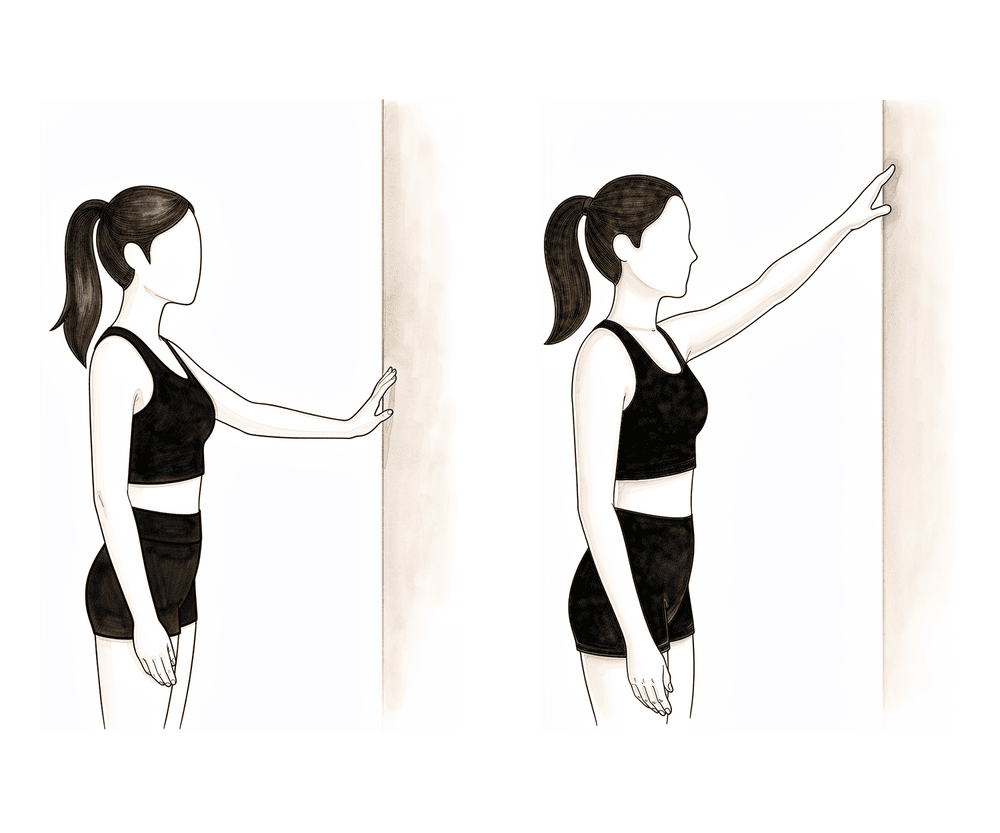
Deslizamentos na parede (caminhada com os dedos)
Fique de frente para uma parede e apoie os dedos nela. Deslize os dedos pela parede para levantar o braço, permitindo que a parede suporte parte do peso; em seguida, deslize-os de volta para baixo. Nessa fase, mantenha o braço abaixo da altura dos ombros — como a parede está ajudando, o movimento permanece suave.
Conforme orientado pelo seu fisioterapeuta
Kieran Hirpara 4.0
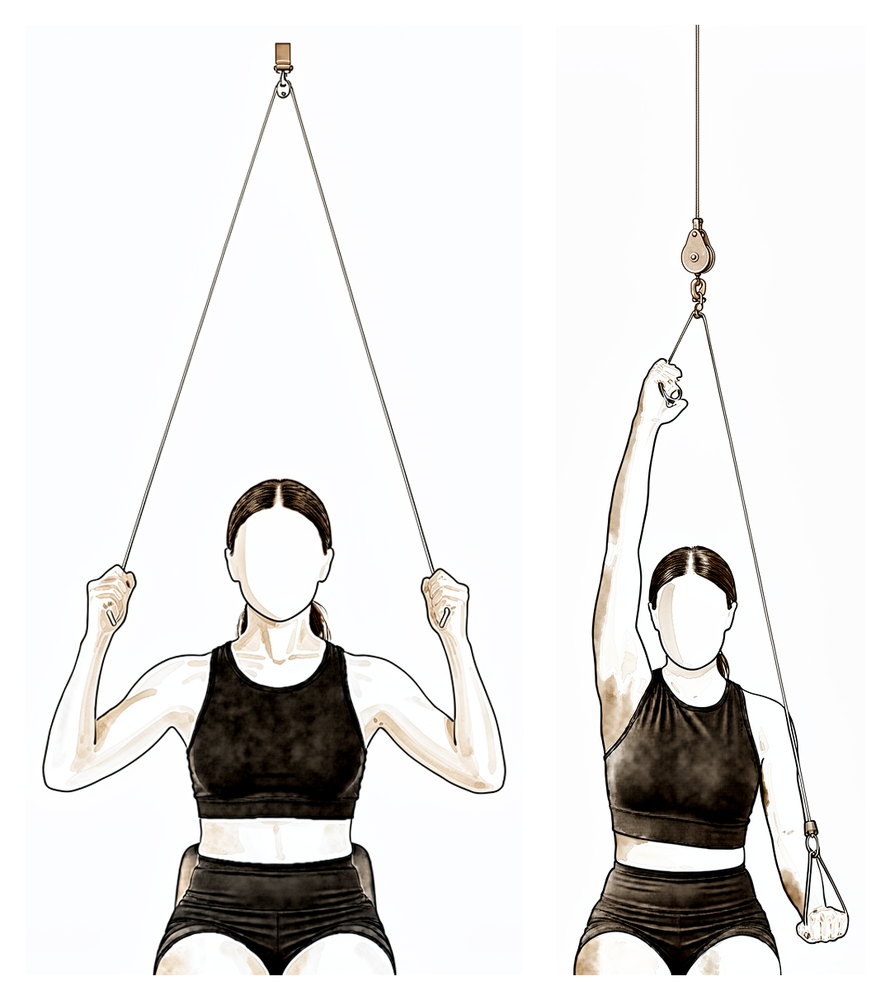
Polia de porta
Sente-se debaixo de uma polia de porta, segurando uma alça em cada mão. Puxe para baixo com o braço saudável, de modo a elevar o braço operado até o limite do conforto; em seguida, abaixe-o lentamente. Por enquanto, mantenha o movimento dentro de uma amplitude suave e abaixo da altura dos ombros — o braço saudável é quem realiza todo o esforço.
Conforme orientado pelo seu fisioterapeuta
Kieran Hirpara 4.0
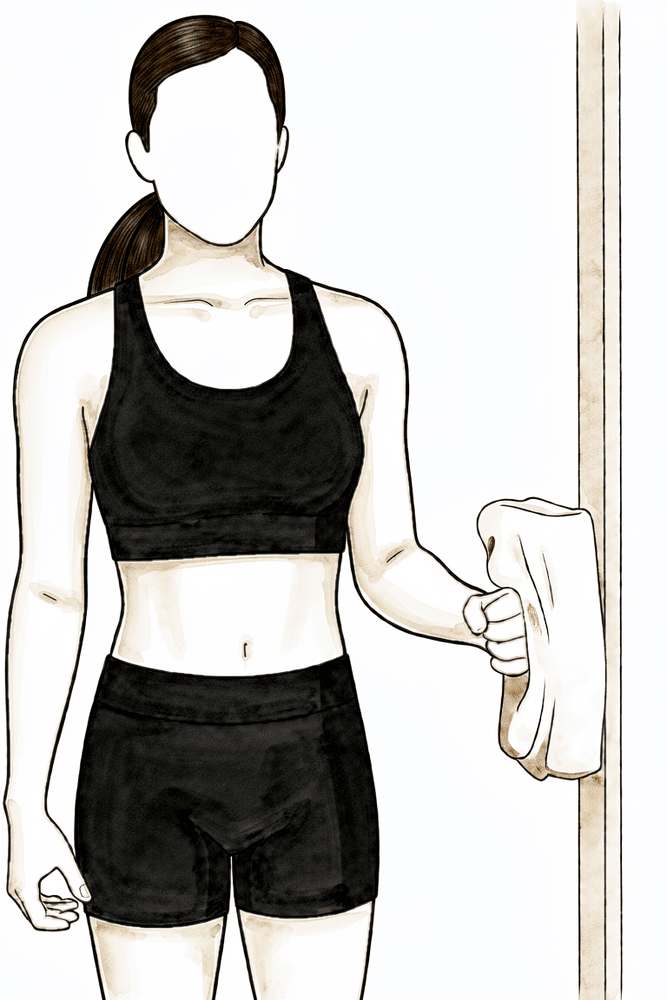
Rotação externa isométrica
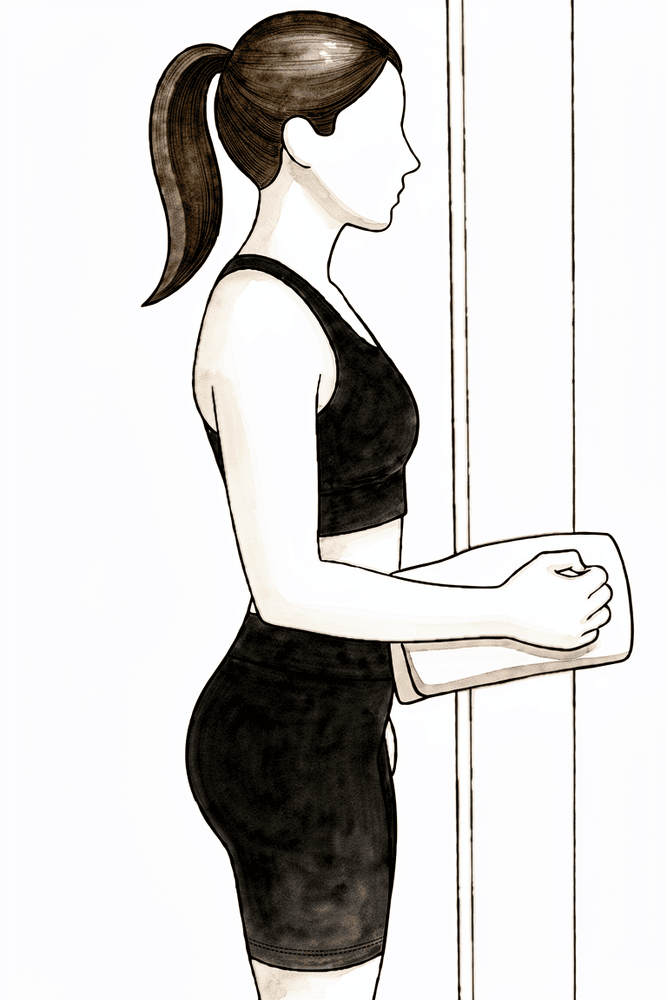
Fique de pé com o cotovelo pressionado contra o corpo e dobrado em um ângulo reto, com o dorso da mão encostado numa parede ou na moldura de uma porta. Pressione suavemente para fora, sem mover o braço; mantenha a posição por alguns segundos e depois relaxe. Isso ativa o manguito rotador sem exigir nenhum movimento do ombro.
Conforme orientado pelo seu fisioterapeuta
Kieran Hirpara 4.0
Rotação interna isométrica
Fique de pé com o cotovelo pressionado contra o corpo e dobrado em um ângulo reto; a palma da mão deve ficar encostada numa parede ou na moldura de uma porta. Pressione suavemente para dentro, sem mover o braço; mantenha a posição por alguns segundos e depois relaxe. É uma forma suave de começar a ativar o manguito rotador.
Conforme orientado pelo seu fisioterapeuta
Kieran Hirpara 4.0
Flexão de bíceps
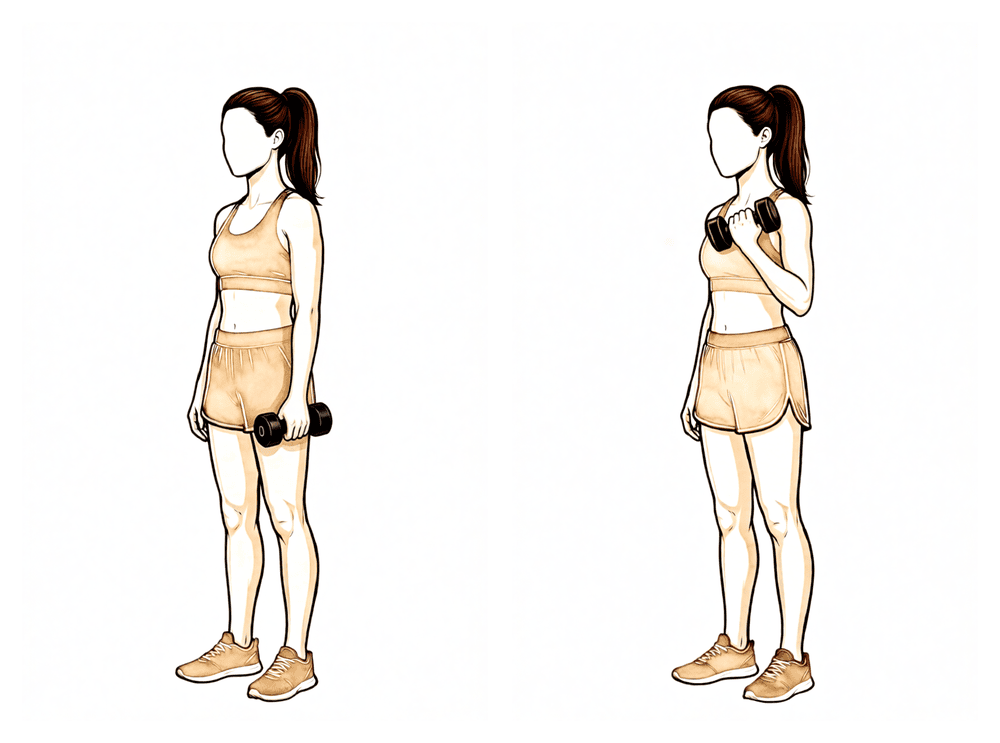
Com o braço ao lado do corpo, dobre o cotovelo para levantar um peso leve em direção ao ombro, depois abaixe-o com controle. Mantenha o peso leve — este é um exercício suave de condicionamento do braço, não um levantamento pesado.
Conforme orientado pelo seu fisioterapeuta
A fratura está começando a unir-se, mas ainda não está completamente curada: nesta fase, o objetivo é recuperar a mobilidade, não a força muscular. O uso da tipóia é reduzido conforme o paciente se sentir confortável; a amplitude de movimento passiva e assistida avança gradualmente até atingir o máximo possível, e o paciente começa a mover o braço por conta própria abaixo da altura do ombro, além de realizar exercícios suaves de ativação muscular (isométricos). O peso de qualquer objeto levantado ou carregado deve ser limitado ao equivalente a uma xícara de café; também devem ser evitados quaisquer alongamentos forçados. Esta fase termina com um raio-X e uma avaliação com o Dr. Hirpara por volta da sexta semana; essa avaliação, e não apenas o tempo decorrido, permite iniciar o fortalecimento muscular e movimentos acima da altura do ombro.
Para o seu fisioterapeuta:
Objetivos
- Reduzir progressivamente o uso da tipóia (que deve ser descartada por volta da 6ª semana)
- Aumentar gradualmente a amplitude de movimento passiva em todos os planos
- Alcançar amplitude de movimento ativa abaixo de 90°, com mecânica correta
- Iniciar exercícios isométricos suaves e atividades para os músculos periescapulares
Conduta terapêutica
- PROM: avançar para a amplitude de movimento máxima em todos os planos, conforme tolerância; evitar alongamentos forçados
- AAROM: flexão em decúbito dorsal utilizando uma vareta, progredindo para posições mais eretas; deslizamentos na parede ou em corrimãos; uso de polias
- AROM: elevação do braço abaixo de 90°, sem dor; flexão em decúbito dorsal progredindo para posição de pé; rotação externa sentado ou de lado
- Exercícios isométricos para o manguito rotador na posição neutra; fortalecimento leve dos músculos periescapulares (retração da escápula, remadas leves); exercícios leves para bíceps e tríceps
- Monitorar a ocorrência de padrões compensatórios (elevação do ombro, substituição por movimentos da escápula)
- Atividade cardiovascular: caminhada; bicicleta ergométrica
Precauções
- Não levantar nem carregar objetos mais pesados que uma xícara de café
- Não realizar elevações ativas acima de 90° até que a consolidação da fratura seja confirmada na avaliação da sexta semana
- Evitar alongamentos forçados do ombro ou posições que provoquem dor
- Não colocar carga sobre o braço
- Não dirigir durante seis semanas (isso aplica-se a qualquer cirurgia no ombro), nem enquanto estiver usando a tipóia
Critérios para avançar para a fase seguinte
- Amplitude de movimento passiva completa ou quase completa
- Elevação ativa até 90°, com mínima compensação e dor abaixo de 4/10
- Consolidação satisfatória da fratura comprovada por raio-X, conforme avaliação com o Dr. Hirpara
Fase III — Fortalecimento (Semana 6–12)
Kieran Hirpara 4.0
Alongamento cruzado do corpo
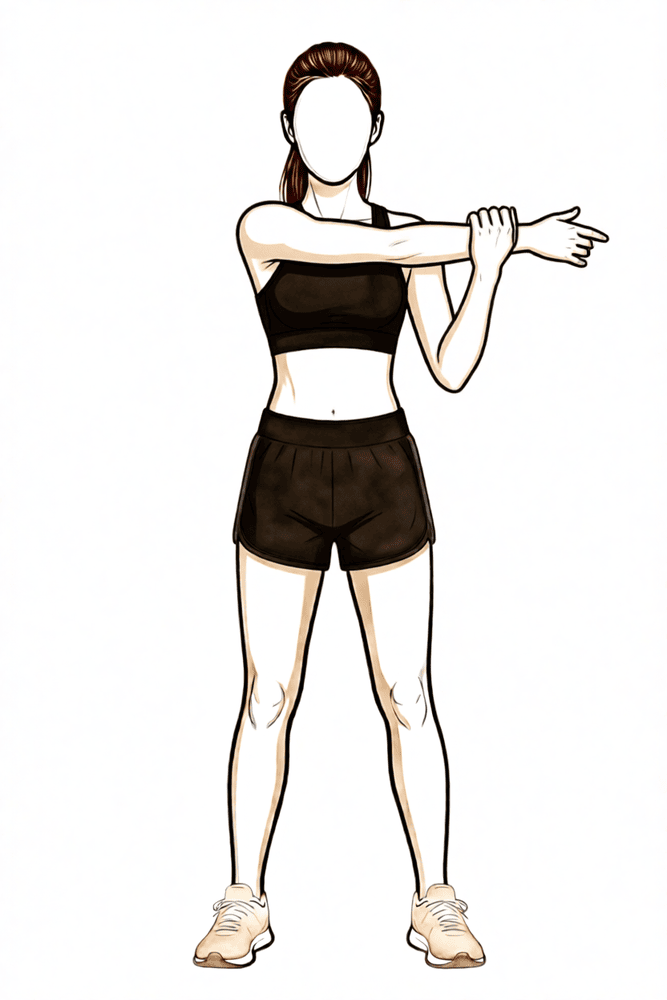
Use a outra mão para levar o braço operado ao peito, até sentir um alongamento na parte posterior do ombro. Mantenha a posição por alguns instantes e depois solte. O alongamento deve chegar apenas ao ponto de desconforto moderado — nunca até provocar dor aguda.
Conforme orientado pelo seu fisioterapeuta
Kieran Hirpara 4.0
Alongamento do tipo “dorminhoco”
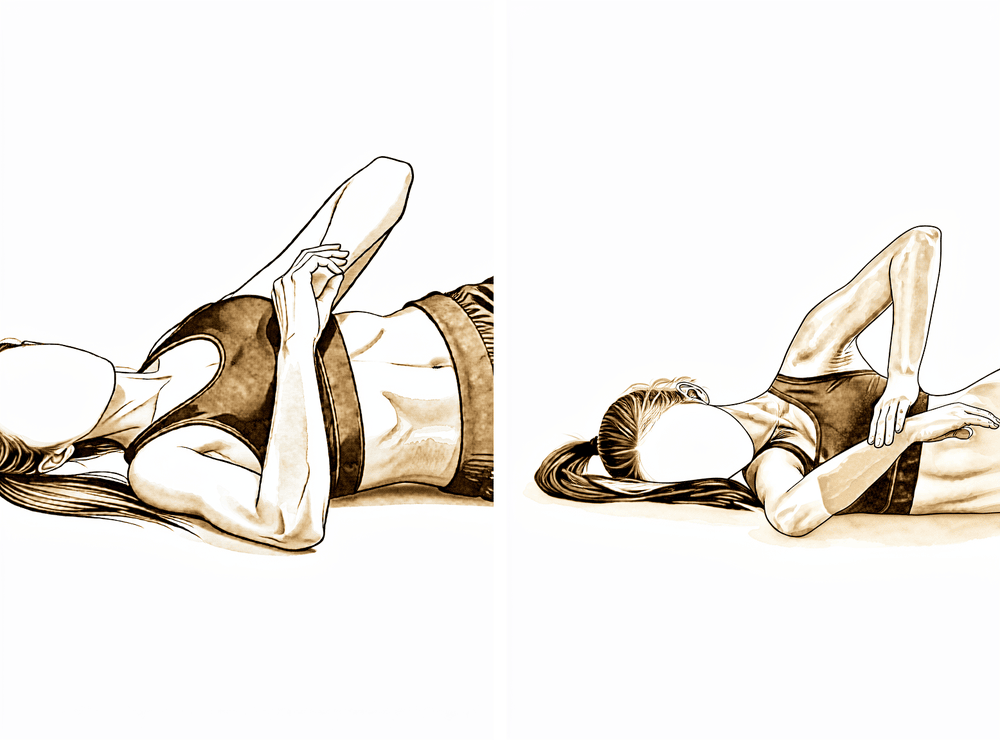
Deite-se sobre o lado operado, mantendo o ombro e o cotovelo dobrados a 90 graus. Com a outra mão, pressione suavemente o antebraço para baixo, em direção à cama, até sentir um alongamento na parte posterior do ombro; em seguida, solte a pressão. Faça isso com delicadeza — não deve haver dor aguda.
Conforme orientado pelo seu fisioterapeuta
Kieran Hirpara 4.0
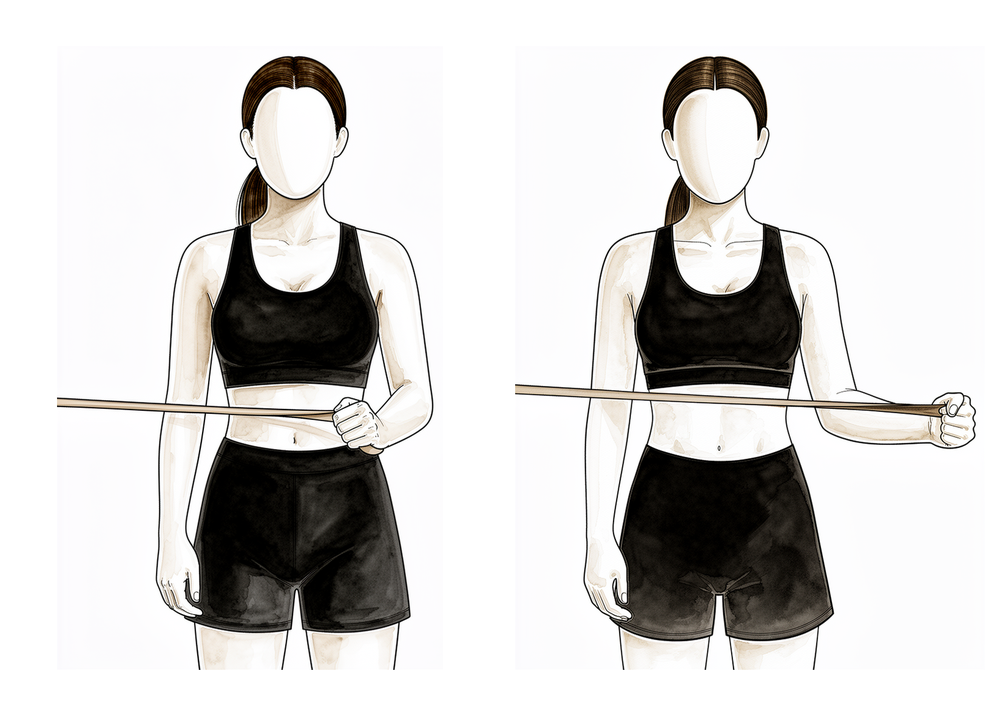
Rotação externa com faixa elástica
Fique de pé com o cotovelo pressionado contra o corpo e dobrado em um ângulo reto, segurando uma faixa elástica fixada na altura da cintura. Mantendo o cotovelo junto ao corpo, gire o antebraço para fora contra a resistência da faixa e depois volte lentamente à posição inicial. Esse exercício complementa o trabalho isométrico anterior para o manguito rotador.
Conforme orientado pelo seu fisioterapeuta
Kieran Hirpara 4.0
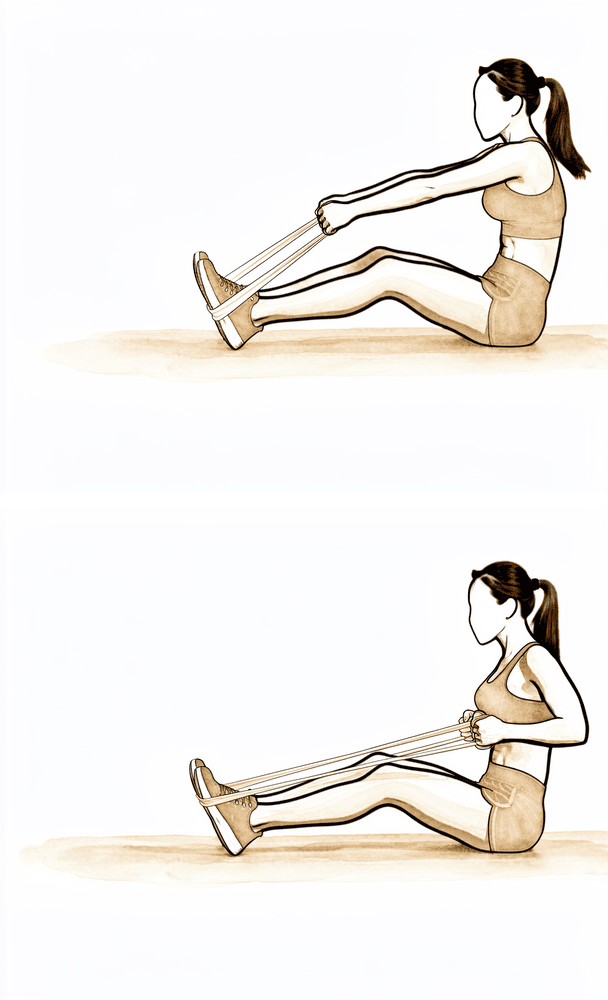
Remada baixa
Segure uma faixa à sua frente, na altura da cintura. Mantendo o braço razoavelmente esticado, puxe-o para trás e para baixo, em direção ao quadril, contraindo a escápula para baixo e para trás; em seguida, volte lentamente à posição inicial. Esse exercício fortalece os músculos da escápula que dão suporte ao manguito rotador.
Conforme orientado pelo seu fisioterapeuta
Kieran Hirpara 4.0
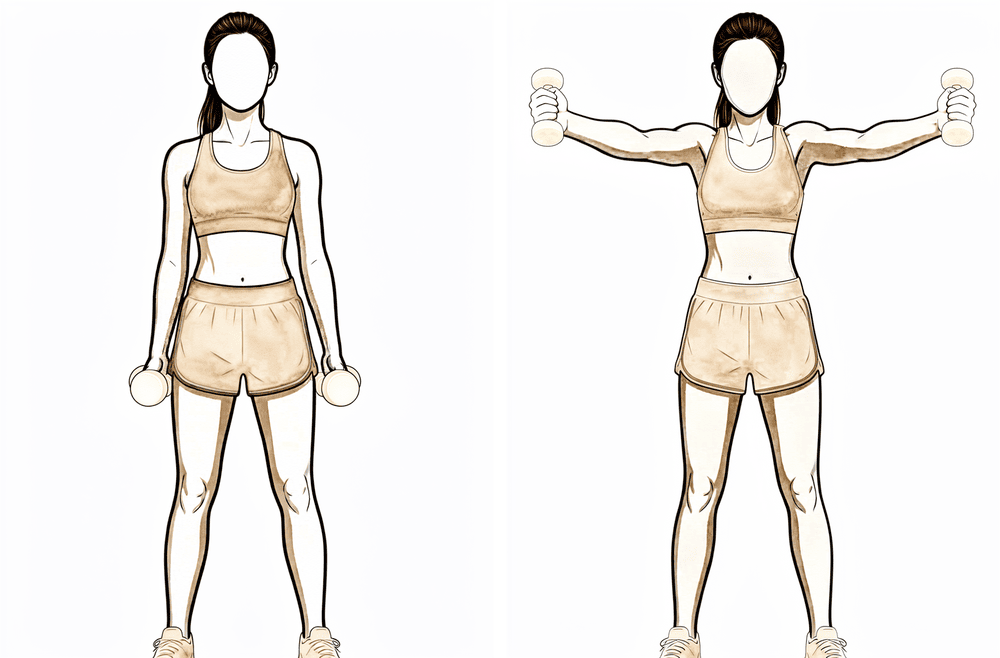
Elevações no plano da escápula (lata cheia)
Com os polegares apontando para cima, levante o braço até cerca de 45 graus à sua frente — entre a posição diretamente à frente e a posição lateral — e depois abaixe-o com controle. Assim que a amplitude acima da altura do ombro for autorizada, eleve o braço até uma amplitude confortável acima da cabeça. Mantenha o peso leve.
Conforme orientado pelo seu fisioterapeuta
Kieran Hirpara 4.0
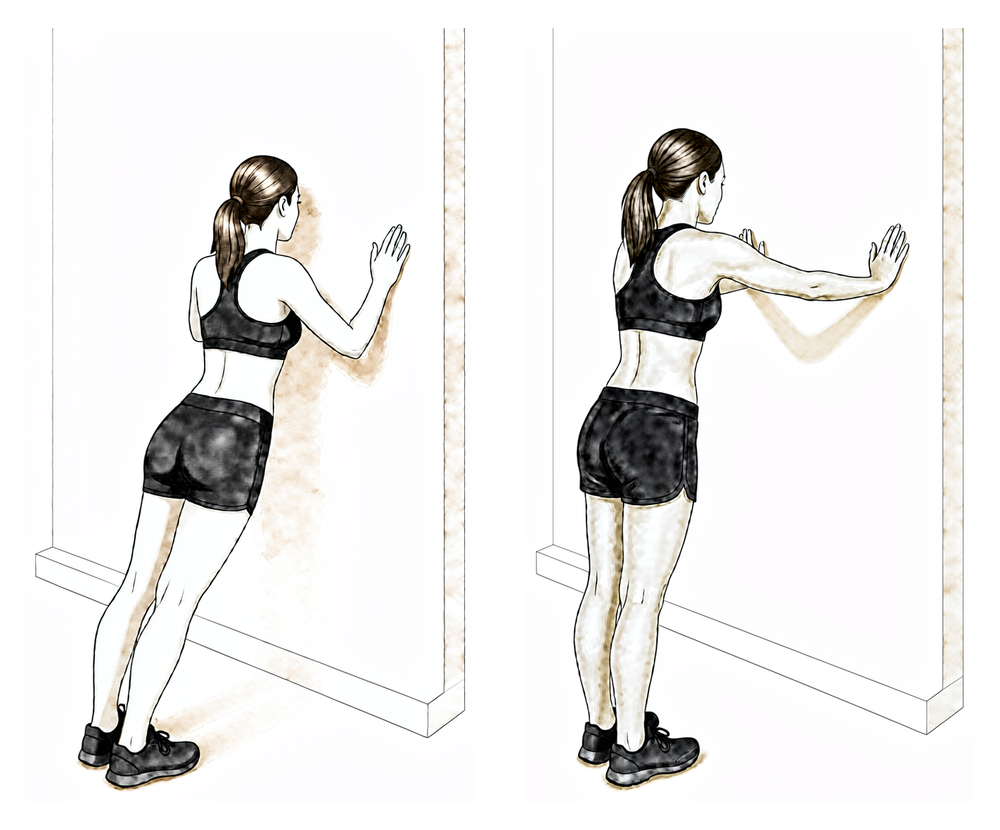
Flexões de parede
Fique de pé de frente para uma parede, com as mãos apoiadas nela à altura dos ombros. Flexione os cotovelos para se inclinar em direção à parede e, em seguida, empurre-se para trás; no final, faça um leve empuxo com as mãos para afastar as escápulas. Introduza esse movimento apenas no final desta fase, conforme orientação do seu fisioterapeuta.
Conforme orientado pelo seu fisioterapeuta
Kieran Hirpara 4.0
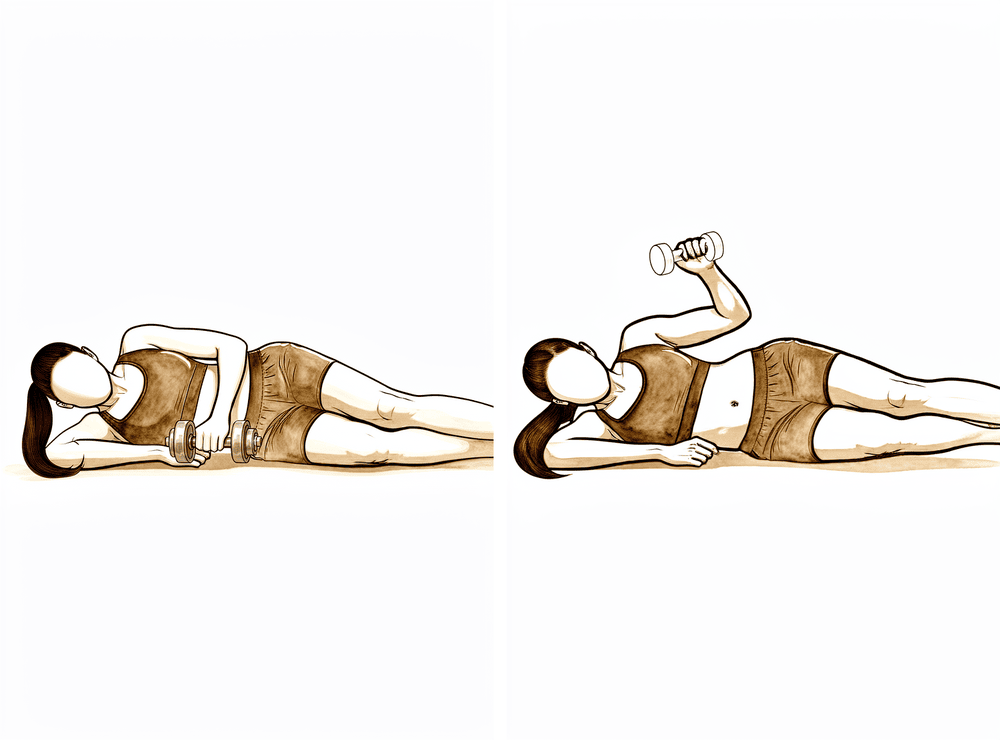
Rotação externa em decúbito lateral com carga
Deite-se sobre o lado não operado, dobrando o cotovelo superior em um ângulo reto e puxando-o para perto do corpo. Segurando um peso leve, gire o antebraço para cima, em direção ao teto, e depois abaixe-o lentamente. Mantenha o peso leve e faça um número maior de repetições.
Conforme orientado pelo seu fisioterapeuta
Kieran Hirpara 4.0
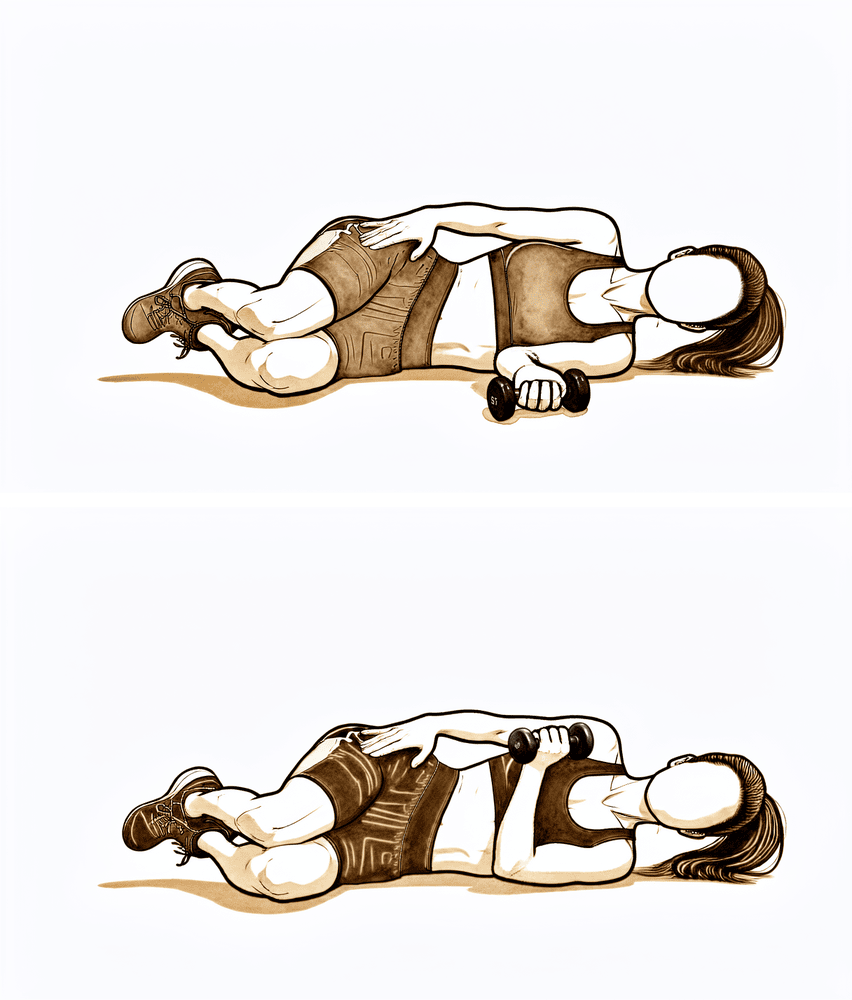
Rotação interna em decúbito lateral com carga
Deite-se sobre o lado operado, com o cotovelo dobrado em ângulo reto e encostado ao corpo. Segurando um peso leve, eleve-o em direção ao abdômen girando o ombro para dentro, e depois abaixe-o lentamente. Mantenha o peso leve e faça mais repetições.
Conforme orientado pelo seu fisioterapeuta
Após a avaliação confirmar que a fratura está cicatrizando bem, inicia-se o movimento acima da altura dos ombros, sendo que a amplitude de movimento ativa completa é alcançada ao longo das semanas seguintes. O fortalecimento começa de forma suave: primeiro exercícios de ativação muscular, depois uso de faixas elásticas e, posteriormente, pesos leves para os músculos da coifa dos rotadores e da escápula. Até a 12ª semana, os levantamentos devem permanecer leves (não ultrapassando 2 kg); levantamentos pesados ou acima da cabeça ainda não são permitidos, e nenhum esporte de contato deve ser praticado nesta fase. Geralmente, a natação e o ciclismo são retomados nesta fase, conforme orientação do seu fisioterapeuta.
Para o seu fisioterapeuta:
Objetivos
- Alcançar amplitude de movimento ativa completa em todos os planos, com mecânica normal
- Iniciar e progredir o fortalecimento da coifa dos rotadores e dos músculos periescapulares
- Retornar às atividades diárias normais
Conduta terapêutica
- Progredir a amplitude de movimento ativa para além de 90° em todos os planos, minimizando padrões compensatórios
- Alongamentos conforme necessário: do músculo latíssimo do dorso, peitorais, cápsula posterior do ombro e alongamento em posição de “dorminhoco”
- Fortalecimento: exercícios isométricos para a coifa dos rotadores, progredindo para rotações externa/interna resistidas com faixas elásticas, inicialmente abaixo da altura dos ombros; retração e movimentos de remada para a escápula; elevações laterais, exercícios para o músculo serrátil anterior e flexões contra a parede no final da fase
- Uso de pesos livres leves, aumentando conforme tolerância: carga baixa com maior número de repetições
- Exercícios cardiovasculares: bicicleta ergométrica e caminhada; natação e corrida a partir da semana 8–10, caso autorizados após avaliação
Precauções
- Não levantar pesos superiores a 2 kg até a 12ª semana
- Evitar levantamentos pesados acima da cabeça ou longe do corpo até a 12ª semana
- Proibição de esportes de contato; exercícios pliométricos ou com impacto só são permitidos no final da fase (por volta da semana 10–12)
- O fortalecimento deve permanecer dentro da faixa confortável; não deve provocar dor persistente
Critérios para progressão
- Amplitude de movimento ativa atingindo pelo menos 90% do lado contralateral
- Boa ativação da coifa dos rotadores e dos músculos periescapulares, com dor não superior a 3/10 durante exercícios resistidos
- Progressão da consolidação da fratura comprovada por radiografia, conforme avaliação do Dr. Hirpara
Fase IV — Retorno às atividades normais e ao esporte (a partir da semana 12)
Kieran Hirpara 4.0
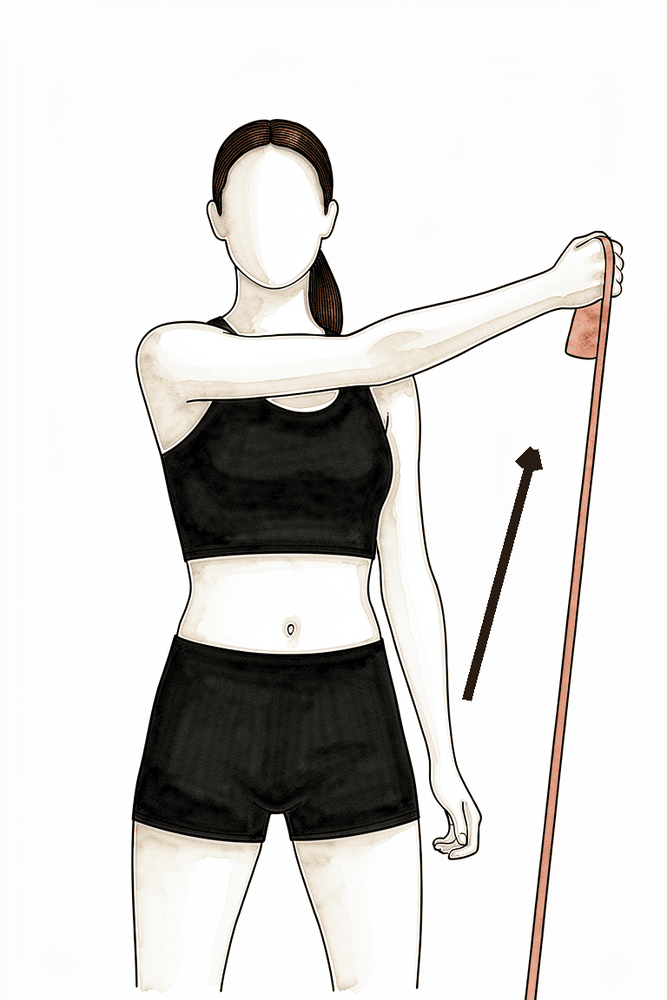
Padrão diagonal com uma faixa (D1)
Segure uma faixa elástica e estique-a diagonalmente pelo corpo — partindo de baixo, junto a um dos quadris, subindo e indo para o lado oposto; em seguida, repita o movimento de forma controlada na direção inversa. Esses padrões funcionais diagonais ajudam a recuperar o movimento coordenado de todo o braço, utilizado no trabalho e nos esportes. Execute esse exercício somente após a consolidação da fratura.
Conforme orientado pelo seu fisioterapeuta
Kieran Hirpara 4.0
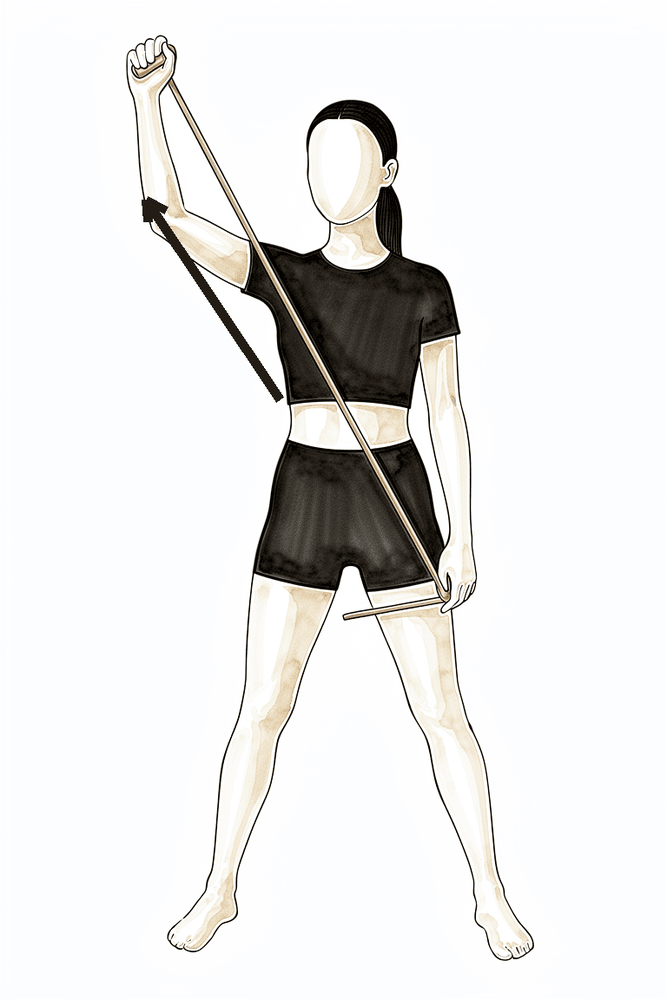
Padrão diagonal com faixa (D2)
Segure uma faixa elástica e mova-a diagonalmente, partindo de baixo, do outro lado do corpo, subindo até acima da cabeça e para fora; em seguida, repita o movimento de forma controlada no sentido inverso. Esse exercício desenvolve os padrões de movimento do ombro necessários para atividades acima da cabeça e específicas ao esporte. Realize-o apenas após a consolidação da fratura e quando o exercício acima da cabeça for autorizado.
Conforme orientado pelo seu fisioterapeuta
A fase final consiste no retorno gradual a atividades que exigem levantamento de peso, trabalho manual e prática esportiva. O treinamento de força evolui para resistências maiores, posições acima da cabeça e, para atletas, exercícios pliométricos, de arremesso e específicos para cada esporte. Para esportes de contato e colisão (futebol, rúgbi, equitação), é necessária a consolidação da fratura comprovada por radiografia, conforme avaliação com o Dr. Hirpara; esse prazo costuma ser de três a quatro meses, no mínimo, embora alguns protocolos só permitam a prática desses esportes após seis meses. O retorno antes da consolidação óssea pode levar à nova fratura; portanto, esse é um critério importante a ser respeitado.
Para o seu fisioterapeuta:
Objetivos
- Manutenção de amplitude de movimento completa e sem dor
- Força muscular equivalente a, no mínimo, 90% do lado não afetado
- Retorno gradual ao trabalho manual, lazer e esportes
Conduta terapêutica
- Treinamento de resistência progressivo, incluindo cargas excêntricas, posições acima da cabeça e padrões funcionais conforme tolerância do paciente
- Exercícios de estabilização rítmica e propriocepção; programas pliométricos, de arremesso intervalado ou uso de raquetes para atletas que atuam acima da cabeça
- Condicionamento específico para trabalhadores manuais; exercícios esportivos específicos antes da prática livre
- Decisão sobre o retorno ao esporte deve ser individualizada (considerando esportes de contato ou não, demanda sobre o membro superior) e coordenada com o cirurgião
Critérios para avançar para a fase seguinte
- Amplitude de movimento ativa completa e sem dor
- Força muscular equivalente a, no mínimo, 90% do lado não afetado, conforme avaliação dinamométrica, sem dor durante o teste de força
- Conclusão bem-sucedida de um programa de retorno gradual ao esporte, sem dor ou sensação de instabilidade
- Consolidação óssea comprovada por radiografia na avaliação com o Dr. Hirpara antes da prática de esportes de contato ou colisão
Após seguir o seu protocolo
As fases descritas acima foram adaptadas de protocolos de reabilitação publicados para fixação de fraturas de clavícula: Massachusetts General Brigham Sports Medicine, Mammoth Orthopedic Institute, Universidade do Colorado (Dr. Jonathan Bravman) e Midwest Orthopaedics at Rush (Dr. Brian Cole), além das orientações de fisioterapia do NHS provenientes de West Suffolk e United Lincolnshire, e dos dados sobre retorno ao esporte extraídos de uma revisão sistemática de fraturas de clavícula em atletas. Os intervalos semanais indicados são apenas exemplos, não sendo fixos; a sua evolução será orientada pelo seu fisioterapeuta e condicionada à consolidação da fratura, conforme avaliações realizadas com o Dr. Hirpara. Esta página complementa as orientações gerais de recuperação fornecidas pelo consultório; consulte controle da dor pós-operatória e cuidados com o ferimento. Para informações sobre a própria cirurgia, veja fixação da clavícula. As evidências que sustentam este protocolo – dados de ensaios comparando tratamento cirúrgico e não cirúrgico, taxas de consolidação óssea e retorno ao esporte, além dos protocolos cirúrgicos publicados – estão resumidas na seção de evidências, disponível como PDF no topo desta página.
Evidence & references
This is the clinical evidence summary written for health professionals. It is technical, and it lists the research this page was built from. You do not need to read it to understand your treatment or to make a decision about it.
Midshaft Clavicle Fracture — Operative vs Non-operative Management & Post-operative Rehabilitation (Plate ORIF)
Topic scope: (A) the decision between non-operative management and plate fixation for displaced midshaft clavicle fractures (the randomised-trial evidence on union, function and return to sport), and (B) post-operative rehabilitation after open reduction and internal fixation (ORIF) of the clavicle with a plate and screws. Distal-third and proximal-third fractures, which involve different fixation constructs, are noted only where they bear on the rehab principles.
Defining principle of the surgical rehab here: clavicle ORIF is a protect-the-fixation / protect-the-healing-fracture pathway, NOT an early-aggressive-motion pathway. The plate is a splint, not a substitute for healed bone — it neutralises load while the fracture itself unites over roughly 6–12 weeks and remodels for months afterwards. So the rehab is staged around fracture biology: a sling and below-shoulder-height-only motion early to protect the construct, range of motion progressed as the fracture knits (overhead motion deferred until the ~6-week x-ray), and strengthening / loading / collision sport withheld until radiographic union is confirmed. This is the opposite of a debridement or capsular-release pathway, where motion is the goal from day one and there is no fracture to protect. The single most important gate throughout is the x-ray, not the calendar — every major step up depends on how the fracture is healing.
A. THE OPERATIVE-vs-NON-OPERATIVE DECISION
Most clavicle fractures heal without surgery. The debate concerns completely displaced midshaft fractures (typically ≥100% displacement or ≥~2 cm shortening), where historic "all clavicles heal" teaching was overturned by randomised data.
The landmark trial — Canadian Orthopaedic Trauma Society (COTS) 2007
The COTS multicentre RCT randomised 132 patients with displaced midshaft clavicle fractures to plate ORIF vs non-operative sling treatment. Plate fixation produced a markedly lower nonunion rate (~2% vs ~23–24% non-operative), fewer symptomatic malunions, faster time to union, and better Constant and DASH scores at one year. This trial is the basis for offering surgery to active patients with completely displaced fractures — it did not establish that all such fractures require surgery. STRONG (RCT). [COTS 2007]
What later evidence tempered
- Meta-analyses of RCTs confirm operative fixation reduces nonunion and symptomatic malunion but show that much of the early functional advantage converges by 1 year, and comes at the cost of hardware-related reoperation. The decision is therefore shared and patient-specific (activity demands, displacement, comminution, smoking, occupation) rather than automatic. STRONG (SR/MA of RCTs). [Woltz-type meta-analysis; meta-regression, JSES 2020 — DOI 10.1016/j.jse.2020.02.011]
- A modern cohort comparison of dual mini-fragment plating vs non-operative care (mean 3.4-yr follow-up) found fewer union complications with fixation but similar patient-reported outcomes at final follow-up — echoing the "fixation buys reliable union, not necessarily a better long-term shoulder" theme. MODERATE (cohort). [DOI 10.1016/j.jse.2024.10.018]
- Heterogeneity between trials (how nonunion and displacement were defined, statistical handling of time-to-union) explains some of the apparent disagreement across studies — a caution against over-reading any single union statistic. MODERATE. [DOI 10.1016/j.jse.2012.03.015; meta-regression DOI 10.1016/j.jse.2020.02.011]
Construct choice (informs the rehab, not the patient's behaviour)
- Plate vs intramedullary fixation: an RCT comparing locked intramedullary nailing with plating found both achieve union; plates remain the workhorse for comminuted/displaced patterns. MODERATE (RCT). [DOI 10.1016/j.jse.2010.05.002]
- Plate position: superior plating is biomechanically strong but the plate lies directly under thin skin and is frequently symptomatic; anteroinferior plating lowers symptomatic hardware and removal rates. This is why patients commonly feel and see the plate, and why removal is a later, elective conversation. [Hardware-removal cohort, DOI 10.1016/j.jse.2017.03.011]
- Fixation reaches union even when delayed: immediate fixation vs delayed reconstruction of displaced midshaft fractures both restore objective strength and patient-oriented outcomes — reassuring that a fracture initially treated non-operatively can still be fixed successfully if it fails to unite. MODERATE (cohort). [DOI 10.1016/j.jse.2007.01.001]
B. POST-OPERATIVE REHABILITATION (plate ORIF)
The operation holds the fracture ends in position with a plate and screws so the bone can heal. Rehab is the same staged, fracture-protective sequence used across published surgeon and NHS protocols. Key facts that shape it:
- The plate neutralises load but the bone must unite biologically — typically 6–12 weeks to radiographic union, with remodelling for months after. Strengthening and loading that precede union risk implant loosening or re-fracture. Consensus / biomechanical.
- Bone healing is slower in smokers and in diabetics, and smoking can delay or prevent union — a modifiable risk worth addressing in the post-fracture window. Established.
- Overhead motion and strengthening are gated on the x-ray, not a fixed date — published protocols restrict elevation to ≤90° until early healing is confirmed (commonly the ~6-week review).
Consensus phased post-op timeline (plate ORIF)
| Phase | Window | Sling | ROM | Strengthening | Notes |
|---|---|---|---|---|---|
| I — Protection | Week 0–3 | Most of the time; off for showers/exercises/seated tasks; not required overnight | Passive/AAROM below 90° only — flexion/scaption/abduction capped at 90°, ER/IR in scapular plane to comfort; pendulums, table slides; full elbow/wrist/hand/cervical AROM | None at shoulder (grip + wrist only) | Protect fixation; settle pain/swelling; no driving while in sling; no lifting/carrying/weight-bearing through the arm |
| II — Early motion | Week 3–6 | Weaned as comfort allows; discarded by ~6 wk | Progress passive→full all planes (no forceful stretch); active motion below 90°; AAROM lawn-chair/pulley progression | Gentle isometrics + light periscapular work only | Recover movement, not strength. Lift ≤ a coffee cup. Phase ends with x-ray + review that gates overhead motion + strengthening |
| III — Strengthening | Week 6–12 | Off | AROM progresses above 90° once union confirmed; full active range built up | Cuff + scapular strengthening: isometric → bands → light weights; lift ≤ ~2 kg until 12 wk | Swimming/cycling typically return; no contact sport; no overhead/heavy lifting |
| IV — Return to activity & sport | Week 12 + | Off | Full, pain-free, maintained | Progressive heavy/eccentric/overhead loading; sport-specific + plyometric drills | Contact/collision sport needs radiographic union — typically ~3–4 months at the earliest, some protocols stage collision as late as 6 months |
The structure above matches the topic's patient protocol and is drawn from published surgeon ORIF protocols (Massachusetts General Brigham; Mammoth Orthopedic Institute; University of Colorado / Bravman; Midwest Orthopaedics at Rush / Cole) and NHS physiotherapy guidance (West Suffolk; United Lincolnshire). These protocols broadly agree on the sling ~3 weeks, ROM ≤90° early, overhead and strengthening after the ~6-week review, return to sport gated on union sequence; exact week boundaries vary by surgeon. WEAK / CONSENSUS — no rehab RCT defines the optimal regimen.
Return to sport — the evidence
- A systematic review of return to sport after clavicle fractures (Robertson & Wood, Br Med Bull 2016, 23 studies) found ~92% return to sport, at a mean of ~96 days (~3 months). MODERATE (SR of heterogeneous cohorts). [Robertson 2016]
- A more recent systematic review and meta-analysis reported mean return to play ~3.1 months operative vs ~3.9 months non-operative, with similar overall return rates but a higher rate of return to pre-injury level after operative treatment. MODERATE. [RTP SR-MA, JSES Rev 2024]
- In elite athletes specifically (e.g. NFL series), operative management has been used to achieve predictable, timely return — though selection bias makes these cohorts hard to generalise. WEAK (selected cohorts). [DOI 10.1177/0363546510372795]
The consistent signal: most athletes return by ~3 months, operative slightly faster and more reliably to pre-injury level — but union on x-ray, not the average timeline, governs clearance for collision sport.
C. KEY CONTROVERSIES / EVIDENCE QUALITY
- Who actually needs surgery. COTS established that fixation reduces nonunion/malunion in completely displaced midshaft fractures, but the early functional gap narrows by a year and fixation adds hardware reoperations. The modern position is shared decision-making for the active, completely-displaced patient — not routine fixation of all displaced fractures. Strong evidence, nuanced application.
- How big is the nonunion benefit, really? Reported nonunion rates vary with how "nonunion" and "displacement" are defined and how time-to-union is analysed; meta-regression shows this heterogeneity drives much of the between-study disagreement. Treat single headline figures with caution. Moderate.
- Hardware prominence and removal. Because the clavicle is subcutaneous, plates are often felt and sometimes symptomatic; removal rates depend heavily on plate position (anteroinferior < superior) and design (low-profile/dual). Removal is an elective, post-union decision. Moderate (cohorts).
- The rehab protocol itself is consensus. Phase timings come from surgeon patient-guidance documents and NHS leaflets, not a rehab RCT. The ≤90°-until-6-weeks and union-gated-sport principles are widely shared; precise week boundaries are not trial-derived. Weak/consensus.
D. EVIDENCE STRENGTH FLAGS (summary)
- STRONG (RCT / SR-MA of RCTs): plate fixation reduces nonunion and symptomatic malunion in displaced midshaft fractures (COTS 2007 RCT; meta-analyses), with early functional benefit that converges by ~1 year; plate vs IM nail both achieve union (RCT).
- MODERATE (cohorts / SR of cohorts): similar long-term PROs fixation vs non-op despite fewer union complications (dual-plate cohort 2024); return to sport ~92% at ~3 months, operative slightly faster/more reliable to pre-injury level (Robertson 2016 SR; RTP SR-MA 2024); hardware removal rate and its dependence on plate position; delayed fixation still succeeds.
- WEAK / CONSENSUS: the post-operative rehabilitation protocol itself (surgeon + NHS patient-guidance documents; no defining rehab RCT); elite-athlete operative series (selection bias).
CITATIONS
RAG corpus (180,000+ Orthopaedic articles) — clavicle-specific evidence
- Canadian Orthopaedic Trauma Society. Nonoperative treatment compared with plate fixation of displaced midshaft clavicular fractures: a multicenter, randomized clinical trial. J Bone Joint Surg Am. 2007;89(1):1–10. (also corpus-adjacent reanalysis: DOI 10.1016/j.jse.2012.03.015)
- Factors explaining heterogeneity in studies comparing surgical and nonsurgical treatment of midshaft clavicle fractures: a meta-regression analysis of RCTs and high-quality observational studies. J Shoulder Elbow Surg. 2020. DOI: 10.1016/j.jse.2020.02.011
- Dual mini-fragment plate fixation of midshaft clavicle fractures demonstrates fewer union complications but similar patient-reported outcomes compared to nonoperative management: a cohort study (mean 3.4-yr follow-up). J Shoulder Elbow Surg. 2024. DOI: 10.1016/j.jse.2024.10.018
- Locked intramedullary fixation vs plating for displaced and shortened mid-shaft clavicle fractures: a randomized clinical trial. J Shoulder Elbow Surg. 2010. DOI: 10.1016/j.jse.2010.05.002
- Does delay matter? Restoration of objectively measured shoulder strength and patient-oriented outcome after immediate fixation versus delayed reconstruction of displaced midshaft clavicle fractures. J Shoulder Elbow Surg. 2007. DOI: 10.1016/j.jse.2007.01.001
- Functional outcome of surgical treatment of symptomatic nonunion and malunion of midshaft clavicle fractures. J Shoulder Elbow Surg. 2007. DOI: 10.1016/j.jse.2006.12.002
- Plate fixation of midshaft clavicular fractures: patient-reported outcomes and hardware-related complications. J Shoulder Elbow Surg. 2015. DOI: 10.1016/j.jse.2015.09.029
- What is the hardware removal rate after anteroinferior plating of the clavicle? A retrospective cohort study. J Shoulder Elbow Surg. 2017. DOI: 10.1016/j.jse.2017.03.011
- A biomechanical and clinical comparison of midshaft clavicle plate fixation: are 2 screws as good as 3 on each side of the fracture? Orthop J Sports Med. 2017. DOI: 10.1177/2325967117725293
- Evolving management of middle-third clavicle fractures in the National Football League. Am J Sports Med. 2010. DOI: 10.1177/0363546510372795
- Effect of different statistical methods on union or time to union in a published study about clavicular fractures. J Shoulder Elbow Surg. 2012. DOI: 10.1016/j.jse.2012.03.015
- Treatment of clavicle fractures: current concepts review. J Shoulder Elbow Surg. 2011. DOI: 10.1016/j.jse.2011.08.053
Literature (URLs)
- Canadian Orthopaedic Trauma Society. Nonoperative treatment compared with plate fixation of displaced midshaft clavicular fractures: a multicenter RCT. JBJS 2007. https://journals.lww.com/jbjsjournal/fulltext/2007/01000/nonoperative_treatment_compared_with_plate.1.aspx
- Plate fixation versus nonoperative treatment for displaced midshaft clavicular fractures: a meta-analysis of RCTs. PubMed. https://pubmed.ncbi.nlm.nih.gov/28632595/
- Robertson GA, Wood AM. Return to sport following clavicle fractures: a systematic review. Br Med Bull. 2016;119(1):111–128. https://academic.oup.com/bmb/article-abstract/119/1/111/1744610
- Return to play following clavicular fracture — a systematic review and meta-analysis. JSES Rev Rep Tech. 2024. https://www.sciencedirect.com/science/article/pii/S2666639124001500
- Hardware removal after clavicle plating (rates, plate position): retrospective cohort. PubMed. https://pubmed.ncbi.nlm.nih.gov/28478898/
- Have new plate designs reduced hardware removal following midshaft clavicle fixation? J Clin Med. 2025. https://www.mdpi.com/2077-0383/14/18/6351
Published rehab protocols (patient-guidance — basis for the phase structure)
- Massachusetts General Brigham Sports Medicine. Rehabilitation Protocol for Clavicle ORIF. https://www.massgeneral.org/assets/MGH/pdf/orthopaedics/sports-medicine/physical-therapy/rehabilitation-protocol-for-clavicle-ORIF.pdf
- Crall T, Perumal J. Rehabilitation Guidelines for Clavicle Fracture S/P ORIF. Mammoth Orthopedic Institute. 2018. https://www.mammothortho.com/pdf/shoulder-clavicle-fx-orif-protocol.pdf
- Bravman JT. Clavicle ORIF Rehab Protocol. University of Colorado School of Medicine. https://www.sportsandshoulderdoc.com/pt-protocols/clavicle-orif.pdf
- Cole BJ. Clavicle Fracture ORIF Rehabilitation Protocol. Midwest Orthopaedics at Rush. https://www.briancolemd.com/wp-content/themes/ypo-theme/pdf/orif-clavicle-fracture-post-op-ver2.pdf
- West Suffolk NHS Foundation Trust. Clavicle ORIF — physiotherapy advice for patients after surgery. 2023. https://www.wsh.nhs.uk/CMS-Documents/Patient-leaflets/Physiotherapy/6857-1-Clavicle-open-reduction-internal-fixation-ORIF-physiotherapy-advice.pdf
- United Lincolnshire Teaching Hospitals NHS Trust. Clavicle Fracture ORIF — physiotherapy advice for patients after surgery. June 2025. https://www.ulh.nhs.uk/wp-content/uploads/2025/07/Clavicle-fracture.pdf