Patients › Rehabilitation
Reparo do músculo peitoral maior
Rehabilitation protocol after pectoralis major repair, with the protected safe zone and staged return to chest loading.
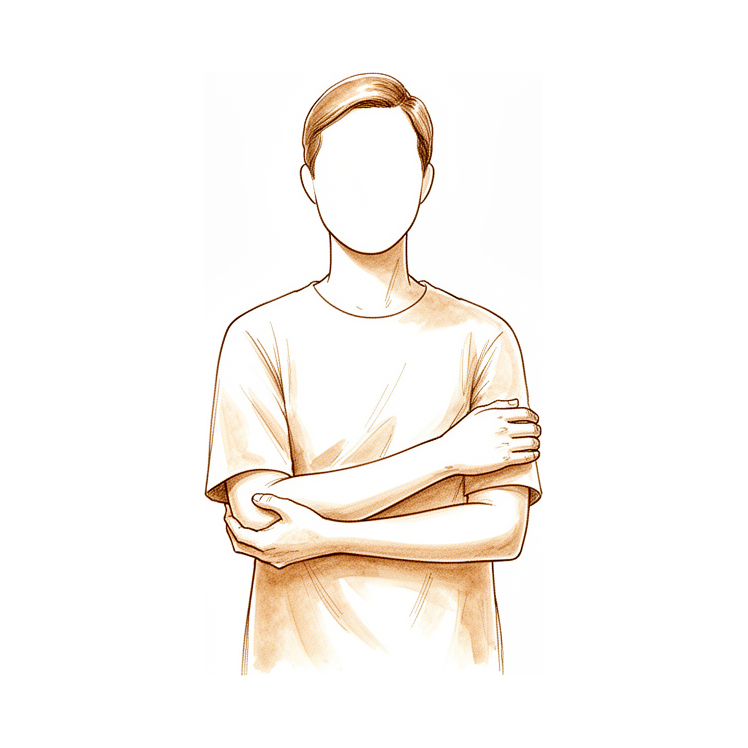
Este protocolo orienta sua recuperação após a reparação do músculo peitoral maior realizada pelo Dr. Kieran Hirpara no Mater Private Hospital Rockhampton. Cada fase abaixo começa com uma explicação simples, em linguagem acessível, sobre o que está ocorrendo e o que é mais importante; em seguida, apresenta os detalhes estruturados necessários para o seu fisioterapeuta. Leve esta página ou o seu PDF na primeira sessão de fisioterapia, para que a reabilitação seja devidamente coordenada. O fisioterapeuta poderá ajustar o plano conforme a evolução da sua recuperação.
Caso tenha alguma dúvida ou preocupação quanto à ferida cirúrgica, entre em contato com o consultório. Geralmente é útil tirar uma foto da ferida e enviá-la por e-mail para análise. A incisão fica próxima à dobra axilar, onde suor e umidade se acumulam; mantenha-a limpa e seca, e comunique imediatamente qualquer vermelhidão, secreção ou febre.
O que esperar
O músculo peitoral maior é um músculo potente do tórax responsável por movimentos como o supino, flexões e o movimento de cruzar o braço pelo corpo. A ruptura geralmente ocorre em homens jovens e atléticos durante a fase de descida do supino pesado, quando o músculo é simultaneamente esticado e submetido a carga. A reparação consiste em reanexar o tendão rompido, e todo o programa de reabilitação baseia-se num princípio simples: manter o tendão reparado sem estiramento e sem carga enquanto cicatriza.
O peitoral maior puxa o braço para o lado do corpo e para dentro, além de rotacioná-lo medialmente. Os dois movimentos que mais esticam e tensionam a área reparada são levar o braço para o lado (abdução) e rotacioná-lo para fora (rotação externa); especialmente quando ambos são feitos juntos, que é exatamente a posição que causa a ruptura. Por isso, nos estágios iniciais, o braço é mantido à frente do corpo, levemente rotacionado para dentro, e esses dois movimentos são estritamente limitados, sendo gradualmente reintroduzidos em pequenos graus.
Como a reparação pode se soltar do osso caso seja sobrecarregada, exercícios pesados para o peito (supino, elevações laterais, flexões e esportes de contato) são adiados deliberadamente para quatro a seis meses após a cirurgia. Esse período parece longo demais, mas é o fator mais importante para garantir a integridade da reparação.
A tipóia é retirada por volta de 4 a 6 semanas, independentemente de como o seu tendão foi reparado. O Dr. Hirpara informará como foi feita a sua reparação. Ao longo deste programa, você avança apenas quando o ombro estiver pronto, e não apenas porque o tempo passou: cada fase abaixo descreve os sinais de que o ombro está “pronto” para o próximo passo.
O procedimento
A reparação do músculo peitoral maior consiste em reanexar o tendão desse músculo, que se rompeu. Na maioria dos casos, o tendão se desprendeu do ponto de inserção no osso do braço (o úmero), sendo então reanexado nesse local com suturas resistentes passadas por âncoras ou botões; às vezes, a ruptura ocorre dentro do próprio tendão, que é então costurado novamente. A reabilitação tem como objetivo proteger essa reanexação enquanto cicatriza, para depois, gradualmente, restaurar a amplitude de movimento, a força e a capacidade de realizar empuxos com segurança.
Como usar a tipóia
Você usará uma tipóia simples: o Dr. Hirpara utiliza uma tipóia simples, e não um travesseiro de abdução volumoso ou uma órtese do tipo “gunslinger”. A tipóia mantém o seu braço na posição protegida: na frente do corpo e levemente rotacionado para dentro, onde o músculo torácico reparado permanece relaxado.
- Use a tipóia por 4 a 6 semanas. Não é necessário dormir com ela.
- Retire-a apenas para tomar banho e para fazer os exercícios, depois de aprender como fazê-los; sempre que a tipóia estiver retirada, mantenha o braço na frente do corpo e ao lado do corpo, nunca estendido para o lado nem rotacionado para fora.
- Em casa, quando estiver descansando, pode retirá-la, desde que tome cuidado: apoie o braço num travesseiro, mantendo-o na frente de você.
- Use gelo se o ombro estiver inchado ou dolorido, especialmente após os exercícios.
Enquanto estiver usando a tipóia, preste atenção à sua postura. Mantenha as orelhas, os ombros e os quadris alinhados, evitando que os ombros fiquem caídos; uma boa postura protege as costas e ajuda a prevenir a rigidez do ombro.
Precauções importantes — NÃO FAÇA
- NÃO gire o braço para fora além do limite semanal estabelecido pelo seu fisioterapeuta. A rotação externa começa na posição reta para frente (neutra, 0°) e só pode ser feita em cerca de 5° por semana, pois a rotação externa estica a área reparada.
- NÃO leve o braço para o lado além da pequena amplitude permitida a cada semana; além disso, nunca combine esse movimento com a rotação externa: essa é a posição que pode causar ruptura do músculo.
- NÃO permita que o cotovelo vá para trás da linha do peito (isso também estica a área reparada); evite essa posição por um longo período, inclusive na academia.
- NÃO realize exercícios do tipo “pêndulo” (balançar o braço) ou exercícios com bastão nas primeiras semanas; ao contrário do que ocorre em cirurgias de ombro, deixar o braço pendurado ou usá-lo como alavanca com um bastão puxa o músculo peitoral recém-reparado. (Exercícios com bastão são introduzidos mais tarde, a partir da semana 4.)
- NÃO faça empuxos, pressões ou cargas no peito (sem supino, exercícios de adução, dips, máquina de peitoral, flexões ou esportes de contato) até receber autorização médica; isso só será permitido após 4 a 6 meses.
- NÃO force ou estique nenhum movimento, e não trabalhe diretamente o músculo peitoral reparado (rotação interna resistida ou pressões) até que sua equipe médica autorize, a partir da semana 9 aproximadamente.
Fase I — Proteção (semanas 0–3)
As primeiras semanas têm como objetivo exclusivo proteger o tendão reparado enquanto ele se fixa ao osso. Durante o dia, você deve usar a tipoia simples, mantendo o braço à frente do corpo e levemente rotacionado para dentro; não é necessário dormir com ela, mas mantenha o braço nessa posição segura durante a noite. A mão, o punho, os dedos e o cotovelo devem se mover normalmente. A partir da segunda semana, o fisioterapeuta pode começar a realizar movimentos passivos no ombro, dentro de limites bem definidos; porém, nenhum movimento deve ser feito por sua própria força, nenhum deve ser forçado, e não são permitidos exercícios do tipo pêndulo ou com bastão.
- Tipoia: tipoia simples; use-a durante o dia, mantendo o braço à frente e levemente rotacionado para dentro; à noite, retire-a, mas mantenha o braço na mesma posição segura.
- Movimentos permitidos: apenas movimentos passivos (assistidos), iniciados a partir da segunda semana e limitados a: rotação externa apenas até a posição neutra (0°), elevação anterior até cerca de 45°, e abdução do braço até aproximadamente 30°. O cotovelo, o punho e a mão podem se mover livremente.
- Exercícios: movimentação da mão, do punho e do cotovelo; apertos suaves da mão; exercícios de retração da escápula e movimentos de remada leves para os músculos ao redor da escápula (realizados abaixo da altura do ombro). Nenhum exercício que sobrecarregue os músculos peitorais é permitido.
Está pronto para a próxima fase quando: a dor estiver controlada; a ferida estiver cicatrizada sem sinais de complicações; os movimentos passivos forem confortáveis dentro dos limites mencionados; e não houver indícios de que a reparação tenha sido submetida a estresse excessivo.
Fase II — Restauração do movimento e retirada gradual da tipóia (semanas 4–6)
Kieran Hirpara 4.0
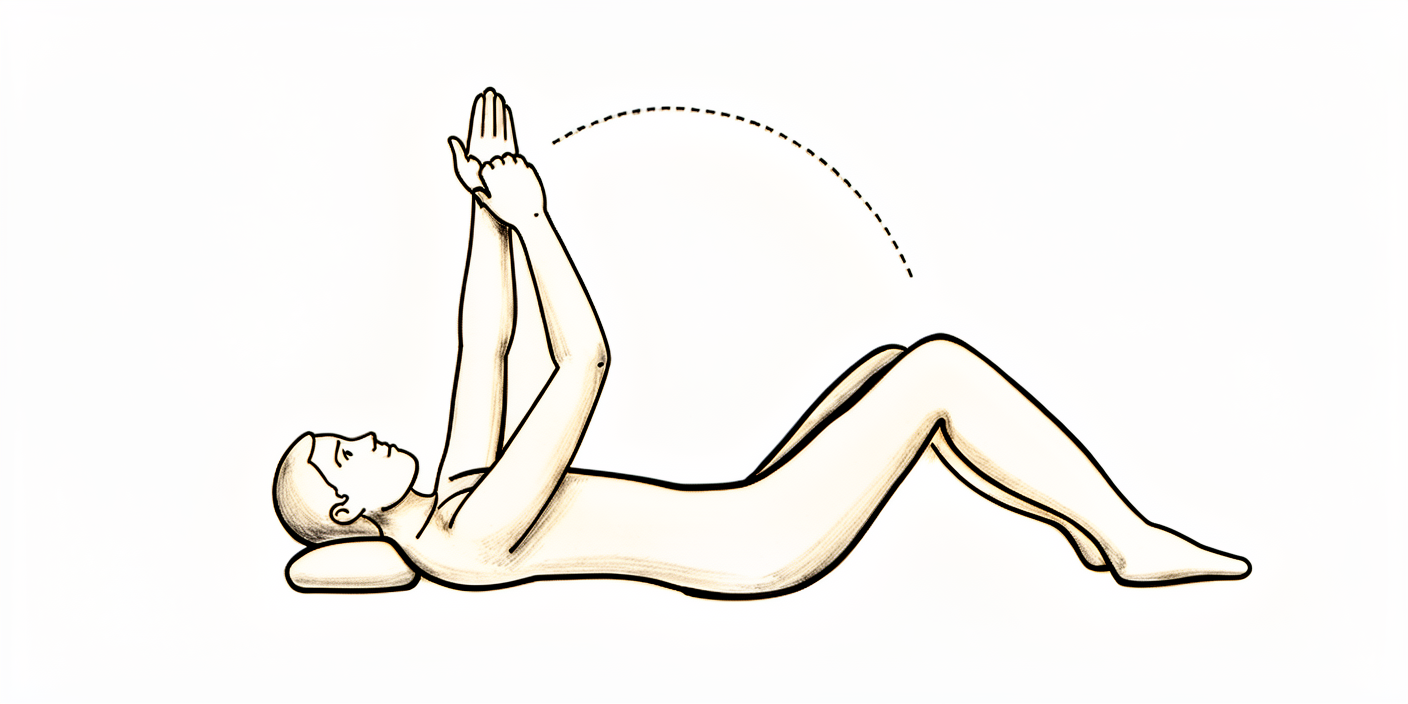
Elevação anterior assistida em decúbito
Deite-se de costas. Use a mão saudável para colocar sob o cotovelo do braço operado, ajudando a levantá-lo para a frente, apenas até a altura indicada pelo fisioterapeuta; em seguida, abaixe-o lentamente. O ombro operado deve permanecer relaxado, enquanto o braço saudável realiza o movimento. Este exercício deve ser iniciado por volta da 4ª semana — não nas primeiras semanas após a cirurgia.
Conforme orientado pelo seu fisioterapeuta
Kieran Hirpara 4.0
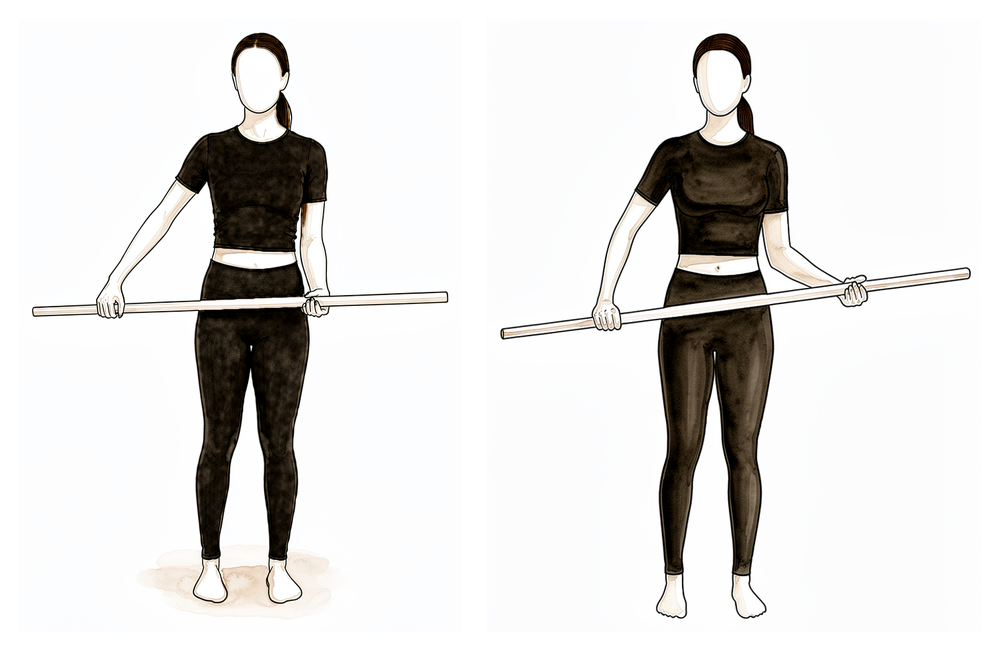
Rotação externa assistida com uma vara
Segure uma vara (ou bengala) com ambas as mãos, mantendo o cotovelo do braço operado junto ao corpo. Use o braço saudável para empurrar suavemente o antebraço operado para fora, respeitando sempre o limite semanal estabelecido pelo seu fisioterapeuta; depois, traga-o de volta à posição inicial. Este exercício deve ser iniciado a partir da 4ª semana aproximadamente — não nas primeiras semanas.
Conforme orientado pelo seu fisioterapeuta
Kieran Hirpara 4.0
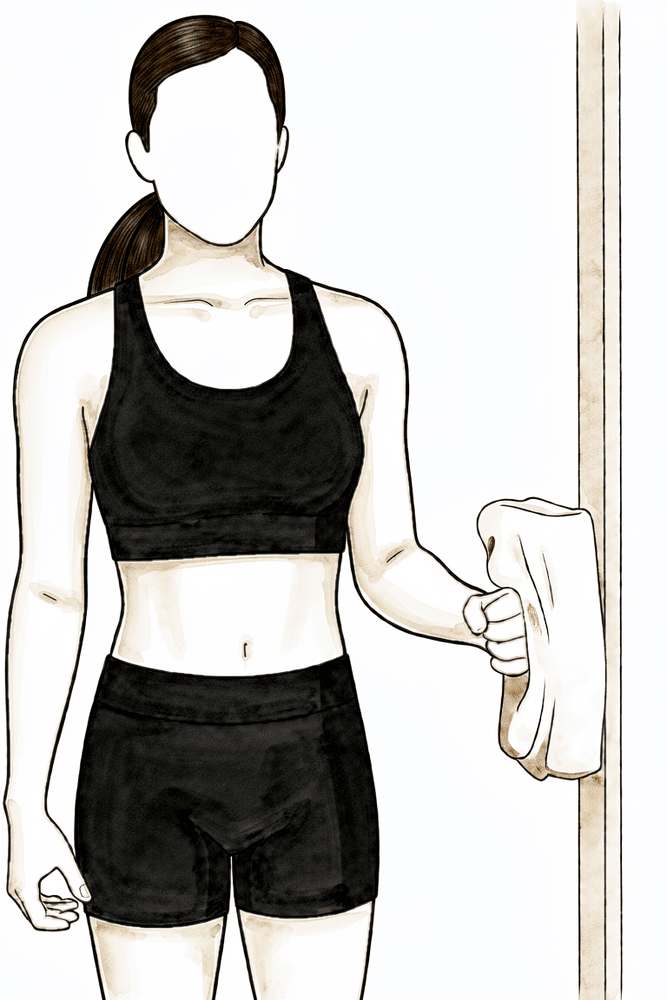
Pressione e mantenha a rotação externa.
Fique de pé com o cotovelo pressionado contra o corpo e dobrado a 90 graus, com o dorso da mão encostado numa parede ou na moldura de uma porta. Pressione suavemente o dorso da mão para fora, contra a parede — usando cerca de um quarto da sua força — sem que o braço se mova de fato. Mantenha essa posição por aproximadamente 5 segundos e depois relaxe.
10 vezes, uma ou duas vezes por dia.
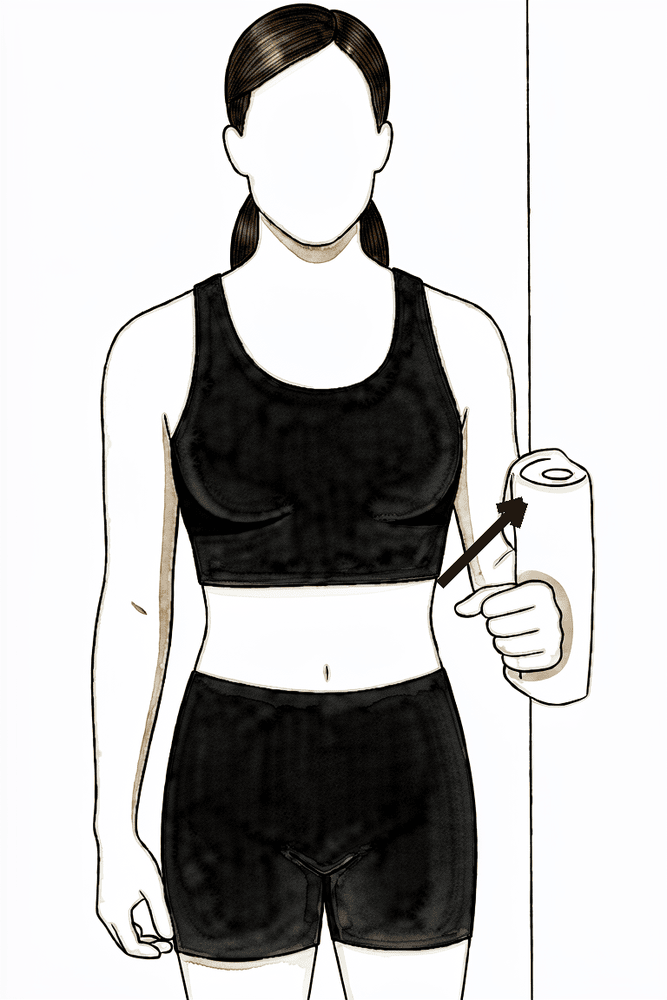
Kieran Hirpara 4.0
Pressione e mantenha o braço estendido para o lado.
Fique de lado, com a parte externa do braço encostada na parede e o cotovelo junto ao corpo. Pressione suavemente a parede para fora — usando cerca de um quarto da sua força — sem mover o braço. Mantenha essa posição por aproximadamente 5 segundos e depois relaxe.
10 vezes, uma ou duas vezes por dia.
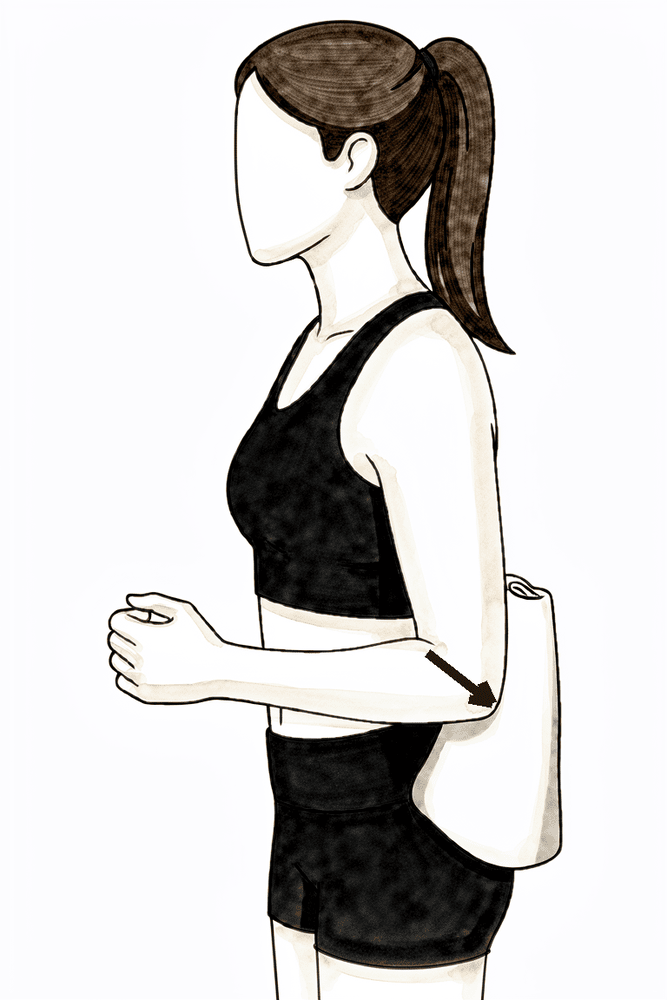
Kieran Hirpara 4.0
Pressione e mantenha o braço voltado para trás.
Fique de pé com as costas próximas a uma parede, braço ao lado do corpo e cotovelo esticado. Pressione suavemente a parte de trás do braço para trás contra a parede — usando cerca de um quarto da sua força — sem mover o braço. Mantenha essa posição por aproximadamente 5 segundos e depois relaxe. Esse exercício ativa os músculos localizados atrás do ombro. Utilizamos esse exercício em vez de uma contração de pressão para dentro no início, pois a pressão para dentro sobrecarrega o músculo peitoral que foi reparado.
10 vezes, uma ou duas vezes por dia.
A reparação está cicatrizando, e a tipóia é retirada gradualmente entre as semanas 4 e 6. O alcance de movimento permitido avança apenas alguns graus por semana; agora, podem ser iniciados exercícios suaves assistidos (com auxílio de uma vara). Começam também exercícios leves de contração muscular isométrica para os músculos ao redor do ombro, mas não para o próprio músculo peitoral, nem para a rotação interna, pois ambos sobrecarregam a área reparada.
- Tipóia: sendo retirada gradualmente (em algum momento entre as semanas 4 e 6).
- Movimentos permitidos: movimentos passivos e assistidos, avançando cerca de 5° por semana: rotação externa a partir da posição neutra, elevação anterior até aproximadamente 65–85°, e abdução do braço até cerca de 50°. Ainda não é permitido mover o braço por força própria, nem ultrapassar os limites estabelecidos a cada semana.
- Exercícios: elevação anterior assistida deitado; rotação externa assistida com vara (apenas até o limite semanal); exercícios isométricos de pressão e retenção para rotação externa, abdução e retração do braço, mas não para rotação interna; exercícios de estabilização da escápula.
Está pronto para a próxima fase quando: a tipóia já tiver sido retirada; o alcance de movimento permitido estiver avançando conforme o planejado; não houver dor na parte frontal do ombro ao realizar rotação externa até o limite; e os exercícios isométricos forem confortáveis de executar.
Fase III — Movimento ativo (semanas 6–8)
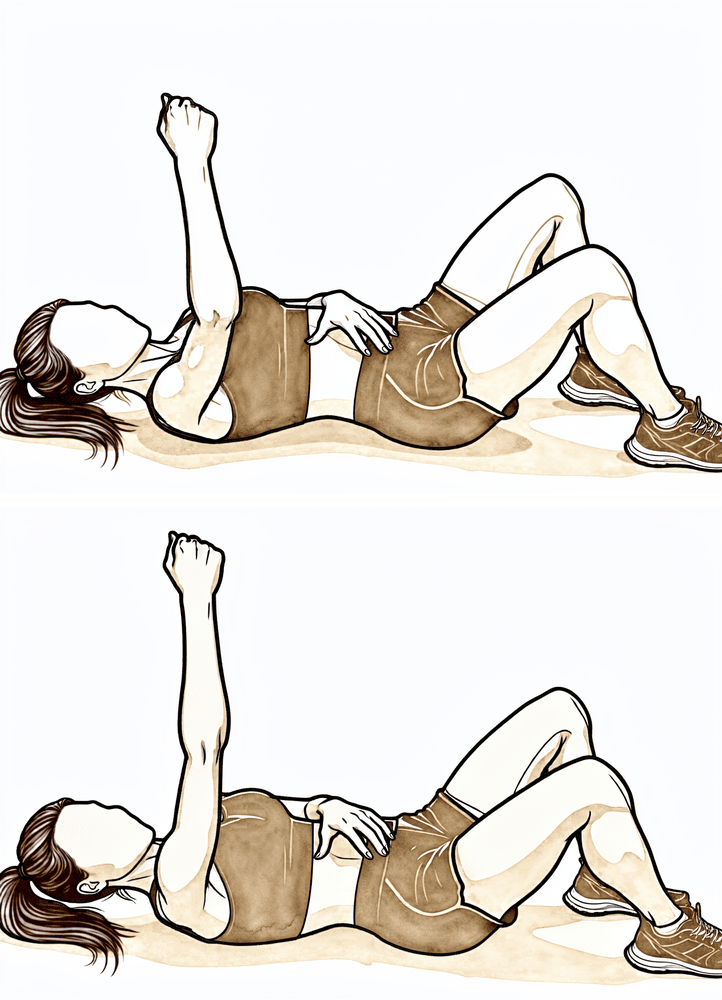
Kieran Hirpara 4.0
Soco em decúbito dorsal (saudação)
Deite-se de costas, com o braço operado apontado para o teto. Levante a mão em direção ao teto de modo que a escápula se afaste do chão, e depois abaixe-a lentamente. Mantenha o movimento suave e dentro de uma amplitude confortável.
10 vezes, uma vez por dia
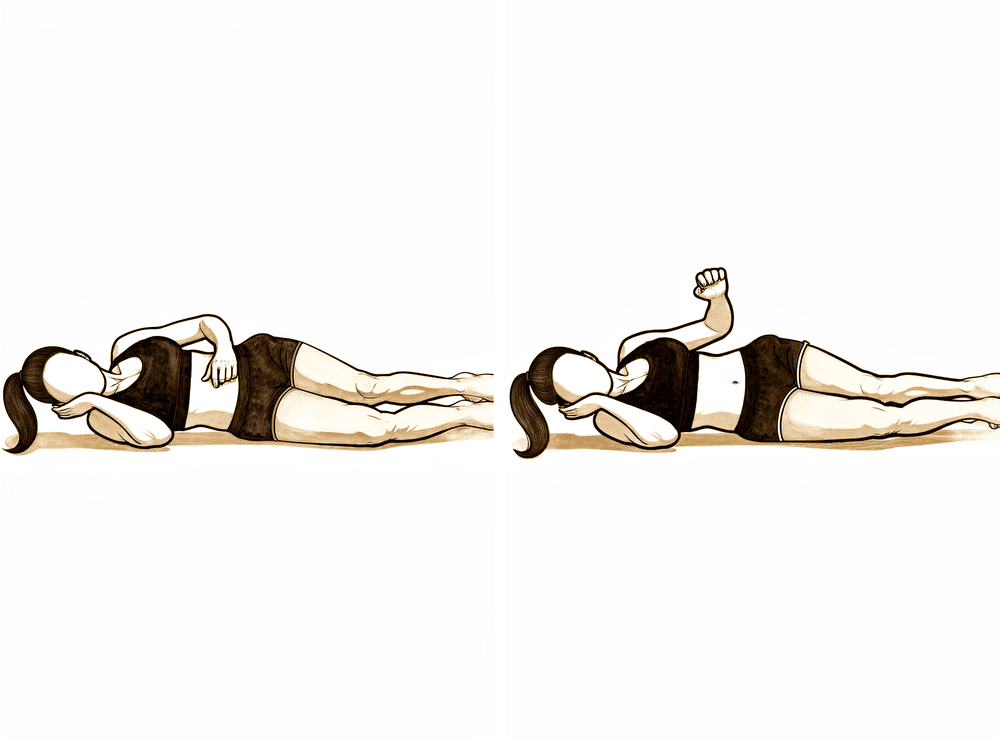
Kieran Hirpara 4.0
Rotação externa ao deitar de lado
Deite-se sobre o lado saudável, com o cotovelo operado puxado para a cintura e dobrado a 90 graus. Mantendo o cotovelo na mesma posição, gire o antebraço para cima tanto quanto for confortável e, em seguida, abaixe-o lentamente. Comece sem nenhum peso.
10–15 vezes, uma vez ao dia
Kieran Hirpara 4.0
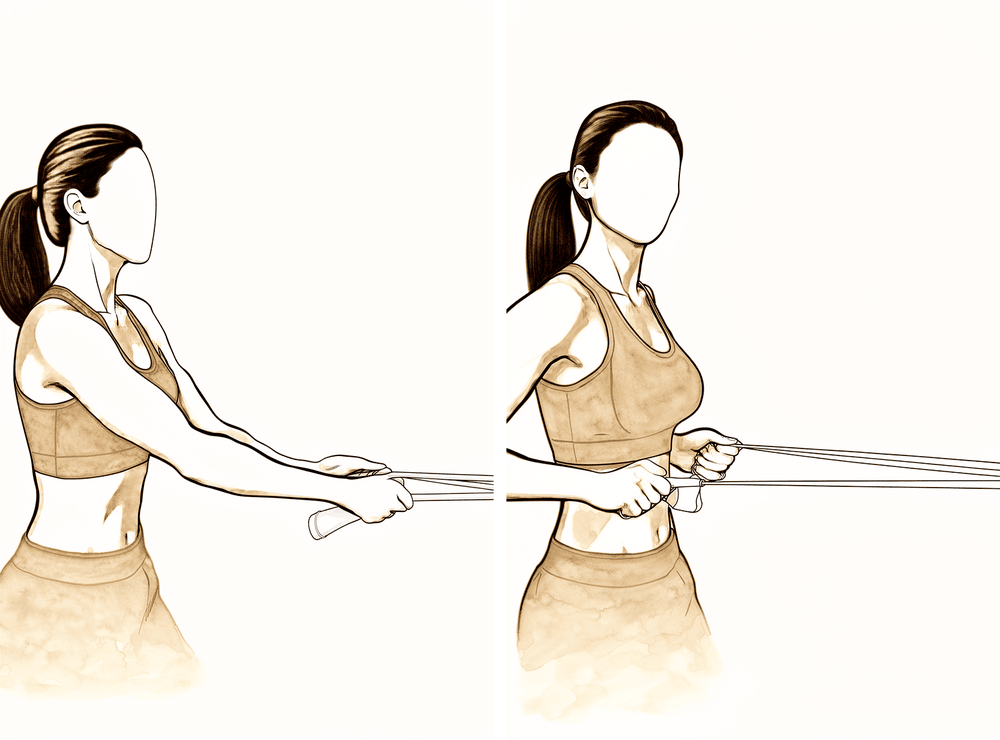
Remadas com faixa de resistência
Fixe uma faixa à sua frente, na altura da cintura. Fique ereto, puxe os cotovelos para trás em direção ao corpo, contraindo os omoplatas, e depois volte lentamente à posição inicial. Mantenha os cotovelos próximos ao corpo e não os deixe ultrapassar a linha do corpo.
10–15 vezes, uma vez ao dia
Kieran Hirpara 4.0
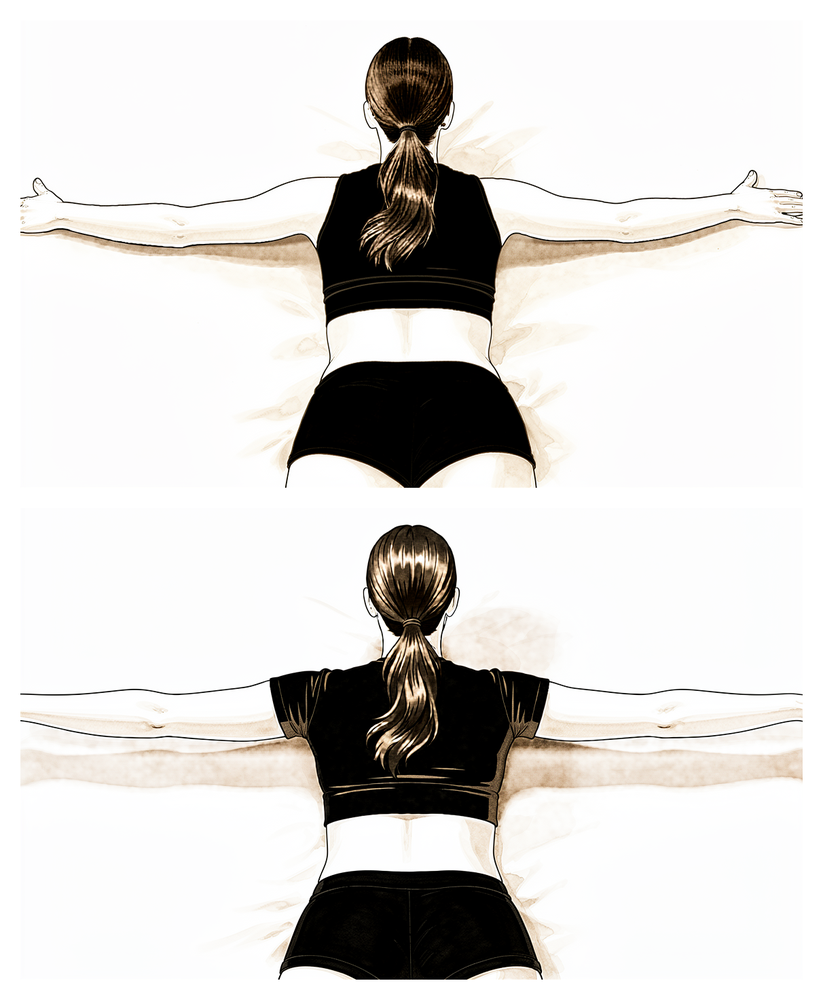
Puxada de omoplata para baixo (Y prono)
Deite-se de bruços com os braços pendurados ao longo do corpo. Levante-os para os lados até ficarem na altura dos ombros, contraindo os omoplatas, e depois abaixe-os lentamente. Mantenha o movimento pequeno e controlado.
10 vezes, uma vez por dia
Kieran Hirpara 4.0
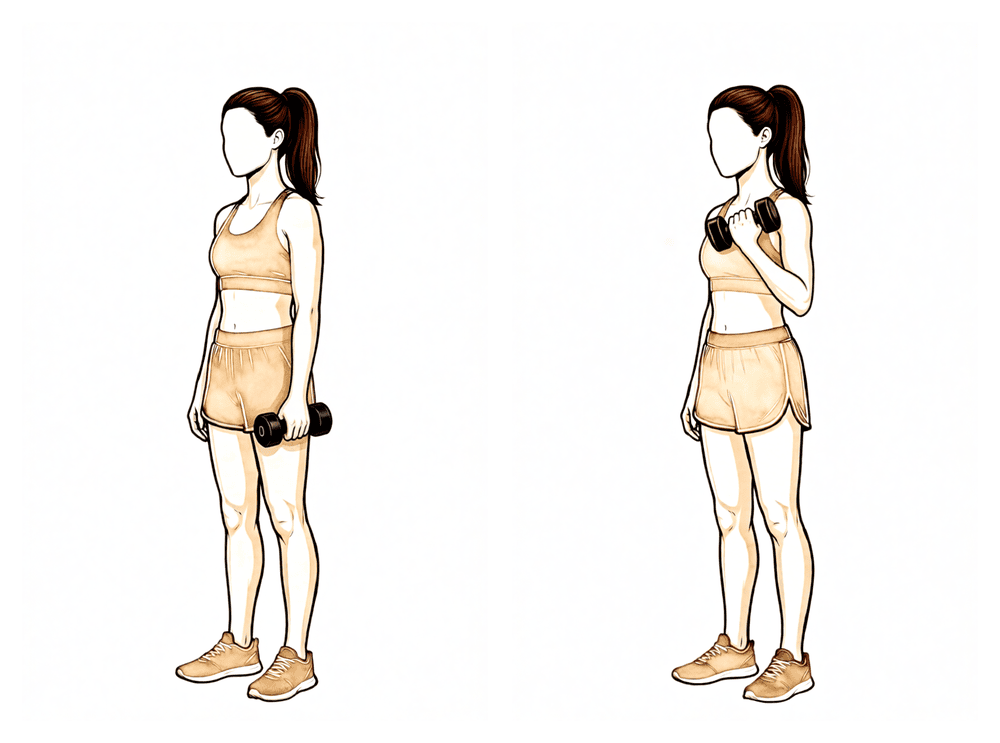
Flexão de bíceps
Com um peso leve e o cotovelo pressionado contra o corpo, dobre o cotovelo para levantar o peso e, em seguida, abaixe-o lentamente. Mantenha o braço imóvel e à frente do corpo.
10–15 vezes, uma vez ao dia
Kieran Hirpara 4.0
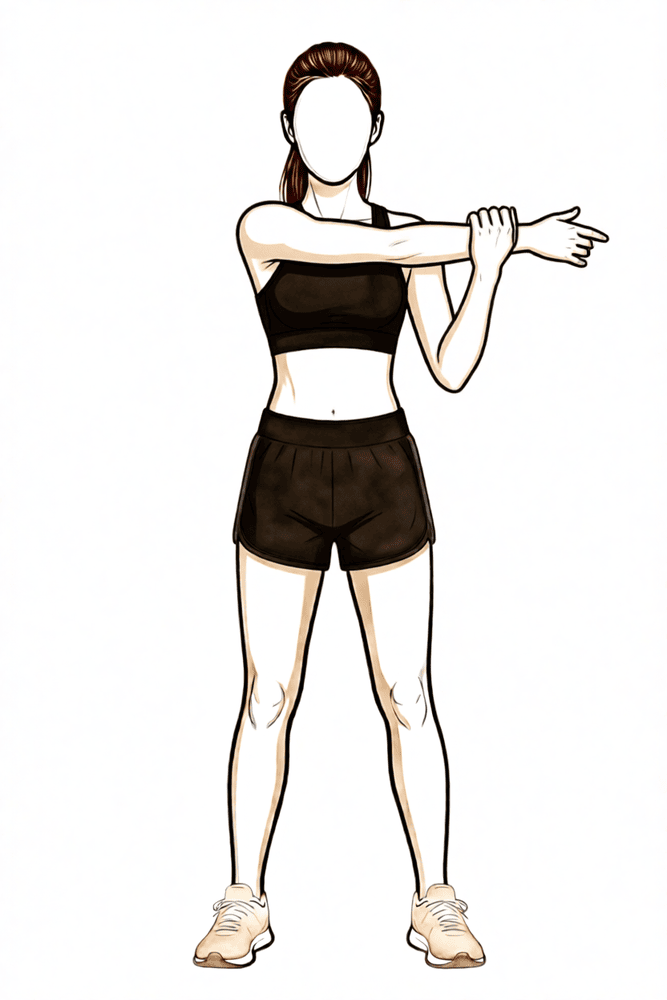
Alongamento cruzado do corpo
Use a mão boa para levar suavemente o braço operado em direção ao peito, abaixo da altura do ombro, até sentir um leve alongamento na parte posterior do ombro; em seguida, solte-o. Não force nem estique além do ponto em que surgir dor.
Mantenha por 20–30 segundos, 2–3 vezes.
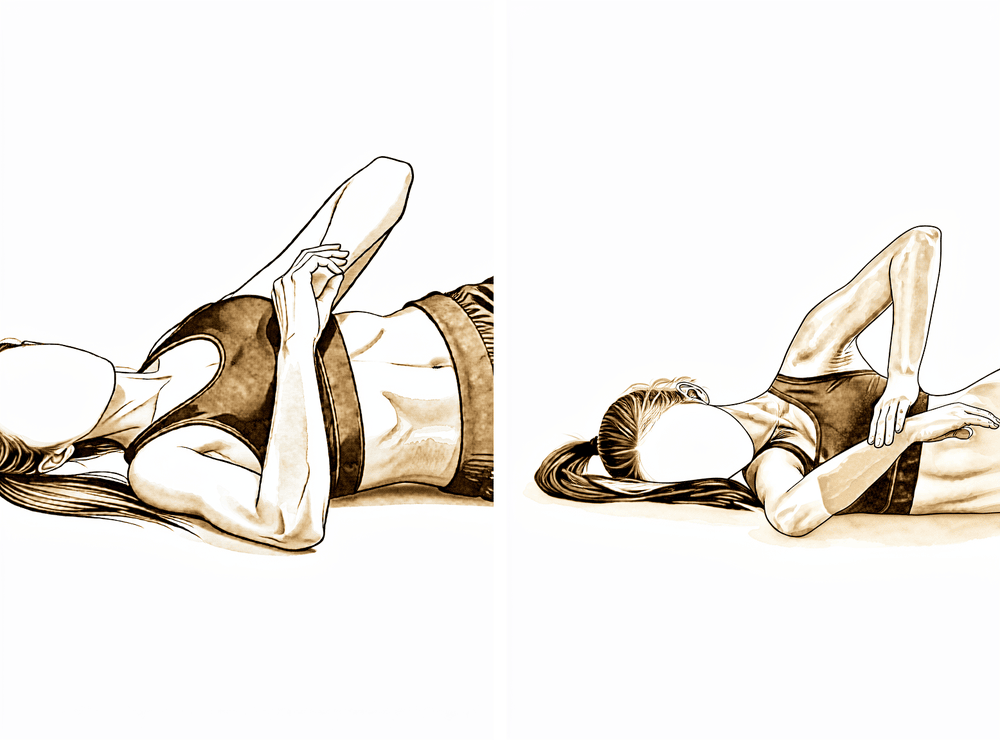
Kieran Hirpara 4.0
Alongamento do tipo “dorminhoco”
Deite-se sobre o lado operado, mantendo o ombro e o cotovelo dobrados a 90 graus. Use a mão saudável para pressionar suavemente o antebraço em direção à cama, até sentir um leve alongamento na parte posterior do ombro. Não force o movimento.
Mantenha por 20–30 segundos, 2–3 vezes.
A partir de aproximadamente seis semanas, a tipoia é retirada e você começa a mover o braço por conta própria, inicialmente em posições em que a gravidade exerce menor influência: deitado ou estendendo o braço em direção ao teto. As amplitudes de movimento permitidas continuam a aumentar, em média alguns graus por semana, até atingir a amplitude completa. Os músculos ao redor do ombro são fortalecidos, e iniciam-se alongamentos suaves na região posterior do ombro; porém, o músculo peitoral reparado ainda deve ser poupado.
- Tipoia: não é mais utilizada.
- Movimentos permitidos: continuação dos movimentos passivos até atingir a amplitude completa (cerca de 5° a mais por semana em cada direção), além do início dos movimentos ativos por conta própria. É permitido um leve carregamento de peso através do braço.
- Exercícios: soco deitado (como numa saudação); rotação externa deitado de lado (sem carga); exercícios de remada e fortalecimento das escápulas com faixa elástica; exercícios leves para o bíceps; alongamentos cruzados e para “dorminhoco” na parte posterior do ombro.
Está pronto para a próxima fase quando: a amplitude de movimento for completa ou quase completa em todas as direções; você conseguir mover o braço por conta própria com bom controle (sem encolher os ombros ou fazer movimentos bruscos); e não houver dor na parte frontal do ombro.
Fase IV — Início da carga no músculo peitoral (semanas 9–14)
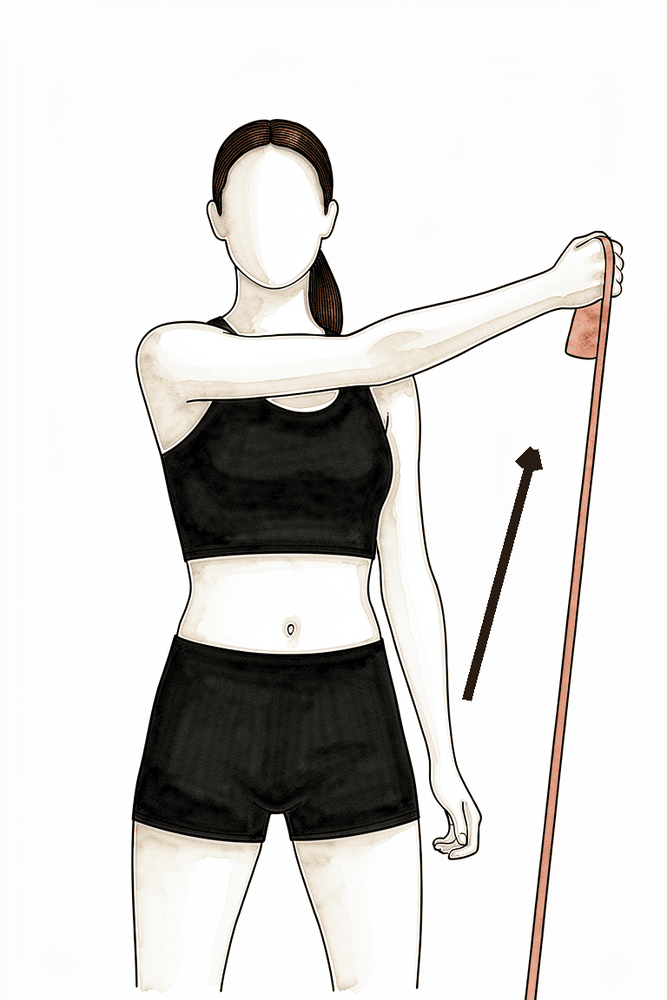
Kieran Hirpara 4.0
PNF diagonal D1 com faixa elástica
Segurando uma faixa elástica, mova o braço de forma controlada em diagonal: partindo da frente do abdômen, para fora e para cima, em direção ao lado oposto; em seguida, inverta o movimento suavemente. O fisioterapeuta definirá as posições inicial e final. Comece o exercício somente quando conseguir mover o braço completamente, sem dor.
Conforme orientado pelo seu fisioterapeuta
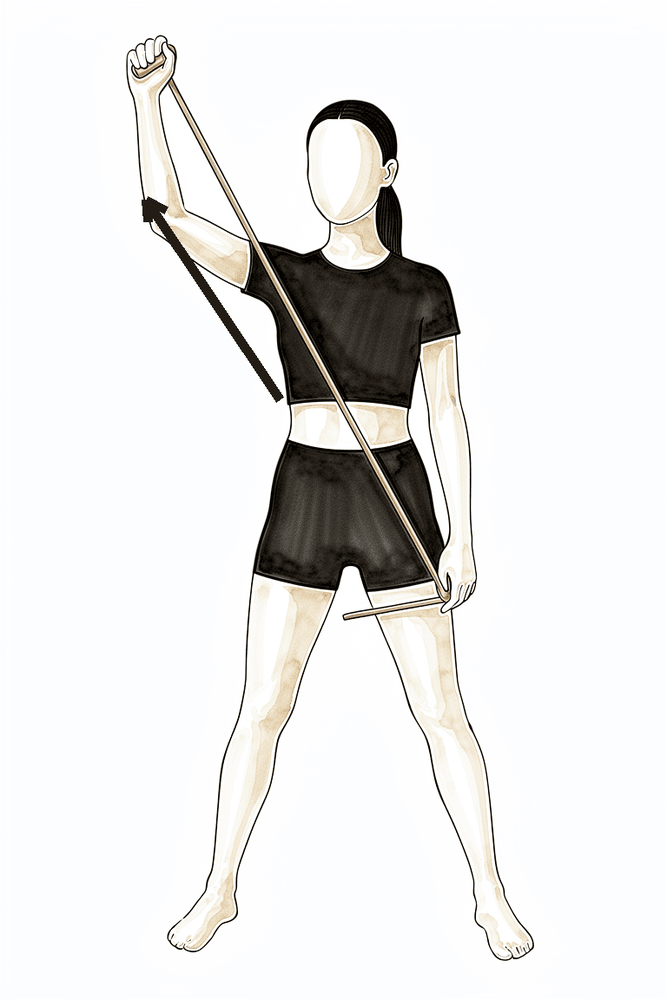
Kieran Hirpara 4.0
PNF diagonal D2 com faixa elástica
Segurando uma faixa, mova o braço de forma controlada em diagonal — partindo do quadril oposto, para cima e acima da cabeça — e depois inverta o movimento suavemente. O fisioterapeuta definirá a amplitude desse movimento. Comece somente quando conseguir realizar o movimento completamente e sem dor.
Conforme orientado pelo seu fisioterapeuta
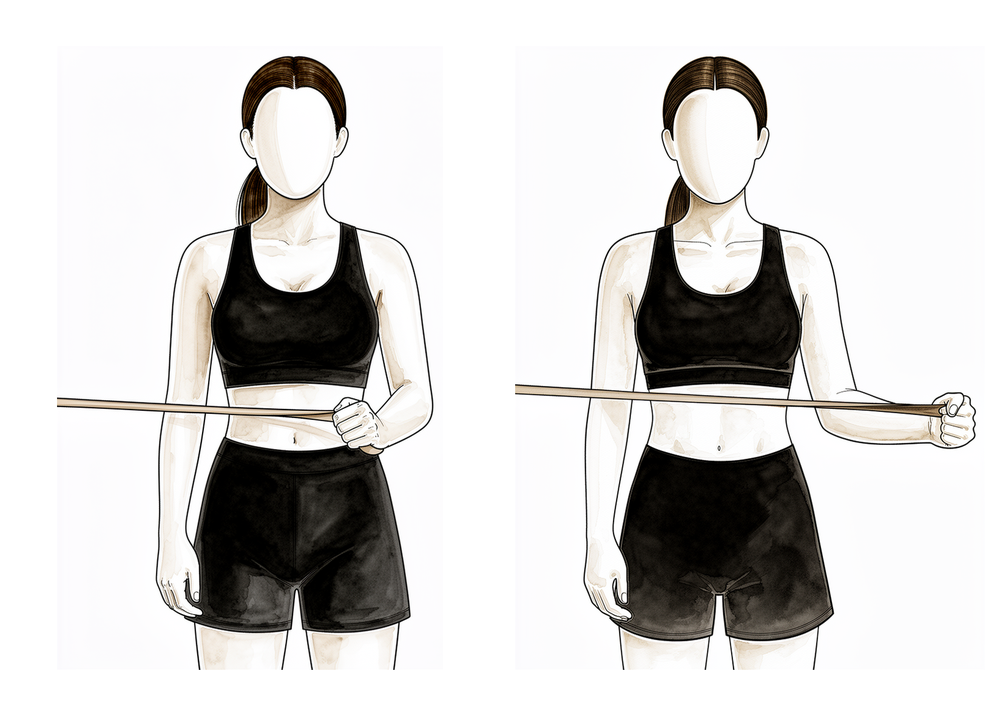
Kieran Hirpara 4.0
Rotação externa com faixa elástica
Com o cotovelo junto ao corpo e dobrado a 90 graus, segure uma faixa elástica e gire o antebraço para fora contra a resistência; em seguida, volte lentamente à posição inicial. Mantenha o cotovelo sempre junto ao corpo.
10–15 vezes, uma vez ao dia
Kieran Hirpara 4.0
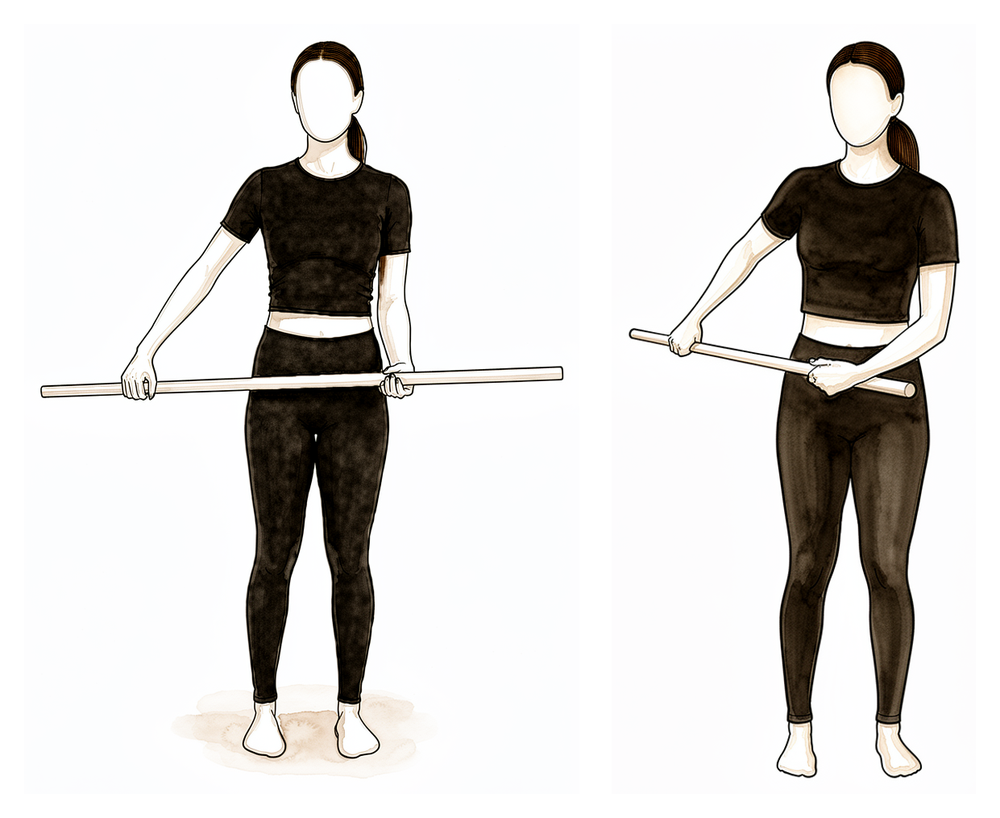
Rotação medial utilizando uma vara
Segure um bastão ou uma toalha e guie suavemente a mão operada para dentro, em direção ao abdômen ou para trás das costas, até alcançar uma amplitude confortável. A rotação interna sobrecarrega o músculo torácico reparado; por isso, esse movimento só deve ser iniciado a partir da 9ª semana, de forma gradual.
Conforme orientado pelo seu fisioterapeuta
Este é o ponto de virada: a partir da semana 9, o próprio músculo peitoral reparado começa a funcionar, de forma suave. Ele inicia numa posição encurtada (relaxada) e, à medida que tolera a carga, vai se alongando progressivamente. A rotação medial, ação própria do músculo peitoral que até então foi deliberadamente contida, também é introduzida agora e desenvolvida lentamente. Os movimentos devem ser completos; a ênfase passa para uma carga leve e controlada. Movimentos de pressão mais intensos ainda ficam para depois.
- Movimentos: movimentação passiva e ativa completa ou quase completa em todas as direções.
- Exercícios: exercícios suaves de rotação medial e de contração do músculo peitoral, iniciando na posição encurtada; rotação medial utilizando uma vara; rotação externa com faixa elástica; padrões diagonais PNF com faixa elástica (movimentos diagonais controlados definidos pelo seu fisioterapeuta).
Pronto para a próxima fase quando: houver movimentação completa e sem dor; e quando você conseguir realizar os exercícios suaves do músculo peitoral sem sentir qualquer dor posteriormente.
Fase V — Fortalecimento (semanas 14–20)
Kieran Hirpara 4.0
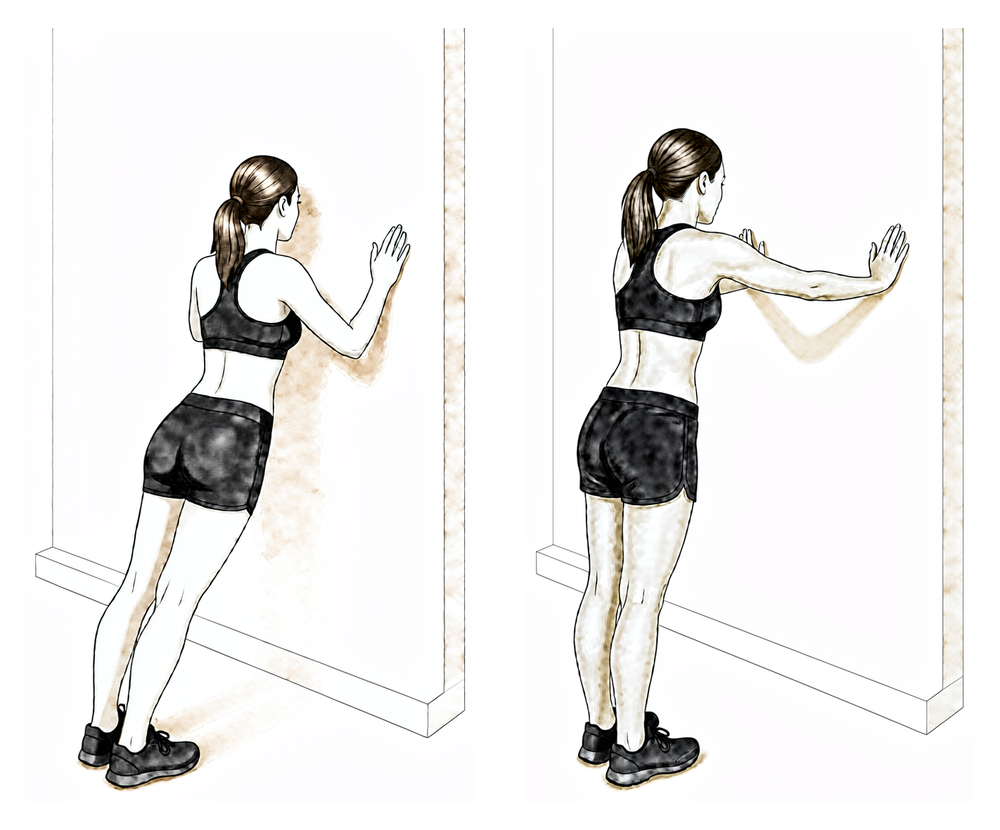
Da parede para o chão: como fazer flexões
Comece fazendo flexões contra uma parede: incline-se para a frente e depois empurre-se para trás, permitindo que as escápulas se afastem no topo do movimento. À medida que ganhar força, passe para um banco de cozinha, depois para os joelhos e, por fim, para o chão. Evite que os cotovelos se movam para trás, além da linha do corpo; nunca deixe o peito descer abaixo do nível dos cotovelos.
Conforme orientado pelo seu fisioterapeuta
Kieran Hirpara 4.0
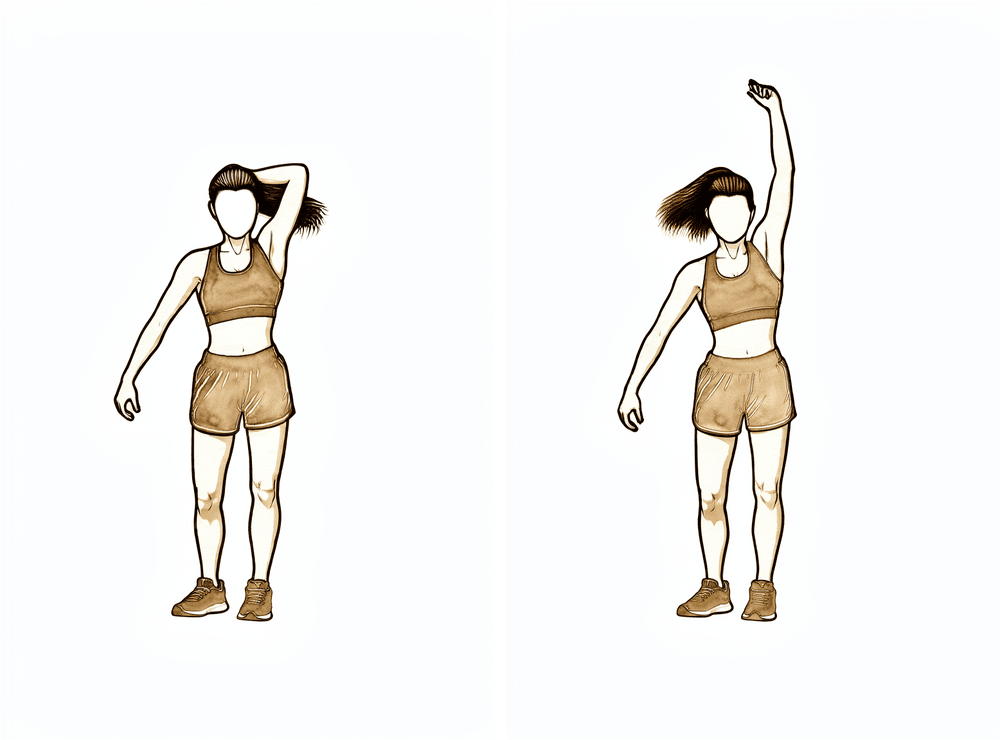
Tríceps acima da cabeça
Com um peso leve seguro acima da cabeça e o cotovelo flexionado, estenda o cotovelo para levantar o peso e, em seguida, abaixe-o lentamente. Comece o exercício somente quando o movimento acima da cabeça for completo e confortável.
10–15 vezes, uma vez ao dia
Kieran Hirpara 4.0
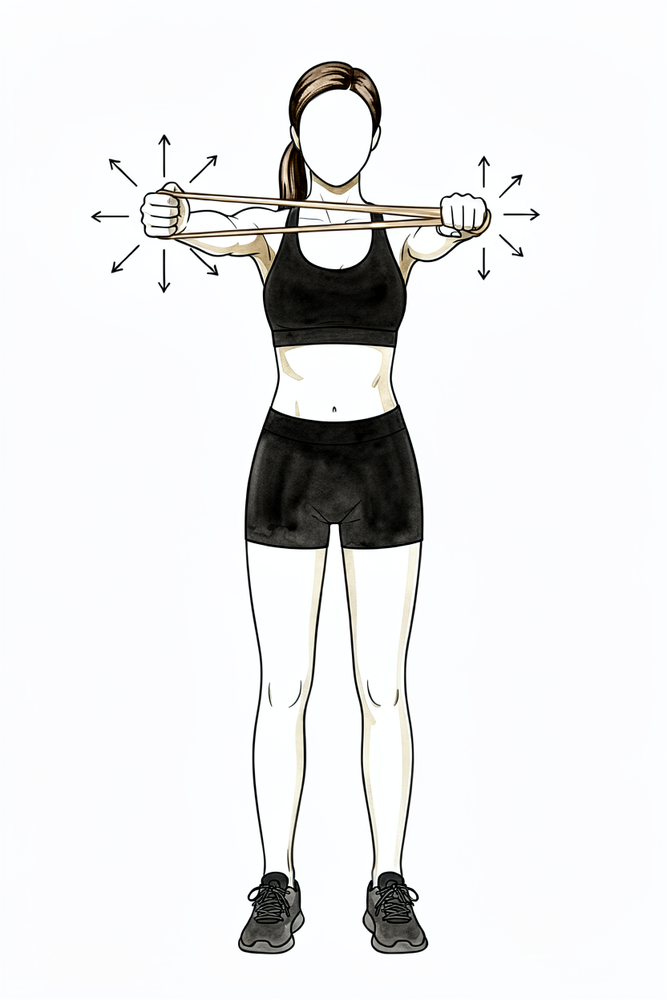
Estabilização rítmica
Com o braço apoiado à sua frente, na altura dos ombros, peça ao seu fisioterapeuta (ou à sua mão sã) que aplique pequenos empurrões suaves em diferentes direções, enquanto você mantém o braço imóvel e firme — não permita que ele se mova. Isso treina os músculos estabilizadores do ombro para reagirem. As pressões devem ser sempre suaves.
Conforme orientado pelo seu fisioterapeuta
A partir da 14ª semana, inicia-se o fortalecimento adequado do peitoral (com pesos leves e resistência, ou exercícios isotônicos), de forma gradual e simétrica em relação ao outro lado. Os exercícios de flexão começam contra uma parede e só avançam para o chão quando a força permitir. Agora, duas regras de treino devem ser seguidas por um longo período, pois elas aplicam à tendão reparada as mesmas cargas que o lesionaram: nunca deixe os cotovelos ultrapassarem a linha do corpo na posição mais baixa de qualquer exercício de pressão, adução ou trabalho do peitoral; e evite pesos pesados com poucas repetições: prefira cargas mais leves e mais repetições, além de um aquecimento lento.
- Mobilidade: completa.
- Exercícios: flexões contra a parede, evoluindo para o chão; rotação interna com faixa elástica; tríceps acima da cabeça; exercícios leves e progressivos para o peitoral e pressão; alongamento suave do peitoral na porta.
Pronto para a próxima fase quando: a força estiver se desenvolvendo de forma equilibrada em comparação ao outro lado; e não houver dor durante os exercícios de resistência para o peitoral.
Fase VI — Retorno precoce ao esporte (5–6 meses)
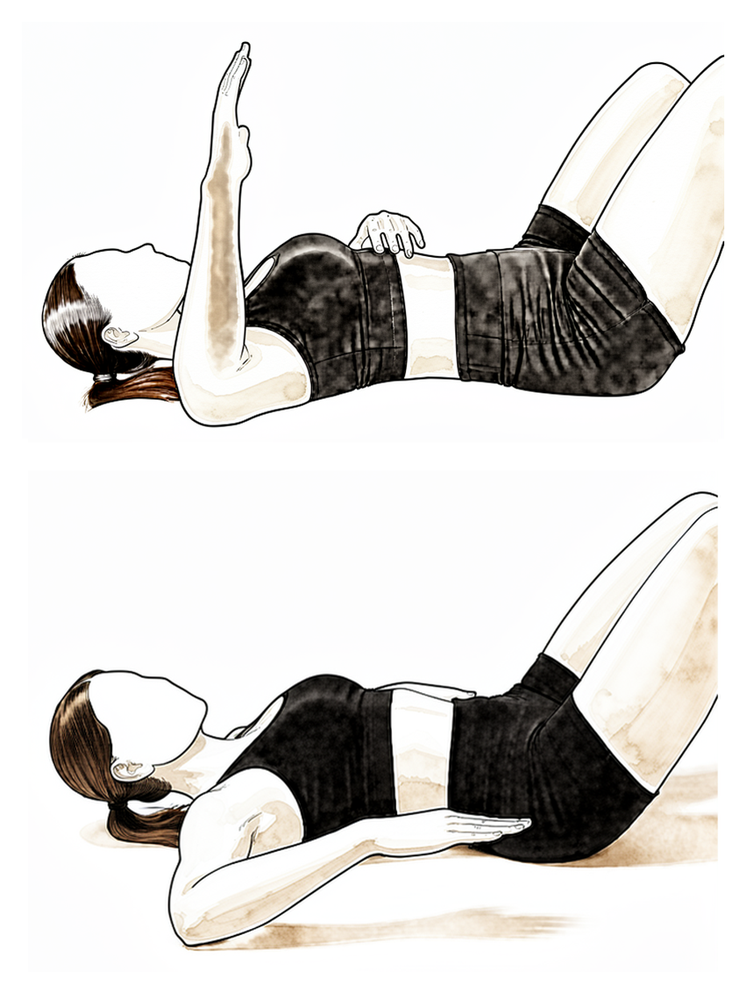
Kieran Hirpara 4.0
Rotação externa e interna de 90/90
Com o braço estendido para o lado, na altura do ombro, e o cotovelo flexionado a 90 graus, gire o antebraço para cima e para baixo dentro de uma amplitude controlada. Este é um exercício de preparação esportiva de fase avançada; inicie-o somente após autorização médica, pois essa posição estica o músculo peitoral que foi reparado.
Conforme orientado pelo seu fisioterapeuta
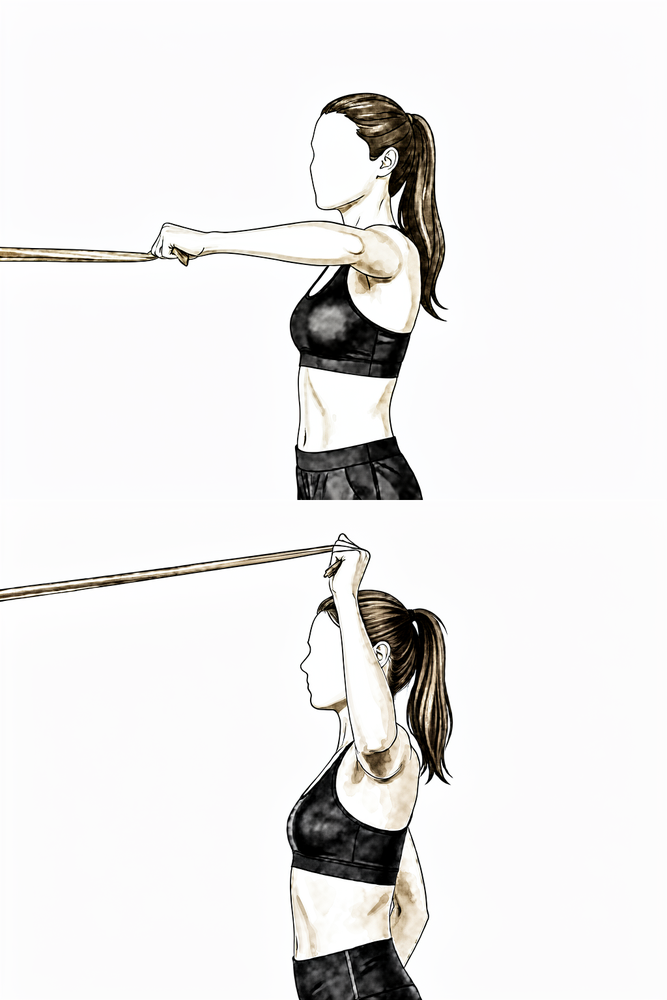
Kieran Hirpara 4.0
Rotação externa em 90/90 (faixa)
Com o braço estendido para o lado, na altura do ombro, e o cotovelo dobrado em ângulo reto, gire o antebraço para trás e para cima contra uma faixa elástica leve ou um peso, e depois abaixe-o lentamente. Este exercício fortalece o manguito rotador na posição de elevação (posição de arremesso).
2 a 3 séries de 10 a 15 repetições, com baixa resistência
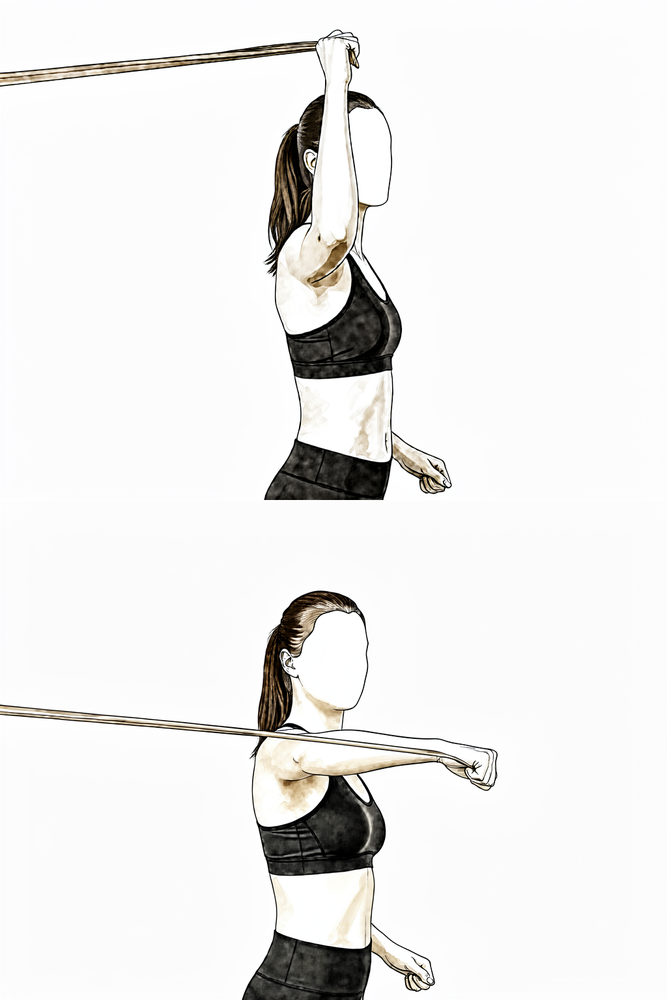
Kieran Hirpara 4.0
Rotação interna em 90/90 (faixa)
Na mesma posição, com o braço estendido para o lado à altura do ombro, gire o antebraço para a frente e para baixo em direção aos pés, contra a resistência de uma faixa elástica leve ou de um peso; em seguida, volte à posição inicial de forma controlada.
2 a 3 séries de 10 a 15 repetições, com baixa resistência
O braço já está forte e com amplitude de movimento completa; agora os treinos tornam-se específicos para o seu esporte, incluindo exercícios mais rápidos e explosivos (pliométricos), como passes de peito e posições de arremesso. Trata-se de uma preparação para o retorno ao esporte, mas ainda não é autorização para cargas pesadas e irrestritas.
- Movimentação: completa.
- Exercícios: rotação externa e interna na posição 90/90 (posição esportiva); exercícios pliométricos de peito e arremesso conforme orientação do fisioterapeuta.
Pronto para a próxima fase quando: você passar nos testes de força e nas tarefas específicas do seu esporte; e tanto o Dr. Hirpara quanto o seu fisioterapeuta derem autorização.
Fase VII — Retorno irrestrito (a partir dos 6 meses)
Por volta dos seis meses, com autorização médica, você pode retornar a todas as atividades laborais e de lazer extenuantes. O supino pode ser retomado com carga equivalente a cerca de metade do seu máximo anterior, aumentando gradualmente; práticas esportivas de contato só devem ser retomadas após seis meses. O retorno depende do fato de sua força atingir pelo menos 85–90% em relação ao lado não operado, além da autorização do Dr. Hirpara — e não apenas do tempo decorrido.
- Mobilidade: total.
- Exercícios: retorno total a exercícios de pressão e levantamento de peso, iniciando com cargas leves e aumentando gradualmente; treinamento esportivo específico também pode ser retomado.
Condições para o retorno: sua força deve ser, no mínimo, 85–90% em relação ao outro lado; você deve apresentar mobilidade e resistência completas, sem dor alguma após exercícios com carga elevada; além disso, tanto o Dr. Hirpara quanto seu fisioterapeuta devem dar autorização.
Retorno ao esporte e ao trabalho
O retorno à prática de exercícios que envolvem carga torácica e ao esporte é baseado em critérios: amplitude de movimento, força e resistência adequadas, ausência de dor, além da aprovação tanto do Dr. Hirpara quanto do seu fisioterapeuta; não depende apenas do calendário.
- Trabalho: atividades sedentárias conforme tolerância; trabalho manual ou pesado somente após pelo menos 3 meses.
- Dirigir: aproximadamente 6 a 8 semanas.
- Exercícios leves de fortalecimento torácico: a partir da semana 14.
- Supino, levantamento de pesos pesados, flexões e esportes de contato: somente após 4 a 6 meses, e apenas quando a força já tiver sido recuperada; o supino deve ser retomado com carga equivalente a cerca de metade do seu máximo anterior, aumentando gradualmente.
Para esportes que envolvem arremessos e contato físico, siga um programa progressivo de fortalecimento antes de voltar às atividades sem restrições.
Seus primeiros exercícios
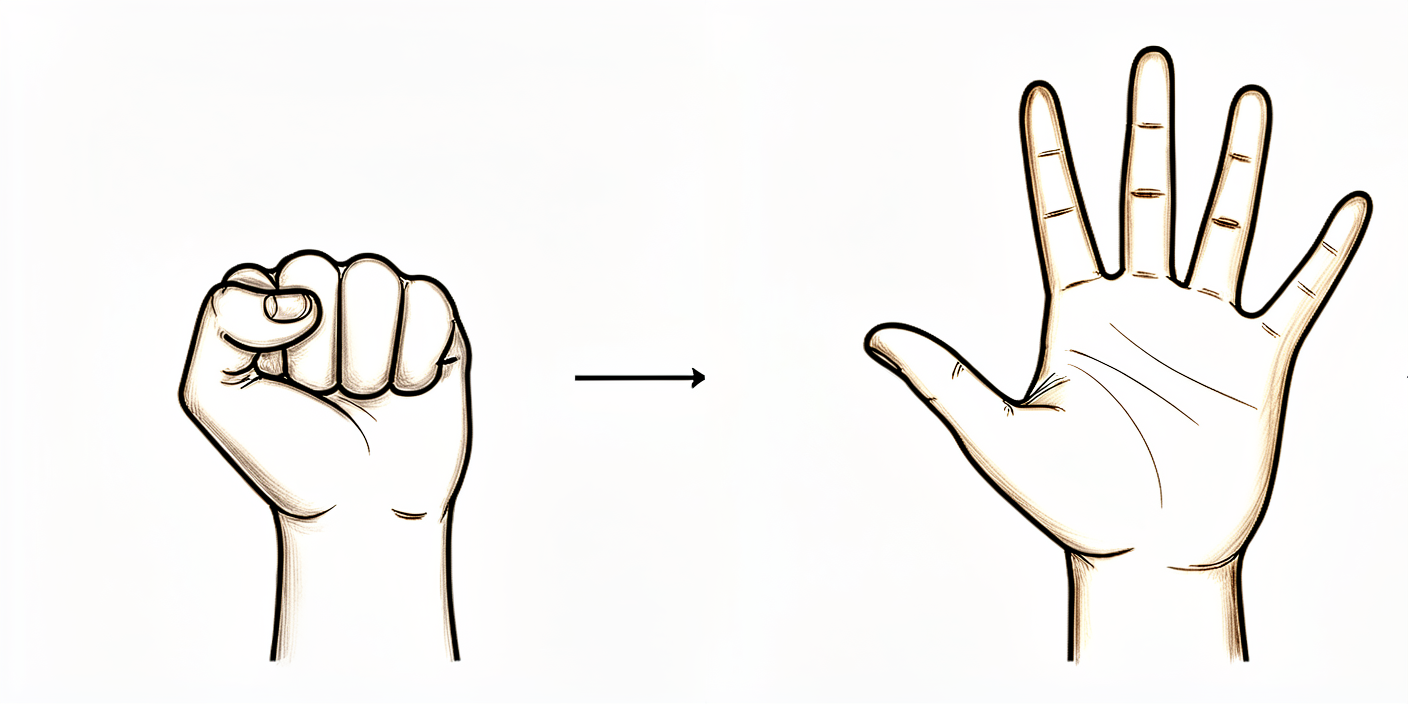
Kieran Hirpara 4.0
Abrir e fechar a mão
Faça um punho fechado com força e, em seguida, abra a mão espalhando os dedos completamente. Mantenha a mão, os dedos e o pulso em movimento normal ao longo do dia.
10 vezes por hora
Kieran Hirpara 4.0
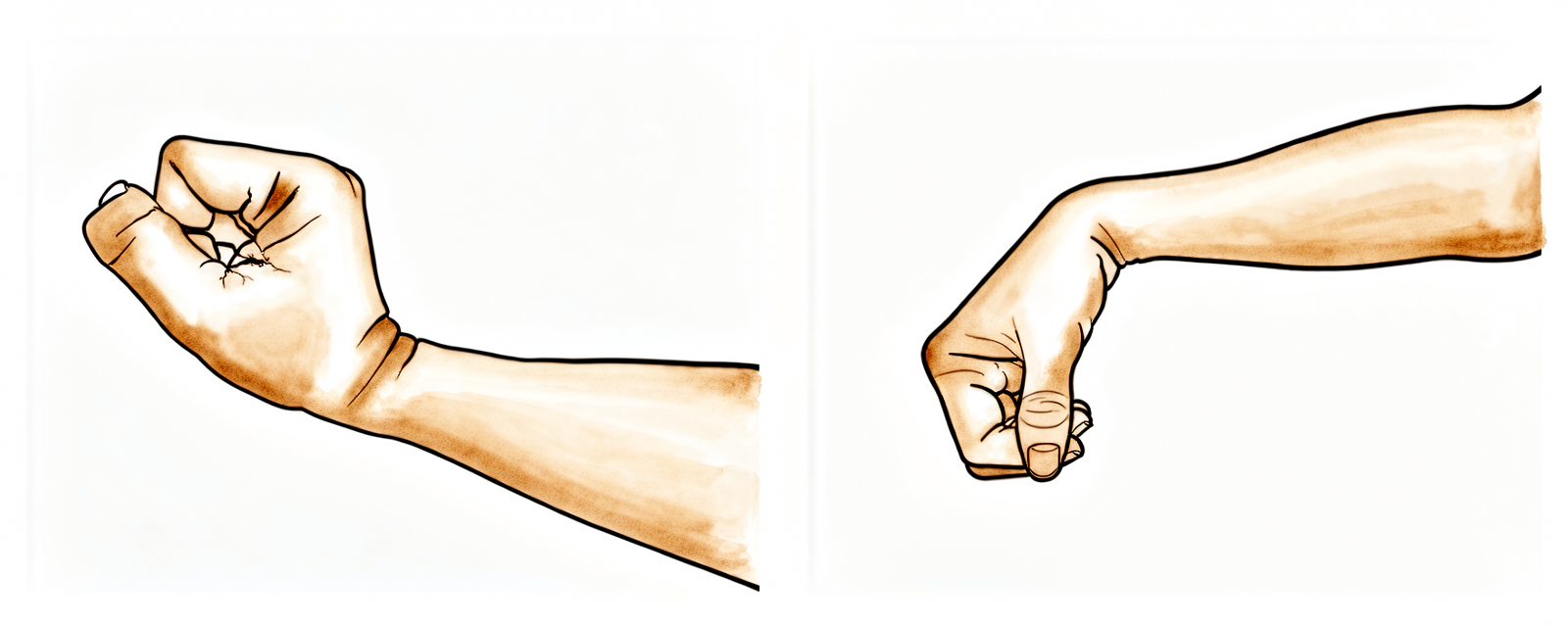
Movimento do punho
Com o antebraço apoiado, dobre o punho para a frente o máximo que for confortável e depois para trás. Mantenha o movimento suave e regular ao longo do dia.
10–15 vezes por hora
Kieran Hirpara 4.0
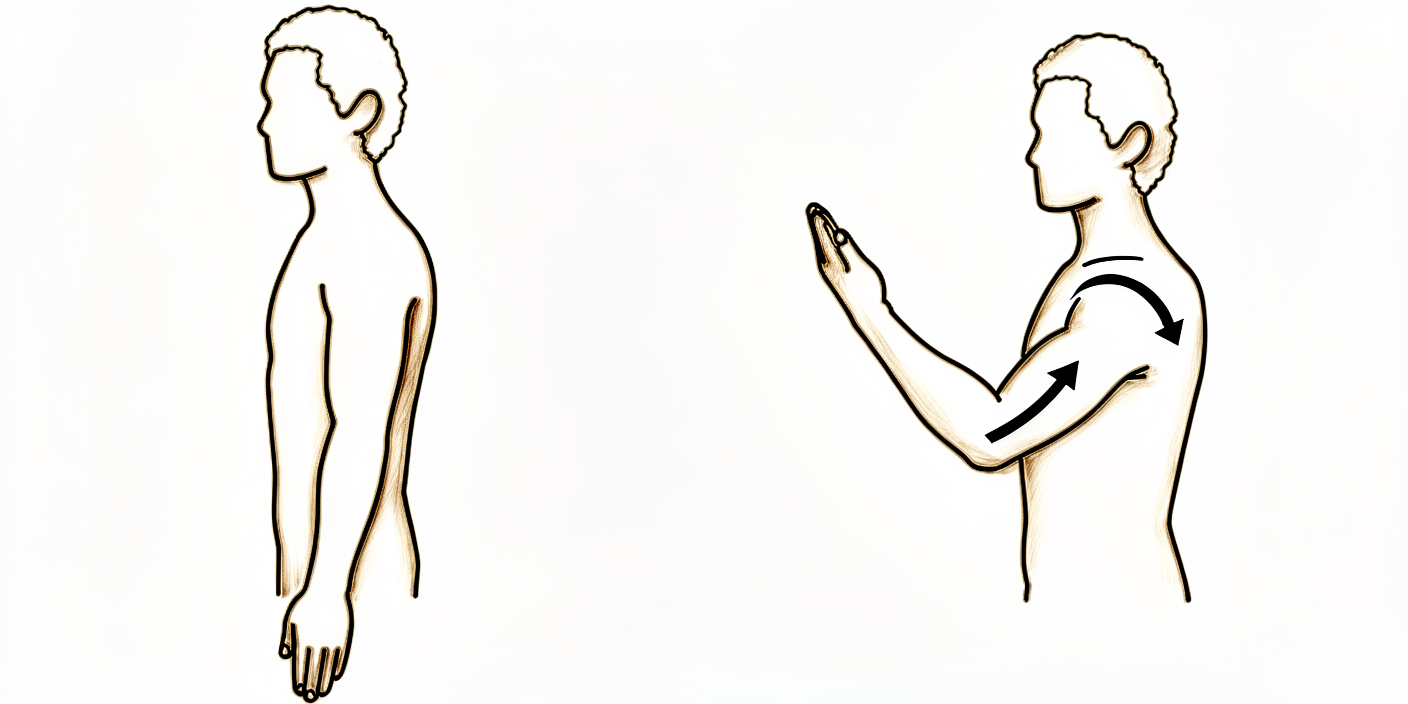
Flexões ativas do cotovelo
Com o braço ao lado do corpo e à frente dele, dobre o cotovelo o máximo que puder, de forma confortável, e depois estique-o completamente. Apenas o cotovelo deve se mover — o braço permanece imóvel.
10–15 vezes, 2–3 vezes ao dia
Kieran Hirpara 4.0
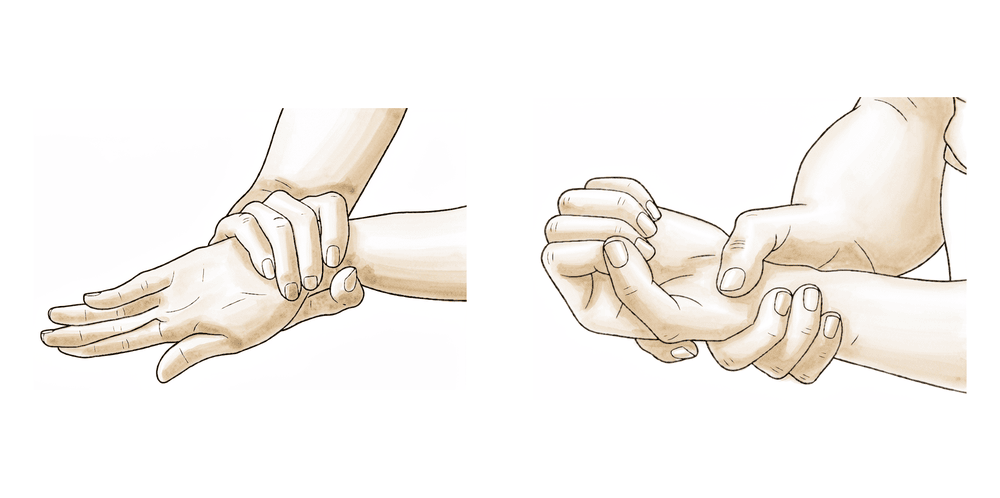
Rotação do antebraço
Com o cotovelo dobrado a 90 graus e junto ao corpo, gire o antebraço de modo que a palma da mão fique voltada para baixo e depois para cima. Mantenha o cotovelo colado ao corpo, de modo que apenas o antebraço gire.
10 vezes, 2–3 vezes ao dia
Kieran Hirpara 4.0
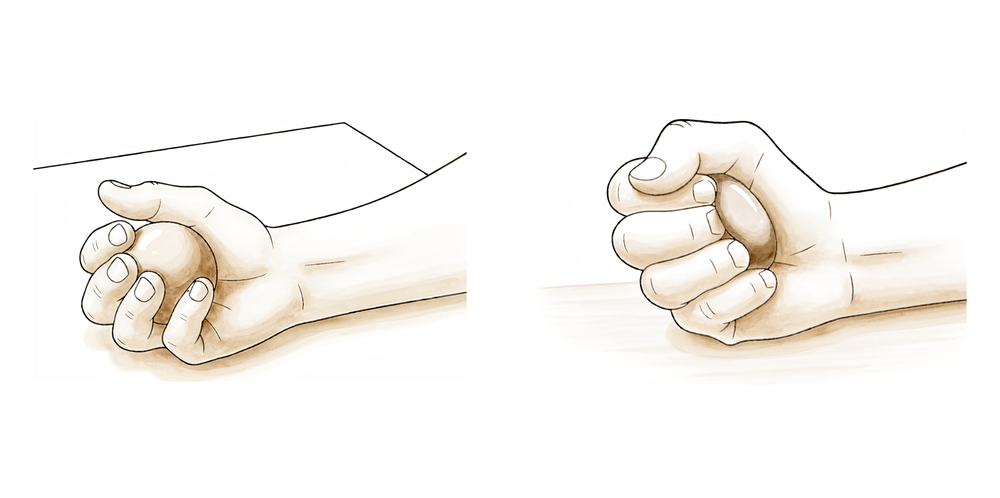
Aperto da mão
Com o braço apoiado e à frente do corpo, aperte suavemente uma bola macia ou uma meia enrolada, mantenha a pressão por alguns segundos e depois relaxe. Isso mantém o braço ativo sem exercer tensão sobre a área reparada.
10 vezes, 2–3 vezes ao dia
Kieran Hirpara 4.0
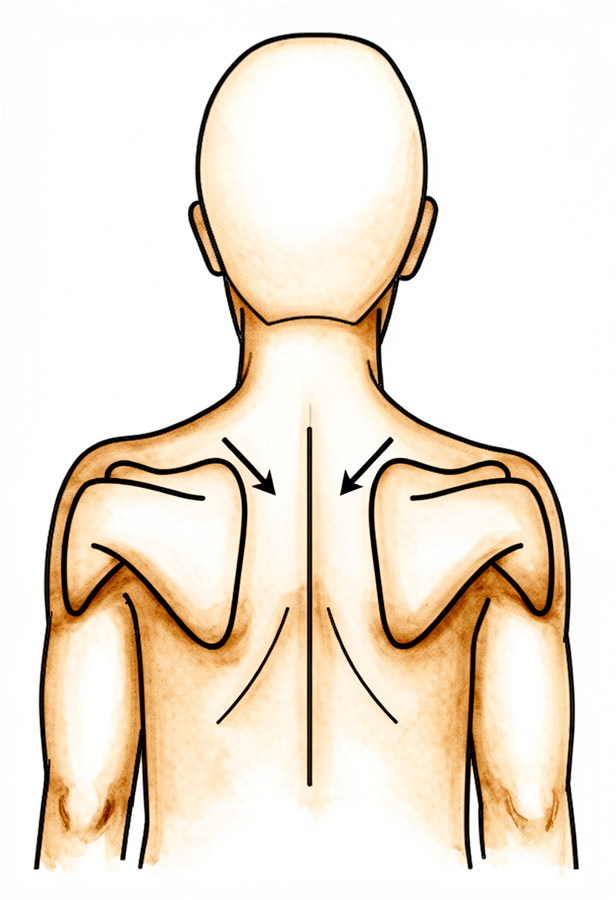
Posicionamento da escápula
Sentado ou em pé, puxe suavemente as escápulas para baixo e para trás, sem mover os braços; mantenha essa posição por alguns segundos e depois relaxe. Mantenha as orelhas, os ombros e os quadris alinhados.
10 vezes, 2–3 vezes ao dia
Kieran Hirpara 4.0
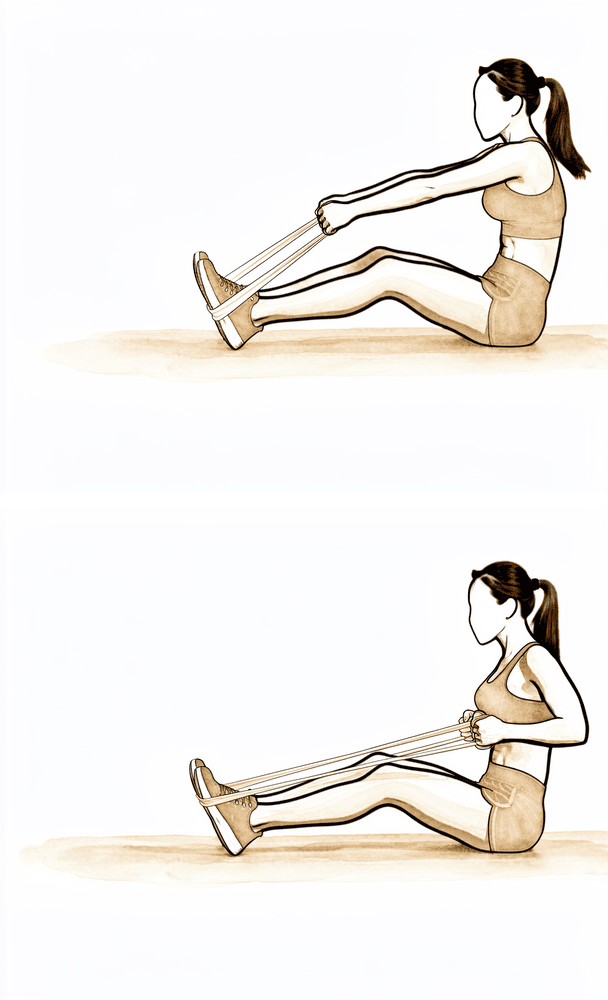
Remada baixa (posicionamento da escápula)
Sente-se ereto, com o braço abaixo e à sua frente; então, abaixe e puxe suavemente o cotovelo para trás, a fim de posicionar a escápula. Mantenha essa posição por alguns instantes e depois relaxe. Mantenha o braço bem abaixo da altura dos ombros: assim, você exercita os músculos ao redor da escápula sem sobrecarregar o tórax.
10 vezes, 2–3 vezes ao dia
Kieran Hirpara 4.0
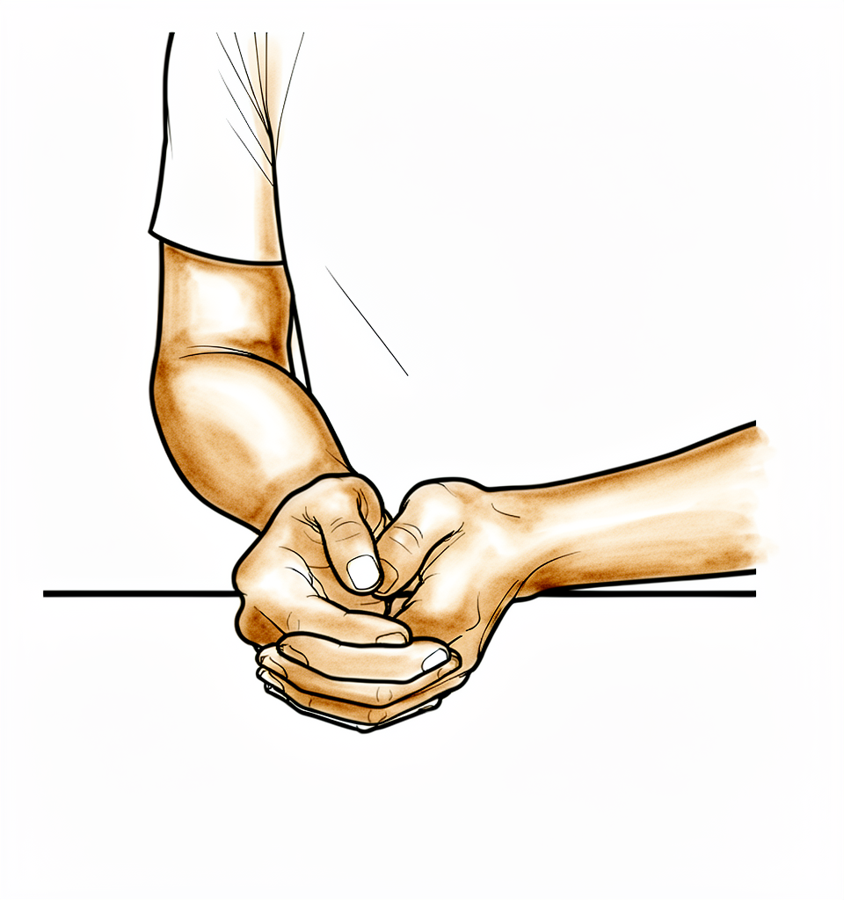
Rotação externa até a posição neutra
Com o cotovelo dobrado a 90 graus e pressionado contra o corpo, gire suavemente o antebraço a partir da posição em que ele repousa sobre o abdômen, até que fique apontando para a frente (a posição neutra — 0 grau), e depois volte à posição inicial. Nas primeiras semanas, pare na posição neutra; só vá um pouco mais para fora, na medida indicada pelo seu fisioterapeuta a cada semana. Não estenda o braço para o lado.
Conforme orientado pelo seu fisioterapeuta
Kieran Hirpara 4.0
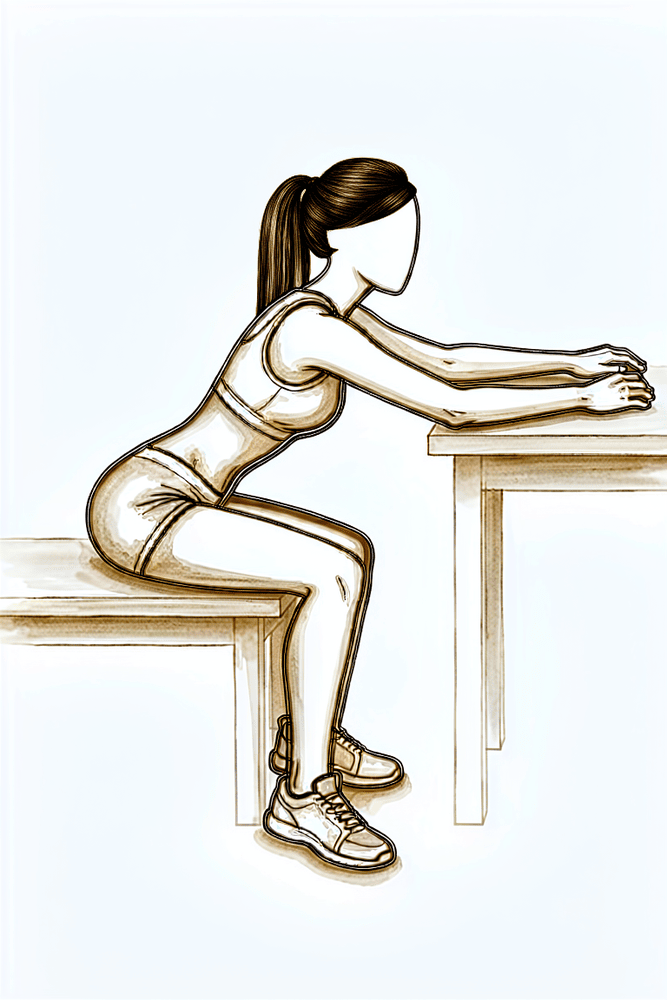
Flexão na mesa (deslizamento da mesa)
Sente-se à mesa com o antebraço apoiado sobre ela. Incline-se suavemente para a frente de modo que a mão deslize pela mesa, permitindo que a mesa suporte o peso do braço; em seguida, volte à posição inicial. Mantenha-se dentro dos limites estabelecidos pelo seu fisioterapeuta — o braço deve ficar à frente do corpo e abaixo da altura dos ombros — e não force nem estique o braço.
Conforme orientado pelo seu fisioterapeuta
Estes são os exercícios suaves para a fase inicial (de proteção), iniciados na enfermaria e continuados em casa; devem ser feitos com o braço operado mantido à frente do corpo e os músculos do ombro relaxados. Comece-os conforme orientação do seu fisioterapeuta, e interrompa qualquer exercício que cause dor aguda no ombro. Lembre-se das regras iniciais: ainda não devem ser feitos exercícios do tipo pêndulo ou com bastão, e jamais levante o braço para o lado e gire-o para fora ao mesmo tempo.
Após seguir este protocolo
Este protocolo complementa as orientações gerais de recuperação fornecidas pela clínica: consulte como controlar a dor pós-operatória e cuidados com a ferida.
Evidence & references
This is the clinical evidence summary written for health professionals. It is technical, and it lists the research this page was built from. You do not need to read it to understand your treatment or to make a decision about it.
Pectoralis Major Tendon Repair -- Post-operative Rehabilitation
Topic scope: Rehabilitation after surgical repair of a pectoralis major (PM) tendon rupture/tear (typically a humeral-insertion avulsion in a 20-40 yr-old male, classically during the eccentric phase of a bench press). Covers protected positioning, the early restrictions on abduction (ABD) and external rotation (ER), ROM progression, when active ROM and strengthening start, and return to heavy lifting / bench press / sport.
Defining principle (contrast with frozen-shoulder release): PM repair rehab is a classic protect-the-repair protocol -- the OPPOSITE of frozen-shoulder release. The repaired tendon runs anteriorly to its humeral insertion; abduction and external rotation stretch/tension the repair, so both are strictly limited early and the arm is held in adduction + internal rotation in a sling/immobiliser. Progression is deliberately slow, and heavy resisted pec loading (bench press, flyes, dips, contact sport) is delayed to ~4-6 months to avoid re-rupture.
A key modifier throughout: repair type dictates the timeline. Bone-tendon repairs (suture anchors/cortical buttons into humerus) heal slower than tendon-tendon or muscle-tendon repairs and wean from the sling later (MGH protocol).
CONSENSUS PHASED TIMELINE
Synthesised from the Mass General Brigham (MGH) Sports Medicine protocol (rev. 7/2023, the most granular degree-by-degree protocol) and the University Orthopedics protocol, cross-checked against the published literature (Cordasco/HSS 2017; Manske & Prohaska 2007; Schepsis 2000; Haley/Zacchilli 2014). Both published protocols agree on the core structure; the ROM numbers below are the MGH degree targets.
| Phase | Window | Sling / position | ROM allowed + RESTRICTIONS | Active ROM | Strengthening | RTS / lifting |
|---|---|---|---|---|---|---|
| I -- Immediate | 0-3 wk (UnivOrtho: 0-2 wk) | Sling/immobiliser, arm in NEUTRAL or INTERNAL ROTATION, worn day & night | PROM only, started ~week 2. ER limited: start at 0 deg in adduction, progress ~5 deg/week. Flexion start 45 deg, +5-10 deg/wk. ABD start 30 deg, +5 deg/wk. Elbow/wrist/hand AROM free. No active shoulder motion; no ER beyond limit; no abduction/extension stretch | None at shoulder (distal joints only) | Wk 3: periscapular only (inferior glide <35 deg ABD, low row), ball squeeze. No pec loading | None |
| II -- Intermediate | 4-6 wk | Begin weaning sling: bone-tendon at 4 wk; tendon-tendon / muscle-tendon at 5-6 wk (UnivOrtho: immobiliser to 6 wk for all) | PROM continues (ER +5 deg/wk; flex +5-10 deg/wk to ~65-85 deg; ABD +5 deg/wk to ~50 deg). Begin AAROM (cane flexion, cane ER stretch, washcloth press). Still no aggressive ER/ABD past targets | AAROM introduced | Submaximal isometrics: ABD, extension, ER -- explicitly NO IR isometrics (IR/adduction tension the pec); periscapular setting | None |
| III -- Late | 6-8 wk | Sling discontinued | PROM continue to full (ER, flex, ABD each +5 deg/wk to full). Initiate AROM (supine flexion, salutes, supine punch). Can begin weight-bearing through arm | Active ROM starts ~6 wk | Sidelying ER, periscapular rows/extension, biceps/triceps; rhythmic stabilisation; sleeper/cross-body stretch | None |
| IV -- Transitional | 9-14 wk | None | Restore full PROM/AROM (full by wk 12-14 for bone-tendon) | Full | Initiate shoulder IR isometrics + pec major isometrics (~week 9) -- shortened position first, then lengthened; ER w/ band, ABD; PNF D1/D2 | None |
| V -- Advanced strengthening | 14-20 wk (~3.5-5 mo) | None | Full | Full | Pectoralis isotonics begin; IR w/ band, counter push-ups -> push-ups, lat pulldowns; doorway pec stretch gentle | Begin sport-specific prep |
| VI -- Early return to sport | 5-6 months | None | Full | Full | ER/IR at 90 deg, plyometrics (med-ball chest pass, ball drops, 90/90 throws) | Begin return-to-sport program when criteria met |
| VII -- Unrestricted RTS | 6+ months | None | Full | Full | Bench press resumed at 50% 1-RM, progress slowly with physician; full return to strenuous work, recreation, contact sport NOT before 6 months | Heavy lifting / bench press / contact sport: 6+ months, criterion-based |
Key numeric consensus points
- Sling: ~4-6 weeks (4 wk bone-tendon may wean earlier; 6 wk common; UnivOrtho keeps immobiliser a full 6 wk), arm in adduction/internal rotation.
- ER early limit: 0 deg at the side, advance ~5 deg/week -- because ER tensions the anterior repair.
- ABD/flexion early limit: ABD ~30 deg and flexion ~45 deg initially, advancing ~5-10 deg/week.
- Active ROM: ~6 weeks.
- Isometrics: scapular wk 3; submaximal shoulder (ABD/ext/ER, no IR) wk 4-6; pec/IR isometrics ~wk 9 (Phase IV).
- Pec isotonics / push-ups: ~14 weeks (Phase V).
- Bench press / heavy lifting / contact sport: deferred to ~4-6 months (MGH: 50% 1-RM bench at 6+ mo; UnivOrtho: light bench from ~4 mo with very light resistance, no contact until 6 mo).
The rationale for restricting ER and ABD is biomechanical: the PM is a strong adductor, internal rotator and flexor; abduction + external rotation is the position of maximal stretch on the anterior insertion (this is the injuring mechanism -- eccentric load in abduction/ER, e.g. bench press), so it maximally tensions the repair (Maier 2021; Schepsis 2000; Provencher 2010). Biomechanical work shows transosseous sutures, suture anchors and cortical buttons confer similar repair strength, and early activity should stay below identified failure loads until soft-tissue- to-bone healing is reliable (Sherman 2012; Edgar 2017) -- the biomechanical basis for the slow progression.
OUTCOMES / RETURN TO SPORT EVIDENCE
- Surgical > non-operative for restoring strength/function: objective strength testing shows repair recovers significantly more peak torque and work than conservative care (Hanna 2001 -- comparative cohort); literature "strongly supports early operative treatment" of complete tears in active patients/athletes (Kircher 2010 review; Schepsis 2000). Acute repair > chronic/delayed repair (Schepsis 2000).
- Return to sport in repaired athletes is generally good, with most returning by ~6 months to a year; Cordasco (HSS, 2017, n=40 acutely repaired athletes) reported high RTS and functional scores with low re-operation. Faster individual returns (5-7 mo) are reported in single cases but 6 months is the consensus floor for heavy/contact loading.
KEY CONTROVERSIES / VARIABLES
- Sling duration & wean point. 4 wk vs 6 wk; MGH ties it to repair type (bone-tendon later); UnivOrtho fixes 6 wk for all. No RCT defines the optimum. Weak/consensus.
- How fast to advance ER/ABD. ~5 deg/week is widely used but arbitrary; tissue quality, tear size and fixation method modify it -- larger tears / poor tissue / chronic repairs progress slower. Expert opinion.
- Repair construct. Cortical button vs suture anchor vs transosseous -- biomechanically similar (Sherman 2012; Edgar 2017), so construct should not, in principle, change the rehab timeline, but surgeons individualise. Strong biomechanical, weak clinical.
- RTS timing for bench press / contact sport. Range 4-6 months across protocols; no high-level evidence sets the safe threshold -- driven by re-rupture fear and biomechanical failure-load data, not RCTs. Weak/consensus.
- Acute vs chronic / augmentation. Chronic or retracted tears may need allograft or autograft (semitendinosus) augmentation and a more conservative timeline (Neumann 2018 dermal allograft: 6 wk full immobilisation then 4-phase PT from wk 6; Garofo 2025 semitendinosus technique). Weak (technique notes/small series).
- Overall evidence base. Almost entirely retrospective cohorts, technique notes and biomechanical studies -- no RCTs of one rehab protocol vs another for PM repair. The whole timeline is consensus/expert, anchored by biomechanical failure-load data. Flag: WEAK.
EVIDENCE STRENGTH FLAGS (summary)
- STRONG: biomechanical failure-load / repair-construct comparisons (Sherman 2012; Edgar 2017 -- cadaveric, controlled) -- these justify the load restrictions.
- MODERATE: surgical vs conservative superiority (Hanna 2001 comparative; Schepsis 2000; Cordasco 2017 n=40 outcome series; Campbell's / Pochini 2014 prospective 60-case series).
- WEAK / CONSENSUS ONLY: every specific rehab parameter -- sling duration, ER/ABD degree-per- week limits, AROM/strengthening start weeks, 4-6 month RTS/bench-press timing. Derived from institutional PT protocols (MGH, University Orthopedics) and narrative reviews (Manske/Prohaska 2007; Haley/Zacchilli 2014; Maier 2021), not RCTs.
CITATIONS
RAG corpus (180,000+ Orthopaedic articles)
- Cordasco FA, Mahony GT, Tsouris N, et al. Pectoralis major tendon tears: functional outcomes and return to sport in a consecutive series of 40 athletes. J Shoulder Elbow Surg. 2017;26(3):458-463.
- Kang RW, Mahony GT, Cordasco FA. Pectoralis major repair with cortical button technique. Arthroscopy Techniques. 2014.
- Haley CA, Zacchilli MA. Pectoralis major injuries. Clin Sports Med. 2014.
- Schepsis AA, Grafe MW, Jones HP, et al. Rupture of the pectoralis major muscle. Am J Sports Med. 2000;28(1):9-15.
- Sherman SL, Lin EC, Verma NN, et al. Biomechanical analysis of the pectoralis major tendon and comparison of techniques for tendo-osseous repair. Am J Sports Med. 2012.
- Hanna CM, Glenny AB, Stanley SN, et al. Pectoralis major tears: comparison of surgical and conservative treatment. Br J Sports Med. 2001.
- Kircher J. Surgical and nonsurgical treatment of total rupture of the pectoralis major muscle in athletes: update and critical appraisal. Open Access J Sports Med. 2010.
- Maier J, Oak SR, Soloff L, et al. Management of common upper extremity injuries in throwing athletes: a critical review of current outcomes. JSES Rev Rep Tech. 2021;1(4).
- Neumann JA, Klein CM, van Eck CF, et al. Outcomes after dermal allograft reconstruction of chronic or subacute pectoralis major tendon ruptures. Orthop J Sports Med. 2018. (6 wk full immobilisation; PT from wk 6, 4 phases)
- Garofo AGP, Medina G, Schor B. Acute pectoralis major tendon tear reconstruction with semitendinosus augmentation: a technique note. JSES Rev Rep Tech. 2025;5(4).
- Azar FM, Canale ST, Beaty JH. Campbell's Operative Orthopaedics (cites Pochini 2014 prospective 60-case series; Edgar 2017 repair-configuration biomechanics; ElMaraghy classification). 2020.
- (Provencher MT, Handfield K, Boniquit NT, et al. Injuries to the pectoralis major muscle: diagnosis and management. Am J Sports Med. 2010;38(8):1693-1705 -- cited within MGH protocol.)
- (Manske RC, Prohaska D. Pectoralis major tendon repair post-surgical rehabilitation. N Am J Sports Phys Ther. 2007;2(1):22-33 -- cited within MGH protocol.)
Published rehab protocols (URLs)
- Mass General Brigham (MGH) Sports Medicine -- Rehabilitation Protocol for Pectoralis Major Repair (rev. 7/2023): https://www.massgeneral.org/assets/MGH/pdf/orthopaedics/sports-medicine/physical-therapy/rehabilitation-protocol-for-pectoralis-major-repair.pdf (source for the degree-by-degree ER 0 deg +5/wk, flex 45 deg, ABD 30 deg limits; sling neutral/IR; bone-tendon vs tendon-tendon wean; pec isometrics wk 9, pec isotonics wk 14; bench 50% 1-RM at 6+ mo).
- University Orthopedics, Inc. -- Pectoralis Major Repair Rehabilitation Protocol: https://universityorthopedics.com/assets/shoulder/PECTORALIS-MAJOR-REPAIR.pdf (immobiliser x6 wk; AROM ~6 wk; phased push-up progression; light bench from ~4 mo; no contact sport until 6 mo).
- Additional concordant institutional protocols: Melbourne Orthopaedic Group https://mgorthopaedics.com.au/wp-content/uploads/2021/04/PECTORALIS-MAJOR-REPAIR-PROTOCOL.pdf ; Summit Orthopedics https://www.summitortho.com/wp-content/uploads/2022/08/6575_SURGICAL-Pect-Major-Repair-Protocol_6.22_MB.pdf