Patients › Rehabilitation
Tenodese do bíceps
Rehabilitation after isolated biceps tenodesis, protecting the tenodesis fixation through staged return of biceps loading.
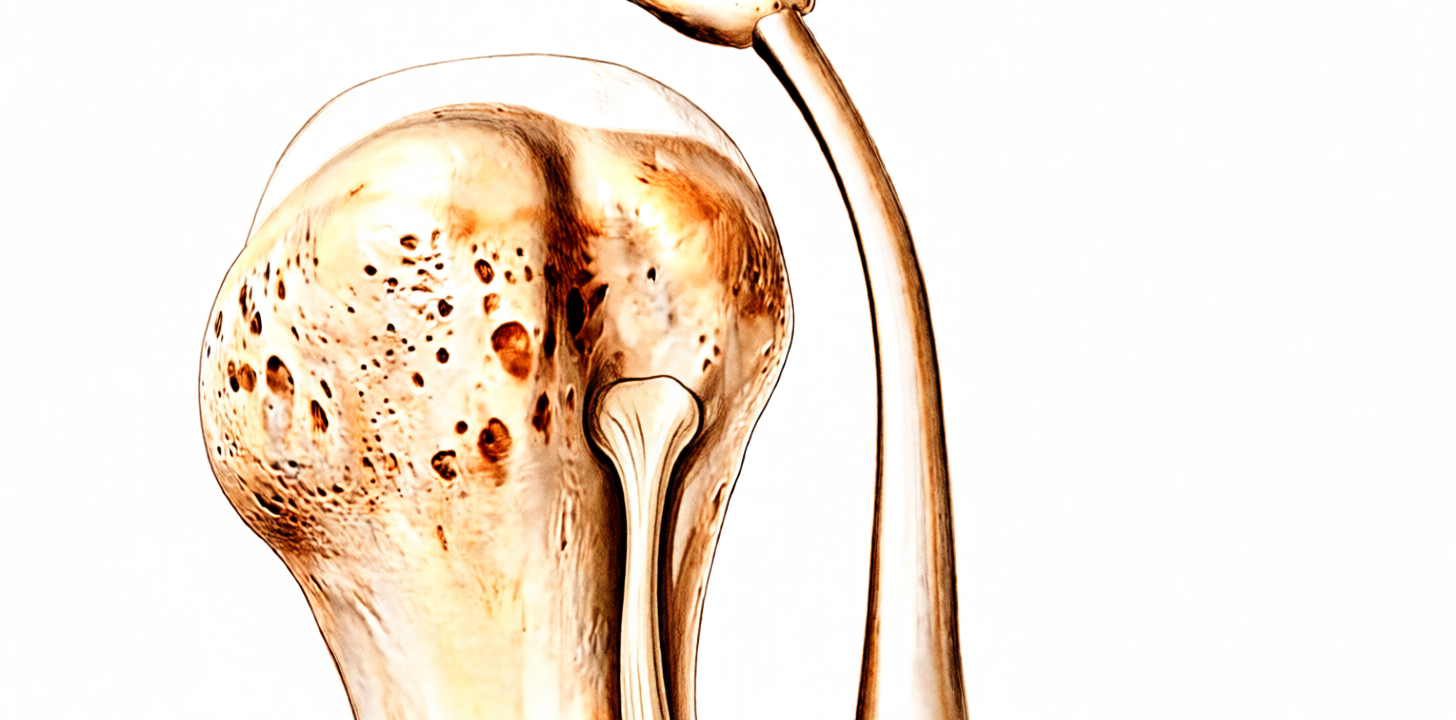
Este protocolo descreve a reabilitação após a tenodese do bíceps realizada pelo Dr. Kieran Hirpara no Mater Private Hospital Rockhampton, independentemente de a cirurgia ter sido feita por artroscopia (técnica minimamente invasiva) ou por meio de uma pequena incisão aberta na região anterior da axila (técnica subpeitoral aberta). Leve esta página ou seu PDF à sua primeira sessão de fisioterapia, para que a reabilitação seja devidamente coordenada. O seu fisioterapeuta guiará individualmente a evolução da reabilitação ao longo das fases abaixo, conforme a recuperação do seu ombro e braço.
Este protocolo aplica-se exclusivamente à tenodese do bíceps isolada. Caso a cirurgia também tenha incluído reparação do manguito rotador, siga o protocolo de reparação do manguito rotador; a recuperação do tendão reparado costuma ser mais lenta.
Caso tenha alguma dúvida ou preocupação quanto à ferida cirúrgica após a operação, entre em contato com o consultório. Geralmente, é útil tirar uma foto da ferida e enviá-la por e-mail para análise.
O que esperar
Na tenodese do bíceps, a cabeça longa do tendão do bíceps é separada do seu ponto de fixação original no ombro e, em seguida, fixada ao osso do braço (úmero) por meio de um âncora ou parafuso. Essa nova fixação precisa de tempo para cicatrizar firmemente ao osso; por isso, as primeiras semanas de reabilitação visam protegê-la.
O músculo bíceps tem duas funções: dobrar o cotovelo e virar a palma da mão para cima (supinação). É por isso que, diferentemente da maioria das cirurgias no ombro, as restrições iniciais dizem respeito principalmente ao cotovelo: nas primeiras semanas, o cotovelo é movimentado de forma passiva (a outra mão ou o fisioterapeuta realiza o movimento), para que o tendão em cicatrização não tenha que exercer força. Levantar e carregar objetos com o braço operado também é proibido nesse período, pelo mesmo motivo. Algumas posições do ombro que geram tensão no tendão também são limitadas inicialmente: rotação externa do braço além de 40 graus e movimentação do braço para trás da linha do corpo.
Você usará uma tipóia por cerca de três a quatro semanas, inclusive durante o sono; a partir da terceira semana, ela será retirada gradualmente, conforme sua tolerância. Não dirija por pelo menos seis semanas após qualquer cirurgia no ombro, mesmo após a retirada da tipóia; seu cirurgião autorizará a volta à direção, geralmente na consulta de acompanhamento na sexta semana.
Resumo do processo de recuperação:
- Fase I — Proteção da tenodese (aproximadamente as primeiras quatro semanas)
- Fase II — Movimentação ativa (semana 4–6)
- Fase III — Fortalecimento (semana 6–12; exercícios resistidos para o bíceps a partir da semana 10)
- Fase IV — Retorno às atividades normais (a partir da semana 12)
Essas faixas semanais são apenas orientativas, não fixas; seu fisioterapeuta ajustará o progresso conforme a evolução da cicatrização e dos movimentos do seu braço, e não com base no calendário. A fisioterapia geralmente começa na primeira ou segunda semana após a cirurgia; seu primeiro atendimento está detalhado no material de alta, a menos que você tenha optado por agendar com outro profissional.
Fase I — Proteção da tenodese (Semana 0–4)
Kieran Hirpara 4.0
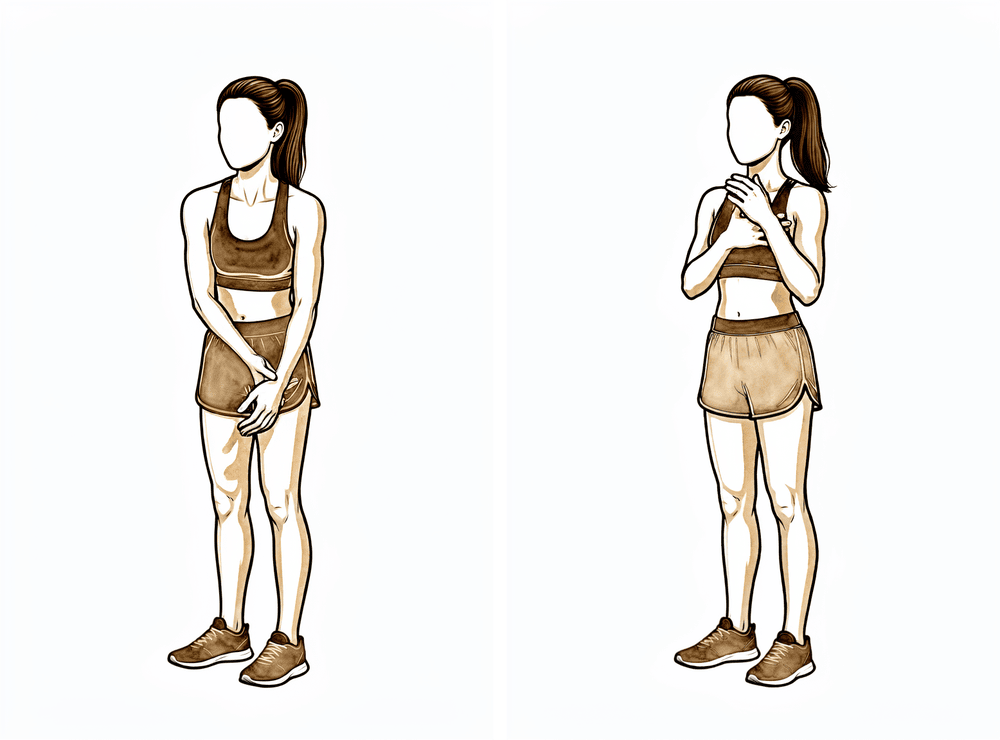
Flexão passiva do cotovelo
Deixe o braço operado completamente relaxado e use a outra mão para dobrar o cotovelo para cima, depois deixe-o voltar à posição reta. A outra mão é que realiza todo o movimento — o bíceps deve permanecer inativo para que o tendão em recuperação não seja solicitado a exercer força. Faça o mesmo ao virar a palma da mão para cima e para baixo.
Todos os dias
Kieran Hirpara 4.0
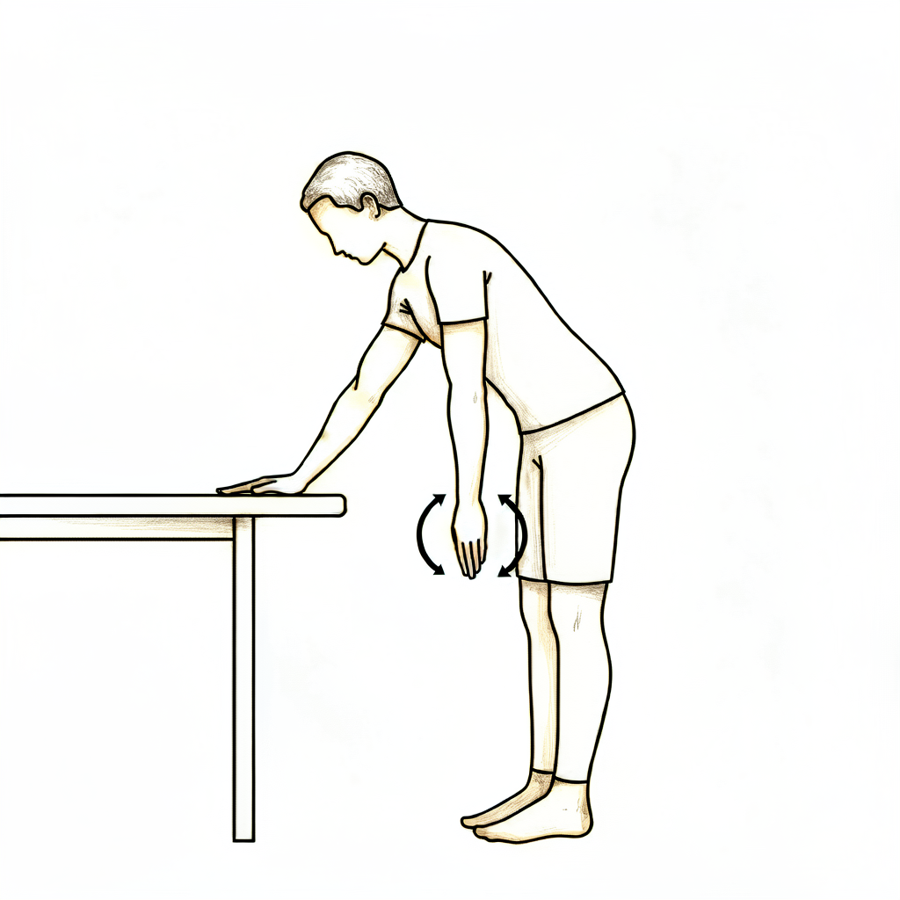
Exercício do pêndulo
Retire o sling, incline o tronco para a frente e deixe o braço operado pender suavemente para longe do corpo. Faça o braço descrever pequenos círculos, de forma relaxada — o movimento deve vir do corpo, não dos músculos do ombro ou do braço. Mantenha o movimento dentro dos limites do conforto, depois volte a colocar o braço no sling.
Conforme orientado pelo seu fisioterapeuta
Kieran Hirpara 4.0
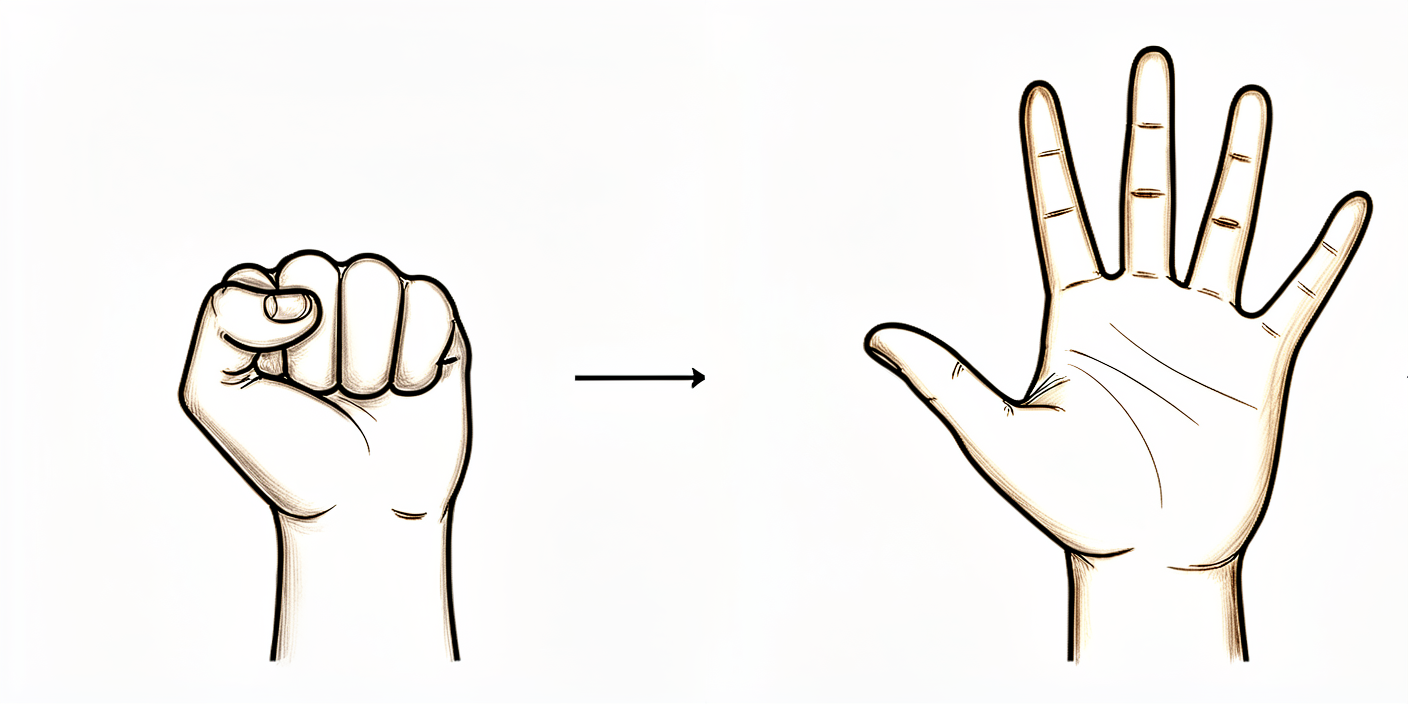
Exercícios para a mão e para a preensão
Com o braço apoiado, faça um punho fechado completamente e, em seguida, estique os dedos. Uma bola macia ou uma meia enrolada podem ser apertadas para exercitar a força de preensão. A mão, o pulso e os dedos permanecem ativos desde o início.
Conforme orientado pelo seu fisioterapeuta
Kieran Hirpara 4.0
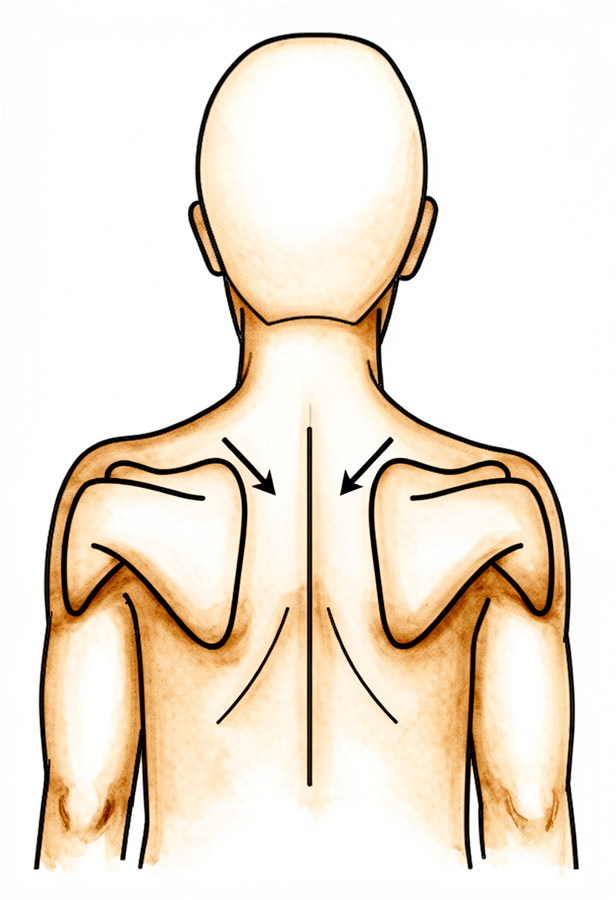
Posicionamento da escápula
Com o braço apoiado, puxe suavemente as escápulas para trás e para baixo, afastando-as das orelhas. Mantenha a posição por alguns segundos e depois relaxe. Isso ajuda a manter a postura correta e o controle das escápulas, sem sobrecarregar a tenodese.
Conforme orientado pelo seu fisioterapeuta
Kieran Hirpara 4.0
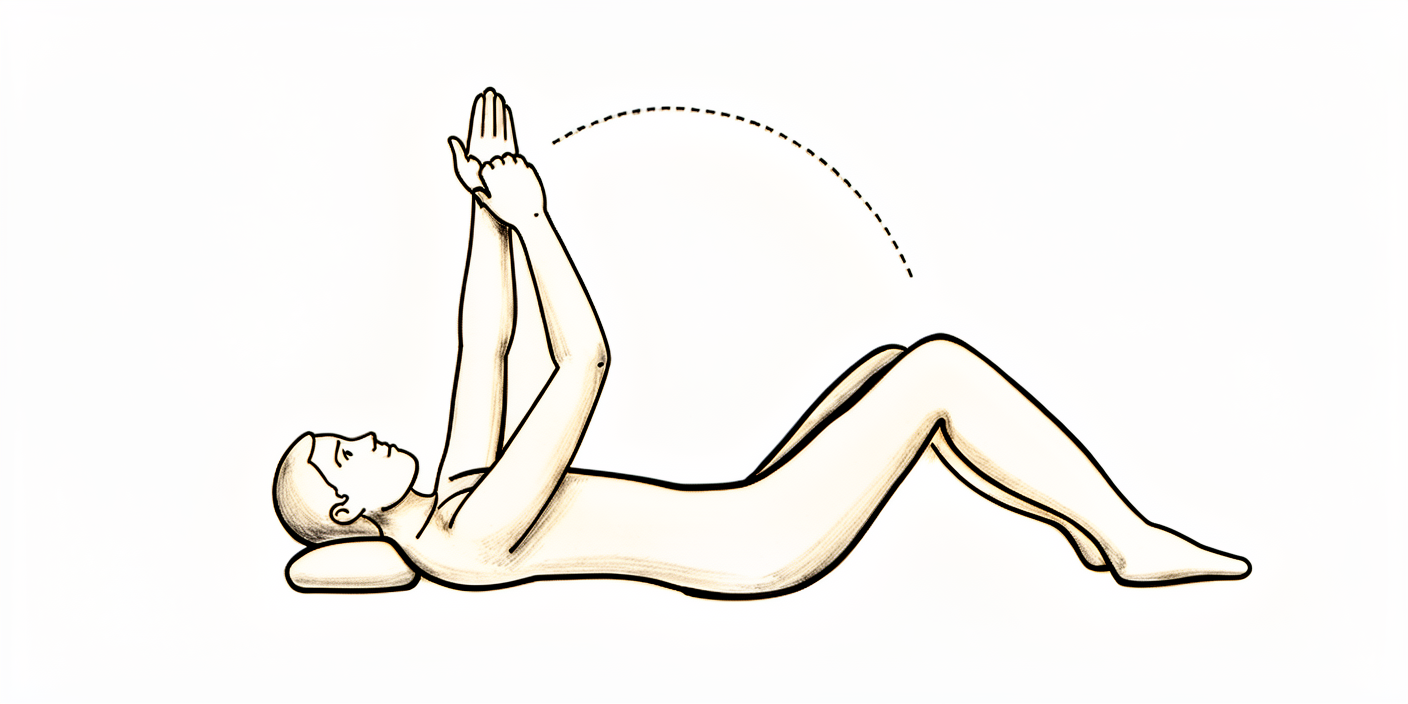
Elevação assistida acima da cabeça (deitado)
Deite-se de costas e use o braço saudável para ajudar a levantar o braço operado à sua frente, até aproximadamente a altura do ombro; em seguida, abaixe-o novamente, mantendo o auxílio do braço saudável. O outro braço é que realiza o movimento, de modo que o bíceps permaneça relaxado. Faça os movimentos dentro dos limites do conforto — isso mantém o ombro em movimento enquanto a tenodese cicatriza.
Conforme orientado pelo seu fisioterapeuta
Kieran Hirpara 4.0
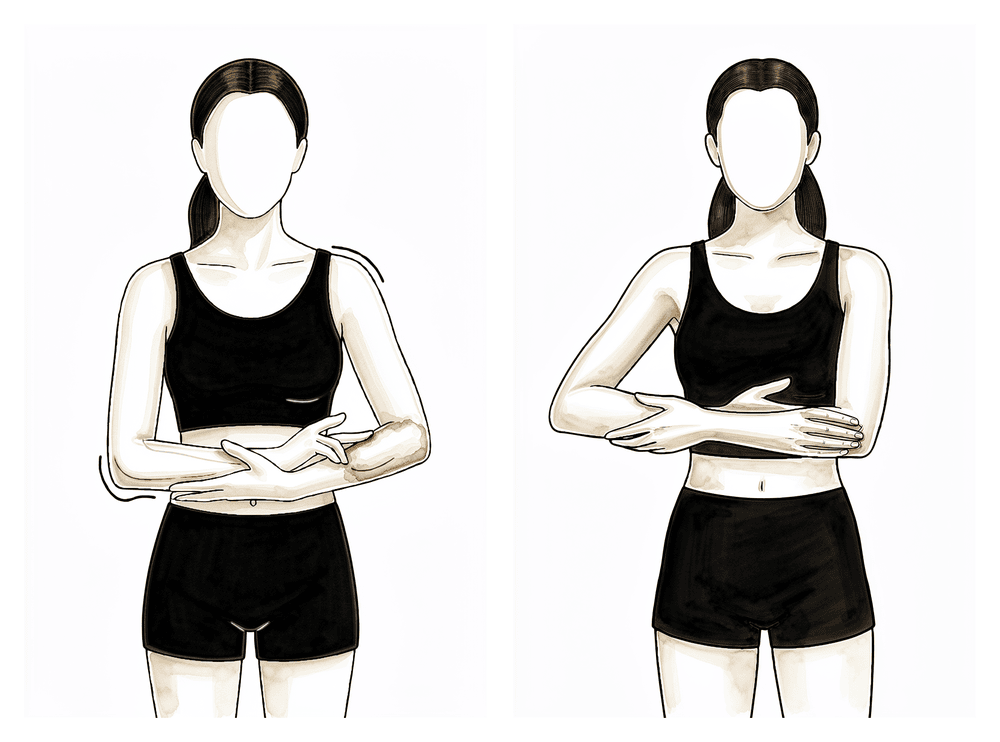
Movimento assistido para o lado
Apoie o antebraço operado com o outro braço e levante suavemente ambos para o lado, deixando que o braço são faça o trabalho; em seguida, abaixe-os com controle. Mantenha o movimento confortável e dentro dos limites iniciais — isso preserva uma amplitude de movimento suave no ombro sem exigir trabalho do bíceps.
Conforme orientado pelo seu fisioterapeuta
Kieran Hirpara 4.0
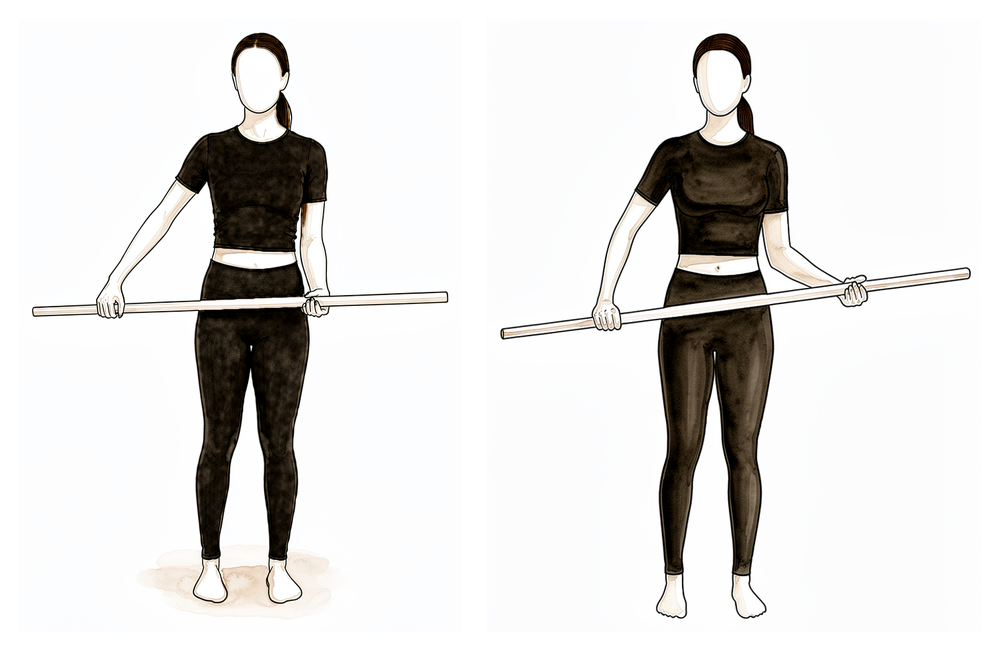
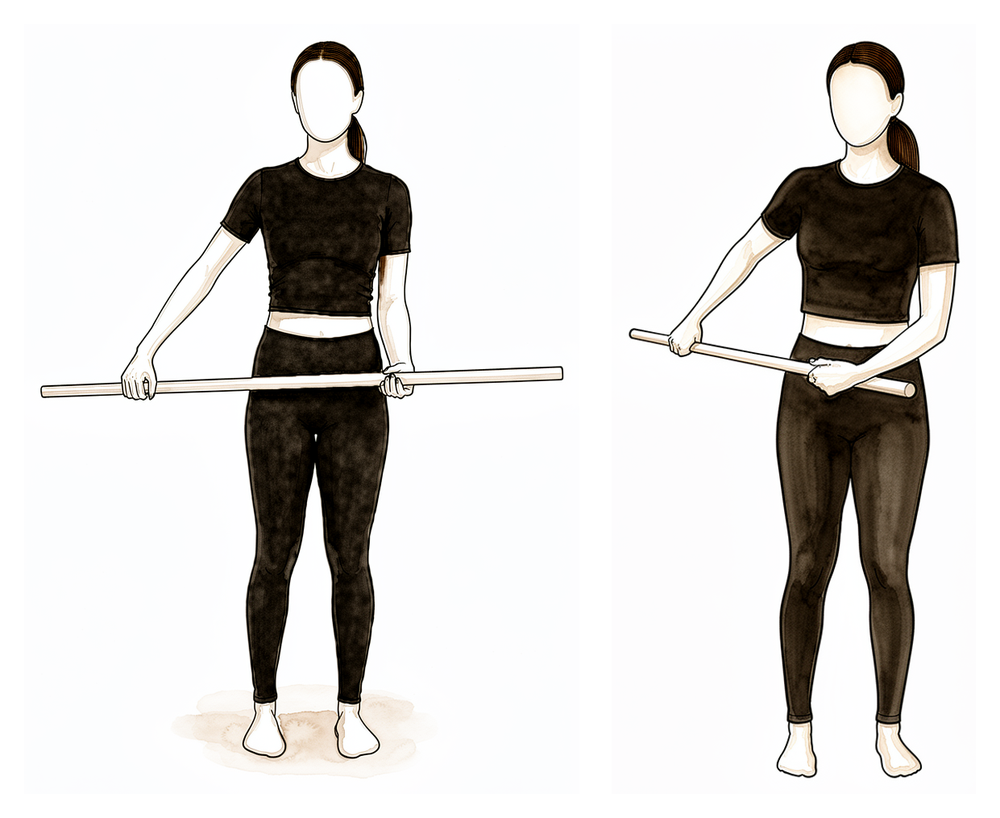
Rotação externa assistida com uma vara
Deite-se de costas, com o cotovelo junto ao corpo e dobrado em um ângulo reto. Segure uma vareta com as duas mãos e use o braço saudável para girar a mão operada para fora. Nas primeiras semanas, faça esse movimento apenas até cerca de 40 graus — trata-se de um alongamento limitado e controlado, não completo, para evitar qualquer tensão sobre o tendão em processo de cicatrização.
Conforme orientação do seu fisioterapeuta, até aproximadamente 40 graus.
Kieran Hirpara 4.0
Rotação medial assistida com uma vareta
Utilizando o mesmo bastão, deixe o braço saudável guiar suavemente a mão operada para dentro, na frente do corpo, até cerca de 45 graus, e depois traga-a de volta. Mantenha o braço operado relaxado e respeite os limites iniciais — isso preserva a rotação medial sem sobrecarregar a tenodese.
Conforme orientação do seu fisioterapeuta, até aproximadamente 45 graus.
Nas primeiras semanas, o objetivo é permitir que o tendão se fixe ao osso, mantendo ao mesmo tempo a mobilidade das estruturas ao redor. Sua mão, punho e dedos permanecerão ativos desde o início. O cotovelo deve ser movimentado diariamente, porém de forma passiva: use a outra mão para realizar os movimentos de flexão e rotação da palma para cima/para baixo, de modo que o próprio bíceps permaneça relaxado. O ombro deve ser movimentado suavemente dentro dos limites abaixo, por meio de exercícios pendulares e movimentos assistidos. Use gelo para aliviar a dor; tome os analgésicos antes dos exercícios e das sessões de fisioterapia; mantenha a tipóia sempre, inclusive na cama. Não levante nem carregue nada com o braço operado, e não dirija enquanto a tipóia for necessária. Tarefas leves com o antebraço apoiado, como escrever ou digitar, geralmente são permitidas, conforme sua tolerância.
Para o seu fisioterapeuta:
Objetivos
- Proteger a fixação da tenodese enquanto ela se integra ao osso
- Controlar a dor, o inchaço e a resposta inflamatória
- Garantir amplitude de movimento passiva completa do cotovelo e do antebraço; amplitude passiva confortável do ombro dentro dos limites estabelecidos
- Manter a função e a postura da escápula
Conduta terapêutica
- Utilizar a tipóia por cerca de 3–4 semanas, inclusive à noite; retirá-la gradualmente a partir da 3ª semana
- Movimentação passiva do cotovelo: flexão/extensão e supinação/pronação do antebraço
- Movimentação ativa do punho e da mão; exercícios de aperto de bola
- Movimentação passiva e ativa assistida do ombro dentro dos limites: exercícios pendulares, flexão e abdução até cerca de 90 graus inicialmente, progredindo conforme tolerância; rotação externa até 40 graus; rotação interna até cerca de 45 graus
- Exercícios de fixação e retração da escápula (com o braço apoiado), evoluindo para exercícios isométricos da escápula; movimentação cervical e correção postural
- Crioterapia para alívio da dor e do inchaço; analgesia prévia aos exercícios e sessões
- Colocar um rolo de toalha ou travesseiro pequeno sob o cotovelo ao deitar de costas, para evitar extensão do ombro
Precauções
- Proibida a flexão ativa do cotovelo e a supinação resistida do antebraço; o bíceps deve permanecer sem carga
- Proibida a movimentação ativa do ombro; rotação externa não deve ultrapassar 40 graus; extensão do ombro ou abdução horizontal além da posição neutra são proibidas
- Não levantar nem carregar nada com o braço operado
- Não realizar massagem friccionante na região proximal do bíceps/tenodese
- Proibida a direção por seis semanas (isso aplica-se a qualquer cirurgia no ombro)
Critérios para progressão
- Cicatrização da ferida e controle adequado da dor
- Amplitude passiva completa de flexão/extensão do cotovelo e rotação do antebraço
- Amplitude passiva do ombro confortável dentro dos limites prescritos
Fase II — Movimento ativo (Semana 4–6)
Kieran Hirpara 4.0
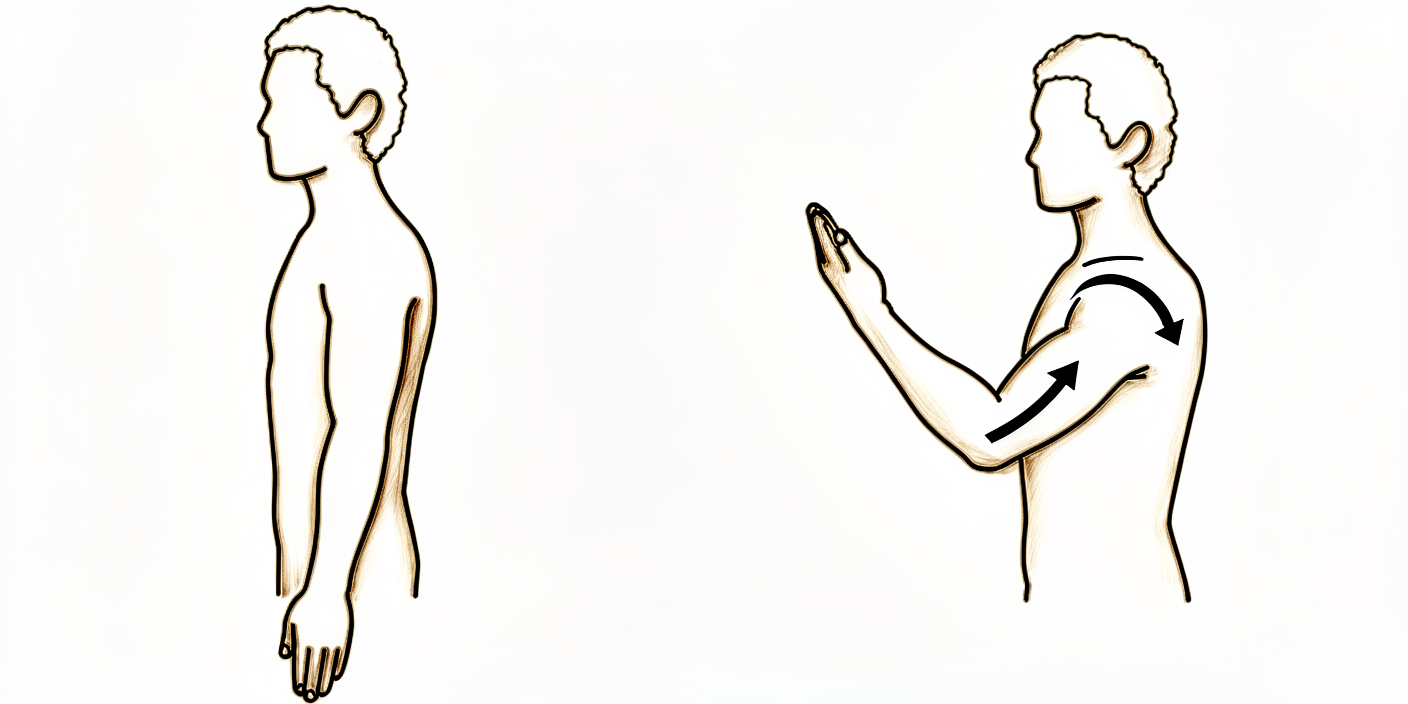
Flexão e extensão ativas do cotovelo
Flexione e estenda o cotovelo por conta própria, sem nada na mão, e gire a palma da mão para cima e para baixo. Nesse momento, o bíceps já está se movendo, mas ainda não está suportando carga — mantenha os levantamentos ao mínimo (nada mais pesado que uma xícara de chá com esse braço) até que o fisioterapeuta autorize novos exercícios.
Conforme orientado pelo seu fisioterapeuta
Kieran Hirpara 4.0
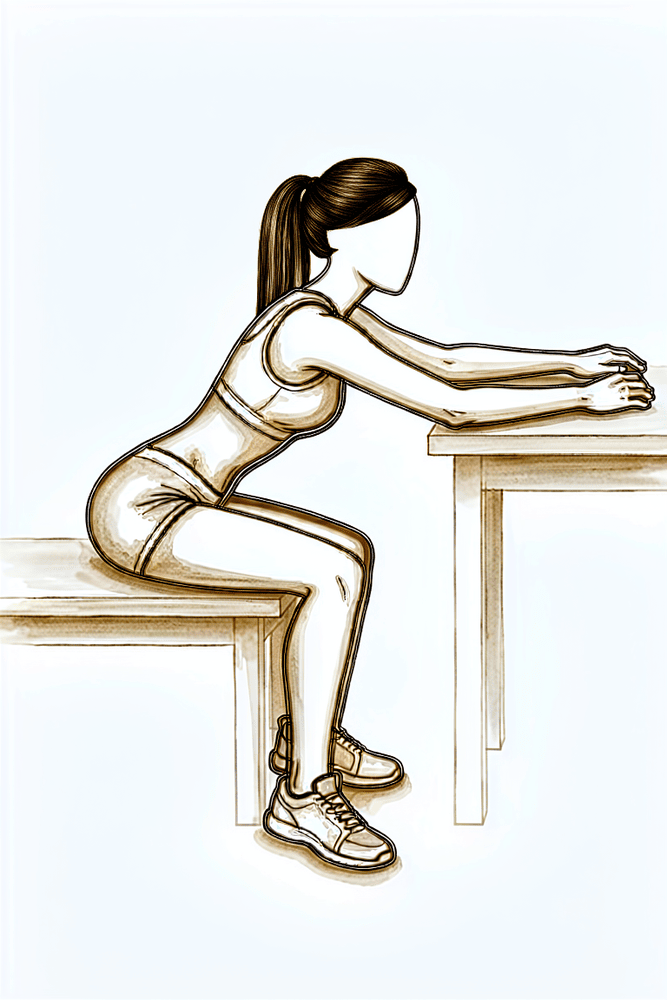
Deslizamento do braço sobre a mesa
Sente-se à mesa com a mão apoiada numa toalha ou pano. Deslize a mão para a frente ao longo da superfície, inclinando-se de modo que o braço se eleve à sua frente; em seguida, deslize a mão de volta. A mesa sustenta o peso, ajudando o ombro a mover-se ativamente à medida que a amplitude de movimento é recuperada.
Conforme orientado pelo seu fisioterapeuta
Kieran Hirpara 4.0
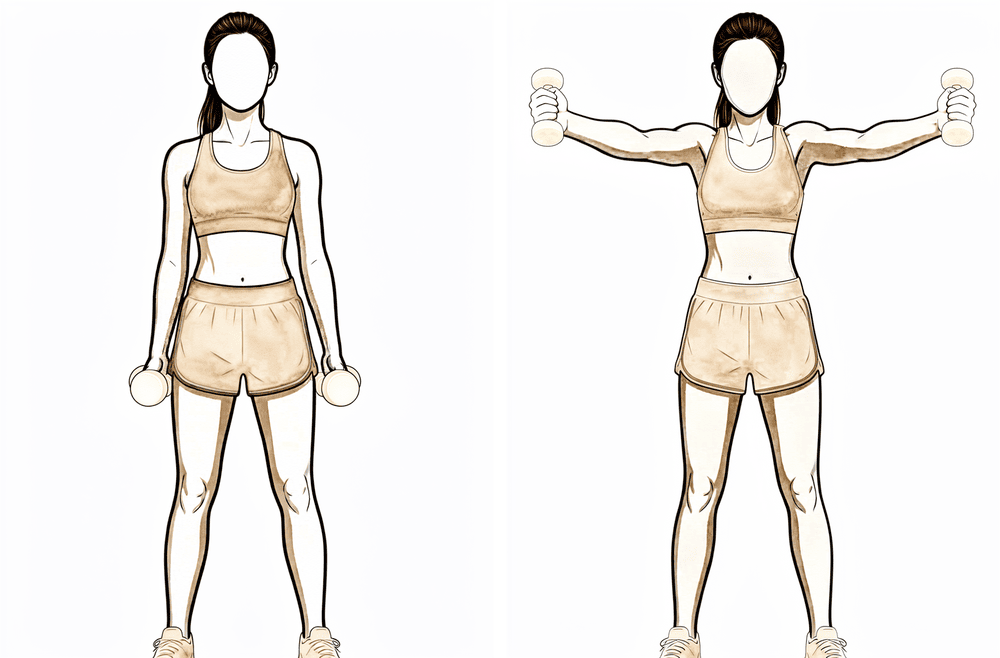
Elevação ativa no plano escapular
Fique em pé e levante o braço operado para cima e ligeiramente para a frente — aproximadamente a meio caminho entre estendido para a frente e estendido para o lado — com o polegar apontando para cima, como se estivesse segurando uma lata cheia. Levante o braço com sua própria força, até onde se sentir confortável, e depois abaixe-o lentamente. Isso restaura a elevação ativa do ombro sem a necessidade de nenhum peso adicional.
Conforme orientado pelo seu fisioterapeuta
Kieran Hirpara 4.0
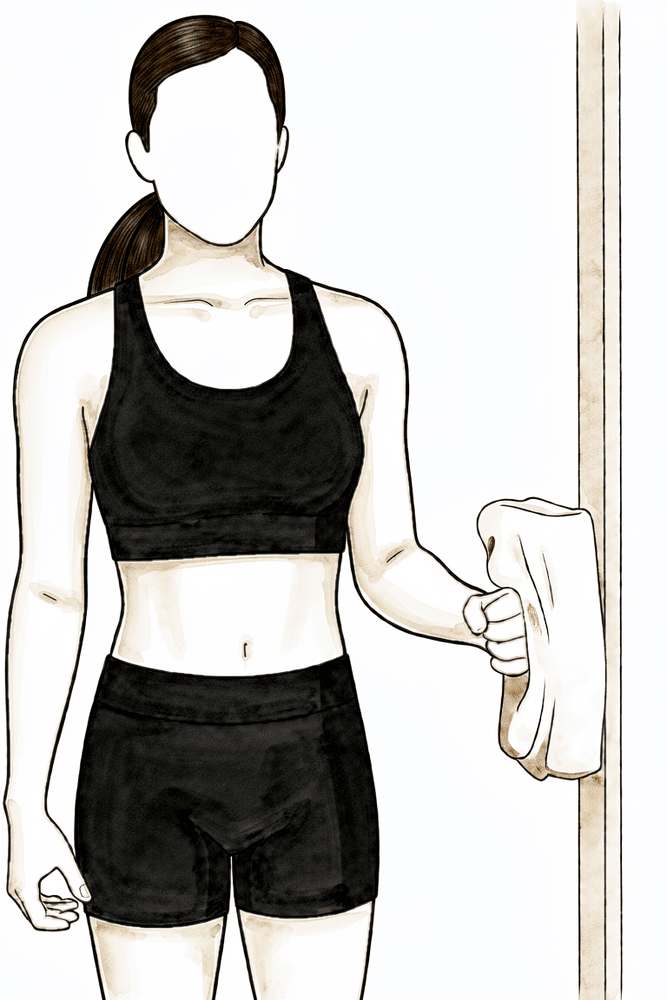
Rotação externa isométrica
Fique de pé com o cotovelo pressionado contra o corpo e dobrado em um ângulo reto, com o dorso da mão encostado numa parede ou na moldura de uma porta. Pressione suavemente para fora contra a superfície, sem mover o braço; mantenha essa posição por alguns segundos e depois relaxe. Esse exercício começa a fortalecer o manguito rotador sem exigir nenhum movimento nem sobrecarga para o bíceps.
Mantenha a posição por alguns segundos, várias vezes; conforme orientação do seu fisioterapeuta.
Kieran Hirpara 4.0
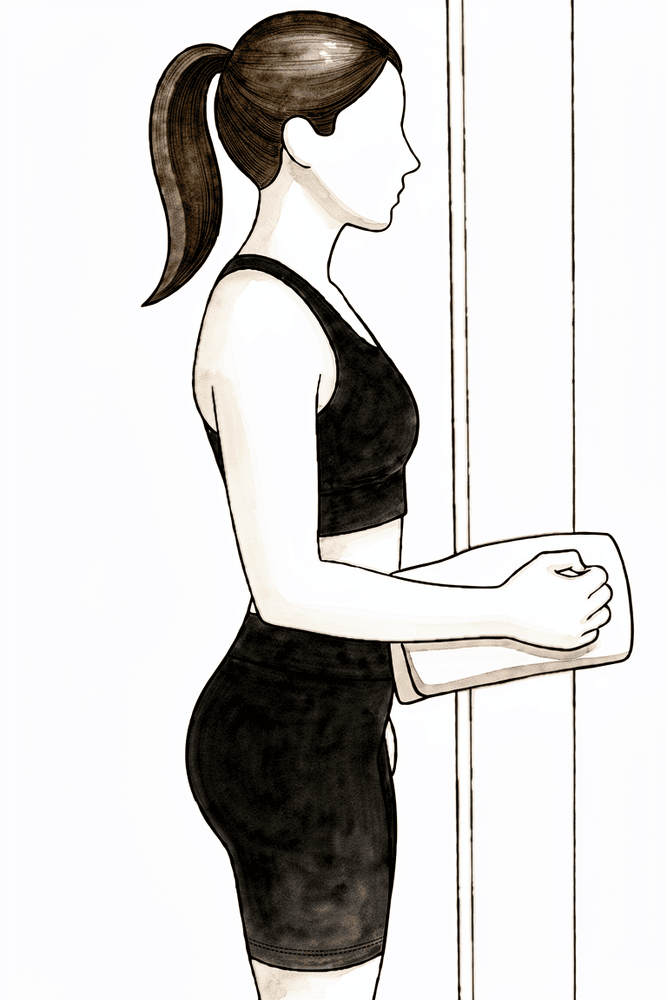
Rotação interna isométrica
Fique de pé com o cotovelo pressionado contra o corpo e dobrado em um ângulo reto; coloque a palma da mão contra uma parede ou moldura de porta. Pressione suavemente para dentro, sem mover o braço; mantenha essa posição por alguns segundos e depois relaxe. Trata-se de uma contração submáxima: firme, porém confortável, sem causar esforço excessivo.
Mantenha a posição por alguns segundos, várias vezes; conforme orientação do seu fisioterapeuta.
Kieran Hirpara 4.0
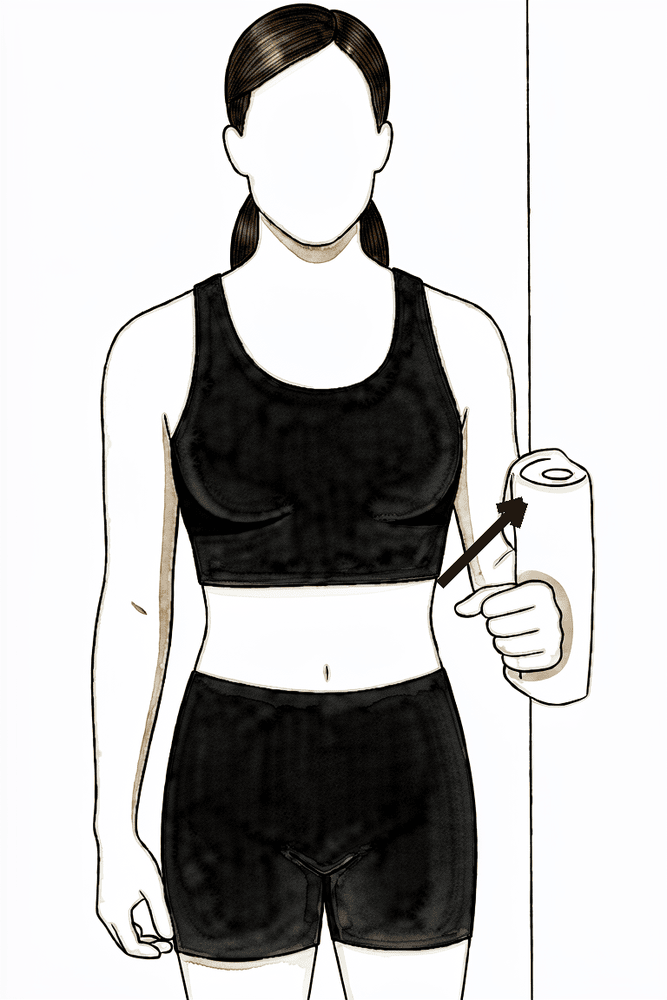
Abdução isométrica
Fique de lado em relação à parede, com o cotovelo junto ao corpo. Pressione suavemente a parte externa do braço contra a parede, como se quisesse levantá-lo para o lado, sem permitir que ele se mova; mantenha essa posição por alguns segundos e depois relaxe. Esse exercício fortalece os músculos do ombro de forma estática antes do início da carga ativa.
Mantenha a posição por alguns segundos, várias vezes; conforme orientação do seu fisioterapeuta.
Kieran Hirpara 4.0
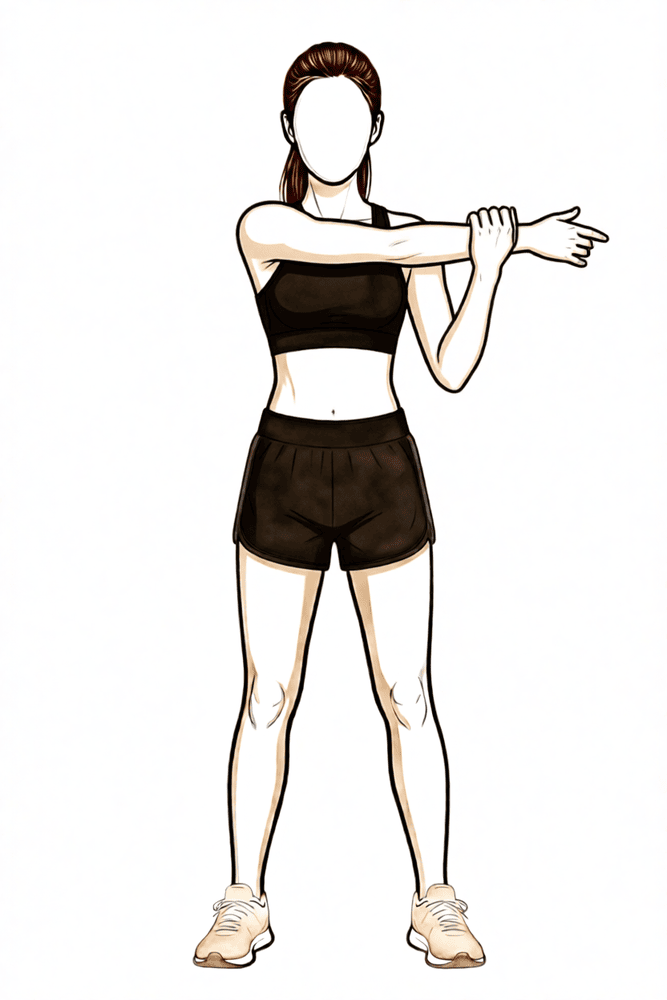
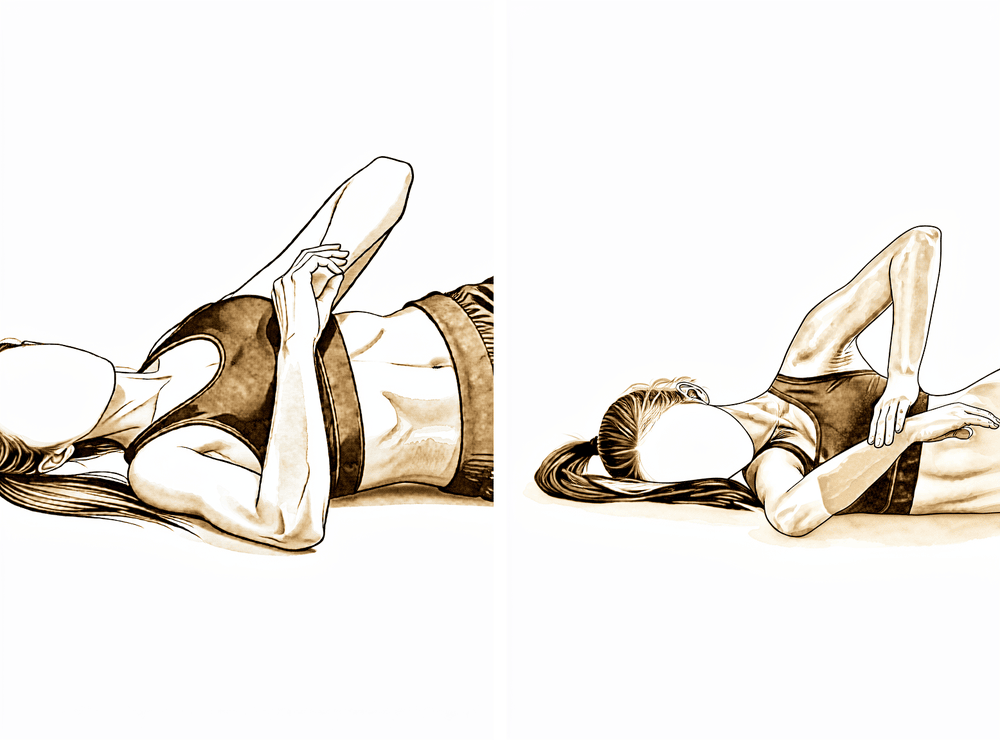
Alongamento cruzado do corpo
Cruze o braço operado sobre o peito e use o outro braço para puxá-lo suavemente ainda mais, até sentir um alongamento confortável na parte posterior do ombro. Mantenha essa posição e depois relaxe. Isso ajuda a aliviar a tensão na região posterior do ombro, à medida que sua amplitude de movimento volta ao normal.
Conforme orientado pelo seu fisioterapeuta
Kieran Hirpara 4.0
Alongamento do tipo “dorminhoco”
Deite-se sobre o lado operado, com o braço estendido para a frente e o cotovelo dobrado em um ângulo reto. Use a outra mão para pressionar suavemente o antebraço em direção à cama, até sentir um alongamento na parte posterior do ombro. Faça isso com delicadeza: relaxe durante o alongamento, sem forçar.
Conforme orientado pelo seu fisioterapeuta
Kieran Hirpara 4.0
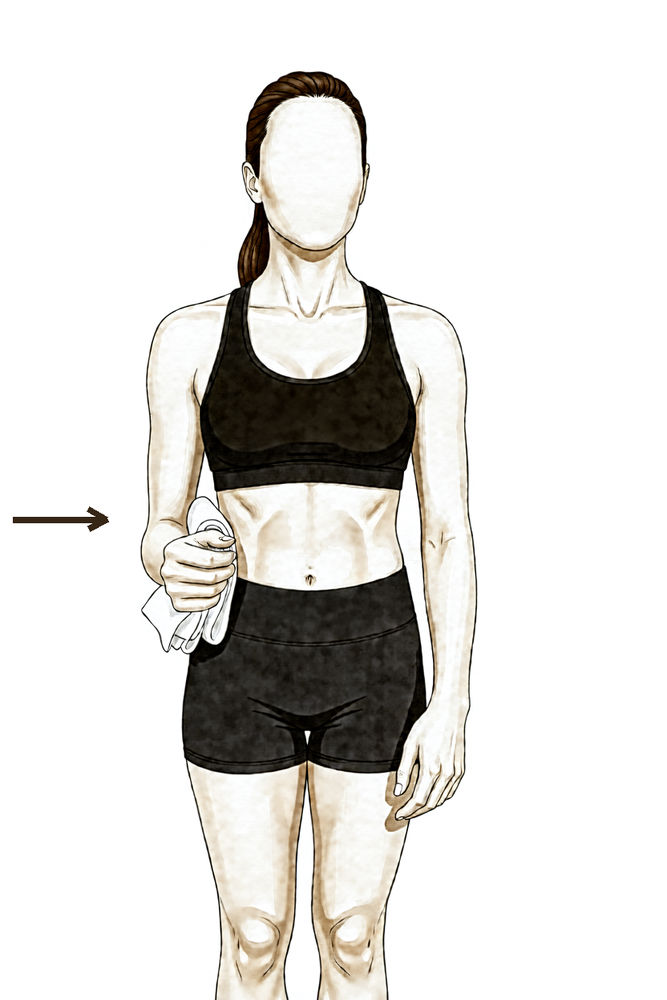
Contração isométrica de aproximação (adução)
Fique em pé com o cotovelo pressionado contra o corpo e um rolo de toalha entre o braço e o tronco. Aperte suavemente o braço para dentro, contra o rolo de toalha, SEM mover o braço — faça um esforço leve, equivalente a cerca de um quarto da sua força máxima, sem sentir dor. Mantenha a posição por alguns instantes e depois relaxe.
Mantenha por ~5 segundos, com suavidade (~25% da força), conforme orientado pelo seu fisioterapeuta.
Com o uso do sling encerrado, o braço começa a se mover por conta própria. O ombro evolui de movimentos assistidos para movimentos ativos em todas as direções; o cotovelo agora também se flexiona e roda ativamente, porém ainda sem carga. O bíceps está se movendo, mas ainda não está plenamente funcional: mantenha os levantamentos ao mínimo (nada mais pesado que uma xícara de chá com esse braço) e deixe os movimentos de empurrar, puxar e carregar para o outro lado. Trabalhos leves em escritório costumam ser confortáveis nesta fase. A volta à direção de veículos ocorre a partir da sexta semana, após autorização do cirurgião e quando você conseguir controlar o carro de forma segura e confortável.
Para o seu fisioterapeuta:
Objetivos
- Restauração gradual de toda a amplitude de movimento ativo do ombro e do cotovelo
- Mecânica escapular normal durante os movimentos
- Início de exercícios isométricos submáximos para o ombro
- Uso funcional leve do braço, na altura da cintura
Conduta terapêutica
- Movimentos ativos assistidos no ombro, evoluindo para amplitude de movimento ativa em todos os planos (por exemplo, progressão em posição de espreguiçadeira, deslizamentos na parede ou em corrimãos, flexão supina seguida de abdução até a posição ereta)
- Flexão/extensão ativa do cotovelo e supinação/pronação do antebraço, sem resistência
- Exercícios isométricos submáximos para o ombro: rotação interna, rotação externa, abdução e adução
- Continuação dos exercícios de estabilização escapular e correção postural
- Massagem na cicatriz à medida que a ferida amadurece; evitar fricção transversal sobre o local da tenodese
- Alongamento da cápsula posterior (alongamento cruzado do corpo, alongamento “sleeping arm”) conforme indicado
- Caminhada ou bicicleta estacionária para manutenção da forma física; proibido qualquer suporte de peso pelo braço operado
Precauções
- Proibido exercitar o bíceps sob resistência; proibido carregar carga nos flexores do cotovelo ou músculos supinadores
- Não levantar nada com o braço operado; corrida ainda não é permitida
- Evitar sobrecarregar o tendão em recuperação por meio de alongamentos agressivos ou terapia manual
Critérios para avançar para a fase seguinte
- Amplitude de movimento ativa do ombro, cotovelo e antebraço completa e sem dor
- Mecânica escapular adequada durante os movimentos e no uso funcional leve
- Controle eficaz da dor
Fase III — Fortalecimento (Semana 6–12)
Kieran Hirpara 4.0
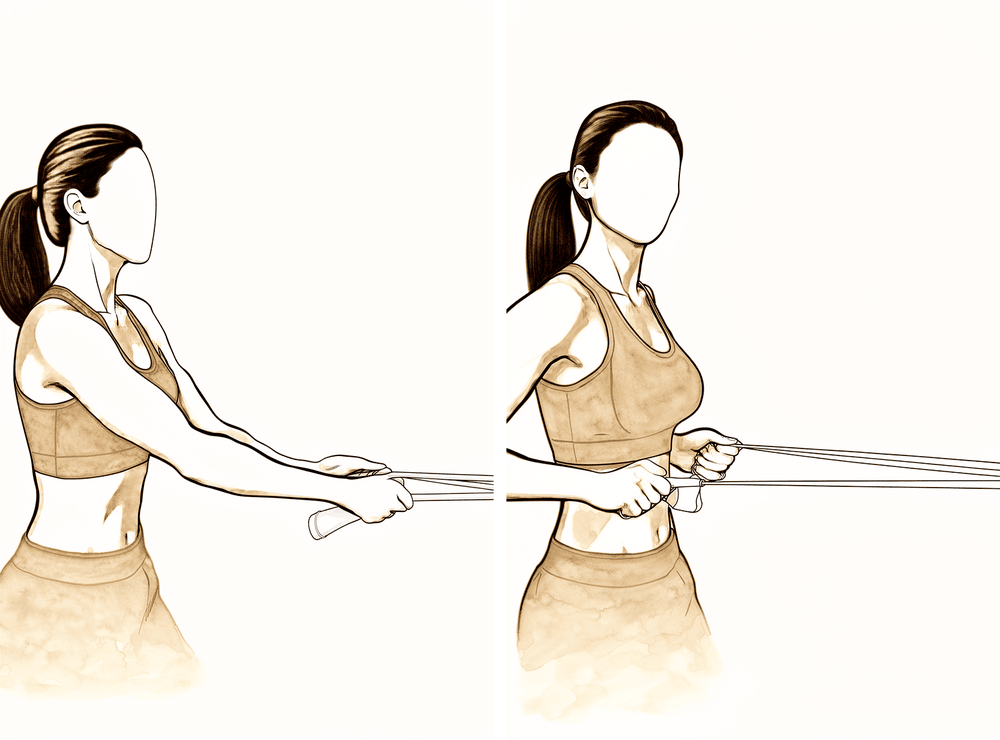
Remada com faixa elástica
Fixe uma faixa elástica de exercícios à sua frente, na altura da cintura, aproximadamente. Puxe a faixa em direção a si, trazendo a escápula para trás e para baixo enquanto o cotovelo passa ao lado do corpo; em seguida, volte à posição inicial com controle. Este exercício faz parte do programa para a escápula — mantenha a carga baixa e o número de repetições alto.
Conforme orientado pelo seu fisioterapeuta
Kieran Hirpara 4.0
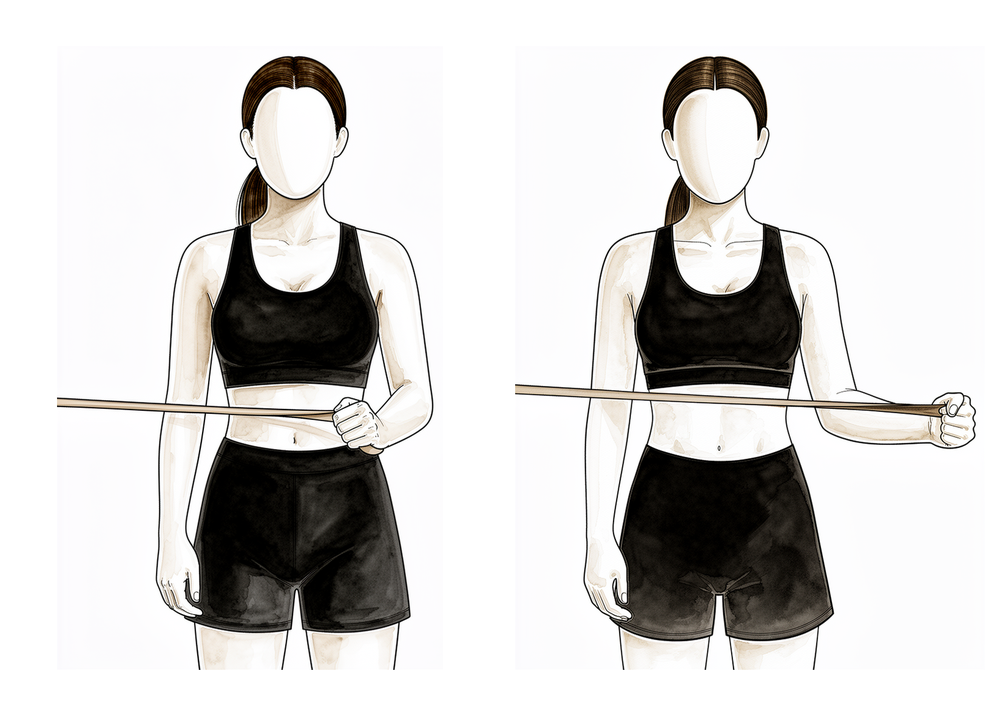
Rotação externa com faixa elástica
Fixe uma faixa elástica na altura da cintura. Com o cotovelo colado ao corpo e dobrado em um ângulo reto, puxe a faixa para fora, girando o antebraço para longe do corpo, e depois volte lentamente à posição inicial. Comece com pouca resistência e faça muitas repetições — isso fortalece o manguito rotador.
Conforme orientado pelo seu fisioterapeuta: carga baixa, muitas repetições.
Kieran Hirpara 4.0
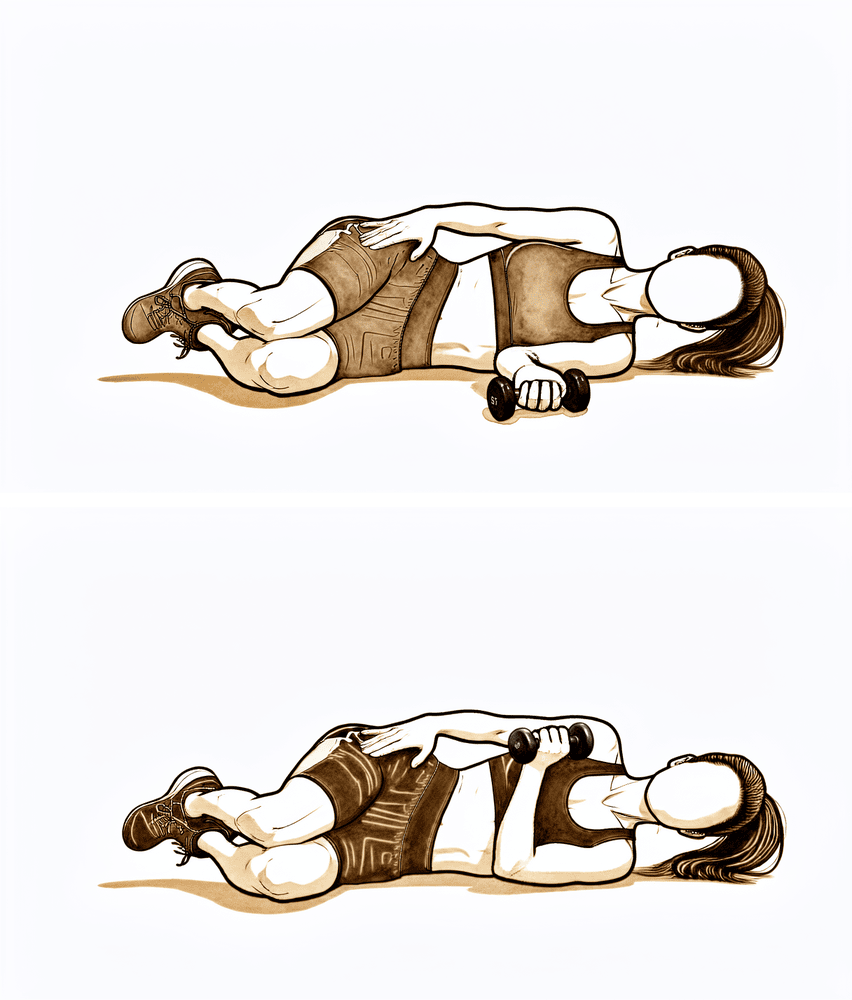
Rotação interna resistida
Deite-se sobre o lado operado, segurando um peso leve na mão, com o cotovelo dobrado ao lado do corpo. Levante o peso girando o antebraço para cima, em direção ao corpo, e depois abaixe-o lentamente. Isso fortalece os músculos rotadores internos do manguito rotador — comece usando um peso leve.
Conforme orientado pelo seu fisioterapeuta: carga baixa, repetições altas.
Kieran Hirpara 4.0
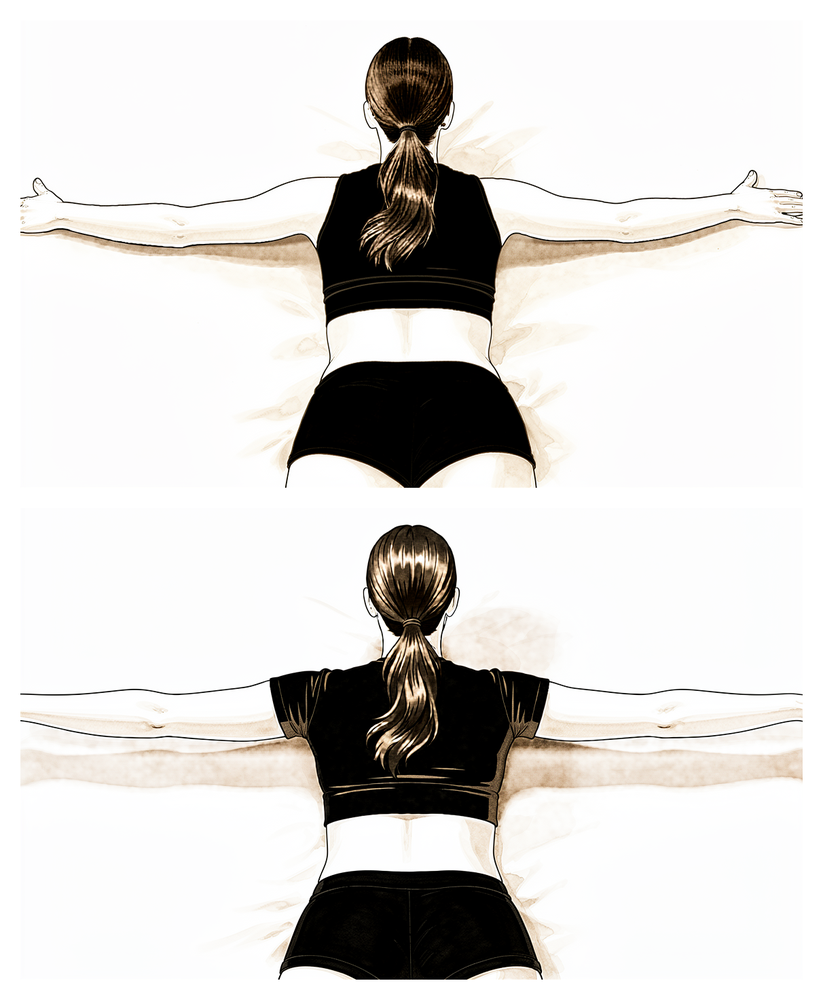
Elevação em T em decúbito ventral
Deite-se de bruços, com os braços pendurados na borda da maca. Levante o braço operado para o lado, até a altura do ombro, contraindo a escápula de modo que os braços formem um “T”, e depois abaixe-o lentamente. Este é um exercício do programa de fortalecimento da escápula — o controle é mais importante do que o peso utilizado.
Conforme orientado pelo seu fisioterapeuta
Kieran Hirpara 4.0
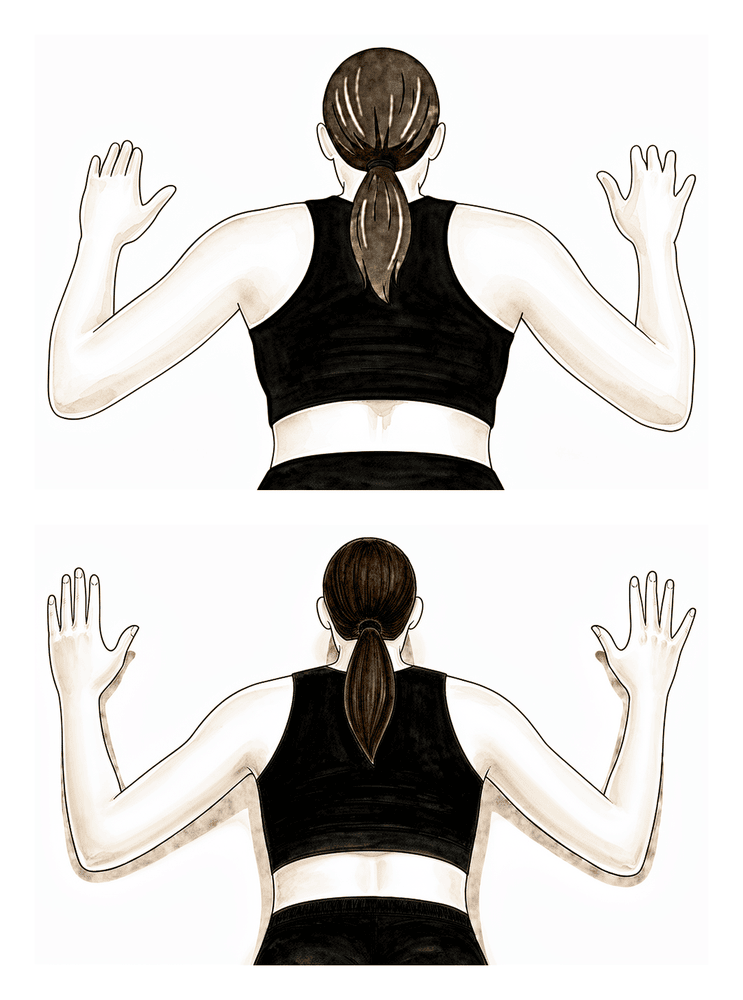
Elevação em W em decúbito ventral
Deite-se de bruços e puxe os cotovelos para trás e para baixo, em direção à cintura, dobrando-os de modo que os braços formem um “W”. Aperte as escápulas uma contra a outra e, em seguida, abaixe os braços lentamente. Esse exercício fortalece os músculos da parte inferior das escápulas, responsáveis por manter uma boa postura.
Conforme orientado pelo seu fisioterapeuta
Kieran Hirpara 4.0
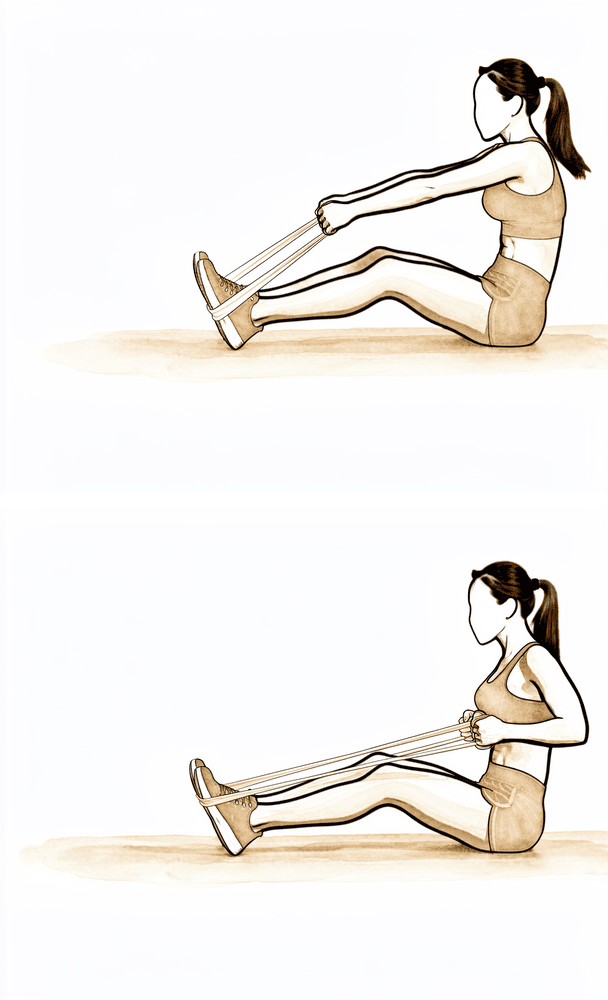
Remada baixa
Com o braço ao lado do corpo, pressione para baixo e para trás contra uma faixa elástica ou superfície, puxando a escápula para baixo e para dentro; em seguida, solte. Isso faz parte do programa de exercícios para a escápula, visando desenvolver o controle muscular na região próxima à escápula.
Conforme orientado pelo seu fisioterapeuta
Kieran Hirpara 4.0
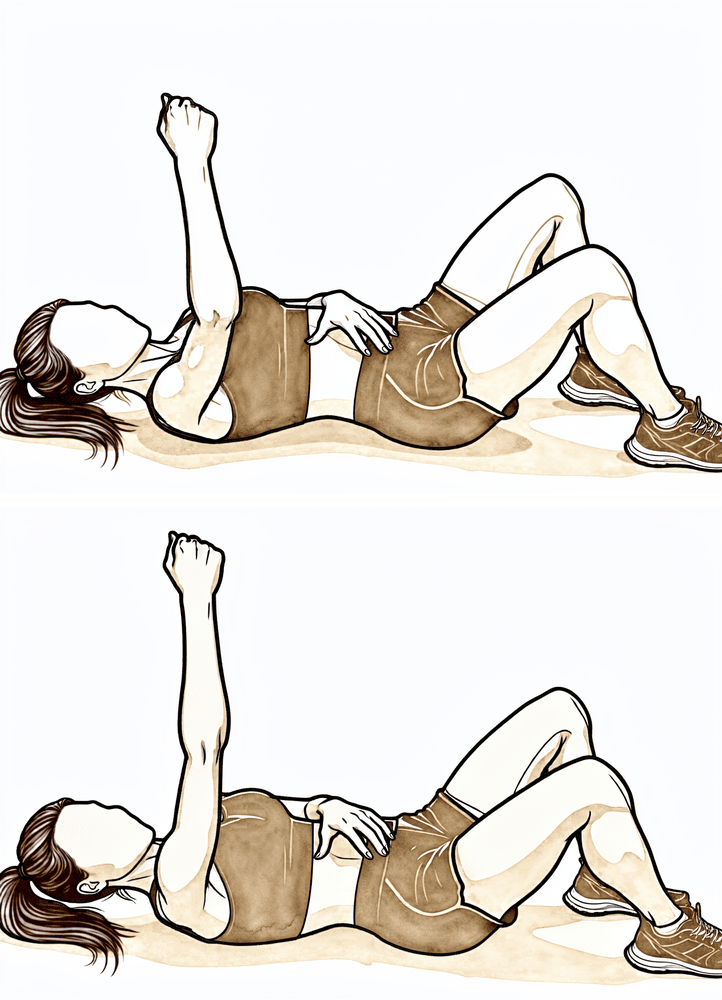
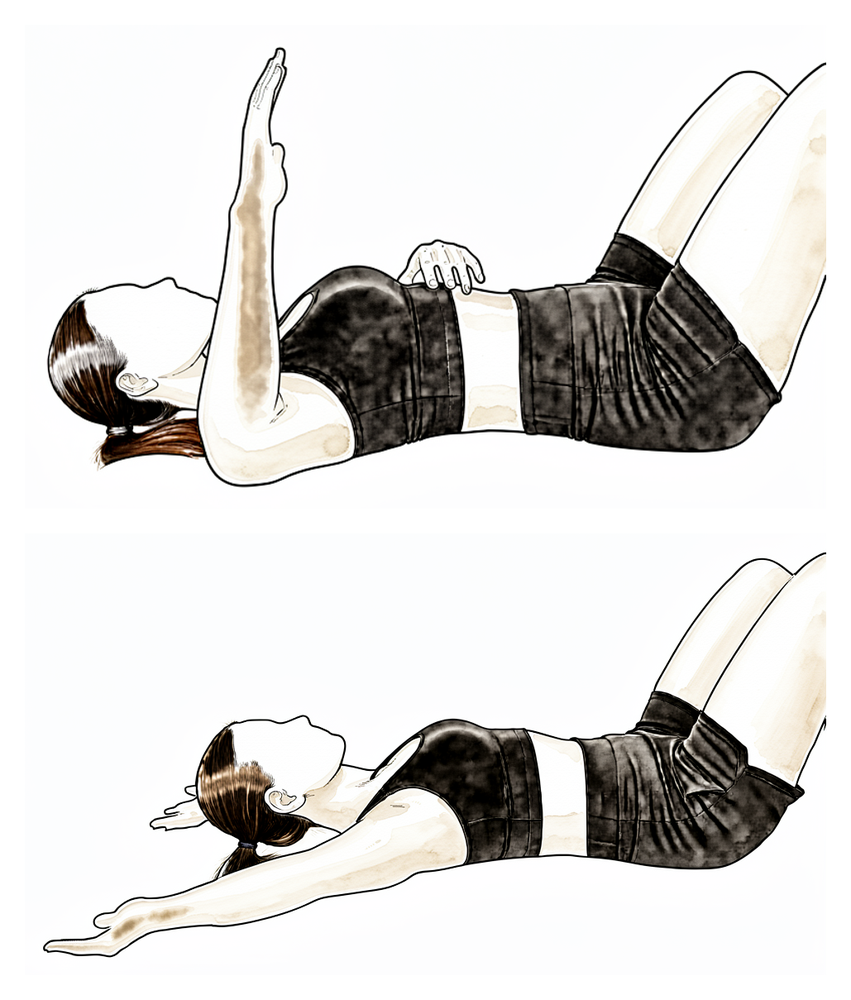
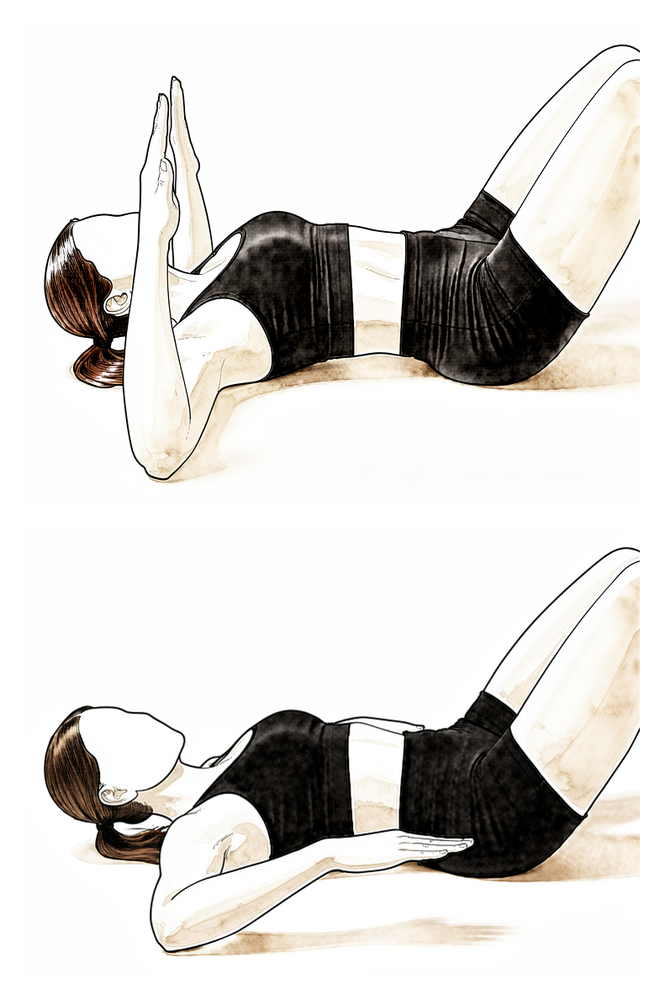
Soco do serrátil
Deite-se de costas e estenda o braço operado para cima, em direção ao teto. Dê um pequeno soco para cima, de modo que a escápula se levante do chão, e depois abaixe-a novamente. Isso treina o músculo serrátil, que mantém a escápula pressionada contra as costelas.
Conforme orientado pelo seu fisioterapeuta
Kieran Hirpara 4.0
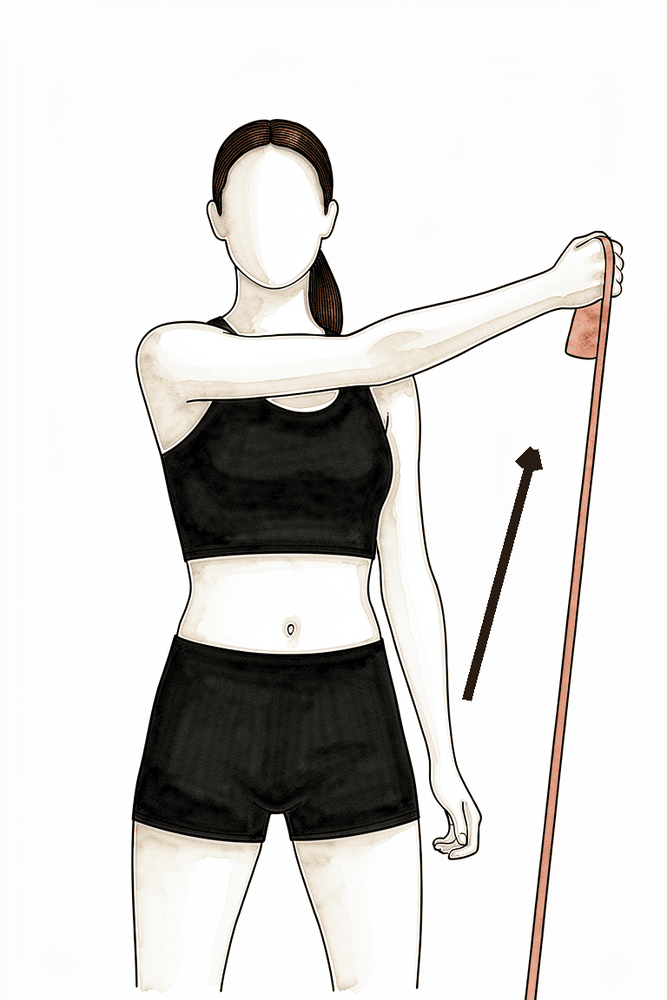
Padrão diagonal com faixa (D1)
Utilizando uma faixa elástica, mova o braço em diagonal, partindo da frente do corpo, para cima e para fora, e depois volte com controle. Esses movimentos diagonais ajudam a desenvolver a força funcional e a coordenação dos ombros.
Conforme orientado pelo seu fisioterapeuta
Kieran Hirpara 4.0
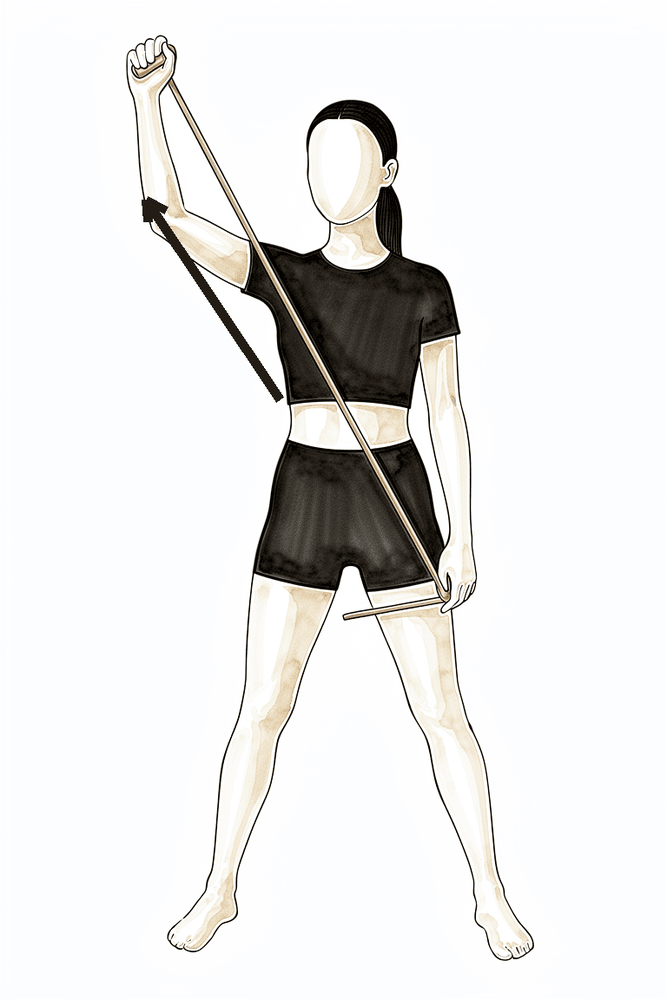
Padrão diagonal com faixa (D2)
Utilizando uma faixa elástica, mova o braço num trajeto diagonal: partindo de baixo e cruzado à frente do corpo, para cima e para fora até acima da cabeça; em seguida, controle o movimento de volta para baixo. Este segundo padrão diagonal fortalece o ombro em amplitudes de movimento maiores, semelhantes às utilizadas nos esportes.
Conforme orientado pelo seu fisioterapeuta
Kieran Hirpara 4.0
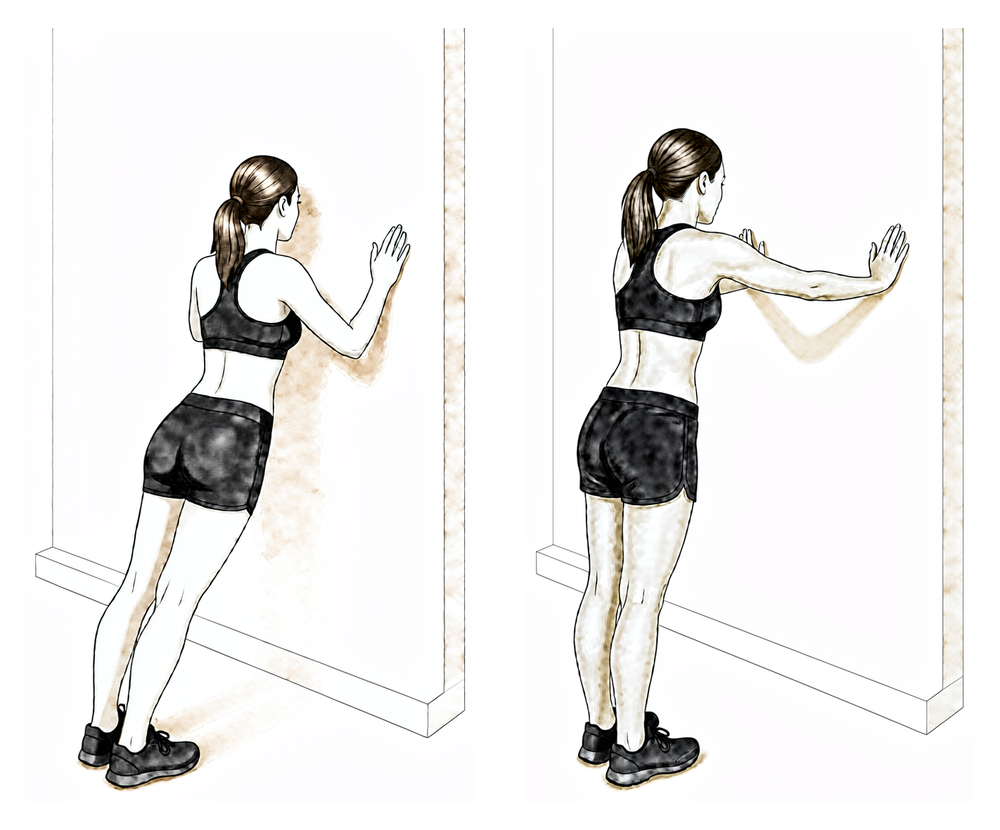
Flexão na parede com protração (push-up plus)
Fique de pé com as duas mãos apoiadas numa parede, na altura dos ombros. Mantendo os cotovelos esticados, afaste o peito da parede de modo que as escápulas se movam para a frente; em seguida, relaxe. Este é o ponto de partida para a progressão dos flexões: primeiro na parede, depois no balcão, depois com os joelhos no chão e, por fim, no chão, conforme orientação.
Conforme orientado pelo seu fisioterapeuta
Kieran Hirpara 4.0
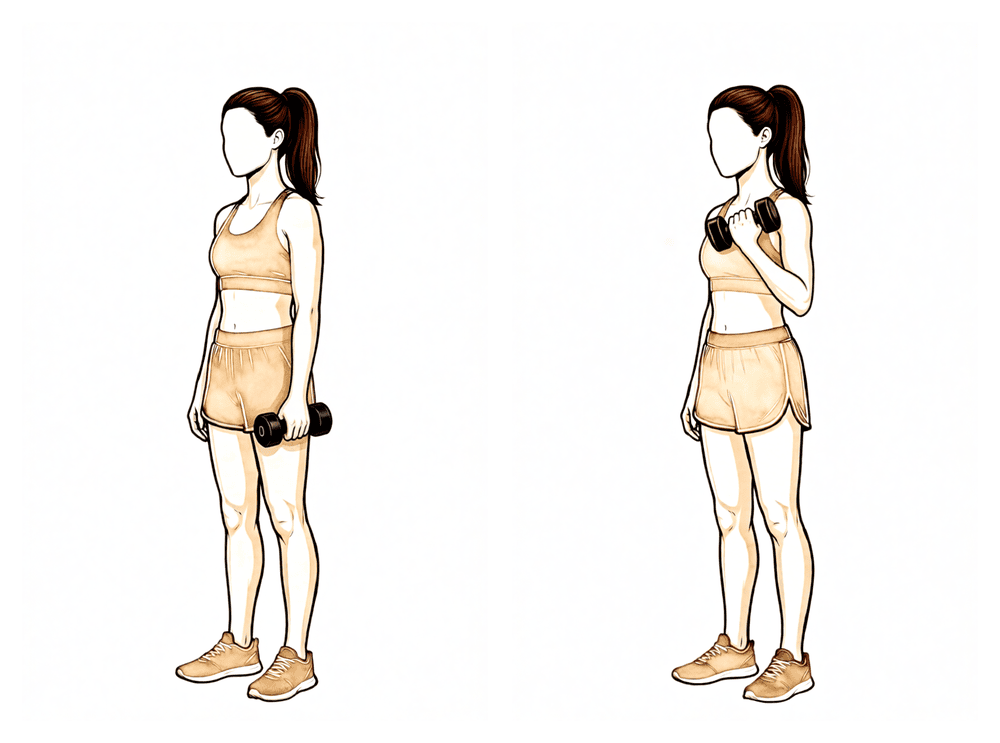
Flexão de bíceps
Não faça isso antes da 10ª semana. Segurando um peso leve na mão, com o cotovelo ao lado do corpo, dobre o cotovelo para levantar o peso e depois abaixe-o lentamente. A rotação com resistência, com a palma da mão voltada para cima, é feita da mesma maneira. Comece com um peso leve e aumente gradualmente — este é, intencionalmente, o último exercício a ser realizado para carregar o tendão em recuperação.
A partir da semana 10 — carga baixa, repetições altas
Kieran Hirpara 4.0
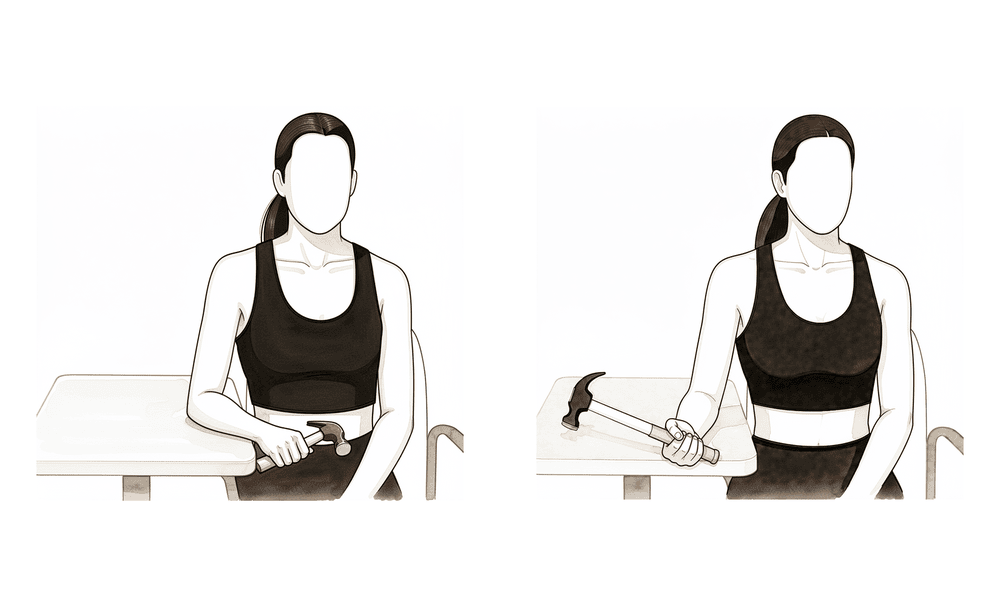
Rotação do antebraço com resistência
Não faça isso antes da 10ª semana. Apoie o antebraço numa mesa, deixando a mão para fora da borda, segurando um peso leve. Gire lentamente a palma da mão para cima e depois para baixo, mantendo o movimento sob controle. Girar a palma para cima ativa diretamente o bíceps; portanto, este exercício deve ser feito após os exercícios de flexão — comece com um peso leve e aumente gradualmente.
A partir da semana 10 — carga baixa, repetições altas
Kieran Hirpara 4.0
Rotação externa em 90/90 (faixa)
Com o braço estendido para o lado, na altura do ombro, e o cotovelo dobrado em ângulo reto, gire o antebraço para trás e para cima contra a resistência de uma faixa elástica leve ou de um peso, e depois abaixe-o lentamente. Este exercício fortalece o manguito rotador na posição de elevação (utilizada ao arremessar).
2 a 3 séries de 10 a 15 repetições, com baixa resistência
Kieran Hirpara 4.0
Rotação interna em 90/90 (faixa)
Na mesma posição, com o braço estendido para o lado à altura do ombro, gire o antebraço para a frente e para baixo em direção aos pés, contra a resistência de uma faixa elástica leve ou de um peso; em seguida, volte à posição inicial de forma controlada.
2 a 3 séries de 10 a 15 repetições, com baixa resistência
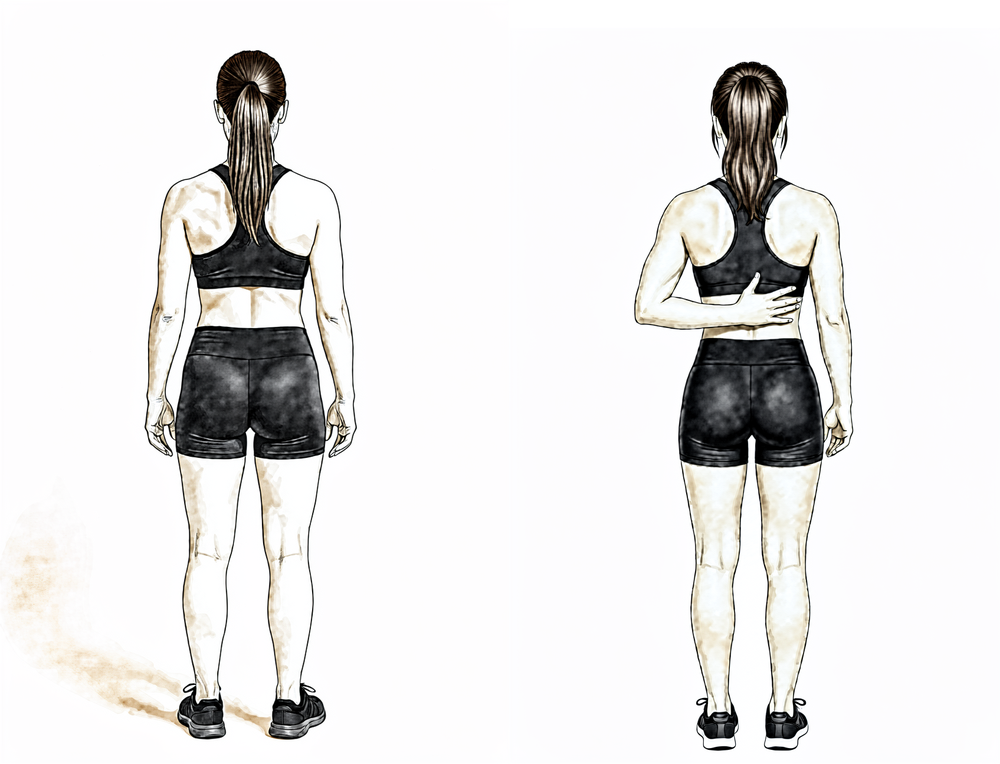
Kieran Hirpara 4.0
Alcance da mão para trás das costas
Em pé, posicione o dorso da mão operada contra a região lombar e, usando apenas os próprios músculos, deslize-a suavemente para cima ao longo da coluna, até onde for confortável; em seguida, abaixe-a. Mova-se apenas dentro de uma amplitude confortável e nunca force o movimento.
Conforme orientado pelo seu fisioterapeuta
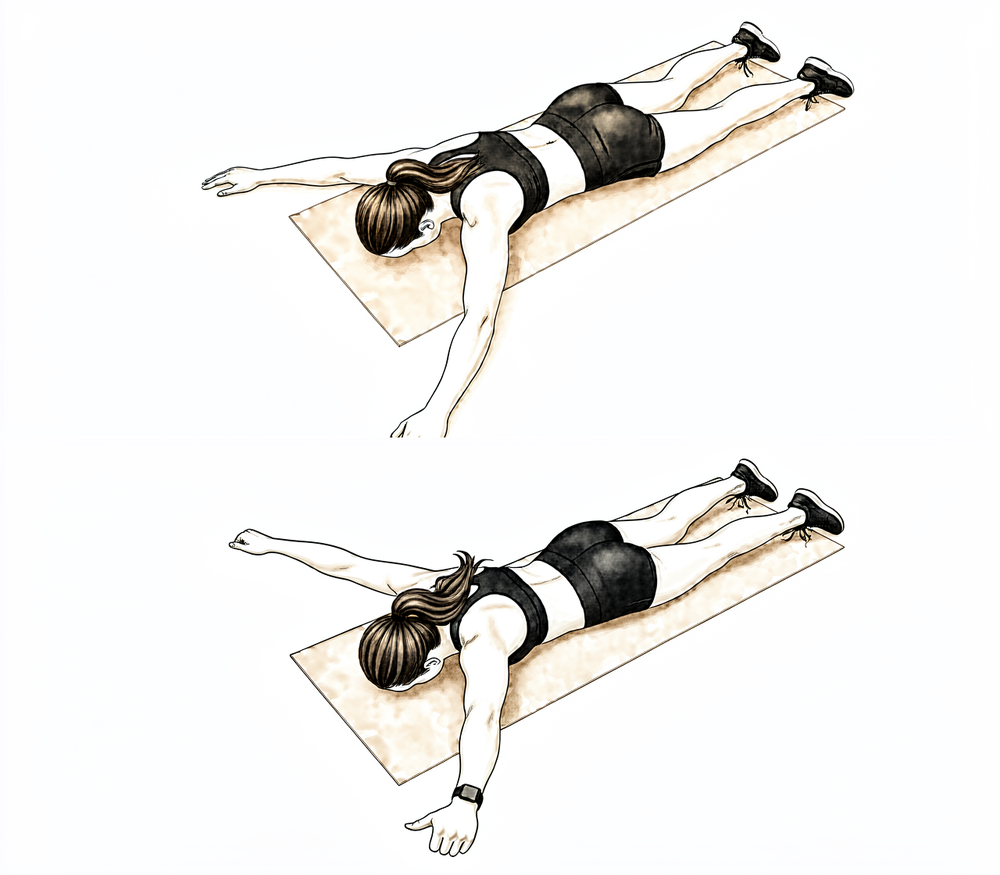
Kieran Hirpara 4.0
Posição em decúbito ventral Y (região inferior da escápula)
Deite-se de bruços, com o braço operado estendido para cima e para fora, formando um ângulo de aproximadamente 45° em forma de “Y”, com o polegar apontando para cima. Levante ligeiramente o braço da superfície, puxando a escápula para baixo e para trás; em seguida, abaixe-o lentamente. Faça o movimento com suavidade — ele visa os músculos inferiores da escápula.
Conforme orientado pelo seu fisioterapeuta: exercícios leves, com muitas repetições.
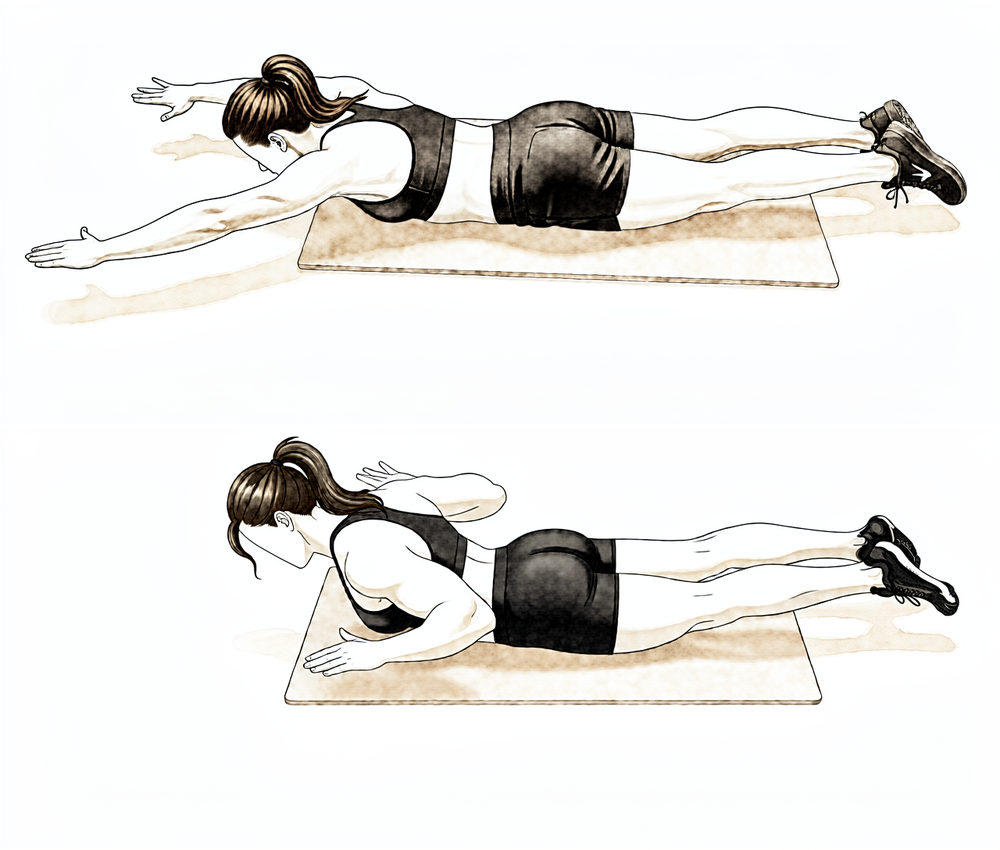
Kieran Hirpara 4.0
Remada prona
Deite-se de bruços, com o braço operado pendendo em direção ao chão. Levante o cotovelo em direção ao teto, puxando a escápula para perto da coluna vertebral, e depois abaixe-o lentamente. Comece sem nenhum peso e mantenha o movimento sob controle.
Conforme orientado pelo seu fisioterapeuta
O fortalecimento começa de forma suave, partindo da escápula para fora: primeiro os músculos da cintura escapular e do manguito rotador, utilizando faixas elásticas e pesos leves, com baixa carga e alto número de repetições. Os exercícios de resistência para o bíceps (flexões e rotações com resistência com a palma da mão voltada para cima) só começam na semana 10, iniciando-se de forma leve e progredindo lentamente. Protocolos publicados sugerem introduzi-los entre a semana 6 e a semana 10; este protocolo segue o limite mais conservador dessa faixa, a fim de permitir que a fixação da tenodese permaneça estável por mais tempo antes de ser submetida à carga. Durante esta fase, as atividades diárias normais devem ser retomadas em grande parte; a partir da semana 8, geralmente é possível voltar a correr, pedalar e jogar golfe, sempre sob orientação do fisioterapeuta.
Para o seu fisioterapeuta:
Objetivos
- Normalizar a força, a resistência e o controle neuromuscular
- Restaurar a função motora desde a altura da cintura até acima do nível do peito
Conduta terapêutica
- Manter amplitude total de movimento do ombro e do cotovelo durante todo o período
- Fortalecimento isotônico do manguito rotador: rotação interna e externa com baixa resistência, partindo da posição neutra até atingir 90 graus de abdução
- Programa para a escápula: exercícios em decúbito ventral que progridem ao longo da fase; exercícios de resistência para o músculo serrátil anterior, remadas leves e flexões progressivas (na parede, em cima de um balcão, de joelhos ou no chão)
- A partir da semana 10, introduzir flexões de bíceps com resistência, bem como rotações de supinação e pronação; iniciar com alavanca curta, carga baixa e alto número de repetições, progredindo com cautela
- Estabilização rítmica e padrões diagonais (D1/D2); exercícios de estabilização em cadeia fechada
- Retorno à corrida, ciclismo e golfe a partir da semana 8, respeitando a mecânica corporal correta
Precauções
- Evitar exercícios de flexão do cotovelo com resistência e longa alavanca no início da fase
- Não realizar levantamento ou transporte de cargas pesadas até que a força muscular seja restaurada
- Nada de natação ou arremessos durante esta fase
- O fortalecimento só deve ser iniciado quando a amplitude de movimento estiver próxima da normal e não houver dor
Critérios para progressão
- Amplitude de movimento ativa completa, sem dor, com ritmo escapulohumeral normal
- Força do manguito rotador de grau 5/5 a 90 graus de abdução no plano escapular, além de força escapulotorácica também de grau 5/5
- Tolerância aos exercícios de fortalecimento sem reaparecimento dos sintomas
Fase IV — Retorno às atividades plenas (a partir da semana 12)
A fase final consiste no retorno gradual a atividades mais pesadas, movimentos acima da altura da cabeça e prática esportiva. A maioria dos pacientes recebe autorização para frequentar a academia, realizar trabalhos manuais e praticar esportes recreativos entre três e quatro meses após a cirurgia, aumentando progressivamente a carga; já atletas que realizam movimentos acima da altura da cabeça ou contato físico (arremessos, natação, esportes com raquetes) têm seu retorno programado para um período mais longo, geralmente quatro a cinco meses ou mais. Os meses seguintes ainda trazem ganhos de força e confiança no uso do bíceps; portanto, o progresso nesta fase é avaliado com base na capacidade do braço, e não na data cronológica.
Para o seu fisioterapeuta:
Objetivos
- Força e potência completas, sem padrões de movimento compensatórios
- Estabilidade e controle durante movimentos de alta velocidade e específicos de cada esporte
- Retorno às atividades esportivas e laborais normais
Conduta terapêutica
- Fortalecimento de múltiplas articulações e exercícios compostos, aumentando a carga de forma gradual
- Treinamento pliométrico iniciando abaixo da altura dos ombros, usando ambos os braços, e progredindo para movimentos com um só braço e acima da cabeça
- Programas intermitentes de retorno ao esporte, adequados a arremessos, natação ou esportes com raquetes
- Fortalecimento e controle do core e dos quadris, para evitar que o ombro tenha de compensar
Precauções
- Progredir lentamente nos exercícios que sobrecarregam a região anterior do ombro (por exemplo, supino, levantamento vertical)
- O retorno ao esporte só deve ocorrer após autorização médica, quando o paciente apresentar cerca de 90% da força do outro braço e controle sem dor em movimentos de alta velocidade específicos do esporte.
Após o cumprimento do seu protocolo
As fases descritas acima foram adaptadas de protocolos de reabilitação publicados para a tenodese do bíceps isolada: Massachusetts General Brigham Sports Medicine, Departamento de Cirurgia Ortopédica da Universidade da Virgínia, Wexner Medical Center da Ohio State University e UW Health (Universidade de Wisconsin). Os intervalos semanais indicados são típicos, não fixos; a continuação da sua reabilitação será orientada individualmente pelo seu fisioterapeuta, em conjunto com a nossa clínica, conforme a recuperação do seu braço. Esta página complementa as orientações gerais de recuperação fornecidas pela clínica; consulte controle da dor pós-operatória e cuidados com a ferida. Para informações sobre a cirurgia em si, veja tenodese do bíceps. As evidências científicas que sustentam este protocolo (fixação e cicatrização, a decisão entre tenodese e tenotomia, taxas de complicações e insucessos, bem como o critério para definir o ritmo da reabilitação) estão resumidas na seção de evidências, disponível em formato PDF no topo desta página.
Evidence & references
This is the clinical evidence summary written for health professionals. It is technical, and it lists the research this page was built from. You do not need to read it to understand your treatment or to make a decision about it.
Biceps Tenodesis — Post-operative Rehabilitation Evidence Summary
Topic scope: the evidence behind post-operative rehabilitation after isolated biceps tenodesis (re-anchoring the long head of biceps to the humerus) — fixation methods and their healing implications, when to protect versus load the construct (active elbow flexion and resisted supination), shoulder ROM restrictions, return-to-activity timing, and the failure/complication profile (Popeye deformity, fixation failure). The combined cuff-repair pathway defers to the rotator-cuff-repair protocol and is out of scope here.
Defining principle of the surgical rehab here: a tenodesis is a healing construct that must be protected — the tendon has been detached from its native anchor and fixed into bone, and that bone–tendon interface needs weeks to heal. Because the biceps bends the elbow and turns the palm up (supination), the early restrictions are unusually centred on the elbow, not the shoulder: active elbow flexion and resisted supination are the loads that pull directly on the fresh tenodesis, so they are deferred while the construct heals. The shoulder itself is generally less restricted — only positions that tension the tendon (external rotation past ~40°, extension/horizontal abduction behind the body) are limited early. This is the inverse of a rotator-cuff or labral repair, where the shoulder is the protected structure.
A. THE PROCEDURE & WHY THE REHAB IS SHAPED THIS WAY
In a biceps tenodesis the long head of biceps is released from its origin on the superior glenoid/labrum and re-fixed into the proximal humerus, most commonly with an interference screw, a suture anchor, or a cortical/unicortical button (or combinations). The location is either suprapectoral (higher, usually all-arthroscopic, in or above the bicipital groove) or subpectoral (lower, usually open, below the pectoralis major tendon). Both achieve the same goal — remove the painful intra-articular biceps as a pain generator while preserving the muscle's length-tension relationship to avoid a Popeye deformity and cramping.
The rehab is built around the time for the tendon to incorporate into the bone tunnel/socket. The biceps' two actions — elbow flexion and forearm supination — are precisely the movements that load the tenodesis, so resisted/active use of these is staged in last. Shoulder motion is restored earlier because most shoulder positions do not pull hard on the construct.
B. EVIDENCE BY THEME
1. Tenodesis vs tenotomy — the decision upstream of rehab
Tenotomy (simply releasing the tendon) and tenodesis give broadly equivalent pain relief and function, but tenodesis trades a slightly more demanding recovery for a lower rate of Popeye deformity and cramping/fatigue, particularly relevant in younger, leaner and more active patients. A prospective double-blinded RCT and multiple reviews support this trade-off [Castricini RCT; Frost/Hackney review; Slenker review]. Moderate–strong (RCT + SR). This is why a tenodesis — and therefore a protected construct needing staged rehab — is chosen in the first place.
2. Fixation strength and what it permits
Interference screws and suture anchors both provide clinically adequate fixation; biomechanical load-to-failure figures vary between studies and clinical outcomes do not differ meaningfully by fixation type [biomechanical cadaver series; clinical comparisons]. The practical point for rehab: the construct is strong at time zero but the biological bond to bone is what is healing over the first 6–12 weeks — which is why loaded elbow flexion is deferred regardless of the hardware used. Moderate (biomechanical + clinical cohorts).
3. Does the rehab pace actually need to be slow? — the key controversy
The traditional protocol protects the elbow for ~6 weeks before active flexion and reserves resisted biceps work for ~10–12 weeks. However, Mazzocca et al. challenged this: in 105 open subpectoral tenodeses (dual-fixation button + interference screw) rehabilitated with immediate, unrestricted motion and no postoperative restrictions, the failure rate was only 2.2% (2 of 98) at minimum 2-year follow-up, with excellent ASES/DASH scores. Both failures occurred early (5 and 9 weeks). The conclusion: with a robust dual-fixation construct, early mobilisation is reasonable and may improve outcomes [Mazzocca, JSES 2018, DOI 10.1016/j.jse.2018.02.061]. A subsequent comparison of early versus delayed active ROM reached similar reassurance [PMID 34458384]. Moderate (single-arm cohort + comparative). This protocol nonetheless follows the more protective published pace — it is the safer default across mixed fixation methods and does not assume a dual-fixation construct.
4. Complications and failure rates — what rehab is protecting against
A review of 1,526 shoulders found a low overall complication rate: persistent anterior shoulder pain ~11–13%, Popeye deformity ~4.6–4.7%, with no meaningful difference by fixation type or location; reported fixation failure/re-rupture is ~0.8% [Nho/Virk review, DOI 10.1016/j.jse.2018.09.005]. The small early-failure window (the Mazzocca failures at 5 and 9 weeks) is exactly the period the protective phases cover. Moderate (large pooled review).
5. Suprapectoral vs subpectoral — does it change rehab?
A systematic review and meta-analysis of arthroscopic suprapectoral versus open subpectoral tenodesis found comparable clinical outcomes and complication profiles [DOI 10.1177/2325967120945322]. The rehabilitation pathway is therefore the same for both techniques — this protocol covers arthroscopic and open subpectoral alike. Moderate (SR-MA).
C. PHASED POST-OP TIMELINE (isolated tenodesis)
Consistent with the synthesis protocol. The hallmark is protect the elbow (no active flexion / no resisted supination) while keeping the hand, wrist, scapula and most of the shoulder moving.
| Phase | Window | Sling | ROM | Strengthening | Notes |
|---|---|---|---|---|---|
| I — Protecting the tenodesis | Week 0–4 | Yes, incl. at night; wean from ~wk 3 | Passive elbow flexion/extension + forearm rotation; active hand/wrist; gentle shoulder PROM/AAROM — flexion/scaption to ~90°, ER to 40°, IR to ~45°; pendulums | None (biceps stays unloaded) | No active elbow flexion, no resisted supination; no shoulder extension / horizontal abduction past neutral; no lifting/carrying. No driving while in the sling. |
| II — Active movement | Week 4–6 | Off | Progress shoulder AAROM → AROM all planes; active (unloaded) elbow flexion/extension + supination/pronation begins | Submaximal shoulder isometrics | Biceps moving but not working — keep lifting minimal (≤ a cup of tea). Driving once out of sling and able to control the car safely. |
| III — Strengthening | Week 6–12 | Off | Maintain full ROM | Cuff + scapular strengthening from wk 6; resisted biceps curls / resisted supination from ~week 10 | Resisted biceps deliberately last; published protocols introduce it wk 6–10, this protocol uses the protective end. Running/cycling/golf from ~wk 8. |
| IV — Return to full activity | Week 12+ | Off | Full | Progressive load, power, sport-specific | Gym/manual work/recreational sport ~3–4 months; overhead/throwing/contact staged over ~4–5 months+. |
Branch point — combined cuff repair: if a rotator cuff repair was performed at the same time, the rotator-cuff-repair protocol takes priority (sling ~6 weeks, ROM restrictions, slower strengthening, ~5 months total). The surgeon confirms post-operatively which pathway applies.
D. KEY CONTROVERSIES / EVIDENCE QUALITY
- How fast is safe? The strongest single piece of rehab-specific evidence (Mazzocca 2018) suggests immediate unrestricted motion is safe with a robust dual-fixation construct (2.2% failure). But this is a single-arm cohort with one specific construct; it does not license fast rehab across all fixation methods. The protective default remains the prudent generalisation. Moderate.
- Tenodesis vs tenotomy is well studied (RCT + SRs) and favours tenodesis for cosmesis/cramping — but this is the indication decision, not a rehab-timing trial. Moderate–strong.
- The rehab protocol timings themselves are consensus/expert, drawn from published academic physiotherapy guidelines (MGH Brigham, UVA, Ohio State, UW Health) rather than head-to-head rehab RCTs. Week ranges are typical, not trial-derived. Weak/consensus.
- Resisted-biceps start week varies (6–10) across published protocols; the choice of week 10 here is a deliberate protective bias, not a trial-supported threshold. Weak/consensus.
E. EVIDENCE-STRENGTH FLAGS (summary)
- MODERATE–STRONG (RCT / SR-MA): tenodesis vs tenotomy equivalence with lower Popeye/cramping after tenodesis; suprapectoral vs subpectoral outcome equivalence (SR-MA).
- MODERATE (cohorts / large pooled review): immediate-unrestricted-motion safety with dual fixation (Mazzocca, 2.2% failure); low overall complication profile (1,526-shoulder review — Popeye ~4.6%, fixation failure ~0.8%); fixation-type clinical equivalence.
- WEAK / CONSENSUS: the post-operative rehabilitation protocol itself (academic PT guidelines, no defining rehab RCT); the specific week-10 resisted-biceps threshold.
CITATIONS
RAG corpus (180,000+ Orthopaedic articles)
- Mazzocca AD, et al. Immediate physical therapy without postoperative restrictions following open subpectoral biceps tenodesis: low failure rates and improved outcomes at a minimum 2-year follow-up. J Shoulder Elbow Surg. 2018. DOI: 10.1016/j.jse.2018.02.061
- Complications of biceps tenodesis based on location, fixation, and indication: a review of 1526 shoulders. J Shoulder Elbow Surg. 2019. DOI: 10.1016/j.jse.2018.09.005
- Biceps tenotomy versus tenodesis: a review of clinical outcomes and biomechanical results. J Shoulder Elbow Surg. 2011. DOI: 10.1016/j.jse.2010.08.019
- Biceps Tenodesis Versus Tenotomy in the Treatment of Lesions of the Long Head of the Biceps Tendon in Patients Undergoing Arthroscopic Shoulder Surgery: A Prospective Double-Blinded Randomized Controlled Trial. Am J Sports Med. 2020. DOI: 10.1177/0363546520912212
- Outcomes and Complications After Primary Arthroscopic Suprapectoral Versus Open Subpectoral Biceps Tenodesis for SLAP Tears or Biceps Abnormalities: A Systematic Review and Meta-analysis. Orthop J Sports Med. 2020. DOI: 10.1177/2325967120945322
- Arthroscopic Proximal Biceps Tenodesis at the Articular Margin: Evaluation of Outcomes, Complications, and Revision Rate. Arthroscopy. 2014. DOI: 10.1016/j.arthro.2014.08.024
- Clinical and Biomechanical Evaluation of an All-Arthroscopic Suprapectoral Biceps Tenodesis. Orthop J Sports Med. 2014. DOI: 10.1177/2325967114553558
- All-Arthroscopic Suprapectoral Versus Open Subpectoral Tenodesis of the Long Head of the Biceps Brachii Without the Use of Interference Screws. Arthroscopy. 2016. DOI: 10.1016/j.arthro.2016.07.007
Literature (URLs)
- Early Versus Delayed Active Range of Motion After Open Subpectoral Biceps Tenodesis. PubMed. https://pubmed.ncbi.nlm.nih.gov/34458384/
- Complications of biceps tenodesis based on location, fixation, and indication: a review of 1526 shoulders. PubMed. https://pubmed.ncbi.nlm.nih.gov/30573431/
- Mazzocca — immediate PT without restrictions (minimum 2-year follow-up). PubMed. https://pubmed.ncbi.nlm.nih.gov/29804912/
- Interference Screw vs. Suture Anchor Fixation for Open Subpectoral Biceps Tenodesis: Does it Matter? PMC. https://www.ncbi.nlm.nih.gov/pmc/articles/PMC2553411/
Published rehab protocols (patient-guidance — basis for the phase structure)
- Massachusetts General Brigham Sports Medicine. Rehabilitation Guidelines for Biceps Tenodesis. https://www.massgeneral.org/assets/MGH/pdf/orthopaedics/sports-medicine/physical-therapy/rehabilitation-protocol-for-biceps-tenodesis.pdf
- UVA Department of Orthopaedic Surgery, University of Virginia. Isolated Biceps Tenodesis Post-operative Rehabilitation Protocol. https://med.virginia.edu/orthopaedic-surgery/wp-content/uploads/sites/242/2021/06/Isolated-Biceps-Tenodesis.pdf
- The Ohio State University Wexner Medical Center. Biceps Tenodesis Clinical Practice Guideline. https://medicine.osu.edu/-/media/files/medicine/departments/sports-medicine/medical-professionals/shoulder-and-elbow/bicep-tenodesis-2020.pdf
- UW Health Sports Medicine, University of Wisconsin. Rehabilitation Guidelines for Biceps Tenodesis. https://bynder.uwhealth.org/m/8a7c2438102f495f/original/Rehab-Guideline-Biceps-Tenodesis.pdf