Patients › Hand
Gravidez e afecções da mão
Carpal tunnel in pregnancy and de Quervains "mummy thumb" — why they happen, what is safe, and when they settle.
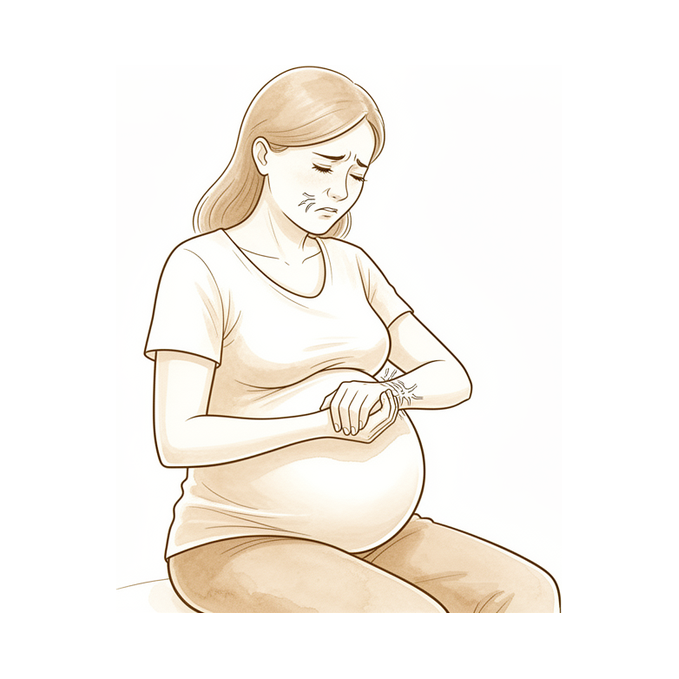
Dores, formigamento e dor no polegar são extremamente comuns durante a gravidez e nos primeiros meses após o nascimento do bebê. Elas podem ser bastante incômodas numa fase em que as mãos estão mais ocupadas do que nunca. A boa notícia é que quase todos esses problemas são temporários, decorrentes das alterações da gravidez e do início da maternidade; a grande maioria melhora sozinha com medidas simples e com o passar do tempo. A cirurgia raramente é necessária.
Esta página explica as duas condições mais frequentes nesses casos, bem como as medidas simples que ajudam a aliviar os sintomas. Ela complementa nossas páginas sobre túnel do carpo e compressão nervosa, tenossinovite de De Quervain e dormência e formigamento na mão e no braço; aqui, nos concentramos nas particularidades quando esses problemas surgem durante a gravidez e após o nascimento do bebê.
Por que as mãos ficam doloridas na gravidez
A gravidez altera o corpo de maneiras que afetam bastante as pequenas estruturas do punho. O corpo retém mais líquido nos tecidos, e as mudanças hormonais amolecem e fazem inchar as membranas que envolvem tendões e nervos. O punho é uma região bastante “lotada” (nervos e tendões passam por túneis bem apertados ali), portanto até um pequeno inchaço extra pode pressionar algo que antes não causava incômodo algum. Somando-se a isso a nova tarefa repetitiva de levantar e alimentar o bebê, fica fácil entender por que mãos e punhos reclamam.
O ponto principal a lembrar é que a causa geralmente é temporária: à medida que as alterações de líquido e hormônios da gravidez se normalizam após o parto, e o corpo se recupera, a pressão diminui e os sintomas tendem a desaparecer.
Síndrome do túnel do carpo na gravidez
O túnel do carpo é um canal estreito na parte frontal do pulso que transporta o nervo mediano até a mão. Na gravidez, a retenção de líquidos faz com que os tecidos dentro desse túnel inchem, comprimindo o nervo. O resultado é dormência e formigamento no polegar, indicador e dedo médio (além de metade do dedo anular); esses sintomas são frequentemente descritos como sensação de “alfinetadas”, sendo piores à noite — às vezes chegando a acordar a gestante para agitar a mão. Algumas mulheres percebem esses sintomas com mais intensidade nos últimos meses da gravidez.
O lado positivo é como os sintomas evoluem após o parto: na maioria das mulheres, os sintomas melhoram nas semanas seguintes ao nascimento, quando o excesso de líquido é eliminado. Por esse motivo, o tratamento na gravidez costuma ser simples e visa proporcionar conforto enquanto o corpo se recupera naturalmente:
- Talas noturnas para o pulso são o principal tratamento. Uma tala que mantém o pulso reto ajuda a manter o túnel do carpo o mais aberto possível durante o sono; muitas vezes, é a medida mais eficaz.
- Ajustes nas atividades: reduzir posturas e tarefas que exigem flexão prolongada do pulso, além de fazer pausas.
- Terapia da mão: orientações sobre uso de talas, postura correta e técnicas suaves para alívio dos sintomas.
- Ocasionalmente, pode-se aplicar uma injeção de corticoide no túnel do carpo se os sintomas forem graves e persistentes, visando proporcionar alívio até o pós-parto.
A cirurgia raramente é necessária durante a gravidez, justamente porque o problema costuma desaparecer após o nascimento do bebê.
Tenossinovite de De Quervain (“polegar de mamãe”)
A tenossinovite de De Quervain é um inchaço doloroso dos tendões localizados no lado do polegar do pulso, onde eles atravessam um túnel estreito próximo ao osso do pulso. A dor surge no lado do polegar do pulso e é desencadeada ao segurar objetos, levantar peso ou girar o pulso; muitas vezes, a dor irradia para o polegar e o antebraço.
Ela recebe a alcunha de “polegar de mamãe” porque está fortemente associada aos movimentos repetitivos de levantar e segurar o bebê, que sobrecarregam os pulsos dezenas de vezes ao dia, frequentemente em posições desconfortáveis, ao pegar, carregar e alimentar o recém-nascido. As alterações hormonais durante a gravidez e a amamentação também contribuem para o problema. Diferentemente da síndrome do túnel do carpo, cujos sintomas geralmente se intensificam antes do parto, a tenossinovite de De Quervain costuma aparecer ou piorar após o parto, nos meses de cuidados com o bebê.
Geralmente, a condição melhora com o tempo; o tratamento também é bastante simples:
- Tala para o polegar (tipo espica) que sustenta o polegar e o pulso, deixando a ponta do polegar livre: ela permite o repouso dos tendões irritados e é a base do tratamento.
- Mudança na forma de levantar o bebê: segurar o bebê por baixo, mantendo o pulso reto e deixando os antebraços fazerem o trabalho, em vez de usar o polegar e o pulso esticados para segurar. Um terapeuta da mão pode ensinar técnicas simples que fazem grande diferença.
- Nos casos em que a dor persiste, uma injeção de esteroides no túnel tendíneo afetado é muito eficaz e, muitas vezes, cura o problema.
Muitos casos melhoram à medida que as exigências dos primeiros meses diminuem; nas mães que amamentam, a condição frequentemente desaparece após o término da amamentação.
Outras dores que podem aparecer e desaparecer
Alguns outros pequenos incômodos nas mãos e pulsos podem surgir nessa fase; todos são comuns e geralmente temporários:
- Dor e inchaço gerais no pulso e na mão, causados pela mesma retenção de líquidos; costumam piorar no final do dia e melhorar após o parto.
- Dedo a gatilho: um dedo ou polegar que trava, emite um “clique” ou fica bloqueado ao dobrar, devido ao inchaço ao redor de um tendão. Pode aparecer durante a gravidez ou nos meses pós-parto, e geralmente melhora com o uso de uma tala, terapia da mão ou, se necessário, uma injeção de esteroides.
O que é seguro durante a gravidez e a amamentação
Uma preocupação comum é saber se algo pode ser feito com segurança durante a gravidez ou a amamentação. A boa notícia é que os tratamentos de primeira linha também são os mais seguros:
- Talas, terapia da mão e alterações nas atividades diárias não apresentam nenhum risco para você ou para o bebê; são os primeiros passos que geralmente adotamos. Na maioria dos casos, isso é tudo o que é necessário.
- Injeções de esteroides e cirurgia são reservadas para a minoria dos casos que não respondem ao tratamento inicial; nesses casos, discutimos individualmente com você o momento mais adequado, levando em conta sua gravidez ou amamentação, para que a decisão seja tomada com todas as informações necessárias e seja adequada à sua situação.
Como muitas dessas condições se resolvem sozinhas após o parto, o plano habitual é manter seu conforto por meio dessas medidas suaves e deixar que o tempo faça o restante.
Quando procurar ajuda médica
Entre em contato conosco ou consulte seu médico de família, sua parteira ou nossa equipe se:
- O formigamento ou dormência se tornar intenso ou constante, em vez de aparecer e desaparecer à noite.
- Você notar fraqueza na mão, dificuldade para segurar objetos ou atrofia (diminuição) da massa muscular na base do polegar: esses podem ser sinais de que um nervo precisa de atenção especial.
- Os sintomas persistirem meses após o nascimento do bebê, quando seria de se esperar que melhorassem.
- A dor ou fraqueza estiver dificultando seus cuidados com o bebê (amamentação, levantar ou carregar), e medidas simples não estejam surtindo efeito.
Procurar ajuda precocemente nos permite confeccionar uma tala adequada, organizar terapia da mão e, se necessário, explicar as poucas opções de tratamento disponíveis, para que um problema comum e geralmente passageiro não impeça você de desfrutar da companhia do seu novo bebê.
Em maior profundidade
Advanced reading: the deeper science (optional)
Esta seção aborda temas que vão além do necessário para suas próprias decisões de tratamento. As condições da mão durante a gravidez merecem uma leitura mais aprofundada, pois a relação entre elas é real e já foi quantificada em números muito significativos; além disso, existe um fator modificável que aumenta o risco de ambos os problemas mais comuns.
A gravidez é um fator de risco real, não uma mera coincidência de tempo
A síndrome do túnel do carpo e a tenossinovite de De Quervain aparecem com maior frequência durante a gravidez e nos meses subsequentes; muitas vezes isso é atribuído às exigências do cuidado com o recém-nascido. Contudo, um estudo com 715.337 pacientes comprova de forma mais sólida que a gravidez é um fator de risco significativo para doenças da mão, estando associada a um aumento da probabilidade de desenvolver tenossinovite de De Quervain [1].
Essa magnitude estatística é importante, pois diferencia uma associação comprovada de uma mera impressão. A retenção de líquidos e as alterações hormonais na gravidez provavelmente elevam a pressão dentro do túnel do carpo e causam inchaço nas bainhas dos tendões; além disso, o ato de levantar um bebê em crescimento sobrecarrega repetidamente o polegar. Os dados confirmam esse padrão, sem que seja necessário definir exatamente o mecanismo envolvido.
O diabetes gestacional aumenta o risco de ambas as condições
O mesmo conjunto de dados identifica o diabetes gestacional como um fator de risco significativo tanto para a síndrome do túnel do carpo quanto para a tenossinovite de De Quervain [1].
Este é o ponto mais relevante aqui, pois associa um problema na mão a algo que já é monitorado durante a gravidez. Ele também está em conformidade com o que se sabe fora do contexto gestacional: o diabetes é um fator de risco comprovado para ambas as condições, e as alterações no tecido conjuntivo que as provocam parecem ocorrer num período mais curto do que o esperado.
Quais gestações apresentam maior risco de desenvolver tenossinovite de De Quervain?
No que diz respeito à tenossinovite de De Quervain no pós-parto, os fatores de risco gestacionais identificados foram a primeira gravidez e uma gestação prolongada, com mais de 40 semanas. Vale ressaltar que o peso do bebê ao nascer e o número de filhos não demonstraram aumentar o risco [2].
Esses dois resultados negativos são tão informativos quanto os positivos. Um bebê de maior peso não é um preditor da doença, assim como a gestação de gêmeos também não o é; isso contradiz a explicação simplista de que “o excesso de esforço físico causa a doença” e reforça a importância do ambiente hormonal. A primeira gravidez pode estar relacionada à falta de familiaridade com as técnicas de manuseio do bebê, ou simplesmente ao fato de que, após desenvolver a condição, a pessoa passa a adotar métodos diferentes ao levantar objetos.
O que as evidências ainda não fornecem
As diretrizes de tratamento são o aspecto em que a literatura científica é bastante escassa. Uma revisão sobre a síndrome do túnel do carpo na gravidez constatou que a prevalência relatada varia consideravelmente conforme os critérios diagnósticos e o desenho do estudo utilizado; além disso, há uma carência de evidências de alta qualidade que abordem as estratégias de tratamento ideais durante e após a gravidez. Os autores desse estudo clamam por ensaios clínicos bem desenhados [3].
Portanto, o risco associado à síndrome está bem estabelecido, mas as opções de tratamento ainda não são claras. Na prática, isso justifica uma abordagem conservadora durante a gravidez e nos primeiros meses após o parto, pois muitos casos melhoram à medida que as alterações fisiológicas revertem. Contudo, essa abordagem deve ser entendida como uma inferência baseada na evolução natural da doença, e não como resultado de evidências obtidas em ensaios clínicos.
Isso gera duas consequências práticas. Primeiro, sintomas que persistem muito além dos meses pós-parto têm menor probabilidade de desaparecer espontaneamente; nesses casos, é necessário reavaliar o quadro clínico em vez de simplesmente aguardar. Segundo, como essas condições são comuns, reais e, na maioria das pessoas, de duração limitada, vale a pena mencioná-las durante as consultas de acompanhamento pré ou pós-natal, em vez de aceitá-las silenciosamente como parte inevitável da experiência de ser pai ou mãe.
Referências
[1] Smith GB, Young B, Titan AL, Kenney DE, Ladd AL. Incidência e fatores de risco para afecções dos tecidos moles da mão e do punho durante a gravidez. J Hand Surg Glob Online. 2025;7(5):100778. https://doi.org/10.1016/j.jhsg.2025.100778
[2] Daglan E, Morgan S, Yechezkel M, Rutenberg TF, Shemesh S, Iordache SD, et al. Fatores de risco associados à tenossinovite de De Quervain em mulheres no pós-parto. Hand (N Y). 2023;19(4):643-7. https://doi.org/10.1177/15589447221150524
[3] Alitaleshi H, Baroutkoub M, Safaei H, Soleymani M. Prevalência da síndrome do túnel do carpo durante a gravidez no Irã: uma revisão sistemática. J Hand Surg Glob Online. 2026;8(4):101025. https://doi.org/10.1016/j.jhsg.2026.101025