Skip to content

Patients › Elbow

Lesão do ligamento colateral ulnar (Lesão de Tommy John)

The medial elbow ligament injury of throwers — how it presents, when rehab is enough, and what Tommy John reconstruction involves.
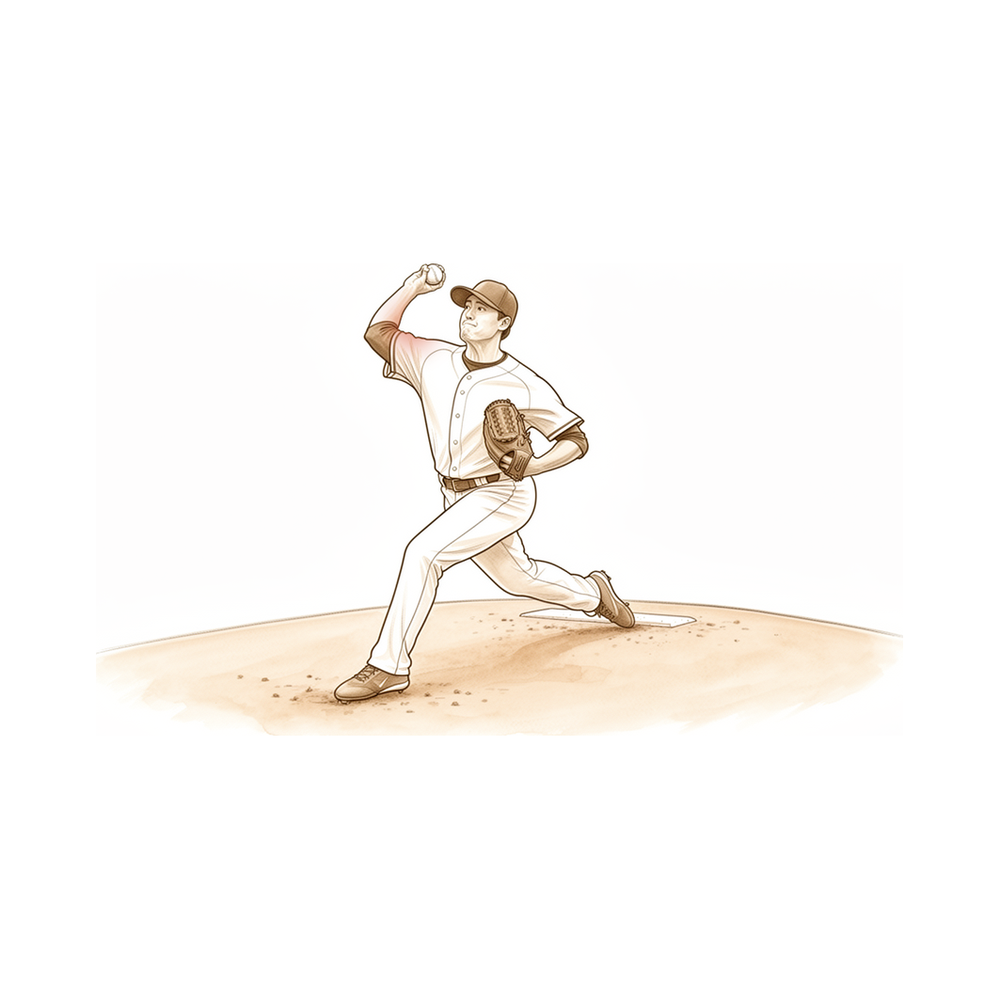
Um arremessador de beisebol na fase final do movimento de arremesso, apresentando dor no lado interno do cotovelo.
Lesão do ligamento colateral ulnar (ligamento de Tommy John): o estresse valgo repetitivo durante o arremesso sobrecarrega o ligamento localizado na face interna do cotovelo. Kieran Hirpara 4.0

Esta página foi traduzida automaticamente e ainda não foi verificada por um médico. A versão em inglês é a versão oficial.

O que você está sentindo

Se você pratica muito arremessos (beisebol, arremesso de dardo ou qualquer esporte que exija arremessos forçados acima da cabeça), pode notar uma dor ou incômodo no lado interno do cotovelo. Essa dor geralmente surge no momento de máximo esforço, pouco antes do braço se mover para frente para efetuar o arremesso. Muitos atletas descrevem esse desconforto como uma dor profunda e persistente bem sobre o tubérculo ósseo na parte interna do cotovelo.

Outro sinal comum é a alteração no desempenho nos arremessos: você perde um pouco de velocidade, os arremessos ficam menos precisos ou perdem a força habitual, ou simplesmente não consegue arremessar com a mesma potência ou por tanto tempo quanto antes. Às vezes, a dor se desenvolve gradualmente ao longo de uma temporada; em outras ocasiões, um único arremesso provoca dor aguda ou um “estalo”, fazendo com que o cotovelo pareça instável ou inútil.

Algumas pessoas também percebem formigamento, dormência ou sensação de “agulhas e alfinetes” nos dedos anular e mindinho. Isso acontece porque um nervo passa bem atrás do lado interno do cotovelo, e o inchaço ou instabilidade nessa região pode irritá-lo.

O que realmente acontece

Uma forte faixa de tecido chamada ligamento colateral ulnar (LCU) fica na face interna do cotovelo. Sua função é impedir que o cotovelo se abra na parte interna quando uma força o empurra nessa direção — movimento conhecido como valgo. Os arremessos impõem uma carga enorme e repetida exatamente sobre esse ligamento. Cada arremesso forte o estica um pouco, e após milhares de arremessos o ligamento pode, aos poucos, se desgastar, afinar e enfraquecer. Em casos menos comuns, um único arremesso violento pode rompê-lo.

Quando o LCU está danificado, ele não consegue mais manter o cotovelo firme, de modo que a articulação fica ligeiramente instável sob a carga dos arremessos. Essa instabilidade é a causa da dor, da perda de velocidade e precisão nos arremessos e, às vezes, dos sintomas neurológicos. Trata-se da mesma lesão conhecida como “Tommy John”, nome dado em homenagem ao primeiro arremessador de beisebol a passar por uma reconstrução cirúrgica e voltar a arremessar.

Vale ressaltar que essa lesão ocorre quase exclusivamente em atletas que praticam arremessos repetitivos. Para pessoas que não realizam esse tipo de movimento, um LCU danificado raramente gera problemas na vida cotidiana, pois as atividades comuns não impõem ao ligamento a mesma carga que os arremessos.

O que podemos fazer a respeito

Na nossa clínica, o Dr. Kieran Hirpara acompanha o seu tratamento desde o primeiro encaminhamento até à elaboração de um plano terapêutico personalizado. Começamos com uma avaliação minuciosa para compreender a extensão da sua lesão e quais são os seus objetivos.

O tratamento adequado depende do grau de lesão do ligamento, bem como da necessidade de o paciente retornar a atividades de arremesso de alto nível.

Para lesões parciais ou de baixo grau, bem como para quem não precisa arremessar competitivamente, o tratamento não cirúrgico é a primeira opção. Isso envolve um período de repouso em relação ao arremesso, seguido de um programa de reabilitação cuidadosamente planejado, que visa recuperar a força do antebraço, ombro e tronco, corrigir a mecânica do arremesso e, gradualmente, reintegrar o paciente ao arremesso por meio de um “programa de arremessos” estruturado. Às vezes, são aplicadas injeções de substâncias como plasma rico em plaquetas (PRP) para estimular a cicatrização; contudo, as evidências de sua eficácia ainda são incertas.

A cirurgia é indicada quando o ligamento está completamente rompido ou quando a reabilitação adequada não permite que um atleta dedicado volte a arremessar. Existem duas operações principais:

  • Reconstrução do UCL (“cirurgia de Tommy John”). O ligamento danificado é reconstruído utilizando um enxerto tendinoso, geralmente retirado do próprio antebraço ou perna do paciente, passado por pequenos túneis ósseos para criar um novo ligamento resistente. Trata-se da cirurgia consagrada e comprovada para atletas que arremessam.
  • Reparo do UCL com uso de um reforço interno. Em atletas mais jovens cujo ligamento se descolou limpamente de um dos ossos (em vez de estar desgastado em toda a sua extensão), o cirurgião pode suturar o ligamento e reforçá-lo com uma fita resistente. Esse método costuma permitir um retorno mais rápido ao arremesso e é indicado apenas para determinados tipos de lesão.

Em ambas as operações, o cirurgião também verifica o nervo localizado na parte interna do cotovelo, protegendo-o ou reposicionando-o caso esteja sendo comprimido.

O que esperar

Para a maioria dos arremessadores que se submetem à cirurgia, o prognóstico é realmente bom: a grande maioria volta ao nível anterior de arremessos, embora isso exija paciência. A reconstrução ligamentar (procedimento de Tommy John) geralmente exige uma recuperação gradual ao longo de cerca de um ano ou mais antes que o atleta possa voltar a arremessar em competições; já no caso de pacientes adequados, a reparação com uso de órtese interna pode acelerar esse processo. Em ambos os casos, a recuperação depende de um programa de reabilitação longo e bem estruturado, e não apenas da cirurgia em si; a volta prematura às atividades é a principal causa de contratempos.

A recuperação plena não é garantida para todos: um pequeno número de atletas não retorna ao mesmo nível de desempenho, e os sintomas neurológicos ou o enxerto às vezes exigem acompanhamento contínuo. Contudo, com um diagnóstico preciso, a escolha adequada do tratamento e uma reabilitação comprometida, os resultados para essa lesão estão entre os mais satisfatórios na cirurgia esportiva.

Quando procurar um especialista

  • Dor no lado interno do cotovelo ao arremessar, especialmente se ela reaparecer com frequência ou piorar ao longo de uma temporada.
  • Queda na velocidade, precisão ou resistência ao arremessar, que não melhora mesmo com repouso.
  • Um "estalo" súbito ou dor aguda no lado interno do cotovelo durante o arremesso, seguido de sensação de fraqueza ou instabilidade no braço.
  • Dormência, formigamento ou fraqueza nos dedos anular e mindinho.
  • Dor no lado interno do cotovelo em jovens ou crianças que arremessam: a placa de crescimento da criança pode ser lesionada pelo mesmo esforço de arremesso, exigindo avaliação imediata.

Em maior profundidade

Advanced reading: the deeper science (optional)

Esta seção vai além do que você precisa saber para tomar decisões sobre o próprio tratamento. As lesões do ligamento colateral ulnar merecem uma leitura mais aprofundada, pois a cirurgia conhecida por todos — a cirurgia de Tommy John — já não é a única opção viável. A nova alternativa exige um “preço” diferente: não se trata do resultado clínico, mas do tempo necessário para a recuperação.

A reconstrução é o procedimento consagrado, e seus resultados são consistentes

A reconstrução consiste na substituição do ligamento rompido por um enxerto tendinoso, geralmente o tendão palmar longo retirado do próprio antebraço do paciente. Em um total de 6.671 pacientes, a maioria dos cirurgiões utilizou um enxerto autólogo do tendão palmar em configuração em forma de oito, mediante a técnica modificada de Jobe. A taxa de revisão cirúrgica com o uso de enxerto alogênico pareceu ser maior do que com o enxerto autólogo; contudo, os autores ressaltam que isso pode ser reflexo da escassez de estudos sobre enxertos alogênicos, e não de uma diferença real [1].

Em acompanhamento de médio prazo envolvendo 1.104 pacientes, a reconstrução proporcionou bons resultados clínicos e relatados pelos pacientes, além de baixas taxas de complicações e revisões cirúrgicas. Os jogadores de beisebol relataram altas taxas de retorno ao esporte no nível pré-lesão, bem como longevidade na carreira [2]. As taxas de retorno ao esporte situam-se entre 80% e 90%, sendo que a maioria dos atletas volta à competição plena em 12 a 18 meses [3].

A alternativa é mais rápida, e esse é o único argumento a favor

Quando o ligamento se desprendeu de uma das extremidades e o tecido em si apresenta boa qualidade, é possível repará-lo em vez de substituí-lo, cada vez mais utilizando um reforço interno para auxiliar nessa reparação.

A diferença está no prazo. A reparação com reforço permite o retorno ao esporte em média após 6 meses, com altas taxas de retorno à prática em pacientes devidamente selecionados; já a reconstrução exige 12 a 18 meses [4]. Uma revisão de 2025 constatou que a reparação tem ganhado popularidade, sendo considerada segura e eficaz, com baixas taxas de complicações e altas taxas de retorno ao esporte [5].

Para um atleta do ensino médio ou universitário com um período competitivo bem definido, reduzir pela metade o tempo de afastamento não é algo irrelevante: pode ser a diferença entre perder uma temporada ou ter a carreira afetada. Contudo, a expressão “devidamente selecionados” tem grande importância nessa frase: a reparação depende de um padrão de avulsão em que o ligamento remanescente esteja saudável – situação que ocorre apenas em uma minoria dos casos, sendo determinada por exames de imagem e pelo que se observa durante a cirurgia, e não por preferência do paciente.

Nem todo rompimento requer cirurgia

O tratamento depende do tipo de rompimento. Os rompimentos parciais de baixo grau são tratados sem cirurgia, sendo a reconstrução o procedimento padrão para os rompimentos completos [3]. O ligamento é submetido a carga quase exclusivamente sob a ação da força de valgo durante arremessos acima da cabeça; por isso, um rompimento parcial pode ser compatível com atividades cotidianas normais por tempo indeterminado, manifestando-se apenas quando o paciente retoma os arremessos.

A revisão não reproduz o primeiro resultado

Caso uma reconstrução falhe, as expectativas em relação a uma segunda intervenção devem ser mais moderadas. A reconstrução de revisão é um procedimento raro, cujos resultados não são tão promissores quanto os da reconstrução primária; nesse caso, o diagnóstico, a técnica cirúrgica e a reabilitação tornam-se ainda mais desafiadores [6].

Essa assimetria constitui o argumento mais forte para que a primeira cirurgia e seu respectivo programa de reabilitação sejam executados corretamente, incluindo a conclusão integral do programa, que pode parecer desproporcionalmente longo para um ligamento que já foi substituído. O enxerto precisa se remodelar até tornar-se um ligamento efetivo, e esse processo segue o ritmo da biologia, não a percepção subjetiva do paciente quanto à sensação no cotovelo.

Referências

[1] Hones KM, Simcox T, Hao KA, Portnoff B, Buchanan TR, Kamarajugadda S, et al. Escolha do enxerto e técnicas utilizadas na reconstrução do ligamento colateral ulnar do cotovelo nos últimos 20 anos: uma revisão sistemática. J Shoulder Elbow Surg. 2024;33(5):1185-99. https://doi.org/10.1016/j.jse.2023.10.023

[2] Davey MS, Hurley ET, Gaafar M, Galbraith JG, Mullett H, Pauzenberger L. A reconstrução do ligamento colateral ulnar do cotovelo, com acompanhamento médio de 48 meses, demonstra altas taxas de retorno às atividades esportivas e baixas taxas de complicações. J ISAKOS. 2021;6(5):290-4. https://doi.org/10.1136/jisakos-2021-000614

[3] Carr JB, Camp CL, Dines JS. Lesões do ligamento colateral ulnar do cotovelo: indicações, tratamento e resultados. Arthroscopy. 2020;36(5):1221-2. https://doi.org/10.1016/j.arthro.2020.02.022

[4] Spears TM, Luchinni P, Camp CL, Bowman EN. Conceitos atuais no tratamento cirúrgico das lesões do ligamento colateral ulnar medial do cotovelo. J Am Acad Orthop Surg. 2024;33(13):703-10. https://doi.org/10.5435/JAAOS-D-24-00839

[5] Puga TB, Box MW, Pautler B, Perleberg T, Poffenbarger M, Riehl JT. Reparação do ligamento colateral ulnar do cotovelo: uma revisão sistemática das tendências e dos resultados. JSES Rev Rep Tech. 2025;5(4):960-7. https://doi.org/10.1016/j.xrrt.2025.05.020

[6] Bruce JR, ElAttrache NS, Andrews JR. Reconstrução revisional do ligamento colateral ulnar. J Am Acad Orthop Surg. 2018;26(11):377-85. https://doi.org/10.5435/JAAOS-D-16-00341


Creative Commons BY-NC 4.0

CC Creative Commons licence
BY Attribution — you must credit the source
NC NonCommercial — not for commercial use

Attribution-NonCommercial 4.0 International


Creative Commons Corporation ("Creative Commons") is not a law firm and does not provide legal services or legal advice. Distribution of Creative Commons public licenses does not create a lawyer-client or other relationship. Creative Commons makes its licenses and related information available on an "as-is" basis. Creative Commons gives no warranties regarding its licenses, any material licensed under their terms and conditions, or any related information. Creative Commons disclaims all liability for damages resulting from their use to the fullest extent possible.

Using Creative Commons Public Licenses

Creative Commons public licenses provide a standard set of terms and conditions that creators and other rights holders may use to share original works of authorship and other material subject to copyright and certain other rights specified in the public license below. The following considerations are for informational purposes only, are not exhaustive, and do not form part of our licenses.

Considerations for licensors: Our public licenses are intended for use by those authorized to give the public permission to use material in ways otherwise restricted by copyright and certain other rights. Our licenses are irrevocable. Licensors should read and understand the terms and conditions of the license they choose before applying it. Licensors should also secure all rights necessary before applying our licenses so that the public can reuse the material as expected. Licensors should clearly mark any material not subject to the license. This includes other CC- licensed material, or material used under an exception or limitation to copyright. More considerations for licensors: wiki.creativecommons.org/Considerations_for_licensors

Considerations for the public: By using one of our public licenses, a licensor grants the public permission to use the licensed material under specified terms and conditions. If the licensor's permission is not necessary for any reason--for example, because of any applicable exception or limitation to copyright--then that use is not regulated by the license. Our licenses grant only permissions under copyright and certain other rights that a licensor has authority to grant. Use of the licensed material may still be restricted for other reasons, including because others have copyright or other rights in the material. A licensor may make special requests, such as asking that all changes be marked or described. Although not required by our licenses, you are encouraged to respect those requests where reasonable. More considerations for the public: wiki.creativecommons.org/Considerations_for_licensees


Creative Commons Attribution-NonCommercial 4.0 International Public License

By exercising the Licensed Rights (defined below), You accept and agree to be bound by the terms and conditions of this Creative Commons Attribution-NonCommercial 4.0 International Public License ("Public License"). To the extent this Public License may be interpreted as a contract, You are granted the Licensed Rights in consideration of Your acceptance of these terms and conditions, and the Licensor grants You such rights in consideration of benefits the Licensor receives from making the Licensed Material available under these terms and conditions.

Section 1 -- Definitions.

a. Adapted Material means material subject to Copyright and Similar Rights that is derived from or based upon the Licensed Material and in which the Licensed Material is translated, altered, arranged, transformed, or otherwise modified in a manner requiring permission under the Copyright and Similar Rights held by the Licensor. For purposes of this Public License, where the Licensed Material is a musical work, performance, or sound recording, Adapted Material is always produced where the Licensed Material is synched in timed relation with a moving image.

b. Adapter's License means the license You apply to Your Copyright and Similar Rights in Your contributions to Adapted Material in accordance with the terms and conditions of this Public License.

c. Copyright and Similar Rights means copyright and/or similar rights closely related to copyright including, without limitation, performance, broadcast, sound recording, and Sui Generis Database Rights, without regard to how the rights are labeled or categorized. For purposes of this Public License, the rights specified in Section 2(b)(1)-(2) are not Copyright and Similar Rights.

d. Effective Technological Measures means those measures that, in the absence of proper authority, may not be circumvented under laws fulfilling obligations under Article 11 of the WIPO Copyright Treaty adopted on December 20, 1996, and/or similar international agreements.

e. Exceptions and Limitations means fair use, fair dealing, and/or any other exception or limitation to Copyright and Similar Rights that applies to Your use of the Licensed Material.

f. Licensed Material means the artistic or literary work, database, or other material to which the Licensor applied this Public License.

g. Licensed Rights means the rights granted to You subject to the terms and conditions of this Public License, which are limited to all Copyright and Similar Rights that apply to Your use of the Licensed Material and that the Licensor has authority to license.

h. Licensor means the individual(s) or entity(ies) granting rights under this Public License.

i. NonCommercial means not primarily intended for or directed towards commercial advantage or monetary compensation. For purposes of this Public License, the exchange of the Licensed Material for other material subject to Copyright and Similar Rights by digital file-sharing or similar means is NonCommercial provided there is no payment of monetary compensation in connection with the exchange.

j. Share means to provide material to the public by any means or process that requires permission under the Licensed Rights, such as reproduction, public display, public performance, distribution, dissemination, communication, or importation, and to make material available to the public including in ways that members of the public may access the material from a place and at a time individually chosen by them.

k. Sui Generis Database Rights means rights other than copyright resulting from Directive 96/9/EC of the European Parliament and of the Council of 11 March 1996 on the legal protection of databases, as amended and/or succeeded, as well as other essentially equivalent rights anywhere in the world.

l. You means the individual or entity exercising the Licensed Rights under this Public License. Your has a corresponding meaning.

Section 2 -- Scope.

a. License grant.

1. Subject to the terms and conditions of this Public License, the Licensor hereby grants You a worldwide, royalty-free, non-sublicensable, non-exclusive, irrevocable license to exercise the Licensed Rights in the Licensed Material to:

a. reproduce and Share the Licensed Material, in whole or in part, for NonCommercial purposes only; and

b. produce, reproduce, and Share Adapted Material for NonCommercial purposes only.

2. Exceptions and Limitations. For the avoidance of doubt, where Exceptions and Limitations apply to Your use, this Public License does not apply, and You do not need to comply with its terms and conditions.

3. Term. The term of this Public License is specified in Section 6(a).

4. Media and formats; technical modifications allowed. The Licensor authorizes You to exercise the Licensed Rights in all media and formats whether now known or hereafter created, and to make technical modifications necessary to do so. The Licensor waives and/or agrees not to assert any right or authority to forbid You from making technical modifications necessary to exercise the Licensed Rights, including technical modifications necessary to circumvent Effective Technological Measures. For purposes of this Public License, simply making modifications authorized by this Section 2(a) (4) never produces Adapted Material.

5. Downstream recipients.

a. Offer from the Licensor -- Licensed Material. Every recipient of the Licensed Material automatically receives an offer from the Licensor to exercise the Licensed Rights under the terms and conditions of this Public License.

b. No downstream restrictions. You may not offer or impose any additional or different terms or conditions on, or apply any Effective Technological Measures to, the Licensed Material if doing so restricts exercise of the Licensed Rights by any recipient of the Licensed Material.

6. No endorsement. Nothing in this Public License constitutes or may be construed as permission to assert or imply that You are, or that Your use of the Licensed Material is, connected with, or sponsored, endorsed, or granted official status by, the Licensor or others designated to receive attribution as provided in Section 3(a)(1)(A)(i).

b. Other rights.

1. Moral rights, such as the right of integrity, are not licensed under this Public License, nor are publicity, privacy, and/or other similar personality rights; however, to the extent possible, the Licensor waives and/or agrees not to assert any such rights held by the Licensor to the limited extent necessary to allow You to exercise the Licensed Rights, but not otherwise.

2. Patent and trademark rights are not licensed under this Public License.

3. To the extent possible, the Licensor waives any right to collect royalties from You for the exercise of the Licensed Rights, whether directly or through a collecting society under any voluntary or waivable statutory or compulsory licensing scheme. In all other cases the Licensor expressly reserves any right to collect such royalties, including when the Licensed Material is used other than for NonCommercial purposes.

Section 3 -- License Conditions.

Your exercise of the Licensed Rights is expressly made subject to the following conditions.

a. Attribution.

1. If You Share the Licensed Material (including in modified form), You must:

a. retain the following if it is supplied by the Licensor with the Licensed Material:

i. identification of the creator(s) of the Licensed Material and any others designated to receive attribution, in any reasonable manner requested by the Licensor (including by pseudonym if designated);

ii. a copyright notice;

iii. a notice that refers to this Public License;

iv. a notice that refers to the disclaimer of warranties;

v. a URI or hyperlink to the Licensed Material to the extent reasonably practicable;

b. indicate if You modified the Licensed Material and retain an indication of any previous modifications; and

c. indicate the Licensed Material is licensed under this Public License, and include the text of, or the URI or hyperlink to, this Public License.

2. You may satisfy the conditions in Section 3(a)(1) in any reasonable manner based on the medium, means, and context in which You Share the Licensed Material. For example, it may be reasonable to satisfy the conditions by providing a URI or hyperlink to a resource that includes the required information.

3. If requested by the Licensor, You must remove any of the information required by Section 3(a)(1)(A) to the extent reasonably practicable.

4. If You Share Adapted Material You produce, the Adapter's License You apply must not prevent recipients of the Adapted Material from complying with this Public License.

Section 4 -- Sui Generis Database Rights.

Where the Licensed Rights include Sui Generis Database Rights that apply to Your use of the Licensed Material:

a. for the avoidance of doubt, Section 2(a)(1) grants You the right to extract, reuse, reproduce, and Share all or a substantial portion of the contents of the database for NonCommercial purposes only;

b. if You include all or a substantial portion of the database contents in a database in which You have Sui Generis Database Rights, then the database in which You have Sui Generis Database Rights (but not its individual contents) is Adapted Material; and

c. You must comply with the conditions in Section 3(a) if You Share all or a substantial portion of the contents of the database.

For the avoidance of doubt, this Section 4 supplements and does not replace Your obligations under this Public License where the Licensed Rights include other Copyright and Similar Rights.

Section 5 -- Disclaimer of Warranties and Limitation of Liability.

a. UNLESS OTHERWISE SEPARATELY UNDERTAKEN BY THE LICENSOR, TO THE EXTENT POSSIBLE, THE LICENSOR OFFERS THE LICENSED MATERIAL AS-IS AND AS-AVAILABLE, AND MAKES NO REPRESENTATIONS OR WARRANTIES OF ANY KIND CONCERNING THE LICENSED MATERIAL, WHETHER EXPRESS, IMPLIED, STATUTORY, OR OTHER. THIS INCLUDES, WITHOUT LIMITATION, WARRANTIES OF TITLE, MERCHANTABILITY, FITNESS FOR A PARTICULAR PURPOSE, NON-INFRINGEMENT, ABSENCE OF LATENT OR OTHER DEFECTS, ACCURACY, OR THE PRESENCE OR ABSENCE OF ERRORS, WHETHER OR NOT KNOWN OR DISCOVERABLE. WHERE DISCLAIMERS OF WARRANTIES ARE NOT ALLOWED IN FULL OR IN PART, THIS DISCLAIMER MAY NOT APPLY TO YOU.

b. TO THE EXTENT POSSIBLE, IN NO EVENT WILL THE LICENSOR BE LIABLE TO YOU ON ANY LEGAL THEORY (INCLUDING, WITHOUT LIMITATION, NEGLIGENCE) OR OTHERWISE FOR ANY DIRECT, SPECIAL, INDIRECT, INCIDENTAL, CONSEQUENTIAL, PUNITIVE, EXEMPLARY, OR OTHER LOSSES, COSTS, EXPENSES, OR DAMAGES ARISING OUT OF THIS PUBLIC LICENSE OR USE OF THE LICENSED MATERIAL, EVEN IF THE LICENSOR HAS BEEN ADVISED OF THE POSSIBILITY OF SUCH LOSSES, COSTS, EXPENSES, OR DAMAGES. WHERE A LIMITATION OF LIABILITY IS NOT ALLOWED IN FULL OR IN PART, THIS LIMITATION MAY NOT APPLY TO YOU.

c. The disclaimer of warranties and limitation of liability provided above shall be interpreted in a manner that, to the extent possible, most closely approximates an absolute disclaimer and waiver of all liability.

Section 6 -- Term and Termination.

a. This Public License applies for the term of the Copyright and Similar Rights licensed here. However, if You fail to comply with this Public License, then Your rights under this Public License terminate automatically.

b. Where Your right to use the Licensed Material has terminated under Section 6(a), it reinstates:

1. automatically as of the date the violation is cured, provided it is cured within 30 days of Your discovery of the violation; or

2. upon express reinstatement by the Licensor.

For the avoidance of doubt, this Section 6(b) does not affect any right the Licensor may have to seek remedies for Your violations of this Public License.

c. For the avoidance of doubt, the Licensor may also offer the Licensed Material under separate terms or conditions or stop distributing the Licensed Material at any time; however, doing so will not terminate this Public License.

d. Sections 1, 5, 6, 7, and 8 survive termination of this Public License.

Section 7 -- Other Terms and Conditions.

a. The Licensor shall not be bound by any additional or different terms or conditions communicated by You unless expressly agreed.

b. Any arrangements, understandings, or agreements regarding the Licensed Material not stated herein are separate from and independent of the terms and conditions of this Public License.

Section 8 -- Interpretation.

a. For the avoidance of doubt, this Public License does not, and shall not be interpreted to, reduce, limit, restrict, or impose conditions on any use of the Licensed Material that could lawfully be made without permission under this Public License.

b. To the extent possible, if any provision of this Public License is deemed unenforceable, it shall be automatically reformed to the minimum extent necessary to make it enforceable. If the provision cannot be reformed, it shall be severed from this Public License without affecting the enforceability of the remaining terms and conditions.

c. No term or condition of this Public License will be waived and no failure to comply consented to unless expressly agreed to by the Licensor.

d. Nothing in this Public License constitutes or may be interpreted as a limitation upon, or waiver of, any privileges and immunities that apply to the Licensor or You, including from the legal processes of any jurisdiction or authority.


Creative Commons is not a party to its public licenses. Notwithstanding, Creative Commons may elect to apply one of its public licenses to material it publishes and in those instances will be considered the “Licensor.” The text of the Creative Commons public licenses is dedicated to the public domain under the CC0 Public Domain Dedication. Except for the limited purpose of indicating that material is shared under a Creative Commons public license or as otherwise permitted by the Creative Commons policies published at creativecommons.org/policies, Creative Commons does not authorize the use of the trademark "Creative Commons" or any other trademark or logo of Creative Commons without its prior written consent including, without limitation, in connection with any unauthorized modifications to any of its public licenses or any other arrangements, understandings, or agreements concerning use of licensed material. For the avoidance of doubt, this paragraph does not form part of the public licenses.

Creative Commons may be contacted at creativecommons.org.