Skip to content

Patients › Hand

Condições médicas que afetam a mão

How whole-body conditions — diabetes, thyroid, inflammatory arthritis, kidney disease and more — show up in the hand.
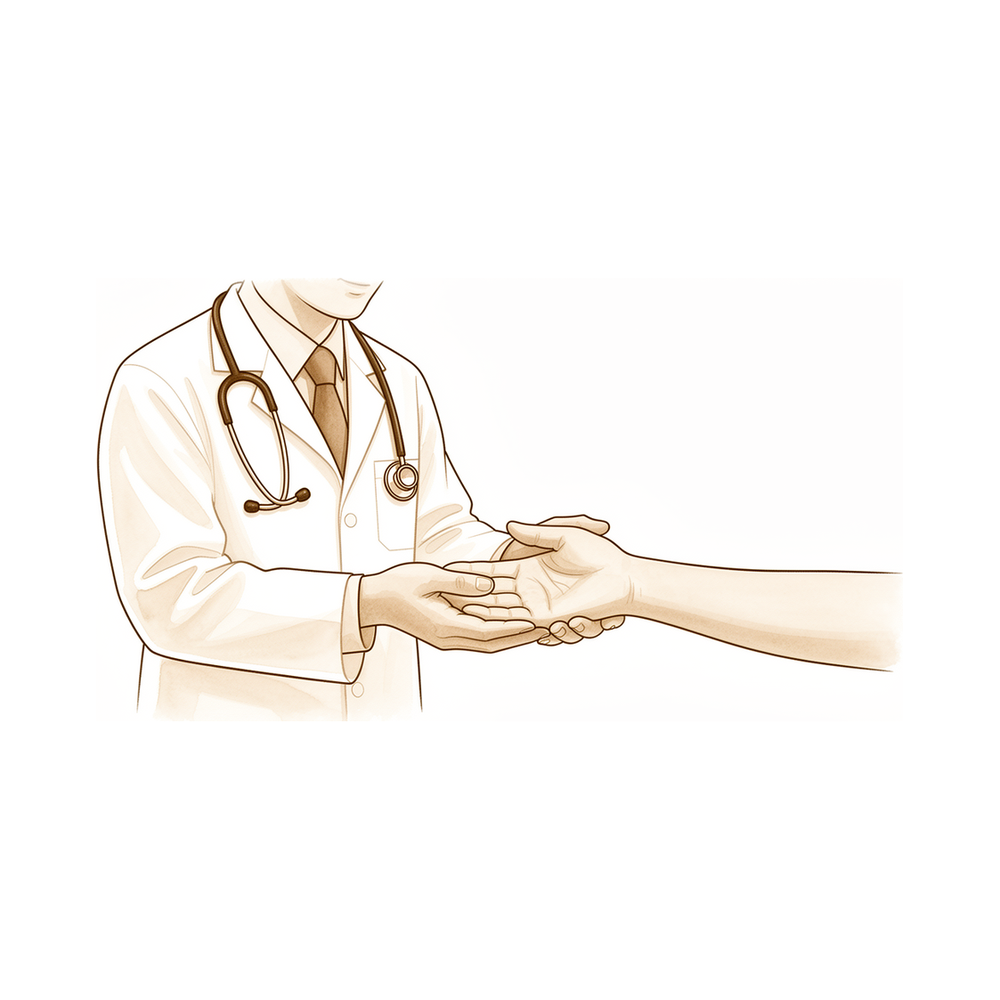
Um médico examinando a mão de um paciente.
A mão pode ser uma janela para a saúde geral — muitas condições que afetam todo o corpo manifestam-se ali, às vezes até como primeiro sinal. Kieran Hirpara 4.0

Esta página foi traduzida automaticamente e ainda não foi verificada por um médico. A versão em inglês é a versão oficial.

A mão é uma das melhores “janelas” do corpo para se avaliar a saúde geral.
Por conter inúmeras articulações pequenas, nervos, tendões, vasos sanguíneos delicados, pele e unhas (todos próximos à superfície e fáceis de examinar), muitas condições que afetam todo o corpo deixam ali seus primeiros sinais. Às vezes, um problema na mão é meramente local; porém, em outras ocasiões, o mesmo sintoma – rigidez, formigamento, alteração de cor ou unhas com aparência diferente – pode ser o primeiro indício visível de algo ocorrendo em outra parte do corpo, algo que merece atenção e, na maioria dos casos, é perfeitamente tratável.

Esta página apresenta, em linguagem simples, as principais condições médicas que se manifestam na mão. Não se trata de uma lista para autodiagnóstico; a maioria das dores e rigidez nos dedos são consequências normais do desgaste natural. Contudo, ela explica por que seu cirurgião pode perguntar sobre sua saúde geral, examinar cuidadosamente suas unhas e pele, ou sugerir exames de sangue ou encaminhamentos, mesmo quando você procurou atendimento apenas por causa de problemas na mão.

Diabetes — o grande “imitador” nas mãos

O diabetes afeta as mãos mais do que quase qualquer outra condição médica. O nível elevado de glicose no sangue, ao longo do tempo, torna os tecidos moles (tendões, sua membrana de revestimento e ligamentos) mais rígidos; por isso, pessoas diabéticas apresentam diversos problemas comuns nas mãos com muito maior frequência do que o restante da população:

  • Dedo em gatilho (dedo que trava, “clica” ou fica preso): é várias vezes mais comum em diabéticos do que na população geral.
  • Síndrome do túnel carpal (formigamento e dormência no polegar, indicador e dedo médio; geralmente pior à noite).
  • Doença de Dupuytren (cordões e nódulos na palma da mão que, aos poucos, fazem os dedos se dobrarem para baixo).
  • Mão rígida e “cerosa” (às vezes chamada de quiroartropatia diabética ou “mobilidade articular limitada”): os dedos não se estendem completamente e as palmas têm dificuldade em se unir.
  • Ombro congelado, que é notavelmente mais comum em pessoas com diabetes.

Nenhum desses sintomas, por si só, comprova a presença de diabetes; porém, ter mais de um deles ou desenvolvê-los em idade mais jovem é um motivo reconhecido para realizar exames. Abordamos esse tema com muito mais detalhes na nossa página Diabetes e condições dos membros superiores.

Doenças da tireoide — hiperatividade ou hipoatividade

A glândula tireoide regula o ritmo metabólico do corpo; quando funciona de forma excessiva ou insuficiente, isso pode se manifestar na mão. A hipotireoidismo é um fator clássico que contribui para a síndrome do túnel do carpo e para o dedo em gatilho, em parte devido à retenção de líquidos e às alterações teciduais ao redor dos tendões e nervos. Tanto o hipertireoidismo quanto o hipotireoidismo também estão associados ao ombro congelado. O hipertireoidismo pode ainda causar tremores finos, palmas das mãos suadas e alterações nas unhas, como o afastamento da unha da sua base. A ocorrência de síndrome do túnel do carpo sem causa aparente é um dos motivos pelos quais, às vezes, é solicitado um exame de sangue para avaliar a função tireoideana.

Artrite inflamatória — quando o sistema imunológico ataca as articulações

Existe um conjunto de doenças que fazem com que o sistema imunológico provoque inflamação nas articulações; a mão é frequentemente o local onde essas condições se manifestam, cada uma com seu próprio padrão:

  • A artrite reumatoide tende a afetar as articulações dos nós dos dedos e das falanges médias, geralmente de forma simétrica em ambas as mãos, acompanhada de rigidez matinal e inchaço nas articulações. Consulte nossa página sobre artrite inflamatória e reumatoide.
  • A artrite psoriásica pode atingir a articulação mais próxima da unha, fazer com que todo o dedo inche como uma salsicha, e costuma vir acompanhada de pitting nas unhas ou manchas na pele. Consulte nossa página sobre artrite psoriásica.
  • A gota provoca ataques súbitos, extremamente dolorosos, com vermelhidão e calor na pele; tipicamente afeta o dedão do pé, mas também pode atingir os dedos e articulações do punho, às vezes gerando nódulos calcificados com o tempo. Consulte nossa página sobre gota.

É importante distinguir essas condições da osteoartrite comum, pois a artrite inflamatória é impulsionada pelo sistema imunológico e responde a medicamentos específicos capazes de proteger as articulações de danos; portanto, o diagnóstico precoce influencia diretamente o prognóstico.

Doença renal

A doença renal crônica, especialmente em pacientes em diálise há muitos anos, pode levar à síndrome do túnel carpal devido ao acúmulo de uma proteína chamada amiloide ao redor dos tendões do punho. Os problemas renais também afetam o metabolismo de cálcio, fosfato e ossos no corpo, o que pode enfraquecer os ossos e, ocasionalmente, manifestar-se como dores ou alterações visíveis em radiografias da mão. Por esses motivos, o cirurgião pode levar em consideração seu histórico renal.

Gravidez

A gravidez é uma causa comum e tranquilizadora de sintomas nas mãos. O excesso de líquido que o corpo retém nos últimos meses aumenta a pressão dentro do túnel cárpico; por isso, a síndrome do túnel cárpico (formigamento e dormência nos dedos, geralmente piores à noite) é frequente durante a gravidez. A boa notícia é que, na maioria dos casos, os sintomas desaparecem espontaneamente nas semanas seguintes ao parto; assim, a abordagem inicial costuma ser medidas simples, como o uso de uma tala noturna, em vez de cirurgia.

Circulação e doenças do tecido conjuntivo

Algumas doenças afetam os pequenos vasos sanguíneos e o tecido conjuntivo, sendo os dedos os primeiros locais onde elas se manifestam:

  • Fenômeno de Raynaud: os dedos ficam brancos, depois azuis e, por fim, vermelhos quando expostos ao frio ou ao estresse, devido ao estreitamento dos pequenos vasos. Por si só, geralmente é inofensivo, mas pode ser também o primeiro sinal de uma doença do tecido conjuntivo. Abordamos esse tema detalhadamente na nossa página sobre Fenômeno de Raynaud.
  • Esclerodermia (esclerose sistêmica): torna a pele dos dedos mais espessa e rígida; pode provocar o fenômeno de Raynaud, úlceras dolorosas na ponta dos dedos e rigidez nas pequenas articulações.
  • Lúpus (lúpus eritematoso sistêmico): pode causar dor articular, fenômeno de Raynaud, além de alterações na pele e na dobra ungueal.

Um indício que procuramos especificamente são vasos sanguíneos anormais na base da unha (na dobra ungueal): laços vasculares tortos e dilatados nessa região podem indicar esclerodermia ou lúpus; por isso, seu cirurgião pode examinar suas unhas atentamente com um ampliador.

Outros indícios — unhas, pele e pontas dos dedos

As pontas dos dedos, as unhas e a pele podem indicar condições que vão muito além da mão:

  • Dedos em baqueta: as pontas dos dedos alargam-se e as unhas curvam-se sobre as extremidades; isso está associado a algumas doenças pulmonares, cardíacas e intestinais.
  • Unhas em forma de colher podem indicar deficiência de ferro, enquanto leitos ungueais pálidos podem sugerir anemia.
  • Aparência irregular das unhas, descolamento ou alterações de cor podem acompanhar psoríase, doenças da tireoide ou outras patologias.
  • Unhas amareladas, espessadas e quebradiças são comuns em pessoas com diabetes e alguns problemas circulatórios.
  • Alterações na pele e na coloração: pele amarelada, facilidade para formar hematomas ou vermelhidão anormal nas palmas das mãos podem, ocasionalmente, indicar problemas hepáticos.

Individualmente, esses sinais costumam ser leves e muito comuns. Tornam-se mais significativos quando vários aparecem ao mesmo tempo, quando afetam todas as unhas ou quando vêm acompanhados de sensação geral de mal-estar.

Por que o seu cirurgião pergunta sobre sua saúde geral

Quando você procura atendimento para um problema na mão ou no pulso, pode se surpreender ao ser questionado sobre seus níveis de açúcar no sangue, sua tireoide, seus medicamentos, mudanças de peso ou como tem se sentido. Também poderá ter as unhas, a pele e os pulsos examinados. Isso não é mera rotina. É porque a mão frequentemente reflete o estado do restante do corpo; identificar esse quadro geral pode influenciar o tratamento do seu problema na mão e, às vezes, revelar algo passível de tratamento em outras partes do corpo. Caso haja indícios de alguma condição médica geral, o passo seguinte costuma ser um simples exame de sangue ou o encaminhamento ao seu clínico geral ou médico, e não uma cirurgia.

Quando procurar ajuda médica

Procure seu médico de família ou volte para nós, em vez de esperar, se:

  • Algum sintoma na mão surgir junto com mal-estar geral: febre, perda de peso, fadiga ou sensação de indisposição.
  • Dor articular, inchaço ou rigidez afetarem ambas as mãos ao mesmo tempo, ou surgirem com rigidez matinal que demora para passar.
  • Você notar mudanças de cor nos dedos (branco/azul/vermelho), úlceras dolorosas na ponta dos dedos ou um novo endurecimento da pele dos dedos.
  • As unhas de vários dedos mudarem simultaneamente: aparecimento de covinhas, descolamento, formato em colher, hipertrofia ou alteração de cor.
  • Sintomas de síndrome do túnel carpal ou dedos em gatilho surgirem em vários dedos, em ambos os lados, ou numa idade mais jovem do que o esperado.

Na maioria das vezes, um problema na mão é apenas isso: um problema na mão. Mas como a mão é um indicador muito fiel do estado geral de saúde, sempre vale a pena mencionar o quadro geral. Às vezes, a mão é a primeira a dar sinais de alerta.

Em maior profundidade

Advanced reading: the deeper science (optional)

Esta seção aborda conteúdos além do necessário para suas próprias decisões de tratamento. Vale a pena lê-la, pois diversas condições da mão são, na prática, sinais precoces de uma doença sistêmica; a mão costuma revelar o problema antes de qualquer outra parte do corpo.

O diabetes altera a mão de várias maneiras distintas

O diabetes é a condição sistêmica mais frequentemente associada a problemas nas mãos, e o mecanismo é o mesmo para todos eles: a glicose se liga de forma irreversível ao colágeno, promovendo seu entrecruzamento e tornando o tecido conjuntivo mais rígido e espesso. Todas as estruturas da mão que dependem do deslizamento dos tecidos são afetadas.

O resultado é um conjunto reconhecido de condições: síndrome do túnel do carpo, dedo em gatilho, doença de Dupuytren e limitação da mobilidade articular, caracterizada pela incapacidade de pressionar as palmas das mãos uma contra a outra. A periartrite escapulohumeral também pertence a esse grupo.

Existe uma consequência específica e importante na gravidez: o diabetes gestacional é um fator de risco significativo tanto para a síndrome do túnel do carpo quanto para a tenossinovite de De Quervain, conforme demonstrado em um conjunto de dados com 715.337 pacientes [1]. O fato de esse efeito se manifestar ao longo dos meses de gestação, e não nos anos de diabetes já estabelecido, indica que essas alterações teciduais se desenvolvem mais rapidamente do que se supõe.

O ponto prático aqui não é que os problemas nas mãos decorrentes do diabetes sejam intratáveis – eles respondem aos mesmos tratamentos –, mas que essas condições tendem a ocorrer em conjunto; portanto, ao identificar uma delas, deve-se ficar atento às demais. Além disso, o controle glicêmico faz parte do tratamento, não sendo uma preocupação isolada.

Alguns achados nas mãos devem desencadear investigação em outras áreas

Existem diversas condições que merecem atenção, pois a mão é a manifestação visível de algo de natureza sistêmica.

Presença múltipla de dedos em gatilho em crianças. A ocorrência de dedos em gatilho bilaterais ou múltiplos, ou ainda de síndrome do túnel carpal concomitante, deve levantar suspeita de alguma patologia subjacente atípica, como a mucopolissacaridose [2]. Este é o exemplo mais claro, neste texto, de um sinal na mão cujas implicações vão muito além da própria mão.

Fenômeno de Raynaud com características preocupantes. O aparecimento após os 30 anos, assimetria entre as mãos, úlceras na ponta dos dedos ou cicatrizes deprimidas, além de alterações nos capilares das dobras ungueais, sugerem uma causa secundária — geralmente uma doença autoimune do tecido conjuntivo, e não a forma primária e benigna do fenômeno.

Fraqueza dolorosa súbita sem sinais de compressão nervosa. A paralisia do nervo interósseo anterior é cada vez mais considerada uma neurite que frequentemente se resolve espontaneamente [3]; já a presença de dor intensa antes do surgimento da fraqueza aponta para a amiotrofia neuralgica: uma condição inflamatória dos nervos que não responde à descompressão cirúrgica.

A artrite inflamatória se comporta de maneira diferente da artrose

A artrite reumatoide e outras artrites inflamatórias afetam a mão de forma distinta em relação à artrose: atingem os nós dos dedos e as articulações médias, e não as articulações das pontas dos dedos; de forma simétrica; com rigidez matinal prolongada e inchaço mole e flácido, em vez de aumento ósseo rígido.

Essa distinção é relevante tanto do ponto de vista médico quanto cirúrgico. As reconstruções que dependem da manutenção da correção por meio dos tecidos moles tendem a se afrouxar em mãos com sinovite ativa; por isso, o controle da doença geralmente precede a reconstrução, e por que a mesma operação apresenta prognósticos diferentes nos dois cenários.

Por que a mão revela alterações precocemente

A mão é composta por uma grande quantidade de pequenas articulações, tendões longos inseridos em bainhas estreitas, nervos localizados em canais de difícil expansão, além da circulação sanguínea mais distal do corpo; tudo isso está coberto por uma pele fina, na qual qualquer alteração se torna visível. Um processo que passaria despercebido em estruturas maiores manifesta sintomas rapidamente na mão; da mesma forma, qualquer comprometimento do fluxo sanguíneo em pequenos vasos torna-se evidente primeiro aqui.

Essa sensibilidade é o motivo pelo qual é importante relatar quaisquer alterações nas mãos ao médico de família, mesmo que pareçam insignificantes em comparação com o restante da saúde do paciente. É também por isso que os cirurgiões de mão frequentemente encaminham os pacientes a outros médicos, em vez de tratar diretamente o problema que têm diante de si.

Referências

[1] Smith GB, Young B, Titan AL, Kenney DE, Ladd AL. Incidência e fatores de risco para afecções dos tecidos moles da mão e do punho durante a gravidez. J Hand Surg Glob Online. 2025;7(5):100778. https://doi.org/10.1016/j.jhsg.2025.100778

[2] Wong AL, Wong MJ, Parker R, Wheelock ME. Apresentação e etiologia do dedo aferrado pediátrico: uma revisão sistemática. J Hand Surg Eur Vol. 2021;47(2):192-6. https://doi.org/10.1177/17531934211035642

[3] Rodner CM, Tinsley BA, O'Malley MP. Síndrome do pronador e síndrome do nervo interósseo anterior. J Am Acad Orthop Surg. 2013;21(5):268-75. https://doi.org/10.5435/JAAOS-21-05-268


Creative Commons BY-NC 4.0

CC Creative Commons licence
BY Attribution — you must credit the source
NC NonCommercial — not for commercial use

Attribution-NonCommercial 4.0 International


Creative Commons Corporation ("Creative Commons") is not a law firm and does not provide legal services or legal advice. Distribution of Creative Commons public licenses does not create a lawyer-client or other relationship. Creative Commons makes its licenses and related information available on an "as-is" basis. Creative Commons gives no warranties regarding its licenses, any material licensed under their terms and conditions, or any related information. Creative Commons disclaims all liability for damages resulting from their use to the fullest extent possible.

Using Creative Commons Public Licenses

Creative Commons public licenses provide a standard set of terms and conditions that creators and other rights holders may use to share original works of authorship and other material subject to copyright and certain other rights specified in the public license below. The following considerations are for informational purposes only, are not exhaustive, and do not form part of our licenses.

Considerations for licensors: Our public licenses are intended for use by those authorized to give the public permission to use material in ways otherwise restricted by copyright and certain other rights. Our licenses are irrevocable. Licensors should read and understand the terms and conditions of the license they choose before applying it. Licensors should also secure all rights necessary before applying our licenses so that the public can reuse the material as expected. Licensors should clearly mark any material not subject to the license. This includes other CC- licensed material, or material used under an exception or limitation to copyright. More considerations for licensors: wiki.creativecommons.org/Considerations_for_licensors

Considerations for the public: By using one of our public licenses, a licensor grants the public permission to use the licensed material under specified terms and conditions. If the licensor's permission is not necessary for any reason--for example, because of any applicable exception or limitation to copyright--then that use is not regulated by the license. Our licenses grant only permissions under copyright and certain other rights that a licensor has authority to grant. Use of the licensed material may still be restricted for other reasons, including because others have copyright or other rights in the material. A licensor may make special requests, such as asking that all changes be marked or described. Although not required by our licenses, you are encouraged to respect those requests where reasonable. More considerations for the public: wiki.creativecommons.org/Considerations_for_licensees


Creative Commons Attribution-NonCommercial 4.0 International Public License

By exercising the Licensed Rights (defined below), You accept and agree to be bound by the terms and conditions of this Creative Commons Attribution-NonCommercial 4.0 International Public License ("Public License"). To the extent this Public License may be interpreted as a contract, You are granted the Licensed Rights in consideration of Your acceptance of these terms and conditions, and the Licensor grants You such rights in consideration of benefits the Licensor receives from making the Licensed Material available under these terms and conditions.

Section 1 -- Definitions.

a. Adapted Material means material subject to Copyright and Similar Rights that is derived from or based upon the Licensed Material and in which the Licensed Material is translated, altered, arranged, transformed, or otherwise modified in a manner requiring permission under the Copyright and Similar Rights held by the Licensor. For purposes of this Public License, where the Licensed Material is a musical work, performance, or sound recording, Adapted Material is always produced where the Licensed Material is synched in timed relation with a moving image.

b. Adapter's License means the license You apply to Your Copyright and Similar Rights in Your contributions to Adapted Material in accordance with the terms and conditions of this Public License.

c. Copyright and Similar Rights means copyright and/or similar rights closely related to copyright including, without limitation, performance, broadcast, sound recording, and Sui Generis Database Rights, without regard to how the rights are labeled or categorized. For purposes of this Public License, the rights specified in Section 2(b)(1)-(2) are not Copyright and Similar Rights.

d. Effective Technological Measures means those measures that, in the absence of proper authority, may not be circumvented under laws fulfilling obligations under Article 11 of the WIPO Copyright Treaty adopted on December 20, 1996, and/or similar international agreements.

e. Exceptions and Limitations means fair use, fair dealing, and/or any other exception or limitation to Copyright and Similar Rights that applies to Your use of the Licensed Material.

f. Licensed Material means the artistic or literary work, database, or other material to which the Licensor applied this Public License.

g. Licensed Rights means the rights granted to You subject to the terms and conditions of this Public License, which are limited to all Copyright and Similar Rights that apply to Your use of the Licensed Material and that the Licensor has authority to license.

h. Licensor means the individual(s) or entity(ies) granting rights under this Public License.

i. NonCommercial means not primarily intended for or directed towards commercial advantage or monetary compensation. For purposes of this Public License, the exchange of the Licensed Material for other material subject to Copyright and Similar Rights by digital file-sharing or similar means is NonCommercial provided there is no payment of monetary compensation in connection with the exchange.

j. Share means to provide material to the public by any means or process that requires permission under the Licensed Rights, such as reproduction, public display, public performance, distribution, dissemination, communication, or importation, and to make material available to the public including in ways that members of the public may access the material from a place and at a time individually chosen by them.

k. Sui Generis Database Rights means rights other than copyright resulting from Directive 96/9/EC of the European Parliament and of the Council of 11 March 1996 on the legal protection of databases, as amended and/or succeeded, as well as other essentially equivalent rights anywhere in the world.

l. You means the individual or entity exercising the Licensed Rights under this Public License. Your has a corresponding meaning.

Section 2 -- Scope.

a. License grant.

1. Subject to the terms and conditions of this Public License, the Licensor hereby grants You a worldwide, royalty-free, non-sublicensable, non-exclusive, irrevocable license to exercise the Licensed Rights in the Licensed Material to:

a. reproduce and Share the Licensed Material, in whole or in part, for NonCommercial purposes only; and

b. produce, reproduce, and Share Adapted Material for NonCommercial purposes only.

2. Exceptions and Limitations. For the avoidance of doubt, where Exceptions and Limitations apply to Your use, this Public License does not apply, and You do not need to comply with its terms and conditions.

3. Term. The term of this Public License is specified in Section 6(a).

4. Media and formats; technical modifications allowed. The Licensor authorizes You to exercise the Licensed Rights in all media and formats whether now known or hereafter created, and to make technical modifications necessary to do so. The Licensor waives and/or agrees not to assert any right or authority to forbid You from making technical modifications necessary to exercise the Licensed Rights, including technical modifications necessary to circumvent Effective Technological Measures. For purposes of this Public License, simply making modifications authorized by this Section 2(a) (4) never produces Adapted Material.

5. Downstream recipients.

a. Offer from the Licensor -- Licensed Material. Every recipient of the Licensed Material automatically receives an offer from the Licensor to exercise the Licensed Rights under the terms and conditions of this Public License.

b. No downstream restrictions. You may not offer or impose any additional or different terms or conditions on, or apply any Effective Technological Measures to, the Licensed Material if doing so restricts exercise of the Licensed Rights by any recipient of the Licensed Material.

6. No endorsement. Nothing in this Public License constitutes or may be construed as permission to assert or imply that You are, or that Your use of the Licensed Material is, connected with, or sponsored, endorsed, or granted official status by, the Licensor or others designated to receive attribution as provided in Section 3(a)(1)(A)(i).

b. Other rights.

1. Moral rights, such as the right of integrity, are not licensed under this Public License, nor are publicity, privacy, and/or other similar personality rights; however, to the extent possible, the Licensor waives and/or agrees not to assert any such rights held by the Licensor to the limited extent necessary to allow You to exercise the Licensed Rights, but not otherwise.

2. Patent and trademark rights are not licensed under this Public License.

3. To the extent possible, the Licensor waives any right to collect royalties from You for the exercise of the Licensed Rights, whether directly or through a collecting society under any voluntary or waivable statutory or compulsory licensing scheme. In all other cases the Licensor expressly reserves any right to collect such royalties, including when the Licensed Material is used other than for NonCommercial purposes.

Section 3 -- License Conditions.

Your exercise of the Licensed Rights is expressly made subject to the following conditions.

a. Attribution.

1. If You Share the Licensed Material (including in modified form), You must:

a. retain the following if it is supplied by the Licensor with the Licensed Material:

i. identification of the creator(s) of the Licensed Material and any others designated to receive attribution, in any reasonable manner requested by the Licensor (including by pseudonym if designated);

ii. a copyright notice;

iii. a notice that refers to this Public License;

iv. a notice that refers to the disclaimer of warranties;

v. a URI or hyperlink to the Licensed Material to the extent reasonably practicable;

b. indicate if You modified the Licensed Material and retain an indication of any previous modifications; and

c. indicate the Licensed Material is licensed under this Public License, and include the text of, or the URI or hyperlink to, this Public License.

2. You may satisfy the conditions in Section 3(a)(1) in any reasonable manner based on the medium, means, and context in which You Share the Licensed Material. For example, it may be reasonable to satisfy the conditions by providing a URI or hyperlink to a resource that includes the required information.

3. If requested by the Licensor, You must remove any of the information required by Section 3(a)(1)(A) to the extent reasonably practicable.

4. If You Share Adapted Material You produce, the Adapter's License You apply must not prevent recipients of the Adapted Material from complying with this Public License.

Section 4 -- Sui Generis Database Rights.

Where the Licensed Rights include Sui Generis Database Rights that apply to Your use of the Licensed Material:

a. for the avoidance of doubt, Section 2(a)(1) grants You the right to extract, reuse, reproduce, and Share all or a substantial portion of the contents of the database for NonCommercial purposes only;

b. if You include all or a substantial portion of the database contents in a database in which You have Sui Generis Database Rights, then the database in which You have Sui Generis Database Rights (but not its individual contents) is Adapted Material; and

c. You must comply with the conditions in Section 3(a) if You Share all or a substantial portion of the contents of the database.

For the avoidance of doubt, this Section 4 supplements and does not replace Your obligations under this Public License where the Licensed Rights include other Copyright and Similar Rights.

Section 5 -- Disclaimer of Warranties and Limitation of Liability.

a. UNLESS OTHERWISE SEPARATELY UNDERTAKEN BY THE LICENSOR, TO THE EXTENT POSSIBLE, THE LICENSOR OFFERS THE LICENSED MATERIAL AS-IS AND AS-AVAILABLE, AND MAKES NO REPRESENTATIONS OR WARRANTIES OF ANY KIND CONCERNING THE LICENSED MATERIAL, WHETHER EXPRESS, IMPLIED, STATUTORY, OR OTHER. THIS INCLUDES, WITHOUT LIMITATION, WARRANTIES OF TITLE, MERCHANTABILITY, FITNESS FOR A PARTICULAR PURPOSE, NON-INFRINGEMENT, ABSENCE OF LATENT OR OTHER DEFECTS, ACCURACY, OR THE PRESENCE OR ABSENCE OF ERRORS, WHETHER OR NOT KNOWN OR DISCOVERABLE. WHERE DISCLAIMERS OF WARRANTIES ARE NOT ALLOWED IN FULL OR IN PART, THIS DISCLAIMER MAY NOT APPLY TO YOU.

b. TO THE EXTENT POSSIBLE, IN NO EVENT WILL THE LICENSOR BE LIABLE TO YOU ON ANY LEGAL THEORY (INCLUDING, WITHOUT LIMITATION, NEGLIGENCE) OR OTHERWISE FOR ANY DIRECT, SPECIAL, INDIRECT, INCIDENTAL, CONSEQUENTIAL, PUNITIVE, EXEMPLARY, OR OTHER LOSSES, COSTS, EXPENSES, OR DAMAGES ARISING OUT OF THIS PUBLIC LICENSE OR USE OF THE LICENSED MATERIAL, EVEN IF THE LICENSOR HAS BEEN ADVISED OF THE POSSIBILITY OF SUCH LOSSES, COSTS, EXPENSES, OR DAMAGES. WHERE A LIMITATION OF LIABILITY IS NOT ALLOWED IN FULL OR IN PART, THIS LIMITATION MAY NOT APPLY TO YOU.

c. The disclaimer of warranties and limitation of liability provided above shall be interpreted in a manner that, to the extent possible, most closely approximates an absolute disclaimer and waiver of all liability.

Section 6 -- Term and Termination.

a. This Public License applies for the term of the Copyright and Similar Rights licensed here. However, if You fail to comply with this Public License, then Your rights under this Public License terminate automatically.

b. Where Your right to use the Licensed Material has terminated under Section 6(a), it reinstates:

1. automatically as of the date the violation is cured, provided it is cured within 30 days of Your discovery of the violation; or

2. upon express reinstatement by the Licensor.

For the avoidance of doubt, this Section 6(b) does not affect any right the Licensor may have to seek remedies for Your violations of this Public License.

c. For the avoidance of doubt, the Licensor may also offer the Licensed Material under separate terms or conditions or stop distributing the Licensed Material at any time; however, doing so will not terminate this Public License.

d. Sections 1, 5, 6, 7, and 8 survive termination of this Public License.

Section 7 -- Other Terms and Conditions.

a. The Licensor shall not be bound by any additional or different terms or conditions communicated by You unless expressly agreed.

b. Any arrangements, understandings, or agreements regarding the Licensed Material not stated herein are separate from and independent of the terms and conditions of this Public License.

Section 8 -- Interpretation.

a. For the avoidance of doubt, this Public License does not, and shall not be interpreted to, reduce, limit, restrict, or impose conditions on any use of the Licensed Material that could lawfully be made without permission under this Public License.

b. To the extent possible, if any provision of this Public License is deemed unenforceable, it shall be automatically reformed to the minimum extent necessary to make it enforceable. If the provision cannot be reformed, it shall be severed from this Public License without affecting the enforceability of the remaining terms and conditions.

c. No term or condition of this Public License will be waived and no failure to comply consented to unless expressly agreed to by the Licensor.

d. Nothing in this Public License constitutes or may be interpreted as a limitation upon, or waiver of, any privileges and immunities that apply to the Licensor or You, including from the legal processes of any jurisdiction or authority.


Creative Commons is not a party to its public licenses. Notwithstanding, Creative Commons may elect to apply one of its public licenses to material it publishes and in those instances will be considered the “Licensor.” The text of the Creative Commons public licenses is dedicated to the public domain under the CC0 Public Domain Dedication. Except for the limited purpose of indicating that material is shared under a Creative Commons public license or as otherwise permitted by the Creative Commons policies published at creativecommons.org/policies, Creative Commons does not authorize the use of the trademark "Creative Commons" or any other trademark or logo of Creative Commons without its prior written consent including, without limitation, in connection with any unauthorized modifications to any of its public licenses or any other arrangements, understandings, or agreements concerning use of licensed material. For the avoidance of doubt, this paragraph does not form part of the public licenses.

Creative Commons may be contacted at creativecommons.org.