Skip to content

Patients › General-Health

Hipermobilidade articular e Síndrome de Ehlers-Danlos

Bendy joints that can slip or ache — the spectrum from benign hypermobility to hEDS, and why strengthening is the mainstay.
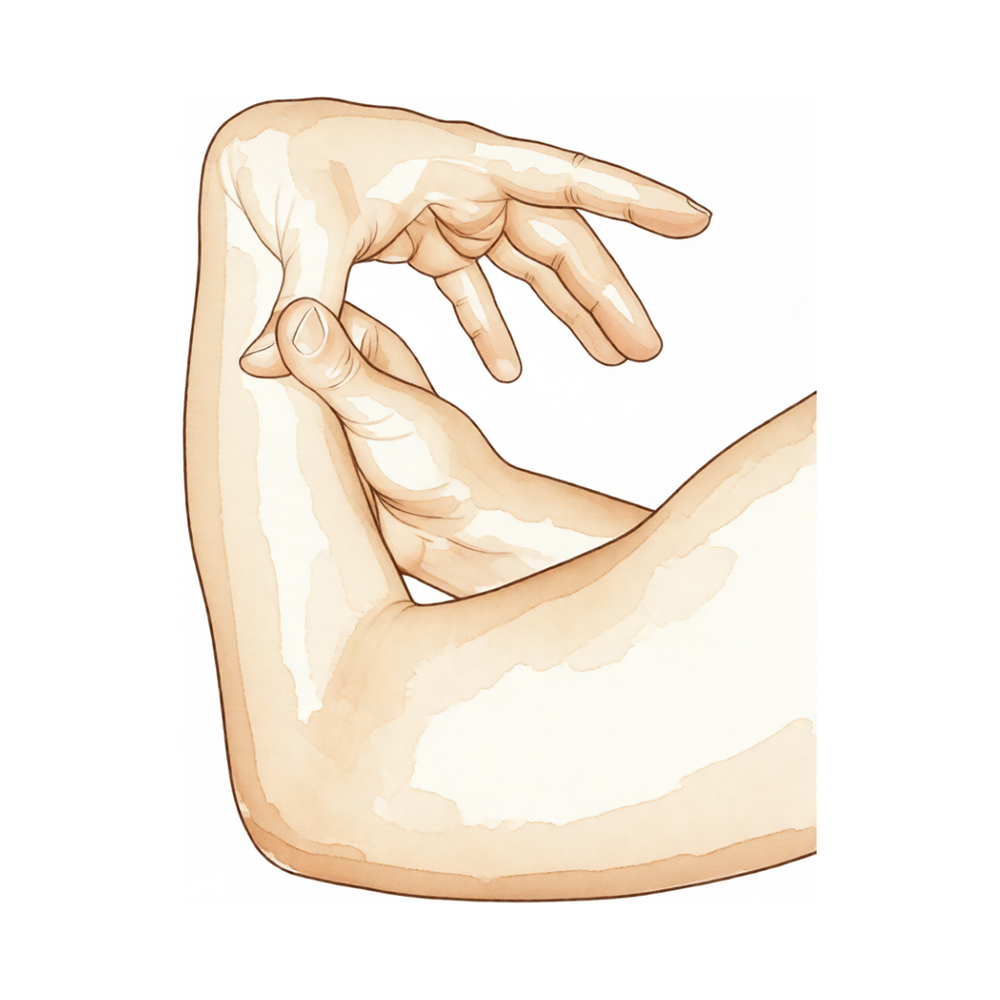
Um polegar dobrado para trás, em direção ao antebraço, demonstrando hipermobilidade articular.
O sinal clássico da hipermobilidade articular é o polegar que consegue dobrar-se para trás, em direção ao antebraço. Dagger9977 / Wikimedia Commons, CC BY-SA 3.0

Esta página foi traduzida automaticamente e ainda não foi verificada por um médico. A versão em inglês é a versão oficial.

O que você está sentindo

Talvez você sempre tenha sido a pessoa “com articulações flexíveis”, capaz de dobrar o polegar até o antebraço, hiperextender os cotovelos ou assumir posições que fazem outras pessoas estremecer. Para muitas pessoas, essa flexibilidade é apenas uma peculiaridade inofensiva e não causa nenhum problema.

Porém, para algumas, ela tem um preço. As articulações que se movem além do limite normal podem doer, especialmente após atividades físicas ou ao final do dia. Você pode notar que algumas articulações estalam, fazem barulho ou parecem frouxas, como se pudessem sair do lugar — e, às vezes, realmente saem. O ombro, as articulações dos dedos e a base do polegar são os locais mais comuns nos membros superiores: um ombro que se desloca parcialmente (subluxação) ou totalmente, dedos que se dobram de maneira anormal, ou uma articulação do polegar que “cede” ao segurar ou apertar algo. As lesões parecem demorar mais para cicatrizar do que o esperado, e a mesma articulação pode continuar apresentando problemas.

A hipermobilidade costuma vir acompanhada de outros sinais. Algumas pessoas têm pele macia ou elástica e apresentam hematomas facilmente. Muitos relatam fadiga desproporcional ao esforço realizado, tontura ou taquicardia ao ficar em pé, além de sintomas digestivos como inchaço ou refluxo. Nem todo mundo apresenta todos esses sinais, mas se vários deles se aplicam a você, juntamente com as articulações frouxas, é possível que haja uma relação entre eles.

O que está realmente acontecendo

As articulações são mantidas unidas e sustentadas por tecido conectivo (ligamentos, tendões e a cápsula ao redor de cada articulação); um componente fundamental desse tecido é uma proteína chamada colágeno. Em pessoas com hipermobilidade, o colágeno e o tecido conectivo são um pouco mais elásticos e flexíveis do que o normal. Assim, as estruturas de suporte permitem que as articulações se movam além da amplitude normal.

Esse quadro se enquadra em um espectro. Em uma das extremidades está a simples hipermobilidade articular, que nunca gera problemas. Quando as articulações frouxas passam a causar dor, instabilidade ou lesões recorrentes, os médicos denominam isso de distúrbio do espectro da hipermobilidade. Na outra extremidade encontra-se a síndrome de Ehlers-Danlos hipermóvel (hEDS), na qual a elasticidade excessiva do tecido conectivo é mais acentuada e costuma vir acompanhada de manifestações em todo o corpo (pele, hematomas, fadiga, problemas gastrointestinais e tonturas/sintomas autonômicos). Os limites entre essas categorias não são bem definidos, e a posição de cada pessoa dentro do espectro pode mudar com o tempo. Para ajudar nesse mapeamento, os médicos costumam utilizar um conjunto simples de testes de flexão chamado escore de Beighton, além da anamnese completa do paciente.

O motivo pelo qual tudo isso afeta as articulações pode ser resumido assim: se os suportes passivos (ligamentos e cápsula) mantêm a articulação com menos firmeza, ela passa a depender muito mais dos músculos ao seu redor para se manter estável. Quando esses músculos são fortes e bem coordenados, a articulação permanece no lugar. Porém, quando ficam cansados ou não estão condicionados para essa função, a articulação tende a deslizar, doer e, ao longo dos anos, pode sofrer um desgaste um pouco maior do que o normal.

Existe um padrão importante a se conhecer no que diz respeito ao ombro: enquanto uma única lesão pode deslocar um ombro normal em apenas uma direção, um ombro frouxo costuma apresentar instabilidade em várias direções ao mesmo tempo, deslizando para frente, para trás ou para baixo. Os médicos chamam isso de instabilidade multidirecional. Isso também faz com que esses ombros tendam a deslocar-se parcialmente e voltar sozinhos (subluxar) com mais frequência do que a sofrer um deslocamento completo. Isso é relevante porque esse tipo de instabilidade responde melhor ao fortalecimento do controle muscular e menos bem apenas à cirurgia.

O que podemos fazer a respeito

A mensagem mais importante é esta: a hipermobilidade e a hEDS não têm cura, mas são perfeitamente controláveis, e a base do tratamento não é um comprimido nem uma cirurgia. É fortalecer os músculos que estabilizam as suas articulações.

A fisioterapia e o fortalecimento muscular direcionado são os pilares do tratamento. Um fisioterapeuta que compreenda a hipermobilidade trabalhará com você para desenvolver o controle e a força ao redor das articulações que mais lhe causam problemas. No caso dos membros superiores, isso geralmente significa os músculos da escápula e do manguito rotador, bem como os pequenos músculos que controlam o polegar e os dedos. O objetivo é treinar os músculos para exercerem a função de estabilização que os ligamentos, por sua vez, realizam de forma insuficiente. Trata-se de um programa gradual e contínuo, não de uma solução rápida; porém, é o que traz melhorias para a maioria das pessoas.

Além disso, várias outras medidas também ajudam:

  • Controle do ritmo de atividades e proteção articular: distribuir as atividades ao longo do dia, evitar posições extremas que sobrecarregam as articulações frouxas e adaptar a forma como realiza tarefas exigentes ou repetitivas.
  • Uso de órteses e fitas adesivas: aplicadas seletivamente para dar suporte a uma articulação enquanto se fortalece a musculatura ou durante um período de piora dos sintomas; não devem ser usadas como apoio permanente.
  • Controle da dor: estratégias simples, às vezes medicamentos, além de atenção ao sono, à fadiga e a outros sintomas que afetam todo o corpo, pois todos influenciam diretamente a sensação nas articulações.

A cirurgia deve ser considerada com cautela. Para um cirurgião de membros superiores, este é um ponto realmente importante. Quando uma articulação (geralmente o ombro) se desloca repetidamente, mesmo após um bom programa de reabilitação, pode-se considerar uma operação para estabilizá-la. Contudo, o mesmo tecido elástico que tornou a articulação instável também dificulta a manutenção dos reparos cirúrgicos e pode cicatrizar de maneira diferente; por isso, as cirurgias padrão de estabilização apresentam maior risco de falha ou de perda de efeito ao longo do tempo. Em razão disso, a cirurgia é reservada para casos cuidadosamente selecionados, planejados levando em conta a hipermobilidade do paciente, e sempre acompanhada de um programa de fortalecimento muscular antes e depois da operação. A reabilitação é o que garante a eficácia do resultado cirúrgico.

O que esperar

A hipermobilidade faz parte da estrutura do seu corpo, portanto não desaparece, mas seu impacto pode mudar drasticamente com o tratamento adequado. Muitas pessoas que aderem a um programa de fortalecimento muscular percebem que suas articulações ficam muito mais estáveis, a dor diminui e as subluxações/luxações tornam-se muito menos frequentes. O progresso costuma ser gradual, não repentino, sendo avaliado ao longo de meses; os benefícios são melhor mantidos ao manter os músculos fortalecidos a longo prazo, em vez de interromper o programa após a melhora.

É útil encarar isso como uma parceria de longo prazo com o próprio corpo, e não como um problema que deve ser resolvido de uma vez por todas. Surtos ainda podem ocorrer, especialmente após doenças, períodos de crescimento acelerado ou redução na atividade física; com o tempo, você aprenderá a identificar os sinais precursores e a preveni-los. Quando outros sintomas estão presentes (fadiga, tontura, problemas intestinais), cuidar deles juntamente com as articulações tende a tornar tudo mais controlável. Com um plano bem elaborado, a maioria das pessoas consegue permanecer ativas e fazer o que é importante para elas.

Quando procurar um especialista

  • Uma articulação que se desloca ou sai parcialmente repetidamente, especialmente o ombro, ou um primeiro deslocamento que não se resolve.
  • Dor incapacitante ou que piora progressivamente, mesmo com repouso e com as medidas habituais.
  • Instabilidade que atrapalha a vida diária: dificuldade para segurar objetos, levantar peso, trabalhar ou dormir, pois a articulação falha constantemente.
  • Um problema articular novo ou que piora rapidamente, ou formigamento, dormência ou fraqueza no braço ou na mão.
  • Se você suspeitar de um transtorno do espectro da hipermobilidade ou hEDS e deseja uma avaliação adequada (especialmente quando a hipermobilidade articular vem acompanhada de problemas na pele, hematomas, fadiga, tonturas ou sintomas gastrointestinais), vale a pena buscar uma avaliação criteriosa para que um plano de tratamento adequado seja estabelecido.

Em maior profundidade

Advanced reading: the deeper science (optional)

Esta seção vai além do que você precisa saber para tomar decisões sobre o próprio tratamento. Vale a pena ler mais sobre a hipermobilidade, pois a ideia de que as articulações frouxas são consequência de um problema genético no colágeno, e que uma articulação instável pode ser simplesmente corrigida cirurgicamente, não se sustenta diante das evidências científicas em nenhum dos dois casos.

O tipo mais comum não tem causa genética conhecida

A classificação internacional de 2017 reconhece 13 tipos de síndrome de Ehlers-Danlos. Doze deles são causados por variantes em 20 genes já identificados; para esses doze, um diagnóstico definitivo requer confirmação molecular [1].

O décimo terceiro tipo é a SED hipermóvel, de longe a mais comum; sua base molecular, permanece desconhecida [1]. Não existe teste genético para ela. É o único tipo diagnosticado exclusivamente com base em critérios clínicos, razão pela qual o diagnóstico pode parecer subjetivo e frustrante, em comparação com condições que contam com resultados laboratoriais.

Isso é relevante para a forma como a doença é explicada. Afirmar que a hipermobilidade “decorre de diferenças hereditárias nos genes do colágeno” é correto para a SED clássica e vascular, para as quais as variantes causadoras já são conhecidas. No caso da SED hipermóvel, trata-se de uma suposição plausível, mas ainda não de um fato comprovado. A postura honesta é que podemos descrever com precisão o comportamento dos tecidos, porém ainda não conseguimos identificar a causa molecular.

A pontuação de Beighton é mais confiável do que sua reputação sugere

A pontuação de Beighton, que vai de 0 a 9 pontos, costuma ser considerada rudimentar e dependente do examinador. Contudo, essa crítica não tem fundamento. Uma revisão sistemática envolvendo 1.333 participantes constatou que essa pontuação apresenta confiabilidade substancial a excelente tanto entre diferentes examinadores quanto para o mesmo examinador ao longo do tempo; isso vale para profissionais com diferentes formações e níveis de experiência [2].

Portanto, essa medida é válida. A verdadeira limitação, porém, é outra: a pontuação leva em conta os dedos mínimos, polegares, cotovelos, joelhos e coluna vertebral; um bom resultado indica apenas uma laxidade generalizada do tecido conjuntivo. Ela nunca foi concebida para avaliar a estabilidade de um ombro específico.

O que a hipermobilidade realmente prediz para o membro superior

Este é o número que realmente importa em uma clínica de ombro. Uma revisão sistemática e meta-análise envolvendo 2.335 atletas constataram que a hipermobilidade articular estava associada a uma probabilidade três vezes maior de lesão no ombro [3]. Os autores são bastante cautelosos quanto à qualidade das evidências disponíveis, mas a direção e a magnitude desse risco são difíceis de ignorar.

Esse risco não se limita ao membro superior. A laxidade articular generalizada está associada a maior taxa de falha do enxerto e resultados clínicos inferiores após a reconstrução do ligamento cruzado anterior [4]; o mesmo tecido se comporta da mesma forma em outra articulação.

A cirurgia tem menos eficácia, e os números são específicos

Esta é a parte menos confortável da literatura médica, mas também a mais útil.

Uma revisão sistemática e meta-análise envolvendo 1.769 pacientes constatou que pessoas com síndrome de Ehlers-Danlos submetidas à artroplastia total apresentavam risco significativamente maior de reoperação por qualquer motivo, instabilidade articular, afrouxamento asséptico do implante e complicações na cicatrização [5]. Outra revisão sobre os resultados cirúrgicos ortopédicos em pacientes com síndromes de Ehlers-Danlos chegou à mesma conclusão: os resultados são piores do que na população geral, e as complicações ocorrem com maior frequência [6].

Nada disso significa que a cirurgia seja inadequada. Significa apenas que o benefício esperado é menor e a taxa de complicações esperada é maior do que os valores citados para a população geral; por isso, o critério para indicar a cirurgia deve ser ajustado. Se você possui tecidos hipermóveis, as taxas de sucesso publicadas para determinados procedimentos cirúrgicos, na maioria dos casos, não foram medidas em pessoas como você.

No caso de um ombro instável, a reabilitação não é uma “segunda opção”

A instabilidade multidirecional – ou seja, um ombro que se move excessivamente em várias direções, em vez de apenas se deslocar numa única direção – é o exemplo clássico do problema de hipermobilidade do ombro, e constitui a ilustração mais clara do ponto mencionado acima.

Quando a cirurgia se torna necessária após o fracasso real da reabilitação, tanto a plicatura capsular artroscópica quanto o deslocamento capsular aberto apresentam taxas comparáveis de instabilidade recorrente, retorno às atividades esportivas e complicações [7][8]; além disso, a abordagem artroscópica gera menos rigidez pós-operatória [9]. Uma técnica histórica, o encolhimento térmico da cápsula, teve resultados tão ruins que a meta-análise desaconselha seu uso [9].

A ordem dos procedimentos é o que importa. Todas essas revisões apresentam a cirurgia como um passo subsequente ao fracasso da reabilitação, e não como uma alternativa a ela; afinal, o aperto da cápsula não altera a composição dos tecidos que a formam, e os músculos continuam sendo a única parte do sistema que pode ser fortalecida.

Referências

[1] Malfait F, Francomano C, Byers P, Belmont J, Berglund B, Black J, et al. A classificação internacional de 2017 das síndromes de Ehlers-Danlos. Am J Med Genet C Semin Med Genet. 2017;175(1):8-26. https://doi.org/10.1002/ajmg.c.31552

[2] Bockhorn LN, Vera AM, Dong D, Delgado DA, Varner KE, Harris JD. Confiabilidade entre observadores e dentro de um mesmo observador da pontuação de Beighton: uma revisão sistemática. Orthop J Sports Med. 2021;9(1). https://doi.org/10.1177/2325967120968099

[3] Liaghat B, Pedersen JR, Young JJ, Thorlund JB, Juul-Kristensen B, Juhl CB. A hipermobilidade articular em atletas está associada a lesões no ombro: uma revisão sistemática e meta-análise. BMC Musculoskelet Disord. 2021;22(1). https://doi.org/10.1186/s12891-021-04249-x

[4] Krebs NM, Barber-Westin S, Noyes FR. A laxidade articular generalizada está associada a maiores taxas de falha nas reconstruções primárias do ligamento cruzado anterior: uma revisão sistemática. Arthroscopy. 2021;37(7):2337-47. https://doi.org/10.1016/j.arthro.2021.02.021

[5] Subramanian T, Uzzo RN, Lama J, Mazzucco M, Ortiz S, Gausden EB. Resultados da artroplastia total em pacientes com síndrome de Ehlers-Danlos: uma revisão sistemática e meta-análise. J Arthroplasty. 2025;40(8):2186-95.e1. https://doi.org/10.1016/j.arth.2025.01.018

[6] Yonko EA, LoTurco HM, Carter EM, Raggio CL. Considerações ortopédicas e resultados cirúrgicos nas síndromes de Ehlers-Danlos. Am J Med Genet C Semin Med Genet. 2021;187(4):458-65. https://doi.org/10.1002/ajmg.c.31958

[7] Longo UG, Rizzello G, Loppini M, Locher J, Buchmann S, Maffulli N, et al. Instabilidade multidirecional do ombro: uma revisão sistemática. Arthroscopy. 2015;31(12):2431-43. https://doi.org/10.1016/j.arthro.2015.06.006

[8] Jacobson ME, Riggenbach M, Wooldridge AN, Bishop JY. Deslocamento capsular aberto e plicatura capsular artroscópica para tratamento da instabilidade multidirecional. Arthroscopy. 2012;28(7):1010-17. https://doi.org/10.1016/j.arthro.2011.12.006

[9] Chen D, Goldberg J, Herald J, Critchley I, Barmare A. Efeitos do tratamento cirúrgico na instabilidade multidirecional do ombro: uma meta-análise. Knee Surg Sports Traumatol Arthrosc. 2015;24(2):630-9. https://doi.org/10.1007/s00167-015-3901-4


Creative Commons BY-NC 4.0

CC Creative Commons licence
BY Attribution — you must credit the source
NC NonCommercial — not for commercial use

Attribution-NonCommercial 4.0 International


Creative Commons Corporation ("Creative Commons") is not a law firm and does not provide legal services or legal advice. Distribution of Creative Commons public licenses does not create a lawyer-client or other relationship. Creative Commons makes its licenses and related information available on an "as-is" basis. Creative Commons gives no warranties regarding its licenses, any material licensed under their terms and conditions, or any related information. Creative Commons disclaims all liability for damages resulting from their use to the fullest extent possible.

Using Creative Commons Public Licenses

Creative Commons public licenses provide a standard set of terms and conditions that creators and other rights holders may use to share original works of authorship and other material subject to copyright and certain other rights specified in the public license below. The following considerations are for informational purposes only, are not exhaustive, and do not form part of our licenses.

Considerations for licensors: Our public licenses are intended for use by those authorized to give the public permission to use material in ways otherwise restricted by copyright and certain other rights. Our licenses are irrevocable. Licensors should read and understand the terms and conditions of the license they choose before applying it. Licensors should also secure all rights necessary before applying our licenses so that the public can reuse the material as expected. Licensors should clearly mark any material not subject to the license. This includes other CC- licensed material, or material used under an exception or limitation to copyright. More considerations for licensors: wiki.creativecommons.org/Considerations_for_licensors

Considerations for the public: By using one of our public licenses, a licensor grants the public permission to use the licensed material under specified terms and conditions. If the licensor's permission is not necessary for any reason--for example, because of any applicable exception or limitation to copyright--then that use is not regulated by the license. Our licenses grant only permissions under copyright and certain other rights that a licensor has authority to grant. Use of the licensed material may still be restricted for other reasons, including because others have copyright or other rights in the material. A licensor may make special requests, such as asking that all changes be marked or described. Although not required by our licenses, you are encouraged to respect those requests where reasonable. More considerations for the public: wiki.creativecommons.org/Considerations_for_licensees


Creative Commons Attribution-NonCommercial 4.0 International Public License

By exercising the Licensed Rights (defined below), You accept and agree to be bound by the terms and conditions of this Creative Commons Attribution-NonCommercial 4.0 International Public License ("Public License"). To the extent this Public License may be interpreted as a contract, You are granted the Licensed Rights in consideration of Your acceptance of these terms and conditions, and the Licensor grants You such rights in consideration of benefits the Licensor receives from making the Licensed Material available under these terms and conditions.

Section 1 -- Definitions.

a. Adapted Material means material subject to Copyright and Similar Rights that is derived from or based upon the Licensed Material and in which the Licensed Material is translated, altered, arranged, transformed, or otherwise modified in a manner requiring permission under the Copyright and Similar Rights held by the Licensor. For purposes of this Public License, where the Licensed Material is a musical work, performance, or sound recording, Adapted Material is always produced where the Licensed Material is synched in timed relation with a moving image.

b. Adapter's License means the license You apply to Your Copyright and Similar Rights in Your contributions to Adapted Material in accordance with the terms and conditions of this Public License.

c. Copyright and Similar Rights means copyright and/or similar rights closely related to copyright including, without limitation, performance, broadcast, sound recording, and Sui Generis Database Rights, without regard to how the rights are labeled or categorized. For purposes of this Public License, the rights specified in Section 2(b)(1)-(2) are not Copyright and Similar Rights.

d. Effective Technological Measures means those measures that, in the absence of proper authority, may not be circumvented under laws fulfilling obligations under Article 11 of the WIPO Copyright Treaty adopted on December 20, 1996, and/or similar international agreements.

e. Exceptions and Limitations means fair use, fair dealing, and/or any other exception or limitation to Copyright and Similar Rights that applies to Your use of the Licensed Material.

f. Licensed Material means the artistic or literary work, database, or other material to which the Licensor applied this Public License.

g. Licensed Rights means the rights granted to You subject to the terms and conditions of this Public License, which are limited to all Copyright and Similar Rights that apply to Your use of the Licensed Material and that the Licensor has authority to license.

h. Licensor means the individual(s) or entity(ies) granting rights under this Public License.

i. NonCommercial means not primarily intended for or directed towards commercial advantage or monetary compensation. For purposes of this Public License, the exchange of the Licensed Material for other material subject to Copyright and Similar Rights by digital file-sharing or similar means is NonCommercial provided there is no payment of monetary compensation in connection with the exchange.

j. Share means to provide material to the public by any means or process that requires permission under the Licensed Rights, such as reproduction, public display, public performance, distribution, dissemination, communication, or importation, and to make material available to the public including in ways that members of the public may access the material from a place and at a time individually chosen by them.

k. Sui Generis Database Rights means rights other than copyright resulting from Directive 96/9/EC of the European Parliament and of the Council of 11 March 1996 on the legal protection of databases, as amended and/or succeeded, as well as other essentially equivalent rights anywhere in the world.

l. You means the individual or entity exercising the Licensed Rights under this Public License. Your has a corresponding meaning.

Section 2 -- Scope.

a. License grant.

1. Subject to the terms and conditions of this Public License, the Licensor hereby grants You a worldwide, royalty-free, non-sublicensable, non-exclusive, irrevocable license to exercise the Licensed Rights in the Licensed Material to:

a. reproduce and Share the Licensed Material, in whole or in part, for NonCommercial purposes only; and

b. produce, reproduce, and Share Adapted Material for NonCommercial purposes only.

2. Exceptions and Limitations. For the avoidance of doubt, where Exceptions and Limitations apply to Your use, this Public License does not apply, and You do not need to comply with its terms and conditions.

3. Term. The term of this Public License is specified in Section 6(a).

4. Media and formats; technical modifications allowed. The Licensor authorizes You to exercise the Licensed Rights in all media and formats whether now known or hereafter created, and to make technical modifications necessary to do so. The Licensor waives and/or agrees not to assert any right or authority to forbid You from making technical modifications necessary to exercise the Licensed Rights, including technical modifications necessary to circumvent Effective Technological Measures. For purposes of this Public License, simply making modifications authorized by this Section 2(a) (4) never produces Adapted Material.

5. Downstream recipients.

a. Offer from the Licensor -- Licensed Material. Every recipient of the Licensed Material automatically receives an offer from the Licensor to exercise the Licensed Rights under the terms and conditions of this Public License.

b. No downstream restrictions. You may not offer or impose any additional or different terms or conditions on, or apply any Effective Technological Measures to, the Licensed Material if doing so restricts exercise of the Licensed Rights by any recipient of the Licensed Material.

6. No endorsement. Nothing in this Public License constitutes or may be construed as permission to assert or imply that You are, or that Your use of the Licensed Material is, connected with, or sponsored, endorsed, or granted official status by, the Licensor or others designated to receive attribution as provided in Section 3(a)(1)(A)(i).

b. Other rights.

1. Moral rights, such as the right of integrity, are not licensed under this Public License, nor are publicity, privacy, and/or other similar personality rights; however, to the extent possible, the Licensor waives and/or agrees not to assert any such rights held by the Licensor to the limited extent necessary to allow You to exercise the Licensed Rights, but not otherwise.

2. Patent and trademark rights are not licensed under this Public License.

3. To the extent possible, the Licensor waives any right to collect royalties from You for the exercise of the Licensed Rights, whether directly or through a collecting society under any voluntary or waivable statutory or compulsory licensing scheme. In all other cases the Licensor expressly reserves any right to collect such royalties, including when the Licensed Material is used other than for NonCommercial purposes.

Section 3 -- License Conditions.

Your exercise of the Licensed Rights is expressly made subject to the following conditions.

a. Attribution.

1. If You Share the Licensed Material (including in modified form), You must:

a. retain the following if it is supplied by the Licensor with the Licensed Material:

i. identification of the creator(s) of the Licensed Material and any others designated to receive attribution, in any reasonable manner requested by the Licensor (including by pseudonym if designated);

ii. a copyright notice;

iii. a notice that refers to this Public License;

iv. a notice that refers to the disclaimer of warranties;

v. a URI or hyperlink to the Licensed Material to the extent reasonably practicable;

b. indicate if You modified the Licensed Material and retain an indication of any previous modifications; and

c. indicate the Licensed Material is licensed under this Public License, and include the text of, or the URI or hyperlink to, this Public License.

2. You may satisfy the conditions in Section 3(a)(1) in any reasonable manner based on the medium, means, and context in which You Share the Licensed Material. For example, it may be reasonable to satisfy the conditions by providing a URI or hyperlink to a resource that includes the required information.

3. If requested by the Licensor, You must remove any of the information required by Section 3(a)(1)(A) to the extent reasonably practicable.

4. If You Share Adapted Material You produce, the Adapter's License You apply must not prevent recipients of the Adapted Material from complying with this Public License.

Section 4 -- Sui Generis Database Rights.

Where the Licensed Rights include Sui Generis Database Rights that apply to Your use of the Licensed Material:

a. for the avoidance of doubt, Section 2(a)(1) grants You the right to extract, reuse, reproduce, and Share all or a substantial portion of the contents of the database for NonCommercial purposes only;

b. if You include all or a substantial portion of the database contents in a database in which You have Sui Generis Database Rights, then the database in which You have Sui Generis Database Rights (but not its individual contents) is Adapted Material; and

c. You must comply with the conditions in Section 3(a) if You Share all or a substantial portion of the contents of the database.

For the avoidance of doubt, this Section 4 supplements and does not replace Your obligations under this Public License where the Licensed Rights include other Copyright and Similar Rights.

Section 5 -- Disclaimer of Warranties and Limitation of Liability.

a. UNLESS OTHERWISE SEPARATELY UNDERTAKEN BY THE LICENSOR, TO THE EXTENT POSSIBLE, THE LICENSOR OFFERS THE LICENSED MATERIAL AS-IS AND AS-AVAILABLE, AND MAKES NO REPRESENTATIONS OR WARRANTIES OF ANY KIND CONCERNING THE LICENSED MATERIAL, WHETHER EXPRESS, IMPLIED, STATUTORY, OR OTHER. THIS INCLUDES, WITHOUT LIMITATION, WARRANTIES OF TITLE, MERCHANTABILITY, FITNESS FOR A PARTICULAR PURPOSE, NON-INFRINGEMENT, ABSENCE OF LATENT OR OTHER DEFECTS, ACCURACY, OR THE PRESENCE OR ABSENCE OF ERRORS, WHETHER OR NOT KNOWN OR DISCOVERABLE. WHERE DISCLAIMERS OF WARRANTIES ARE NOT ALLOWED IN FULL OR IN PART, THIS DISCLAIMER MAY NOT APPLY TO YOU.

b. TO THE EXTENT POSSIBLE, IN NO EVENT WILL THE LICENSOR BE LIABLE TO YOU ON ANY LEGAL THEORY (INCLUDING, WITHOUT LIMITATION, NEGLIGENCE) OR OTHERWISE FOR ANY DIRECT, SPECIAL, INDIRECT, INCIDENTAL, CONSEQUENTIAL, PUNITIVE, EXEMPLARY, OR OTHER LOSSES, COSTS, EXPENSES, OR DAMAGES ARISING OUT OF THIS PUBLIC LICENSE OR USE OF THE LICENSED MATERIAL, EVEN IF THE LICENSOR HAS BEEN ADVISED OF THE POSSIBILITY OF SUCH LOSSES, COSTS, EXPENSES, OR DAMAGES. WHERE A LIMITATION OF LIABILITY IS NOT ALLOWED IN FULL OR IN PART, THIS LIMITATION MAY NOT APPLY TO YOU.

c. The disclaimer of warranties and limitation of liability provided above shall be interpreted in a manner that, to the extent possible, most closely approximates an absolute disclaimer and waiver of all liability.

Section 6 -- Term and Termination.

a. This Public License applies for the term of the Copyright and Similar Rights licensed here. However, if You fail to comply with this Public License, then Your rights under this Public License terminate automatically.

b. Where Your right to use the Licensed Material has terminated under Section 6(a), it reinstates:

1. automatically as of the date the violation is cured, provided it is cured within 30 days of Your discovery of the violation; or

2. upon express reinstatement by the Licensor.

For the avoidance of doubt, this Section 6(b) does not affect any right the Licensor may have to seek remedies for Your violations of this Public License.

c. For the avoidance of doubt, the Licensor may also offer the Licensed Material under separate terms or conditions or stop distributing the Licensed Material at any time; however, doing so will not terminate this Public License.

d. Sections 1, 5, 6, 7, and 8 survive termination of this Public License.

Section 7 -- Other Terms and Conditions.

a. The Licensor shall not be bound by any additional or different terms or conditions communicated by You unless expressly agreed.

b. Any arrangements, understandings, or agreements regarding the Licensed Material not stated herein are separate from and independent of the terms and conditions of this Public License.

Section 8 -- Interpretation.

a. For the avoidance of doubt, this Public License does not, and shall not be interpreted to, reduce, limit, restrict, or impose conditions on any use of the Licensed Material that could lawfully be made without permission under this Public License.

b. To the extent possible, if any provision of this Public License is deemed unenforceable, it shall be automatically reformed to the minimum extent necessary to make it enforceable. If the provision cannot be reformed, it shall be severed from this Public License without affecting the enforceability of the remaining terms and conditions.

c. No term or condition of this Public License will be waived and no failure to comply consented to unless expressly agreed to by the Licensor.

d. Nothing in this Public License constitutes or may be interpreted as a limitation upon, or waiver of, any privileges and immunities that apply to the Licensor or You, including from the legal processes of any jurisdiction or authority.


Creative Commons is not a party to its public licenses. Notwithstanding, Creative Commons may elect to apply one of its public licenses to material it publishes and in those instances will be considered the “Licensor.” The text of the Creative Commons public licenses is dedicated to the public domain under the CC0 Public Domain Dedication. Except for the limited purpose of indicating that material is shared under a Creative Commons public license or as otherwise permitted by the Creative Commons policies published at creativecommons.org/policies, Creative Commons does not authorize the use of the trademark "Creative Commons" or any other trademark or logo of Creative Commons without its prior written consent including, without limitation, in connection with any unauthorized modifications to any of its public licenses or any other arrangements, understandings, or agreements concerning use of licensed material. For the avoidance of doubt, this paragraph does not form part of the public licenses.

Creative Commons may be contacted at creativecommons.org.