Patients › Rehabilitation
Artroplastia da Articulação da Base do Polegar (Touch)
Um plano de recuperação em etapas após a artroplastia total de mobilidade dupla na base do polegar artrítico (o implante Touch), que consiste em proteger a nova articulação inicialmente com uma tala para o polegar, depois restaurar a oposição e o movimento, e por fim desenvolver a força de pinça e de preensão.
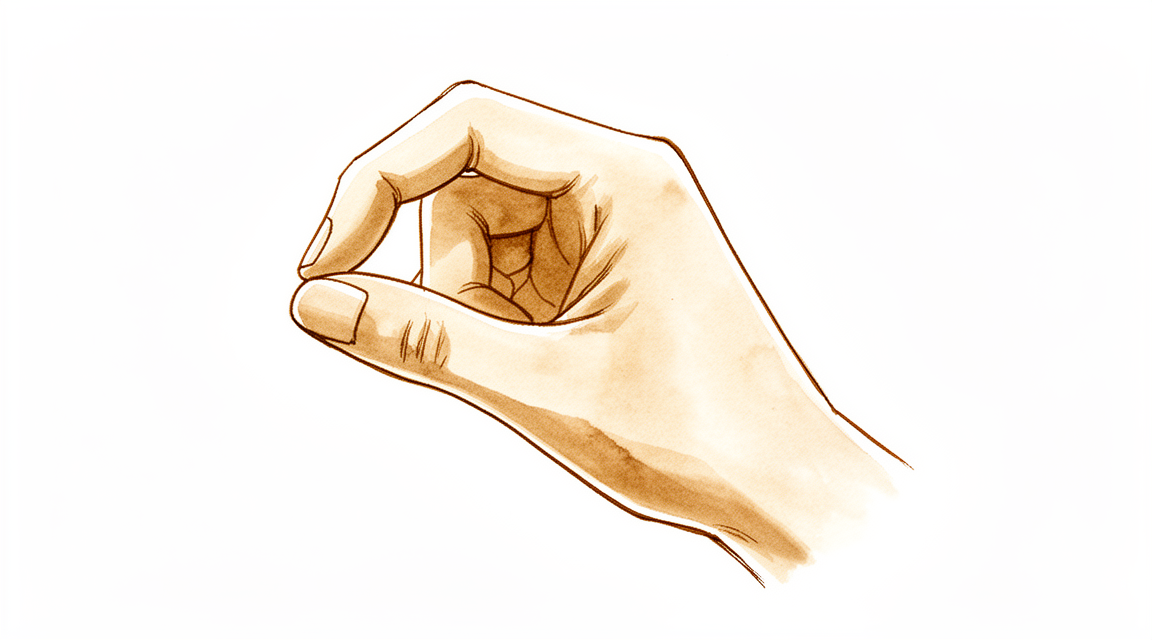
Este protocolo orienta sua recuperação após uma artroplastia da articulação da base do polegar (uma artroplastia total de dupla mobilidade, o implante Touch) para tratamento da artrite na base do polegar, sob a orientação do Dr. Kieran Hirpara no Mater Private Hospital Rockhampton. Ele começa com um programa de exercícios domiciliares, seguido pelo protocolo clínico estruturado destinado ao seu terapeuta de mão; leve esta página ou seu arquivo PDF à sua primeira sessão de terapia, para que a reabilitação seja devidamente coordenada. O terapeuta de mão poderá ajustar o plano conforme a evolução da sua recuperação. Todo o processo de recuperação será conduzido por meio de terapia de mão formal.
Caso tenha alguma dúvida ou preocupação quanto à ferida cirúrgica, entre em contato com o consultório. Geralmente, é útil tirar uma foto da ferida e enviá-la por e-mail para análise.
O que esperar
A articulação na base do polegar (a articulação trapecometacarpal, ou articulação CMC) é o ponto onde o polegar se conecta ao punho; é um local muito comum para o aparecimento de artrite. Nesta cirurgia, as superfícies articulares desgastadas são removidas e substituídas por uma pequena articulação artificial: um implante de dupla mobilidade, um minúsculo sistema esfera-e-soquete que possui uma superfície móvel adicional, garantindo estabilidade e movimento suave. O osso trapézio é mantido, e o comprimento do polegar também é preservado; por isso, a recuperação costuma ser mais rápida do que na trapeziectomia (procedimento mais antigo, que remove o osso e depende da formação de tecido cicatricial ao longo de vários meses).
Um implante bem posicionado é estável e capaz de suportar carga imediatamente; por esse motivo, o polegar precisa ser protegido apenas por um curto período, em vez de ficar imobilizado por semanas. O plano é permitir que os tecidos moles se estabilizem e, em seguida, fazer com que o polegar volte a realizar movimentos de oposição (tocar os outros dedos) e a se mover normalmente, para só então trabalhar a força muscular.
A recuperação ocorre em três fases:
- Primeiro, proteção (cerca de as primeiras 2–3 semanas). Na primeira semana, utiliza-se uma compressa macia e volumosa; depois, uma tala para o polegar para manter a nova articulação em repouso enquanto a ferida e os tecidos moles cicatrizam. Os dedos, o punho e o restante da mão devem permanecer em movimento.
- Depois, movimentação (de aproximadamente 2–3 a 6 semanas). Sem a tala diurna, inicia-se movimentos ativos suaves (oposição, levantar o polegar, abrir o espaço interdigital e movimentos circulares), além do uso da mão em tarefas cotidianas leves.
- Por fim, fortalecimento (a partir da 6ª semana). Assim que o implante se fixar ao osso, inicia-se o fortalecimento da pinça e do aperto, de forma gradual. A força continua a melhorar ao longo dos 6 a 12 meses seguintes.
O ponto fundamental a observar no início é que a nova articulação pode deslocar-se caso seja forçada a uma posição extrema antes que os tecidos ao seu redor tenham cicatrizado. Isso é raro; por isso, o plano inicial consiste simplesmente em evitar forçar o polegar enquanto ele se estabiliza.
Precauções e limitações
- Use a tala para o polegar conforme orientado (uma tala diurna durante as primeiras 2–3 semanas, depois uma tala noturna até a 6ª semana) e mantenha a tala para proteção até que o terapeuta da mão autorize a retirada.
- NÃO force o polegar para posições extremas, e evite movimentos bruscos ou de pegada desajeitada nas primeiras semanas; a nova articulação pode deslocar-se se for forçada antes de se estabilizar. Mova-se apenas dentro dos limites do conforto.
- NÃO realize movimentos de pinçamento forte, aperto, torção (como abrir tampas de frascos, usar chaves ou torneiras) ou levantamento de peso até cerca de 6 semanas; o fortalecimento só será iniciado quando o terapeuta da mão assim determinar.
- Mantenha dedos, punho e o restante da mão em movimento desde o início, e mantenha a mão elevada nos primeiros dias para reduzir o inchaço.
- NÃO dirija até cerca de quatro a seis semanas, após retirar a tala e quando conseguir segurar o volante confortavelmente e sem dor.
Para orientações sobre cuidados com a ferida, inchaço e cicatrização, consulte o guia de cuidados com feridas do consultório.
Seus exercícios
Kieran Hirpara 4.0
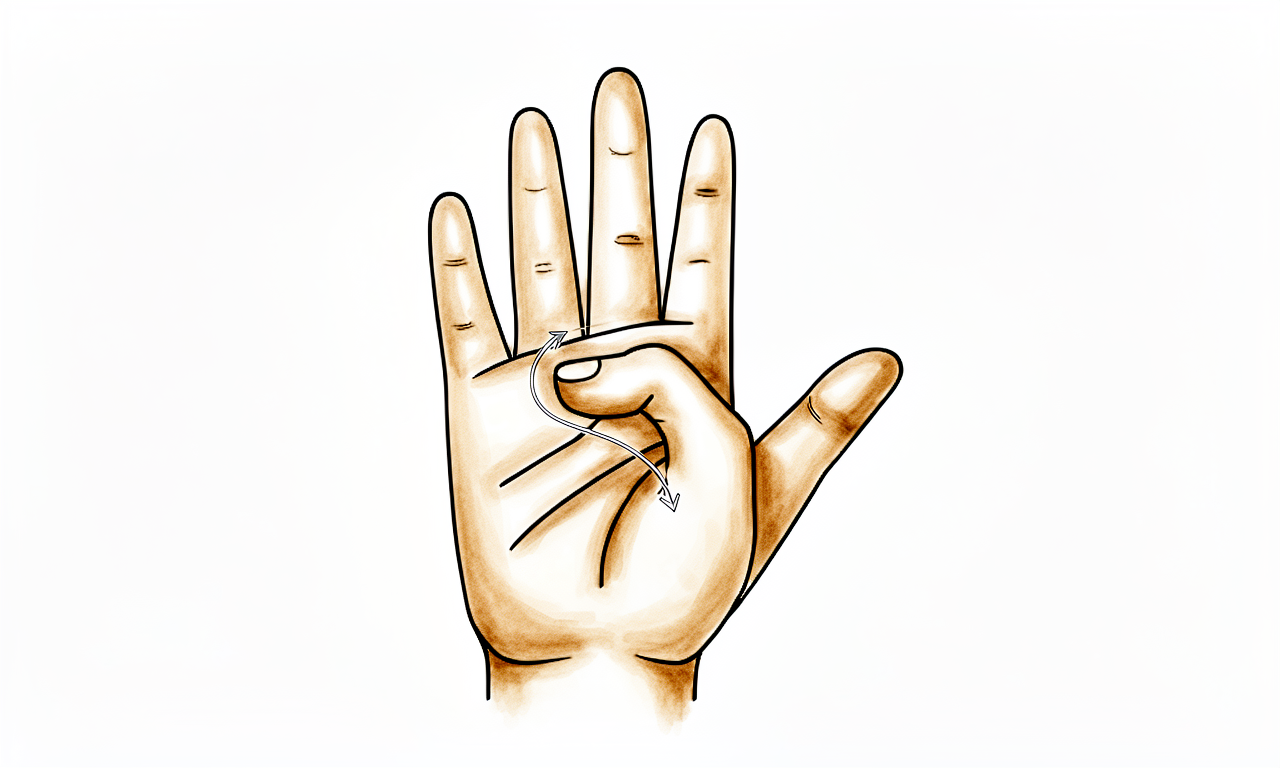
Oposição do polegar (escada de Kapandji)
Toque lentamente a ponta do seu polegar na lateral do indicador, depois na ponta de cada um dos demais dedos, e em seguida deslize-o ao longo do dedo mínimo até a sua base — subindo um pouco mais na “escada” à medida que o movimento se torna mais fácil. Mova-se apenas até onde se sentir confortável. Esse é o movimento fundamental a ser recuperado após uma artroplastia da base do polegar; ele deve ser iniciado com cuidado após a retirada da tala diurna (aproximadamente duas a três semanas após a cirurgia).
Execute a série da escada 5–10 vezes, 2–3 vezes ao dia, respeitando os limites de conforto.
Kieran Hirpara 4.0
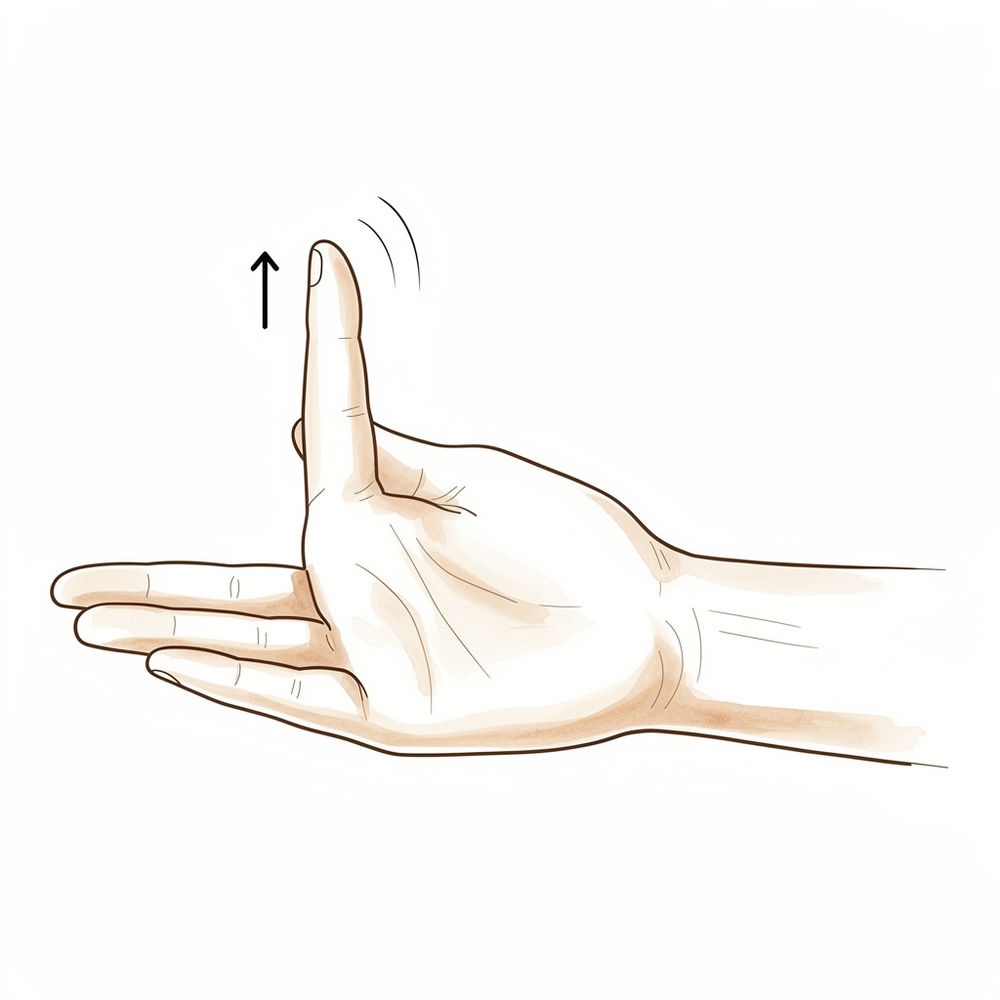
Abdução palmar (elevação do polegar para longe da palma da mão)
Deixe a mão descansar de forma plana, com a palma voltada para cima. Mantendo o polegar reto, levante-o para longe da palma, em direção ao teto, como se estivesse abrindo a mão para segurar uma lata — depois abaixe-o novamente. Isso abre o espaço interdigital e restaura o alcance do polegar. Faça o movimento com suavidade e sem forçar; nas primeiras semanas, não vá até o limite do movimento.
10 vezes, 2–3 vezes ao dia, dentro dos limites do conforto.
Kieran Hirpara 4.0
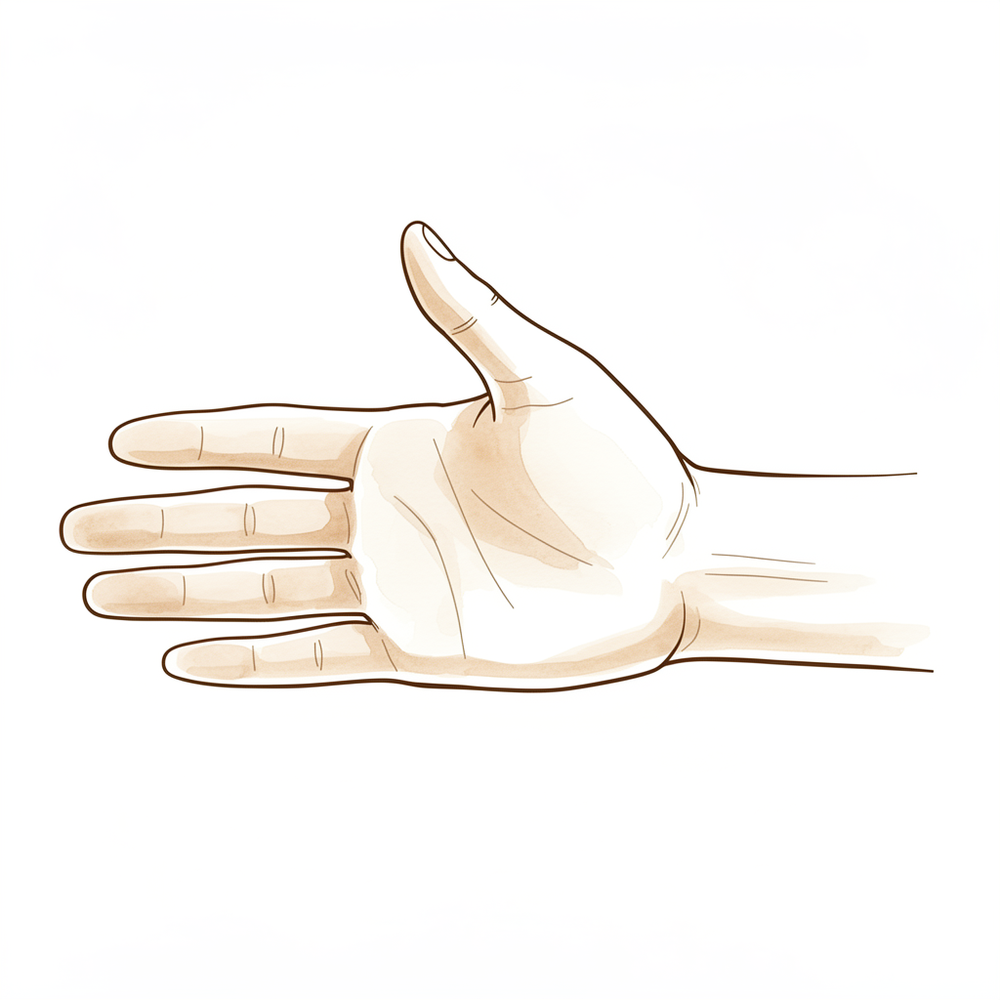
Abdução radial (polegar estendido para o lado)
Deixe a mão estendida, com a palma virada para baixo. Deslize o polegar para o lado, afastando-o do dedo indicador, mantendo-o no mesmo plano da palma — como se formasse um “L” — e depois traga-o de volta. Isso restaura o alcance lateral do polegar. Mova-se lentamente, interrompendo o movimento antes de sentir qualquer tensão.
10 vezes, 2–3 vezes ao dia, dentro dos limites do conforto.
Kieran Hirpara 4.0
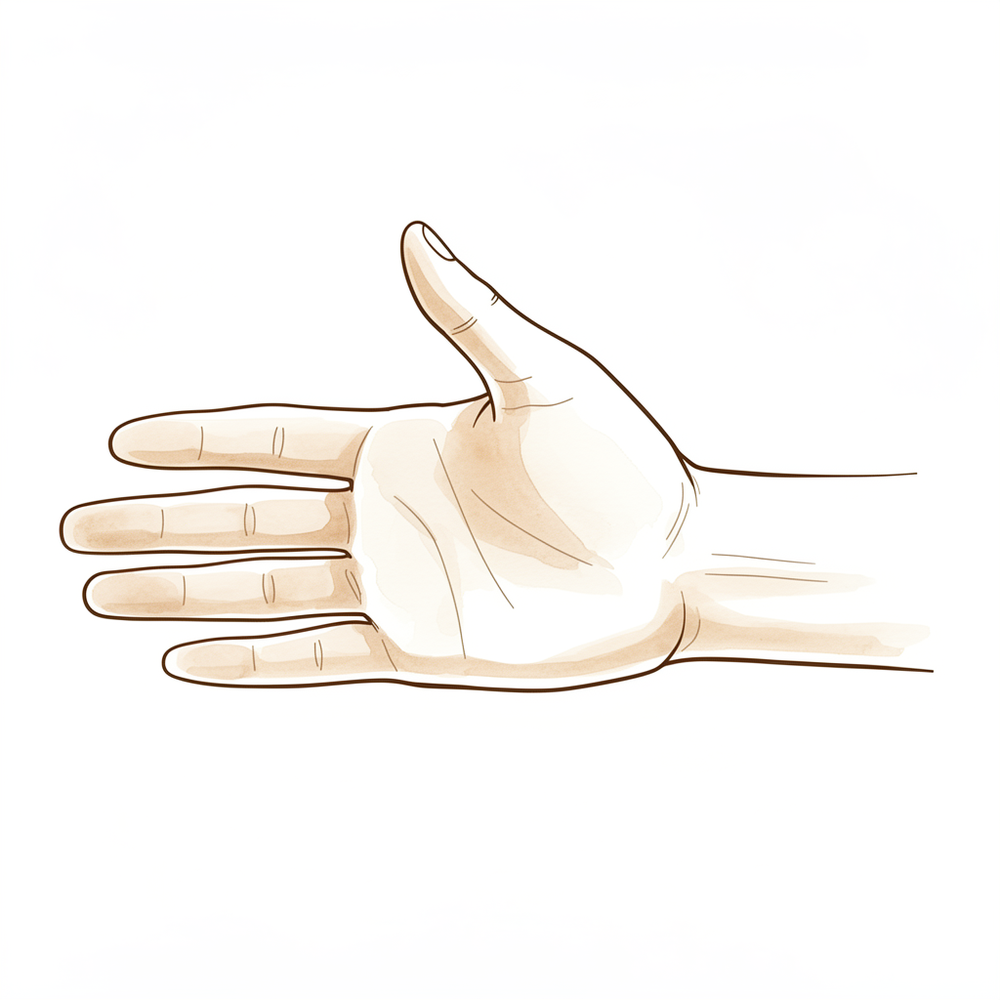
Alongamento do espaço interdigital (primeira comissura)
Abra o espaço entre o polegar e o indicador o máximo que lhe for confortável, sentindo um leve alongamento na região interdigital. Você pode apoiar a mão na mesa e deixar o polegar abrir naturalmente, ou envolvê-lo ao redor de um objeto arredondado. Mantenha essa posição aberta por alguns instantes e depois relaxe. Isso evita que o espaço interdigital fique tenso durante a cicatrização — faça isso com suavidade, nunca com força.
Mantenha por ~5 segundos, 5–10 vezes, 2–3 vezes ao dia.
Kieran Hirpara 4.0
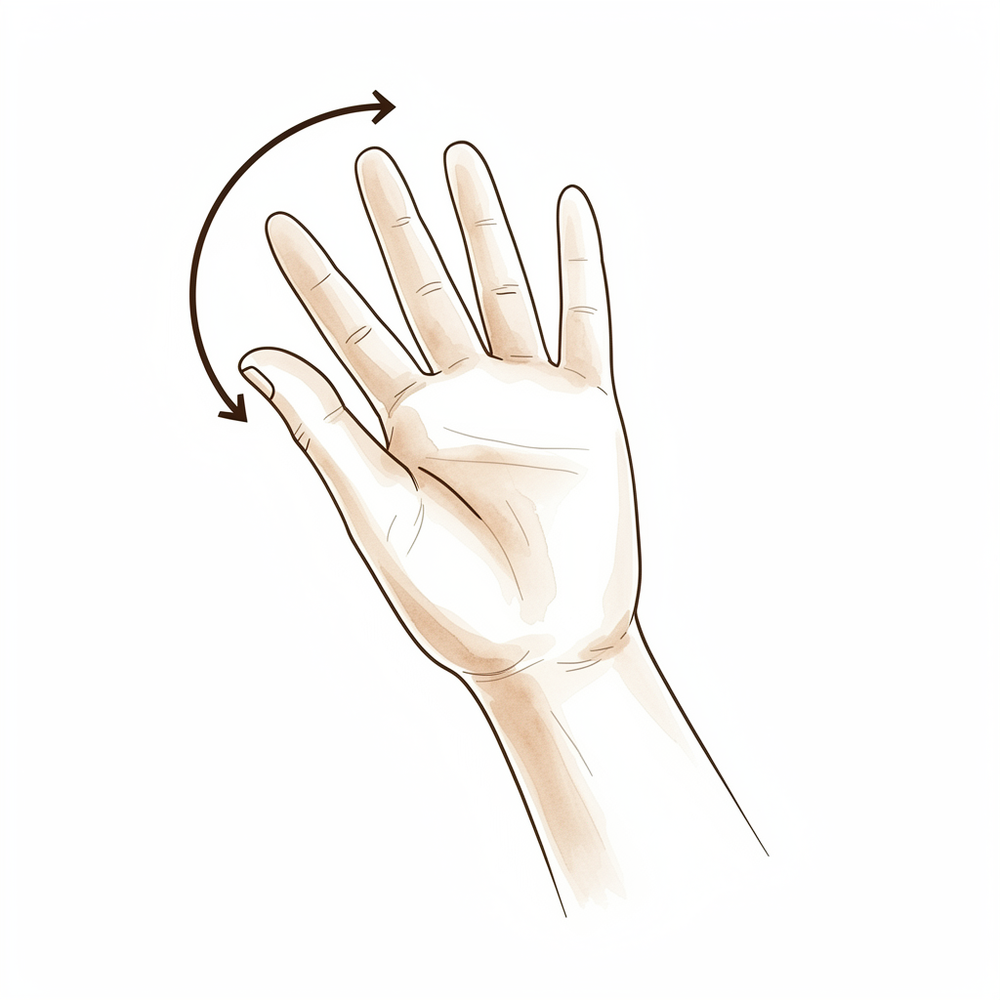
Circumdução do polegar
Com a mão relaxada, faça círculos lentos e suaves com o polegar, movendo-o suavemente por toda a sua amplitude em ambas as direções — como se estivesse mexendo uma pequena panela. Mantenha os movimentos fáceis e dentro dos limites do conforto. Isso restaura o movimento rotativo combinado da nova articulação; deve ser iniciado com cuidado após retirar a tala diurna.
5–10 círculos em cada direção, 2–3 vezes ao dia
Kieran Hirpara 4.0
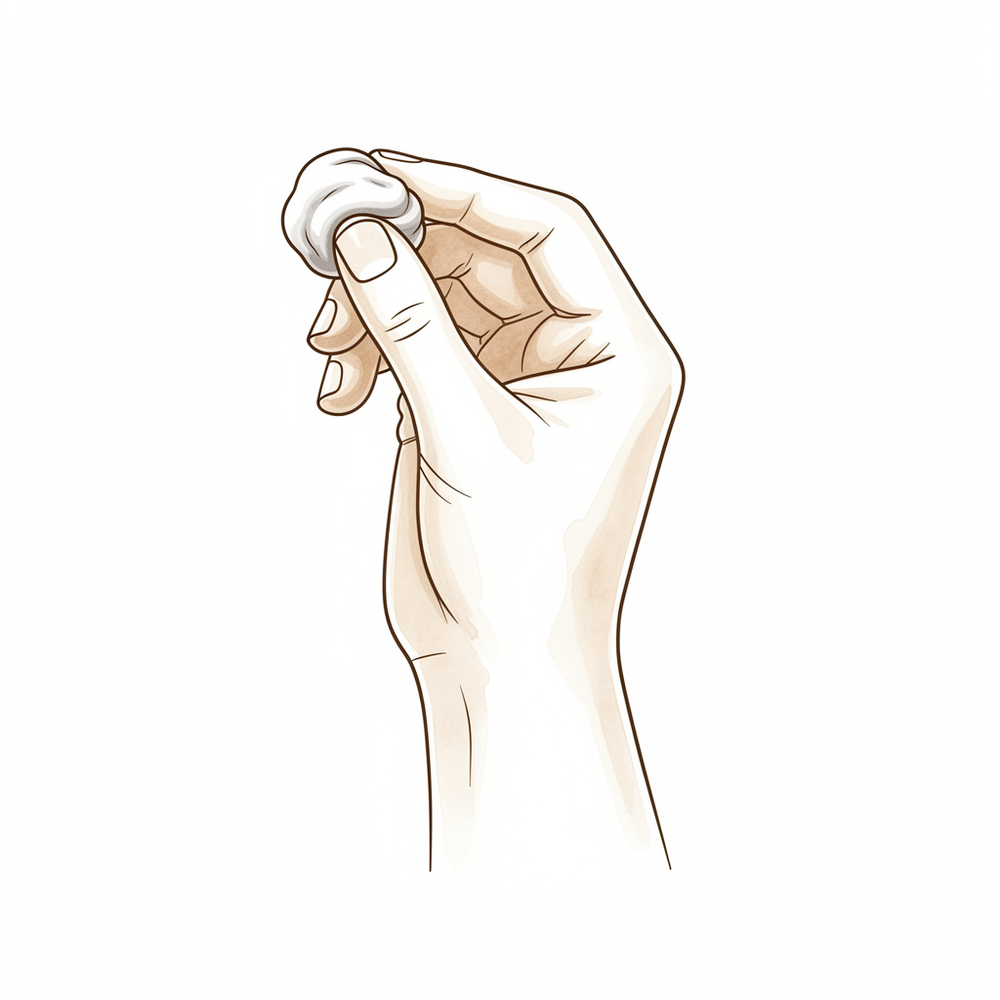
Massa terapêutica / pinça lateral em chave (a partir da semana 6)
Um exercício posterior — apenas a partir de aproximadamente seis semanas, quando o terapeuta da mão iniciar o fortalecimento. Aperte um pedaço de massa terapêutica entre o polegar e a lateral do dedo indicador (o chamado “aperto em forma de chave”), e pressione a ponta do polegar contra as pontas dos outros dedos (o “aperto pelas pontas”); aumente gradualmente a força ao longo das semanas e meses seguintes. NÃO realize apertos ou preensões fortes antes das seis semanas — a nova articulação precisa desse tempo para se estabilizar e fixar ao osso.
Conforme orientação do seu terapeuta da mão (desde aproximadamente 6 semanas), com progressão gradual.
Estes são os exercícios descritos no seu folheto informativo. Comece a realizá-los somente sob orientação do Dr. Hirpara e do seu terapeuta ocupacional, respeitando sempre os limites e a amplitude de movimento que lhe foram indicados. Os exercícios iniciais (oposição do polegar, levantamento do polegar, movimentos laterais, alongamento do espaço interdigital e círculos suaves) restauram a mobilidade do polegar sem sobrecarregar a nova articulação; devem ser iniciados assim que você deixar de usar a tala diurna. O exercício de apertar massa de modelar e pinça com chave é um exercício de fortalecimento posterior, que só deve ser iniciado por volta da sexta semana, quando o terapeuta ocupacional o orientar. Nas primeiras semanas, mantenha todos os movimentos suaves e sem forçar; interrompa qualquer atividade que cause dor aguda na base do polegar.
Seu protocolo clínico
O restante desta página descreve o protocolo clínico em etapas para a reabilitação após uma artroplastia total trapeziometacarpal de dupla mobilidade (Touch). Esta seção deve ser entregue ao seu terapeuta da mão; cada fase começa com uma explicação simples, em linguagem acessível, sobre o que está ocorrendo. Diferentemente da trapeziectomia, o implante é imediatamente estável e capaz de suportar cargas, portanto a imobilização é mínima e a oposição ativa do polegar é restaurada precocemente. O risco precoce específico do implante é a luxação, caso o polegar seja forçado a atingir amplitudes extremas de movimento; assim, nas primeiras semanas, procura-se evitar posições forçadas ou em extremos de amplitude, enquanto se restaura a mobilidade; posteriormente, inicia-se o fortalecimento com carga, após a osseointegração do implante.
Antes do início do tratamento, verifique o relatório cirúrgico do paciente e seu histórico médico; consulte também o cirurgião responsável quanto à posição e estabilidade do implante, bem como quaisquer problemas identificados durante a cirurgia. O regime proposto pelo Dr. Hirpara consiste em um curativo volumoso e macio por 7–10 dias, seguido de uma tala diurna tipo “spica” para o polegar por 2–3 semanas; depois disso, utiliza-se uma tala noturna até a 6ª semana (punho em posição neutra, polegar em abdução palmar média, articulações interfalângicas livres para movimento). O trapézio é mantido, preservando-se o comprimento do polegar.
Fase I — proteção (semana 0 até ~2–3)
Nas primeiras semanas, os tecidos moles se estabilizam e a nova articulação é protegida. O polegar permanece envolto em uma compressa macia e volumosa, depois em uma tala diurna tipo “spica” para polegar, enquanto os dedos, o punho e o restante da mão continuam a se movimentar. Não se deve realizar nenhum esforço resistido com o polegar, nem colocá-lo em posições forçadas ou extremas (a deslocação precoce é o principal risco específico do implante).
Para o seu terapeuta da mão:
Instruções e precauções - Imobilizar a base do polegar: compressa macia e volumosa por 7–10 dias → tala diurna tipo “spica” para polegar durante aproximadamente 2–3 semanas (punho em posição neutra, polegar em abdução palmar média, articulação IP livre) - Evitar posições forçadas/extremas do polegar e movimentos bruscos de preensão: a deslocação é o risco precoce específico do implante - Proibir qualquer esforço resistido com o polegar (sem pinça, preensão, torção ou levantamento de cargas) - Manter o implante sem carga; permitir apenas movimentos leves e sem carga da mão
Manejo clínico - Ferida: manter curativos cirúrgicos conforme orientação; monitorar sinais de infecção - Edema: elevar a mão, realizar movimentos de bombeamento suaves e aplicar gelo conforme necessário - Exercícios: movimentar ativamente a articulação IP do polegar, os dedos e o punho; manter a mobilidade de toda a mão; não realizar ainda movimentos ativos na articulação CMC ou de oposição, nem aplicar carga
Critérios para avançar para a fase seguinte - Cicatrização da ferida; ausência de desconforto; retirada da tala diurna por volta da semana 2–3 para início dos movimentos ativos
Fase II — movimento ativo com uso da tala noturna (semana ~2–3 a 6)
A partir da segunda ou terceira semana, a tala diurna é retirada e inicia-se o movimento ativo suave do polegar: oposição (segundo a progressão de Kapandji), abdução palmar e radial, circundução suave e mobilização do espaço interdigital. A tala noturna deve ser mantida até a sexta semana. Recomenda-se o uso leve do polegar no dia a dia; porém, o aperto forte e a pinça ainda devem ser evitados.
Para o seu terapeuta da mão:
Avaliações - Oposição ativa do polegar (escore de Kapandji), abdução palmar/radial, largura do espaço interdigital; presença de dor ou inchaço; avaliação da ferida e da cicatriz
Instruções e precauções - Retire a tala diurna, mas continue usando a tala NOTURNA até a 6ª semana - Realize apenas movimentos ativos do polegar sem resistência; evite apertos fortes ou pinça antes da 6ª semana - Mantenha os movimentos dentro dos limites do conforto; não force até os limites da amplitude articular
Tratamento - Exercícios: oposição ativa sem resistência (progressão de Kapandji), abdução palmar e radial, circundução suave, mobilização do espaço interdigital; uso funcional leve da mão no dia a dia; inicie a massagem da cicatriz após a cicatrização da ferida
Critérios para avançar para a fase seguinte - Boa recuperação da oposição ativa; ferida completamente cicatrizada; movimentos sem resistência e sem dor por volta da 6ª semana
Fase III — carga e fortalecimento (a partir da semana 6)
Por volta da sexta semana, o implante já está osteointegrado e pode ser submetido a carga. Inicia-se então o fortalecimento da pinça e da preensão (pinça com massa de modelar, pinça com chave/ponta, fortalecimento da oposição), sendo esse processo progressivamente intensificado. A força muscular continua a se desenvolver ao longo dos 6 a 12 meses seguintes.
Para o seu terapeuta da mão:
Avaliações - Força de pinça com chave/ponta e de preensão, comparada ao lado contralateral; capacidade de oposição; resposta de dor/inchaço à aplicação de carga; testes funcionais e específicos para o trabalho, conforme necessário
Instruções e precauções - Inicie o fortalecimento progressivo da pinça e da preensão a partir da 6ª semana; aumente a carga gradualmente - Espere que a força muscular se desenvolva ao longo de 6–12 meses; oriente o paciente a ter paciência quanto à aplicação de cargas maiores
Tratamento - Exercícios: pinça com massa de modelar, pinça com chave/ponta, fortalecimento da oposição, exercícios de resistência progressiva; fortalecimento da preensão; continuar os exercícios para manter a mobilidade residual e cuidados com a cicatriz - Considere a alta terapêutica quando a força muscular atingir níveis funcionais e houver recuperação adequada da função - Considere o encaminhamento de volta ao médico responsável caso a recuperação estagne ou o resultado seja insatisfatório
Critérios para alta - Força de pinça e preensão funcional, quase simétrica em relação ao lado contralateral; uso diário e para atividades laborais sem dor
Retorno ao trabalho e às atividades
O uso leve das mãos no dia a dia (comer, escrever, cuidados pessoais básicos) é incentivado desde o início, desde que seja feito com conforto e sem forçar o polegar ou realizar pinçamentos e apertos intensos. Como você não deve dirigir enquanto estiver usando a tala e não conseguir segurar o volante confortavelmente, planeje contar com ajuda para o transporte nas primeiras semanas. Geralmente, a capacidade de dirigir é recuperada entre quatro e seis semanas, quando você consegue segurar o volante sem dor, conforme confirmado pelo Dr. Hirpara.
O trabalho de escritório e atividades leves costumam ser possíveis entre duas e quatro semanas; já os trabalhos manuais mais pesados só podem ser retomados por volta da sexta semana, e mesmo assim de forma gradual, pois a carga de pinçamento e aperto forte só começa a ser tolerada a partir dessa fase. A força da mão continua a melhorar ao longo de 6 a 12 meses; portanto, tarefas mais pesadas e exigentes devem ser retomadas progressivamente, não de uma só vez. Essa decisão deve ser tomada com base na resposta do seu polegar, em conjunto com o Dr. Hirpara e o fisioterapeuta especializado em mão, e não apenas com base no calendário.
Após seguir este protocolo
Este protocolo complementa as orientações gerais de recuperação fornecidas pela clínica; consulte controle da dor pós-operatória, cuidados com a ferida e tratamento das cicatrizes. O plano em etapas descrito acima segue as diretrizes de reabilitação publicadas para casos de substituição da articulação da base do polegar com sistema de dupla mobilidade; sua recuperação contínua será acompanhada individualmente pelo Dr. Hirpara e pelo seu fisioterapeuta, conforme a evolução do seu polegar.
Evidence & references
This is the clinical evidence summary written for health professionals. It is technical, and it lists the research this page was built from. You do not need to read it to understand your treatment or to make a decision about it.
Thumb Base Joint Replacement (Touch) — Procedure Outcomes & Post-operative Rehabilitation (Dual-mobility TMC/CMC Total Joint Arthroplasty)
Topic scope: post-operative rehabilitation after a dual-mobility total joint replacement of the trapeziometacarpal (thumb base / CMC) joint for advanced thumb base osteoarthritis — the Touch implant. Unlike trapeziectomy, the trapezium is retained and thumb length preserved, and a correctly seated dual-mobility implant is immediately stable and load-sharing. The rehab is therefore a minimal-immobilisation, early-motion pathway: protect briefly against the implant-specific early dislocation risk, restore opposition within the first month, then load.
Defining principle of the rehab here: a trapeziectomy relies on a scar/haematoma "spacer" forming where the bone was removed, which takes roughly 12 months to mature — so rehab is slow by necessity. A dual-mobility thumb base replacement instead provides an immediately stable, load-sharing artificial joint, so immobilisation can be minimal, opposition is restored within the first month, and recovery is faster than trapeziectomy. The dual-mobility cup specifically reduces the early dislocation risk that drove longer immobilisation with older single-mobility implants. The one deliberate early restraint is therefore avoidance of forced/extreme thumb positions (the implant-specific dislocation risk) for the first few weeks, after which loaded pinch/grip strengthening begins. This is a newer implant: the evidence base is short-to-mid-term and low-to-moderate level, and rehab regimens are under-reported and not standardised.
A. PROCEDURE OUTCOMES (dual-mobility Touch TMC arthroplasty)
Dual-mobility total joint replacement of the thumb base is a comparatively new alternative to trapeziectomy for advanced trapeziometacarpal osteoarthritis. Early- to mid-term series report high implant survival and good restoration of pinch and function, with the principal trade-off being a higher complication/revision profile than the well-established trapeziectomy — though the dual-mobility design improves on the dislocation rate of earlier single-mobility implants.
- High short-to-mid-term implant survival and good function. A Touch-specific series reported 96% implant survival at 2 years with high key-pinch strength; the main adverse events were soft-tissue complications (de Quervain-type tenosynovitis, trigger digit) rather than implant failure [Herren 2023]. A 150-patient dual-mobility cohort similarly reports early normalisation of function. Moderate (case series / retrospective cohort).
- Faster recovery than trapeziectomy because the joint is immediately stable. Because the implant is load-sharing from the outset, the thumb is only briefly immobilised, patients return to near-normal activity early, and formal therapy may not always be required — contrasting with the ~12-month maturation of a trapeziectomy spacer [Duerinckx & Verstreken 2022]. Moderate (narrative review / cohort).
- Opposition and pinch/grip recover well. Using the MOOVIS dual-mobility implant, the Kapandji opposition score improved from 7 to 10 with improved pinch and grip [Dreant 2018]. Moderate (cohort).
- The dual-mobility design reduces dislocation. The extra articulation lowers the early dislocation risk that limited older single-mobility prostheses, supporting earlier mobilisation [Tchurukdichian 2019; Martins 2020]. Moderate (cohort / mechanistic).
- Lower reoperation than ball-and-socket designs; persistent revision risk overall. A network meta-analysis found dual-mobility implants had lower reoperation than ball-and-socket designs, with TOUCH reoperation around 1.0% [Burnett 2026 NMA]. Reported outcomes continue to evolve in ongoing reviews [Tosti & Duerinckx 2026]. Moderate (NMA of mostly observational data).
- Registry-level work-absence benchmark. Swedish registry data give a sense of real-world recovery: sick leave of roughly 94 days for men and 109 days for women — a benchmark to set realistic return-to-work expectations rather than a target. Moderate (registry).
B. REHABILITATION / THERAPY EVIDENCE
The central rehab questions are (1) how long to immobilise, and (2) when to start motion and loading. Because the implant is immediately stable, the modern answer is minimal immobilisation with early active opposition — but the literature is explicit that there is no consensus and wide variation between centres, and that rehab protocols are under-reported.
- Minimal immobilisation is justified by immediate stability. A correctly seated dual-mobility implant is stable and load-sharing, so prolonged casting is unnecessary; the thumb is briefly protected, then mobilised early, with opposition typically back within the first month [Duerinckx & Verstreken 2022]. Moderate (review).
- No standardised regimen — wide variation in immobilisation and motion timing. A dedicated review of immobilisation and rehabilitation after thumb-base arthroplasty found reported immobilisation ranging from 2 to 12 weeks and active range-of-motion commencing anywhere from 1 to 6 weeks, with no consensus across studies [Barrett 2022]. This is the key caveat for any protocol: the timings are a defensible, surgeon-confirmed plan, not a trial-derived standard. Moderate (systematic review of heterogeneous protocols).
- Early opposition recovery is achievable and is the functional priority. Improvement of the Kapandji opposition score (7→10) demonstrates that active opposition is the early rehab target and is realistically attainable in the first weeks-to-months [Dreant 2018]. Moderate (cohort).
- The early restraint is dislocation avoidance, not protected healing. The dual-mobility design reduces but does not abolish early dislocation; the practical implication is to avoid forced/extreme thumb positions in the first weeks rather than to immobilise for prolonged periods [Tchurukdichian 2019; Martins 2020]. Moderate / mechanistic.
Recovery trajectory (expected, evidence-anchored)
| Phase | Window | Restraint | Hand use / therapy focus | Strength / load | Notes |
|---|---|---|---|---|---|
| I — Protect | Week 0 to ~2–3 | Soft bulky dressing 7–10 d → thumb spica DAY splint | Keep IP/MCP/digits/wrist moving; oedema control; avoid forced/extreme thumb positions | No resisted thumb work | Early dislocation is the implant-specific risk; minimal immobilisation because the implant is immediately stable |
| II — Active motion | Week ~2–3 to 6 | NIGHT splint to 6 wk | Out of day splint; active unresisted opposition (Kapandji), palmar + radial abduction, gentle circumduction, web-space work; light everyday use; scar massage once healed | Still no heavy grip/pinch | Opposition typically restored within the first month; faster than trapeziectomy |
| III — Load / strengthen | Week 6+ | Restrictions lifted | Progress pinch/grip-specific loading and task use | Pinch + grip strengthening from 6 wk (putty, key/tip pinch); full weight-bearing ~6 wk | Strength matures over 6–12 months; return to heavy/manual work staged across this window |
(Phase windows reflect KH-confirmed parameters and are consistent with the wide ranges reported in the literature; they are typical guides, not trial-derived deadlines — see Barrett 2022.)
C. KEY CONTROVERSIES / EVIDENCE QUALITY
- Replacement vs trapeziectomy. Dual-mobility replacement restores the joint and gives a faster functional return (immediate stability, opposition back within a month) versus the ~12-month maturation of a trapeziectomy spacer, but at the cost of a higher complication and revision rate and a shorter evidence track record. Trapeziectomy remains the well-established, lower-risk benchmark. Moderate; trade-off, not a clear winner.
- How long to immobilise / when to start motion. No consensus — reported immobilisation spans 2–12 weeks and AROM start 1–6 weeks [Barrett 2022]. This page's day-splint-2–3-weeks → night-splint-to-6-weeks → strengthen-from-6-weeks plan is a defensible, surgeon-confirmed regimen within that reported range, not a proven standard. Weak–moderate.
- Dislocation risk. The dual-mobility cup reduces the early dislocation that limited older single-mobility implants, but the risk is not zero in the first weeks — hence the early forced/extreme-position restraint [Tchurukdichian 2019; Martins 2020]. Moderate / mechanistic.
- Complication profile. Soft-tissue complications (de Quervain-type tenosynovitis, trigger digit) are the commonest early issues rather than implant failure [Herren 2023]; reoperation is low for dual-mobility (TOUCH ~1.0%) and lower than ball-and-socket designs [Burnett 2026 NMA]. Moderate.
- Maturity of the evidence. This is a newer implant: outcomes are short-to-mid-term, evidence is low-to-moderate level (case series, retrospective cohorts, registry and NMA of mostly observational data), and rehabilitation is under-reported and not standardised. Tone should be appropriately cautious. Evidence base still maturing.
D. EVIDENCE STRENGTH FLAGS (summary)
- MODERATE (cohort / registry / NMA of observational data): high short-to-mid-term implant survival (96% at 2 yr, Touch) with good key-pinch; Kapandji opposition 7→10; dual-mobility lower reoperation than ball-and-socket (TOUCH ~1.0%); registry sick-leave benchmark (~94 d men / 109 d women); faster functional return than trapeziectomy.
- MODERATE (systematic review of heterogeneous protocols): no consensus on rehab — immobilisation 2–12 weeks, AROM start 1–6 weeks (Barrett 2022).
- WEAK / CONSENSUS: the specific immobilisation-then-early-opposition-then-strengthen phase timings (surgeon-confirmed, within the reported range; not trial-derived); the dislocation-avoidance rationale (mechanistic).
- CAVEAT: newer implant — short-to-mid-term, low-to-moderate-level evidence; higher complication/revision rates than trapeziectomy persist; rehab under-reported.
CITATIONS
RAG corpus (180,000+ Orthopaedic articles)
- Duerinckx J, Verstreken F. Dual mobility prosthesis for trapeziometacarpal joint arthritis. EFORT Open Rev. 2022. DOI: 10.1530/eor-22-0027
- Herren DB, et al. Trapeziometacarpal joint replacement with the Touch prosthesis: two-year results. J Hand Surg (Eur Vol). 2023. DOI: 10.1177/17531934231179581
- Dreant N, et al. Trapeziometacarpal arthroplasty with the dual-mobility MOOVIS prosthesis. Hand (NY). 2018. DOI: 10.1177/1558944718797341
- Tchurukdichian A, et al. Dual-mobility implant reduces the dislocation risk in trapeziometacarpal arthroplasty. Hand (NY). 2019. DOI: 10.1177/1558944719855690
- Martins A, et al. Dual-mobility trapeziometacarpal prosthesis. J Hand Surg (Eur Vol). 2020. DOI: 10.1177/1753193420901435
- Barrett H, et al. Immobilization and rehabilitation after trapeziometacarpal joint arthroplasty: a review. J Hand Surg Glob Online. 2022. DOI: 10.1016/j.jhsg.2022.05.011
- Tosti R, Duerinckx J. Trapeziometacarpal total joint arthroplasty: current concepts. J Hand Surg Am. 2026. DOI: 10.1016/j.jhsa.2026.01.003
- Burnett K, et al. Implant designs for trapeziometacarpal arthroplasty: a network meta-analysis of reoperation. J Hand Surg Am. 2026. DOI: 10.1016/j.jhsa.2025.12.011
Thumb base arthroplasty literature (URLs)
- Herren DB, et al. TOUCH trapeziometacarpal prosthesis — two-year results. PMC. https://pmc.ncbi.nlm.nih.gov/articles/PMC12098211/
- Dual-mobility trapeziometacarpal arthroplasty — 150-patient cohort. PMC. https://pmc.ncbi.nlm.nih.gov/articles/PMC12662895/
- TOUCH prosthesis case series. PMC. https://pmc.ncbi.nlm.nih.gov/articles/PMC8470025/
- KeriMedical — TOUCH thumb base prosthesis patient information. https://www.kerimedical.com/en/patients/