Patients › Rehabilitation
Artroscopia do Ombro
Recovery after simple or diagnostic shoulder arthroscopy with no repair — an early-mobilisation fast pathway.
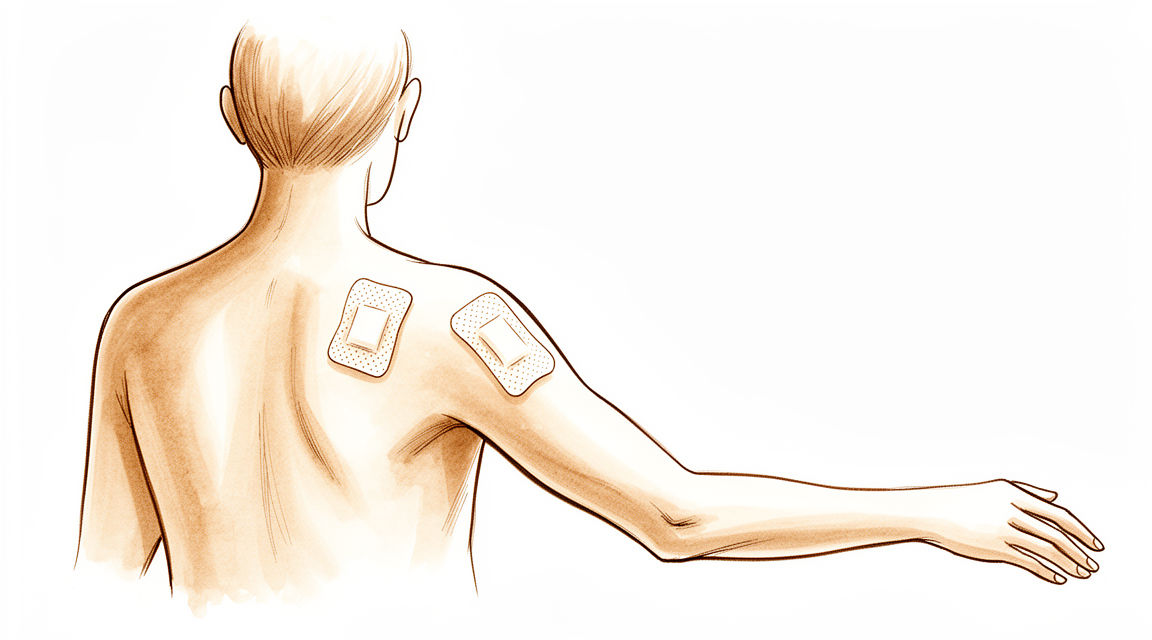
Este protocolo descreve a reabilitação após uma artroscopia de ombro simples ou diagnóstica realizada pelo Dr. Kieran Hirpara no Mater Private Hospital Rockhampton: trata-se de uma cirurgia minimamente invasiva na qual a articulação foi inspecionada, lavada ou limpa (debridada), sem que nada tenha sido reparado. Como não há nenhum reparo que precise de proteção, esta é uma das cirurgias de ombro das quais a recuperação é mais rápida; o objetivo é promover movimentos precoces e um retorno rápido à vida normal. Leve esta página ou o seu PDF na sua primeira sessão de fisioterapia para que a reabilitação seja devidamente coordenada.
Este protocolo aplica-se apenas quando a artroscopia não envolveu nenhum reparo: apenas debridamento, lavagem ou avaliação diagnóstica. Caso tenha havido algum reparo, descompressão ou estabilização durante a artroscopia, siga o protocolo específico para esse procedimento; por exemplo, o protocolo de reparo do manguito rotador, se o seu manguito rotador tiver sido reparado. Se não tiver certeza do que foi feito, consulte a sua nota cirúrgica ou pergunte à clínica antes de prosseguir.
Caso tenha alguma dúvida ou preocupação em relação à sua ferida após a cirurgia, entre em contato com a clínica. Geralmente, é útil tirar uma foto da ferida e enviá-la por e-mail para análise.
O que esperar
Após uma artroscopia sem necessidade de reparo, não há nada dentro do ombro que precise ser protegido; portanto, não existem restrições rígidas de movimento. O movimento do ombro começa cedo, sendo progressivo conforme o conforto do paciente, e não de acordo com um cronograma fixo. A tipóia é fornecida apenas para maior conforto: a maioria das pessoas a utiliza apenas nos primeiros dias e a retira completamente na primeira semana. Não dirija por pelo menos seis semanas após qualquer cirurgia no ombro, mesmo que você pare de usar a tipóia muito antes disso; seu cirurgião autorizará a volta à direção, geralmente na consulta de acompanhamento aos seis semanas.
Resumo do processo de recuperação:
- Fase I — Movimentação inicial e adaptação — aproximadamente as duas primeiras semanas
- Fase II — Restauração total do movimento e início do fortalecimento — semana 2–6
- Fase III — Retorno às atividades normais — a partir da semana 6
A maioria das pessoas retorna ao trabalho de escritório em poucos dias a uma semana. A volta à direção ocorre às seis semanas, após autorização do cirurgião. Trabalhos manuais mais pesados e atividades esportivas geralmente exigem mais tempo, normalmente entre seis e doze semanas, dependendo da exigência imposta ao ombro. É comum que o ombro permaneça levemente dolorido por algumas semanas enquanto a articulação se adapta; isso é normal e melhora à medida que o movimento e a força são recuperados.
Fase I — Movimentação precoce e estabilização (Semana 0–2)
Kieran Hirpara 4.0
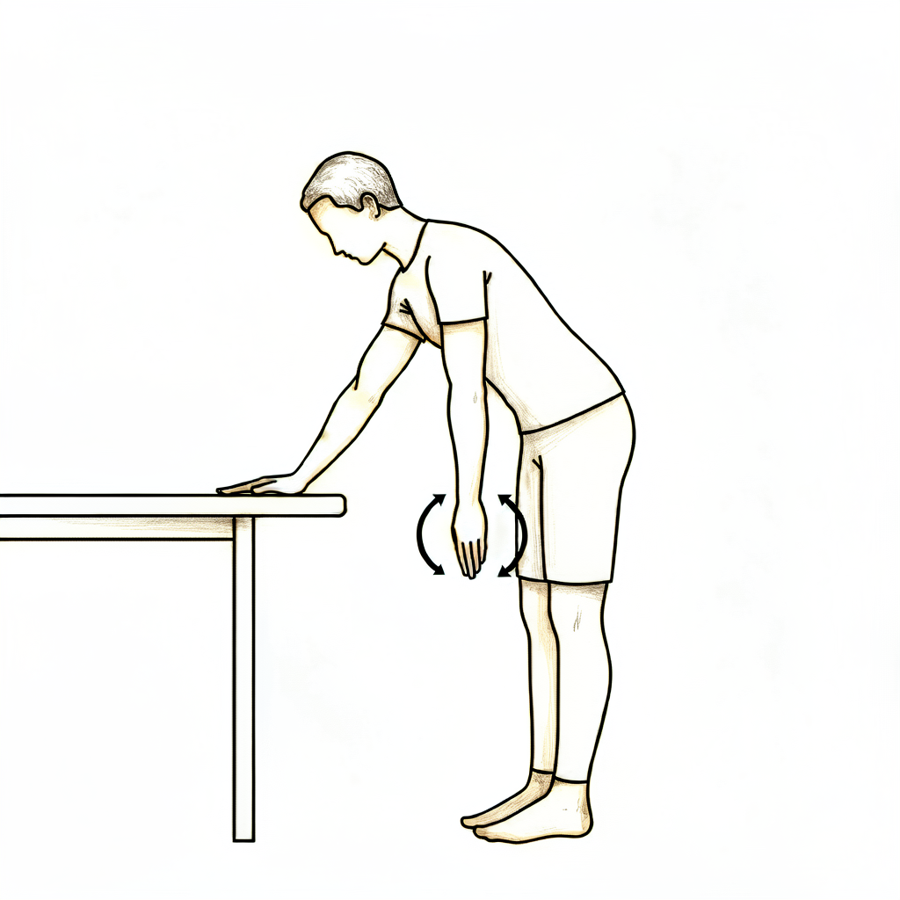
Exercícios pendulares
Incline-se para a frente, apoiando-se na mesa com a outra mão, e deixe o braço operado pendurado de forma relaxada. Faça pequenos círculos — primeiro no sentido horário, depois no anti-horário — balançando suavemente o corpo. O braço deve permanecer relaxado; o movimento deve vir do corpo, não do ombro.
Conforme orientado pelo seu fisioterapeuta
Kieran Hirpara 4.0
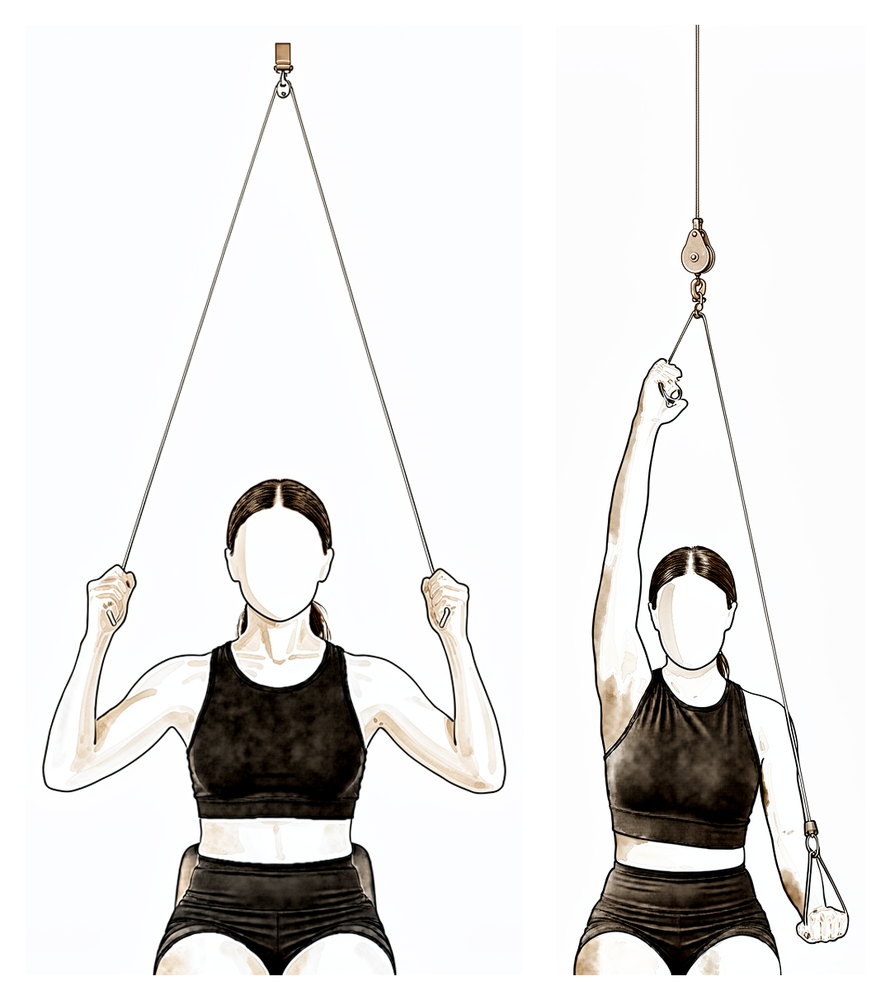
Movimento assistido por polias
Sente-se debaixo de uma polia instalada na porta. Com o braço operado relaxado, puxe para baixo com a outra mão de modo que a corda eleve suavemente o braço operado, e depois abaixe-o lentamente. Avance conforme se sentir confortável — afastando-se da dor aguda ou persistente, sem forçar o corpo além do limite.
Conforme orientado pelo seu fisioterapeuta
Kieran Hirpara 4.0
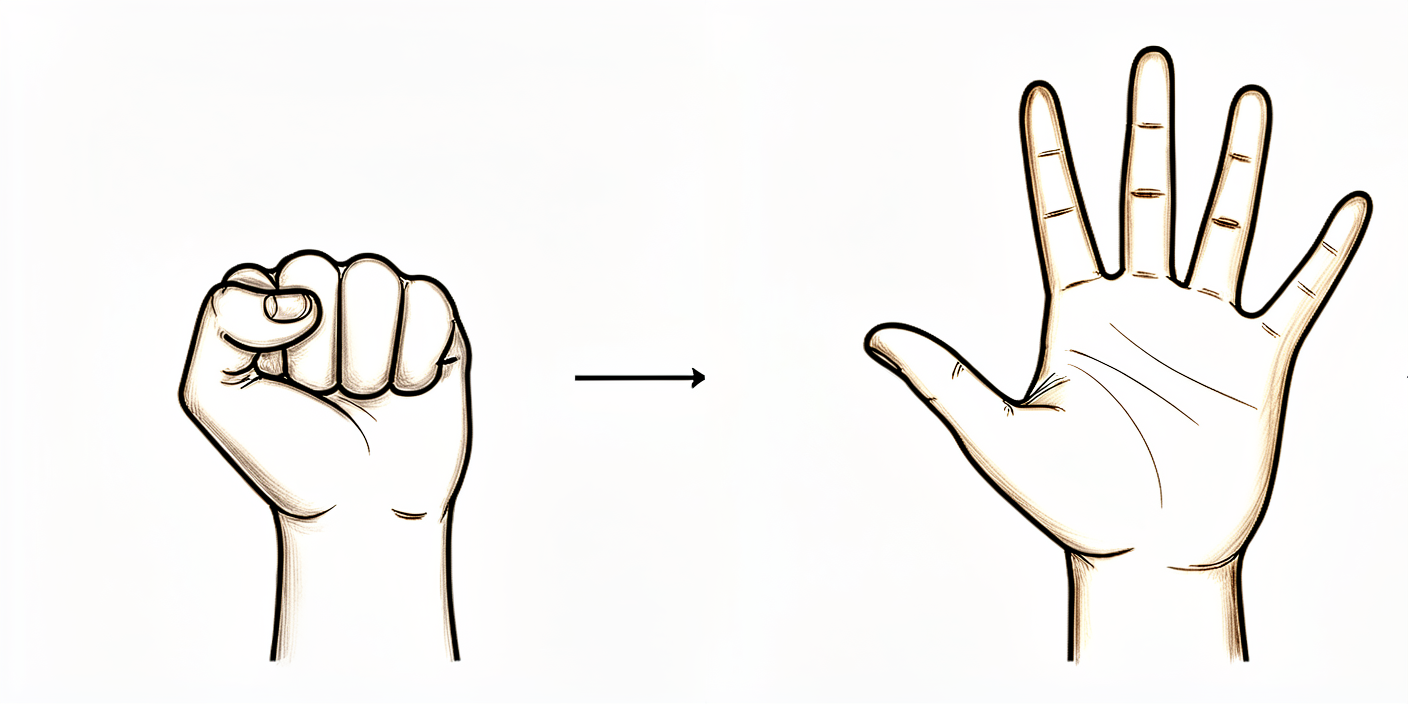
Abrir e fechar a mão
Faça um punho fechado com força ou aperte uma bola macia, depois abra a mão completamente. Mova a mão, o pulso e o cotovelo livremente desde o início, e utilize o braço para tarefas cotidianas leves conforme se sentir confortável.
Conforme orientado pelo seu fisioterapeuta
Kieran Hirpara 4.0
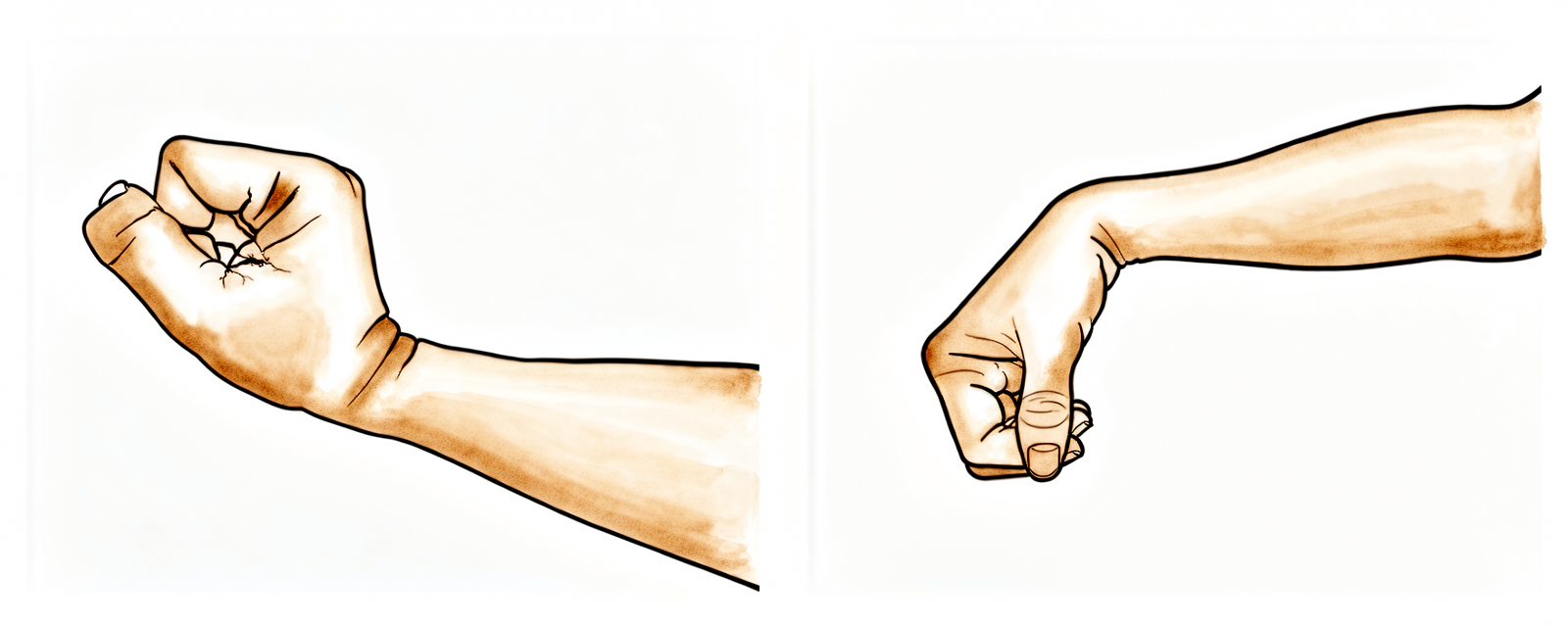
Movimento do punho
Mantenha o pulso em movimento, dobrando-o para a frente, para trás e para os lados. Mova livremente a mão, o pulso e o cotovelo desde o início, para que todo o braço continue em atividade enquanto o ombro se estabiliza.
Conforme orientado pelo seu fisioterapeuta
Kieran Hirpara 4.0
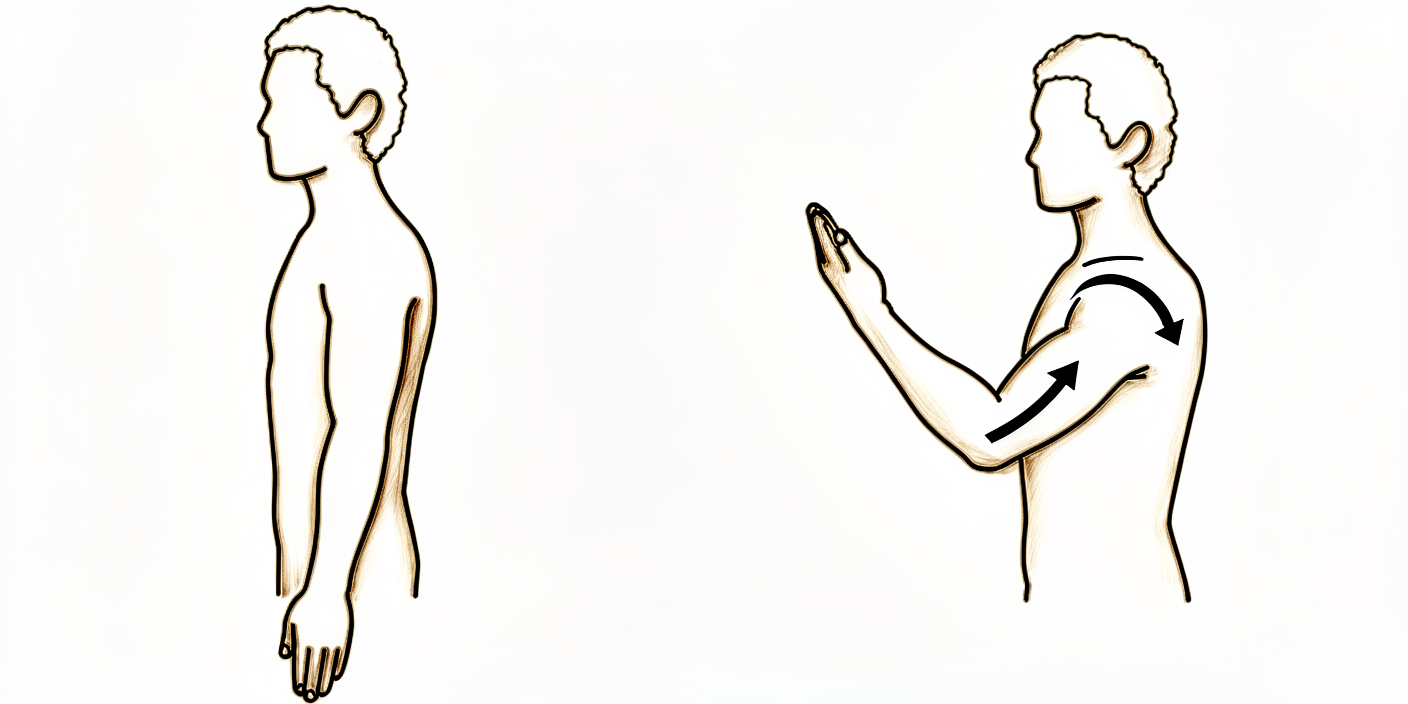
Flexão do cotovelo
Com o braço ao lado do corpo, dobre o cotovelo o máximo que puder confortavelmente, depois estique-o completamente. Apenas o cotovelo deve se mover — mantenha o ombro relaxado.
Conforme orientado pelo seu fisioterapeuta
Kieran Hirpara 4.0
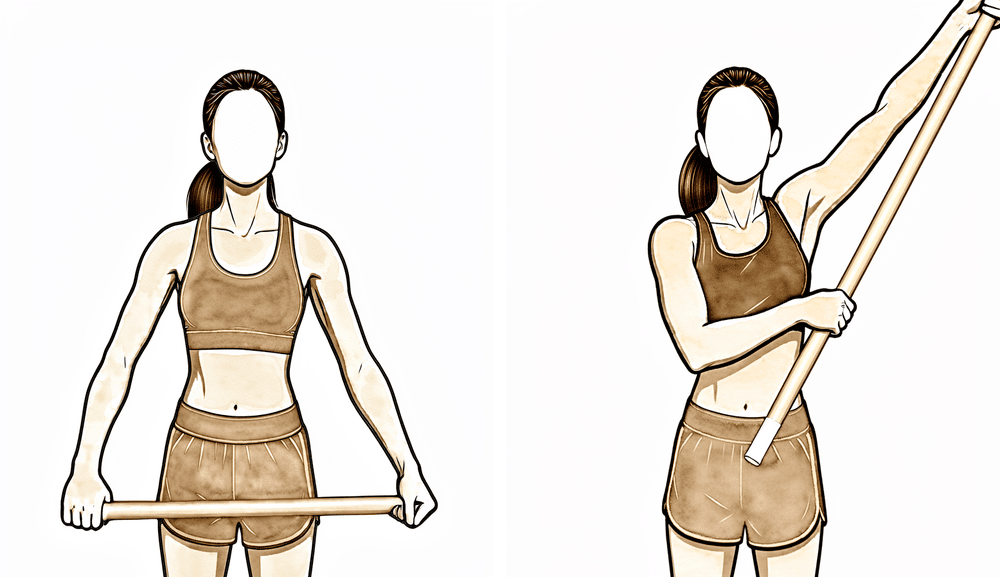
Movimento assistido com um bastão
Segure uma vara (bengala ou bastão) com as duas mãos e deixe o braço saudável guiar o braço operado para o lado e para a frente, esticando-o tanto quanto lhe for confortável; em seguida, abaixe-o de forma controlada. Esse movimento assistido ativamente ajuda a manter a mobilidade do ombro nos primeiros dias após a cirurgia.
Conforme orientado pelo seu fisioterapeuta
Kieran Hirpara 4.0
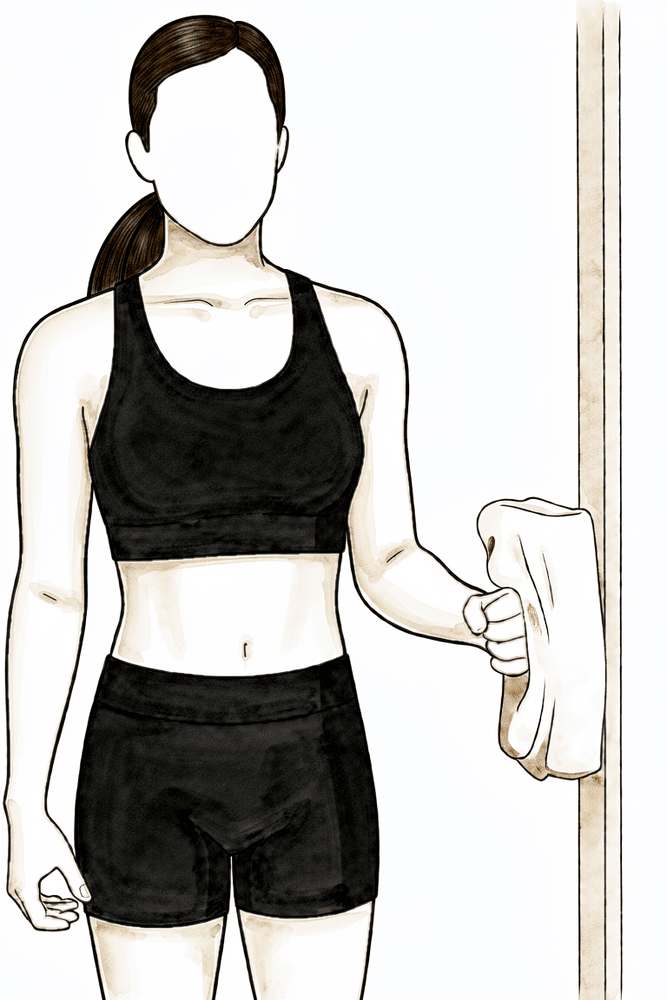
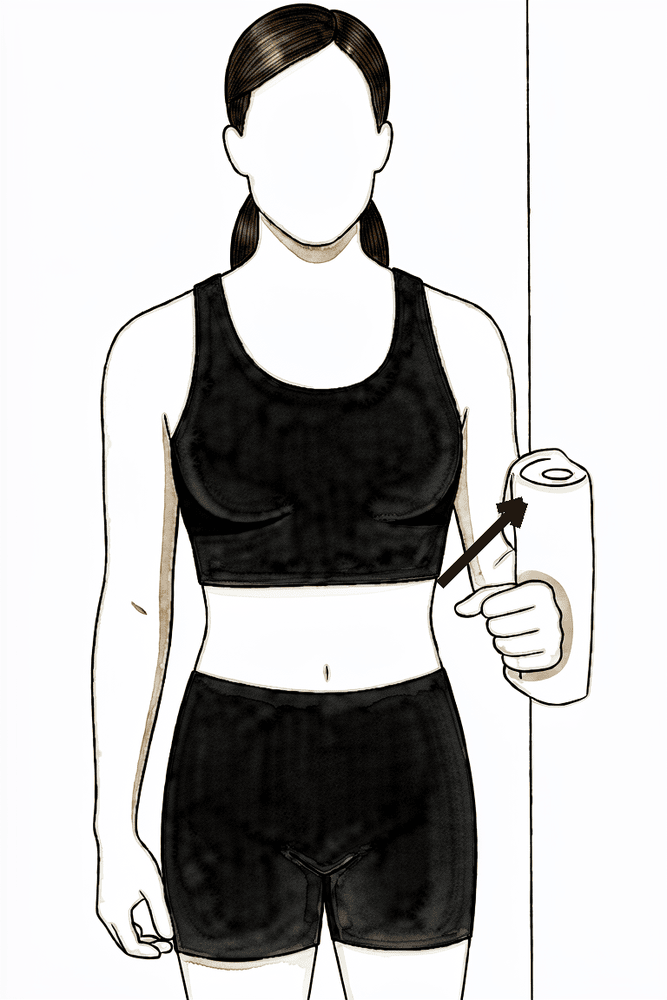
Rotação externa isométrica
Fique em pé com o cotovelo pressionado contra o corpo e dobrado em um ângulo reto; a parte de trás da mão deve encostar numa parede ou na moldura de uma porta. Pressione suavemente para fora, sem mover o braço; mantenha essa posição por alguns segundos e depois relaxe. Isso ativa suavemente o manguito rotador, sem exigir movimento, conforme a sua tolerância.
Conforme orientado pelo seu fisioterapeuta
Kieran Hirpara 4.0
Abdução isométrica
Fique de lado em relação à parede, com o cotovelo junto ao corpo, e pressione suavemente a parte externa do braço contra a parede, como se estivesse tentando levantar o braço para o lado, sem permitir que ele se mova. Mantenha a posição por alguns segundos e depois relaxe. Esse exercício ativa suavemente o deltoide, sem nenhum movimento, na medida do conforto de cada um.
Conforme orientado pelo seu fisioterapeuta
Kieran Hirpara 4.0
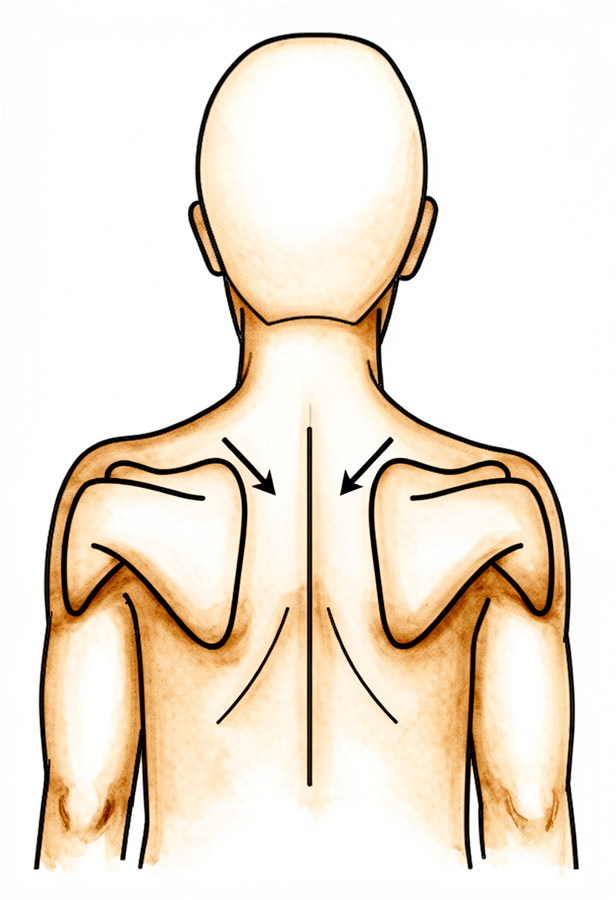
Posicionamento da escápula
Sentado ou em pé, puxe suavemente as escápulas para baixo e para trás, sem mover os braços; mantenha essa posição por alguns segundos e depois relaxe. Mantenha as orelhas, os ombros e os quadris alinhados.
Conforme orientado pelo seu fisioterapeuta
As duas primeiras semanas têm como objetivo permitir que o ombro se estabilize, mantendo-o em movimento. Use a tipóia apenas quando ela contribuir para o conforto (geralmente nos primeiros dias) e retire-a sempre que possível; não é necessário dormir com ela. Movimente a mão, o pulso e o cotovelo livremente desde o início, e utilize o braço para tarefas cotidianas leves, como comer, lavar-se e vestir-se, conforme o conforto permitir. A movimentação suave do ombro deve começar imediatamente: exercícios pendulares e movimentos assistidos, evoluindo para movimentos ativos conforme o ombro permitir. O uso de gelo e analgésicos simples ajudam a tornar os exercícios mais confortáveis. Os curativos da ferida são à prova d’água: você pode tomar banho a partir do primeiro dia, deixando a água correr sobre eles (não os molhe excessivamente nem esfregue a área). Eles são retirados cerca de dez a doze dias após a cirurgia.
Para o seu fisioterapeuta:
Objetivos
- Controlar a dor e o inchaço
- Obter amplitude de movimento precoce, evoluindo de movimentos assistidos para ativos conforme tolerado
- Promover independência nas atividades cotidianas leves
- Descontinuar o uso da tipóia nos primeiros dias
Conduta
- Utilizar a tipóia apenas para conforto: incentive a retirada nos primeiros dias, interrompendo seu uso no máximo na primeira ou segunda semana
- Exercícios pendulares; amplitude de movimento assistida (com polia, bengala ou vara), evoluindo para amplitude de movimento ativa em todos os planos conforme tolerado
- Movimentação livre da mão, pulso e cotovelo; exercícios de preensão conforme o conforto permitir
- Fortalecimento da escápula e correção postural
- Exercícios isométricos suaves do manguito rotador e do deltoide, conforme conforto
- Uso de crioterapia e analgésicos para auxiliar o programa de exercícios
Precauções
- Proibido dirigir por seis semanas (isso aplica-se a qualquer cirurgia no ombro)
- A progressão dos movimentos deve ser baseada no conforto: dor aguda ou persistente exige redução da intensidade, não persistência no esforço
- Os curativos são à prova d’água (pode tomar banho normalmente); são retirados por volta do 10–12º dia. Comunique-se caso haja vermelhidão excessiva ou secreção
Critérios para progressão
- Ausência da tipóia e capacidade de realizar atividades cotidianas leves com conforto
- Dor controlada o suficiente para iniciar exercícios ativos de amplitude de movimento
Fase II — Restauração da amplitude de movimento completa e início do fortalecimento (Semana 2–6)
Kieran Hirpara 4.0
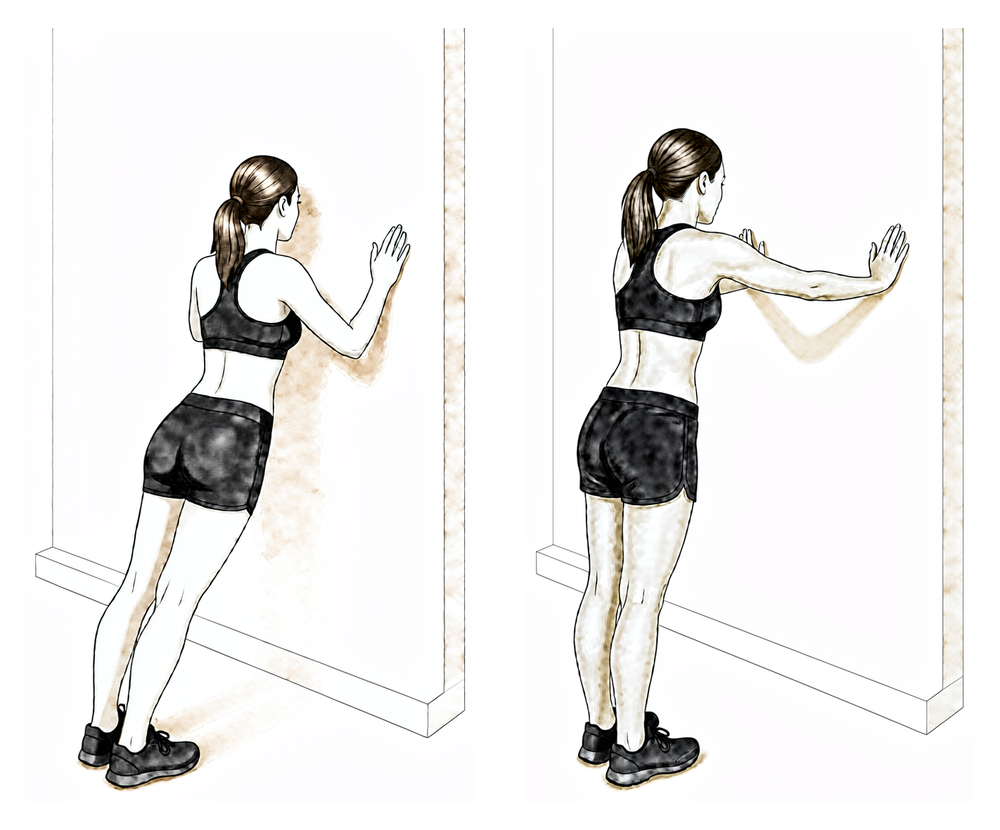
Protração na parede
Fique de pé com as mãos planas numa parede, na altura do peito, e os braços esticados. Sem dobrar os cotovelos, empurre a parede para afastá-la, de modo que as costas superiores se arredondem e as escápulas se afastem uma da outra; em seguida, volte à posição inicial de forma controlada.
Conforme orientado pelo seu fisioterapeuta
Kieran Hirpara 4.0
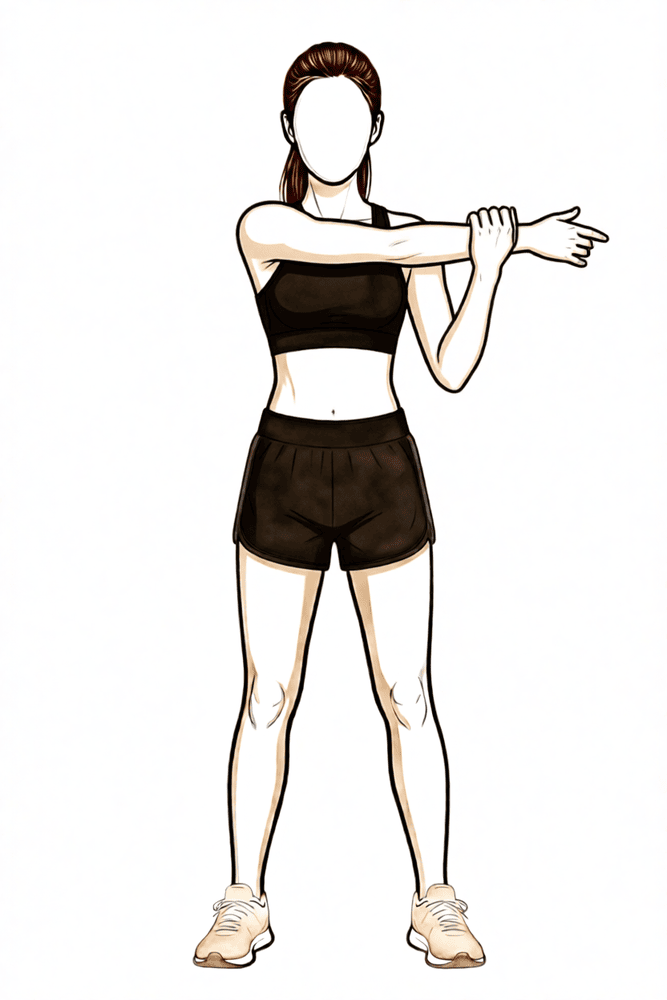
Alongamento cruzado do corpo
Caso a parte posterior do ombro permanecer tensa, use a outra mão para puxar o braço operado em direção ao peito, até sentir um alongamento na região posterior do ombro. Mantenha essa posição por alguns instantes e, em seguida, solte. Faça o alongamento apenas até sentir um desconforto moderado; ele não deve provocar dor persistente.
Conforme orientado pelo seu fisioterapeuta
Kieran Hirpara 4.0
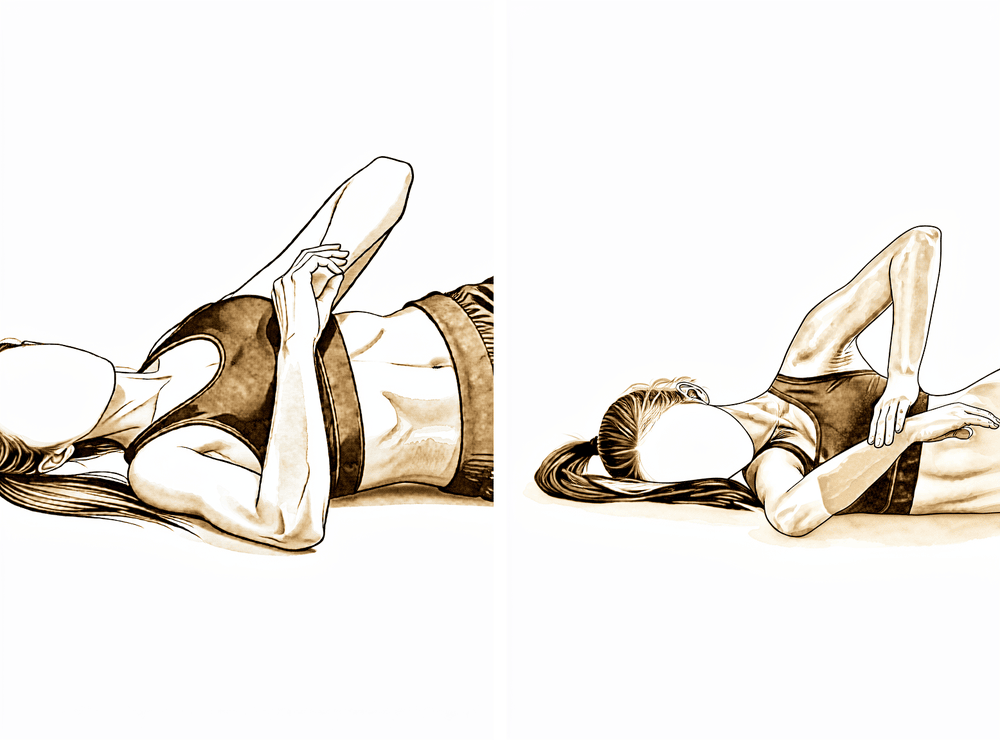
Alongamento do tipo “dorminhoco”
Deite-se do lado da cirurgia, com o braço estendido para a frente e o cotovelo dobrado. Use a mão saudável para pressionar suavemente o antebraço em direção à cama, até sentir um alongamento na profundidade do ombro; em seguida, relaxe a pressão. Isso ajuda a aliviar qualquer rigidez residual na parte posterior do ombro.
Conforme orientado pelo seu fisioterapeuta
Kieran Hirpara 4.0
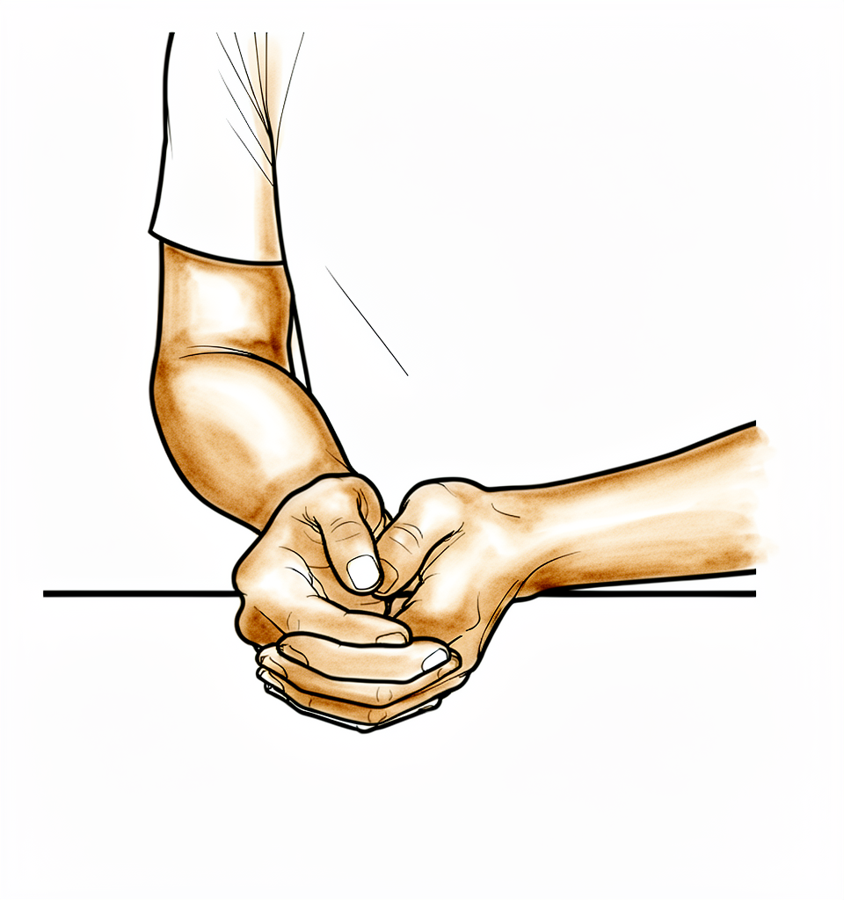
Rotação externa com faixa elástica (próxima à posição neutra)
Fique de pé com o cotovelo pressionado contra o corpo e dobrado em um ângulo reto, segurando uma faixa elástica fixada ao nível da cintura, atravessando o corpo. Mantendo o cotovelo junto ao corpo, gire o antebraço para fora, em direção à linha média, contra a resistência da faixa; em seguida, volte lentamente à posição inicial. Esse exercício inicia o fortalecimento do manguito rotador, complementando os exercícios isométricos.
Baixa resistência, conforme orientação do seu fisioterapeuta.
Kieran Hirpara 4.0
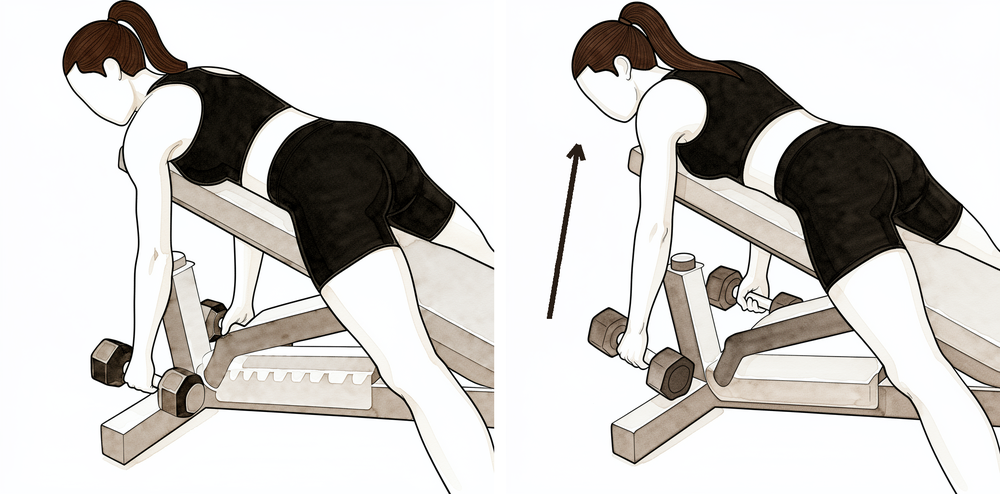
Aperto das omoplatas com faixa elástica
Segurando uma faixa fixada à sua frente, recue os cotovelos e pressione as escápulas uma contra a outra e para baixo; em seguida, volte lentamente à posição inicial. Isso fortalece os músculos responsáveis por estabilizar a escápula, especialmente quando se aplica resistência durante essa fase do movimento.
Conforme orientado pelo seu fisioterapeuta
Kieran Hirpara 4.0
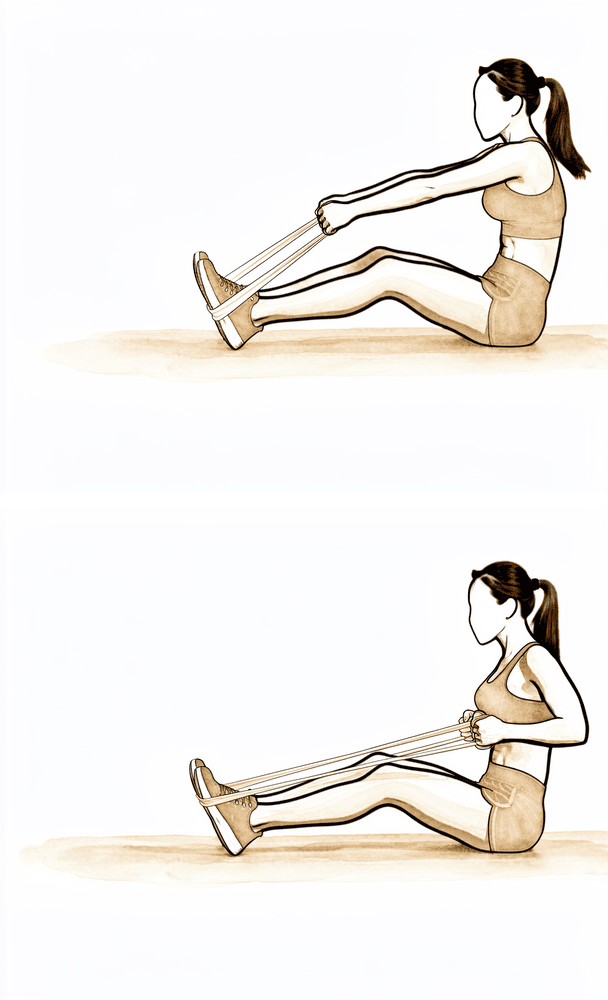
Remada baixa
Segure uma faixa à sua frente, na altura da cintura. Mantendo o braço razoavelmente esticado, puxe-o para trás e para baixo em direção ao quadril, contraindo a escápula para baixo e para trás; em seguida, volte lentamente à posição inicial. Esse exercício fortalece os músculos que deprimem a escápula e dão suporte ao manguito rotador.
Conforme orientado pelo seu fisioterapeuta
Kieran Hirpara 4.0
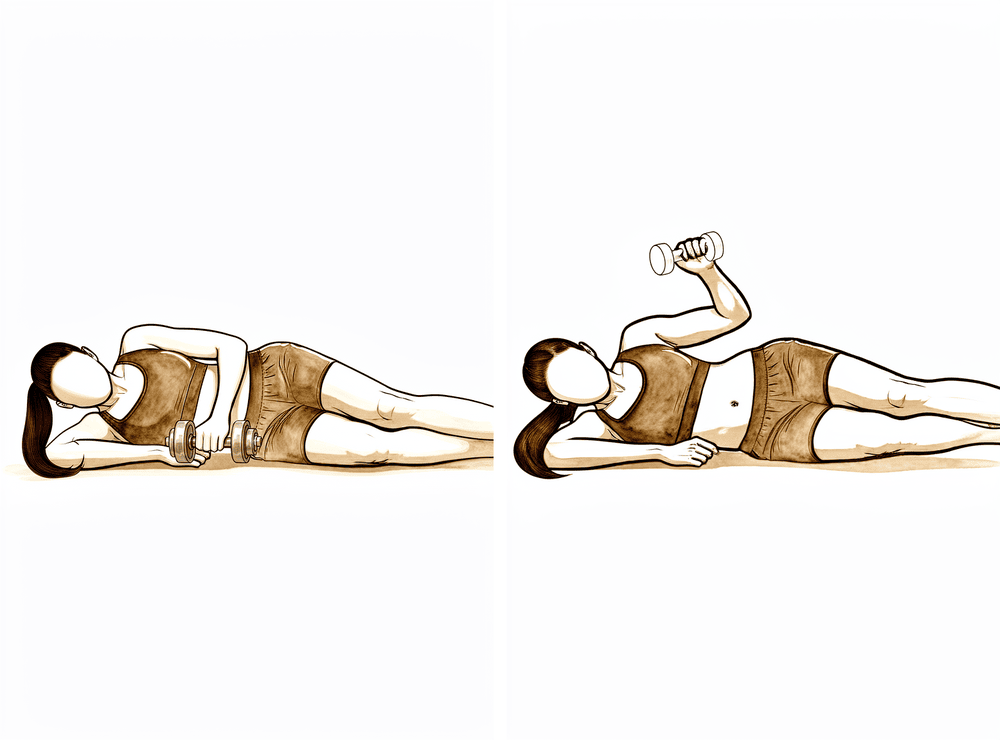
Rotação externa em decúbito lateral com carga
Deite-se sobre o lado não operado, dobrando o cotovelo superior em um ângulo reto e mantendo-o junto ao corpo. Segurando um peso leve, gire o antebraço para cima, em direção ao teto, e depois abaixe-o lentamente. Trata-se de um exercício isotônico leve para os músculos do manguito rotador: peso baixo e maior número de repetições. Pode ser iniciado por volta da quarta semana, conforme a tolerância do paciente.
Carga baixa, número maior de repetições, conforme orientação do seu fisioterapeuta.
Kieran Hirpara 4.0
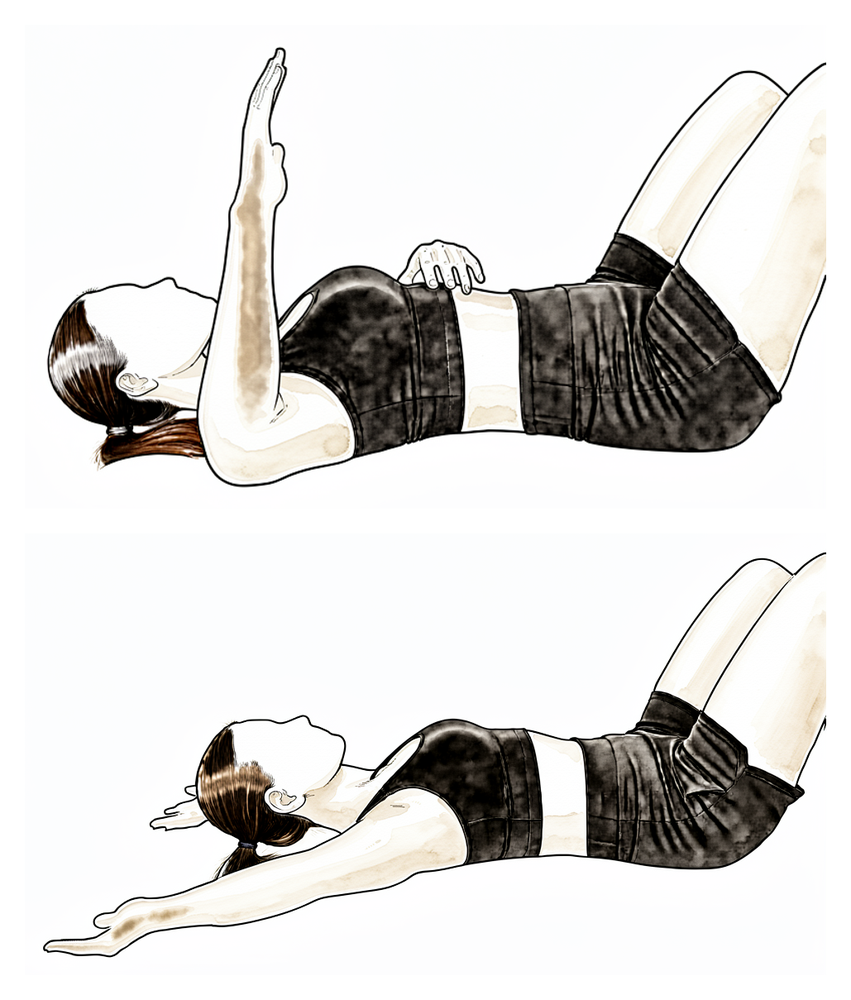
Rotação externa na posição 90/90 (deitado)
Deite-se de costas, com o braço estendido para o lado, na altura do ombro, e o cotovelo dobrado em um ângulo reto, apoiado num travesseiro. Gire lentamente o antebraço de volta em direção à cabeça, até onde for confortável, e depois volte à posição inicial com controle. Isso restaura a rotação do braço na posição elevada.
10 vezes, conforme orientação do seu fisioterapeuta.
Kieran Hirpara 4.0
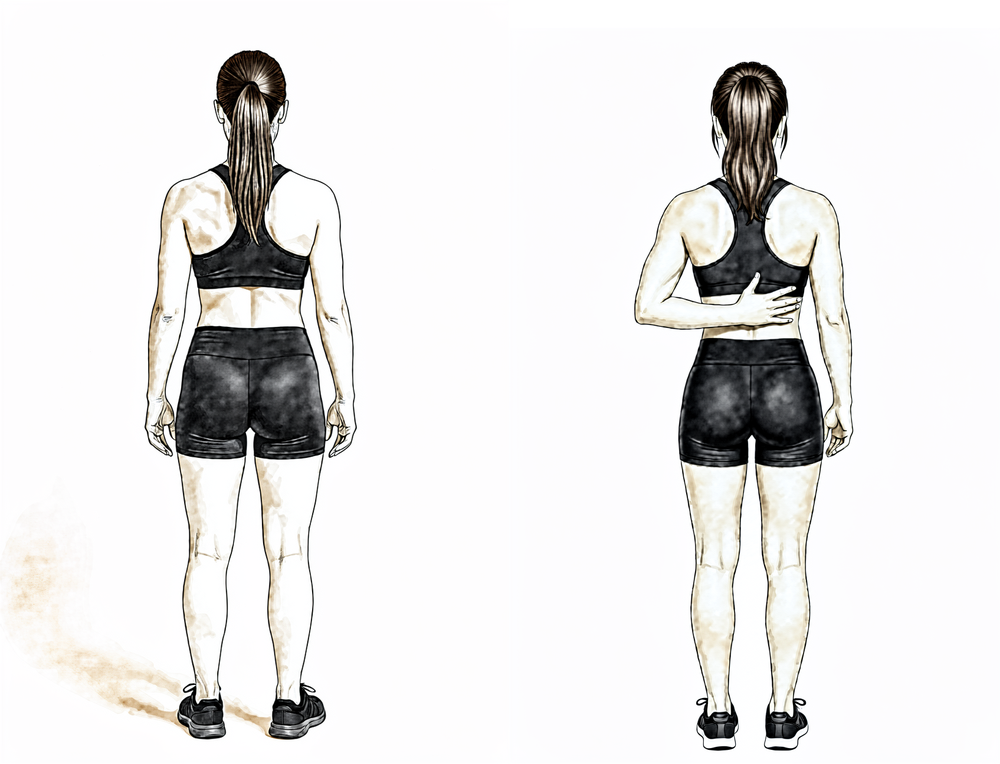
Alcance da mão para trás das costas
Em pé, posicione o dorso da mão operada contra a região lombar e, usando apenas os próprios músculos, deslize-a suavemente para cima ao longo da coluna, até onde for confortável; em seguida, abaixe-a. Mova-se apenas dentro de uma amplitude confortável e nunca force o movimento.
Conforme orientado pelo seu fisioterapeuta
Com o ombro já estabilizado, o foco passa a ser a recuperação da amplitude de movimento total e o início do fortalecimento. Os movimentos ativos são progressivamente ampliados em todas as direções até atingir a amplitude completa; o trabalho de resistência começa de forma suave, iniciando-se com manutenção isométrica e evoluindo para exercícios com faixas elásticas para o manguito rotador e os músculos da escápula, conforme a tolerância do paciente. A maioria dos pacientes retorna ao trabalho de escritório na primeira ou segunda semana, caso ainda não o tenha feito. Dirigir só será permitido após autorização do cirurgião na consulta de seis semanas. Atividades recreativas mais leves podem ser retomadas nesta fase, conforme orientação do fisioterapeuta.
Para o seu fisioterapeuta:
Objetivos
- Amplitude de movimento ativa completa ou quase completa em todos os planos
- Início do fortalecimento gradual do manguito rotador e dos estabilizadores da escápula
- Retorno às atividades diárias normais e ao trabalho (dirigir somente após autorização do cirurgião na consulta de seis semanas)
Conduta terapêutica
- Progressão da amplitude de movimento ativa em todos os planos até atingir o máximo; metas intermediárias típicas incluem flexão anterior além de 140–160° e rotação externa além de 40–60°
- Evolução dos exercícios isométricos para exercícios com faixas elásticas para o manguito rotador (rotação interna e externa próxima à posição neutra), avançando conforme tolerância
- Fortalecimento da escápula: exercícios de encolhimento, retração, protração e depressão, evoluindo para cargas de resistência
- A partir da 4ª semana, iniciar fortalecimento isotônico leve, utilizando pesos baixos e maior número de repetições, conforme conforto do paciente
- Terapia manual e alongamentos para qualquer rigidez capsular residual, incluindo alongamento da cápsula posterior quando indicado
Precauções
- O fortalecimento deve permanecer dentro da faixa confortável; não deve provocar dor persistente após o exercício
- O desenvolvimento da rotação sob carga em abdução (posições 90/90) deve ser feito gradualmente: introduzir somente após o paciente tolerar bem os exercícios de rotação neutra
- Evitar levantamento de cargas pesadas e atividades de força acima da cabeça enquanto o fortalecimento ainda está em curso
Critérios para progressão
- Amplitude de movimento ativa completa ou quase completa, com mínima dor
- Tolerância aos exercícios com faixas elásticas e cargas leves, sem piora dos sintomas
Fase III — Retorno às atividades plenas (a partir da semana 6)
Kieran Hirpara 4.0
Flexão plus (push-up plus)
A partir da posição de flexão — encostado na parede, de joelhos ou na posição completa conforme sua força permitir — realize a flexão; em seguida, empurre um pouco mais de modo que a região dorsal se arqueie e as escápulas se afastem, e depois volte à posição inicial. Esse exercício de cadeia fechada desenvolve o controle e a força necessários para retomar as atividades normais.
Conforme orientado pelo seu fisioterapeuta
A fase final consiste no retorno gradual a atividades que exigem levantamento de pesos, trabalho manual, treino na academia e prática esportiva. O treinamento de força convencional geralmente pode ser retomado por volta da sexta semana, iniciando-se com cargas leves e aumentando progressivamente. Já os esportes que envolvem movimentos acima da cabeça ou contato físico costumam ser retomados entre a sexta e a décima segunda semana, dependendo do esporte e da evolução do ombro. O critério para concluir a reabilitação é um ombro confortável, com amplitude de movimento completa e força satisfatória; na maioria dos casos, os pacientes retornam a todas as atividades desejadas por volta dos três meses, e qualquer dor residual continua a diminuir após esse período.
Para o seu fisioterapeuta:
Objetivos
- Amplitude de movimento completa e sem dor
- Restauração da força, resistência e confiança para o trabalho e a prática esportiva
- Retorno gradual a atividades manuais pesadas, treino na academia e esportes
Conduta terapêutica
- A partir da semana 6, iniciar o treinamento de resistência convencional, passando gradualmente de aparelhos para pesos livres, conforme a capacidade de controle do paciente
- Realizar exercícios excêntricos e em cadeia fechada conforme tolerância
- Programar condicionamento específico para o esporte, incluindo treinos progressivos de arremesso ou movimentos acima da cabeça, quando aplicável
- Limitar os exercícios de fortalecimento do manguito rotador a cerca de três sessões por semana, para evitar tendinopatia por sobrecarga
Precauções
- A progressão deve ser guiada pelos sintomas: dor que aumenta com a carga ou persiste após o exercício exige redução imediata da carga
- O retorno a esportes de contato ou com movimentos acima da cabeça só deve ocorrer após obtenção de amplitude de movimento completa e sem dor, além de força adequada
Critérios para avançar
- Amplitude de movimento completa e sem dor, com força comparável ao lado contralateral para a atividade pretendida
- Capacidade de realizar tarefas específicas do esporte ou do trabalho sem desencadear dor
Após o cumprimento do seu protocolo
As fases descritas acima foram adaptadas a partir de protocolos de reabilitação publicados para artroscopia de ombro simples e diagnóstica, elaborados pelo Dr. Jorge Chahla (Rush University Medical Center), pelo Dr. Benedict Nwachukwu (Hospital for Special Surgery), pelo Dr. Blake Obrock (medicina esportiva ortopédica, Amarillo) e pelo guia do Royal National Orthopaedic Hospital para pacientes submetidos a artroscopia diagnóstica do ombro. Os intervalos de semanas indicados são apenas orientativos, não fixos; a sua reabilitação será orientada individualmente pelo seu fisioterapeuta, em conjunto com o consultório, conforme a recuperação do seu ombro. Esta página complementa as orientações gerais de recuperação fornecidas pelo consultório: consulte controle da dor pós-operatória e cuidados com a ferida. Para informações sobre a cirurgia em si, veja artroscopia do ombro. As evidências científicas que sustentam este protocolo (a lógica por trás do movimento precoce, os ensaios cirúrgicos controlados por placebo e os protocolos de reabilitação publicados nos quais se baseia) estão resumidas na seção de evidências, disponível em formato PDF no topo desta página.
Evidence & references
This is the clinical evidence summary written for health professionals. It is technical, and it lists the research this page was built from. You do not need to read it to understand your treatment or to make a decision about it.
Shoulder Arthroscopy (Diagnostic / Debridement / Washout) — Post-operative Rehabilitation
Topic scope: Post-operative rehabilitation after a generic keyhole shoulder arthroscopy in which nothing was repaired — diagnostic assessment, washout (lavage), debridement of degenerate tissue, removal of loose bodies, and isolated subacromial decompression or distal clavicle excision. Specific repair or reconstruction procedures have their own protocols that take priority — rotator-cuff repair, labral/instability stabilisation (anterior-Bankart, posterior-stabilisation, Latarjet), capsular release, biceps tenodesis and AC-joint stabilisation each convert to a slower, construct-protecting pathway. This page is the default keyhole pathway used only when the operation note confirms no repair was performed.
Defining principle of the rehab here: when nothing is repaired there is no construct to protect, so the rehab is an early-motion pathway — a sling for comfort only (days, not weeks), unrestricted use below shoulder height from day one, motion progressed on comfort rather than the calendar, and strengthening as soon as range and pain allow. The single branch point is whether anything was actually repaired or stabilised; if it was, recovery converts to that procedure's protected protocol. Unlike a cuff repair or a labral repair, there is no healing tissue that early movement can disrupt, so the usual risks of early motion (re-tear, construct failure) do not apply — the main thing early motion prevents here is post-operative stiffness.
The operation and why the rehab is fast
A keyhole (arthroscopic) shoulder operation in this scope involves looking inside the joint and subacromial space through small portals and doing one or more of: confirming a diagnosis, washing out the joint, trimming (debriding) frayed labrum, degenerate cuff or inflamed bursa, removing loose bodies, or shaving bone in a subacromial decompression or distal clavicle excision. None of these creates a repair that must heal under protection. That is the central fact that separates this pathway from cuff repair, stabilisation and the other audited protocols: the tissue is either removed or simply inspected, so the post-operative soreness — not a healing construct — is what paces recovery.
Because of this, recovery is among the quickest of any shoulder operation. Most people are back to desk-based work within days to a week, out of the sling within the first week, driving within one to three weeks once the sling is off and they can control the car confidently, and back to heavier manual work and sport somewhere between six and twelve weeks depending on the demands placed on the shoulder.
Evidence by theme
1. Early motion is the goal — there is no construct to protect
The case for early movement here is largely a mechanistic one rather than one settled by a dedicated trial: with no repair to disrupt, the only thing prolonged immobilisation achieves is avoidable stiffness, discomfort and delayed return to activity. The closest high-quality evidence comes by analogy from the cuff-repair literature, where — even with a real construct to protect — randomised trials and meta-analyses show early controlled motion does not increase re-tear and tends to reduce stiffness (number-needed-to-harm for re-tear in the order of several hundred). If early motion is safe when a repair is present, it is plainly safe when there is nothing to protect. Mechanistic + analogous moderate evidence; no debridement-specific RCT.
2. The procedures themselves: a candid note on efficacy
Two landmark placebo-controlled surgical trials bear directly on the commonest reason a no-repair arthroscopy is done — subacromial pain:
- FIMPACT (BMJ 2018) — a double-blind trial of 210 patients randomised to arthroscopic subacromial decompression, diagnostic arthroscopy (placebo surgery), or exercise therapy. At 24 months decompression gave no benefit over diagnostic arthroscopy; both surgical arms improved, but no more than each other. Strong (placebo-controlled RCT).
- CSAW (Lancet 2018) — a three-arm placebo-controlled UK trial reaching the same conclusion: decompression was no better than investigational (diagnostic) arthroscopy, and the small edge of either over no-treatment was not clinically important. Strong (placebo-controlled RCT).
The honest reading is that for subacromial pain the surgical element adds little over diagnostic arthroscopy or structured exercise — which reinforces why, when this operation is done, the rehabilitation (early motion, restoring strength and confidence) carries much of the recovery. A longer-term single RCT (Magnussen-class, 10-year follow-up, in the corpus) did favour decompression over therapy alone, so practice remains individualised — but the placebo-controlled data are the higher tier.
3. Debridement of degenerate tissue — limited, old evidence
Arthroscopic debridement of irreparable degenerative cuff lesions (Burkhart, J Bone Joint Surg 1995, in the corpus) can relieve pain and restore functional "force-couple" mechanics in selected patients, but the evidence base is small, old and uncontrolled. Debridement and washout are best understood as symptom-directed measures, not structural repairs — which again places the weight of recovery on rehabilitation rather than on a healing construct. Weak (historical case series).
4. The phased protocol is consensus, drawn from published surgeon protocols
The phase structure below is expert/consensus, compiled from published patient-guidance protocols for general/diagnostic shoulder arthroscopy and debridement (Chahla – Rush; Nwachukwu – HSS; Obrock; Royal National Orthopaedic Hospital). There is no rehabilitation RCT defining the optimal regimen for a no-repair arthroscopy; the week ranges are typical, not trial-derived. Weak/consensus.
Phased post-op timeline (no repair performed)
| Phase | Window | Sling | ROM / use | Strengthening | Notes |
|---|---|---|---|---|---|
| I — Early movement & settling | Week 0–2 | Comfort only, days (rarely > 1–2 wk), off ASAP; no sleeping in it | Free hand/wrist/elbow + light ADLs from day 1; pendulums and assisted ROM progressing to active ROM as comfort allows | Scapular setting; gentle cuff/deltoid isometrics as comfort allows | Settle the post-op flare. No driving while in the sling. Dressings off ~10–12 days |
| II — Restore movement, start strength | Week 2–6 | Off | Progress active ROM in all planes toward full (interim targets ~140–160° flexion, 40–60° ER) | Isometric → elastic-band cuff + scapular work; light isotonic from ~wk 4 | Desk work + driving once sling off, pain settled, confident to control the car (typically wk 1–3) |
| III — Return to full activity | Week 6 onward | Off | Maintain full, pain-free ROM | Conventional resistance training from ~wk 6; eccentric/closed-chain; sport-specific conditioning. Cap heavy cuff loading at ~3×/week | Heavier manual work & sport return ~6–12 wk by demand; most back to everything by ~3 months |
Branch point — if anything was repaired or stabilised: recovery converts to that procedure's protected protocol (e.g. rotator-cuff repair — sling ~6 weeks, restricted ROM, deferred strengthening, ~5 months total; or the relevant stabilisation/capsular-release pathway). The operation note and the rooms confirm which pathway applies.
Key controversies / evidence quality
- Does the surgery help at all (for subacromial pain)? Two placebo-controlled RCTs (FIMPACT, CSAW) found decompression no better than diagnostic arthroscopy, and arthroscopy little better than exercise. This is the strongest evidence in the topic — and it argues that, where a no-repair arthroscopy is performed, good rehabilitation is doing much of the work. Strong.
- Debridement evidence is thin and dated. The supportive data (e.g. Burkhart 1995) are small, uncontrolled case series; debridement is symptom-directed, not curative. Weak.
- The rehab protocol itself is consensus, not trial-derived. No RCT defines the optimal regimen after a no-repair arthroscopy; phase timings are typical surgeon-protocol values, and recovery is individualised by the treating physiotherapist. Weak/consensus.
- Safety of early motion is inferred, not directly tested here. It rests on a sound mechanism (nothing to protect) reinforced by analogy to the cuff-repair early-motion trials, rather than a debridement-specific RCT. Mechanistic + analogous moderate.
The evidence base for this generic pathway is genuinely limited. The high-quality data (placebo-controlled trials) speak to whether the operation helps, not to how best to rehabilitate it; the rehabilitation guidance is consensus-level. This is stated plainly because it is the honest position.
Evidence-strength flags (summary)
- STRONG (placebo-controlled RCT): subacromial decompression gives no benefit over diagnostic arthroscopy — FIMPACT (BMJ 2018), CSAW (Lancet 2018).
- MODERATE (analogous RCT/MA): safety of early controlled motion (extrapolated from cuff-repair early-motion trials — early motion does not raise re-tear and reduces stiffness even when a construct is present).
- WEAK (historical case series): arthroscopic debridement of irreparable degenerative cuff lesions (Burkhart 1995).
- WEAK / CONSENSUS: the post-operative rehabilitation protocol itself (published surgeon patient-guidance documents; no defining rehab RCT).
- SAFETY NOTE (rare complication): glenohumeral chondrolysis has been linked to post-arthroscopic intra-articular continuous bupivacaine infusion and to thermal capsulorrhaphy — a reason such adjuncts are avoided, not a reflection on standard debridement.
CITATIONS
RAG corpus (180,000+ Orthopaedic articles)
- Burkhart SS. Débridement of degenerative, irreparable lesions of the rotator cuff. J Bone Joint Surg Am. 1995. DOI: 10.2106/00004623-199506000-00006
- Magnussen R, et al. Subacromial decompression yields a better clinical outcome than therapy alone: a prospective randomized study with minimum 10-year follow-up. Am J Sports Med. 2018. DOI: 10.1177/0363546518755759
- Bailie DS, Ellenbecker TS. Severe chondrolysis after shoulder arthroscopy associated with continuous bupivacaine infusion. Arthroscopy. 2009. DOI: 10.1016/j.arthro.2009.08.024
- (The corpus is thin on no-repair / diagnostic-arthroscopy rehabilitation specifically; the higher-tier evidence below comes from the placebo-controlled surgical trials and published surgeon protocols.)
Literature (URLs)
- FIMPACT — Paavola M, et al. Subacromial decompression versus diagnostic arthroscopy for shoulder impingement: randomised, placebo surgery controlled clinical trial. BMJ. 2018. https://pmc.ncbi.nlm.nih.gov/articles/PMC6052435/
- CSAW — Beard DJ, et al. Arthroscopic subacromial decompression for subacromial shoulder pain: a multicentre, pragmatic, placebo-controlled, three-group, randomised surgical trial. Lancet. 2018. https://www.thelancet.com/journals/lancet/article/PIIS0140-6736(17)32457-1/fulltext
Published rehab protocols (patient-guidance — basis for the phase structure)
- Chahla J. Shoulder Arthroscopy Debridement — Rehab Protocol. Rush University Medical Center. https://www.jorgechahlamd.com/wp-content/uploads/2021/08/Shoulder-Arthroscopy-Debridement.pdf
- Nwachukwu BU. Post-Operative Shoulder Arthroscopy Debridement Rehab Protocol. Hospital for Special Surgery. https://manhattansportsdoc.com/post-operative-shoulder-arthroscopy-debridement-rehab-protocol/
- Obrock B. Post-operative Rehabilitation Protocol — General Shoulder Arthroscopy (Debridement, Subacromial Decompression, and/or Distal Clavicle Resection). https://www.drblakeobrock.com/pdf/obrock-shoulder-arthroscopy-general.pdf
- Royal National Orthopaedic Hospital. A Patient's Guide to Diagnostic Shoulder Arthroscopy. https://www.rnoh.nhs.uk/patients-and-visitors/patient-information-guides/diagnostic-shoulder-arthroscopy-patients-guide