Patients › Rehabilitation
Reparo do manguito rotador
Staged rehabilitation protocol after rotator cuff repair at Mater Private Hospital Rockhampton, with the early exercise program.
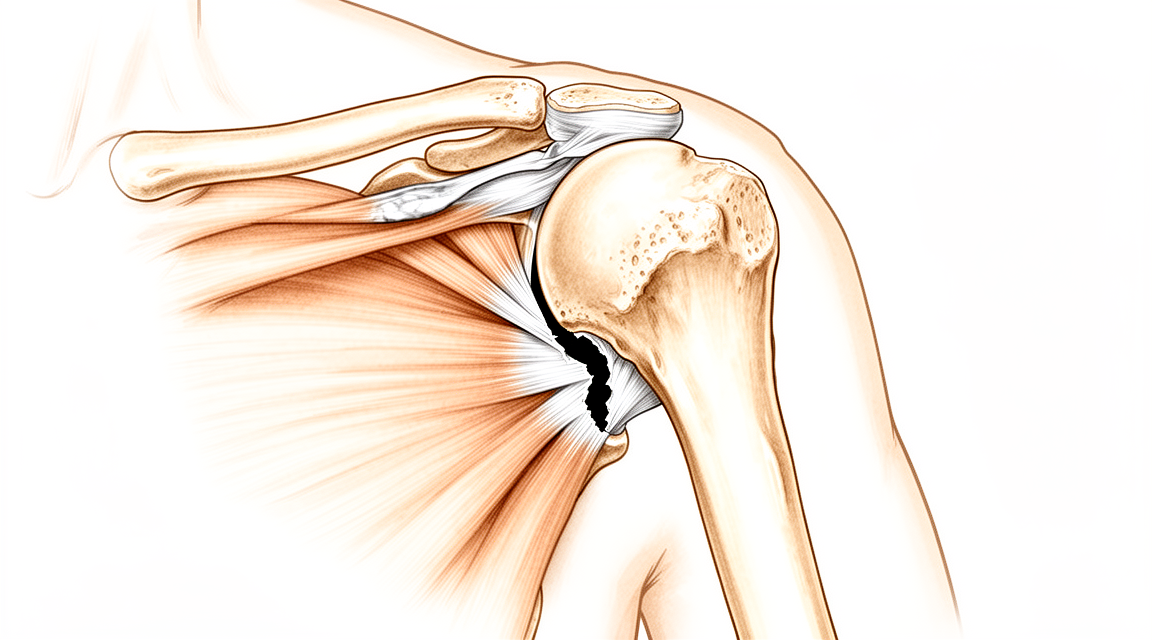
Este protocolo orienta sua recuperação após um reparo do manguito rotador realizado pelo Dr. Kieran Hirpara no Mater Private Hospital Rockhampton. Ele apresenta, em linguagem simples, uma explicação de cada fase do processo, acompanhada de um programa estruturado que você pode compartilhar com seu fisioterapeuta. Leve esta página ou o arquivo PDF correspondente à sua primeira consulta, para que a reabilitação seja devidamente coordenada. Seu fisioterapeuta poderá ajustar o plano conforme a evolução da sua recuperação.
Caso tenha alguma dúvida ou preocupação quanto à ferida cirúrgica, entre em contato com o consultório. Geralmente, é útil tirar uma foto da ferida e enviá-la por e-mail para análise.
O que esperar
A reparação do manguito rotador consiste em reanexar o tendão rompido ao osso; essa reanexação biológica é o que todo este programa visa proteger. Seis semanas após a cirurgia, a reparação ainda está “macia” e continua amadurecendo por muitos meses: em estudos sobre cicatrização, ela apresenta apenas cerca de um quarto da sua força normal nesse período, aproximadamente metade às doze semanas, e só se aproxima da força plena após, no mínimo, seis meses. É por isso que os movimentos e a carga são reintroduzidos gradualmente, e não de uma só vez.
É tentador acelerar o processo logo no início, mas as evidências científicas são tranquilizadoras. Para as rupturas menores e médias, que são as mais comuns, qualquer ganho adicional de amplitude de movimento obtido com movimentação precoce é temporário; após um ano, não há diferença entre quem inicia a reabilitação cedo ou um pouco mais tarde. A paciência nas primeiras semanas não traz prejuízo algum a longo prazo e protege a reparação quando ela está mais frágil. Há também boas evidências de que iniciar terapia intensiva já na primeira semana traz mais prejuízos do que benefícios; por isso, as primeiras semanas são intencionalmente suaves.
A coisa mais importante que você pode fazer pelo seu ombro é proteger a reparação no início. A maioria das re-rupturas ocorre nos primeiros três a seis meses, e pacientes que não seguem as restrições iniciais têm muito mais risco de sofrer novas rupturas. Cumprir o protocolo é mais importante do que qualquer exercício.
Geralmente, as reparações do manguito rotador são feitas em conjunto com outros procedimentos na mesma cirurgia: o mais comum é a descompressão subacromial, excisão da extremidade distal da clavícula, tenodese do bíceps ou liberação do nervo supraescapular. Nesses casos, este protocolo rege toda a recuperação: o tendão reparado é a parte que cicatriza mais lentamente, e seu cronograma define o ritmo geral do processo.
O seu cronograma individual depende do tamanho da ruptura reparada. Esse é o fator que mais define o ritmo, pois rupturas maiores cicatrizam mais devagar e têm maior probabilidade de re-rupturar. O Dr. Hirpara informará a qual grupo sua reparação pertence; a seguir, o programa é dividido em dois percursos claramente identificados:
- Rupturas pequenas/médias: envolve um ou dois tendões, com boa qualidade tecidual.
- Rupturas grandes/massivas: rupturas maiores, dois ou mais tendões envolvidos, ou qualidade tecidual inferior. Os passos são os mesmos, porém são mantidos por mais tempo e executados com maior cautela: o movimento protegido é prolongado, a mobilização ativa é introduzida mais tarde e o fortalecimento é adiado.
O procedimento
A reparação do manguito rotador é realizada por artroscopia (técnica minimamente invasiva) ou, ocasionalmente, por meio de uma pequena incisão aberta. O tendão rompido é reanexado à sua área óssea de inserção na parte superior do úmero. A reabilitação tem como objetivo proteger essa reanexação durante o processo de cicatrização e, posteriormente, restaurar gradualmente a amplitude de movimento, a força e a função da articulação.
Como usar a tipoia
Você usará uma tipoia simples para o ombro, não uma tipoia com almofada de abdução. Não há diferença comprovada nos resultados entre as duas, e a tipoia simples é muito mais confortável de usar no dia a dia. O Dr. Hirpara utiliza a tipoia simples em todos os reparos do manguito rotador, inclusive em casos de rupturas grandes e massivas.
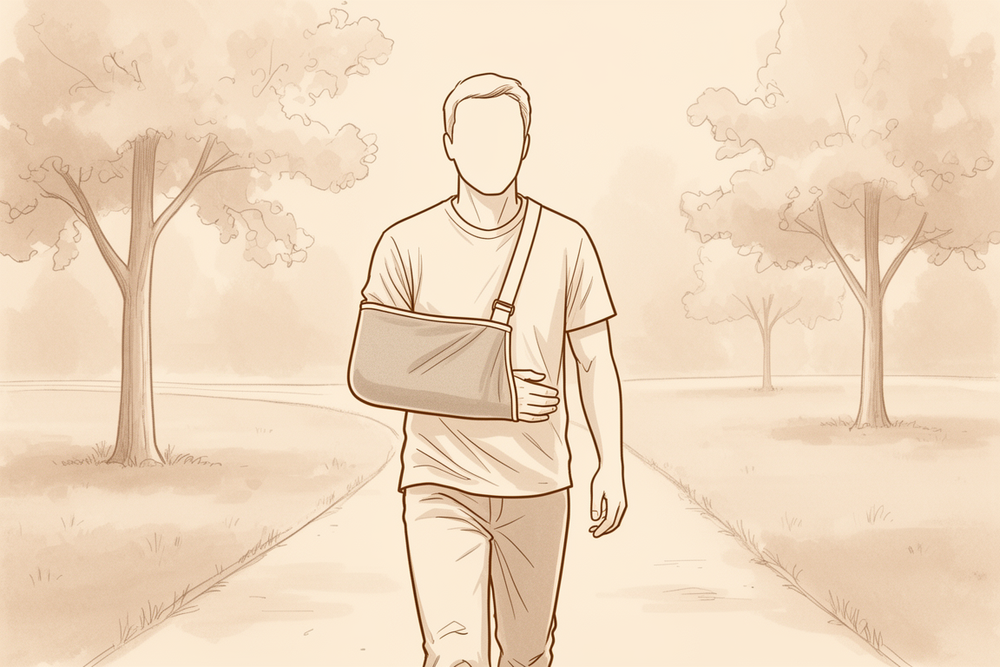
- Use a tipoia por 6 semanas para apoio durante o dia, especialmente quando estiver fora de casa ou na companhia de outras pessoas.
- Não durma com a tipoia. Ela serve apenas para apoio diurno; durma sem ela, mantendo o braço confortável e apoiado num travesseiro.
- Retire-a para tomar banho e para fazer os exercícios (após receber as instruções adequadas). Sempre que a tipoia estiver retirada, mantenha o braço relaxado ao lado do corpo.
- Use gelo caso o ombro fique inchado ou dolorido, especialmente após os exercícios.
- Para alívio da dor, tome paracetamol regularmente junto com um anti-inflamatório (como o ibuprofeno), a menos que receba orientação diferente, conforme descrito em controle da dor pós-operatória. Uma dose antes dos exercícios também ajuda.
Preste atenção à sua postura enquanto usar a tipoia: mantenha as orelhas, ombros e quadris alinhados, evitando curvar-se demais. Uma boa postura protege as costas e ajuda a prevenir a rigidez do ombro.
Precauções importantes — NÃO FAÇA
- NÃO mova o ombro ativamente por conta própria até aproximadamente 6 semanas (a força da reparação é apenas cerca de 20% da normal às 4 semanas).
- NÃO levante, empurre, puxe ou exerça carga com a mão ou o braço por 6 semanas.
- NÃO gire o braço para fora além da posição reta para a frente (posição neutra) nos primeiros tempos.
- Caso o tendão do manguito anterior (subescapular) tenha sido reparado: mantenha a rotação externa ativa dentro de cerca de 30° durante as primeiras 12 semanas, e não gire o braço para dentro ativamente (contra resistência) nesse período; isso protege a reparação anterior. O seu cirurgião informará se isso se aplica a você.
- NÃO faça elevações do tipo “lata vazia” (com o polegar para baixo). Nunca.
- NÃO leve a mão às costas nas primeiras semanas, e evite qualquer movimento brusco ou empurrão súbito.
- NÃO dirija enquanto a tipoia for necessária (6 semanas).
Rupturas pequenas/médias
Este é o caminho a seguir para rupturas de um ou dois tendões, quando o tecido ainda está em bom estado. Quando uma fase indica um número de semanas, esse é o prazo que você deve seguir.
Rupturas pequenas/médias — Fase I: Proteção (semanas 0–6)
Kieran Hirpara 4.0
Circulação e respiração profunda
Para reduzir o risco de complicações pós-operatórias, procure caminhar pelo menos 30 minutos por dia (não é necessário fazer isso de uma só vez) e faça 4–6 respirações profundas a cada hora.
Durante todo o dia
Kieran Hirpara 4.0
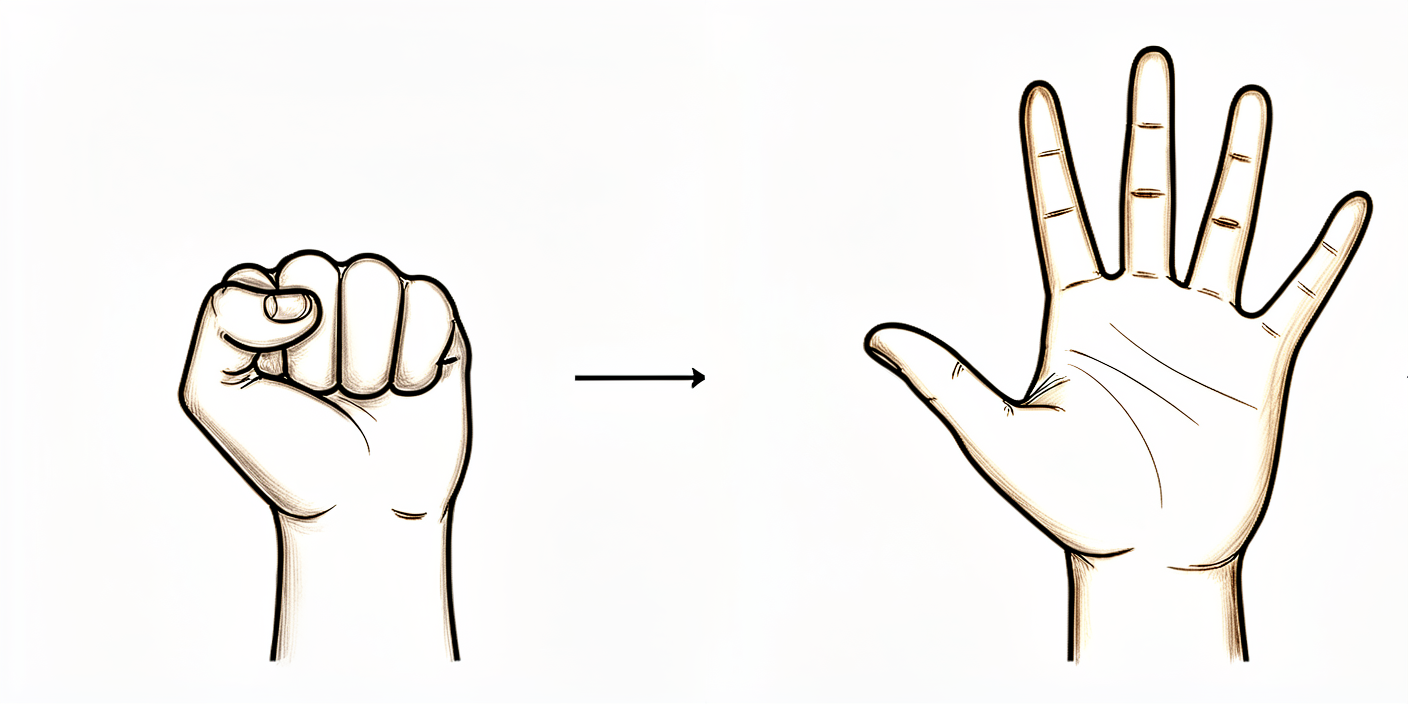
Abrir e fechar a mão
Faça um punho fechado com a mão e, em seguida, abra-a completamente. Isso mantém a mão em movimento e ajuda a prevenir rigidez e inchaço.
10 vezes por hora
Kieran Hirpara 4.0
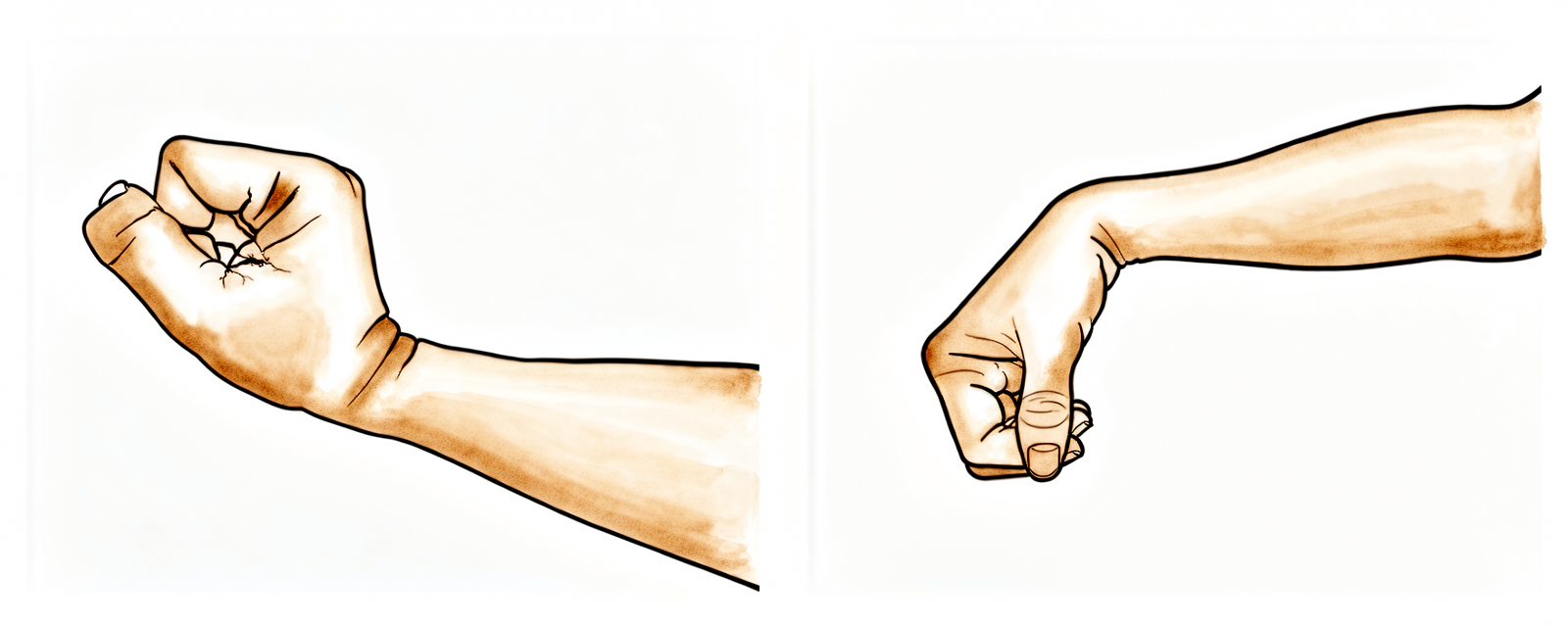
Flexões ativas do punho
Flexione suavemente o pulso para a frente e depois para trás, até onde lhe for confortável.
10–15 vezes por hora
Kieran Hirpara 4.0
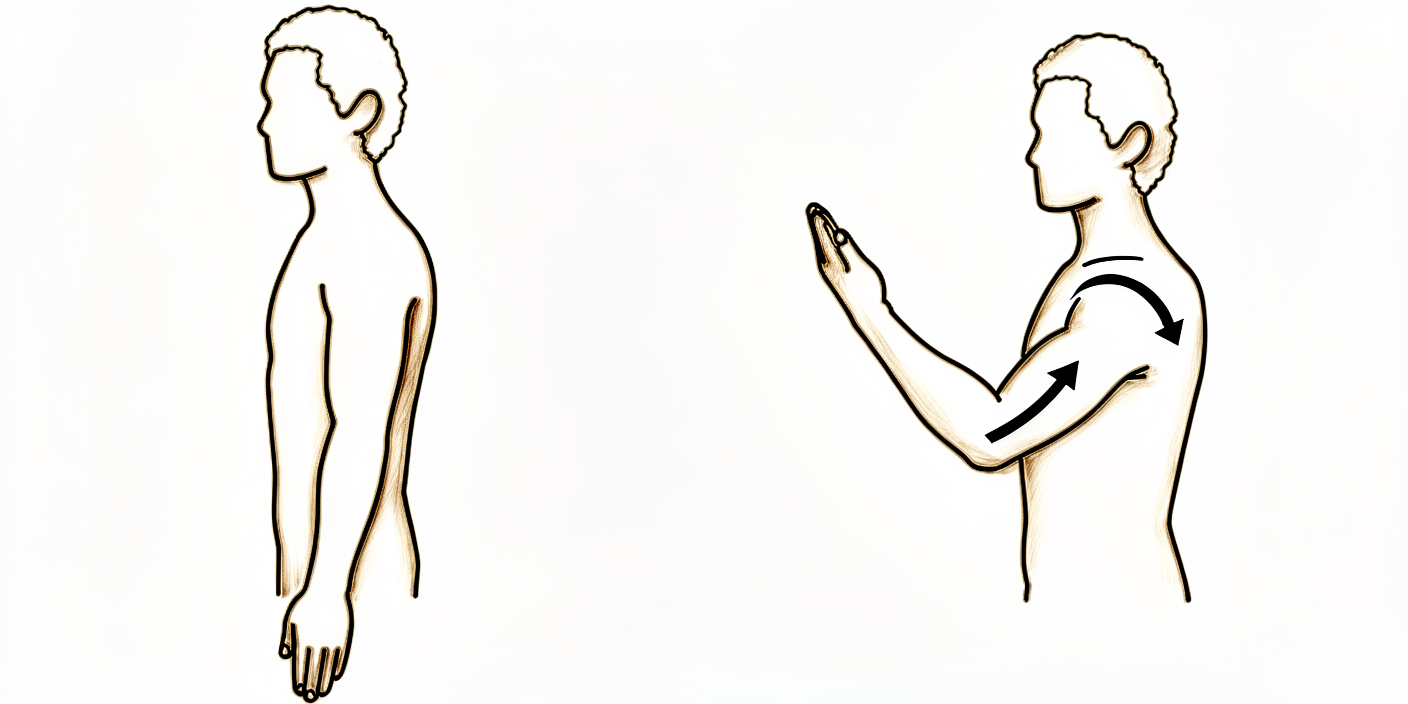
Flexões ativas do cotovelo
Com a palma da mão voltada para cima, dobre o cotovelo suavemente o máximo que puder e, em seguida, estique o braço novamente. Mantenha a parte superior do braço encostada ao lado do corpo.
10–15 vezes, 2–3 vezes ao dia
Kieran Hirpara 4.0
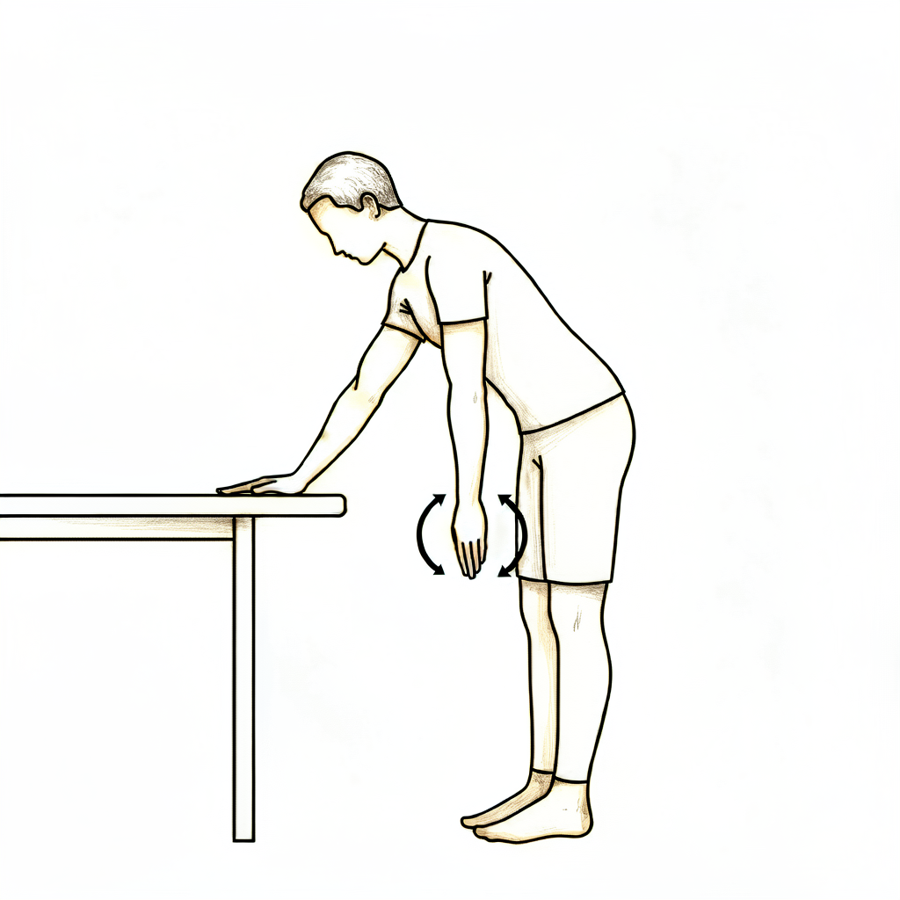
Movimentos pendulares
Incline-se para a frente e deixe o braço operado pendurado, completamente relaxado. Faça pequenos círculos — primeiro no sentido horário, depois no sentido anti-horário — balançando o corpo, NÃO usando os músculos do ombro. Balance também o braço suavemente para a frente/trás e para os lados. Mantenha os círculos pequenos (menos de 20 cm, aproximadamente). O braço operado deve permanecer relaxado durante todo o exercício — você não deve levantá-lo.
10 em cada direção, 2–3 vezes ao dia.
Kieran Hirpara 4.0
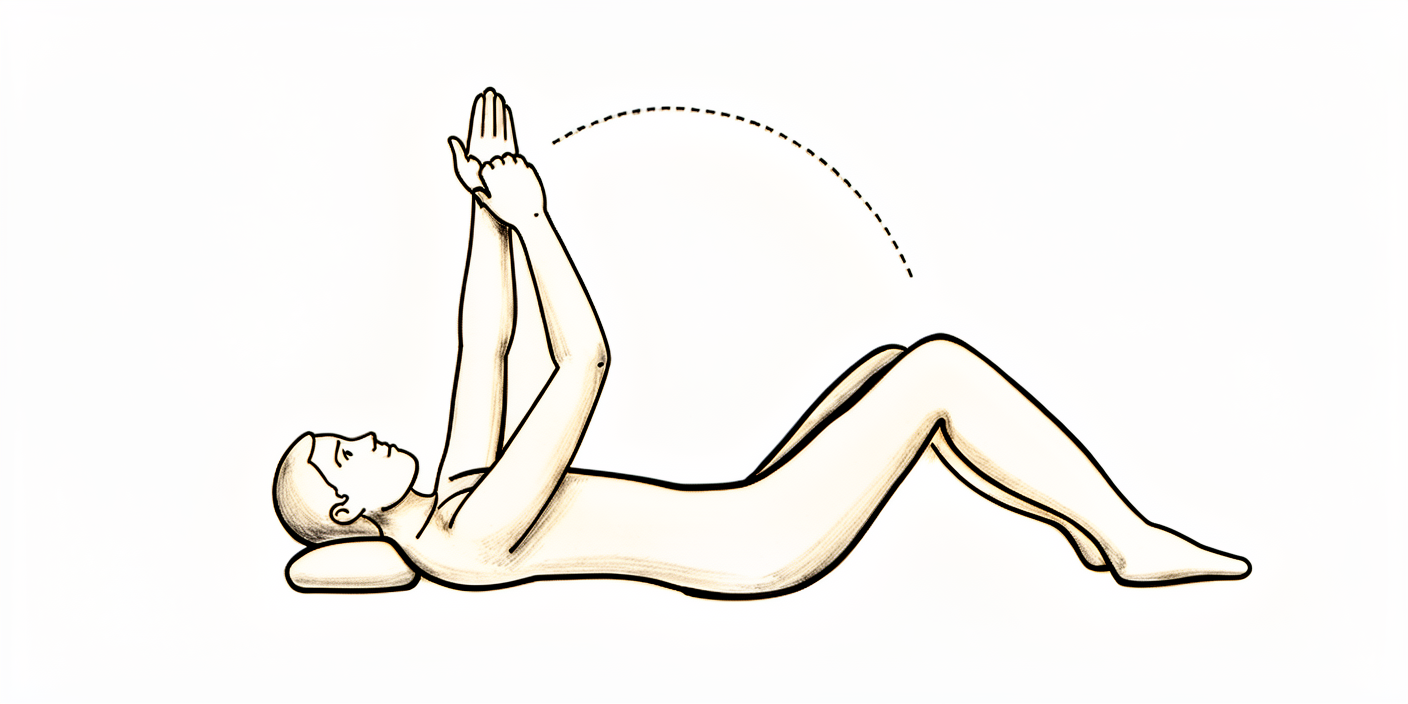
Elevação anterior assistida em decúbito
Deite-se de costas. Coloque a mão sã sob o cotovelo do braço operado e use-a para levantar o braço operado em direção ao teto — o ombro operado permanece relaxado enquanto a mão sã faz o trabalho por você. NÃO levante o braço além da altura do ombro (cerca de 90°) nesta fase. Abaixe-o lentamente de volta à posição inicial.
10 vezes, 2–3 vezes ao dia
Kieran Hirpara 4.0
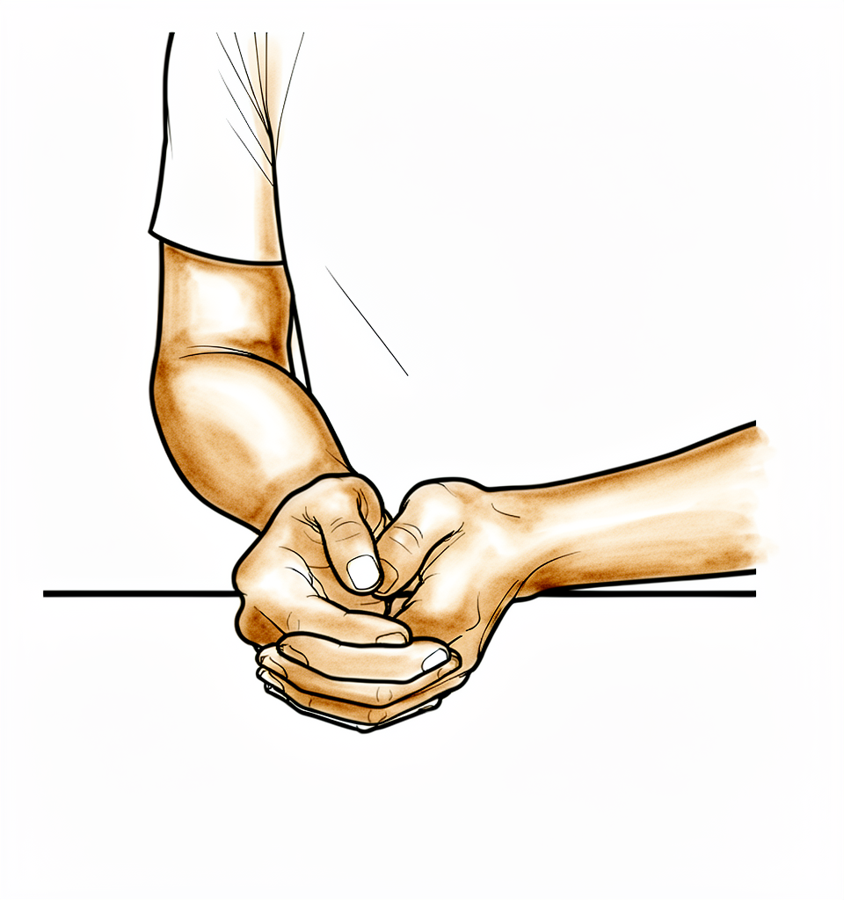
Braço sustentado, estendido para o lado
Sente-se e incline-se ligeiramente para a frente; depois, use o braço saudável para segurar o braço operado e levá-lo para o lado — como se estivesse embalando um bebê. O ombro operado deve permanecer relaxado; é o braço saudável que realiza o movimento.
10 vezes, 2–3 vezes ao dia
Kieran Hirpara 4.0
Rotação externa assistida até a posição neutra
Seja sentado ou em pé, mantenha o cotovelo junto ao corpo e comece com a mão apoiada no abdômen. Gire suavemente o antebraço para fora, apenas até atingir a posição reta para a frente (posição neutra) — não vá além disso. NÃO rode mais do que a posição neutra. Em seguida, volte lentamente à posição inicial.
10 vezes, 2–3 vezes ao dia
Kieran Hirpara 4.0
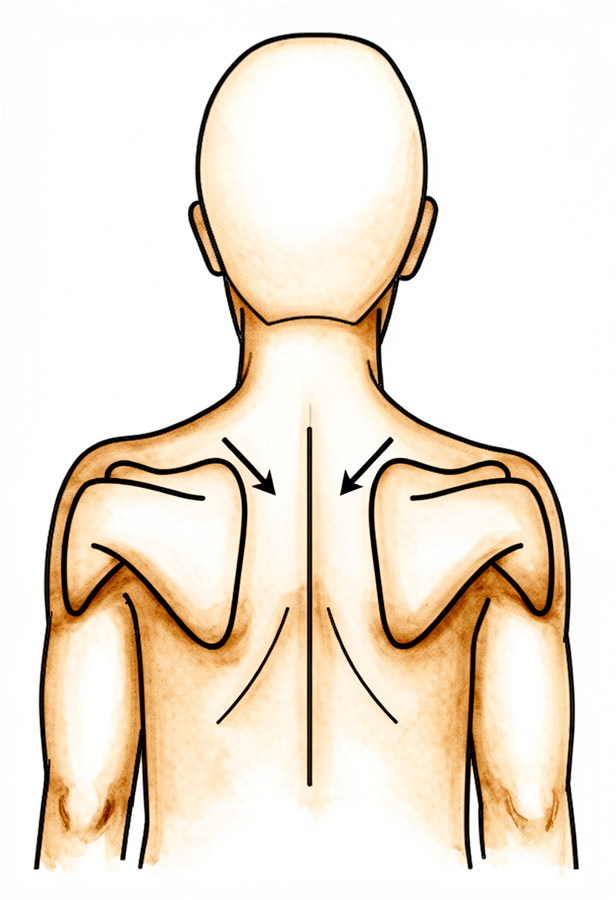
Posicionamento da escápula
Aperte suavemente as escápulas para baixo e uma em direção à outra, mantenha a posição e depois relaxe. Este é um exercício leve de ativação muscular — o seu braço não se move.
Mantenha por 5 segundos, 5 vezes, 2–3 vezes ao dia.
Kieran Hirpara 4.0
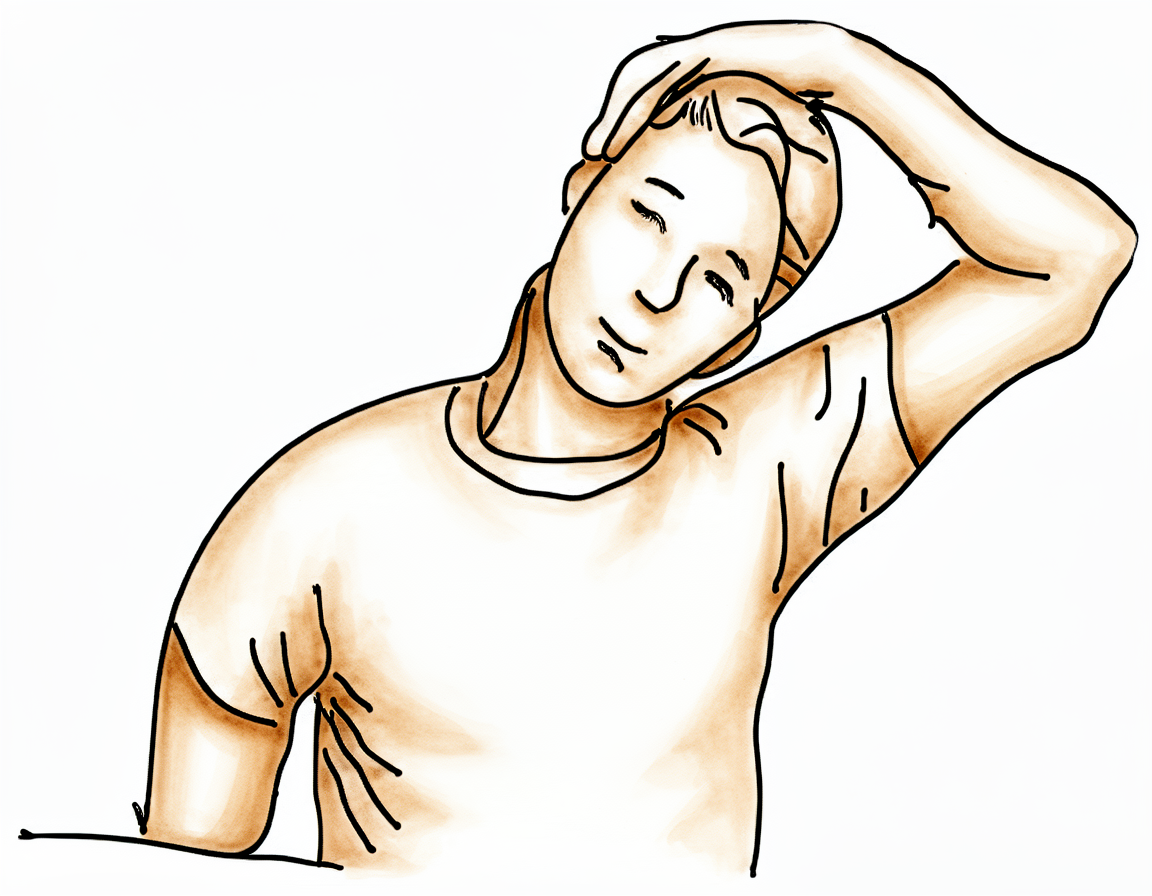
Alongamento lateral do pescoço
Use o seu braço saudável para, com cuidado, levar a orelha em direção ao ombro saudável, afastando-a do lado operado, até sentir um alongamento confortável no pescoço.
Mantenha por 10 segundos, 3 vezes, 2–3 vezes ao dia.
Kieran Hirpara 4.0
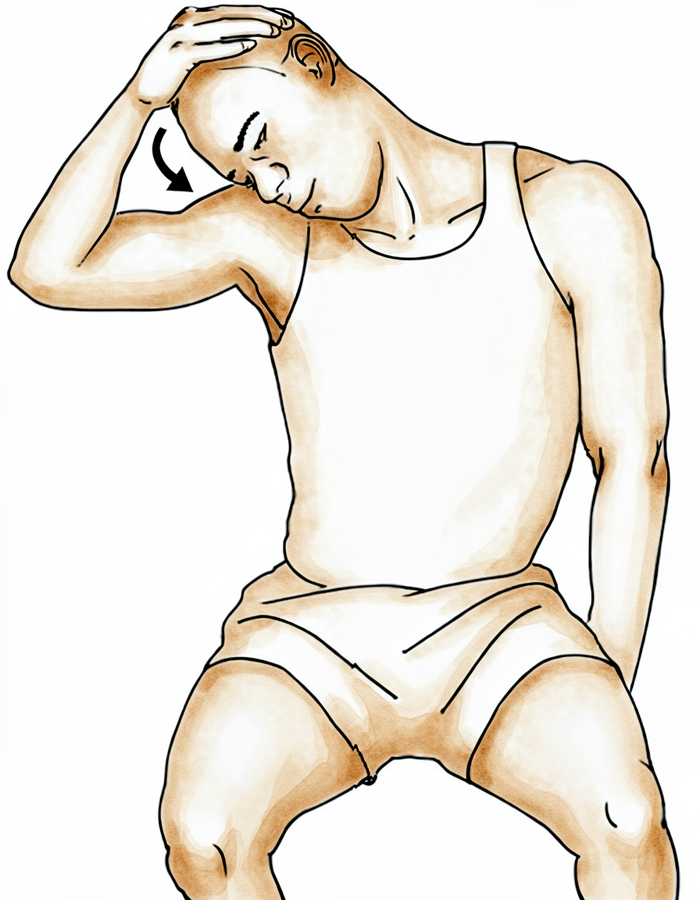
Alongamento do pescoço em direção à axila
Use o seu braço saudável para, com cuidado, levar o nariz em direção à axila, afastando-o do lado operado, até sentir um alongamento confortável.
Mantenha por 10 segundos, 3 vezes, 2–3 vezes ao dia.
As primeiras seis semanas têm um único objetivo: proteger a reparação enquanto o tendão começa a se fixar ao osso. Você deve usar a tipoia simples para apoio durante o dia, tirá-la ao dormir, controlar o inchaço com gelo e realizar exercícios suaves que mantenham a mão, o punho, o cotovelo e o pescoço em movimento, sem sobrecarregar o tendão reparado. Seu fisioterapeuta (ou você mesmo, com ajuda do braço saudável) movimentará suavemente o ombro; você deve permanecer completamente relaxado.
- Tipoia: tipoia simples para apoio diurno; tire-a ao dormir; remova-a para exercícios e higiene.
- Movimentos permitidos: apenas movimentos assistidos e passivos; nada que exija força própria do ombro. O braço saudável ou uma vara deve realizar o movimento. Comece gradualmente a elevação anterior assistida até atingir cerca de 90° (metade do caminho); a rotação externa assistida deve ser feita apenas até a posição neutra (olhando para frente).
- Exercícios: balanços pendulares; elevação anterior assistida deitado; braço sustentado para o lado; rotação externa assistida até a posição neutra; movimentos suaves da mão, punho e cotovelo; exercícios para a escápula e o pescoço.
Pronto para a próxima fase quando: a dor estiver diminuindo e controlada com analgésicos simples (cerca de 3/10 ou menos); a elevação anterior assistida alcançar confortavelmente cerca de 90°; a rotação externa assistida chegar à posição neutra sem dificuldade; a ferida estiver cicatrizada sem sinais de problemas; e não houver indícios de sobrecarga na área reparada.
Rupturas pequenas/médias — Fase II: Restauração do movimento (semanas 6–12)
Kieran Hirpara 4.0
Elevação anterior assistida em decúbito
Deitado de costas, segure uma vara com as duas mãos e use o braço saudável para levantar o braço operado para a frente e para cima — o ombro operado deve permanecer relaxado. Ao longo dessa fase, procure atingir aproximadamente 120° de amplitude (cerca de dois terços do movimento total), respeitando sempre os limites indicados pelo seu fisioterapeuta. Execute o movimento de forma suave, sem forçar, e abaixe o braço com controle.
10 vezes, 2–3 vezes ao dia
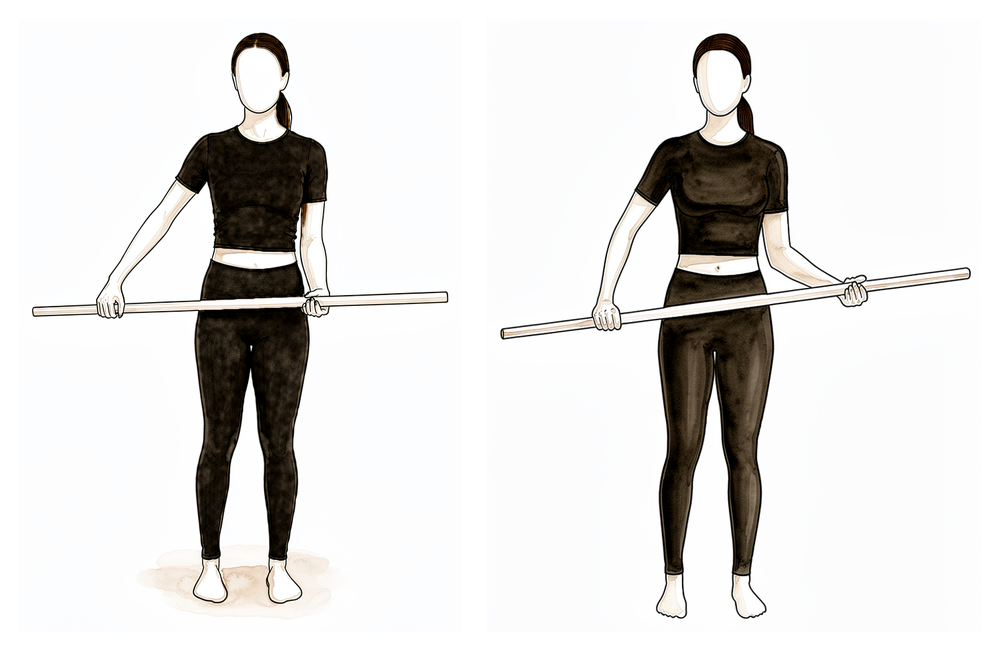
Kieran Hirpara 4.0
Rotação externa assistida com uma vara
Deite-se de costas, com o cotovelo junto ao corpo e dobrado a 90°. Segure uma vara com as duas mãos e use o braço saudável para empurrar suavemente a mão operada para fora. Mantenha o movimento dentro dos limites indicados pelo seu fisioterapeuta; nunca force o movimento.
10 vezes, 2–3 vezes ao dia
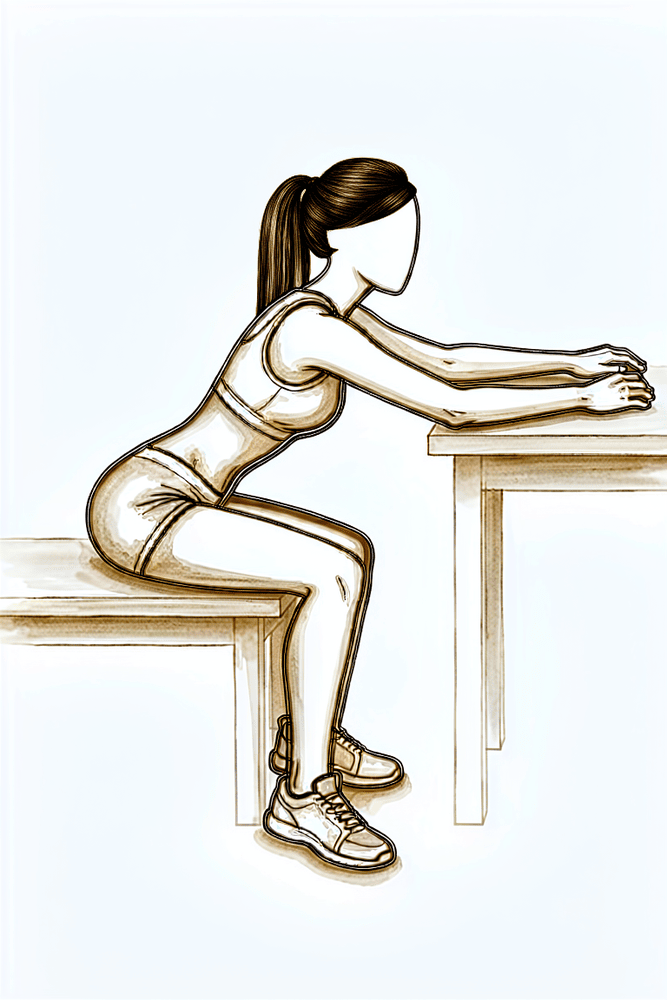
Kieran Hirpara 4.0
Deslizamento na mesa, sentado
A partir da 6ª semana aproximadamente, sente-se à mesa com a mão operada apoiada sobre uma toalha. Deslize a mão para a frente ao longo da superfície, de modo que o braço se estenda para a frente e para cima, deixando que a mesa suporte o peso; em seguida, deslize a mão de volta. O mesmo exercício pode ser feito para o lado, conforme orientação do seu fisioterapeuta.
10 vezes, 2–3 vezes ao dia
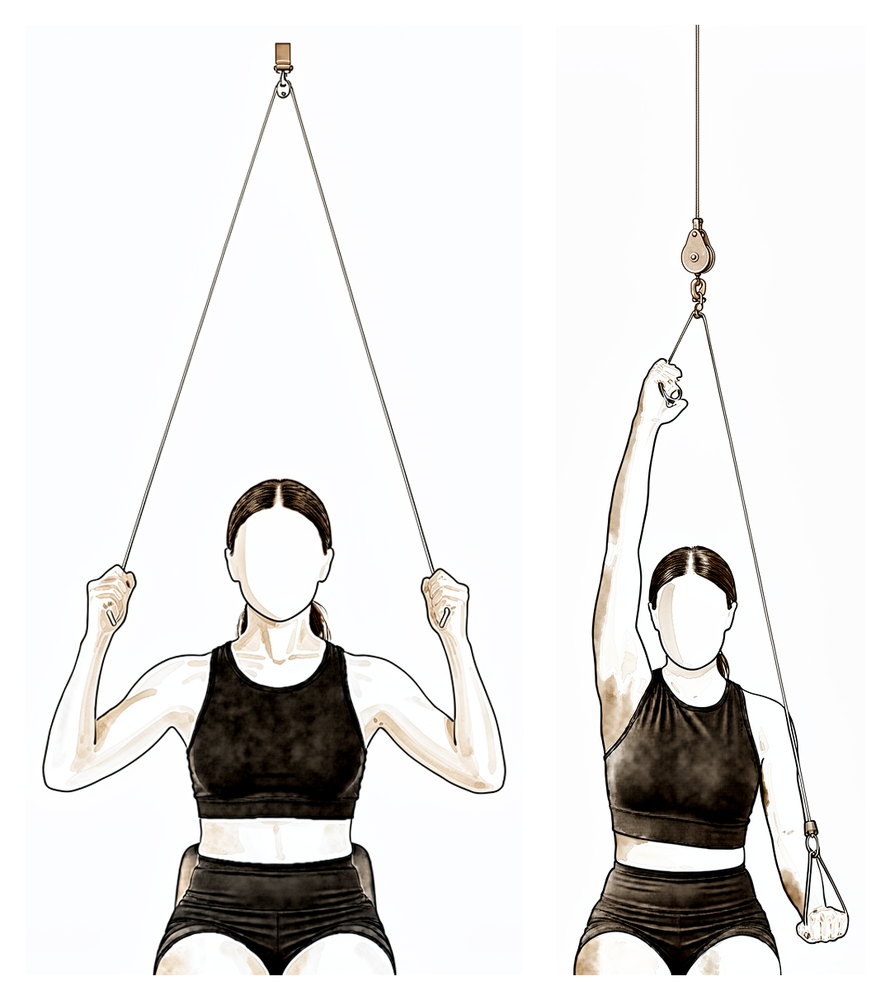
Kieran Hirpara 4.0
Polia de porta
A partir da 6ª semana aproximadamente, sente-se debaixo de uma polia instalada na porta, segurando uma alça em cada mão. Puxe para baixo com o braço saudável a fim de elevar o braço operado, mantendo-o relaxado; em seguida, abaixe-o lentamente.
Conforme orientado pelo seu fisioterapeuta
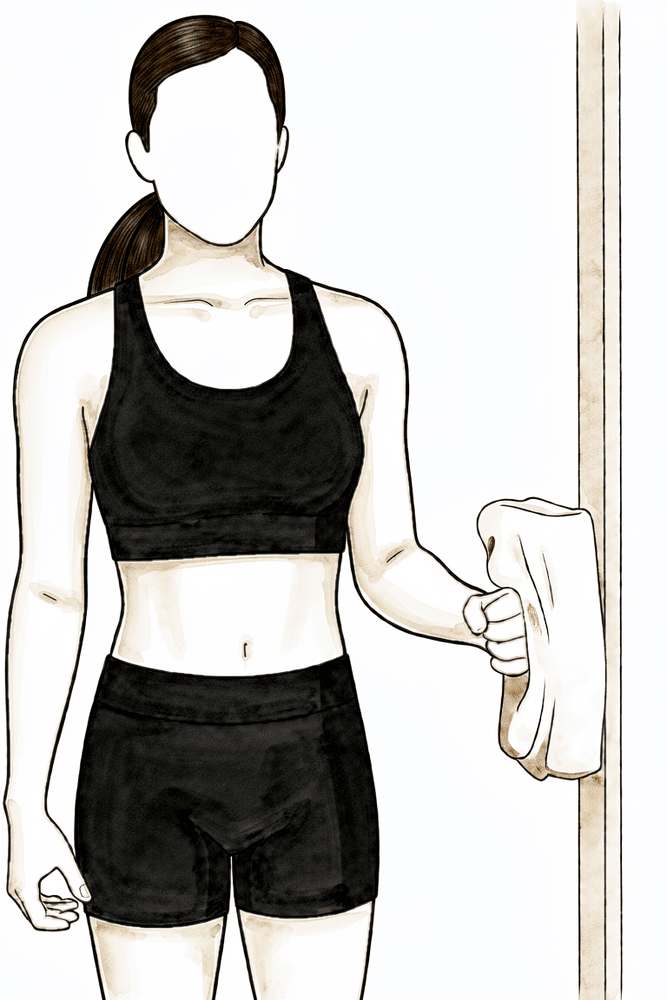
Kieran Hirpara 4.0
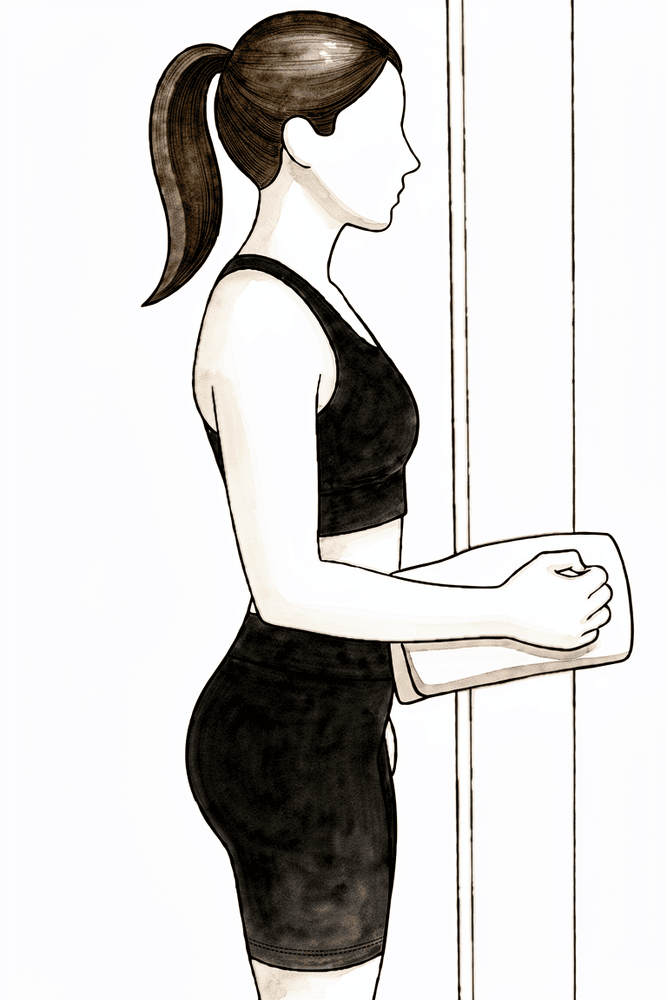
Rotação externa isométrica
A partir da 8ª semana, se o seu fisioterapeuta concordar. Fique de pé com o cotovelo encostado ao lado do corpo e dobrado a 90°, com o dorso da mão próximo a uma parede ou à moldura de uma porta. Pressione suavemente o dorso da mão para fora contra a superfície, SEM mover o braço — com um esforço suave, equivalente a cerca de um quarto da sua força máxima, e sem sentir dor. Mantenha a posição por alguns instantes e depois relaxe.
Mantenha por ~5 segundos, com suavidade (~25% da força), conforme orientado pelo seu fisioterapeuta.
Kieran Hirpara 4.0
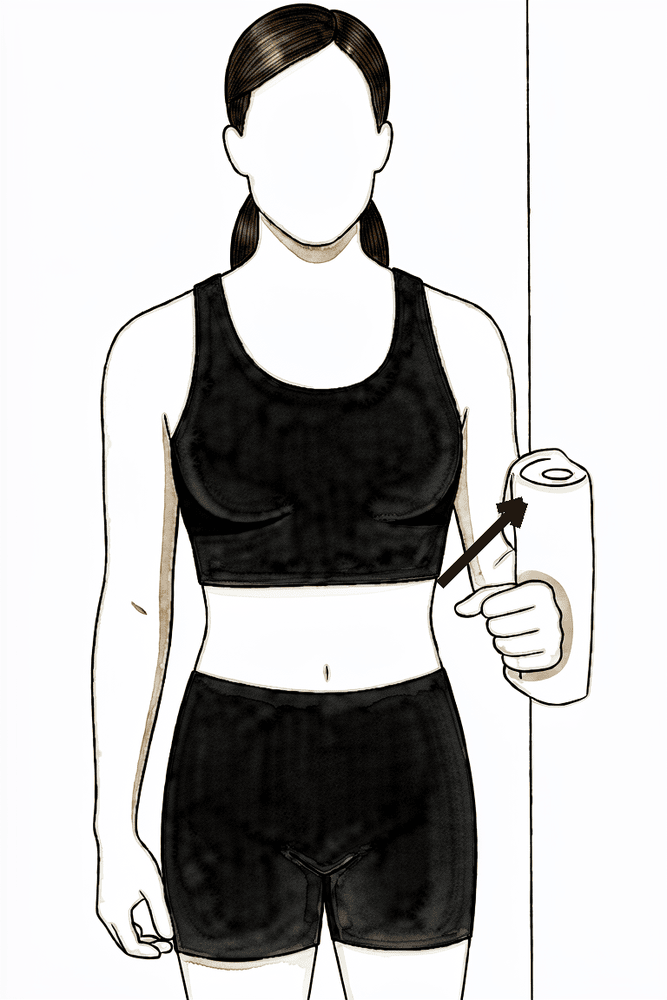
Rotação interna isométrica
A partir da 8ª semana aproximadamente, se o seu fisioterapeuta concordar — mas NUNCA antes da 12ª semana caso o tendão do manguito rotador anterior (subescapular) tenha sido reparado. Fique em pé com o cotovelo junto ao corpo e a palma da mão encostada numa parede. Pressione suavemente a palma para dentro, SEM mover o braço — use cerca de um quarto do esforço, sem sentir dor. Mantenha a posição e depois relaxe.
Mantenha por ~5 segundos, com suavidade (~25% da força máxima), conforme orientação do seu fisioterapeuta.
Kieran Hirpara 4.0
Abdução isométrica
A partir da 8ª semana, se o seu fisioterapeuta concordar. Fique de pé de lado, com a parte externa do braço próxima a uma parede e o cotovelo junto ao corpo. Pressione suavemente o braço para fora contra a parede, SEM permitir que ele se mova — use cerca de um quarto da força máxima, sem sentir dor. Mantenha a posição por alguns instantes e depois relaxe.
Mantenha por ~5 segundos, com suavidade (~25% da força máxima), conforme orientação do seu fisioterapeuta.
Kieran Hirpara 4.0
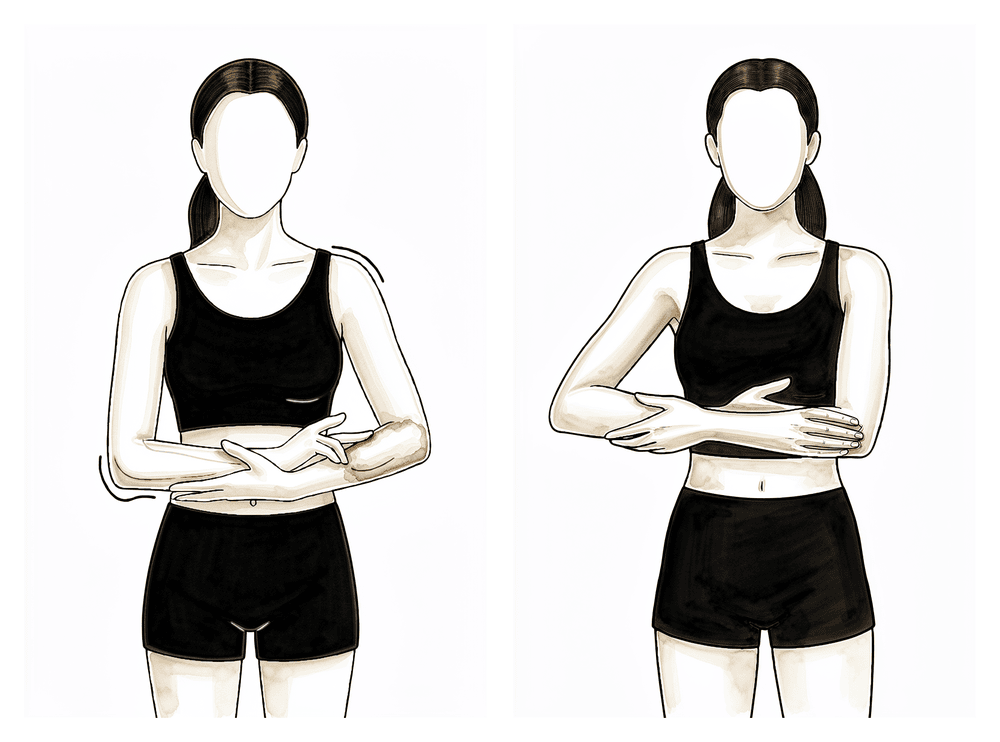
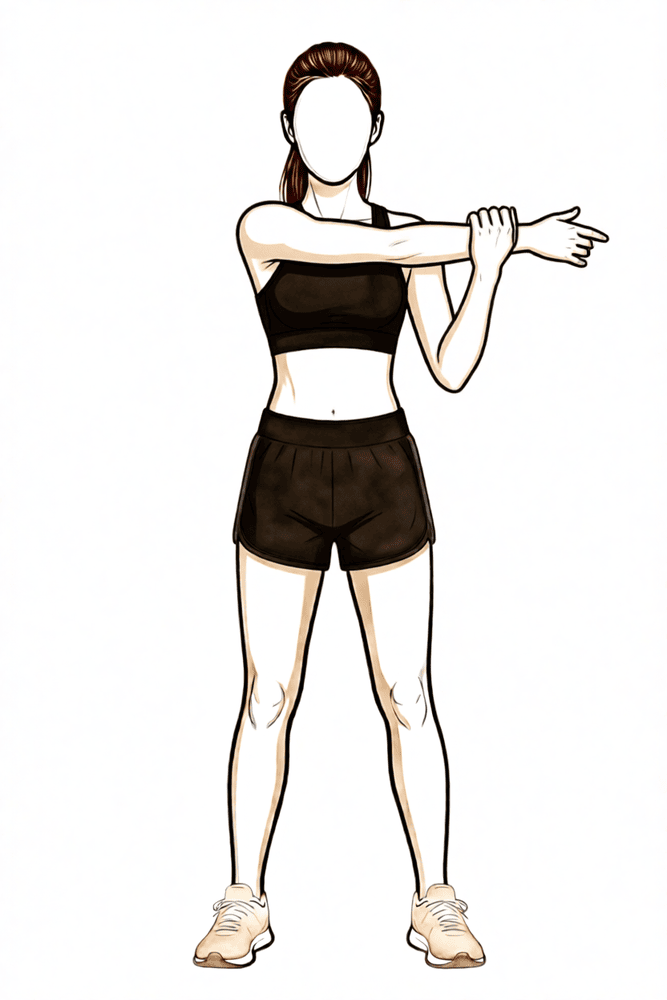
Alongamento cruzado à frente do corpo
Apenas no final desta fase (após a semana 9). Use a mão não operada para levar o braço operado suavemente através do peito, até sentir um alongamento confortável na parte posterior do ombro. Faça isso com delicadeza — não force.
Mantenha por 10–20 segundos, algumas vezes, conforme orientação do seu fisioterapeuta.
A reparação está cicatrizando, mas ainda é frágil, com apenas cerca de 20–30% da força normal às seis semanas. Portanto, esta fase visa restaurar o movimento, não a força. A tipoia já foi retirada. O paciente passa do movimento assistido para o movimento autônomo, iniciando em posições fáceis (deitado ou deslizando sobre uma mesa, onde o efeito da gravidade é retirado) e progredindo para posições mais verticais. No final desta fase, são introduzidos exercícios leves de ativação muscular (isométricos).
- Tipoia: já foi descontinuada (na maior parte, já retirada nas semanas 4–6).
- Movimentos permitidos: movimento assistido completo, evoluindo para movimento autônomo a partir da semana 6, aproximadamente. O objetivo é alcançar elevação anterior assistida/ativa de aproximadamente 120° ou mais.
- Exercícios: elevação anterior assistida deitado; rotação externa assistida usando uma vara; deslizamento na mesa, sentado; polia de porta; exercícios isométricos suaves (pressão mantida) de rotação externa, rotação interna e abdução a partir da semana 8, aproximadamente; alongamento cruzado à frente do corpo no final da fase (após a semana 9).
Pronto para a próxima fase quando: o paciente conseguir elevar o braço para a frente, por conta própria, até pelo menos 115–120°, com bom controle (sem encolher o ombro nem elevar a escápula para compensar); o movimento assistido/passivo for completo ou quase completo e indolor; os exercícios isométricos suaves forem tolerados sem aumento da dor posteriormente; e a dor não for superior a cerca de 2/10 antes de iniciar exercícios com resistência.
Rupturas pequenas/médias — Fase III: Fortalecimento (semanas 12–16)
Kieran Hirpara 4.0
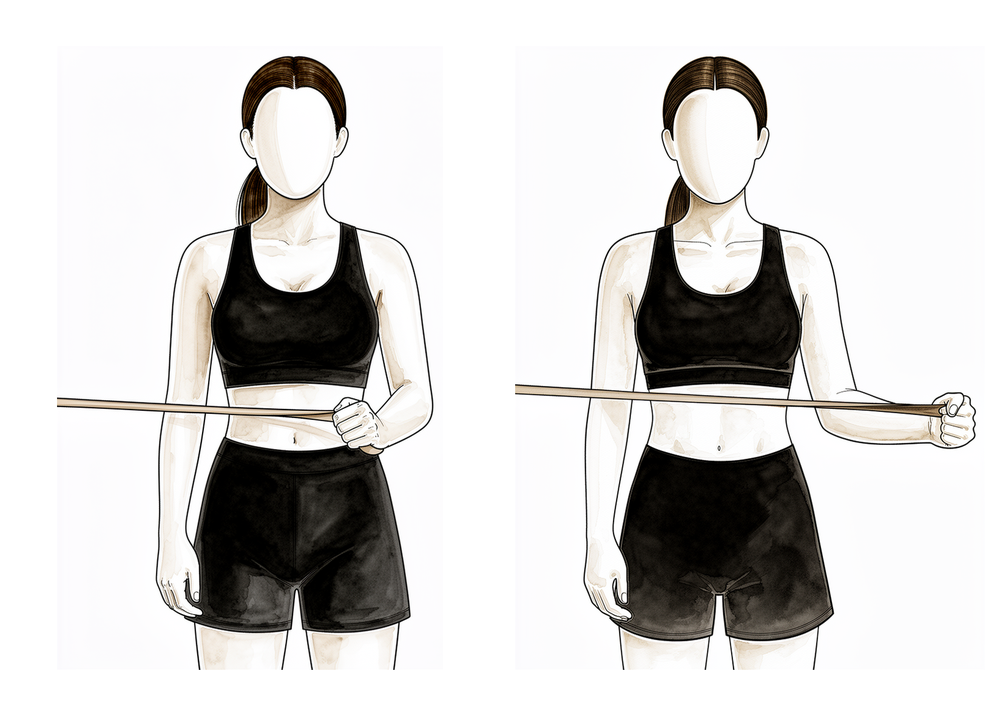
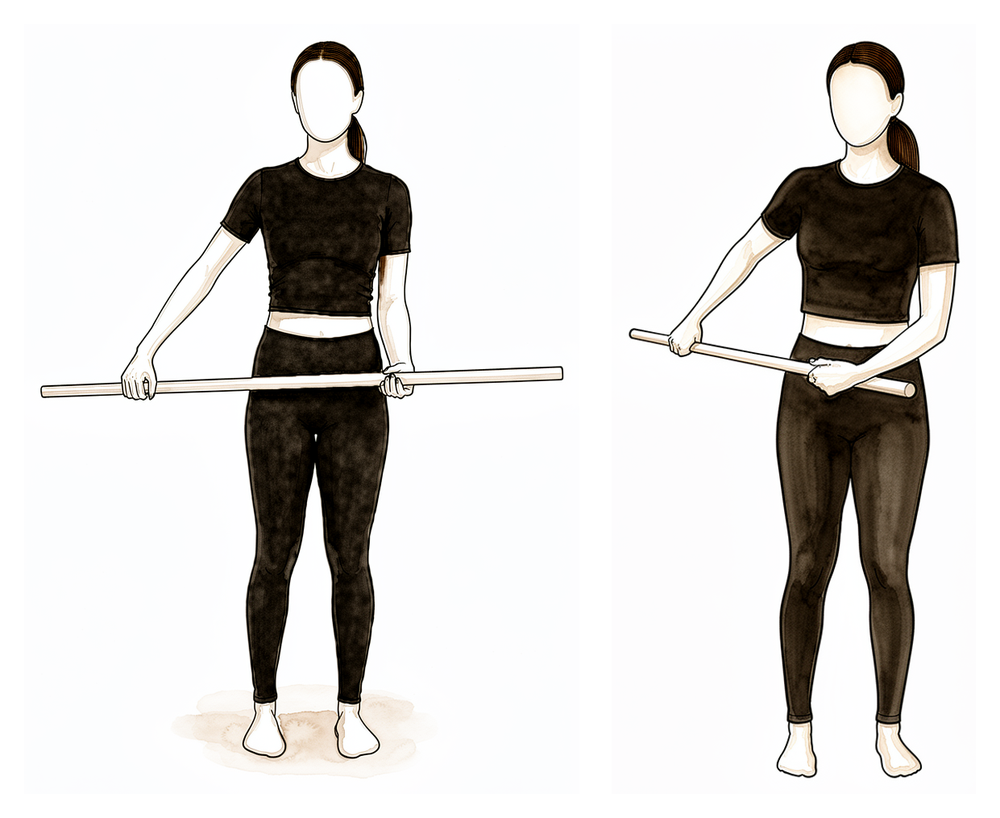
Rotação externa à altura do ombro (faixa)
A partir da 12ª semana, quando os movimentos acima da cabeça já forem confortáveis. Com o braço levantado à altura do ombro, para o lado, e o cotovelo dobrado a 90°, gire o antebraço para cima contra a resistência de uma faixa elástica leve, e depois volte à posição inicial de forma controlada. Utilize uma faixa elástica leve e faça muitas repetições; evite resistências muito fortes.
Conforme orientado pelo seu fisioterapeuta
Kieran Hirpara 4.0
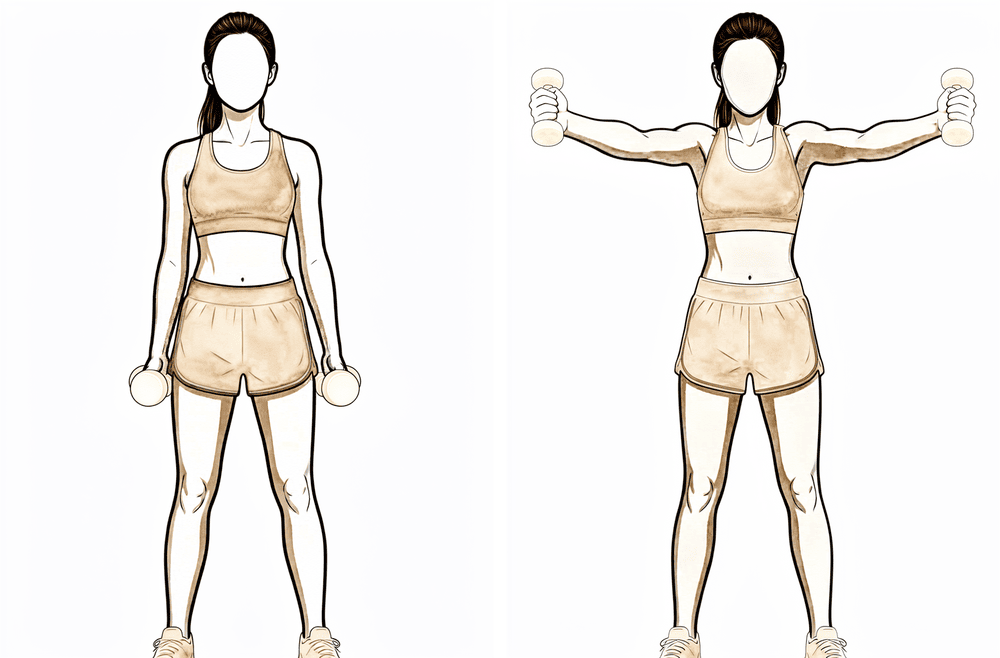
Rotação interna utilizando uma vara
A partir da 12ª semana aproximadamente (ou mais tarde, caso o tendão do manguito rotador frontal tenha sido reparado). Segure uma vara atrás das costas e use a mão sã para levantar suavemente a mão operada pelas costas, depois abaixe-a com controle. Faça o movimento de forma confortável e respeitando os limites indicados pelo seu fisioterapeuta.
Conforme orientado pelo seu fisioterapeuta
Kieran Hirpara 4.0
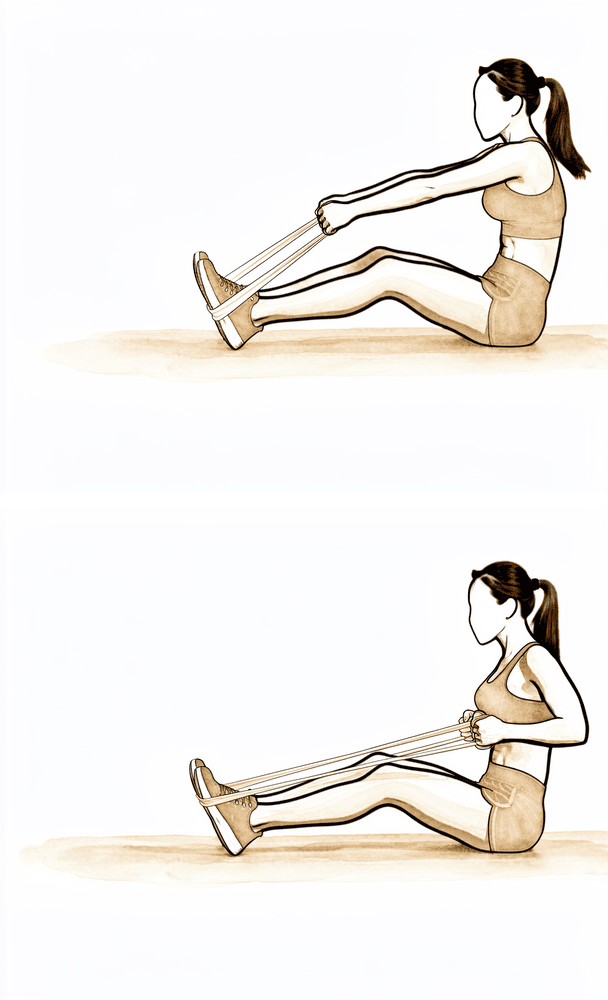
Elevação em “lata cheia”
A partir da 12ª semana aproximadamente, quando elevar o braço para a frente já for confortável. Levante o braço para a frente e ligeiramente para o lado, com o POLEGAR APONTADO PARA CIMA — a posição de “lata cheia” — e depois abaixe-o de forma controlada. NUNCA levante o braço com o polegar apontado para baixo (“lata vazia”).
Conforme orientado pelo seu fisioterapeuta
Kieran Hirpara 4.0
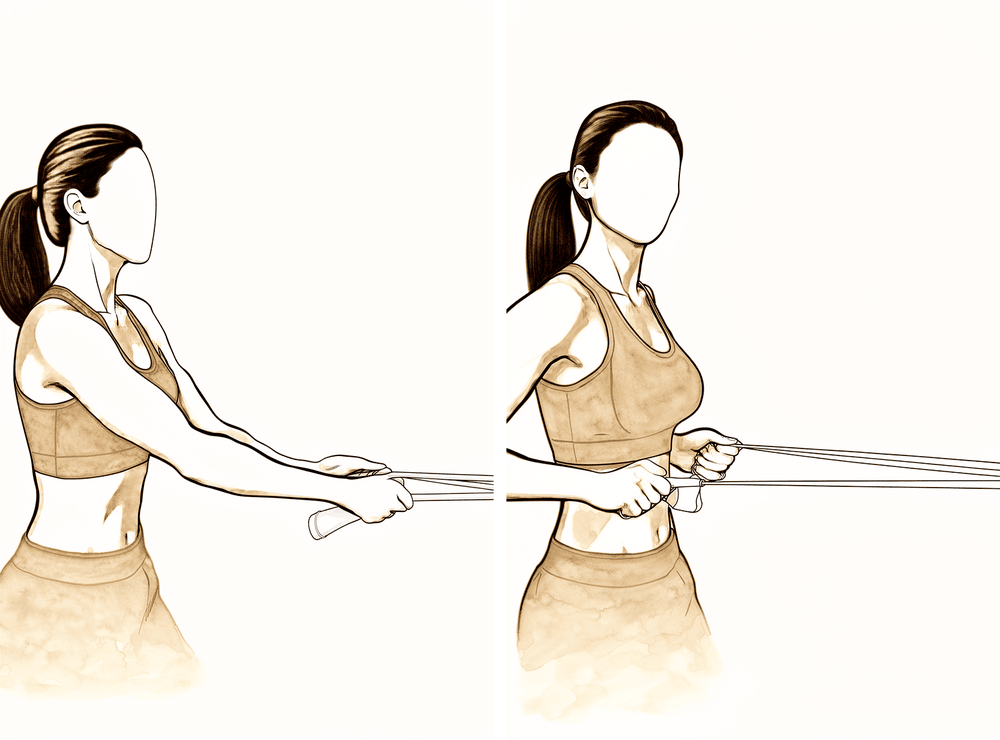
Remada baixa (posicionamento da escápula)
A partir da 12ª semana aproximadamente. Com a mão apoiada numa superfície fixa ao seu lado, pressione para baixo e para trás de modo a deslocar a escápula para baixo e para dentro, mantendo a posição por alguns instantes. Isso estabiliza a escápula (o seu fisioterapeuta pode chamar isso de “deslizamento inferior”).
Conforme orientado pelo seu fisioterapeuta
Kieran Hirpara 4.0
Remada com faixa de resistência
A partir da 12ª semana aproximadamente. Com uma faixa elástica fixada à sua frente, puxe as alças em direção a si, trazendo os cotovelos para trás e aproximando as escápulas uma da outra; em seguida, volte à posição inicial de forma controlada. Use uma faixa elástica leve e faça muitas repetições; interrompa o exercício caso sinta dor no ombro.
Conforme orientado pelo seu fisioterapeuta
Kieran Hirpara 4.0
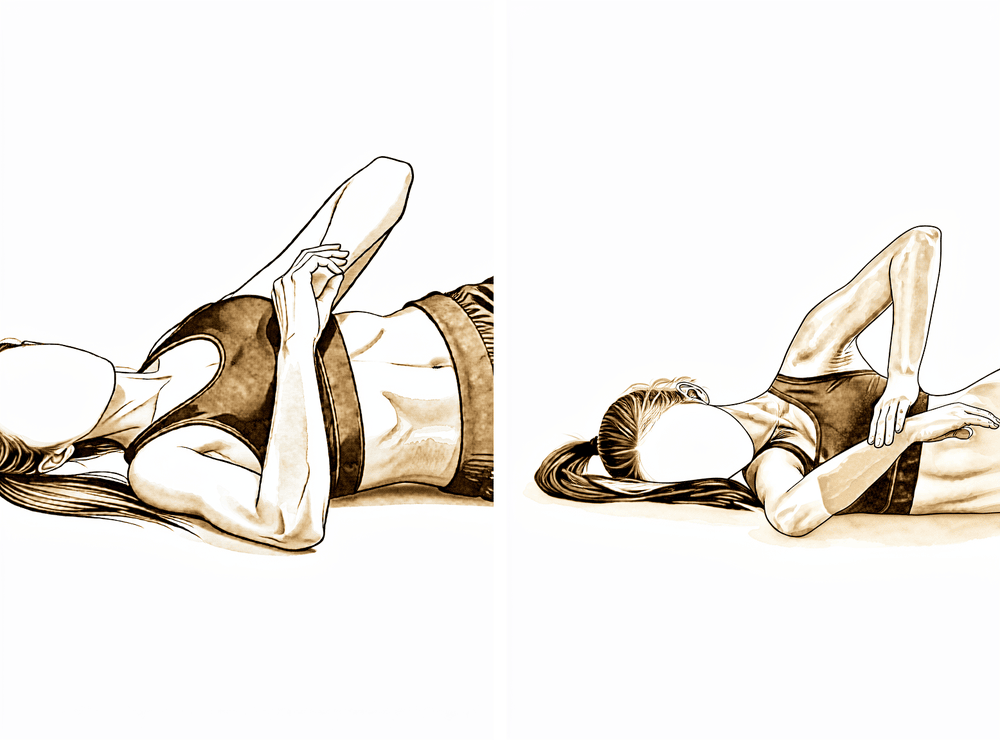
Alongamento do tipo “dorminhoco”
A partir da 12ª semana, se o fisioterapeuta assim orientar. Deite-se sobre o lado operado, com o braço estendido para a frente e o cotovelo dobrado. Use a mão superior para pressionar suavemente o antebraço em direção à cama, até sentir um alongamento confortável na parte posterior do ombro. Faça isso com suavidade — não force.
Mantenha por 10–20 segundos, algumas vezes, conforme orientação do seu fisioterapeuta.
Kieran Hirpara 4.0
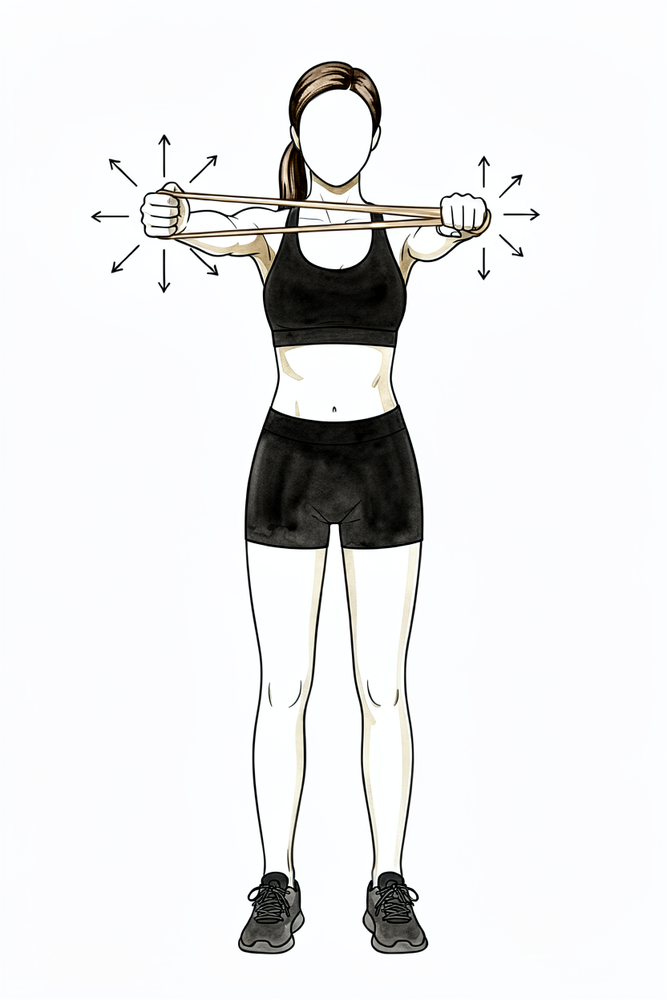
Estabilização rítmica
Com o braço apoiado à sua frente, na altura dos ombros, peça ao seu fisioterapeuta (ou à sua mão sã) que aplique pequenos empurrões suaves em diferentes direções, enquanto você mantém o braço imóvel e firme — não permita que ele se mova. Isso treina os músculos estabilizadores do ombro para reagirem. Certifique-se de que todos os esforços sejam suaves.
Conforme orientado pelo seu fisioterapeuta
É nesta fase que a reparação amadurece mais rapidamente; o foco muda de recuperar o movimento para reconstruir a força, a resistência e o controle. A partir da 12ª semana, aproximadamente, inicia-se o trabalho de resistência com faixas elásticas leves e pesos leves: muitas repetições, carga baixa. A regra de ouro é um plano de movimento por vez: só se deve fortalecer numa determinada direção após alcançar movimento quase total e confortável nessa direção. Sempre levante o peso mantendo o polegar para cima; nunca com o polegar para baixo.
- Tipoia: nenhuma; espera-se movimento total.
- Exercícios: rotação externa com faixa elástica à altura do ombro; rotação interna com uma vara; elevação em “lata cheia”; remada baixa (posicionamento da escápula); remadas com faixa de resistência; alongamento do tipo “dorminhoco”. O fisioterapeuta também pode acrescentar estabilização rítmica (exercícios suaves de manutenção da posição, em que ele empurra levemente o seu braço e você oferece resistência) para retreinar o controle; trata-se de um trabalho manual, sem diagramas.
Pronto para a fase seguinte quando: você tem movimento completo e sem dor por conta própria, com controle uniforme das escápulas; não há dor nem inchaço após as sessões de fortalecimento; consegue realizar elevações com resistência no plano das escápulas sem dificuldade; e a força de rotação está se aproximando da força do lado oposto (cerca de 80% em testes suaves; os testes de força completa serão feitos só muito mais tarde).
Rupturas pequenas/médias — Fase IV: Retorno ao esporte e ao trabalho (semanas 16–24)
Kieran Hirpara 4.0
Elevação em “lata cheia” com peso leve
A elevação em “lata cheia”, como antes, agora com um peso leve, aumentando a carga gradualmente. Mantenha o POLEGAR PARA CIMA. Interrompa o exercício se o ombro doer ou inchar depois.
Conforme orientado pelo seu fisioterapeuta
Esta fase serve como ponte para um ombro totalmente funcional, permitindo um retorno gradual ao esporte e a atividades laborais mais pesadas. Você manterá a amplitude de movimento já conquistada e desenvolverá força, potência e resistência para utilizá-la com confiança: alcançar objetos, carregar peso, trabalhar acima da cabeça. O retorno é feito de forma gradual, não repentina; no esporte, um programa intervalado que aumente progressivamente o volume e a intensidade é a abordagem mais segura.
- Tipoia: nenhuma.
- Exercícios: elevação em “lata cheia” com peso leve, aumentado gradualmente; exercícios de condicionamento específicos para o esporte e o trabalho, carga progressiva e, no final da fase, exercícios de alta velocidade controlada (pliométricos), conforme apropriado.
Pronto para retornar quando: a força de rotação do ombro atingir pelo menos 85–90% do lado contralateral; você tiver movimento completo e sem dor, sem inchaço reativo mesmo sob carga maior; e passar nos testes específicos para sua atividade esportiva ou profissional. O retorno ao esporte ou a atividades laborais pesadas geralmente ocorre por volta de 4–6 meses, desde que esses critérios sejam atendidos e com autorização do Dr. Hirpara e do seu fisioterapeuta, e não apenas com base no calendário.
Rupturas grandes/massivas
Este é o protocolo indicado para rupturas maiores (envolvendo dois ou mais tendões, ou em casos de má qualidade do tecido). As fases são as mesmas, porém cada uma é mantida por mais tempo e conduzida com maior cautela para favorecer a cicatrização. Alguns cirurgiões optam deliberadamente por adiar a terapia formal nesse grupo de pacientes; siga as instruções específicas dadas pelo Dr. Hirpara. A tipoia continua sendo uma tipoia simples, sem necessidade de almofada de abdução, mesmo no caso de rupturas grandes ou massivas.
Rupturas grandes/massivas — Fase I: Proteção (semanas 0–6)
Kieran Hirpara 4.0
Movimentos pendulares
Incline-se para a frente e deixe o braço operado pendurado, totalmente relaxado. Faça pequenos círculos balançando o corpo, NÃO usando os músculos do ombro. O braço operado deve permanecer relaxado durante todo o tempo.
10 em cada direção, 2–3 vezes ao dia
Kieran Hirpara 4.0
Abrir e fechar a mão
Faça um punho fechado com força e, em seguida, abra a mão completamente. Isso mantém a mão em movimento e reduz o inchaço.
10 vezes por hora
Kieran Hirpara 4.0
Flexões ativas do punho
Flexione suavemente o pulso para a frente e depois para trás, até onde lhe for confortável.
10–15 vezes por hora
Kieran Hirpara 4.0
Flexões ativas do cotovelo
Com a palma da mão virada para cima, dobre o cotovelo suavemente e depois estique-o, mantendo o braço colado ao corpo.
10–15 vezes, 2–3 vezes ao dia
Kieran Hirpara 4.0
Posicionamento da escápula
Aperte suavemente as escápulas para baixo e uma em direção à outra, mantenha a posição e depois relaxe. O seu braço não deve se mover.
Mantenha por 5 segundos, 5 vezes, 2–3 vezes ao dia.
O procedimento é semelhante ao da categoria de rupturas pequenas/médias, porém os movimentos são estritamente controlados e progridem de forma mais lenta. O fisioterapeuta ou o braço saudável realizará os movimentos do ombro por você; você deve permanecer relaxado. Neste grupo, a terapia formal às vezes é adiada para favorecer a cicatrização.
- Tipoia: tipoia simples para suporte durante o dia; durma sem a tipoia; retire-a para exercícios e higiene.
- Movimentos permitidos: apenas movimentos passivos controlados, dentro dos limites estabelecidos pelo Dr. Hirpara; geralmente, a amplitude de movimento é menor do que na categoria de rupturas pequenas/médias.
- Exercícios: balanços pendulares; movimentos assistidos e controlados conforme orientação; movimentação da mão, punho e cotovelo; posicionamento da escápula.
Pronto para a próxima fase quando: a dor estiver controlada; não houver sinais de sobrecarga na área reparada; e o Dr. Hirpara autorizar a continuidade do tratamento (este grupo requer abordagem individualizada; não avance conforme o cronograma sozinho).
Rupturas grandes/massivas — Fase II: Restauração do movimento (semanas 6–12)
A tipoia é retirada por volta da semana 6, mas o movimento ativo por conta própria é reintroduzido mais tarde e de forma mais individualizada em comparação com o protocolo para rupturas pequenas/médias, a fim de proteger a reparação por mais tempo. Os exercícios de resistência para o manguito rotador são intencionalmente adiados.
- Tipoia: retirada por volta da semana 6.
- Movimento permitido: movimentos assistidos que evoluem para movimentos por conta própria mais tarde do que no protocolo para rupturas pequenas/médias; o momento exato é determinado pelo seu fisioterapeuta conforme o andamento da sua recuperação.
- Exercícios: os mesmos exercícios da Fase II para rupturas pequenas/médias (elevação frontal assistida, rotação externa assistida com uma vara, deslizamento na mesa, polia de porta), porém com progressão mais lenta; os exercícios de resistência para o manguito rotador são adiados.
Pronto para a próxima fase quando: o movimento por conta própria estiver melhorando de forma constante; os movimentos assistidos/passivos forem completos; você tiver bom controle da escápula; e sua equipe considerar que a reparação está cicatrizando suficientemente bem para iniciar a carga funcional.
Rupturas grandes/massivas — Fase III: Fortalecimento (a partir da semana 16 aproximadamente)
Kieran Hirpara 4.0
Estabilização rítmica
Com o braço apoiado à sua frente, na altura dos ombros, peça ao seu fisioterapeuta (ou à sua mão sã) que aplique pequenos empurrões suaves em diferentes direções, enquanto você mantém o braço imóvel e firme — não permita que ele se mova. Isso treina os músculos estabilizadores do ombro para reagirem. Certifique-se de que todos os esforços sejam suaves.
Conforme orientado pelo seu fisioterapeuta
O fortalecimento é adiado para por volta da semana 16, em vez da semana 12, pois reparos maiores precisam de mais tempo para amadurecer. A partir daí, a progressão é a mesma da fase de fortalecimento para lesões pequenas/médias: uso de elásticos e pesos leves, alto número de repetições, carga baixa, exercícios em um único plano de movimento por vez, sempre mantendo o polegar para cima.
- Tipoia: nenhuma; espera-se movimento completo do membro.
- Exercícios: iguais aos da fase de fortalecimento para lesões pequenas/médias (rotação externa com elástico, rotação interna com uma vara, elevação em “lata cheia”, remada baixa, remadas com elástico, alongamento do tipo “dorminhoco”), iniciados mais tarde e aumentados gradualmente. A estabilização rítmica (exercícios manuais de manutenção da posição estável) pode ser acrescentada à medida que o controle motor melhora.
Pronto para a fase seguinte quando: houver movimento completo e sem dor por iniciativa própria; não houver dor ou inchaço após os exercícios de fortalecimento; e a força estiver se desenvolvendo de forma equilibrada em comparação com o lado contralateral.
Rupturas grandes/massivas — Fase IV: Retorno ao esporte e ao trabalho (a partir dos 6 meses)
No caso de rupturas grandes e massivas, o retorno ao esporte e a atividades laborais pesadas ocorre mais tarde, geralmente seis meses ou mais, muitas vezes até mais tempo, com um retorno mais lento, e menos pessoas voltam ao seu nível anterior. O processo de recuperação segue a mesma abordagem por etapas e baseada em critérios, igual àquela utilizada para rupturas pequenas/médias.
- Tipoia: nenhuma.
- Exercícios: carga progressiva e condicionamento específico para o esporte ou trabalho, aumentados gradualmente.
Pronto para retornar quando: tanto o Dr. Hirpara quanto seu fisioterapeuta deem autorização; sua força de rotação atingir pelo menos 85% da força do lado oposto; e você apresentar movimento e resistência completos, sem dor nem inchaço reativo sob carga. Espere seis meses ou mais (muitas vezes até mais tempo); a decisão de retorno deve basear-se no cumprimento desses critérios, e não na data do calendário.
Retorno ao esporte e ao trabalho
Para toda reparação cirúrgica, o retorno às atividades segue critérios específicos (ausência de dor, amplitude de movimento adequada, força e resistência suficientes) e deve ser aprovado tanto pelo Dr. Hirpara quanto pelo seu fisioterapeuta; não é determinado apenas pela data no calendário.
- Rupturas pequenas/médias: retorno a trabalhos sedentários em poucas semanas; fortalecimento mais pesado a partir de 12–16 semanas; retorno ao esporte ou a trabalhos pesados por volta de 4–6 meses.
- Rupturas grandes/massivas: 6 meses ou mais, muitas vezes até mais tempo, com um processo de recuperação mais lento e cauteloso.
No caso de esportes que envolvem movimentos acima da cabeça ou arremessos, é necessário completar um programa intervalado gradual antes de retomar as atividades sem restrições. O teste de força completa (máxima) fica adiado para 9–12 meses após a cirurgia.
Seus primeiros exercícios
Estes são os exercícios suaves para a fase inicial (de proteção), iniciados na enfermaria e continuados em casa, realizados com o braço operado fora da tipoia e os músculos do ombro relaxados. Comece-os conforme orientação do seu fisioterapeuta, e interrompa qualquer exercício que cause dor aguda no ombro. Eles aparecem na Fase I de cada percurso acima.
Após seguir este protocolo
Este protocolo complementa as orientações gerais de recuperação fornecidas pelo consultório; consulte controle da dor pós-operatória e cuidados com a ferida. Quanto à própria cirurgia, veja reparo do manguito rotador.
Evidence & references
This is the clinical evidence summary written for health professionals. It is technical, and it lists the research this page was built from. You do not need to read it to understand your treatment or to make a decision about it.
Rotator Cuff Repair — Best-Evidence Rehabilitation Protocol
Scope: arthroscopic (and mini-open) rotator cuff repair (RCR). Two evidence sources combined: (1) local RAG corpus of 180,000+ Orthopaedic articles (citations below carry the journal/year), and (2) authoritative published institutional rehabilitation protocols (URLs below).
Each claim is flagged [STRONG] (RCT / meta-analysis / systematic review) or [CONSENSUS] (institutional protocol, narrative review, expert opinion) where relevant.
1. Consensus phased timeline (small/medium, "standard" 1–2 tendon repair)
Synthesised primarily from the Brigham & Women's Hospital (BWH) Arthroscopic RCR protocol and the BWH Standard of Care, cross-checked against the published institutional consensus. [CONSENSUS] for the exact week windows; [STRONG] that no specific week-by-week schedule is proven superior across all sizes (see controversies — Baumgarten 2009 Level I/II review; Chan 2014 meta-analysis).
| Phase | Weeks | Sling | ROM allowed | Active ROM | Strengthening | Precautions |
|---|---|---|---|---|---|---|
| I — Passive motion / protective ("healing") | 0–6 | Sling + small abduction cushion worn at all times, including sleep; remove only for exercise/icing/hygiene. Weaned wks 4–6. | PROM/AAROM only. Pendulums. Supine passive forward elevation to ~90–100°; passive ER (arm near side) to ~30°. Progress toward 120–140° FE / 30–60° ER by end of phase. | None. No active shoulder motion (tendon ~20% of normal strength at 4 wks). Active elbow/wrist/hand OK (curls only if biceps not involved). | Submaximal scapular + cuff setting; manual scapular work only. No resisted shoulder. | No active abduction/elevation; no pushing off with the arm for 6 wks. |
| II — Active-assisted -> active ROM | 6–12 | Discontinued (weaned wks 4–6). | Full PROM/AAROM to tolerance; supine->seated AAROM with cane/towel. | AAROM starts ~6 wks; AROM starts ~6–8 wks (gravity-eliminated -> upright). Goal >115° active FE before Phase III. | Begin light isotonic for deltoid, non-repaired cuff, scapula at ~10–12 wks (small tears); delayed to 16 wks for large/massive. | Avoid empty-can raises ever; no straight-arm lateral raises; light waist-level use only early. |
| III — Strengthening | 12–16 | None. | Should have full ROM with good stability. | Full active use for ADLs; return to full work + modified recreation. | Progressive cuff/scapular/deltoid strengthening; endurance/power. | <=5 lb lifting; no sudden jerk/push; thumb-up (full-can) raises only. |
| IV — Return to sport/work prep | 16–24 | None. | Maintain full ROM. | Sport/work-specific conditioning, plyometrics, progressive weight program. | Advanced/sport-specific strengthening. | <=10 lb until cleared; no painful progressions. |
| Return to sport / heavy work | >=4–6 months (often 6 mo; up to 12 mo for full recovery) | — | — | — | — | Surgeon + therapist clearance; pain-free, adequate ROM + endurance. |
Tendon-healing biology underpinning the schedule (BWH protocol): repair strength ~20% of normal at 4 wks, ~40% at 8 wks, ~60% at 12 wks, ~70% at 16 wks, ~80% at 32 wks — the rationale for no active motion before 6 wks and no strengthening before 12 wks. [CONSENSUS] (institutional, biologically grounded).
2. Small/medium vs large/massive tears (the key size distinction)
[STRONG] Tear size is the dominant modifier of healing/retear risk: weighted mean retear ~26.6% overall (Chamberlain/Namdari/Keener, What's New in Shoulder & Elbow Surgery, JBJS 2015), rising to ">90% in massive tears" (Hsu, Horneff, Gee, Immobilization After Rotator Cuff Repair, Orthop Clin North Am 2016). Retear correlates with larger tear size, advanced age, fatty infiltration.
| Variable | Small / medium (<3 cm, 1–2 tendons, good tissue) | Large / massive (>3–5 cm, >=2 tendons, poor tissue) |
|---|---|---|
| Sling/immobilizer duration | 4–6 wks | 6 wks (commonly), abduction pillow; some delay PT to 6 wks to protect healing |
| PT start | within first 6 wks | may be delayed up to 6 wks to promote healing (BWH hybrid protocol) |
| Active ROM start | ~6–8 wks | later, individualised; protect repair longer |
| Strengthening start | ~10–12 wks | delayed to ~16 wks |
| Return to sport/heavy work | 4–6 months | >=6 months, frequently longer; lower/slower return |
[STRONG] Review of online RCR protocols (Coda et al., Arthrosc Sports Med Rehabil 2020): for large/massive tears, sling/immobilizer use ranged 4–10 wks, with the plurality (~55%) at 6 wks. [STRONG] Substantial between-protocol variability exists (Galetta et al., J Shoulder Elbow Surg 2021, ACGME-program protocol survey; Coda 2020) — i.e., no single validated schedule; size-stratification is consensus-driven.
Return-to-work pooled data: [STRONG] Haunschild et al. (Am J Sports Med 2021) systematic review/meta-analysis quantifies return-to-work after primary RCR (timeline varies with job demand; heavy-labor return slower).
3. KEY CONTROVERSY — Early vs Delayed (immobilization) passive motion after arthroscopic RCR
This is the central evidence debate. Two competing concerns: early PROM reduces post-op stiffness; delayed/immobilization may protect tendon-to-bone healing (reduce retear), especially in larger tears.
Evidence FOR early passive motion (less stiffness, no proven healing penalty in small/medium)
- [STRONG] Keener et al. RCT — early vs delayed passive motion after arthroscopic repair of full-thickness tears, 114 patients, small-to-medium tears (cited in Braman/Neviaser/Parsons, What's New in Shoulder and Elbow Surgery, JBJS 2014): the landmark RCT in this debate; early motion improved early ROM without a clear healing penalty in this size class.
- [STRONG] Mazzocca et al. RCT (Arthroscopy 2017): no difference between delayed and early motion in WORC scores, clinical outcomes, or structural failure at 6 months; both protocols equivalent on patient-reported outcomes.
- [STRONG] Saltzman et al. (J Shoulder Elbow Surg 2017) — systematic review of overlapping meta-analyses: early-motion protocols may give superior early ROM; differences trend toward equivalence by ~1 year.
- [STRONG] Li et al. meta-analysis (Medicine 2018): early passive motion (EPM) gives superior ROM recovery, with the caveat below.
Evidence FOR delayed motion / immobilization (protect healing, lower retear in larger tears)
- [STRONG] Chan et al. meta-analysis (J Shoulder Elbow Surg 2014): documents the shift toward delaying motion over healing concerns; early motion improves ROM but raises healing-integrity questions.
- [STRONG] Li et al. meta-analysis (Medicine 2018): EPM "may adversely affect shoulder function" and "might result in lower rates of tendon healing in large-sized tears" — i.e., the early-motion benefit is size-dependent and may cost healing in big tears.
- [STRONG] Gallagher et al. systematic review (Phys Sportsmed 2015): early aggressive rehab may compromise repair integrity; conclusions size/quality dependent.
- [STRONG] Stillson et al. (J Am Acad Orthop Surg 2022, large Medicare cohort): strong association between starting PT within 1 week post-op and increased revision/revision-surgery rates — the largest study to date on rehab timing; cautions against very early aggressive therapy.
- Supporting basic-science: delayed early passive motion was harmless to cuff healing in animal models (rabbit model cited in Thigpen/Shaffer/Kissenberth, Clin Sports Med 2015, "Knowing the Speed Limit").
Current consensus
[STRONG/CONSENSUS] The meta-analytic bottom line (Mazzocca 2017 RCT; Saltzman 2017; Chan 2014): for small-to-medium tears, early and delayed PROM converge by ~6–12 months — timing is largely surgeon preference and does not change final outcome, so either is defensible. For large/massive tears (and poor tissue), the balance tips toward a delayed / protected approach to favor healing and lower retear (Li 2018; Hsu 2016), and very early (<1 wk) aggressive PT should be avoided (Stillson 2022). This is exactly the size-stratified pattern the BWH protocol encodes (delay PT/strengthening for large/massive). Note Cochrane-level certainty remains low — no protocol is proven superior on patient-important outcomes (Baumgarten 2009 Level I/II review found insufficient evidence for a single optimal protocol).
4. Practice shift to flag
- Historical default = early passive motion (minimize stiffness). Over the last decade the field moved toward delaying/protecting motion in larger tears on healing grounds (Chan 2014; Li 2018), then partially back toward equipoise for small/medium tears as RCTs/meta-analyses showed equivalent final outcomes (Mazzocca 2017; Saltzman 2017).
- Newest signal: avoid ultra-early (<1 week) PT regardless — associated with higher revision rates (Stillson 2022, Medicare cohort). Net current practice = size-stratified: standard 6-wk sling + passive-only phase, active ROM ~6–8 wks, strengthening ~12 wks for small/medium and ~16 wks for large/massive, RTS 4–6+ months.
CITATIONS
RAG corpus articles (title / journal / year)
- Keener et al. — early vs delayed passive motion after arthroscopic full-thickness RCR (small–medium, n=114). Cited in Braman J, Neviaser A, Parsons B. What's New in Shoulder and Elbow Surgery. J Bone Joint Surg. 2014;96(20). [STRONG — RCT]
- Mazzocca AD, Arciero RA, Shea KP, et al. The Effect of Early Range of Motion on Quality of Life, Clinical Outcome, and Repair Integrity After Arthroscopic Rotator Cuff Repair. Arthroscopy. 2017;33(6). [STRONG — RCT]
- Chan K, MacDermid JC, Hoppe DJ, et al. Delayed versus early motion after arthroscopic rotator cuff repair: a meta-analysis. J Shoulder Elbow Surg. 2014. [STRONG — meta-analysis]
- Saltzman BM, Zuke WA, Go B, et al. Does early motion lead to a higher failure rate or better outcomes after arthroscopic rotator cuff repair? A systematic review of overlapping meta-analyses. J Shoulder Elbow Surg. 2017;26(9):1681-1691. [STRONG]
- Li S, Sun H, Luo X, et al. The clinical effect of rehabilitation following arthroscopic rotator cuff repair (meta-analysis). Medicine. 2018. [STRONG — meta-analysis]
- Gallagher BP, Bishop ME, Tjoumakaris FP, et al. Early versus delayed rehabilitation following arthroscopic rotator cuff repair: A systematic review. Phys Sportsmed. 2015. [STRONG]
- Stillson QA, Sun JQ, Maninang M, et al. Effect of Physical Therapy and Rehabilitation Timing on Rotator Cuff Repair Revisions and Capsulitis. J Am Acad Orthop Surg. 2022 (large Medicare cohort). [STRONG]
- Baumgarten KM, Vidal AF, Wright RW. Rotator Cuff Repair Rehabilitation: A Level I and II Systematic Review. Sports Health. 2009 (insufficient evidence for a single optimal protocol). [STRONG]
- Parsons BO, Gruson KI, Chen DD, et al. Does slower rehabilitation after arthroscopic rotator cuff repair lead to long-term stiffness? J Shoulder Elbow Surg. 2010;19(7):1034-1039. [moderate]
- Thigpen CA, Shaffer MA, Kissenberth MJ. Knowing the Speed Limit. Clin Sports Med. 2015. [CONSENSUS/review]
- Chamberlain AM, Namdari S, Keener JD. What's New in Shoulder and Elbow Surgery? J Bone Joint Surg. 2015;97(20) (retear ~26.6%; predictors). [STRONG — pooled]
- Hsu JE, Horneff JG, Gee AO. Immobilization After Rotator Cuff Repair. Orthop Clin North Am. 2016 (retear up to >90% massive). [CONSENSUS/review]
- Coda RG, Cheema SG, Hermanns CA, et al. A Review of Online Rehabilitation Protocols Designated for Rotator Cuff Repairs. Arthrosc Sports Med Rehabil. 2020;2(3) (sling 4–10 wks; ~55% at 6 wks for large/massive). [STRONG — protocol systematic review]
- Galetta MD, Keller RE, Sabbag OD, et al. Rehabilitation variability after rotator cuff repair. J Shoulder Elbow Surg. 2021;30(6) (ACGME program protocol variability). [STRONG]
- Haunschild ED, Gilat R, Lavoie-Gagne O, et al. Return to Work After Primary Rotator Cuff Repair: A Systematic Review and Meta-analysis. Am J Sports Med. 2021. [STRONG]
Published institutional protocols (URLs)
- Brigham & Women's Hospital — Arthroscopic Rotator Cuff Repair Protocol (hybrid patient/therapist; full phased timeline, tear-size stratification): https://www.brighamandwomens.org/assets/BWH/patients-and-families/rehabilitation-services/pdfs/shoulder-arthroscopic-rct-repair-protocol-hybrid-patient-therapist.pdf
- Brigham & Women's Hospital — Standard of Care: Arthroscopic repair of a rotator cuff tear (small/medium/large-massive protocol families; literature review): https://www.brighamandwomens.org/assets/BWH/patients-and-families/rehabilitation-services/pdfs/shoulder-rotator-cuff-repair-arthroscopic.pdf
Overall evidence grade: the biology-based phase structure is [CONSENSUS] (well-aligned across institutions). The early-vs-delayed motion question is supported by multiple [STRONG] RCTs and meta-analyses, which converge on equivalence for small/medium tears and a protect-healing tilt for large/massive — but Cochrane-level certainty for any single optimal schedule remains LOW.