Skip to content

Patients › Hand

Deformidade em formato de pescoço de cisne do dedo

A finger that hyperextends at the middle joint and bends at the tip — why it happens and how splints or surgery can correct it.
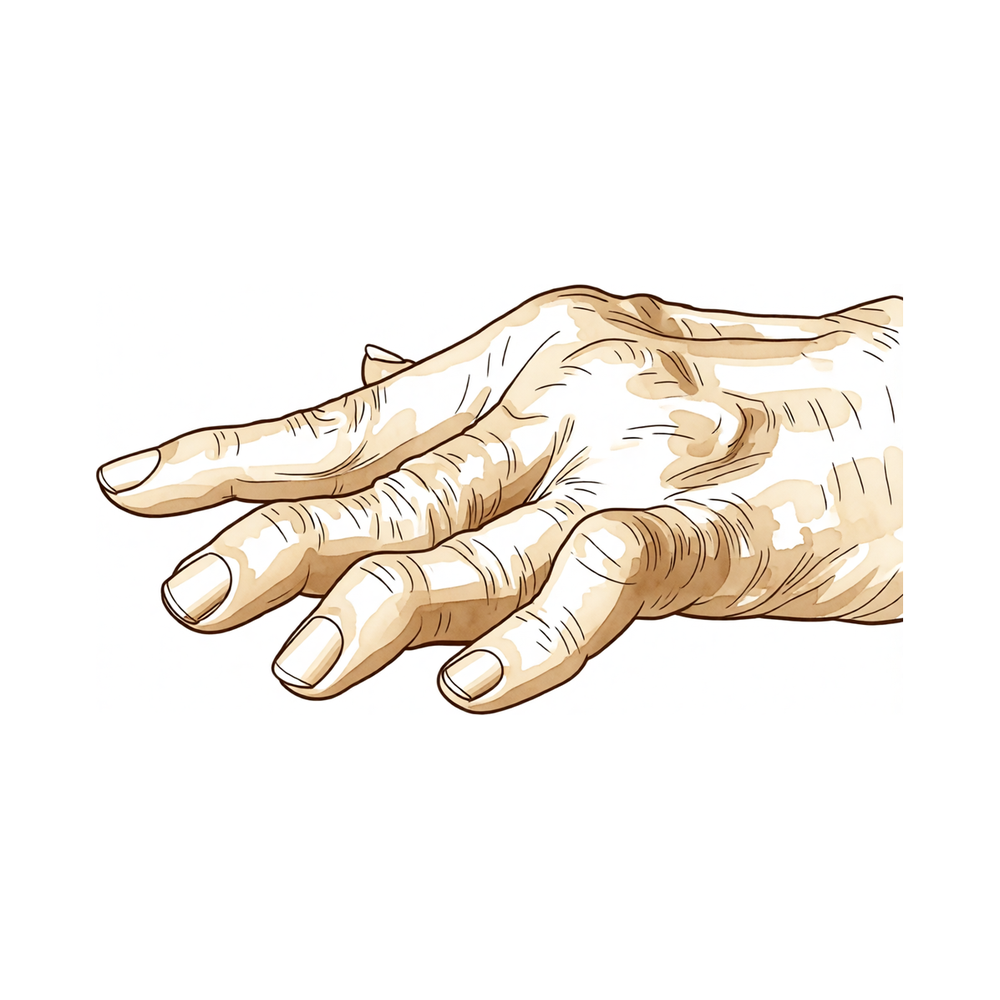
Uma mão exibindo a postura em “pescoço de cisne” — a articulação média do dedo dobrada para trás e a ponta do dedo curvada para baixo.
Deformidade em formato de pescoço de cisne: a articulação média (PIP) fica em hiperextensão, enquanto a ponta do dedo (DIP) se dobra para baixo, conferindo ao dedo esse formato característico. Abdulaziz Alkanderi / Wikimedia Commons, CC BY-SA 3.0

Esta página foi traduzida automaticamente e ainda não foi verificada por um médico. A versão em inglês é a versão oficial.

O que você está sentindo

Você pode ter notado que um ou mais dedos assumiram uma forma estranha. A articulação do meio do dedo (a “junta grande” no meio, não a que fica na base) dobra para trás, fazendo com que o dedo pareça ligeiramente arqueado ou “semelhante a um cisne”; ao mesmo tempo, a articulação mais próxima da unha inclina-se para a frente. Visto de lado, o dedo forma um pequeno zigue-zague.

No início, isso pode ser mais um incômodo do que uma dor: o dedo parece “travar” ou “clicar” ao ser dobrado, e fica difícil formar um punho firme ou segurar objetos pequenos. À medida que a deformidade se torna mais fixa, o dedo pode deixar de se estender ou dobrar como antes, e tarefas cotidianas (abotoar roupas, pegar moedas, segurar uma caneta) tornam-se complicadas e cansativas. Algumas pessoas percebem isso pela primeira vez simplesmente porque o dedo “prende” ao tentarem colocar a mão no bolso ou na luva.

O que realmente está acontecendo

O dedo é mantido em equilíbrio por um sistema inteligente de tendões e pequenos ligamentos que percorrem a parte superior, inferior e laterais de cada articulação. Normalmente, a articulação média (articulação PIP) é impedida de dobrar para trás por um pequeno ligamento resistente na face palmar, chamado placa volar, além de faixas tendinosas localizadas nas laterais do dedo.

Na deformidade em formato de “pescoço de cisne”, esse equilíbrio é perdido. Quando a placa volar fica frouxa ou os tendões laterais (as faixas laterais) deslizam para a parte superior da articulação, a articulação média é puxada para trás, para uma posição de hiperextensão; como todos os tendões estão conectados, a ponta do dedo também acaba ficando curvada para baixo. Ambos os fenômenos ocorrem simultaneamente.

Existem diversas razões para essa perda de equilíbrio. Às vezes, tudo começa na ponta do dedo: um dedo em martelo não tratado (quando a ponta do dedo fica curvada para baixo após lesão tendinosa) altera a tração exercida pelos tendões, fazendo com que a articulação média se incline gradualmente para trás. Com frequência, o problema é causado por artrite inflamatória, especialmente a artrite reumatoide, que alonga e enfraquece os ligamentos. Também pode ocorrer em casos de instabilidade articular, lesões antigas ou condições que aumentam a tensão muscular. Independentemente do gatilho, o resultado final é sempre a mesma aparência característica.

O que podemos fazer a respeito

O Dr. Kieran Hirpara lidera nosso serviço de cirurgia da mão e membro superior no Mater Private Hospital Rockhampton, onde orientamos os pacientes desde o encaminhamento inicial até a elaboração de um plano de tratamento claro. Seu percurso começa com uma avaliação clínica minuciosa para confirmar o diagnóstico e entender como o dedo está se movendo. Geralmente, iniciamos com tratamento não cirúrgico para problemas crônicos e só consideramos a cirurgia quando esse método não trouxer alívio suficiente.

O tratamento adequado depende do grau de flexibilidade do dedo e da causa do problema; portanto, o primeiro passo é sempre uma avaliação completa da mão e o tratamento da artrite subjacente, se houver.

Se o dedo ainda for flexível e a articulação puder ser esticada e dobrada livremente, muitas vezes começamos sem cirurgia. Utilizamos uma pequena órtese personalizada em formato de “8” (às vezes uma órtese elegante em formato de anel prateado) que é colocada sobre a articulação média; ela impede o movimento para trás sem impedir o funcionamento normal do dedo. Muitas pessoas obtêm ótimos resultados dessa forma, e a fisioterapia da mão ajuda a manter as articulações em movimento.

Caso a órtese não seja suficiente, ou se o dedo começar a ficar rígido, a cirurgia pode reequilibrá-lo. Existem diversas opções bem estabelecidas, escolhidas conforme as características do seu dedo: reatar a articulação média usando um pedaço de um dos seus próprios tendões, impedindo que ela se mova para trás (procedimento chamado tenodese); apertar o ligamento frouxo do lado da palma da mão; ou recolocar os tendões laterais que se deslocaram em sua posição original. Quando a superfície da articulação está desgastada e rígida (situação comum na artrite crônica), podemos optar por fundir a articulação numa posição funcional ou, em casos selecionados, por sua substituição.

O que esperar

Quando diagnosticado precocemente, enquanto o dedo ainda é flexível, o prognóstico é bom; uma tala ou uma cirurgia de reequilíbrio pode restaurar o movimento e a funcionalidade do dedo. Quanto mais rígida e artrítica a articulação se torna, mais limitadas são as opções de tratamento; por isso, é fundamental procurar atendimento antes que o dedo fique fixo numa única posição.

Caso seja necessária cirurgia, deve-se esperar um período de uso de tala e um programa de terapia da mão posterior, para reeducar o dedo e proteger a reparação cirúrgica; essa reabilitação é parte essencial do resultado final, e não um complemento opcional. Quando a artrite é a causa subjacente, manter essa condição sob controle com a ajuda da equipe reumatológica ajuda a impedir que outros dedos apresentem o mesmo problema.

Quando procurar ajuda médica

  • A ponta do dedo que fica caída e não consegue endireitar-se completamente após uma pancada ou um impacto na ponta do dedo (dedo em martelo); o tratamento precoce pode evitar a formação de uma deformidade em forma de “pescoço de cisne” posteriormente.
  • Um dedo que começa a arquear-se para trás na articulação média, ou que trava, emperra ou bloqueia ao ser dobrado.
  • Rigidez crescente, ou um dedo que já não permite formar um punho suavemente.
  • Casos conhecidos de artrite reumatoide ou inflamatória com alterações na forma dos dedos: vale a pena fazer uma avaliação antes que a deformidade se torne permanente.

Em maior profundidade

Advanced reading: the deeper science (optional)

Esta seção aborda tópicos além do necessário para as suas próprias decisões de tratamento. A deformidade em “pescoço de cisne” merece uma leitura mais aprofundada, pois não se trata de uma única condição: a mesma aparência do dedo pode resultar de diversas falhas distintas, nas duas extremidades do dedo. O tratamento correto depende inteiramente de qual dessas falhas foi a causa inicial.

Uma forma, várias causas

Na deformidade em “pescoço de cisne”, o dedo fica hiperextendido na articulação média e a ponta do dedo cai para baixo. Essa postura é o estado final de um desequilíbrio num sistema interligado; a falha inicial pode ocorrer em qualquer uma das extremidades.

A partir da ponta do dedo. Uma lesão não tratada do tipo “martelo” deixa o mecanismo extensor desconectado distalmente [1]. A força extensora que deixa de ser transmitida à ponta do dedo passa então para a articulação média, que é progressivamente puxada para a hiperextensão. Assim, a deformidade em “pescoço de cisne” pode ser uma consequência tardia de uma lesão ocorrida semanas ou meses antes, que parecia afetar apenas a ponta do dedo.

A partir da articulação média. Se a placa volar – o ligamento espesso que impede a hiperextensão da articulação média – estiver esticada ou rompida, a articulação se desloca para trás. As bandas laterais então se posicionam acima do eixo da articulação, reforçando a extensão; ao mesmo tempo, o tendão flexor profundo fica “frouxo”, fazendo com que a ponta do dedo se flexione.

Devido à laxidade generalizada ou a doenças inflamatórias. Na hipermobilidade, a placa volar é constitucionalmente frouxa, em vez de estar lesionada. Na artrite reumatoide, a sinovite enfraquece gradualmente as estruturas de contenção; nesses casos, a deformidade costuma fazer parte de um padrão mais amplo envolvendo vários dedos [3].

Por que essa distinção é crucial para o tratamento

O objetivo do tratamento é impedir a hiperextensão da articulação média; o nível em que essa correção é feita deve corresponder ao local da anomalia.

Quando a deformidade tem origem na ponta do dedo, corrigir apenas a articulação média não resolve o desequilíbrio que a causa. Nos casos em que a placa volar está comprometida, pode-se realizar uma tenodese utilizando um segmento do tendão flexor superficial para limitar a hiperextensão [2]. Quando a causa é inflamatória, a doença subjacente determina se qualquer procedimento de reconstrução terá sucesso; procedimentos em tecidos moles em mãos com inflamação ativa tendem a afrouxar novamente com o tempo.

Geralmente, utiliza-se inicialmente uma tala em formato de anel prateado ou em “8”, que impede os últimos graus de hiperextensão enquanto permite a flexão do dedo. Esse método é mais eficaz do que parece, pois impedir essa pequena amplitude de movimento interrompe o mecanismo responsável pela deformidade.

Flexibilidade versus rigidez: essa é a outra questão decisiva

A segunda questão é se o dedo ainda pode ser esticado passivamente. Uma deformidade flexível — aquela que pode ser corrigida manualmente — pode responder ao uso de talas ou ao reequilíbrio dos tecidos moles. Já uma deformidade rígida, na qual a articulação não consegue mais mover-se dentro de sua amplitude normal, indica a presença de contratura articular estabelecida; nesse caso, apenas procedimentos nos tecidos moles não serão suficientes para corrigi-la [4].

A implicação prática é a mesma que no caso da deformidade em botoeira; por isso ambas merecem ser avaliadas precocemente: trata-se de deformidades progressivas e que tendem a piorar por si só. O período durante o qual uma tala consegue manter um dedo com deformidade flexível esticado é consideravelmente maior do que o período em que a cirurgia pode corrigir uma deformidade rígida.

Uma nota sobre a deformidade relacionada

A deformidade em botoeira é, de certa forma, a imagem espelhada: a articulação média fica dobrada, enquanto a ponta do dedo fica em hiperextensão. Essa deformidade ocorre devido à falha da bandeleta central do tendão extensor, e não da placa volar. Ambas as deformidades são abordadas separadamente; confundi-las é problemático, pois as posições de imobilização recomendadas são opostas.

Referências

[1] McKeon KE, Lee DH. Deformidades pós-traumáticas do tipo boutonnière e pescoço de cisne. J Am Acad Orthop Surg. 2015;23(10):623-32. https://doi.org/10.5435/JAAOS-D-14-00272

[2] Wei DH, Terrono AL. Uso do sling do flexor superficial (tenodese do flexor digital superficial) na reconstrução do pescoço de cisne. J Hand Surg Am. 2015;40(10):2068-74. https://doi.org/10.1016/j.jhsa.2015.07.018

[3] Smith GC, Amirfeyz R. A deformidade flexível do tipo pescoço de cisne na artrite reumatoide. J Hand Surg Am. 2013;38(7):1405-7. https://doi.org/10.1016/j.jhsa.2013.01.002

[4] Fox PM, Chang J. Tratamento da articulação interfalângica proximal nas deformidades do tipo pescoço de cisne e boutonnière. Hand Clin. 2018;34(2):167-76. https://doi.org/10.1016/j.hcl.2017.12.006


Creative Commons BY-NC 4.0

CC Creative Commons licence
BY Attribution — you must credit the source
NC NonCommercial — not for commercial use

Attribution-NonCommercial 4.0 International


Creative Commons Corporation ("Creative Commons") is not a law firm and does not provide legal services or legal advice. Distribution of Creative Commons public licenses does not create a lawyer-client or other relationship. Creative Commons makes its licenses and related information available on an "as-is" basis. Creative Commons gives no warranties regarding its licenses, any material licensed under their terms and conditions, or any related information. Creative Commons disclaims all liability for damages resulting from their use to the fullest extent possible.

Using Creative Commons Public Licenses

Creative Commons public licenses provide a standard set of terms and conditions that creators and other rights holders may use to share original works of authorship and other material subject to copyright and certain other rights specified in the public license below. The following considerations are for informational purposes only, are not exhaustive, and do not form part of our licenses.

Considerations for licensors: Our public licenses are intended for use by those authorized to give the public permission to use material in ways otherwise restricted by copyright and certain other rights. Our licenses are irrevocable. Licensors should read and understand the terms and conditions of the license they choose before applying it. Licensors should also secure all rights necessary before applying our licenses so that the public can reuse the material as expected. Licensors should clearly mark any material not subject to the license. This includes other CC- licensed material, or material used under an exception or limitation to copyright. More considerations for licensors: wiki.creativecommons.org/Considerations_for_licensors

Considerations for the public: By using one of our public licenses, a licensor grants the public permission to use the licensed material under specified terms and conditions. If the licensor's permission is not necessary for any reason--for example, because of any applicable exception or limitation to copyright--then that use is not regulated by the license. Our licenses grant only permissions under copyright and certain other rights that a licensor has authority to grant. Use of the licensed material may still be restricted for other reasons, including because others have copyright or other rights in the material. A licensor may make special requests, such as asking that all changes be marked or described. Although not required by our licenses, you are encouraged to respect those requests where reasonable. More considerations for the public: wiki.creativecommons.org/Considerations_for_licensees


Creative Commons Attribution-NonCommercial 4.0 International Public License

By exercising the Licensed Rights (defined below), You accept and agree to be bound by the terms and conditions of this Creative Commons Attribution-NonCommercial 4.0 International Public License ("Public License"). To the extent this Public License may be interpreted as a contract, You are granted the Licensed Rights in consideration of Your acceptance of these terms and conditions, and the Licensor grants You such rights in consideration of benefits the Licensor receives from making the Licensed Material available under these terms and conditions.

Section 1 -- Definitions.

a. Adapted Material means material subject to Copyright and Similar Rights that is derived from or based upon the Licensed Material and in which the Licensed Material is translated, altered, arranged, transformed, or otherwise modified in a manner requiring permission under the Copyright and Similar Rights held by the Licensor. For purposes of this Public License, where the Licensed Material is a musical work, performance, or sound recording, Adapted Material is always produced where the Licensed Material is synched in timed relation with a moving image.

b. Adapter's License means the license You apply to Your Copyright and Similar Rights in Your contributions to Adapted Material in accordance with the terms and conditions of this Public License.

c. Copyright and Similar Rights means copyright and/or similar rights closely related to copyright including, without limitation, performance, broadcast, sound recording, and Sui Generis Database Rights, without regard to how the rights are labeled or categorized. For purposes of this Public License, the rights specified in Section 2(b)(1)-(2) are not Copyright and Similar Rights.

d. Effective Technological Measures means those measures that, in the absence of proper authority, may not be circumvented under laws fulfilling obligations under Article 11 of the WIPO Copyright Treaty adopted on December 20, 1996, and/or similar international agreements.

e. Exceptions and Limitations means fair use, fair dealing, and/or any other exception or limitation to Copyright and Similar Rights that applies to Your use of the Licensed Material.

f. Licensed Material means the artistic or literary work, database, or other material to which the Licensor applied this Public License.

g. Licensed Rights means the rights granted to You subject to the terms and conditions of this Public License, which are limited to all Copyright and Similar Rights that apply to Your use of the Licensed Material and that the Licensor has authority to license.

h. Licensor means the individual(s) or entity(ies) granting rights under this Public License.

i. NonCommercial means not primarily intended for or directed towards commercial advantage or monetary compensation. For purposes of this Public License, the exchange of the Licensed Material for other material subject to Copyright and Similar Rights by digital file-sharing or similar means is NonCommercial provided there is no payment of monetary compensation in connection with the exchange.

j. Share means to provide material to the public by any means or process that requires permission under the Licensed Rights, such as reproduction, public display, public performance, distribution, dissemination, communication, or importation, and to make material available to the public including in ways that members of the public may access the material from a place and at a time individually chosen by them.

k. Sui Generis Database Rights means rights other than copyright resulting from Directive 96/9/EC of the European Parliament and of the Council of 11 March 1996 on the legal protection of databases, as amended and/or succeeded, as well as other essentially equivalent rights anywhere in the world.

l. You means the individual or entity exercising the Licensed Rights under this Public License. Your has a corresponding meaning.

Section 2 -- Scope.

a. License grant.

1. Subject to the terms and conditions of this Public License, the Licensor hereby grants You a worldwide, royalty-free, non-sublicensable, non-exclusive, irrevocable license to exercise the Licensed Rights in the Licensed Material to:

a. reproduce and Share the Licensed Material, in whole or in part, for NonCommercial purposes only; and

b. produce, reproduce, and Share Adapted Material for NonCommercial purposes only.

2. Exceptions and Limitations. For the avoidance of doubt, where Exceptions and Limitations apply to Your use, this Public License does not apply, and You do not need to comply with its terms and conditions.

3. Term. The term of this Public License is specified in Section 6(a).

4. Media and formats; technical modifications allowed. The Licensor authorizes You to exercise the Licensed Rights in all media and formats whether now known or hereafter created, and to make technical modifications necessary to do so. The Licensor waives and/or agrees not to assert any right or authority to forbid You from making technical modifications necessary to exercise the Licensed Rights, including technical modifications necessary to circumvent Effective Technological Measures. For purposes of this Public License, simply making modifications authorized by this Section 2(a) (4) never produces Adapted Material.

5. Downstream recipients.

a. Offer from the Licensor -- Licensed Material. Every recipient of the Licensed Material automatically receives an offer from the Licensor to exercise the Licensed Rights under the terms and conditions of this Public License.

b. No downstream restrictions. You may not offer or impose any additional or different terms or conditions on, or apply any Effective Technological Measures to, the Licensed Material if doing so restricts exercise of the Licensed Rights by any recipient of the Licensed Material.

6. No endorsement. Nothing in this Public License constitutes or may be construed as permission to assert or imply that You are, or that Your use of the Licensed Material is, connected with, or sponsored, endorsed, or granted official status by, the Licensor or others designated to receive attribution as provided in Section 3(a)(1)(A)(i).

b. Other rights.

1. Moral rights, such as the right of integrity, are not licensed under this Public License, nor are publicity, privacy, and/or other similar personality rights; however, to the extent possible, the Licensor waives and/or agrees not to assert any such rights held by the Licensor to the limited extent necessary to allow You to exercise the Licensed Rights, but not otherwise.

2. Patent and trademark rights are not licensed under this Public License.

3. To the extent possible, the Licensor waives any right to collect royalties from You for the exercise of the Licensed Rights, whether directly or through a collecting society under any voluntary or waivable statutory or compulsory licensing scheme. In all other cases the Licensor expressly reserves any right to collect such royalties, including when the Licensed Material is used other than for NonCommercial purposes.

Section 3 -- License Conditions.

Your exercise of the Licensed Rights is expressly made subject to the following conditions.

a. Attribution.

1. If You Share the Licensed Material (including in modified form), You must:

a. retain the following if it is supplied by the Licensor with the Licensed Material:

i. identification of the creator(s) of the Licensed Material and any others designated to receive attribution, in any reasonable manner requested by the Licensor (including by pseudonym if designated);

ii. a copyright notice;

iii. a notice that refers to this Public License;

iv. a notice that refers to the disclaimer of warranties;

v. a URI or hyperlink to the Licensed Material to the extent reasonably practicable;

b. indicate if You modified the Licensed Material and retain an indication of any previous modifications; and

c. indicate the Licensed Material is licensed under this Public License, and include the text of, or the URI or hyperlink to, this Public License.

2. You may satisfy the conditions in Section 3(a)(1) in any reasonable manner based on the medium, means, and context in which You Share the Licensed Material. For example, it may be reasonable to satisfy the conditions by providing a URI or hyperlink to a resource that includes the required information.

3. If requested by the Licensor, You must remove any of the information required by Section 3(a)(1)(A) to the extent reasonably practicable.

4. If You Share Adapted Material You produce, the Adapter's License You apply must not prevent recipients of the Adapted Material from complying with this Public License.

Section 4 -- Sui Generis Database Rights.

Where the Licensed Rights include Sui Generis Database Rights that apply to Your use of the Licensed Material:

a. for the avoidance of doubt, Section 2(a)(1) grants You the right to extract, reuse, reproduce, and Share all or a substantial portion of the contents of the database for NonCommercial purposes only;

b. if You include all or a substantial portion of the database contents in a database in which You have Sui Generis Database Rights, then the database in which You have Sui Generis Database Rights (but not its individual contents) is Adapted Material; and

c. You must comply with the conditions in Section 3(a) if You Share all or a substantial portion of the contents of the database.

For the avoidance of doubt, this Section 4 supplements and does not replace Your obligations under this Public License where the Licensed Rights include other Copyright and Similar Rights.

Section 5 -- Disclaimer of Warranties and Limitation of Liability.

a. UNLESS OTHERWISE SEPARATELY UNDERTAKEN BY THE LICENSOR, TO THE EXTENT POSSIBLE, THE LICENSOR OFFERS THE LICENSED MATERIAL AS-IS AND AS-AVAILABLE, AND MAKES NO REPRESENTATIONS OR WARRANTIES OF ANY KIND CONCERNING THE LICENSED MATERIAL, WHETHER EXPRESS, IMPLIED, STATUTORY, OR OTHER. THIS INCLUDES, WITHOUT LIMITATION, WARRANTIES OF TITLE, MERCHANTABILITY, FITNESS FOR A PARTICULAR PURPOSE, NON-INFRINGEMENT, ABSENCE OF LATENT OR OTHER DEFECTS, ACCURACY, OR THE PRESENCE OR ABSENCE OF ERRORS, WHETHER OR NOT KNOWN OR DISCOVERABLE. WHERE DISCLAIMERS OF WARRANTIES ARE NOT ALLOWED IN FULL OR IN PART, THIS DISCLAIMER MAY NOT APPLY TO YOU.

b. TO THE EXTENT POSSIBLE, IN NO EVENT WILL THE LICENSOR BE LIABLE TO YOU ON ANY LEGAL THEORY (INCLUDING, WITHOUT LIMITATION, NEGLIGENCE) OR OTHERWISE FOR ANY DIRECT, SPECIAL, INDIRECT, INCIDENTAL, CONSEQUENTIAL, PUNITIVE, EXEMPLARY, OR OTHER LOSSES, COSTS, EXPENSES, OR DAMAGES ARISING OUT OF THIS PUBLIC LICENSE OR USE OF THE LICENSED MATERIAL, EVEN IF THE LICENSOR HAS BEEN ADVISED OF THE POSSIBILITY OF SUCH LOSSES, COSTS, EXPENSES, OR DAMAGES. WHERE A LIMITATION OF LIABILITY IS NOT ALLOWED IN FULL OR IN PART, THIS LIMITATION MAY NOT APPLY TO YOU.

c. The disclaimer of warranties and limitation of liability provided above shall be interpreted in a manner that, to the extent possible, most closely approximates an absolute disclaimer and waiver of all liability.

Section 6 -- Term and Termination.

a. This Public License applies for the term of the Copyright and Similar Rights licensed here. However, if You fail to comply with this Public License, then Your rights under this Public License terminate automatically.

b. Where Your right to use the Licensed Material has terminated under Section 6(a), it reinstates:

1. automatically as of the date the violation is cured, provided it is cured within 30 days of Your discovery of the violation; or

2. upon express reinstatement by the Licensor.

For the avoidance of doubt, this Section 6(b) does not affect any right the Licensor may have to seek remedies for Your violations of this Public License.

c. For the avoidance of doubt, the Licensor may also offer the Licensed Material under separate terms or conditions or stop distributing the Licensed Material at any time; however, doing so will not terminate this Public License.

d. Sections 1, 5, 6, 7, and 8 survive termination of this Public License.

Section 7 -- Other Terms and Conditions.

a. The Licensor shall not be bound by any additional or different terms or conditions communicated by You unless expressly agreed.

b. Any arrangements, understandings, or agreements regarding the Licensed Material not stated herein are separate from and independent of the terms and conditions of this Public License.

Section 8 -- Interpretation.

a. For the avoidance of doubt, this Public License does not, and shall not be interpreted to, reduce, limit, restrict, or impose conditions on any use of the Licensed Material that could lawfully be made without permission under this Public License.

b. To the extent possible, if any provision of this Public License is deemed unenforceable, it shall be automatically reformed to the minimum extent necessary to make it enforceable. If the provision cannot be reformed, it shall be severed from this Public License without affecting the enforceability of the remaining terms and conditions.

c. No term or condition of this Public License will be waived and no failure to comply consented to unless expressly agreed to by the Licensor.

d. Nothing in this Public License constitutes or may be interpreted as a limitation upon, or waiver of, any privileges and immunities that apply to the Licensor or You, including from the legal processes of any jurisdiction or authority.


Creative Commons is not a party to its public licenses. Notwithstanding, Creative Commons may elect to apply one of its public licenses to material it publishes and in those instances will be considered the “Licensor.” The text of the Creative Commons public licenses is dedicated to the public domain under the CC0 Public Domain Dedication. Except for the limited purpose of indicating that material is shared under a Creative Commons public license or as otherwise permitted by the Creative Commons policies published at creativecommons.org/policies, Creative Commons does not authorize the use of the trademark "Creative Commons" or any other trademark or logo of Creative Commons without its prior written consent including, without limitation, in connection with any unauthorized modifications to any of its public licenses or any other arrangements, understandings, or agreements concerning use of licensed material. For the avoidance of doubt, this paragraph does not form part of the public licenses.

Creative Commons may be contacted at creativecommons.org.