Patients › Rehabilitation
Reparação do tendão do bíceps distal
Um plano de recuperação com mobilização precoce, destinado a pacientes submetidos à reparação cirúrgica de ruptura do tendão do bíceps distal. Permite movimentos confortáveis já a partir do primeiro dia, ao mesmo tempo em que protege a área operada contra esforços de levantamento de carga, até que a força muscular seja gradativamente restaurada.
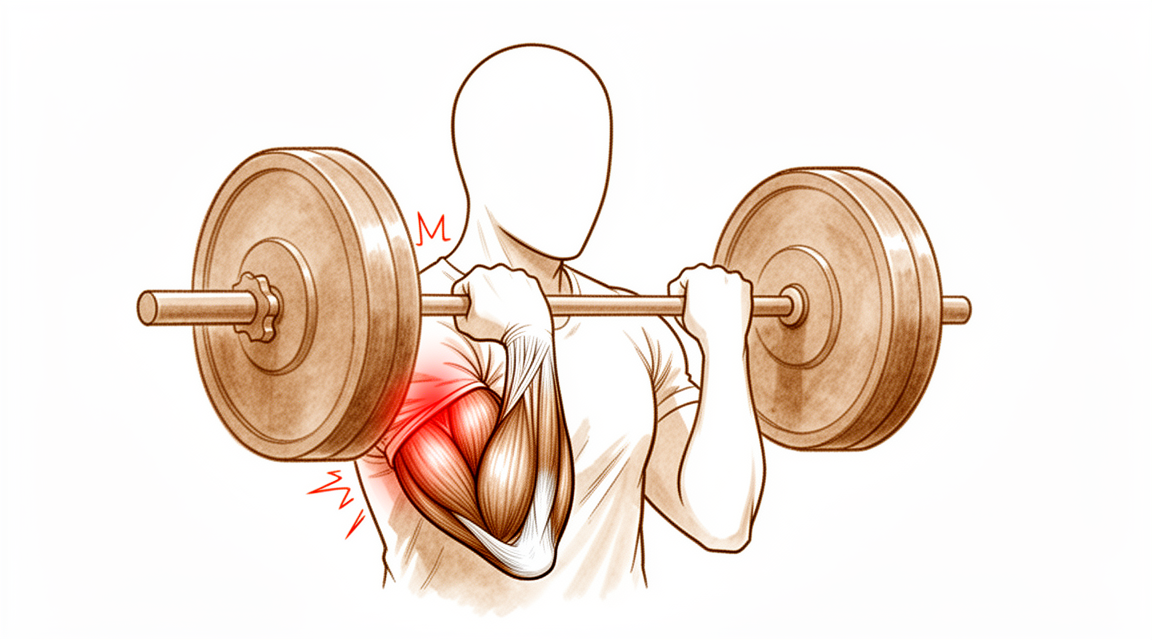
Este protocolo orienta sua recuperação após o reparo cirúrgico do rompimento do tendão do bíceps distal, realizado pelo Dr. Kieran Hirpara no Mater Private Hospital Rockhampton. Ele começa com o programa de exercícios domiciliares, seguido pelo protocolo clínico estruturado destinado ao seu fisioterapeuta ou terapeuta da mão. Leve esta página ou seu arquivo PDF à sua primeira sessão de terapia, para que a reabilitação seja devidamente coordenada. Seu terapeuta poderá ajustar o plano conforme a evolução da sua recuperação.
Caso tenha alguma dúvida ou preocupação quanto à ferida pós-cirúrgica, entre em contato com o consultório. Geralmente é útil tirar uma foto da ferida e enviá-la por e-mail para análise.
O que esperar
O tendão do bíceps distal é a estrutura que fixa o músculo bíceps ao osso rádio, logo abaixo da parte frontal do cotovelo. Quando ele se rompe, é reanexado ao local ósseo correspondente no rádio. O Dr. Hirpara realiza esse reparo utilizando um botão cortical, um dispositivo pequeno e resistente que mantém o tendão firmemente preso ao osso durante o processo de cicatrização.
Como o reparo é bastante sólido, a recuperação prioriza movimentos precoces e confortáveis, em vez da imobilização rígida. Você usará uma tipoia simples por cerca de 6 semanas (não um aparelho ortopédico com articulação no cotovelo), sendo incentivado a mover o cotovelo dentro de sua amplitude confortável desde o primeiro dia, inclusive esticando-o completamente. Esses movimentos iniciais evitam a rigidez articular, um dos principais problemas após essa cirurgia.
A robustez do reparo permite justamente essa mobilização precoce; porém, isso não significa que você possa fazer esforços físicos desde o início. O tendão ainda precisa se reanexar biologicamente ao osso, e esse processo de cicatrização é o que previne novas rupturas. Por esse motivo, o uso de carga no braço (levantar pesos, fazer força de preensão e exercícios de fortalecimento resistido) só será permitido após cerca de 4 meses, iniciando-se de forma leve e aumentando gradualmente. A tipoia serve principalmente para proporcionar conforto e para lembrá-lo de não sobrecarregar o braço; ela é retirada durante os exercícios e para higiene.
Para orientações sobre cuidados com a ferida, controle do inchaço e cicatrização, consulte o guia de cuidados com a ferida do consultório.
Precauções e limitações
O que fazer
- Mova o cotovelo, antebraço, punho e mão em toda a amplitude confortável desde o primeiro dia: dobrando, esticando e rotacionando o antebraço.
- Retire a tipoia para fazer os exercícios e para higiene; use-a para conforto e proteção o restante do tempo, por cerca de 6 semanas.
- Utilize o braço para tarefas cotidianas muito leves (comer, cuidados pessoais simples) dentro dos limites do conforto.
O que não fazer
- Não levante, carregue, aperte com força ou realize qualquer exercício de fortalecimento resistido com o braço operado até receber autorização, por volta dos 4 meses. Esta é a precaução mais importante.
- Não force uma extensão súbita e brusca do cotovelo contra alguma carga, e evite movimentos bruscos ou repentinos.
- Não estique o ombro para trás além do limite normal no início, pois isso puxa a ferida em processo de cicatrização na parte frontal do cotovelo.
Seus exercícios
Kieran Hirpara 4.0
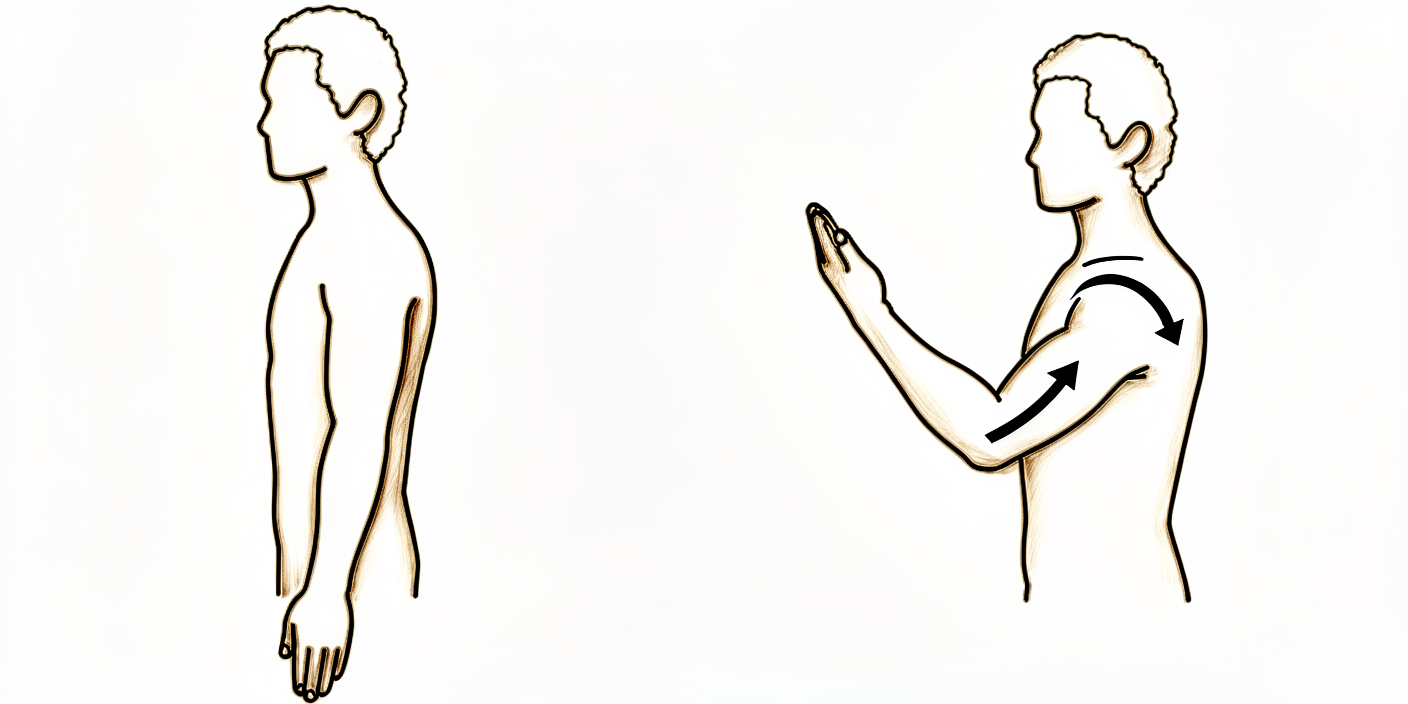
Flexão e extensão do cotovelo (até o limite do conforto)
Com a palma da mão voltada para cima, dobre o cotovelo suavemente em direção ao ombro, tanto quanto lhe parecer confortável; em seguida, estenda-o lentamente de volta para baixo, também até onde for confortável. Não há limite para a amplitude do movimento — siga o seu próprio conforto e faça o movimento de forma suave. Mantenha o braço superior apoiado ao lado do corpo.
10 vezes, 3–4 vezes ao dia
Kieran Hirpara 4.0
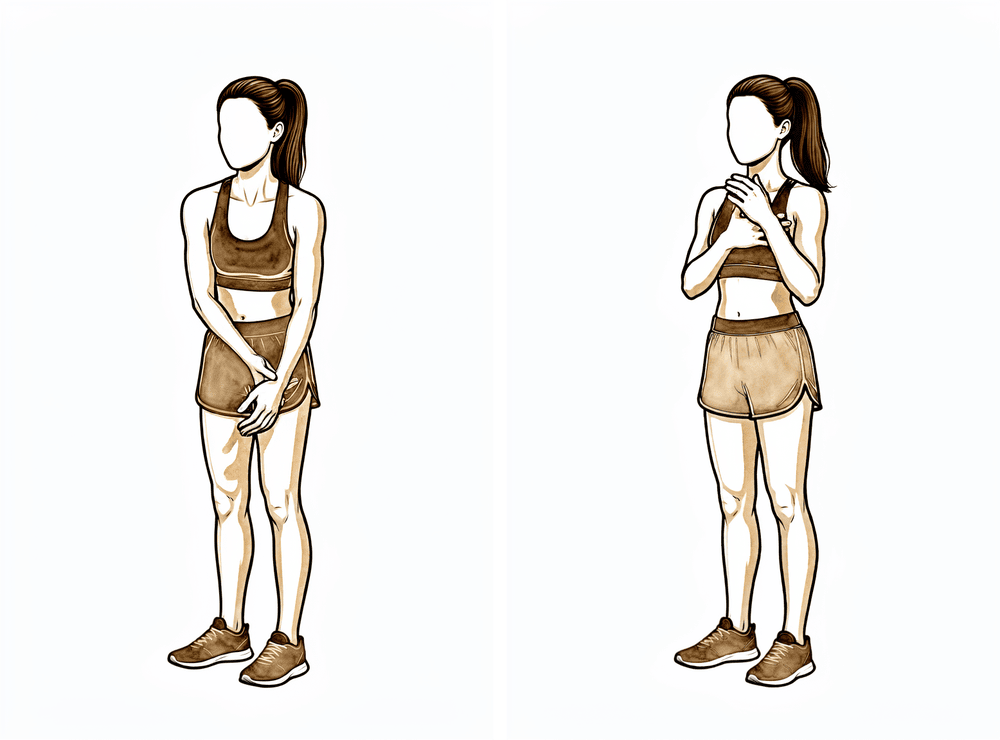
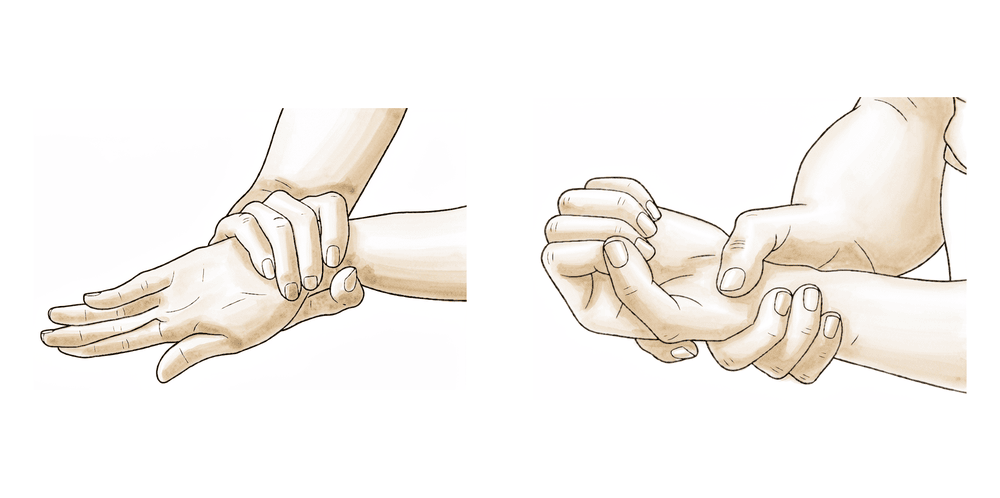
Flexão assistida do cotovelo
Deixe o braço operado completamente relaxado; em seguida, use a outra mão para dobrar suavemente o cotovelo em direção ao ombro. Você não deve fazer força com o braço operado — é a outra mão que realiza o movimento. Isso ajuda a manter a flexibilidade do cotovelo nas primeiras semanas.
10 vezes, 3–4 vezes ao dia
Kieran Hirpara 4.0
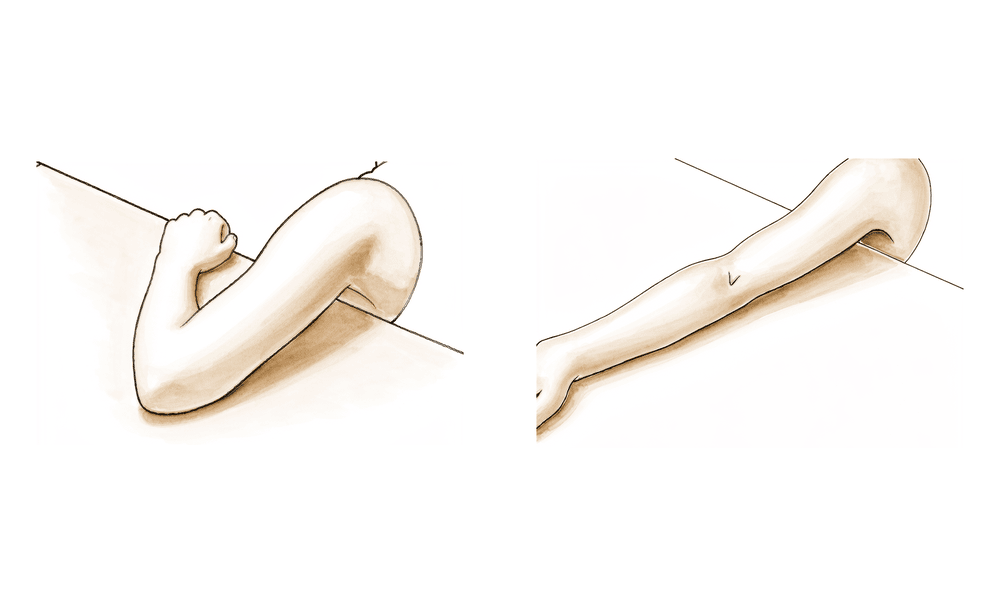
Extensão do cotovelo (até o limite do conforto)
Estique lentamente o cotovelo até uma posição confortável e, em seguida, dobre-o novamente. O esticamento total é permitido, desde que seja confortável — não há necessidade de impedir ou restringir esse movimento. Execute os movimentos com suavidade, evitando qualquer movimento brusco ou forçado.
10 vezes, 3–4 vezes ao dia
Kieran Hirpara 4.0
Rotação do antebraço (palma da mão para cima / palma da mão para baixo)
Aproxime o cotovelo ao corpo e dobre-o formando um ângulo reto aproximado. Vire suavemente a palma da mão para cima, em direção ao teto; mantenha essa posição por um instante e, em seguida, vire-a para baixo, em direção ao chão. Mantenha o cotovelo próximo ao corpo para que o movimento seja feito pelo antebraço, e não pelo ombro.
10 vezes em cada direção, 3–4 vezes ao dia.
Kieran Hirpara 4.0
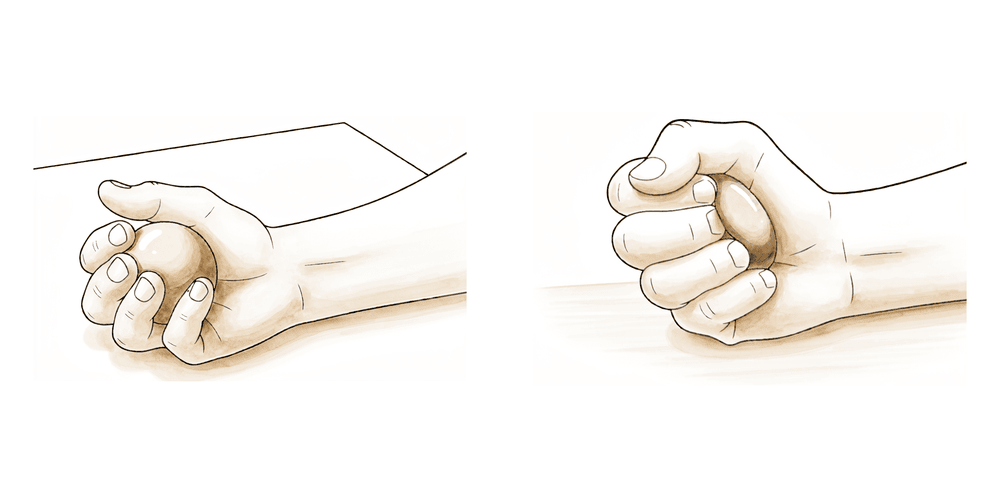
Movimento da mão, do punho e da preensão
Mantenha a mão e os dedos em movimento desde o início. Abra a mão completamente, depois faça um punho suave e solte. Mova também o pulso para cima e para baixo. Isso mantém a mão flexível e evita rigidez e inchaço enquanto o cotovelo cicatriza.
10–15 vezes, várias vezes ao dia
Kieran Hirpara 4.0
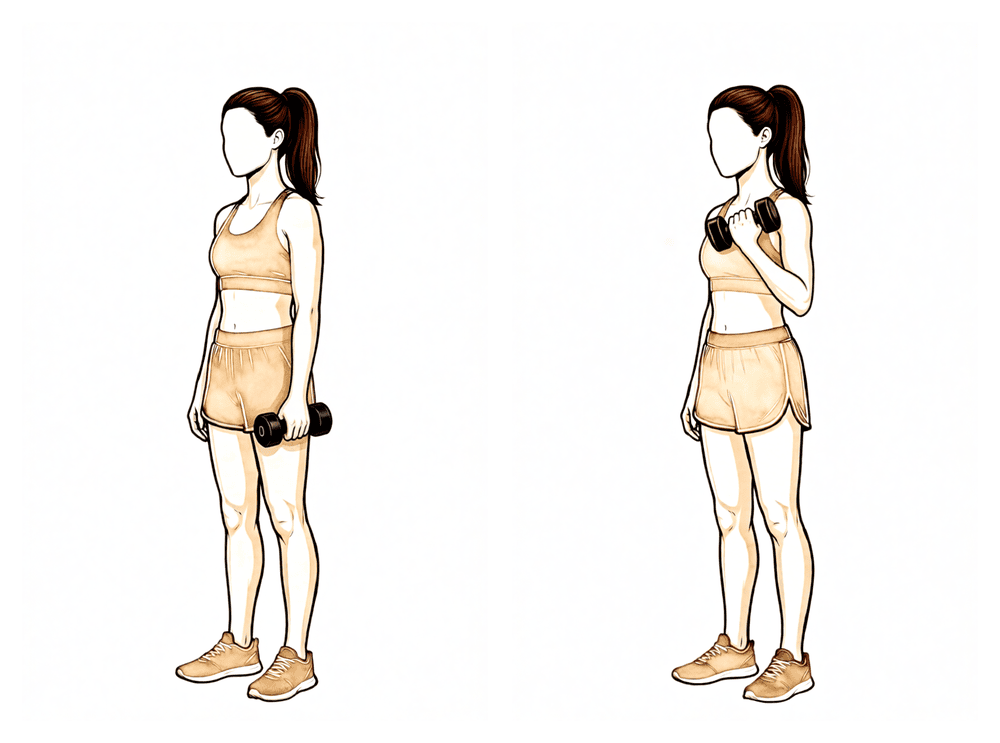
Flexão de bíceps com resistência (desde aproximadamente 4 meses)
Comece somente após o Dr. Hirpara ou o seu fisioterapeuta autorizarem a retomada da carga (aproximadamente a partir do 4º mês). Com a palma da mão voltada para cima, segure um peso leve e eleve-o lentamente em direção ao ombro; em seguida, abaixe-o de forma controlada. Comece com um peso muito leve e aumente a resistência gradualmente nas semanas seguintes.
10–15 vezes, aumentando gradualmente após autorização.
Kieran Hirpara 4.0
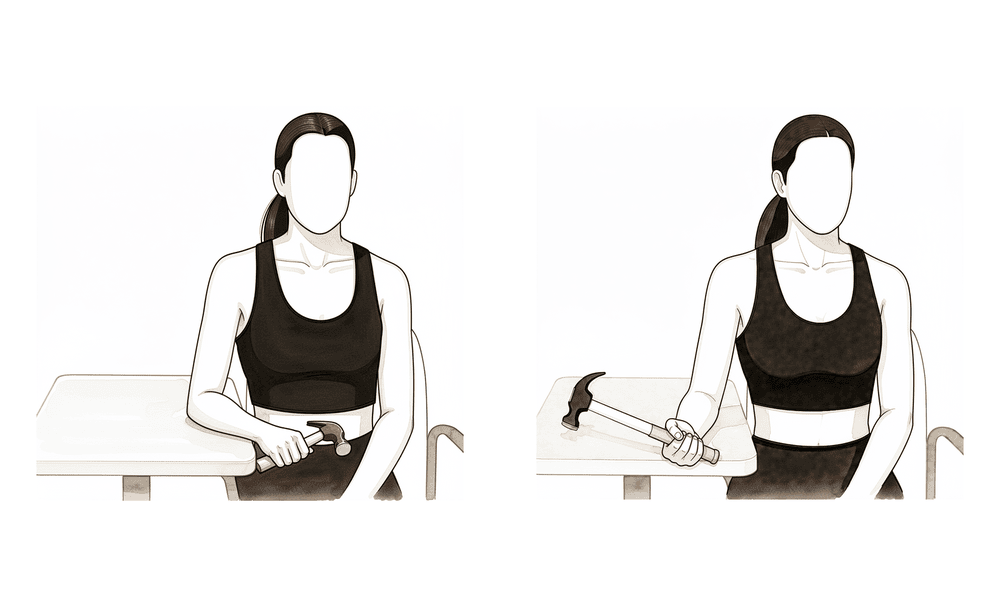
Rotação resistida do antebraço (a partir de aproximadamente 4 meses)
Comece somente após receber autorização para iniciar a carga (a partir dos 4 meses aproximadamente). Com o cotovelo encostado ao corpo, vire a palma da mão para cima contra a resistência leve de uma faixa elástica ou de um peso leve segurado em uma das extremidades, e depois volte à posição inicial de forma controlada. Isso ajuda a recuperar a força de torção (supinação) proporcionada pelo bíceps. Comece com cargas leves e aumente gradualmente.
10–15 vezes, aumentando gradualmente após autorização.
Estes são os exercícios do seu folheto informativo para manter o cotovelo, o antebraço e a mão em movimento nas primeiras semanas. Retire a tipóia para realizá-los. Mova-se apenas até onde se sentir confortável, e comece-os conforme orientação do Dr. Hirpara e do seu fisioterapeuta. Os dois exercícios de fortalecimento serão introduzidos posteriormente: somente após receber autorização para iniciar a carga, por volta dos 4 meses.
Seu protocolo clínico
O restante desta página constitui o protocolo clínico para a reabilitação após a reparação do tendão do bíceps distal com uso de botão cortical. Esta seção deve ser entregue ao seu fisioterapeuta ou terapeuta da mão; cada fase abaixo começa com uma explicação simples, em linguagem acessível, sobre o que está ocorrendo.
O princípio orientador é movimentação precoce e confortável, com carga retardada: a estrutura formada pelo botão cortical é suficientemente resistente para permitir movimentos irrestritos desde o primeiro dia; por isso, não é necessário usar órtese articulada nem bloqueador de extensão. A resistência dessa estrutura é aproveitada para evitar rigidez, mas não para justificar a aplicação precoce de carga; exercícios de fortalecimento resistido e levantamento de pesos são deliberadamente postergados, a fim de proteger a cicatrização do tendão ao osso e minimizar o risco de nova ruptura.
Fase I — Movimentação confortável e protegida (Semana 0 → 6)
Utiliza-se uma tipóia simples para proporcionar conforto e como lembrete para evitar o uso excessivo do membro; ela é retirada para a realização de exercícios e higiene. O objetivo é manter uma amplitude de movimento quase total e confortável, protegendo ao mesmo tempo a área reparada de qualquer carga.
Para o seu fisioterapeuta:
- Imobilização: Tipóia simples por 6 semanas; retirar para exercícios e higiene. Não usar órtese articulada nem bloqueador de extensão.
- Amplitude de movimento: Permitir todo o movimento que o paciente consiga realizar confortavelmente, a partir do primeiro dia: flexão e extensão ativa e passiva do cotovelo, bem como rotação do antebraço. Não há restrição de arco de movimento nem bloqueador de extensão.
- Objetivos: Manter uma amplitude de movimento quase total e confortável; proteger a área reparada de cargas; manter a mobilidade da mão, punho e ombro.
- Exercícios: Flexão/extensão ativa do cotovelo conforme o conforto permitir; flexão passiva do cotovelo assistida; rotação de pronação/supinação do antebraço dentro da amplitude ativa, com o cotovelo junto ao corpo; movimentos da mão, punho e exercícios de preensão; movimentação da escápula e do ombro. Não aplicar resistência ao bíceps nem à supinação.
- Precauções: Proibir levantamento de pesos, preensão de objetos ou exercícios de fortalecimento com resistência; evitar extensão excêntrica brusca e forçada contra carga; evitar hiperextensão do ombro.
- Critérios para avançar para a fase seguinte: Cicatrização da ferida, amplitude de movimento quase total e confortável, e ausência da tipóia após 6 semanas.
Fase II — Movimentação completa, sem carga (Semana 6 → aproximadamente 4 meses)
O sling é retirado. O braço pode ser utilizado livremente para tarefas cotidianas leves, mas sem aplicação de carga resistida ou levantamento: o tendão ainda está se fixando ao osso, e este é o período em que a precaução quanto à carga é mais importante, mesmo que a movimentação seja segura.
Para o seu fisioterapeuta:
- Objetivos: Amplitude de movimento completa e simétrica, sem dor; uso funcional normal e leve da mão e do braço.
- Amplitude de movimento/uso: Movimentação completa conforme a tolerância do paciente; uso cotidiano leve, sem carga resistida ou levantamento.
- Exercícios: Continuar os exercícios de amplitude de movimento; exercícios para a mão, punho e força de preensão; fortalecimento da escápula e do ombro. Por enquanto, não aplicar carga resistida ao bíceps nem à supinação.
- Critérios para avançar: Amplitude de movimento completa e sem dor; cicatrização e reparo do tecido concluídos → iniciar a carga progressiva por volta dos 4 meses.
Fase III — Fortalecimento e carga gradativa (~4 a 6 meses)
Inicia-se a aplicação de carga. É introduzido um fortalecimento leve com resistência para a flexão do cotovelo e supinação do antebraço, progredindo gradualmente para atender às exigências funcionais e, posteriormente, às demandas específicas do trabalho ou do esporte.
Para o seu fisioterapeuta:
- Objetivos: Recuperar a força de flexão e supinação; retornar ao trabalho e ao esporte.
- Exercícios: Iniciar o fortalecimento leve com resistência e levantamento de cargas por volta dos 4 meses; progredir gradualmente (exercícios isotônicos de flexão e supinação com resistência → padrões funcionais → cargas específicas para o trabalho e o esporte).
- Critérios para progressão: Realização de flexão e supinação com resistência sem dor; força próxima à do lado não afetado.
Voltando ao trabalho e às atividades
Nas primeiras 6 semanas, espere usar o braço apenas para tarefas cotidianas leves e confortáveis, mantendo a tipóia para proteção. Tarefas leves em escritório ou que possam ser feitas com uma só mão geralmente são possíveis nesse período; já o trabalho manual mais pesado ou que exija o uso de ambas as mãos deve ser adiado até que o carregamento de carga seja iniciado e gradualmente aumentado.
Os principais marcos são:
- Nenhum levantamento de peso nem carga resistida nos primeiros meses: isso é intencional, para permitir que o tendão se fixe ao osso.
- Levantamento leve de peso e fortalecimento a partir de aproximadamente 4 meses, iniciados de forma suave e progredindo semanalmente.
- Retorno a esportes sem contato a partir de cerca de 4 meses; prática de esportes com contato sem restrições por volta dos 6 meses, desde que sejam atendidos os seguintes critérios: amplitude de movimento completa e sem dor, força mínima de 90–100% em comparação ao lado não operado, e capacidade de suportar as exigências específicas do seu trabalho ou esporte.
Você não deve dirigir enquanto estiver usando a tipóia. A volta à direção só será permitida após retirar a tipóia e conseguir controlar o veículo de forma confortável e segura, conforme confirmado na consulta de acompanhamento. Siga sempre as orientações específicas do Dr. Hirpara, pois os prazos podem variar conforme as exigências do seu trabalho e esporte.
Após seguir este protocolo
Este protocolo complementa as orientações gerais de recuperação fornecidas pela clínica; consulte controle da dor pós-operatória e cuidados com a ferida. O plano em fases descrito acima está alinhado com as evidências científicas sobre a reabilitação após reparo do tendão do bíceps distal. Sua recuperação contínua será orientada individualmente pelo seu fisioterapeuta ou terapeuta da mão, conforme a evolução do seu cotovelo.
Evidence & references
This is the clinical evidence summary written for health professionals. It is technical, and it lists the research this page was built from. You do not need to read it to understand your treatment or to make a decision about it.
Distal Biceps Tendon Repair — Post-operative Rehabilitation (Evidence)
Topic scope: Post-operative rehabilitation after surgical repair of a ruptured distal biceps tendon reattached to the radial tuberosity with cortical-button fixation. The protocol here reflects Dr Hirpara's practice — a sling-only, early-comfort-motion approach with deliberately delayed loading — set against the published spectrum of distal-biceps rehabilitation protocols.
Defining principle: Cortical-button fixation is the strongest available construct, and biomechanical and clinical evidence show it tolerates immediate motion safely. Dr Hirpara's stance is to spend that strength on early movement, not early loading: a simple sling for 6 weeks (no hinged brace, no extension block) with all motion to comfort from day 1 including extension, but with resisted strengthening and lifting held back until ~4 months to protect tendon-to-bone healing and minimise re-rupture, and unrestricted activity / return to sport at ~6 months on criterion-based clearance. This sits at the protective end of loading while matching the most current thinking on early motion for stiffness prevention.
Where this protocol sits in the evidence
Published distal-biceps protocols span a wide range, from rigid hinged-brace extension-block schemes to immediate unrestricted motion. Dr Hirpara's plan diverges from the "traditional" template in two deliberate ways:
- Immobilisation: A simple sling for comfort, not a hinged ROM brace, and no extension block. Motion is unrestricted to comfort from day 1. The mainstream BWH/MGB protocols instead use a posterior splint at 90° for 5–7 days, then a hinged brace with a 45°→30° extension block opened ~10°/week to full extension by ~6 weeks (or ~3 weeks in the accelerated variant). Dr Hirpara's approach is at the early-motion end and is justified by the strength of the cortical-button construct.
- Loading: Resisted strengthening and lifting are deferred to ~4 months. This is more conservative than the published loading timelines (accelerated resisted work at week 6; standard/MGB at weeks 8–10–12; light weights weeks 12–14). Crucially, this conservatism is a choice made despite having the construct that would permit earlier loading.
The endpoint — unrestricted activity / return to sport at ~6 months, criterion-based — is the single most commonly cited endpoint across protocols and matches the mainstream consensus.
Key evidence and controversies
-
Early/immediate motion is safe with modern fixation. (Moderate) Biomechanical work supports immediate motion: Bisson et al (AJSM 2007) found aggressive rehabilitation safe after the modified 2-incision approach, and Rose et al (KSSTA 2010) showed single-incision EndoButton/FiberWire repairs survive 2,000 immediate-motion cycles. Several series report no increased re-rupture with immediate post-operative motion. This underpins the sling-only, motion-to-comfort approach.
-
Cortical-button strength enables early motion. (Moderate) Cortical-button (± interference screw) fixation has the highest load-to-failure of the available constructs (Olsen JSES 2014; Spang JSES 2006; Lang OTSR 2018 — comparable functional outcomes across constructs but higher load-to-failure for cortical button). Spencer/Edwin (HAND 2008) argued EndoButton fixation strength may allow earlier ROM. This fixation strength is the explicit rationale for permitting immediate movement.
-
Mobilisation timing may not change outcome. (Moderate) A retrospective comparison found no clinically significant difference in failure, complications, ROM or patient-reported outcomes for early versus delayed mobilisation after primary distal biceps repair. This undercuts the urgency of accelerating loading and supports a measured progression.
-
Conservative rehab may lower re-rupture. (Consensus / survey) Rosenthal/Ting/Sher (JSES 2023), a survey of fellowship-trained elbow surgeons, suggests more conservative post-operative rehab may be associated with lower re-rupture risk — a direct counterweight to the accelerated-loading trend and the rationale for deferring loading to ~4 months. Phelps et al (JSES Int 2025, Level IV systematic review) found no consensus on the optimal return-to-sport protocol, with protocols ranging from immobilisation to immediate motion.
-
Tendon elongation in the mid window. (Moderate) Marshall et al (OJSM 2016, radiostereometric) showed the repaired tendon elongates mostly at 4–8 weeks post-op with minimal change at 8–16 weeks — a biomechanical argument for caution against aggressive loading in that mid window even when motion itself is safe.
-
Incision and complications. (Moderate) Grewal et al RCT (JHS 2010): no overall functional difference single vs double incision (flexion strength slightly greater with two-incision, more minor complications with single-incision). Amarasooriya systematic review (AJSM 2020): synostosis occurred only with double incision; fixation technique did not significantly affect re-rupture. Incision choice mainly drives complication-avoidance precautions, not the ROM timeline. Re-rupture rates overall are low (0–5.6%; Garon & Greenberg 2016).
Phased rehabilitation timeline (this protocol)
| Phase | Window | Sling / brace | ROM / use | Strengthening / loading | Criteria to progress |
|---|---|---|---|---|---|
| I — Protected comfort motion | Week 0 → 6 | Simple sling 6 wk, off for exercises/hygiene. No hinged brace, no extension block | All motion to comfort from day 1 — active + passive flexion, extension and forearm rotation. No arc restriction | None. No resisted biceps/supination loading; hand/wrist/grip and scapular/shoulder ROM maintained | Wound healed; comfortable near-full ROM; out of sling at 6 wk |
| II — Full motion, unloaded | Week 6 → ~4 mo | Sling off | Full symmetric pain-free ROM; light everyday use | None yet — light functional use without resisted loading or lifting | Full painless ROM; wound/repair settled → begin loading ~4 mo |
| III — Strengthening & graded loading | ~4 → 6 mo | — | Full ROM maintained | Start LIGHT resisted strengthening / lifting at ~4 mo; progress gradually (isotonic curls + resisted supination → functional → job/sport-specific) | Pain-free resisted flexion/supination; strength approaching the other side |
| Return to activity | ~6 mo | — | Unrestricted | Unrestricted activity / return to sport, criterion-based | Full painless ROM; strength ≥90–100% of the other side; tolerance of job/sport-specific demands |
One-line summary: simple sling 6 weeks with all motion to comfort from day 1 (no brace, no extension block) → full unloaded motion to ~4 months → light resisted loading from ~4 months → unrestricted activity / sport at ~6 months, criterion-based.
Evidence strength flags
- MODERATE (biomechanical + cohort): safety of immediate/early motion with cortical-button fixation (Bisson 2007; Rose 2010; Olsen 2014; Spang 2006; Lang 2018); no clinically significant difference early vs delayed mobilisation; low overall re-rupture rates.
- MODERATE (biomechanical): tendon elongation concentrated 4–8 weeks (Marshall 2016) — supports caution on mid-window loading.
- CONSENSUS / survey-level: more conservative rehab may lower re-rupture (Rosenthal 2023); no consensus on optimal return-to-sport protocol (Phelps 2025, Level IV). The specific phase timings of this protocol are expert/consensus-derived, not trial-derived.
Overall evidence strength: Moderate. Phased timelines rest on consistent institutional protocol consensus reinforced by biomechanical studies and retrospective cohorts; few prospective RCTs of the rehabilitation progression itself, and no consensus on the optimal return-to-sport protocol.
CITATIONS
RAG corpus (180,000+ Orthopaedic articles)
- Grewal R, Athwal GS, MacDermid JC, et al. Single vs. double incision technique for the repair of distal biceps tendon ruptures: a randomized clinical trial. J Hand Surg Am. 2010.
- Amarasooriya M, Bain GI, Roper T, et al. Complications after distal biceps tendon repair: a systematic review. Am J Sports Med. 2020.
- Keener JD. Controversies in the surgical treatment of distal biceps tendon ruptures: single versus double-incision repairs. J Shoulder Elbow Surg. 2011;20(2):S113–S125.
- Dunphy TR, Hudson J, Batech M, et al. Surgical treatment of distal biceps tendon ruptures: an analysis of complications in 784 surgical repairs. Am J Sports Med. 2017;45(13):3020–3029.
- Bisson LJ, Gurske-de Perio J, Weber AE, et al. Is it safe to perform aggressive rehabilitation after distal biceps tendon repair using the modified 2-incision approach? A biomechanical study. Am J Sports Med. 2007.
- Rose DM, Archibald JD, Sutter EG, et al. Biomechanical analysis suggests early rehabilitation is possible after single-incision EndoButton distal biceps repair with FiberWire. Knee Surg Sports Traumatol Arthrosc. 2010;19(6).
- Marshall NE, Keller RA, Okoroha K, et al. Radiostereometric evaluation of tendon elongation after distal biceps repair. Orthop J Sports Med. 2016.
- Phelps BM, Birnbrich A, Singer W, et al. Postoperative rehabilitation and return to sport criteria following distal biceps tendon rupture surgery. JSES Int. 2025. (Level IV systematic review: no consensus on optimal RTS rehabilitation.)
- Rosenthal R, Ting RS, Sher D. Management of distal biceps tendon ruptures: a survey of fellowship-trained subspecialist elbow surgeons. J Shoulder Elbow Surg. 2023;32(10).
- Olsen JR, Shields E, Williams RB, et al. A comparison of cortical button with interference screw versus suture anchor techniques for distal biceps brachii tendon repairs. J Shoulder Elbow Surg. 2014;23(11):1607–1611.
- Spang JT, Weinhold PS, Karas SG. A biomechanical comparison of EndoButton versus suture anchor repair of distal biceps tendon injuries. J Shoulder Elbow Surg. 2006.
- Lang NW, Bukaty A, Sturz GD, et al. Treatment of primary total distal biceps tendon rupture using cortical button, transosseous fixation and suture anchor: a single center experience. Orthop Traumatol Surg Res. 2018.
- Edwin ES (Spencer EE Jr), Tisdale A, Kostka K, Ivy RE. Is therapy necessary after distal biceps tendon repair? HAND. 2008;3(4).
- Rubinger L, Solow M, Johal H, et al. Return to work following a distal biceps repair: a systematic review of the literature. J Shoulder Elbow Surg. 2020;29(5):1002–1009.
- Ford SE, Andersen JS, Macknet DM, et al. Major complications after distal biceps tendon repairs: retrospective cohort analysis of 970 cases. J Shoulder Elbow Surg. 2018;27(10):1898–1906.
- Cuzzolin M, Secco D, Guerra E, et al. Operative versus nonoperative management for distal biceps brachii tendon lesions: a systematic review and meta-analysis. Orthop J Sports Med. 2021.
- Garon MT, Greenberg JA. Complications of distal biceps repair. Orthop Clin North Am. 2016. (Re-rupture 0–5.6%.)
Published rehabilitation protocols (web)
- Brigham & Women's Hospital — Distal Biceps Tendon Repair Rehabilitation Protocol (standard). https://www.brighamandwomens.org/assets/BWH/patients-and-families/pdfs/elbow---distal-biceps-repair-protocol.pdf
- Brigham & Women's Hospital — Distal Biceps Tendon Repair Accelerated Protocol. https://www.brighamandwomens.org/assets/BWH/patients-and-families/rehabilitation-services/pdfs/elbow-accelerated-distal-biceps-repair-protocol-bwh.pdf
- Mass General Brigham Sports Medicine — Rehabilitation Protocol for Distal Biceps Tendon Repair (rev. 10/2021). https://www.massgeneral.org/assets/mgh/pdf/orthopaedics/sports-medicine/physical-therapy/rehabilitation-protocol-for-distal-biceps-repair.pdf