Patients › Rehabilitation
Excisão de cisto ganglionar do punho
Um plano de recuperação com mobilização precoce após a excisão de um cisto ganglionar dorsal ou volar do punho: utiliza-se o mínimo de imobilização, seguido de movimentação imediata do punho em todas as direções, a fim de prevenir a rigidez, que é o problema mais comum após essa cirurgia.
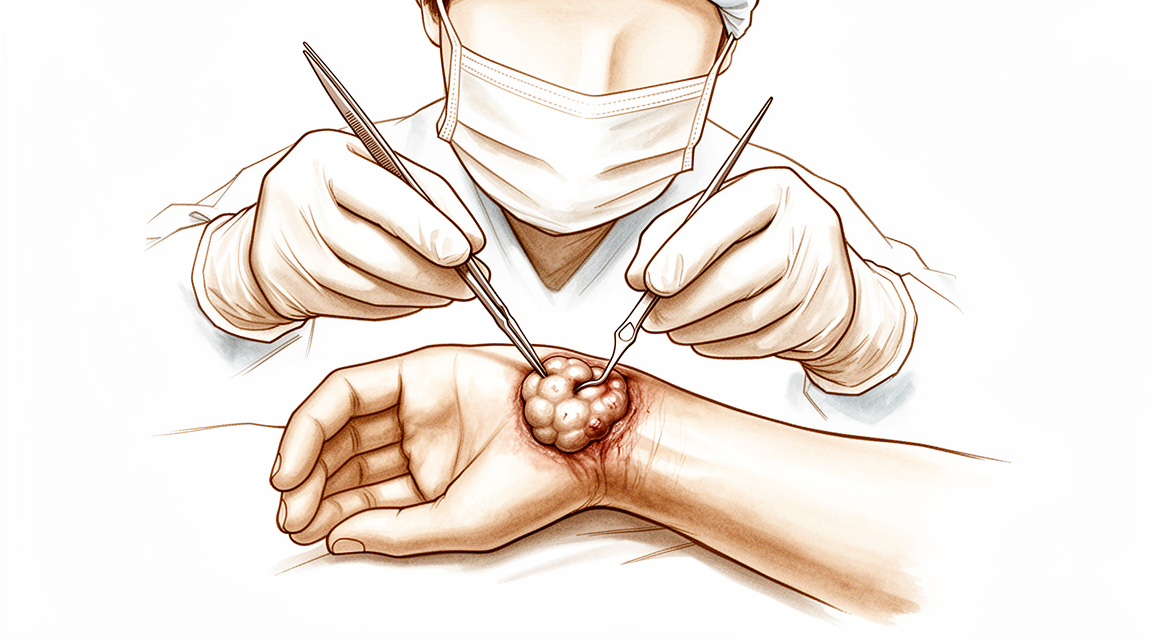
Este protocolo orienta sua recuperação após a remoção cirúrgica (excisão) de um cisto ganglionar do punho, que é um cisto cheio de líquido que se forma a partir da articulação do punho, sob os cuidados do Dr. Kieran Hirpara no Mater Private Hospital Rockhampton. Ele começa com um programa de exercícios para ser feito em casa, seguido pelo protocolo clínico estruturado elaborado para seu terapeuta de mão; leve esta página ou seu PDF à sua primeira sessão de terapia, para que a reabilitação seja devidamente coordenada. Seu terapeuta poderá ajustar o plano conforme a evolução da sua recuperação.
Caso tenha alguma dúvida ou preocupação em relação à ferida pós-cirúrgica, entre em contato com o consultório. Geralmente, é útil tirar uma foto da ferida e enviá-la por e-mail para análise.
O que esperar
Um cisto ganglionar do punho é uma espécie de “balão” cheio de líquido, conectado ao revestimento da articulação do punho por um pedículo” estreito. A maioria aparece na parte dorsal do punho (chamado de cisto ganglionar dorsal); alguns aparecem na face anterior, do lado do polegar (cisto ganglionar volar). Durante a cirurgia, o Dr. Hirpara remove o cisto juntamente com seu pedículo**, até chegar à cápsula articular do punho, retirando tanto a raiz quanto o próprio cisto, pois a permanência do pedículo é a principal razão para a recorrência do cisto. A operação pode ser feita de forma aberta (por meio de uma pequena incisão) ou por artroscopia.
Como nada foi reparado ou reconstruído (apenas o cisto foi removido), não há tendão ou ligamento que precise ser protegido por semanas. Por isso, o plano de recuperação prevê movimentação precoce, cujo objetivo é fazer com que o punho volte a se mover rapidamente:
- A rigidez é o problema mais comum após essa cirurgia, muito mais frequente do que a recorrência do cisto. Um punho que permanece imobilizado por muito tempo após a excisão do cisto pode perder sua mobilidade.
- Assim, a imobilização é mantida ao mínimo: utiliza-se um curativo macio, às vezes acompanhado de uma tala leve para conforto, por apenas alguns dias ou até duas semanas. Depois disso, o paciente começa a movimentar o punho cedo, em todas as direções.
Os dedos, que não foram operados, continuam a se mover normalmente desde o primeiro dia. A mobilidade do punho é retomada à medida que a ferida cicatriza; em seguida, a força de preensão e a capacidade de suportar carga são recuperadas gradualmente. A maioria das pessoas volta às atividades habituais em cerca de quatro a seis semanas.
Precauções e limitações
- Movimente os dedos, o polegar e o cotovelo livremente desde o primeiro dia; apenas o punho requer uma adaptação gradual.
- Use a bandagem macia ou a tala de conforto apenas pelo período indicado (geralmente alguns dias até uma ou duas semanas). Elas servem para conforto, não para imobilizar o punho por muito tempo; o objetivo é a movimentação precoce, não o repouso.
- NÃO molhe a ferida nem deixe a bandagem se umedecer até que lhe informem que a ferida está fechada; mantenha-a limpa e seca.
- Evite realizar apertos fortes, levantar pesos ou exercer carga sobre o punho nas primeiras semanas; retome essas atividades gradualmente, e não de uma só vez.
- Caso tenha tido um cisto ganglionar volar (na face anterior do punho), ele pode estar próximo à artéria radial (a artéria cujo pulso pode ser sentido na parte da frente do punho); avise imediatamente a equipe se notar inchaço, frio ou alteração de cor na mão.
- NÃO dirija até conseguir controlar o volante confortavelmente e estiver sem qualquer tipo de tala, conforme confirmado na sua consulta de acompanhamento.
Para orientações sobre cuidados com a ferida, inchaço e cicatrização, consulte o guia de cuidados com a ferida do consultório.
Seus exercícios
Kieran Hirpara 4.0
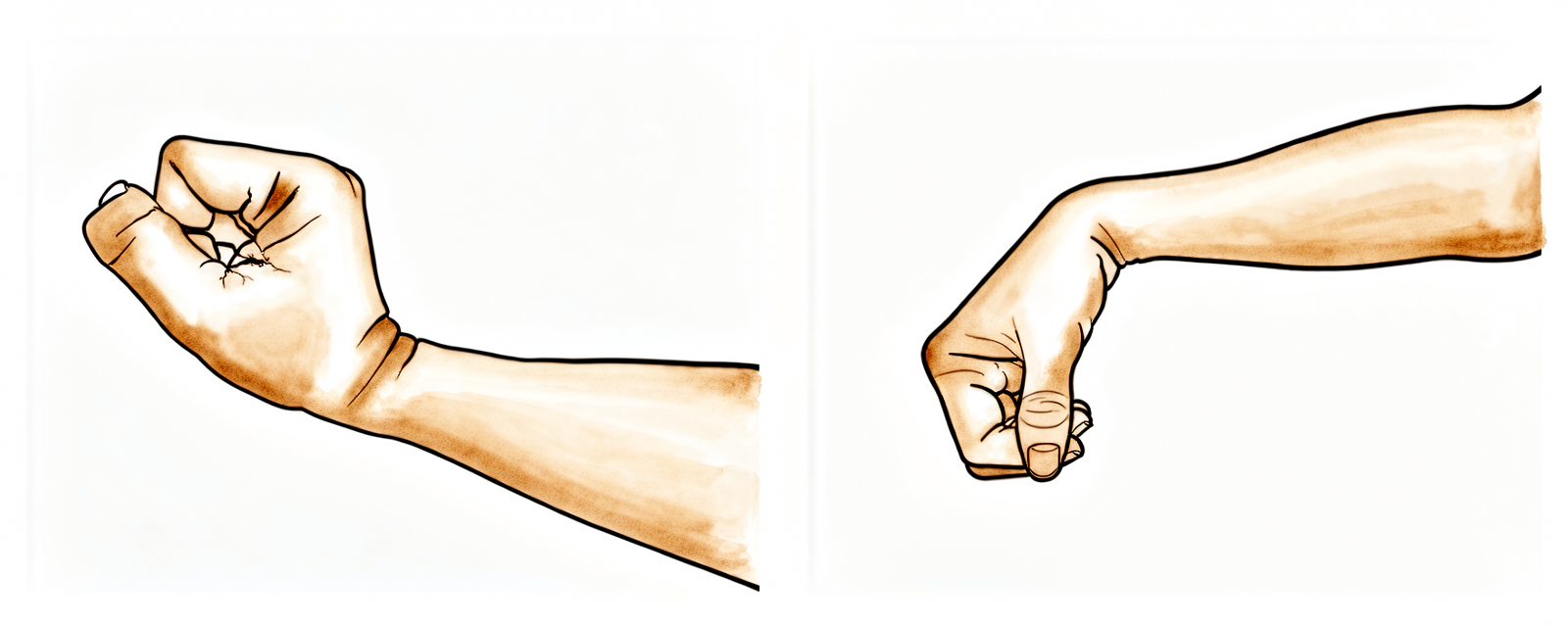
Movimento do punho (em todas as direções)
Mova o seu pulso suavemente em todas as direções: dobre-o para trás (para cima), dobre-o para a frente (para baixo) e incline-o para os lados — movendo-o o máximo possível dentro dos limites do conforto. Este é o exercício inicial mais importante, pois o pulso tende a ficar rígido após esta cirurgia; movimentá-lo precocemente ajuda a mantê-lo flexível. Faça-o lentamente e respeitando os limites do conforto; não deve causar dor intensa.
10 vezes em cada direção, 4-5 vezes ao dia, desde os primeiros dias.
Kieran Hirpara 4.0
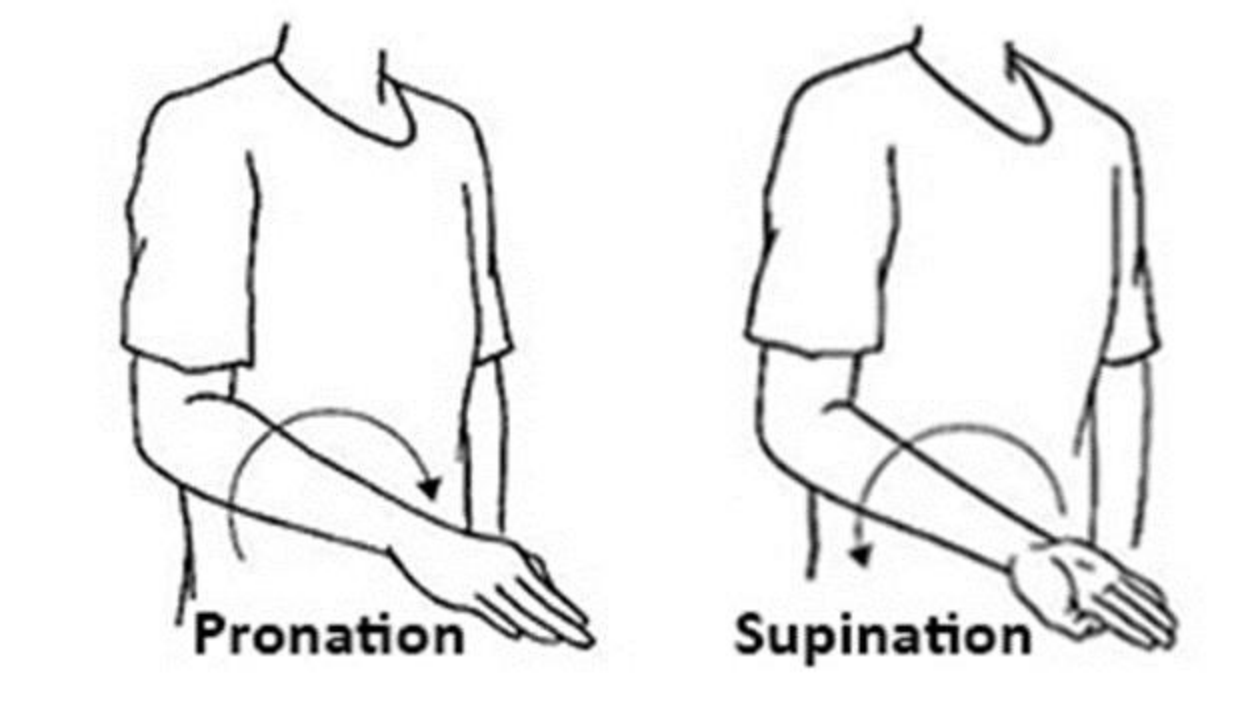
Rotação do antebraço (palma da mão para cima/para baixo)
Mantenha o cotovelo junto ao corpo e dobre-o formando um ângulo reto. Gire lentamente a palma da mão para cima, em direção ao teto, e depois para baixo, em direção ao chão. Mantenha o cotovelo imóvel para que o movimento seja feito apenas pelo antebraço. Isso permite que o antebraço e o punho girem livremente enquanto a ferida cicatriza.
10 vezes em cada direção, 3-4 vezes ao dia.
Kieran Hirpara 4.0
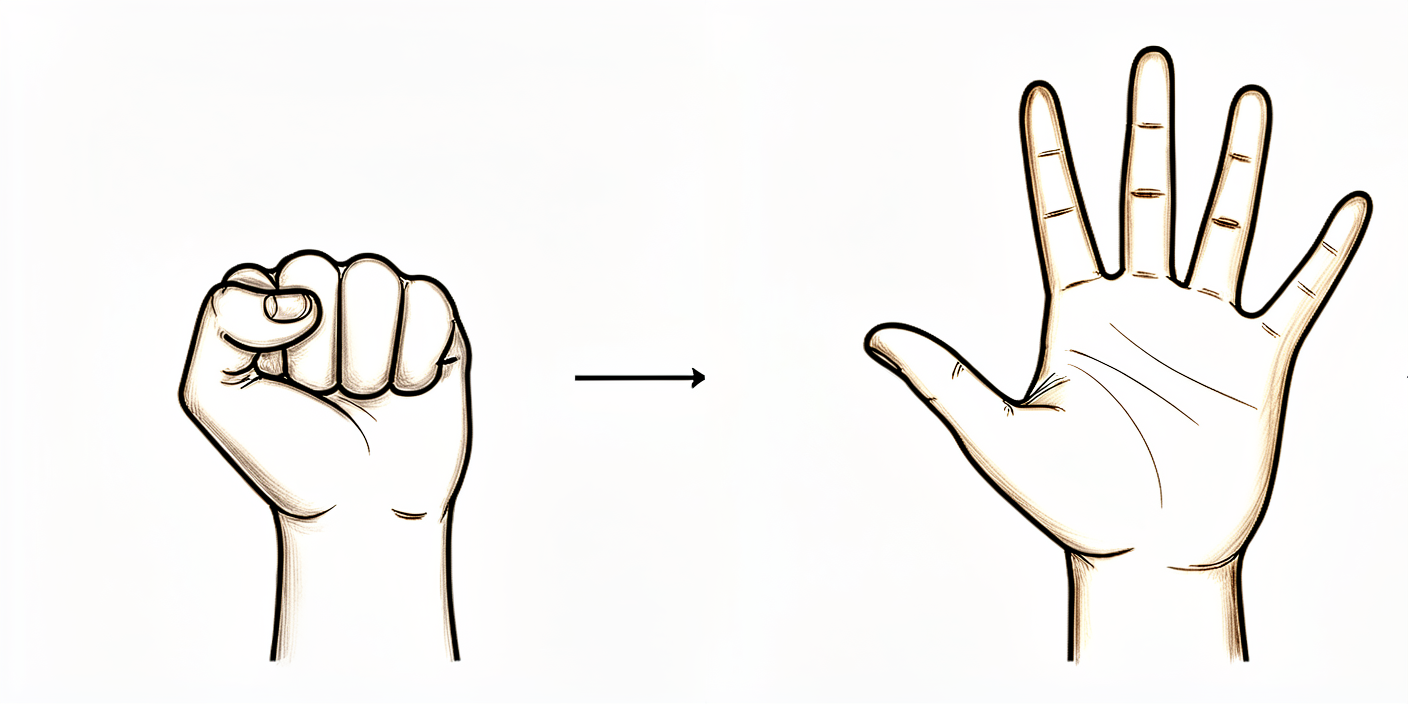
Movimento dos dedos
Faça um punho fechado lentamente, de modo que as pontas dos dedos se enrolem para dentro da palma da mão; em seguida, abra a mão e estique os dedos completamente. Os dedos não foram operados, portanto mantenha-os em movimento pleno desde o primeiro dia — isso evita a rigidez da mão e auxilia na drenagem do inchaço.
10 vezes, várias vezes ao dia, desde o primeiro dia
Kieran Hirpara 4.0
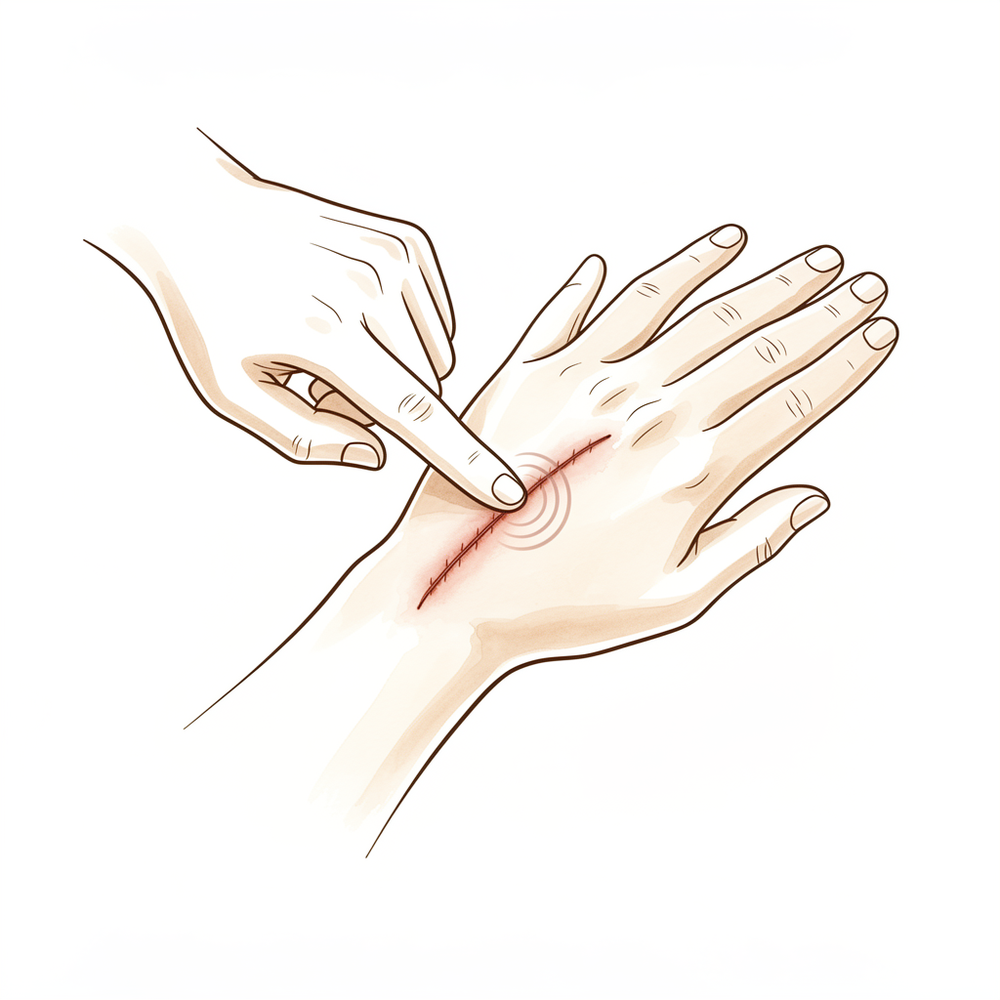
Massagem nas cicatrizes
Assim que a ferida estiver totalmente cicatrizada e os curativos retirados (geralmente após cerca de duas semanas), aplique um pouco de hidratante simples na cicatriz com a ponta do dedo, fazendo pequenos círculos firmes por alguns minutos. Isso mantém a cicatriz macia e flexível, evitando que ela adira aos tecidos subjacentes, o que poderia limitar o movimento do pulso. Não inicie esse procedimento em uma ferida ainda não cicatrizada ou que esteja exsudando líquido.
Alguns minutos, duas vezes ao dia, após a ferida estar totalmente cicatrizada.
Kieran Hirpara 4.0
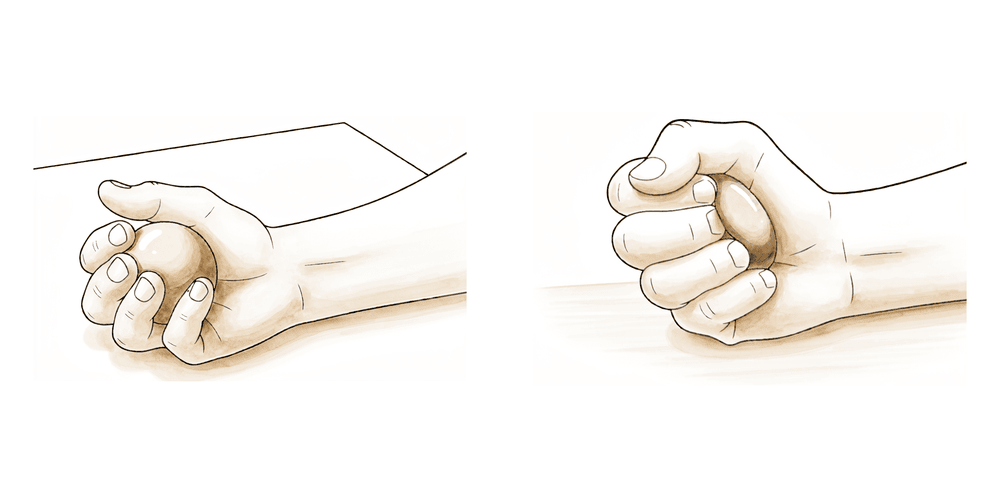
Fortalecimento da preensão
Um exercício posterior, geralmente a partir de cerca de três a quatro semanas, quando a ferida já estiver estabilizada e os movimentos forem confortáveis. Aperte uma bola macia ou massa terapêutica na palma da mão, mantenha a pressão por alguns segundos e depois relaxe. Aumente a intensidade gradualmente. Esse exercício ajuda a recuperar a força de preensão, que muitas vezes diminui durante algumas semanas após a cirurgia.
10-15 compressões, 2-3 vezes ao dia, a partir de aproximadamente 3-4 semanas
Estes são os exercícios descritos no seu folheto informativo. Comece a realizá-los conforme orientado pelo Dr. Hirpara e pelo seu fisioterapeuta especializado em mão. Os exercícios iniciais (movimentação do punho em todas as direções, rotação do antebraço e movimentação dos dedos) são fundamentais para a recuperação e devem ser iniciados nos primeiros dias, pois a movimentação precoce do punho evita a rigidez que, de outra forma, ocorre após esta cirurgia. A massagem da cicatriz só deve ser iniciada após a ferida estar completamente cicatrizada, e o fortalecimento da força de preensão é adicionado um pouco depois, conforme o paciente se sentir confortável. Nenhum desses exercícios deve causar dor intensa; interrompa qualquer um que provoque dor.
Seu protocolo clínico
O restante desta página descreve o protocolo clínico em etapas para a reabilitação após a excisão de um cisto ganglionar no punho. Esta seção deve ser entregue ao seu fisioterapeuta especializado em mão, e cada fase começa com uma explicação simples, em linguagem acessível, sobre o que está ocorrendo. Trata-se de uma excisão, não de um reparo: não há nenhuma estrutura a ser protegida; portanto, o princípio orientador é minimizar a imobilização e iniciar logo movimentos ativos do punho em todos os planos, a fim de evitar a rigidez pós-excisão, que é a complicação mais comum após esse procedimento.
Antes do início do tratamento, verifique o relatório cirúrgico do paciente e seu histórico médico, e consulte o cirurgião responsável quanto à localização do cisto (dorsal ou volar), ao método cirúrgico utilizado (aberto ou artroscópico), à integridade da cápsula dorsal/volar e a quaisquer achados adicionais. O Dr. Hirpara excisa o cisto juntamente com seu pedículo, até a cápsula articular. No caso de cistos volares, observe a proximidade da artéria radial. Não há nenhum limite de movimento a ser respeitado nem estrutura a ser protegida; a única restrição intencional é evitar, por um curto período, esforços de forte preensão ou carga, enquanto os tecidos moles se estabilizam.
Fase I — imobilização mínima e movimentação precoce (dias 0 a ~14)
A primeira fase visa proteger a ferida ao mesmo tempo em que se promove a movimentação precoce do punho. A imobilização é intencionalmente breve (um curativo macio, com uma tala leve para o punho apenas para conforto, se necessário), e o punho começa a ter movimentos ativos em todas as direções nos primeiros dias. As evidências de revisões sistemáticas indicam que a imobilização limitada a duas semanas ou menos, ou mesmo a ausência de imobilização, não altera significativamente o resultado final; já o repouso prolongado aumenta o risco de rigidez.
Para o seu fisioterapeuta:
Instruções e precauções - Curativo macio, com possibilidade de usar uma tala leve para o punho apenas para conforto; retire-a gradualmente ao longo de dias, não semanas - Evitar imobilização rígida e prolongada: limite o uso da tala a ≤2 semanas (geralmente poucos dias) - Manter a ferida limpa e seca até fechar completamente; movimentação total dos dedos, polegar e cotovelo já a partir do primeiro dia - Em casos de lesões na face volar: ficar atento à artéria radial; comunicar imediatamente qualquer suspeita de problema vascular
Tratamento - Ferida: aplicar curativos cirúrgicos conforme orientação; monitorar sinais de infecção - Edema: elevar o membro, realizar movimentos suaves de bombeamento com a mão e aplicar gelo conforme necessário - Exercícios: movimentação ativa do punho em todos os planos (flexão/extensão, desvio radial/ulnar) dentro dos limites do conforto, iniciados nos primeiros dias; rotação prono-supinação do antebraço ativa/passiva; movimentação ativa completa dos dedos e polegar; movimentação suave do ombro
Critérios para avançar para a fase seguinte - Cicatrização da ferida; redução do edema; aumento progressivo e confortável da amplitude de movimento do punho; retirada da tala (se utilizada) por volta da segunda semana
Fase II — restauração da mobilidade completa e manejo da cicatriz (semanas ~2 a 4)
Por volta da segunda semana, os curativos são retirados e a ferida já está cicatrizada. O foco agora é recuperar a mobilidade completa e simétrica do punho antes que a rigidez se instale, além de iniciar o manejo da cicatriz para que ela permaneça flexível e não restrinja o movimento do punho.
Para o seu fisioterapeuta da mão:
Avaliações - Amplitude de movimento ativa e passiva do punho (comparar com o lado contralateral); rotação do antebraço; edema; avaliação da ferida/cicatriz
Instruções e precauções - Buscar alcançar amplitude de movimento completa do punho em todos os planos; tratar imediatamente qualquer perda precoce de mobilidade por meio de exercícios ativos e passivos suaves - Iniciar o manejo da cicatriz assim que a ferida estiver totalmente cicatrizada (massagem, uso de silicone/hidratante, dessensibilização conforme necessário) - Incentivar o uso funcional leve da mão; evitar esforços de preensão e carga pesada
Manejo - Exercícios: progredir para amplitude de movimento ativa e passiva completa do punho; manter os exercícios de rotação do antebraço; iniciar massagem e dessensibilização da cicatriz; introduzir exercícios leves com massa de modelar ou preensão ao final desta fase, conforme a tolerância do paciente
Critérios para avançar para a fase seguinte - Amplitude de movimento do punho completa ou quase completa, sem dor; cicatriz cicatrizada e flexível; pronto para carga progressiva
Fase III — fortalecimento e retorno às atividades (semanas ~4 a 6 e além)
Após a restauração do movimento, o aperto e a capacidade de suportar cargas são retomados gradualmente. Na maioria dos pacientes, as atividades cotidianas são retomadas por volta da quarta a sexta semana; atividades que exigem maior esforço físico são retomadas conforme critérios pré-definidos.
Para o seu terapeuta da mão:
Avaliações - Força de aperto e pinça em comparação ao lado contralateral; amplitude de movimento do punho; resposta ao aumento gradual da carga; testes funcionais ou específicos para o trabalho, conforme necessário
Instruções e precauções - Prossiga com o fortalecimento do aperto e do punho (usando massa de modelar, bolas ou resistência graduada), conforme o paciente se sinta confortável - Retome gradualmente atividades que envolvam levantamento de peso e suporte de carga pelo punho; o retorno completo deve ser guiado pelos sintomas, não apenas pelo tempo decorrido
Tratamento - Exercícios: fortalecimento progressivo do aperto/pinça e do punho; aumento gradual da carga e exercícios específicos para o trabalho; manutenção da mobilidade residual e cuidados com a cicatriz - Considere encerrar o tratamento quando a amplitude de movimento for completa, a força estiver quase simétrica e a função da mão tiver sido restaurada - Considere encaminhar o paciente novamente ao médico responsável caso o movimento do punho permaneça limitado ou se houver recorrência de inchaço
Critérios para retorno às atividades completas - Amplitude de movimento do punho sem dor; força de aperto quase simétrica; capacidade de suportar cargas específicas do trabalho ou das tarefas diárias sem desconforto
Retorno ao trabalho e às atividades diárias
O uso leve e cotidiano da mão (comer, escrever, cuidados pessoais básicos) é incentivado desde o início, dentro dos limites do conforto; os dedos devem funcionar plenamente já no primeiro dia. Tarefas de escritório e atividades leves geralmente podem ser retomadas em poucos dias a uma semana, especialmente se a mão dominante estiver livre; atividades que exigem forte aperto, levantamento de peso ou movimentos repetitivos e forçados do punho demandam mais tempo, sendo retomadas gradualmente nas primeiras semanas. Estudos publicados indicam um período curto de afastamento do trabalho após a excisão de cisto sinovial (cerca de duas semanas), embora isso varie conforme o lado operado e as exigências da profissão.
Como você precisará controlar o volante confortavelmente e não poderá usar nenhuma tipo de tala, planeje contar com ajuda para o transporte nos primeiros dias; a direção pode ser retomada assim que você se sentir confortável e seguro, conforme avaliação na consulta de acompanhamento. A maioria das pessoas volta às atividades habituais por volta de quatro a seis semanas; atividades manuais mais pesadas e esportes são retomados gradualmente à medida que a mobilidade e a força de preensão retornam, sendo essa retomada avaliada com base na evolução do punho, e não apenas pelo calendário.
Após seguir este protocolo
Este protocolo complementa as orientações gerais de recuperação fornecidas pela clínica: consulte controle da dor pós-operatória, cuidados com a ferida e tratamento das cicatrizes. O plano em fases descrito acima segue as diretrizes publicadas para o pós-operatório de excisão de cistos sinoviais do punho, nas quais a prioridade é o movimento precoce para evitar rigidez. Sua recuperação continua sendo orientada individualmente pelo Dr. Hirpara e pelo seu fisioterapeuta, conforme a evolução do seu punho.
Evidence & references
This is the clinical evidence summary written for health professionals. It is technical, and it lists the research this page was built from. You do not need to read it to understand your treatment or to make a decision about it.
Wrist Ganglion Excision — Procedure Outcomes & Post-operative Rehabilitation (Dorsal / Volar, Open or Arthroscopic)
Topic scope: post-operative rehabilitation after surgical excision of a wrist ganglion — removal of the cyst together with its capsular stalk down to the wrist joint, performed open or arthroscopically, for a dorsal (scapholunate-origin) or volar (radiocarpal/scaphotrapezial) ganglion. This is an excision, not a reconstruction: nothing is repaired or tightened, so the rehab is an early-motion pathway built around minimal immobilisation, prompt wrist movement in all planes, and scar care — not months of protected healing.
Defining principle of the rehab here: ganglion excision removes a cyst and its stalk; it does not create a construct that needs protecting. The most frequent adverse outcome is therefore not failure of any repair but wrist stiffness / loss of motion, which prolonged immobilisation makes worse. So the deliberate stance is minimal immobilisation (soft dressing ± brief comfort splint, ≤2 weeks) followed by early active wrist motion in every plane, with the only restraint a short window of heavy-grip/load avoidance while the soft tissues settle. The principal branch points are (1) dorsal vs volar (volar ganglia sit adjacent to the radial artery and carry a higher neurovascular-complication profile) and (2) open vs arthroscopic access (similar recurrence; arthroscopic may have a gentler early course). Importantly, the recurrence and outcome literature is far better developed than the rehabilitation literature, which is largely expert-consensus and low-level.
A. PROCEDURE OUTCOMES (open vs arthroscopic; dorsal vs volar)
Ganglion excision is a reliable, low-morbidity operation. The principal outcome debate is over recurrence and over access (open vs arthroscopic), not over whether excision works.
- Excision markedly out-performs aspiration for durable cure. Pooled across treatments, mean recurrence is roughly 6% arthroscopic, ~20–21% open, ~59% aspiration; surgical excision confers a large reduction in recurrence versus aspiration. Reported open-excision recurrence is wide (0–31%), the lowest classic series (Angelides & Wallace) reporting <1% with meticulous stalk excision [Zoller 2023 JAAOS review; Gant 2011 review]. Moderate (reviews of heterogeneous series).
- Removing the stalk down to the capsule is the key technical determinant of recurrence. Leaving the capsular stalk behind is the main reason a ganglion recurs; stalk resection is repeatedly advocated as the critical step [Gant 2011; Rizzo 2004]. Mechanistic / consensus.
- Open and arthroscopic excision give similar recurrence. A retrospective comparison and a systematic review found no significant difference once low-quality/high-bias studies are excluded (pooled ~8% arthroscopic vs ~10% open); a prospective randomised dorsal-ganglion trial (Kang) reported 11% vs 9%. Arthroscopic access may offer a cosmetic/early-recovery edge but is not proven superior for recurrence [Konigsberg 2023 HAND; Crawford 2018 SR; Gant 2011 citing Kang]. Moderate (SR + retrospective + one RCT).
- Wrist stiffness is the most common complication after carpal ganglion excision, ahead of recurrence; other risks are infection, scar problems, neurovascular injury and (rarely) injury to the scapholunate ligament [Gant 2011]. Moderate (review).
- Volar ganglia carry a distinct neurovascular risk. They are adherent to / immediately adjacent to the radial artery; radial-artery injury during volar excision is described as "quite common," and an MRI-based study identifies anatomical position as a risk factor for operation-related complications after arthroscopic volar ganglionectomy [Rocchi 2008; Oh 2025 BMC; operative-technique texts]. Moderate (cohort + anatomical).
B. REHABILITATION / THERAPY EVIDENCE
The central rehab questions are (1) should the wrist be immobilised afterwards, and (2) does a particular therapy regimen change the outcome. The best available evidence — a systematic review of post-excision immobilisation — answers that brief or no immobilisation is appropriate, with early motion the means of preventing the dominant complication (stiffness). There is no high-level trial evidence for any specific exercise protocol; rehab content is consensus.
- Limited or no immobilisation does not worsen outcome — and protects against stiffness. A systematic review and surgeon survey of dorsal ganglion excision found practice split roughly evenly between rigid splinting and soft dressings; immobilisation durations ranged from 48 hours to 2 weeks (open) and 5 days to 3 weeks (arthroscopic). The explicit conclusion: "limited immobilization of 2 weeks or less or no immobilization after surgery does not meaningfully affect patient outcome." Prolonged rigid immobilisation is the avoidable driver of stiffness (one 2-week bulky-dressing series reported 11.5% with ≥20° ROM loss, versus normal ROM in 100% of a short-immobilisation series) [Wong 2023 HAND SR]. Moderate (systematic review of low-level studies).
- Early active wrist motion in all planes is the core of the programme. Because there is no repair to protect and stiffness is the commonest problem, the consensus is to move the wrist early through flexion/extension and radial/ulnar deviation, with full finger and forearm motion from day one. The adhesion/stiffness-prevention rationale is mechanistic and consensus rather than trial-proven. Weak–moderate (mechanism strong, outcome data absent).
- Recovery is usually quick and time off work short. Series report on the order of ~2 weeks off work after open wrist ganglion excision (longer for volar than dorsal, and longer than aspiration), with most patients back to ordinary activity by ~4–6 weeks [Suen 2013 citing Dias 2007]. Moderate (cohort).
- Recurrent ganglia are re-excisable with good function, and physical therapy is routinely recommended in re-excision series — underlining that therapy here is supportive (motion + scar), not a construct-protecting protocol [re-excision outcome series]. Low (small series).
Recovery trajectory (expected, evidence-anchored)
| Phase | Window | Restraint | Hand use / therapy focus | Strength / load | Notes |
|---|---|---|---|---|---|
| I — Minimal immobilisation & early motion | Days 0–~14 | Soft dressing ± comfort splint only (≤2 wk) | Full finger/thumb/elbow ROM from day 1; active wrist ROM in all planes within the first few days; forearm rotation; elevation for oedema | Light functional use only | Brief or no immobilisation does not worsen outcome; prolonged rest → stiffness |
| II — Restore full motion & scar care | Week ~2–4 | None routine (splint weaned) | Drive to full wrist ROM; scar massage once wound healed; desensitisation | Light grip/putty toward end | Stiffness is the complication to pre-empt; address early ROM loss promptly |
| III — Strengthening & return | Week ~4–6+ | Restrictions lifted | Progress grip/pinch + wrist strengthening; task-specific loading | Graded grip and load to symmetry | Most back to ordinary activity ~4–6 wk; manual/volar cases a little longer |
(Phase windows mirror the precautions in the patient protocol; they are typical guides, not trial-derived deadlines.)
C. KEY CONTROVERSIES / EVIDENCE QUALITY
- To splint or not. Practice is genuinely split, but the systematic-review evidence is that limited (≤2 weeks) or no immobilisation does not change outcome — and that prolonged rigid immobilisation is the avoidable cause of stiffness. This page's brief-immobilisation, early-motion default reflects that finding. Moderate (SR of low-level data).
- Open vs arthroscopic. Similar recurrence once bias is accounted for; arthroscopic may give a cosmetic/early-recovery edge. Choice is largely surgeon/patient preference. Moderate.
- What drives recurrence. Incomplete stalk excision, not rehab, is the main recurrence determinant; no mobilisation regimen has been shown to affect recurrence. Consensus / mechanistic.
- Stiffness is the real enemy, not the cyst coming back. Wrist stiffness is the commonest complication; framing recovery around early motion (rather than protective rest) is the evidence-aligned stance. Moderate.
- Volar ganglia are different. Radial-artery proximity raises the neurovascular-complication profile of volar excision; this is an operative/anatomical caution rather than a rehab variable, but it shapes early monitoring. Moderate.
- Rehab evidence is thin. Recurrence and procedure outcomes are well studied; the specific exercise programme is expert-consensus with no controlled trials. The defensible position is a simple early-motion + scar home programme with selective hand therapy. Weak / consensus.
D. EVIDENCE STRENGTH FLAGS (summary)
- STRONG (RCT / SR): none specific to rehab. (Procedure-side: superiority of excision over aspiration for recurrence is robust across reviews.)
- MODERATE: systematic-review evidence that ≤2-week or no immobilisation does not worsen outcome (Wong 2023); similar recurrence open vs arthroscopic (Crawford SR, Konigsberg, Kang RCT); stiffness as the commonest complication; volar radial-artery risk; short time off work.
- WEAK / CONSENSUS: the specific early-motion, all-plane wrist ROM + scar therapy programme (mechanistically rationalised — stiffness prevention — with no controlled outcome trials); exact phase timings (typical, not trial-derived).
CITATIONS
RAG corpus (180,000+ Orthopaedic articles)
- Gant J, Ruff M, Janz BA. Wrist ganglions. J Hand Surg Am. 2011;36(3):510–512. DOI: 10.1016/j.jhsa.2010.11.048
- Zoller SD, Benner NR, Iannuzzi NP. Ganglions in the Hand and Wrist: Advances in 2 Decades. J Am Acad Orthop Surg. 2023;31(2). DOI: 10.5435/JAAOS-D-22-00105
- Rizzo M, Berger RA, Steinmann SP, et al. Arthroscopic resection in the management of dorsal wrist ganglions: results with a minimum 2-year follow-up period. J Hand Surg Am. 2004;29(1):59–62. DOI: 10.1016/j.jhsa.2003.10.018
- Konigsberg MW, Tedesco LJ, Mueller JD, et al. Recurrence Rates of Dorsal Wrist Ganglion Cysts After Arthroscopic Versus Open Surgical Excision: A Retrospective Comparison. Hand (N Y). 2023;18(1). DOI: 10.1177/15589447211003184
- Crawford C, Keswani A, Lovy AJ, et al. Arthroscopic versus open excision of dorsal ganglion cysts: a systematic review. J Hand Surg Eur Vol. 2018;43(6). DOI: 10.1177/1753193417734428
- Mathoulin C, Gras M. Arthroscopic Management of Dorsal and Volar Wrist Ganglion. Hand Clin. 2017;33(4). DOI: 10.1016/j.hcl.2017.07.012
- Oh W, Kim H, Kim D, et al. Anatomical location of volar wrist ganglion in preoperative MRI is a risk factor for operation-related complications after arthroscopic ganglionectomy. BMC Musculoskelet Disord. 2025;26(1). DOI: 10.1186/s12891-025-08766-x
- Gray J, Zuhlke T, Eizember S, et al. Dry Arthroscopic Excision of Dorsal Wrist Ganglion. Arthrosc Tech. 2017;6(2). DOI: 10.1016/j.eats.2016.09.018
Wrist ganglion excision & post-operative care literature (URLs)
- Wong CR, Karpinski M, Hatchell AC, et al. Immobilization of the Wrist After Dorsal Wrist Ganglion Excision: A Systematic Review and Survey of Current Practice. Hand (N Y). 2023;18(2):254–263. DOI: 10.1177/15589447211014631. https://pmc.ncbi.nlm.nih.gov/articles/PMC10035098/
- Suen M, Fung B, Lung CP. Treatment of Ganglion Cysts. ISRN Orthop. 2013;2013:940615. DOI: 10.1155/2013/940615. https://pmc.ncbi.nlm.nih.gov/articles/PMC4045351/
- Rocchi L, Canal A, Fanfani F, et al. Articular ganglia of the volar aspect of the wrist: arthroscopic resection compared with open excision — a prospective randomised study. Scand J Plast Reconstr Surg Hand Surg. 2008;42(5):253–259. DOI: 10.1080/02844310802210897. https://pubmed.ncbi.nlm.nih.gov/18791910/
- Ganglions — Treatment & Management (recurrence by treatment modality; surgical technique). Medscape Reference. https://emedicine.medscape.com/article/1243525-treatment