Patients › Rehabilitation
Reparo de tendões flexores
Um plano de recuperação com mobilização precoce após a reparação de um tendão flexor do dedo, utilizando a tala curta de Manchester para mover suave e seguramente o tendão em processo de cicatrização a partir da primeira semana, protegendo a sutura por um período de seis semanas.
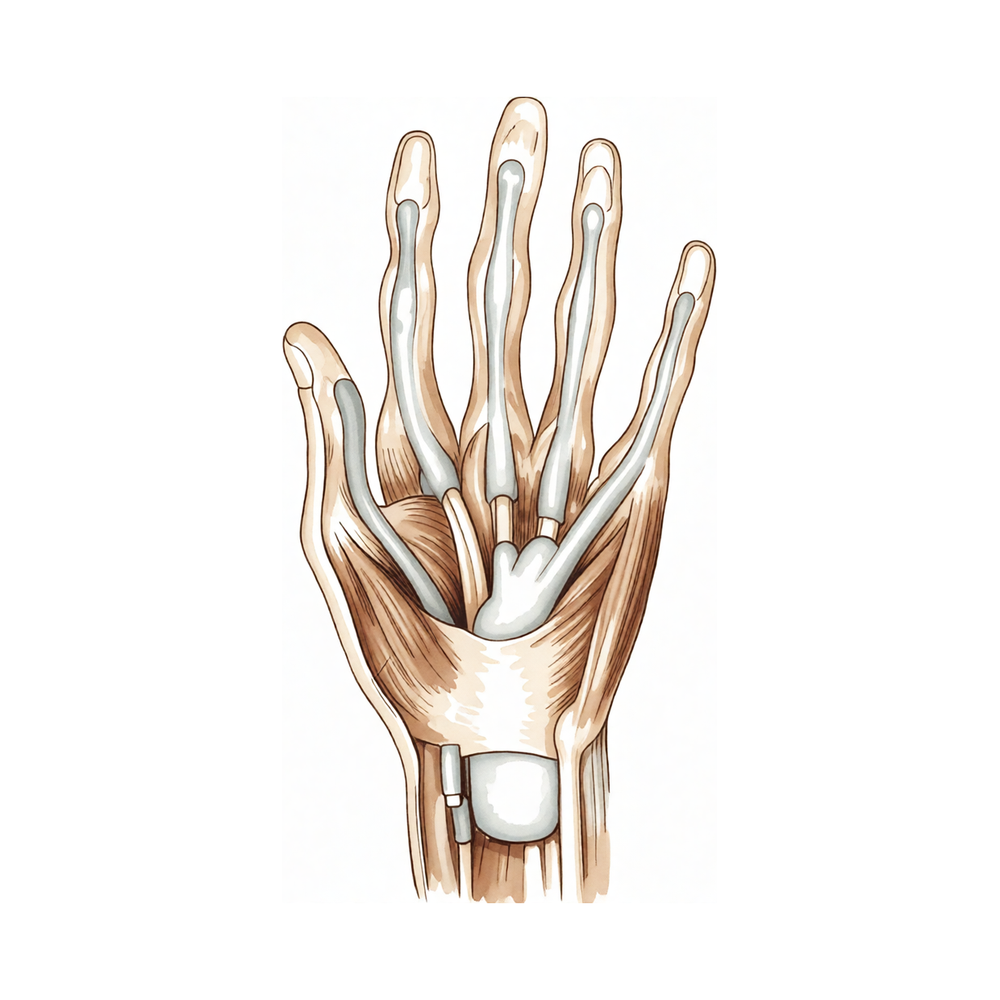
Este protocolo orienta sua recuperação após o reparo cirúrgico de um tendão flexor do dedo (a estrutura que percorre a face palmar do dedo e permite sua flexão em direção à palma da mão) realizado pelo Dr. Kieran Hirpara no Mater Private Hospital Rockhampton. Ele começa com um programa de exercícios para ser feito em casa, seguido pelo protocolo clínico estruturado elaborado para seu terapeuta de mão: leve esta página ou seu arquivo PDF à sua primeira sessão de terapia, para que a reabilitação seja coordenada de forma adequada. Seu terapeuta de mão poderá ajustar o plano conforme a evolução da sua recuperação.
Caso tenha alguma dúvida ou preocupação quanto à ferida pós-operatória, entre em contato com o consultório. Geralmente, é útil tirar uma foto da ferida e enviá-la por e-mail para análise.
O que esperar
A reparação do tendão flexor consiste em unir novamente as extremidades cortadas do tendão, permitindo assim que o dedo volte a dobrar-se. A sutura é suficientemente resistente para permitir movimentos suaves imediatamente após a cirurgia; porém, nas primeiras semanas, enquanto o tendão cicatriza, ele fica mais frágil. Por isso, todo o plano de reabilitação visa promover movimentos apenas o suficiente para manter o deslizamento do tendão, sem jamais aplicar força excessiva que possa romper os pontos.
Para isso, a mão é imobilizada em uma tala leve e especial chamada tala curta de Manchester. Diferentemente das talas antigas, mais volumosas, esta é curta, terminando na dobra do pulso, o que deixa o pulso livre para movimentar-se. Ela permite que o pulso se mova para frente e para trás até cerca de 45 graus; além disso, um pequeno bloqueador impede que as articulações dos dedos se estendam além de 30 graus, deixando-as livres para movimentação. A tala deve ser usada durante 24 horas por dia, durante seis semanas, sendo retirada apenas conforme orientação para exercícios e higiene.
O aspecto mais importante é o modo como o pulso é utilizado. Quando você flexiona o pulso para frente, o dedo estende-se quase por conta própria (fenômeno conhecido como efeito tenodesis), permitindo abrir o dedo completamente sem esforço muscular excessivo. Já ao flexionar o pulso para trás, torna-se mais fácil e seguro dobrar suavemente o dedo. Esses movimentos garantem o deslizamento adequado do tendão e, principalmente, evitam que o dedo permaneça rígido e dobrado — problema muito comum após esse tipo de reparação.
Os exercícios iniciais (a partir do dia 4–5) são suaves e específicos: primeiro, flexão passiva do dedo; depois, uma leve flexão ativa a partir da ponta do dedo; por fim, extensão do dedo com o pulso flexionado. Durante seis semanas, não se deve fazer apertos fortes nem movimentos forçados. Após seis semanas, a tala é retirada e inicia-se o fortalecimento leve; na maioria dos casos, a mão volta a ser utilizada normalmente entre 10 e 12 semanas após a cirurgia.
Precauções e limitações
- Use a tala curta de Manchester o tempo todo durante seis semanas: retire-a apenas para fazer os exercícios e para lavar a mão, conforme orientado.
- NÃO faça um punho fechado com força nem NÃO agarre, levante, puxe ou carregue nada com a mão operada durante as primeiras seis semanas: cargas pesadas podem romper a reparação.
- NÃO force o dedo a ficar esticado nem dobrado; mantenha todos os movimentos suaves, dentro da amplitude que lhe foi ensinada.
- Você pode usar a mão para tarefas muito leves e seguras, exceto com o dedo lesionado, desde que nada puxe ou sobrecarregue essa região.
- Um estalo ou “cedimento” súbito, acompanhado da perda da capacidade de dobrar o dedo, pode indicar ruptura do tendão: se isso ocorrer, entre em contato com o consultório imediatamente.
- NÃO dirija enquanto estiver usando a tala; a volta à direção só será permitida após a retirada da tala (aproximadamente após seis semanas), quando sua força de preensão e controle forem adequados e você receber autorização.
Para cuidados com a ferida, inchaço e cicatrização, consulte as orientações de cuidados com a ferida do consultório.
Seus exercícios
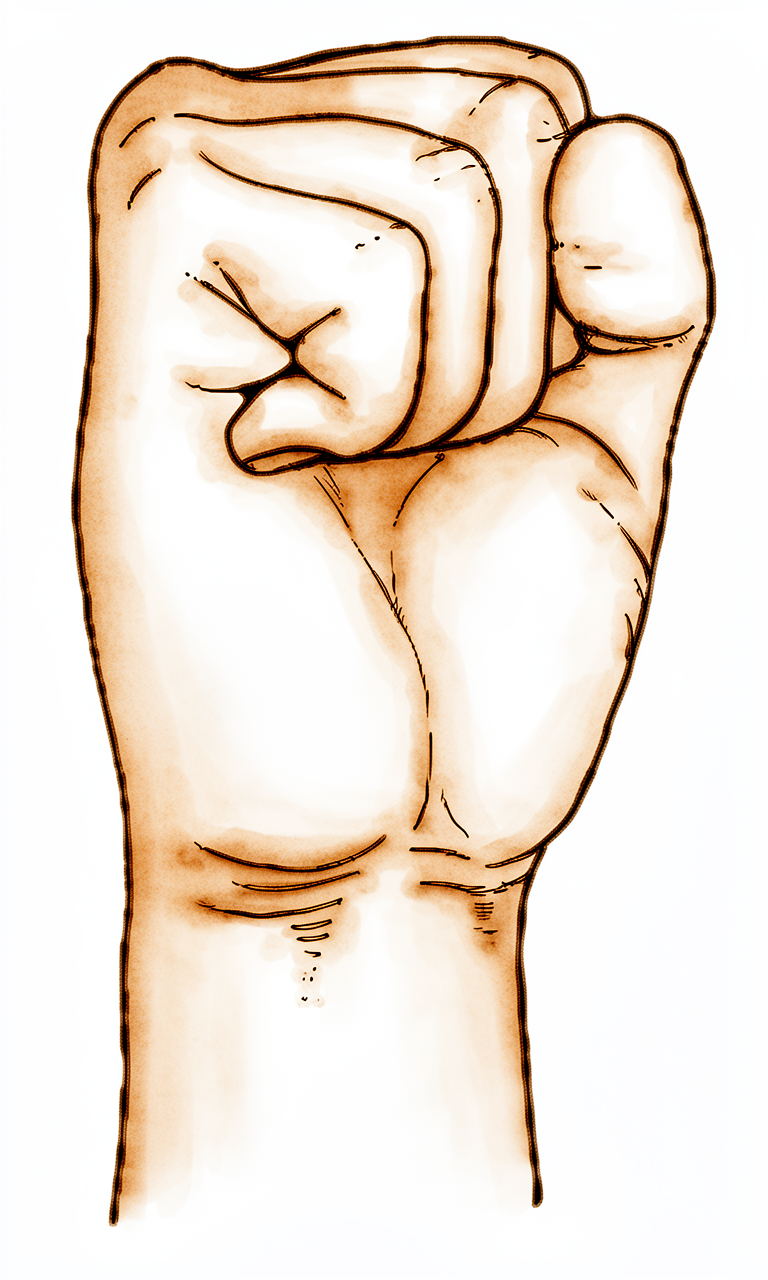
Alongamento passivo em punho fechado (flexão das articulações interfalângicas)
Use a outra mão para dobrar suavemente o dedo operado até formar um punho, flexionando completamente as articulações do dedo — mantenha o dedo totalmente relaxado, de modo que a outra mão faça todo o trabalho. Este exercício deve ser feito PRIMEIRO em cada sessão, para manter as articulações do dedo flexíveis e preparadas para o movimento. Ele não puxa a área reparada, pois os seus próprios músculos permanecem inativos. Faça o movimento lentamente e pare antes de sentir qualquer dor.
10 vezes, no início de cada sessão; várias sessões por dia.

Punho em gancho ativo a partir da articulação interfalângica distal.
Com o punho estendido, tanto dentro quanto fora da tala, dobre primeiro a ponta do dedo para baixo, formando um “gancho” — dobrando a articulação distal e a média, mantendo a articulação metacarpofalângica reta. Segure essa posição suavemente e depois solte. Iniciar o movimento a partir da ponta do dedo faz o tendão em recuperação deslizar da forma de que precisa. Use apenas um esforço suave: nunca force o movimento nem faça um punho muito fechado e tenso.
10 vezes, várias sessões por dia conforme orientação.
Kieran Hirpara 4.0
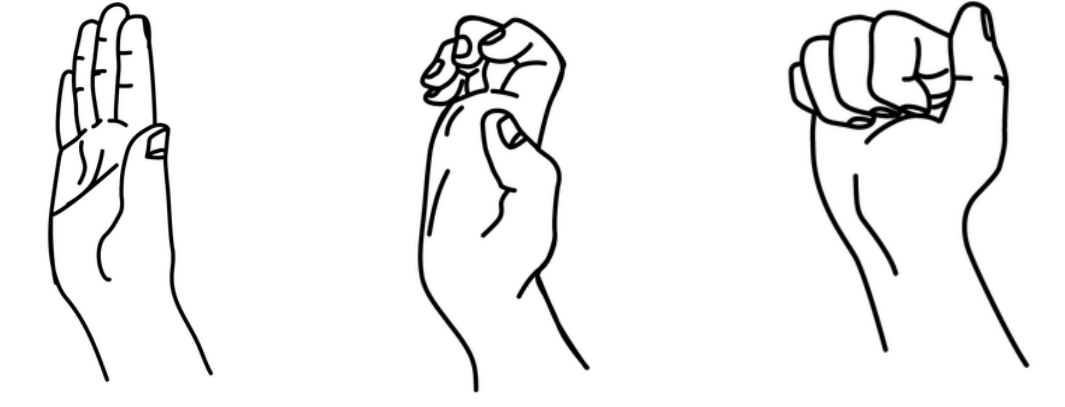
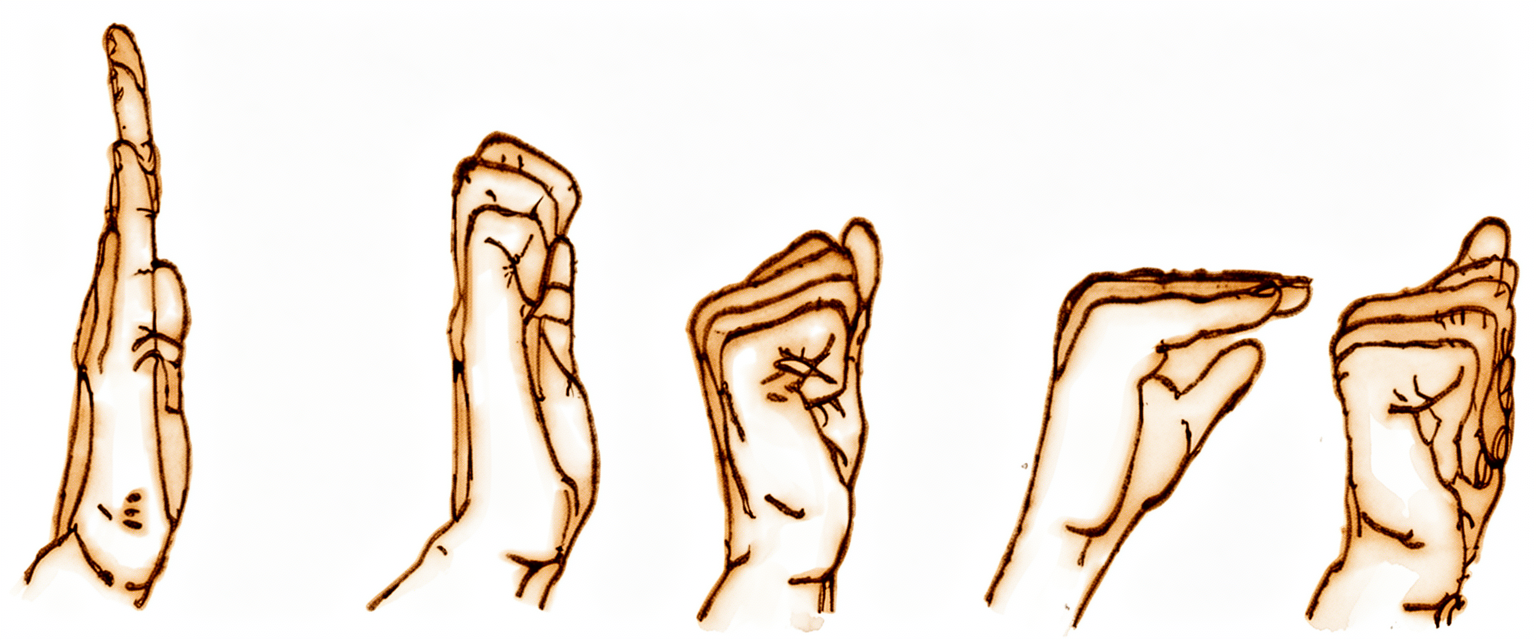
Deslizamentos tendinosos (do gancho até a mão reta e até o punho fechado completamente)
Execute suavemente a sequência de deslizamento dos tendões: mantenha os dedos esticados, depois forme um punho em gancho (dobrando as pontas dos dedos), em seguida faça um punho fechado suavemente, e volte novamente à posição com os dedos esticados. Isso permite que ambos os tendões flexores deslizem suavemente um sobre o outro e sobre os tecidos circundantes, evitando que fiquem aderidos. Mantenha cada posição de forma leve e fácil — trata-se de movimentos de deslizamento, não de fortalecimento; portanto, não deve haver nenhum esforço excessivo.
5 de cada posição, várias sessões por dia conforme orientação.
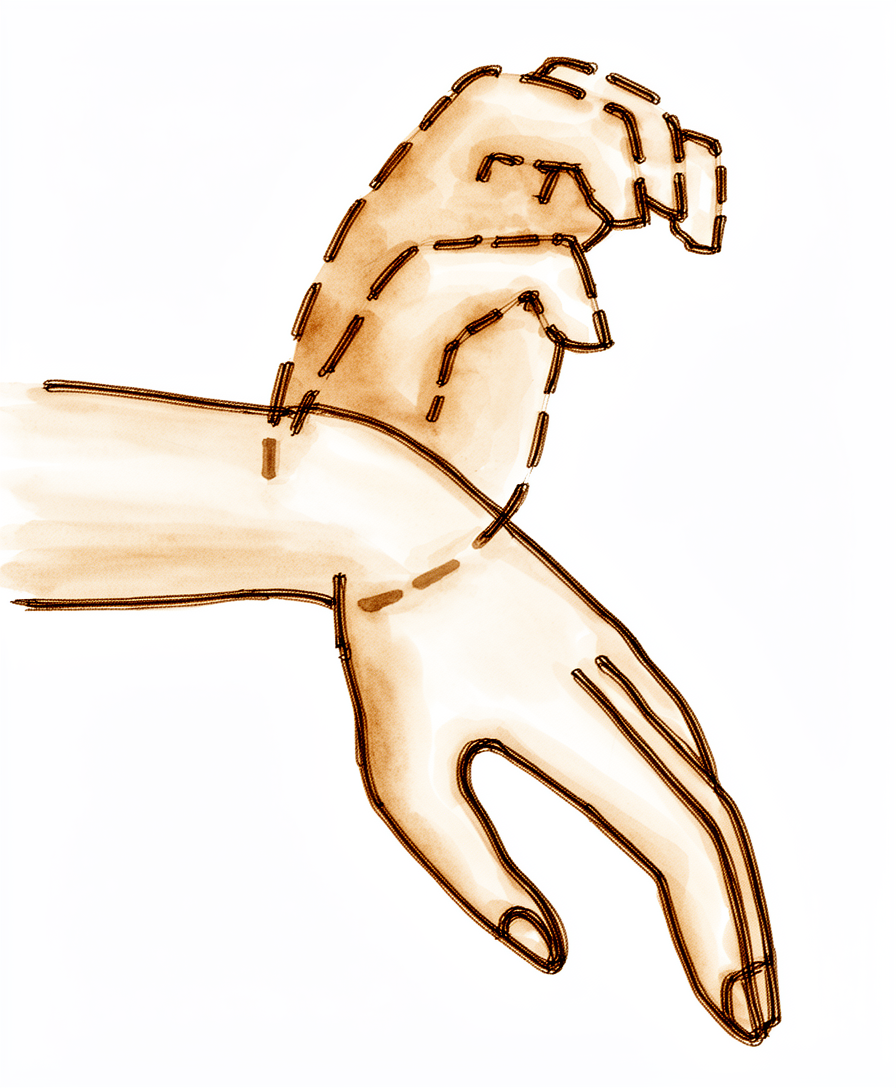
Endireitamento dos dedos com o punho flexionado (sinergia)
Deixe o seu punho cair para a frente (flexionado) e, em seguida, estique ativamente o dedo. Essa flexão do punho ajuda naturalmente a esticar o dedo, permitindo que ele se estenda facilmente, sem forçar. Este é o movimento essencial para evitar que o dedo fique permanentemente dobrado — faça-o sem falta. Estique o dedo apenas até onde for confortável, com a ajuda do punho; não force o dedo a ficar totalmente reto.
10 vezes, várias sessões por dia conforme orientação.
Posicionamento e retenção
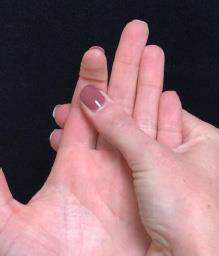
Use a outra mão para colocar suavemente o dedo operado num punho leve; em seguida, solte-o e mantenha essa posição com o mínimo esforço muscular — apenas o suficiente para manter o dedo ali. Isso estimula o tendão reparado de forma segura, pois o esforço de flexão é feito pela outra mão, e o seu próprio músculo precisa apenas manter a posição, sem puxar. Mantenha o esforço mínimo; relaxe completamente entre as repetições.
Mantenha por alguns segundos, 5–10 vezes, apenas conforme orientado pelo seu terapeuta de mão.
Kieran Hirpara 4.0
Bloqueio (posteriormente, caso haja aderências)
Um exercício avançado — somente se o seu tendão estiver “preso” e se o seu fisioterapeuta da mão o indicar. Para realizá-lo, estabilize o dedo segurando o osso logo abaixo da articulação que deseja mover; em seguida, flexione ativamente apenas aquela articulação (por exemplo, mantenha a parte central do dedo imóvel e curve apenas a ponta do dedo). Isso concentra o deslizamento do tendão numa única articulação, ajudando a libertar um tendão que ficou aderido. Não inicie esse exercício por conta própria — ele é mais exigente e só deve ser feito quando o terapeuta considerar seguro.
Conforme orientação do seu terapeuta de mão (apenas na fase posterior, se necessário).
Estes são os exercícios descritos no seu folheto informativo. Comece-os somente sob orientação do Dr. Hirpara e do seu terapeuta ocupacional, respeitando sempre os limites e a amplitude de movimento que lhe foram indicados. Cada sessão deve seguir a mesma sequência segura: primeiro, dobre suavemente o dedo de forma passiva; em seguida, faça o movimento ativo de “curvatura em gancho” e os deslizamentos tendinosos; por fim, estique o dedo com o punho dobrado para evitar que ele fique rígido na posição de curvatura. Tudo deve ser feito com suavidade: trata-se de deslizamentos, não de fortalecimento muscular. Os exercícios de “colocar e manter” e de “bloqueio” pertencem a fases posteriores e só devem ser iniciados quando o terapeuta ocupacional os indicar. Interrompa qualquer exercício que cause dor intensa na área da cirurgia, e nunca faça um punho fechado com força antes de receber autorização.
Seu protocolo clínico
O restante desta página descreve o protocolo clínico em etapas para a reabilitação após a reparação de tendões flexores, utilizando a tala curta de Manchester e um regime de movimentação ativa precoce (EAM). Esta seção deve ser entregue ao seu terapeuta de mão; cada fase começa com uma explicação simples, em linguagem acessível, sobre o que está ocorrendo. Nas primeiras semanas, a reparação ainda é frágil e fica sujeita à carga durante a flexão ativa e resistente dos dedos (formação de um punho fechado); por isso, o protocolo visa proteger contra flexões fortes, ao mesmo tempo em que estimula ativamente o deslocamento do tendão e a extensão das articulações interfalangeanas, evitando assim a contratura flexora, que é a principal complicação indesejada.
Antes de iniciar o tratamento, verifique o relatório cirúrgico do paciente e seu histórico médico; consulte também o cirurgião responsável quanto à zona da lesão, ao tipo de sutura utilizada e à resistência da reparação, à eventual liberação de polias e a qualquer reparação concomitante de nervos digitais. As reparações de tendões flexores realizadas pelo Dr. Hirpara são tratadas com a tala dorsal curta de Manchester, cuja extensão vai até a prega do punho, permitindo flexão e extensão completas do punho até 45°; as articulações metacarpofalangeanas são mantidas em 30° de flexão, enquanto as articulações interfalangeanas permanecem livres. Essa tala deve ser usada em tempo integral por seis semanas. As talas de extensão noturnas são indicadas apenas se surgir alguma deformidade de flexão nas articulações interfalangeanas.
Fase I — movimento ativo precoce com a tala curta de Manchester (semanas 0 a 6)
Nas primeiras seis semanas, o objetivo é proteger a sutura realizada, ao mesmo tempo em que se mantém o deslizamento tendíneo e se evita que o dedo desenvolva contratura flexora. A mão deve permanecer o tempo todo imobilizada na tala curta de Manchester (flexão total do punho, extensão até 45°, bloqueio da articulação metacarpofalangeana em 30°, articulações interfalangeanas livres). O movimento ativo começa por volta do dia 4–5. Cada sessão segue uma ordem definida: primeiro, flexão passiva das articulações interfalangeanas; em seguida, formação ativa do punho em “gancho”, iniciando na articulação distointerofalangeana com o punho estendido; por fim, extensão ativa dos dedos com o punho flexionado (movimento sinérgico, preventivo de contraturas). Não se deve forçar o movimento até os limites extremos nem realizar flexão com resistência.
Para o seu terapeuta da mão:
Instruções e precauções - Manter a mão o tempo todo na tala curta de Manchester: flexão total do punho, extensão até 45°, bloqueio da MCP em 30°, articulações IP livres; retirar a tala apenas para exercícios e higiene - Iniciar o movimento ativo precoce no dia 4–5 - Não forçar a flexão até os limites extremos nem realizar flexão com resistência; proibir o apertar, levantamento ou puxar objetos - Utilização leve e “segura” da mão, excluindo o dedo lesionado - Usar a tala de extensão noturna apenas se houver tendência ao desenvolvimento de deformidade flexora na articulação interfalangeana
Manejo - Ferida: manter curativos cirúrgicos conforme orientação; monitorar possível infecção - Edema: elevar a mão, realizar controle suave do edema digital e prevenir formação de aderências - Sequência de exercícios em cada sessão: (1) primeiro, flexão passiva completa das articulações IP; (2) formação ativa do punho em “gancho” iniciando na articulação DIP, com o punho estendido a 45°; (3) extensão ativa dos dedos com o punho flexionado (movimento sinérgico/tenodese, preventivo de contraturas); seguir orientações para adicionar o exercício de colocar e manter um punho levemente fechado - Reavaliação com o terapeuta da mão semanalmente durante esta fase
Critérios para avançar para a fase seguinte - Ferida cicatrizada; reparo mantido após seis semanas; deslizamento tendíneo preservado; ausência de contratura flexora significativa nas articulações interfalangeanas
Fase II — retirada da tala, trabalho nos tecidos moles e na cicatriz (semana 6)
Na sexta semana, a tala é retirada. O foco passa a ser a recuperação da amplitude de movimento passiva e ativa, a liberação de qualquer rigidez precoce e o manejo da cicatriz. O fortalecimento ainda não foi iniciado; a tala de extensão noturna é utilizada apenas se persistir alguma deformidade por flexão residual.
Para o seu fisioterapeuta:
Avaliações - Amplitude de movimento ativa e passiva nas articulações metacarpofalangeanas, interfalangeanas proximais e distais; presença de qualquer contratura por flexão nas articulações interfalangeanas; qualidade do deslizamento tendíneo (avaliar presença de aderências); avaliação da cicatriz e da ferida
Instruções e precauções - A tala é descontinuada na sexta semana (a tala de extensão noturna é usada apenas em caso de persistência de contratura por flexão nas articulações interfalangeanas) - Permitir uso funcional leve; ainda não é permitido apertar objetos com força ou aplicar carga
Manejo - Alongamento dos tecidos moles para restaurar a amplitude de flexão e extensão completa; iniciar manejo da cicatriz após sua cicatrização - Continuar os exercícios de deslizamento tendíneo; introduzir bloqueios caso aderências estejam limitando esse deslizamento - Permitir uso funcional leve da mão
Critérios para avanço - Ferida e cicatriz estabilizadas; amplitude de movimento passiva quase completa; deslizamento tendíneo mantido; prontidão para início gradual do fortalecimento
Fase III — fortalecimento e retorno às atividades (semanas 6 a 12)
Com a cicatrização já mais madura, inicia-se o alongamento gradual e o fortalecimento progressivo, que são intensificados de forma constante até o retorno às atividades sem restrições. O retorno total às atividades, sem limitações, costuma ocorrer por volta da décima a décima segunda semana, conforme critérios clínicos.
Para o seu fisioterapeuta da mão:
Avaliações - Amplitude de movimento global e eventuais contraturas remanescentes; força de preensão e pinça em comparação com o lado contralateral; resposta da área reparada à aplicação gradual de carga
Instruções e precauções - Inicie o alongamento gradual e o fortalecimento progressivo por volta da sexta semana; aumente a carga de forma gradual - Evite esforços de preensão máxima ou resistência súbita até que a força muscular seja plenamente restabelecida
Conduta terapêutica - Fortalecimento progressivo da preensão e da pinça (começando com massa de modelar e aumentando a resistência gradualmente); continue o alongamento caso persista alguma rigidez; mantenha os cuidados com a cicatriz conforme necessário - Avance para o retorno total às atividades na semana 10–12 - Considere encerrar o tratamento quando a amplitude de movimento e a força muscular atingirem níveis funcionais adequados e o retorno às atividades for viável; encaminhe novamente ao cirurgião responsável caso a recuperação estagne ou persista contratura de flexão
Critérios para retorno total às atividades - Amplitude de movimento funcional; força de preensão e pinça suficiente e quase simétrica em relação ao lado contralateral; uso da mão sem dor e sem restrições, geralmente na semana 10–12
Voltando ao trabalho e às atividades
É recomendado o uso leve e seguro da mão (excluindo o dedo lesionado) desde o início, enquanto o paciente estiver usando a tala, desde que nada puxe, agarre ou force a área reparada. Planeje contar com ajuda nas primeiras semanas, pois nas primeiras seis semanas não será possível agarrar, levantar ou carregar nada com a mão operada. A tala é retirada por volta da sexta semana, e a partir daí inicia-se um fortalecimento leve da mão.
Como não é permitido dirigir enquanto se usa a tala dorsal, providencie transporte para as primeiras seis semanas. A condução pode ser retomada após a retirada da tala (por volta da sexta semana), quando a força de preensão e o controle dos dedos forem adequados e após autorização médica na consulta de acompanhamento. O retorno a todas as atividades sem restrições, incluindo agarrar objetos com força e realizar tarefas mais pesadas, deve ocorrer por volta da décima a décima segunda semana, de forma gradual e avaliado pelo Dr. Hirpara e pelo fisioterapeuta da mão, com base na mobilidade e na força do dedo, e não apenas no tempo decorrido.
Após seguir este protocolo
Este protocolo complementa as orientações gerais de recuperação fornecidas pelo consultório; consulte também controle da dor pós-operatória, cuidados com a ferida e tratamento das cicatrizes. O plano em fases descrito acima está alinhado com as diretrizes publicadas sobre reabilitação com movimentação precoce após reparo de tendões flexores; sua recuperação contínua será orientada individualmente pelo Dr. Hirpara e pelo seu fisioterapeuta, conforme a evolução do seu dedo.
Evidence & references
This is the clinical evidence summary written for health professionals. It is technical, and it lists the research this page was built from. You do not need to read it to understand your treatment or to make a decision about it.
Flexor Tendon Repair — Procedure Outcomes & Post-operative Rehabilitation (Manchester Short-Splint Early Active Motion)
Topic scope: post-operative rehabilitation after primary surgical repair of a flexor tendon in the finger (especially zone II) with a robust multi-strand core repair, mobilised on an early-active-motion (EAM) regimen using the Manchester short splint. This is a repair of a divided structure that is at its weakest in the first weeks, so — unlike a decompression — the rehab is a carefully graded protected-but-moving pathway: enough controlled tendon excursion to prevent adhesion and flexion contracture, without the forceful flexion that ruptures the construct.
Defining principle of the rehab here: a repaired flexor tendon must glide to heal well but must not be loaded hard while it is weak. The two competing failures are rupture (from forceful or resisted flexion) and adhesion / PIP flexion contracture (from too little controlled motion). The Manchester short splint resolves this tension by leaving the wrist free: holding the wrist in 45° of extension minimises the work of flexion (Savage) so a gentle active hook fist glides the tendon at low tension, while permitting wrist flexion harnesses the extensor tenodesis effect to drive active IP extension — the single most effective lever against the PIP flexion contracture that is the characteristic nuisance complication of zone II repair. The deliberate sequence each session (passive IP flexion → active hook fist from the DIP, wrist extended → active IP extension, wrist flexed) is what makes the regimen safe and anti-contracture.
A. PROCEDURE / REPAIR OUTCOMES (early active motion vs passive mobilisation)
Flexor tendon repair is technically demanding and historically complication-prone (rupture and adhesion). Modern multi-strand core repairs combined with early active motion have shifted outcomes decisively toward better motion, with the central trade-off being a small rupture risk against markedly better range and function.
- Early active motion gives better finger motion than passive mobilisation, at a small rupture cost. A systematic review of controlled mobilisation after zone II repair found EAM regimens produced better total active motion than passive (Kleinert/Duran) protocols, with a modest increase in rupture (~5% vs ~4%) [Starr 2013]. The contemporary consensus favours active regimens with robust repairs. Moderate–strong (SR).
- The Manchester short splint specifically improves IP extension without increasing rupture. A clinical audit comparing the Manchester short splint (MSS) with a traditional full-length dorsal splint in uncomplicated zone II repairs found less PIP extension deficit (median 15° vs 28° at 6 weeks, p=0.003; 6° vs 18° at 12 weeks), a greater DIP flexion arc (59° vs 30°), and more excellent/good Strickland grades with the MSS. Rupture was not significantly different (2/45, 4.4% MSS vs 3/76, 3.9% traditional) [Peck 2014]. The headline advantage is the reduction in PIP flexion contracture. Moderate (single-centre non-randomised audit, Level III–IV).
- Forearm-based (wrist-blocking) splints constrain the very motion that prevents contracture. A comparison of splint designs found the Manchester short splint allowed greater PIP extension than forearm-based splints [Newington 2021], consistent with the mechanistic rationale that freeing the wrist enables the synergistic IP-extension move. Moderate.
- Mechanistic basis. Positioning the wrist in ~45° extension minimises the work of flexion required for active digital flexion, lowering the tension on the repair during the active hook fist [Savage 1988]; allowing wrist flexion recruits the extensor tenodesis effect to achieve full active IP extension at low cost — the anti-contracture engine of the regimen. Mechanistic.
B. REHABILITATION / THERAPY EVIDENCE
The rehab questions are (1) active vs passive early mobilisation, (2) splint design, and (3) how to structure the session to prevent both rupture and contracture. The evidence supports a robust repair mobilised with early active motion, a short wrist-free splint, and a fixed safe exercise sequence delivered through formal hand therapy.
- Early active motion is the modern default for robust repairs. Active regimens (partial-range combined passive/active, place-and-hold, true active flexion) outperform passive-only protocols on motion and are now standard where the core repair is strong enough to tolerate active glide [Tang 2021; Starr 2013]. Moderate–strong.
- A defined, low-tension active sequence is what makes EAM safe. Therapy guidance emphasises passive flexion first (preconditioning the joints), place-and-hold / active hook fist to glide the tendon at minimal tension, and synergistic wrist-flexion finger-extension to recover IP extension — the explicit structure of the Manchester regimen [Neiduski & Powell 2019; Saint John protocol]. Moderate (consensus + protocol cohorts).
- Splint design materially changes the contracture outcome. Shorter, wrist-free splinting that permits the synergistic extension move yields greater PIP extension than traditional or forearm-based dorsal splints [Peck 2014; Newington 2021]. Moderate.
- All flexor repairs are routed through formal hand therapy. The regimen is exercise-order- and tension-sensitive and is delivered with weekly hand-therapy review through the six-week splinted phase; it is not a self-directed pathway. Consensus / standard of care.
Recovery trajectory (expected, evidence-anchored)
| Phase | Window | Restraint | Hand use / therapy focus | Strength / load | Notes |
|---|---|---|---|---|---|
| I — Early active motion (in MSS) | Week 0–6 | Manchester short splint full-time (full wrist flexion, extension to 45°, MCP block 30°, IPs free) | Start day 4–5; each session: passive IP flexion → active hook fist from the DIP (wrist extended) → active IP extension (wrist flexed); place-and-hold as guided; weekly therapy | No resisted flexion, no gripping/lifting; light safe use excluding the injured finger | EAM drives glide + anti-contracture; rupture risk highest now |
| II — Splint off, soft-tissue / scar | Week 6 | Splint discontinued (night extension gutter only for residual IP flexion deformity) | Restore full passive/active ROM; scar management; tendon glides; blocking if adhesions | Still no resisted loading | PIP flexion contracture is the complication to chase down here |
| III — Strengthen / return | Week 6–12 | Restrictions progressively lifted | Graded stretching; progressive grip/pinch strengthening (putty → resistance) | Build grip/pinch gradually | Return to full / unrestricted activity 10–12 weeks, criterion-based |
(Phase windows mirror the precautions in the patient protocol; they are typical guides, not trial-derived deadlines.)
C. KEY CONTROVERSIES / EVIDENCE QUALITY
- Active vs passive early mobilisation. EAM gives better motion than passive Kleinert/Duran regimens at a small rupture-rate cost (~5% vs ~4%); it is the contemporary default for strong core repairs [Starr 2013; Tang 2021]. Moderate–strong.
- Manchester short splint vs traditional dorsal splint. The MSS audit shows clearly better IP extension and DIP flexion arc with no significant increase in rupture, but it is a single-centre, non-randomised audit (Level III–IV) — the authors themselves call for an RCT. The improvement is consistent with the mechanism (wrist-free synergistic extension), which raises confidence above the study design alone. Moderate; RCT recommended.
- The PIP flexion contracture is the outcome that discriminates protocols. Rupture rates are broadly similar across modern regimens; what separates them is residual PIP extension loss, and that is where the short, wrist-free splint and the synergistic-extension move earn their place [Peck 2014; Newington 2021]. Moderate.
- Repair strength gates the regimen. EAM is only safe with a robust multi-strand core repair; the protocol assumes that and is surgeon-confirmed per case (zone, suture configuration, pulley venting, concurrent nerve repair). Consensus.
D. EVIDENCE STRENGTH FLAGS (summary)
- MODERATE–STRONG (SR): early active motion produces better finger motion than passive mobilisation after zone II repair, at a small rupture-rate increase (~5% vs ~4%) [Starr 2013]; modern partial-range active regimens are the contemporary standard [Tang 2021].
- MODERATE: the Manchester short splint reduces PIP extension deficit (15° vs 28° at 6 wk, p=0.003) and improves DIP flexion arc without significantly increasing rupture (4.4% vs 3.9%) [Peck 2014]; greater PIP extension than forearm-based splints [Newington 2021]; defined low-tension exercise sequence [Neiduski & Powell 2019; Saint John].
- MECHANISTIC / CONSENSUS: wrist 45° extension minimises work of flexion [Savage 1988]; wrist flexion harnesses the extensor tenodesis effect for active IP extension (anti-contracture); exact phase timings are typical guides, not trial-derived; single-centre non-randomised MSS evidence — an RCT is recommended.
CITATIONS
RAG corpus (180,000+ Orthopaedic articles)
- Peck FH, et al. A comparative study of two methods of controlled mobilization of flexor tendon repairs in zone 2 (the Manchester short splint). Hand Ther. 2014. DOI: 10.1177/1758998314533306
- Starr HM, et al. Flexor tendon repair rehabilitation protocols: a systematic review. J Hand Surg Am. 2013. DOI: 10.1016/j.jhsa.2013.06.025
- Neiduski RL, Powell RK. Flexor tendon rehabilitation in the 21st century: a systematic review. J Hand Ther. 2019. DOI: 10.1016/j.jht.2018.06.001
- Tang JB. Rehabilitation after flexor tendon repair and others: a safe and efficient update. J Hand Surg Eur Vol. 2021. DOI: 10.1177/17531934211037112
- Tang JB, et al. (IFSSH flexor tendon committee report). J Hand Surg Eur Vol. 2014. DOI: 10.1177/1753193413500768
- Newington L, et al. Splinting after flexor tendon repair: comparison of the Manchester short splint with forearm-based splinting on PIP joint extension. Hand Ther. 2021. DOI: 10.1177/17589983211017584
Flexor tendon rehabilitation literature (URLs)
- Saint John flexor tendon protocol — early active motion regimen for zone II repair (protocol description and outcomes). PMC. https://www.ncbi.nlm.nih.gov/pmc/articles/PMC5142498/
- Savage R. The influence of wrist position on the minimum force required for active movement of the interphalangeal joints. J Hand Surg Br. 1988 (mechanistic basis: wrist extension minimises the work of flexion). https://doi.org/10.1016/0266-7681(88)90258-2