Patients › Rehabilitation
Excisão de gânglio da bainha do flexor
Um plano de recuperação rápido e baseado em movimentos após a excisão de um cisto sinovial da bainha do tendão flexor (cisto retinacular volar) na base do dedo: protege um pequeno ferimento na palma da mão enquanto se iniciam movimentos suaves dos dedos em poucos dias; posteriormente, inclui cuidados com a cicatriz e exercícios de preensão à medida que o ferimento vai cicatrizando.
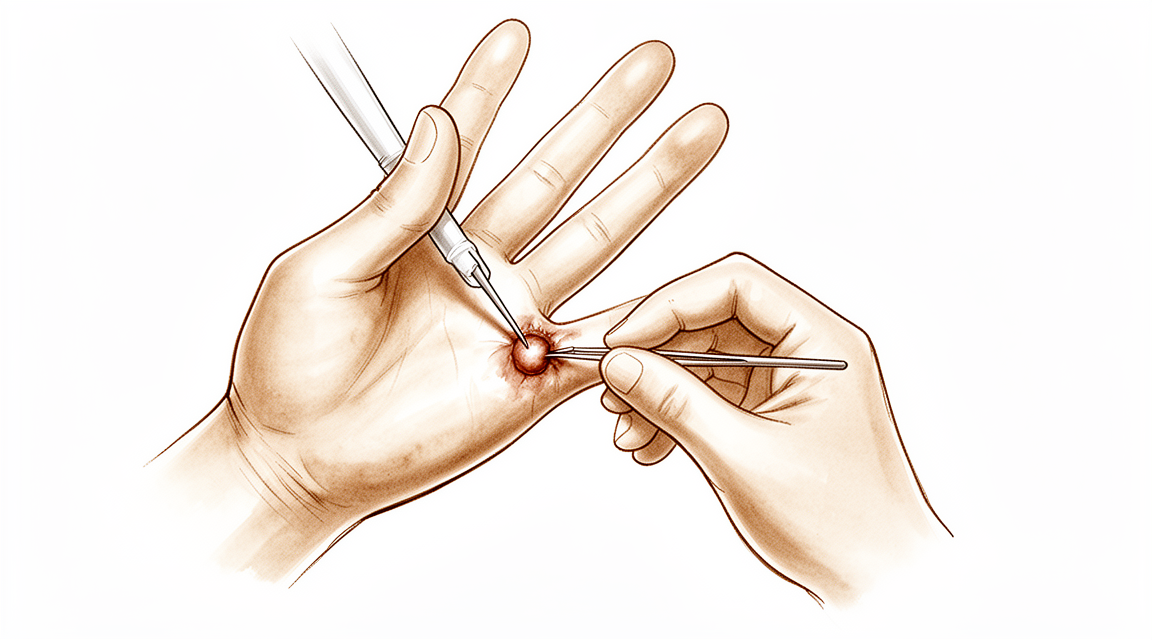
Este protocolo orienta sua recuperação após uma pequena cirurgia para remoção de um ganglion da bainha do flexor, um cisto firme localizado na base de um dedo, no lado palmar da mão, realizada pelo Dr. Kieran Hirpara no Mater Private Hospital Rockhampton. Ele começa com seu programa de exercícios domiciliares, seguido pelo protocolo clínico estruturado elaborado para seu terapeuta de mão; leve esta página ou seu arquivo PDF à sua primeira sessão de terapia, para que a reabilitação seja devidamente coordenada. Seu terapeuta de mão poderá ajustar o plano conforme a evolução da sua recuperação.
Caso tenha alguma dúvida ou preocupação quanto à ferida pós-cirúrgica, entre em contato com o consultório. Geralmente, é útil tirar uma foto da ferida e enviá-la por e-mail para análise.
O que esperar
Um cisto da bainha dos flexores (também chamado de cisto retinacular volar) é um nódulo pequeno, firme e frequentemente doloroso, geralmente com apenas alguns milímetros de diâmetro, que se desenvolve a partir da bainha por onde passam os tendões flexores, bem na base de um dedo, no lado da palma da mão (geralmente sobre a faixa firme chamada de polia A1, na dobra onde o dedo se une à palma). Ele fica fixo à bainha e não se move ao dobrar o dedo. Trata-se de um nódulo totalmente benigno (não canceroso), sendo um dos cistos mais comuns na mão e no punho.
A cirurgia consiste numa pequena excisão ambulatorial. Por meio de um corte curto em zigue-zague na palma da mão, o Dr. Hirpara remove o cisto juntamente com uma pequena porção da bainha tendínea da qual ele se originou. Os dois pequenos nervos e vasos sanguíneos que percorrem cada lado do dedo são cuidadosamente protegidos. A própria bainha não é reparada: deixá-la aberta é intencional e não enfraquece o dedo. A pele é fechada com pontos de sutura.
Como não há nada dentro do dedo que precise ser protegido durante a cicatrização, a recuperação é rápida: leva semanas, não meses. O plano de tratamento é simples: proteger o pequeno ferimento na palma, controlar o inchaço e iniciar movimentos suaves dos dedos dentro de poucos dias, para evitar rigidez e impedir que os tendões aderissem à cicatriz em formação. Uma vez que a ferida cicatrize, a massagem na cicatriz e a dessensibilização ajudam a normalizar a região, permitindo a recuperação da força de preensão. É comum sentir um pouco de formigamento ou sensibilidade ao redor do ferimento nos primeiros dias, à medida que os pequenos nervos cutâneos se recuperam; isso geralmente desaparece nas semanas seguintes.
Precauções e limitações
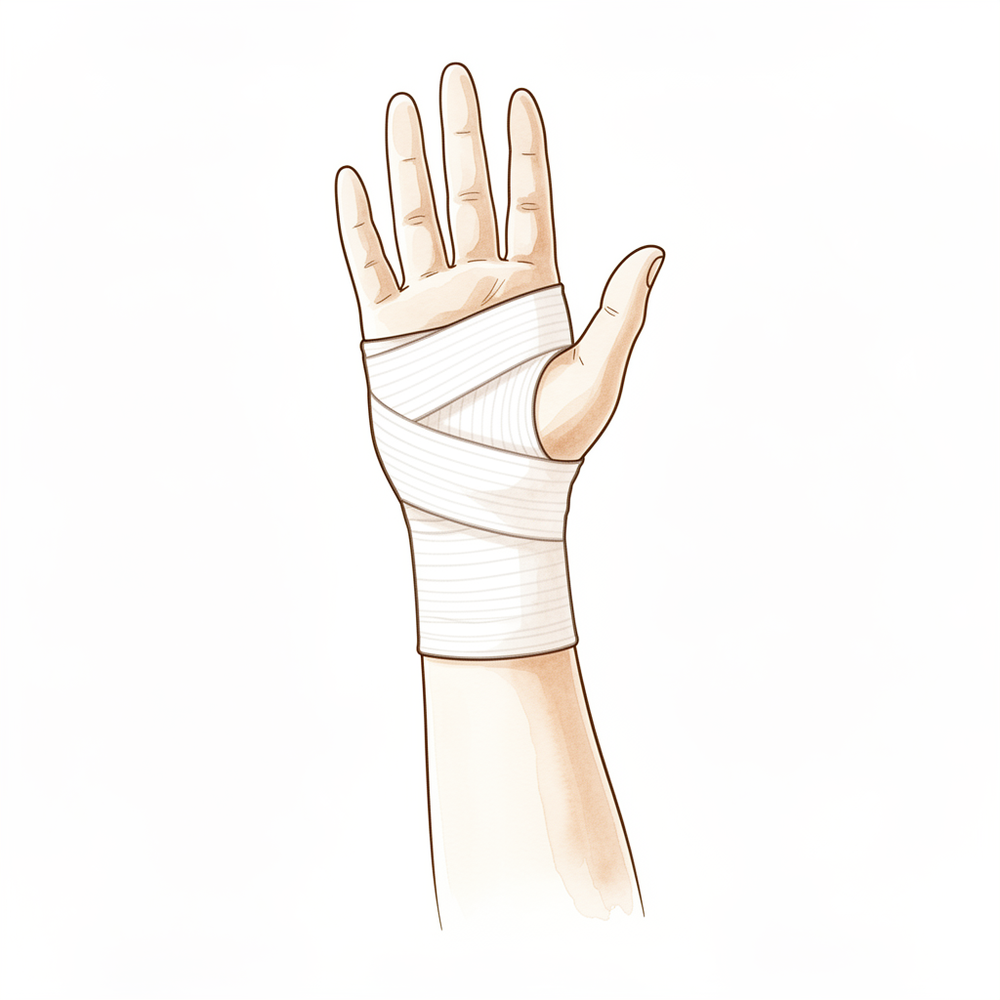
- Mantenha a compressa limpa e seca até que a ferida cicatrize e os pontos sejam retirados (geralmente por volta do dia 10–14). Não é necessário gesso, e normalmente não se usa tala; basta uma compressa macia.
- Faça movimentos suaves dos dedos nos primeiros dias (flexão, extensão e deslizamento dos tendões) para evitar rigidez e aderência dos tendões.
- Mantenha a mão elevada e utilize-a para tarefas cotidianas leves, dentro do limite do conforto.
- Não realize apertos fortes, levantamento de pesos ou pinçamentos vigorosos até que a ferida esteja estabilizada (cerca de duas a três semanas).
- Não massageie a cicatriz nem molhe a mão até que a ferida esteja totalmente curada.
- Não dirija enquanto a compressa impedir que você segure o volante com segurança; isso geralmente ocorre na primeira semana.
Para orientações sobre cuidados com a ferida, inchaço e cicatrização, consulte o guia de cuidados com a ferida do consultório.
Seus exercícios
Kieran Hirpara 4.0
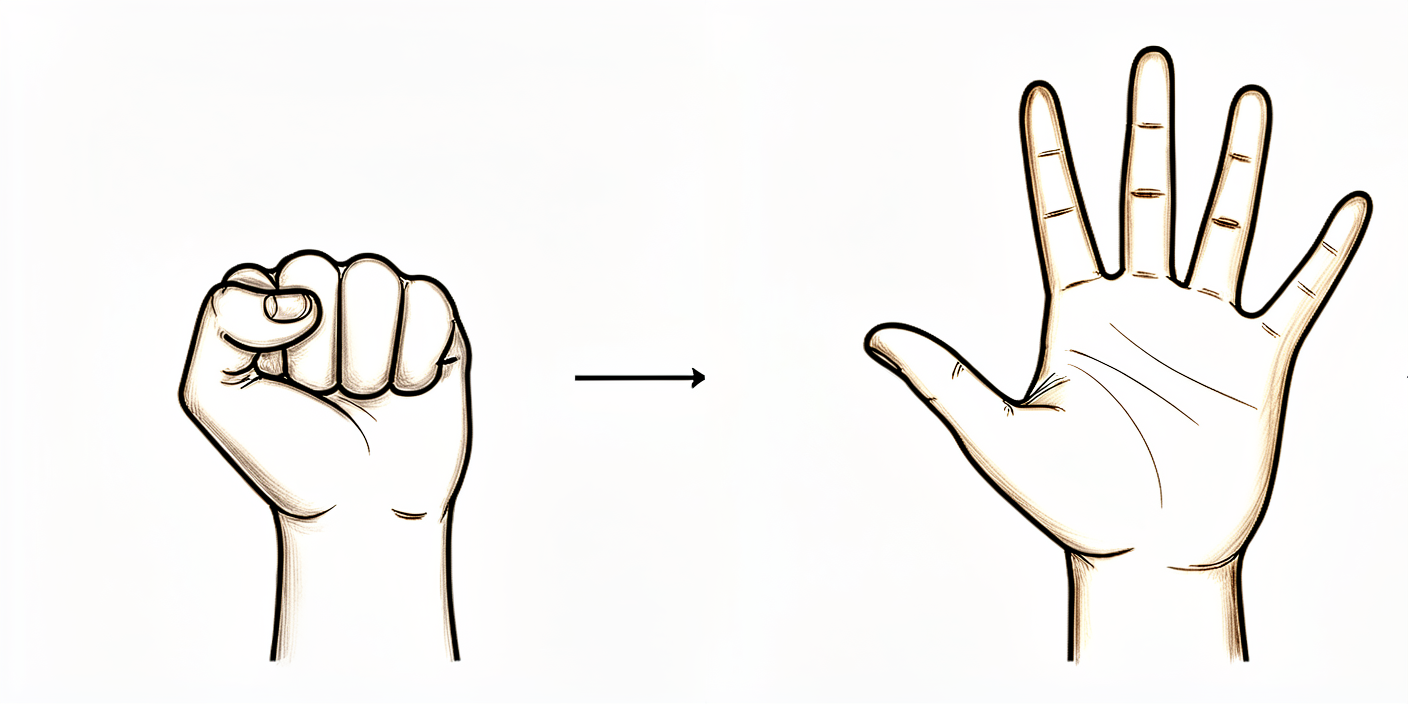
Movimentação dos dedos (fechar o punho suavemente e esticar os dedos)
Nos primeiros dias, faça, com cuidado, um punho fechado suavemente e depois estenda os dedos por completo, movendo-se lentamente e apenas até onde se sentir confortável. Esses movimentos precoces evitam que o dedo fique rígido e impedem que os tendões aderam à ferida em processo de cicatrização. Não force o movimento; deixe que o curativo e uma leve sensação de desconforto sirvam de guia.
10 vezes, 3–4 vezes ao dia, dentro dos limites do conforto
Kieran Hirpara 4.0
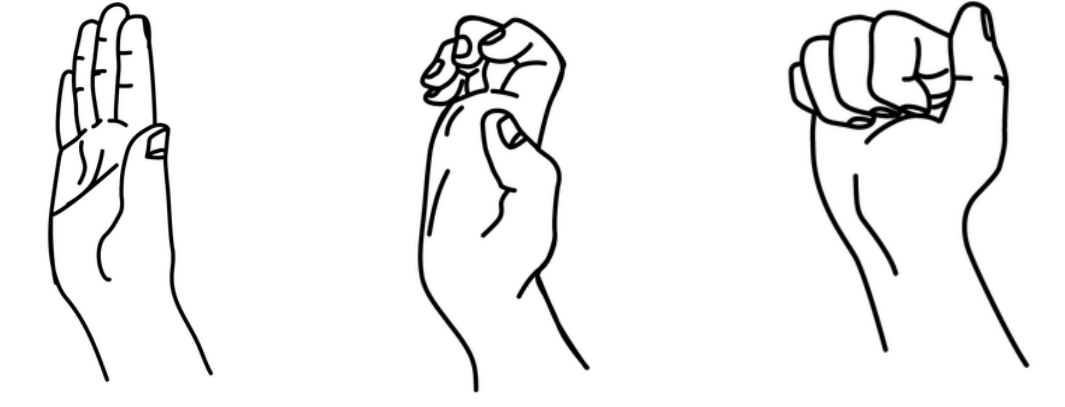
Deslizamentos tendinosos (gancho, punho fechado, reto)
Mova os dedos formando três posições: um gancho (dobre as pontas dos dedos e as articulações médias, mantendo os nós dos dedos retos, como uma garra), um punho fechado completo e, por fim, a mão esticada e plana. Essas posições fazem com que os tendões flexores deslizem pela área cirúrgica, mantendo-os livres para deslizar sem aderir. Execute cada movimento de forma suave e sem causar dor.
5 de cada posição, 3–4 vezes ao dia
Kieran Hirpara 4.0
Controle do inchaço
Na primeira semana, mantenha a mão elevada acima do nível do coração tanto quanto possível, e abra e feche os dedos suavemente para ajudar a eliminar o inchaço. Menos inchaço significa dedos mais fáceis de mover, mais confortáveis e uma recuperação mais tranquila. É normal haver um pouco de inchaço na palma da mão nos primeiros dias.
Eleve a mão com frequência ao longo do dia; faça movimentos suaves de bombeamento dos dedos a cada hora, mais ou menos, enquanto estiver acordado.
Kieran Hirpara 4.0
Massagem cicatricial e dessensibilização
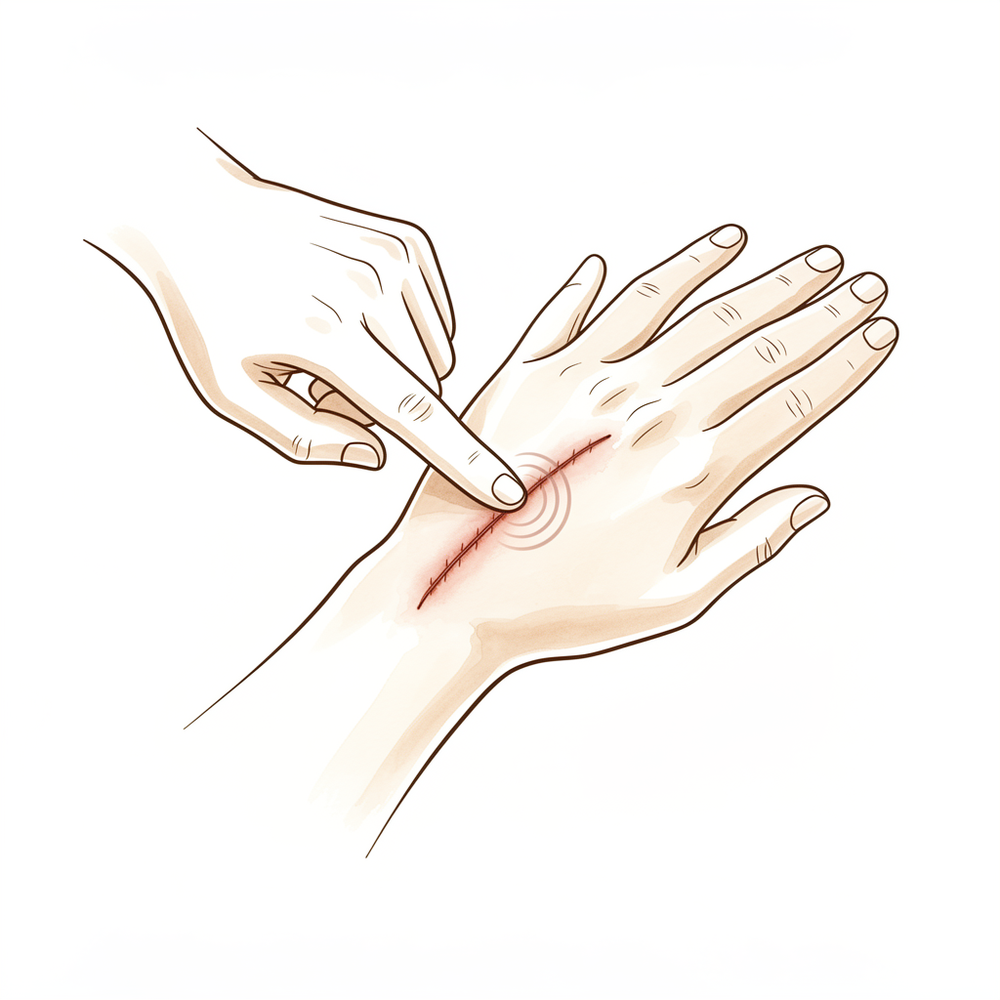
Após a ferida estar completamente cicatrizada e os pontos retirados (geralmente após cerca de duas semanas), aplique um pouco de hidratante na cicatriz, fazendo pequenos círculos firmes por alguns minutos; em seguida, passe no local diferentes texturas (um pano macio e depois uma toalha). Isso amacia a cicatriz e reduz a sensibilidade e o formigamento que são comuns no início, à medida que os pequenos nervos da pele se recuperam. NÃO massageie uma ferida aberta ou ainda em processo de cicatrização.
Alguns minutos, 2–3 vezes ao dia, após a cicatrização completa.
Kieran Hirpara 4.0
Fortalecimento da preensão
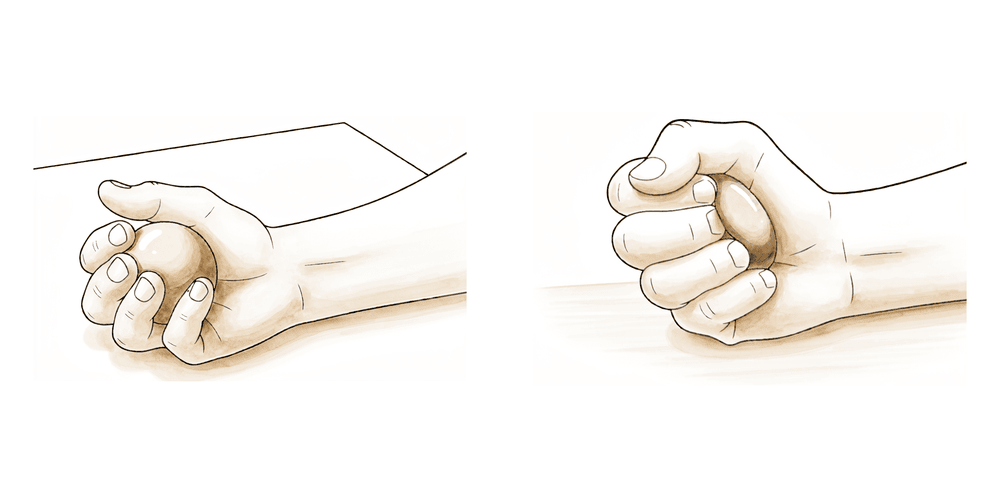
Um exercício posterior — comece após duas a três semanas, quando a ferida já estiver cicatrizada e o fisioterapeuta da mão der sua aprovação. Aperte suavemente uma bola macia ou massa terapêutica, mantenha a pressão por alguns segundos e depois relaxe, aumentando gradualmente a intensidade do esforço. Isso ajuda a recuperar a força de preensão para uso pleno da mão. Interrompa o exercício caso sinta dor intensa na área da ferida.
10–15 compressões, 2–3 vezes ao dia (a partir de ~2–3 semanas)
Estes são os exercícios descritos no seu folheto informativo. Comece a realizá-los somente sob orientação do Dr. Hirpara e do seu fisioterapeuta, respeitando todos os limites que lhe foram estabelecidos. Os exercícios iniciais (fazer um punho fechado e abrir os dedos suavemente, deslizamentos tendíneos e controle do inchaço) mantêm os dedos em movimento e as tendões ativas já nos primeiros dias, o que é o fator mais importante para uma recuperação tranquila. A massagem na cicatriz e a dessensibilização devem ser iniciadas somente após a ferida estar totalmente curada; o fortalecimento da preensão pertence a uma fase um pouco posterior (por volta de duas a três semanas). Interrompa qualquer exercício que cause dor intensa na área da ferida.
O seu protocolo clínico
O restante desta página descreve o protocolo clínico em etapas para a reabilitação após a excisão de um gânglio da bainha do flexor (cisto retinacular volar). Esta seção deve ser entregue ao seu terapeuta da mão; cada fase começa com uma explicação simples, em linguagem acessível, sobre o que está ocorrendo. Trata-se de uma excisão, não de um reparo: a bainha do tendão permanece aberta, sem nenhum tipo de estrutura protetora. O programa adota uma abordagem de movimentação precoce, focada na proteção da ferida, controle do edema, deslizamento do tendão para evitar aderências, além de cuidados com a cicatriz e dessensibilização – sem imobilização protetora.
Antes de iniciar o tratamento, verifique o relatório cirúrgico e o histórico médico do paciente, e consulte o cirurgião responsável quanto ao dedo afetado, à extensão da excisão da bainha e à integridade dos feixes neurovasculares digitais. Na técnica utilizada pelo Dr. Hirpara, realiza-se uma incisão palmar tipo Bruner (em zigue-zague) sobre a bainha proximal/A1, removendo-se o cisto juntamente com uma porção da bainha; a bainha não é reparada e não há imobilização, exceto por um curativo macio. A ocorrência de parestesia transitória nos nervos digitais é comum e autolimitada.
Fase I — proteção da ferida e mobilização precoce (semana 0 a ~1)
Na primeira semana, o objetivo é proteger a pequena ferida na palma da mão e iniciar a movimentação dos dedos o quanto antes, para evitar rigidez ou formação de aderências tendinosas. A mão é tratada com curativo macio e volumoso, sem tala; deve ser mantida elevada, e a mobilização ativa suave dos dedos deve ser iniciada dentro de poucos dias.
Para o seu fisioterapeuta:
Instruções e precauções - Utilizar apenas curativo macio e volumoso, sem talha; mantê-lo limpo e seco até a retirada dos pontos (~dia 10–14) - Proteger a ferida de cargas pesadas; permitir uso leve e sem sobrecarga da mão, dentro do limite do conforto - Informar ao paciente que a parestesia ou hipersensibilidade transitória dos nervos digitais ao redor da ferida é comum e autolimitada
Tratamento - Ferida: aplicar o curativo cirúrgico conforme orientação; monitorar sinais de infecção - Edema: manter a mão elevada acima do nível do coração, realizar movimentos suaves de bombeamento dos dedos e aplicar gelo conforme necessário - Exercícios: movimentação ativa suave dos dedos em amplitude completa (fechar o punho suavemente e estender totalmente os dedos) e deslizamentos tendinosos (posição de gancho, punho fechado ou mão estendida), iniciados dentro de poucos dias; também incluir movimentação ativa dos dedos não afetados, do polegar e do punho; uso funcional leve
Critérios para avançar para a fase seguinte - Ferida em processo de cicatrização, sem sinais de infecção; amplitude de movimento ativa inicial confortável; pronto para movimentação ativa completa ou movimentação passiva suave, conforme permitido pela cicatrização
Fase II — movimentação completa, controle do edema e tratamento da cicatriz (semanas ~1 a 3)
A partir da primeira semana, a amplitude de movimento é aumentada para alcançar a amplitude ativa completa e um movimento passivo suave (punho fechado por completo e extensão total); após a cicatrização total da ferida e remoção dos pontos, inicia-se a massagem da cicatriz e a dessensibilização. O controle do edema prossegue.
Para o seu fisioterapeuta:
Avaliações - Amplitude de movimento ativa e passiva dos dedos (objetivo: punho fechado por completo e extensão total); estado da ferida/cicatriz; inchaço; sensibilidade dos nervos digitais
Instruções e precauções - Avançar para movimentação ativa completa e movimento passivo suave dos dedos conforme a tolerância do paciente - Iniciar massagem da cicatriz e dessensibilização somente após a cicatrização total da ferida - Evitar apertos fortes e pinçamentos vigorosos até que a ferida esteja estabilizada
Tratamento - Exercícios: fechar o punho por completo e extensão total; continuação dos deslizamentos tendíneos; alongamento passivo suave em caso de rigidez residual - Cicatriz: massagem da cicatriz + técnicas de dessensibilização após cicatrização; controle do edema conforme necessário
Critérios para avançar para a fase seguinte - Movimentação ativa completa e sem dor; ferida cicatrizada; cicatriz estabilizada; pronto para aumentar a carga de exercícios
Fase III — fortalecimento e retorno às atividades (semanas ~3 a 6)
Após a cicatrização da ferida e recuperação total da mobilidade (por volta da terceira semana), inicia-se o fortalecimento da preensão e da pinça, sendo esse processo gradualmente intensificado até alcançar o uso total e sem restrições. A maioria dos pacientes retorna às atividades normais entre a quarta e a sexta semana, com um acompanhamento de rotina por volta dos dois meses.
Para o seu terapeuta da mão:
Avaliações - Comparação da força de preensão e pinça com o lado contralateral; presença de dor ou sensibilidade residual na cicatriz; exigências funcionais específicas de cada tarefa
Instruções e precauções - Inicie o fortalecimento da preensão e da pinça por volta da semana 2–3, após estabilização da ferida; aumente a carga gradualmente - Avance para o uso total e sem restrições conforme o paciente se sinta confortável e ganhe força
Tratamento - Exercícios: compressão de massa de modelar ou bola macia para fortalecer a preensão, exercícios de fortalecimento da pinça, carga funcional progressiva; mantenha também os exercícios para suavização da cicatriz e redução da sensibilidade - Dê alta ao paciente quando a mobilidade for total, a preensão confortável e quase simétrica; realize o acompanhamento cirúrgico de rotina por volta dos 2 meses - Encaminhe novamente ao médico responsável caso a recuperação estagne, a cicatriz permaneça muito sensível ou houver suspeita de recorrência
Critérios para retorno total às atividades - Mobilidade total e sem dor; preensão e pinça confortáveis; cicatriz estabilizada; capacidade de atender às exigências laborais e de atividade diária
Retorno às atividades e ao trabalho
O uso leve das mãos no dia a dia (comer, escrever, cuidados pessoais básicos) é incentivado desde o início, desde que feito com conforto e sem exigir aperto forte ou pinçamento forçado na área da incisão. A maioria das pessoas consegue realizar suas tarefas diárias em poucos dias. Dirigir geralmente pode ser retomado por volta de uma semana, desde que o paciente consiga segurar o volante com firmeza e conforto, sem restrições impostas pelo curativo; isso deve ser confirmado pelo Dr. Hirpara na consulta de acompanhamento.
Os exercícios de aperto e fortalecimento começam por volta de duas a três semanas, quando a ferida já estiver cicatrizada, sendo progressivamente intensificados. A capacidade de realizar atividades completas e sem restrições costuma ser alcançada entre quatro e seis semanas. O retorno ao trabalho de escritório geralmente ocorre em poucos dias a uma semana; para trabalhos manuais mais pesados, segue-se a mesma progressão gradual, à medida que a força de preensão retorna. Geralmente, uma consulta de acompanhamento é agendada por volta dos dois meses.
Após seguir este protocolo
Este protocolo complementa as orientações gerais de recuperação fornecidas pelo consultório: consulte controle da dor pós-operatória, cuidados com a ferida e tratamento das cicatrizes. Como este cisto sinovial está localizado na base do dedo, sobre a polia A1, a recuperação apresenta muitas semelhanças com outros procedimentos pequenos na base do dedo, do lado da palma da mão, como a liberação do dedo em gatilho. O plano em etapas acima baseia-se nas orientações publicadas após a excisão de cistos sinoviais; a continuidade da sua recuperação será orientada individualmente pelo Dr. Hirpara e pelo seu fisioterapeuta, conforme a evolução do seu dedo.
Evidence & references
This is the clinical evidence summary written for health professionals. It is technical, and it lists the research this page was built from. You do not need to read it to understand your treatment or to make a decision about it.
Flexor Sheath Ganglion Excision — Lesion, Procedure Outcomes & Post-operative Rehabilitation (Volar Retinacular Cyst)
Topic scope: post-operative rehabilitation after surgical excision of a flexor tendon sheath ganglion (volar retinacular cyst / "seed" ganglion) at the base of a finger — a small, firm, often tender cyst arising from the flexor sheath, commonly over the A1 pulley at the metacarpophalangeal crease of the middle or ring finger. This is an excision, not a reconstruction: the cyst is removed with a small cuff of sheath, the sheath is not repaired, and there is no construct to protect — so the rehab is a brief early-motion pathway built around wound protection, oedema control, tendon gliding and scar/desensitisation work rather than months of protected healing.
Defining principle of the rehab here: a flexor sheath ganglion is a benign cyst tethered to the tendon sheath; excising it (with a cuff of sheath) removes the lesion without creating anything that needs to heal under protection. The sheath is meant to be left open — partial sheath excision does not weaken the digit or cause bowstringing at this level — so immediate, unrestricted light use and early gentle finger motion are the default. The therapy programme exists to keep the flexor tendons gliding through the healing palm wound so they do not adhere, to settle the transient digital-nerve hypersensitivity that commonly follows dissection between the neurovascular bundles, and to mature the scar — not to immobilise. The single branch point is wound healing: scar massage and grip loading wait until the wound is healed and sutures are out.
A. PROCEDURE OUTCOMES (excision of flexor sheath ganglion)
Excision of a flexor sheath ganglion is a small, reliable day-case hand operation: the great majority of patients are rendered symptom-free with a low recurrence rate, and the principal trade-off is the common but self-limiting transient digital-nerve paraesthesia from dissecting the cyst out from between the digital neurovascular bundles.
- Flexor sheath (volar retinacular) ganglions are a well-defined, common entity. They account for roughly 5–16% of ganglions of the hand and wrist, presenting as a small (typically 3–8 mm), firm, often tender nodule fixed to the flexor sheath at the digit base — classically over the A1/A2 pulley region — that does not move with the tendon [JAAOS 2022; JAAOS 1999; Hand Clin 2004]. Well-established (lesion nature).
- Surgical excision gives reliable symptom relief with low recurrence. Level-IV case series of flexor sheath / volar retinacular ganglion excision report durable resolution and low recurrence after complete excision of the cyst with a cuff of sheath; recurrence is the main long-term concern and is uncommon when the lesion and its sheath origin are fully removed [Hand 2007; J Hand Surg series; PMC surgical series]. Moderate (level-IV case series).
- Transient digital-nerve paraesthesia is the principal complication. Because the cyst sits immediately deep to, and is dissected free from, the digital nerves, temporary numbness or tingling in the finger is the commonest reported post-operative event; it is typically self-limiting and settles over weeks. True nerve injury is rare with careful protection of both bundles [Hand 2007; volar retinacular series; Medscape]. Moderate (case series + expert review).
- Partial excision of the sheath is biomechanically tolerated. Removing the cyst with a small cuff of the flexor sheath at the A1 level does not produce clinically significant bowstringing or weakness, which is the anatomical basis for not repairing the sheath and for an early-motion rehab without protected immobilisation [Hand Clin 2004 (palmar digital ganglia / A1–A2 origin)]. Mechanistic.
B. REHABILITATION / THERAPY EVIDENCE
There are no randomised rehab trials specific to flexor sheath ganglion excision; the post-operative programme is low-level / expert-consensus, but it is strikingly consistent across hand-therapy and surgical sources: dressing only (no splint), early gentle finger motion within days, tendon gliding to prevent adhesion, scar massage and desensitisation once healed, and return to full use by ~4–6 weeks.
- Dressing-only, no routine splinting. Aftercare guidance for ganglion (including flexor sheath) excision describes a soft dressing with no immobilisation, with the patient encouraged to move the finger early — there is no construct to protect, so splinting is not required and would risk stiffness [MSA aftercare; Medscape]. Weak / consensus.
- Early active finger motion and tendon gliding prevent stiffness and adhesion. Starting gentle active fist/extension and tendon glides within the first few days keeps the flexor tendons gliding through the palm wound so they do not adhere to the healing scar — the same adhesion-prevention rationale that underpins early-motion hand rehab generally. The benefit is mechanistic / consensus rather than trial-proven for this lesion [hand-therapy aftercare sources]. Weak (mechanism sound).
- Scar massage and desensitisation, started once healed, settle the wound and digital-nerve hypersensitivity. Palm scars at the digit base are prone to tenderness, and the transient digital-nerve paraesthesia from the dissection responds to graded desensitisation; both begin only after the wound is fully healed and sutures are out (~day 10–14) [MSA aftercare; Medscape]. Weak / consensus.
- Grip loading and full return are early. Because nothing is repaired, gripping and strengthening begin once the wound has settled (~2–3 weeks) and full unrestricted use is typically reached by ~4–6 weeks, with routine follow-up around two months — consistent across aftercare sources [MSA aftercare; PMC series; Medscape]. Weak / consensus.
Recovery trajectory (expected, evidence-anchored)
| Phase | Window | Restraint | Hand use / therapy focus | Strength / load | Notes |
|---|---|---|---|---|---|
| I — Wound protection & early motion | Week 0–1 | Soft dressing, no splint | Elevate above heart; gentle active fist + full extension and tendon glides within a few days; protect wound; light functional use | Light unloaded use only | Transient digital-nerve tingling is expected, not a complication |
| II — Full motion, oedema & scar work | Week ~1–3 | Heavy-grip avoidance | Progress to full active + gentle passive motion (full fist, full extension); scar massage + desensitisation once wound healed; oedema control | No forceful gripping/pinching until wound settled | Sutures out ~day 10–14; scar work only after full healing |
| III — Strengthening & return | Week ~3–6 | Restrictions lifted | Progress grip/pinch loading; task-specific use | Grip/pinch strengthening from ~2–3 wk; full unrestricted use by ~4–6 wk | Routine follow-up ~2 months; driving ~1 wk once gripping the wheel comfortably (surgeon discretion) |
(Phase windows mirror the precautions and return milestones in the patient protocol; they are typical guides, not trial-derived deadlines.)
C. KEY CONTROVERSIES / EVIDENCE QUALITY
- Lesion nature is well-established. The flexor sheath / volar retinacular ganglion is a recognised, characterised entity (firm, sheath-tethered, A1-pulley region, 5–16% of hand/wrist ganglions); its diagnosis and origin are not in dispute. Strong (descriptive).
- Excision outcomes are good but evidenced at level IV. Low recurrence and reliable symptom relief come from case series, not controlled trials — adequate for a small benign lesion, but the evidence tier is modest. Moderate (level-IV).
- Transient digital-nerve paraesthesia vs true nerve injury. Temporary tingling is common and self-limiting; framing it for patients up front avoids alarm, while careful intra-operative protection of both neurovascular bundles keeps true injury rare. Moderate.
- The rehab protocol is consensus, not trial-derived. No RCTs govern post-excision therapy; the dressing-only, early-motion, scar-care, ~4–6-week-return pathway is consistent across sources but rests on expert consensus and the general principles of early-motion hand rehab. Weak / consensus.
- Recurrence is the main long-term failure mode and is uncommon after complete excision of the cyst with its sheath origin; a residual or recurrent lump warrants reassessment rather than prolonged therapy. Moderate.
D. EVIDENCE STRENGTH FLAGS (summary)
- WELL-ESTABLISHED (descriptive): the nature, location and prevalence (5–16% of hand/wrist ganglions) of flexor sheath / volar retinacular ganglions.
- MODERATE (level-IV case series): reliable symptom relief and low recurrence after excision; transient digital-nerve paraesthesia as the principal, self-limiting complication; recurrence as the main long-term failure mode.
- WEAK / CONSENSUS: the dressing-only, early-motion, scar-care rehab programme and its phase timings (consistent across aftercare sources, mechanistically rationalised, but not trial-derived); ~4–6-week full return and ~1-week driving (surgeon discretion).
CITATIONS
RAG corpus (180,000+ Orthopaedic articles)
- Ganglions of the hand and wrist. J Am Acad Orthop Surg. 2022. DOI: 10.5435/jaaos-d-22-00105
- Ganglions of the hand and wrist. J Am Acad Orthop Surg. 1999. DOI: 10.5435/00124635-199907000-00003
- Surgical excision of flexor sheath ganglions of the hand: results and outcomes. Hand (N Y). 2007. DOI: 10.1007/s11552-007-9028-4
- Volar retinacular ganglions of the hand: a clinical series. J Hand Surg Am. 2011. DOI: 10.1016/j.jhsa.2011.05.013
- Palmar digital ganglia and the A1–A2 sheath origin. Hand Clin. 2004. DOI: 10.1016/j.hcl.2004.03.015
Flexor sheath ganglion / rehabilitation literature (URLs)
- Surgical excision of flexor sheath ganglions — case series (full text). PMC. https://pmc.ncbi.nlm.nih.gov/articles/PMC2527143/
- Volar retinacular ganglions of the hand. Journal of Hand Surgery (American). https://www.jhandsurg.org/article/S0363-5023(11)00627-7/abstract
- Ganglion cyst excision — post-operative aftercare (dressing-only, early motion, scar care, ~4–6 week return). Mississippi Sports & Arthritis (MSA) Hand Center. https://msapc.com/hand-center/aftercare/ganglion-cyst-excision/
- Ganglion treatment (surgical excision, recurrence and transient digital-nerve paraesthesia). Medscape. https://emedicine.medscape.com/article/1243525-treatment