Patients › Elbow
Síndromes do pronador, do lacerto e do nervo interósseo anterior
Median nerve trouble high in the forearm — forearm aching with hand tingling (pronator) or weakness pinching the thumb and index (AIN), and how each is treated.
O que você está sentindo
Todas essas condições resultam da compressão do nervo mediano em uma região alta, ao redor do cotovelo e na parte superior do antebraço, e não no punho, onde a compressão é mais comum (síndrome do túnel carpal). Cada uma delas apresenta sintomas bem distintos.
A síndrome do pronador costuma causar uma dor profunda, latejante e cansativa na parte frontal do antebraço; essa dor geralmente piora com movimentos repetitivos de torção do antebraço (como ao girar uma chave de fenda ou uma chave, ou ao torcer um pano) ou com apertos fortes. Você também pode sentir formigamento ou dormência no polegar, indicador e dedo médio, bem como na palma da mão e na base carnosa do polegar. Diferentemente da síndrome do túnel carpal, ela normalmente não causa despertares noturnos, e o desconforto é sentido mais no antebraço do que na mão.
A síndrome do lacertus é um termo mais recente usado para descrever uma forma específica dessa mesma compressão alta; nesse caso, o responsável é uma faixa fibrosa firme localizada na dobra do cotovelo, chamada lacertus fibrosus. Os sintomas típicos incluem fadiga rápida da mão e dificuldade para segurar objetos — escrever, digitar ou usar ferramentas torna-se um esforço — além de dor no antebraço e sensibilidade acentuada logo abaixo da dobra do cotovelo. Essa condição também é uma das hipóteses que consideramos quando a cirurgia para síndrome do túnel carpal não resolve os sintomas esperados.
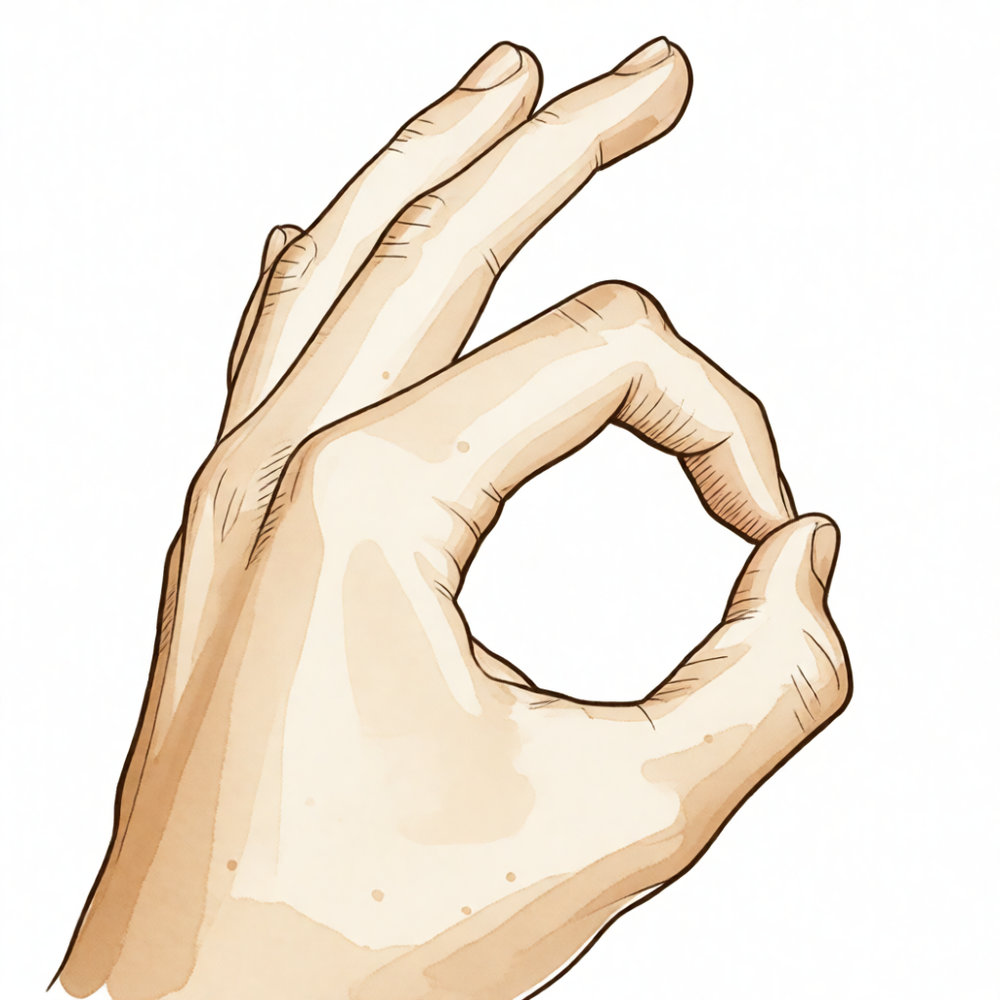
A síndrome do nervo interósseo anterior (NIA) é diferente das demais. Geralmente não causa dormência ou formigamento; o problema principal é a fraqueza muscular: os músculos responsáveis por dobrar a ponta do polegar e do indicador deixam de funcionar adequadamente. O sinal clássico é a incapacidade de formar o sinal “OK” normal: ao tentar tocar a ponta do polegar à ponta do indicador, a pinça resultante torna-se plana ou triangular. Algumas pessoas notam, inicialmente, um período breve de dor no braço ou no ombro, seguido da aparição da fraqueza.
O que está realmente acontecendo
Um único nervo grande, o nervo mediano, percorre desde o pescoço, descendo pelo braço, passando pela frente do cotovelo e chegando à mão. Ele transmite tanto sensação (para parte da mão) quanto força (para diversos músculos).
Na síndrome do pronador, o nervo é comprimido ou irritado ao atravessar o espaço lotado no cotovelo e na parte superior do antebraço. Ele pode ser comprimido por uma faixa de tecido apertada próxima à dobra do cotovelo (o lacertus fibrosus — quando essa faixa é a causa, a condição passa a ser chamada cada vez mais de síndrome do lacertus), ou ao passar entre ou sob os músculos responsáveis por virar a palma da mão para baixo. Como a compressão ocorre em um ponto alto (acima do pulso), os sintomas afetam a palma da mão e a base do polegar; esse é o principal indício que a diferencia da síndrome do túnel cárpico.
Na síndrome do AIN, o problema afeta um ramo profundo do nervo mediano que transmite apenas força, sem sensação; por isso há fraqueza muscular, mas nenhuma dormência. Em muitas pessoas, não se trata simplesmente de uma compressão, mas sim de uma irritação ou inflamação do nervo (às vezes após uma doença viral ou sem motivo aparente), fato que explica por que a condição costuma se resolver espontaneamente.
O que podemos fazer a respeito
No Mater Private Hospital Rockhampton, o Dr. Kieran Hirpara lidera nossa equipe especializada em membros superiores na avaliação dessas condições, por meio de uma anamnese detalhada e exame físico. Geralmente, iniciamos com tratamentos não cirúrgicos, reservando a cirurgia apenas para os casos em que os sintomas persistirem apesar do repouso e das mudanças nas atividades diárias.
Para todas essas condições, o primeiro passo quase sempre é o tratamento não cirúrgico; no caso da síndrome do nervo interósseo anterior, essa paciência costuma trazer bons resultados.
Acalmar a situação. Isso significa modificar as atividades que pioram os sintomas (reduzir torções repetitivas e o aperto excessivo), às vezes usar uma tala para manter o braço em repouso, além de dar tempo para o nervo se recuperar. Medidas simples para aliviar a dor também ajudam bastante.
Acompanhamento clínico. A fraqueza causada pela síndrome do nervo interósseo anterior costuma melhorar espontaneamente ao longo de alguns meses; por isso, o plano habitual é aguardar, geralmente por três a seis meses, antes de considerar qualquer intervenção. Muitas pessoas recuperam a força nesse período sem precisar de cirurgia. Testes como estudos do nervo ou exames de imagem podem ser realizados para confirmar o diagnóstico e acompanhar a recuperação.
A cirurgia é indicada apenas para a minoria de pacientes que não apresentam melhora: casos de síndrome do pronador que permanecem dolorosos mesmo após repouso e mudanças nas atividades, ou fraqueza causada pela síndrome do nervo interósseo anterior que não mostra sinais de recuperação após o período de observação. A operação visa liberar as estruturas que exercem pressão sobre o nervo, permitindo sua recuperação. Quando a compressão ocorre especificamente na banda lacertus, muitas vezes é possível realizar a cirurgia por meio de uma pequena incisão sob anestesia local, enquanto o paciente permanece acordado — o que permite verificar imediatamente a força dos músculos afetados. A recuperação costuma ser rápida.
O que esperar
Em geral, essas condições têm um prognóstico favorável. A síndrome do nervo interósseo anterior, em particular, tem grande tendência a melhorar por conta própria; é exatamente por isso que não nos apressamos em realizar uma cirurgia. A recuperação é gradual, levando meses em vez de semanas; portanto, é preciso paciência, e seu progresso será avaliado ao longo do tempo.
Quando o tratamento não cirúrgico não é suficiente e a cirurgia se torna necessária, a liberação do nervo geralmente alivia a dor na síndrome do pronador e oferece a melhor chance de recuperação da força na síndrome do nervo interósseo anterior. Contudo, os nervos se recuperam lentamente, e a melhora continua a se intensificar por muitos meses após a operação.
Quando procurar um especialista
- Dor na região do antebraço acompanhada de dormência ou formigamento no polegar, indicador e dedo médio, especialmente se essa sensação também ocorrer na palma da mão e na base do polegar; a dor piora ao torcer ou segurar objetos.
- Dificuldade repentina em formar o sinal “OK” normalmente, ou fraqueza ao tentar pressionar a ponta do polegar contra a ponta do indicador.
- Sintomas no antebraço ou na mão que não melhoram com repouso ou mudanças nas atividades, ou fraqueza que não se recupera após alguns meses.
- Um breve período de dor no ombro ou braço seguido de fraqueza na mão; esse quadro merece avaliação, pois pode indicar um problema nervoso que se beneficia de diagnóstico precoce.
Em maior profundidade
Advanced reading: the deeper science (optional)
Esta seção vai além do que você precisa para tomar decisões sobre o próprio tratamento. Essas síndromes merecem uma leitura mais aprofundada devido a dois debates atuais que influenciam o tratamento: um diagnóstico recentemente popularizado (síndrome do lacertus) cujas evidências de apoio são realmente impressionantes, porém escassas; e a hipótese de que o problema do nervo interósseo anterior, cada vez mais, não seria uma compressão, o que significa que a descompressão provavelmente não seria a solução adequada.
A condição que provavelmente não se trata de compressão
A síndrome do nervo interósseo anterior provoca uma fraqueza característica: a incapacidade de dobrar a ponta do polegar e do dedo indicador, fazendo com que o gesto de “OK” se transforme numa pinça; não há dormência, pois esse ramo nervoso inerva apenas músculos.
Durante muito tempo, supôs-se que o nervo ficava preso sob uma banda fibrosa, e o tratamento seguia essa premissa. Atualmente, a visão é diferente: cada vez mais se acredita que se trata de uma neurite, que frequentemente resolve espontaneamente após observação prolongada [1]. O curso natural da doença é quase sempre a recuperação total ou quase total, e não existem evidências confiáveis de que a cirurgia possa alterar esse curso natural; portanto, deve-se evitar o tratamento cirúrgico precoce até que estudos de qualidade demonstrem que a intervenção precoce melhora ou acelera a recuperação [2].
Essa reinterpretação é importante, pois os dois modelos implicam condutas opostas. Se uma banda fibrosa estiver comprimindo o nervo, a demora gera danos permanentes e a liberação precoce é urgente. Por outro lado, se o nervo estiver inflamado, a cirurgia apenas acrescenta uma lesão a um processo que já seguiria seu curso de recuperação; como a recuperação nervosa leva muitos meses, uma cirurgia realizada após seis meses parecerá, de qualquer forma, eficaz.
As orientações práticas refletem essa incerteza, em vez de resolvê-la: a descompressão cirúrgica é indicada quando os sintomas persistem por mais de 6 meses na síndrome do pronador, ou por pelo menos 12 meses na síndrome do nervo interósseo anterior [1].
A síndrome do pronador é um diagnóstico controverso
A síndrome do pronador caracteriza-se pela compressão do nervo mediano em uma região mais proximal, ao redor do cotovelo, provocando dor no antebraço e dormência nos dedos inervados por esse nervo. Como esses sintomas sensoriais se sobrepõem quase totalmente aos da síndrome do túnel cárpico — muito mais comum e facilmente confirmada por estudos de condução nervosa —, a dificuldade reside em diferenciar ambas as condições.
Na literatura médica, esse diagnóstico é considerado controverso, sendo geralmente tratado de forma não cirúrgica por um período prolongado de aproximadamente 12 meses [1]. Os sinais que indicam uma localização proximal, e não distal, incluem dormência na palma da mão, na base do polegar; essa área é inervada por um ramo que se separa do nervo antes do túnel cárpico, portanto não é afetada na síndrome do túnel cárpico. Além disso, há sensibilidade no antebraço e sintomas desencadeados pela rotação resistida do antebraço, e não pela posição do punho durante a noite [3] [5].
Síndrome do lacertus: o nome mais recente para uma estrutura já conhecida
O lacertus fibrosus, uma camada fibrosa que se estende desde o tendão do bíceps até a parte anterior do cotovelo, sempre esteve na lista de estruturas capazes de comprimir o nervo mediano. O que mudou recentemente foi a afirmação de que ele merece destaque nesse contexto. Uma escola de pensamento liderada pela cirurgiã de mão sueca Elisabet Hagert defende que muitas pessoas diagnosticadas com fadiga não específica no antebraço, “descoordenação motora das mãos” ou que não obtiveram melhora após uma liberação do túnel do carpo, na verdade têm o nervo comprimido exatamente nesse ponto — um padrão agora amplamente conhecido como síndrome do lacertus [6].
O diagnóstico é puramente clínico, pois os exames elétricos costumam ser normais na compressão proximal do nervo mediano: a fraqueza de três músculos específicos inervados pelo nervo mediano (os responsáveis pela flexão da ponta do polegar e do dedo indicador, além de um flexor do punho), aliada à sensibilidade ao toque diretamente sobre o lacertus fibrosus [6]. O tratamento proposto consiste em uma pequena incisão sob anestesia local, com o paciente acordado, de modo que a força muscular possa ser reavaliada minutos após a liberação da compressão. Os resultados relatados são impressionantes: na maior série publicada até hoje, 93 pacientes passaram de uma pontuação média de incapacidade (escala QuickDASH) de 53 antes da cirurgia para 8 imediatamente após; a força de preensão aumentou de 16 para 24 kg, e profissionais de escritório costumam retornar ao trabalho em poucos dias [7].
Resultados tão notáveis merecem análise crítica, e o ceticismo também está bem documentado na literatura. Verificou-se que a sensibilidade ao toque sobre o lacertus fibrosus é comum até em pessoas completamente saudáveis: um estudo identificou esse sintoma em 14 de 72 braços sem sintomas prévios (cerca de 1 em cada 5), o que enfraquece a utilidade da sensibilidade como critério diagnóstico isolado e torna a comparação com o outro braço pouco confiável [8]. Outros autores destacam que o termo “síndrome do lacertus” está sendo empregado para descrever dois problemas distintos: a compressão real do nervo e um padrão de sobrecarga muscular no mesmo local; portanto, o termo pode estar sendo usado de forma excessivamente ampla para abranger ambos os casos [9]. Não existem ensaios clínicos randomizados, o acompanhamento dos pacientes é de curta duração, e uma condição diagnosticada sem exames objetivos e tratada mediante cirurgia com feedback imediato é exatamente o cenário em que os efeitos de seleção e placebo podem distorcer os resultados.
O ponto de vista equilibrado, que esta página já adota, é o seguinte: o lacertus fibrosus realmente existe e pode comprimir o nervo mediano; quando o padrão específico de fraqueza muscular e sensibilidade ao toque está presente, uma liberação cirúrgica direcionada é um procedimento simples, com recuperação rápida. Tanto o entusiasmo quanto as dúvidas fazem parte da literatura atual sobre o tema.
Por que a paciência é justificada, e não apenas uma medida de cautela
Para ambas as condições, o tratamento recomendado é a observação prolongada, o que é difícil de aceitar enquanto os sintomas persistem. Duas razões tornam essa abordagem defensável.
A primeira é o curso natural da doença: no caso da síndrome do nervo interósseo anterior, a recuperação é o desfecho esperado mesmo sem intervenção [2]. A segunda é que o diagnóstico alternativo numa paralisia dolorosa de início súbito é a amiotrofia neuralgica, ou síndrome de Parsonage-Turner – uma condição inflamatória dos nervos que, classicamente, se inicia com dor intensa no ombro ou no braço, durando dias a semanas, seguida de fraqueza muscular após a dor diminuir [4]. Trata-se de uma patologia médica, não mecânica; portanto, nenhuma descompressão cirúrgica surtiria efeito.
Assim, o aparecimento súbito de dor intensa antes da fraqueza muscular é o aspecto mais importante a ser descrito com precisão, pois desvia o diagnóstico provável da compressão nervosa.
Referências
[1] Rodner CM, Tinsley BA, O'Malley MP. Síndrome do pronador e síndrome do nervo interósseo anterior. J Am Acad Orthop Surg. 2013;21(5):268-75. https://doi.org/10.5435/JAAOS-21-05-268
[2] Nzeako OJ, Tahmassebi R. Disfunção idiopática do nervo interósseo anterior. J Hand Surg Am. 2015;40(11):2277-8. https://doi.org/10.1016/j.jhsa.2015.07.021
[3] Balcerzak AA, Ruzik K, Tubbs RS, Konschake M, Podgórski M, Borowski A, et al. Como diferenciar a síndrome do pronador da síndrome do túnel carpal: uma comparação clínica abrangente. Diagnostics (Basel). 2022;12(10):2433. https://doi.org/10.3390/diagnostics12102433
[4] Stutz CM. Amiotrofia neuralgica: síndrome de Parsonage-Turner. J Hand Surg Am. 2010;35(12):2104-6. https://doi.org/10.1016/j.jhsa.2010.09.010
[5] Presciutti S, Rodner CM. Síndrome do pronador. J Hand Surg Am. 2011;36(5):907-9. https://doi.org/10.1016/j.jhsa.2011.02.014
[6] Hagert E. Diagnóstico clínico e tratamento cirúrgico com anestesia local do comprometimento do nervo mediano proximal no cotovelo: um estudo prospectivo. Hand (N Y). 2013;8(1):41-6. https://doi.org/10.1007/s11552-012-9483-4
[7] Ahmad AA, Abdullah S, Thavamany AS, Tong CY, Ganapathy SS. Síndrome do lacertus: análise dos resultados após liberação do lacertus. J Hand Surg Glob Online. 2023;5(4):498-502. https://doi.org/10.1016/j.jhsg.2023.03.001
[8] Fang J, Zhang LQ, Tang JB. Incidência de sensibilidade local no lacertus fibrosus em pessoas saudáveis. J Hand Surg Eur Vol. 2025;51(1):107-8. https://doi.org/10.1177/17531934251346595
[9] Berezin PA, Zolotov AS. Síndrome do lacertus: um termo para duas patologias distintas. J Hand Surg Eur Vol. 2023;48(8):825-6. https://doi.org/10.1177/17531934231170347